Best AI Tools for Customer Support in 2026
Turn this article into takeaways for your work.


Each assistant summarizes the article only for you and suggests best practices for your work.
If you're evaluating AI tools for customer support in 2026, the field splits into two camps. AI-native platforms built only to run support conversations, like Intercom Fin, Decagon, Sierra, Ada, and Forethought, compete on resolution quality and outcome-based pricing. AI layered onto the ticketing platform you probably already run, like Zendesk, Salesforce Service Cloud, HubSpot Service Hub, and Freshdesk, competes on how well it uses data you've already got. Gorgias and Kustomer sit in between for e-commerce and CRM-style support, and Tidio Lyro covers the budget end for small teams. This guide ranks 12 tools by the job they actually do, not by feature count, with 2026 pricing.
Rework isn't on this ranked list, and that's deliberate. Its multi-channel shared inbox is a genuinely useful layer inside its CRM and sales suite, but it isn't a dedicated ticketing or AI-support-agent product, so ranking it against tools purpose-built for that job wouldn't be honest. There's a short note on where it does and doesn't fit near the end of this guide.
Updated July 2026: What Changed
- HubSpot flipped Breeze Customer Agent from per-conversation to per-resolution pricing in April 2026, cutting the headline rate from $1.00 to $0.50 per conversation but tying it to an actual resolved outcome instead of every attempt.
- Salesforce folded three separate Agentforce pricing models into one Flex Credits system ($500 per 100,000 credits) that now covers customer-facing, employee-facing, and voice AI agents together, alongside the older $2-per-conversation option.
- Zendesk announced a definitive agreement to acquire Forethought in March 2026, expected to close by the end of that month, folding a dedicated AI-native support vendor into the largest incumbent ticketing platform.
- Salesforce signed a deal to acquire Intercom (parent of Fin) for roughly $3.6 billion in June 2026. The deal hadn't closed as of this writing, so Fin's standalone pricing and roadmap still stand as published.
- Zendesk's Advanced AI resolution features rolled into every Suite and Support plan in 2026, though the per-resolution overage charge, now running roughly $1.20 to $2.00 depending on committed volume, didn't go away.
Key Facts
- AI agent adoption in customer service organizations jumped from 39% to 66% between 2025 and 2026, a 1.7x increase, per Salesforce's State of Service report.
- AI is projected to resolve 50% of customer service cases by 2027, up from 30% in 2025, per Salesforce's State of Service report.
- 91% of customer service leaders say they're under pressure to implement AI in 2026, per a Gartner survey of 321 service and support leaders.
- AI-handled support tickets average 4.10 out of 5 CSAT versus 4.30 for human agents, a gap that narrows to 0.05 points once hybrid escalation kicks in, per Zendesk's CX Trends 2026 report.
- 85% of CX leaders say customers will drop a brand entirely over an unresolved issue, even on the first contact, per Zendesk's CX Trends 2026 report.
Quick Comparison Table
| Tool | Best For | Standout Capability | Starting Price | Free Tier? |
|---|---|---|---|---|
| Intercom Fin | Outcome-based pricing without an enterprise sales call | $0.99-per-outcome pricing that works across many helpdesks | $0.99/outcome, 50-outcome/mo minimum | No |
| Zendesk AI Agents | Teams already on Zendesk who want AI layered on ticketing at scale | Advanced AI resolution now included in every Suite/Support plan | Suite from $55/agent/mo + per-resolution AI | No |
| Decagon | Enterprise support orgs needing a fully agentic AI concierge | Complex multi-step resolution across chat, email, and voice | Custom (est. $50K-95K/yr base) | No |
| Sierra | Brands wanting a managed, outcome-priced agent with minimal AI ops | Pure pay-for-results pricing, no seats or conversation counts | Custom (est. from $150K/yr) | No |
| Ada | High-volume enterprise support (300K+ conversations/yr) | One of the longest-running dedicated AI CX platforms | Custom (est. $70K/yr median) | No |
| Forethought | Mid-market to enterprise teams layering AI onto an existing helpdesk | Strong triage and Agent QA tooling, now merging into Zendesk | Custom (est. $40K-160K/yr) | No |
| Salesforce Agentforce for Service | Teams already on Service Cloud wanting agentic AI | Flex Credits cover customer, employee, and voice agents in one model | $2/conversation or $500/100K credits | Partial (Foundations includes credits) |
| HubSpot Breeze Customer Agent | Service Hub Pro/Enterprise teams piloting AI without big commitment | Pay only for resolved conversations, not every attempt | $0.50/resolution + Service Hub seat | Partial |
| Freshworks Freddy AI | Budget-conscious mid-market teams wanting per-session AI pricing | AI Agent priced per session, not per seat | $19/agent/mo (Freshdesk) + $0.49/session AI | No |
| Gorgias AI Agent | Shopify and e-commerce brands wanting order-aware AI | Macros pull live order data most helpdesks can't see | $10-$900+/mo + $0.90/resolution AI | No |
| Kustomer AI | Teams wanting a unified customer record, not just tickets | CRM-style timeline across every channel | $89/agent/mo (8-seat min) + $0.60/conversation AI | No |
| Tidio Lyro | Small teams wanting the cheapest usable entry into AI live chat | Free trial tier, live chat plus AI in one lightweight widget | $29/mo base; Lyro from $39/mo | Yes (trial) |
How to Choose: Decision Framework
| If you need... | Pick... | Why |
|---|---|---|
| Outcome-based pricing you can start without an enterprise sales call | Intercom Fin | $0.99/outcome, works across helpdesks, no six-figure minimum |
| To layer AI onto ticketing you already run at scale | Zendesk AI Agents | Resolution features now roll into every Suite/Support plan |
| A fully agentic AI concierge for complex, multi-step enterprise support | Decagon | Built for high-volume, Fortune 500-scale ticket flows |
| A managed, outcome-priced agent with minimal in-house AI ops | Sierra | Pure pay-for-results model, white-glove enterprise build |
| Proven scale for 300K+ conversations a year | Ada | Longest-running dedicated AI CX platform on this list |
| A dedicated AI layer while staying inside your existing helpdesk stack | Forethought | Triage plus Agent QA, now merging into Zendesk's roadmap |
| AI agents built on Service Cloud data you already have | Salesforce Agentforce for Service | Reuses existing objects and flows; Flex Credits cover every use case |
| To pilot AI without a big upfront commitment | HubSpot Breeze Customer Agent | Pay per resolved conversation, not per seat |
| Per-session AI pricing without a six-figure contract | Freshworks Freddy AI | $0.49/session email AI on top of familiar Freshdesk ticketing |
| Order-aware AI for a Shopify or e-commerce storefront | Gorgias AI Agent | Macros pull live order data most helpdesks can't see |
| A unified customer record, not just tickets | Kustomer AI | CRM-style timeline across every channel |
| The cheapest usable entry point into AI live chat | Tidio Lyro | Free trial tier; live chat and AI in one lightweight widget |
Framework: By Support Volume and Budget
| Support Volume | Budget Signal | Best Fits |
|---|---|---|
| Under 500 tickets/mo, small team | Free to a few hundred $/mo | Tidio Lyro, Gorgias Starter/Basic |
| 500-3,000 tickets/mo | Roughly $1,000-$3,000/mo total stack | Freshworks Freddy AI, entry-tier Zendesk AI, Intercom Fin |
| 3,000-15,000 tickets/mo | Roughly $5,000-$20,000/mo | Zendesk AI, HubSpot Breeze, Kustomer AI, Gorgias Pro/Advanced |
| 15,000-100,000+ conversations/mo, enterprise | $40,000-$160,000+/yr platform fee, often more | Forethought, Ada, Salesforce Agentforce |
| 300,000+ conversations/yr, global enterprise | $150,000-$400,000+/yr | Sierra, Decagon, upper-end Ada contracts |
1. Intercom Fin: Outcome-Based Pricing That Works Across Helpdesks
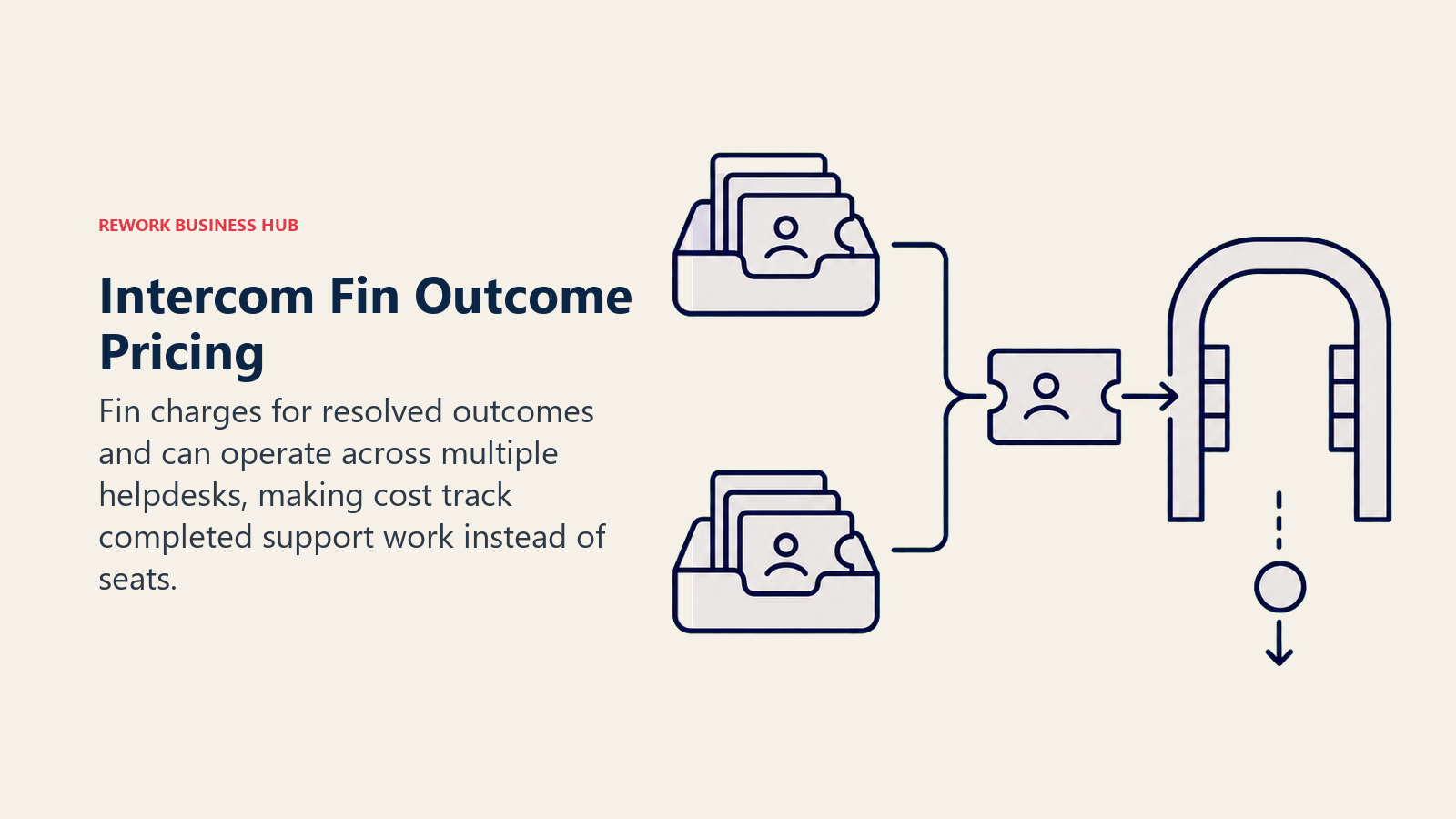
Fin's bet is simple: charge for results, not seats or conversations. A billable outcome is a resolution, a procedure handoff, or a disqualification at $0.99 each, or a qualified lead at $9.99. Unlike most of the tools on this list, Fin can run as a standalone AI agent on non-Intercom helpdesks too, not just inside Intercom's own Inbox.
Best for: Product-led SaaS and support teams that want outcome-based pricing without an enterprise sales process
Key strengths:
- $0.99-per-outcome pricing that's genuinely usable at small scale, not just enterprise contracts
- Works across many helpdesks, not locked to Intercom's own ticketing product
- Deep native integration with Intercom's own Inbox and Helpdesk when you use both
Limitations:
- 50-outcome monthly minimum sets a $49.50/month floor even for very light usage
- A "resolution" counts when a customer simply doesn't ask a follow-up question, which can inflate the reported resolution rate versus true problem-solving
- Salesforce's pending roughly $3.6 billion acquisition of Intercom (announced June 2026, not yet closed) adds roadmap uncertainty
Pricing: $0.99 per outcome (resolution, procedure handoff, or disqualification); $9.99 per qualified lead; 50-outcome/month minimum. Intercom's own seat plans are priced separately. See intercom.com/pricing.
| What you get | What you don't |
|---|---|
| Outcome-based pricing usable at small scale | 50-outcome/month minimum ($49.50 floor) |
| Works across many helpdesks, not just Intercom's | "Resolution" definition can overstate true fix rate |
| Deep native fit with Intercom's own Inbox | Acquisition by Salesforce adds roadmap uncertainty |
For budget-conscious alternatives to Intercom's full platform, see best Intercom alternatives.
2. Zendesk AI Agents: The Incumbent's AI Layer, Now Bundled In
Zendesk's approach in 2026 is to stop selling AI as a separate line item and fold Advanced AI resolution capabilities into every Suite and Support plan. You still pay per resolution once you're past what's bundled, but the base access no longer requires a separate add-on purchase the way it did through 2025.
Best for: Support orgs already running Zendesk who want AI layered onto ticketing, routing, and workflows they've already built
Key strengths:
- Advanced AI resolution features now included across Suite and Support plans, not gated behind a separate SKU
- Deepest ticketing, routing, and workflow maturity of any platform on this list
- Massive app marketplace and integration ecosystem
Limitations:
- Per-resolution overage still applies once you're past bundled volume, running roughly $1.20 to $2.00 depending on committed usage versus pay-as-you-go
- Copilot for human agents is a separate add-on at roughly $50/agent/month
- A 20-agent team resolving 3,000 tickets a month with AI can realistically run $6,000-$8,000/month all-in once seats and resolutions are combined
Pricing: Suite plans from $55/agent/month (Suite Team) to $115/agent/month (Suite Professional), annual. AI resolutions run roughly $1.20-$2.00 each depending on volume commitment. Copilot add-on roughly $50/agent/month.
| What you get | What you don't |
|---|---|
| AI resolution features bundled into every Suite plan | Per-resolution overage still applies past bundled volume |
| Deepest ticketing and routing maturity here | Copilot for agents is a separate $50/agent/mo add-on |
| Massive app marketplace and integrations | Real AI bill can run $6K-8K/mo for a mid-size team |
If Zendesk's total cost is the blocker, best Zendesk alternatives covers 12 lighter options, and Best Help Desk Software in 2026 ranks 13 platforms by fit if you want a base ticketing tool without the AI premium.
3. Decagon: A Fully Agentic AI Concierge for Enterprise Support
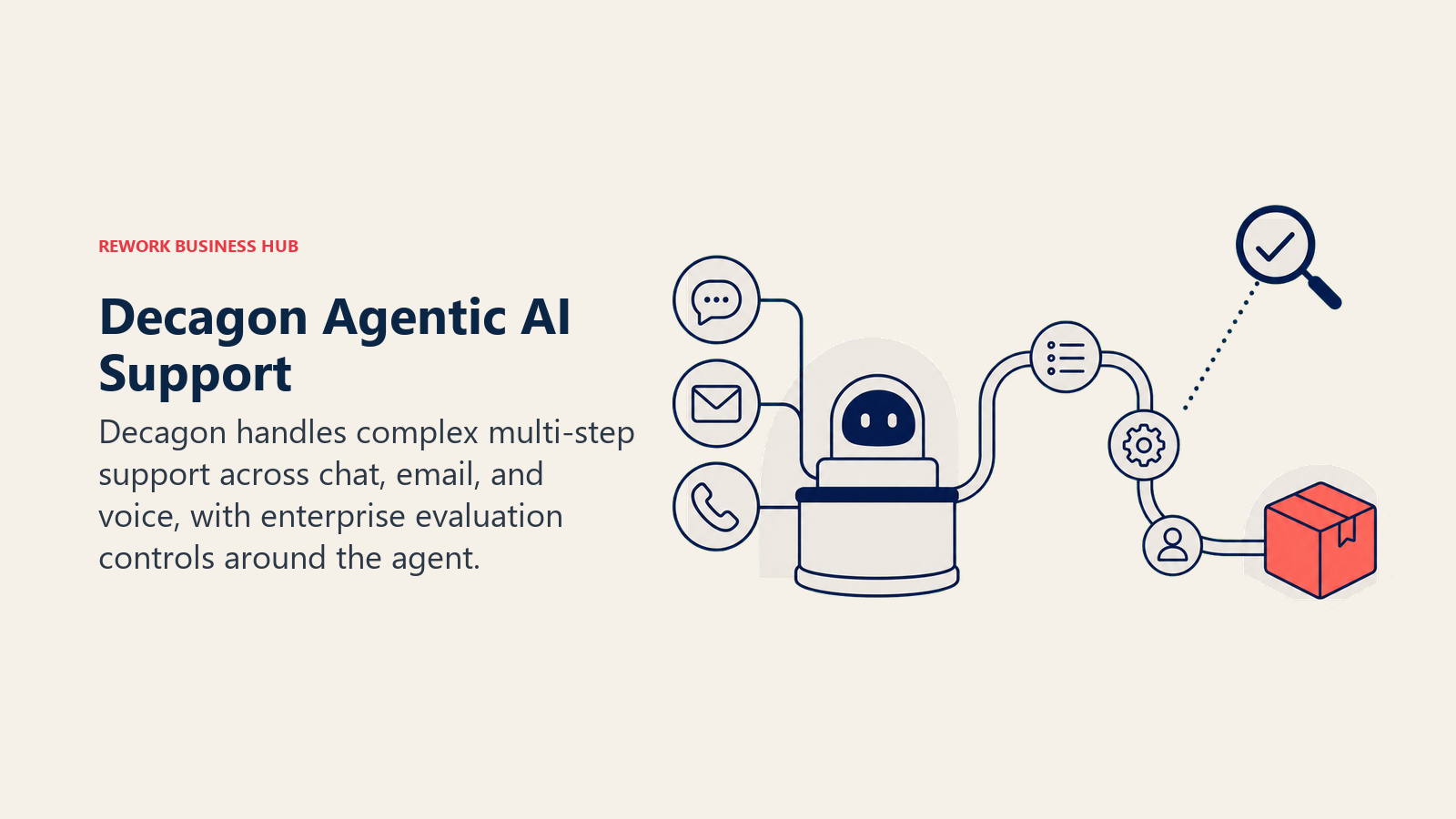
Decagon doesn't sell a chatbot bolted onto a ticketing queue, it sells an AI concierge designed to handle complex, multi-step resolution across chat, email, and voice for enterprise-scale ticket volume. There's no self-serve signup: every deal starts with a discovery call and a custom proposal based on your ticket volume.
Best for: Enterprise support organizations with high, complex ticket volume that want agentic AI, not a scripted bot
Key strengths:
- Handles multi-step resolution workflows across chat, email, and voice in one agent
- Enterprise-grade evaluation and QA tooling built for defensible AI performance reporting
- Purpose-built for the kind of ticket complexity that trips up simpler chatbot platforms
Limitations:
- No public pricing and no self-serve option; every deal requires a discovery call
- Buyer-reported base platform fees run $50,000-$95,000/year, with median contracts near $400,000/year
- Per-resolution add-on pricing (reported around $0.50/resolution in some deals) is treated as a negotiated enterprise rate, not a published rate card
Pricing: Custom, quote-only. Buyer-reported base platform fee $50,000-$95,000/year; median annual contract roughly $400,000/year.
| What you get | What you don't |
|---|---|
| Agentic AI for complex, multi-step resolution | No public pricing or self-serve signup |
| Handles chat, email, and voice in one agent | Median contracts run roughly $400K/year |
| Enterprise-grade evaluation and QA tooling | Overkill below true enterprise ticket volume |
4. Sierra: Managed, Outcome-Priced AI With Minimal In-House AI Ops
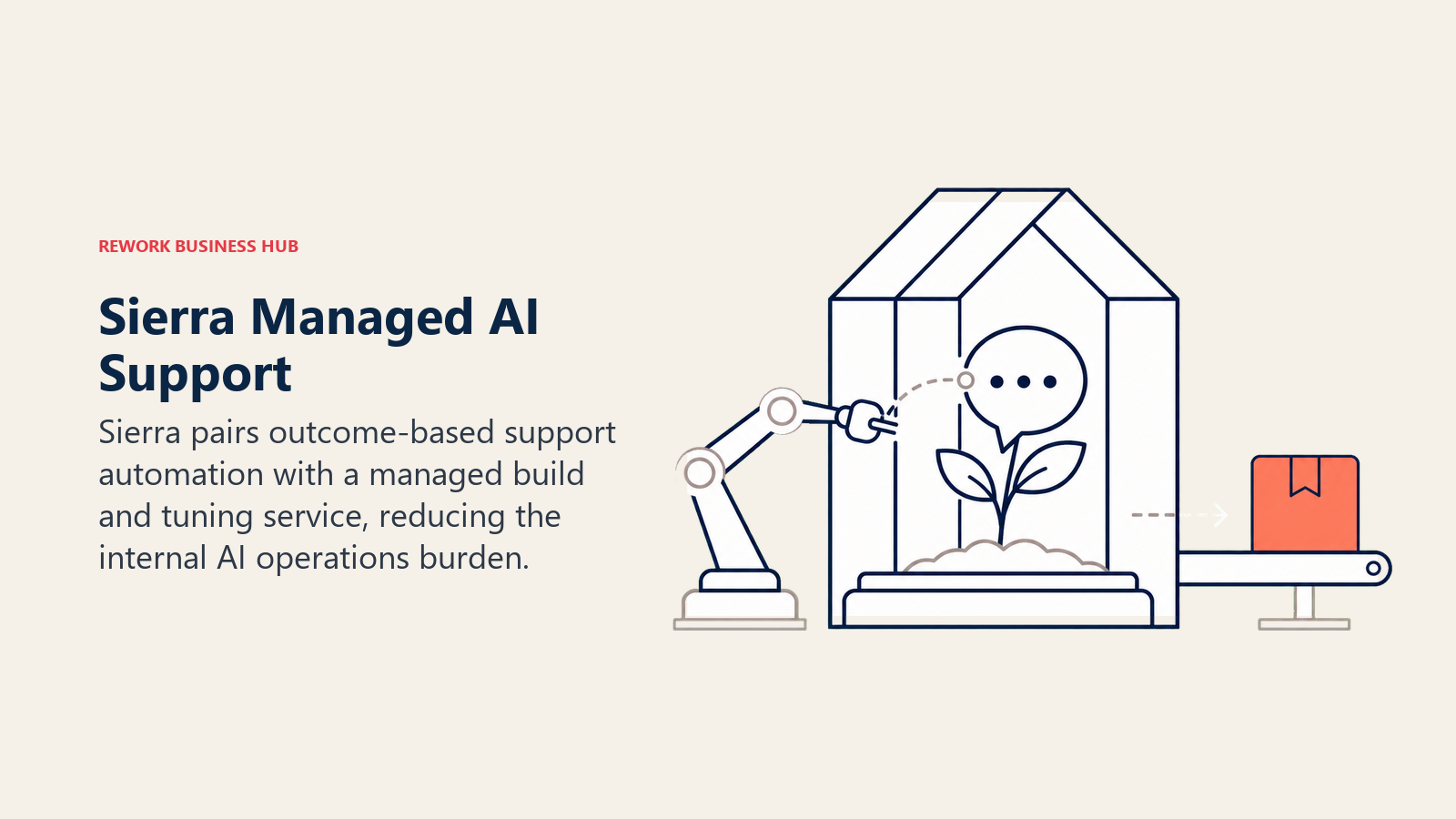
Sierra's pitch is that you shouldn't need an in-house AI team to run a good support agent. It sells a fully managed conversational AI product, priced on outcomes rather than seats or conversation counts, with Sierra's own team handling much of the conversational design and tuning work that other vendors leave to the customer.
Best for: Consumer brands and enterprises that want a managed AI agent without building internal AI operations capacity
Key strengths:
- Outcome-based pricing model, pay for results rather than seats or raw conversation volume
- White-glove build and tuning process reduces the internal AI expertise required to launch
- Handles complex, multi-turn conversations and some transactional actions, not just Q&A
Limitations:
- No public pricing, no self-serve plans, and no pricing tiers published anywhere
- Public signals point to starting contracts near $150,000/year, with full year-one budgets (onboarding plus rollout) often reaching $200,000-$350,000+
- Enterprise-only sales motion means smaller teams won't get a straightforward quote
Pricing: Custom, quote-only. Public signals suggest contracts starting around $150,000/year, with total year-one cost often $200,000-$350,000+ once onboarding is included.
| What you get | What you don't |
|---|---|
| Fully managed AI agent with hands-on tuning | No public pricing; enterprise-only sales process |
| Outcome-based pricing tied to real results | Contracts start near $150K/year |
| Handles complex, multi-turn, transactional chats | Not a fit for teams without an enterprise budget |
5. Ada: The Established Player for High-Volume Enterprise Support
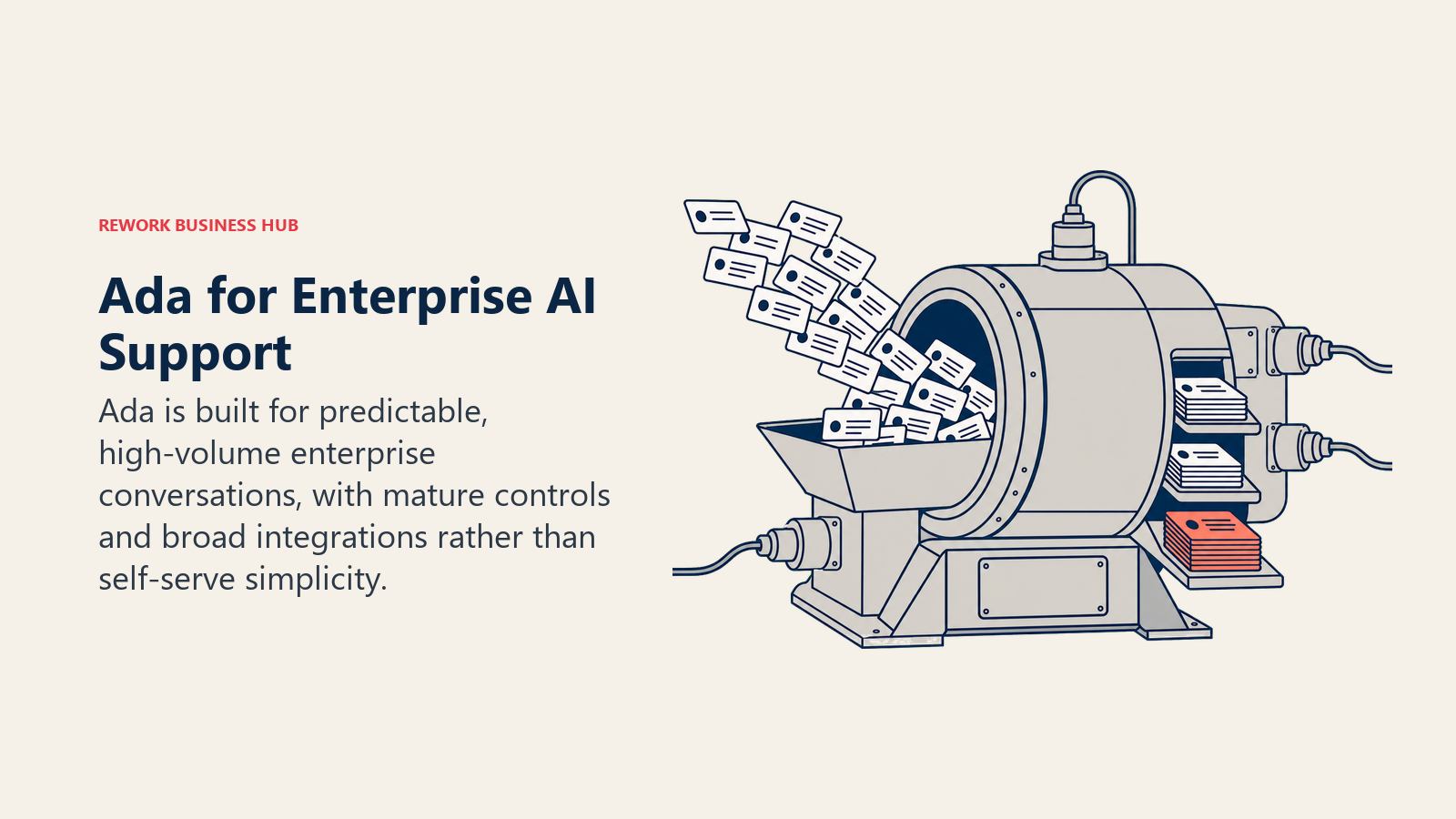
Ada has been running dedicated AI CX deployments longer than most names on this list, and its 2026 pricing reflects an enterprise buyer base: it moved from outcome-based pricing to conversation-based pricing specifically because large customers wanted predictable costs tied to volume rather than results. The platform is designed for teams handling at least 300,000 annual customer service conversations.
Best for: High-volume enterprise support organizations (300,000+ annual conversations) that want a mature, battle-tested AI CX platform
Key strengths:
- One of the longest-running dedicated AI CX vendors, with correspondingly mature tooling
- Conversation-based pricing gives large buyers predictable costs instead of outcome-based variance
- Broad integration ecosystem built for enterprise deployment complexity
Limitations:
- Fully quote-based; no published pricing tiers
- Buyer-reported median annual contract is roughly $70,000, with enterprise deals reaching $300,000 or more
- Custom integration and development work can add another $10,000-$100,000+, and contracts commonly carry 3-7% annual price escalation clauses
Pricing: Custom, quote-only. Buyer-reported median annual contract roughly $70,000 (up to $300,000+ at enterprise scale). Designed for 300,000+ annual conversations.
| What you get | What you don't |
|---|---|
| Mature, battle-tested AI CX platform | Fully quote-based; no published pricing |
| Predictable conversation-based cost model | Median contract runs roughly $70K/year |
| Broad enterprise integration ecosystem | Built for 300K+ annual conversations, not small teams |
6. Forethought: A Dedicated AI Layer, Now Merging Into Zendesk
Forethought built its business selling AI triage, resolution, and agent-assist tooling that sits on top of a helpdesk you already run, rather than replacing it. Zendesk announced a definitive agreement to acquire Forethought in March 2026, with the deal expected to close by the end of that month, which changes the buying conversation: you're now evaluating a soon-to-be Zendesk product, not a fully independent vendor.
Best for: Mid-market to enterprise support teams wanting a dedicated AI triage and resolution layer without switching their core helpdesk
Key strengths:
- Strong triage and Agent QA tooling for reviewing AI and human agent performance side by side
- Multilingual support built in, useful for global support orgs
- Acquisition by Zendesk gives the roadmap a clearer integration path, if less independence
Limitations:
- No published pricing; every deal is customized around ticket volume, agent count, and channel mix
- Buyer-reported range runs $40,000-$160,000/year, with add-ons pushing well into the $60,000-$80,000+ range
- Voice AI add-ons for moderate call volume can add another $30,000-$80,000/year on top
Pricing: Custom, quote-only. Buyer-reported range $40,000-$160,000/year for the base platform; voice AI add-ons extra.
| What you get | What you don't |
|---|---|
| Dedicated AI triage and Agent QA tooling | No published pricing; fully custom quotes |
| Multilingual support built in | Buyer-reported range runs $40K-160K/year |
| Clearer roadmap now merging into Zendesk | Less independence as a standalone vendor going forward |
7. Salesforce Agentforce for Service: Agentic AI on Data You Already Have
Agentforce's bet for Service Cloud customers is the same as it is everywhere else in Salesforce: reuse the objects, flows, and permissions you've already built instead of standing up a new data layer. In 2026, Flex Credits pricing unified what used to be separate customer-facing, employee-facing, and voice AI agent pricing models into one $500-per-100,000-credit system.
Best for: Teams already running Salesforce Service Cloud who want agentic AI without migrating support data to a new platform
Key strengths:
- Reuses existing Service Cloud objects, flows, and case data instead of a bolt-on integration
- Flex Credits now cover customer-facing, employee-facing, and voice agent use cases in a single model
- Foundations tier includes 200,000 Flex Credits, giving smaller Service Cloud deployments a real starting allowance
Limitations:
- Requires an existing Salesforce Service Cloud license; not a standalone product
- Two pricing models (per-conversation and Flex Credits) can't run in the same org at the same time
- Real cost is hard to forecast until you know actual agent usage volume
Pricing: $2 per conversation for customer-facing agents (Conversations model), or $500 per 100,000 Flex Credits (each agent action costs 20 credits, voice actions cost 30). Foundations includes 200,000 Flex Credits. Requires a Salesforce Service Cloud license. See salesforce.com/agentforce/pricing.
| What you get | What you don't |
|---|---|
| Agentic AI built on your existing case data | Requires a Salesforce Service Cloud license |
| Flex Credits cover customer, employee, and voice use cases | Two pricing models can't coexist in one org |
| Foundations includes a real starting credit allowance | Usage-based cost is hard to forecast up front |
For a direct look at how this compares to a lighter-weight AI-in-CRM approach, see Rework vs Salesforce Agentforce.
8. HubSpot Breeze Customer Agent: Pay Only When It Resolves the Ticket
HubSpot's April 2026 pricing change was significant: Breeze Customer Agent moved from charging $1.00 per conversation regardless of outcome to charging $0.50 per resolved conversation. That's a genuinely different incentive structure than most of this list, you only pay when the agent actually finishes the job.
Best for: HubSpot Service Hub Professional or Enterprise customers who want to pilot AI without a large upfront commitment
Key strengths:
- Outcome-based pricing means you pay only when the agent resolves the conversation, not for every attempt
- Already resolving 65% of conversations and cutting resolution time by 39% across more than 8,000 activated customers, per HubSpot
- Native to HubSpot's existing contact and ticket data, no separate integration to maintain
Limitations:
- Full Customer Agent access requires Service Hub Professional or Enterprise, a real cost jump from Starter (seats from roughly $90/month at Pro)
- A one-time onboarding fee sits on top of the per-resolution rate, so the effective cost is higher than the $0.50 headline
- Less deep multi-step agent orchestration than Salesforce Agentforce for complex enterprise workflows
Pricing: $0.50 per resolved conversation (50 HubSpot Credits), billed on top of a Service Hub Professional or Enterprise seat (from roughly $90/seat/month). Baseline Breeze AI features are included from the Starter tier.
| What you get | What you don't |
|---|---|
| Pay-per-resolution pricing, not per attempt | Full agent requires Service Hub Pro or Enterprise |
| Already resolving 65% of conversations per HubSpot | One-time onboarding fee adds to the $0.50 headline |
| Native to existing HubSpot contact and ticket data | Less orchestration depth than Salesforce Agentforce |
See Rework vs HubSpot Breeze for how the two AI-in-CRM approaches compare directly.
9. Freshworks Freddy AI: Per-Session Pricing on Familiar Ticketing
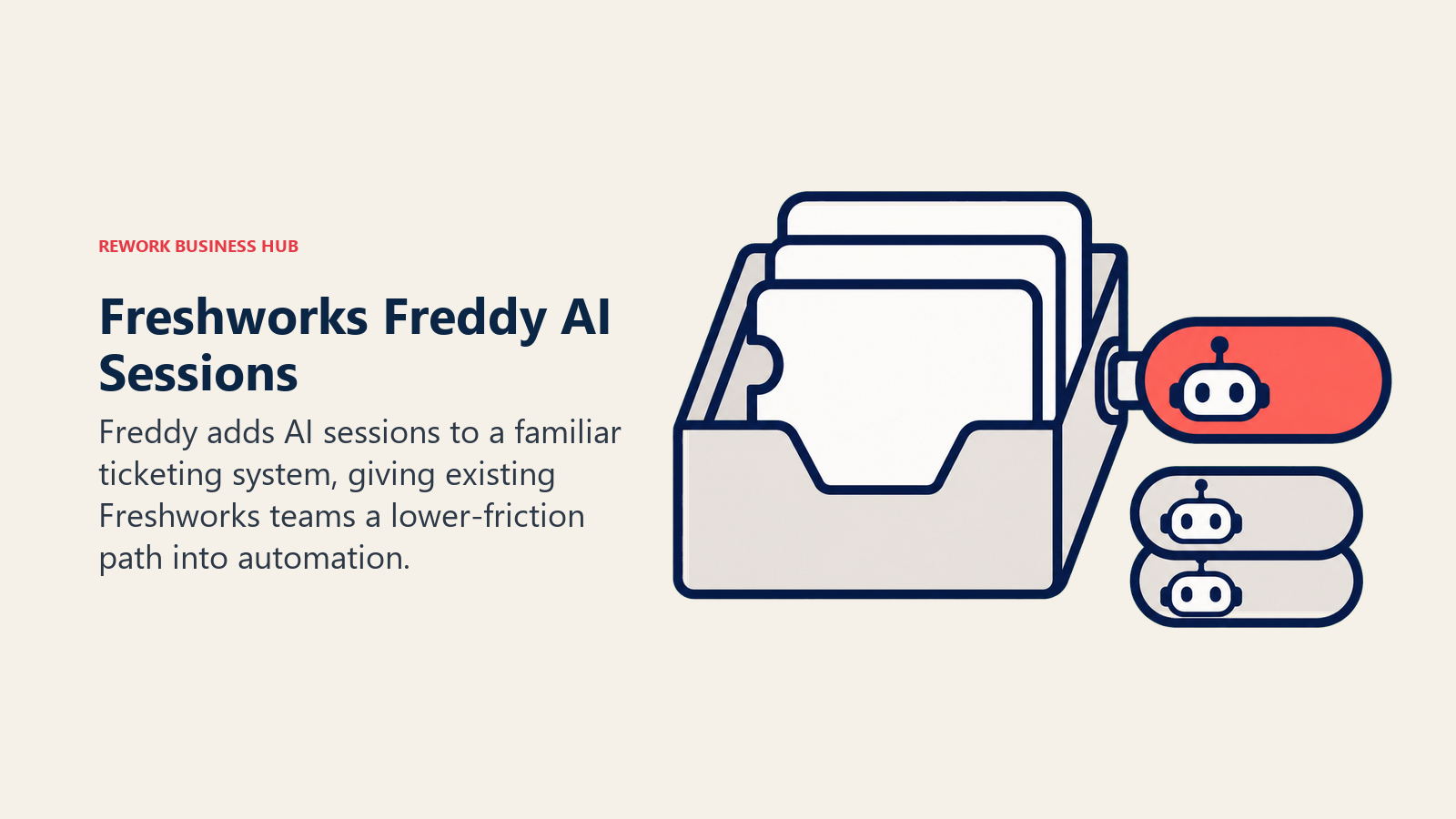
Freddy AI Agent, Copilot, and Insights are three separate Freshworks products with three separate price tags, but the core AI Agent pricing model, per session rather than per seat, is genuinely more approachable for smaller teams than most enterprise-quote vendors on this list.
Best for: Budget-conscious mid-market teams that want AI resolution priced per session, running on Freshdesk ticketing they may already know
Key strengths:
- AI Agent priced per session ($0.49/email session after the first 500 free, roughly $0.10/session for web chat via Freshbot)
- Copilot add-on for human agents available separately, so you can start with just the AI Agent
- Full Freshworks ecosystem (Freshchat, Freshservice) available if you need to expand later
Limitations:
- Three separate Freddy products billed independently means the advertised base plan price is rarely the real bill
- A 15-agent team on Freshdesk Pro with Copilot on 10 agents plus 400 extra email sessions runs about $1,311/month, well above the sticker price
- Less agentic depth than Decagon or Sierra for complex, multi-step resolution
Pricing: Freshdesk base plans $19-$89/agent/month (Email/Ticketing) or $29-$119/agent/month (Omni), annual. AI Agent $49 per 100 email sessions ($0.49/session) after 500 free sessions; web chat sessions roughly $0.10 each. Copilot add-on from $29/agent/month.
| What you get | What you don't |
|---|---|
| Per-session AI pricing, approachable at small scale | Three separate Freddy products billed independently |
| Familiar Freshdesk ticketing underneath | Real bill often well above the advertised base plan |
| Copilot add-on available for human agents | Less agentic depth than dedicated AI-native platforms |
If Freshdesk's layered pricing doesn't work for your team, best Freshdesk alternatives covers 11 other helpdesk options.
10. Gorgias AI Agent: Order-Aware AI for E-Commerce
Gorgias built its AI Agent around one advantage most general-purpose helpdesks don't have: live order data. Macros can reference a customer's actual order status, shipping details, and purchase history because Gorgias sits deeply inside Shopify (and other e-commerce platforms), not bolted on as an afterthought.
Best for: Shopify and e-commerce brands that want AI resolution with real order context, not generic scripted answers
Key strengths:
- Order-aware macros pull live Shopify (and BigCommerce, Klaviyo, and similar) data directly into AI responses
- Per-resolution AI pricing ($0.90 annual, $1.00 monthly) is simple to understand versus quote-only enterprise vendors
- Deep e-commerce-specific integrations beyond what general support platforms offer
Limitations:
- AI-resolved conversations can be billed twice, once as a helpdesk ticket and again as a resolution, unless a human responds within 72 hours
- A mid-sized store on the Pro plan resolving 1,000 conversations a month with AI can run roughly $18,700/year, well above the advertised $300/month base
- Less suited to non-commerce support use cases than the general-purpose tools on this list
Pricing: Helpdesk plans from $10/month (Starter, 50 tickets) to $900+/month (Advanced, 5,000 tickets), annual billing knocks off roughly 16%. AI Agent $0.90 per resolution (annual) or $1.00 (monthly), which also counts as a billable ticket.
| What you get | What you don't |
|---|---|
| Order-aware AI macros most helpdesks can't match | AI resolutions can be billed twice without fast human response |
| Simple, published per-resolution AI pricing | Real cost can run well above the advertised base plan |
| Deep e-commerce platform integrations | Not built for support use cases outside commerce |
See best Gorgias alternatives for 11 other e-commerce and multi-channel support options.
11. Kustomer AI: A CRM-Style Record With AI Layered On
Kustomer's differentiator has always been the unified customer timeline, every channel, every interaction, one record, rather than a queue of disconnected tickets. Its 2026 AI pricing follows the same modular logic: AI for Customers and AI for Reps are sold as separate add-ons, so you can adopt one without the other.
Best for: Teams that want a full customer record, not just a ticket queue, with AI layered on top of that unified view
Key strengths:
- Unified customer timeline across every channel, genuinely CRM-like rather than ticket-first
- AI for Customers ($0.60/engaged conversation) and AI for Reps ($40/agent/month) sold separately, so you can start with one
- All-inclusive bundles available for teams that want predictable, single-line billing
Limitations:
- Base seat pricing starts at $89/agent/month (Enterprise) with an 8-seat minimum, an $8,544/year floor before any AI is added
- The $0.60 AI-for-Customers fee applies even when the bot immediately escalates to a human, you pay regardless of outcome
- Annual billing only, no monthly option and no free trial to test before committing
Pricing: Seats from $89/agent/month (Enterprise, 8-seat minimum) to $139/agent/month (Ultimate), annual only. AI for Customers $0.60 per engaged conversation. AI for Reps $40/agent/month. All-inclusive bundles roughly $129-$179/agent/month.
| What you get | What you don't |
|---|---|
| Unified customer timeline, not just tickets | 8-seat minimum sets an $8,544/year floor |
| Modular AI add-ons, start with one | AI fee applies even on immediate human escalation |
| All-inclusive bundles for predictable billing | Annual billing only; no free trial |
See best Kustomer alternatives for 12 other platforms if the seat minimum doesn't fit your team.
12. Tidio Lyro: The Cheapest Usable Entry Into AI Live Chat
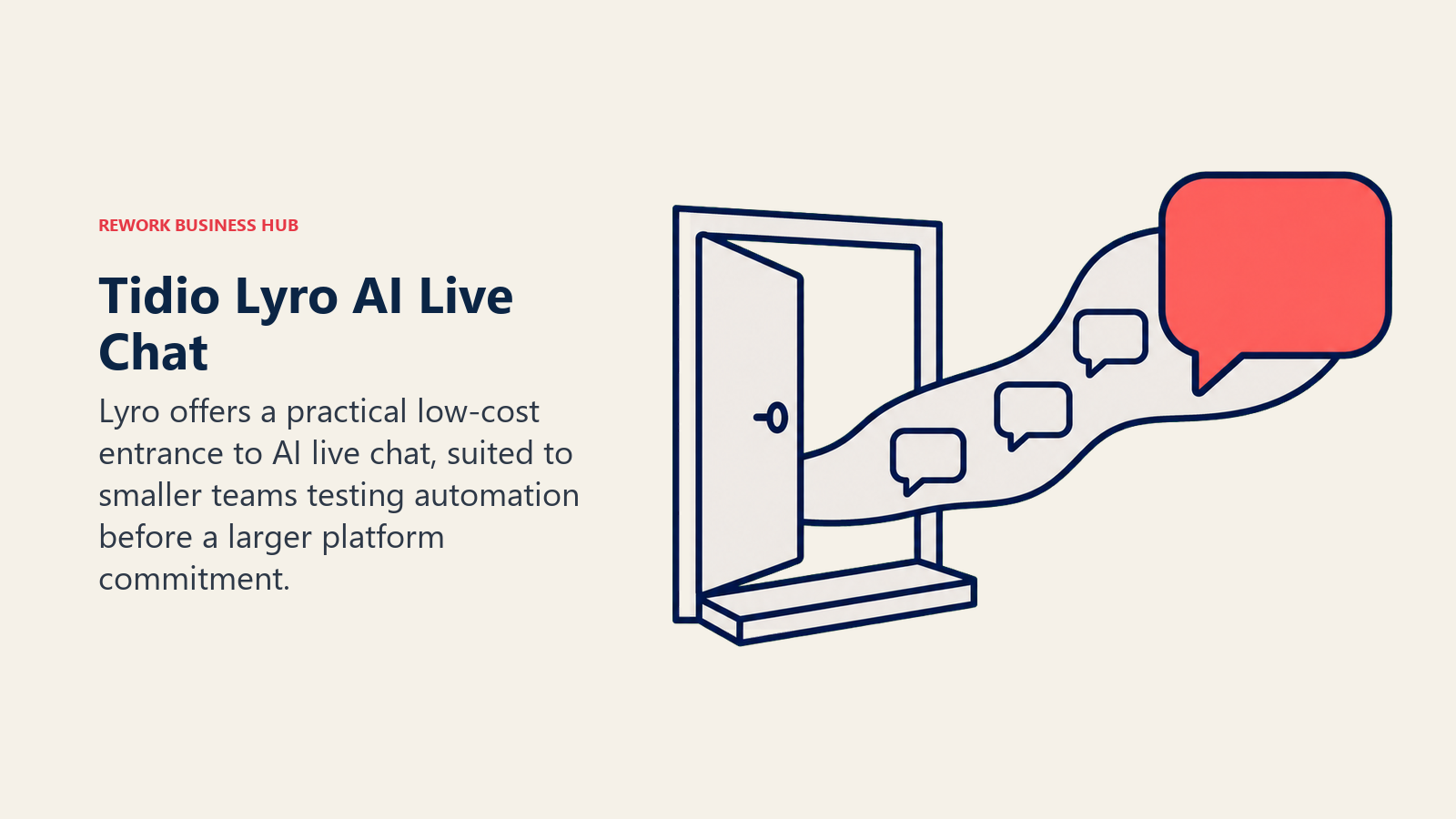
Tidio's advertised pricing and its real pricing are two different numbers once Lyro AI enters the picture. The base plans start at $29/month, but Lyro, the AI agent, is a separate line item that can more than double the bill depending on conversation volume. Still, for a small team wanting to test AI live chat without an enterprise contract, the entry point is genuinely the lowest on this list.
Best for: Small businesses and solo support teams wanting the cheapest usable entry point into AI-assisted live chat
Key strengths:
- Genuinely free trial tier (50 lifetime conversations) to test Lyro before paying
- Simple setup, live chat and AI in one lightweight widget
- Good fit for teams not ready to commit to a full dedicated helpdesk platform
Limitations:
- The advertised $29/month plan doesn't include meaningful Lyro AI volume, it's a separate add-on
- A 10-person e-commerce team adding Lyro AI and Flows automation on top of the Growth plan can land near $105/month, more than double the sticker price
- Getting Lyro fully bundled without add-on math requires the $749/month Plus plan
Pricing: Base plans from $29/month. Lyro AI Agent from $39/month for 50 conversations ($32.50 per additional 50). Plus plan with Lyro fully bundled starts at $749/month.
| What you get | What you don't |
|---|---|
| Lowest real entry point into AI live chat on this list | Advertised $29 plan doesn't include meaningful Lyro volume |
| Genuinely free trial tier (50 lifetime conversations) | Real cost with add-ons can exceed $100/month fast |
| Simple, lightweight widget setup | Fully bundled Lyro pricing jumps to $749/month |
See best Tidio alternatives for 10 other AI chatbot and live chat options at a similar budget.
Where Rework Fits (And Where It Doesn't)
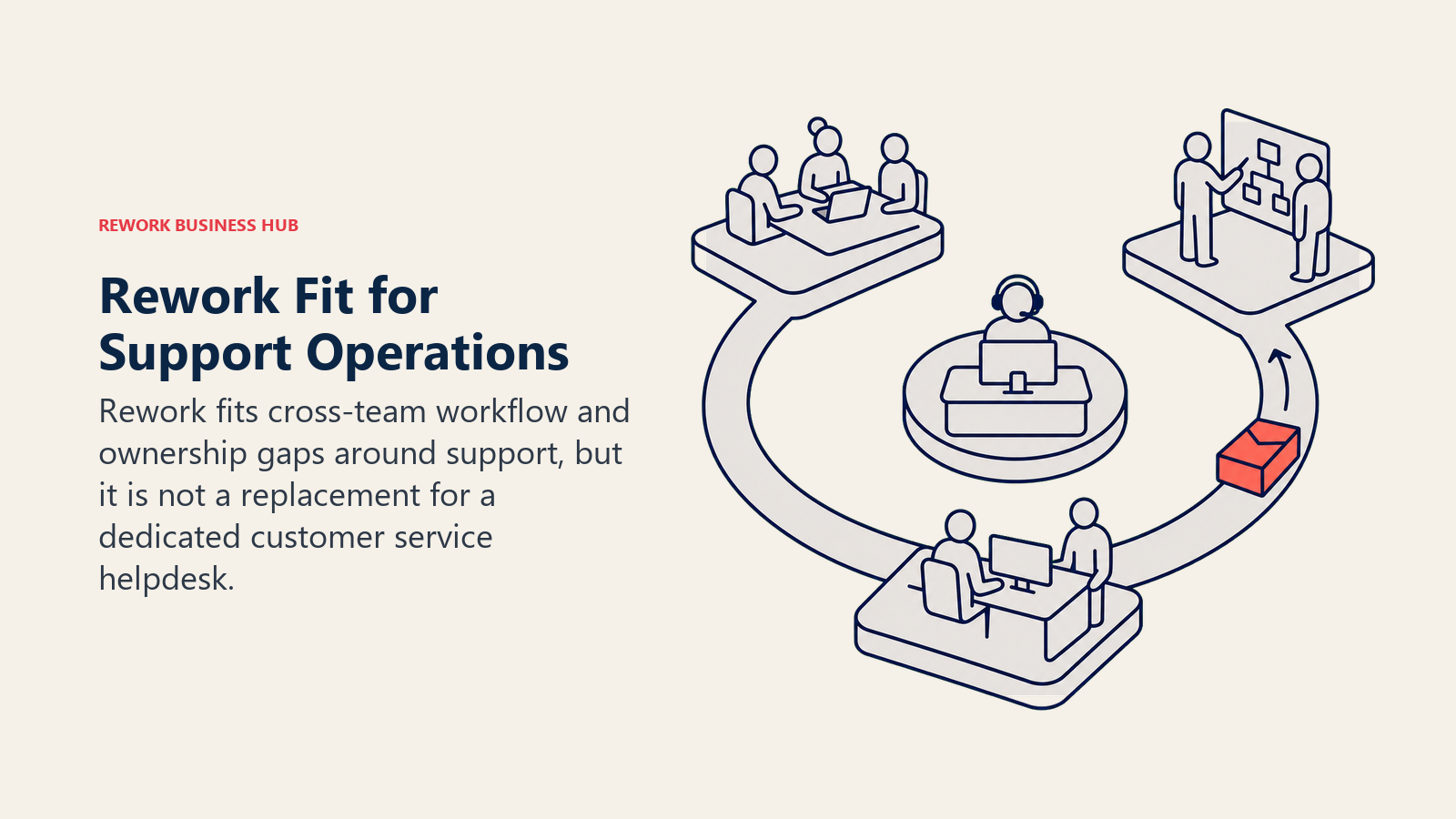
Rework is a CRM and sales/lead ops platform, not a dedicated AI customer-support tool, which is why it's left out of the ranked list above. What it does offer is a multi-channel shared inbox, WhatsApp, Messenger, Instagram DM, TikTok, Zalo, and web chat on one contact timeline, so a support conversation and a sales conversation with the same customer live in the same record instead of two separate tools. For a small team fielding support questions through the same channels they sell through, that consolidation has real value.
What it isn't: a ticketing system with SLA escalation rules, a knowledge base, or a dedicated AI resolution agent like the tools ranked above. If your support volume needs queue management, macros, and AI that resolves tickets end to end, pick from the list above instead. Rework's Sales Engine starts at $69/month billed yearly, with 5 sales seats included; see rework.com/pricing for current details. Teams weighing an AI-in-CRM approach more directly can read Rework vs Salesforce Agentforce or Rework vs HubSpot Breeze.
Pricing at a Glance
| Tool | Entry Price | Pricing Model | Free Tier? |
|---|---|---|---|
| Intercom Fin | $0.99/outcome (50-outcome/mo minimum) | Outcome-based | No |
| Zendesk AI Agents | Suite from $55/agent/mo + $1.20-$2.00/resolution | Seat + per-resolution | No |
| Decagon | Custom (est. $50K-95K/yr base) | Platform fee + usage | No |
| Sierra | Custom (est. from $150K/yr) | Outcome-based, enterprise | No |
| Ada | Custom (est. $70K/yr median) | Conversation-based | No |
| Forethought | Custom (est. $40K-160K/yr) | Platform fee, custom quote | No |
| Salesforce Agentforce for Service | $2/conversation or $500/100K Flex Credits | Usage-based, requires SF license | Partial (Foundations credits) |
| HubSpot Breeze Customer Agent | $0.50/resolution + Service Hub seat (~$90/mo) | Outcome-based + seat | Partial |
| Freshworks Freddy AI | $19/agent/mo (Freshdesk) + $0.49/session | Seat + per-session | No |
| Gorgias AI Agent | $10-$900+/mo + $0.90/resolution | Ticket-volume tier + per-resolution | No |
| Kustomer AI | $89/agent/mo (8-seat min) + $0.60/conversation | Seat + per-conversation | No |
| Tidio Lyro | $29/mo base; Lyro from $39/mo | Flat tiers + AI add-on | Yes (trial) |
Where AI Support Is Headed
Pricing is converging on one idea: pay for outcomes, not attempts. HubSpot's April 2026 shift to per-resolution billing, Ada's earlier move to conversation-based pricing for predictability, and Intercom Fin's outcome-first model from the start are all responses to the same buyer complaint, that flat per-seat AI pricing doesn't reflect what the AI actually delivers. Expect that trend to keep spreading through 2026 as more vendors publish resolution-based rate cards instead of hiding behind "contact sales."
The bigger shift is consolidation. Zendesk's pending acquisition of Forethought and Salesforce's pending acquisition of Intercom both fold dedicated AI-native support vendors into the largest incumbent platforms, which means the "build a custom AI layer on Zendesk" category is shrinking as the incumbents buy the layer instead of competing with it. Gartner predicts agentic AI will autonomously resolve 80% of common customer service issues without human intervention by 2029, cutting operational costs by roughly 30% in the process, per Gartner's research. Whether that number holds, the direction is clear: pick a vendor whose pricing model you can actually forecast, because usage is only going up.
Frequently Asked Questions about AI Tools for Customer Support
What is the best AI tool for customer support in 2026?
There's no single best tool. Intercom Fin leads on accessible outcome-based pricing, Decagon and Sierra lead fully agentic enterprise deployments, Zendesk and Salesforce Agentforce lead for teams layering AI onto a platform they already run, and Gorgias leads for order-aware e-commerce support. Match the tool to the job, not a general ranking.
How much does AI customer support software cost in 2026?
It ranges widely. Session or resolution-based tools like Freshworks Freddy AI and Gorgias run roughly $0.49 to $0.90 per resolution on top of a base helpdesk plan ($10-$120/agent/month). Fully agentic enterprise platforms like Decagon and Sierra run $50,000 to $400,000 or more per year in buyer-reported contracts.
What's the difference between conversation-based and resolution-based AI pricing?
Conversation-based pricing (Ada, Kustomer) charges every time the AI engages with a customer, regardless of outcome. Resolution-based or outcome-based pricing (Intercom Fin, HubSpot Breeze) charges only when the AI actually resolves the issue. Even resolution-based vendors admit the definition gets fuzzy; Decagon's own glossary notes that defining a "resolution" can be tricky and lead to billing disagreements.
Is AI as good as a human support agent?
Close, but not equal yet. AI-handled tickets average 4.10 out of 5 CSAT versus 4.30 for human agents, per Zendesk's CX Trends 2026 report. That 0.20-point gap narrows to just 0.05 points when AI hands off cleanly to a human for harder cases, which is why most tools on this list are built around hybrid escalation rather than full automation.
Can I add AI to my existing helpdesk, or do I need to switch platforms?
Usually you can add it. Zendesk, Freshdesk, HubSpot, and Salesforce all let you layer AI onto ticket and case data you already have, no migration required. Intercom Fin can even run on other companies' helpdesks. Decagon, Sierra, and Ada are more often deployed as a standalone AI-native layer that sits alongside or eventually replaces existing ticketing.
Is Gorgias or Kustomer the better fit for e-commerce support?
Gorgias is purpose-built for Shopify and e-commerce, with AI macros that pull live order and shipping data directly into responses. Kustomer is a better fit if you want a unified customer record across channels beyond just order status, useful for brands running support across retail, subscriptions, or services alongside e-commerce.
Does Rework offer AI customer support?
Not as a dedicated product. Rework is a CRM and sales/lead ops platform with a multi-channel shared inbox (WhatsApp, Messenger, Instagram DM, Telegram, web chat), which helps keep support and sales conversations with the same customer in one record. It doesn't have ticketing, SLA escalation, or a dedicated AI resolution agent, so pick from the ranked list above if that's what you need.
What to Do Next
Pick the one job costing you the most right now, unpredictable AI billing, a helpdesk that can't layer AI onto existing tickets, or e-commerce support that lacks order context, and shortlist two tools against the decision framework above. Run a real pilot on a slice of live volume before signing anything longer than a quarter, since resolution-rate claims vary more in practice than any vendor's marketing page suggests. If your evaluation spans the broader AI stack, not just support, Best AI Tools in 2026 ranks 25 tools across 10 categories, and Best AI Tools for Sales in 2026 covers the sales side of the same AI-adoption wave. And if chat itself, not the AI layer, is your main gap, Best Live Chat Software in 2026 ranks 14 platforms by fit.

Principal Product Marketing Strategist
On this page
- Updated July 2026: What Changed
- Key Facts
- Quick Comparison Table
- How to Choose: Decision Framework
- Framework: By Support Volume and Budget
- 1. Intercom Fin: Outcome-Based Pricing That Works Across Helpdesks
- 2. Zendesk AI Agents: The Incumbent's AI Layer, Now Bundled In
- 3. Decagon: A Fully Agentic AI Concierge for Enterprise Support
- 4. Sierra: Managed, Outcome-Priced AI With Minimal In-House AI Ops
- 5. Ada: The Established Player for High-Volume Enterprise Support
- 6. Forethought: A Dedicated AI Layer, Now Merging Into Zendesk
- 7. Salesforce Agentforce for Service: Agentic AI on Data You Already Have
- 8. HubSpot Breeze Customer Agent: Pay Only When It Resolves the Ticket
- 9. Freshworks Freddy AI: Per-Session Pricing on Familiar Ticketing
- 10. Gorgias AI Agent: Order-Aware AI for E-Commerce
- 11. Kustomer AI: A CRM-Style Record With AI Layered On
- 12. Tidio Lyro: The Cheapest Usable Entry Into AI Live Chat
- Where Rework Fits (And Where It Doesn't)
- Pricing at a Glance
- Where AI Support Is Headed
- What to Do Next