Best AI Chatbot Builders in 2026: 13 Tools to Build a Custom Bot for Your Website or Business
Turn this article into takeaways for your work.


Each assistant summarizes the article only for you and suggests best practices for your work.
An AI chatbot builder is a platform for creating a custom bot, one trained on your own content, embedded on your own website, and configured to answer your own customers' questions, rather than a general-purpose assistant like ChatGPT or a full enterprise support-ticketing suite. Chatbase is the fastest way to get a GPT-powered widget live on a website in an afternoon. Voiceflow gives design and product teams a visual canvas for complex conversation flows. Botpress and Dialogflow CX hand developers full programmatic control. This guide ranks 13 chatbot builders for 2026, so you can pick the one that fits how much control you want and how much you're willing to pay for it.
This guide is specifically about the builder layer: the tool you use to design, train, and embed a custom bot. It is not about general-purpose AI assistants you open in a browser tab to chat with directly. For that category, see our guide to the best AI chatbots in 2026, which covers ChatGPT, Claude, Gemini, and their free alternatives. It also isn't a guide to enterprise customer-support ticketing platforms with AI layered on top. If you're evaluating AI specifically to resolve support tickets at scale (Intercom Fin, Zendesk AI, Decagon, Sierra), see best AI tools for customer support in 2026, which ranks that category by resolution quality and outcome pricing instead of build flexibility. And if what you actually need is a live chat widget staffed by humans with AI assistance layered in, not a fully automated bot, best live chat software in 2026 covers that adjacent category.
Updated July 2026: What Changed
- Chatbase's message-credit model got more expensive for heavier reasoning models. Standard-tier models still cost 1 credit per response, but GPT-5.2 and Gemini 3.1 Pro now cost 2 credits, and Grok 4 costs 4 credits, so switching to a stronger model can quietly double or quadruple your monthly credit burn.
- Botpress rolled out a pricing overhaul in May 2026 that bundled AI spend into every paid plan and made bots unlimited on all paid tiers, a meaningful change from the prior per-bot pricing structure.
- ManyChat restructured from two tiers to four in March 2026 (Free, Essential, Pro, Business) and cut the free tier from 1,000 contacts down to 25, pushing most real usage into a paid plan almost immediately.
- Stack AI pivoted to an enterprise-only sales model. The self-serve Builder and Team tiers that existed in earlier pricing pages are gone; the public page now shows only a Free tier and custom Enterprise pricing.
- Salesforce's pending acquisition of Intercom (parent of Fin), announced in June 2026 at roughly $3.6 billion, had not closed, so Fin's per-outcome pricing stands as published for now.
Key Facts
- The global chatbot market is projected to reach $11.8 billion in 2026 and grow at a 19.6% CAGR through 2033, reaching $41.2 billion, per Grand View Research's chatbot market report.
- Chatbot messaging-app accesses were forecast to hit 9.5 billion globally in 2026, driven largely by online retail, per Juniper Research.
- One in 10 contact center agent interactions is projected to be automated by 2026, up from just 1.6% when the forecast was first published, per Gartner.
- 40% of enterprise applications will feature task-specific AI agents by the end of 2026, up from under 5% in 2025, per Gartner.
- AI is projected to resolve 50% of customer service cases by 2027, up from 30% in 2025, per Salesforce's State of Service report.
- The dedicated chatbot builder software market was valued at roughly $2.9 billion in 2024 and is projected to reach $13.9 billion by 2033, a 19.7% CAGR, per Verified Market Reports' chatbot builders market analysis.
Quick Comparison Table
| Tool | Best For | Starting Price | Key Strength | Key Limitation |
|---|---|---|---|---|
| Chatbase | Fastest no-code GPT widget for a website | Free; Hobby $32/mo | Train on your own docs/URLs in minutes | Credit costs jump 2-4x on frontier models |
| Voiceflow | Design teams building complex conversation flows | Free; Pro $60/mo | Best visual canvas for branching logic | Unused monthly credits don't roll over |
| Botpress | Developers who want full code-level control | Free; Plus $89/mo + AI spend | Unlimited bots on every paid plan since May 2026 | Steeper learning curve than no-code tools |
| Landbot | Conversational forms plus website/WhatsApp bots | Free; Starter €32/mo (annual) | Strong lead-gen and form-replacement use case | WhatsApp requires a separate paid plan |
| Tidio (Lyro) | Small business websites wanting chat + AI in one | Free; Starter ~$24/mo | Cheapest usable entry into live chat and AI | Full Lyro access effectively needs the $749/mo Plus tier |
| Chatling | Budget-conscious SMBs wanting fast setup | Free; Standard $40/mo | Simple pricing, no per-message overage shock | Credit pool is thin for high-traffic sites |
| ManyChat (AI Step) | Instagram, Messenger, and WhatsApp-first bots | Free; Essential $14/mo | Deepest social/messenger channel coverage | AI is a $29/mo add-on, not included |
| CustomGPT.ai | Bots grounded strictly in your own business content | Standard $99/mo | Strong RAG accuracy, low hallucination focus | Query caps push cost up fast at scale |
| Stack AI | Internal + customer-facing AI agent workflows | Free; Enterprise (custom) | No-code agent orchestration beyond just chat | Self-serve paid tiers were discontinued in 2026 |
| Sendbird | Product teams embedding chat inside their own app | Free trial; Starter ~$349/mo | Full chat SDK plus AI agents in one platform | Overkill and costly if you just need a website widget |
| Intercom Fin | Teams wanting outcome-based pricing, not seats | $0.99/outcome | Pay only for resolutions, not every attempt | 50-outcome/month minimum sets a real cost floor |
| Ada | High-volume enterprise bots (300K+ conversations/yr) | Custom, quote-only | Longest-running dedicated AI agent platform | No public pricing, no self-serve signup |
| Dialogflow CX | Developers wanting Google-grade NLU at API scale | Pay-per-session (~$20/100 sessions) | Deepest integration with Google Cloud and Gemini | Requires real engineering effort to implement well |
How to Choose an AI Chatbot Builder in 2026
Most teams start shopping for a chatbot builder by comparing feature lists, and end up with a tool that's either too limited to do the job or too complex for anyone on the team to actually maintain. Answer these questions first.
How much do you need to customize the conversation logic? If your bot just needs to answer questions from a knowledge base (pricing, FAQs, docs), a RAG-first tool like Chatbase, Chatling, or CustomGPT.ai gets you there in an afternoon. If you need multi-step flows with conditional branching, API calls, and handoffs, you need a visual flow builder like Voiceflow or Landbot, or a code-level platform like Botpress or Dialogflow CX.
Who's going to build and maintain it? No-code tools (Chatbase, Chatling, Landbot, Tidio) are built for marketers and support leads with no engineering background. Botpress and Dialogflow CX assume a developer is involved. Voiceflow and Stack AI sit in between, no-code on the surface but with enough depth that a technical owner speeds things up considerably.
Where does the bot live? A website widget is the default case most of these tools are built for. If you need the bot inside your own mobile app or product (not just a website), Sendbird's chat SDK is built for that specifically. If you need it across Instagram DM, Messenger, and WhatsApp rather than a website, ManyChat is the strongest fit. For a broader look at where AI tooling fits a resource-constrained team generally, see best AI tools for small business in 2026.
How is pricing structured, and does that match your traffic pattern? Message-credit and per-conversation pricing (Chatbase, Chatling, Tidio, Intercom Fin) scales cleanly with usage but can spike unpredictably during a traffic surge. Flat per-seat pricing (Botpress Team, Voiceflow Business) is more predictable for internal teams building multiple bots. Quote-only enterprise pricing (Ada, Stack AI Enterprise) means budgeting a real sales cycle before you get a number.
Framework: By Use Case
| Use Case | What Matters Most | Best Fits |
|---|---|---|
| Website FAQ/support deflection | Fast setup, train on existing docs | Chatbase, Chatling, CustomGPT.ai |
| Lead capture and qualification | Conversational forms, CRM handoff | Landbot, Tidio, ManyChat |
| Complex multi-step workflows | Visual branching logic, API calls | Voiceflow, Botpress |
| In-app or in-product chat | SDK-level embedding, not just a widget | Sendbird |
| Social/messenger-first bots | WhatsApp, Instagram DM, Messenger reach | ManyChat |
| Enterprise-scale support automation | Proven volume, outcome pricing | Intercom Fin, Ada |
| Deep Google Cloud/Gemini integration | API-first, developer-controlled NLU | Dialogflow CX |
| Internal + external AI agent workflows | Orchestration beyond a single chat window | Stack AI |
Sizing and Persona Table
| Tool | Ideal Team Size | Primary Buyer |
|---|---|---|
| Chatbase | 1-50 employees | Founder, marketer, support lead |
| Voiceflow | 5-200 employees | Product designer, conversation designer |
| Botpress | 5-500 employees | Developer, engineering lead |
| Landbot | 1-100 employees | Marketing manager, growth lead |
| Tidio | 1-30 employees | Small business owner, support lead |
| Chatling | 1-50 employees | Founder, solo marketer |
| ManyChat | 1-100 employees | Social media manager, DTC marketer |
| CustomGPT.ai | 5-200 employees | Ops lead, knowledge manager |
| Stack AI | 100+ employees | IT lead, automation team |
| Sendbird | 20-1,000+ employees | Product engineer, CTO |
| Intercom Fin | 10-500 employees | Support lead, product-led SaaS founder |
| Ada | 500+ employees | VP Customer Experience, CX ops |
| Dialogflow CX | 20-1,000+ employees | Developer, cloud/platform engineer |
1. Chatbase: Fastest No-Code GPT Widget for a Website
Chatbase's entire pitch is speed: point it at your website URLs or upload your docs, and you have a trained, embeddable AI chat widget within minutes, no coding required. That simplicity is why it's become the default first stop for founders and marketers who just want a working bot without a development project.
Best for: Solo founders, small marketing teams, and support leads who want a working website chatbot the same day they sign up
Key strengths:
- Genuinely fast setup: train on URLs, PDFs, or a pasted FAQ and go live same-day
- Deep third-party integrations (Zendesk, Salesforce, HubSpot, WhatsApp, Slack) for handoff to existing tools
- Voice and telephony features now bundled in, extending the same trained agent to phone support
Limitations:
- Pricing is metered in message credits, not contacts, and stronger models (GPT-5.2, Gemini 3.1 Pro, Grok 4) consume 2-4 credits per reply instead of 1
- Only 1 AI agent is included on every plan up to Pro; extra agents cost $300/year each
- Removing "Powered by Chatbase" branding costs an additional $1,188/year on top of any plan
Pricing: Free (50 credits/mo, 1 agent); Hobby $32/mo (500 credits, 2 seats); Standard $120/mo (4,000 credits, 3 seats); Pro $400/mo (15,000 credits, 5 seats); Enterprise custom. Auto-recharge credits run $40 per 1,000. See chatbase.co/pricing.
| What you get | What you don't |
|---|---|
| Same-day setup with no code | Credit costs scale fast on premium models |
| Wide integration library out of the box | Only 1 agent included below Enterprise |
| Voice/telephony extension of the same bot | Branding removal is a separate $1,188/yr line item |
For teams weighing whether a lightweight widget is enough versus a fuller support platform, best AI tools for customer support in 2026 covers the heavier end of that decision.
2. Voiceflow: The Best Visual Canvas for Complex Conversation Design
Voiceflow's product philosophy is that conversation design deserves the same rigor as product design: a visual, drag-and-drop canvas where you map out branches, conditions, and API calls the way a designer maps a user flow, not the way a developer writes if-statements. Design and product teams that need bots with real logic, not just a knowledge-base lookup, gravitate here.
Best for: Product and design teams building bots with genuine multi-step logic, not just FAQ lookup
Key strengths:
- The clearest visual flow builder in this category, genuinely usable by non-engineers for complex logic
- GPT-4 and Claude model access built into the Pro tier without separate API keys
- Version history and prototype sharing make it easier for teams to collaborate on a bot the way they would a Figma file
Limitations:
- Editor seats cost $50/month each on top of the base plan, which adds up fast for a multi-person team
- Unused monthly credits don't roll over, so light-usage months still cost the same as busy ones
- Once you hit your credit ceiling, agents stop responding until the next cycle; you can't just buy more credits mid-month on lower tiers
Pricing: Starter free (100 credits/mo); Pro $60/mo for 1 editor + $50/extra editor (10,000 credits, up to 20 agents); Business $150/mo for 1 editor + $50/extra editor (30,000 credits, unlimited agents); Enterprise custom, typically $1,000-$2,000+/mo. See voiceflow.com/pricing.
| What you get | What you don't |
|---|---|
| Best visual flow builder for complex logic | $50/mo per editor seat adds up on team plans |
| GPT-4/Claude access built into Pro | Unused credits expire at month end |
| Strong version history and collaboration | Agents stop responding hard at the credit ceiling |
3. Botpress: The Developer-First Platform With Full Code-Level Control
Botpress's bet is that the ceiling on no-code tools is real, and teams that outgrow it need a platform built for developers from the ground up: custom code nodes, an open architecture, and no artificial limit on how many bots you can run. The May 2026 pricing overhaul made that proposition sharper by bundling AI spend into every plan and removing the old per-bot cap entirely.
Best for: Engineering teams that want programmatic control over conversation logic and are comfortable writing code when the visual builder isn't enough
Key strengths:
- Unlimited bots on every paid plan as of the May 2026 pricing update, a real change from the prior per-bot pricing model
- Full custom-code nodes for teams that need logic no visual builder can express
- Native WhatsApp and whitelabel webchat included starting on the Plus tier
Limitations:
- Meaningfully steeper learning curve than Chatbase, Chatling, or Landbot; expect a developer to own the build
- AI spend is bundled but still usage-metered, so a busy bot can still cost more than the sticker plan price suggests
- Existing workspaces created before May 14, 2026 stayed on legacy pricing, creating some confusion about which price list applies to a given account
Pricing: Pay-as-you-go free (500 messages/mo, 1 seat, $5 monthly AI credit); Plus $89/mo + AI spend (3 seats); Team $495/mo + AI spend (unlimited seats); Enterprise custom. See botpress.com/pricing and the May 2026 pricing update.
| What you get | What you don't |
|---|---|
| Unlimited bots on every paid plan | Requires developer involvement, not truly no-code |
| Full custom-code flexibility | AI spend is still usage-metered on top of base price |
| Native WhatsApp + whitelabel webchat | Legacy vs. new pricing can be confusing on older accounts |
4. Landbot: Conversational Forms Plus a Website and WhatsApp Bot
Landbot's core idea is that a chatbot and a lead-capture form are the same thing done right: instead of a static form with 12 fields, you get a conversational flow that asks one question at a time, feels less like paperwork, and typically converts better. It's a strong fit for marketing teams whose primary goal is capturing and qualifying leads, not deflecting support tickets.
Best for: Marketing and growth teams replacing static lead-gen forms with a conversational flow, on a website or WhatsApp
Key strengths:
- Purpose-built conversational-form UX that consistently outperforms static forms for lead capture
- Native WhatsApp deployment, not just a website widget, for teams whose customers live in chat apps
- Generous 14-day free trial with full feature and channel access before you commit
Limitations:
- WhatsApp is priced as an entirely separate plan tier (from €200/month), not an add-on to your existing website plan
- AI chat allocations are capped tightly even on paid tiers (100 AI chats on Starter, 300 on Pro), so a heavy AI workload needs Business or higher
- Per-seat and per-chat overages can meaningfully more than double the advertised entry price in real usage
Pricing: Sandbox free (100 chats/mo); Starter €40/mo, €32/mo annual (500 chats, 2 seats, 100 AI chats); Pro €100/mo, €80/mo annual (2,500 chats, 3 seats, 300 AI chats); Business from €400/mo (5 seats, 1,000 AI chats); WhatsApp Pro €200/mo separately. See landbot.io/pricing.
| What you get | What you don't |
|---|---|
| Best-in-class conversational form UX | WhatsApp requires its own separate plan |
| Native website + WhatsApp deployment | AI chat allocation is thin below Business tier |
| Long, full-featured free trial | Real cost often runs well above the sticker price |
5. Tidio (Lyro AI Agent): Cheapest Usable Entry Into Live Chat Plus AI
Tidio's pitch is the on-ramp: a live chat widget any small business can install in minutes, with an AI agent (Lyro) layered on top that can be turned on incrementally rather than bought as an all-or-nothing platform. For a business testing whether AI chat is worth investing in at all, that low floor matters more than depth.
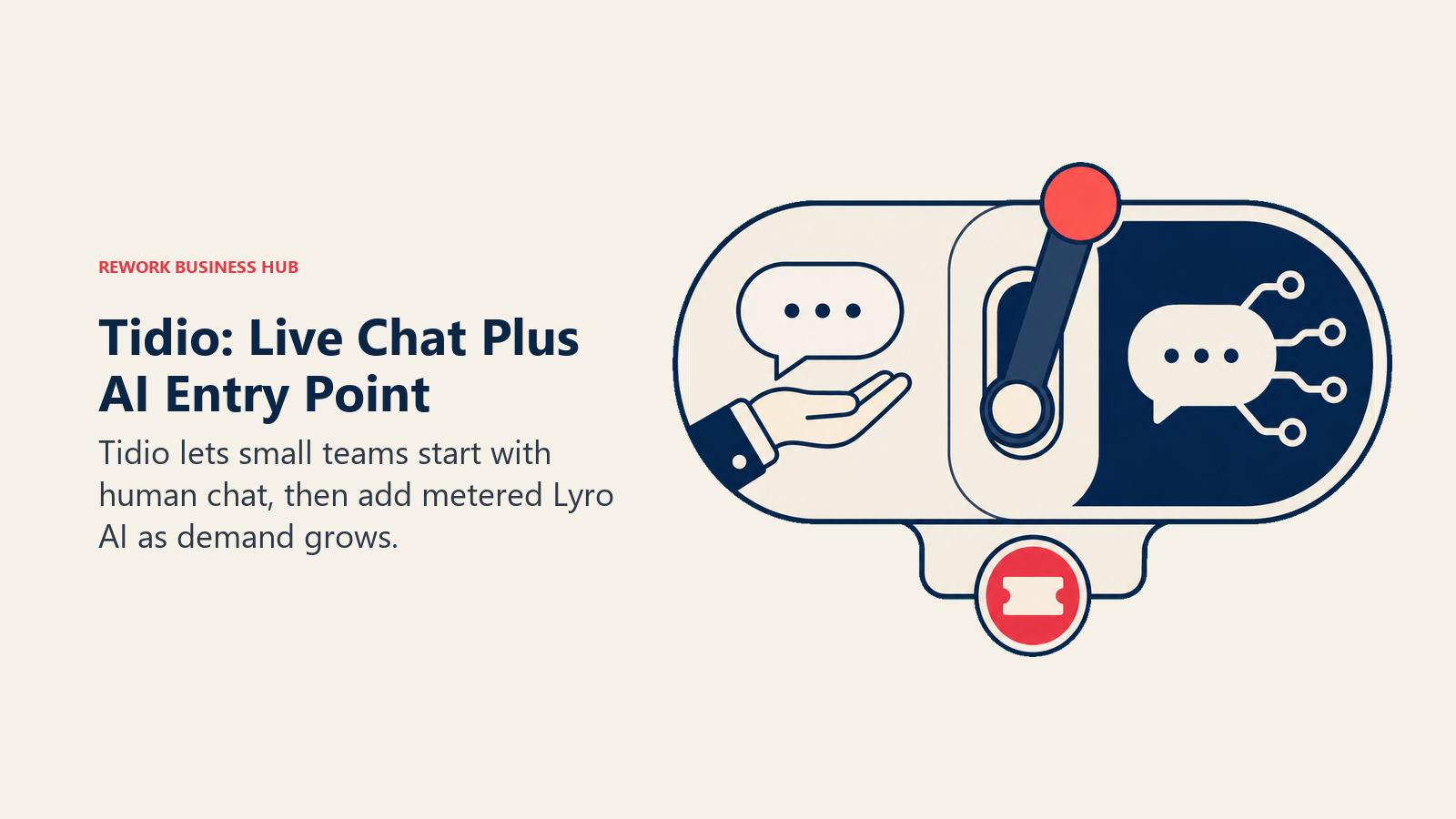
Best for: Small business websites that want live chat now and are testing whether a paid AI agent is worth adding
Key strengths:
- Genuinely the cheapest usable entry point into AI-assisted chat in this category, with a free tier and a low-cost Starter plan
- 50 free Lyro conversations included as a one-time trial before you commit to paying for AI specifically
- Combines human live chat and AI agent responses in one widget, useful for teams not ready to go fully automated
Limitations:
- Lyro AI is billed as a separate SKU on top of the base plan; the advertised $24-29/mo entry price does not include meaningful AI usage
- To get Lyro properly bundled rather than metered as an add-on, you need the Plus plan starting at $300/month
- At real usage volume, a Lyro-enabled setup commonly runs $200-300/month rather than the advertised entry price
Pricing: Free $0/mo; Starter ~$24.17/mo (100 billable conversations); Growth from ~$49.17/mo (250 conversations); Plus from $300/mo + usage. Lyro AI Agent standalone add-on from $32.50/mo (50 conversations). See tidio.com/pricing.
| What you get | What you don't |
|---|---|
| Cheapest real entry point into AI chat | Lyro is a metered add-on, not included in the base price |
| 50 free trial conversations to test fit | Full bundled AI access needs the $300/mo Plus tier |
| Human + AI chat combined in one widget | Real-world cost often lands well above the sticker price |
For a deeper look at where Tidio fits against other live-chat platforms, see best Tidio alternatives.
6. Chatling: Simple, Predictable Pricing for Budget-Conscious SMBs
Chatling's differentiator is pricing you can actually predict. Where Chatbase and other credit-metered tools can produce a surprise bill when a model upgrade doubles your per-message cost, Chatling keeps its credit system simpler and its plan tiers fewer, trading some flexibility for a bill that's easier to budget against.
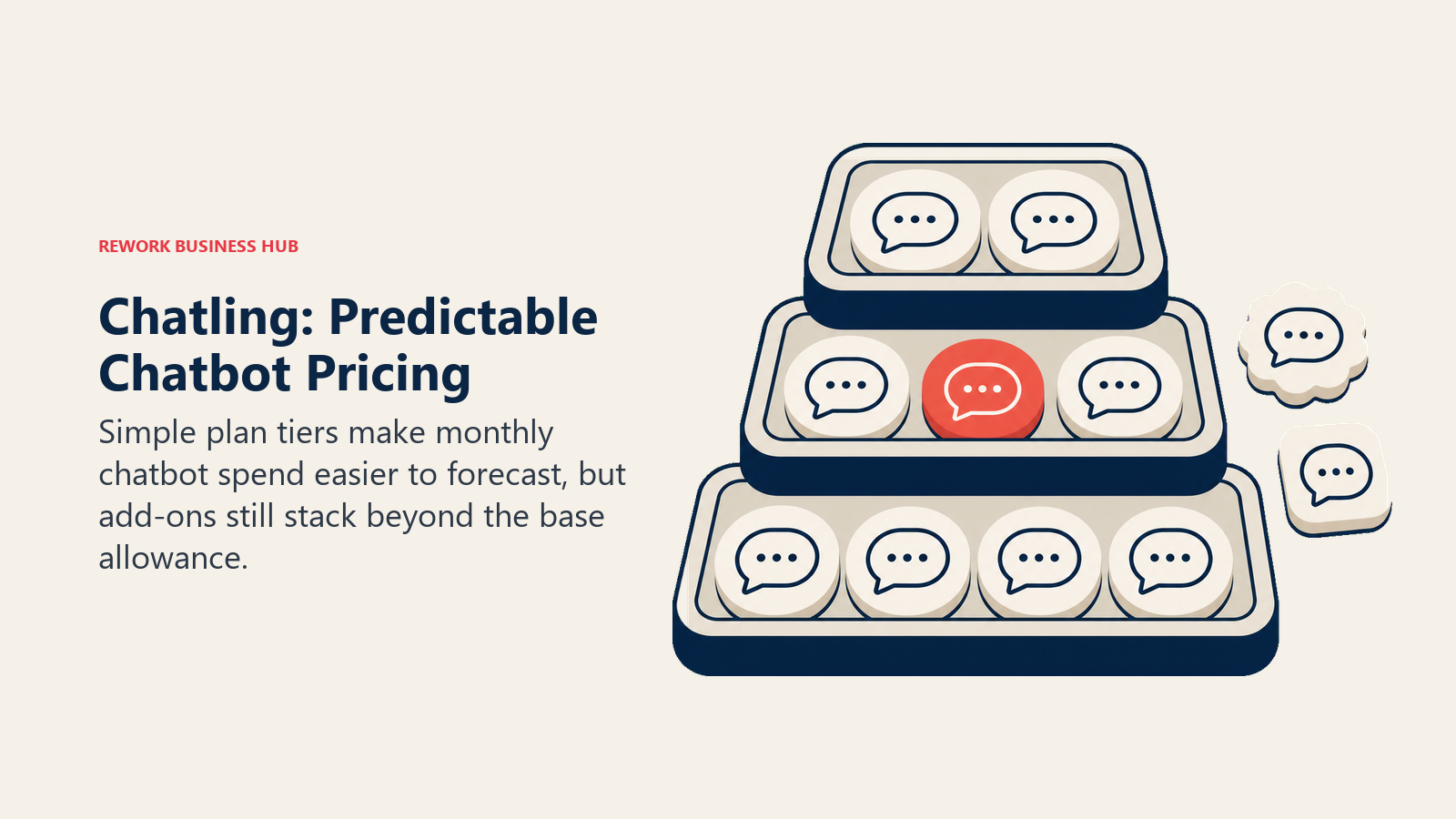
Best for: Small businesses and solo operators who want a working chatbot without parsing a complicated credit-consumption table
Key strengths:
- Simple three-tier structure (Free, Standard, Plus) with fewer moving parts than Chatbase's model-dependent credit costs
- Multiple chatbots and team seats included even on the entry paid tier
- Unlimited non-AI chats on the free plan, useful for testing the flow-builder experience before paying for AI credits
Limitations:
- The AI credit pool is thin relative to Chatbase and Chatling's own knowledge base can hold far more content than the credits allow you to actually query
- Add-ons (extra credits, extra seats, extra chatbots, branding removal) are all separate line items that stack quickly
- Smaller ecosystem of native integrations compared to Chatbase or Voiceflow
Pricing: Free $0/mo (100 AI credits, 2 chatbots, 1 seat); Standard $40/mo, $32/mo annual (3,000 credits, 3 chatbots, 2 seats); Plus $140/mo, $112/mo annual (15,000 credits, 5 chatbots, 3 seats). See chatling.ai/pricing.
| What you get | What you don't |
|---|---|
| Simpler, more predictable pricing structure | Credit pool is thin for higher-traffic sites |
| Multiple chatbots and seats on entry paid tier | Add-ons stack up quickly beyond base credits |
| Unlimited non-AI chats on the free plan | Smaller integration ecosystem than larger rivals |
7. ManyChat (AI Step): The Strongest Social and Messenger Bot Builder
ManyChat didn't start as an AI chatbot builder, it started as a Messenger and Instagram automation tool, and that channel-first heritage is still its biggest differentiator. If your bot needs to live inside Instagram DMs, Messenger, or WhatsApp rather than (or in addition to) a website, ManyChat's channel coverage is deeper than any tool built website-first.
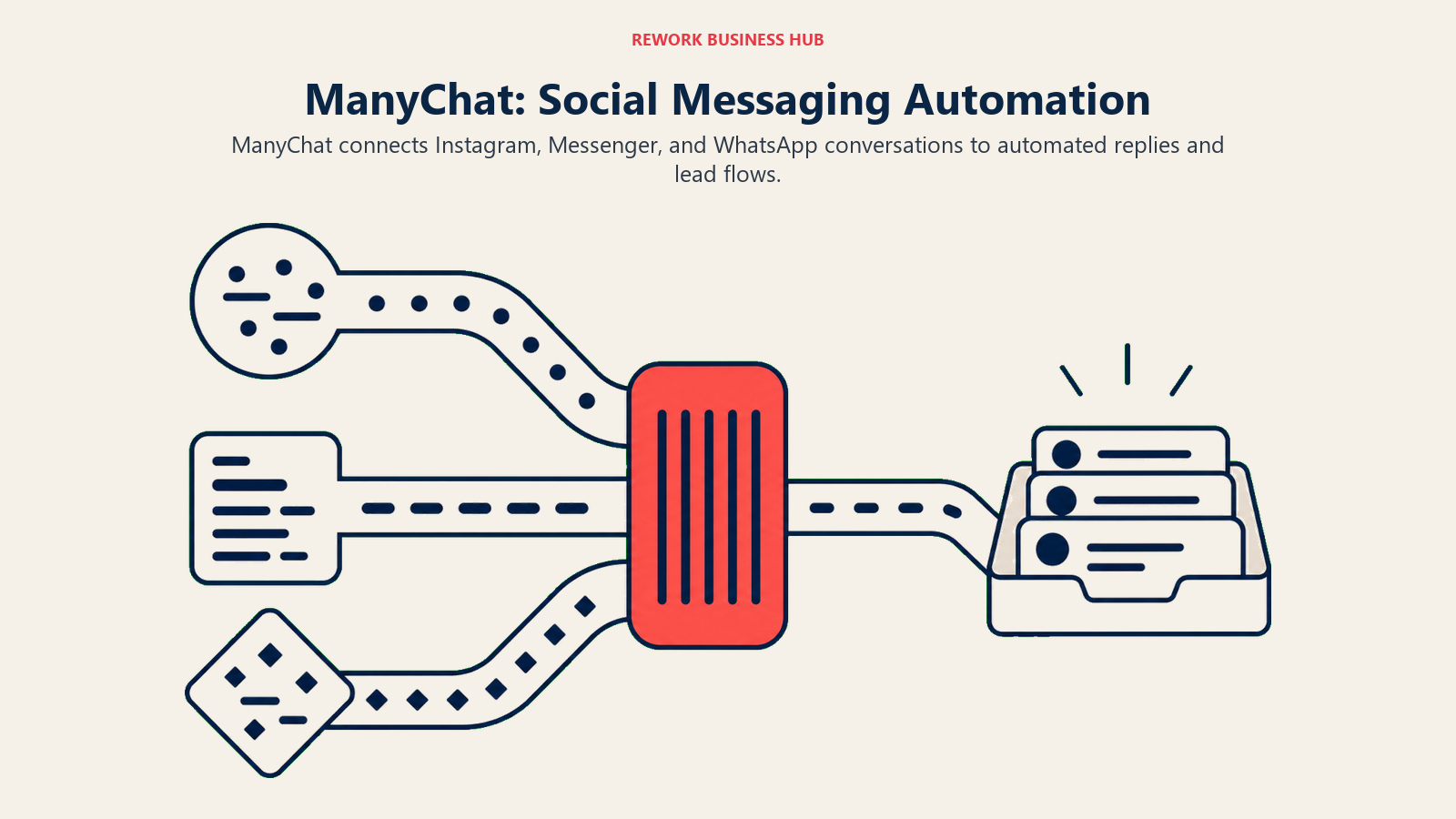
Best for: DTC brands and social-first businesses building a bot for Instagram DM, Messenger, or WhatsApp rather than a website widget
Key strengths:
- Deepest native coverage of Instagram DM, Messenger, and WhatsApp of any tool in this list
- Visual flow builder pairs well with existing social ad and DM-automation campaigns
- Contact-based billing scales predictably as your audience grows, if you keep your contact list clean
Limitations:
- AI is not included in any plan; the AI Step is a flat $29/month add-on on top of Pro or Business
- The March 2026 pricing overhaul cut the free tier from 1,000 contacts to just 25, pushing nearly all real usage into a paid plan immediately
- Real-world monthly spend commonly lands well above the advertised entry price once WhatsApp, SMS, and AI are all active
Pricing: Free (25 contacts, 2 channels); Essential $14/mo (250 contacts); Pro $29/mo (2,500 contacts); Business $69/mo (7,500 contacts); AI Step add-on +$29/mo on Pro or Business. See manychat.com/pricing.
| What you get | What you don't |
|---|---|
| Deepest Instagram/Messenger/WhatsApp coverage | AI is a separate $29/mo add-on, not included |
| Visual builder integrates with social ad flows | Free tier now caps at just 25 contacts |
| Predictable contact-based billing | Real cost often runs well past the sticker price |
For the broader field of options in this channel, see best ManyChat alternatives. DTC and online retail teams evaluating AI more broadly may also want best AI tools for e-commerce in 2026.
8. CustomGPT.ai: Built for Bots Grounded Strictly in Your Own Content
CustomGPT.ai's whole premise is anti-hallucination: the platform is built specifically to answer only from the documents, URLs, and data sources you feed it, with citation-backed responses, rather than blending in the model's general training knowledge. For businesses where a confidently wrong answer is a real liability (compliance, legal, technical documentation), that constraint is the point.
Best for: Businesses that need a bot to answer strictly from their own documentation with minimal hallucination risk
Key strengths:
- Strong retrieval-augmented generation (RAG) focus with citations back to source documents
- Auto-Sync keeps the bot's knowledge current as your source content changes, without manual re-uploads
- Multiple agents included even on the entry Standard tier, useful for teams running more than one bot
Limitations:
- Query caps (1,000/month on Standard) are tight for anything beyond a low-traffic internal or support use case
- Jumping from Standard to Premium is a large price step ($99 to $499/month) with no smaller mid-tier in between
- Less suited to complex multi-step conversation flows than Voiceflow or Botpress; it's built for grounded Q&A, not branching logic
Pricing: Standard $99/mo, $89/mo annual (10 agents, 1,000 queries/mo); Premium $499/mo (25 agents, 5,000 queries/mo, Auto-Sync); Enterprise custom. 7-day free trial. See customgpt.ai/pricing.
| What you get | What you don't |
|---|---|
| Strong RAG accuracy with source citations | Query caps are tight, especially on Standard |
| Auto-Sync keeps answers current automatically | Big price jump from Standard to Premium |
| Multiple agents included from the entry tier | Not built for complex branching conversation logic |
9. Stack AI: No-Code Agent Orchestration Beyond Just Chat
Stack AI's positioning shifted meaningfully in 2026: rather than competing as a self-serve chatbot builder, it repositioned around no-code orchestration of AI agents and workflows, of which a customer-facing chatbot is just one output. That's a genuinely different tool than the rest of this list, useful if you want one platform building both your public-facing bot and internal AI workflows.
Best for: Companies wanting one no-code platform to build both a customer-facing chatbot and internal AI-driven workflows, not just a chat widget
Key strengths:
- No-code visual builder for full agent workflows (data lookups, API calls, multi-step logic), not just conversational Q&A
- SOC 2 Type II compliance and private model deployment available for regulated or security-conscious teams
- Free tier remains genuinely usable for prototyping before any sales conversation
Limitations:
- Self-serve Builder and Team tiers that existed in earlier pricing were discontinued in 2026; nearly everything beyond Free now requires an enterprise sales conversation
- Buyers should expect a 5- to 6-figure annual minimum and a 60- to 90-day procurement cycle for paid access
- Overkill if you just need a simple website FAQ bot rather than broader agent workflows
Pricing: Free $0/mo (500 workflow runs/mo, 2 projects, 1 seat); Enterprise custom, typically a 5- to 6-figure annual minimum.
| What you get | What you don't |
|---|---|
| No-code orchestration beyond simple chat | Self-serve paid tiers were discontinued in 2026 |
| SOC 2 Type II and private deployment options | Real access requires an enterprise sales cycle |
| Genuinely usable free tier for prototyping | Overkill for a simple website FAQ use case |
10. Sendbird: The Chat SDK for Building AI Into Your Own Product
Sendbird is the outlier on this list in one important way: it's not primarily a website-widget builder, it's a full chat infrastructure SDK that product teams embed directly into their own app or platform, with AI agents layered on top of that same messaging backbone. If your "chatbot" needs to live inside your own product rather than as a widget on a marketing site, this is a different category of tool than the rest of this list.
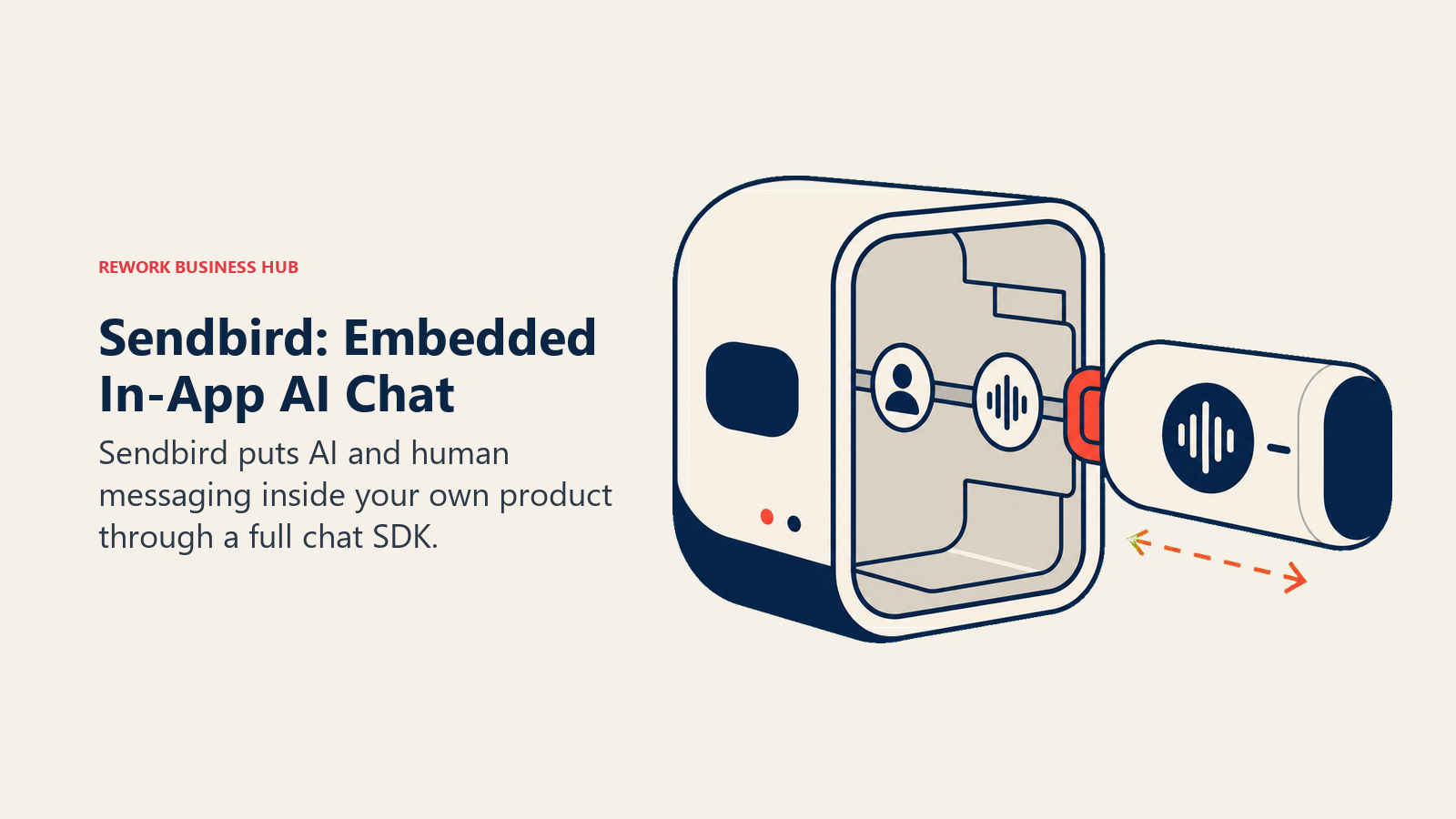
Best for: Product and engineering teams embedding AI chat directly inside their own app or platform, not adding a widget to a marketing website
Key strengths:
- Full chat SDK (not just a widget) for teams building messaging as a core product feature
- AI agents run on the same infrastructure as human-to-human chat, useful for hybrid support and community use cases
- Usage-based pricing scales with monthly active users, which lines up naturally with product-usage-based budgeting
Limitations:
- Meaningful overkill and cost if all you need is a website FAQ widget; the SDK model assumes real engineering investment
- Pricing is based on MAU, peak concurrent connections, and message volume together, making a monthly bill harder to predict than a flat SaaS tier
- Enterprise-scale annual contracts range from roughly $12,000 for small deployments to $600,000+ for large-scale ones, per Sendbird's published transaction data
Pricing: Free trial available; Starter from $349/mo billed annually, $399/mo month-to-month (up to 5,000 MAU); Pro from $499/mo billed annually, $599/mo month-to-month (higher MAU); Enterprise custom, usage-based on MAU/PCC/messages. See sendbird.com/pricing/chat.
| What you get | What you don't |
|---|---|
| Full chat SDK for embedding inside your product | Real overkill for a simple website widget |
| AI agents on the same backbone as human chat | MAU-based billing is harder to predict than flat pricing |
| Scales cleanly with product usage and growth | Enterprise contracts can run into six figures |
11. Intercom Fin: Outcome-Priced AI You Can Build Into Your Own Site
Fin's model breaks from nearly every other tool on this list: instead of paying for seats, message credits, or a monthly subscription, you pay $0.99 for each resolved outcome, and nothing when the bot doesn't resolve anything. For teams that want a custom, trained bot on their site but are wary of paying a flat fee for an AI agent that might sit mostly idle, that model is worth understanding even outside a pure support-ticketing evaluation.
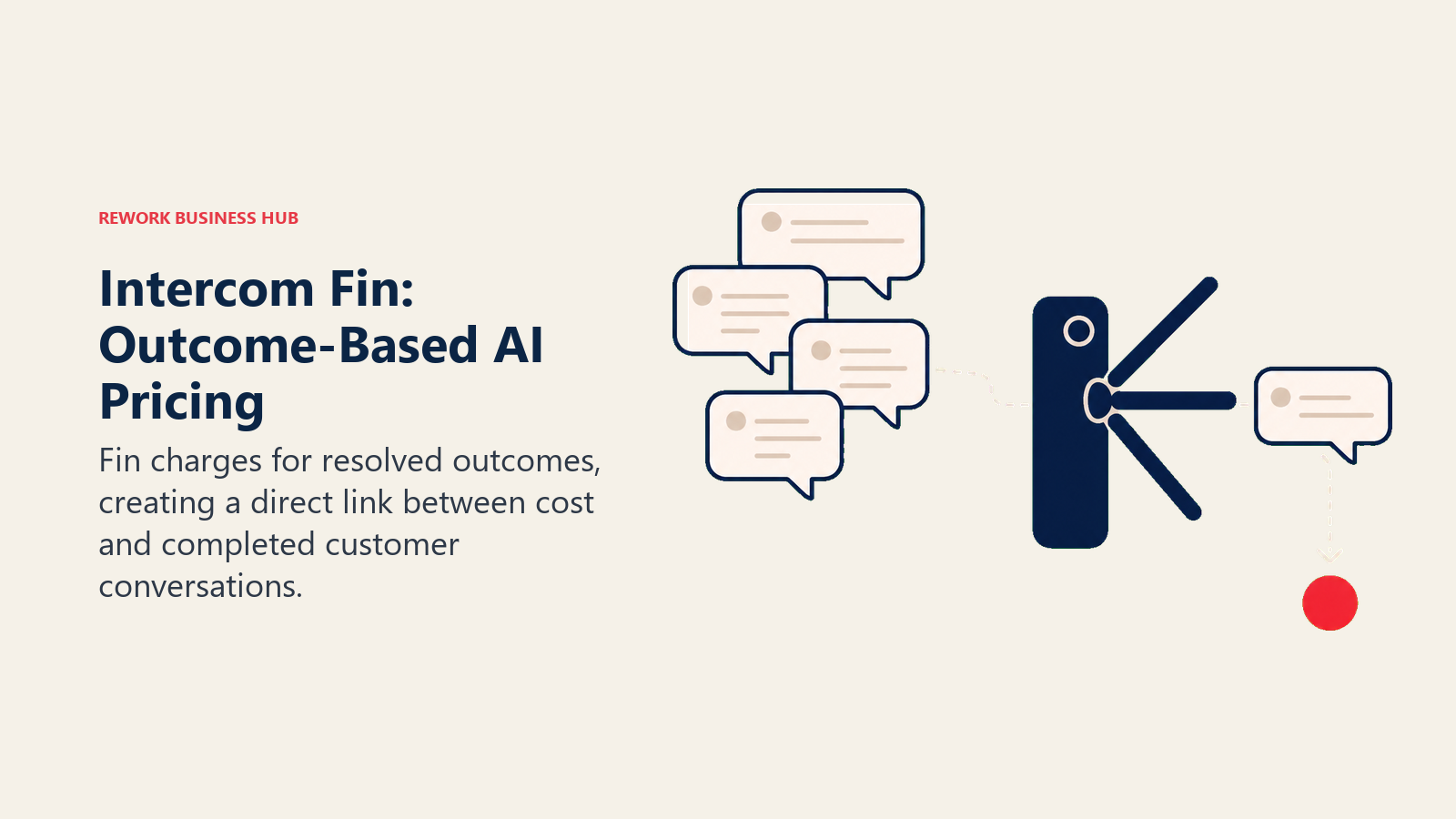
Best for: Product-led SaaS companies and support teams that want a custom AI agent on their site with outcome-based pricing instead of a flat subscription
Key strengths:
- $0.99-per-outcome pricing is genuinely usable at small scale, not gated behind an enterprise contract
- Runs as a standalone AI agent on non-Intercom helpdesks too, not locked to Intercom's own inbox
- Deep native integration with Intercom's own Inbox and Helpdesk if you're already using both
Limitations:
- A 50-outcome monthly minimum sets a real $49.50/month floor even for a lightly trafficked site
- "Resolution" counts when a customer simply doesn't ask a follow-up, which can overstate genuine problem-solving in reported metrics
- Salesforce's pending roughly $3.6 billion acquisition of Intercom (announced June 2026, not yet closed) adds roadmap uncertainty for anyone building on it long term
Pricing: $0.99 per outcome (resolution, procedure handoff, or disqualification); $9.99 per qualified lead; 50-outcome/month minimum. Fin for platforms base fee $49/mo. See fin.ai/pricing.
| What you get | What you don't |
|---|---|
| Pay only for resolved outcomes, not every attempt | 50-outcome/month minimum sets a real cost floor |
| Works standalone on non-Intercom helpdesks | "Resolution" metric can overstate true fix rate |
| Deep native fit with Intercom's own Inbox | Pending Salesforce acquisition adds roadmap risk |
For the full evaluation of Fin against other dedicated support-AI platforms, see best AI tools for customer support in 2026, and for lighter-weight Intercom alternatives, best Intercom alternatives.
12. Ada: The Enterprise Choice for High-Volume, No-Code Bot Building
Ada has been building dedicated AI customer-service agents longer than almost anyone else in this category, and its no-code builder is genuinely capable of handling complex, high-volume deployments without a developer writing custom flow logic. The tradeoff is that Ada sells almost exclusively to enterprises that can absorb a five- or six-figure annual commitment and a real sales process.
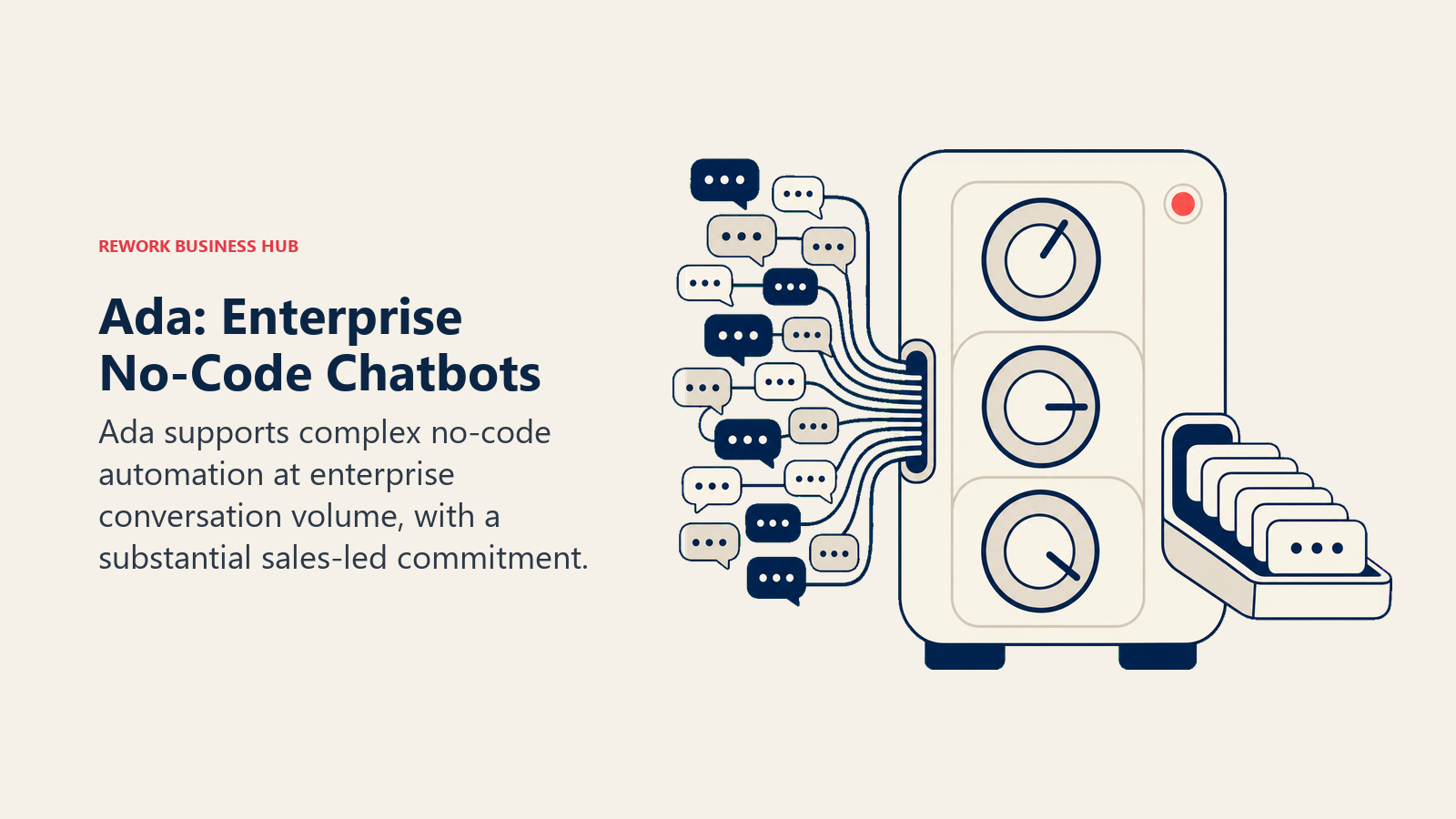
Best for: Large enterprises building a bot for 300,000-plus conversations a year, that want no-code configuration without sacrificing scale
Key strengths:
- One of the longest-running dedicated AI agent platforms, with real production experience at high conversation volume
- No-code builder handles genuinely complex logic without requiring developer involvement
- Moved away from pure per-resolution billing toward a conversation-based model, which Ada argues reduces the incentive to game resolution counts
Limitations:
- No public pricing and no self-serve signup; every deployment starts with a sales conversation
- Buyer-reported starting price is roughly $30,000/year, with a median annual contract closer to $70,000 and a range up to $300,000+ depending on scope
- Overkill for anything below true enterprise conversation volume; the sales process alone makes it a poor fit for a small business testing the waters
Pricing: Custom, quote-only. Buyer-reported starting point roughly $30,000/year; median annual contract roughly $70,000/year; range up to $300,000+/year at scale.
If Ada's enterprise commitment is more than your support org needs, best help desk software in 2026 ranks 13 lighter ticketing platforms by fit.
| What you get | What you don't |
|---|---|
| No-code builder proven at true enterprise scale | No public pricing or self-serve access |
| Conversation-based pricing, not raw per-resolution | Starting commitment runs into five figures minimum |
| Long production track record at high volume | Poor fit below genuine enterprise conversation volume |
13. Dialogflow CX (Google): The Developer's Choice for API-Grade NLU
Dialogflow CX is Google's own conversational AI platform, and it's the most technically capable, developer-controlled option on this list: state-machine-based flow design, deep integration with Google Cloud and Gemini models, and pay-per-session pricing that scales down to genuinely small usage as well as up to enterprise volume. It's not a tool a marketer opens and configures alone; it's a platform a developer builds on.
Best for: Engineering teams that want Google-grade natural language understanding and are building the bot as a real software project, not a no-code config
Key strengths:
- Deepest integration with Google Cloud infrastructure and Gemini models of any tool on this list
- True pay-per-session pricing with no seat minimums, which can be genuinely cheap at low volume
- $600 no-cost trial credit for new customers, active for 12 months, to test real usage before committing spend
Limitations:
- Requires real engineering effort to design flows well; there's no meaningful no-code path for a non-technical team
- Voice sessions are priced separately from text and meaningfully more expensive per session
- RAG-style data store Q&A features carry a 50-100% cost premium on top of standard session pricing
Pricing: Pay-as-you-go: roughly $20 per 100 text sessions (about $0.007 per text request); audio input from $0.0065 per 15 seconds; audio output from $4 per 1 million characters. $600 no-cost trial credit for new customers. See Google Cloud's Conversational Agents pricing.
| What you get | What you don't |
|---|---|
| Google-grade NLU with deep Cloud/Gemini integration | Requires real developer effort, no no-code path |
| True usage-based pricing, cheap at low volume | Voice sessions cost meaningfully more than text |
| $600 trial credit to test before committing spend | RAG-style features add a 50-100% cost premium |
Chatbot Builder Buying Mistakes to Avoid
Most failed chatbot projects aren't a model-quality problem, they're a scoping and maintenance problem. Before you sign up for a plan, avoid these common mistakes.
| Mistake | What It Looks Like | What to Do Instead |
|---|---|---|
| Picking based on the advertised entry price alone | Choosing Chatbase Hobby or Tidio Starter without checking real credit consumption | Estimate your actual monthly message/conversation volume before comparing sticker prices |
| Buying a developer platform for a non-technical team | Signing up for Botpress or Dialogflow CX with no engineer to build it | Match the tool to who will actually maintain it, not just who evaluated it |
| Ignoring where the bot needs to live | Building a website widget when customers actually message you on Instagram or WhatsApp | Confirm the primary channel first (website, app, or messenger) before picking a builder |
| Underestimating knowledge base maintenance | Training the bot once at launch and never updating source content | Choose a tool with auto-sync or scheduled re-training if your content changes often |
| Not testing hallucination risk before launch | Launching a RAG bot on compliance-sensitive content without adversarial testing | Run a red-team pass on tricky, out-of-scope questions before it's public-facing |
| Assuming AI is included in the base plan | Budgeting for ManyChat Pro or Tidio Starter without adding the separate AI add-on cost | Read the pricing page for what's bundled versus a paid add-on before you commit |
Decision Framework
Use the table below to match technical ownership, deployment channel, workflow complexity, and pricing preference to the chatbot builder that fits.
| If you need... | Pick... | Why |
|---|---|---|
| The fastest no-code widget for a website, live same-day | Chatbase | Train on URLs/docs in minutes; widest integration library |
| Complex, branching conversation logic designed visually | Voiceflow | Best-in-class visual canvas for multi-step flows |
| Full code-level control and unlimited bots | Botpress | Developer-first platform, unlimited bots on every paid plan |
| A conversational form replacing a static lead-gen form | Landbot | Purpose-built conversational-form UX; native WhatsApp |
| The cheapest real entry into live chat plus AI | Tidio (Lyro) | Free tier, low-cost Starter, 50 free AI conversations to test |
| Simple, predictable pricing on a tight budget | Chatling | Fewer moving parts than credit-metered competitors |
| A bot for Instagram DM, Messenger, or WhatsApp first | ManyChat | Deepest native social/messenger channel coverage |
| Minimal hallucination risk on your own documentation | CustomGPT.ai | RAG-first, citation-backed answers, Auto-Sync |
| No-code orchestration beyond just a chat widget | Stack AI | Full agent workflows, not only conversational Q&A |
| A bot embedded inside your own app or product | Sendbird | Real chat SDK, not just a website widget |
| Outcome-based pricing instead of a flat subscription | Intercom Fin | $0.99/outcome; no seats or per-message billing |
| Proven no-code performance at enterprise conversation volume | Ada | Longest track record at 300K+ conversations/year |
| Deepest Google Cloud/Gemini integration for developers | Dialogflow CX | True pay-per-session pricing; state-machine flow design |
What to Do Next
Narrow your list to two tools based on who's actually going to build and maintain the bot, not just the feature list. If you're non-technical and want something live this week, start a free trial with Chatbase, Chatling, or Landbot and train it on your real content before you evaluate anything else. If you have engineering resources and need real logic or scale, prototype in Botpress or Voiceflow first, since both offer usable free tiers before you commit spend. And if your actual need turns out to be enterprise support-ticket automation rather than a builder, back up to best AI tools for customer support in 2026 before you buy.

Principal Product Marketing Strategist
On this page
- Updated July 2026: What Changed
- Key Facts
- Quick Comparison Table
- How to Choose an AI Chatbot Builder in 2026
- Framework: By Use Case
- Sizing and Persona Table
- 1. Chatbase: Fastest No-Code GPT Widget for a Website
- 2. Voiceflow: The Best Visual Canvas for Complex Conversation Design
- 3. Botpress: The Developer-First Platform With Full Code-Level Control
- 4. Landbot: Conversational Forms Plus a Website and WhatsApp Bot
- 5. Tidio (Lyro AI Agent): Cheapest Usable Entry Into Live Chat Plus AI
- 6. Chatling: Simple, Predictable Pricing for Budget-Conscious SMBs
- 7. ManyChat (AI Step): The Strongest Social and Messenger Bot Builder
- 8. CustomGPT.ai: Built for Bots Grounded Strictly in Your Own Content
- 9. Stack AI: No-Code Agent Orchestration Beyond Just Chat
- 10. Sendbird: The Chat SDK for Building AI Into Your Own Product
- 11. Intercom Fin: Outcome-Priced AI You Can Build Into Your Own Site
- 12. Ada: The Enterprise Choice for High-Volume, No-Code Bot Building
- 13. Dialogflow CX (Google): The Developer's Choice for API-Grade NLU
- Chatbot Builder Buying Mistakes to Avoid
- Decision Framework
- What to Do Next