Best AI Tools for Ecommerce in 2026: 13 Tools Ranked by Use Case
Turn this article into takeaways for your work.


Each assistant summarizes the article only for you and suggests best practices for your work.
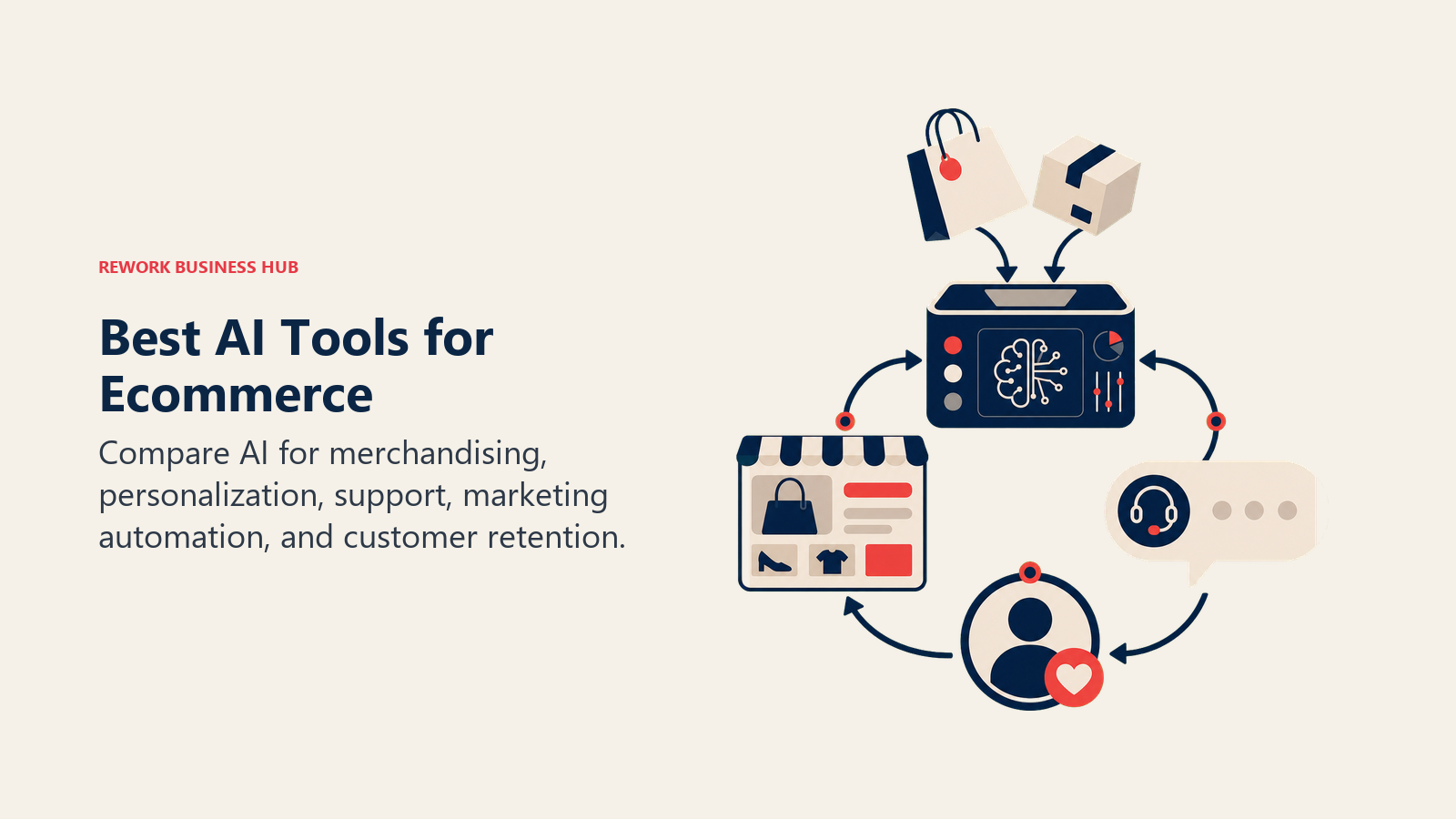
If you're building an AI stack for an online store in 2026, Shopify Magic and Sidekick cover the free baseline built into the platform, Klaviyo AI leads AI-driven email and SMS, Gorgias and Zipchat lead AI support and sales chat, Rebuy and Nosto lead product recommendations and merchandising, and Triple Whale and Particl lead analytics and competitive intelligence. This guide ranks 13 tools by the specific job they do, not by hype.
Most "best AI tools for ecommerce" roundups mix a free Shopify feature with a $2,000-a-month enterprise merchandising platform and call it a ranking. That's not useful if you're actually trying to decide what to buy. Each tool below is evaluated on what job it solves, who it's built for, and what it actually costs, based on vendor pricing pages and buyer-reported data. If you want the broader cross-industry view first, best AI tools in 2026 ranks the top 25 across every category, not just ecommerce.
Updated July 2026: What Changed
- Klaviyo's Customer Agent AI moved off its introductory rate. The $140/month launch price expired March 31, 2026. It now runs $200/month plus $0.70 per conversation beyond the 50 included monthly, on top of the base email/SMS plan.
- Agentic checkout went mainstream. Salesforce's Shopping Index found AI agents drove roughly 20% of global online retail orders during the 2025 holiday season, which is why AI concierge tools like Zipchat and Shopify's own Sidekick got serious 2026 roadmap investment.
- Shopify widened Sidekick's paid ceiling. Custom app-building through Sidekick, previously open to Basic-plan merchants through April 2026, is now limited to Grow, Advanced, Shopify Plus, and Enterprise plans.
- Support AI converged on pay-per-resolution pricing. Gorgias' AI Agent and several chat vendors now charge per resolved conversation instead of a flat per-seat AI add-on, which changes how you budget support AI cost as ticket volume grows.
Key Facts
- AI agents drove roughly 20% of global online retail orders during the 2025 holiday season, worth about $262 billion in sales, per Salesforce's Shopping Index.
- AI assistant traffic to retailers on Salesforce Commerce Cloud grew 119% year over year in the first half of 2025, per Salesforce's Shopping Index.
- Generative AI could unlock $240 billion to $390 billion in annual economic value for retailers, roughly a 1.2 to 1.9 percentage point margin increase, per McKinsey.
- 82% of retailers have piloted generative AI for customer service reinvention, and 36% are already scaling it, per McKinsey.
- 51% of ecommerce businesses currently use AI to build personalized shopping experiences, per Shopify.
- AI-driven product recommendations are projected to boost ecommerce sales by as much as 59%, per Shopify.
Quick Comparison Table
| Tool | Best For | Standout Capability | Starting Price | Free Tier? |
|---|---|---|---|---|
| Shopify Magic & Sidekick | Any Shopify merchant wanting AI at zero extra cost | Native AI copy, image editing, and store assistant | Free on every Shopify plan | Yes (included) |
| Klaviyo AI | AI-driven email and SMS marketing | Predictive segments plus a pay-per-resolution Customer Agent | Free up to 250 profiles; Customer Agent from $200/mo | Yes |
| Gorgias AI Agent | Automating support tickets on a Shopify store | Resolves tickets autonomously, billed per resolution | ~$0.90 per resolved conversation (plan-dependent) | No |
| Zipchat AI | AI sales and support chat that reads your live catalog | Agentic Skills: order lookup, returns, stock checks | Free (120 replies/mo); $49/mo (Starter) | Yes |
| Rebuy | AI cart upsells and post-purchase offers | Smart cart, dynamic bundles, thank-you-page monetization | Free (Monetize); paid from $25/mo | Yes |
| Nosto | Enterprise AI search and merchandising | Experience.AI engine for real-time recommendations | ~$500-$2,000/mo (GMV-based) | No |
| Octane AI | AI quizzes for product recommendations and lead capture | Smart Products, Smart Copy, Image Analyzer on every plan | $50/mo (400 credits) | 14-day trial |
| Triple Whale | Unified AI analytics and marketing attribution | Blended attribution across ad platforms in one dashboard | Free; paid from $219/mo (GMV-based) | Yes |
| Particl | AI competitive pricing and assortment intelligence | Tracks 600M+ SKUs across 20,000+ retailers | $250/mo (Starter) | No |
| Vue.ai | AI catalog tagging and on-model imagery for fashion/retail | Computer-vision tagging, visual search, VueModel imagery | Custom, module-based quote | No |
| Pencil | AI-generated ad creative at volume | GenAI ad variant generation tied to ROAS/CPA data | $14/mo (Core, 50 generations) | 6 free ads |
| AdCreative.ai | AI ad creative generator, credit-based | Bulk on-brand ad and creative asset generation | ~$29-39/mo (10 credits) | 7-day trial |
| ChatGPT | General-purpose AI for content, planning, and ops | Broadest use case coverage of any tool on this list | Free; Plus $20/mo | Yes |
How to Choose AI Tools for Your Store
Most ecommerce AI buying mistakes happen because a team buys the flashiest tool instead of mapping it to an actual bottleneck. Before you add a new AI line item to your stack, answer three questions:
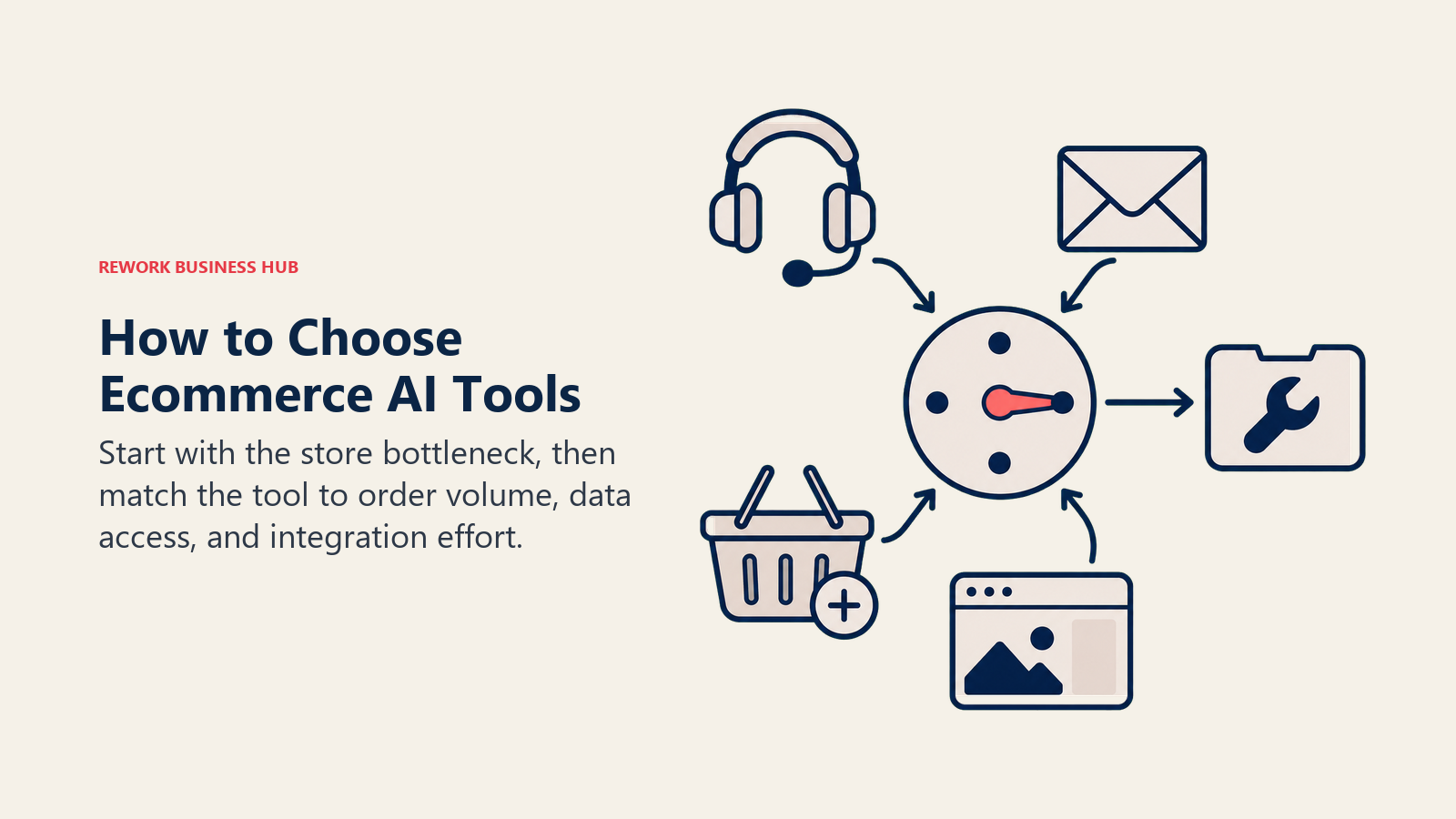
- What job is actually costing you money right now? Slow support response, low email conversion, weak upsell attach rate, and stale ad creative are four different problems with four different tools. Don't buy a merchandising platform to fix a support backlog.
- What's your order volume and revenue band? A $2M/year D2C brand and a $200M/year multi-brand retailer need fundamentally different tools. Nosto and Vue.ai are built for catalog depth and GMV that a small store doesn't have yet; a store that size gets more value from Shopify's native AI and Rebuy.
- Does the tool touch data you already have, or does it need a new integration? Tools that plug directly into Shopify's admin (Magic, Sidekick, Zipchat, Rebuy) have near-zero setup friction. Tools with their own data layer (Nosto, Particl) take longer to stand up but go deeper.
82% of retailers have already piloted generative AI for customer service specifically, and 36% report they're scaling it, per McKinsey, so if support is your bottleneck, you're not early to this category, you're mid-pack. It's worth reading what to look for in help desk software before you evaluate AI support add-ons specifically, since the AI layer only works as well as the ticketing system underneath it.
1. Shopify Magic & Sidekick: The Free Baseline for Every Shopify Merchant
Shopify's bet is that AI shouldn't be a paid add-on, it should be table stakes built into the platform every merchant already pays for. Shopify Magic covers AI-generated product descriptions, email copy, and image editing, while Sidekick is the conversational assistant that can answer store questions, build reports, and (on higher tiers) generate custom internal apps from a plain-English description.
Best for: Any Shopify merchant who wants AI-assisted copy, image editing, and store operations without adding a new vendor
Key strengths:
- Completely free across every Shopify plan, with no separate AI subscription
- Covers the most common day-to-day AI tasks: product copy, email drafts, image touch-ups
- Sidekick can query your own store data and answer operational questions directly
Limitations:
- Custom app-building through Sidekick is now limited to Grow, Advanced, Shopify Plus, and Enterprise plans
- Not a replacement for dedicated personalization, support, or analytics AI, it's a starting point
- Output quality on product copy still needs a human edit pass for brand voice
Pricing: Free on every Shopify plan for core Magic and Sidekick features. See shopify.com/sidekick.
| What you get | What you don't |
|---|---|
| AI copy, image editing, and a store assistant at zero extra cost | Custom app generation gated to higher plan tiers |
| No new integration; it's already inside your admin | Not built for deep personalization or merchandising |
| Fast to start using on day one | Needs a human review pass on brand-voice copy |
Not to be confused with: if you're evaluating whether Shopify itself is the right platform, not just its AI features, best Shopify alternatives and best WooCommerce alternatives cover the platform decision separately.
2. Klaviyo AI: Predictive Segments and an AI Customer Agent for Email/SMS
Klaviyo's product philosophy is that email and SMS marketing should run on the same unified customer profile as support and analytics, and its AI layer (Marketing Agent, predictive segments, and the newer Customer Agent) is built on top of that same data model rather than bolted on separately.
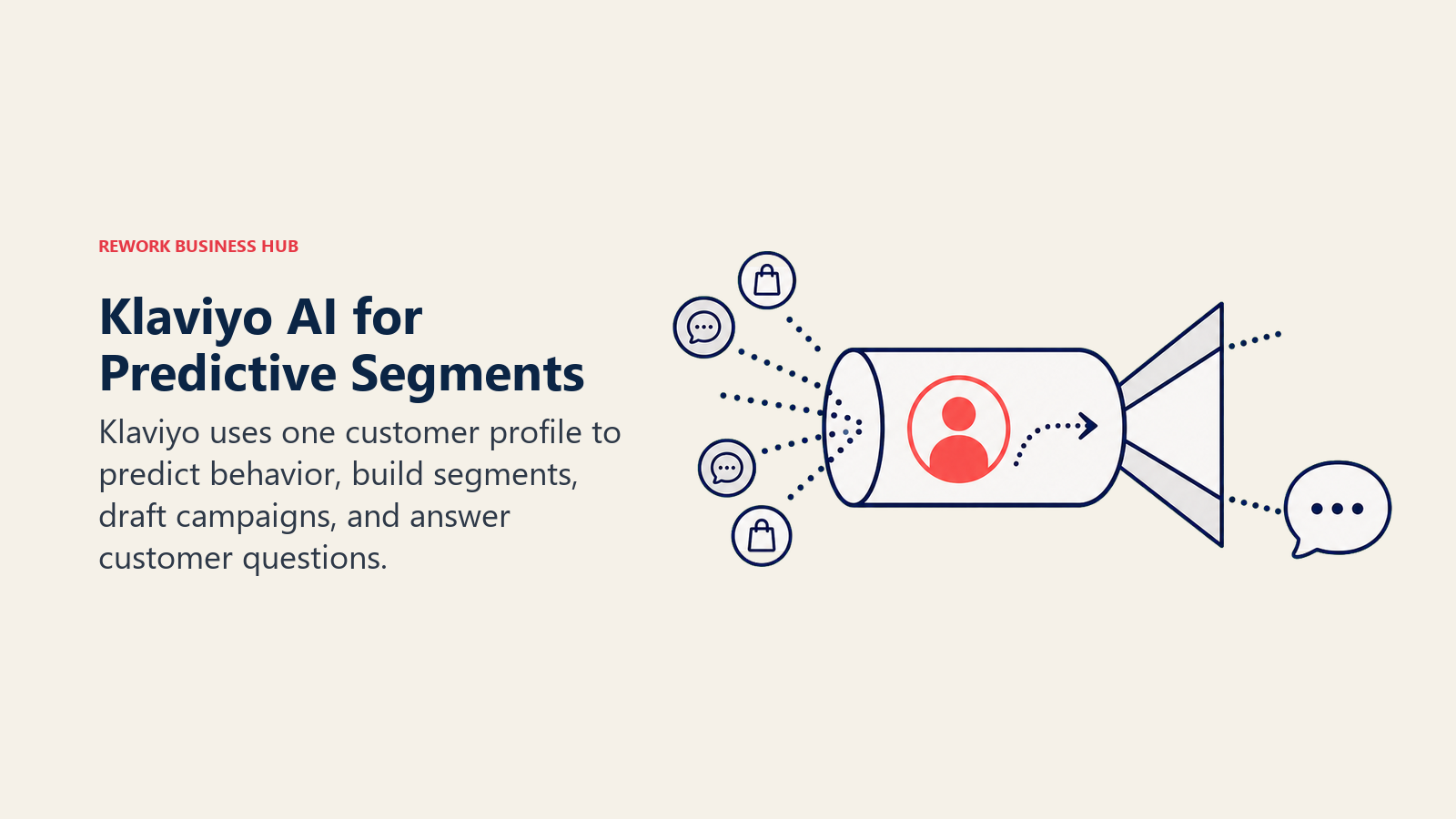
Marketing Agent handles campaign and flow creation, AI-generated segments target customers by predicted behavior (likely to churn, likely to buy again), and Customer Agent answers support-style questions inside the same platform holding your email data, priced per conversation rather than per seat.
Best for: D2C brands that already run email/SMS as a primary revenue channel and want AI layered directly on that data
Key strengths:
- Predictive analytics and AI-generated segments included in standard paid plans
- Marketing Agent drafts full campaigns and flows from a prompt, not just subject lines
- Customer Agent shares the same customer profile as your marketing data, no separate sync
Limitations:
- Customer Agent is a separate line item on top of your base plan, not included
- Base plan cost scales fast with list size; a 250K-contact list runs into five figures a year
- AI overage pricing ($0.70/conversation past 50 included) is easy to underestimate at scale
Pricing: Free up to 250 profiles. Paid plans scale with contacts, roughly $720/month at 50,000 contacts and $2,300/month at 250,000. Customer Agent AI starts at $200/month plus $0.70 per conversation beyond 50 included. See klaviyo.com/pricing.
| What you get | What you don't |
|---|---|
| Predictive segments and AI campaign drafting on standard plans | Customer Agent AI is a separate paid add-on |
| One customer profile across email, SMS, and support AI | Base plan cost climbs quickly with list size |
| No new data silo; AI runs on data you already have | Per-conversation overage needs active monitoring |
If email/SMS platform choice itself is still open, best email marketing software in 2026 and best Klaviyo alternatives cover that decision in more depth.
3. Gorgias AI Agent: Autonomous Ticket Resolution for Shopify Support
Gorgias built its AI Agent around one principle: don't charge for AI that merely assists a human, charge for AI that actually closes the ticket. The AI Agent resolves conversations end-to-end across email, chat, and SMS, with tone-of-voice customization and multi-language support, and it's billed per resolved interaction rather than per seat.
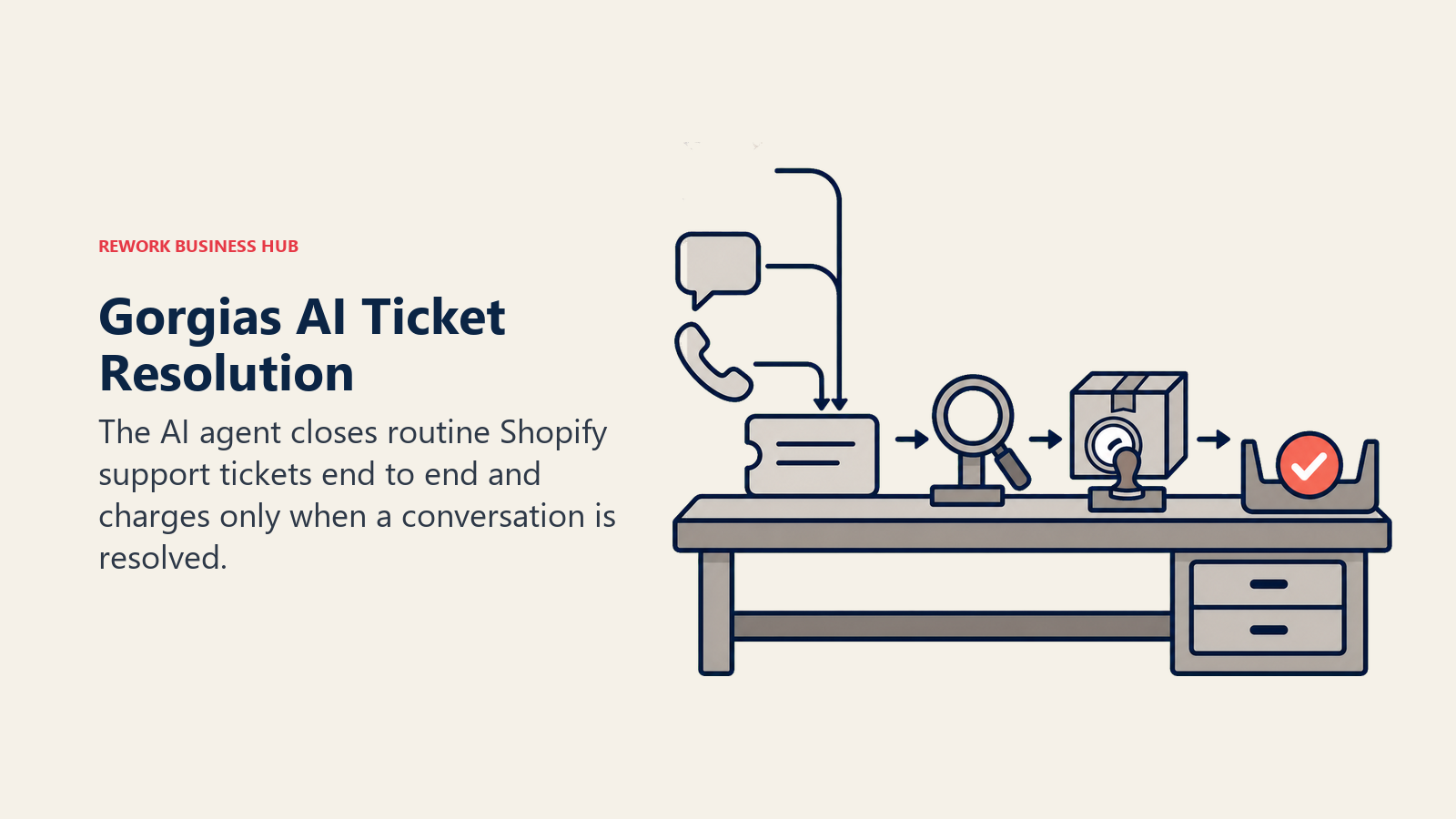
Best for: Shopify and Shopify Plus stores with meaningful support ticket volume that want AI to fully close simple tickets, not just draft replies
Key strengths:
- Billed only when the AI actually resolves a conversation, not per message or per seat
- Runs across email, chat, and SMS with the same resolution logic
- Actions capability lets it look up orders, process returns, and check stock within policy
Limitations:
- Requires an underlying Gorgias helpdesk plan; AI Agent isn't sold standalone
- Resolved AI conversations are billed on top of the ticket itself, a real double-cost to model
- Overage rates vary by tier and can surprise teams that don't track resolution volume
Pricing: AI Agent resolutions run roughly $0.90 per resolved interaction on most plans, closer to $1 on Starter, with 90 to 2,500+ automated interactions included depending on tier. Requires a base Gorgias helpdesk plan. See gorgias.com/pricing.
| What you get | What you don't |
|---|---|
| Pay only for resolutions, not seats or messages | Requires a paid Gorgias helpdesk plan underneath |
| Works across email, chat, and SMS with one logic layer | Double-billed: ticket cost plus resolution cost |
| Order lookup and returns handled within your policy | Overage pricing needs active tracking as volume grows |
For the underlying helpdesk decision, best help desk software in 2026 covers platforms beyond Gorgias.
4. Zipchat AI: Agentic Sales and Support Chat for Shopify
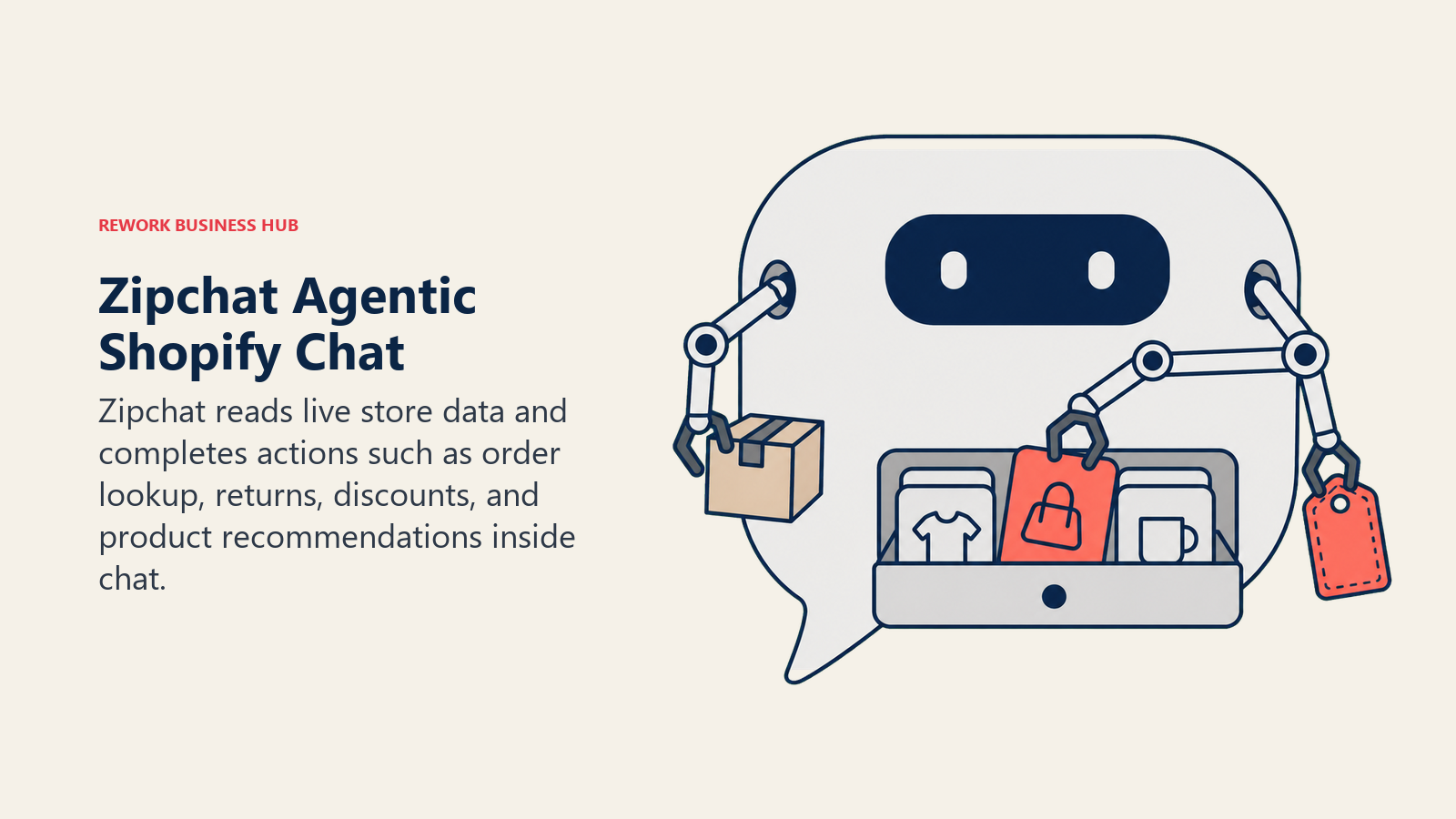
Zipchat's bet is that a chat widget shouldn't just answer questions, it should act: look up an order, process a return within policy, apply a discount code, or recommend a product, all inside the same conversation. It installs directly from the Shopify App Store, reads your live catalog and order data, and runs what it calls Agentic Skills to complete tasks rather than hand off to a human.
Best for: Stores that want AI to handle the majority of chat conversations end-to-end, not just triage before a human takes over
Key strengths:
- One-click Shopify install; reads live catalog and order data automatically
- Agentic Skills complete real tasks (returns, order lookup, discount checks), not just answer FAQs
- Reports a meaningful conversion lift when AI chat actively recommends and closes, not just responds
Limitations:
- Reply-based pricing means a viral traffic spike can push you into overage fast
- Best value shows up at the Growth tier and above; Starter's 500 replies go quickly on a busy store
- Still newer to the market than Gorgias, with a smaller third-party integration ecosystem
Pricing: Free tier includes 120 AI replies/month. Starter is $49/month (500 replies). Growth is $129/month (1,500 replies). Pro is $249/month, Scale is $499/month, with overage at $49 per additional 250 replies. See zipchat.ai.
| What you get | What you don't |
|---|---|
| Agentic actions (returns, lookups, discounts), not just chat replies | Reply-based pricing can spike with traffic surges |
| Fast Shopify install with live catalog and order sync | Starter tier's reply cap is thin for busy stores |
| Reports strong AI-chat-to-conversion lift | Smaller integration ecosystem than established helpdesks |
For a broader look at live chat platforms, not just AI-native ones, see best live chat software in 2026, or best Gorgias alternatives if you're comparing chat-first tools against helpdesk-first ones.
5. Rebuy: AI Cart Upsells and Post-Purchase Offers
Rebuy's product philosophy is that the highest-leverage moment for AI isn't the homepage, it's the cart and the thank-you page, where a shopper has already decided to buy and a well-timed recommendation directly lifts average order value. Its AI engine powers smart carts, dynamic bundles, and post-purchase upsells, all assembled from packages you mix and match rather than one fixed bundle.
Best for: Growth-stage Shopify brands that want AI-driven upsells and bundling without committing to an enterprise merchandising platform
Key strengths:
- Modular pricing: pay only for the packages you actually use (cart, search, checkout, testing)
- A free "Monetize" tier turns the thank-you page into revenue from partner offers
- Order-volume-based pricing scales predictably as the store grows
Limitations:
- Choosing among modular packages takes some initial setup thought versus a single flat plan
- Premium support (CSM, quarterly reviews) is a real add-on cost at $499/month
- Platform One bundle pricing (~$534/month) is a meaningful jump from the entry tier
Pricing: Free Monetize tier. Build Your Own starts around $25/month per package based on order volume. Platform One bundles everything for roughly $534/month. See rebuyengine.com/pricing.
| What you get | What you don't |
|---|---|
| Modular, pay-for-what-you-use pricing | Requires deciding which packages you actually need |
| Free tier that monetizes the post-purchase moment | Premium support is a $499/mo add-on |
| Predictable order-volume-based scaling | Full-platform bundle is a real cost step up |
6. Nosto: Enterprise AI Search and Merchandising at Scale
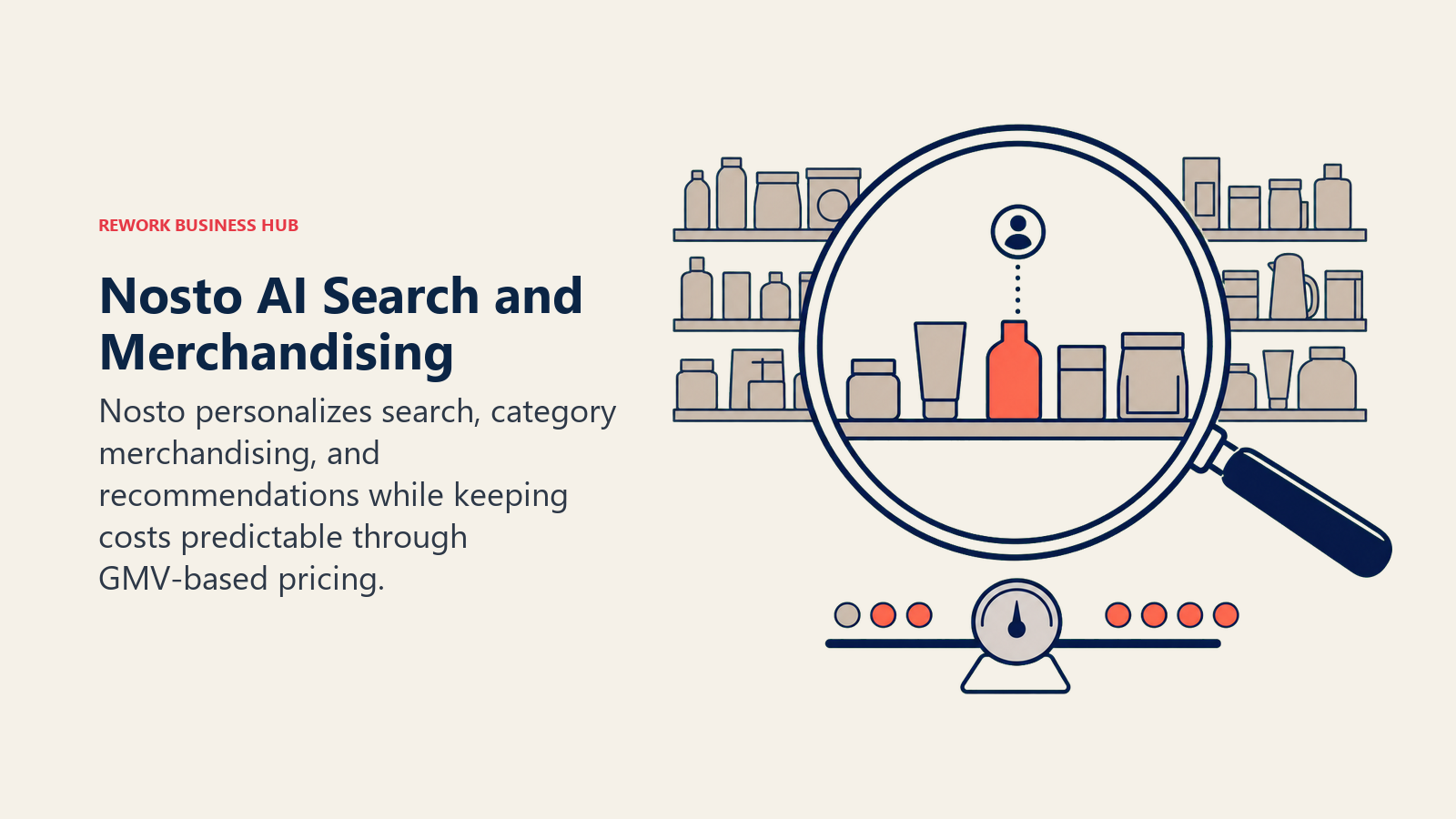
Nosto's Experience.AI engine automates site search, category merchandising, and product recommendations in real time, and its pricing model, fixed by gross merchandise value rather than search query volume, is built for retailers who don't want costs to spike during a traffic surge or a big sale.
Best for: Established retailers doing $1M+ in annual revenue with a deep catalog that needs personalized search and merchandising across web, email, and ads
Key strengths:
- GMV-based pricing means predictable costs even during traffic spikes, unlike query-based models
- Real-time personalization spans site search, category pages, and recommendation widgets in one engine
- Recognized as a G2 Leader across ecommerce personalization and e-merchandising categories in 2026
Limitations:
- Pricing isn't published; mid-market plans typically run $500-$2,000/month before enterprise negotiation
- Overkill for stores under roughly $1M in annual revenue, where Shopify's native recommendations get most of the value at a fraction of the cost
- Implementation and catalog setup take longer than a plug-and-play app
Pricing: Not published. Mid-market plans typically run $500-$2,000/month based on GMV; enterprise pricing is negotiated. See nosto.com.
| What you get | What you don't |
|---|---|
| GMV-based pricing that doesn't spike with traffic | No published pricing; requires a sales conversation |
| Real-time personalization across search, category, and recs | Not cost-effective under roughly $1M in annual revenue |
| Recognized leader in ecommerce personalization (G2 2026) | Longer setup than a single-purpose app |
7. Octane AI: AI Quizzes for Product Recommendations and Lead Capture
Octane AI's angle is that a well-built product quiz does two jobs at once: it recommends the right product (functioning like a lightweight personalization engine) and it captures a lead (email, phone, or both) in the process. Its AI features, Smart Products, Smart Copy, and an Image Analyzer, are included on every plan rather than gated to a premium tier.
Best for: Beauty, wellness, and consumer goods brands with a catalog complex enough that "which product is right for me" is a real customer question
Key strengths:
- AI features included at every plan level, not gated to Enterprise
- Quizzes double as both a personalization tool and a lead-capture mechanism
- Credit-based pricing scales cleanly from a single quiz to multiple quiz funnels
Limitations:
- Credit consumption covers both quiz engagements and AI usage, so high-traffic stores burn through tiers faster than expected
- Overage is billed per credit ($0.10), which adds up on unplanned traffic spikes
- Less useful for catalogs where "which product" isn't a meaningful customer decision
Pricing: $50/month (400 credits) or $100/month (900 credits) entry tiers. $200/month (2,200 credits) or $350/month (4,500 credits) mid-tier. Enterprise from $500/month (7,250 credits); $2,000+/month unlocks unlimited quiz engagements. Overage at $0.10/credit. See octaneai.com/pricing.
| What you get | What you don't |
|---|---|
| AI features included on every plan, no premium gate | Credits cover both engagements and AI usage together |
| Quizzes double as personalization plus lead capture | Overage billing adds up fast on traffic spikes |
| Clean scaling from single quiz to multi-funnel | Less value for catalogs without a real "which one" decision |
8. Triple Whale: Unified AI Analytics and Marketing Attribution
Triple Whale's bet is that ecommerce brands don't need more dashboards, they need one blended view of ad spend, attribution, and profitability that AI can summarize in plain language instead of forcing a founder to build a spreadsheet every Monday. Its AI features surface anomalies, summarize performance, and answer plain-English questions about the numbers.
Best for: D2C brands running multi-channel paid ads that need one blended attribution view instead of reconciling Meta, Google, and Shopify reports by hand
Key strengths:
- Blended attribution across ad platforms in a single dashboard, first/last-click and beyond
- Free tier includes up to 10 users and a 12-month lookback, a real starting point before paying
- GMV-based paid tiers scale with the business instead of a flat enterprise-only price
Limitations:
- Full automation and deeper AI summarization features sit in higher tiers, not the entry plan
- GMV-based pricing means cost grows with revenue, which needs to be modeled into margin
- Enterprise tier requires a sales conversation, no public ceiling price
Pricing: Free plan available (up to 10 users, 12-month lookback). Paid plans (Foundation, Automate) start around $219/month for stores under $250K GMV, scaling with GMV. Enterprise is custom. See triplewhale.com/pricing.
| What you get | What you don't |
|---|---|
| Blended, plain-language attribution across ad platforms | Deeper AI summarization gated to higher tiers |
| Genuinely usable free tier before you pay anything | Cost scales with GMV, needs margin modeling |
| Predictable tiering below Enterprise | Enterprise pricing requires a sales call |
9. Particl: AI Competitive Pricing and Assortment Intelligence
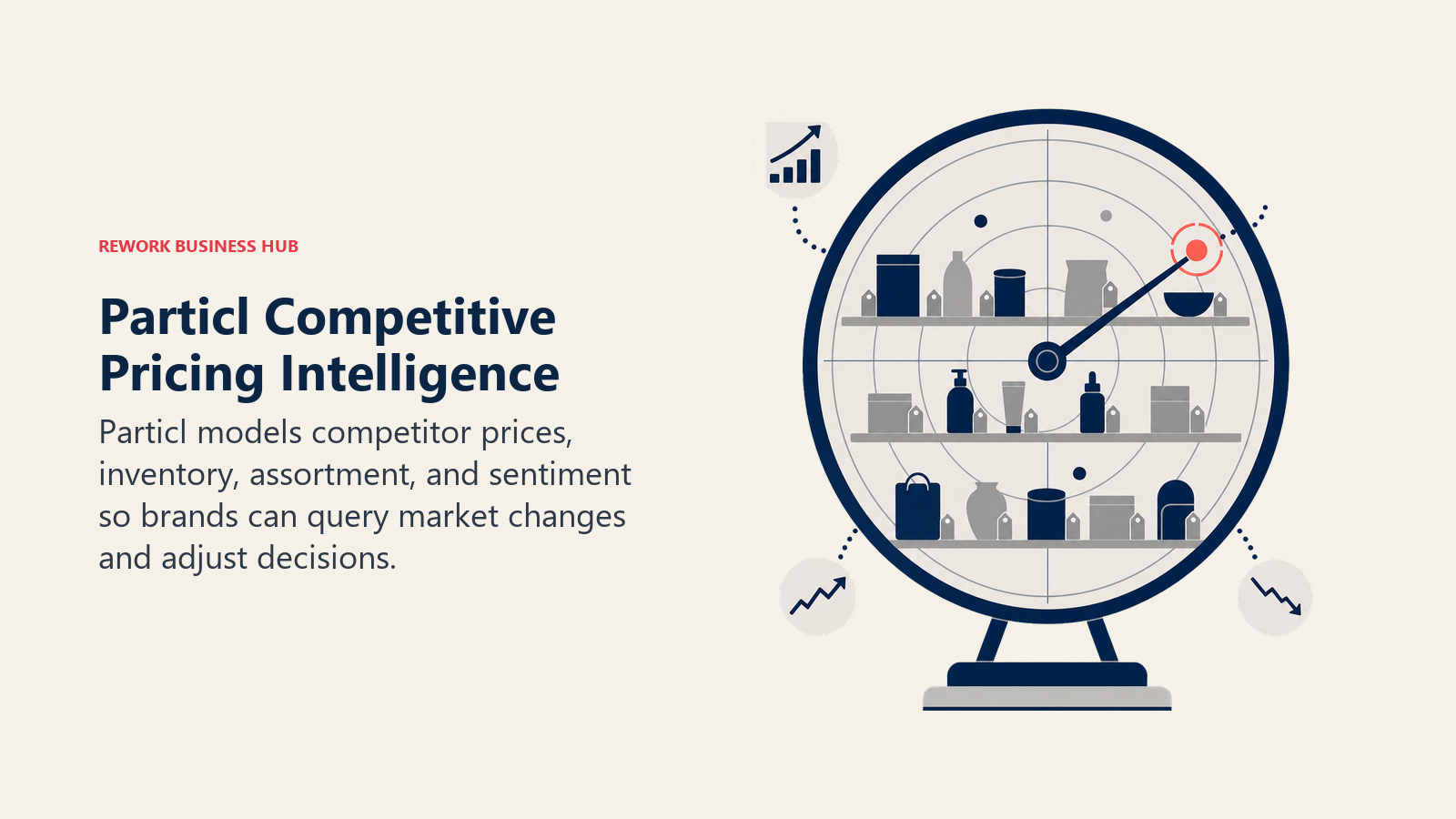
Particl exists to answer a question most brands guess at: what are competitors actually charging, stocking, and promoting right now. Its AI models pricing, inventory, and sentiment signals across a database of over 100,000 brands and 600 million SKUs, and it connects directly to Claude, ChatGPT, or any MCP-enabled AI client for natural-language queries.
Best for: Brands doing $10M+ in annual revenue, especially in apparel and beauty, that need AI-modeled competitive pricing and assortment data, not a static report
Key strengths:
- Tracks pricing, inventory, and sentiment across 20,000+ retailers and 600M+ SKUs
- Data is modeled, not just reported, so it supports dynamic, market-driven pricing decisions
- Native MCP connection lets you query competitor data directly from Claude or ChatGPT
Limitations:
- Built for brands with real assortment and pricing decisions to make; overkill under $10M revenue
- $250/month Starter tier covers monitoring only; real decision-support needs the $1,000/month Growth tier
- Narrow, single-purpose focus on competitive intelligence, not a broader personalization or support tool
Pricing: Starter is $250/month for focused competitor monitoring. Growth is $1,000/month for category managers making real assortment decisions. See particl.com.
| What you get | What you don't |
|---|---|
| AI-modeled pricing and assortment data, not static reports | Overkill for brands under roughly $10M in revenue |
| Coverage across 100,000+ brands and 600M+ SKUs | Real decision-support pricing starts at $1,000/mo |
| Native query access from Claude or ChatGPT via MCP | Single-purpose: competitive intelligence only |
10. Vue.ai: AI Catalog Automation and Imagery for Fashion Retail
Vue.ai's specialty is the operational side of a large fashion or retail catalog: computer-vision product tagging, visual search, "shop the look" recommendations, and on-model product imagery generated through its VueModel tool instead of a traditional photoshoot. It's built for retailers managing thousands of SKUs where manual tagging and photography don't scale.
Best for: Large fashion and retail catalogs (100+ retailers including major global brands use it) that need AI tagging, visual search, and imagery automation at scale
Key strengths:
- Computer-vision tagging and visual search purpose-built for deep, fast-changing catalogs
- VueModel generates on-model product photography, cutting traditional photoshoot costs
- INTURN module extends the platform into inventory and off-price liquidation management
Limitations:
- Pricing isn't public; it's a module-based subscription quoted per retailer, not a self-serve signup
- Built for catalog scale most small and mid-size D2C brands don't have yet
- Longer sales and implementation cycle than any app-store tool on this list
Pricing: Not published. Subscription is module-based, quoted per retailer's selected features. See vue.ai.
| What you get | What you don't |
|---|---|
| AI tagging, visual search, and on-model imagery in one platform | No public pricing; sales-led, not self-serve |
| Built for large, fast-changing fashion catalogs | Not cost-effective for small or mid-size D2C catalogs |
| Photoshoot cost reduction via AI-generated model imagery | Longer implementation than a plug-and-play app |
11. Pencil: AI Ad Creative Generation Tied to Performance Data
Pencil's pitch is that ad creative should be generated and iterated against real performance data, not just produced and hoped for. Its GenAI engine creates ad variants aimed at lifting ROAS and cutting CPA, streamlining the path from a creative brief to a large batch of testable ad variations.
Best for: Ecommerce marketing teams that need a steady volume of AI-generated ad variants without a full in-house creative team
Key strengths:
- Generation is tied to performance goals (ROAS, CPA), not just visual output
- Entry tier is genuinely affordable for a solo marketer or small team testing the category
- Six free guided ads before you need to subscribe, a real way to evaluate fit
Limitations:
- Generation caps (50/month on Core) are tight for teams running frequent creative refreshes
- Growth tier jumps to $55/month for 250 generations, a meaningful step from Core
- Pro and Enterprise pricing isn't published, requiring a sales conversation for agencies
Pricing: Core is $14/month (50 generations). Growth is $55/month (250 generations). Pro and Enterprise are custom-quoted. Six free guided ads before subscribing. See trypencil.com/pricing.
| What you get | What you don't |
|---|---|
| Performance-tied ad generation, not just visuals | Core tier's 50-generation cap is tight for frequent refreshes |
| Affordable entry point for solo marketers | Growth tier is a real cost step from Core |
| Six free guided ads to test fit before paying | Pro/Enterprise pricing is quote-only |
12. AdCreative.ai: Bulk AI Ad and Creative Asset Generation
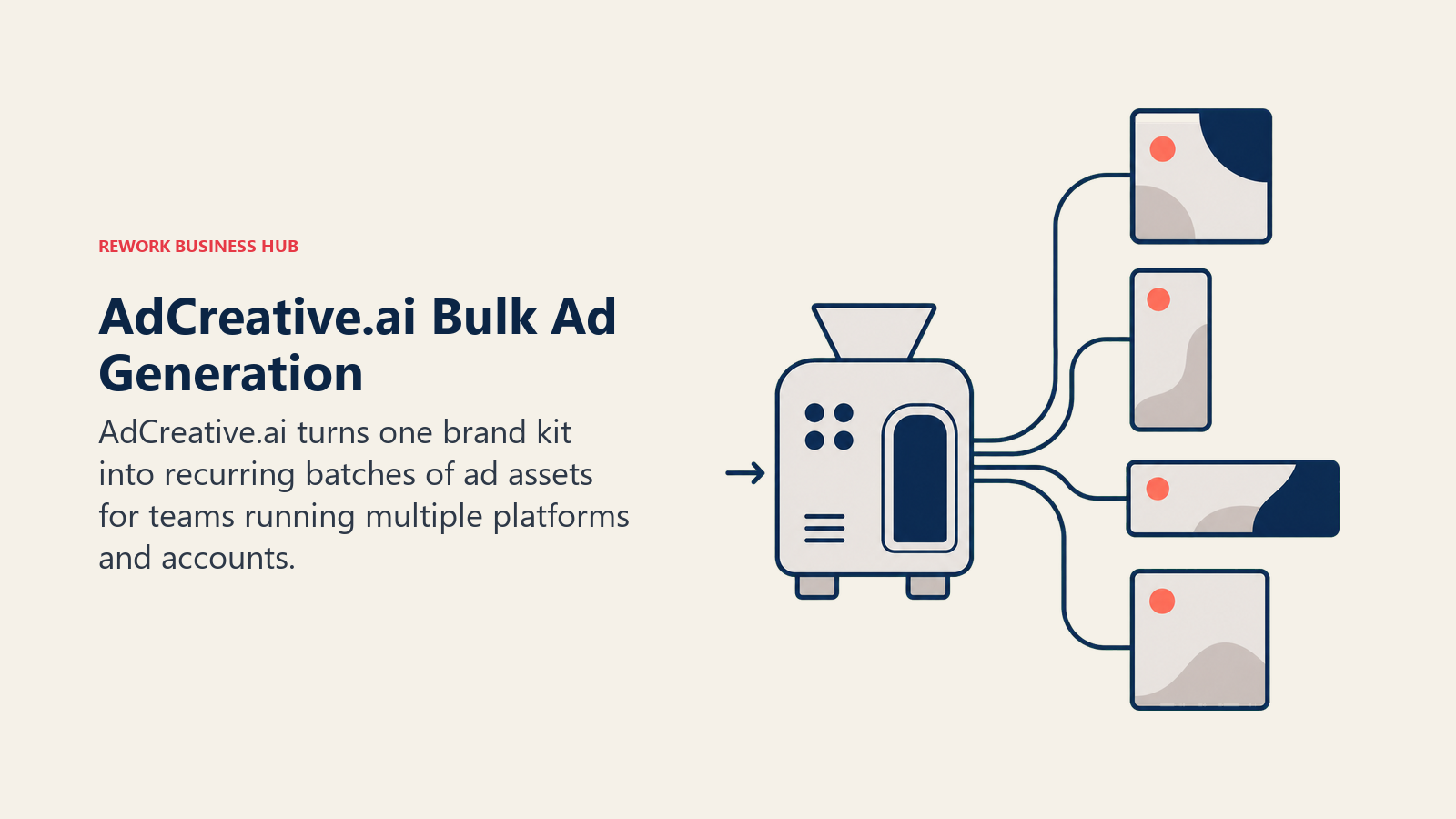
AdCreative.ai's model is volume: generate a large batch of on-brand ad creative and social assets from a credit pool, rather than iterating on one ad at a time. It's built for teams that need to feed multiple ad accounts and platforms with fresh creative on a recurring schedule.
Best for: Teams running paid ads across multiple platforms that need bulk, on-brand creative output on a recurring cadence
Key strengths:
- Credit-based tiers scale from a handful of assets to 500 per month at the top published tier
- Annual billing discount (up to 50% off) makes the entry tiers meaningfully cheaper long-term
- 7-day free trial with 10 credits included, no charge until the trial ends
Limitations:
- Entry pricing varies by source (roughly $29-39/month depending on billing cycle), worth confirming at signup
- Higher tiers ($249-399/month) are a real jump for teams that need volume but not enterprise scale
- Credit-based generation means output quality control still needs a human review pass before an asset goes live
Pricing: Plans run from roughly $29-39/month (10 credits) up to $249-399/month (200-500 credits), with quarterly and annual billing discounts up to 50% off. Custom pricing above that. See adcreative.ai.
| What you get | What you don't |
|---|---|
| Bulk, credit-based creative generation at scale | Entry pricing varies by billing cycle; confirm at signup |
| Meaningful annual-billing discount | Higher tiers are a real cost jump for high-volume teams |
| Free trial before any charge | Still needs a human QA pass before assets go live |
For a broader look at AI content and creative tools beyond ads specifically, see best AI tools for content writers and best AI tools for digital marketing.
13. ChatGPT: General-Purpose AI for Content, Planning, and Store Ops
ChatGPT doesn't do any single ecommerce job better than a purpose-built tool on this list, but it's the tool most ecommerce teams already reach for first: drafting product copy before Shopify Magic touches it, planning a launch calendar, summarizing customer feedback, or building a quick competitive brief before Particl-level data is justified.
Best for: Solo operators and small teams that need one flexible AI tool covering copy, planning, research, and light analysis before investing in point solutions
Key strengths:
- Broadest single-tool use case coverage of anything on this list
- Business plan adds shared workspaces, SSO, and default data-training exclusion
- Genuinely useful free tier for a solo operator just getting started
Limitations:
- No native connection to your store's live catalog, orders, or customer data out of the box
- Doesn't replace purpose-built tools once volume or complexity grows (support automation, merchandising, attribution)
- Team plan has a 2-seat minimum, a small but real floor for solo operators
Pricing: Free tier available. Plus is $20/month per individual. Business is $20/seat/month (annual, 2-seat minimum) or $25/month billed monthly. See chatgpt.com/pricing.
| What you get | What you don't |
|---|---|
| Broadest general-purpose AI coverage on this list | No native connection to your store's live data |
| Affordable entry point, real free tier | Doesn't replace purpose-built support/merchandising tools |
| Business tier adds SSO and data-training exclusion | 2-seat minimum on Business |
A Note on CRM and Unified Inbox Tools
Most of the tools above are point solutions: each one solves one job well but adds its own data silo. If your actual bottleneck is that customer conversations are scattered across WhatsApp, Instagram DM, email, and live chat with no shared history, that's a different problem than any single AI tool on this list solves, and it's worth naming honestly.
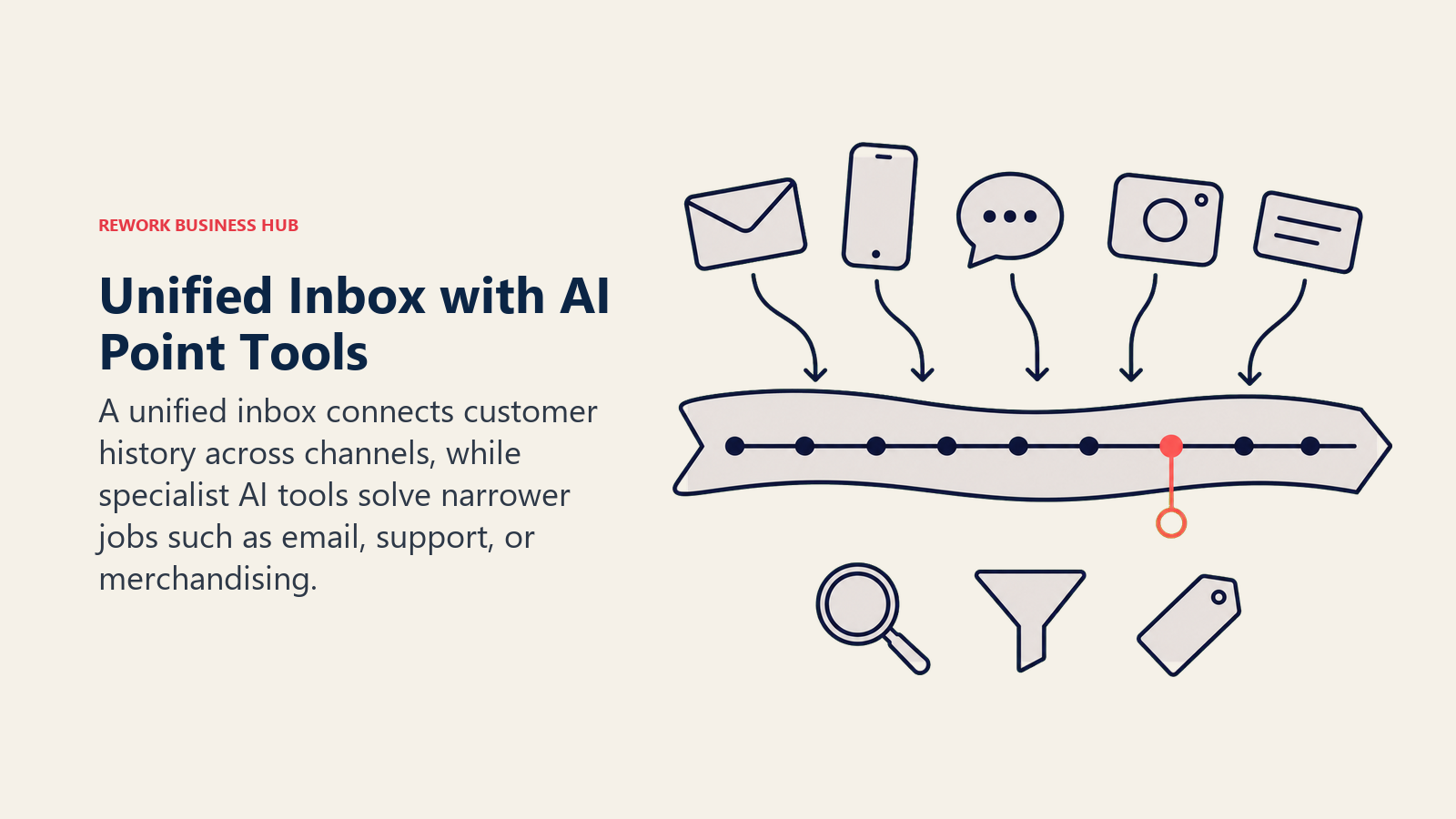
Rework is a unified CRM and Lead Ops platform with a multi-channel inbox (WhatsApp, Messenger, Instagram DM, TikTok, and web chat on one contact timeline), which is a genuine fit for D2C and ecommerce brands running high message volume across channels and wanting one place to see the full customer history, not another AI point tool. It is not a replacement for Klaviyo's email AI, Gorgias' ticket resolution, or Nosto's merchandising engine, those solve narrower jobs better. The Marketing Engine (inbox and lead capture) runs $99/month billed yearly, or $115 month to month, with 5 marketing seats included; see rework.com/pricing. It isn't the right fit for solo sellers or teams under 5 people. If your store is scaling past a single founder answering DMs from a phone, it's worth a look alongside, not instead of, the tools above. For CRM options more broadly, best CRM software in 2026 covers 15 platforms by team size and motion.
How to Choose: Decision Framework
| If you need... | Pick... | Why |
|---|---|---|
| AI baked into your existing Shopify admin at zero extra cost | Shopify Magic & Sidekick | Free on every plan; no new vendor or integration |
| AI-driven email/SMS flows and predictive customer segments | Klaviyo AI | Predictive analytics built on the same profile as your marketing data |
| Support tickets resolved autonomously, not just drafted | Gorgias AI Agent | Billed only when the AI actually closes the ticket |
| An AI sales/support chat that can act, not just answer | Zipchat AI | Agentic Skills complete real tasks inside the conversation |
| AI-powered cart upsells and post-purchase offers | Rebuy | Modular, pay-for-what-you-use pricing tied to order volume |
| Enterprise-grade AI search and merchandising at scale | Nosto | GMV-based pricing; real-time personalization across the store |
| AI quizzes that recommend products and capture leads | Octane AI | AI included on every plan; doubles as personalization and lead gen |
| One blended AI view of ad spend and attribution | Triple Whale | Plain-language summaries across every ad platform in one place |
| AI-modeled competitive pricing and assortment data | Particl | Tracks 600M+ SKUs; connects directly to Claude or ChatGPT |
| AI catalog tagging and on-model imagery for a fashion catalog | Vue.ai | Purpose-built computer vision for large, fast-changing catalogs |
| AI ad creative generation tied to ROAS/CPA performance | Pencil | Generation aimed at performance goals, not just visual output |
| Bulk, credit-based ad creative across multiple platforms | AdCreative.ai | Highest published generation volume per tier on this list |
| One flexible AI tool for copy, planning, and light research | ChatGPT | Broadest single-tool coverage; real free tier to start |
Framework: By Store Revenue and Budget
| Revenue Stage | Budget Signal | Best Fits |
|---|---|---|
| Pre-revenue / just launched | Free or under $50/mo | Shopify Magic & Sidekick, ChatGPT free tier, Zipchat free tier |
| $10K-$100K/mo | Under roughly $300/mo total AI stack | Klaviyo entry tier, Gorgias AI Agent, Octane AI, Zipchat Starter, Pencil Core |
| $100K-$1M/mo | Structured marketing/ops budget | Rebuy, Klaviyo mid-tier, AdCreative.ai, Triple Whale Foundation, Pencil Growth |
| $1M-$10M/mo | Dedicated ecommerce/growth team | Nosto entry tier, Particl Starter, Triple Whale Automate, Vue.ai (fashion) |
| $10M+/mo / enterprise | Multi-brand or enterprise budget | Nosto Enterprise, Particl Growth, Vue.ai, enterprise Klaviyo contracts |
AI Tool Buying Mistakes to Avoid in Ecommerce
Generative AI could unlock $240 billion to $390 billion in annual economic value for retailers, per McKinsey, but most of that value goes to teams that buy the right tool for the right bottleneck, not the most AI features per dollar.
| Mistake | What It Looks Like | What to Do Instead |
|---|---|---|
| Buying a merchandising platform before you have the catalog for it | Signing up for Nosto or Vue.ai at $50K/year in revenue | Use Shopify's native recommendations and Rebuy until catalog depth justifies it |
| Ignoring per-resolution or per-conversation overage | Budgeting a flat number for Gorgias or Zipchat, then getting a surprise bill | Model your actual ticket/chat volume against the plan's included cap before committing |
| Treating ChatGPT as a full replacement for point tools | Using ChatGPT for support replies instead of a resolution-billed AI agent | Use ChatGPT for planning and drafts; use purpose-built tools for anything touching live order data |
| Stacking five AI point tools with no shared customer view | Klaviyo, Gorgias, and Zipchat all holding a different slice of the same customer's history | Consider a unified inbox or CRM layer once conversation volume outgrows single-channel tools |
| Underestimating GMV-based pricing at scale | Signing a Nosto or Triple Whale contract without modeling cost as revenue grows | Run the GMV-based pricing formula against your 12-month revenue forecast, not just today's number |
| Skipping the free tier to "look serious" | Paying for Zipchat Starter or Triple Whale paid tier before validating fit | Use the free tier first; most of these tools have one worth testing before you pay |
Pricing at a Glance
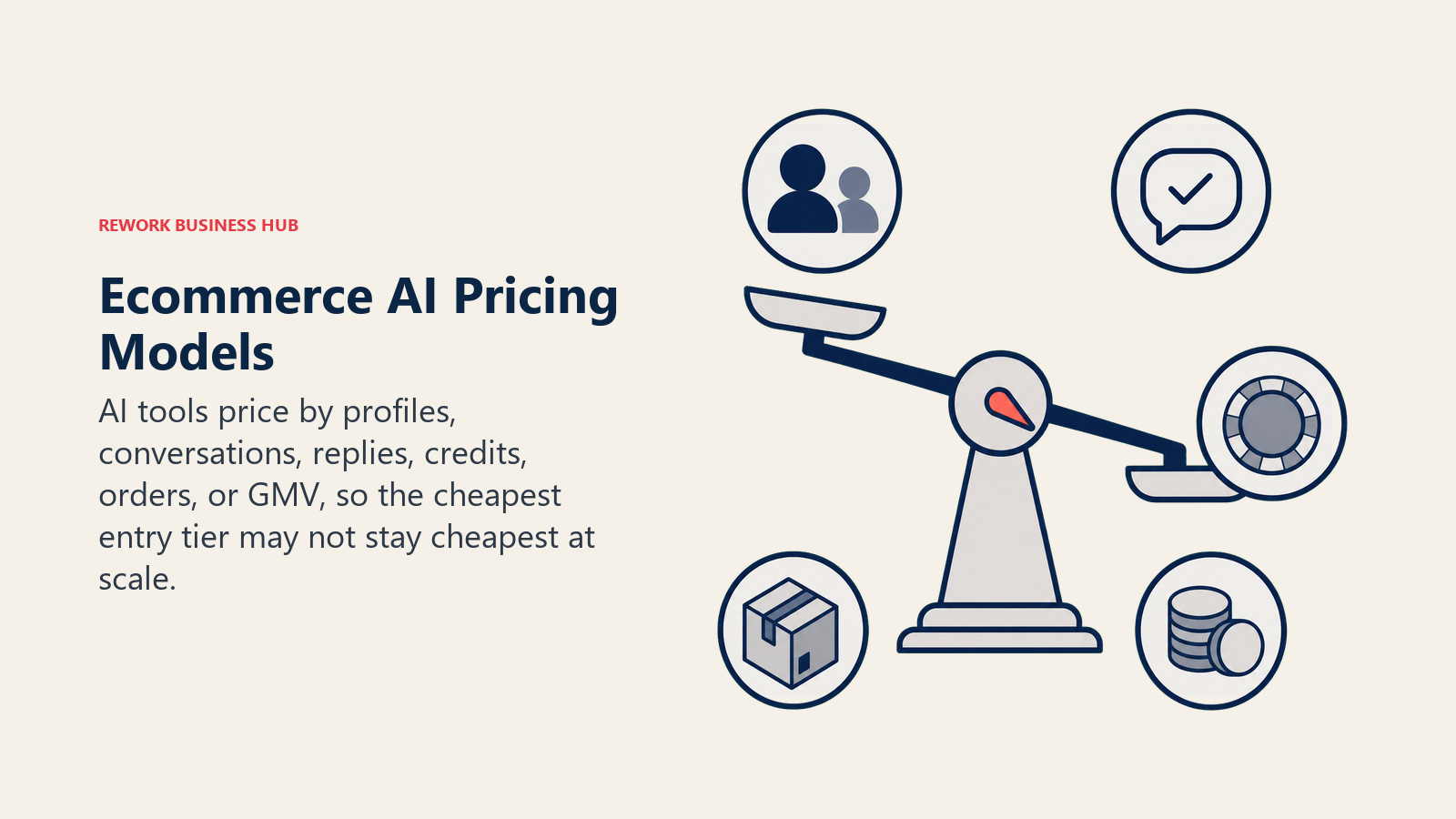
These tools use different pricing units, so compare the meter that grows with your store before comparing the entry price.
| Tool | Entry Price | Pricing Model | Free Tier? |
|---|---|---|---|
| Shopify Magic & Sidekick | Free | Included with every Shopify plan | Yes |
| Klaviyo AI | Free (250 profiles); Customer Agent $200/mo | Per-contact plan + per-conversation AI add-on | Yes |
| Gorgias AI Agent | ~$0.90/resolved conversation | Per-resolution, on top of base helpdesk plan | No |
| Zipchat AI | Free (120 replies/mo); $49/mo (Starter) | Reply-volume tiers | Yes |
| Rebuy | Free (Monetize); $25/mo (Build Your Own) | Modular, order-volume based | Yes |
| Nosto | ~$500-2,000/mo (est.) | GMV-based, custom quote | No |
| Octane AI | $50/mo (400 credits) | Credit-based tiers | 14-day trial |
| Triple Whale | Free; $219/mo (Foundation/Automate) | GMV-based tiers | Yes |
| Particl | $250/mo (Starter) | Flat tiers | No |
| Vue.ai | Custom quote | Module-based subscription | No |
| Pencil | $14/mo (Core) | Generation-credit tiers | 6 free ads |
| AdCreative.ai | ~$29-39/mo (10 credits) | Credit-based tiers | 7-day trial |
| ChatGPT | Free; $20/mo (Plus) | Flat monthly tiers | Yes |
What to Do Next
Pick the single job costing you the most right now, whether that's support ticket backlog, flat email revenue, or stale ad creative, and shortlist two tools against the decision framework above rather than trying to adopt five AI tools at once. Most of these have a real free tier or trial: use it before you pay. And if the actual bottleneck turns out to be fragmented customer conversations across channels rather than a missing point feature, Rework's pricing covers the Marketing Engine (from $99/month billed yearly, 5 seats) for stores moving past a founder answering every DM personally.

Principal Product Marketing Strategist
On this page
- Updated July 2026: What Changed
- Key Facts
- Quick Comparison Table
- How to Choose AI Tools for Your Store
- 1. Shopify Magic & Sidekick: The Free Baseline for Every Shopify Merchant
- 2. Klaviyo AI: Predictive Segments and an AI Customer Agent for Email/SMS
- 3. Gorgias AI Agent: Autonomous Ticket Resolution for Shopify Support
- 4. Zipchat AI: Agentic Sales and Support Chat for Shopify
- 5. Rebuy: AI Cart Upsells and Post-Purchase Offers
- 6. Nosto: Enterprise AI Search and Merchandising at Scale
- 7. Octane AI: AI Quizzes for Product Recommendations and Lead Capture
- 8. Triple Whale: Unified AI Analytics and Marketing Attribution
- 9. Particl: AI Competitive Pricing and Assortment Intelligence
- 10. Vue.ai: AI Catalog Automation and Imagery for Fashion Retail
- 11. Pencil: AI Ad Creative Generation Tied to Performance Data
- 12. AdCreative.ai: Bulk AI Ad and Creative Asset Generation
- 13. ChatGPT: General-Purpose AI for Content, Planning, and Store Ops
- A Note on CRM and Unified Inbox Tools
- How to Choose: Decision Framework
- Framework: By Store Revenue and Budget
- AI Tool Buying Mistakes to Avoid in Ecommerce
- Pricing at a Glance
- What to Do Next