Análise de Partes Interessadas: A Grade de Poder-Interesse Explicada
 A análise de partes interessadas é a etapa que a maioria dos gerentes de projeto ignora quando o tempo é curto. É também a etapa que explica por que um projeto tecnicamente sólido ainda é cancelado, atrasado ou silenciosamente desfinanciado. Antes de construir um plano, você precisa saber quem tem poder para interrompê-lo e se essa pessoa quer fazê-lo.
Turn this article into takeaways for your work.


Each assistant summarizes the article only for you and suggests best practices for your work.
O que é análise de partes interessadas?
A análise de partes interessadas é um processo estruturado para identificar as pessoas e os grupos que afetam ou são afetados pelo seu projeto, avaliando seu nível de poder e interesse para que você possa engajar cada um de forma adequada. Não é um exercício único. É um mapa contínuo que você atualiza à medida que o projeto avança em seu ciclo de vida.
O objetivo não é agradar a todos. É direcionar seu esforço limitado de comunicação e construção de relacionamentos para onde realmente importa: partes interessadas com poder para acelerar ou prejudicar o que você está construindo.
Fatos Relevantes
- Projetos com engajamento eficaz de partes interessadas têm 2,5 vezes mais probabilidade de atingir suas metas originais (PMI Pulse of the Profession, 2023).
- O engajamento inadequado de partes interessadas é apontado como um dos principais fatores de falha em projetos por 37% das organizações pesquisadas no relatório global do PMI de 2024.
- Organizações que investem em práticas de gestão de partes interessadas concluem 77% dos seus projetos no prazo, contra 56% das que não investem (PMI, 2023).
A grade de poder-interesse (Matriz de Mendelow)
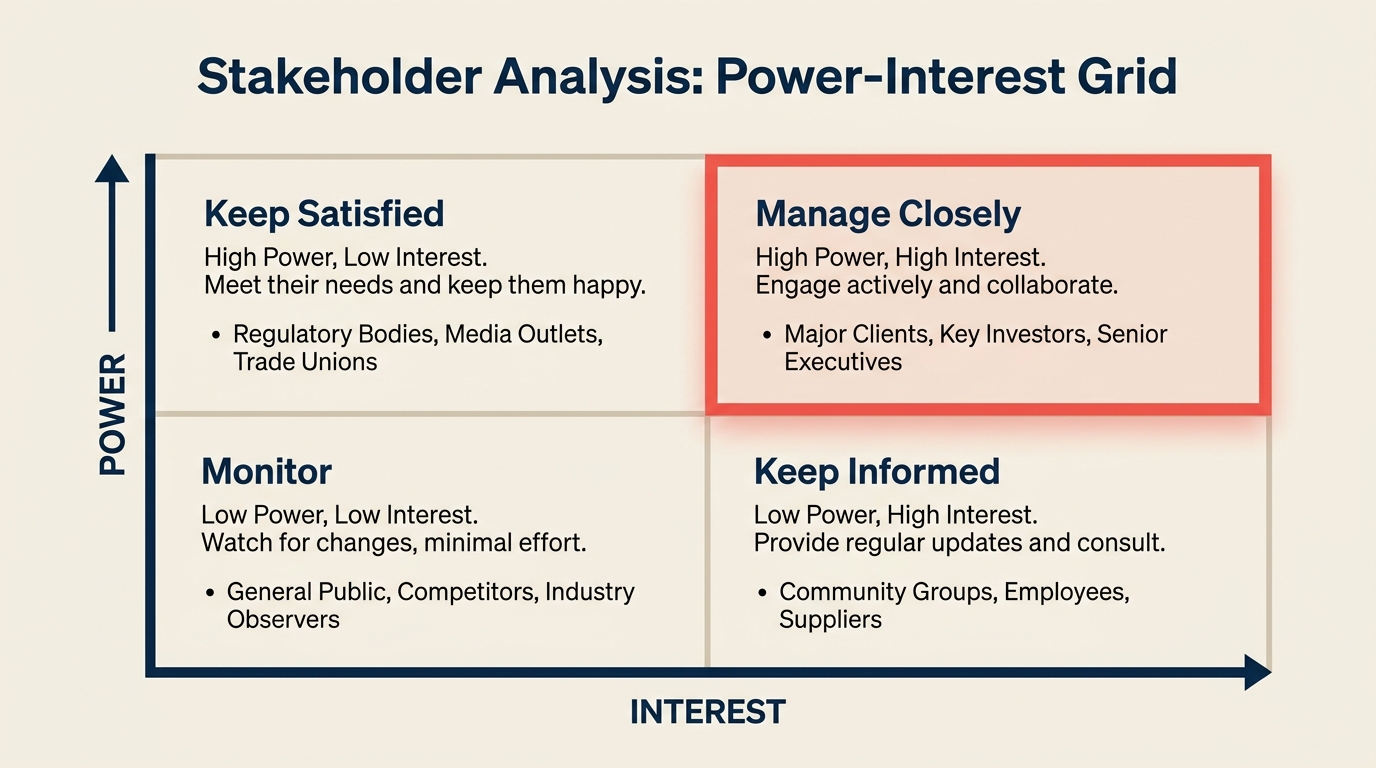
A grade de poder-interesse (também chamada de Matriz de Mendelow, em referência a Aubrey Mendelow, que a introduziu em 1991) posiciona as partes interessadas em dois eixos: quanto poder elas exercem sobre o resultado do projeto e quanto interesse têm nesse resultado. O resultado é uma grade 2x2 com quatro quadrantes, cada um exigindo uma estratégia de engajamento diferente.
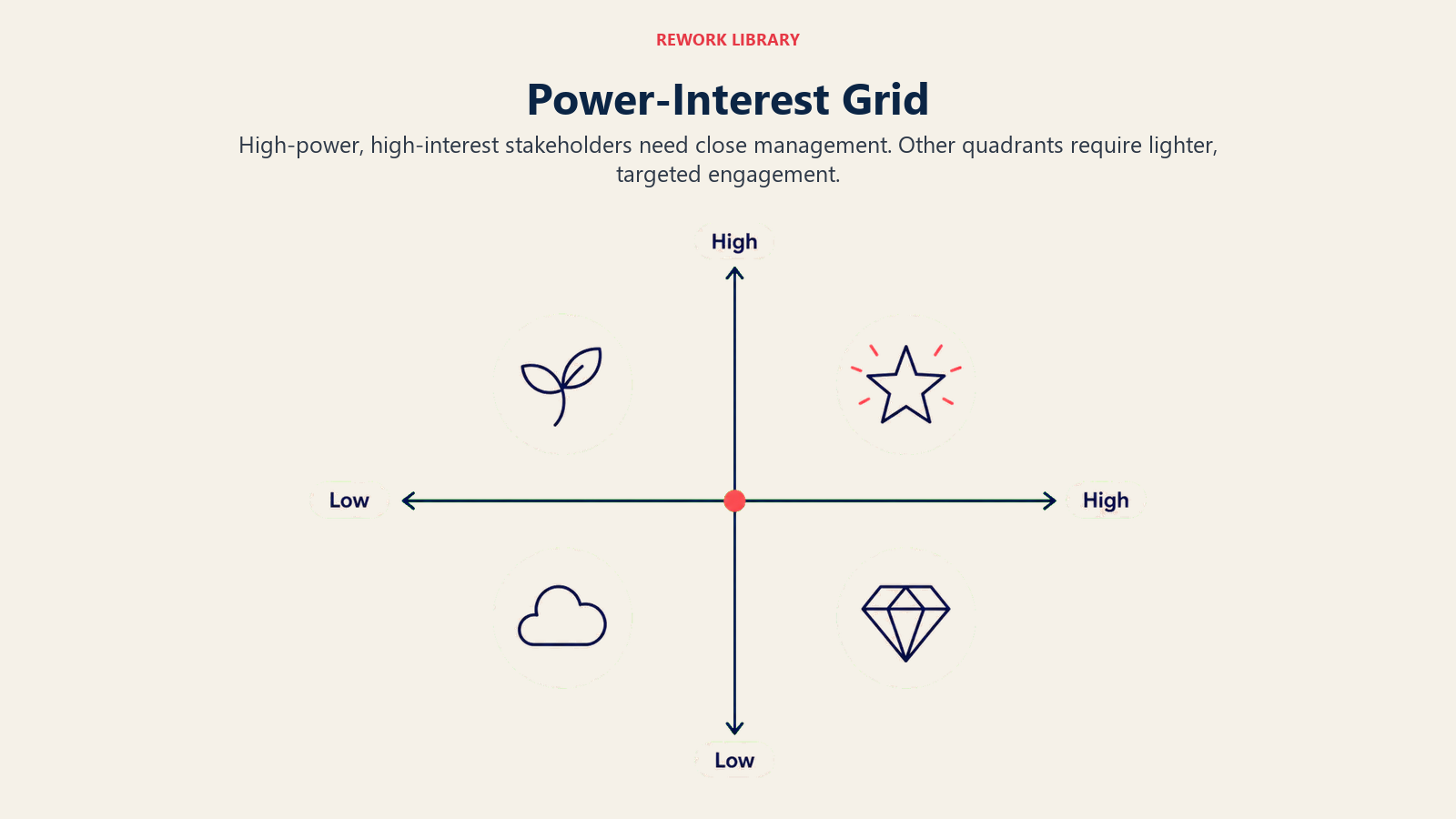
Pense nos eixos assim: poder é a capacidade de influenciar decisões, liberar recursos ou bloquear o progresso. Interesse é o quanto a parte interessada realmente se importa com o que seu projeto faz ou entrega.
| Quadrante | Poder | Interesse | Estratégia | Parte interessada típica |
|---|---|---|---|---|
| Gerenciar de Perto | Alto | Alto | Engajamento profundo, frequente e bidirecional | Patrocinador do projeto, executivo responsável, cliente principal |
| Manter Satisfeito | Alto | Baixo | Atualizações regulares sobre decisões que os afetam; sem desperdiçar o tempo deles | CFO, assessoria jurídica, órgão regulador |
| Manter Informado | Baixo | Alto | Atualizações consistentes; envolvimento em ciclos de Feedback | Usuários finais, equipe de linha de frente, grupos de advocacia |
| Monitorar | Baixo | Baixo | Esforço mínimo; verificação periódica para detectar mudanças de poder | Público em geral, equipes tangencialmente relacionadas |
A grade é útil porque força um julgamento concreto. Você não pode colocar todos em "Gerenciar de Perto". Ao posicionar uma parte interessada em um quadrante, você está se comprometendo com um ritmo específico de comunicação e nível de envolvimento. Essa clareza evita tanto a supercomunicação (cansar um CFO com calls semanais de status) quanto a subcomunicação (surpreender um VP cuja aprovação você precisa no momento do lançamento).
O quadrante mais perigoso
"Manter Satisfeito" é onde os projetos morrem silenciosamente. Uma parte interessada sênior com alto poder e baixo interesse parece inofensiva, até que o projeto afete algo com que ela se importa. Um diretor de segurança de TI que não foi engajado cedo pode paralisar um lançamento de software na semana antes do go-live porque o processo de implantação não foi revisado com ele. O interesse era baixo no início. Aumentou no pior momento possível. Monitorar essas mudanças de interesse é parte do que as revisões regulares de análise de partes interessadas servem para fazer.
Grade de poder-interesse vs. outros modelos de partes interessadas
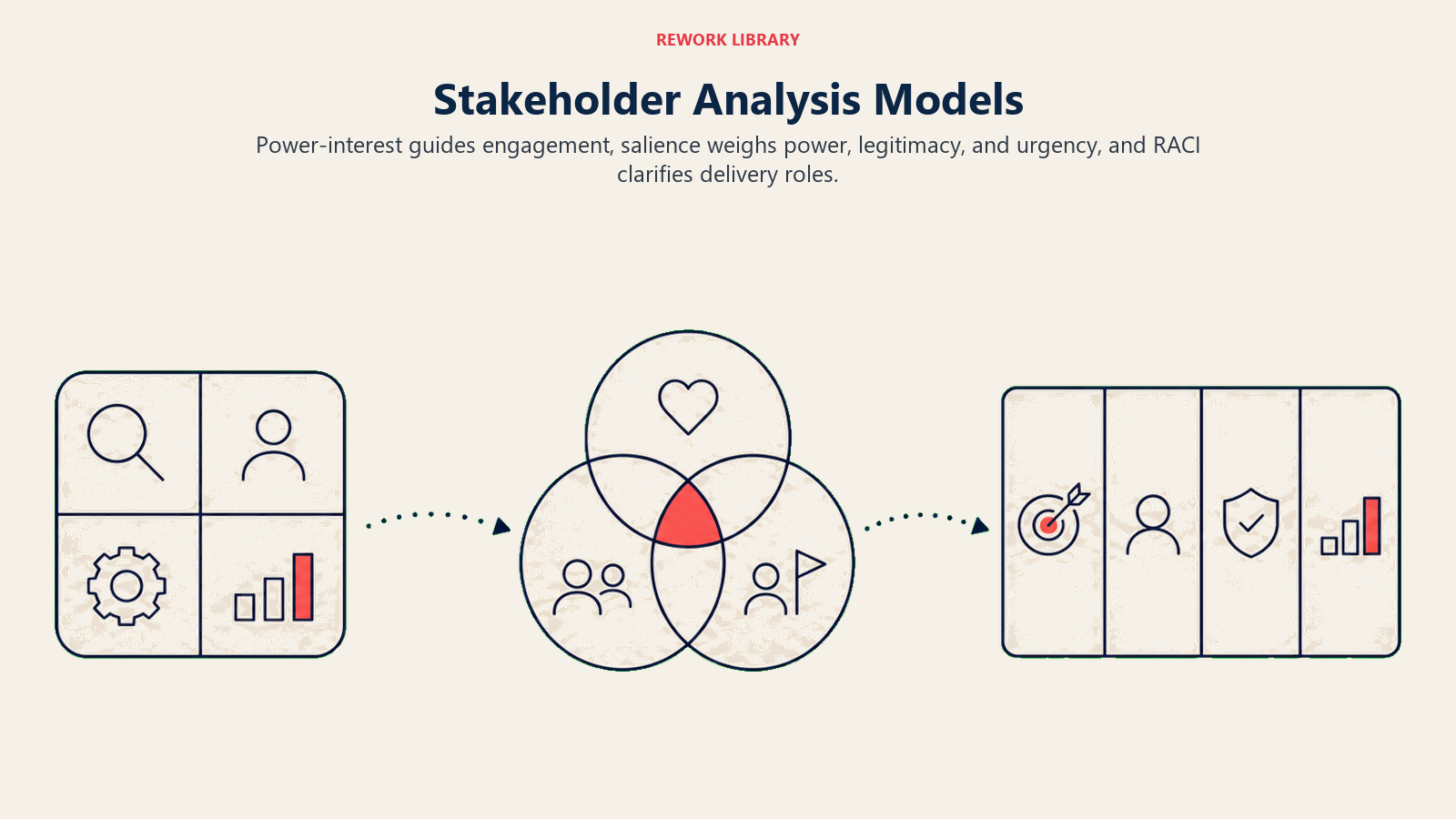
A grade de poder-interesse não é o único framework para partes interessadas. Dois outros modelos aparecem com frequência: o modelo de saliência e a Matriz RACI.
| Modelo | Melhor para | Dimensões principais | Limitação |
|---|---|---|---|
| Grade de Poder-Interesse | Planejamento estratégico de engajamento para todas as partes interessadas | Poder + Interesse | Os eixos binários podem simplificar demais dinâmicas políticas complexas |
| Modelo de Saliência | Projetos de alto risco com demandas concorrentes de partes interessadas | Poder + Legitimidade + Urgência | Mais complexo de aplicar; três dimensões exigem mais julgamento |
| Matriz RACI | Esclarecer papéis e responsabilidades dentro da equipe do projeto | Responsável, Aprovador, Consultado, Informado | Não contempla partes interessadas externas ou políticas |
A Matriz RACI responde à pergunta "quem faz o quê neste projeto?". A grade de poder-interesse responde a "quem preciso gerenciar e como?". Ambas as ferramentas são úteis e complementares. Um patrocinador de projeto pode estar no quadrante "Gerenciar de Perto" da sua grade de partes interessadas E ocupar o papel de "Aprovador" na sua RACI. São duas coisas diferentes. A grade orienta sua estratégia de comunicação. A RACI orienta a propriedade das tarefas.
O modelo de saliência adiciona uma terceira dimensão (legitimidade), que é valiosa quando múltiplas partes interessadas de alto poder têm interesses concorrentes e igualmente válidos. Para a maioria dos projetos abaixo da escala corporativa, a grade de poder-interesse é suficiente.
Por que a análise de partes interessadas é importante
Projetos não falham por causa de código ruim ou prazos perdidos isoladamente. Eles falham porque alguém com influência real se tornou um bloqueador, e ninguém viu isso vir. A análise de partes interessadas é gestão de riscos aplicada a pessoas em vez de cronogramas.
Ela revela bloqueadores ocultos com antecedência. Uma sessão de 15 minutos de mapeamento de partes interessadas no kickoff do projeto frequentemente revela um chefe de departamento, uma equipe de compliance ou um comitê de diretoria que todos sabiam que existia, mas ninguém pensou em incluir formalmente. Encontrá-los cedo é muito mais barato do que gerenciar uma objeção duas semanas antes do go-live.
Ela molda seu plano de comunicação. Quando você sabe onde cada parte interessada está na grade, pode construir um plano de comunicação com propósito real: relatórios mensais do comitê de direção para os executivos em "Manter Satisfeito", demonstrações semanais para os usuários finais em "Manter Informado" e sincronizações diárias com o patrocinador em "Gerenciar de Perto" durante marcos críticos. Sem a grade, a comunicação padrão é "enviar a mesma atualização por e-mail para todos", o que não satisfaz ninguém.
Ela protege o escopo do projeto. A expansão do escopo frequentemente começa com uma parte interessada de alto poder que não foi engajada cedo o suficiente e compensa inserindo requisitos tarde. Quando você identifica essa parte interessada desde o início e a incorpora ao seu processo, captura seus requisitos antes que o plano seja fechado, não depois.
Ela constrói confiança com as pessoas que importam. O engajamento regular e direcionado cria partes interessadas que se sentem ouvidas. Elas têm mais probabilidade de apoiar o projeto em reuniões do comitê de direção, aprovar solicitações de orçamento e absorver os inevitáveis contratempos sem escalar.
Erros comuns
Tratar a análise como um evento único. As partes interessadas mudam. Um diretor com baixo interesse no primeiro mês fica muito envolvido quando o projeto começa a afetar o Workflow da equipe dele. Se você não reavalia a grade periodicamente, perderá essas mudanças até que se tornem problemas.
Focar apenas nos apoiadores. É tentador concentrar todo o esforço de engajamento nas pessoas que já gostam do projeto. Mas as partes interessadas que podem prejudicá-lo são as que você mais precisa entender. Partes interessadas resistentes frequentemente têm preocupações legítimas. Engajá-las cedo transforma adversários em pelo menos partes neutras.
Posicionar partes interessadas com base em seu cargo em vez de seu comportamento real. Um CFO com autoridade formal que delega todas as decisões do projeto não tem, na prática, alto poder. O poder real vem do que as pessoas fazem, não do que o organograma diz que elas podem fazer.
Ignorar influenciadores informais. A grade mapeia o poder formal, mas a influência informal é real. Um líder de equipe de longa data sem cargo de gestão pode moldar a opinião em um departamento inteiro. Essas pessoas nem sempre aparecem na análise do organograma. Pergunte "a quem a equipe realmente ouve?" ao montar sua lista.
Listar partes interessadas sem definir ações de engajamento. Uma grade completa com 20 nomes classificados em quatro quadrantes é apenas metade do trabalho. Cada quadrante precisa de um plano de engajamento concreto: o que você envia, com que frequência, quem envia e qual ciclo de Feedback existe para cada grupo.
Assumir que a grade é secreta. Alguns gerentes de projeto tratam os mapas de partes interessadas como documentos políticos internos. Compartilhar a grade (em alto nível) com seu patrocinador e equipe principal a melhora. Outros na sala identificarão nomes ausentes e corrigirão níveis de poder mal classificados.
Como fazer uma análise de partes interessadas
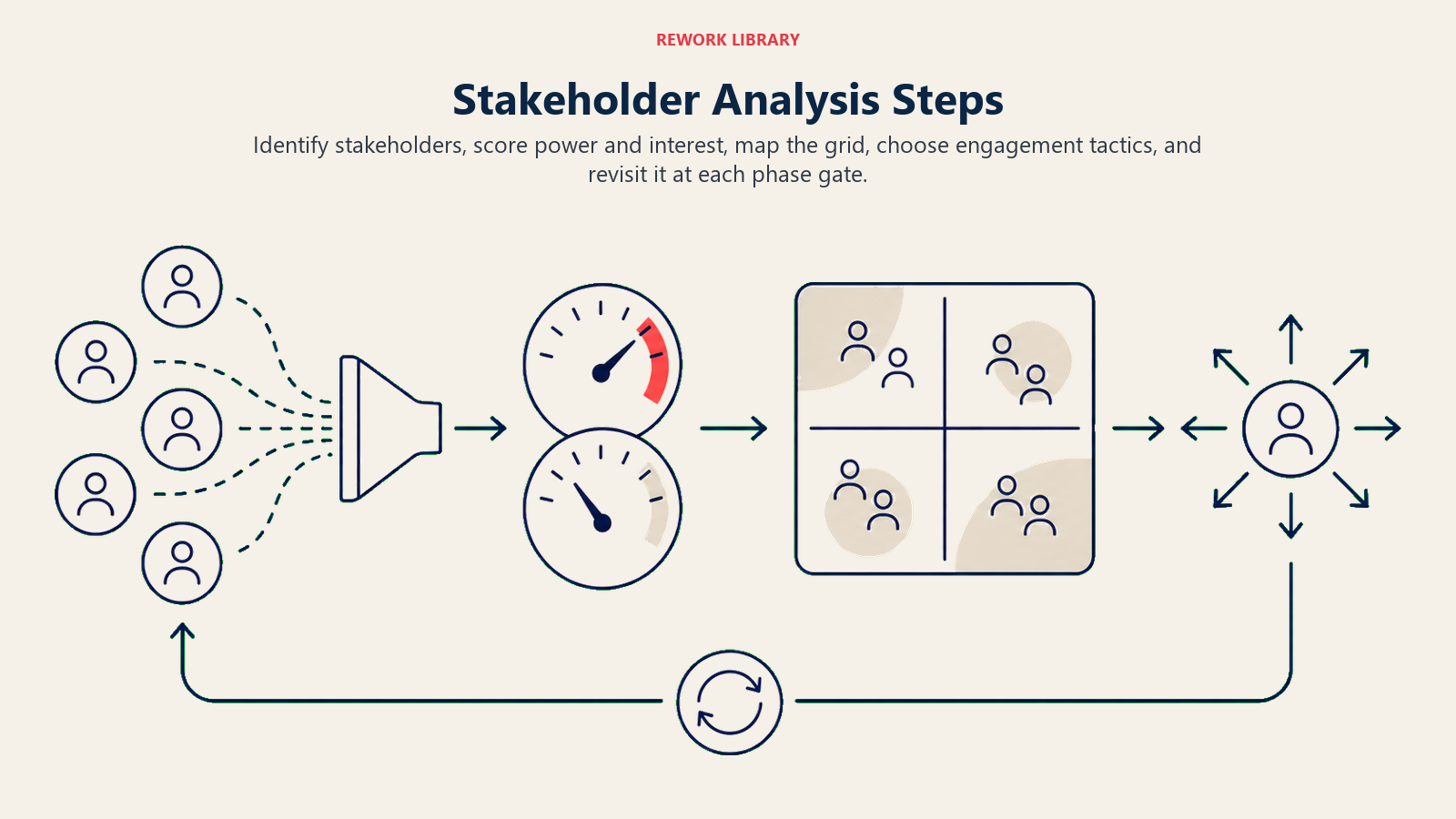
A análise de partes interessadas funciona melhor como uma rotina de planejamento repetível: identifique as pessoas, avalie sua influência, mapeie-as e depois revise o mapa conforme o projeto muda.
Passo 1: Identifique suas partes interessadas
Comece com qualquer pessoa que afete ou seja afetada pelo projeto. Lance a rede bem aberta nesta etapa. Inclua equipes internas, parceiros externos, clientes, reguladores, patrocinadores e usuários finais. Boas fontes para essa lista incluem o termo de abertura do projeto, a estrutura analítica do projeto, o organograma e perguntas diretas ao seu patrocinador: "Quem mais precisa saber sobre isso? Quem poderia bloqueá-lo?"
Busque uma lista de 15 a 40 nomes para um projeto de médio porte. Menos de 10 e você provavelmente está deixando alguém de fora. Mais de 60 e a lista vira ruído em vez de sinal.
Passo 2: Avalie poder e interesse
Para cada parte interessada, faça dois julgamentos: quanto poder ela exerce sobre este projeto? E quanto se importa com o resultado?
Mantenha simples. Uma escala de três pontos (Baixo, Médio, Alto) funciona bem. O objetivo não é precisão, mas posicionamento relativo. Essa pessoa é mais poderosa do que aquela? Esta equipe se importa mais com o resultado do que aquele departamento? Você os posicionará na grade com base nessas pontuações relativas.
Converse com seu patrocinador e equipe principal antes de finalizar as avaliações. A leitura de uma pessoa sobre o nível de interesse de um VP nem sempre é precisa. Triangule as informações.
Passo 3: Mapeie as partes interessadas na grade
Posicione cada parte interessada em um dos quatro quadrantes com base nas pontuações de poder e interesse. Se uma parte interessada cair na fronteira entre quadrantes, escolha o que reflete o risco mais relevante: geralmente é melhor se envolver demais do que de menos com alguém de influência real.
Documente o motivo de cada posicionamento. Quando a grade for revisada ou questionada, você precisará de uma justificativa, não apenas de um ponto num gráfico.
Passo 4: Defina uma estratégia de engajamento para cada quadrante
Atribua uma abordagem de comunicação a cada quadrante e depois personalize-a para as partes interessadas individuais de alta prioridade.
Para partes interessadas em "Gerenciar de Perto": agende reuniões individuais regulares, envolva-as nas principais decisões, compartilhe documentos em rascunho antes de serem finalizados e crie um caminho claro para que possam levantar preocupações diretamente. Para partes interessadas em "Manter Satisfeito": envie resumos executivos nos principais marcos, sinalize decisões que requerem a participação delas e evite sobrecarregá-las com detalhes que não solicitaram.
Para partes interessadas em "Manter Informado": estabeleça uma cadência consistente de atualizações (newsletters, sessões de demonstração, assembleias conforme a escala) e crie canais de Feedback para que possam trazer problemas à tona. Para partes interessadas em "Monitorar": defina um gatilho periódico de revisão (mensal ou trimestral) para verificar se o interesse delas mudou.
Conecte seu plano de engajamento de partes interessadas ao termo de abertura do projeto para que os compromissos de comunicação sejam visíveis desde o início, não adicionados depois que alguém reclamar que não foi mantido informado.
Passo 5: Monitore e reavalie
Mapas de partes interessadas ficam desatualizados. Incorpore um ponto de revisão a cada fase principal do projeto: ao final da iniciação, após cada marco significativo e antes de qualquer anúncio ou implantação importante. Durante a revisão, faça três perguntas: O poder de alguém mudou? O interesse de alguém mudou? Há novas partes interessadas que não estavam na lista no kickoff?
Registre quaisquer mudanças significativas. Uma parte interessada que passa de "Monitorar" para "Gerenciar de Perto" no meio do projeto é um sinal de alerta que vale documentar. Registre-a no seu RAID log como uma atualização de risco ou premissa se a mudança puder afetar o cronograma ou o escopo do projeto.
Exemplo de análise de partes interessadas
Veja como a análise de partes interessadas funciona para um lançamento de CRM em toda a empresa, abrangendo uma organização de vendas e marketing de 400 pessoas.

Contexto do projeto: Substituição de um CRM legado por uma plataforma moderna. O projeto afeta o Workflow diário de cada vendedor, exige mudanças na infraestrutura de TI, envolve um fornecedor terceirizado e precisa de aprovação da diretoria executiva e jurídica.
| Parte interessada | Poder | Interesse | Quadrante | Abordagem de engajamento |
|---|---|---|---|---|
| VP de Vendas | Alto | Alto | Gerenciar de Perto | Reunião semanal 1:1 com o gerente de projeto; incluído em todas as decisões importantes; revisa relatórios de marcos antes da distribuição à diretoria |
| CIO | Alto | Médio | Manter Satisfeito | Briefing técnico quinzenal; aprovação formal solicitada apenas nos marcos de arquitetura e go-live |
| CFO | Alto | Baixo | Manter Satisfeito | Resumo executivo mensal; alertas de variação de orçamento; sem detalhes operacionais, a menos que solicitado |
| Assessoria Jurídica | Alto | Baixo | Manter Satisfeito | Engajada apenas nas etapas de revisão de contratos e privacidade de dados; aviso com 2 semanas de antecedência sobre acordos com fornecedores |
| Equipe de Vendas (linha de frente) | Baixo | Alto | Manter Informado | Sessões semanais de demonstração durante o lançamento; pesquisa de Feedback após cada treinamento; documento de FAQ atualizado continuamente |
| Marketing Operations | Baixo | Alto | Manter Informado | Incluída nas sessões de planejamento de integração; recebe notas de lançamento para funcionalidades que afetam dados compartilhados |
| Equipe de Segurança de TI | Alto | Baixo (inicialmente) | Manter Satisfeito | Sinalizado como risco de mudança: revisão de segurança agendada nos meses 2 e 4; interesse esperado para aumentar na implantação |
| Gerente de Conta do Fornecedor | Baixo | Alto | Manter Informado | Cadência regular de atualização do projeto; envolvido nas fases de teste de QA; caminho de escalada para a liderança do fornecedor, se necessário |
| Funcionários em geral (fora de vendas) | Baixo | Baixo | Monitorar | Atualização trimestral na assembleia geral é suficiente; revisitar se o escopo do CRM for ampliado para outros departamentos |
Observe a linha da Equipe de Segurança de TI. Ela começa com baixo interesse, mas alto poder. Isso é um posicionamento em "Manter Satisfeito", mas com um risco sinalizado: o interesse vai aumentar quando os requisitos de segurança da implantação forem revisados. Identificar isso cedo significa que o gerente de projeto agenda a revisão de segurança no segundo mês, em vez de descobrir o bloqueador no go-live.
Melhores práticas
- Nomeie cada parte interessada individualmente, não por departamento. "Marketing" não tem opiniões. O Diretor de Marketing tem. Nomes individuais criam responsabilização.
- Revise a grade em cada portão de fase. Um mapa de partes interessadas construído no kickoff e nunca mais atualizado é uma falsa segurança.
- Documente o raciocínio por trás de cada posicionamento. Quando uma parte interessada questionar sua classificação de quadrante, você precisa de uma justificativa clara, não de uma explicação defensiva.
- Vincule seu mapa de partes interessadas ao seu RAID log. Partes interessadas que podem mudar de baixo para alto interesse são riscos a serem registrados. Aquelas cujo apoio você está contando são premissas a serem validadas.
- Use a grade para priorizar, não para excluir. Uma parte interessada em "Monitorar" ainda merece atenção periódica. A grade diz onde gastar mais energia, não quem ignorar.
- Compartilhe a grade com seu patrocinador de projeto. Eles conhecem a política organizacional melhor do que ninguém. Uma revisão de 20 minutos da grade com seu patrocinador vai melhorá-la significativamente.
- Alinhe sua declaração de escopo do projeto com as contribuições das partes interessadas capturadas durante a análise. Requisitos que vêm das partes interessadas em "Gerenciar de Perto" devem ser incorporados ao escopo antes que o plano seja fechado. Surpresas desse quadrante são caras.
- Observe o quadrante "Manter Satisfeito" com mais atenção. Partes interessadas de alto poder e baixo interesse são o tipo de surpresa mais perigoso. O desengajamento delas é normal, até que de repente não seja mais.
A grade de poder-interesse não vai dizer o que construir. Mas vai dizer quem vai decidir se o que você construiu terá sucesso. Esse é o mapa que vale fazer antes de qualquer outra coisa.
Leituras relacionadas
- Matriz RACI: O que é e exemplos no uso cotidiano
- Termo de Abertura do Projeto: O documento que inicia todo projeto corretamente
- Declaração de Escopo do Projeto
- RAID Log: Acompanhe Riscos, Premissas, Problemas e Dependências
- Ciclo de Vida do Projeto: Fases, Modelos e Como Escolher
- Estrutura Analítica do Projeto
- Registro de Riscos
- Priorização MoSCoW

Senior Operations & Growth Strategist
On this page
- O que é análise de partes interessadas?
- A grade de poder-interesse (Matriz de Mendelow)
- O quadrante mais perigoso
- Grade de poder-interesse vs. outros modelos de partes interessadas
- Por que a análise de partes interessadas é importante
- Erros comuns
- Como fazer uma análise de partes interessadas
- Passo 1: Identifique suas partes interessadas
- Passo 2: Avalie poder e interesse
- Passo 3: Mapeie as partes interessadas na grade
- Passo 4: Defina uma estratégia de engajamento para cada quadrante
- Passo 5: Monitore e reavalie
- Exemplo de análise de partes interessadas
- Melhores práticas
- Leituras relacionadas