Gestão de Risco em Projetos: O Processo de 6 Etapas Explicado
Turn this article into takeaways for your work.


Each assistant summarizes the article only for you and suggests best practices for your work.
A gestão de risco em projetos é a prática estruturada de identificar o que pode dar errado em um projeto, avaliar quão provável e grave cada ameaça realmente é, e colocar um plano de resposta em prática antes que a ameaça se torne uma crise. Não se trata de prever o futuro. Trata-se de dar à sua equipe tempo suficiente para agir em vez de reagir.
A maioria dos projetos que fracassam não fracassa por causa de uma surpresa catastrófica única. Eles fracassam porque problemas pequenos e previsíveis não foram resolvidos até se acumularem. Um fornecedor-chave entregou com atraso. Um requisito mudou depois que o design já estava travado. Uma premissa técnica se mostrou errada. Cada um desses eventos era previsível. O que faltava era um processo para revelá-los cedo.
Este guia percorre o processo de seis etapas definido no Guia PMBOK (Project Management Body of Knowledge), explica as ferramentas usadas em cada etapa e aborda tanto ameaças quanto oportunidades. Sim, a gestão de risco inclui o lado positivo. Riscos positivos podem ser tão importantes de gerenciar quanto os negativos.
O que é gestão de risco em projetos?
A gestão de risco em projetos é a área de conhecimento dentro da gestão de projetos que abrange o planejamento, a identificação, a análise, a resposta e o monitoramento de riscos ao longo da vida de um projeto. O Guia PMBOK a trata como uma das dez áreas de conhecimento centrais, ao lado de escopo, cronograma, custo e qualidade.
Um risco é um evento ou condição incerta que, se ocorrer, tem um efeito positivo ou negativo sobre os objetivos do projeto. Essa última parte importa. Nem todo risco é ruim.
- Ameaças são riscos negativos: atrasos, estouros de orçamento, falta de recursos, falhas técnicas.
- Oportunidades são riscos positivos: um fornecedor entregando antes do prazo, uma tecnologia se mostrando mais rápida do que o esperado, uma janela de mercado se abrindo.
Ambos os tipos merecem ser gerenciados. Equipes que só acompanham ameaças perdem chances de explorar ativamente condições favoráveis quando elas surgem.
O resultado da gestão de risco não é uma lista de preocupações. É um conjunto de decisões: o que fazer em relação a cada risco, quem é o responsável e como saber quando é hora de agir.
Dados Relevantes
- Segundo a pesquisa Pulse of the Profession do PMI, organizações sem práticas eficazes de gestão de risco têm muito mais probabilidade de sofrer falhas de projeto e problemas de expansão do escopo. Os dados do PMI mostram consistentemente que organizações de alto desempenho investem muito mais na identificação proativa de riscos do que suas contrapartes de desempenho inferior. (Fonte: PMI Pulse of the Profession, 2023)
- O Guia PMBOK (7ª edição) trata a gestão de risco como um dos doze princípios de gestão de projetos, não apenas um grupo de processos. Isso reflete uma mudança de encarar o risco como uma lista de verificação para tratá-lo como uma disciplina contínua ao longo do ciclo de vida do projeto.
- Pesquisas da KPMG e de outras organizações sobre grandes projetos de capital indicam que estouros de cronograma e custo geralmente são rastreados até riscos que já eram conhecidos cedo, mas não foram formalmente monitorados ou atribuídos a um responsável. A falha raramente está relacionada a eventos imprevisíveis.
As 6 Etapas da Gestão de Risco em Projetos
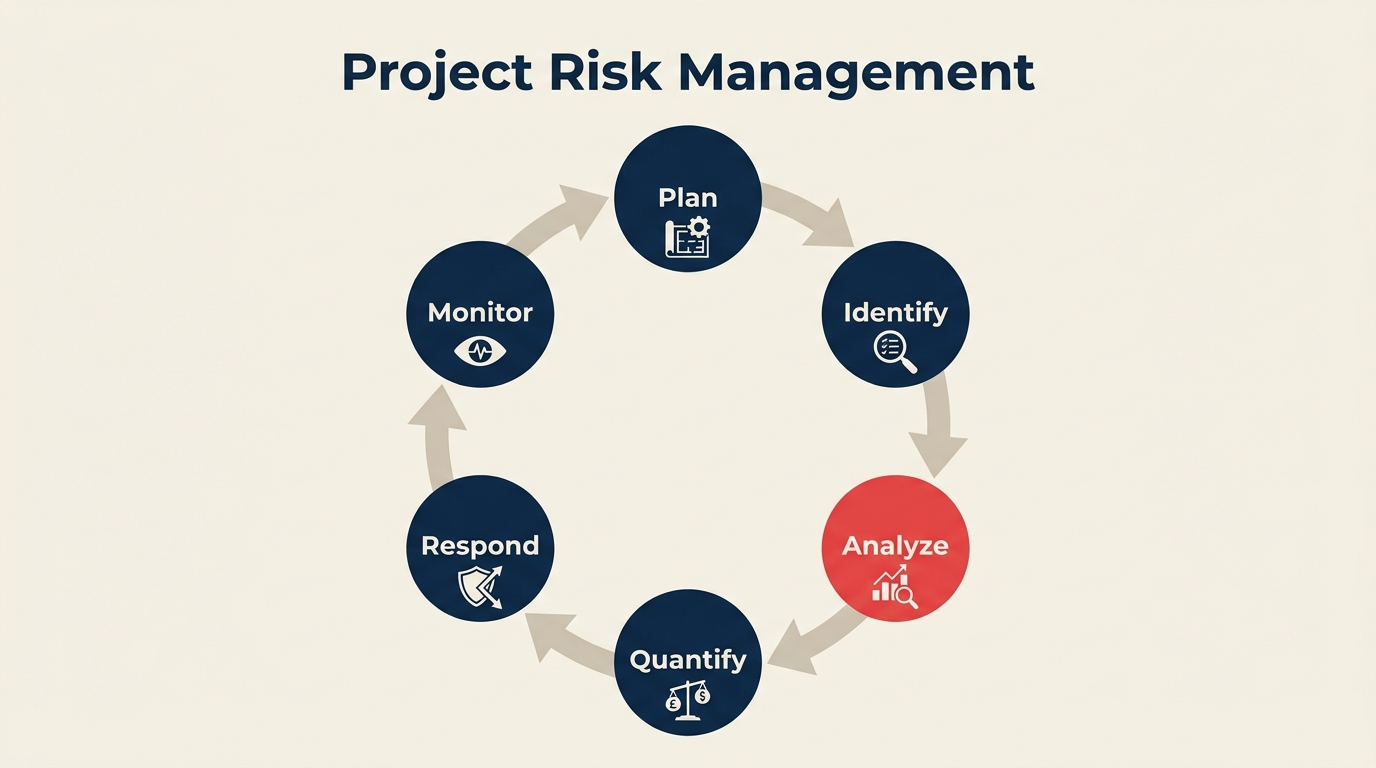
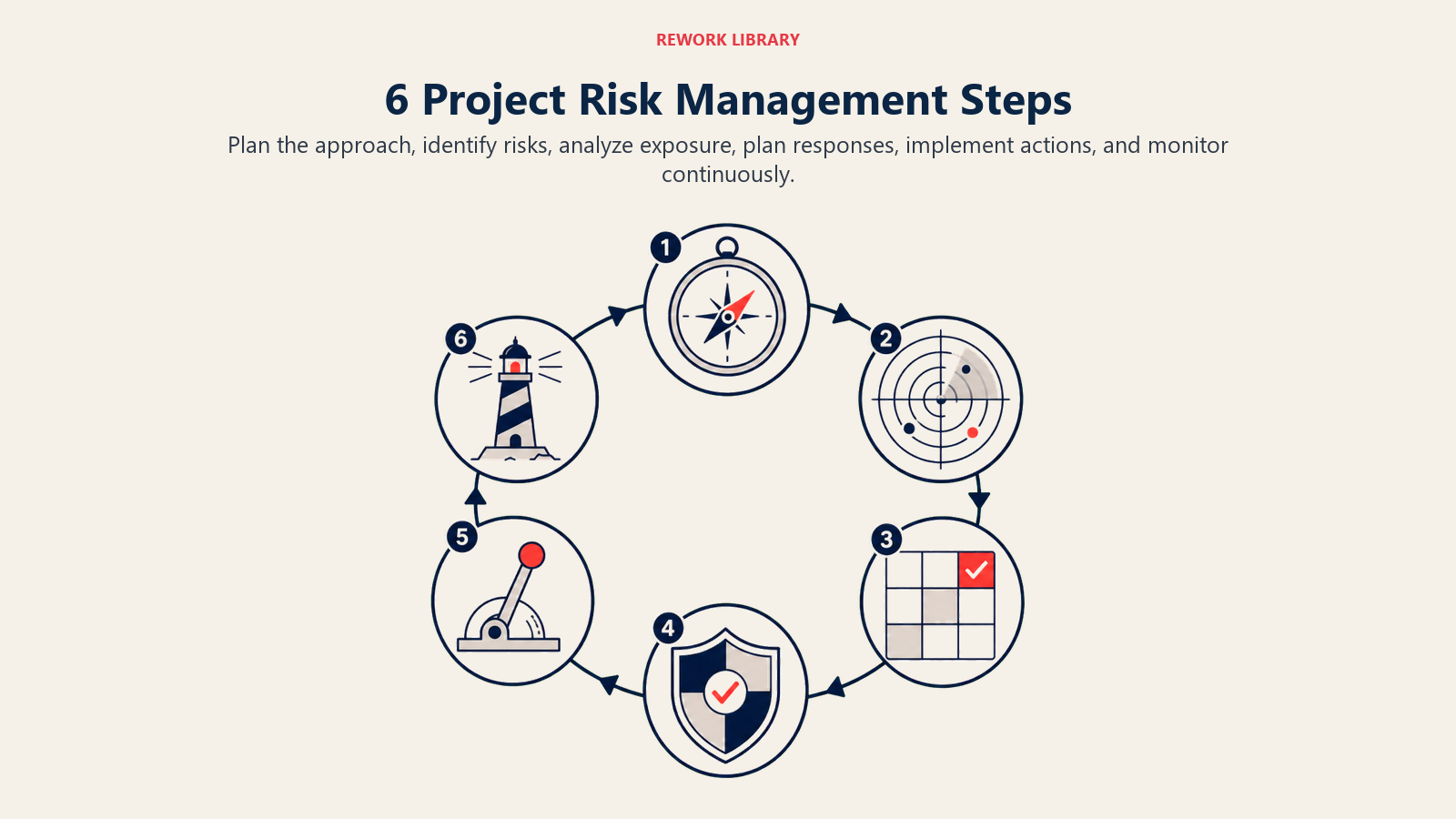
O Guia PMBOK organiza a gestão de risco em seis processos sequenciais, mas iterativos. Você os executa aproximadamente nessa ordem no início do projeto, e depois retoma a identificação e o monitoramento continuamente.
Etapa 1: Planejar a Gestão de Risco
Antes de gerenciar riscos, você precisa decidir como vai gerenciá-los. O plano de gestão de risco é o resultado desta etapa. Ele documenta:
- A abordagem e a metodologia de gestão de risco
- Papéis e responsabilidades para as atividades de risco
- Categorias de risco (frequentemente organizadas em uma Estrutura Analítica de Riscos, ou RBS)
- Escalas de probabilidade e impacto (para que todos pontuem os riscos da mesma forma)
- Limites de risco (o nível de risco que a organização e as partes interessadas estão dispostas a aceitar)
- Formatos de relatório e protocolos de comunicação
Vale a pena fazer essa etapa com cuidado. Se sua equipe não concordar sobre como pontuar um evento de "probabilidade média", seu registro de riscos ficará inconsistente e, portanto, inútil para a priorização. Alinhe as definições desde cedo.
Ferramenta nesta etapa: Estrutura Analítica de Riscos (RBS) e o modelo de plano de gestão de risco.
Etapa 2: Identificar Riscos
A identificação consiste em tirar todos os riscos plausíveis da cabeça das pessoas e colocá-los em um documento compartilhado. O objetivo é amplitude, não precisão. Você vai filtrar e analisar depois.
As técnicas de identificação comuns incluem:
- Sessões de brainstorming com a equipe central do projeto
- Entrevistas com especialistas ou veteranos de projetos
- Análise de checklist usando listas históricas de projetos anteriores semelhantes
- Análise SWOT (forças, fraquezas, oportunidades, ameaças)
- Análise de premissas (identificando onde as premissas do projeto podem estar erradas)
- Revisões de documentos do termo de abertura do projeto, da declaração de escopo e do cronograma
O resultado é o registro de riscos inicial (também chamado de log de riscos), um documento vivo que registra cada risco identificado com uma breve descrição, uma categoria e um responsável inicial. Veja o guia de registro de riscos para uma explicação completa do que incluir.
Todos os membros da equipe devem participar. Os riscos identificados por desenvolvedores costumam ser diferentes dos identificados por compras ou finanças. A contribuição multifuncional evita pontos cegos.
Etapa 3: Realizar a Análise Qualitativa de Risco
Você não pode dar a mesma atenção a todos os riscos. A análise qualitativa dá a cada risco uma pontuação de prioridade com base em duas dimensões: probabilidade (qual a chance de isso acontecer?) e impacto (quão ruim seria se acontecesse?).
A ferramenta padrão é uma matriz de probabilidade e impacto, frequentemente chamada de matriz de risco. Você avalia cada risco em uma escala (normalmente de 1 a 5 ou Baixo/Médio/Alto para cada dimensão), multiplica as pontuações e obtém uma classificação que indica onde concentrar a atenção.
O resultado desta etapa é um registro de riscos atualizado com pontuações de prioridade e uma lista de observação dos riscos de alta prioridade. A análise qualitativa é rápida e não exige dados. Sua limitação é que é subjetiva: dois gerentes de projeto experientes podem pontuar o mesmo risco de forma diferente.
Etapa 4: Realizar a Análise Quantitativa de Risco
Nem todo projeto precisa desta etapa. A análise quantitativa vale o esforço em projetos grandes, complexos ou de alto risco, nos quais você precisa de estimativas numéricas do risco geral do projeto.
As técnicas comuns incluem:
- Simulação de Monte Carlo: executa milhares de cenários modelados por computador para produzir uma distribuição de probabilidade dos resultados do projeto (custo, cronograma). Se a simulação indicar que seu projeto tem 70% de chance de terminar no prazo, você sabe onde focar. Veja o guia de simulação de Monte Carlo para entender como isso funciona na prática.
- Valor Monetário Esperado (EMV): multiplica a probabilidade de um evento de risco pelo seu impacto financeiro para obter uma pontuação de risco ponderada em valor monetário. Útil para comparar opções de resposta.
- Análise de árvore de decisão: mapeia cenários ramificados com probabilidades e resultados atribuídos a cada ramo.
O resultado é uma visão quantificada da exposição ao risco que sustenta decisões sobre reservas de contingência, margens de cronograma e escolhas de continuar ou não.
Etapa 5: Planejar Respostas ao Risco
É aqui que a gestão realmente acontece. Para cada risco prioritário, a equipe define uma estratégia de resposta específica e atribui um responsável (uma pessoa nomeada, não apenas "o PM" ou "a equipe").
As estratégias de resposta se dividem por tipo de risco. Ameaças e oportunidades exigem abordagens diferentes. A próxima seção detalha isso.
O plano de resposta ao risco também deve identificar:
- Riscos residuais: o risco que permanece depois que uma resposta é implementada
- Riscos secundários: novos riscos criados pela própria resposta
- Planos de contingência: o que fazer se o risco ocorrer apesar da resposta
- Planos de contorno: o backup caso o plano de contingência também falhe
- Reservas de contingência: orçamento ou margens de cronograma reservados para cobrir riscos conhecidos
Etapa 6: Implementar Respostas ao Risco e Monitorar Riscos
A gestão de risco não termina quando o plano é escrito. A etapa final (que roda continuamente) envolve:
- Executar as respostas planejadas
- Monitorar gatilhos (sinais de alerta precoce de que um risco está prestes a se materializar)
- Reavaliar os riscos existentes conforme o projeto evolui
- Identificar novos riscos que surgem no meio do projeto
- Reportar o status do risco às partes interessadas
- Encerrar riscos que não são mais relevantes
Uma reunião semanal de revisão de riscos, mesmo que breve, mantém o registro atualizado. O log RAID é uma ferramenta prática para acompanhar riscos junto com premissas, problemas e dependências em um só lugar.
Estratégias de Resposta ao Risco
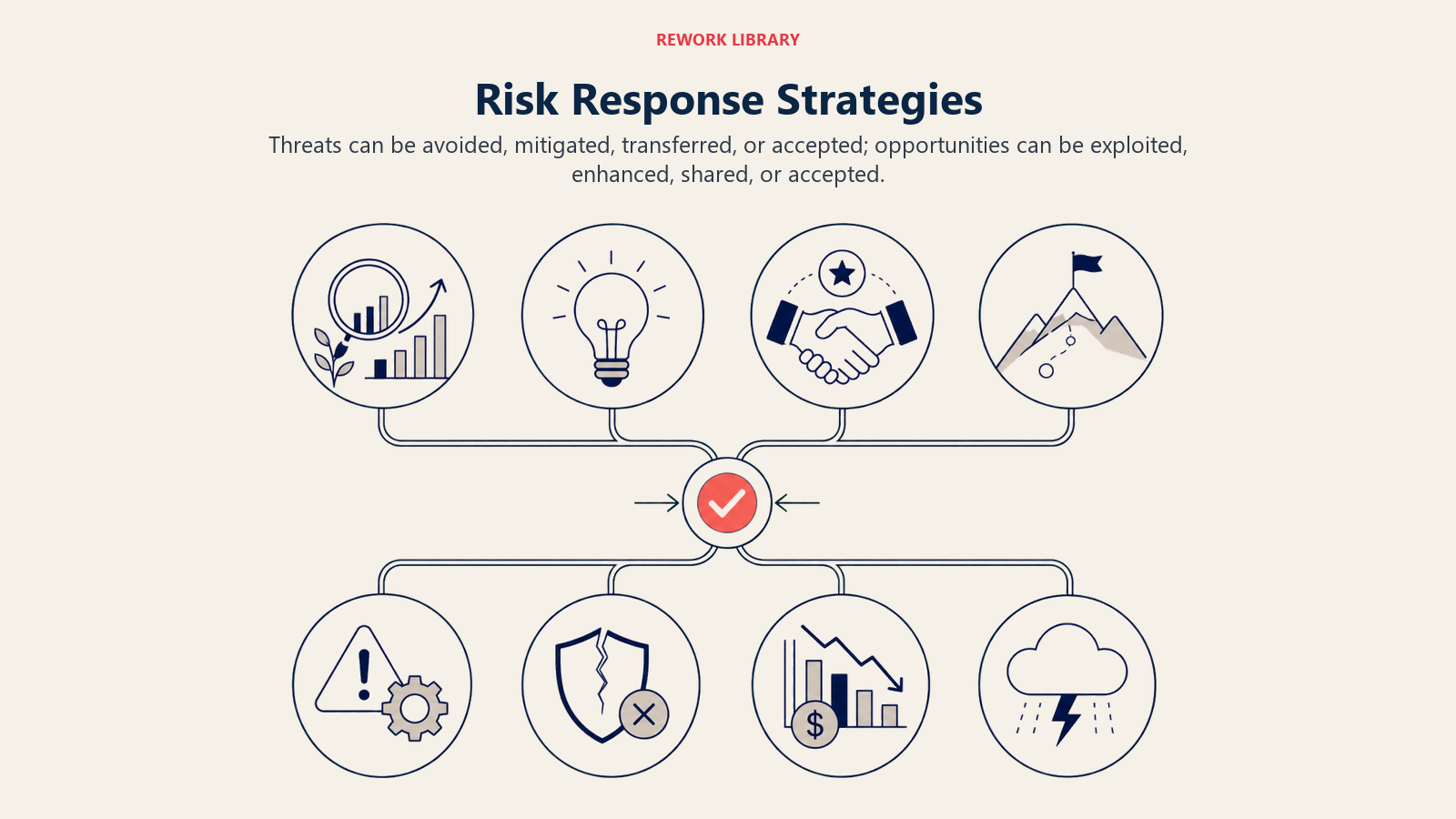
Riscos diferentes exigem respostas diferentes. O Guia PMBOK define quatro estratégias para ameaças e quatro para oportunidades.
| Estratégia | Para | Definição | Exemplo |
|---|---|---|---|
| Evitar | Ameaças | Eliminar a ameaça mudando o plano | Remover do escopo uma funcionalidade arriscada; escolher um fornecedor comprovado em vez de um não testado |
| Mitigar | Ameaças | Reduzir a probabilidade ou o impacto a um nível aceitável | Adicionar testes automatizados para reduzir a chance de atrasos relacionados a defeitos |
| Transferir | Ameaças | Transferir o risco para um terceiro | Contratar um seguro; usar um contrato de preço fixo em vez de tempo e materiais |
| Aceitar | Ameaças | Reconhecer o risco e não tomar ação proativa (a aceitação ativa cria uma contingência; a aceitação passiva não faz nada) | Aceitar um risco de atraso menor porque o custo da mitigação supera o impacto esperado |
| Explorar | Oportunidades | Garantir que a oportunidade ocorra | Alocar seu melhor desenvolvedor a uma tarefa em que a conclusão antecipada libera a próxima fase |
| Melhorar | Oportunidades | Aumentar a probabilidade ou o impacto | Adicionar recursos a uma tarefa que pode terminar antes, tornando a conclusão antecipada mais provável |
| Compartilhar | Oportunidades | Fazer parceria com outra parte para capturar a oportunidade | Formar uma joint venture para entrar em um mercado que nenhuma das partes alcançaria sozinha |
| Aceitar | Oportunidades | Aproveitar a oportunidade se ela ocorrer, mas sem investir para torná-la mais provável | Observar que uma entrega antecipada do fornecedor ajudaria, mas sem reestruturar o cronograma em função disso |
Benefícios da Gestão de Risco em Projetos
Feita corretamente, a gestão de risco faz mais do que evitar desastres. Ela muda a forma como uma equipe opera.
Menos surpresas. Quando os riscos são documentados e têm um responsável, a equipe não é pega de surpresa quando algo dá errado. Ela já tem uma resposta pronta.
Melhores decisões. A exposição de risco quantificada alimenta diretamente as decisões sobre reservas de contingência, portões de continuidade e trocas de escopo. Você decide com base em evidências, não em intuição.
Confiança das partes interessadas. Executivos e clientes confiam em equipes que conseguem dizer "aqui estão os cinco principais riscos, aqui está o que estamos fazendo em relação a cada um, e aqui está nossa margem caso essas medidas não sejam suficientes".
Estimativas aprimoradas. Uma equipe que acompanha riscos ao longo do tempo constrói um histórico do que realmente dá errado nos projetos. Esse histórico torna as estimativas futuras mais precisas.
Captura de oportunidades. Equipes que acompanham riscos positivos exploram ativamente condições favoráveis em vez de deixá-las passar despercebidas.
Erros Comuns na Gestão de Risco em Projetos
A gestão de risco falha quando o registro parece completo, mas ninguém atualiza as pontuações, acompanha os gatilhos ou se compromete com ações de resposta concretas.
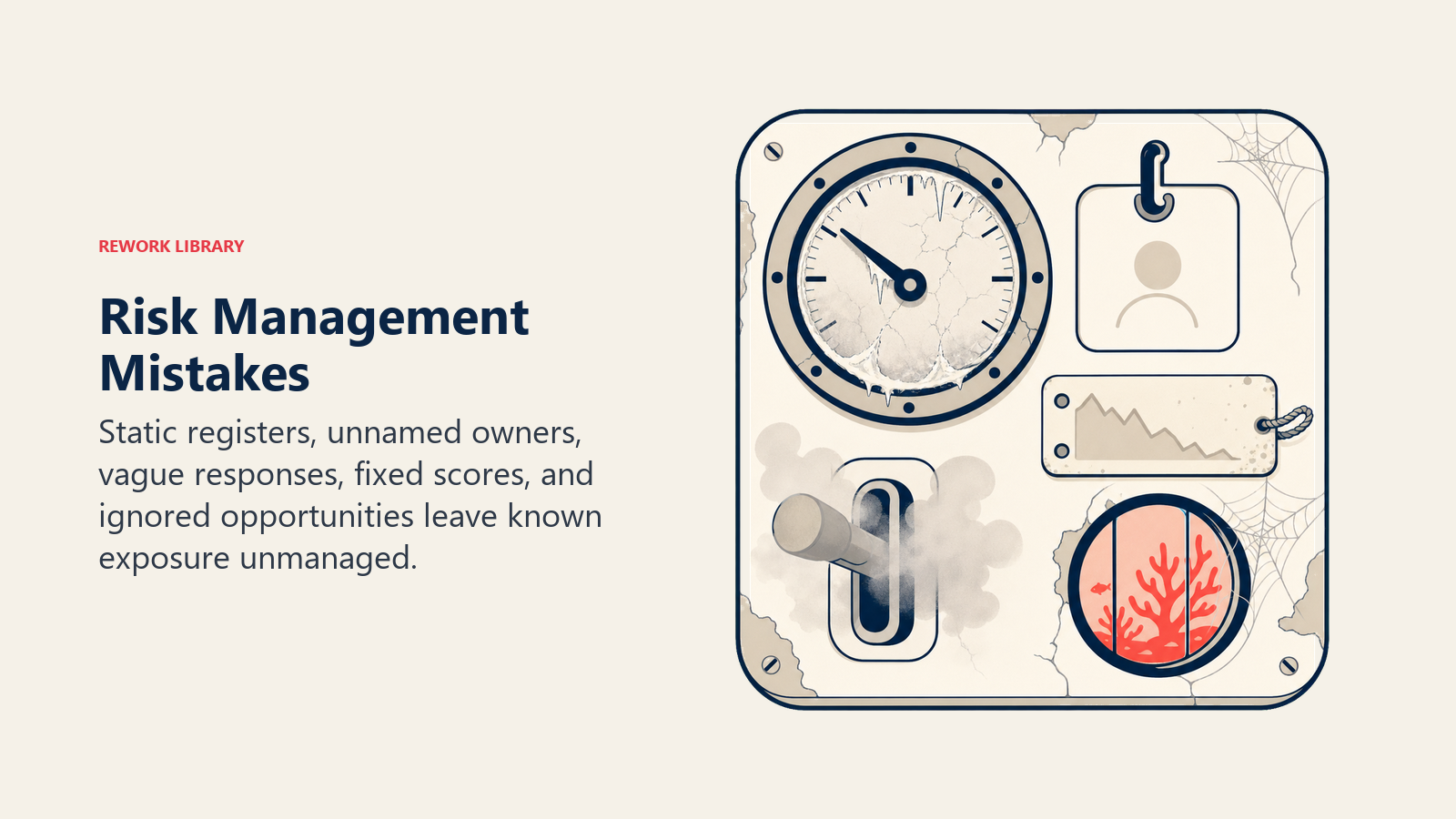
O registro de riscos feito uma única vez. Os registros de riscos são criados no kickoff do projeto e depois nunca mais são tocados. Os riscos evoluem. Novos surgem. Os antigos se tornam irrelevantes. Um registro atualizado apenas uma vez é um artefato de conformidade, não uma ferramenta de gestão.
Ignorar riscos positivos. A maioria das equipes só acompanha ameaças. As oportunidades passam despercebidas porque ninguém está observando as condições em que as coisas poderiam ir melhor do que o planejado.
Nenhum responsável nomeado. Um risco atribuído "à equipe" é um risco atribuído a ninguém. Todo risco precisa de uma única pessoa nomeada cujo trabalho é observar o gatilho e executar a resposta.
Respostas vagas. "Monitorar de perto" não é uma resposta a risco. Uma resposta de verdade especifica qual ação será tomada, quando e por quem.
Tratar as pontuações de risco como fixas. Um risco com pontuação de "baixa probabilidade" no kickoff pode se tornar um risco de "alta probabilidade" três semanas depois, conforme as condições mudam. As pontuações precisam ser revisitadas regularmente, não apenas registradas uma vez.
Pular a etapa quantitativa em projetos complexos. Em programas grandes com exposição orçamentária significativa, a pontuação qualitativa sozinha não é suficiente. As análises de Monte Carlo e EMV fornecem números que você pode defender perante os patrocinadores.
Exemplo de Gestão de Risco em Projetos
Imagine uma empresa de software migrando um CRM legado para uma nova plataforma em nuvem, com um prazo rígido vinculado à renovação de um contrato.
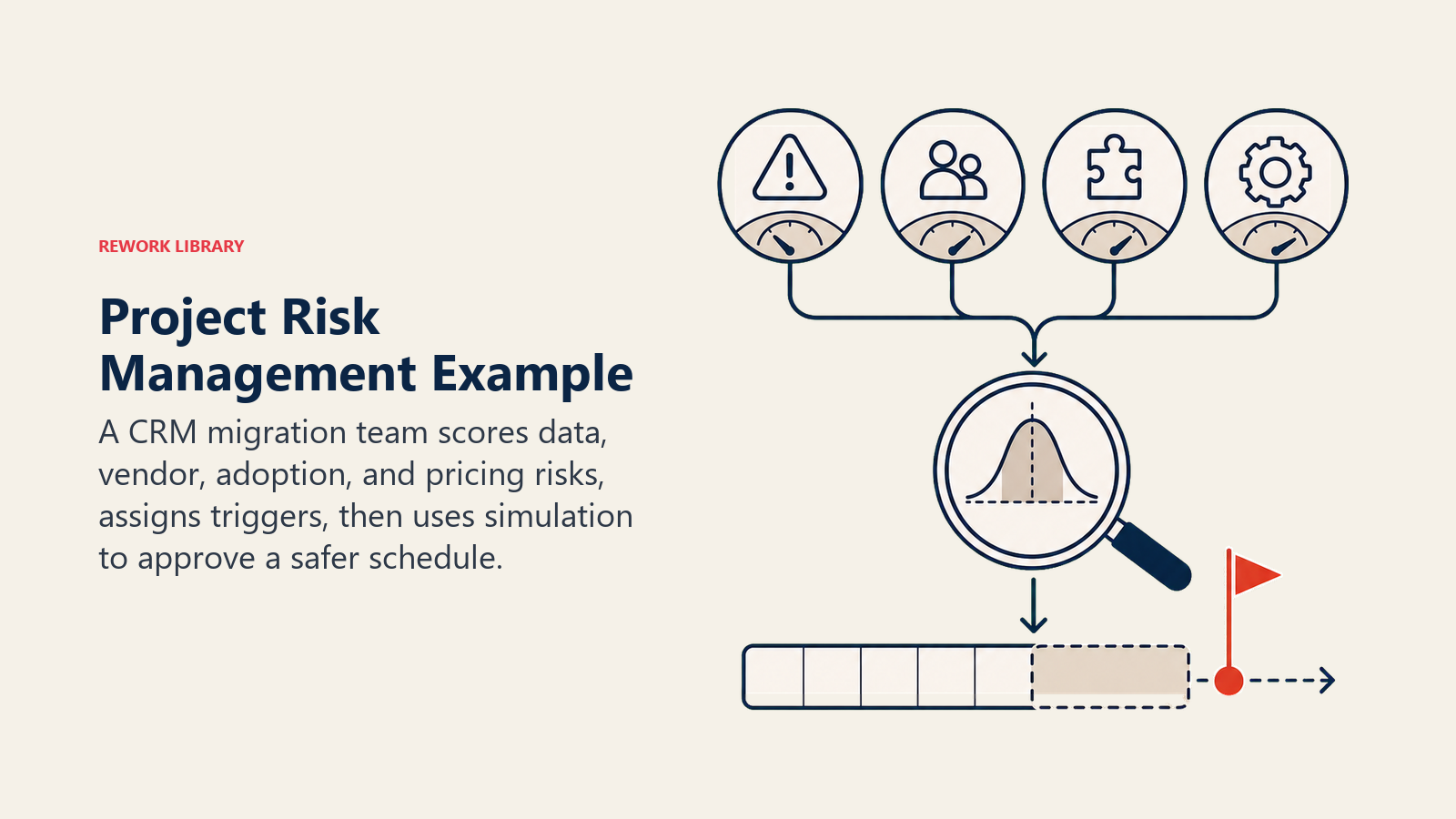
Veja como o processo de gestão de risco se desenrola:
| # | Risco | Probabilidade | Impacto | Pontuação | Estratégia | Responsável | Gatilho |
|---|---|---|---|---|---|---|---|
| 1 | Erros na migração de dados corrompem registros de clientes | Média | Alta | 12 | Mitigar: executar sistemas em paralelo por 2 semanas antes da virada | Engenheiro Líder | Qualquer falha de validação de dados no UAT |
| 2 | Fornecedor-chave atrasa a entrega da integração de API | Alta | Alta | 16 | Transferir: adicionar cláusula de penalidade ao contrato do fornecedor; Mitigar: construir um fallback interno | Gerente de Compras | Marco perdido na semana 4 |
| 3 | Adoção dos usuários finais abaixo de 60% no primeiro mês | Média | Média | 9 | Mitigar: agendar sessões de treinamento; Melhorar: designar um líder de gestão de mudança | Parceiro de Negócios de RH | Métricas de uso da semana 2 abaixo do limite |
| 4 | Provedor de nuvem oferece desconto ampliado se o compromisso for firmado antecipadamente | Baixa | Média | 4 (oportunidade) | Explorar: acelerar a decisão de compras | CFO | Oferta de desconto do fornecedor recebida |
A equipe executa uma simulação de Monte Carlo usando suas estimativas de cronograma. Ela mostra 65% de probabilidade de cumprir o prazo com o plano atual, e 90% de probabilidade se adicionarem uma margem de duas semanas e começarem os testes de migração de dados duas semanas antes. Eles apresentam isso ao patrocinador, que aprova um cronograma estendido. O projeto é entregue na data revisada.
Isso é o que a matriz de análise de partes interessadas e o termo de abertura do projeto preparam: alinhamento sobre a tolerância a risco antes do início do trabalho.
Melhores Práticas
Comece o planejamento de risco antes do início do projeto. A restrição tripla de escopo, cronograma e custo é definida durante o planejamento. Decisões de risco tomadas nesta fase são muito mais baratas do que mudanças feitas durante a execução.
Use modelos estruturados. Um formato consistente de registro de riscos permite que novos membros da equipe entendam o documento sem precisar de um briefing. A consistência também torna possível a comparação histórica.
Torne as revisões de risco um item fixo da pauta. Um intervalo de quinze minutos na reunião semanal do projeto já é suficiente para manter o registro atualizado e os riscos visíveis.
Atribua também responsáveis pelos riscos residuais. Depois que uma ação de mitigação é tomada, o risco residual remanescente ainda precisa de alguém observando-o.
Calibre suas escalas ao projeto. Um risco de "alto impacto" em um projeto interno de US$ 50 mil é diferente de um risco de "alto impacto" em um programa de infraestrutura de US$ 50 milhões. Defina suas escalas no plano de gestão de risco para que as pontuações sejam comparáveis entre a equipe.
Referencie os riscos à estrutura analítica do projeto. Vincular os riscos a elementos específicos da EAP (veja o registro de riscos) facilita ver quais pacotes de trabalho carregam mais exposição e atribuir os responsáveis pelos riscos de forma adequada.
Perguntas Frequentes sobre Gestão de Risco em Projetos
Qual é a diferença entre um risco e um problema?
Um risco é um evento futuro incerto que ainda não aconteceu. Um problema é uma dificuldade que já ocorreu e exige resolução ativa. A gestão de risco lida com prevenir ou se preparar para eventos futuros. A gestão de problemas lida com resolver questões atuais. Ambos são acompanhados em um log RAID, sigla para Riscos, Premissas (Assumptions), Problemas (Issues) e Dependências.
O que é um registro de riscos e como ele se relaciona com a gestão de risco?
Um registro de riscos é o principal resultado e documento de trabalho do processo de gestão de risco. Ele registra cada risco identificado com sua descrição, categoria, pontuações de probabilidade e impacto, prioridade, responsável designado, resposta planejada e status atual. Pense no processo de gestão de risco como o motor e no registro de riscos como o painel de instrumentos.
Com que frequência os riscos devem ser revisados?
No mínimo, os riscos devem ser revisados em cada reunião de status do projeto. Riscos de alta prioridade podem exigir monitoramento diário quando um evento gatilho está se aproximando. O registro de riscos completo deve passar por uma reavaliação total em cada grande fase ou marco do projeto.
O que é risco residual?
Risco residual é o risco que permanece depois que uma resposta ao risco foi implementada. Nenhuma resposta elimina o risco por completo. A mitigação o reduz; a prevenção o contorna; a transferência o desloca. Qualquer exposição restante depois da resposta é o risco residual. Ele precisa de seu próprio responsável e protocolo de monitoramento.
Todos os projetos precisam de análise quantitativa de risco?
Nem sempre. A análise qualitativa (pontuação de probabilidade e impacto) é suficiente para a maioria dos projetos pequenos e médios. Técnicas quantitativas como a simulação de Monte Carlo são mais valiosas em projetos grandes, complexos ou de alto risco, em que você precisa de intervalos de confiança numéricos para os resultados de custo e cronograma, ou quando os patrocinadores exigem justificativa baseada em dados para reservas de contingência. A gestão de risco em projetos não é um exercício pontual que você conclui no kickoff e arquiva. As equipes que extraem mais valor dela a tratam como uma conversa contínua: mantendo o registro atualizado, revisando os gatilhos em cada reunião de status e atualizando os planos de resposta conforme o projeto evolui. Comece com um plano claro, identifique os riscos amplamente, pontue-os de forma consistente, atribua responsáveis reais e revise regularmente. Isso é o núcleo da prática.

On this page
- O que é gestão de risco em projetos?
- As 6 Etapas da Gestão de Risco em Projetos
- Etapa 1: Planejar a Gestão de Risco
- Etapa 2: Identificar Riscos
- Etapa 3: Realizar a Análise Qualitativa de Risco
- Etapa 4: Realizar a Análise Quantitativa de Risco
- Etapa 5: Planejar Respostas ao Risco
- Etapa 6: Implementar Respostas ao Risco e Monitorar Riscos
- Estratégias de Resposta ao Risco
- Benefícios da Gestão de Risco em Projetos
- Erros Comuns na Gestão de Risco em Projetos
- Exemplo de Gestão de Risco em Projetos
- Melhores Práticas