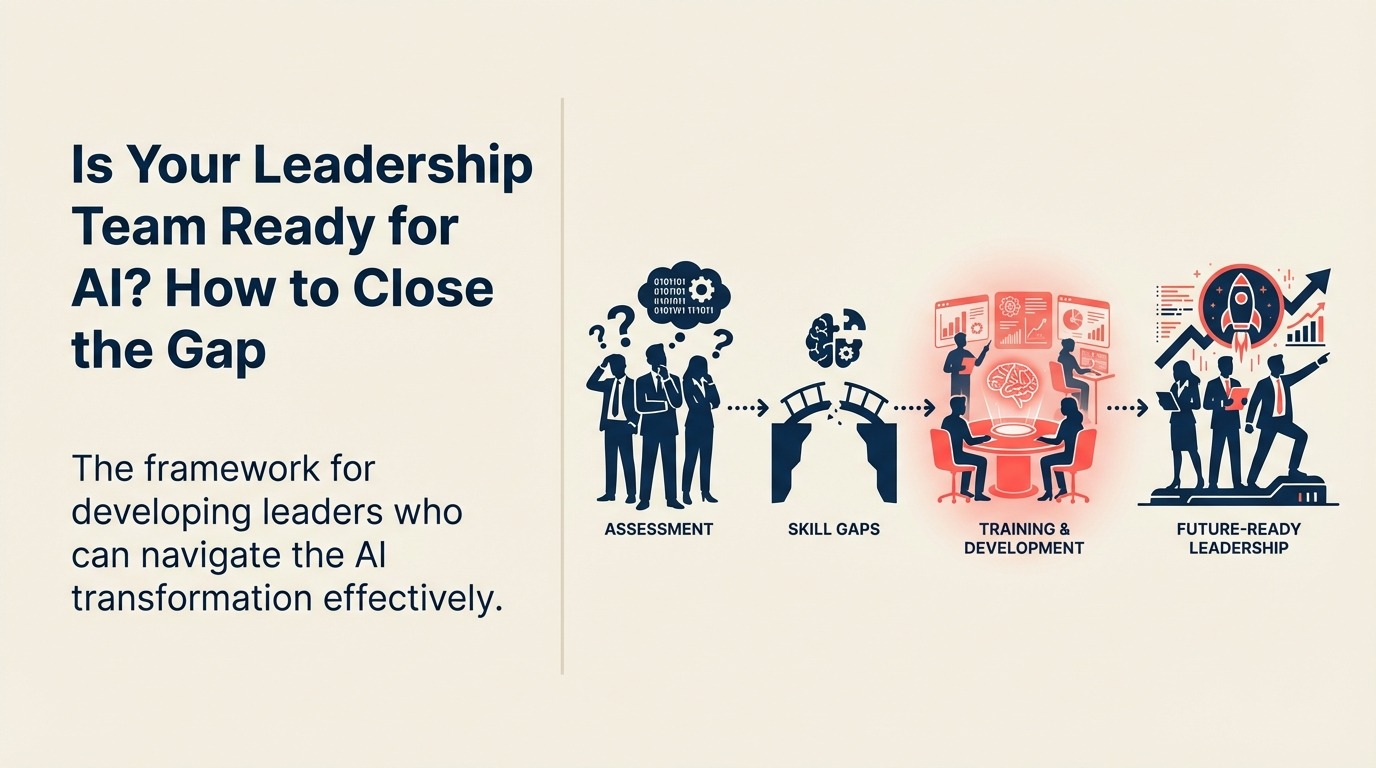
Is Your Leadership Team Ready for AI? How to Close the Gap
Turn this article into takeaways for your work.


Each assistant summarizes the article only for you and suggests best practices for your work.
Organizations are investing heavily in AI. But there's a troubling disconnect: most leaders are unprepared to navigate this transition effectively. The gap between AI investment and leadership readiness creates risk that many boards and CEOs are only beginning to recognize.
This isn't about leaders learning to code. It's about developing the judgment, understanding, and capabilities needed to make good decisions in an AI-transformed environment. Leaders who can't evaluate AI opportunities, manage AI risks, and lead organizations through AI-driven change will struggle - and so will their organizations.
Understanding the Readiness Gap
The gap manifests in several ways:
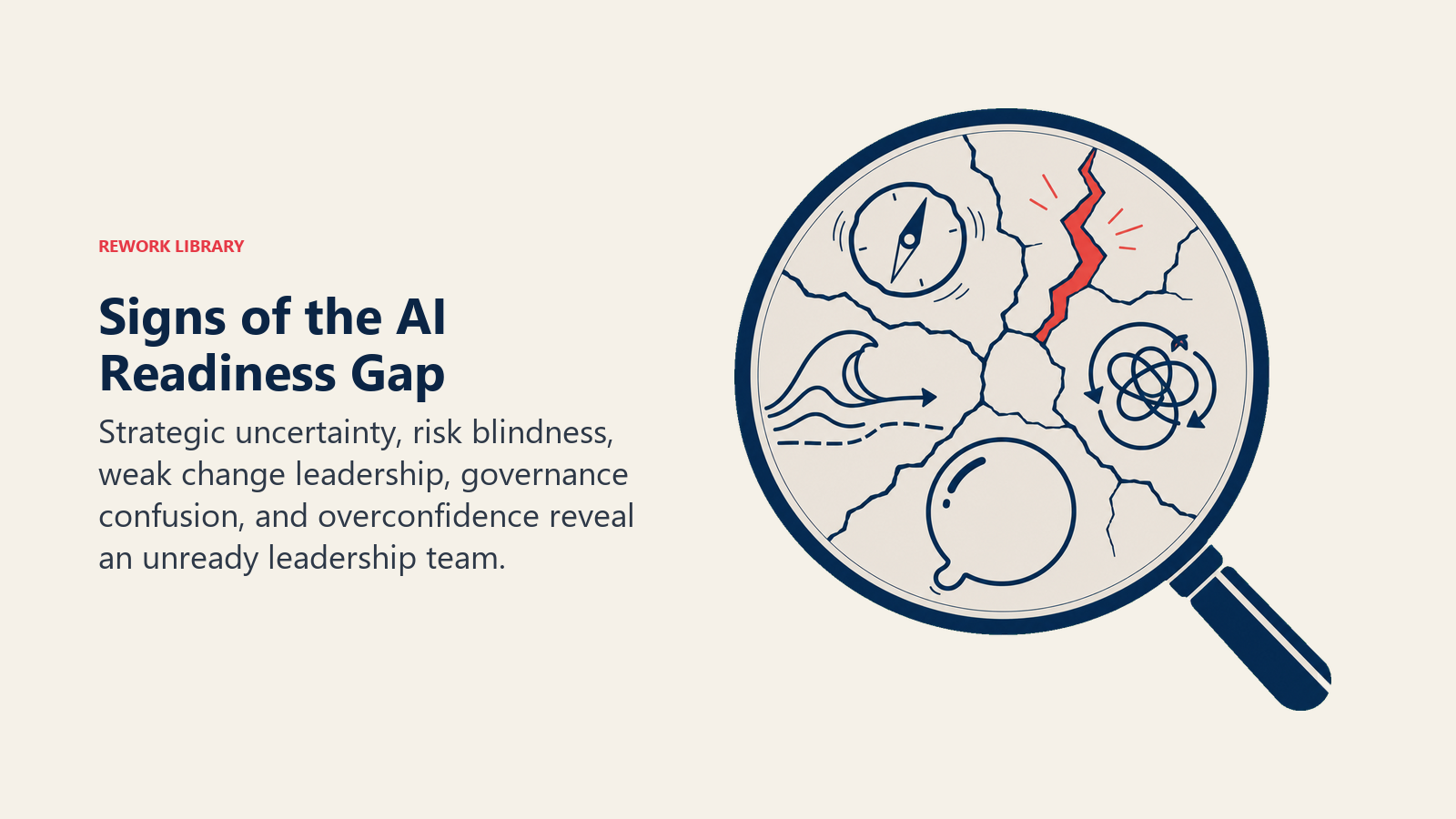
Strategic uncertainty. Many leaders struggle to evaluate which AI initiatives deserve investment. They either chase every shiny innovation or freeze in analysis paralysis.
Risk blindness. AI creates risks that traditional business experience doesn't prepare leaders to recognize - algorithmic bias, data dependency, model drift, adversarial attacks.
Change leadership deficits. The workforce transformations AI requires demand change leadership skills many executives haven't developed.
Governance confusion. Existing governance frameworks don't translate directly to AI. Leaders don't know what questions to ask or what oversight to provide.
Overestimation of AI understanding. Leaders often think they understand AI better than they do. Superficial familiarity creates dangerous overconfidence.
Why This Gap Exists
Several factors created this situation:
Speed of change. AI capabilities have advanced faster than leadership development programs could adapt. What leaders learned even recently may already be outdated.
Technical complexity. AI involves concepts that weren't part of traditional business education. Many leaders lack the technical foundation to evaluate AI meaningfully.
Experience gaps. Most of today's senior leaders built their careers before AI was a significant factor. They're navigating new territory without relevant experience.
Learning barriers. Executives are busy. Finding time for genuine learning about AI competes with immediate operational demands.
The Leadership Readiness Framework
Closing the gap requires development in four areas:
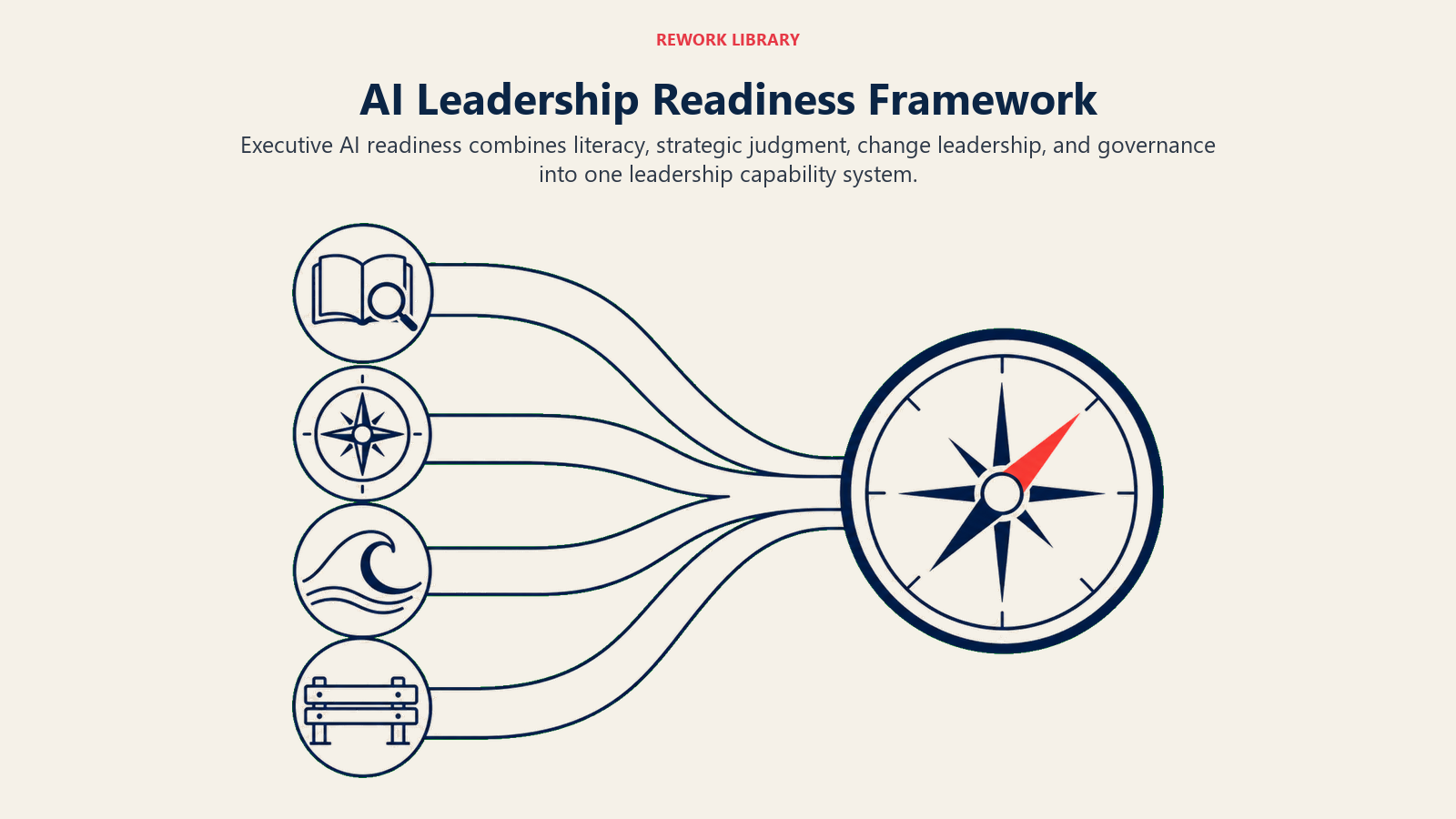
1. AI Literacy for Executives
Leaders don't need to become data scientists, but they need enough understanding to:
Evaluate AI claims. Separate genuine capabilities from vendor hype. Know what questions to ask to assess whether an AI initiative makes sense.
Understand AI limitations. Know where AI fails, not just where it succeeds. Recognize situations where human judgment remains essential.
Recognize AI risks. Identify potential problems - bias, security vulnerabilities, reliability issues - before they become crises.
Communicate about AI. Discuss AI meaningfully with technical teams, boards, investors, and employees without either oversimplifying or getting lost in jargon.
This literacy comes from deliberate education: executive programs, working sessions with AI experts, and hands-on experimentation with AI tools.
2. Strategic Judgment for AI Decisions
Beyond basic literacy, leaders need judgment about AI strategy:
Opportunity assessment. Which AI applications will create meaningful value for your organization? Which are distractions?
Build vs. buy decisions. When to develop AI capabilities internally versus partnering or purchasing. This requires understanding competitive dynamics and organizational capabilities.
Timing decisions. When to move first and when to wait for others to work out the problems. Being early isn't always better.
Portfolio balance. How to balance safer AI investments with riskier bets that could create breakthrough value.
3. Change Leadership for AI Transformation
AI changes how organizations work. Leaders must guide these transitions:
Workforce transformation. Roles will change. Some will disappear. New ones will emerge. Leaders must manage this transition honestly and humanely.
Cultural adaptation. AI-enabled organizations require different ways of working - more experimentation, faster iteration, different skills. Leaders must shape culture accordingly.
Resistance management. People fear AI-driven change. Effective leaders address concerns without letting resistance stall necessary transformation.
Capability building. Developing the technical and organizational capabilities AI requires. This means sustained investment, not one-time training.
4. AI Governance and Oversight
Boards and executives need governance capabilities for AI:
Right questions to ask. What should the board ask about AI initiatives? What oversight is appropriate?
Risk monitoring. How to track AI risks and ensure appropriate controls are in place.
Accountability structures. Who is responsible for AI outcomes? How is accountability exercised?
Ethical frameworks. What principles guide AI use in your organization? How are they enforced?
Building Leadership Readiness
Closing the gap requires action at multiple levels:
Individual development. Executives need to invest in their own learning. This means time for education, not just experience.
Team development. Leadership teams need shared understanding of AI. Collective capability matters more than individual expertise.
Board development. Boards need enough AI understanding to provide meaningful oversight. This may require new members or dedicated education.
Organizational investment. Companies should invest in leadership development for AI as deliberately as they invest in AI technology.
Putting This Into Practice
Start here: Honestly assess your own AI readiness. Could you evaluate an AI investment proposal critically? Do you understand the risks? Would you know if technical teams were overselling or underselling?
Common mistake: Delegating AI to technical leaders without developing your own understanding. You can't oversee what you don't understand.
Measure success by: Whether leadership decisions about AI are improving - better initiative selection, fewer failed projects, faster course correction when things go wrong.
The AI transition will be led by executives who develop the judgment to navigate it well. Those who don't invest in their own readiness will make expensive mistakes, miss important opportunities, and struggle to lead organizations through one of the most significant business transformations of our time. The investment in leadership readiness isn't optional - it's strategic necessity.
