How to Lead with Emotional Intelligence: A Guide for Executives
Turn this article into takeaways for your work.


Each assistant summarizes the article only for you and suggests best practices for your work.
The executives who consistently outperform their peers share something that doesn't show up on a resume: they lead with empathy without sacrificing results. They build trust that survives tough decisions. And they develop emotional intelligence as deliberately as they develop business acumen.
This isn't soft leadership. It's smart leadership. Organizations led by emotionally intelligent executives see higher engagement, lower turnover, and faster execution. The question isn't whether human-centered leadership works. It's whether you're developing these capabilities fast enough.
Why Human-Centered Leadership Matters Now
Three forces are making emotional intelligence more critical than ever:
Hybrid work demands new skills. When you can't read body language in a conference room, you need sharper emotional awareness. Remote and hybrid teams require leaders who can build connection and trust through screens and across time zones.
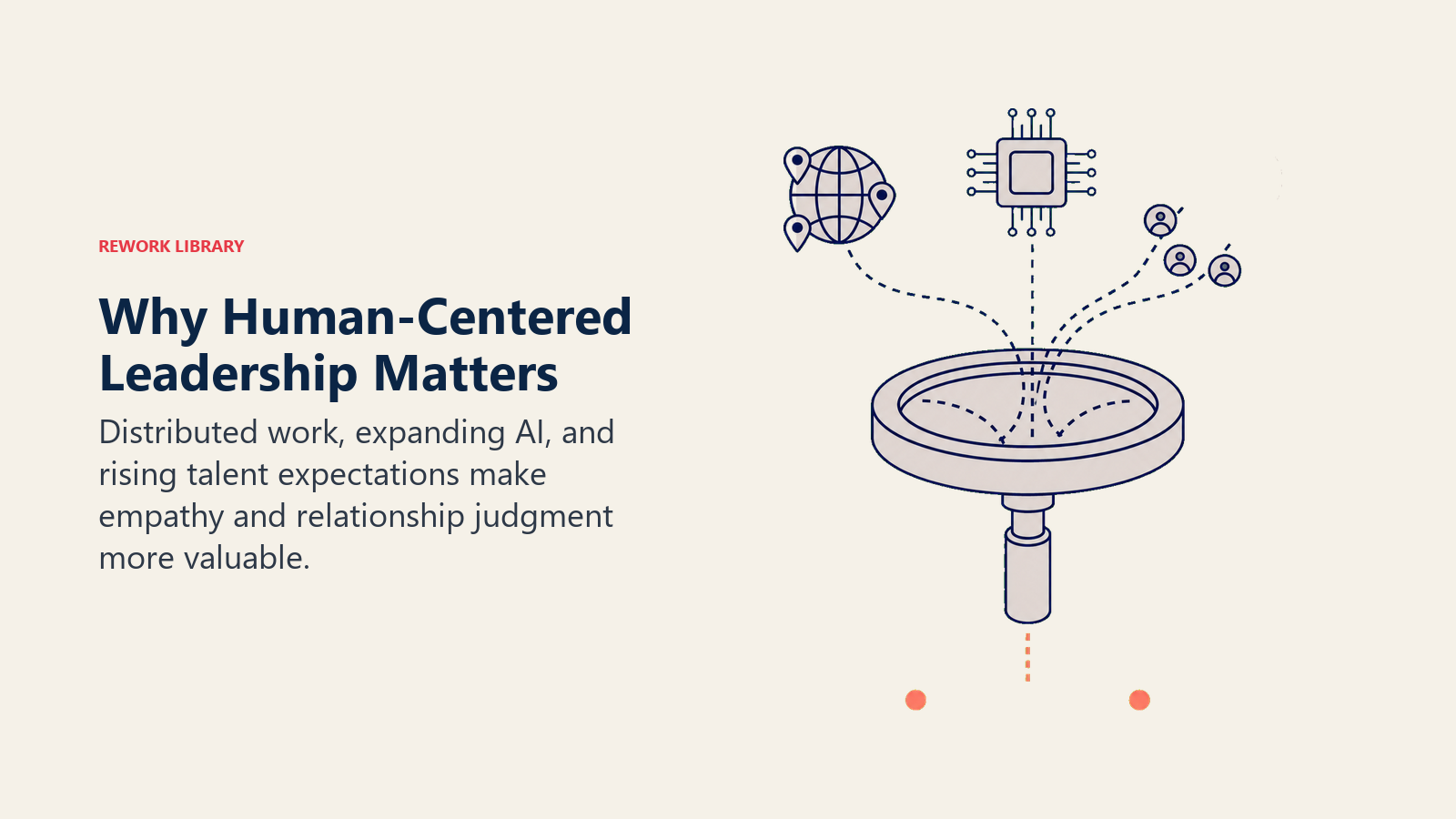
AI is changing the leadership equation. As AI handles more analytical tasks, the distinctly human aspects of leadership become more valuable. Empathy, judgment, and relationship-building can't be automated.
Talent expects more. High performers increasingly choose leaders, not just companies. They want to work for executives who see them as people, not resources. The leaders who can't connect authentically will lose their best people to those who can.
The Human-Centered Leadership Framework
Building this capability requires focus in four areas:
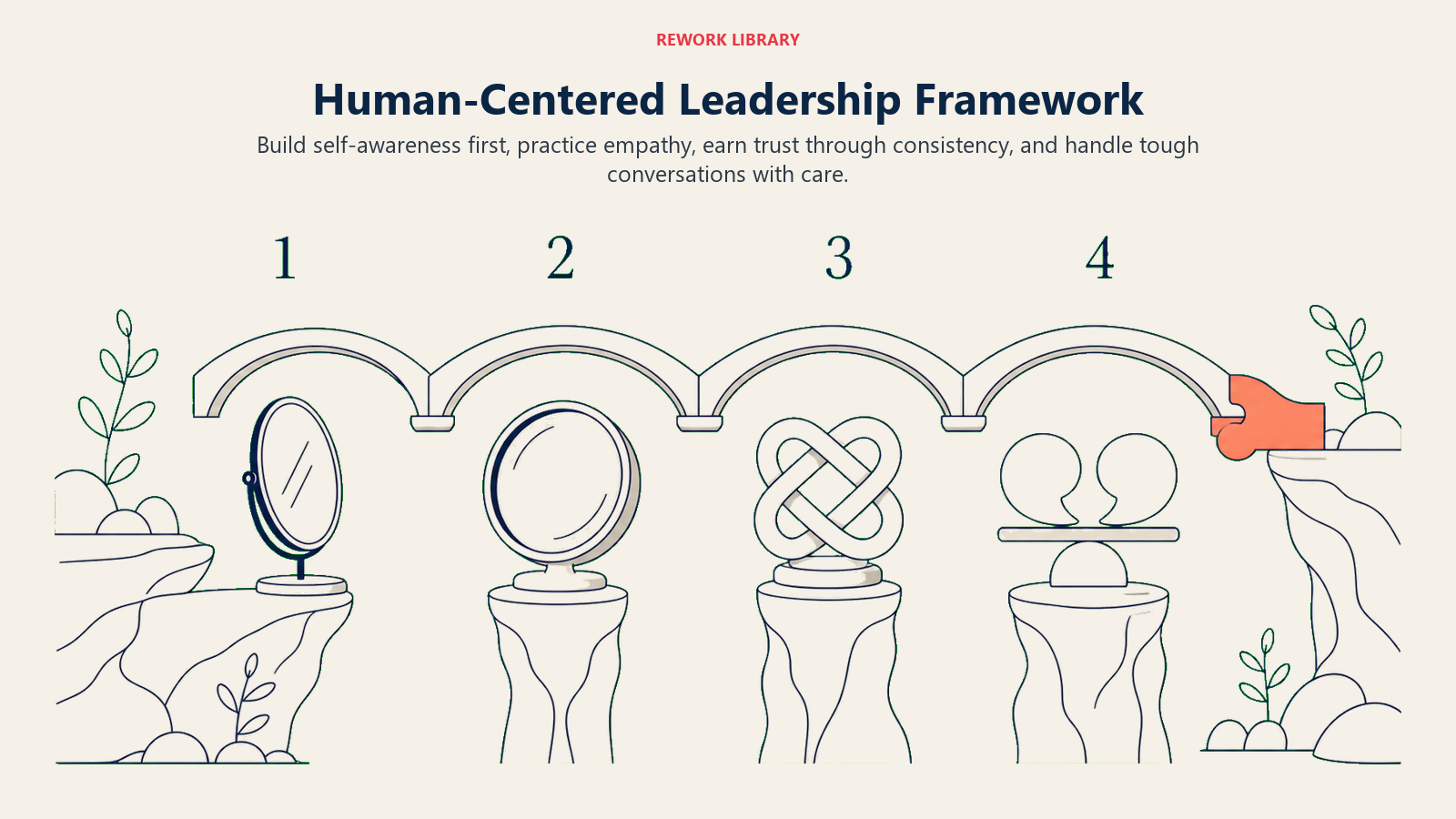
1. Self-Awareness as Foundation
You can't lead others effectively if you don't understand yourself. This means knowing:
- How you respond under pressure
- What triggers your defensive reactions
- How your mood affects those around you
- Where your blind spots live
The best leaders invest in understanding themselves first. They seek feedback actively, work with coaches, and reflect deliberately on their impact.
2. Empathy as Practice
Empathy isn't just feeling what others feel. It's understanding their perspective well enough to lead them effectively. This requires:
Active listening - Not waiting for your turn to talk, but genuinely trying to understand what someone means.
Perspective-taking - Regularly asking yourself: "How does this look from their position?"
Curiosity over judgment - When someone's behavior puzzles you, investigating before concluding.
3. Trust as Strategy
Trust isn't a nice-to-have. It's an accelerant. Teams with high trust move faster, take smarter risks, and recover from setbacks more quickly.
Build trust through:
- Consistency - Doing what you say you'll do, repeatedly
- Transparency - Sharing your reasoning, not just your decisions
- Vulnerability - Admitting what you don't know
- Follow-through - Remembering and acting on what people tell you
4. Tough Conversations with Care
Human-centered leadership doesn't mean avoiding difficult feedback. It means delivering it in ways that preserve dignity and enable improvement.
The formula: Be direct about the issue, curious about the causes, and supportive of the solution. Don't soften the message so much that it gets lost. Don't deliver it so harshly that the person can't hear it.
Putting This Into Practice
Start here: Pick one relationship at work that isn't where you want it to be. Invest 30 minutes this week in understanding that person's perspective better. Ask questions. Listen without defending.
Common mistake: Treating empathy as something you turn on in difficult moments. It needs to be consistent, not situational.
Measure success by: Whether people bring you problems early (a sign of trust) or hide them until they're crises (a sign of fear).
Human-centered leadership isn't about being nice. It's about being effective in a world where talent has choices, work is distributed, and the human elements of leadership matter more than ever. The executives who develop these capabilities build organizations that perform better and last longer.
