What Are AI Agents? How Businesses Use Autonomous AI in 2026
Turn this article into takeaways for your work.


Each assistant summarizes the article only for you and suggests best practices for your work.
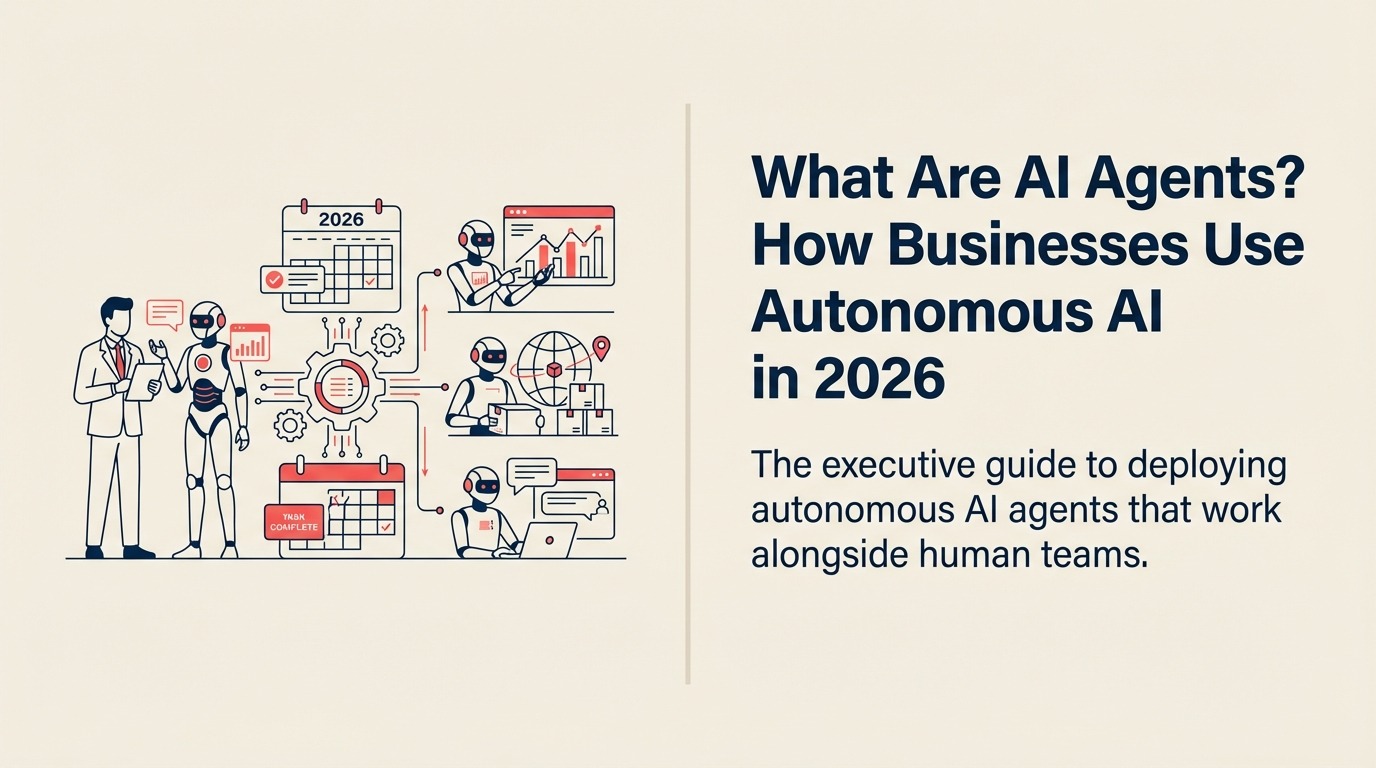
A new type of colleague is entering the workplace. Autonomous AI agents don't wait for prompts. They take initiative, make decisions, and complete multi-step tasks independently. They're not chatbots that answer questions - they're digital workers that execute work.
This shift is already happening. Organizations are experimenting with AI agents that handle customer inquiries, process documents, manage schedules, conduct research, and coordinate workflows. The question for executives isn't whether to integrate AI agents, but how to do it effectively.
What Makes AI Agents Different
AI agents represent a step change from earlier AI tools:
Autonomy. Traditional AI tools require human direction for each action. AI agents take goals and figure out the steps themselves. They decide what information to gather, what actions to take, and how to handle unexpected situations.
Persistence. Agents maintain context and memory across interactions. They remember previous work, learn from outcomes, and improve over time.
Tool use. Agents can operate other software systems - searching databases, sending emails, updating records, creating documents. They work across your technology stack, not in isolation.
Collaboration. Multiple agents can work together, dividing tasks and coordinating outputs. And they can work alongside humans in hybrid team structures.
The Hybrid Team Model
The most effective approach isn't replacing humans with agents or keeping them separate. It's building hybrid teams where each contributes what they do best:
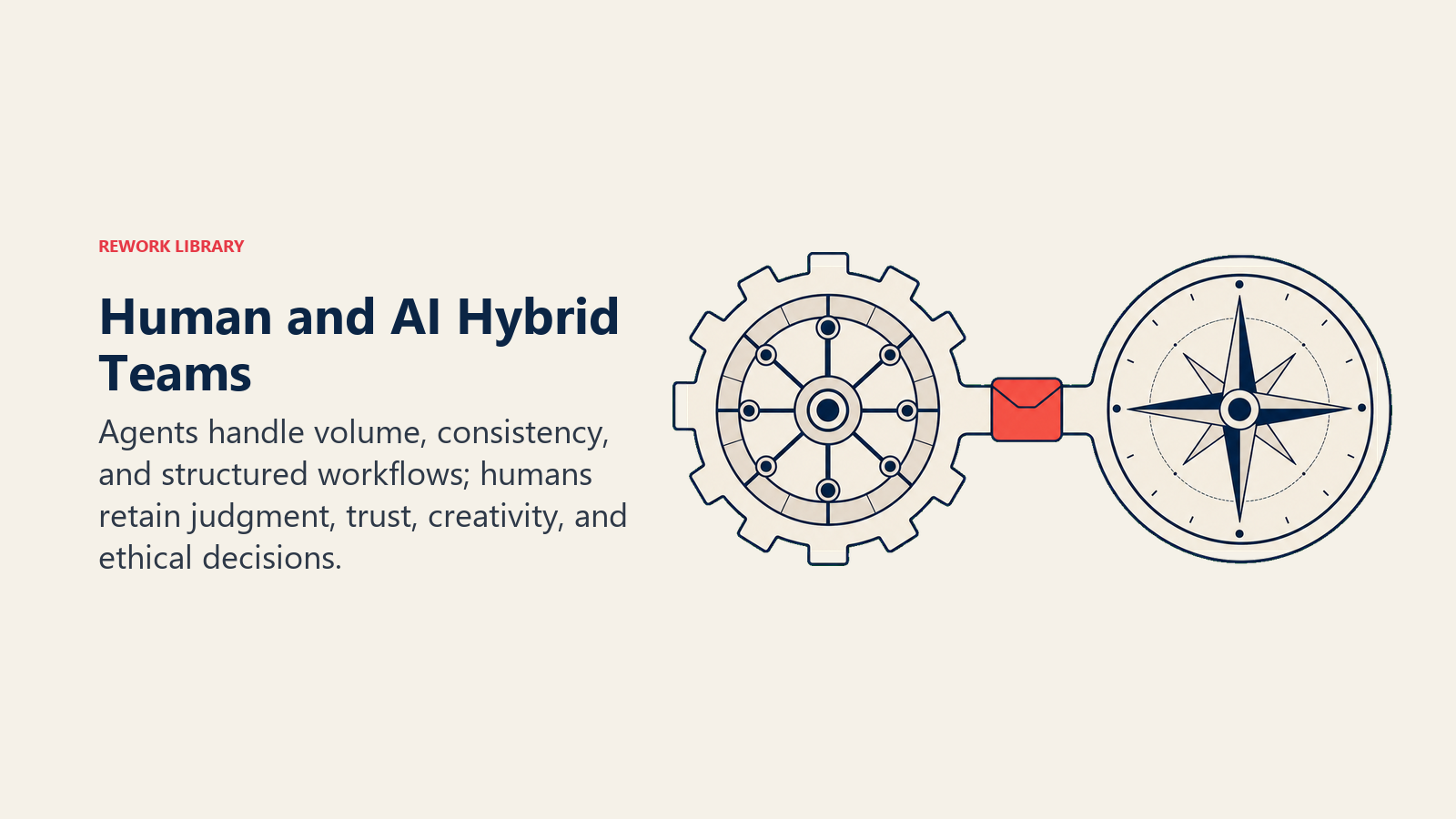
AI Agents Excel At:
- Processing high volumes of routine tasks
- Working around the clock without fatigue
- Maintaining consistency across thousands of interactions
- Handling structured workflows with clear rules
- Synthesizing information from multiple sources quickly
Humans Excel At:
- Exercising judgment in ambiguous situations
- Building relationships and trust
- Creative problem-solving for novel challenges
- Navigating politics and organizational dynamics
- Ethical reasoning and value-based decisions
The art is in the design - determining which tasks to delegate to agents, which to keep with humans, and where handoffs should occur.
The Implementation Framework
Successfully deploying AI agents requires attention to five areas:
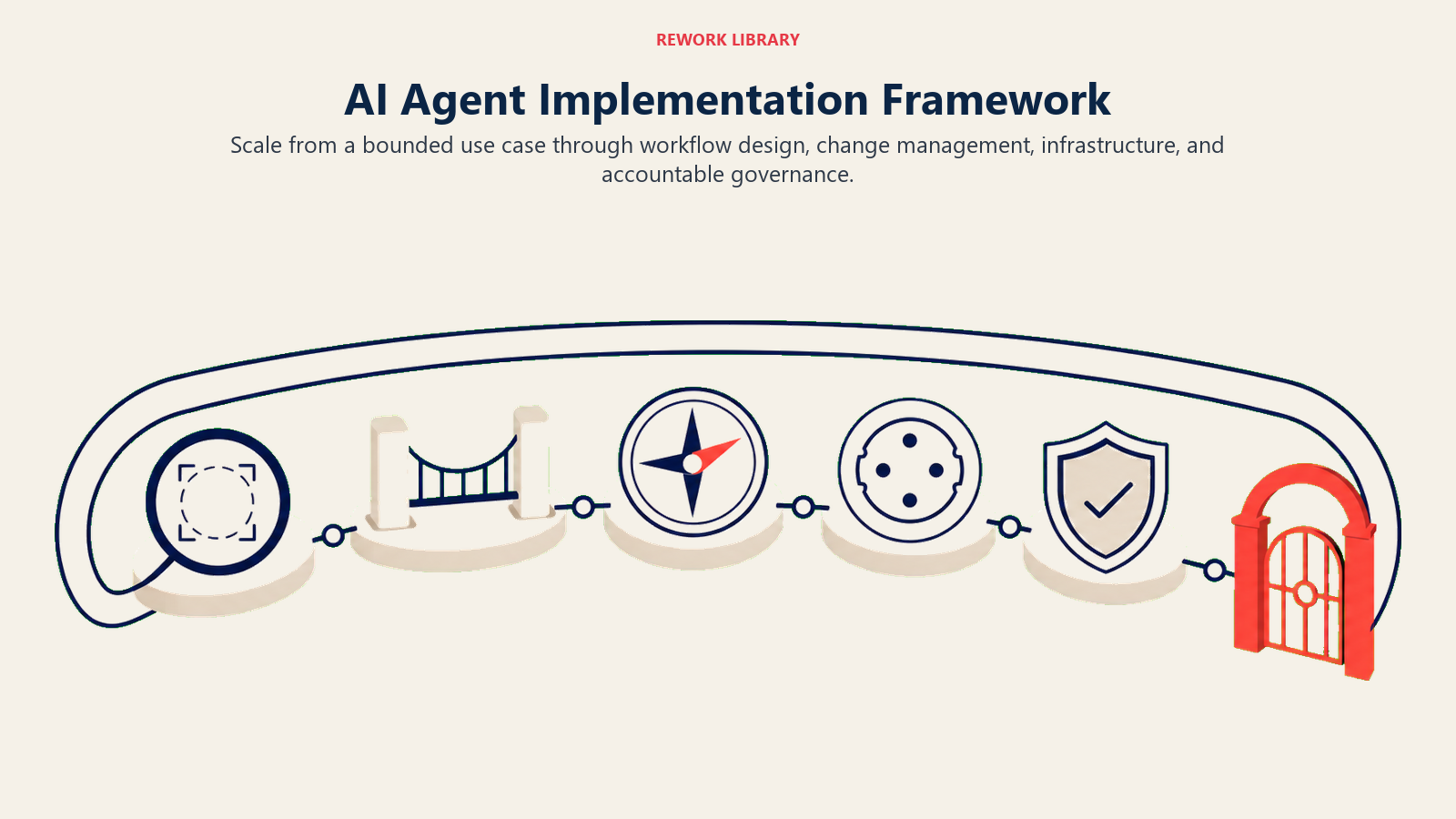
1. Use Case Selection
Start with the right applications:
High volume, well-defined processes. Agents thrive on repetitive work with clear rules. Customer service triage, document processing, data entry, and scheduling are natural starting points.
Lower-stakes decisions initially. Build organizational confidence with applications where agent mistakes have limited impact. Expand to higher-stakes work as you develop monitoring and oversight capabilities.
Measurable outcomes. Choose use cases where you can track agent performance clearly. This enables continuous improvement and builds the business case for expansion.
2. Human-Agent Workflow Design
Design how humans and agents work together:
Clear handoff points. Define when work moves from agent to human and back. What triggers escalation? What context gets passed along?
Appropriate oversight. High-stakes or unusual situations should route to human review. Build in checkpoints without creating bottlenecks.
Feedback loops. Create mechanisms for humans to correct agent mistakes and for those corrections to improve agent performance.
3. Change Management
Agent adoption is as much about people as technology:
Address concerns honestly. Acknowledge that roles will change. Focus communication on how agents handle tedious work so humans can focus on more valuable contributions.
Involve affected teams. The people who do the work today understand it best. Include them in designing agent workflows.
Celebrate augmentation. Highlight examples where agents help humans be more effective, not examples where agents replace humans.
4. Technical Infrastructure
Agents need supporting capabilities:
Integration. Agents must connect to your existing systems - CRM, ERP, email, databases. This requires APIs, security protocols, and careful permission management.
Monitoring. Track what agents are doing, how well they're performing, and when they make mistakes. You can't manage what you can't see.
Guardrails. Constrain what agents can do. Limit their permissions, cap the resources they can use, and define boundaries they cannot cross.
5. Governance and Accountability
Establish clear accountability:
Ownership. Define who is responsible for each agent's behavior. When an agent makes a mistake, who answers for it?
Audit trails. Maintain records of agent actions and decisions. This matters for compliance and for understanding what happened when things go wrong.
Regular review. Periodically assess whether agents are behaving as intended, delivering expected value, and not creating new risks.
Putting This Into Practice
Start here: Identify three repetitive, time-consuming processes in your organization. Evaluate which could be partially handled by AI agents. Pilot with the lowest-risk option.
Common mistake: Deploying agents without clear guardrails, then overcorrecting with restrictions so tight that agents can't deliver value.
Measure success by: Productivity gains in hybrid teams, not just cost savings from automation.
AI agents aren't a future consideration. They're a present reality reshaping how work gets done. The executives who learn to build effective hybrid teams - where humans and AI agents collaborate seamlessly - will lead organizations that accomplish more than either could alone.

Co-Founder, Rework.com