How to Retain Top Talent with Internal Career Mobility Programs
Turn this article into takeaways for your work.


Each assistant summarizes the article only for you and suggests best practices for your work.
Every time a valuable employee leaves for an opportunity at another company, ask yourself: Could we have offered them that opportunity here?
Internal mobility - moving employees into new roles, functions, or levels within your organization - is becoming one of the most practical talent strategies available. With external hiring expensive and competitive, growing your own talent often makes more sense than constantly recruiting from outside.
But internal mobility doesn't happen by accident. It requires deliberate investment in making internal opportunities visible, accessible, and attractive enough that your best people build their careers with you rather than elsewhere.
Why Internal Mobility Matters Now
Several forces are making internal development more attractive:
External hiring costs are rising. Recruiting, onboarding, and ramping new hires is expensive. Internal candidates already understand your culture, systems, and customers.
AI is changing roles faster than hiring can adapt. When jobs transform quickly, reskilling existing employees is often faster than finding external candidates with the right combination of new and contextual skills.
Employees expect growth. The best performers want career progression. If they don't see paths forward internally, they look outside.
Institutional knowledge walks out the door. Every departure takes organizational knowledge with it. Internal mobility retains that knowledge while still giving people growth.
External talent pools are limited. Everyone is competing for the same external candidates. Your internal talent pool is exclusive to you.
The Internal Mobility Framework
Building effective internal mobility requires investment in four areas:
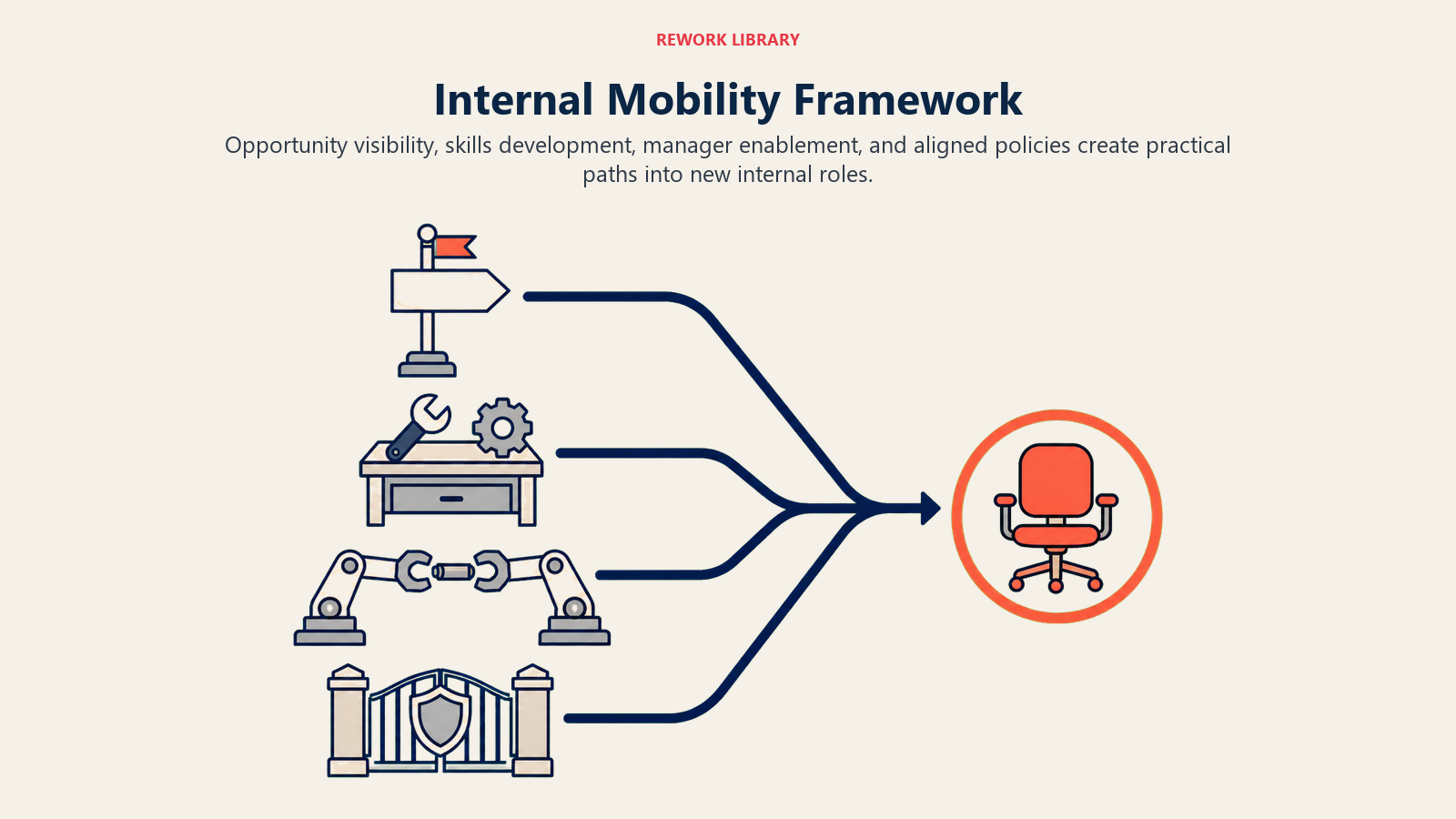
1. Visibility of Opportunities
Employees can't pursue opportunities they don't know about:
Internal job boards. Make all open positions visible to internal candidates first or simultaneously with external posting.
Career path transparency. Show employees what roles exist across the organization and what it takes to move into them.
Proactive matching. Don't just wait for employees to apply. Use skills data to suggest potential fits for open roles.
Cross-functional exposure. Create opportunities for employees to learn about other parts of the organization through projects, rotations, or shadowing.
2. Skills Development Infrastructure
Internal mobility requires employees who can grow into new roles:
Skills gap analysis. Identify what skills employees need for roles they might move into. Make this information accessible.
Learning resources. Provide training that builds skills needed for internal advancement. This could include formal courses, mentoring, stretch assignments, or certifications.
Time for development. Learning takes time. Build expectations that employees will spend time developing, not just delivering.
Credentialing internal expertise. Create ways to recognize skills developed on the job, not just through formal education.
3. Manager Enablement
Managers often block internal mobility - sometimes intentionally, sometimes not:
Change manager incentives. If managers are punished when people leave their teams, they'll hoard talent. Reward managers who develop people who advance, even if they advance elsewhere.
Transition support. Make it easy to backfill roles when people move internally. Managers worry less about losing people when coverage is assured.
Expectation setting. Make clear that supporting employee mobility is a management expectation, not an optional nice-to-have.
Development conversations. Train managers to have ongoing career conversations with their teams, not just annual reviews.
4. Process and Policy Alignment
Internal mobility requires supportive infrastructure:
Application fairness. Ensure internal candidates get genuine consideration, not just courtesy interviews.
Transition timing. Create policies about how quickly employees can move between roles. Balance giving teams stability with giving employees opportunity.
Compensation adjustment. Address how pay adjusts when employees move into different roles. Don't create disincentives for lateral moves that build skills.
Performance history portability. Ensure good performance follows employees into new roles. Internal candidates should benefit from their track record.
Common Barriers and How to Address Them
"I can't lose my best people." You'll lose them anyway - externally if not internally. At least internal moves keep them in the organization.
"Internal candidates lack the skills." That's a development problem. Build the skills before the opportunity, not after.
"It's easier to hire externally." Easier isn't always better. Internal candidates ramp faster and retain institutional knowledge.
"Politics favor insiders." This is a real risk. Address it through structured assessment and development criteria.
Putting This Into Practice
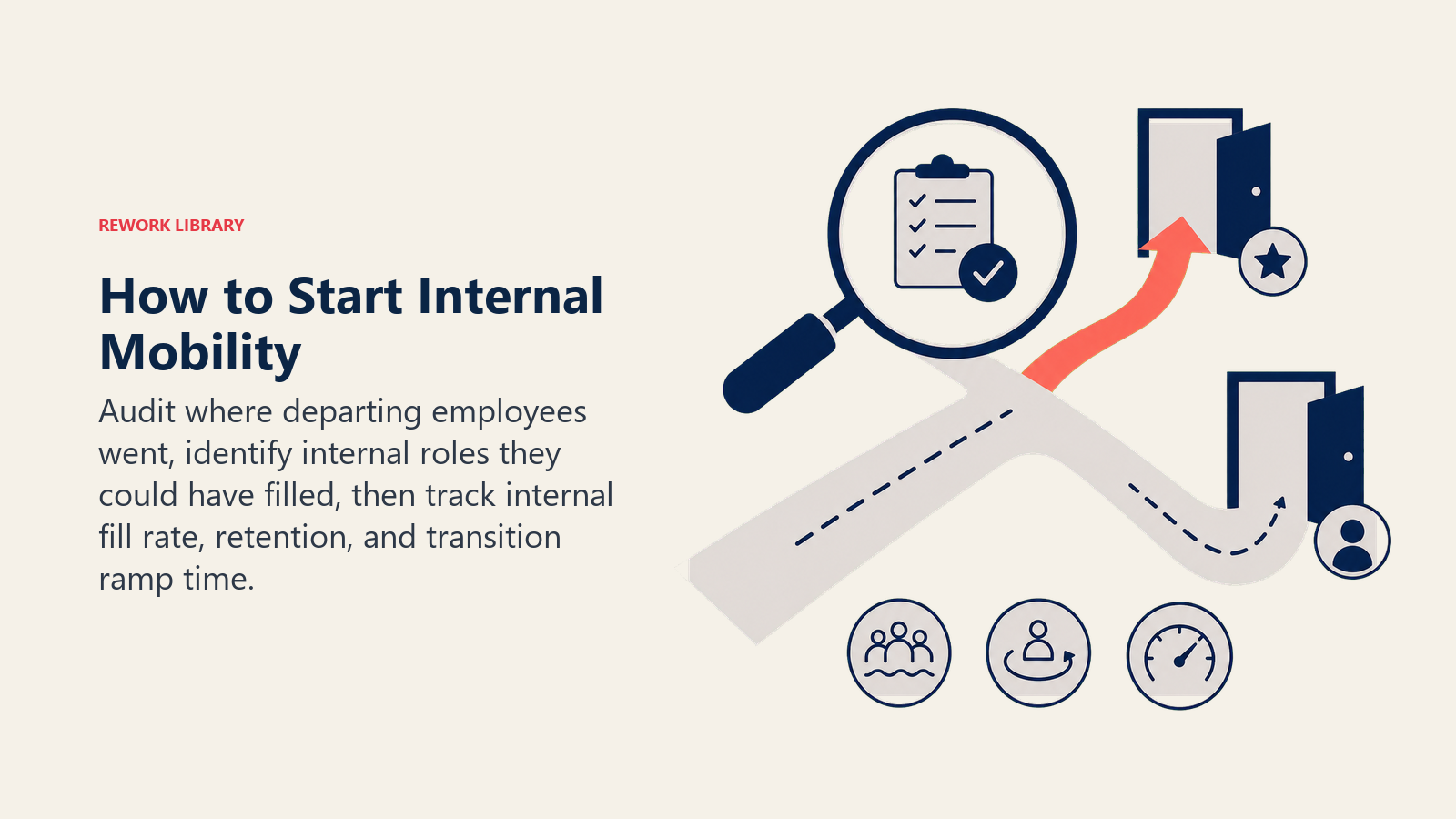
Start here: Survey employees who left in the past year. How many left for opportunities that existed somewhere in your organization? That's your internal mobility gap.
Common mistake: Treating internal mobility as an HR initiative rather than a business strategy. Without leadership commitment, it remains a policy rather than a practice.
Measure success by: Internal fill rate for open positions, retention of high performers, time to productivity for role transitions.
The best talent strategy isn't just attracting people from outside. It's becoming the kind of organization where people can build entire careers, growing through different roles and challenges without ever needing to leave. Internal mobility isn't just good for employees - it's good business.
