Why Company Culture Matters: How CEOs Build High-Performance Organizations
Turn this article into takeaways for your work.


Each assistant summarizes the article only for you and suggests best practices for your work.
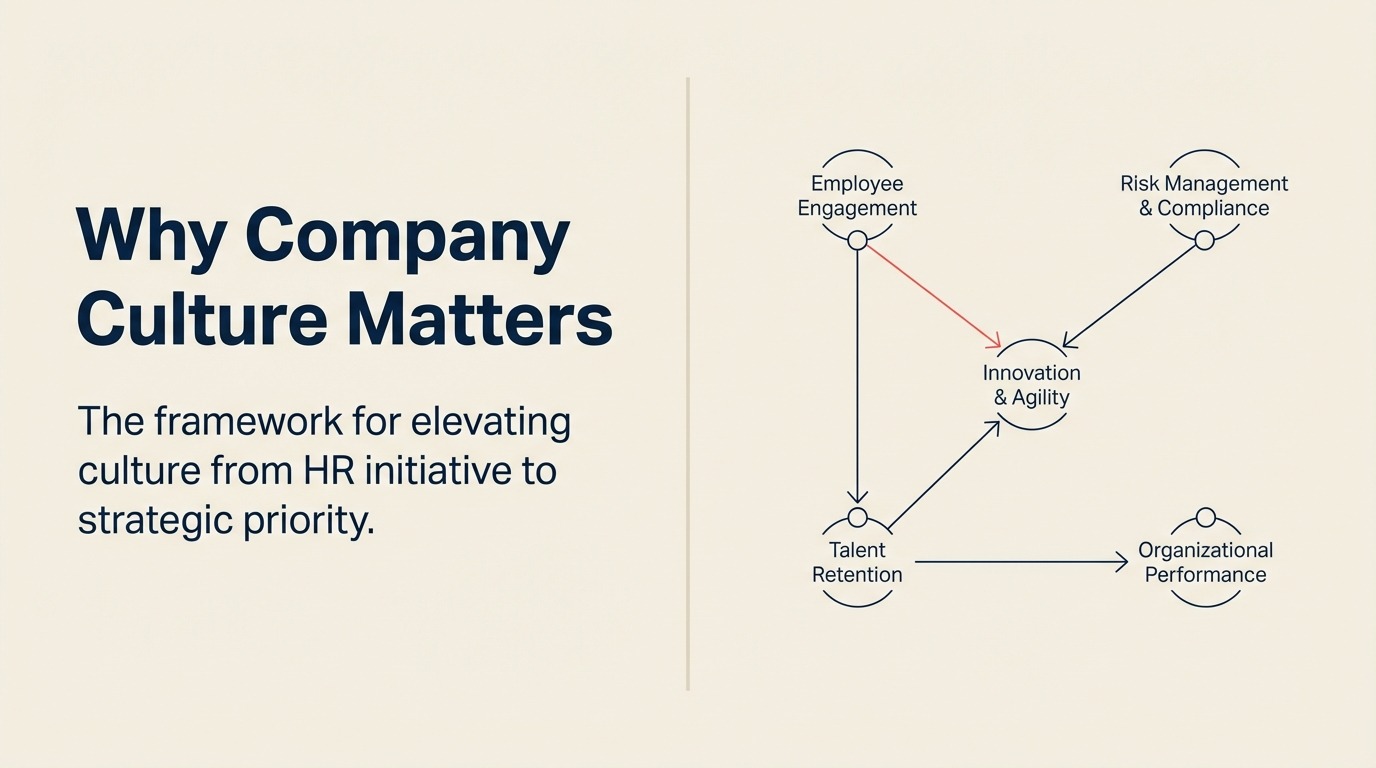
For decades, culture was something CEOs delegated. It lived in HR, showed up in employee surveys, and got attention when problems surfaced. That approach doesn't work anymore.
The most effective executives now treat culture as a strategic asset - something they own, measure, and actively shape. They've learned that culture impacts everything: engagement, performance, brand reputation, and risk. And they've seen what happens when culture is left to drift.
The Strategic Case for Culture
Culture drives business outcomes in ways that are increasingly measurable:
Execution speed. Organizations with strong cultures move faster. Decisions don't get stuck in politics. People trust each other enough to take action without excessive approvals.
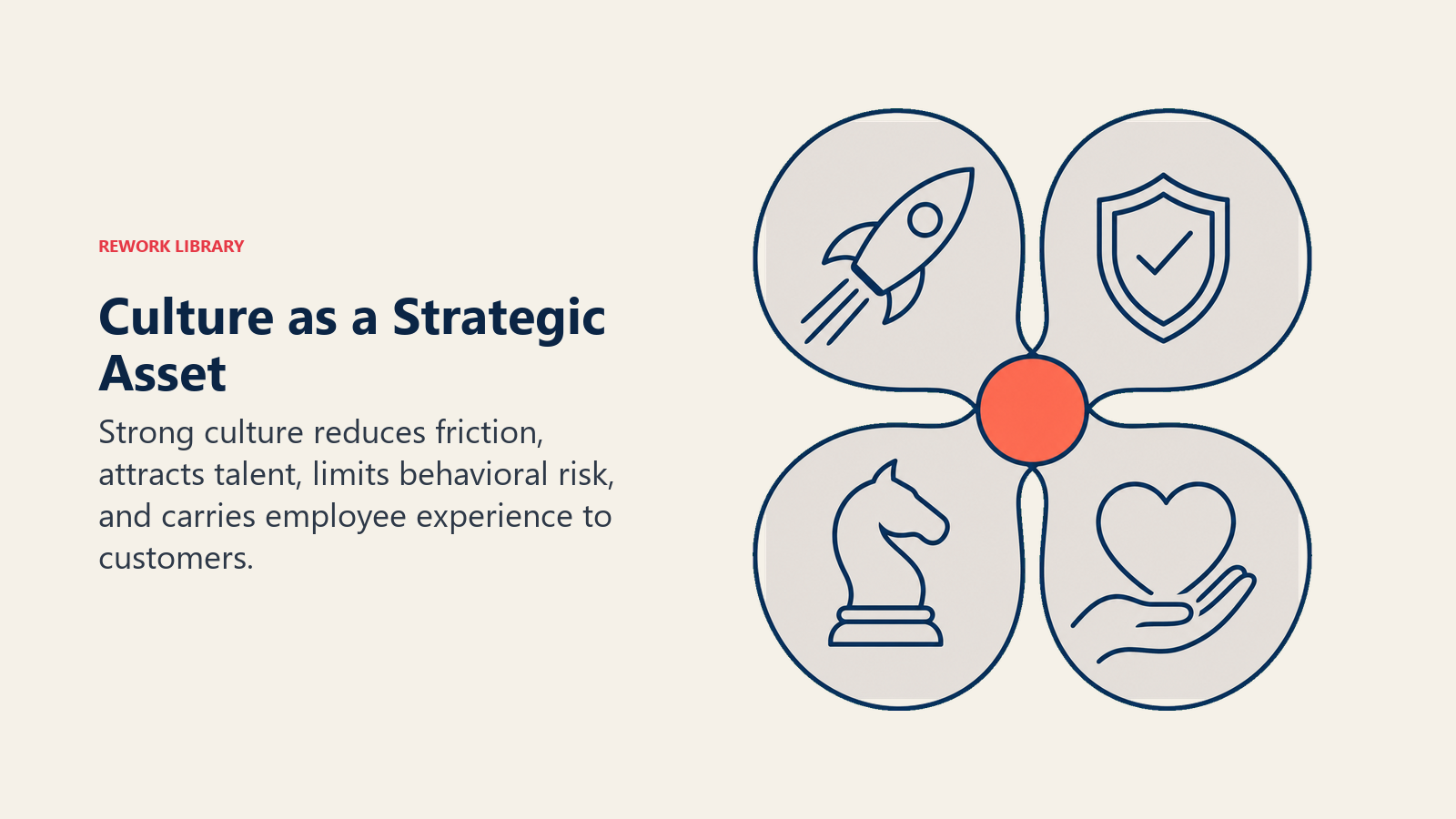
Talent attraction and retention. The best people have choices. They increasingly choose environments where they can thrive, not just collect a paycheck. A strong culture is a competitive advantage in talent markets.
Risk management. Most organizational failures have cultural roots. The scandals that destroy companies usually trace back to cultures that tolerated bad behavior, discouraged speaking up, or prioritized short-term results over integrity.
Customer experience. How employees feel shows up in how customers are treated. Internal culture eventually becomes external reputation.
Why CEOs Must Own Culture
Culture used to be delegated because it seemed like a people issue, not a business issue. Three things changed:
Visibility increased. Social media and employer review sites made culture visible to outsiders. What happens inside gets shared outside. CEOs can't hide behind carefully crafted employer brands when employees are posting reality.
Hybrid work raised the stakes. Maintaining culture when people aren't in the same building is harder. It requires intentional effort from the top, not just office perks and hallway conversations.
The connection to performance became undeniable. Research consistently shows that high-performing organizations have distinctive, intentionally shaped cultures. The correlation is too strong to ignore.
The Culture Strategy Framework
Treating culture as strategy means applying strategic discipline to it:
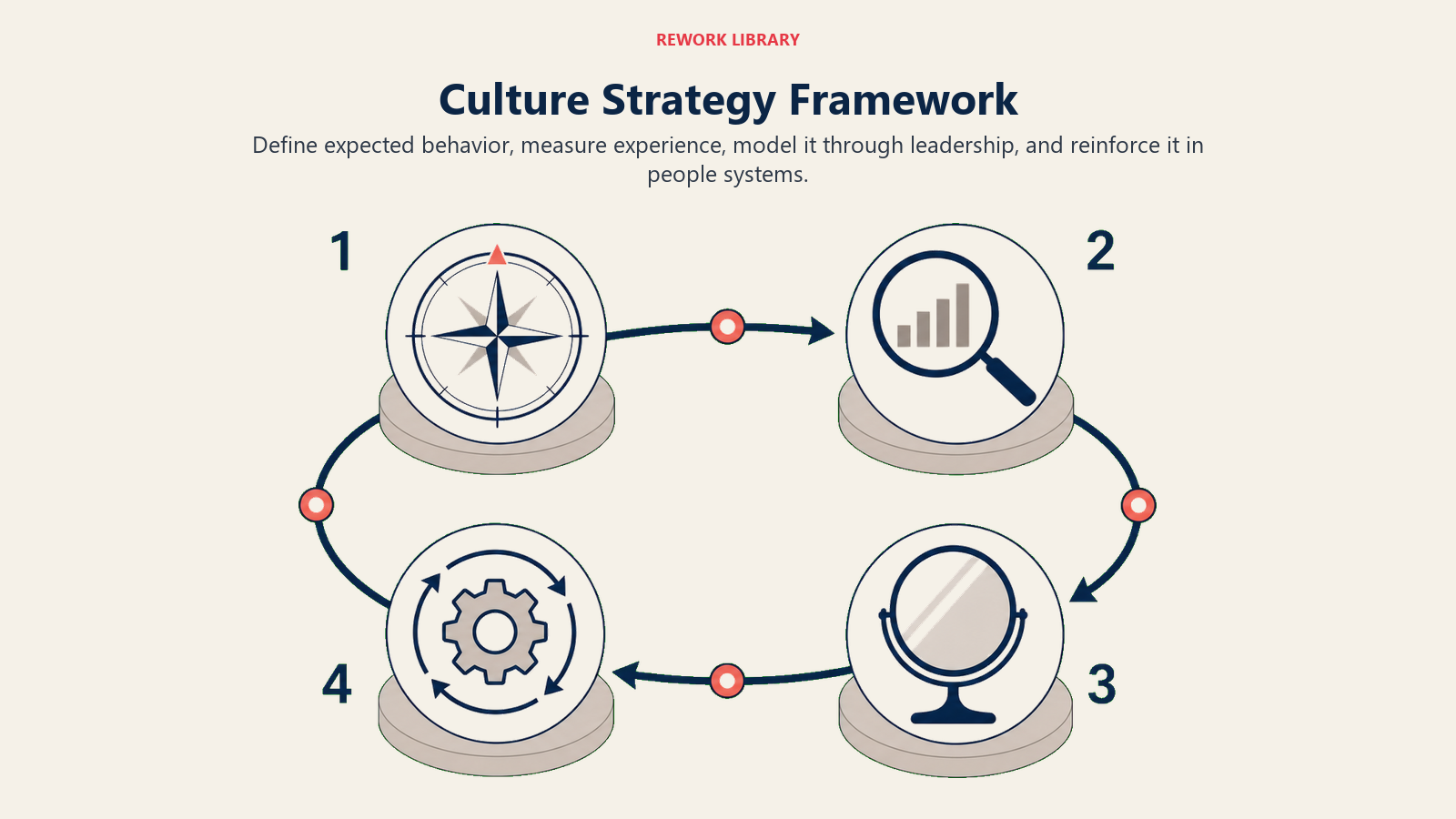
1. Define It Clearly
You can't manage culture if you haven't defined it. This means articulating:
- Core values - What principles guide decisions when trade-offs are required?
- Expected behaviors - How do values translate into observable actions?
- Cultural priorities - Which aspects of culture matter most for your strategy?
Be specific. "We value innovation" is meaningless. "We expect people to propose improvements to their own work, and we give them time and resources to experiment" is actionable.
2. Measure It Deliberately
What gets measured gets managed. For culture, this means:
- Regular pulse surveys with trend tracking
- Exit interview analysis for cultural patterns
- Inclusion metrics that reveal whether the stated culture is experienced equally
- Behavioral indicators tied to specific cultural priorities
Don't measure everything. Identify the cultural dimensions that most impact your strategy and track those relentlessly.
3. Model It Visibly
Culture is shaped more by what leaders do than what they say. Every executive action sends a cultural signal:
- Who gets promoted tells people what success looks like
- How meetings run shows what's really valued
- How mistakes are handled reveals the actual risk tolerance
- What gets celebrated defines what matters
If there's a gap between stated values and leadership behavior, behavior wins every time.
4. Reinforce It Systematically
Culture erodes without constant reinforcement. Build it into:
- Hiring - Screen for cultural fit, not just skills
- Onboarding - Immerse new people in cultural expectations
- Performance management - Evaluate how results are achieved, not just what's achieved
- Recognition - Celebrate examples of culture in action
Putting This Into Practice
Start here: List your organization's stated values. Then list the behaviors that actually get rewarded. Where those lists diverge is where your culture work needs to focus.
Common mistake: Treating culture as a one-time initiative rather than ongoing maintenance. Culture needs constant attention.
Measure success by: Whether employees can articulate the culture without looking at a poster, and whether their description matches yours.
Culture is no longer something that happens while executives focus on "real" strategy. It is real strategy. The CEOs who understand this build organizations that attract better talent, execute faster, and avoid the cultural failures that destroy companies. The ones who don't eventually learn why it matters - usually the hard way.
