How to Set Business Growth Goals That Actually Get Achieved

Turn this article into takeaways for your work.


Each assistant summarizes the article only for you and suggests best practices for your work.
Growth doesn't happen through caution. It happens when leaders mobilize their organizations around bold, unambiguous targets. The companies that consistently outperform don't just hope for growth - they commit to specific outcomes and organize everything around achieving them.
But boldness without discipline produces fantasy, not results. The art is setting targets ambitious enough to inspire stretch and force new thinking, while grounded enough to be credible and achievable.
Why Bold Targets Work
Ambitious goals change organizational behavior in ways that modest goals don't:
They force prioritization. You can't achieve a bold target while doing everything you did before. Ambitious goals require choosing - concentrating resources on what matters most and cutting what doesn't.
They unlock creativity. Incremental goals get incremental thinking. When the target requires doing something you haven't done before, people find new approaches.
They create urgency. Modest improvements can wait. Bold goals demand action now. They compress decision timelines and overcome organizational inertia.
They attract talent and capital. The best people want to be part of something ambitious. Investors prefer companies with growth conviction. Bold goals signal both.
The Bold Target Framework
Setting effective ambitious goals requires more than picking a big number:
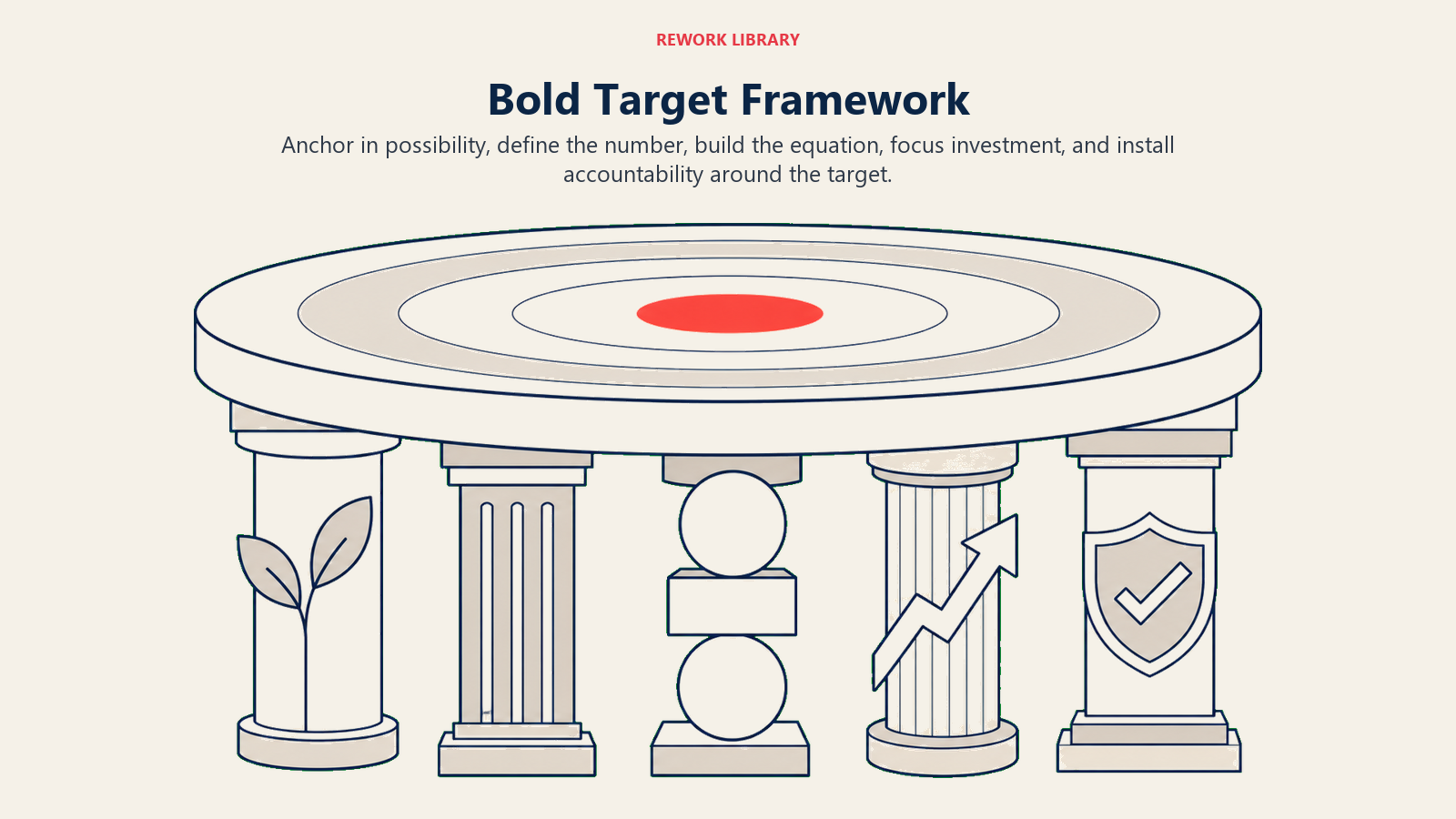
1. Anchor in Possibility, Not Just History
Historical performance is one input, not the answer. Consider:
- Market potential - How big could the opportunity be if you captured more of it?
- Competitive gaps - What would it take to match or beat the best performers in your industry?
- Capability ceiling - If you executed perfectly, what could you achieve?
Start from what's possible, then work back to what's realistic. This yields more ambitious targets than simply adding a percentage to last year's results.
2. Make Targets Specific and Measurable
Vague aspirations don't mobilize organizations. Be precise:
Too vague: "Significantly grow revenue" Better: "Reach $500M revenue by end of year" Best: "Reach $500M revenue by end of year through 30% growth in enterprise segment and entry into two new markets"
Specificity enables tracking, accountability, and course correction. It also makes the goal feel more real.
3. Build the Growth Equation
Bold targets need supporting logic. Show how the pieces add up:
Where will growth come from?
- Existing customers (expansion, upsell, retention improvement)
- New customer acquisition (which segments, which channels)
- New products or services
- New markets or geographies
- Acquisitions
What capabilities are required?
- What must you build or buy?
- What resources are needed?
- What organizational changes are necessary?
What assumptions must hold?
- Market conditions
- Competitive response
- Execution quality
This equation makes bold targets credible. It shows the path, not just the destination.
4. Focus Investment
Bold targets require concentrated resources. This means:
Saying no. Every "yes" to a growth priority is a "no" to something else. Be explicit about what you're deprioritizing.
Reallocating. Don't just add new investments. Shift resources from lower-priority areas to growth priorities. This forces the hard choices that incremental budgeting avoids.
Accepting risk. Concentrated bets are riskier than diversified portfolios. That's the price of bold targets. Manage risk, but don't eliminate it through excessive hedging.
5. Create Accountability Systems
Targets without accountability are wishes:
Regular tracking. Review progress against target frequently. Monthly or quarterly, not annually.
Early warning indicators. Identify leading indicators that signal whether you're on track before results show up. This enables course correction.
Clear ownership. Assign specific leaders as accountable for specific components of the target. Shared accountability is often no accountability.
Consequence. There should be real consequences - rewards and remediation - based on performance against targets.
Putting This Into Practice
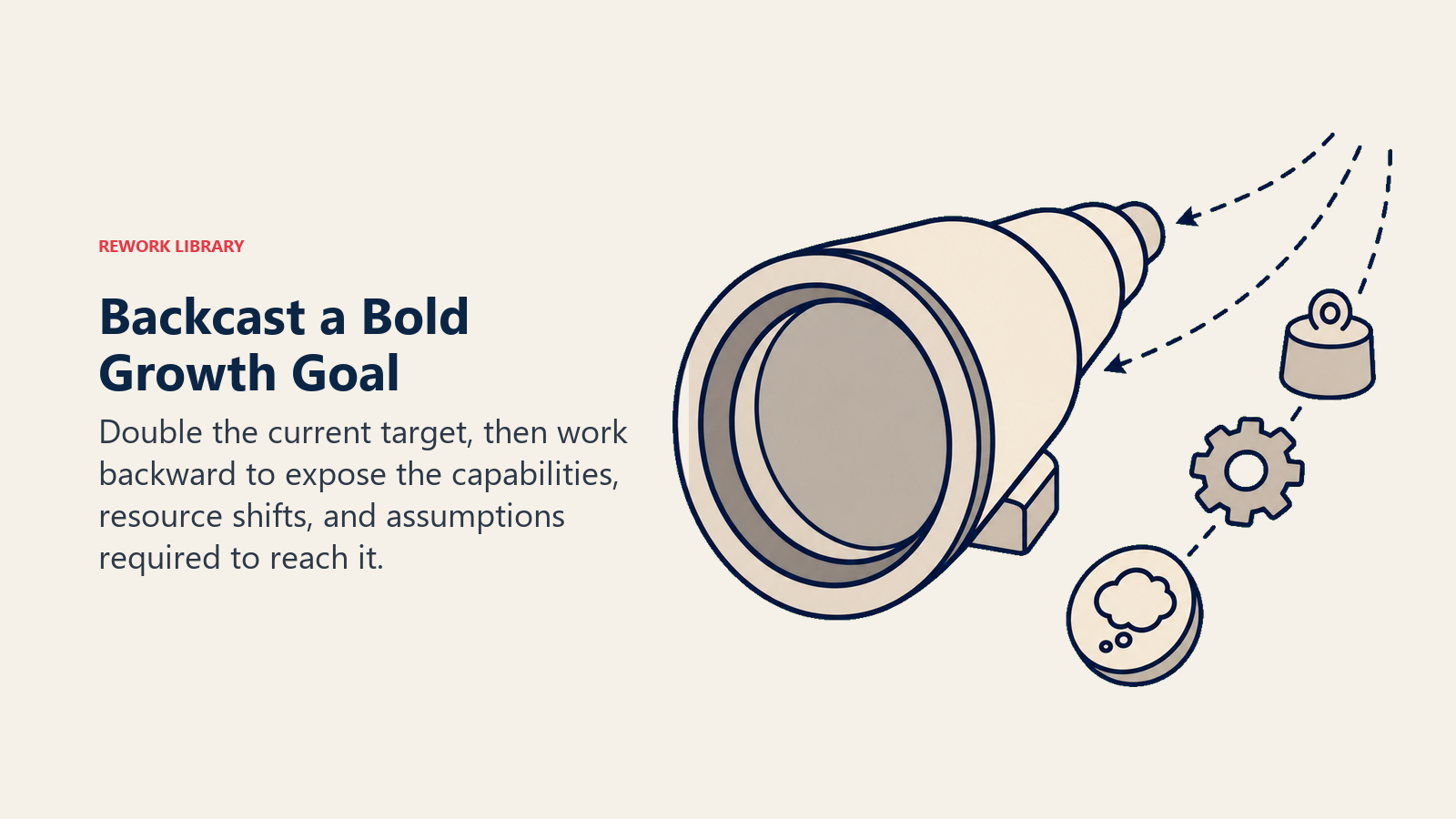
Start here: Take your current growth target. Double it. Then work backward to figure out what would have to be true to achieve it. This exercise reveals possibilities you weren't considering.
Common mistake: Setting bold targets without changing resource allocation or organizational focus. The target becomes aspirational rather than operational.
Measure success by: Whether the organization is behaving differently because of the target - making different decisions, taking different actions, prioritizing differently.
Bold growth targets aren't about optimism. They're about choice. They force organizations to decide what matters, concentrate resources on those priorities, and find new ways to achieve what incremental thinking wouldn't attempt. The companies that set them and follow through consistently outperform those that don't.
