The Leader's Role in Shaping Company Culture
Turn this article into takeaways for your work.


Each assistant summarizes the article only for you and suggests best practices for your work.
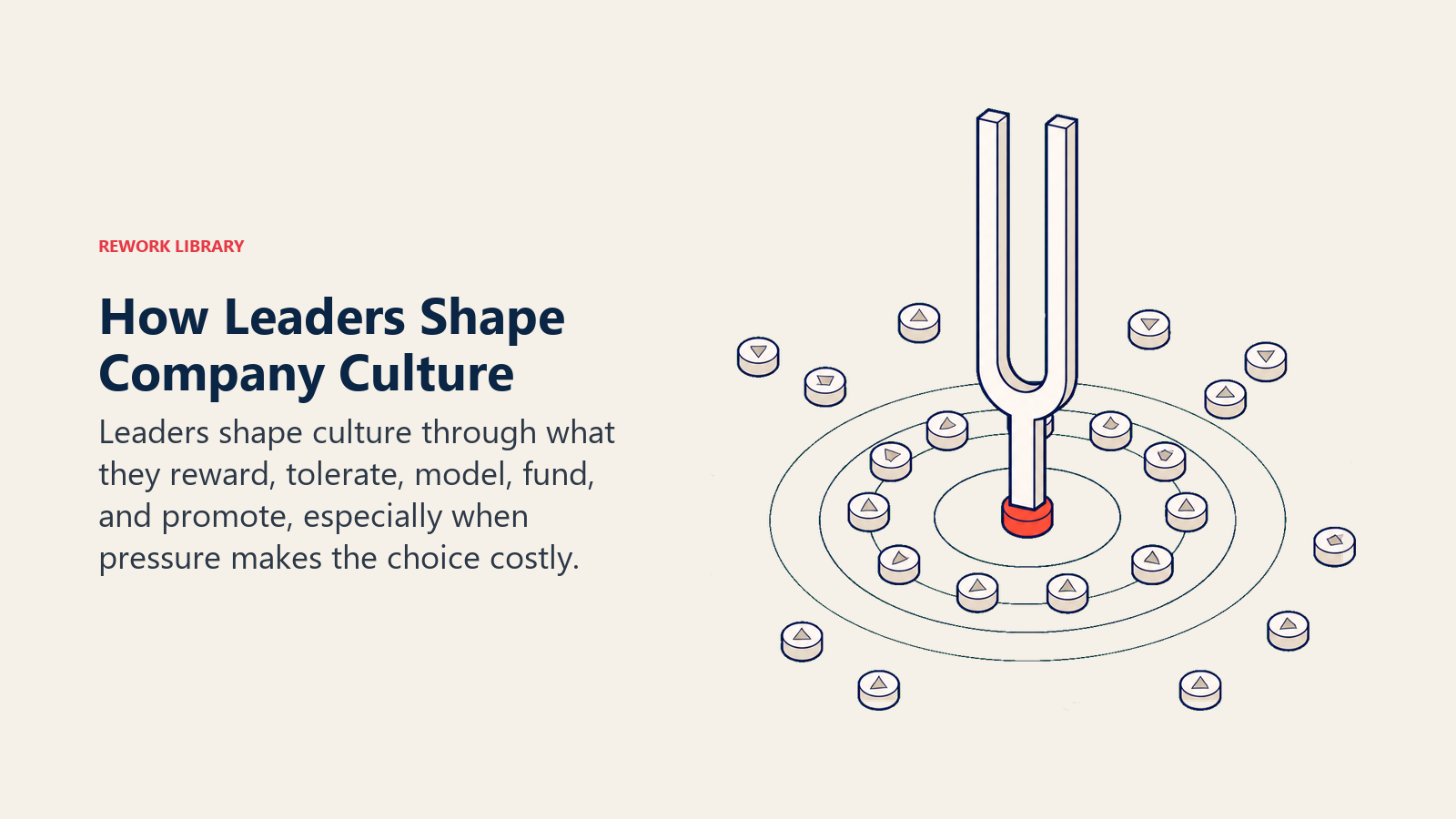
A leader shapes company culture by controlling the signals employees actually read: what gets attention and praise, what gets funded, how leadership reacts under pressure, and who gets promoted or quietly pushed out. Employees do not learn culture from a values statement. They learn it by watching what leadership does the next time doing the right thing costs something.
That is why two companies can print the same values, "integrity," "customer obsession," "ownership," and end up with completely different cultures three years later. The words on the wall never did the work. The leader's daily behavior did, whether or not anyone called it culture-building at the time. This article breaks down the mechanisms leaders actually use (on purpose or not), why founders leave such a long imprint, why stated values so often drift from lived behavior, and why middle managers, not the CEO, are where most employees experience culture day to day.
Why Leaders Are the Number One Culture Signal
Every employee is constantly, mostly unconsciously, running the same test: does what leadership says match what leadership does when it is inconvenient? That test runs every day, in small moments, and the answer shapes behavior far more than any all-hands speech.
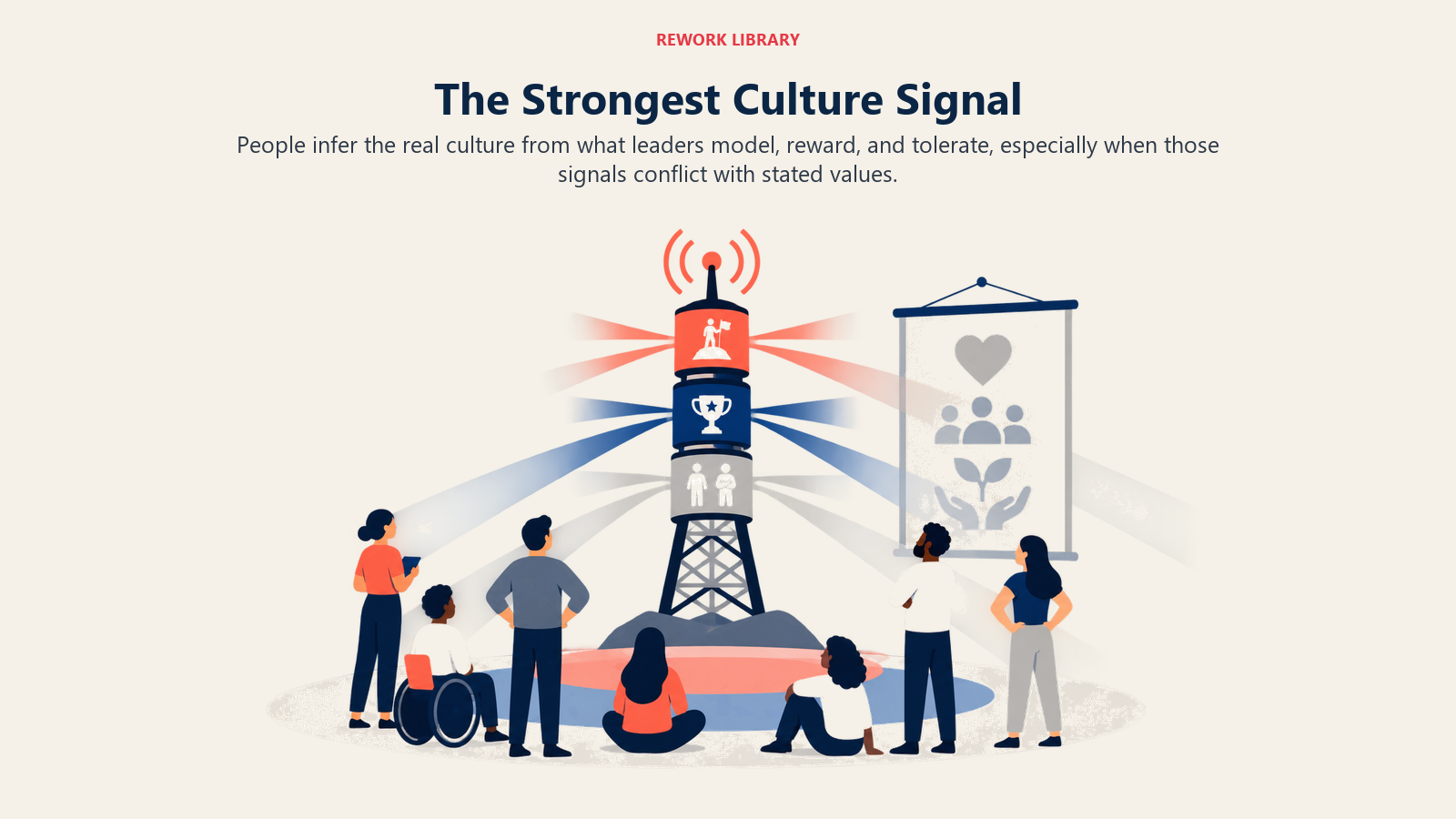
Three specific leader behaviors carry almost all the signal:
What leaders reward. Not just formal bonuses and promotions, but the smaller currency of attention: whose work gets praised in front of the team, whose name comes up in the leadership meeting, whose idea gets adopted. People notice what earns visible approval and quietly recalibrate their own behavior to match it, often faster than any policy change could achieve.
What leaders tolerate. This is the more dangerous half, because tolerance is passive and easy to justify in the moment. A brilliant engineer who is cruel to junior staff. A top salesperson who cuts corners on customer commitments. A director who never follows through on their own deadlines. Every time leadership looks away from a clear violation of a stated value, especially from someone with power or results, the organization learns the real rule: the value applies unless you are valuable enough to be exempt.
What leaders model. People copy behavior far more reliably than they follow instructions, and they copy it fastest from whoever has the most status. If a leader answers messages at midnight, the team learns availability is expected regardless of the stated work-life balance policy. If a leader admits a mistake openly in a team meeting, the team learns that admitting mistakes is safe. Leaders are, in effect, running a live demonstration of the culture at all times, whether or not they intend to be.
Key Facts
- Only 21% of U.S. employees strongly agree they trust the leadership of their organization, down from a 2019 peak of 24%. Source: Gallup
- Managers account for at least 70% of the variance in team engagement scores across business units, which means most employees experience "leadership culture" through their direct manager, not the executive team. Source: Gallup
- Only 24% of frontline managers say inclusion is a strong part of their organization's culture, a wide gap from how confident most CEOs report feeling about their own inclusion efforts. Source: DDI, via PR Newswire
- Companies in the top quartile of McKinsey's Organizational Health Index, a measure closely tied to leadership practices, deliver total shareholder returns roughly three times higher than bottom-quartile companies. Source: McKinsey
The Mechanisms Leaders Actually Use to Shape Culture
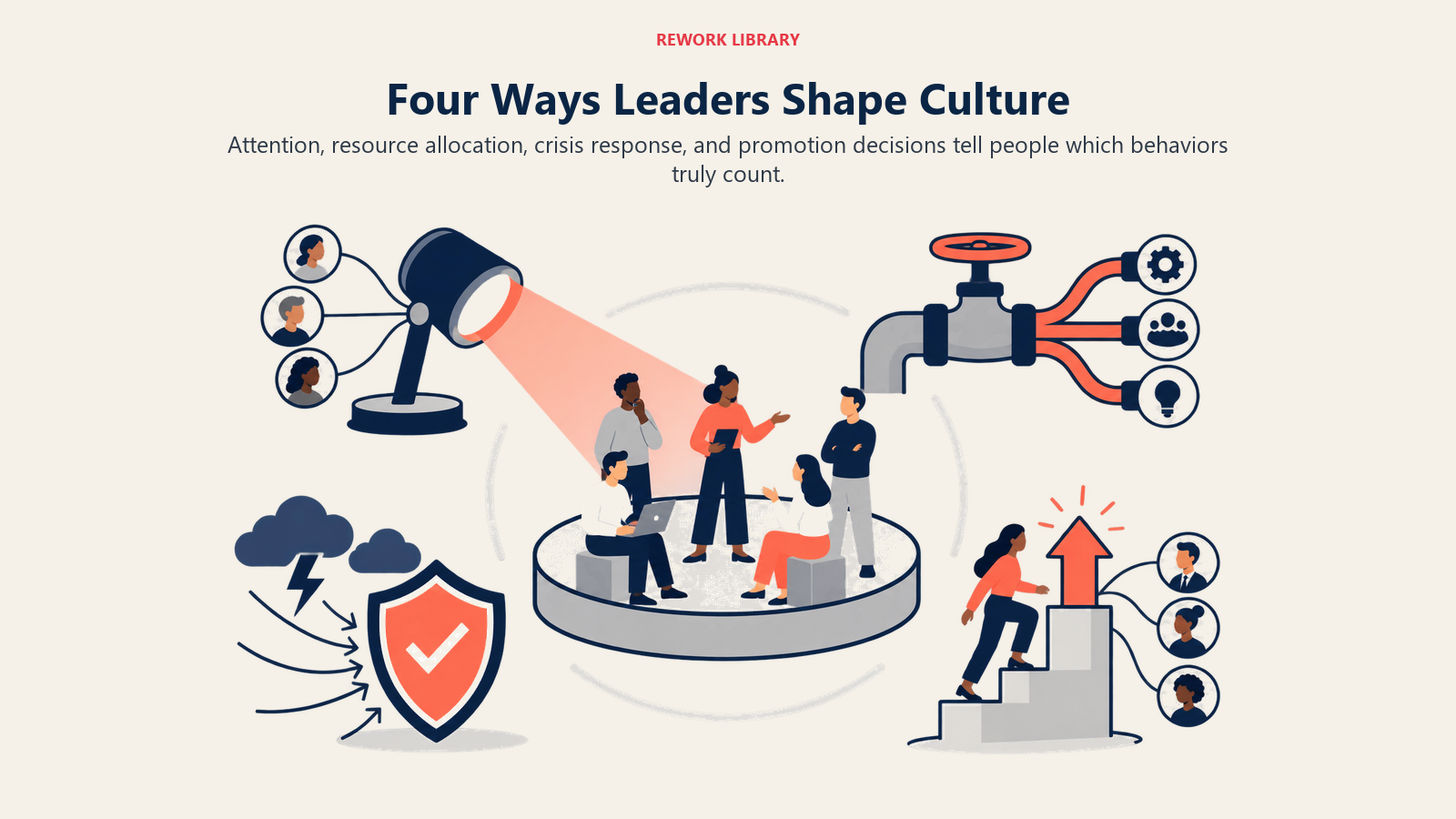
Organizational psychologist Edgar Schein, whose model is covered in full in Schein's three levels of culture, identified specific "embedding mechanisms" that leaders use to plant culture, usually without realizing they are doing it. Four of them explain most of what separates a leader's intentions from a leader's actual effect on culture.
What Leaders Pay Attention To
Whatever a leader consistently measures, asks about, and comments on becomes important to everyone else, regardless of what the strategy document says the priorities are. A CEO who opens every leadership meeting by asking about customer churn signals, without saying a word about values, that customer retention is the real priority. A manager who only ever asks "did we hit the number" and never asks "how did the team handle that" signals that outcomes matter and process does not, no matter what the engagement survey claims to measure.
This is also the cheapest lever leaders have and the one most underused. Attention costs nothing to redirect, and employees notice a shift in what gets asked about within days, long before any policy change takes effect.
Where Resources Actually Go
Budgets and headcount are a truer statement of priorities than any strategy deck, because resource allocation cannot be faked the way a mission statement can. An organization that says it values learning and development but cuts the training budget every time revenue dips is teaching a very different lesson than the one on the careers page. Where leadership spends money, time, and its best people is the organization's real priority list, and employees read it accurately.
How Leaders React to Crises
Crisis moments are the highest-signal events in any organization's culture, because they strip away the time to manage appearances. How a leader responds to a missed target, a public mistake, a customer escalation, or bad news delivered by a junior employee tells the entire team more about the real culture than a year of ordinary operations. A leader who punishes the messenger teaches people to hide problems. A leader who thanks someone for surfacing bad news early, even when the news is bad, teaches people that speaking up is safe. This is the same dynamic behind why teams stay silent in meetings: silence is rarely about the team. It is almost always a learned response to how leadership handled the last uncomfortable truth someone raised.
Who Gets Promoted, Rewarded, and Let Go
Promotion decisions are the loudest, most permanent culture signal an organization sends, because they are visible, they are hard to reverse, and everyone watches them closely. Promoting someone who hits every number while burning through their team teaches the organization that results excuse behavior. Promoting someone who builds a healthy, high-trust team even at a slightly slower pace teaches the opposite lesson, and it teaches it far more effectively than any values training could. The same logic applies in reverse: who gets let go, and for what reason, tells employees exactly which lines are actually enforced.
The Founder Imprint: Why Early Leadership Casts a Long Shadow
Founders leave a disproportionate mark on culture because they make the first hundred decisions before there is a system to check them: who gets hired first, what gets celebrated in the early days, how the founding team handles the first serious conflict or the first missed deadline. Those early choices become the organization's origin story, repeated in onboarding and folklore long after the founder has moved on to other things or left the company entirely.
This is why two companies founded in the same industry, at the same time, with similar products, can develop radically different cultures. One founder obsesses over speed and treats process as friction; a decade later, that company still ships fast and still struggles with quality control. Another founder obsesses over craft and treats deadlines as negotiable; a decade later, that company still produces excellent work and still misses launch windows. Neither founder wrote these tendencies into a values document. Both got baked into the culture through hundreds of small, early decisions that later employees simply inherited as "how we do things here," the pattern covered in what business culture actually is.
The imprint is not permanent, but it is sticky, and it rarely fades on its own. It usually takes a deliberate, systemic effort, not a change in mission statement, to shift it once the company has scaled past the founder's direct daily influence. How to change organizational culture covers what that deliberate effort actually requires.
The Say-Do Gap: Why Stated Values Rarely Match Lived Culture
Almost every company has a version of the same problem: the values on the careers page describe an aspiration, and the culture employees actually experience describes something narrower and more specific. This gap, sometimes called the say-do gap, is not usually dishonesty. It is what happens when leadership defines values in a workshop but never rebuilds the systems, performance reviews, promotion criteria, meeting norms, that would actually produce those values in daily behavior.
How to define company values matters here because values written without a plan to enforce them through real systems tend to become decoration rather than description. A company can genuinely believe it values transparency while its performance review process punishes anyone who raises an uncomfortable truth about a peer. Leadership is not lying in that scenario. Leadership simply has not connected the stated value to the systems that would make it real, and until that happens, the gap keeps widening every time an employee notices the mismatch.
The gap becomes dangerous, not just embarrassing, when it compounds. Watching leadership state one thing and reward another for years is one of the more reliable predictors behind signs of a toxic culture: cynicism spreads, engagement survey scores drop even as engagement initiatives multiply, and the best people, who have the most options elsewhere, tend to leave first.
Middle Managers: The Culture Carriers Between Strategy and Reality
The CEO sets direction, but most employees experience culture through their direct manager, not the executive team. That single fact explains why two teams at the same company, under the same values statement and the same benefits package, can feel like they work for entirely different organizations. The manager is the one who decides in real time whether a stated value like "psychological safety" actually shows up in a Tuesday afternoon meeting, a dynamic covered in depth in psychological safety at work.
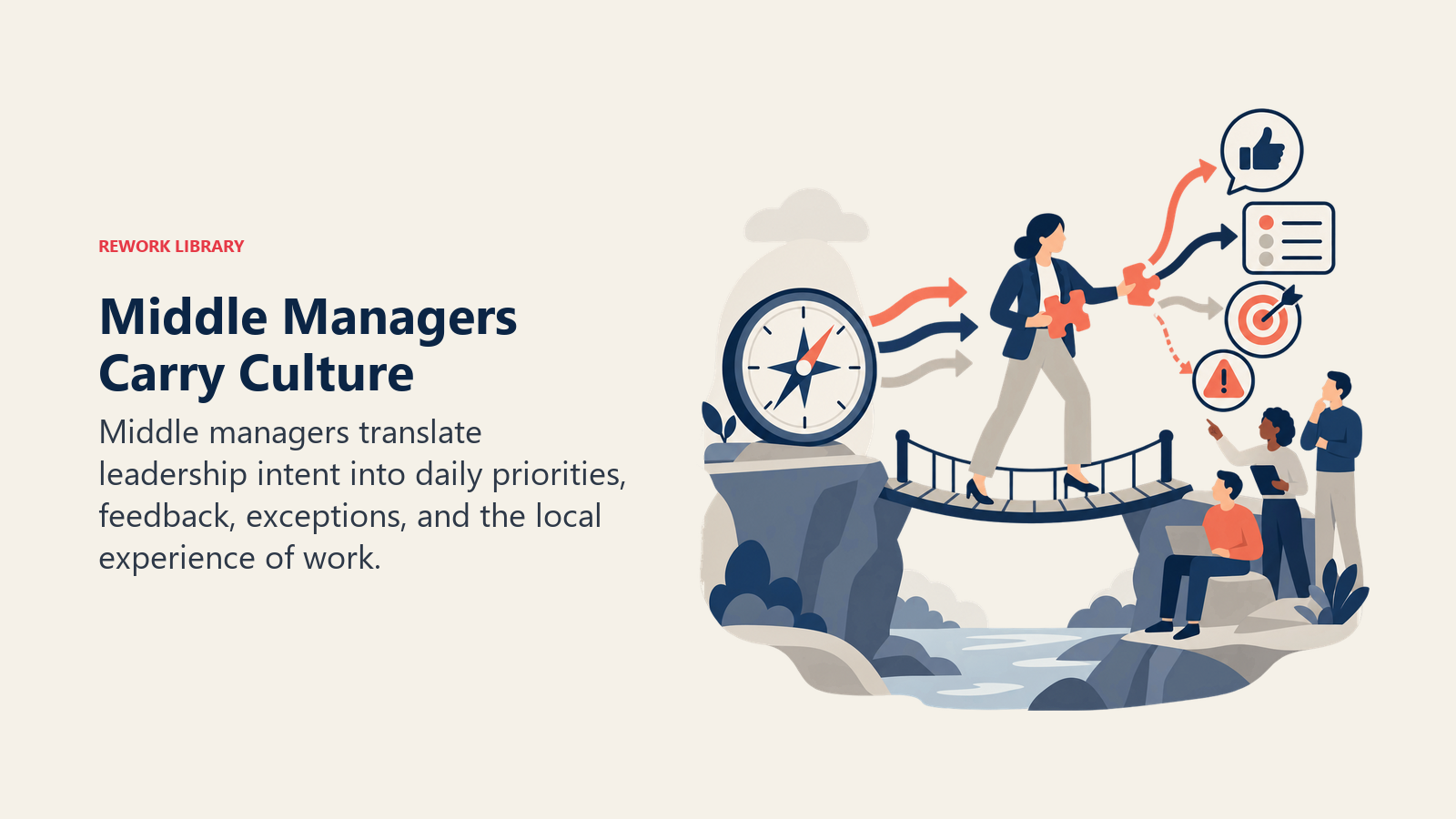
This is also where the say-do gap gets manufactured, often without any intent to deceive. Senior leadership genuinely believes the culture is healthy because that is what surveys and skip-level meetings tell them. Frontline managers, meanwhile, are absorbing pressure from above and translating it into daily decisions that employees actually feel: whether a deadline slip gets a conversation or a reprimand, whether a mistake gets coaching or blame, whether a request for flexibility gets granted or quietly resented. When senior leadership and frontline managers disagree about how healthy the culture actually is, the frontline view is almost always the more accurate one, because it is closer to where the behavior actually happens.
Two practical consequences follow. First, leadership development spending aimed only at the executive team misses where most of the daily culture signal is generated. Second, building trust in the workplace has to happen manager by manager, not just through top-down communication, because trust in a specific manager, not abstract trust in "leadership," is what determines whether someone raises a problem early or lets it fester.
When Leadership Changes, Culture Shifts, For Better or Worse
Leadership transitions are one of the few events that can move an established culture quickly, in either direction. A new manager who models curiosity and admits mistakes can turn a guarded, silent team into an open one within months. The reverse is just as common and often faster: a healthy team inherited by a leader who punishes dissent or plays favorites can turn brittle and quiet almost immediately, long before any engagement survey catches the shift.
This is why culture should never be treated as a fixed asset that survives leadership turnover on its own. It is closer to a live signal that gets re-broadcast, and sometimes re-written, every time the person sending it changes. Organizations that treat culture as durable regardless of who is leading tend to be blindsided when a well-regarded team suddenly starts losing people within a quarter of a leadership change, with no other obvious cause. The systemic response, not a one-time onboarding for the new leader, but ongoing alignment on what gets rewarded, tolerated, and modeled, is exactly the work described in how to change organizational culture: the same levers that build culture from scratch are the ones that protect it through a transition.
Leading Culture When AI Does Some of the Work
A growing share of daily work now runs through AI tools and AI agents, which adds a genuinely new dimension to a leader's culture role rather than replacing the old one. When an AI agent drafts a customer email, triages a support ticket, or produces a first pass at analysis, leaders still set the same signals: what quality bar gets rewarded, what gets tolerated when the AI output is wrong, and how the team is expected to review and take ownership of AI-assisted work rather than simply passing it along unchecked, a dynamic covered further in human-agent teams and culture.
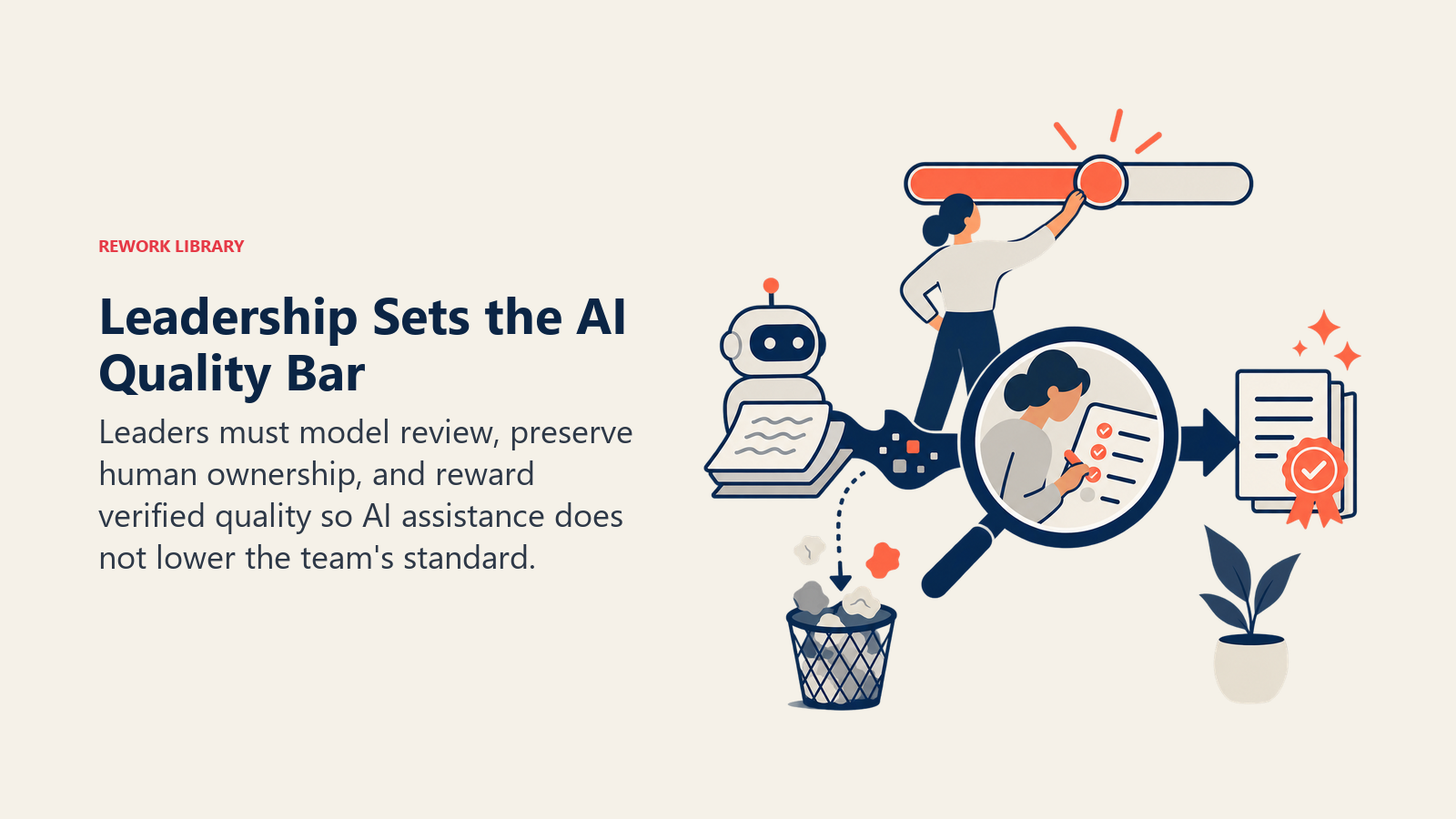
The honest risk here is what researchers have started calling cultural debt: the gap that opens when AI adoption outpaces the norms, training, and accountability structures needed to use it well. A team that quietly starts accepting unreviewed AI output because "the tool probably got it right" is absorbing debt that shows up later as an embarrassing customer email or a decision made on bad analysis. AI cultural debt covers this pattern in more depth. The leader's job has not fundamentally changed: pay attention to what matters, fund what needs funding, react to mistakes in a way that builds trust instead of hiding problems, and be honest that a new tool in the workflow does not remove the need for human judgment and ownership over the result.
Culture built this way scales further than culture built on a slide deck, because it is anchored in behavior that repeats under pressure, not language that only holds up in a meeting room. The leader who understands this stops treating culture work as a separate initiative with its own budget line and starts treating it as what it actually is: the accumulated, compounding effect of every decision about attention, resources, reactions, and promotions that they make anyway.
Frequently Asked Questions about a Leader's Role in Shaping Culture
What is a leader's role in shaping company culture?
A leader shapes culture through the signals their behavior sends: what they pay attention to, what they fund, how they react to mistakes and crises, and who they promote or let go. These signals, not the values statement, are what employees actually learn from and copy.
Can company culture change without a change in leadership behavior?
Rarely in a lasting way. Culture change efforts that focus on messaging, a new values statement or a rebranded office, without changing what leadership actually rewards and tolerates tend to produce cynicism rather than change, because employees keep watching leadership behavior for the real answer.
What is the say-do gap in organizational culture?
The say-do gap is the distance between an organization's stated values and the behavior its systems actually reward. It usually forms not from dishonesty but from values that were defined in a workshop and never connected to performance reviews, promotion criteria, or daily management practice.
What are Schein's culture embedding mechanisms?
Edgar Schein identified specific mechanisms leaders use, often unintentionally, to plant culture: what they pay attention to and measure, how they allocate resources, how they react to crises and critical incidents, and who they promote, reward, or remove. These mechanisms explain far more of an organization's real culture than its stated values do.
Why do founders have such a lasting influence on culture?
Founders make the earliest, most foundational decisions before any system exists to check them: early hires, what gets celebrated, how the first serious conflict gets handled. Those choices become the organization's origin story and get passed down through onboarding and folklore long after the founder's direct daily influence fades.
Are middle managers more important than the CEO for shaping day-to-day culture?
For daily experience, yes. Most employees feel culture through their direct manager's behavior far more than through executive communication, which is why the same company, under the same stated values, can feel completely different from one team to the next depending on who leads it.
How does AI change a leader's role in shaping culture?
The core job stays the same: set signals through attention, resources, reactions, and promotions. What changes is the content of those signals, now including what quality bar applies to AI-assisted work, how mistakes in AI output get handled, and whether the team is expected to review and own AI-generated work rather than pass it along unchecked.
Culture is not a slogan leadership announces. It is the running total of what a leader has paid attention to, funded, forgiven, and promoted, day after day, whether or not they ever meant to be building a culture at all. So the useful check isn't a values workshop. It's a plain question a leader can sit with on any given week: what am I actually rewarding and tolerating right now, and would I be comfortable if every employee could see it as clearly as my own team already does?

Co-Founder, Rework.com
On this page
- Why Leaders Are the Number One Culture Signal
- Key Facts
- The Mechanisms Leaders Actually Use to Shape Culture
- What Leaders Pay Attention To
- Where Resources Actually Go
- How Leaders React to Crises
- Who Gets Promoted, Rewarded, and Let Go
- The Founder Imprint: Why Early Leadership Casts a Long Shadow
- The Say-Do Gap: Why Stated Values Rarely Match Lived Culture
- Middle Managers: The Culture Carriers Between Strategy and Reality
- When Leadership Changes, Culture Shifts, For Better or Worse
- Leading Culture When AI Does Some of the Work