Bahasa Indonesia
Apa itu AI yang Bertanggung Jawab? Mengubah Niat Baik menjadi Praktik Nyata
Turn this article into takeaways for your work.


Each assistant summarizes the article only for you and suggests best practices for your work.
Banyak perusahaan menerbitkan prinsip etika AI. Jauh lebih sedikit yang memiliki proses untuk mendeteksi apakah algoritma perekrutan mereka mendiskriminasi kode pos tertentu, untuk menjelaskan kepada regulator mengapa model kredit mereka menolak aplikasi tertentu, atau untuk merespons ketika AI layanan pelanggan mereka mulai memberikan saran medis yang salah.
AI yang bertanggung jawab adalah kesenjangan antara prinsip dan praktik. Inilah yang sebenarnya berarti mengoperasikan sistem AI yang dapat dipertahankan organisasi Anda kepada regulator, pelanggan, dan karyawan.
Apa itu AI yang Bertanggung Jawab (dan Apa yang Bukan)
AI yang bertanggung jawab adalah framework operasional untuk mengembangkan dan menerapkan AI dengan cara yang adil, transparan, akuntabel, dan aman. Ini mencakup kebijakan, proses, alat, dan struktur organisasi yang mengubah komitmen etika menjadi perilaku yang dapat diperiksa.
Ini membedakan AI yang bertanggung jawab dari etika AI, yang merupakan bidang filosofis yang lebih luas yang mengkaji implikasi moral AI. Etika menyediakan lapisan "apa yang harus kita hargai". AI yang bertanggung jawab menyediakan lapisan "bagaimana kita sebenarnya mengimplementasikannya".
Dan berbeda dari tata kelola AI, yang merupakan sistem pengawasan dan akuntabilitas untuk AI di tingkat organisasi atau kebijakan. Tata kelola adalah struktur siapa yang bertanggung jawab atas apa. AI yang bertanggung jawab adalah praktik sehari-hari membangun dan mengoperasikan sistem yang dipegang akuntabilitasnya oleh struktur tata kelola.
Perbedaan ini penting karena organisasi dapat memiliki prinsip etika dan struktur tata kelola yang sangat baik namun tetap menerapkan AI yang menyebabkan kerugian nyata, karena tidak ada yang menerjemahkan prinsip-prinsip tersebut ke dalam persyaratan teknik dan operasional yang konkret.
Responsible AI Standard Microsoft, program implementasi AI Principles Google, dan toolkit AI Fairness 360 IBM semuanya adalah contoh pekerjaan penerjemahan ini yang dijadikan praktis.
Enam Dimensi
Program AI yang bertanggung jawab di perusahaan teknologi besar dan regulator telah konvergen pada sekitar kumpulan dimensi yang sama, meskipun penamaan bervariasi:
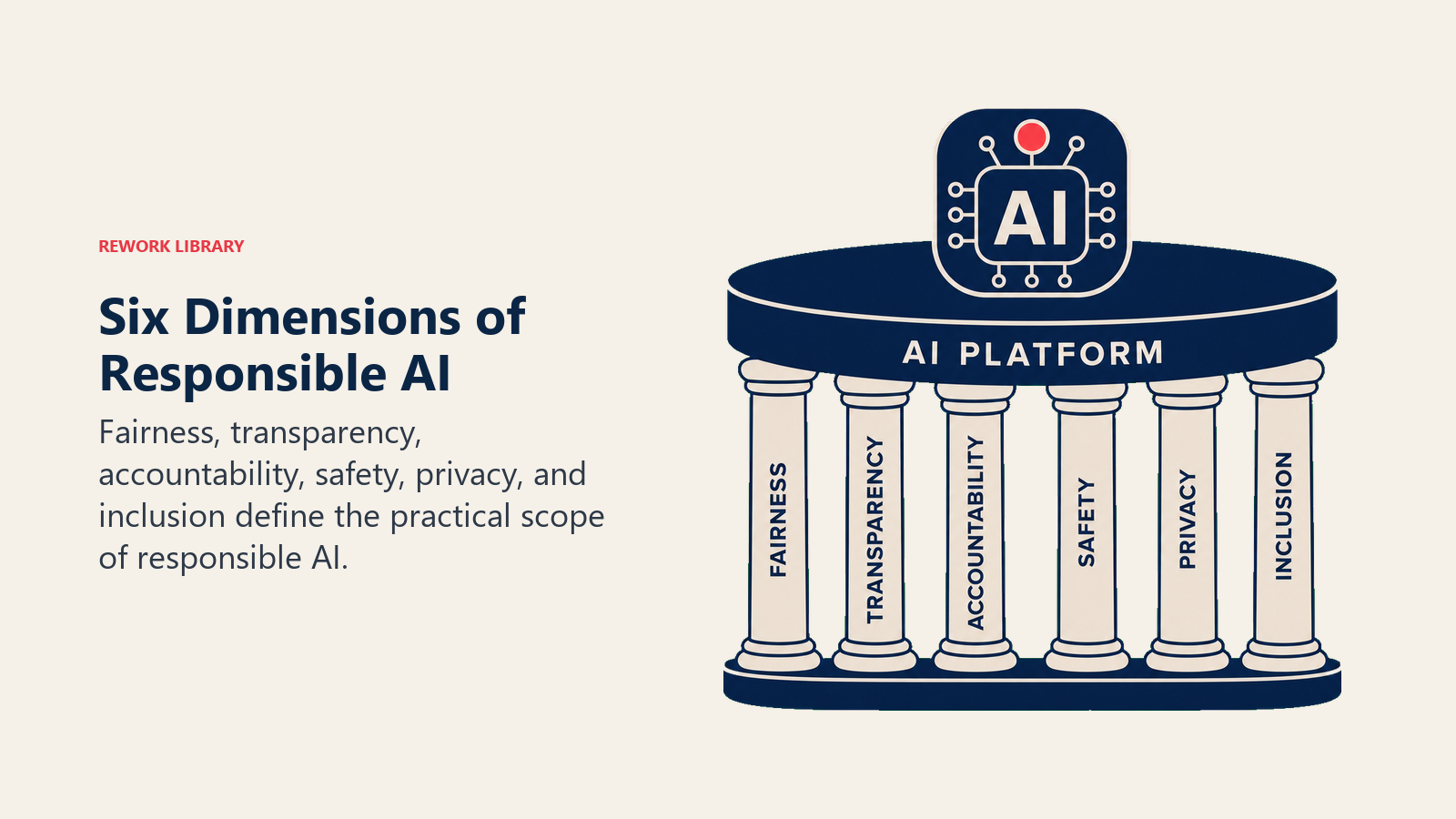
Keadilan berarti bahwa sistem AI tidak secara sistematis merugikan kelompok yang dilindungi atau menghasilkan hasil yang bias dengan cara yang tidak akan disetujui oleh organisasi. Ini memerlukan pengujian konkret: mengukur apakah tingkat kesalahan, tingkat persetujuan, atau kualitas output model berbeda secara signifikan di seluruh kelompok demografis. Keadilan bukan kriteria tunggal; ini adalah keluarga definisi yang secara matematis tidak kompatibel yang harus dipilih tim berdasarkan kasus penggunaan.
Transparansi dan explainability berarti orang yang terdampak oleh keputusan AI dapat memahami mengapa keputusan tersebut dibuat, dan operator dapat mengaudit sistem AI untuk memahami perilakunya. Teknik AI yang dapat dijelaskan membuat ini mungkin secara teknis; program AI yang bertanggung jawab menjadikannya persyaratan secara operasional. Untuk banyak industri yang diatur, ini bukan opsional: EU AI Act, ECOA, dan Pasal 22 GDPR menciptakan persyaratan hukum untuk penjelasan.
Akuntabilitas berarti kepemilikan yang jelas atas perilaku sistem AI. Ketika keputusan berbantuan AI menyebabkan kerugian, program AI yang bertanggung jawab memiliki proses untuk menyelidiki apa yang terjadi, siapa yang bertanggung jawab, dan cara mencegah pengulangan. Ini memerlukan jejak audit AI yang mencatat data apa yang digunakan, versi model mana yang membuat prediksi mana, dan keputusan manusia apa yang dibuat bersama output AI.
Keamanan dan keandalan berarti sistem AI berperilaku dapat diprediksi dalam batas yang ditentukan dan gagal dengan anggun ketika menghadapi situasi di luar pelatihannya. AI guardrails adalah implementasi teknis; pengujian keamanan dan red-teaming adalah metode validasinya.
Privasi berarti sistem AI menangani data pribadi dengan tepat, membatasi pengumpulan data pada yang diperlukan, dan menghormati hak individu atas informasi mereka. Ini berinteraksi kuat dengan program tata kelola data dan kepatuhan.
Inklusivitas berarti sistem AI dirancang dengan dan untuk populasi pengguna yang beragam, bukan hanya demografi yang mendominasi tim pengembangan dan pengujian.
Cara Program AI Bertanggung Jawab Bekerja dalam Praktik
Program AI yang bertanggung jawab yang matang beroperasi pada tiga tingkat:
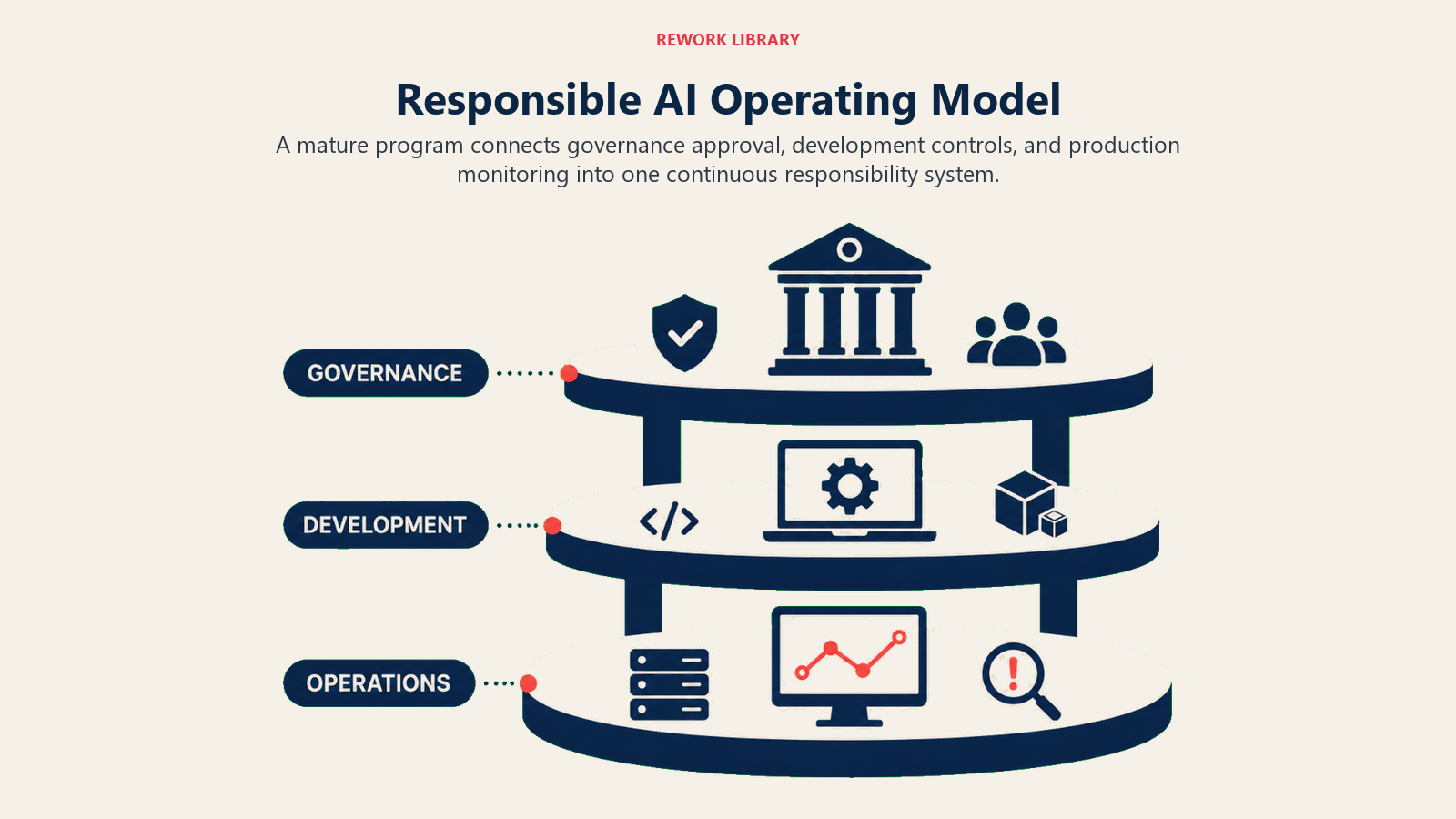
Di tingkat tata kelola, ada struktur untuk siapa yang menyetujui penerapan AI berisiko tinggi, kriteria tinjauan apa yang mereka terapkan, dan apa yang terjadi ketika kekhawatiran diajukan. Ini mungkin berupa dewan etika AI, komite AI bertanggung jawab, atau center of excellence dengan wewenang tinjauan. Tanpa struktur ini, setiap tim membuat keputusan risikonya sendiri tanpa konsistensi.
Di tingkat pengembangan, persyaratan AI yang bertanggung jawab dibangun ke dalam proses pembangunan. Sebelum model masuk ke produksi, perlu melewati pengujian keadilan pada dimensi demografis yang relevan, memiliki persyaratan explainability yang ditentukan, memiliki rantai akuntabilitas yang terdokumentasi (siapa yang memiliki model ini?), dan memiliki batas keamanan yang ditentukan dan diuji. Ini bukan checkbox sekali pakai; ini adalah persyaratan hidup yang diperbarui seiring perubahan sistem.
Di tingkat operasional, sistem AI yang diterapkan dipantau untuk pelanggaran AI bertanggung jawab dalam produksi. Metrik keadilan yang terlihat baik pada data pengujian dapat melayang seiring populasi dunia nyata yang menggunakan sistem berbeda dari populasi pengujian. Akuntabilitas memerlukan mengetahui siapa yang diberitahu ketika pemantauan mendeteksi masalah dan seberapa cepat mereka merespons.
Kasus Bisnis Melampaui Kepatuhan
AI yang bertanggung jawab sering dibingkai sebagai persyaratan kepatuhan, yang meremehkan nilai bisnisnya.
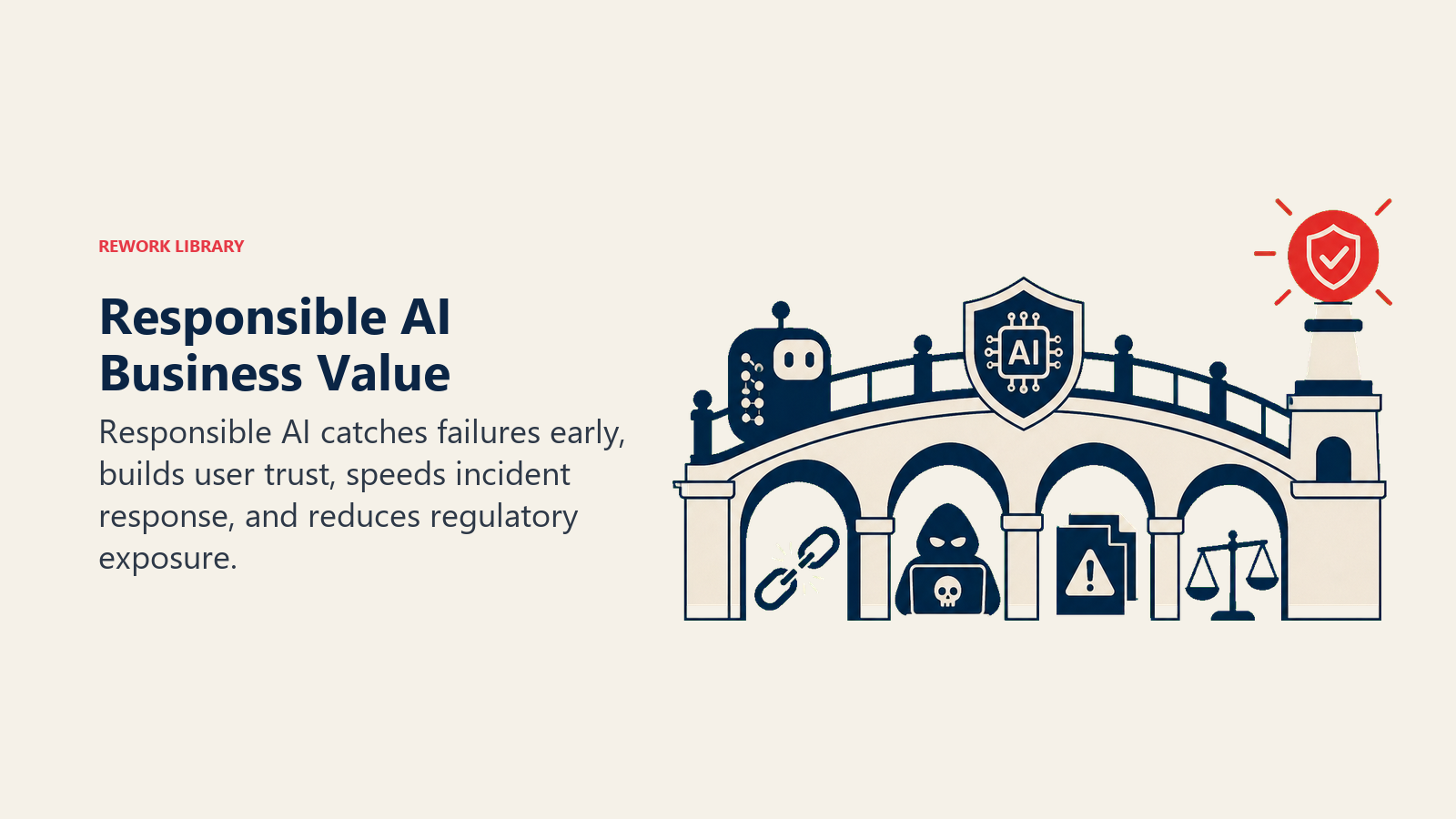
Pengujian keadilan menangkap kegagalan model sebelum mencapai pelanggan. Algoritma perekrutan yang mendiskriminasi kelompok tertentu juga kemungkinan merupakan algoritma yang membuat prediksi buruk, karena menggunakan fitur yang tidak relevan sebagai proksi. Memperbaiki masalah keadilan sering meningkatkan akurasi keseluruhan.
Transparansi mengurangi risiko integrasi. Ketika pengguna bisnis dapat melihat mengapa AI membuat rekomendasi, mereka lebih bersedia untuk bertindak berdasarkannya dan lebih cepat dalam menangkap kasus di mana rekomendasinya salah. Rekomendasi AI kotak hitam sering diabaikan justru karena tidak ada yang mempercayai apa yang tidak dapat mereka pahami.
Akuntabilitas memungkinkan respons insiden. Ketika sesuatu yang salah terjadi pada sistem AI, organisasi dengan struktur akuntabilitas yang kuat pulih lebih cepat karena mereka tahu di mana masalahnya, siapa yang bertanggung jawab, dan bagaimana keputusan dilacak. Organisasi tanpa struktur ini menghabiskan berminggu-minggu mencoba membangun kembali apa yang terjadi.
Praktik AI yang bertanggung jawab juga mengurangi eksposur regulasi. EU AI Act, undang-undang AI tingkat negara bagian yang muncul di AS, dan regulasi sektoral di bidang keuangan dan kesehatan menciptakan persyaratan kepatuhan yang dipetakan langsung ke dimensi AI yang bertanggung jawab. Membangun praktik ini lebih awal lebih murah daripada memasangnya kemudian di bawah tekanan tenggat regulasi.
Di Mana Bisnis Tersangkut
Mode kegagalan yang paling umum adalah jebakan "prinsip tanpa proses": menerbitkan dokumen etika AI, membentuk komite, dan menganggap pekerjaan selesai. Prinsip-prinsip tidak secara otomatis diterjemahkan ke dalam perilaku pengembang, persyaratan pengujian, atau proses operasional.
Kegagalan umum kedua adalah berfokus pada model sambil mengabaikan sistem. Model yang adil yang diterapkan dalam proses yang tidak adil (di mana outputnya ditafsirkan secara tidak konsisten di seluruh kelompok pengguna, atau di mana digunakan untuk membuat keputusan yang tidak dirancang untuknya) masih dapat menghasilkan hasil yang diskriminatif. AI yang bertanggung jawab memerlukan pemeriksaan seluruh sistem sosioteknis, bukan hanya model secara terisolasi.
Yang ketiga adalah memperlakukan AI yang bertanggung jawab sebagai tinjauan sekali pakai. Model melayang, kasus penggunaan berkembang, populasi pengguna berubah. Apa yang bertanggung jawab saat peluncuran mungkin tidak tetap bertanggung jawab enam bulan kemudian tanpa pemantauan berkelanjutan dan penilaian ulang berkala.
Konsep AI Terkait
- Etika AI - Fondasi filosofis yang menjadi sumber program AI bertanggung jawab
- Tata Kelola AI - Struktur pengawasan di mana program AI bertanggung jawab beroperasi
- AI yang Dapat Dijelaskan - Metode teknis untuk membuat keputusan AI dapat ditafsirkan
- AI Guardrails - Kontrol keamanan yang menegakkan batas AI bertanggung jawab
- Bias dalam AI - Tantangan keadilan inti yang ditangani oleh program AI bertanggung jawab
- Jejak Audit AI - Dokumentasi akuntabilitas untuk keputusan AI
- Manusia dalam Lingkar - Mekanisme pengawasan yang menjadi pusat penerapan AI yang bertanggung jawab
Sumber Daya Eksternal
- Microsoft Responsible AI Standard - Salah satu framework AI bertanggung jawab enterprise yang paling detail
- NIST AI Risk Management Framework - Framework pemerintah AS untuk manajemen risiko AI bertanggung jawab
- Partnership on AI - Organisasi multi-pemangku kepentingan yang mengembangkan praktik terbaik AI bertanggung jawab
Pertanyaan yang Sering Diajukan tentang AI Bertanggung Jawab
Apa itu AI yang bertanggung jawab?
AI yang bertanggung jawab adalah framework operasional untuk mengembangkan dan menerapkan sistem AI yang adil, transparan, akuntabel, dan aman. Ini menerjemahkan prinsip etika ke dalam persyaratan teknik yang konkret, praktik pengujian, struktur tata kelola, dan proses operasional.
Bagaimana AI yang bertanggung jawab berbeda dari etika AI?
Etika AI adalah bidang filosofis yang mengkaji nilai-nilai apa yang harus diwujudkan AI. AI yang bertanggung jawab adalah praktik sebenarnya mengimplementasikan nilai-nilai tersebut dalam sistem. Etika berkata "AI harus adil"; AI yang bertanggung jawab menentukan cara menguji keadilan, apa yang harus dilakukan ketika model gagal uji, dan siapa yang bertanggung jawab atas hasilnya.
Apakah AI yang bertanggung jawab hanya berlaku untuk sistem AI berisiko tinggi?
Aplikasi yang proporsional terhadap risiko masuk akal: sistem berisiko lebih tinggi (perekrutan, pinjaman, medis, peradilan pidana) memerlukan praktik AI bertanggung jawab yang lebih ketat. Tetapi pengujian keadilan dasar, explainability, dan dokumentasi akuntabilitas adalah praktik yang baik untuk sistem AI produksi mana pun, karena masalah yang tampak kecil dalam skala kecil sering menjadi signifikan dalam skala produksi.
Apakah AI yang bertanggung jawab diwajibkan oleh hukum?
Semakin ya. EU AI Act memberlakukan persyaratan khusus pada sistem AI berisiko tinggi yang dipetakan ke dimensi AI bertanggung jawab: akurasi, ketangguhan, transparansi, pengawasan manusia, dan pengujian bias. Regulasi sektoral AS (ECOA, FCRA, HIPAA) menciptakan persyaratan serupa untuk AI dalam pinjaman, kredit, dan layanan kesehatan. Membangun praktik AI bertanggung jawab sebelum tenggat regulasi lebih murah daripada memasangnya di bawah tekanan penegakan.
