Bahasa Indonesia
Apa itu Safety AI? Mengapa "Berhasil dalam Testing" Tidak Cukup
Turn this article into takeaways for your work.


Each assistant summarizes the article only for you and suggests best practices for your work.
Sistem AI di sebuah bank besar melewati setiap benchmark, setiap tes akurasi, setiap pemeriksaan integrasi. Kemudian dalam produksi, urutan input yang tidak biasa membuatnya merekomendasikan perdagangan yang secara kolektif akan mengguncang portofolio kecil. Tidak ada satu langkah pun yang salah. Kombinasinya bersifat bencana. Bank itu mendeteksinya karena seorang reviewer manusia menandai output sebelum eksekusi.
Itulah masalah safety AI. Bukan masalah akurasi model, bukan masalah kualitas data, bukan masalah proses tata kelola. Pertanyaan mendasar tentang apakah sistem yang bekerja dalam kondisi yang diharapkan juga akan berperilaku aman dalam kondisi yang tidak terduga.
Safety AI adalah bidang yang didedikasikan untuk membuat sistem AI yang bekerja dengan aman tidak hanya dalam testing tetapi dalam kompleksitas penuh dunia nyata, termasuk kasus ekstrem yang tidak diantisipasi oleh siapa pun.
Ruang Lingkup Safety AI
Safety AI adalah bidang penelitian sekaligus disiplin rekayasa praktis. Memahami keduanya membantu memperjelas apa yang sebenarnya dicakup oleh istilah tersebut.
Sebagai bidang penelitian, safety AI mempelajari cara membangun sistem AI yang secara andal mengejar tujuan yang dimaksudkan, tidak menyebabkan bahaya tidak disengaja yang serius, dan tetap berada di bawah kontrol manusia yang bermakna seiring kapabilitas meningkat. Kekhawatiran mendasar meliputi: sistem yang mengejar tujuan dengan cara yang tidak dimaksudkan oleh perancangnya; sistem yang berperilaku berbeda saat diobservasi versus saat digunakan; sistem yang memperoleh sumber daya atau kemampuan melebihi apa yang dibutuhkan tugasnya; dan tantangan menentukan nilai manusia dengan cara yang dapat dioptimalkan secara tepat oleh sistem AI.
Sebagai disiplin rekayasa praktis, safety AI mencakup langkah teknis dan operasional spesifik yang dibutuhkan sistem AI dalam produksi: pengujian robustness, evaluasi adversarial, validasi input, pemfilteran output, mekanisme pengawasan manusia, dan proses respons insiden.
Bagi sebagian besar bisnis, sisi rekayasa praktis adalah yang paling segera relevan. Pertanyaan penelitian penting sebagai sumber teknik dan sebagai konteks untuk arah yang dituju industri.
Perbedaan Safety AI dengan Konsep Terkait
Terminologi di area ini memang membingungkan karena konsep-konsepnya tumpang tindih dan organisasi yang berbeda menggunakan istilah secara berbeda.
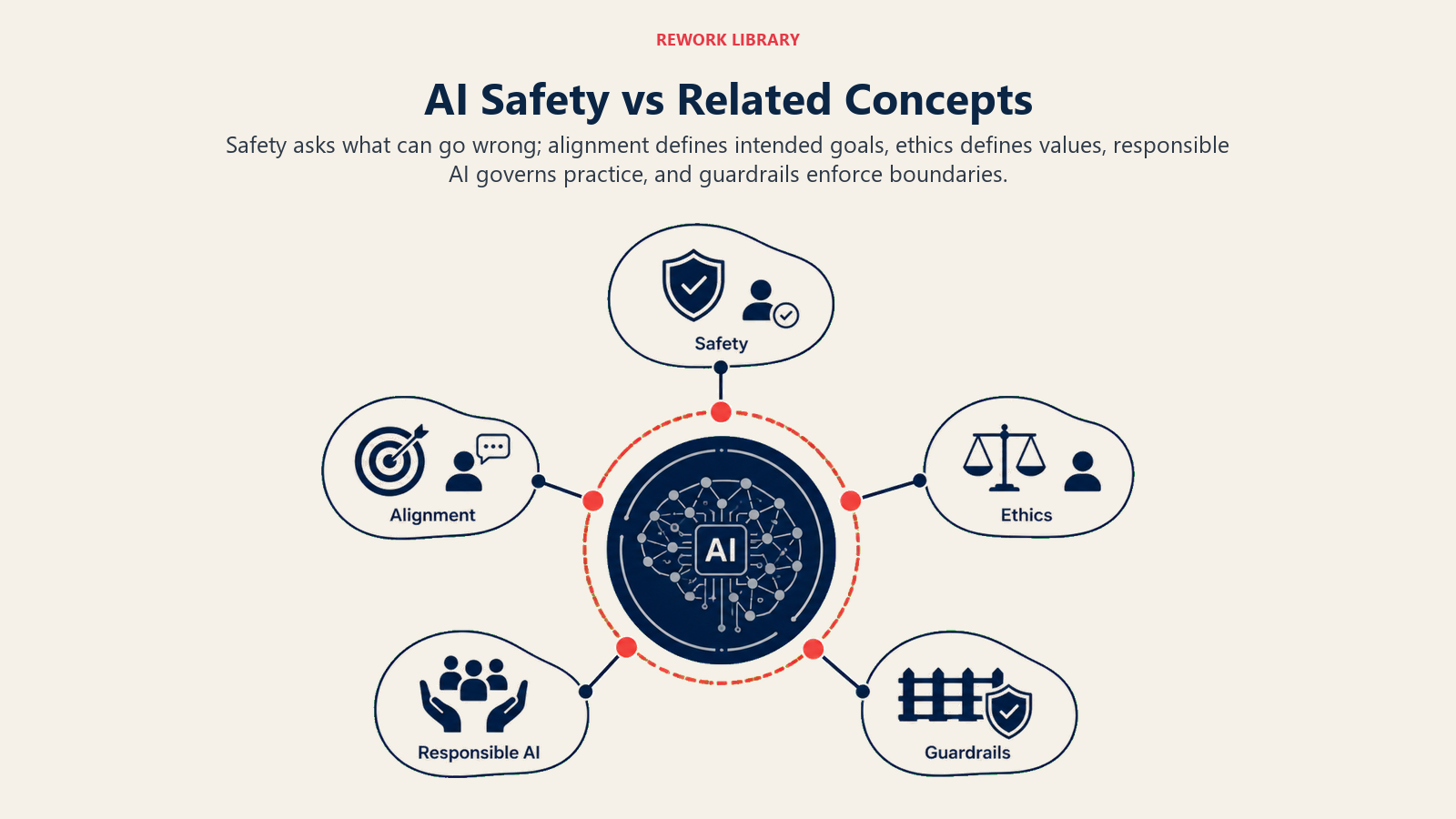
Alignment AI adalah tentang memastikan sistem AI mengejar tujuan yang benar-benar dimaksudkan oleh operatornya, dengan mempertimbangkan kompleksitas penuh nilai manusia. Safety dan alignment tumpang tindih secara signifikan: sistem yang tidak aman sering merupakan sistem yang tidak selaras. Namun alignment terutama tentang masalah spesifikasi tujuan; safety lebih luas, mencakup robustness terhadap input yang tidak terduga dan serangan adversarial bahkan ketika alignment sudah baik.
Etika AI tentang nilai-nilai yang harus memandu pengembangan dan penerapan AI: keadilan, privasi, martabat manusia. Etika mendefinisikan target; rekayasa safety adalah bagian dari cara mencapainya.
Responsible AI adalah framework perusahaan untuk mengoperasionalkan komitmen etis. Pengujian safety dan red-teaming adalah alat dalam program Responsible AI.
Guardrail AI adalah kontrol teknis spesifik (filter input, pengklasifikasi output, penolakan yang dikodekan keras) yang menerapkan batas safety dalam sistem yang digunakan. Guardrail adalah satu implementasi dari persyaratan safety AI.
Cara yang jelas untuk memikirkannya: safety AI bertanya "apa yang bisa salah?" dan mengembangkan jawaban yang sistematis. Konsep lain menangani nilai apa yang penting, siapa yang bertanggung jawab, dan kontrol teknis apa yang menerapkan batas.
Inti Teknis Safety AI
Peneliti dan insinyur safety AI bekerja pada beberapa kelompok masalah yang berbeda:
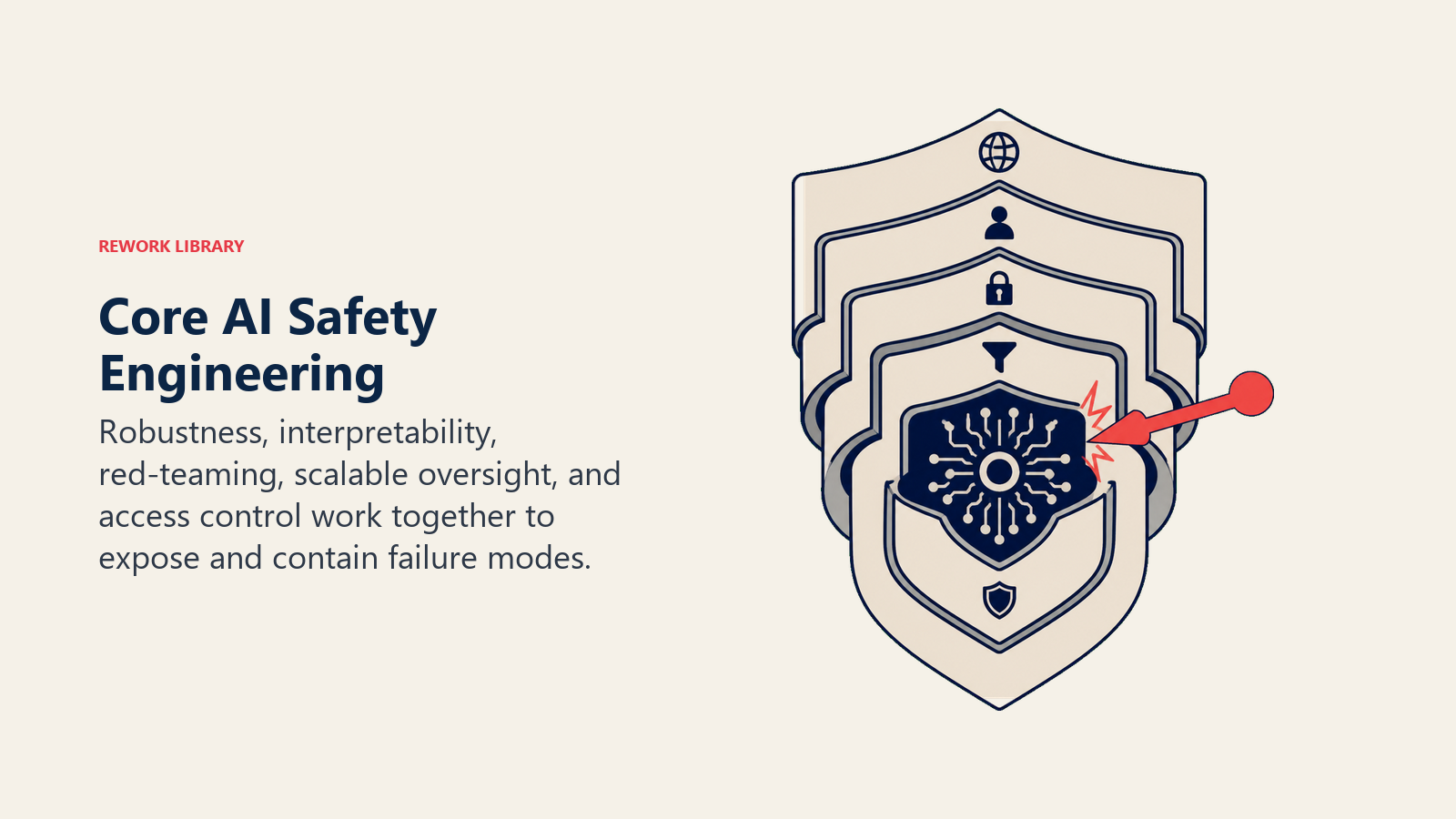
Robustness adalah sifat berfungsi secara andal di bawah pergeseran distribusi, input yang tidak terduga, dan kondisi adversarial. Model yang robust memberikan output yang masuk akal ketika menerima input yang berbeda dari distribusi pelatihannya, alih-alih menghasilkan prediksi yang percaya diri namun salah atau berperilaku tidak menentu. Pengujian robustness secara khusus mencari input yang menyebabkan kegagalan, tidak hanya mengukur akurasi pada data uji yang bersih.
Interpretabilitas dan transparansi menangani apakah manusia dapat memahami mengapa sistem AI menghasilkan output tertentu. Sistem yang dapat diinterpretasi lebih mudah diaudit untuk properti safety, lebih mudah di-debug ketika gagal, dan lebih mudah diverifikasi terhadap persyaratan safety. Metode AI yang dapat dijelaskan adalah kotak peralatan di sini.
Evaluasi dan red-teaming adalah pendekatan sistematis untuk menemukan kegagalan safety sebelum penerapan. Red-teaming AI menerapkan pengujian adversarial, dengan manusia atau sistem AI yang secara aktif mencoba membuat model gagal dengan cara yang relevan dengan safety. Benchmark standar mengukur kinerja rata-rata; red-teaming mencari risiko ekor.
Pengawasan yang dapat diskalakan menangani cara mempertahankan kontrol manusia yang bermakna seiring sistem AI menjadi lebih canggih dan beroperasi lebih cepat dari yang dapat diawasi langsung oleh manusia setiap tindakannya. Tekniknya meliputi membuat sistem AI menghasilkan penjelasan yang dapat dievaluasi manusia, mengambil sampel dan meninjau tindakan AI, dan merancang workflow di mana AI membantu tinjauan manusia alih-alih menggantikannya.
Pemenjaraan dan kontrol akses membatasi apa yang dapat dilakukan sistem AI, khususnya untuk workflow agentik yang mengeksekusi tindakan di dunia nyata. Prinsipnya adalah kapabilitas minimum yang diperlukan: sistem AI harus memiliki akses tepat ke alat dan data yang mereka butuhkan, tidak lebih. Ini membatasi radius ledakan ketika sesuatu salah.
Risiko Katastrofik dan Sistemik
Komunitas penelitian safety AI memberikan perhatian yang signifikan pada risiko katastrofik dan sistemik dari sistem AI yang canggih. Ini layak dipahami bahkan untuk organisasi yang tidak bekerja pada AI mutakhir, karena ini menginformasikan tren regulasi dan praktik safety yang akan menjadi standar.
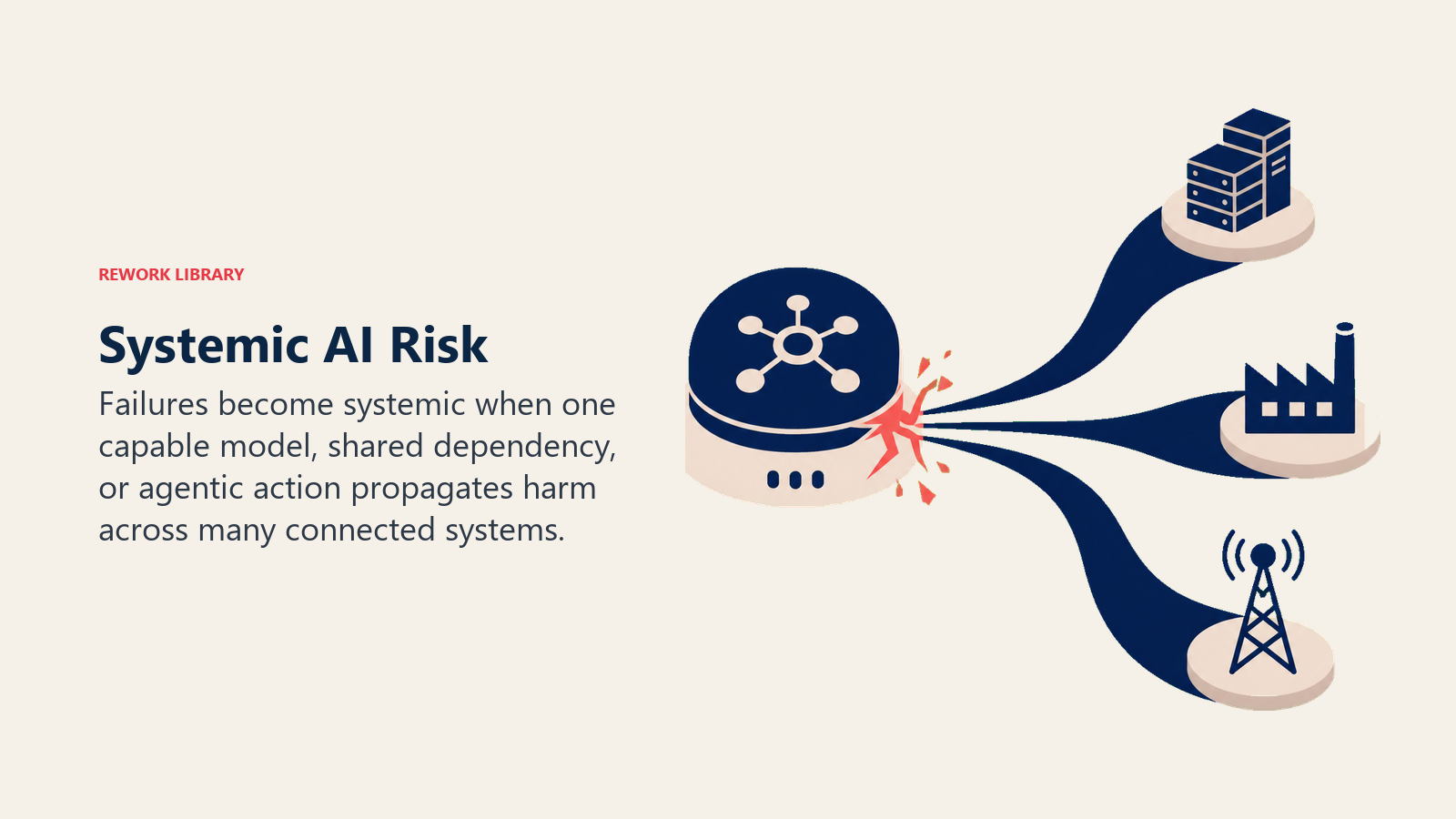
Skenario risiko katastrofik melibatkan sistem AI yang menyebabkan kerusakan ireversibel dalam skala besar: sistem yang digunakan dalam infrastruktur kritis yang gagal secara bersamaan, AI yang digunakan dalam perancangan senjata biologi atau kimia, atau sistem yang memperoleh kemampuan luas sambil mengejar tujuan sempit. Risiko ini memotivasi banyak perhatian regulasi saat ini dan persyaratan safety yang sedang dimasukkan ke dalam undang-undang seperti EU AI Act.
Bagi sebagian besar perusahaan yang menerapkan AI saat ini, kekhawatiran safety yang realistis lebih sederhana: sistem agentik yang mengambil tindakan yang tidak diinginkan, model yang menghasilkan saran medis atau keuangan berbahaya saat pengguna mengajukan pertanyaan di luar cakupan yang dimaksudkan, keputusan yang dibantu AI yang secara sistematis merugikan populasi tertentu, atau sistem AI yang dimanipulasi melalui serangan prompt injection untuk melakukan tindakan di luar cakupan yang dimaksudkan.
Kedua set kekhawatiran ini memiliki struktur yang sama: pertanyaan tentang apa yang terjadi ketika sistem AI menghadapi kondisi di luar yang dirancang dan diujinya.
Safety AI dalam Praktik Perusahaan
Bagi perusahaan yang menerapkan AI dalam produksi, persyaratan safety AI diterjemahkan ke dalam praktik spesifik:
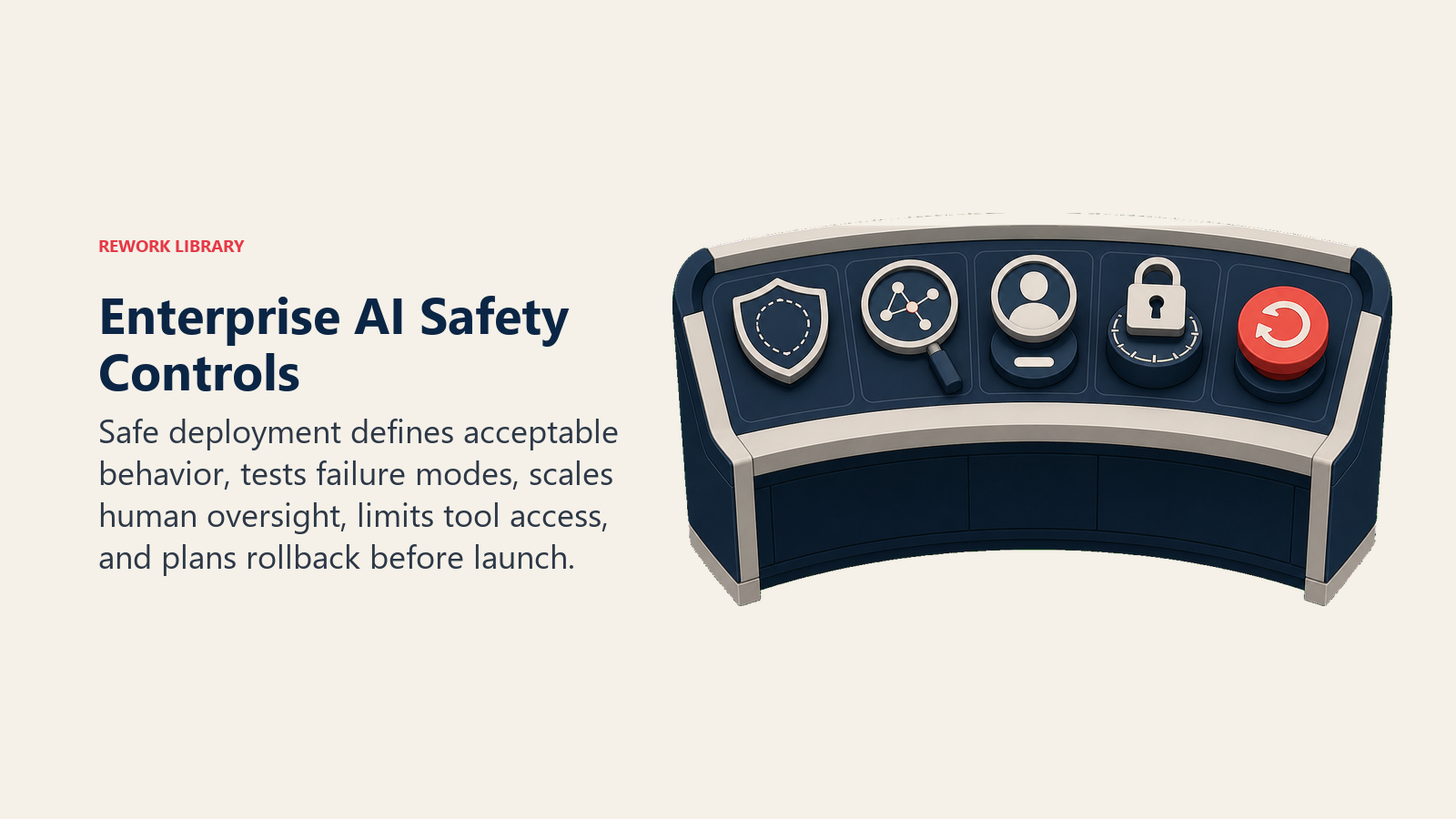
Tentukan cakupan perilaku yang dapat diterima sebelum penerapan. Apa yang seharusnya dilakukan sistem? Apa yang seharusnya ditolaknya? Apa yang seharusnya dieskalasikan ke manusia? Dokumentasikan ini sebagai persyaratan yang dapat diuji, bukan sebagai prinsip umum.
Uji mode kegagalan, bukan hanya kasus sukses. Pengujian standar mengukur kinerja rata-rata. Pengujian safety secara khusus mencari input yang menyebabkan perilaku yang tidak dapat diterima: percobaan jailbreak, contoh adversarial, kasus ekstrem dari distribusi, dan permintaan di luar cakupan.
Bangun pengawasan manusia sebanding dengan taruhannya. Untuk keputusan dengan konsekuensi yang signifikan (saran medis, transaksi keuangan, keputusan personil), sistem AI harus memberi sinyal ketidakpastian, memerlukan konfirmasi manusia untuk tindakan yang berimplikasi, dan memudahkan manusia untuk mengesampingkan. Proses human-in-the-loop adalah mekanisme safety inti.
Batasi kemampuan agentik pada yang diperlukan. Ketika sistem AI dapat mengambil tindakan di dunia, batasi tindakan yang dapat diambilnya hanya pada yang diperlukan untuk tugas tersebut. Asisten penulisan AI tidak memerlukan akses untuk mengirim e-mail. AI yang memesan perjalanan tidak memerlukan akses ke sistem keuangan. Kapabilitas minimum yang diperlukan adalah prinsip safety.
Rencanakan untuk kegagalan. Tentukan apa yang terjadi ketika sistem AI gagal atau menghasilkan output yang berbahaya. Siapa yang diberitahu? Apa proses rollback-nya? Bagaimana pengguna atau pelanggan yang terpengaruh ditangani? Rencana respons insiden safety sama pentingnya dengan rencana respons insiden keamanan siber.
Mengapa Investasi Safety Terbayar
Organisasi terkadang memperlakukan safety AI sebagai overhead, biaya tambahan tanpa pengembalian yang jelas. Kalkulasi berubah ketika mempertimbangkan skenario negatifnya.
Satu kegagalan safety AI berkrofil tinggi saja, keputusan perekrutan yang diskriminatif, rekomendasi medis yang berbahaya, sistem otonom yang mengambil tindakan yang tidak diinginkan, dapat menghasilkan investigasi regulasi, kerusakan reputasi, dan kewajiban hukum yang jauh melebihi biaya pencegahan. Denda EU AI Act untuk ketidakpatuhan terhadap persyaratan safety dapat mencapai 6% dari pendapatan tahunan global untuk pelanggaran yang paling serius.
Di luar mitigasi risiko, sistem AI yang aman cenderung menjadi sistem yang lebih andal. Disiplin pengujian yang dibutuhkan safety (red-teaming, evaluasi adversarial, cakupan kasus ekstrem) menangkap bug dan mode kegagalan yang pengujian standar lewatkan. Tim yang berinvestasi dalam praktik safety biasanya menerapkan AI berkualitas lebih tinggi secara keseluruhan.
Dan seiring sistem AI menjadi lebih canggih dan mengambil alih tugas yang lebih berimplikasi, perkiraan biaya kegagalan safety tumbuh. Membangun budaya safety dan praktik safety sekarang, saat taruhannya masih dapat dikelola, lebih murah daripada membangunnya di bawah tekanan setelah insiden.
Konsep AI Terkait
- Alignment AI - Memastikan sistem AI mengejar tujuan yang dimaksudkan dengan benar
- Guardrail AI - Kontrol teknis yang menerapkan batas safety
- Red-teaming AI - Pengujian adversarial untuk menemukan kegagalan safety
- Responsible AI - Framework perusahaan tempat praktik safety berada
- Human-in-the-Loop - Mekanisme pengawasan inti untuk penerapan AI yang aman
- AI yang Dapat Dijelaskan - Alat transparansi yang mendukung audit safety
- Tata Kelola AI - Struktur akuntabilitas organisasi untuk safety AI
Sumber Eksternal
- Anthropic Safety Research - Constitutional AI dan pengembangan model yang berfokus pada safety
- Center for AI Safety - Penelitian dan pekerjaan kebijakan tentang safety AI
- NIST AI Risk Management Framework - Framework pemerintah AS untuk mengelola risiko AI termasuk safety
Pertanyaan Umum tentang Safety AI
Apa itu safety AI?
Safety AI adalah bidang teknis dan kebijakan yang berfokus pada memastikan sistem AI berperilaku secara andal, tidak menyebabkan bahaya yang tidak disengaja, dan tetap berada di bawah kontrol manusia yang bermakna seiring menjadi lebih canggih. Ini mencakup praktik rekayasa jangka pendek (pengujian robustness, guardrail, pengawasan manusia) dan penelitian jangka panjang tentang pencegahan kegagalan bencana dari sistem AI yang canggih.
Apakah safety AI hanya relevan untuk laboratorium AI mutakhir?
Tidak. Setiap organisasi yang menerapkan AI dalam produksi memiliki persyaratan safety AI yang praktis: menguji mode kegagalan, membangun pengawasan manusia yang sesuai, membatasi tindakan yang dapat diambil sistem agentik, dan merencanakan insiden. Kekhawatiran meningkat seiring kapabilitas, tetapi praktiknya berlaku secara luas.
Bagaimana safety AI berkaitan dengan alignment AI?
Keduanya erat kaitannya tetapi tidak identik. Alignment secara khusus tentang memastikan sistem AI mengejar tujuan yang dimaksudkan dengan tepat, dengan mempertimbangkan kompleksitas nilai manusia. Safety lebih luas: sistem bisa selaras dengan baik namun tetap tidak aman jika rapuh terhadap input adversarial, atau jika mengambil tindakan dengan konsekuensi yang tidak diantisipasi oleh perancangnya. Dalam praktiknya, bidang-bidang ini tumpang tindih secara signifikan.
Apa praktik safety AI yang paling penting bagi perusahaan yang menerapkan AI saat ini?
Red-teaming dan pengujian adversarial sebelum penerapan, dikombinasikan dengan pengawasan manusia sebanding dengan taruhannya. Pengujian akurasi standar memberi tahu cara sistem bekerja pada input yang diharapkan; red-teaming memberi tahu di mana sistem gagal pada input yang tidak terduga. Pengawasan manusia memastikan bahwa kegagalan dalam produksi memiliki jaring pengaman.
