Best Pleo Alternatives in 2026: 15 Corporate Card and Spend Platforms Compared
Turn this article into takeaways for your work.


Each assistant summarizes the article only for you and suggests best practices for your work.
Pleo is the cleanest European corporate card and receipt platform for a finance lead running a 5 to 15 person team, and the best alternative depends entirely on why you're shopping. Payhawk and Qonto suit a company whose invoice should stop moving with headcount. Spendesk and Moss suit a European mid-market team that refuses a per-seat line item on principle. Ramp and Brex suit a company opening its first US entity. And Rydoo, Expensify, or Zoho Expense suit someone who never actually needed a card program, just a working reimbursement flow.
The reason to look past Pleo in the first place is almost always the same: Pleo's plans bill a monthly base fee that includes 3 users, then add a flat per-extra-user rate on top. That structure is genuinely cheap for a small team and genuinely awkward once you cross 20 or 30 people, because the arithmetic that made Pleo the obvious choice at launch keeps changing as you hire. We evaluated all 15 platforms below on that exact question: how does the invoice actually move as a team grows from 10 to 100 people, not just what the homepage advertises. Start with the broader expense management software roundup if you want the full field rather than the Pleo-specific view, or best Brex alternatives if your comparison set is US-anchored instead.
Key Facts
Key Facts: What Spend Software Economics Actually Look Like
- EU Regulation 2015/751 has capped card interchange fees at 0.2% of transaction value for consumer debit cards and 0.3% for consumer credit cards since December 2015, a ceiling far below unregulated US interchange, which is a structural reason fewer European spend platforms can fund a genuinely free tier the way Ramp or Brex Essentials does in the US (EUR-Lex).
- Only 26% of Europe's CFOs plan to increase capital expenditure over the next 12 months, and cost reduction ranks among the top three priorities across all 12 surveyed countries for the first time, per Deloitte's Spring 2026 European CFO Survey of 1,136 CFOs (Deloitte).
- The average cost to process an expense report for a single night hotel stay is $58 and 20 minutes of work, and 19% of reports contain errors or missing information costing an extra $52 and 18 minutes each to fix, per a GBTA Foundation study run with HRS (GBTA).
- Expense reimbursement schemes showed up in 13% of occupational fraud cases studied, with a median loss of $50,000 per case, per the ACFE's 2024 Report to the Nations (ACFE).
- The median company takes 6.4 calendar days to close its books, the top quartile finishes in 4.8 days or less, and the bottom quartile needs 10 or more, per APQC's General Accounting Open Standards Benchmarking survey (CFO.com).
Quick Comparison Table
| Tool | Best For | Starting Price | Key Strength | Key Limitation |
|---|---|---|---|---|
| Pleo (baseline) | UK and EU teams wanting simple cards and receipts | Starter GBP 9.50/mo billed yearly, 3 users | Frictionless European card and receipt loop | Base fee plus per-extra-user cost climbs with headcount |
| Payhawk | Multi-entity groups buying by module, not by seat | Cards & Expenses from $449/mo per company | Per-company pricing across entities and currencies | High monthly floor for a team under 25 |
| Spendesk | EU mid-market that refuses per-seat fees | Quote-only, no list price | No active user fees, unlimited users | Nothing published; every evaluation is sales-led |
| Moss | DACH, Benelux and UK teams buying spend in modules | Free up to 3 users; paid plans quote-only | Flexible module and add-on structure | Publishes no figure for either free or paid plans |
| Soldo | Multi-wallet spend segmentation across teams | Standard GBP 21 + VAT/mo, 3 users, 3 cards | Wallet-based budget control | No published extra-user rate; no free plan, trial only |
| Circula | German-led employee expense, travel and benefits | Employee & Travel from EUR 15/user/mo annual, 10-user minimum | Combines expense, travel per diem and benefits in one | 10-license minimum locks out very small teams |
| Yokoy | DACH teams wanting AI-driven spend automation | Quote-only | Deep AI invoice and receipt processing, now part of Perk (formerly TravelPerk) | No published price at any tier |
| Qonto | French-led business account with expense tools | Essential EUR 49/mo, unlimited users | Flat per-company fee regardless of headcount | Real spend controls are a paid add-on, not included |
| Revolut Business | Pan-European neobank wanting cards fast | Basic from GBP 10/mo, unlimited users | Flat fee, fast account opening | Expense-specific depth trails card-led specialists |
| Ramp | US-based teams, or UK/EU teams starting summer 2026 | Free $0/user/mo | Deepest close automation in the category | UK/EU onboarding is only beginning in 2026 |
| Brex | Multi-entity groups expanding into the EU | Essentials $0/user/mo (eligibility-gated) | Global card issuance, new EU payment license | EU rollout is still in phased onboarding |
| Navan | Travel-heavy teams | Business free up to 300 employees | Expense record built from the booking | Expense is free only for the first 5 users |
| Expensify | Reimbursement-first teams and accountants | Collect $5 per unique member/mo | Best-known receipt capture and approval flow | Billing model is genuinely hard to compare |
| Rydoo | Benelux and EU reimbursement-first teams | Essentials EUR 8/user/mo annual, 5-user minimum | Strong Benelux presence and per diem depth | 5-user minimum shuts out very small teams |
| Zoho Expense | Budget-conscious and Zoho-ecosystem teams | Standard $3/user/mo billed annually | Lowest published per-user price on this list | Card issuing depends on region and partner |
| SAP Concur | Enterprise multi-entity consolidation | No published price, quote only | Deepest global compliance and audit trail | Heaviest implementation project on this list |
Why Companies Actually Leave Pleo
Nobody leaves a card platform over a missing button. They leave because the pricing model or the depth stopped matching how the company actually operates. Here's what shows up in real switching conversations.
| Reason | Who Feels It Most | How Often It Triggers a Switch |
|---|---|---|
| Base fee plus per-extra-user cost compounds past roughly 20 people | Finance leads modeling cost at 50 to 100 seats | Very common |
| No real procurement or purchase-order workflow inside Pleo | Companies whose actual job is vendor bills and POs, not receipts | Common |
| Expanding operations or hiring into the United States | Founders and CFOs opening a US entity | Common |
| Running two or more legal entities that need consolidated reporting | Group finance directors across the UK, Nordics, DACH and Benelux | Common |
| Wanting card controls with no subscription base fee at all | Very small or pre-revenue teams | Moderate |
| Wanting business banking and cards from a single provider | Founders who dislike stacking a bank plus a separate card vendor | Moderate |
One caveat is worth stating plainly. Pleo Starter is a real, useful tier for a team of 3 or fewer, and the receipt-capture experience is genuinely best-in-class for non-finance staff. It is also not free: Starter runs GBP 9.50 per month billed yearly, a fact several older comparison posts still get wrong.
Pricing Models: The Part That Decides Your Bill
Five distinct pricing shapes are represented on this list, and knowing which one a vendor uses tells you more about your eventual invoice than the number on the homepage does.
| Pricing Model | How It Bills | Tools Using It | Watch Out For |
|---|---|---|---|
| Base fee plus per extra user | A flat included-user block, then a linear rate beyond it | Pleo Essential, Pleo Advanced | Both the included-user count and the per-extra-user rate change between tiers |
| Pure per seat, no base fee | Scales linearly from the first user | Circula, Zoho Expense, Rydoo, Expensify | Minimum seat counts can force a small team to overpay |
| Per company, flat | The invoice does not move with headcount | Payhawk, Qonto, Revolut Business | Cheap at 100 people, expensive at 8 |
| Interchange or treasury funded | $0 software, revenue from card spend instead | Ramp Free, Brex Essentials | The model needs real card volume to work in your favor |
| Quote-only or unpublished | Priced on modules, transaction volume, or entity count | Spendesk, Moss (paid), Yokoy, SAP Concur, Soldo beyond 3 users | Budgeting is impossible until you talk to sales |
The interchange-funded row is worth a pause, because it explains something a lot of buyers assume is just vendor generosity. EU Regulation 2015/751 has capped interchange fees at 0.2% of transaction value for debit cards and 0.3% for credit cards since December 2015, a fraction of what US card networks can charge. That ceiling is a big part of why Ramp and Brex can give away software funded almost entirely by card interchange in the US, while most European-native platforms on this list, Payhawk, Spendesk, Moss, Qonto, and Pleo itself, all charge a subscription instead. It's not that European vendors are worse at product. It's that the regulatory floor under their revenue is lower.
One trap is specific to this category. Soldo publishes its Standard and Plus prices, but not the rate for a fourth, tenth, or fiftieth user, so anything past its 3-user included block requires a quote. Treat "no published extra-user rate" the same way you'd treat "quote-only": get the number in writing before you model your invoice.
The Total Cost Table: What 10, 25, 50, and 100 Users Actually Costs
This is the table that actually answers the question Pleo's pricing page can't: which alternative is cheaper depends entirely on how many people you're buying for. Every figure below uses the vendor's own published entry-relevant tier, in its native currency, stated as monthly and annual. Actual invoices can be higher once you add modules or negotiate a custom deal; these are the floor, not a ceiling.
| Tool (billing shape) | 10 users | 25 users | 50 users | 100 users |
|---|---|---|---|---|
| Pleo Essential (GBP, base + per extra user, billed yearly) | GBP 116/mo, GBP 1,392/yr | GBP 281/mo, GBP 3,372/yr | GBP 556/mo, GBP 6,672/yr | GBP 1,106/mo, GBP 13,272/yr |
| Pleo Advanced (GBP, base + per extra user, billed yearly) | GBP 204/mo, GBP 2,448/yr | GBP 429/mo, GBP 5,148/yr | GBP 804/mo, GBP 9,648/yr | GBP 1,554/mo, GBP 18,648/yr |
| Circula Employee & Travel (EUR, pure per seat, billed annually, 10-user min) | EUR 150/mo, EUR 1,800/yr | EUR 375/mo, EUR 4,500/yr | EUR 750/mo, EUR 9,000/yr | EUR 1,500/mo, EUR 18,000/yr |
| Zoho Expense Standard (USD, pure per seat, billed annually) | $30/mo, $360/yr | $75/mo, $900/yr | $150/mo, $1,800/yr | $300/mo, $3,600/yr |
| Payhawk Cards & Expenses (USD, per company, flat) | from $449/mo, from $5,388/yr | from $449/mo, from $5,388/yr | from $449/mo, from $5,388/yr | from $449/mo, from $5,388/yr |
| Qonto Essential (EUR, per company, flat, unlimited users) | EUR 49/mo, EUR 588/yr | EUR 49/mo, EUR 588/yr | EUR 49/mo, EUR 588/yr | EUR 49/mo, EUR 588/yr |
| Revolut Business Grow (GBP, per company, flat, unlimited users) | from GBP 30/mo, from GBP 360/yr | from GBP 30/mo, from GBP 360/yr | from GBP 30/mo, from GBP 360/yr | from GBP 30/mo, from GBP 360/yr |
| Ramp Free (USD, interchange-funded) | $0 | $0 | $0 | $0 |
| Brex Essentials (USD, interchange-funded, eligibility-gated) | $0 | $0 | $0 | $0 |
| Soldo Standard (GBP + VAT, 3 users included) | Quote required past 3 users | Quote required | Quote required | Quote required |
Two things fall out of this table that a homepage price never shows. First, Pleo Essential is genuinely competitive at 10 people (GBP 1,392 a year) and genuinely uncompetitive at 100 (GBP 13,272 a year), which is the whole thesis of this article in one row. Second, Payhawk's headline price looks roughly ten times higher than Pleo's at small scale, but because it's flat, it becomes the cheaper option once a team crosses somewhere around 40 to 50 people on Essential, and crosses even earlier against Pleo Advanced. Qonto's EUR 588 a year looks like the outright winner at every headcount, but that number buys a business account plan, not full per-person spend limits; matching what Pleo does out of the box usually means adding Qonto's Team Spend Controls module at EUR 39 a month, which still lands far below Pleo at 50 or 100 seats but is not a like-for-like comparison at face value.
Stage Fit Matrix
Company stage changes what a good Pleo replacement looks like. A flat per-company fee rewards a bigger team; a per-seat model rewards a small one.
| Tool | Startup (1-10) | Growth (10-50) | Mid-Market (50-200) | Enterprise (200+) |
|---|---|---|---|---|
| Payhawk | Not a fit | Possible | Strong fit | Strong fit |
| Spendesk | Not a fit | Possible | Strong fit | Possible |
| Moss | Possible | Strong fit | Strong fit | Possible |
| Soldo | Strong fit | Strong fit | Possible | Not a fit |
| Circula | Not a fit (10-user min) | Strong fit | Strong fit | Possible |
| Yokoy | Not a fit | Possible | Strong fit | Strong fit |
| Qonto | Strong fit | Strong fit | Possible | Not a fit |
| Revolut Business | Strong fit | Strong fit | Possible | Not a fit |
| Ramp | Strong fit | Strong fit | Strong fit | Possible |
| Brex | Strong fit | Strong fit | Strong fit | Possible |
| Navan | Strong fit | Strong fit | Strong fit | Strong fit |
| Expensify | Strong fit | Strong fit | Possible | Possible |
| Rydoo | Not a fit (5-user min) | Strong fit | Strong fit | Possible |
| Zoho Expense | Strong fit | Strong fit | Possible | Not a fit |
| SAP Concur | Not a fit | Not a fit | Possible | Strong fit |
Sizing and Persona Table
| Tool | Ideal Team Size | Primary Buyer | Region Strength |
|---|---|---|---|
| Payhawk | 100 to 2,000 employees | Group CFO, finance director | Europe, UK, US |
| Spendesk | 50 to 1,000 employees | CFO, finance director | France, EU, UK |
| Moss | 20 to 500 employees | Finance lead, controller | Germany, Netherlands, UK |
| Soldo | 5 to 200 employees | Finance lead, office manager | UK and EU |
| Circula | 10 to 500 employees | Finance lead, HR/payroll | Germany, DACH |
| Yokoy | 100 to 5,000 employees | Group CFO, finance director | Switzerland, DACH, global via Perk (formerly TravelPerk) |
| Qonto | 1 to 250 employees | Founder, finance lead | France, Italy, Spain, Germany |
| Revolut Business | 1 to 250 employees | Founder, finance lead | UK, pan-European |
| Ramp | 10 to 500 employees | Controller, Head of Finance | US, expanding to UK and EU |
| Brex | 20 to 2,000 employees | CFO, group finance director | US, expanding to the EU |
| Navan | 20 to 5,000 employees | Travel manager, CFO | Global |
| Expensify | 1 to 200 employees | Office manager, bookkeeper, accountant | Global |
| Rydoo | 5 to 2,000 employees | Finance lead, controller | Belgium, Netherlands, EU |
| Zoho Expense | 1 to 100 employees | Founder, finance manager | Global, strong in APAC |
| SAP Concur | 500 to 50,000+ employees | Global controller, VP Finance | Global |
1. Payhawk: Per-Company Pricing That Ignores Headcount Entirely
Payhawk is the most direct answer to Pleo's per-seat problem, because it doesn't have one. Modules are priced per company, per month, so a 300-person group pays the same platform rate as a 90-person one. For a UK or EU business running multiple legal entities, that pricing shape plus native multi-currency handling and local entity support is why Payhawk keeps showing up on mid-market shortlists once headcount, not receipt volume, becomes the bottleneck.
The tradeoff is the floor. At $449 a month for Cards & Expenses, Payhawk is a poor fit below roughly 25 people, and stacking Accounts Payable or Procurement modules on top raises that break-even further. A 6-person team switching from Pleo Starter would be paying for capacity it doesn't need yet.
| What you get | What you don't |
|---|---|
| Per-company pricing that ignores headcount | High monthly floor for a small team |
| Genuine multi-entity and multi-currency handling | Modules stack, so the real price needs a quote |
| Strong European accounting and VAT support | Less startup-friendly onboarding than Pleo |
| Procurement and AP modules available | Implementation is a project, not a signup |
Pricing: Per company, per month, in USD: Cards & Expenses from $449, Accounts Payable from $349, Travel from $299, Procurement from $499. These are company-level prices, not per-user. Payhawk Complete bundles all four with AI features, quote only. All figures from Payhawk's own pricing page.
Best for: Multi-entity companies of 100 to 2,000 employees whose headcount growth is outrunning Pleo's per-seat math. See Brex vs Payhawk and Ramp vs Payhawk if you're also weighing a US-led platform, or the deeper AP automation software roundup if procurement depth is the real driver.
2. Spendesk: No Per-Seat Fee at Any Headcount, No Published Price Either
Spendesk built its pitch around the exact economics that push people off Pleo's per-extra-user rate. The vendor states plainly that it charges no active-user fees and that card orders are free, with the model instead built as a fixed platform fee plus variable transaction fees. For a French, EU, or UK mid-market company hiring 40 people a year, removing the per-seat variable from the budget entirely is worth real money, and it's a cleaner version of what Pleo Business tries to do at a much higher entry point.
What you can't do is evaluate it from the website. Spendesk publishes no prices at any tier, sold as a Foundations package with add-on modules for Procurement and Accounts Payable plus a Business tier for advanced workflows. Every comparison starts with a sales call and ends with a number you can't benchmark publicly.
| What you get | What you don't |
|---|---|
| No active user fees, per the vendor | Zero published pricing at any tier |
| Free card orders, unlimited users | Cannot be budgeted without a sales call |
| Strong European mid-market fit | Less relevant for a 10-person team just starting out |
| Procurement and AP add-on modules | Smaller ecosystem than Ramp or Brex |
Pricing: Quote-only. Spendesk publishes no prices. Its stated model is a fixed platform fee for the Foundations package plus variable transaction fees, with add-on modules for Procurement and Accounts Payable and a Business tier for advanced workflows.
Best for: European companies of 50 to 1,000 employees that want to eliminate the per-seat line entirely and will run a sales-led evaluation. See best Spendesk alternatives if Spendesk itself becomes the next thing you outgrow.
3. Moss: Modular Spend for Germany, the Netherlands and the UK
Moss sits in the same DACH-and-Benelux lane as Pleo but structures pricing entirely differently: a free plan capped at 3 users and 20 invoices a month, then paid plans sold as modules, Corporate Cards, Employee Reimbursements, Accounts Payable, on top of a platform fee plus a variable fee tied to monthly transaction volume. For a company that has outgrown Pleo's simplicity and wants AP folded into the same vendor, Moss is a natural next look.
Pricing is where it gets frustrating. Moss advertises both a free and a paid plan but names no figure for either paid tier, stating instead that price depends on the modules chosen and the transaction volume processed. That's a legitimate reason to shortlist it, but not to assume it's cheap.
| What you get | What you don't |
|---|---|
| Free plan for very small teams, 3 users and 20 invoices/mo | No published figure for any paid plan |
| Modular structure you can grow into | Volume-based pricing is hard to forecast |
| Strong German, Dutch and UK accounting fit | Smaller ecosystem than Payhawk |
| Cards, expenses and AP under one vendor | Free tier caps out fast for a real team |
Pricing: The free plan covers up to 3 users, unlimited cards, and up to 20 invoices per month. Paid plans are quote-only and modular: a single platform fee plus a variable fee based on monthly transaction volume, across Corporate Cards, Employee Reimbursements, and Accounts Payable modules. Moss publishes no figure for the paid tiers.
Best for: DACH, Benelux, and UK teams of 20 to 500 that want modular spend management and are willing to run a sales-led evaluation to get a number.
4. Soldo: Wallet-Based Budgets for Teams That Need Segmentation
Soldo's structural idea is the wallet, not the card. Money is allocated into wallets by department, project, or purpose, then cards draw against that wallet's limit rather than a single company-wide pool. For a company that has outgrown Pleo's flatter per-person limits and wants budget segmentation across departments before it wants full procurement, Soldo is a straightforward next step.
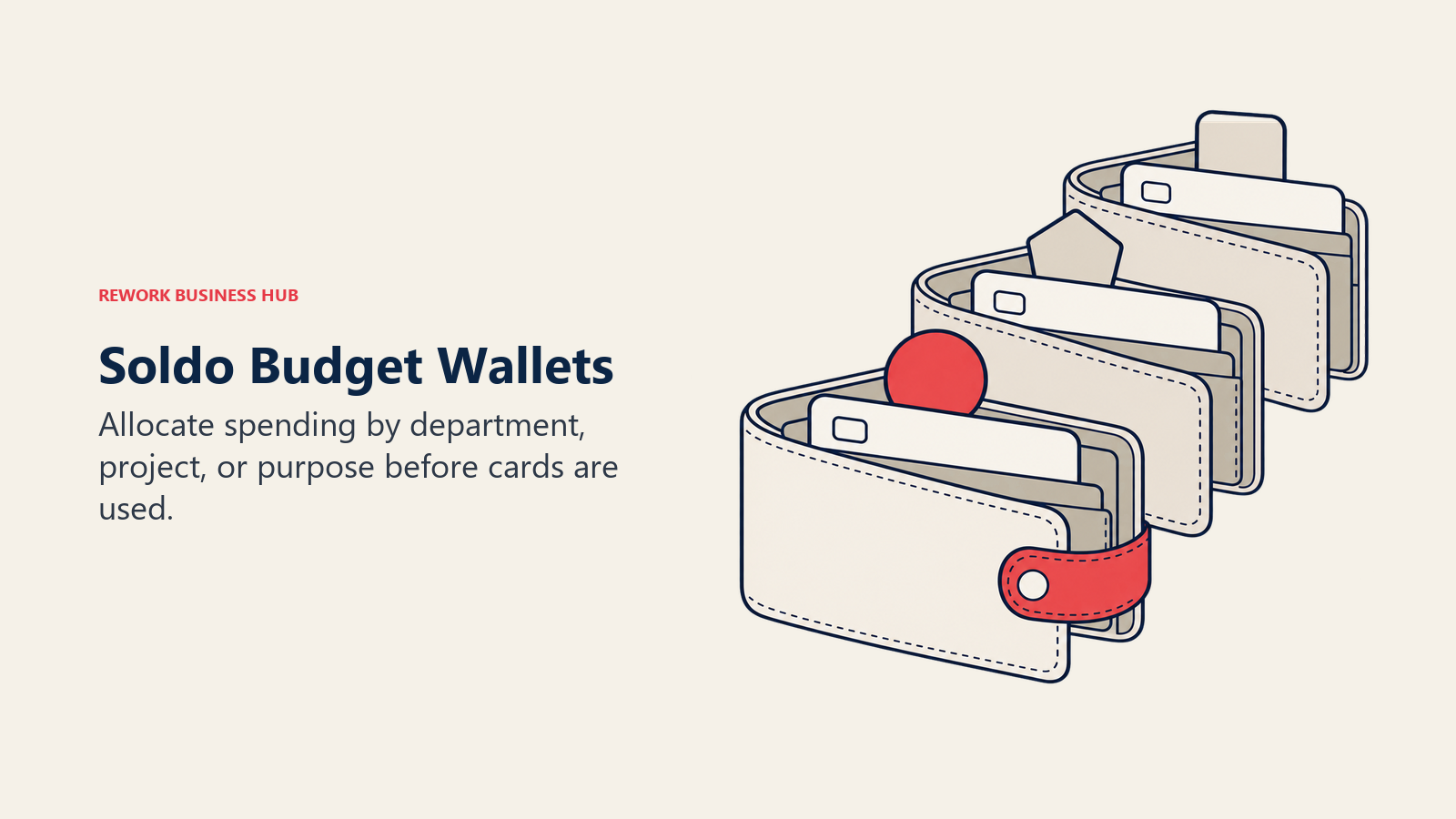
The pricing gap matters here. Soldo publishes Standard and Plus at fixed prices for exactly 3 users and 3 cards, but the rate for a fourth or fiftieth user isn't on the page anywhere. Unlimited is quote-only. That makes Soldo genuinely hard to model past its included tier without a call.
| What you get | What you don't |
|---|---|
| Wallet-based budget segmentation | No published extra-user rate past 3 |
| Clear published price at the entry tier | No free plan, only a 30-day trial |
| Good fit for departmental spend control | Weaker AP and procurement depth than Payhawk |
| Familiar UK and EU banking rails | Smaller feature set than Moss or Spendesk |
Pricing: In GBP plus VAT. Standard is GBP 21 per month for 1 wallet, 3 users, and 3 cards. Plus is GBP 33 per month for 3 wallets, 3 users, and 3 cards. Unlimited is price on request. Each user includes one free card, minimum 3. The per-extra-user rate beyond the included block is not published. There is no free plan, only a 30-day trial on Standard and Plus.
Best for: UK and EU teams of 5 to 200 that want budget segmentation by wallet before they need full procurement workflows.
5. Circula: German-Led Expense, Travel and Employee Benefits Together
Circula is the closest thing on this list to a direct feel-alike for a Pleo user, just with a stronger DACH accent and a broader remit. Beyond card-and-receipt capture, Circula folds in travel per diem calculation, mileage, and employee benefits like meal vouchers and mobility allowances, sold as separate licensed products rather than tiers. A German or Austrian company that has outgrown Pleo's UK-first accounting depth often lands here.
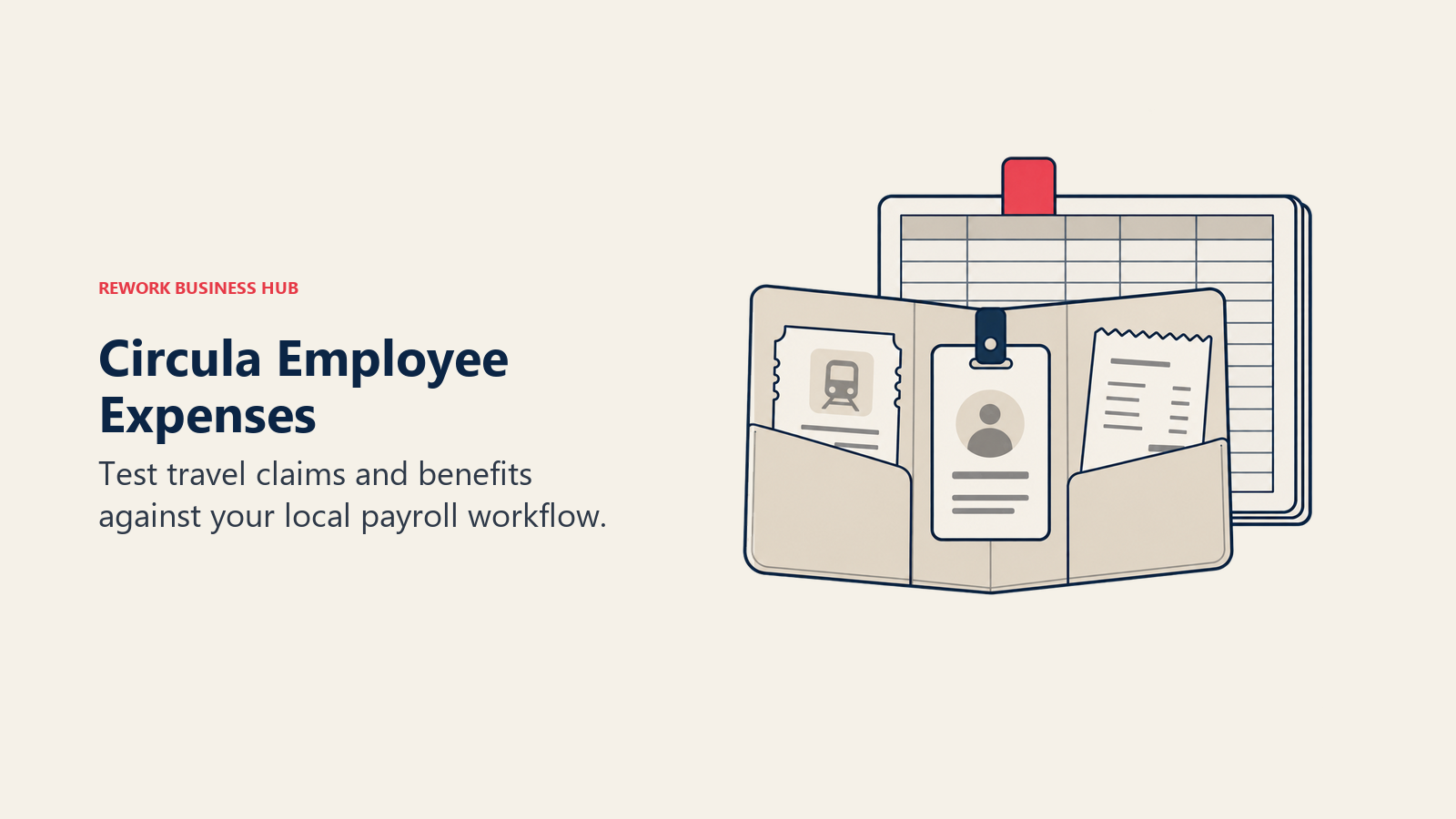
The catch is the minimum. Circula's Employee & Travel Expenses product requires at least 10 licenses, so a 6-person team simply can't buy in at the advertised per-license rate, and each product, cards, AP, benefits, carries its own separate starting price.
| What you get | What you don't |
|---|---|
| Expense, travel per diem and benefits under one vendor | 10-license minimum locks out very small teams |
| Deep DATEV and German payroll integration | Four separate products means four onboarding steps |
| AI invoice review on the AP product | Weaker fit outside DACH |
| Unlimited cards on the Credit Cards product | 2% FX fee on card conversions |
Pricing: All figures in EUR, billed annually. Employee & Travel Expenses starts at EUR 15 per license per month, minimum 10 licenses. Credit Cards starts at EUR 99 per month as a platform fee with unlimited cards included. Accounts Payable starts at EUR 149 per month, including 100 invoices. Benefits starts at EUR 1 per license per month. All figures from Circula's own pricing page.
Best for: German-speaking companies of 10 to 500 that want expense, travel, and benefits consolidated under one accounting-friendly vendor.
6. Yokoy: AI-Native Spend Automation, Now Inside Perk
Yokoy built its reputation on AI doing the coding work a human otherwise would: reading receipts and invoices, matching them to policy, flagging exceptions, and routing approvals with minimal manual touch. It's a genuinely different bet than Pleo's simpler capture-and-approve loop, aimed at a company that wants the AI layer to do more of the accounting work, not just the data entry.
The company's position changed in early 2025. TravelPerk acquired Yokoy alongside a $200 million Series E raise that valued the combined company at $2.7 billion, folding Yokoy's spend automation into the travel platform to build a single travel-and-expense product. TravelPerk has since rebranded to Perk, so if you evaluate Yokoy today, you're evaluating a Perk-owned product line, not an independent Swiss startup.
| What you get | What you don't |
|---|---|
| AI-driven invoice and receipt processing | No published price at any tier |
| Deep DACH accounting and compliance fit | Now part of a larger travel-first company |
| Strong fit for high invoice and receipt volume | Heavier onboarding than Pleo's plug-and-play cards |
| Backed by the Perk group's $200M raise and scale | Roadmap now shared with Perk's travel priorities |
Pricing: Quote-only. Yokoy publishes no prices on its site and directs every inquiry to a sales conversation.
Best for: DACH-based companies of 100 to 5,000 employees with high invoice or receipt volume that want AI doing more of the matching work than Pleo does.
7. Qonto: A Business Account With Expense Tools Bolted On
Qonto's pitch starts from the bank account, not the card. Team plans, Essential, Business, and Enterprise, include unlimited team members at a flat monthly fee, so a company adding its fortieth employee pays exactly what it paid at ten. For a founder who wants business banking and basic expense visibility from one login rather than stitching a bank plus Pleo together, that's an appealing shortcut.
Read the fine print before assuming it replaces Pleo outright. Qonto's base team plans give you a shared account and card issuance; the spend-control depth that Pleo bakes in by default, per-person limits, category rules, real-time policy enforcement, sits behind a separate Team Spend Controls add-on. Budget the add-on in, not just the base plan, if per-person limits matter to you.
| What you get | What you don't |
|---|---|
| Flat per-company fee, unlimited team members | Real spend controls are a paid add-on |
| Fast account opening, strong French and Italian ledger fit | Weaker Nordic and DACH accounting depth than Circula or Moss |
| Invoice Automation and Project Tracking add-ons available | Card-and-receipt UX is less polished than Pleo's |
| One login for banking and basic expense visibility | Not built as a dedicated spend management platform first |
Pricing: All figures in EUR, excluding VAT. Essential is EUR 49 per month (EUR 588 billed annually), Business is EUR 109 per month (EUR 1,308 annually), and Enterprise is EUR 199 per month (EUR 2,388 annually), all with unlimited team members included. Add-ons include Team Spend Controls at EUR 39 per month and Invoice Automation at EUR 12 per month. All figures from Qonto's own pricing page.
Best for: French, Italian, and Spanish-led companies of 1 to 250 employees that want banking and expense visibility from one flat-fee account.
8. Revolut Business: A Pan-European Neobank With Cards Attached
Revolut Business attacks the Pleo bundle from the same angle as Qonto, banking first, spend tooling second, but with a wider pan-European footprint and faster brand recognition among UK and Nordic founders. Basic, Grow, and Scale all bill a flat monthly fee with unlimited team member access, so headcount growth doesn't move the invoice the way it does on Pleo Essential.
Be honest about the ceiling here too. Revolut Business's card program and expense reporting are solid for a small team, but the deeper controls, spend rules, approval chains, department-level budgets, that Pleo treats as core functionality tend to require Revolut's higher Scale tier or aren't as granular even there.
| What you get | What you don't |
|---|---|
| Flat per-company fee, unlimited team members | Expense-specific depth trails card-led specialists |
| Fast onboarding and familiar UK/EU banking brand | Deeper spend controls sit on the higher Scale tier |
| Multi-currency accounts built in | Weaker dedicated accounting integrations than Pleo |
| Metal card and FX perks on higher tiers | Not purpose-built as a spend management platform |
Pricing: In GBP. Basic is from GBP 10 per month, Grow is from GBP 30 per month (up to 14% off annual billing), and Scale is from GBP 90 per month (up to 28% off annual billing). Enterprise is custom. All plans include unlimited team member access. All figures from Revolut's own business pricing page.
Best for: UK and pan-European founders and small teams of 1 to 250 that want banking, multi-currency accounts, and basic cards from one flat-fee provider.
9. Ramp: The US Platform Now Building a UK and EU Foothold
Ramp is the tool most US-expansion-minded Pleo users end up testing, because its free tier covers cards, expenses, bill pay, and accounting sync without a per-seat fee. The close automation is the specific draw: transactions arrive pre-coded, receipts match automatically, and the sync into QuickBooks, NetSuite, or Sage Intacct runs continuously rather than as a month-end export.
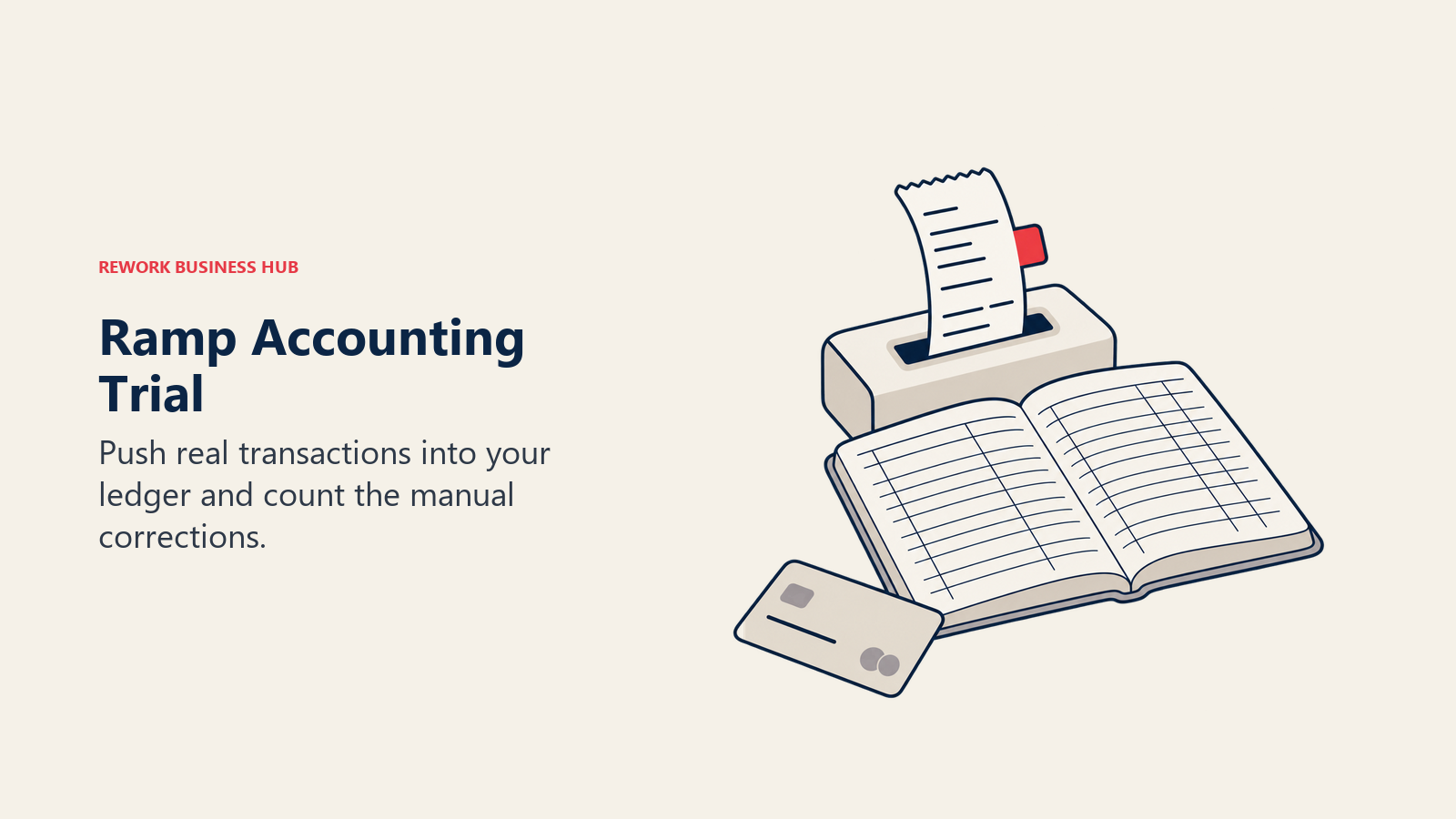
Until recently, Ramp simply wasn't an option for a UK or EU headquartered company. That changed in March 2026, when Ramp announced its acquisition of Billhop, a Stockholm and London-based payments platform, alongside plans to begin directly onboarding UK and EU businesses starting that summer and to open its first international offices in London and Stockholm., that onboarding window has just opened, so treat Ramp as newly available in the region rather than a mature European operator.
| What you get | What you don't |
|---|---|
| A free tier covering cards, expenses, and AP | UK/EU onboarding only began in summer 2026 |
| Continuous accounting sync that shortens close | European accounting and VAT depth is unproven next to Pleo |
| Card issuing already live in the UK, Ireland, Netherlands, Spain, Germany, France and Italy via Stripe | Card interchange funds the software, so it needs real spend volume |
| No per-seat fee on the Free tier | Plus tier adds an unpublished platform fee |
Pricing: Free is $0 per user per month. Plus is $15 per user per month plus a platform fee that scales with team size, and Ramp does not publish that fee as a number; the page shows annual billing only as a 20% discount, not a fixed dollar rate. Enterprise is contact-sales. All figures from Ramp's own pricing page.
Best for: Companies of 10 to 500 opening or already running a US entity, or UK/EU teams willing to be an early cohort as Ramp's regional rollout begins. See best Ramp alternatives for the wider field, or Ramp vs Brex for the head-to-head most US-bound buyers run.
10. Brex: Global Card Issuance With a New EU License
Brex is the other side of the US-expansion coin. It already issues cards locally in 50-plus countries and bundles a business account, bill pay, reimbursements, and travel booking into one platform, which matters for a company that hired in three countries before it hired a controller.
Brex's European position shifted materially in August 2025, when it secured a Payment Institution license in the EU via the Netherlands, authorizing direct card issuance and payment origination across the bloc. Brex has been onboarding EU customers in a phased rollout since, with a separate UK license still being pursued. For a Pleo user actively opening a US or broader-EU footprint at the same time, Brex is now a genuine two-birds option rather than a US-only tool with a workaround.
| What you get | What you don't |
|---|---|
| Local card issuance in 50+ countries already | EU rollout is still phased, not fully mature |
| New EU Payment Institution license (Aug 2025) | UK license is still pending, not yet secured |
| Free Essentials tier with global acceptance, AI custom rules, up to two entities | Premium adds a $12 per user per month fee |
| Travel booking, bill pay and reimbursements included | Heavier platform than a company that just wants cards |
Pricing: Essentials is $0 per user per month (eligibility-gated) and already includes global card acceptance, AI custom rules, up to two entities, accounting integrations, local currency wires, travel booking, bill pay, and reimbursements. Premium is $12 per user per month. Enterprise and Smart Card are contact-sales. All figures from Brex's own pricing page.
Best for: Companies of 20 to 2,000 running or opening entities in both the US and the EU that want one card platform across both.
11. Navan: When Travel Is the Real Expense Line
Pleo doesn't do travel booking, which is exactly why Navan belongs in this list for a specific type of leaver. Navan starts from the trip rather than the receipt: employees book flights and hotels inside Navan, and the expense record populates from the booking automatically instead of being reconstructed afterward, removing the manual-matching work behind the GBTA numbers in the Key Facts above.

The entry offer is generous and partial at the same time. Navan Business is free for companies up to 300 employees with unlimited trips on the travel side, but Expense, the part that actually replaces Pleo, only stays free for the first 5 users.
| What you get | What you don't |
|---|---|
| Booking and expense share one record | Expense is free only for the first 5 users |
| Travel free for companies up to 300 employees | Weak value if your team rarely travels |
| Policy enforced at booking time, not after | Card and AP depth trails a dedicated spend platform |
| Strong negotiated rates and inventory | Enterprise tier is quote-only |
Pricing: Navan Business is free for companies up to 300 employees, with unlimited trips on travel. Navan Expense is free for the first 5 users, then $15 per user per month. Navan Enterprise is contact-sales. All figures from Navan's own pricing page.
Best for: Travel-heavy teams of 20 to 5,000 whose Pleo usage was really about the corporate card for hotels and flights. See best Navan alternatives or the three-way Navan vs Spendesk vs BILL Spend & Expense comparison.
12. Expensify: When the Job Was Reimbursement All Along
A meaningful share of Pleo evaluators don't actually want another card program. They want receipts out of people's pockets and into approved, reimbursable reports, and Expensify has owned that job longer than anyone on this list. SmartScan reads the receipt, policy rules flag violations, and approval chains route without anyone building a workflow from scratch.
The friction is billing. Collect bills per unique member, Control bills per active member, and card adoption changes the Control rate substantially. Those variables produce very different invoices at identical headcount, so model your own numbers before assuming a figure applies to you.
| What you get | What you don't |
|---|---|
| Best-known receipt capture and approval workflow | Billing model is genuinely hard to compare |
| Works without changing how your team pays | Card and spend controls are lighter than Pleo's |
| Strong fit for accountants managing several clients | Control gets expensive without card adoption |
| Long track record and wide integration support | Interface feels dated next to newer entrants |
Pricing: Collect is $5 per unique member per month, pay-per-use only. Control is $18 per member included in your subscription size per month on annual billing, plus $36 per active member above that size; pay-per-use Control is $36 per active member per month. All figures from Expensify's own pricing documentation.
Best for: Teams of 1 to 200 whose actual problem is reimbursement, not card issuance. See best Expensify alternatives for the wider field.
13. Rydoo: Benelux-Rooted Reimbursement With Real Depth
Rydoo (originally Xpenditure, Belgium-based) is the reimbursement specialist with the strongest Benelux and EU per diem depth on this list, which matters directly for the Belgian and Dutch slice of the Pleo reader base. Mileage, per diem, and multi-currency reimbursement are handled with a level of local nuance that a card-first platform like Pleo doesn't prioritize.

The catch is the minimum. Both self-serve tiers require at least 5 users, so a genuinely tiny team can't buy in below that floor, and Business and Enterprise carry much larger minimums (30 and 50 active users respectively) that only make sense once you're well past the size where Pleo Starter stopped working anyway.
| What you get | What you don't |
|---|---|
| Strong Benelux and EU per diem and mileage handling | 5-user minimum on self-serve tiers |
| Fair Billing Policy on Business/Enterprise charges only active users | Business and Enterprise need 30-50 active users minimum |
| Reimbursement-first, not built around card issuance | Card program is thinner than Pleo's |
| Multi-currency support in EUR, USD and GBP pricing | Less brand recognition than Expensify |
Pricing: Essentials is EUR 10 / $12 / GBP 10 per user per month billed monthly, or EUR 8 / $9 / GBP 8 per user per month billed annually, 5-user minimum. Pro is EUR 12 / $14 / GBP 12 monthly, or EUR 10 / $11 / GBP 10 annually, also a 5-user minimum. Business is custom pricing with a 30 active-user minimum, and Enterprise is custom with a 50 active-user minimum. All figures from Rydoo's own pricing page.
Best for: Benelux and EU teams of 5 to 2,000 whose real need is reimbursement and per diem accuracy rather than card control.
14. Zoho Expense: The Cheapest Published Price on This List
If the real objection to Pleo was cost rather than capability, Zoho Expense is the floor of this market. Standard runs $3 per user per month on annual billing, roughly a quarter of Pleo Essential's per-extra-user rate, and the free plan covers up to 3 users outright, matching Pleo's Starter cap without a subscription fee at all. Receipt capture, approvals, multi-currency, and mileage all work at that price.
It's cheaper because it's narrower. Card issuing depends on region and partner rather than being core to the product, so this is a reimbursement-and-expense tool with card support attached, not a card-led spend platform the way Pleo is. Companies already running Zoho Books get the strongest version of it.
| What you get | What you don't |
|---|---|
| Lowest published per-user price on this list | Card issuing varies by region and partner |
| Free plan for up to 3 users | Not a card-led spend control platform |
| Native fit with Zoho Books and Zoho One | Thinner procurement and multi-entity depth |
| Solid multi-currency and mileage handling | Less European accounting polish than Pleo or Moss |
Pricing: The Free plan is $0 for up to 3 users, with 5 GB receipt storage and 20 receipt scans per user per month. Standard is $4 per user per month billed monthly, or $3 per user per month billed annually. Premium is $6 per user per month billed monthly, or $5 per user per month billed annually. All figures from Zoho's own pricing page, exclusive of local taxes.
Best for: Cost-sensitive teams of 1 to 100, especially anyone already inside the Zoho ecosystem. See best Zoho Expense alternatives if Zoho itself becomes the next thing you outgrow.
15. SAP Concur: The Enterprise Answer to Multi-Entity Consolidation
SAP Concur is where a Pleo user ends up once the real problem is consolidating dozens of entities across currencies, tax jurisdictions, and audit requirements, not managing receipts for a single office. It's the deepest global compliance and audit trail on this list, built for a controller who needs one system of record across a group that has genuinely outgrown every other platform here.
That depth comes at the cost of everything Pleo is known for. There is no published price, no self-serve signup, and implementation is measured in months, not days. This is not a tool to evaluate unless multi-entity consolidation is the actual, current problem.
| What you get | What you don't |
|---|---|
| Deepest global compliance and audit capability | No published price at any tier |
| Built for dozens of entities and currencies | Implementation is a multi-month project |
| Mature integrations across major ERPs | Overkill for a 20 to 100 person company |
| Established enterprise support structure | None of Pleo's plug-and-play simplicity |
Pricing: No published price. SAP Concur is quote-only, priced on employee count, modules, and entity complexity.
Best for: Companies of 500 to 50,000-plus employees running multi-entity, multi-currency consolidation that has outgrown every mid-market platform on this list.
Geography and Accounting Fit: The Question That Narrows the List Fast
The fastest way to cut this list in half is to name your accounting system and your primary country first. A platform that syncs cleanly into your ledger shortens close; one that needs manual mapping adds days, which is exactly the gap between APQC's top-quartile 4.8 days and its bottom-quartile 10-plus.
| Your Situation | Strongest Options | Note |
|---|---|---|
| Xero, UK-based | Pleo, Soldo, Zoho Expense, Rydoo | Broad Xero coverage across this list |
| DATEV, German-speaking | Circula, Moss, Yokoy | Strongest DATEV-native depth |
| Multi-entity, NetSuite or Sage Intacct | Payhawk, Ramp, SAP Concur | Confirm which entities the sync actually writes to |
| QuickBooks Online | Ramp, Expensify, Zoho Expense | Supported by nearly everything on this list |
| French, Italian or Spanish ledgers | Qonto, Spendesk | Native regional accounting and tax handling |
| Belgian or Dutch per diem rules | Rydoo, Moss | Purpose-built for Benelux reimbursement rules |
| No single ledger, banking-first need | Qonto, Revolut Business | Evaluate as a bank account first, expense tool second |
| Global, 10+ countries | SAP Concur, Navan, Brex | Only these three are built for that scale by default |
If the ledger itself, not the spend tool, is the actual bottleneck, that reconciliation problem is worth solving on its own before you switch card platforms.
What Pleo Still Does Best
Plenty of readers will finish this comparison and stay. These strengths are earned, and nothing above matches all of them for a small European team at once.
| Pleo Strength | Who It Matters For |
|---|---|
| Cleanest receipt-capture UX for non-finance staff | Office managers and non-technical employees |
| Deep European accounting and banking integrations | UK and EU-only finance teams |
| Starter tier accessible for a team of 3 or fewer | Very early-stage companies |
| Fast time-to-value with minimal training | Teams without dedicated finance headcount |
| Support that understands VAT and local compliance | Group finance directors in the UK and EU |
Pleo pricing baseline: Starter is GBP 9.50 per month billed yearly, capped at 3 users, no extra users available. Essential is GBP 45 per month billed monthly or GBP 39 per month billed yearly, 3 users included, GBP 11 per additional user per month. Advanced is GBP 109 per month billed monthly or GBP 99 per month billed yearly, 3 users included, GBP 15 per additional user per month. Business starts at GBP 249 per month billed yearly. All figures from Pleo's own UK pricing page, in GBP.
Staying put is the right call when your team is genuinely small, every entity is UK or EU-based, and the per-extra-user rate hasn't started compounding yet. The moment a second country, a real procurement workflow, or a 50-plus headcount enters the picture, revisit the total-cost table above rather than assuming Pleo's per-seat math still works in your favor.
How to Choose: Decision Framework
Start with the specific reason Pleo stopped fitting, then match it to the vendor whose billing shape and geography actually solve it.
| If you need... | Pick... | Why |
|---|---|---|
| Pricing that stops rising as you hire | Payhawk | Per-company module pricing across entities |
| European spend management with no per-seat fee at all | Spendesk | Platform plus transaction fees, no active-user fees |
| Modular DACH, Benelux or UK spend, cards to AP | Moss | Free entry tier, modular paid structure |
| Budget segmentation by department or project | Soldo | Wallet-based limits rather than one shared pool |
| Expense, travel and benefits under one German-led vendor | Circula | Purpose-built for DACH payroll and DATEV |
| AI doing more of the invoice-matching work | Yokoy | AI-native processing, now backed by Perk (formerly TravelPerk) |
| A bank account with expense visibility, flat fee | Qonto | Unlimited team members at one flat price |
| A pan-European neobank with cards attached | Revolut Business | Fast onboarding, flat fee across plans |
| Everything Pleo does, minus the per-seat fee, US-first | Ramp | Free tier, now onboarding UK/EU as of summer 2026 |
| One card platform across a US and EU footprint | Brex | New EU payment license alongside existing global reach |
| Travel and expense on one record | Navan | Expense built from the booking, not rebuilt later |
| Reimbursement without issuing any new cards | Expensify | Receipt capture and approvals, no card migration |
| Benelux-native per diem and mileage accuracy | Rydoo | Strongest regional reimbursement depth on this list |
| The lowest published price per user | Zoho Expense | $3 per user per month billed annually |
| Multi-entity, multi-currency consolidation at scale | SAP Concur | Deepest global compliance and audit trail |
| To stay | Pleo | Best receipt UX and European accounting fit for a small team |
Buying Mistakes to Avoid
Most expensive mistakes happen before the demo: buyers compare incompatible billing bases, assume a bank account matches a spend platform's controls, or trust a converted currency figure.
| Mistake | What It Looks Like | What to Do Instead |
|---|---|---|
| Comparing a per-seat price to a per-company price | Reading Payhawk's $449 as a per-user rate | Confirm the billing basis in writing before modeling |
| Converting GBP or EUR prices in your head | Putting Pleo's GBP 39 next to a USD tool without conversion context | Compare within the currency the vendor actually bills |
| Assuming a bank account replaces a spend platform | Reading Qonto or Revolut Business's base plan as Pleo-equivalent | Price in the spend-control add-on, then compare totals |
| Treating a reported figure as vendor-confirmed | Quoting a listicle's Spendesk or Yokoy number as real | Get a written quote; label everything else as reported |
| Ignoring Soldo's unpublished extra-user rate | Assuming Standard's GBP 21 covers a 15-person team | Get the per-extra-user rate in writing before you model past 3 |
| Assuming Ramp or Brex are already fully live in your country | Signing based on a US case study alone | Confirm your specific country's onboarding status directly with sales |
| Skipping the accounting sync test | Finding out the DATEV or Xero mapping is manual after go-live | Push 20 real transactions through the sync during the trial |
| Missing a seat minimum | Trying to buy Rydoo or Circula for a 6-person team | Check the minimum license count before you request a quote |
Frequently Asked Questions about Pleo Alternatives
What is the best Pleo alternative in 2026?
It depends on why you're leaving. For headcount-independent pricing, Payhawk or Qonto. For a European mid-market team that refuses a per-seat fee, Spendesk or Moss. For a company opening a US entity, Ramp or Brex. For reimbursement without a card program, Expensify, Rydoo, or Zoho Expense.
Does Pleo have a free plan?
No. Pleo's Starter tier costs GBP 9.50 per month billed yearly and is capped at 3 users with no additional users available. Pleo's current pricing page lists no free plan at any tier, despite some older third-party comparisons stating otherwise.
Why do companies actually leave Pleo?
The most common reason is that Pleo's base-fee-plus-per-extra-user pricing compounds as headcount grows past roughly 20 to 30 people. Other common triggers are needing real procurement or AP depth Pleo doesn't offer, expanding operations into the United States, and running multiple legal entities that need consolidated reporting.
Why can US spend platforms like Ramp and Brex offer free plans when European ones mostly can't?
EU Regulation 2015/751 has capped card interchange fees at 0.2% for debit and 0.3% for credit transactions since December 2015, well below unregulated US interchange rates. That lower ceiling makes it harder for a European-native platform to fund a genuinely free tier purely from card spend, which is a structural reason Payhawk, Spendesk, Moss, and Pleo itself all charge a subscription while Ramp Free and Brex Essentials do not.
Is Payhawk cheaper than Pleo?
It depends entirely on headcount. Pleo Essential is cheaper than Payhawk for a small team, roughly GBP 1,392 a year at 10 users versus Payhawk's floor of about $5,388 a year. But because Payhawk's price is flat per company, it becomes the cheaper option once a team grows into the 40 to 50 person range, while Pleo Essential keeps climbing linearly past that point.
Can Qonto or Revolut Business fully replace Pleo?
Their base team plans give you a business account, cards, and basic expense visibility at a flat monthly fee with unlimited team members, which is much cheaper than Pleo at scale. But matching Pleo's built-in per-person spend limits and policy controls usually requires an add-on, Qonto's Team Spend Controls at EUR 39 a month, for example, so price the add-on in before assuming it's a like-for-like swap.
Are Ramp and Brex actually available for UK and EU companies now?
They're newly available, not long-established there. Brex secured an EU Payment Institution license via the Netherlands in August 2025 and has been phasing in EU customers since, with a UK license still pending. Ramp announced in March 2026 that it would begin directly onboarding UK and EU businesses starting that summer, after acquiring the Stockholm and London-based payments platform Billhop. Confirm current onboarding status directly with either vendor before assuming full coverage in your country.
What's the difference between Rydoo, Expensify, and Zoho Expense?
All three are reimbursement-first rather than card-led. Rydoo has the strongest Benelux and EU per diem and mileage depth but carries a 5-user minimum. Expensify has the best-known receipt capture and approval workflow with a billing model that's genuinely hard to compare across vendors. Zoho Expense is the cheapest published option at $3 per user per month annually, best for cost-sensitive teams already in the Zoho ecosystem.
How much does poor expense control actually cost a company?
A GBTA Foundation study run with HRS put the cost of processing an expense report for a single night hotel stay at $58 and 20 minutes, with 19% of reports containing errors that cost an extra $52 and 18 minutes each to fix. On the fraud side, the ACFE found expense reimbursement schemes in 13% of occupational fraud cases studied, with a median loss of $50,000 per case.
Will switching from Pleo speed up our monthly close?
It can, but only if the new platform's accounting sync genuinely fits your ledger. APQC benchmarks put the median monthly close at 6.4 calendar days, the top quartile at 4.8 or less, and the bottom quartile at 10 or more. Push real transactions through the sync during any trial rather than trusting the integration list on a pricing page.
What to Do Next
Name the specific reason you're evaluating alternatives before you name a replacement. If it's the per-extra-user math, run the total-cost table above with your actual headcount and a realistic 12-month hiring plan, not just today's number. If it's AP or procurement depth, shortlist Payhawk, Moss, or Yokoy. If it's US expansion, get a straight answer from Ramp and Brex on your specific country's current onboarding status before assuming coverage.
Then run a real two-week trial with your top two, not a demo. Push 20 actual transactions through each: a foreign-currency purchase, a mileage claim, a duplicate receipt, and a deliberate policy violation you know should be declined. Sync all 20 into your accounting system and count how many need manual fixing on the other side. Whichever platform survives that with the fewest corrections, at the headcount you'll actually have in a year, is your answer.
Camellia writes about finance and spend tooling for B2B teams. Last updated August 2026.

Principal Product Marketing Strategist
On this page
- Key Facts
- Quick Comparison Table
- Why Companies Actually Leave Pleo
- Pricing Models: The Part That Decides Your Bill
- The Total Cost Table: What 10, 25, 50, and 100 Users Actually Costs
- Stage Fit Matrix
- Sizing and Persona Table
- 1. Payhawk: Per-Company Pricing That Ignores Headcount Entirely
- 2. Spendesk: No Per-Seat Fee at Any Headcount, No Published Price Either
- 3. Moss: Modular Spend for Germany, the Netherlands and the UK
- 4. Soldo: Wallet-Based Budgets for Teams That Need Segmentation
- 5. Circula: German-Led Expense, Travel and Employee Benefits Together
- 6. Yokoy: AI-Native Spend Automation, Now Inside Perk
- 7. Qonto: A Business Account With Expense Tools Bolted On
- 8. Revolut Business: A Pan-European Neobank With Cards Attached
- 9. Ramp: The US Platform Now Building a UK and EU Foothold
- 10. Brex: Global Card Issuance With a New EU License
- 11. Navan: When Travel Is the Real Expense Line
- 12. Expensify: When the Job Was Reimbursement All Along
- 13. Rydoo: Benelux-Rooted Reimbursement With Real Depth
- 14. Zoho Expense: The Cheapest Published Price on This List
- 15. SAP Concur: The Enterprise Answer to Multi-Entity Consolidation
- Geography and Accounting Fit: The Question That Narrows the List Fast
- What Pleo Still Does Best
- How to Choose: Decision Framework
- Buying Mistakes to Avoid
- What to Do Next