Best Applicant Tracking Systems in 2026: 15 Tools for SMB and Mid-Market Hiring Teams
Turn this article into takeaways for your work.


Each assistant summarizes the article only for you and suggests best practices for your work.
The best applicant tracking system in 2026 depends on how you hire, not how many features a vendor lists on its pricing page. Greenhouse wins for structured, bias-reducing hiring at scale-ups. Workable and Breezy HR win for small teams running their own hiring without a recruiter on staff. Ashby and Lever win for VC-backed companies that want an ATS with real analytics built in. Bullhorn wins if you're a staffing agency placing candidates for clients, not hiring for yourself. And Rework wins when the real problem is that hiring, HR records, and staff time all live in different systems that don't talk to each other.
This guide ranks 15 ATS platforms for founders, HR leads, hiring managers, and talent acquisition teams at companies roughly 10 to 500 employees. Evaluation criteria: cost at your actual headcount, hiring volume the tool is built for, and how much of your workflow lives inside the ATS versus bolted on with a spreadsheet.
Key Facts
- The median cost-per-hire for non-executive roles rose to $1,300 in 2026, up from $1,200 in 2025, while executive cost-per-hire jumped to a median $15,000, per SHRM's 2026 Recruiting Benchmarking data.
- Median time-to-fill for non-executive roles fell to 39 days in 2026 (down from 44 in 2025), while executive roles held at a 45-day median, according to the same SHRM report.
- Average time-to-fill across all company sizes was 63.5 days in 2025 (down from 67.7 in 2024), with small and mid-sized employers averaging 83.5 days versus 51.7 for enterprise employers, per Employ Inc.'s 2025 hiring benchmarks report as covered by HR Dive.
- 75% of recruiters and talent management professionals now use some form of recruiting or applicant tracking software, and 94% say it improved their hiring process, per Capterra's recruiting software impact study.
- 57% of job candidates have abandoned an application partway through because the form was too long or complex, according to a LiveCareer survey reported by HR Dive.
Quick Comparison Table
| Tool | Best For | Starting Price | Key Strength | Key Limitation |
|---|---|---|---|---|
| Greenhouse | Structured, bias-reducing hiring at scale-ups | No published price (reported $5,100-$12,000+/yr small teams; Vendr median $26,587) | Deepest integration marketplace, structured interview kits | Cost climbs fast once you add modules |
| Workable | SMB teams running hiring without a dedicated recruiter | $299/mo monthly, $3,588/yr annual (Standard) | AI sourcing + job board distribution built in | Pricing scales with employee headcount band |
| Lever | Mid-market tech teams wanting ATS + candidate nurture in one | Custom quote (reported ~$3,500-$15,000+/yr) | Built-in CRM-style nurture (LeverTRM) | Priced on total company headcount, not recruiter seats |
| Ashby | VC-backed startups wanting ATS + CRM + analytics native | From $400/mo (Foundations, up to 100 employees) | Strongest native analytics and reporting | Cost jumps sharply past 100 employees |
| SmartRecruiters | Mid-market to enterprise, high-volume hiring | From $14,995/yr (Essential) | Recruitment marketing + AI job ad tools | Now owned by SAP; roadmap tied to SuccessFactors |
| Rework | Teams that want hiring on the same platform as HR records and staff time | Quote on request | E-Hiring, Interview, and Career unified with HRIS and time tracking | Not built for high-volume agency recruiting or deep sourcing |
| JazzHR | Budget-conscious small hiring teams | $1,000/yr (Hero, billed annually) | Flat annual fee, not priced per seat | Job-slot caps make growth expensive |
| iCIMS | Enterprise employers with a dedicated TA ops team | Custom quote (reported avg. ~$20,781/yr, per Vendr) | Deep configurability across the full talent lifecycle | Steep renewal increases, overkill under 500 employees |
| Bullhorn | Staffing and recruiting agencies placing candidates for clients | $99/user/mo (Starter) | Purpose-built for agency workflows: VMS, submittals, billing | Not designed for in-house corporate hiring |
| Recruitee | People-ops teams wanting a collaborative, easy pipeline | No published price (reported ~€301/mo Start, annual; 1-year minimum) | Clean collaborative scorecards, low admin overhead | No published pricing, quote required |
| Breezy HR | First ATS for very small teams | Free (Bootstrap) or $157/mo (Startup, annual) | Permanent free tier, flat fee, unlimited users | Advanced sourcing and AI tools gated to top plans |
| Teamtailor | Brand-conscious mid-market, inbound-heavy hiring | Custom quote (reported ~$300-400/mo, per Vendr) | Best career-site builder and employer branding tools | Light on outbound sourcing and CRM depth |
| Zoho Recruit | Cost-conscious SMBs, dual corporate and staffing use | Free, or $25/user/mo (Standard) | Cheapest full-featured option, wide Zoho ecosystem | Interface feels dated next to modern competitors |
| Pinpoint | Mid-market employers prioritizing DEI and compliance reporting | Custom quote (roughly $345+/mo estimated) | Bias-reduction workflows, white-glove onboarding support | Premium price relative to company size |
| Rippling ATS | Companies already on Rippling wanting hiring in one system | Quote on request (Rippling publishes no rates) | Hire-to-provision in one system: payroll, IT, HR | Not sold as a standalone ATS |
Untangling the Employ Inc. Brands
If you've demoed both Lever and JazzHR and walked away confused about why two products from the same "family" look nothing alike, that's not a mistake on your part. Lever, Jobvite, and JazzHR are all owned by Employ Inc., a private-equity-backed recruiting software holding company (K1 Investment Management acquired Lever in 2022 and folded it in alongside Jobvite and JazzHR). They're not different tiers of one product. They're three separate platforms aimed at three different buyers, sold under one parent company.
| Brand | Positioning | Best Fit |
|---|---|---|
| Lever | Mid-market ATS with built-in candidate relationship nurture (LeverTRM) | Scaling tech companies, roughly 200-2,000 employees |
| JazzHR | Budget SMB ATS, flat annual fee, not per seat | Small hiring teams under 75 employees, price-sensitive |
| Jobvite | High-volume recruiting marketing and ATS suite | Staffing-adjacent and 1,000+ employee employers (not covered in depth here) |
If a vendor rep or a review site tells you Lever and JazzHR are "the same platform at different price points," that's wrong. Evaluate each on its own workflow fit, not on shared ownership.
How to Choose an ATS in 2026
Most ATS shortlists start with a features checklist and end in a demo that doesn't match how the team actually hires. Before comparing screens, answer three questions. If you're hiring for a small business specifically, the best recruiting software for small business narrows this list to tools that fit a team hiring occasionally without a recruiter on staff.
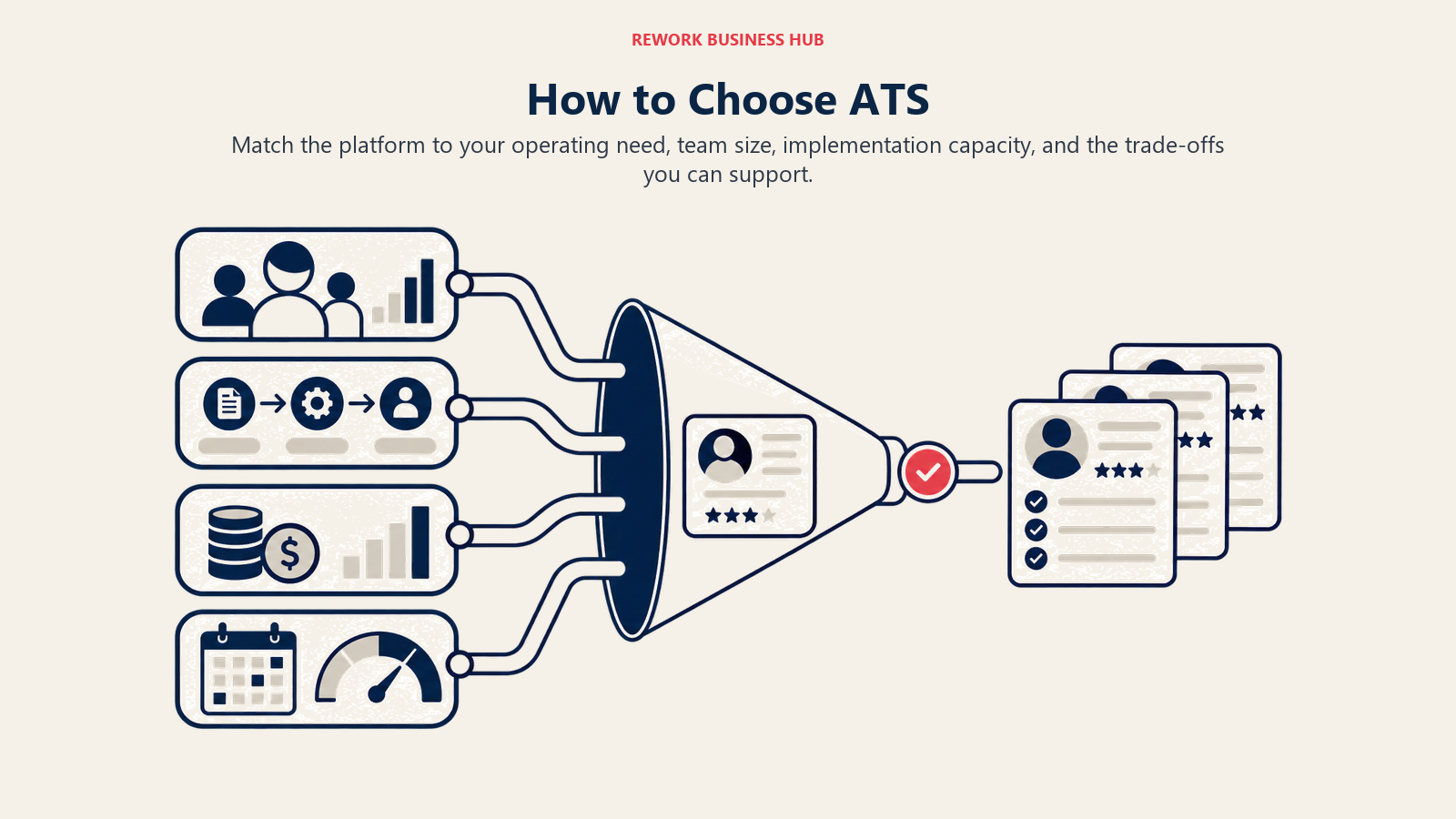
- How many people are you hiring for internally, and how many roles are open at once? A 30-person company filling 3 roles a quarter has a completely different problem than a 150-person company running 20 open reqs across four departments.
- Are you hiring for your own company, or placing candidates for clients? Corporate ATS platforms (Greenhouse, Workable, Ashby, Lever, JazzHR, and the rest of this list) and staffing/agency platforms (Bullhorn) solve different jobs. Buying the wrong category is the single most common mistake on this list.
- What system does a new hire land in the day they accept? If your ATS, HRIS, and time-tracking tool are three separate logins, someone is manually re-entering the same person three times. That gap is exactly what platforms like Rework and Rippling ATS are built to close.
There's a fourth question worth adding given how hiring volume has shifted: how much AI screening do you actually need? Organizations saw roughly 50 more applicants per role in 2025 than in 2024, averaging 257.6 applications per job, per Employ Inc.'s 2025 hiring benchmarks report. If your team is drowning in resumes, AI screening and matching (Workable, SmartRecruiters, Zoho Recruit's Zia-style tools) earns its keep fast. If you're hiring selectively for a handful of senior roles, structured interview kits matter more than screening automation.
Framework: By Team Size
| Team Size | What You Need | Best Fits |
|---|---|---|
| 1-20 people | Free or flat-fee ATS, fast setup, no admin overhead | Breezy HR, Zoho Recruit (free tier), Workable |
| 20-100 people | Structured pipeline plus collaborative scorecards | Workable, JazzHR, Recruitee, Ashby, Rework |
| 100-300 people | Full ATS with analytics and employer branding | Greenhouse, Ashby, Lever, Teamtailor, Pinpoint |
| 300-500 people | Consolidated hiring across multiple teams or locations | Rework, Greenhouse, Lever, SmartRecruiters |
| 500+ people | Enterprise configurability and dedicated TA ops support | iCIMS, SmartRecruiters, Greenhouse (Pro tier) |
Framework: By Hiring Motion
| Hiring Motion | What Matters Most | Best Fits |
|---|---|---|
| High-volume corporate hiring | Speed, AI screening, job ad reach | SmartRecruiters, iCIMS, Workable |
| Selective scale-up hiring | Structured interviews, analytics, reporting | Greenhouse, Ashby, Pinpoint |
| Staffing or agency placement | VMS integration, submittals, client billing | Bullhorn |
| Inbound, employer-branding-led | Career site quality, candidate experience | Teamtailor, Recruitee |
| Budget-first SMB hiring | Low cost, flat fee, fast setup | Breezy HR, JazzHR, Zoho Recruit |
| HR and hiring consolidation | One system for hiring, HR records, time tracking | Rework, Rippling ATS |
It also helps to know what happens after someone accepts an offer. Our day-one tool setup guide covers what should already be ready before a new hire's first login, and the remote hire onboarding guide is worth a look if your open roles skew distributed.
Stage Fit Matrix
| Tool | Under 20 | 20-100 | 100-300 | 300-500 | 500+ |
|---|---|---|---|---|---|
| Greenhouse | - | Possible | Strong fit | Strong fit | Possible |
| Workable | Strong fit | Strong fit | Possible | - | - |
| Lever | - | Possible | Strong fit | Strong fit | Possible |
| Ashby | Possible | Strong fit | Strong fit | Possible | - |
| SmartRecruiters | - | - | Possible | Strong fit | Strong fit |
| Rework | Possible | Strong fit | Strong fit | Strong fit | Possible |
| JazzHR | Strong fit | Strong fit | Possible | - | - |
| iCIMS | - | - | Possible | Strong fit | Strong fit |
| Bullhorn (agencies) | Strong fit | Strong fit | Strong fit | Possible | Possible |
| Recruitee | Strong fit | Strong fit | Possible | - | - |
| Breezy HR | Strong fit | Strong fit | - | - | - |
| Teamtailor | Possible | Strong fit | Strong fit | Possible | - |
| Zoho Recruit | Strong fit | Strong fit | Possible | - | - |
| Pinpoint | - | Possible | Strong fit | Strong fit | Possible |
| Rippling ATS | Possible | Strong fit | Strong fit | Possible | - |
Sizing and Persona Table
| Tool | Ideal Team Size | Primary Buyer Persona |
|---|---|---|
| Greenhouse | 50-1,000 employees | Head of Talent, VP People, TA Director |
| Workable | 10-200 employees | Founder, HR Manager, Office Manager doing hiring |
| Lever | 200-2,000 employees | Head of Recruiting, RevOps-adjacent TA lead |
| Ashby | 20-300 employees | Head of Talent at a VC-backed startup |
| SmartRecruiters | 200-5,000+ employees | VP Talent Acquisition, HRIS/SAP admin |
| Rework | 20-500 employees | COO, Head of People, founder-operator |
| JazzHR | 5-75 employees | Founder, Office Manager, first HR hire |
| iCIMS | 1,000-10,000+ employees | CHRO, VP Talent Acquisition, IT-partnered TA ops |
| Bullhorn | Staffing agencies, any size | Agency owner, Director of Recruiting Operations |
| Recruitee | 20-150 employees | HR Manager, People Ops lead |
| Breezy HR | 1-50 employees | Founder, first-time hiring manager |
| Teamtailor | 50-500 employees | Head of Talent Acquisition, Employer Branding lead |
| Zoho Recruit | 5-200 employees | HR Generalist, cost-conscious founder, staffing owner |
| Pinpoint | 100-500 employees | Head of Talent, DEI/Compliance-focused HR leader |
| Rippling ATS | 20-500 employees (existing Rippling customers) | HR Ops lead already running Rippling for payroll/IT |
1. Greenhouse: Structured Hiring and the Deepest Integration Marketplace
Greenhouse built its reputation on one idea: hiring decisions should follow a structured, repeatable process instead of gut feel. Scorecards, structured interview kits, and interview training tools push hiring teams toward consistent evaluation criteria across every candidate, which is a big part of why it became the default ATS for fast-growing tech companies through the 2010s and 2020s.
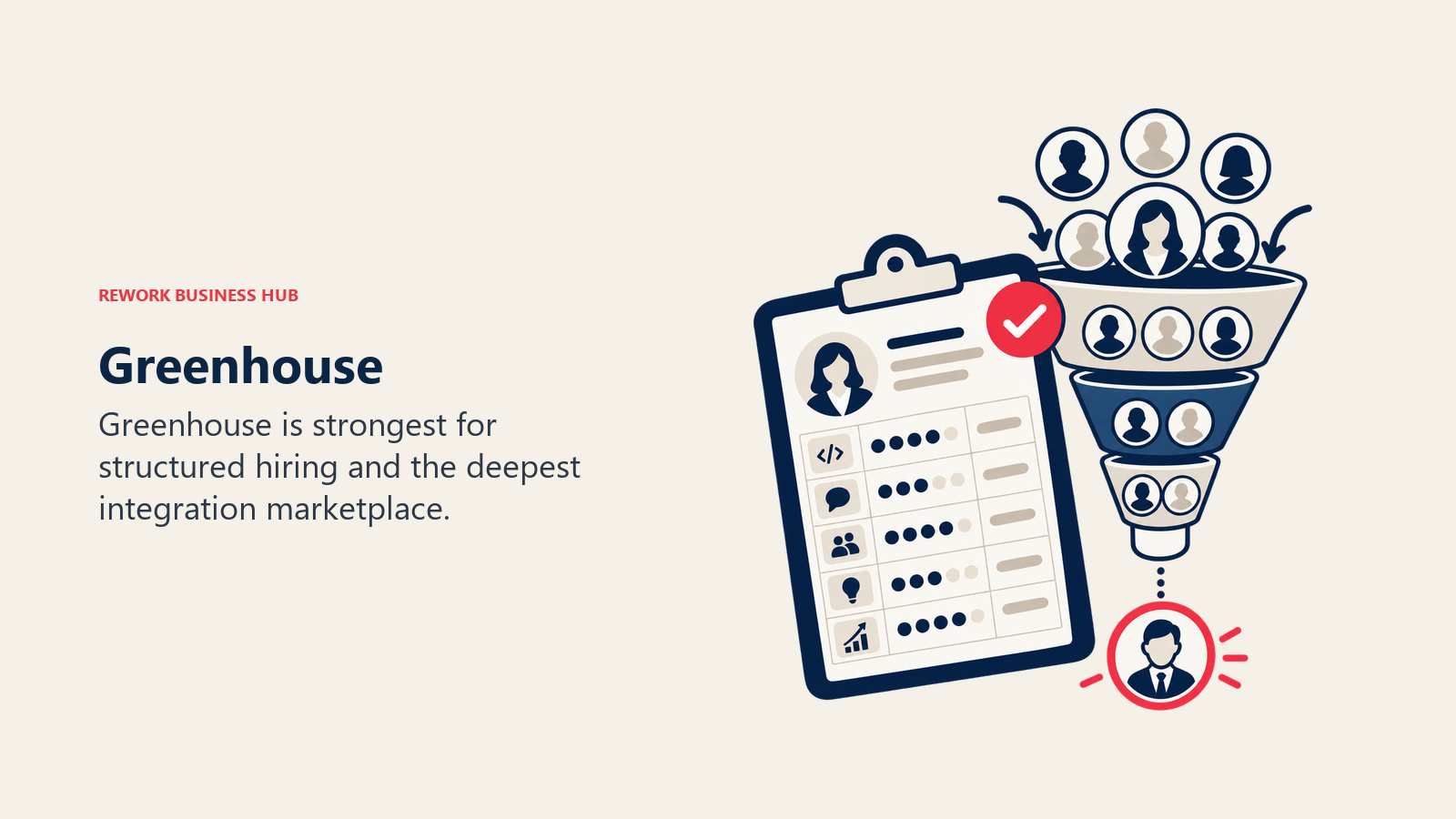
The platform's other strength is its marketplace: hundreds of integration partners across assessments, background checks, sourcing, and video interviewing plug in natively, so Greenhouse becomes the hub your other hiring tools connect to rather than one tool among several. Which of those partners is worth adding is its own decision: see best video interview software for the interviewing layer, and TestGorilla alternatives or HackerRank alternatives for skills and technical assessment.
The tradeoff is cost and complexity. Greenhouse doesn't publish pricing, and based on verified purchase data, small teams enter around $6,500 a year while mid-market contracts commonly land between $15,000 and $40,000 a year, with sourcing automation and onboarding sold as separate add-ons. If you've outgrown it or want to see what else competes at this level of structure, the best Greenhouse alternatives roundup and the direct Greenhouse vs Lever comparison both cover where each fits.
| What you get | What you don't |
|---|---|
| Structured interview kits and scorecards | No public pricing, custom quote required |
| Hundreds of native integrations | Add-on modules (onboarding, sourcing) cost extra |
| Strong reporting for DEI and pipeline health | Implementation and renewal costs climb fast |
| Trusted brand among tech scale-ups | Overkill for teams hiring under 10 roles a year |
Pricing: Custom quote; entry-level Core plan estimated around $6,500/yr for small teams, scaling to $15,000-$40,000/yr mid-market and $70,000+/yr enterprise, based on verified purchase benchmarking.
Best for: Scale-up and mid-market companies (50-1,000 employees) that want structured, bias-reducing hiring and are willing to pay for it.
2. Workable: AI Sourcing and All-in-One Hiring for SMBs
Workable's bet is that a small hiring team shouldn't need five separate tools to post a job, source candidates, screen them, and schedule interviews. The platform bundles job board distribution, AI-assisted sourcing, and candidate screening into one product, with pricing that scales by employee headcount rather than by recruiter seat.
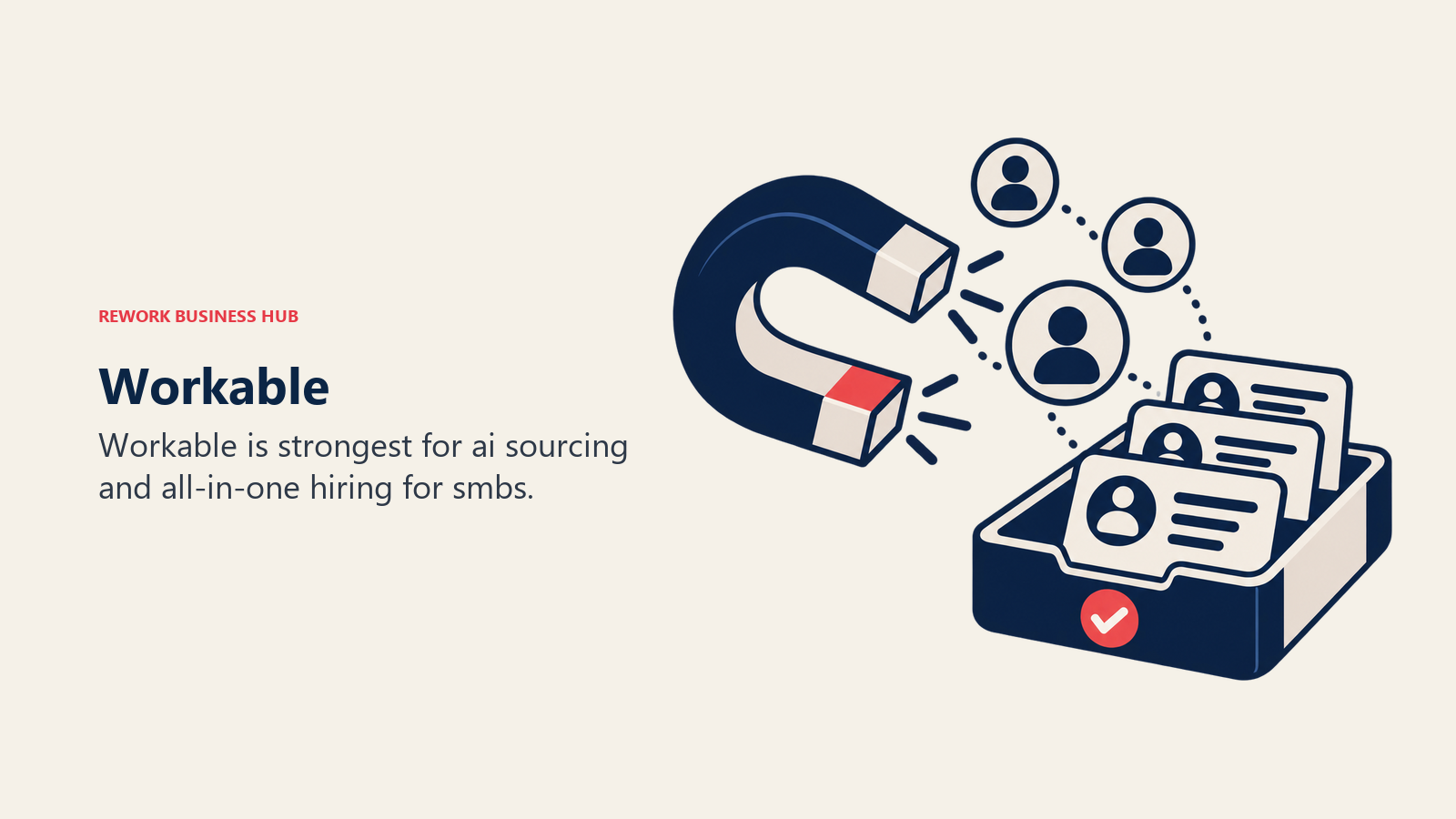
The AI layer has grown into a real differentiator: Workable's AI agent can source passive candidates and pre-screen inbound applicants against a role's requirements, credited on a pay-per-action basis on top of the plan price. For a founder or HR generalist running hiring solo, that automation replaces a chunk of what a dedicated sourcer would otherwise do.
The ceiling shows up in advanced workflow customization and enterprise-grade reporting, where purpose-built platforms like Greenhouse or Ashby go deeper. If you're comparing it against other options, see the best Workable alternatives for a direct look at where each fits.
| What you get | What you don't |
|---|---|
| AI sourcing and screening built into every plan | Pricing scales with employee headcount, not just users |
| Job distribution to 200+ boards from one post | Texting, video interviews, assessments are paid add-ons on lower tiers |
| Fast setup, minimal admin overhead | Less workflow customization than Greenhouse or Ashby |
| 15-day free trial, transparent published pricing | AI credits run out and cost extra past the included allotment |
Pricing: Standard $299/mo; Premier $599/mo; Enterprise $719/mo, billed annually with a 20% discount versus monthly; pricing bands scale with company headcount.
Best for: SMBs (10-200 employees) running hiring without a dedicated recruiter or sourcing team.
3. Lever: ATS Plus Candidate Nurture for Scaling Tech Teams
Lever's product philosophy, and the reason Employ Inc. kept it as a distinct brand rather than merging it into JazzHR, is that recruiting is a nurture problem as much as a tracking problem. LeverTRM (Talent Relationship Management) treats every candidate, hired or not, as a long-term relationship: passive candidates get added to nurture campaigns, past applicants resurface for new roles, and pipeline analytics track sourcing effectiveness over time rather than just per-req status.
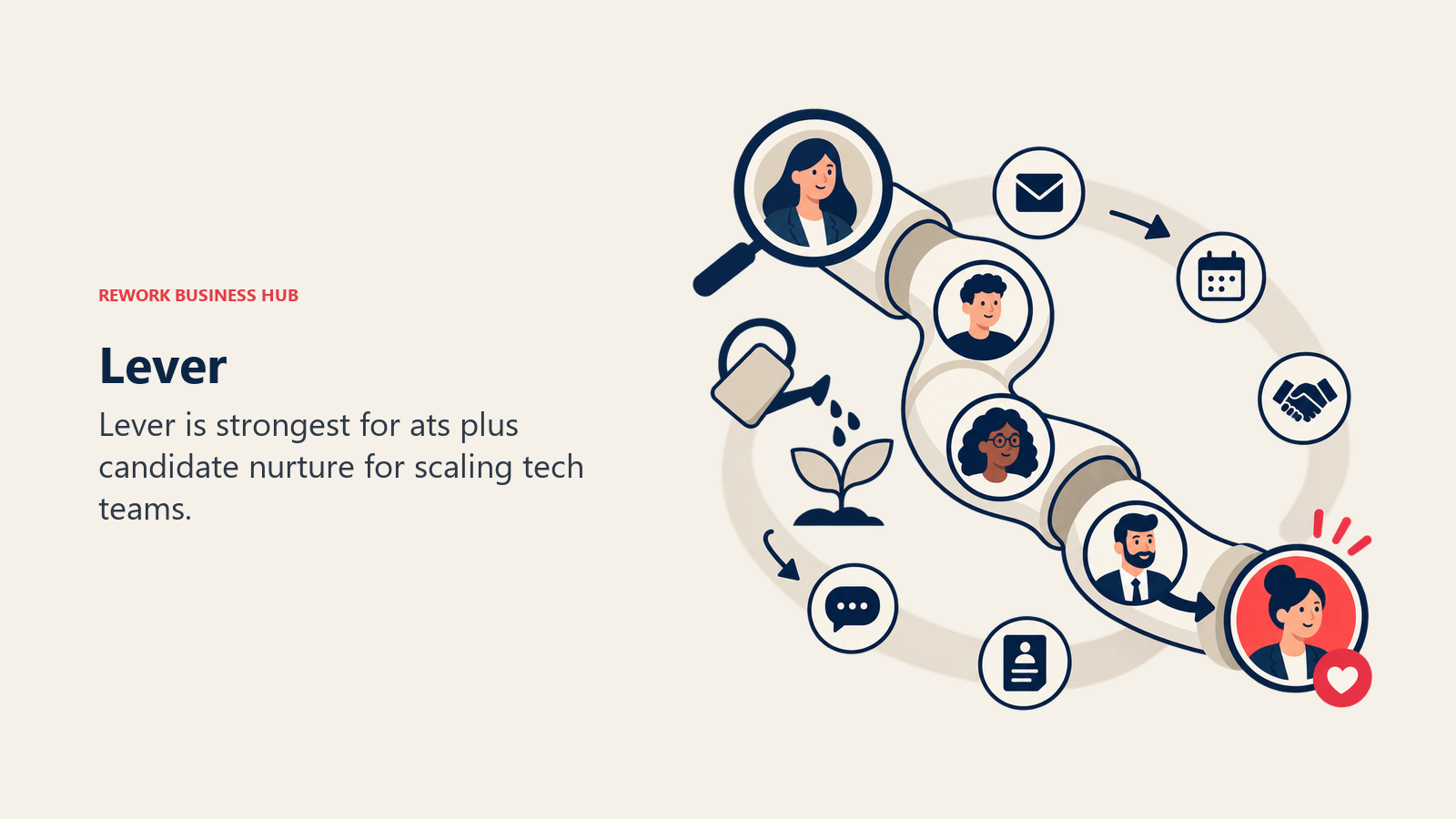
That nurture-first approach makes Lever a strong fit for mid-market tech companies with an actual sourcing function, not just a hiring manager posting jobs reactively. Analytics and reporting are genuinely a step above budget SMB tools.
The catch is pricing structure: Lever prices on total company headcount, not on the number of recruiters actually using the platform, so a 500-person company pays for all 500 employees even if five people touch Lever day to day. If you're weighing it against the category leader, our Lever alternatives roundup and the direct Greenhouse vs Lever comparison both cover where each wins.
| What you get | What you don't |
|---|---|
| Built-in candidate nurture and sourcing analytics (LeverTRM) | No public pricing, quote required |
| Strong reporting on pipeline and sourcing effectiveness | Priced on total company headcount, not recruiter seats |
| Employ Inc. backing means stable roadmap and support | Steeper learning curve than budget SMB tools |
| Solid native integrations for a mid-market platform | Not the cheapest option at small team size |
Pricing: Custom quote; third-party benchmarking puts a 200-employee company around $12,000/yr after negotiation, scaling to $35,000-$65,000/yr at 500-1,000 employees.
Best for: Mid-market tech companies (200-2,000 employees) with an active sourcing motion, not just reactive job posting.
4. Ashby: Native Analytics and Modern UX for Startups
Ashby's founding bet was that a modern ATS should ship with a CRM, interview scheduling, and real analytics natively, not stitched together from three point solutions and a BI dashboard. That bet resonated hard with VC-backed startups: Ashby's data model and reporting are consistently the strongest on this list for cohort analysis, pipeline conversion, and diversity reporting, without needing a separate analytics tool bolted on.
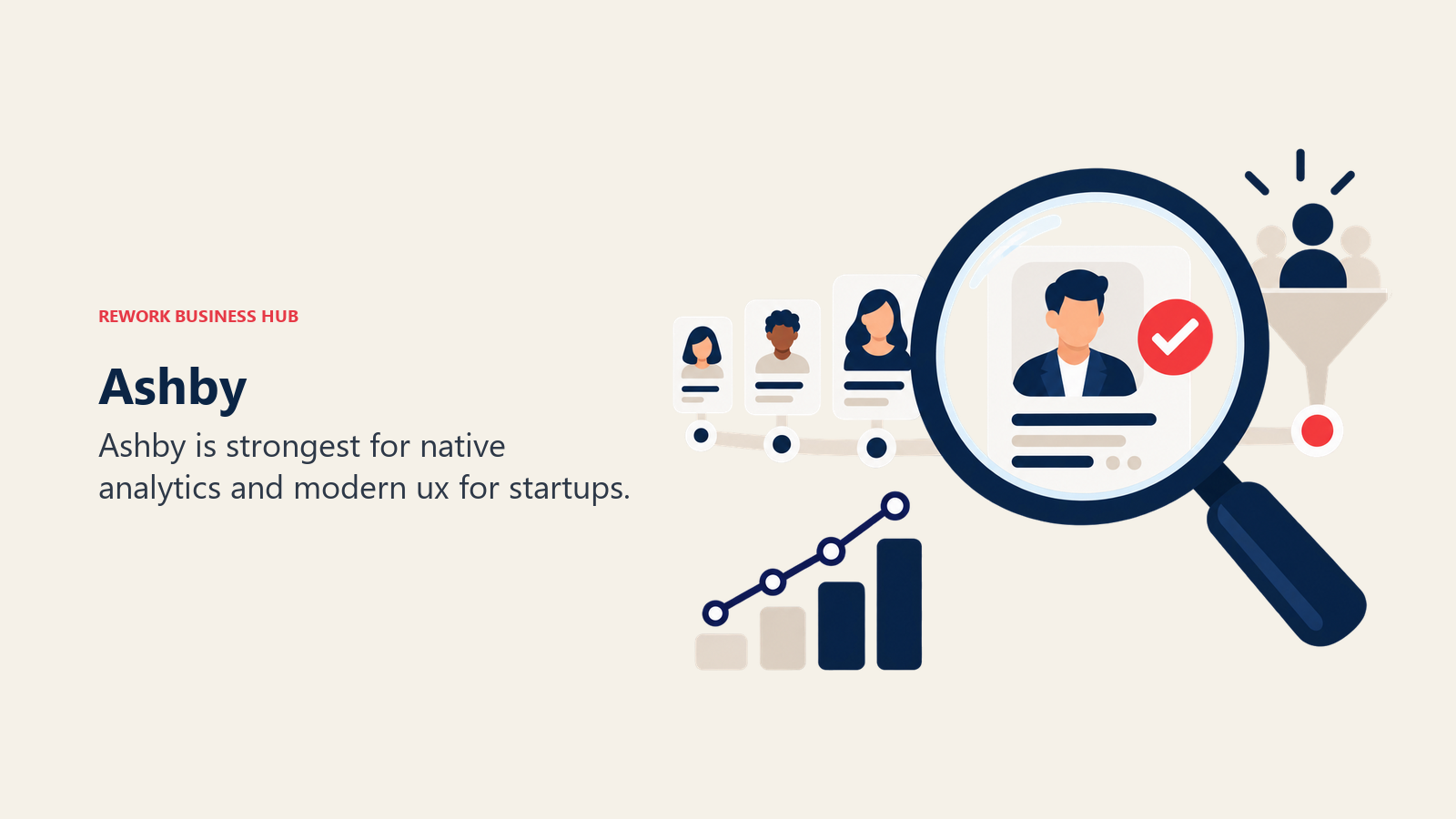
The pricing model is per-employee, which keeps things simple for a 50-person startup but scales aggressively once you cross the 100-employee mark into custom-quoted Plus and Enterprise tiers, where mid-market contracts commonly land between $30,000 and $120,000 a year depending on headcount band.
Ashby's community and support experience skew heavily toward tech, venture-backed hiring. Non-tech SMBs and companies without a dedicated recruiting function sometimes find the product opinionated in ways that assume a level of recruiting maturity they don't have yet. Teams that have hit the 100-employee ceiling or balked at the quoted Plus renewal can work through the swaps in best Ashby alternatives.
| What you get | What you don't |
|---|---|
| Native ATS, CRM, scheduling, and analytics in one product | Elevated-seat pricing for hiring managers and admins |
| Best-in-class reporting and diversity/DEI dashboards | Costs jump sharply once you cross 100 employees |
| Modern, fast interface that recruiters actually like | Skews toward tech/VC-backed hiring culture |
| Foundations plan has transparent published pricing | Plus and Enterprise tiers are custom quote only |
Pricing: Foundations $400/mo (up to 100 employees, 10% discount for annual); Plus and Enterprise custom-quoted, typically $30,000-$120,000/yr for 100-500 employees.
Best for: VC-backed startups and scale-ups (20-300 employees) that want ATS, CRM, and analytics in one modern product.
5. SmartRecruiters: Recruitment Marketing at Scale, Now Part of SAP
SmartRecruiters built its category position around recruitment marketing: AI-generated job ads, a candidate-facing experience that looks and feels like a consumer product, and CRM-style talent pools that treat sourcing as an ongoing marketing motion. High-volume hiring features like assessments and structured onboarding come standard on higher tiers.

The biggest fact to get straight about SmartRecruiters heading into 2026: SAP completed its acquisition of the company on September 11, 2025, and is integrating it with the SAP SuccessFactors HCM suite. Importantly, SAP's own announcement confirms SmartRecruiters continues to operate as a standalone recruiting product, interoperable with SuccessFactors and other HR systems, not folded away or shut down. If you're already an SAP or SuccessFactors shop, that's a real reason to shortlist it. If you're not, evaluate it purely on its own merits and keep an eye on how the roadmap evolves under new ownership.
The published Essential plan starts at $14,995, which puts a hard floor under this option that rules it out for most companies under 200 employees. For a fuller look at where mid-market teams go when that floor is too high, see best SmartRecruiters alternatives.
| What you get | What you don't |
|---|---|
| Recruitment marketing tools and AI job ad generation | Essential plan starts at $14,995/yr, no true SMB tier |
| CRM-style candidate pools for ongoing sourcing | Now owned by SAP, roadmap tied to SuccessFactors integration |
| Strong high-volume and structured onboarding features | Higher tiers are quote-only |
| 4,000+ organizations already on the platform | Overkill for selective, low-volume hiring |
Pricing: Essential from $14,995/yr (published); Professional, High Volume, and Complete tiers are custom quote.
Best for: Mid-market to enterprise employers (200-5,000+ employees) with high-volume hiring or an existing SAP footprint.
6. Rework: Hiring on the Same Platform as HR Records and Staff Time
Rework's E-Hiring, Interview, and Career modules are live inside the People product line, alongside HRIS, time & attendance, and timesheets. The pitch is narrower than "another ATS with more features": it's that the moment someone accepts an offer, they shouldn't disappear from one system and get manually re-entered into another. A candidate who moves through E-Hiring for screening and Interview for structured interview scheduling becomes an employee record inside the same platform that already tracks attendance, timesheets, and HR data, with no CSV export and re-import between systems.
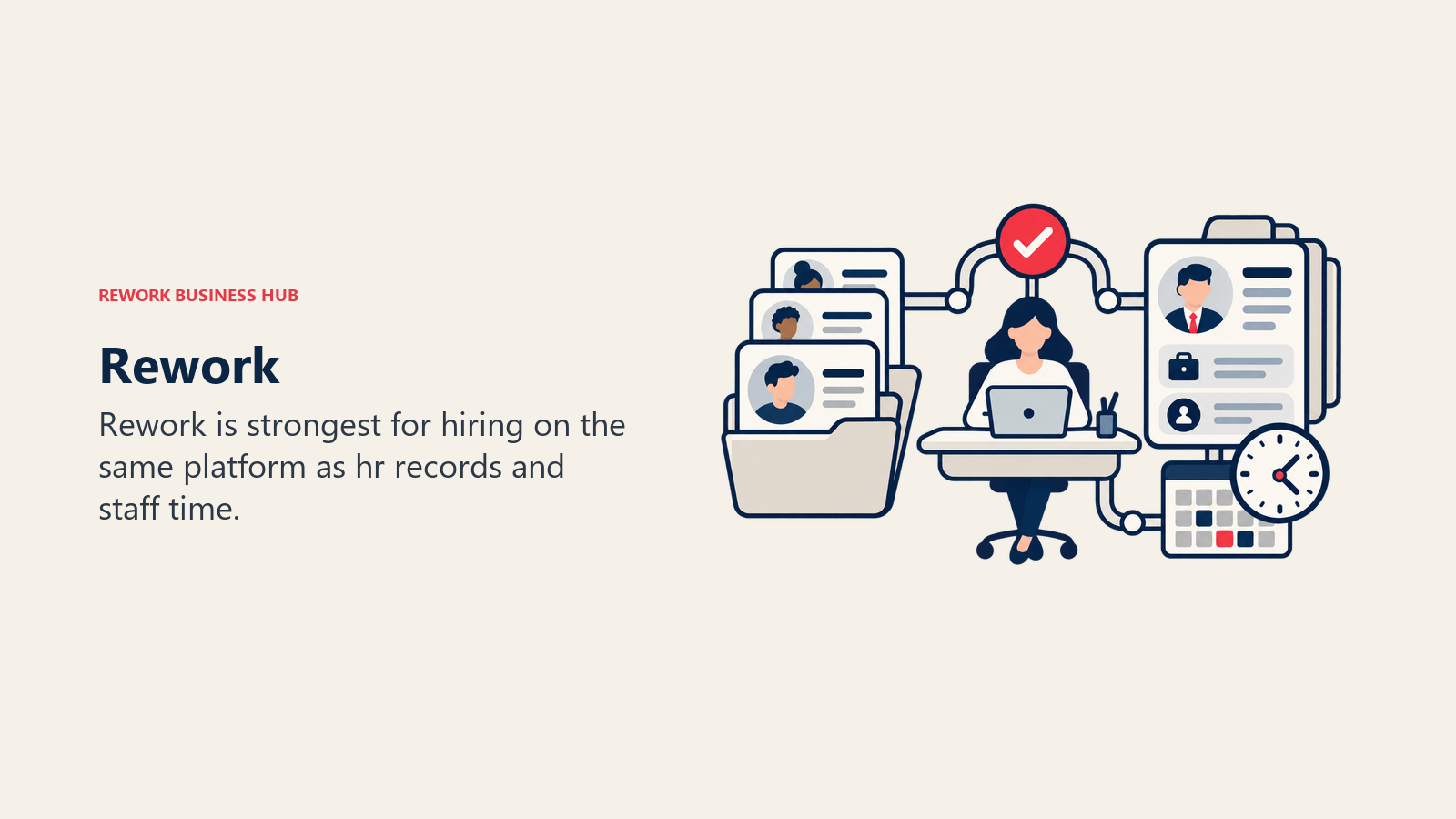
The Career module rounds this out with a branded careers page that feeds directly into the same pipeline, so job posts, applications, interviews, and the eventual employee record all share one data model instead of three connected tools.
Where Rework does not compete is recruiting depth. There's no CRM-style candidate nurture engine like Lever's, no staffing-agency VMS workflow like Bullhorn's, and no dedicated sourcing marketplace like Greenhouse's. If your hiring motion is high-volume agency placement or you need deep, ongoing passive-candidate sourcing as a core workflow, a specialist tool on this list will serve you better. Where Rework wins is consolidation: one login instead of three, and a new hire's HR record that already exists the day they start.
| What you get | What you don't |
|---|---|
| Hiring (E-Hiring, Interview, Career) unified with HRIS and time tracking | Not built for high-volume agency recruiting |
| New hire becomes an employee record automatically, no re-entry | No CRM-style deep candidate nurture engine |
| One platform instead of separate ATS + HRIS + time-tracking logins | Fewer integration marketplace partners than Greenhouse |
| Packages, not per-user licenses, across the People line | Not the deepest option for pure sourcing workflows |
Pricing: Quoted per organization; the People line (which includes E-Hiring, Interview, and Career) does not have published per-seat pricing. See rework.com/pricing for current details.
Best for: 20-500 person teams that want hiring, HR records, and staff time on one platform instead of stitching together an ATS, an HRIS, and a time-tracking tool.
Not ideal for: High-volume agency recruiting, or teams whose core need is a deep sourcing/CRM-style talent pipeline.
7. JazzHR: Flat-Fee ATS for Budget-Conscious Small Teams
JazzHR is Employ Inc.'s answer to the question "what if a small company just needs a real ATS without the enterprise price tag?" Every plan is a flat annual fee rather than a per-seat licence, which is genuinely rare in this category. A 5-person hiring team and a 50-person hiring team pay the same per-plan price as long as their job volume fits the tier, since JazzHR doesn't charge per seat.
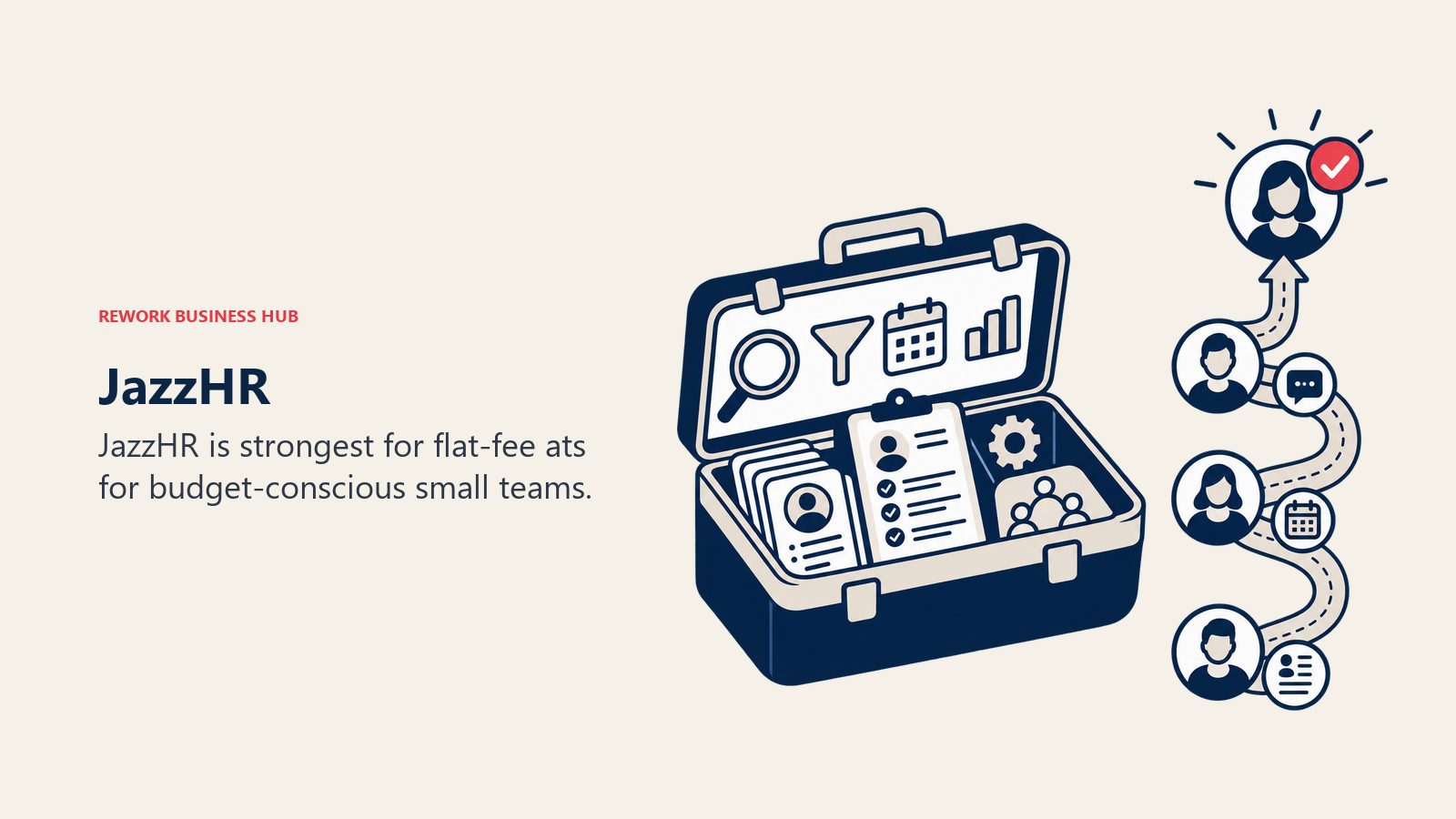
The tradeoff is job volume, not user count. The entry Hero plan caps out around 3 concurrent job postings a month, which is fine for a company hiring occasionally but becomes a real constraint the moment you're running more than a handful of open roles at once. The Plus tier raises that ceiling to 200 active jobs and adds AI-powered candidate matching and structured assessments.
JazzHR doesn't try to be a sourcing or CRM platform. It's a clean, structured ATS: post a job, collect and screen applicants, move them through a pipeline, extend an offer. For a first real ATS, that focus is a feature, not a gap. When job volume outgrows the tier you're on, best JazzHR alternatives compares the cheaper sideways moves against the mid-market step-ups.
| What you get | What you don't |
|---|---|
| Flat annual fee, not charged per seat | Entry tier capped around 3 concurrent job postings |
| Transparent, published pricing with a free trial | No built-in CRM or candidate nurture |
| AI candidate matching and structured assessments (Plus+) | Reporting is basic compared to Greenhouse or Ashby |
| Owned by Employ Inc., same parent as Lever | Job-volume caps make rapid growth expensive |
Pricing: Hero $1,000/yr; Plus $3,480/yr; Pro $5,508/yr, billed annually (monthly billing runs higher).
Best for: Small hiring teams (5-75 employees) that want a real structured ATS at a predictable, budget-friendly price.
8. iCIMS: Enterprise Talent Cloud for Complex, High-Volume Hiring
iCIMS built its position at the enterprise end of the market: a full "Talent Cloud" spanning recruiting, onboarding, internal mobility, and workforce analytics for employers with a dedicated talent acquisition operations function. For companies running thousands of hires a year across multiple business units, that breadth genuinely matters.
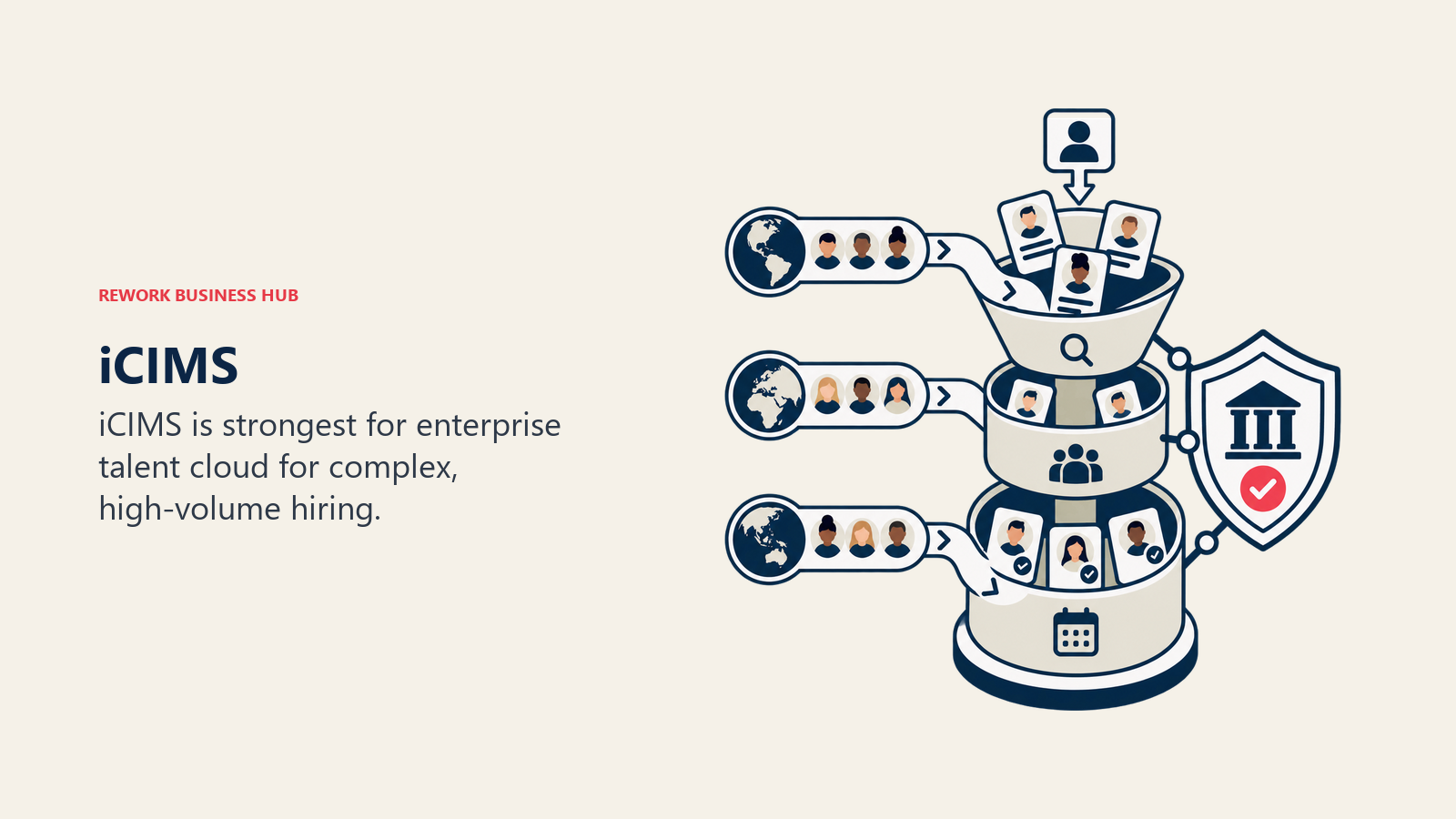
The honest reality for the SMB and mid-market audience this guide is written for: iCIMS is not built for you. Core ATS contracts for mid-market companies (200-1,000 employees) typically run $30,000-$60,000 a year, and enterprise accounts (1,000-10,000+ employees) with full Talent Cloud deployment commonly land at $80,000-$150,000+ a year once implementation, SMS, and support fees are added. Renewal increases have run as high as 40% in recent cycles, and the sales motion is built around upselling onboarding, CRM, and text-recruiting modules within the first year.
If you're under 500 employees, iCIMS is very likely more platform, and more cost, than you need. If a renewal quote is what sent you looking, best iCIMS alternatives covers the enterprise peers and the mid-market step-downs.
| What you get | What you don't |
|---|---|
| Deep configurability across the full talent lifecycle | Mid-market entry price around $30,000+/yr |
| Built for complex, high-volume, multi-business-unit hiring | Implementation runs $15,000-$25,000 on top of licensing |
| Strong workforce analytics and internal mobility tools | Renewal price increases have run as high as 40% |
| Established enterprise support and partner ecosystem | Overkill and overpriced for companies under 500 employees |
Pricing: Custom quote; mid-market (200-1,000 employees) typically $30,000-$60,000/yr; enterprise (1,000+ employees) $80,000-$150,000+/yr with full Talent Cloud.
Best for: Enterprise employers (1,000+ employees) with a dedicated TA operations team and complex, high-volume hiring needs.
9. Bullhorn: The ATS Built for Staffing Agencies, Not Corporate Hiring
Bullhorn solves a different problem than every other tool on this list, and it's worth being explicit about that up front: Bullhorn is built for staffing and recruiting agencies placing candidates with client companies, not for a company hiring for its own open roles. If you're a corporate HR lead reading this guide because you need to fill your own headcount, Bullhorn is very likely the wrong category of tool.
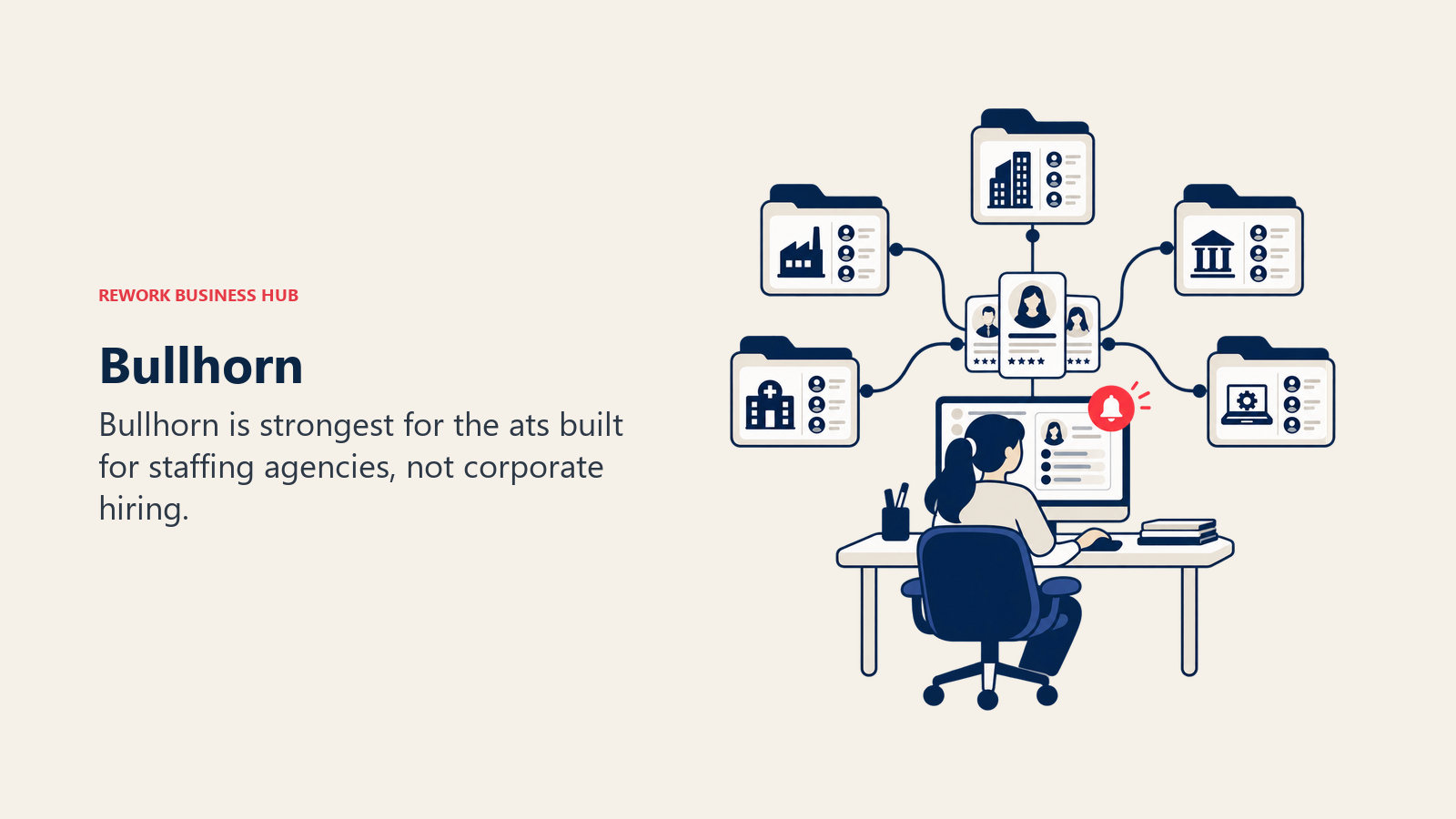
For agencies, though, Bullhorn is close to the industry standard. VMS (vendor management system) integrations, candidate submittals to client requisitions, timesheet and billing workflows, and an AI-assisted search and match layer are all built around the reality of placing people, tracking margin, and managing multiple client relationships at once, not tracking one company's internal pipeline.
Pricing is per-user and tiered: Starter at $99/user/month covers core applicant tracking and client management, Core at $165/user/month adds marketplace access and custom workflows, and Pro and Max tiers (custom quote) layer in AI search-and-match and agentic automation. Agencies weighing that per-seat cost against the alternatives can compare them in best Bullhorn alternatives.
| What you get | What you don't |
|---|---|
| Purpose-built for agency workflows: VMS, submittals, billing | Not designed for in-house corporate hiring teams |
| AI-assisted search and match for candidate-to-role fit | Per-user pricing gets expensive fast at agency scale |
| Deep integration with staffing-industry VMS platforms | No free trial, quote-based higher tiers |
| Timesheet and invoicing options for full front-to-back ops | Steeper learning curve than SMB-focused ATS tools |
Pricing: Starter $99/user/mo; Core $165/user/mo; Pro and Max custom quote.
Best for: Staffing and recruiting agencies of any size placing candidates for client companies, not employers hiring internally.
10. Recruitee: Collaborative Hiring for People-Ops-Led Teams
Recruitee's product philosophy centers on collaboration: hiring managers, interviewers, and recruiters all work from the same visual pipeline with structured scorecards, so feedback doesn't get lost in email threads or Slack messages after every interview round. The kanban-style pipeline and clean UI make it one of the easier tools on this list to roll out without heavy training.
It's a strong fit for people-ops-led teams (companies where HR, not a dedicated recruiting function, owns hiring) that want structure without enterprise complexity. Job slots are unlimited per active role rather than capped, which removes one of the more common budget surprises on cheaper SMB tools.
The tradeoff is that Recruitee doesn't publish pricing, so budgeting requires a sales conversation, and third-party benchmarking suggests entry plans start in the $199-$399/mo range depending on job slot volume, scaling higher for mid-market teams.
| What you get | What you don't |
|---|---|
| Collaborative pipeline with structured scorecards | No published pricing, quote required |
| Unlimited job slots on active plans | Sourcing and CRM depth well below Lever or Ashby |
| Clean UI, fast rollout without heavy training | Estimated pricing puts it mid-pack, not the cheapest |
| Strong fit for European and people-ops-led teams | Limited advanced analytics vs Greenhouse or Ashby |
Pricing: No published price. Third-party benchmarking reports the entry Start plan (5 active job posts) around €301/mo on annual billing, and Tellent states a one-year minimum commitment. For where teams go when that quote lands high, see Recruitee alternatives.
Best for: People-ops-led teams (20-150 employees) that want a collaborative, structured pipeline without heavy admin overhead.
11. Breezy HR: The Free-Forever ATS for a First Hire
Breezy HR's pitch is straightforward: a real, visual, drag-and-drop hiring pipeline that a very small team can run for free, permanently, not on a time-limited trial. The Bootstrap plan supports one active position with unlimited users at no cost, which makes it one of the lowest-friction ways for a founder or first HR hire to move off a spreadsheet.
Paid tiers keep the flat-fee, unlimited-user structure (a real advantage over per-seat pricing when you have a lot of hiring managers and few recruiters) and layer in automated reference checking, e-signatures, and multiple recruiting pipelines as you move up from Startup to Growth to Business.
The honest ceiling: Breezy's AI and sourcing tools are thinner than Workable's, and the more advanced integrations (HRIS connections, priority support) sit behind the top Business and custom Pro tiers.
| What you get | What you don't |
|---|---|
| Permanent free tier, not a trial (Bootstrap) | AI and sourcing tools are thinner than Workable |
| Flat monthly fee, unlimited users on every plan | Advanced HRIS integrations gated to top tiers |
| Drag-and-drop visual pipeline, fast to learn | Free tier limited to 1 active position |
| Transparent published pricing | Add-ons (SMS, onboarding, AI credits) cost extra |
Pricing: Bootstrap free (1 active position); Startup $157/mo; Growth $273/mo; Business $439/mo (all annual billing; monthly rates run higher); Pro custom quote.
Best for: Very small teams (1-50 employees) hiring for the first time without a budget for a full-featured ATS. Once one active position stops being enough, Breezy HR alternatives compares the next step up.
12. Teamtailor: Career Sites and Employer Branding First
Teamtailor's differentiator is that it treats the careers page as the product, not an afterthought bolted onto an ATS. The built-in career-site builder lets non-technical HR teams ship a genuinely good-looking, on-brand jobs page, and the ATS workflow underneath handles pipeline, scorecards, and collaboration once applications come in.
That focus makes Teamtailor a strong pick for mid-market companies in competitive talent markets where candidate experience and employer brand materially affect who applies, not just how efficiently you process applicants. Pricing is company-size based with unlimited users, so there's no per-seat penalty for involving every hiring manager.
The limitation is the flip side of the focus: Teamtailor is not built for heavy outbound sourcing or CRM-style talent pipelines. If most of your hiring depends on proactively finding passive candidates rather than attracting inbound applicants, Lever or Ashby will serve that motion better.
| What you get | What you don't |
|---|---|
| Best-in-class career site builder and employer branding tools | Light on outbound sourcing and CRM depth |
| Unlimited users, no per-seat pricing penalty | No published pricing, quote-based only |
| GDPR-forward, strong for EU and EU-adjacent hiring | Not built for high-volume or agency-style recruiting |
| Clean ATS workflow underneath the career-site layer | Third-party estimates put mid-market cost at $6,000-$15,000/yr |
Pricing: Custom quote; third-party benchmarking estimates range from roughly $2,750/yr for small teams to $72,000+/yr at scale, with most mid-market employers paying $6,000-$15,000/yr.
Best for: Brand-conscious mid-market employers (50-500 employees) where career site quality and candidate experience drive inbound applications. If the quote-only model is the sticking point, Teamtailor alternatives lines up the options that publish a rate card.
13. Zoho Recruit: The Cheapest Full-Featured Option
Zoho Recruit's value proposition is straightforward: a genuinely full-featured ATS at a fraction of what Greenhouse, Ashby, or Lever charge, backed by the wider 45+ app Zoho ecosystem if you're already using Zoho Books, Zoho Desk, or Zoho CRM elsewhere in the business. A forever-free plan (one active job per recruiter license) makes it one of the easiest ways to try a real ATS at zero cost.
The product ships in two distinct editions built on the same price points but different job caps: Corporate HR (for companies hiring internally) and Staffing Agency (for recruiting firms placing candidates), which is worth knowing before you sign up so you land on the right one. Paid tiers add AI-assisted candidate matching, branded career sites, and recruitment automation as you move up from Standard to Enterprise.
The honest tradeoff is polish. Zoho Recruit's interface feels more dated than Workable's, Ashby's, or Teamtailor's, and while the feature list is deep, individual modules aren't best-in-class the way a purpose-built competitor's single focus area often is.
| What you get | What you don't |
|---|---|
| Forever-free plan plus low-cost paid tiers | Interface feels dated next to modern competitors |
| Two editions: Corporate HR and Staffing Agency | Free plan has no resume parsing or AI tools |
| Deep Zoho ecosystem integration (45+ apps) | Add-ons (video interviews, extra storage) inflate real cost |
| AI candidate matching and automation on paid tiers | Not best-in-class in any single category |
Pricing: Corporate HR edition: Free (1 active job per recruiter license), Standard $25/recruiter/mo and Enterprise $50/recruiter/mo, both billed annually, with 10 and 20 active jobs per license respectively. The Staffing Agency edition is priced separately on its own page. When the per-license job cap starts driving the bill, Zoho Recruit alternatives works through the trade-offs.
Best for: Cost-conscious SMBs (5-200 employees), especially those already using other Zoho products or running dual corporate and staffing hiring.
14. Pinpoint: Bias-Reduction and DEI Reporting for Mid-Market Hiring
Pinpoint's positioning centers on structured, unbiased hiring workflows and the compliance reporting that goes with them: anonymized screening options, structured interview scorecards, and diversity reporting built to hold up to an audit, not just look good in a dashboard demo. For mid-market employers under real DEI or compliance pressure, that focus is the whole reason to shortlist it over a more generic ATS.
The other differentiator is support: Pinpoint bundles white-glove onboarding and implementation help into every plan rather than selling it as a separate line item, which matters if your team doesn't have the bandwidth to self-serve a new ATS rollout.
Pricing is company-size based with unlimited seats, which is convenient but also means Pinpoint tends to price at a premium relative to peers at the same headcount, especially against budget SMB options like Breezy HR or JazzHR.
| What you get | What you don't |
|---|---|
| Structured bias-reduction workflows and DEI reporting | Premium price relative to company size |
| White-glove onboarding included, not a paid add-on | No published pricing, quote required |
| Unlimited seats, company-size based pricing | Smaller integration ecosystem than Greenhouse |
| Strong for compliance-heavy hiring processes | Overkill if DEI/compliance reporting isn't a priority |
Pricing: Custom quote; third-party benchmarking estimates the Growth plan around $345/mo on annual billing, scaling to $1,200+/mo for Enterprise.
Best for: Mid-market employers (100-500 employees) prioritizing structured, auditable, bias-reducing hiring workflows.
15. Rippling ATS: Hiring Folded Into Your Existing HR Platform
Rippling's recruiting module isn't sold as a standalone ATS, and that's the entire point of including it here. It's an add-on to Rippling's broader "employee graph" platform, which already handles payroll, benefits, IT device management, and app provisioning. The pitch: the moment a candidate becomes a hire inside Rippling's ATS, that same record can trigger payroll setup, a laptop order, and app access provisioning automatically, because it's all one underlying employee record rather than a handoff between systems.
For a company already running core HR, IT, or payroll on Rippling, that unification is genuinely valuable and mirrors what Rework offers on the People side. For a company evaluating ATS options independently of their broader HR stack, buying into Rippling's recruiting module means buying into the whole Rippling platform, which is a much bigger commitment than picking a standalone ATS. If you already run Rippling for HR and want the fuller picture, our Rippling alternatives roundup and the broader best HR software guide both cover where it fits against the rest of the HRIS category.
| What you get | What you don't |
|---|---|
| Hire-to-provision automation across payroll, IT, and HR | Not sold as a standalone ATS |
| One employee record from application through onboarding | Requires buying into the broader Rippling platform |
| Module pricing scales with existing Rippling footprint | Module-level prices aren't published |
| Strong fit for IT-heavy, distributed teams | Limited value if you're not already a Rippling customer |
Pricing: Quote on request. Rippling publishes no rates at all: its pricing page asks which services you need and returns a custom quote, and the recruiting module is sold as an add-on to whatever platform bundle you land on. Treat any per-employee figure you see quoted elsewhere as unconfirmed.
Best for: Companies (20-500 employees) already running Rippling for payroll, IT, or core HR that want hiring in the same system.
ATS Buying Mistakes to Avoid
Most failed ATS rollouts aren't a software problem. They're a fit problem that showed up in month two once the free trial excitement wore off.
| Mistake | What It Looks Like | What to Do Instead |
|---|---|---|
| Buying an agency tool for corporate hiring (or vice versa) | An in-house HR team demos Bullhorn because "it's the industry standard" | Confirm whether you're hiring for yourself or placing candidates for clients before you demo anything |
| Ignoring headcount-based pricing traps | A 300-person company gets a Lever or Ashby quote scaled to total employees, not recruiters | Ask every vendor directly: is pricing based on users, recruiters, or total company headcount? |
| Buying enterprise depth you don't need yet | A 60-person company signs an iCIMS contract "to grow into it" | Buy for your current hiring volume plus roughly 18 months of growth |
| Underestimating implementation and add-on costs | Budgeting only the sticker price, then getting hit with onboarding, SMS, or AI-credit add-ons | Ask for the fully loaded first-year cost, not just the base plan price |
| Treating the ATS and HRIS as permanently separate | New hires get re-entered by hand into payroll and time tracking after every offer | Prioritize platforms where the hire becomes an employee record automatically |
| Choosing a career-site tool when you need a sourcing tool | Picking Teamtailor when your real gap is proactive outbound sourcing | Identify whether your bottleneck is inbound volume or outbound reach before shortlisting |
| Skipping the candidate-experience test | Nobody on the hiring team actually fills out the application as a candidate would | Apply to your own open role through the new ATS before signing the contract |
Before you finalize a shortlist, it's worth reading up on skills-based hiring if your evaluation criteria still lean heavily on resumes and pedigree over demonstrated ability. It changes what you actually need an ATS to score and report on.
Decision Framework
| If you need... | Pick... | Why |
|---|---|---|
| Structured, bias-reducing hiring at a scale-up | Greenhouse | Deepest interview structure and integration marketplace |
| AI-assisted sourcing without a dedicated recruiter | Workable | Sourcing, screening, and job distribution built in |
| ATS plus ongoing candidate nurture for tech hiring | Lever | LeverTRM treats sourcing as a long-term relationship |
| Native analytics and a modern UX for a VC-backed startup | Ashby | ATS, CRM, and reporting in one product, built for that audience |
| High-volume recruitment marketing at scale | SmartRecruiters | AI job ads, CRM-style talent pools, now SAP-backed |
| Hiring on the same platform as HR records and staff time | Rework | E-Hiring, Interview, and Career unified with HRIS and time tracking |
| A real ATS at the lowest predictable flat fee | JazzHR | Flat annual fee, transparent published pricing |
| Enterprise-grade configurability for complex hiring | iCIMS | Deep Talent Cloud for 1,000+ employee organizations |
| Placing candidates for client companies, not hiring internally | Bullhorn | Purpose-built for agency VMS, submittals, and billing |
| A collaborative pipeline for a people-ops-led team | Recruitee | Structured scorecards, low admin overhead |
| A free-forever first ATS | Breezy HR | Permanent free tier, flat fee, unlimited users |
| A career site that actually converts inbound applicants | Teamtailor | Best-in-class employer branding and career-site builder |
| The cheapest full-featured ATS | Zoho Recruit | Forever-free tier and low per-user pricing |
| Auditable, bias-reducing hiring with white-glove support | Pinpoint | Structured DEI reporting built in, onboarding included |
| Hiring folded into your existing HR/IT/payroll platform | Rippling ATS | Hire-to-provision automation for existing Rippling customers |
What to Do Next
Narrow your list to two tools before you book a demo: one that fits your hiring volume and budget, and one you're using as a stretch comparison a tier up. Run each through the same test: post one real (or realistic draft) role, walk through the candidate application yourself, and price out the fully loaded first-year cost, not just the sticker price. The tool your hiring managers will actually use every week beats the one with the longest feature list.
If your team is running hiring, HR records, and staff time in three disconnected systems and the real pain is the gaps between them rather than any single tool's feature set, start with Rework and see what E-Hiring, Interview, and Career look like unified with the rest of the People platform.

Principal Product Marketing Strategist
On this page
- Key Facts
- Quick Comparison Table
- Untangling the Employ Inc. Brands
- How to Choose an ATS in 2026
- Framework: By Team Size
- Framework: By Hiring Motion
- Stage Fit Matrix
- Sizing and Persona Table
- 1. Greenhouse: Structured Hiring and the Deepest Integration Marketplace
- 2. Workable: AI Sourcing and All-in-One Hiring for SMBs
- 3. Lever: ATS Plus Candidate Nurture for Scaling Tech Teams
- 4. Ashby: Native Analytics and Modern UX for Startups
- 5. SmartRecruiters: Recruitment Marketing at Scale, Now Part of SAP
- 6. Rework: Hiring on the Same Platform as HR Records and Staff Time
- 7. JazzHR: Flat-Fee ATS for Budget-Conscious Small Teams
- 8. iCIMS: Enterprise Talent Cloud for Complex, High-Volume Hiring
- 9. Bullhorn: The ATS Built for Staffing Agencies, Not Corporate Hiring
- 10. Recruitee: Collaborative Hiring for People-Ops-Led Teams
- 11. Breezy HR: The Free-Forever ATS for a First Hire
- 12. Teamtailor: Career Sites and Employer Branding First
- 13. Zoho Recruit: The Cheapest Full-Featured Option
- 14. Pinpoint: Bias-Reduction and DEI Reporting for Mid-Market Hiring
- 15. Rippling ATS: Hiring Folded Into Your Existing HR Platform
- ATS Buying Mistakes to Avoid
- Decision Framework
- What to Do Next