Best iCIMS Alternatives in 2026: 15 Tools for Enterprise and Mid-Market Talent Teams
Turn this article into takeaways for your work.


Each assistant summarizes the article only for you and suggests best practices for your work.
Updated September 2026
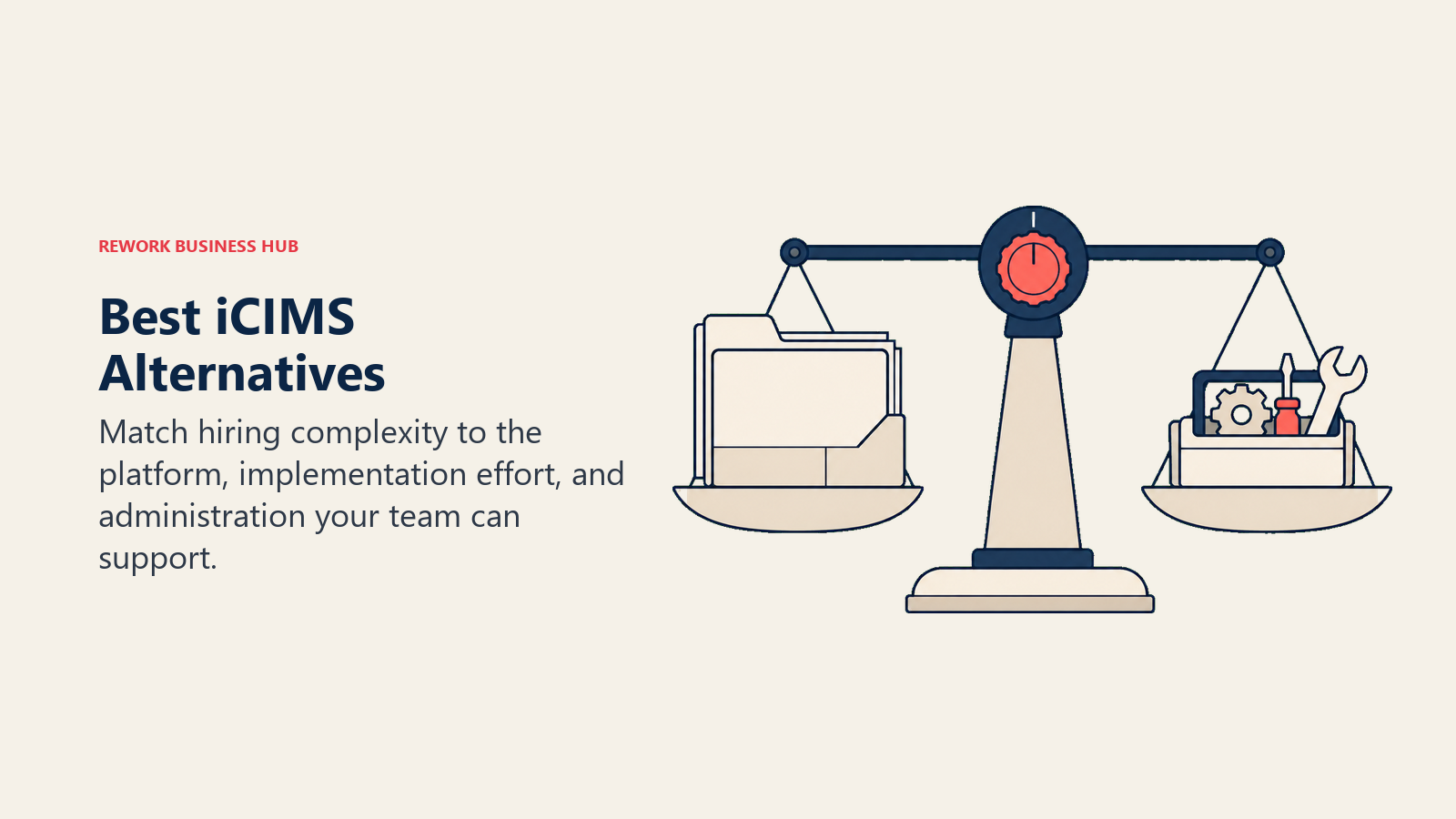
iCIMS is the Talent Cloud a lot of enterprise TA teams standardize on, and it earns that position honestly: broad configurability, deep analytics, and an integration marketplace built for hiring across multiple business units. The trouble shows up at renewal. iCIMS publishes no pricing anywhere, prices module by module, and asks companies at 200 to 2,000 employees to carry an implementation and configuration burden that usually needs a dedicated TA ops function. This list evaluates 15 alternatives on published pricing where it exists, structured-hiring depth, and honest fit by size, checked in September 2026.
Give iCIMS its due first. More than 4,400 companies across 200 countries, a quarter of the Fortune 500, run hiring through it (iCIMS, March 2026). For a global enterprise running dozens of workflows across business units, that configurability is genuinely earned. Below that scale, it's a different calculation, and that's where this list matters.
Key Facts
Key Facts: Enterprise ATS Cost and Adoption
- More than 4,400 companies across 200 countries, including a quarter of the Fortune 500, run hiring through iCIMS. (iCIMS, March 2026)
- The average US cost per hire climbed to $5,475 for non-executive roles in 2025, up from $4,129 in 2016. (SHRM, 2025)
- 79% of IT leaders encountered a price increase at renewal in the past 12 months, and a routine 5 to 7% bump is now commonly 15% or higher. (Zylo 2026 SaaS Management Index, 2026)
- Enterprise SaaS price inflation hit 16.4% in June 2026, the highest monthly rate on record and roughly five times consumer inflation across G7 economies. (Vertice, 2026)
Quick Comparison Table
This list runs enterprise-first, then narrows toward mid-market and SMB. Rework sits at #6, winning on consolidating hiring with HR rather than out-configuring iCIMS. For the full shortlist, see Best Applicant Tracking Systems in 2026.
| Tool | Best For | Starting Price | Key Strength | Key Limitation |
|---|---|---|---|---|
| Workday Recruiting | Existing Workday HCM shops | Not sold standalone; reported $100,000-$500,000+/yr as part of HCM | One data model across HR, payroll, and hiring | No standalone purchase; full HCM commitment required |
| SAP SuccessFactors Recruiting | Existing SAP HCM shops | Custom quote (reported $6-$38 PEPM by module) | Native path into SuccessFactors HCM | Long enterprise sales cycle, no published price |
| SmartRecruiters | Recruitment marketing at scale | From $14,995/yr (Essential, published) | AI sourcing, now backed by SAP's roadmap | Higher tiers are quote-only |
| Phenom | Candidate experience and talent marketplace | Custom quote, no published figures | AI-driven talent experience across career sites | Not primarily an ATS; heaviest for pure requisition tracking |
| Avature | Highly configurable enterprise CRM plus ATS | Custom quote (reported avg. contract ~$465,000/yr, per Vendr) | Deepest configurability and professional services support | Long, services-heavy implementation |
| Rework | Hiring unified with HR and timesheets | Quote on request (rework.com/pricing) | E-Hiring, Interview, Career on the HRIS platform | Not a Talent Cloud replacement for full enterprise depth |
| Greenhouse | Structured hiring without iCIMS's scale | No published price (reported $5,100-$12,000+/yr small teams; Vendr median $26,587) | Interview kits, strong integration marketplace | Also tiered with paid add-ons, own renewal creep |
| Lever | Recruiting CRM inside the ATS | Custom quote (reported ~$3,500-$15,000+/yr) | Talent nurture built into the pipeline | No public pricing at any tier |
| Ashby | Native analytics without a BI add-on | $400/mo (Foundations, up to 100 employees) | Best-in-class built-in reporting | Priciest entry point among mid-market picks |
| Workable | Transparent-priced mid-market swap | $299/mo, $3,588/yr annual (Standard) | Published pricing at every tier | Add-ons (video, SMS) push cost up fast |
| Teamtailor | Employer branding and career sites | Custom quote, no published figures | Best career site builder on this list | No pricing transparency at all |
| Pinpoint | Candidate-first hiring, blind screening | Custom quote (reported ~$345-$1,200+/mo) | Strong candidate experience, unlimited seats | No public rate card, annual contracts only |
| JazzHR | Budget-conscious small and mid-size teams | $1,000/yr (Hero, billed annually) | Flat annual fee, not priced per seat | Hard 3-job cap on the entry tier |
| Breezy HR | Free-to-start, flat-fee ATS | Free (1 job); $157/mo (Startup, annual) | Flat pricing regardless of user count | HRIS integrations gated to the top tier |
| Zoho Recruit | Teams already in the Zoho ecosystem | Free tier; $25/user/mo (Standard, annual) | Very affordable, deep Zoho integration | AI features gated behind Professional |
Pricing note: Most enterprise tools here, iCIMS included, publish nothing. Figures marked "custom quote" or "reported" come from vendor research current as of September 2026; confirm numbers with the vendor before you budget.
What changed in 2026: SAP completed its SmartRecruiters acquisition in September 2025 and keeps integrating it with SuccessFactors. SaaS renewal inflation kept climbing, hitting 16.4% in June 2026, the highest monthly reading on record. And AI sourcing moved from premium feature to table stakes across nearly every tool here, iCIMS included.
1. Workday Recruiting: The Other Enterprise Talent Platform
Workday Recruiting is the module enterprises compare against iCIMS most often, the other name on every enterprise HCM shortlist. It isn't sold standalone; it ships as part of Workday HCM, so choosing it means adopting Workday's entire HR, payroll, and talent data model, not just an ATS.
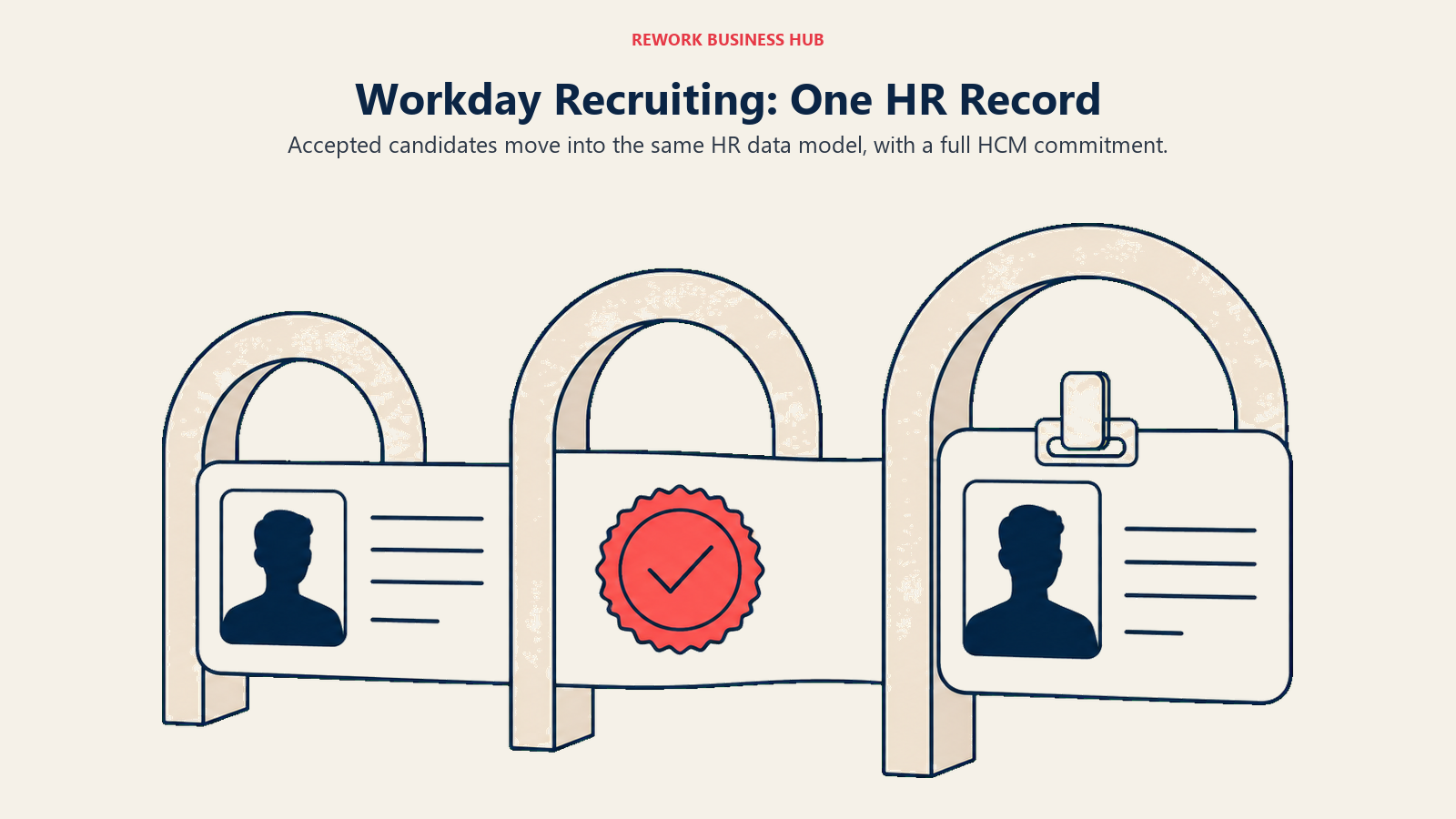
That's the pitch and the catch. A candidate who accepts an offer becomes a Workday employee record natively, no export and re-import, the exact friction some iCIMS shops are trying to solve. But Workday has no public pricing page (workday.com/en-us/pricing.html returns nothing); third-party researchers report full HCM deployments commonly running $100,000-$500,000-plus a year, recruiting bundled in.
| What you get | What you don't |
|---|---|
| One data model across HR, payroll, and recruiting | A standalone recruiting purchase |
| Native new-hire to employee-record handoff | Any published pricing at all |
| Strong analytics tied to workforce planning | A fast, low-overhead implementation |
| Deep enterprise HCM feature set | Fit for teams that only want an ATS |
Pricing: Not sold standalone; reported $100,000-$500,000-plus a year as part of a full Workday HCM deployment.
Best for: Enterprises already running, or planning to run, Workday HCM company-wide. Not ideal for: Any team that wants to buy recruiting alone without the full HR suite.
2. SAP SuccessFactors Recruiting: The HCM-Native Enterprise Option
SAP SuccessFactors Recruiting is the closest peer to Workday Recruiting: a full HCM suite with hiring built in, sold to enterprises that want one vendor across the employee lifecycle. Its pricing page states plainly to request a quote, no dollar figures anywhere.
Third-party research puts SuccessFactors modules at roughly $6-$38 per employee monthly depending on bundle, with Recruiting priced per transaction (messages, job actions, candidate responses), so your bill tracks activity, not just headcount. For companies already on SuccessFactors, the native integration is the draw; for everyone else, it's another sales cycle as opaque as iCIMS.
| What you get | What you don't |
|---|---|
| Native integration into SAP SuccessFactors HCM | Any published pricing figures |
| Transaction-based recruiting pricing tied to activity | A fast, self-serve buying process |
| Deep configurability for multi-entity organizations | Independence from a broader SAP commitment |
| Strong reporting across the employee lifecycle | Simplicity for a hiring-only use case |
Pricing: Custom quote only; reported $6-$38 PEPM depending on modules (third-party estimate, unconfirmed by SAP).
Best for: Enterprises already standardized on SAP SuccessFactors for core HR. Not ideal for: Companies without an existing SAP relationship; the sales and implementation process assumes one.
3. SmartRecruiters: Recruitment Marketing, Now Backed by SAP
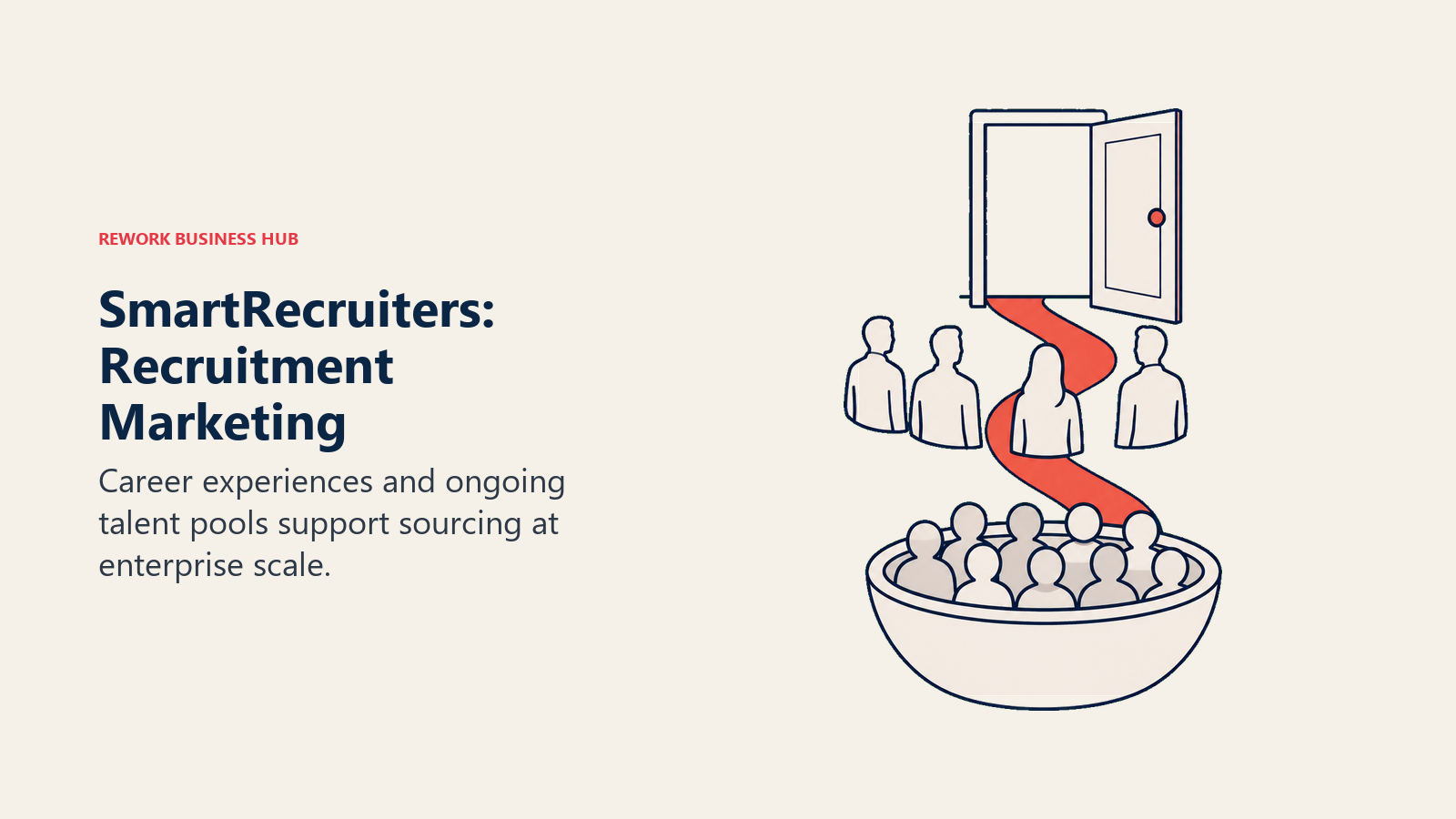
SmartRecruiters built its position on recruitment marketing: AI-generated job ads, a consumer-grade candidate experience, and CRM-style talent pools that treat sourcing as ongoing, not a one-time post. SAP completed its acquisition on September 11, 2025, and keeps integrating it with SuccessFactors while it operates standalone.
Essential is the one published price here, "Starting at $14,995," no billing term stated. Professional, High Volume, and Complete are quote-only, and the sales process assumes a real TA org. For enterprises wanting a marketing-forward candidate experience with SAP's roadmap behind it, SmartRecruiters is the natural call.
| What you get | What you don't |
|---|---|
| A published starting price, unlike most peers here | A billing term stated next to that price |
| AI-powered sourcing and recruitment marketing tools | A lightweight buying process for smaller teams |
| Native path into SAP SuccessFactors | A budget option under a few hundred employees |
| Backing and roadmap stability from SAP | Simplicity; built for scale |
Pricing: From $14,995/yr (Essential, published, term unstated); Professional, High Volume, and Complete are custom quote.
Best for: Enterprises wanting recruitment marketing depth and an existing or planned SAP footprint. Not ideal for: Teams under roughly 200 employees; the entry price rules most out. See the best SmartRecruiters alternatives if it overshoots your budget.
4. Phenom: Talent Experience Over Pure Applicant Tracking
Phenom starts from a different premise than iCIMS: candidates and employees are both "talent," and the platform should feel consumer-grade for both. Its AI-driven career sites, internal mobility tools, and talent marketplace features go beyond a traditional ATS, so teams evaluating Phenom against iCIMS are often really evaluating experience.
Phenom publishes nothing. Its pricing page just collects contact details and routes you to "the right Phenom expert," zero figures anywhere. Expect a sales cycle sized to match SmartRecruiters or Avature, not a self-serve signup.
| What you get | What you don't |
|---|---|
| Consumer-grade AI career sites and candidate experience | Any published pricing figures |
| Internal mobility and talent marketplace tools beyond hiring | A fast or lightweight buying process |
| Strong fit for employer branding at scale | A traditional, requisition-first ATS workflow as the core focus |
| AI matching across both candidates and employees | A budget option for smaller TA teams |
Pricing: Custom quote only; no published figures at any tier.
Best for: Large enterprises prioritizing candidate and employee experience alongside applicant tracking. Not ideal for: Teams that just want a straightforward requisition-to-offer pipeline.
5. Avature: The Deepest Configurability on This List
Avature is the enterprise pick for organizations whose recruiting workflow doesn't fit a template: multi-brand employers, RPO providers, and companies running CRM-style sourcing alongside a traditional ATS. Its reputation is built on configurability, bending to almost any process, at the cost of needing real professional services to set it up.
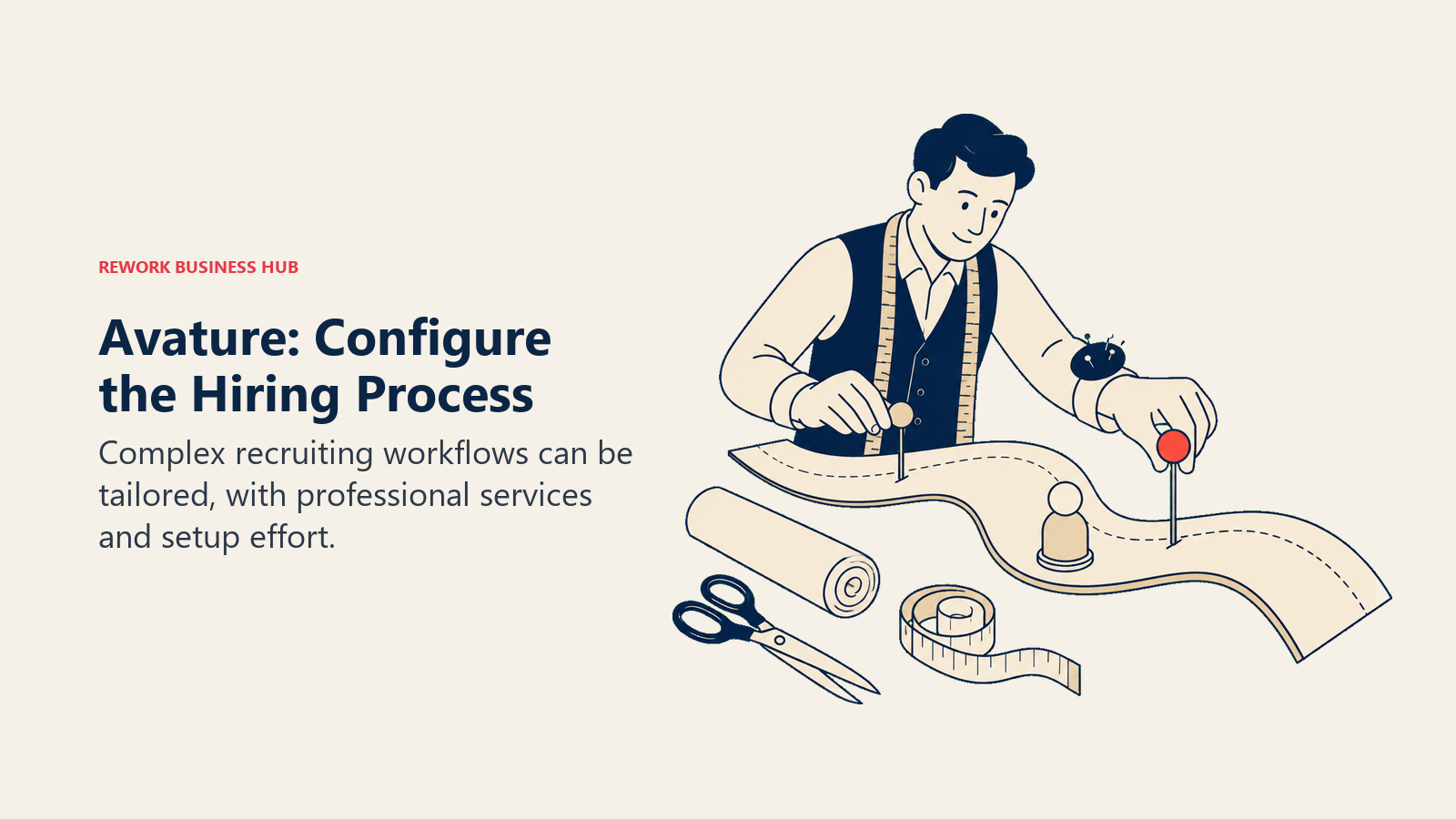
Pricing isn't published anywhere on avature.net; no dedicated pricing page exists, and the homepage routes to a contact form. Buyer-side procurement data from Vendr puts the average Avature contract around $465,000 a year, with implementation running three to nine months, the trade for near-total configurability over an opinionated workflow.
| What you get | What you don't |
|---|---|
| Near-total configurability across recruiting and CRM workflows | Any published pricing figures |
| Strong fit for RPO providers and multi-brand employers | A fast implementation timeline |
| CRM-style sourcing built alongside the ATS | A lightweight buying process |
| Deep professional services support | Predictability on total cost before a quote |
Pricing: Custom quote only; reported $100,000-$400,000-plus a year for enterprise deployments (third-party estimate).
Best for: Complex, multi-brand enterprises or RPO providers that need the workflow to bend to them. Not ideal for: Mid-market teams without the budget for a services-heavy implementation.
6. Rework: Hiring Unified with HR and Time Tracking
Rework is the one tool here that isn't trying to out-configure iCIMS. Its E-Hiring module, plus Interview and Career, live inside the Rework People line, alongside HRIS, time and attendance, ESOPs, and timesheets. The pitch is that the person you just hired through E-Hiring becomes an HR record, an attendance profile, and a timesheet owner without re-keying into a second system.
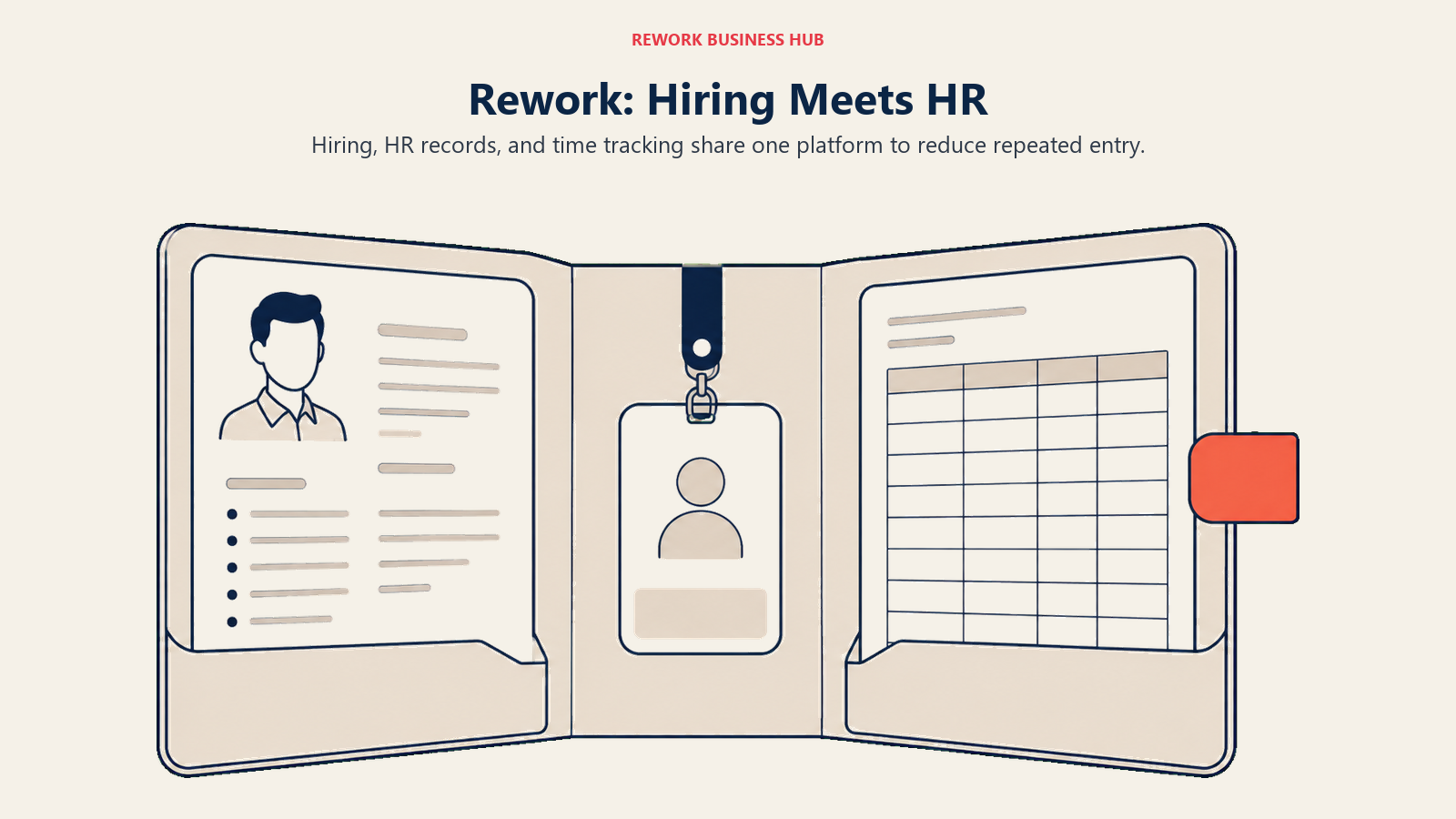
That's a different problem than most iCIMS evaluations solve, worth saying plainly. If a full Talent Cloud's depth is genuinely what you need, Workday or SmartRecruiters are closer matches. Rework fits the 20 to 500-employee company that looked at an iCIMS quote, realized it was buying configurability it would never use, and wants hiring on the same platform as HR instead.
| What you get | What you don't |
|---|---|
| E-Hiring, Interview, and Career on the same platform as HRIS, ESOPs, and timesheets | A large third-party integration marketplace |
| New hires flow into HR records without manual re-entry | Enterprise-grade multi-entity configurability |
| One vendor relationship for hiring, HR, and time tracking | Deep sourcing, CRM-style nurture, or RPO-grade tooling |
| Packages, not per-user licenses, across the People line | A published, self-serve price |
Pricing: Quoted per organization, not published as a flat rate. See rework.com/pricing.
Best for: Mid-size teams (roughly 20-500 employees) whose real cost of staying on iCIMS isn't just the license, it's running hiring, HR, and time tracking as separate systems. Not ideal for: Large enterprises that need iCIMS-level configurability, a big integration marketplace, or dedicated RPO and agency workflows.
7. Greenhouse: Structured Hiring Below iCIMS's Scale
Greenhouse is the tool most TA teams graduate into before they'd consider iCIMS, covering similar structured-hiring ground: interview kits, scorecards interviewers actually use, and a deep integration marketplace. For companies that want iCIMS's discipline without iCIMS's sales process, it's usually the first stop.
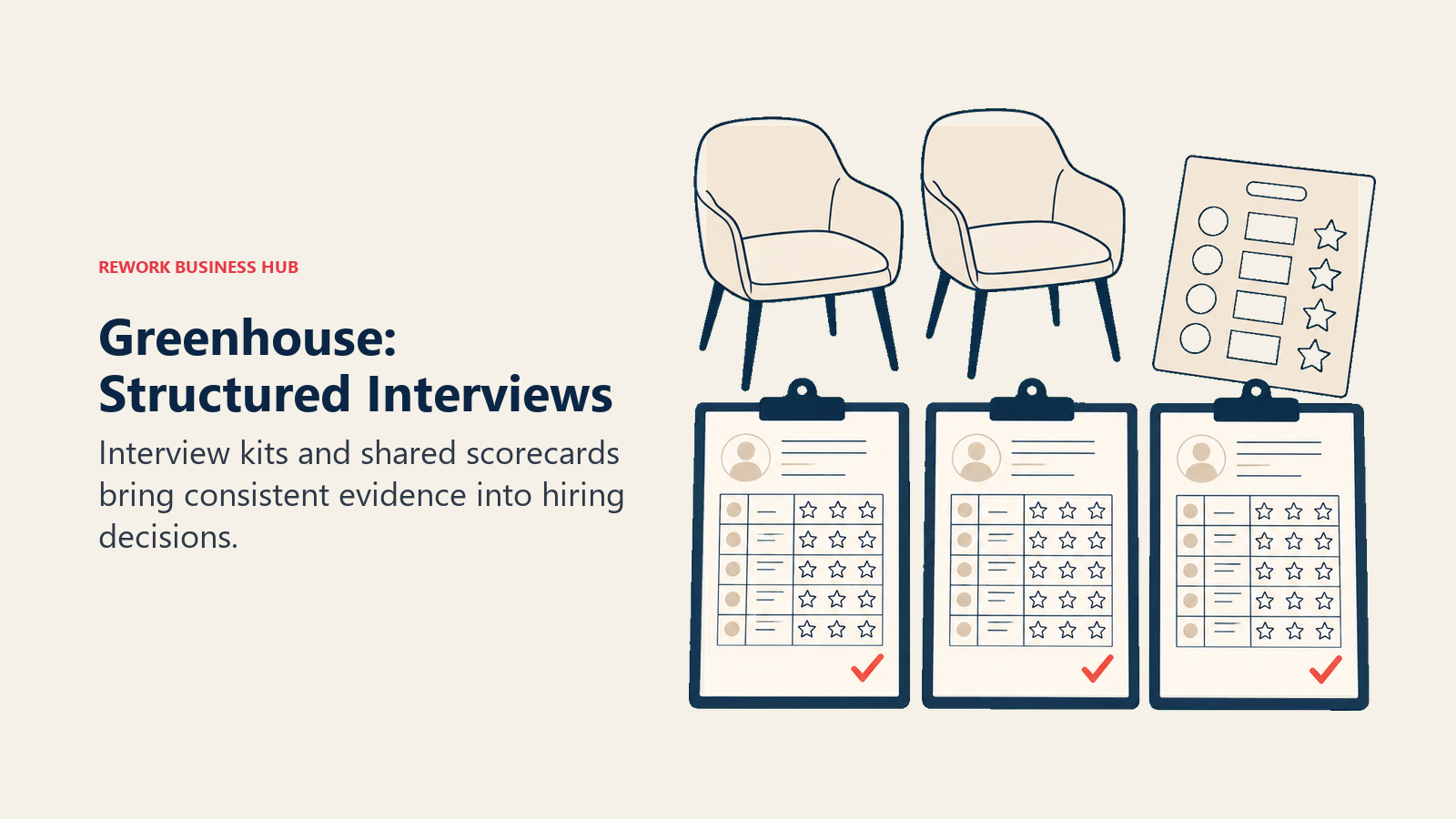
It isn't cheap either. Core, Plus, and Pro are all quote-only, with reported figures commonly landing around $5,100-$12,000-plus a year, and sourcing automation, a passive-candidate CRM, and DEI reporting all sit behind separately priced tiers. It's a real alternative to iCIMS, not an escape from enterprise-style pricing.
| What you get | What you don't |
|---|---|
| Interview kits and scorecards built for structured hiring | Published pricing at any tier |
| Deep integration marketplace | Sourcing, CRM, and DEI reporting included by default |
| Strong enterprise brand trust below iCIMS's scale | A budget option for small teams |
| Established mid-market to enterprise track record | Immunity from its own renewal creep |
Pricing: Custom quote (reported ~$5,100-$12,000-plus/yr).
Best for: Mid-market to large companies wanting structured-hiring discipline without a full Talent Cloud commitment. Not ideal for: Small teams, or anyone who wants a number before a call. See the best Greenhouse alternatives if pricing opacity is the dealbreaker.
8. Lever: Recruiting CRM Built Into the ATS
Lever, part of Employ Inc. alongside JazzHR, suits mid-market teams whose complaint about iCIMS isn't scale, it's that it tracks candidates without nurturing them. LeverTRM bakes CRM-style pipelines and passive-candidate campaigns into the ATS.
Pricing isn't published. Procurement data puts a 200-employee company around $12,240 a year after negotiation, a 1,000-employee company around $63,172, billed by total headcount rather than active seats, one place Lever and iCIMS behave alike.
| What you get | What you don't |
|---|---|
| CRM-style nurture campaigns built into the ATS | Published, self-serve pricing |
| Strong reporting and pipeline visibility | Pricing tied to recruiter seats rather than total headcount |
| Established mid-market track record | Independence from Employ Inc.'s shared roadmap |
| Solid interviewer experience | A budget option for small teams |
Pricing: Custom quote only; reported $12,000-$65,000-plus a year depending on size.
Best for: Mid-market companies (roughly 200-2,000 employees) wanting CRM-style nurture without a bolted-on tool. Not ideal for: Small teams. See the best Lever alternatives.
9. Ashby: Native Analytics Without a BI Add-On
Ashby is the ATS high-growth, VC-backed tech companies reach for once spreadsheet dashboards stop being enough, combining sourcing, scheduling, CRM, and an ATS with genuinely native analytics, the kind most tools here bolt on through a BI export.
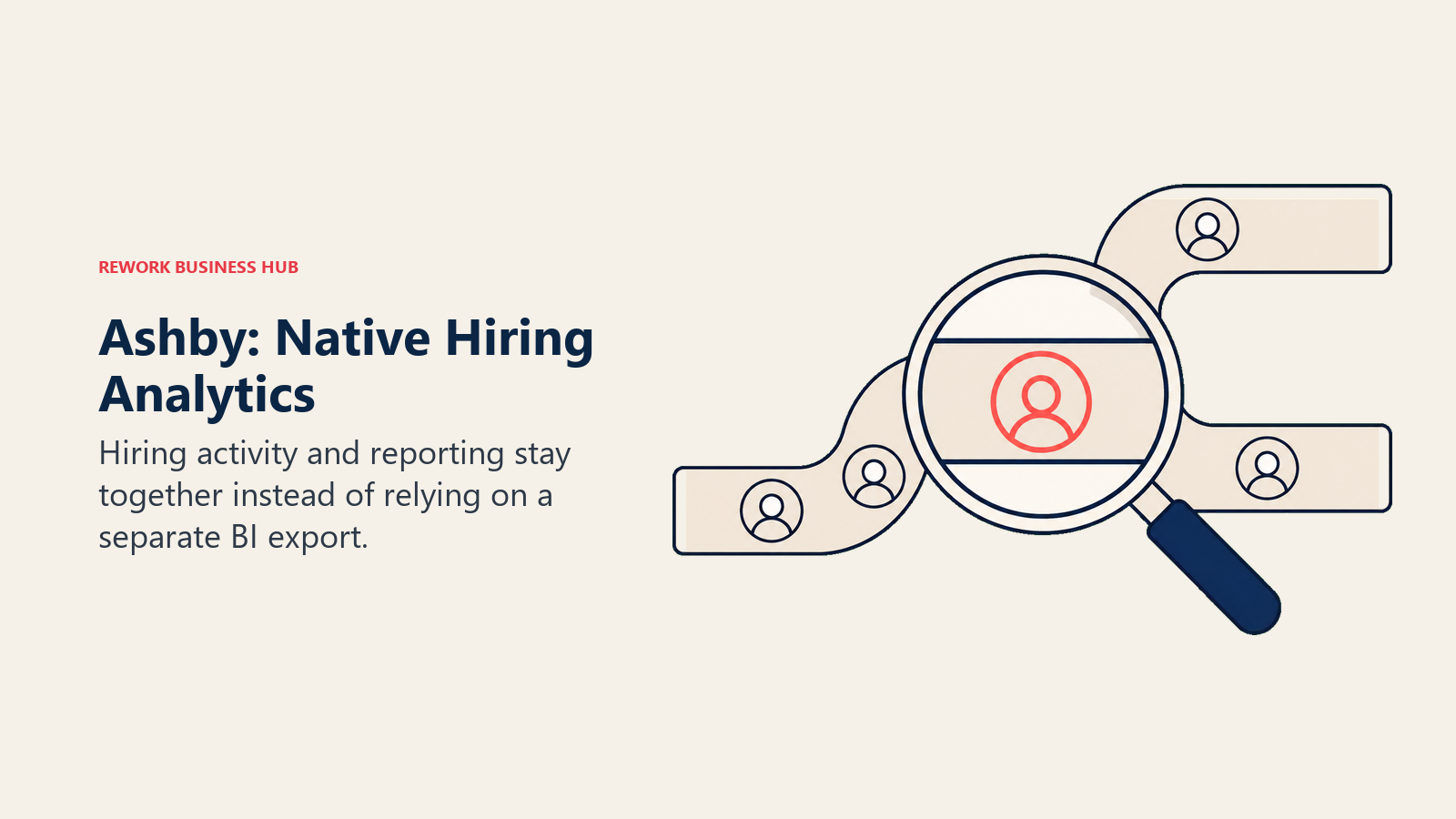
Foundations starts at $400 a month for up to 100 employees, roughly 10% off for annual. Plus and Enterprise scale past that on a custom quote, and Ashby Analytics can also be bought standalone, usage-priced, above 100 employees. It's the priciest entry point here, but the only one that doesn't force reporting into a separate tool.
| What you get | What you don't |
|---|---|
| Best-in-class native reporting and analytics | The cheapest entry price on this list |
| All-in-one sourcing, scheduling, and ATS | A large third-party integration marketplace |
| Strong fit for technical and product hiring | Predictable costs as headcount grows mid-contract |
| Modern, fast interface | A free tier or low-commitment trial |
Pricing: From $400/month (Foundations, up to 100 employees, ~10% off annual); custom quote for Plus and Enterprise.
Best for: High-growth, VC-backed companies wanting deep hiring analytics without a separate BI tool. Not ideal for: Budget-conscious teams under 50 people. See the best Ashby alternatives if the entry price is the blocker.
10. Workable: The Transparent-Priced Mid-Market Swap
Workable is the closest thing here to a published-price alternative for a team that wants structure without a sales call. It prices by employee band the way iCIMS and its peers do, but puts the number on the page: Standard runs $299/mo or $3,588/yr, Premier $599 or $7,188, Enterprise $719 or $8,628.
The catch is real add-on creep. Video interviews and SMS carry their own fees, and G2 reviewers report 10 to 20% renewal increases year over year, so the published number is a starting point, not a ceiling.
| What you get | What you don't |
|---|---|
| Published pricing, no sales call required | Flat pricing as headcount grows |
| AI-assisted sourcing and candidate matching | Video interviews and SMS included by default |
| Fast implementation, minimal setup time | Enterprise-depth compliance and DEI reporting |
| Free trial available | A guaranteed flat renewal rate |
Pricing: $299/mo, $3,588/yr annual (Standard); $599/mo, $7,188/yr (Premier); $719/mo, $8,628/yr (Enterprise).
Best for: Growing mid-market teams wanting a published, structured-hiring option without an enterprise sales process. See the best Workable alternatives if it misses the mark. Not ideal for: Enterprises needing iCIMS-level multi-entity configuration.
11. Teamtailor: Employer Branding and Career Sites First
Teamtailor leads with the career site, not the pipeline. Its builder produces career pages that look hand-designed, which matters most where inbound applications, not active sourcing, drive most hiring.
Pricing is entirely custom, no figures published anywhere, not even a "starting at" number, the same opacity bucket as iCIMS at a smaller scale; expect a job-slot-based quote rather than per-seat billing.
| What you get | What you don't |
|---|---|
| Best-in-class career site and employer branding tools | Any published pricing, even a starting figure |
| Unlimited users, job-slot-based pricing | AI-powered sourcing depth |
| Strong fit for inbound-application-heavy hiring | Deep CRM or nurture-campaign tooling |
| Clean ATS workflow underneath the branding layer | Predictable costs during seasonal hiring spikes |
Pricing: Custom quote only; no published figures at any tier.
Best for: Companies where the career site and employer brand are the primary hiring lever. Not ideal for: Teams that lead with active sourcing or need iCIMS-style multi-entity structure.
12. Pinpoint: Candidate-First Hiring with Blind Screening
Pinpoint starts from the candidate's side of the process rather than the recruiter's. Branded career sites, a multilingual application flow, and blind, anonymized screening give a practical DEI tool without a whole new methodology.
Pricing isn't published, but third-party research puts Growth around $345/mo on annual billing and Enterprise at $1,200-plus, all-in annual costs typically $4,000-$15,000, banded by headcount, unlimited seats, annual contracts only.
| What you get | What you don't |
|---|---|
| Best candidate-facing application experience on this list | A public rate card |
| Blind screening for practical DEI without a full methodology overhaul | A free trial |
| Unlimited seats at every plan | Monthly billing (annual contracts only) |
| Strong career site builder | API access below the top tier |
Pricing: Custom quote; reported ~$345/mo (Growth) to $1,200-plus/mo (Enterprise), billed annually.
Best for: In-house hiring teams wanting a candidate-first experience and a lightweight DEI tool. Not ideal for: Agency recruiters, or teams needing month-to-month billing flexibility.
13. JazzHR: The Budget Real ATS
JazzHR, an Employ Inc. brand alongside Lever, answers for teams that got a six-figure iCIMS quote and needed something else entirely. Pricing is flat and published: Hero runs $1,000/yr, Plus $3,480, Pro $5,508, all billed annually, no monthly figure printed.
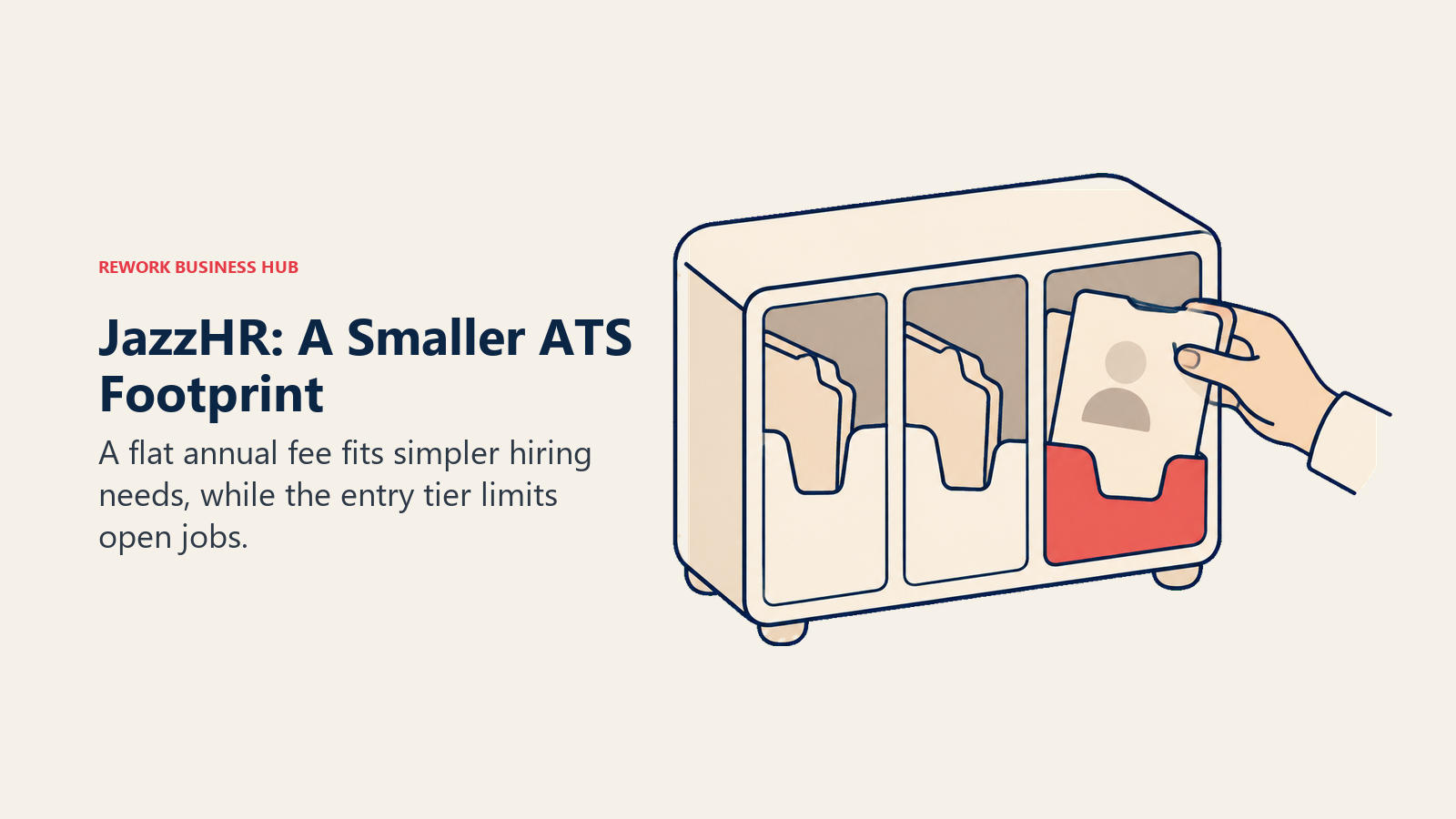
The verifiable claim is narrower than JazzHR's reputation suggests: pricing is a flat annual fee, not per seat. Whether every plan truly includes unlimited users isn't something the pages state outright, so treat that as reputation, not a confirmed fact. Hero's 3-job cap is the real constraint.
| What you get | What you don't |
|---|---|
| Published, flat annual pricing, not priced per seat | Enterprise-depth scorecards or DEI reporting |
| A real ATS at a fraction of iCIMS's entry cost | Room to grow past 3 open jobs on the entry tier |
| Fast setup for small and mid-size teams | Deep sourcing or CRM-style nurture |
| A straightforward, no-sales-call purchase path | Enterprise multi-entity configuration |
Pricing: $1,000/yr (Hero) to $5,508/yr (Pro), billed annually; no monthly figure published.
Best for: Small to mid-size teams (under 100-150 employees) wanting a real ATS without an enterprise price tag. See the best JazzHR alternatives if the job cap rules it out. Not ideal for: Teams needing structured interview kits or more than a handful of open roles at once.
14. Breezy HR: Free to Start, Flat-Fee Pricing
Breezy HR sits at the opposite end of this list from iCIMS in every way that matters: free to start, flat monthly pricing, unlimited users on every paid plan. Bootstrap is free forever for one active job, the easiest way to try structured hiring with zero commitment.
Growth ($273/mo annual, $329 monthly) is where scorecards and eSignatures unlock, and Business ($439/mo annual, $529 monthly) is required for HRIS integrations, so the free and Startup ($157/mo) tiers are thinner than they look.
| What you get | What you don't |
|---|---|
| A genuinely usable free tier and flat monthly pricing | Interview scorecards on the entry tiers |
| Unlimited users at every paid tier | HRIS integrations below the Business tier |
| Fast setup for small teams | Enterprise-depth structured hiring |
| Month-to-month flexibility | A large integration ecosystem |
Pricing: Free (Bootstrap, 1 job) to $439/mo annual, $529 monthly (Business); Custom Pro is quote-only.
Best for: Small teams (under 50 employees) wanting to start free and pay flat, predictable pricing as they grow. Not ideal for: Any team evaluating iCIMS in the first place; the scale gap is enormous.
15. Zoho Recruit: The Budget Ecosystem Play
Zoho Recruit is the value option for a company already on Zoho apps, and the cheapest per-seat name here by a wide margin. It ships in two editions, Corporate HR and Staffing Agency, the agency edition unlocking higher job limits at the same per-seat price.
Corporate HR Standard runs $25/recruiter/mo billed annually (10 jobs per license), Enterprise steps up to $50 (20 jobs). A free tier covers one active job per license. Zia AI features are gated behind Professional, offered only on Staffing Agency.
| What you get | What you don't |
|---|---|
| Very affordable per-seat pricing, with a free tier | AI features (Zia) on the Corporate HR Standard tier |
| Deep integration with the rest of the Zoho suite | Enterprise multi-entity configuration |
| Both in-house and agency editions available | A middle pricing tier for Corporate HR |
| Fast setup, low learning curve for Zoho users | Any resemblance to iCIMS's feature depth |
Pricing: Free (1 job/recruiter) to $50/recruiter/mo (Corporate HR Enterprise, billed annually); staffing edition adds a Professional tier at $50/recruiter/mo.
Best for: Budget-conscious teams already on Zoho, or agencies wanting an affordable, agency-specific edition. Not ideal for: Any organization actually sized for iCIMS.
Why Enterprise Teams Reconsider iCIMS
Most companies evaluating iCIMS alternatives aren't rejecting the platform's capability. They're rejecting what it takes, in dollars and dedicated headcount, to run it below the scale it was built for.
Zero published pricing, at any tier. iCIMS has no public rate card, no self-serve trial, and no pricing page that returns anything but a 404. Every contract is custom, built on headcount, modules, and term, so every renewal starts from a position where only iCIMS knows what the last customer paid. Vendr’s buyer data reports an average annual contract of $20,781, ranging from $14,500 to $635,000 (Vendr, reported), though only a signed quote confirms where your org lands.
Renewal increases that outpace inflation. iCIMS isn't unusual here, it's the market. Enterprise SaaS renewal inflation hit 16.4% in June 2026, the highest monthly reading on record, and 79% of IT leaders hit a price increase at their last renewal, with what used to be a routine 5-7% bump now commonly 15% or higher (Zylo, 2026). A multi-year contract without a renewal cap bets that trend reverses.
Module-by-module pricing that adds up. Sourcing, CRM-style talent pools, onboarding, and analytics are frequently sold as separate line items rather than bundled into a base license. A team that budgeted for "the ATS" often finds the features it wants live behind a second negotiated add-on.
Configurability that needs a dedicated owner. iCIMS's flexibility is a real strength for a 2,000-person, multi-business-unit org running dozens of workflows in parallel. For a 200 to 500-person company, that same depth means someone needs to own configuration and integrations as close to a full-time job, on top of actually recruiting.
How to Evaluate a Quote-Only Enterprise ATS Contract
Because iCIMS, Workday, SAP SuccessFactors, Phenom, and Avature all publish nothing, the real evaluation work happens after the demo, in the contract itself. Structured interviews with a fixed rubric predict job performance at roughly .51 validity versus .38 for unstructured ones, per Schmidt and Hunter's landmark meta-analysis (via Pin); that same discipline is worth applying to the buying process too. Six line items separate a fair quote from a surprise.
| What to ask for | Why it matters |
|---|---|
| Base license fee, itemized by module | Sourcing, CRM, onboarding, and analytics are often priced separately; get each line |
| Per-employee vs. flat pricing | An unclear unit is how a quote looks cheaper than it is |
| Implementation fee, as a separate line | Enterprise ATS implementation commonly runs 1.5 to 2x the base license cost in year one |
| Renewal increase cap, in writing | Without a cap, a 15%-plus renewal bump (now the market norm) is the vendor's default |
| Term length and early-exit terms | Multi-year discounts trade away your ability to renegotiate if the product underdelivers |
| Data portability and exit clause | Confirm you can export full candidate history before you sign, not after you decide to leave |
Push for a monthly-vs-annual comparison in writing too. An annual commitment is essentially always cheaper than month to month; if a vendor's numbers say otherwise, that's usually a quoting error.
Stage Fit Matrix
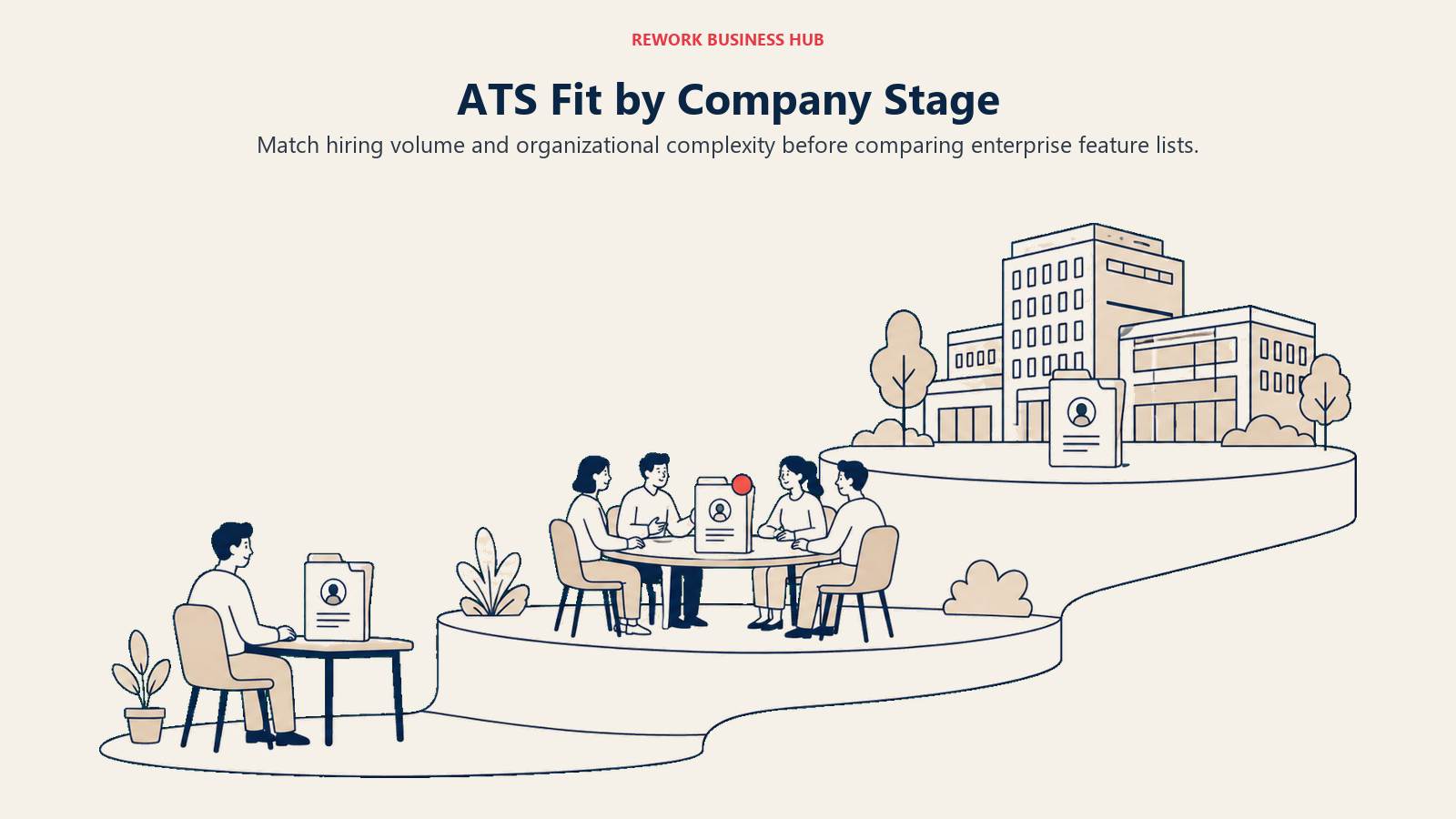
Match the ATS to your hiring volume and organizational complexity before comparing enterprise features.
| Company stage | Best-fit pick | Why |
|---|---|---|
| Seed to Series A startup | Breezy HR or JazzHR | Free or flat-fee entry, no enterprise sales process |
| Series B to growth-stage tech | Ashby or Lever | Native analytics or CRM-style nurture built for fast-scaling teams |
| Mid-market (200-1,000 employees) | Greenhouse, Workable, or Rework | Structured hiring or platform consolidation without full enterprise overhead |
| Upper mid-market to enterprise (1,000-2,000) | SmartRecruiters or Lever | Enterprise-grade features, still a lighter sales process than a full Talent Cloud |
| Global enterprise, multi-entity | Workday, SAP SuccessFactors, iCIMS, or Avature | Deep configurability and multi-business-unit support genuinely earns its price here |
| RPO provider or staffing agency | Avature | Purpose-built for external placement and multi-brand recruiting workflows |
Sizing and Persona Guide
| Headcount | Typical persona | Recommended tools |
|---|---|---|
| Under 50 | Founder or generalist HR, hiring occasionally | Breezy HR, JazzHR, Zoho Recruit |
| 50-200 | Dedicated recruiter or small TA team | Workable, Ashby, Rework |
| 200-1,000 | TA function with process owners | Greenhouse, Lever, Rework, Pinpoint |
| 1,000-2,000 | TA ops team, dedicated system admin | SmartRecruiters, Teamtailor, Greenhouse |
| 2,000-5,000 | Multi-business-unit TA org | iCIMS, SAP SuccessFactors, Phenom |
| 5,000+ | Global enterprise, dedicated TA ops function | Workday, iCIMS, Avature |
How to Choose: Decision Framework
Pick by the specific gap you're closing against iCIMS, not brand familiarity. A team leaving for cost shouldn't land on the same tool as one leaving for a lighter implementation.
| If your team needs... | Best pick |
|---|---|
| An existing Workday HCM relationship extended into hiring | Workday Recruiting |
| An existing SAP SuccessFactors relationship extended into hiring | SAP SuccessFactors Recruiting |
| Recruitment marketing and AI sourcing at enterprise scale | SmartRecruiters |
| Candidate and employee experience beyond pure ATS | Phenom |
| Maximum configurability for complex, multi-brand recruiting | Avature |
| Hiring unified with HR, ESOPs, and timesheets | Rework |
| Structured hiring below iCIMS's scale and price | Greenhouse |
| Recruiting CRM and nurture campaigns built into the ATS | Lever |
| Native analytics without a separate BI tool | Ashby |
| Published pricing at every tier | Workable |
| Best-in-class career site and employer branding | Teamtailor |
| Candidate-first flow and blind screening for DEI | Pinpoint |
| The cheapest real ATS with flat annual pricing | JazzHR |
| A free-to-start ATS with flat, predictable pricing | Breezy HR |
| A deep discount inside an existing Zoho ecosystem | Zoho Recruit |
What to Do Next
Pick two or three tools from the framework above, not the two most familiar names, and request an itemized quote from each: base license, implementation, and renewal terms as separate lines. If you're under 1,000 employees and haven't outgrown a lighter platform, start with Greenhouse, Ashby, or Rework instead of another Talent Cloud demo. If you're already committed to Workday or SAP for core HR, extending into their native recruiting module is usually the right first call.
Whatever you choose, don't sign a multi-year enterprise ATS contract without a written renewal cap. See rework.com/pricing if unifying hiring with HR and time tracking, not replacing a Talent Cloud outright, is the actual problem you're solving.

Principal Product Marketing Strategist
On this page
- Key Facts
- Quick Comparison Table
- 1. Workday Recruiting: The Other Enterprise Talent Platform
- 2. SAP SuccessFactors Recruiting: The HCM-Native Enterprise Option
- 3. SmartRecruiters: Recruitment Marketing, Now Backed by SAP
- 4. Phenom: Talent Experience Over Pure Applicant Tracking
- 5. Avature: The Deepest Configurability on This List
- 6. Rework: Hiring Unified with HR and Time Tracking
- 7. Greenhouse: Structured Hiring Below iCIMS's Scale
- 8. Lever: Recruiting CRM Built Into the ATS
- 9. Ashby: Native Analytics Without a BI Add-On
- 10. Workable: The Transparent-Priced Mid-Market Swap
- 11. Teamtailor: Employer Branding and Career Sites First
- 12. Pinpoint: Candidate-First Hiring with Blind Screening
- 13. JazzHR: The Budget Real ATS
- 14. Breezy HR: Free to Start, Flat-Fee Pricing
- 15. Zoho Recruit: The Budget Ecosystem Play
- Why Enterprise Teams Reconsider iCIMS
- How to Evaluate a Quote-Only Enterprise ATS Contract
- Stage Fit Matrix
- Sizing and Persona Guide
- How to Choose: Decision Framework
- What to Do Next