Greenhouse vs Lever: Which Applicant Tracking System Fits Your Hiring Model in 2026?
Turn this article into takeaways for your work.


Each assistant summarizes the article only for you and suggests best practices for your work.
If you're evaluating applicant tracking systems for a growing company, Greenhouse and Lever land on nearly every shortlist. Both are established, well-funded platforms built for teams that have outgrown a spreadsheet and a free job board posting, and both get recommended by analysts and reviewers in the same breath. But they were built around two different theories of how hiring should actually work, and that difference matters more than any feature checklist.
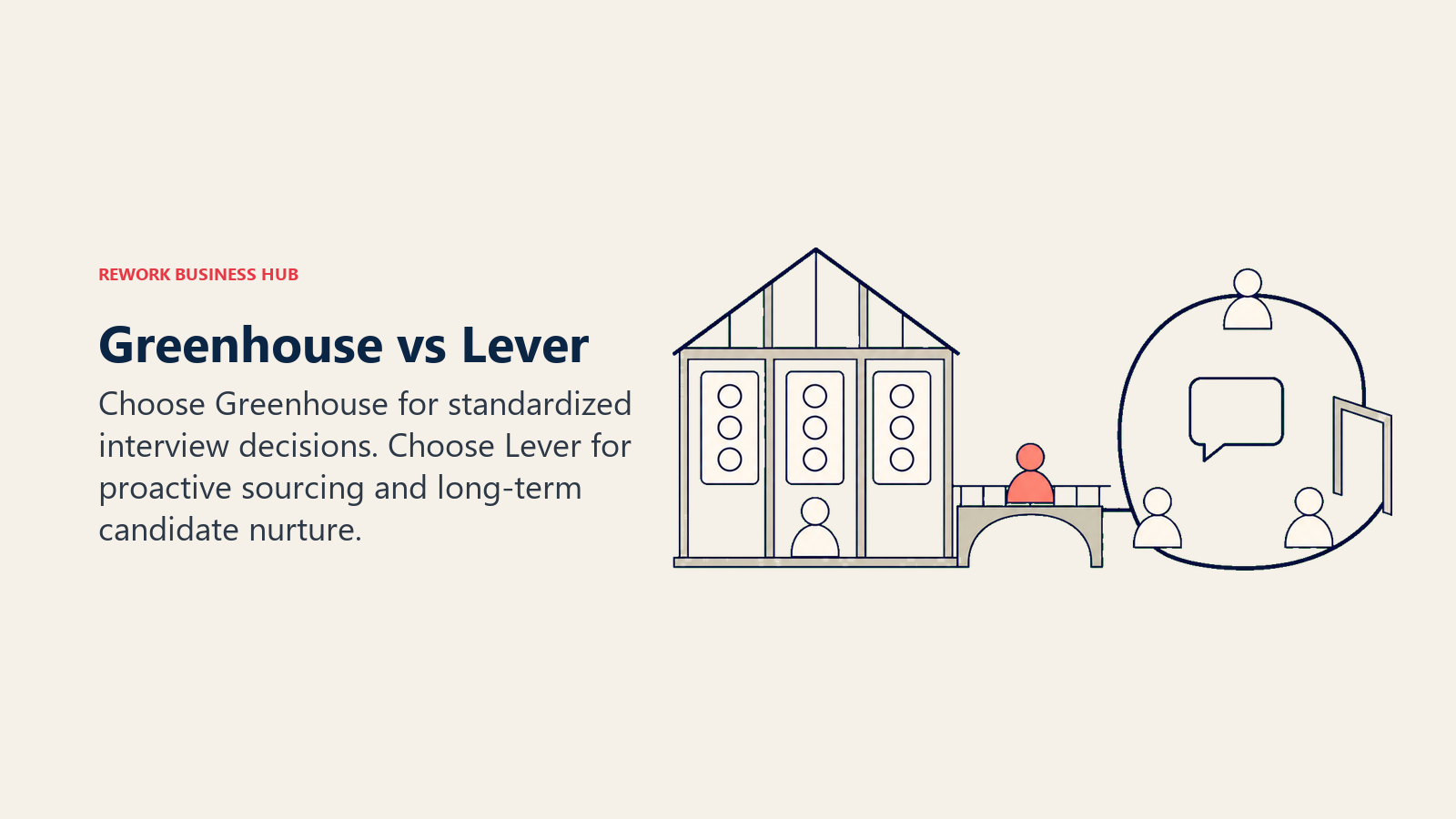
Greenhouse is built around structured hiring: defined interview kits, standardized scorecards, and a process designed to make evaluation consistent across every interviewer and reduce gut-feel bias. Lever, now sold as LeverTRM, is built around a talent CRM: sourcing, nurturing, and pipeline-building for teams that recruit proactively instead of waiting for applications to land. Neither approach is wrong. They're optimized for different hiring models, and picking the one that doesn't match yours means fighting the tool for a year instead of using it.
TL;DR
| Greenhouse | Lever (LeverTRM) | |
|---|---|---|
| Core philosophy | Structured hiring: interview kits, scorecards, consistent evaluation | Talent CRM: sourcing, nurture campaigns, relationship-led pipelines |
| Best for | Companies standardizing a high-volume, multi-interviewer hiring process | Companies that recruit proactively and need to nurture passive candidates |
| Pricing model | Three tiers (Core, Plus, Pro), quote-only | No published tiers, quote-only |
| Typical annual cost | Roughly $26,587/year median across all sizes, per buyer-side data | No published median; ranges widely by headcount |
| G2 rating | 4.4 out of 5 (3,900+ reviews) | 4.3 out of 5 (2,100+ reviews) |
| Capterra rating | 4.5 out of 5 (764 reviews) | 4.6 out of 5 (654 reviews) |
| Parent company | Independent (Greenhouse Software, Inc.) | Employ Inc., alongside JazzHR and Jobvite |
| Sourcing / CRM | Add-on module (Greenhouse Sourcing Automation) | Native, core to the product design |
Who Each Platform Is Actually Built For
Greenhouse's own pricing page frames its three tiers around hiring complexity, not just headcount: Core is pitched as bringing structure to hiring, Plus as optimizing the operation, and Pro as managing hiring complexity at scale. That framing tells you who it's for: companies that have decided evaluation needs to be standardized, usually because they're hiring across multiple departments and want every interviewer scoring candidates the same way.
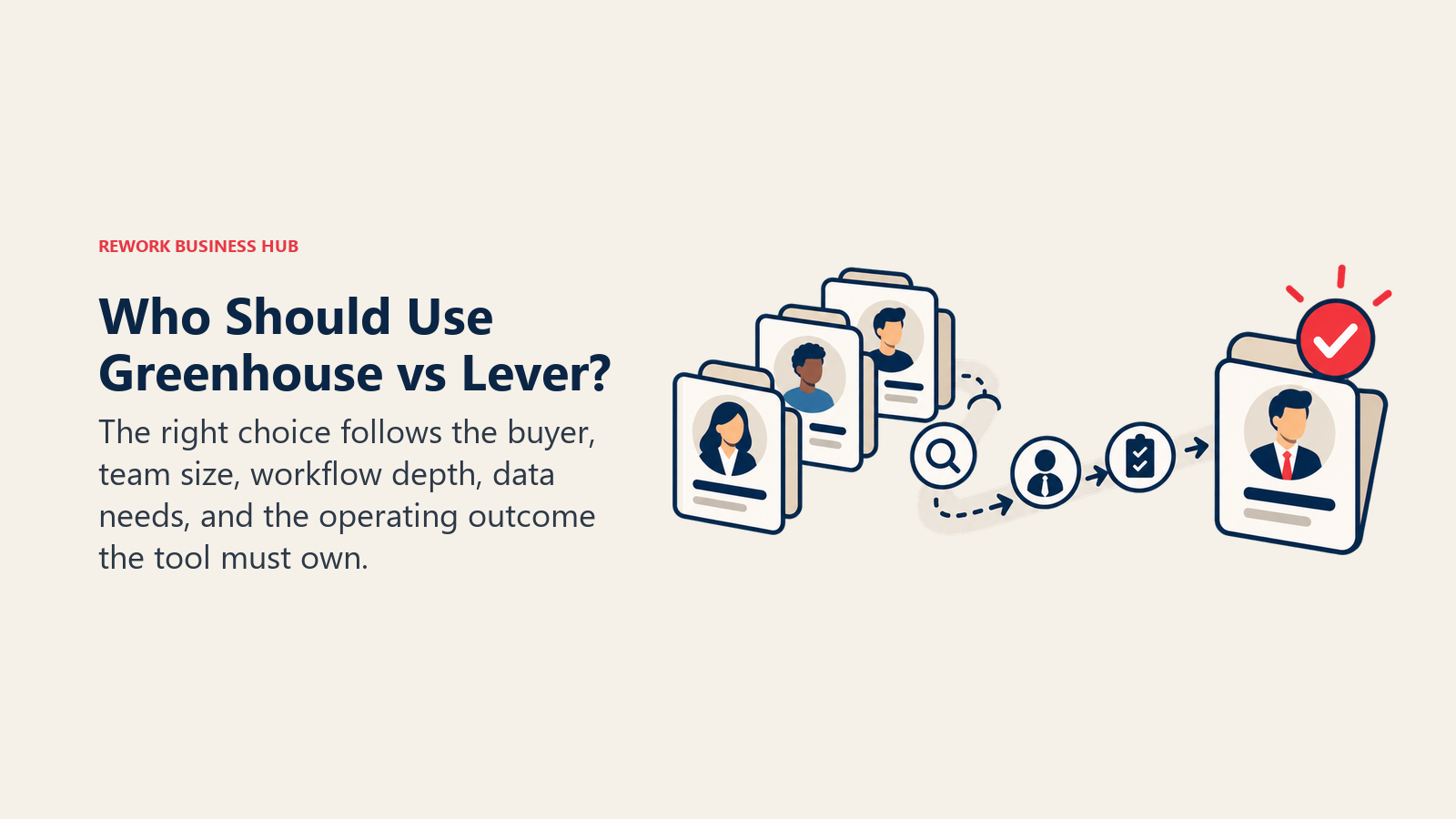
Lever's positioning is different. LeverTRM combines the ATS with a candidate relationship management system as one product, and its own site describes the customer base as spanning "20+ industries," from federal contractors to people-analytics teams at consumer brands. The pitch is for recruiting teams that spend real time sourcing, not just processing inbound applications, and who need a place to keep warm relationships with candidates who aren't ready to apply yet.
| Greenhouse | Lever (LeverTRM) | |
|---|---|---|
| Sweet-spot team | Talent acquisition teams standardizing process across multiple hiring managers | Recruiting teams running active sourcing and headhunting strategies |
| Team maturity | Has already decided structured interviews matter; ready to build scorecards | Comfortable with proactive outreach and long-term candidate nurture |
| Primary use case | Consistent, bias-reduced evaluation at hiring volume | Building and maintaining talent pipelines before roles even open |
| Buying trigger | Outgrowing an unstructured or informal interview process | Outgrowing a spreadsheet-and-LinkedIn-tabs sourcing workflow |
Neither of those is a knock on the other platform. It's the difference between a tool built to make evaluation fair and repeatable, and a tool built to make sourcing and relationship-building systematic.
Key Facts
- The global applicant tracking system market grew from an estimated $2.96 billion in 2025 to $3.17 billion in 2026, a 7.1% CAGR, according to Research and Markets.
- Greenhouse holds a 4.4 out of 5 rating on G2 across more than 3,900 reviews, and a 4.5 out of 5 rating on Capterra across 764 verified reviews.
- Lever (sold as LeverTRM) holds a 4.3 out of 5 rating on G2 across more than 2,100 reviews, and a 4.6 out of 5 rating on Capterra across 654 verified reviews.
- Lever joined Employ Inc. on August 5, 2022, becoming a sibling brand to JazzHR and Jobvite under a parent company that served more than 18,000 customers combined at the time of the deal, per K1 Investment Management's announcement.
- Greenhouse's median negotiated annual contract sits around $26,587, ranging from $10,152 to $75,188 depending on company size and tier, based on Vendr's verified-purchase data.
Structured Hiring vs Talent CRM: The Core Difference
Both platforms are full applicant tracking systems: job postings, pipelines, candidate profiles, offer workflows, and reporting all ship in each one. The real difference shows up in what each company built first and still leads with.
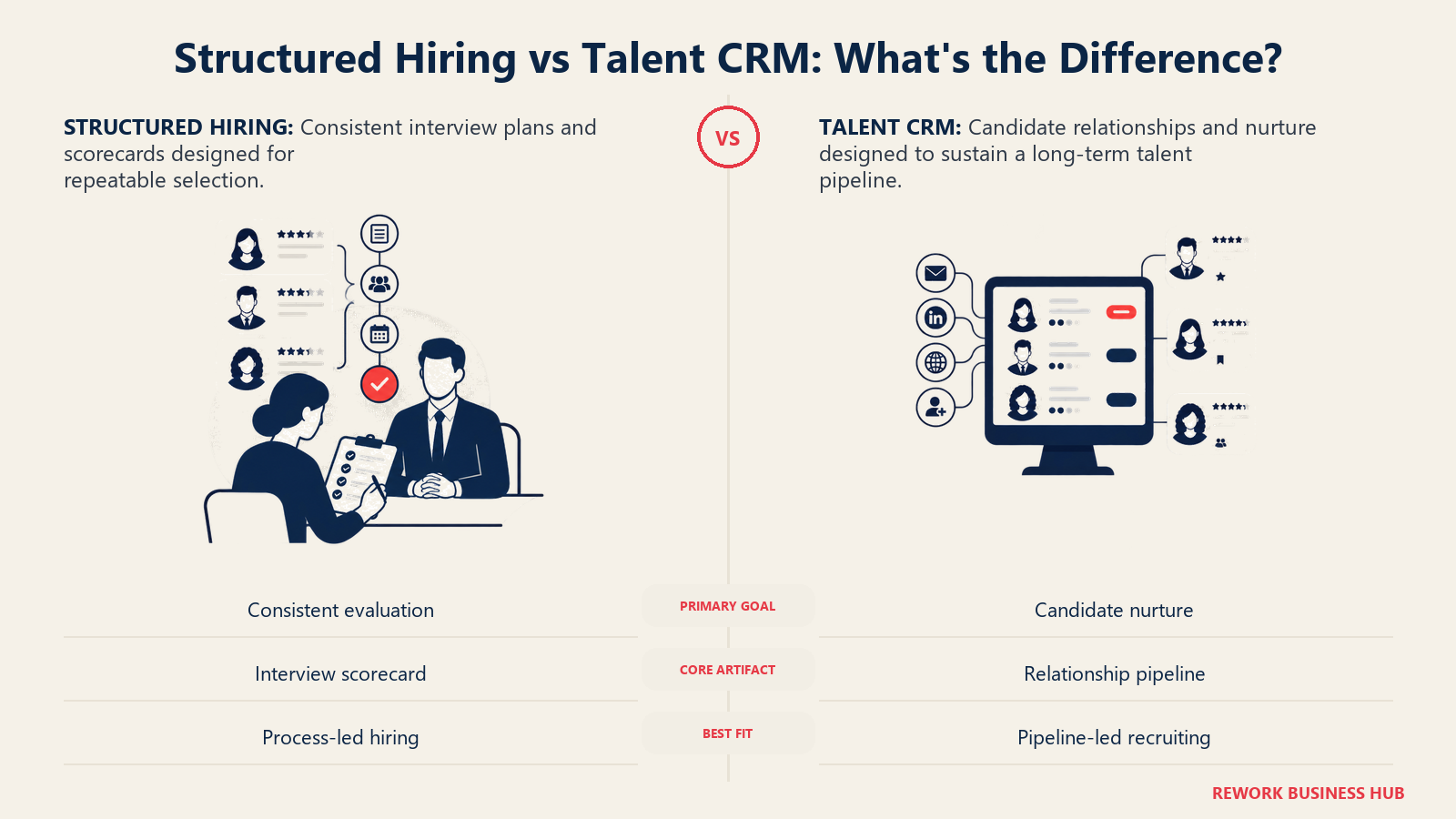
Greenhouse's structured hiring model centers on the interview kit, which bundles interview instructions, questions, the candidate's resume, and a scorecard into one document each interviewer works from. According to Greenhouse's own guidance on structured recruiting, scorecards are organized into three or four categories of attributes so interviewers evaluate candidates against the same criteria instead of a general impression. That structure is meant to prevent the classic failure mode of panel interviews, where five interviewers each ask different questions and reach five different, hard-to-compare conclusions.
Lever's talent CRM centers on the pipeline you build before a role even opens. Recruiters tag and segment candidates by skill set, prior application stage, or geography, then run multi-touch email nurture sequences to keep silver-medalist candidates and passive prospects warm between openings. A native sourcing extension lets recruiters pull candidate profiles from LinkedIn and other sites directly into the CRM, which is a meaningfully different workflow than an ATS that only starts tracking someone once they've applied.
| Capability | Greenhouse | Lever (LeverTRM) |
|---|---|---|
| Interview kits and scorecards | Core to the product, built for every stage | Available, but not the product's organizing principle |
| Talent CRM and nurture campaigns | Add-on (Greenhouse Sourcing Automation, paid) | Native, the product's organizing principle |
| Passive candidate sourcing extension | Available via partner and add-on tooling | Native Chrome extension included |
| DEI and bias-reduction tooling | Structured scorecards standardize evaluation criteria | Visual Insights dashboards plus native DEI reporting |
| AI features | AI Notetaker, Real Talent matching and fraud detection | AI Interview Companion (notetaking, sentiment tracking, bias flagging) |
| Workflow automation | Strong, stage-based automation across the hiring process | Strong, especially around nurture sequences and pipeline segmentation |
| Reporting focus | Interview and scorecard analytics, hiring funnel metrics | Sourcing and pipeline health, candidate relationship metrics |
Lever's Wedge: Talent CRM and Sourcing-Led Recruiting
If your recruiting strategy leans heavily on headhunting rather than waiting for inbound applications, this is where Lever earns its reputation. The CRM isn't a bolted-on module, it's the frame the whole product is built around, so building a pipeline for a role that doesn't exist yet, tagging candidates by skill, and running a nurture sequence that doesn't read like a templated blast are all first-class workflows rather than workarounds.
Reviewers on Capterra describe this most consistently: Lever "solved the core problem of centralizing candidate data and hiring activity in one place," and posting a job across multiple boards with a single click has saved recruiters real time in high-volume sourcing motions. The tradeoff, per reviewer feedback, is that some of the newer AI functionality feels less mature than competitors', and native e-signature requires an additional DocuSign subscription rather than shipping natively.
Lever's AI layer has moved since those reviews were written. The platform now auto-ranks applicants and generates fit summaries at the screening stage, captures interview transcripts and takeaways through its Interview Companion, and screens for candidate fraud, with in-product reporting on what each AI feature is actually saving. Teams weighing the two on AI maturity should test the current build rather than trust an older review snapshot.
Greenhouse's Wedge: Structured Interviews and Scorecards
If your problem is inconsistent evaluation, not lack of top-of-funnel candidates, Greenhouse's structured hiring approach is the more direct fix. The scorecard forces every interviewer to rate candidates against the same defined attributes instead of submitting an unstructured "strong yes" or "pass," which is the single biggest lever for reducing interviewer-to-interviewer inconsistency in a hiring process.
That discipline is also what shows up most in G2 reviews: users consistently cite the platform's ability to centralize candidate information and improve cross-team collaboration during evaluation, alongside genuinely useful reporting once you're past the learning curve. The tradeoff is real too. Multiple reviewers describe reporting as unintuitive without training, and the depth that makes Greenhouse powerful at scale (data configuration, audit logs, sandbox environments on the Pro tier) is more structure than a small, fast-moving team typically needs.
Interview kits are the mechanism underneath the scorecard. Each role gets its kit defined up front: which attributes each interviewer is responsible for probing, the questions they ask, and what the scorecard actually measures. The effect is that evaluation criteria get settled before the first candidate applies rather than argued about after a split panel. Whether that setup overhead pays back depends on hiring volume and how much interviewer consistency the team genuinely needs.
Pricing and the True Cost of Ownership
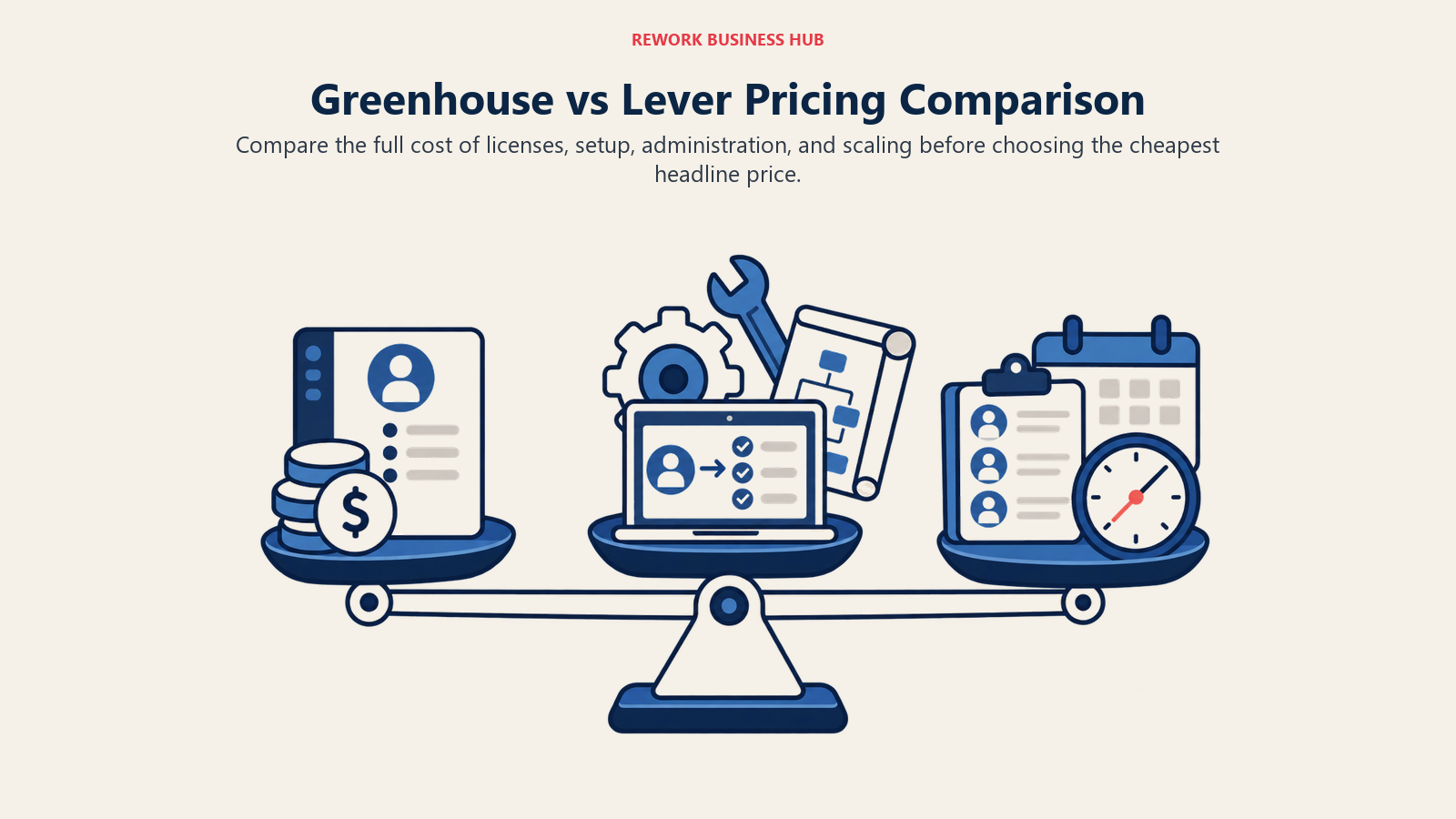
Neither company publishes prices. Both pricing pages redirect every visitor to a demo request, and both explicitly say cost depends on headcount, hiring volume, and which tier you choose. What follows is compiled from vendor tier descriptions plus third-party buyer-side research, not confirmed vendor quotes, so treat it as a planning range rather than a number you can hold either company to.
| Plan or data point | Greenhouse | Lever (LeverTRM) |
|---|---|---|
| Published pricing | No, quote-only via demo request | No, quote-only via demo request |
| Entry tier | Core: roughly $5,100 to $6,500/year, per buyer-side estimates | No named entry tier; smallest reported contracts start around $6,000/year |
| Mid-market tier | Plus: roughly $15,000 to $40,000/year | At roughly 200 employees, median negotiated contract is about $12,240/year against a list price of $19,185 |
| Enterprise tier | Pro: roughly $40,000 to $120,000+/year | At roughly 500 employees, the discount-off-list gap widens to about 49% |
| Median contract, all sizes | About $26,587/year, range $10,152 to $75,188 | Not publicly benchmarked at this granularity |
| Implementation fee | Often billed separately, roughly $1,000 to $15,000 | Typically bundled into onboarding, varies by deal |
| Add-on modules | Sourcing Automation, Business Intelligence Connector (Plus and above) | Candidate Insights, AI Screening, Onboarding, priced separately |
| Contract term | Annual, typically a 12-month minimum | Annual, typically a 12-month minimum |
Sources: Greenhouse's pricing page for tier names and features, Vendr's Greenhouse marketplace data for median contract figures, and Lever's pricing page for confirmation that pricing is quote-only with add-ons priced separately.
The honest takeaway: on the numbers available, Greenhouse's published tier structure gives you at least a rough sense of where you'll land before a sales call. Lever's pricing is even less transparent publicly, so budget extra time in your evaluation process to get a real quote in writing before you commit to a timeline or tell your finance team a number.
Reporting and Analytics
| Reporting | Greenhouse | Lever |
|---|---|---|
| Standard reporting | Robust and detailed, though several reviewers call the interface unintuitive without training | Visual Insights dashboards, generally described as more approachable out of the box |
| DEI reporting | Tied to structured scorecards and standardized criteria | Native DEI reporting module |
| Custom report filters | Available on Plus tier and above (AI-powered filters) | Included, depth varies by contract tier |
| Business intelligence connector | Plus tier and above | Not a named feature; relies on integrations or manual export |
| Best for | Funnel and interviewer-consistency analysis | Sourcing and pipeline-health analysis |
Integrations
| Integration | Greenhouse | Lever |
|---|---|---|
| Partner ecosystem size | 400+ pre-built integrations across 250+ distinct partners, per Greenhouse's own partnerships blog | Integrates with most common recruiting-stack tools; smaller published partner directory |
| HRIS sync | Broad marketplace coverage (Rippling, BambooHR, Workday, and others) | Native HRIS integrations; some reviewers note the Rippling sync hasn't advanced much over time |
| Job board posting | Extensive, structured job board network | Native sourcing extension plus one-click multi-board posting |
| E-signature | Native and partner options | Requires a separate DocuSign subscription per reviewer feedback |
| Open API access | Yes | Yes |
Implementation and Time to Go Live
| Greenhouse | Lever | |
|---|---|---|
| Typical time to go live | Several weeks, longer for Plus/Pro rollouts with custom scorecards and data configuration | Weeks, with onboarding support included in most contracts |
| Change management load | Meaningful: structured hiring requires defining interview kits and scorecards for every role family up front | Lighter for CRM and sourcing setup; heavier if you're also standardizing structured interviews |
| Reported learning curve | Steep for admins, especially around reporting | Described as intuitive for day-to-day recruiter use; steeper for the newer AI talent-fit features |
Lever Is an Employ Inc. Brand: A Fact Worth Knowing Before You Buy
This matters enough to state plainly, not bury in a footnote: Lever is not an independently owned company. It joined Employ Inc. on August 5, 2022, becoming a sibling brand alongside JazzHR and Jobvite (and NXTThing RPO) under one private-equity-backed parent, according to the deal announcement from K1 Investment Management. At the time of the acquisition, Employ reported serving more than 18,000 customers combined across its family of brands.
For a buyer, that's a material fact, not a red flag by itself. Multi-brand recruiting software portfolios are common (Employ, iCIMS, and others all run this model), and Lever has continued shipping features like its AI Interview Companion since joining Employ. What it does mean practically: support, roadmap prioritization, and pricing negotiations run through a portfolio company managing several overlapping ATS products, not a single-product team. Ask directly in your sales process which brand your account team primarily supports and how Lever's roadmap gets prioritized against JazzHR's and Jobvite's inside Employ. Greenhouse, by contrast, remains an independently operated company with hiring software as its only product line.
When Greenhouse Is the Right Call
- You're standardizing a hiring process across multiple departments and need every interviewer scoring candidates against the same criteria
- Reducing interviewer bias and building a defensible, auditable evaluation trail matters for compliance or DEI reporting
- You're hiring at meaningful volume and need the reporting depth to analyze funnel performance by stage, source, and interviewer
- You have (or are building) a dedicated talent acquisition function that can own scorecard design and interview kit maintenance
- You need enterprise-grade data configuration, audit logs, and security controls that the Pro tier is built to handle
When Lever Is the Right Call
- Your recruiting strategy depends on proactive sourcing and headhunting, not just processing inbound applications
- You need to nurture passive candidates and silver medalists over months, not just track people once they apply
- Your team wants sourcing, CRM, and ATS functions in one product instead of stitching a separate sourcing tool to your ATS
- You're comfortable with less published pricing transparency in exchange for a CRM-first workflow built around relationship-building
- You want a single-click way to post across boards and pull candidate profiles from LinkedIn directly into your pipeline
If Neither Fits: Hiring on the Same Platform as HR and Time Tracking
Worth naming honestly: both Greenhouse and Lever are purpose-built ATS platforms, and neither is trying to be your HR system of record, your time and attendance tool, or your general operations platform. If your actual friction point is that hiring, onboarding, and staff time tracking live in three disconnected systems that don't share a single employee record, that's a different shape of problem than either tool solves.
Rework's People line includes E-Hiring, Interview, and Career modules running on the same platform as HRIS, time and attendance, and timesheets, so a candidate becomes an employee record without a handoff between separate systems. It's not a replacement for either Greenhouse or Lever if your hiring model is dedicated, high-volume recruiting with a specialized talent acquisition team; it's worth a look if hiring is one piece of a broader people-operations platform you'd rather run in one place. Rework People is quoted per organization rather than sold at a published rate; see rework.com/pricing for current details.
Decision Framework
| If you are... | Pick |
|---|---|
| Standardizing evaluation across many interviewers and hiring managers | Greenhouse |
| Running a proactive, sourcing-led recruiting strategy with ongoing nurture campaigns | Lever (LeverTRM) |
| Prioritizing DEI reporting and a defensible, auditable interview process | Greenhouse |
| Prioritizing a native talent CRM over a bolted-on sourcing add-on | Lever (LeverTRM) |
| Looking for hiring as one part of a broader HR and workforce platform | Rework (see rework.com/pricing) |
| Comparing every option in the category, not just these two | See our Best Applicant Tracking Systems roundup |
What to Do Next
- Map your hiring model before you take a demo. If you can't say whether your team is sourcing-led or inbound-and-structured, sit with that question first. It decides more than any feature list will.
- Get implementation fees and add-on pricing in writing before signing with either vendor. Neither publishes exact numbers, and the add-ons (Greenhouse's Sourcing Automation, Lever's Candidate Insights and AI Screening) change the real annual cost meaningfully.
- Ask Lever's sales team directly how Employ Inc. prioritizes its roadmap across Lever, JazzHR, and Jobvite. It's a fair, normal diligence question for a multi-brand portfolio company.
- Outgrowing either platform's fit? Our Greenhouse alternatives guide and Lever alternatives guide cover lighter and heavier options on either side.
- Not sure an ATS alone solves your problem? Our guide to choosing recruiting software walks through the evaluation criteria before you sit through a single sales call.
Frequently Asked Questions about Greenhouse vs Lever
Is Greenhouse or Lever cheaper?
Neither publishes pricing, but buyer-side data puts Greenhouse's median negotiated contract around $26,587/year (range $10,152 to $75,188). Lever's data points are less publicly benchmarked, though a roughly 200-employee company reportedly pays around $12,240/year after negotiation. Get a written quote from both before assuming either is cheaper at your specific headcount.
Is Lever owned by another company?
Yes. Lever joined Employ Inc. on August 5, 2022, becoming a sibling brand alongside JazzHR and Jobvite. Employ reported serving more than 18,000 customers combined across its brands at the time of the deal. Greenhouse, by contrast, remains an independently operated company.
Which platform is better for passive candidate sourcing?
Lever, by design. Its talent CRM and native sourcing extension are core to the product, built for tagging, segmenting, and nurturing candidates before a role even opens. Greenhouse offers similar capability through its paid Sourcing Automation add-on, but it's an add-on to a structured-hiring product, not the organizing principle.
Which platform is better for reducing interviewer bias?
Greenhouse. Its interview kits and scorecards are built specifically to standardize what every interviewer evaluates and how, which is the core mechanism behind structured hiring's bias-reduction claims. Lever offers DEI reporting, but its product isn't organized around standardizing the interview itself the way Greenhouse's is.
Do either of these tools handle HR, onboarding, or time tracking beyond the hire?
No. Both are purpose-built applicant tracking systems focused on the requisition-to-offer process. If you need hiring, employee records, and time and attendance tracking in one connected system, that's a different category of tool worth evaluating separately.
Related Resources:

Principal Product Marketing Strategist
On this page
- TL;DR
- Who Each Platform Is Actually Built For
- Key Facts
- Structured Hiring vs Talent CRM: The Core Difference
- Lever's Wedge: Talent CRM and Sourcing-Led Recruiting
- Greenhouse's Wedge: Structured Interviews and Scorecards
- Pricing and the True Cost of Ownership
- Reporting and Analytics
- Integrations
- Implementation and Time to Go Live
- Lever Is an Employ Inc. Brand: A Fact Worth Knowing Before You Buy
- When Greenhouse Is the Right Call
- When Lever Is the Right Call
- If Neither Fits: Hiring on the Same Platform as HR and Time Tracking
- Decision Framework
- What to Do Next