Best Workable Alternatives in 2026: 13 Tools for Scaling Recruiting Teams
Turn this article into takeaways for your work.


Each assistant summarizes the article only for you and suggests best practices for your work.
Workable is the applicant tracking system most SMB and mid-market hiring teams try first, and for good reason. Setup takes an afternoon, job posts syndicate automatically to more than 200 boards, and its AI sourcing tool pulls candidates from a database of over 400 million profiles the moment you open a new requisition. For a 20-person company hiring its first handful of roles a quarter, that's hard to beat, and it shows in consistently strong scores on G2 and Capterra.
The trigger to look elsewhere is usually growth, not dissatisfaction. Workable's published pricing scales with employee headcount rather than hiring volume, so a company that grows headcount but keeps hiring flat still pays more at every renewal. Scheduling, assessments, texting, and deeper reporting sit behind the Premier and Enterprise tiers, and teams that want calibrated scorecards or a modern analytics layer eventually find Workable was built for speed, not depth. This guide covers 13 alternatives evaluated on pricing transparency, structured hiring depth, and scalability. If you're still building your evaluation criteria, the How to Choose Recruiting Software (ATS) guide walks through the full framework first.
Key Facts
Key Facts: The Economics of Hiring and Structured Interviews
- 97.8% of Fortune 500 companies now run a detectable applicant tracking system, versus a much smaller share of small and mid-sized businesses. (Jobscan, 2025)
- 70% of large companies use an ATS, compared to only 20% of small and mid-sized businesses, a gap that shapes which tools compete for SMB budgets. (SelectSoftwareReviews, 2026)
- Structured interviews predict job performance with a validity coefficient of 0.42, the highest of any common selection method, per a 2022 meta-analysis by Paul Sackett and colleagues in the Journal of Applied Psychology. (eSkill, citing Sackett et al., 2022)
- 51% of organizations now use AI specifically for recruiting, up from 26% in 2024, with resume screening and candidate sourcing the fastest-growing use cases. (SHRM 2025 Talent Trends, surveying 2,040 HR professionals)
- Median time-to-fill for non-executive roles fell to 39 calendar days, according to SHRM's most recent recruiting benchmarking research. (SHRM Recruiting Benchmarking, 2026)
Quick Comparison Table
Use this table to match the specific gap driving your search, whether that's pricing predictability, structured hiring depth, or a system that connects hiring to the rest of HR.
| Tool | Best For | Starting Price | Key Strength | Key Limitation |
|---|---|---|---|---|
| Greenhouse | Scorecard-driven hiring at scale | No published price (reported $5,100-$12,000+/yr small teams; Vendr median $26,587) | Deep interview kits, DEI-focused hiring | No published pricing, steep implementation |
| Lever | Talent-pool nurture for passive candidates | Custom quote (reported ~$3,500-$15,000+/yr) | Built-in CRM-style nurture and pipelining | Pricing opacity, part of Employ Inc |
| Ashby | Data-forward tech recruiting teams | From $400/mo (up to 100 employees) | Best-in-class analytics and native scheduling | Roughly double Greenhouse or Lever's entry cost |
| JazzHR | Lean SMB teams wanting flat pricing | $1,000/yr (Hero, billed annually) | Flat annual fee, not priced per seat | Thinner sourcing and analytics depth |
| Recruitee | SMB and mid-market visual pipelines | No published price (reported ~€301/mo Start, annual; 1-year minimum) | Clean pipeline, predictable employee-count pricing | Texting, WhatsApp, workflows cost extra |
| Rework | Hiring unified with HR, attendance, and ops | Quote on request (rework.com/pricing) | E-Hiring, Interview, Career live in one People platform | Not built for high-volume agency recruiting |
| Breezy HR | Budget-conscious small teams | Free to $157/mo (annual) | Real free tier, unlimited users every paid plan | Scorecards and HRIS sync gated to higher tiers |
| Teamtailor | Employer branding, career site first | Custom quote (reported ~$300-400/mo, per Vendr) | Best-in-class career site builder | No public pricing, priced by open job slots |
| Pinpoint | HR generalists managing hiring solo | Custom quote (~$345+/mo) | Unlimited seats, simpler than a dedicated ATS | No free trial, add-ons cost extra |
| SmartRecruiters | Large enterprises, SAP-integrated orgs | From $14,995/yr | AI-driven matching, now backed by SAP | Free tier gone since the SAP acquisition |
| Zoho Recruit | Budget teams in Zoho's ecosystem, agencies | Free tier; $25/user/mo | Genuinely free tier, 50+ app ecosystem | Add-ons push cost 30-50% above sticker |
| iCIMS | Enterprise Talent Cloud at 1,000+ employees | Custom quote (reported avg. ~$20,781/yr, per Vendr) | Deep enterprise compliance and reporting | Steep implementation, aggressive renewals |
| Bullhorn | Staffing agencies placing candidates for clients | From ~$99/user/mo | Built-in billing, VMS, and client CRM | Not designed for an internal hiring team |
1. Greenhouse: Structured Hiring at Scale
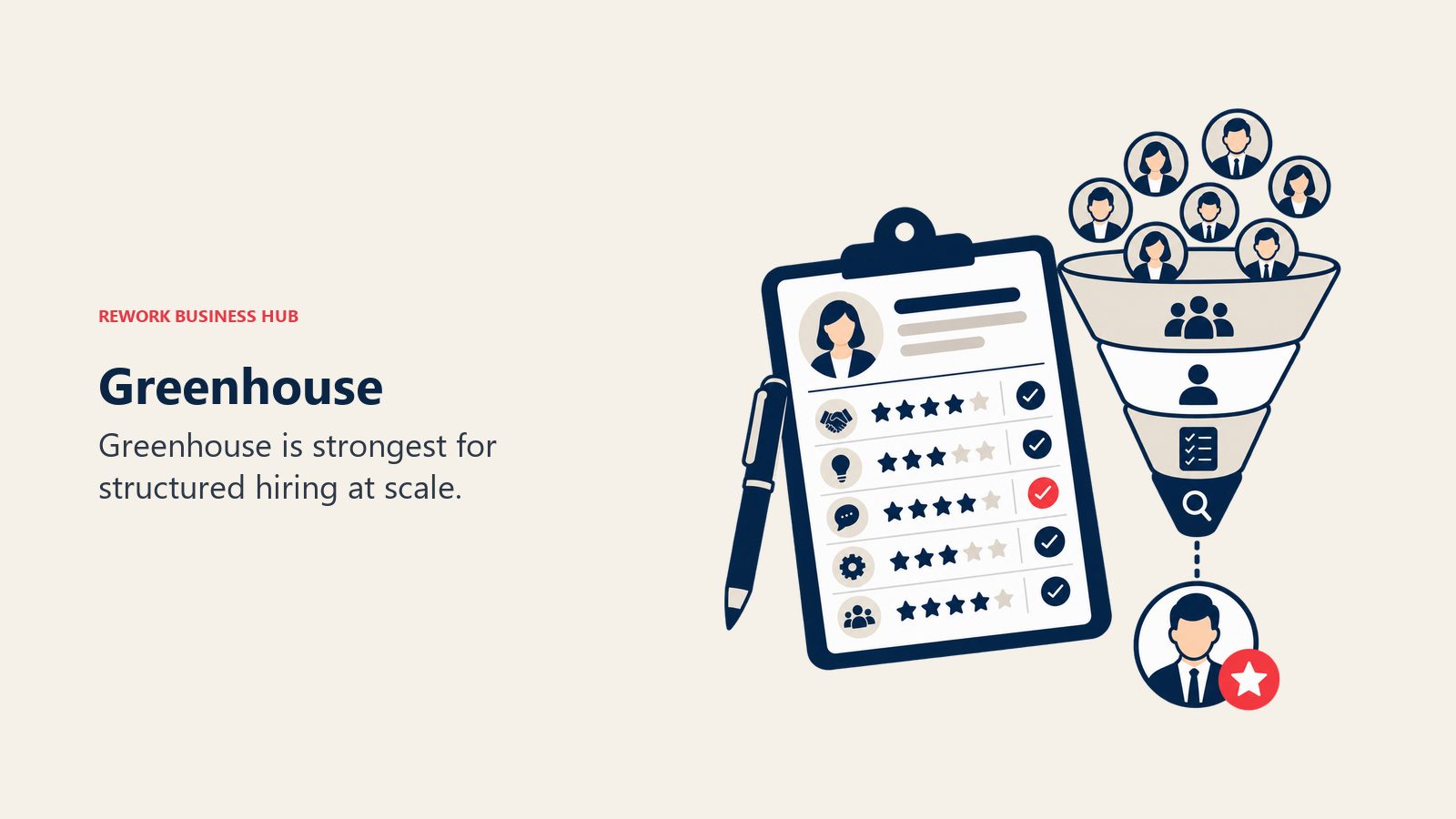
Greenhouse is the closest thing this list has to an industry default for companies that treat hiring as a repeatable, measurable process. Its interview kits, structured scorecards, and DEI-focused hiring plans are why it shows up in nearly every "best structured hiring" conversation. If interviewers rate candidates inconsistently and nobody can explain a hiring decision six months later, Greenhouse addresses that directly.
The catch is pricing and setup. Greenhouse doesn't publish a rate card: small teams commonly land around $5,100-6,500 a year on Core, mid-market companies pay $15,000-40,000 on Advanced, and enterprise Pro contracts regularly exceed $70,000, with a reported median around $26,587. Implementation runs $1,000-15,000, and renewal increases of 8-15% are common. For the direct read against the next name on this list, see Greenhouse vs Lever.
| What you get | What you don't |
|---|---|
| Structured interview kits and calibrated scorecards | Published, self-serve pricing |
| Strong DEI-focused hiring workflows | Fast, low-friction implementation |
| Large integration marketplace | Predictable renewal pricing |
| Deep reporting for structured processes | Workable's simplicity for a small, fast-moving team |
Pricing: Custom quote; commonly $5,100-6,500/yr for small teams, scaling to $70,000+/yr at enterprise size. The head-to-head sits at Workable vs Greenhouse. Best for: Mid-market and enterprise teams that want a repeatable, calibrated interview process and are willing to pay for structure. Not ideal for: Small teams that just want a fast, self-serve setup without a sales conversation. See best Greenhouse alternatives if the pricing opacity is the dealbreaker.
2. Lever: Talent CRM Built Into the ATS
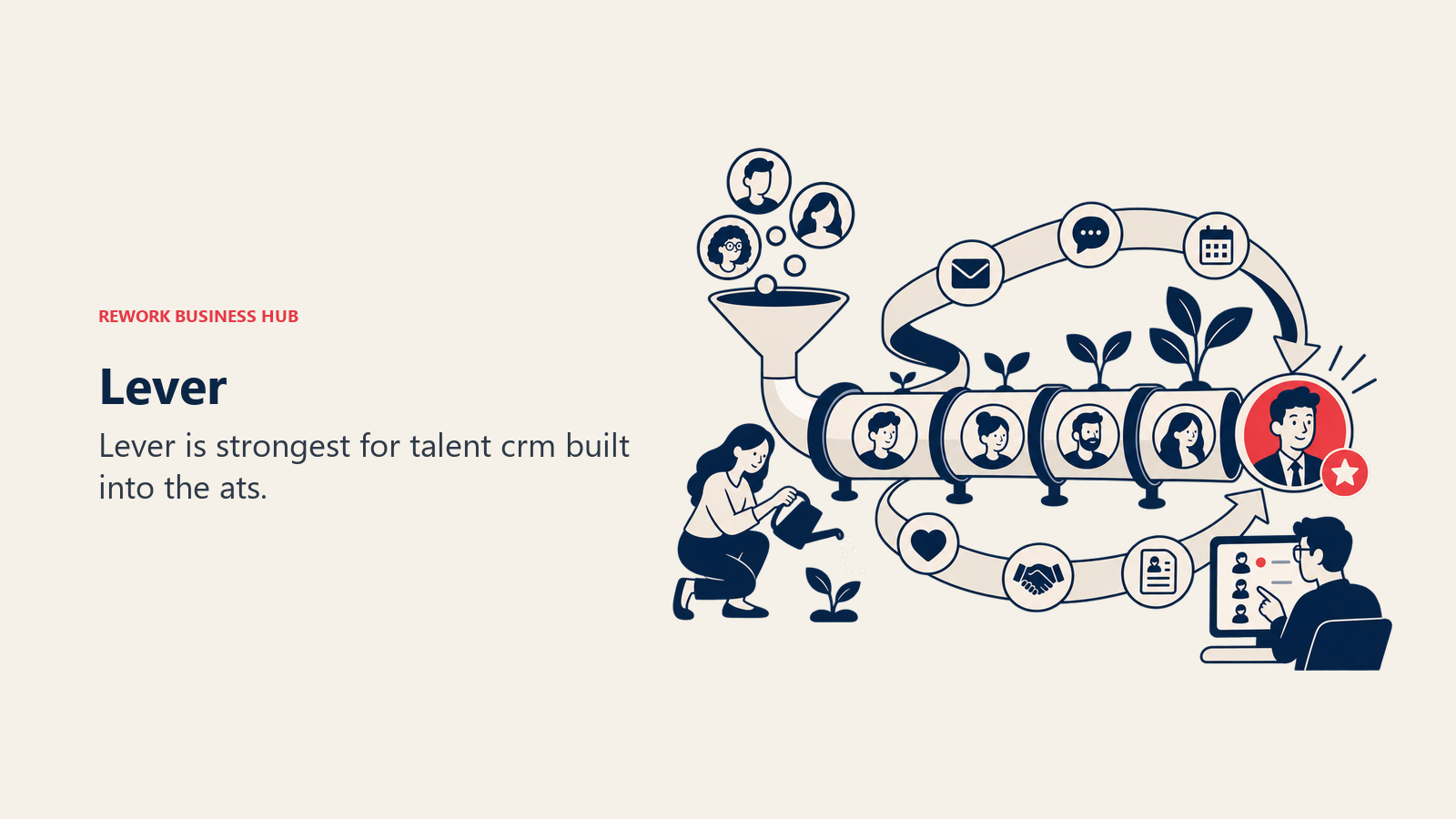
Lever's pitch is that recruiting shouldn't stop at the current requisition. Its nurture campaigns let recruiters build and warm up talent pools of passive candidates, so when a role opens, sourcing doesn't start from zero. That CRM-style layer is genuinely differentiated, which is why RevOps-adjacent recruiting teams often prefer it over a pure pipeline tool.
Lever has been part of Employ Inc since K1 Investment Management's 2022 acquisition, the same parent that owns JazzHR and Jobvite. Pricing isn't published: base Hire deals commonly run $3,500-15,000+/year, and Vendr's 2025 buyer data puts the median cost for a 200-employee company at roughly $12,240, climbing to $36,778 at 500 employees and $63,172 at 1,000. See best Lever alternatives for the direct comparison.
| What you get | What you don't |
|---|---|
| CRM-style nurture campaigns for passive candidates | Published list pricing |
| Solid structured interview tooling | Independence from Employ Inc's broader roadmap |
| Scalable talent relationship management | Workable's flat, headcount-based simplicity |
| Good analytics for pipeline health | A budget option for small teams |
Pricing: Custom quote; roughly $3,500-15,000+/yr depending on headcount and modules. Best for: Mid-market teams with a proactive sourcing motion who want to build talent pools before roles open. Not ideal for: Teams that want transparent, self-serve pricing without a sales cycle.
3. Ashby: Recruiting Analytics for Data-Forward Teams
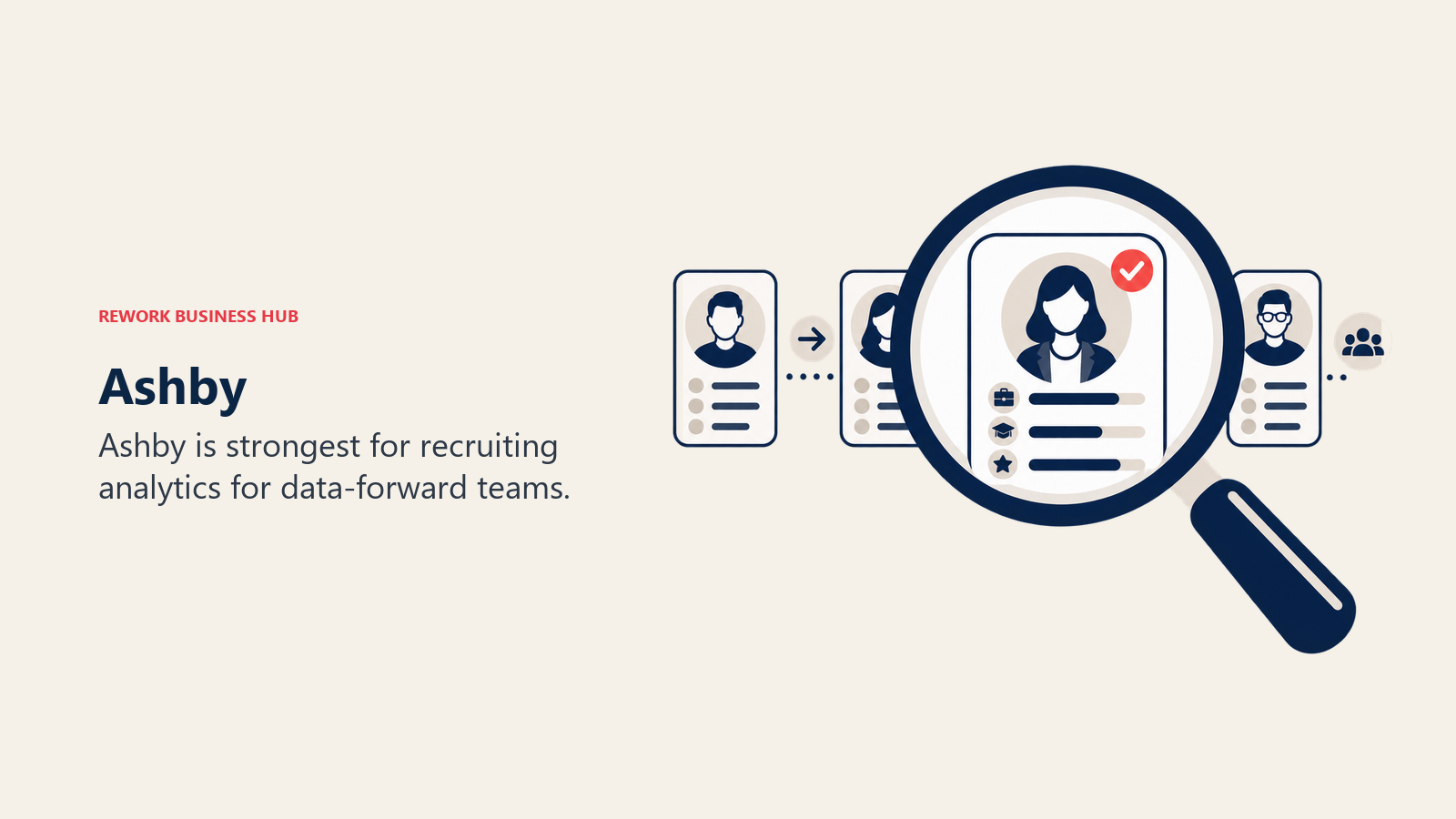
Ashby is the newest serious entrant here, and it earned its reputation by shipping recruiting analytics genuinely a level above Greenhouse, Lever, or Workable. Pipeline conversion by source, interviewer calibration, and forecasting come native, not bolted on through a BI export, a strong fit for tech-heavy teams that already think in funnels.
That depth comes at a price. Foundations starts at $400/month ($360 annual) for up to 100 employees, roughly double what Greenhouse or Lever charge at a comparable size. Plus and Enterprise are custom-quoted, up to $120,000+/year for larger organizations, and there's no free trial to de-risk a pilot.
| What you get | What you don't |
|---|---|
| Best-in-class recruiting analytics and reporting | An entry-level price point |
| Native interview scheduling | A free trial to de-risk the decision |
| Strong fit for engineering-heavy hiring | Budget-tier pricing for small teams |
| Modern, fast-moving product roadmap | Deep employer-branding tools |
Pricing: From $400/mo (Foundations); Plus and Enterprise custom-quoted, up to $120,000+/yr at larger scale. Best for: Data-forward, tech-heavy recruiting teams that already track funnel metrics and want an ATS built around them. Not ideal for: Budget-conscious SMBs; Ashby's entry price is roughly double Greenhouse's at a similar headcount.
4. JazzHR: Flat, Predictable Pricing for Lean Teams
JazzHR (also part of Employ Inc, alongside Lever and Jobvite) solves one problem: unpredictable, headcount-scaled pricing. Every plan is a flat annual fee rather than a per-seat rate, the opposite of Workable's per-headcount-band model.
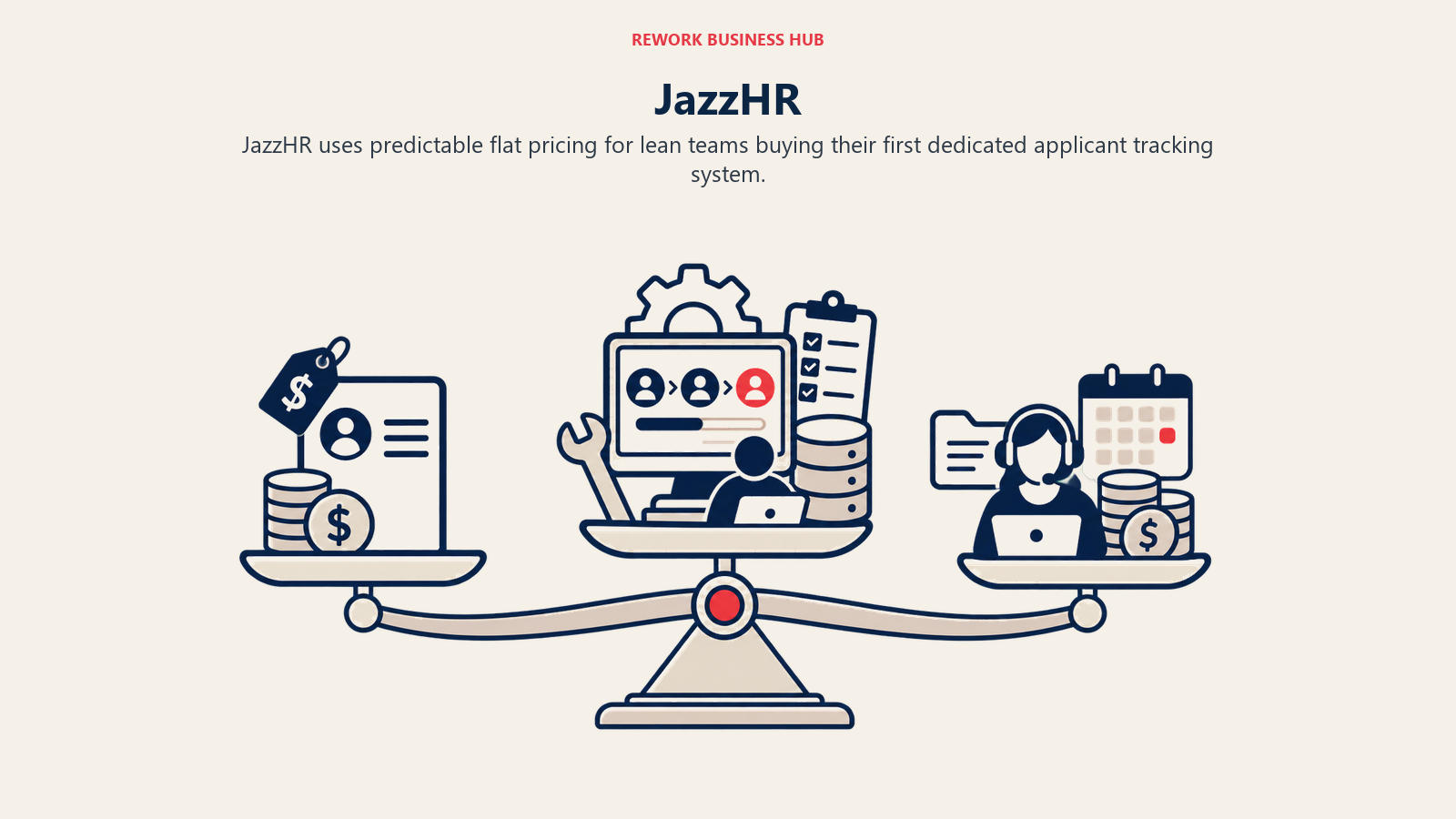
Hero starts at $1,000/yr billed annually with three job postings a month. Plus runs $3,480/yr for up to 200 open jobs with custom workflows. Pro is $420/month annual with the deepest feature set. Texting and eSignatures cost extra on lower tiers, and analytics depth doesn't rival Ashby or Greenhouse, but a lean team gets a predictable bill in exchange.
| What you get | What you don't |
|---|---|
| Flat, predictable monthly pricing | Deep recruiting analytics |
| Unlimited hiring-manager and coordinator seats | Native texting or eSignature on lower tiers |
| Fast, simple setup | Advanced structured-hiring tooling |
| Job board syndication included | Independence from Employ Inc's shared roadmap |
Pricing: From $1,000/yr (Hero) to $5,508/yr (Pro), billed annually, flat fee. Best for: Lean SMB teams that want the cheapest predictable ATS on this list without per-user math. Not ideal for: Teams that need Ashby-level analytics or Greenhouse-level structured hiring depth.
5. Recruitee: Visual Pipeline With Light Employer Branding
Recruitee (rebranded under parent company Tellent) sits in a similar niche to Workable: SMB and mid-market teams wanting a clean, visual pipeline without an enterprise sales cycle, differentiated by collaborative hiring and a career-page builder a step up from Workable's default.
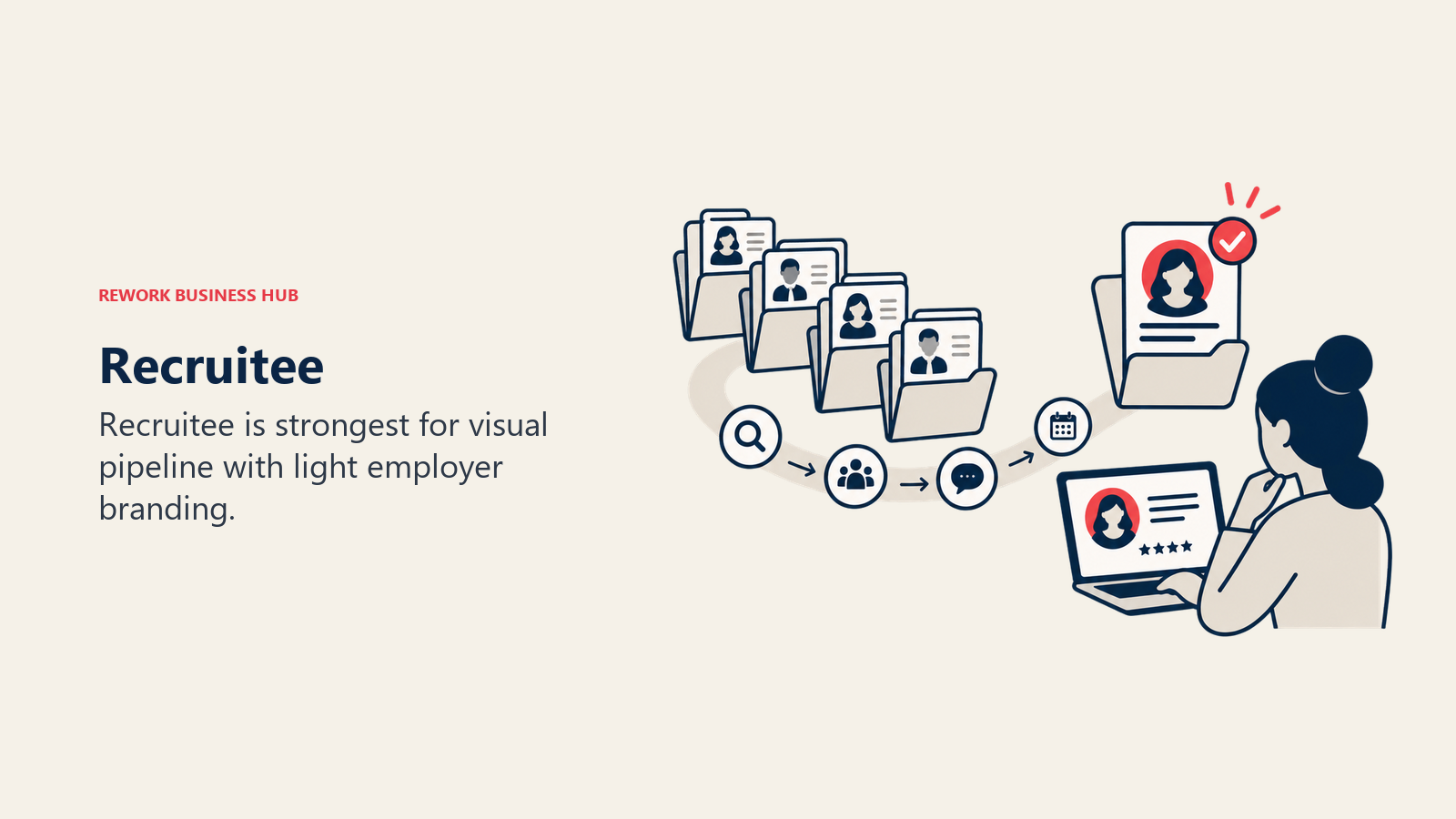
Recruitee shifted from per-job-slot pricing to an employee-count model in 2024, more predictable for a growing team. Launch starts around $199/month for 5 job slots, Scale runs roughly $399/month for 10, and Lead is custom-quoted. SMS, WhatsApp hiring, and advanced workflow automation ("Journeys") are separately priced add-ons, so the sticker price understates real cost.
| What you get | What you don't |
|---|---|
| Clean, visual collaborative pipeline | SMS or WhatsApp hiring included by default |
| Career-page builder with more polish than Workable's | Advanced workflow automation on lower tiers |
| Predictable employee-count pricing (since 2024) | Deep structured-interview scorecards |
| Solid mid-market fit | Ashby-level analytics |
Pricing: From roughly $199/mo (Launch) to $399/mo (Scale); Lead tier custom-quoted. Best for: SMB and mid-market teams that want a visual pipeline plus light employer branding without an enterprise sales process. Not ideal for: Teams that need SMS, WhatsApp, or advanced automation included rather than metered as add-ons.
6. Rework: Hiring Unified With HR and Ops
Rework is a different kind of alternative than the other 12 here. It doesn't compete on sourcing breadth, job-board syndication, or interview-kit depth, and shouldn't be evaluated as if it did. The reason it belongs on this list is what happens after an offer gets accepted: Rework's E-Hiring (ATS), Interview, and Career page modules run live inside the same People platform as HRIS, time & attendance, and timesheets. A candidate's record becomes an employee record without re-entry into a separate HR system, so hiring, HR, and operations work off the same data instead of handing off to a disconnected system at offer acceptance.
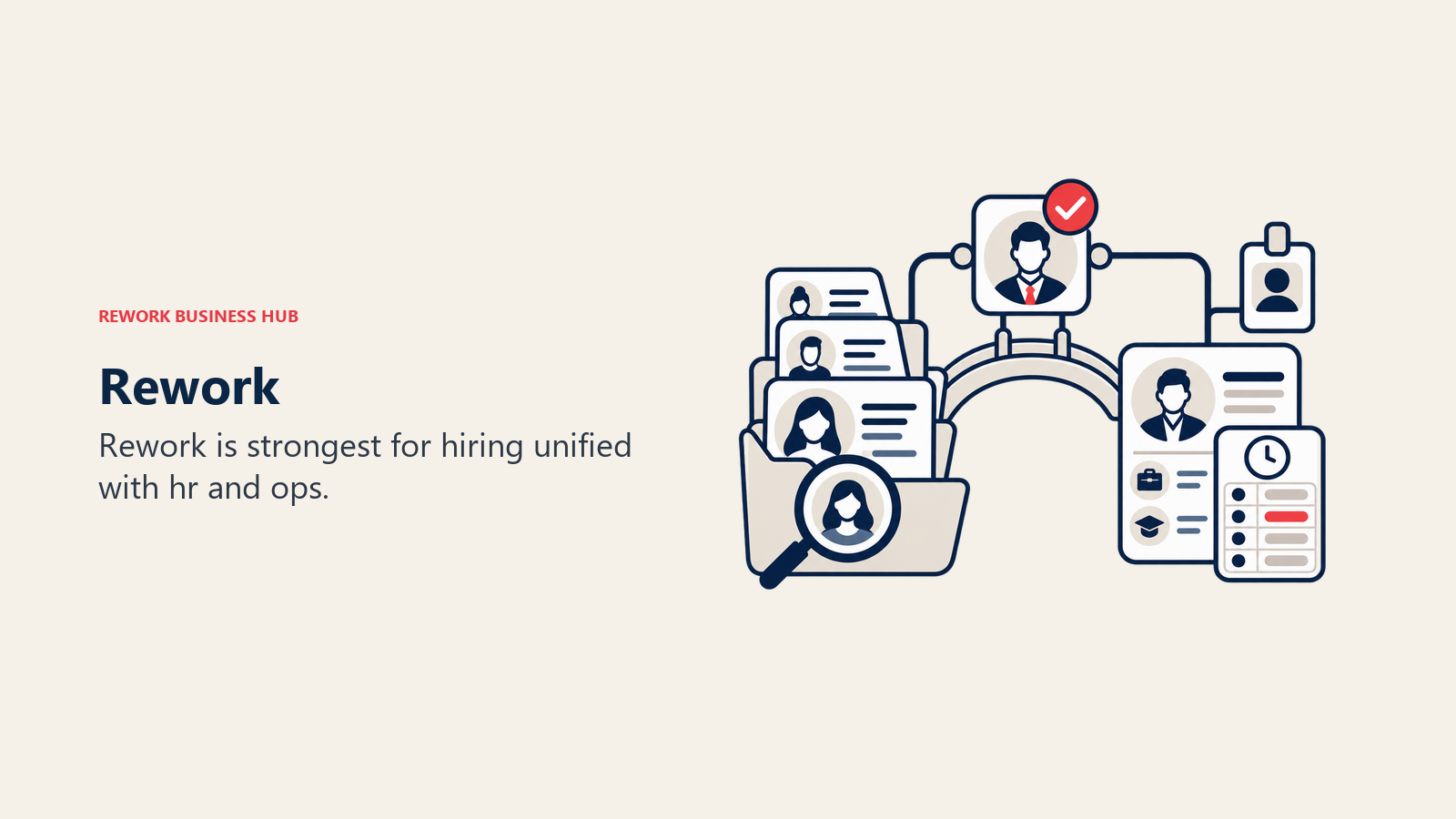
That's the real wedge for teams evaluating Workable alongside a broader HR consolidation project. If your honest problem is "our ATS, HRIS, and time-tracking tool don't talk to each other," Rework addresses that directly. If it's "we need deeper sourcing or structured scorecards," it doesn't, and you're better served by Greenhouse, Ashby, or Lever. Rework's People pricing isn't published; it's quoted per organization at rework.com/pricing.
| What you get | What you don't |
|---|---|
| E-Hiring, Interview, and Career live inside one People platform | Large public job-board syndication network |
| Candidate-to-employee record carryover at offer acceptance | Deep AI sourcing or a passive-candidate database |
| One platform instead of a hiring tool plus a separate HRIS | High-volume agency/staffing features (billing, VMS) |
| HR, time & attendance, and timesheets in the same system | Published, self-serve pricing |
Pricing: Quoted per organization. See rework.com/pricing. Best for: Companies already running (or planning to run) Rework for HR, ops, or CRM that want hiring folded into the same platform instead of a separate tool with its own login. Not ideal for: High-volume agency recruiting or teams that need a deep sourcing and talent-CRM pipeline; that's genuinely Greenhouse, Lever, or Ashby territory.
7. Breezy HR: Real Free Tier, Simple Pipeline
Breezy HR is the rare ATS with a genuinely usable free plan. Bootstrap costs nothing and covers one active position, enough for an early-stage team to try the product before committing budget. Every paid tier includes unlimited users at no extra per-seat cost, unlike Workable's headcount-banded pricing.
The trade-off is feature gating. Scorecards and eSignatures require Growth ($273/mo annual). HRIS integrations and offer management are reserved for Business ($439/mo annual). SMS, onboarding, and AI credits stack on top, so a fully-featured Growth setup runs roughly a third above the headline price.
| What you get | What you don't |
|---|---|
| A genuinely free entry tier | Interview scorecards below the Growth plan |
| Unlimited users on every paid plan | HRIS sync below the Business plan |
| Simple, fast onboarding | Ashby- or Greenhouse-level structured hiring |
| Transparent published pricing | Bundled add-ons at the advertised price |
Pricing: Free (Bootstrap, 1 job) to $439/mo (Business, annual); Pro custom-quoted. Best for: Very small or budget-constrained teams that want to try an ATS for free before paying for anything. Not ideal for: Teams that need scorecards or HRIS sync without upgrading past the entry tiers.
8. Teamtailor: Employer Branding and Career Sites First
Teamtailor's core differentiator is the career site, not the pipeline. Its career-page builder is closer to a lightweight CMS than a bolt-on feature, the strongest choice here for a company whose bottleneck is candidate volume and employer brand, not pipeline mechanics.
Pricing is custom and priced by concurrently open job slots rather than seats or headcount, and it's not published. Starter plans commonly begin around $300/month, and Business or Growth land in the $600-1,200/month range. Vendr's 2025 buyer data puts the average contract around $16,500-17,000/year, ranging up to $72,000+. Because pricing tracks concurrent openings, a hiring spike can push costs up sharply in a way headcount-based pricing wouldn't.
| What you get | What you don't |
|---|---|
| Best-in-class career site and employer branding | Published pricing |
| Unlimited users and job postings on every tier | Predictable costs during a hiring spike |
| Strong candidate experience and brand storytelling | Deep structured-interview tooling |
| Good mid-market to enterprise scalability | A free tier or self-serve signup |
Pricing: Custom quote; Starter around $300/mo, Business/Growth commonly $600-1,200/mo. Best for: Teams where employer branding and candidate experience are the primary hiring bottleneck, not pipeline mechanics. Not ideal for: Teams with unpredictable, spiky hiring volume who need cost certainty.
9. Pinpoint: Simple ATS for HR Generalists
Pinpoint is built for a specific buyer: an HR generalist or People team lead who owns hiring as one responsibility among several, not a dedicated recruiter running high-volume pipelines. Unlimited seats at every tier mean adding hiring managers never triggers a pricing conversation.
Pricing isn't public. Growth starts around $345/month annual, Scale sits in the middle, and Enterprise runs $1,200+/month, with typical all-in annual costs landing between $4,000 and $15,000. There's no free trial and no monthly billing, and onboarding plus API access are paid add-ons on higher tiers.
| What you get | What you don't |
|---|---|
| Unlimited seats at every tier | A free trial |
| Simpler setup than a dedicated recruiting ATS | Monthly billing (annual contracts only) |
| Solid fit for HR-led (not recruiter-led) hiring | API access without an Enterprise upgrade |
| Headcount-banded, not per-seat, pricing | Ashby-level analytics or Greenhouse-level scorecards |
Pricing: Custom quote; Growth around $345/mo, Enterprise $1,200+/mo. Best for: HR generalists managing hiring as part of a broader People role, not a dedicated recruiting team. Not ideal for: Teams that want to test-drive before buying; there's no trial and no monthly option.
10. SmartRecruiters: Enterprise Scale, Now Backed by SAP
SmartRecruiters became part of SAP when the acquisition closed on September 11, 2025, and it continues operating as a standalone product interoperable with SAP SuccessFactors and other HCM systems, according to SAP's own announcement. For enterprises already on SAP, that's a real integration advantage. Its AI-driven matching and conversational sourcing were well-regarded before the acquisition; more than 140 million candidates and 4,000 organizations, including Amazon and Visa, have run hiring through the platform.
The acquisition changed the pricing floor. SmartRecruiters no longer offers a free tier, and Essential now starts at $14,995/year. Professional, High Volume, and Complete are custom-quoted, commonly $25,000-100,000+/year depending on headcount. A revised 2026 licensing structure under SAP ownership is expected to raise prices further.
| What you get | What you don't |
|---|---|
| AI-driven candidate matching and sourcing | A free or entry-level tier |
| Large marketplace of vetted integrations | Predictable pricing post-acquisition |
| Interoperability with SAP SuccessFactors | Workable's simplicity for a small team |
| Enterprise-grade scale and support | Independence from SAP's roadmap decisions |
Pricing: From $14,995/yr (Essential); Professional, High Volume, and Complete custom-quoted, $25,000-100,000+/yr. Best for: Large enterprises, especially those already on SAP SuccessFactors, that want AI-forward sourcing at scale. Not ideal for: SMBs; the free tier is gone and the entry point now sits well above every other tool on this list.
11. Zoho Recruit: Budget-Friendly, Works for Agencies Too
Zoho Recruit is the value play here, and unusually for an ATS, it publishes a real Forever Free tier (one active job) alongside transparent per-user pricing: Standard $25/user/month, Professional $50, Enterprise $75, all billed annually. It's also one of the few tools built to serve both internal hiring teams and staffing agencies.
The trade-off is depth and polish. Client portals, video interviews, and storage upgrades are separately priced modules that can push the real monthly cost 30-50% above the advertised rate, and the interface is less refined than Workable's. Already inside the Zoho ecosystem? The integration story is a real advantage; if not, it's simply the cheapest credible option here.
| What you get | What you don't |
|---|---|
| A genuinely usable free tier | Workable-level interface polish |
| Transparent, published per-user pricing | Included client portals or video interviews |
| Works for both internal hiring and agency recruiting | Deep structured-interview or analytics tooling |
| Deep integration with 50+ Zoho apps | Independence from the broader Zoho ecosystem |
Pricing: Free tier available; $25/user/mo (Standard) to $75/user/mo (Enterprise), billed annually. Best for: Budget-conscious internal teams or small agencies, especially those already using other Zoho products. Not ideal for: Teams that want built-in video interviewing or client portals without add-on pricing.
12. iCIMS: Enterprise Talent Cloud
iCIMS is built for organizations north of 1,000 employees that need more than an ATS: a full "Talent Cloud" spanning applicant tracking, CRM-style sourcing, onboarding, and internal mobility. Its compliance and reporting depth is a genuine strength for regulated industries (healthcare, financial services, government contractors) where audit trails and EEO reporting matter.
That scope comes with enterprise-grade cost. Pricing is custom-quoted; Vendr's 2025 buyer data puts the average iCIMS contract at $20,781/year, though full deployments (1,000-10,000+ employees) commonly run $60,000-150,000+/year, with reported contracts up to $635,000. Implementation adds $15,000-25,000, and buyers report aggressive renewal increases of 10-15%.
| What you get | What you don't |
|---|---|
| Full Talent Cloud (ATS, CRM, onboarding, mobility) | Fast or inexpensive implementation |
| Deep compliance and EEO reporting | Predictable renewal pricing |
| Strong fit for large, regulated organizations | A tool a 50-person company should evaluate |
| Extensive configurability | Workable's out-of-the-box simplicity |
Pricing: Custom quote; average reported contract around $20,781/yr, enterprise deployments $60,000-150,000+/yr. Best for: Large, regulated enterprises (1,000+ employees) that need a full talent management suite, not just an ATS. Not ideal for: Any company under roughly 500 employees; the implementation cost and complexity aren't justified at that scale.
13. Bullhorn: Built for Staffing Agencies, Not Internal Hiring
Bullhorn deserves a place here for one reason: if your organization is a staffing or recruiting agency placing candidates with external clients rather than hiring for itself, none of the other 12 tools are built for your workflow. Bullhorn ships billing, VMS (vendor management system) integrations, and a client-facing CRM alongside its ATS, the combination an agency needs and a corporate hiring team never will.
Pricing is quote-based and per user: Starter around $99/user/month, Core around $165, Pro custom above that, with some buyers reporting $249-315+/user/month for the fullest feature set. Firms below roughly 200 seats often find better value elsewhere; above 500 seats running multi-vertical operations, it remains the category standard.
| What you get | What you don't |
|---|---|
| Built-in billing and VMS integrations for agencies | Relevance to an internal corporate hiring team |
| Client-facing CRM alongside the ATS | Budget pricing for smaller agencies |
| Category-standard fit for large staffing firms | A simple, fast self-serve setup |
| Deep placement and commission tracking | Workable-level ease of use |
Pricing: Quote-based, per user; roughly $99/user/mo (Starter) to $165/user/mo (Core), Pro custom. Best for: Staffing and recruiting agencies placing candidates for external clients, especially above 500 seats. Not ideal for: Internal corporate hiring teams; Bullhorn solves a different problem than the other tools on this list.
Why Teams Leave Workable
Workable earns its popularity honestly. Setup is genuinely fast, its job-board syndication network (200+ boards including LinkedIn, Indeed, and Glassdoor) is among the broadest in the category, and its AI sourcing tool builds an instant shortlist from a 400 million-profile database the moment a recruiter opens a new job. For a company of roughly 51-1,000 employees hiring at a steady pace, that's a strong, low-friction start. The reasons teams eventually move on fall into four buckets.
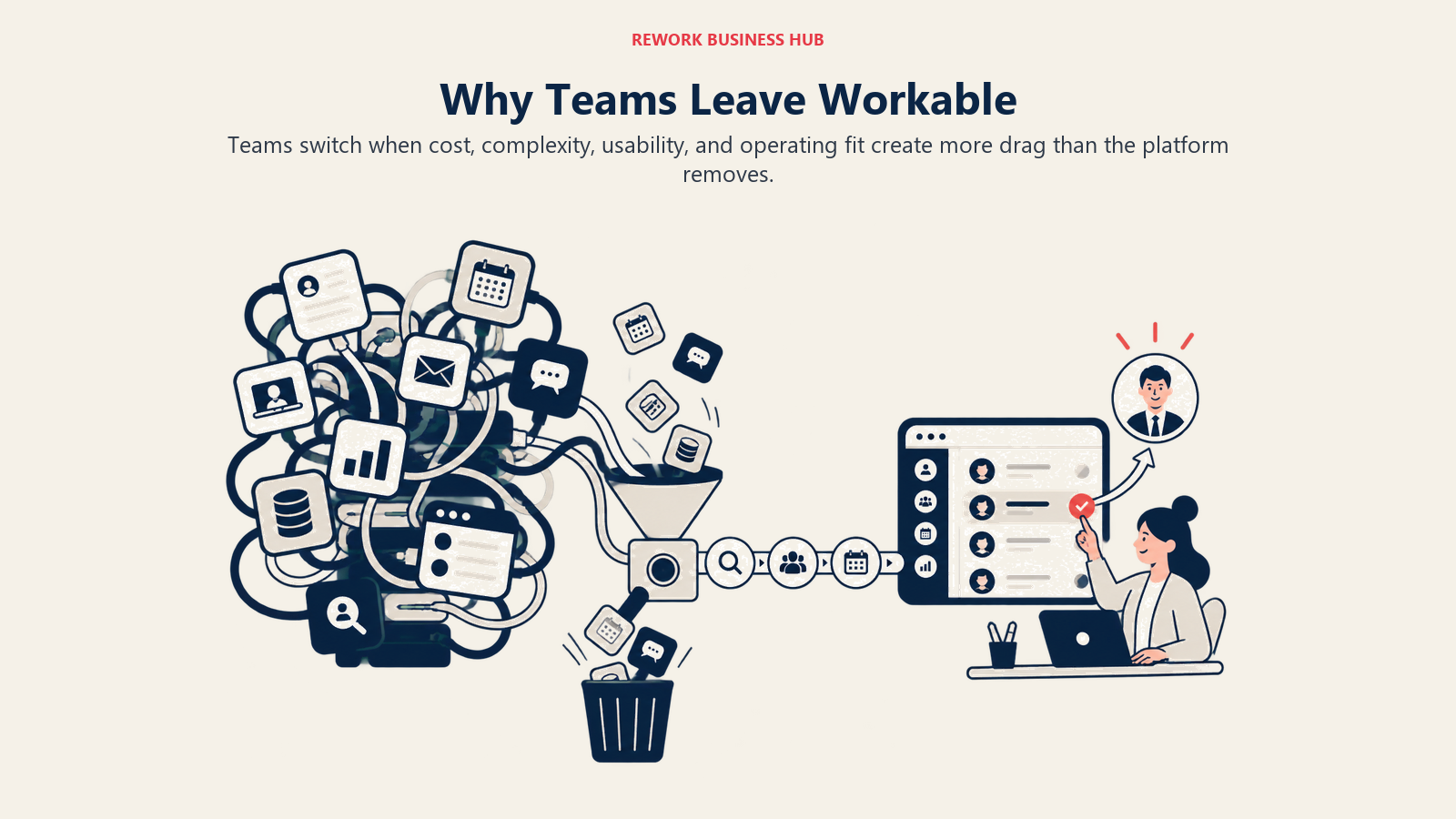
Pricing climbs with headcount, not hiring activity. Workable's tiers, Standard at $299/mo, Premier at $599/mo, Enterprise at $719/mo, are banded by total employee headcount rather than how much you're actually hiring. A company that grows from 40 to 90 employees pays more at renewal even if hiring volume stayed flat. Teams hiring 10+ roles simultaneously also run into per-job pricing pressure. The Recruiter Tools and Tech Stack guide breaks down what each layer of a recruiting stack actually costs before you assume the next tool will be cheaper.
Structured hiring tools sit behind higher tiers or don't exist at all. Interview scheduling, assessments, and deeper reporting require Premier or Enterprise, and even there, Workable doesn't offer the calibrated scorecards and interview kits that Greenhouse or Ashby ship natively. That matters more than it sounds: structured interviews predict job performance with a validity coefficient of 0.42, the strongest of any common selection method, while unstructured, gut-feel interviews barely beat chance. The Interview Scorecards vs Rubrics guide walks through building that evaluation infrastructure regardless of which ATS you land on.
AI sourcing is a strength, but AI elsewhere in the workflow is thinner. Workable's sourcing AI is genuinely good at finding candidates. It's thinner on resume screening depth, communication automation, and calibration support, areas Ashby and SmartRecruiters invest in more heavily. Recruiting teams now use AI broadly: 51% of organizations use it specifically for recruiting as of 2025, up from 26% the year before. The AI in the Recruiter Workflow guide covers where that automation helps and where it damages candidate experience.
The team outgrows a general ATS and needs more depth or more consolidation. Some leave for Ashby's analytics or Greenhouse's structured process, more ATS depth in the same direction Workable already points. Others leave because hiring, HR, and time tracking live in three disconnected systems with no single source of truth. Different problems, different right answers, which is why this list covers both directions.
How to Choose: Decision Framework
Match the tool to the specific gap driving your search, not to brand recognition. A team leaving Workable for structured hiring shouldn't make the same choice as one leaving for HR consolidation.
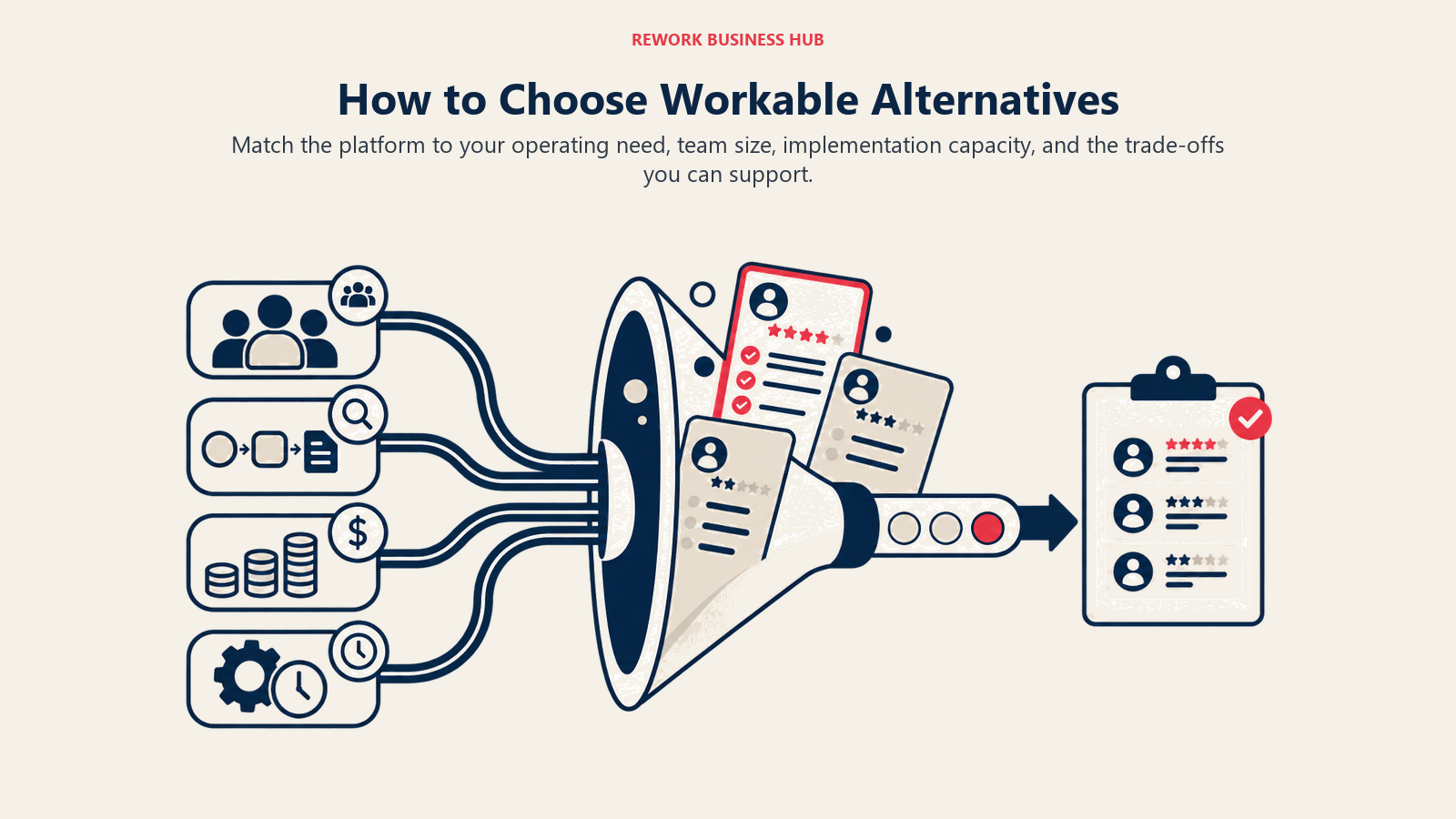
| If your team needs... | Best pick |
|---|---|
| Structured scorecards, interview kits, and DEI-focused hiring at scale | Greenhouse |
| CRM-style nurture campaigns for passive candidate pools | Lever |
| Best-in-class recruiting analytics for a data-forward team | Ashby |
| Flat, predictable annual pricing that is not charged per seat | JazzHR |
| A visual pipeline plus light employer branding | Recruitee |
| Hiring unified with HRIS, time & attendance, and timesheets | Rework |
| A genuinely free tier to start | Breezy HR or Zoho Recruit |
| A career site and employer branding as the primary bottleneck | Teamtailor |
| A simple ATS for an HR generalist, not a dedicated recruiter | Pinpoint |
| Enterprise scale with deep SAP integration | SmartRecruiters |
| A full enterprise Talent Cloud at 1,000+ employees | iCIMS |
| Staffing-agency workflows: billing, VMS, client CRM | Bullhorn |
What to Do Next
Narrow your list to two tools, then run each through a real hiring loop, not a sandbox demo. Post one live role in each, route it through your actual interview panel, and see where the friction shows up. If structured hiring is the gap driving your search, build (or borrow) your interview scorecards first; a better ATS won't fix an unstructured interview process on its own. Before signing anything, revisit the full recruiting software evaluation framework so pricing, compliance, and integration needs get weighed together.
If you're leaving Workable because hiring, HR, and time tracking live in three disconnected systems with no shared record, start with Rework instead of another standalone ATS. It's the only tool here solving that problem; see rework.com/pricing for a quote, and the best HR software roundup if you're evaluating the HRIS side too. For every other reason, the full applicant tracking system roundup covers the broader category.

Principal Product Marketing Strategist
On this page
- Key Facts
- Quick Comparison Table
- 1. Greenhouse: Structured Hiring at Scale
- 2. Lever: Talent CRM Built Into the ATS
- 3. Ashby: Recruiting Analytics for Data-Forward Teams
- 4. JazzHR: Flat, Predictable Pricing for Lean Teams
- 5. Recruitee: Visual Pipeline With Light Employer Branding
- 6. Rework: Hiring Unified With HR and Ops
- 7. Breezy HR: Real Free Tier, Simple Pipeline
- 8. Teamtailor: Employer Branding and Career Sites First
- 9. Pinpoint: Simple ATS for HR Generalists
- 10. SmartRecruiters: Enterprise Scale, Now Backed by SAP
- 11. Zoho Recruit: Budget-Friendly, Works for Agencies Too
- 12. iCIMS: Enterprise Talent Cloud
- 13. Bullhorn: Built for Staffing Agencies, Not Internal Hiring
- Why Teams Leave Workable
- How to Choose: Decision Framework
- What to Do Next