Best AI Tools for Paralegals in 2026: 13 Platforms for Document Review, Drafting, and Case Prep
Turn this article into takeaways for your work.


Each assistant summarizes the article only for you and suggests best practices for your work.
A generic "best legal AI" list is built for attorneys deciding whether to bet a practice on Harvey or CoCounsel. That is not the job most paralegals actually do. Paralegal work runs on a different set of tasks: reviewing and coding thousands of documents for a production, drafting discovery responses and organizing them against requests, checking citations before a brief goes out, running client intake, and keeping a case file organized so the attorney can find anything in seconds. This guide ranks 13 AI tools paralegals are actually using in 2026 for exactly those tasks, organized by workflow instead of by generic "legal AI" category. If you're an attorney evaluating firm-wide AI strategy, see our companion guide to the best AI tools for lawyers; if you work in IP and need claim drafting or prior art search, see the best AI tools for patent drafting instead. This one is scoped to the support-staff workflow: document review, e-discovery, cite-checking, intake, drafting support, and case organization.
Every tool below was evaluated on real paralegal workflow fit, not a features checklist repurposed from an attorney-focused review. Most e-discovery and enterprise legal AI vendors don't publish flat list prices, so figures marked "quote-based" or "estimated" reflect reported ranges, not a rate card. Confirm the current number with the vendor before you budget.
What Changed in 2026
- Relativity began including aiR for Review and aiR for Privilege inside standard RelativityOne subscriptions at no additional charge starting early 2026, a shift from the prior $0.20-$0.25 per document (or $3-$5 per GB) AI review used to add on top of the base platform.
- Everlaw made its single-document EverlawAI Assistant features (Writing Assistant, Deposition Analyzer, Single Document Review) free within the base subscription in 2026, moving only batch-level AI actions to usage-based pricing.
- LexisNexis retired the original Lexis+ AI product in February 2026 and replaced it with Lexis+ with Protégé, an end-to-end workflow platform built around more than 300 agentic workflows rather than a single chat assistant.
- DISCO moved to a single, transparent per-GB price on processed data with no ingest fees and unlimited use of Cecilia AI included, making per-matter e-discovery costs easier to compare across vendors.
Key Facts
- 69% of paralegal billable hours are exposed to AI automation, compared with 57% for lawyers, per the 8am 2026 Legal Industry Report covered by LawSites.
- Clio's research found 69% of hourly billable work performed by paralegals could be automated by AI, with the remaining share running on judgment, client relationships, and quality control, per Clio's AI paralegal software resource.
- 79% of legal professionals now use AI tools in their work, up from just 19% in 2023, per Clio's 2025 Legal Trends Report.
- Relativity's aiR for Review helps teams complete document reviews up to 85% faster and uncover 10-20% more relevant documents than linear or traditional TAR review, per Relativity's own aiR for Review page.
- The top reasons legal professionals use AI are case or legal research (66%), summarizing case histories (39%), and document drafting, review, and analysis (36%), per the 8am 2026 Legal Industry Report.
- Only 9% of firms report a written AI policy that is actually enforced, while 43% have no formal AI policy and no plans to create one, per the same 8am 2026 Legal Industry Report.
- The U.S. Bureau of Labor Statistics projects 39,300 annual paralegal job openings through 2034, with 367,220 paralegals currently employed at a median salary of $61,010, per ParalegalEdu.org's 2026 job security analysis.
Quick Comparison Table
| Tool | Best For | Standout Capability | Starting Price | Free Tier / Trial? |
|---|---|---|---|---|
| Everlaw | Litigation teams running e-discovery and document review | Single-document AI actions (writing assistant, deposition analyzer, review) now free with subscription | Roughly $2,000-$5,000/mo base plus $18-$35/GB hosting | Demo available; no public free tier |
| Relativity aiR for Review | Enterprise litigation teams already on RelativityOne | AI document review now included at no extra charge, up to 85% faster than linear review | RelativityOne plans roughly $500-$25,000/mo | No; sales-quoted plans |
| DISCO (Cecilia AI) | Teams wanting one all-inclusive per-GB e-discovery price | Cecilia Auto Review processes about 25,000 documents/hour, included in base price | Per-GB processed data pricing, quote-based | Demo available |
| Reveal (Logikcull) | Solo paralegals and small teams needing affordable e-discovery | No per-seat fee; entire firm on one subscription, scale up or down per matter | From about $250/mo | No permanent free tier; pay-as-you-go |
| Briefpoint | Discovery drafting and document-to-request organization | Auto-drafts interrogatories, RFPs, and RFAs, and labels documents against discovery requests | Roughly $89-$210+/mo, quote-based | Demo required |
| Spellbook | Contract review and redlining inside Microsoft Word | Inline clause suggestions and playbook-based redlining in your existing Word workflow | $99/user/mo (Starter) | 14-day free trial |
| CoCounsel (Thomson Reuters) | Firms already on Westlaw wanting a broad AI assistant | Deposition prep, timelines, and document review tied to Westlaw content | Roughly $104-$639/user/mo | No; self-serve configurator under 10 attorneys |
| Lexis+ AI (with Protégé) | Firms standardized on LexisNexis research | 300+ agentic workflows for research, drafting, and case analysis | Roughly $125-$275/user/mo add-on | No; demo required |
| BriefCatch | Cite-checking and legal writing polish inside Word/Outlook | AI-powered Bluebook citation correction with 12,000+ rule sets | Enterprise $6,000-$100,000+/yr, scoped to team size | 7-day free trial (individual) |
| Clio Duo | Solo and small firms already using Clio | AI grounded in your own matter data for drafting and summarization | $39/user/mo add-on (or bundled in Clio Suite) | Clio offers a free trial of the base platform |
| Filevine (AI Copilot / ImmigrationAI) | Case management with built-in AI workflows | ImmigrationAI auto-fills USCIS forms and translates client intake into 170+ languages | Roughly $49-$87/user/mo entry, custom-quoted | Demo required |
| Gavel | Client intake automation and document assembly | Client-facing questionnaires that auto-populate intake documents | Free tier available; paid plans from about $83/mo | Yes, free tier available |
| ChatGPT Enterprise | General drafting, research support, and correspondence | Lowest cost per seat and the tool most legal staff already know from personal use | Roughly $50-$60/user/mo (150-seat minimum, annual) | Free ChatGPT tier exists but lacks Enterprise privacy/SSO |
Paralegal Workflow Coverage Matrix
Most paralegals touch several of these workflows in the same week. Use this to see which tool actually covers the task you're trying to solve, rather than assuming "AI for lawyers" automatically covers your job too.
| Tool | Document Review | E-Discovery | Cite-Checking | Intake | Drafting Support | Case Organization |
|---|---|---|---|---|---|---|
| Everlaw | Strong | Strong | Partial | No | Partial | Partial |
| Relativity aiR for Review | Strong | Strong | No | No | No | Partial |
| DISCO (Cecilia AI) | Strong | Strong | No | No | No | Partial |
| Reveal (Logikcull) | Partial | Strong | No | No | No | No |
| Briefpoint | Partial | No | No | No | Strong | Partial |
| Spellbook | Partial | No | No | No | Strong | No |
| CoCounsel | Strong | Partial | Partial | No | Strong | Partial |
| Lexis+ AI (with Protégé) | Partial | No | Strong | No | Strong | No |
| BriefCatch | No | No | Strong | No | Partial | No |
| Clio Duo | Partial | No | No | Partial | Strong | Strong |
| Filevine (AI Copilot) | No | No | No | Strong | Partial | Strong |
| Gavel | No | No | No | Strong | Partial | No |
| ChatGPT Enterprise | Partial | No | No | No | Partial | No |
Firm Size Fit Matrix
| Tool | Solo Paralegal | Small Firm (2-20) | Mid-Size (20-100) | Litigation Support / Enterprise (100+) |
|---|---|---|---|---|
| Everlaw | - | Possible | Strong fit | Strong fit |
| Relativity aiR for Review | - | - | Possible | Strong fit |
| DISCO (Cecilia AI) | - | Possible | Strong fit | Strong fit |
| Reveal (Logikcull) | Strong fit | Strong fit | Possible | - |
| Briefpoint | Strong fit | Strong fit | Possible | - |
| Spellbook | Possible | Strong fit | Strong fit | Possible |
| CoCounsel | Possible | Strong fit | Strong fit | Strong fit |
| Lexis+ AI (with Protégé) | Possible | Strong fit | Strong fit | Strong fit |
| BriefCatch | Strong fit | Strong fit | Strong fit | Possible |
| Clio Duo | Strong fit | Strong fit | Possible | - |
| Filevine (AI Copilot) | Possible | Strong fit | Strong fit | Possible |
| Gavel | Strong fit | Strong fit | Possible | - |
| ChatGPT Enterprise | Possible | Possible (via Go plan) | Strong fit | Strong fit |
Sizing and Persona Table
| Tool | Ideal Team Size | Primary Buyer Persona |
|---|---|---|
| Everlaw | 10-500+ litigation staff | Litigation support manager, E-discovery lead |
| Relativity aiR for Review | 20-1,000+ litigation staff | E-discovery manager, Litigation Support Director |
| DISCO (Cecilia AI) | 10-500+ litigation staff | Litigation support manager, IT/Legal Ops |
| Reveal (Logikcull) | 1-50 people | Solo paralegal, Small-firm litigation team |
| Briefpoint | 1-50 attorneys/paralegals | Litigation paralegal, Discovery coordinator |
| Spellbook | 5-100 attorneys/paralegals | Transactional paralegal, Corporate legal team |
| CoCounsel | 5-500+ attorneys | Litigation paralegal, Legal Ops, Knowledge Management |
| Lexis+ AI (with Protégé) | 5-500+ attorneys/paralegals | Research paralegal, Litigation and transactional teams |
| BriefCatch | 1-1,000+ legal professionals | Litigation paralegal, Appellate paralegal, Brief writer |
| Clio Duo | 1-20 attorneys/paralegals | Solo paralegal, Small-firm office manager |
| Filevine (AI Copilot) | 5-200 employees | Case manager, Paralegal supervisor, Immigration paralegal |
| Gavel | 1-50 employees | Intake coordinator, Solo/small-firm paralegal |
| ChatGPT Enterprise | 10-5,000+ employees | Any firm or department; not legal-specific |
1. Everlaw: AI-Powered E-Discovery and Document Review
Everlaw is a cloud-native e-discovery platform built around large-volume document review, and its AI layer, the EverlawAI Assistant, is scoped specifically to the work paralegals actually do during litigation: deposition analysis, single-document review, and writing assistance across a large document set. In 2026, Everlaw made its single-document AI features free within the base subscription, a real shift from the per-action pricing common across e-discovery AI.
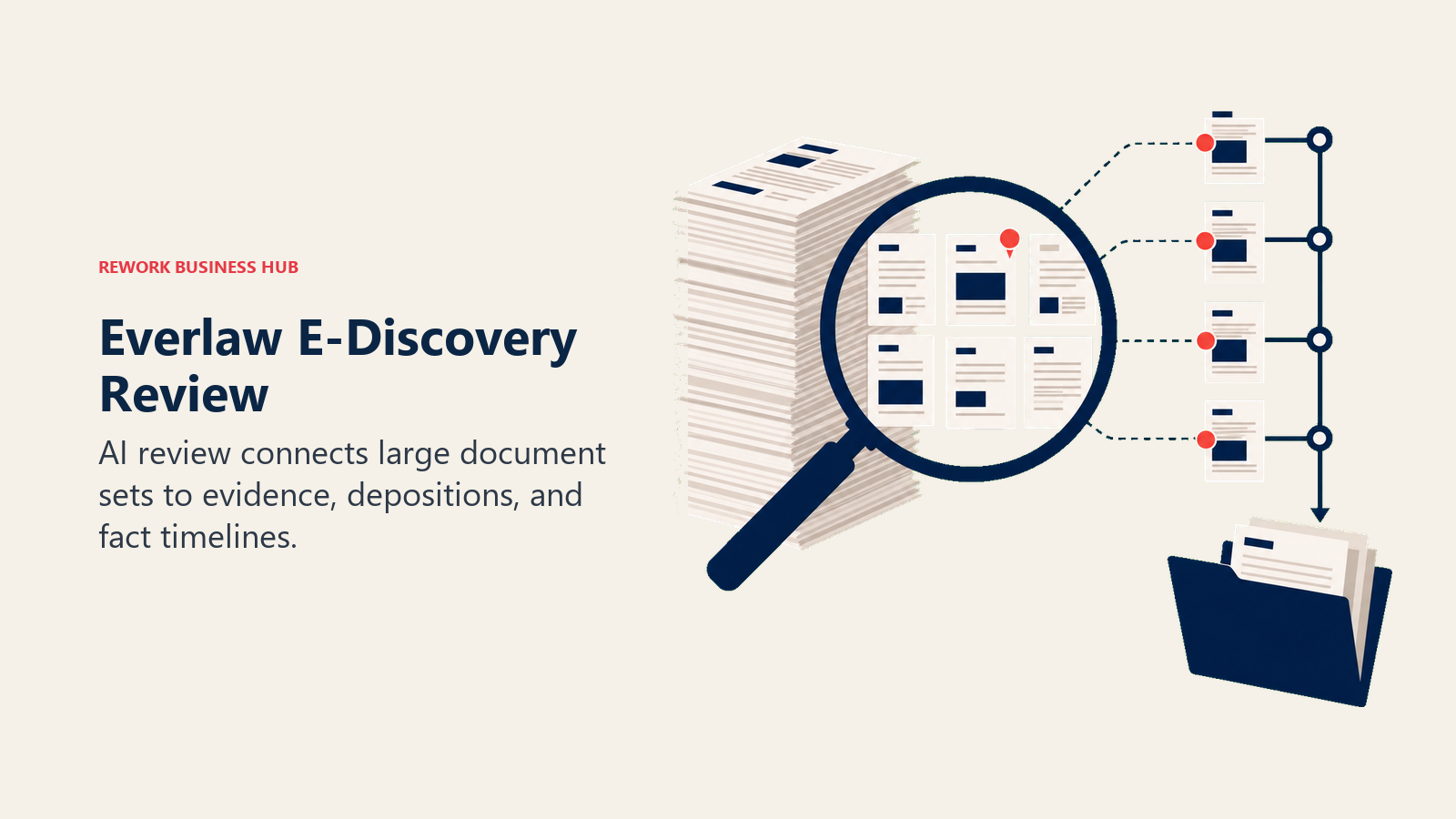
Best for: Litigation paralegals managing document review and e-discovery who need AI assistance across large volumes of case documents, not general research or drafting.
Key strengths:
- Single-document AI actions (writing assistant, deposition analyzer, document review) included in the base subscription at no extra cost
- No per-user licensing limits, so cost scales with data volume, not headcount, making it easy to add paralegal reviewers to a matter
- Storybuilder helps paralegals map document connections and build a fact timeline for the trial team
Limitations:
- Not a research or contract-drafting tool; scoped specifically to e-discovery and litigation document review
- Batch-level AI actions are still usage-based, so heavy AI use on large document sets adds cost on top of the base platform
- Pricing is quote-based and depends on data volume, which makes budget forecasting harder than a flat per-seat tool
| What you get | What you don't |
|---|---|
| Free single-document AI review and writing assistant | No published flat pricing |
| Unlimited reviewer seats on most plans | Batch AI actions billed by usage |
| Fact timeline and document-connection mapping | Not built for contract drafting or research |
Pricing: Roughly $2,000-$5,000/month base subscription plus $18-$35/GB for hosted data, per AI Vortex's Everlaw pricing analysis. Single-document AI Assistant features are included; confirm current batch-action pricing on Everlaw's own pricing page.
2. Relativity aiR for Review: Enterprise-Scale AI Document Review
Relativity is the document review platform most large litigation teams already run, and aiR for Review is its generative AI layer for first-pass document coding: relevance, privilege screening, and case-strategy summaries at scale. The biggest 2026 change is pricing: Relativity now bundles aiR for Review and aiR for Privilege into standard RelativityOne subscriptions at no additional charge, a shift from the per-document or per-GB AI fee that used to sit on top.
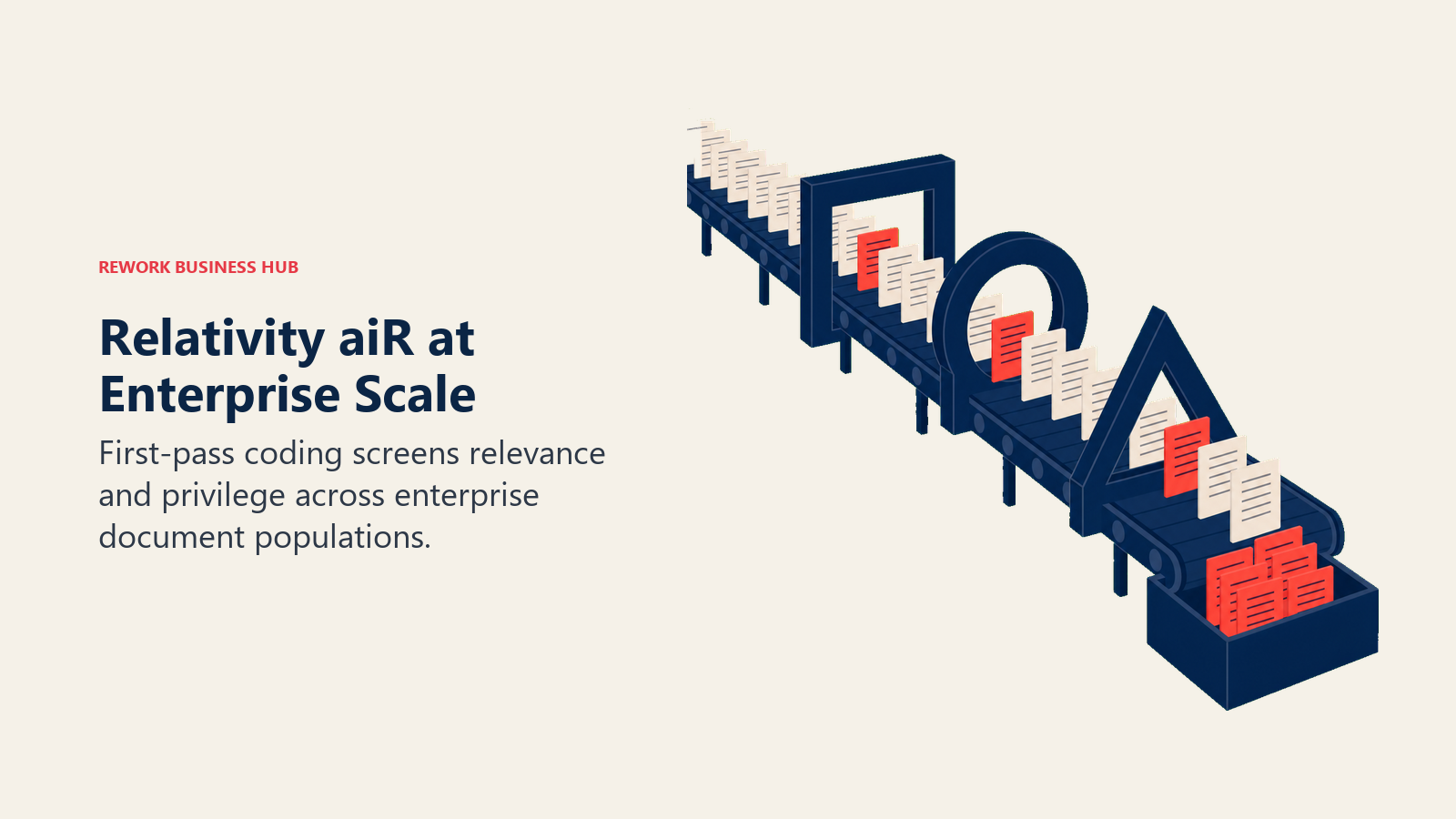
Best for: Litigation support teams already on RelativityOne who need AI-assisted first-pass review across very large document populations.
Key strengths:
- aiR for Review is now included in RelativityOne subscriptions rather than billed as a separate line item
- Completes reviews up to 85% faster and surfaces 10-20% more relevant documents than linear or traditional TAR review, per Relativity's own data
- Runs inside the same platform most enterprise litigation support teams and outside vendors already use, so there's no new tool to learn
Limitations:
- Only useful if your firm or vendor is already on RelativityOne; it's not a standalone product
- Base RelativityOne subscription pricing still ranges widely by contract size, from roughly $500 to $25,000/month
- Enterprise-oriented; overbuilt for a solo paralegal or small-firm caseload
| What you get | What you don't |
|---|---|
| AI review included at no extra charge in 2026 | Requires an existing RelativityOne subscription |
| Up to 85% faster review, per vendor data | Wide subscription price range by contract |
| Runs inside the platform most e-discovery vendors already use | Not designed for solo or small-firm use |
Pricing: RelativityOne plans run roughly $500-$25,000/month depending on data volume and contract size, per CostBench's Relativity pricing breakdown; aiR for Review and aiR for Privilege are included at no additional cost starting early 2026, per Relativity's own announcement.
3. DISCO (Cecilia AI): All-Inclusive Per-GB E-Discovery
DISCO takes a different pricing approach than most e-discovery platforms: one transparent per-GB price on processed data, no ingest fees, and unlimited use of Cecilia AI included rather than billed separately. For paralegals running document review day to day, that means Auto Review, which processes roughly 25,000 documents an hour using plain-English prompts, doesn't add a surprise line item to the matter budget.
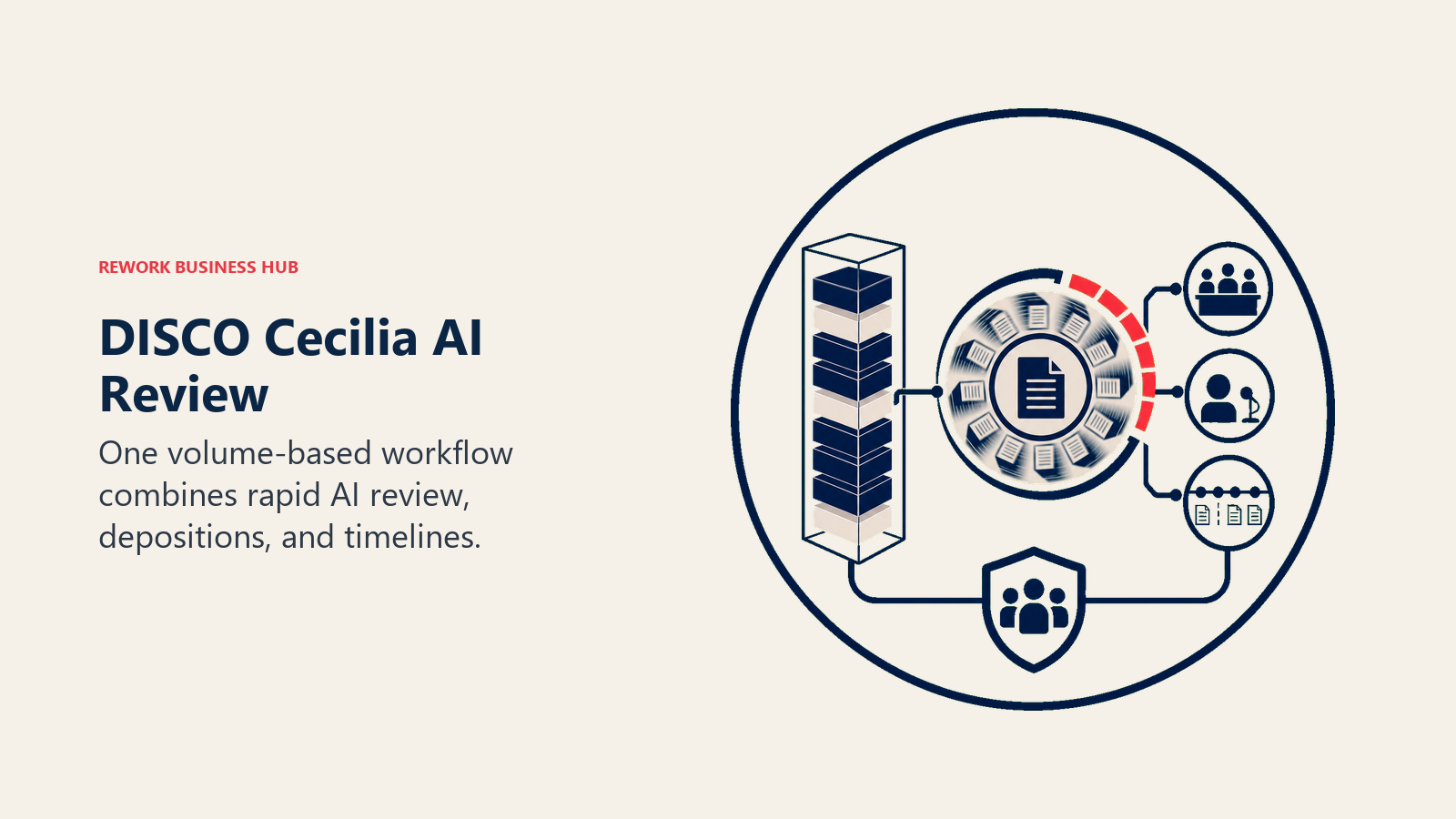
Best for: Litigation support teams that want one predictable per-GB price covering e-discovery, AI review, deposition management, and timelines together.
Key strengths:
- Cecilia AI's Auto Review handles roughly 25,000 documents per hour, included in the base price
- All-inclusive platform pricing bundles e-discovery, AI review, deposition management, and timelines into one per-GB fee
- Transparent per-GB pricing structure makes it easier to compare against Relativity or Everlaw on a like-for-like basis
Limitations:
- Pricing is not published as a flat rate card; you'll still need a quote for your specific data volume
- Per-GB pricing can still add up fast on very large productions, even without a separate AI fee
- Fewer standalone research or drafting features than a broader platform like CoCounsel
| What you get | What you don't |
|---|---|
| Unlimited Cecilia AI use included in the price | No published flat rate card |
| Auto Review at roughly 25,000 docs/hour | Per-GB cost still scales with data volume |
| One price covers review, depositions, and timelines | Narrower scope than a full research platform |
Pricing: Per-GB pricing on processed data with no ingest fees; Cecilia AI is included at no additional charge, per DISCO's own pricing page and DISCO's AI e-discovery feature page. Contact DISCO for a volume-based quote.
4. Reveal (Logikcull): Budget E-Discovery for Small Teams
Not every matter needs a six-figure e-discovery platform. Logikcull (now part of Reveal) solved a different problem: making e-discovery accessible to solo paralegals and small litigation teams who don't have a dedicated e-discovery budget or staff. There's no per-seat fee, so the whole firm can access a matter on one subscription, and its AI "ASK" feature helps a paralegal quickly surface facts, themes, and key actors across a document set with citations back to source documents.
Best for: Solo paralegals and small firms that need affordable, self-service e-discovery without committing to an enterprise platform.
Key strengths:
- No per-seat fee; the entire firm can work a matter on one subscription
- Pay-as-you-go model lets you spin up for a case and scale down after, ideal for firms with variable litigation volume
- AI "ASK" feature answers fact and theme questions across a document set with evidence-backed citations
Limitations:
- Fewer advanced analytics and AI-assisted review features than premium platforms like Relativity or Everlaw
- Best suited to smaller productions; large enterprise matters will likely outgrow it
- No long-term contract also means no locked-in volume discount the way enterprise deals get
| What you get | What you don't |
|---|---|
| No per-seat licensing; entire firm on one plan | Fewer advanced review analytics than premium platforms |
| Pay-as-you-go, no long-term contract required | Best fit is smaller, not enterprise-scale, productions |
| AI ASK feature with cited fact/theme extraction | Less depth than Relativity or Everlaw on complex matters |
Pricing: Starts around $250/month for basic access, scaling with data volume; typical active use runs roughly $500-$2,000/month, per AI Vortex's Logikcull review.
5. Briefpoint: AI Discovery Drafting and Document Organization
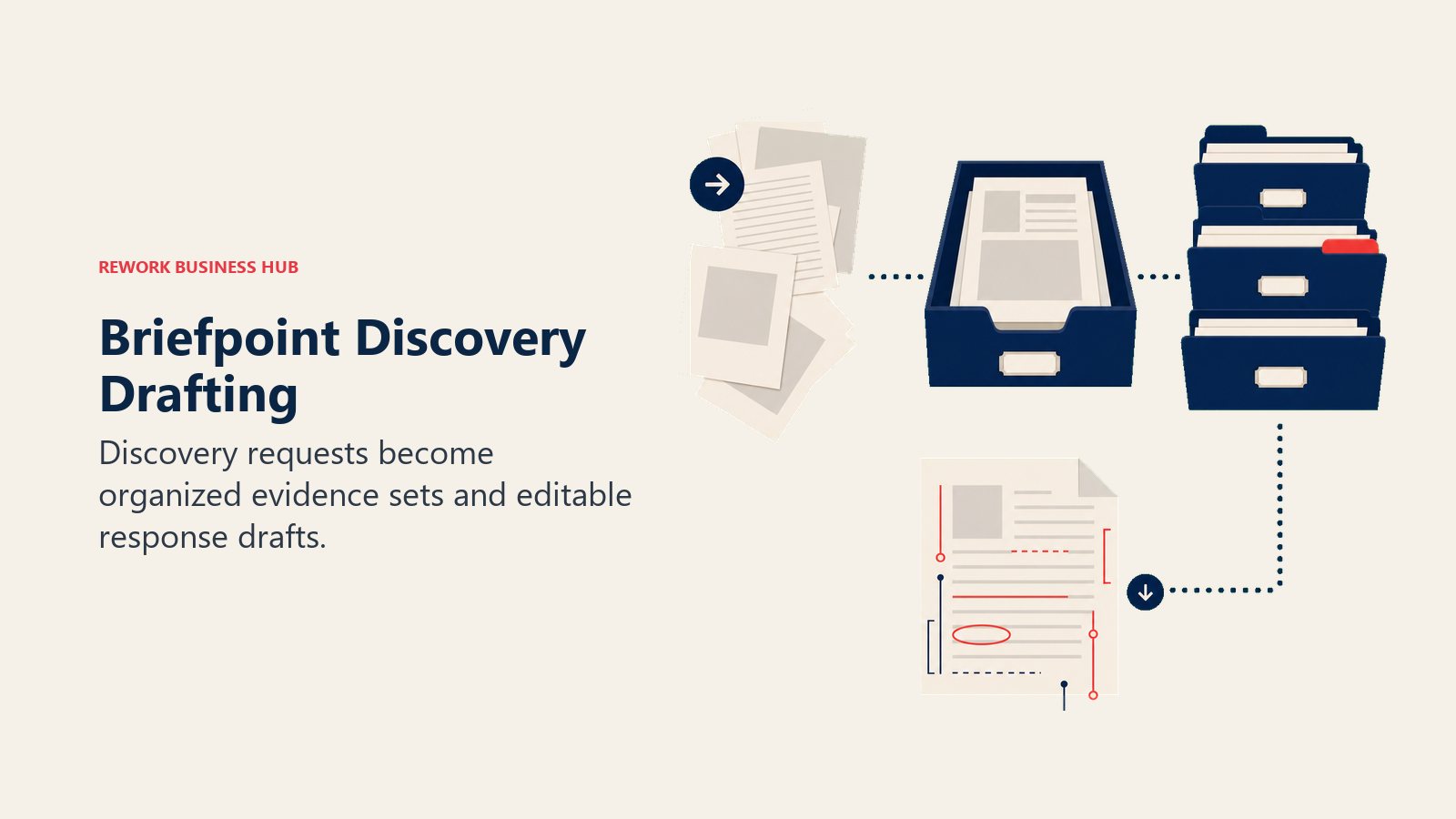
Discovery is one of the most paralegal-intensive parts of litigation, and Briefpoint is built specifically for the drafting and organizing side of it: interrogatories, requests for production, requests for admission, and the objections that go with them, all delivered as Word-editable drafts rather than chatbot output you have to reformat. It also helps organize and label documents against the specific discovery requests they respond to, a sorting task that traditionally eats hours of paralegal time on any document-heavy case.
Best for: Litigation paralegals handling high-volume discovery drafting and document-to-request organization.
Key strengths:
- Auto-drafts interrogatories, RFPs, RFAs, and objections as editable Word documents, not raw chatbot text
- Organizes and labels documents according to the discovery requests they respond to, automating a classic paralegal sorting task
- Scoped narrowly to discovery drafting rather than trying to be a general legal AI assistant
Limitations:
- Does not handle deposition summarization; that's a different workflow you'll need a separate tool for
- Briefpoint does not publish pricing on its own site; you book a demo for a quote, and third-party sources disagree on the exact starting figure
- Narrower scope than a full case management or e-discovery platform
| What you get | What you don't |
|---|---|
| Word-editable discovery drafts, not chatbot text | No deposition summarization |
| Automated document-to-request labeling | No published self-serve pricing |
| Purpose-built for one high-volume paralegal task | Not a case management or e-discovery platform |
Pricing: Reported figures range roughly $89-$210+/month depending on usage tier and source, with a demo required for an exact quote, per B2BSalesTools' Briefpoint review and Lawyerist's Briefpoint review.
6. Spellbook: AI Contract Review Inside Microsoft Word
Spellbook lives inside Microsoft Word, the tool most transactional teams already use all day, rather than asking a paralegal to switch to a separate app for a first-pass contract review. It suggests redlines, flags missing or unusual clauses, and drafts language against a firm's own playbook, all inline in the document already open. For paralegals doing first-pass review before a contract reaches the supervising attorney, that inline workflow saves real time.
Best for: Corporate and transactional paralegals doing first-pass contract review and redlining before attorney sign-off.
Key strengths:
- Inline redlining and clause suggestions inside native Word, so there's no separate app to learn
- Playbook customization lets a firm encode its preferred contract language, so paralegal first-pass review matches firm standards automatically
- Meaningfully cheaper entry point than most enterprise legal AI platforms
Limitations:
- Scoped to contract drafting and review; it's not a research, e-discovery, or intake tool
- Enterprise tier pricing rose sharply in late 2025, and now carries a 6-month minimum commitment on that tier
- No permanent free tier, only a 14-day trial
| What you get | What you don't |
|---|---|
| Inline redlining inside the Word doc already open | Scoped to contracts only, no research or discovery |
| Firm-specific playbook customization | Enterprise tier price rose sharply in late 2025 |
| Lower entry cost than most enterprise legal AI | No permanent free tier |
Pricing: Starter $99/user/month, Professional $149/user/month, Enterprise $199/user/month and up (minimum 10 seats), billed annually, per Bind Legal's Spellbook pricing breakdown.
7. CoCounsel (Thomson Reuters): Broad AI Assistant for Deposition Prep and Review
CoCounsel is Thomson Reuters' AI legal assistant, and for paralegals it earns its place through deposition prep, timeline-building, and document review tools grounded in Westlaw's underlying case-law content. A litigation paralegal building a deposition outline or a chronology for trial gets a head start rather than building it from a blank document, with citations traceable back to Westlaw's primary sources.
Best for: Litigation paralegals at firms already subscribing to Westlaw who need deposition prep, timeline-building, and document review support in one assistant.
Key strengths:
- Deposition prep, timeline construction, and document review purpose-built for litigation paralegal workflows
- Citations trace back to Westlaw's primary law sources, reducing hallucination risk versus a general-purpose model
- Self-serve online configurator for firms with 10 or fewer attorneys, faster to get access than most enterprise legal AI
Limitations:
- Requires a Westlaw subscription; it's not sold as a standalone product
- Firms above 10 attorneys need a sales-quoted price, slowing procurement
- Total cost stacks Westlaw's base subscription on top of the CoCounsel add-on
| What you get | What you don't |
|---|---|
| Deposition prep and timeline tools grounded in Westlaw | Requires an existing Westlaw subscription |
| Self-serve pricing under 10 attorneys | Sales quote required above 10 attorneys |
| Citations traceable to primary law | Stacks cost on top of Westlaw's base plan |
Pricing: Roughly $104-$639/user/month depending on tier, contract length, and jurisdiction coverage as of June 2026, per CostBench's CoCounsel pricing breakdown.
8. Lexis+ AI (with Protégé): Research and Drafting on the LexisNexis Database
LexisNexis retired the original Lexis+ AI in February 2026 and replaced it with Lexis+ with Protégé, an end-to-end workflow platform built around more than 300 agentic workflows rather than a single research chat window. For a research-focused paralegal, that means task-specific workflows for case summarization, brief analysis, and document drafting grounded in LexisNexis's own primary-law database, not just a general chatbot layered on top of search.
Best for: Research paralegals and litigation support staff at firms already standardized on LexisNexis who need drafting and case-analysis workflows layered on top of research.
Key strengths:
- 300+ purpose-built agentic workflows replace ad hoc prompting with structured, repeatable tasks
- Grounded in LexisNexis's case-law and secondary-source library, reducing the citation-accuracy risk of general AI research
- Bundled and add-on pricing options offer some flexibility versus an all-or-nothing enterprise deal
Limitations:
- LexisNexis does not publish standard pricing; every quote is negotiated and can vary widely by firm size and region
- As an add-on, it stacks on top of an existing Lexis+ subscription rather than standing alone
- Annual price increases of 3-7% are standard in LexisNexis contracts unless negotiated at signing
| What you get | What you don't |
|---|---|
| 300+ structured agentic workflows | No published standard pricing |
| Research grounded in the Lexis primary-law database | Requires an existing Lexis+ subscription |
| Drafting and case-analysis tools in one platform | Annual increases typical without negotiation |
Pricing: Roughly $125-$275/user/month as an add-on to an existing Lexis+ subscription, or $128-$494/user/month for a full bundled plan, per third-party estimates from ai:productivity. Contact LexisNexis directly for a firm-specific quote.
9. BriefCatch: AI Citation Correction and Legal Writing Polish
Cite-checking is one of the most detail-heavy tasks a litigation or appellate paralegal does, and BriefCatch is built specifically for it. It runs inside Microsoft Word and Outlook as a real-time writing advisor, catching incorrect Bluebook citations alongside clarity and tone issues, with over 12,000 rule sets behind its suggestions. Founded by legal writing authority Ross Guberman, it's become a standard tool for the final polish pass before a brief goes out.
Best for: Litigation and appellate paralegals responsible for cite-checking and final proofing before a brief or filing goes out.
Key strengths:
- AI-powered Bluebook citation correction built directly into the drafting tool, not a separate lookup step
- Over 12,000 rule sets and 30,000 suggestions covering clarity, tone, and citation accuracy together
- Used by 22,000+ legal professionals, including 40 AmLaw 200 firms and courts of every type, a strong trust signal for a cite-checking tool
Limitations:
- Scoped to writing and citation quality, not document review, e-discovery, or case management
- Enterprise pricing is broad, from $6,000 to $100,000+ annually, so cost depends heavily on team size and deployment
- Individual users get only a 7-day trial before committing
| What you get | What you don't |
|---|---|
| Real-time Bluebook citation correction in Word | Not a document review or e-discovery tool |
| 12,000+ rule sets for writing and citation quality | Wide enterprise pricing range, scoped to team size |
| Trusted by 40 AmLaw 200 firms and courts | Short 7-day trial for individual users |
Pricing: Annual enterprise subscriptions range from $6,000 to $100,000+, scoped to team size and deployment model, per BriefCatch's own pricing information; a 7-day free trial is available for individual users.
10. Clio Duo: AI Grounded in Your Firm's Own Matter Data
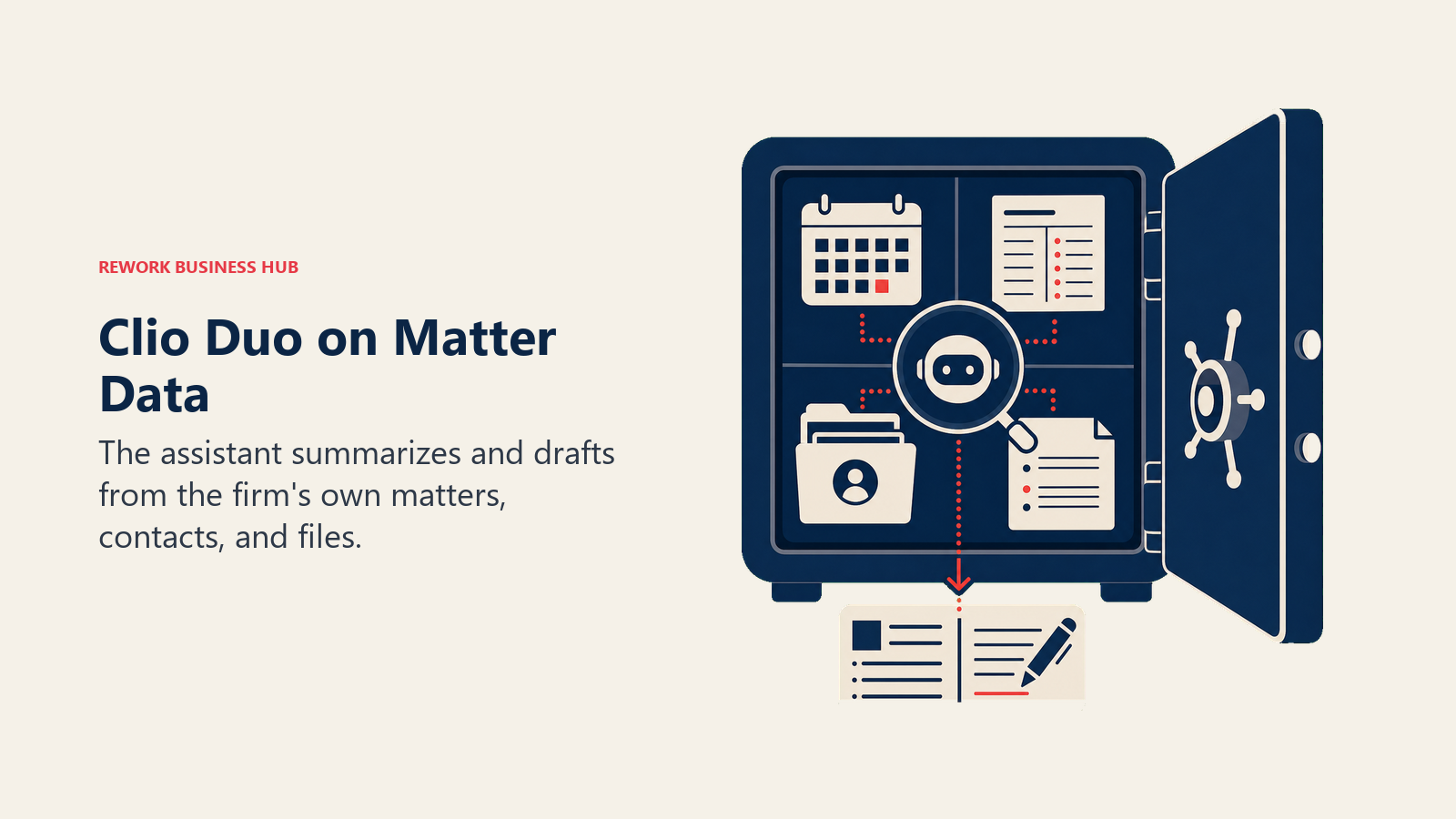
Clio Duo is the AI assistant built into Clio, the practice management platform most solo and small-firm paralegals already use for calendaring, billing, and matter tracking. Rather than a standalone research tool, Duo works from your firm's own matter data to summarize files, draft client communications, and answer questions grounded in what's already sitting in your Clio account, which keeps a paralegal's day-to-day drafting and summarizing work inside a tool they already know.
Best for: Solo and small-firm paralegals already running Clio for practice management who want AI grounded in their own case data rather than a new platform.
Key strengths:
- Grounded in your firm's own matters, contacts, and documents rather than generic legal knowledge
- Standalone add-on pricing at $39/user/month keeps the incremental cost low for firms already on Clio
- No separate procurement process; it's a plan upgrade, not a new vendor relationship
Limitations:
- Only available on Clio's higher-tier plans, so real cost includes the base subscription, not just the AI add-on
- Not a substitute for a dedicated research tool like Lexis+ AI or a dedicated e-discovery tool like Everlaw
- Feature depth is narrower than purpose-built litigation-support platforms, by design
| What you get | What you don't |
|---|---|
| AI grounded in your firm's own Clio matter data | Requires a qualifying Clio plan tier |
| Low incremental add-on cost | Not a substitute for research or e-discovery tools |
| Drafting and summarization inside a familiar tool | Narrower feature depth than dedicated platforms |
Pricing: Clio Duo runs $39/user/month as a standalone add-on, or is bundled into Clio Suite at $149/user/month; base Clio plans otherwise range from about $39 to $159/user/month by tier, per CostBench's Clio pricing breakdown.
11. Filevine (AI Copilot / ImmigrationAI): Case Organization With Built-In AI Workflows
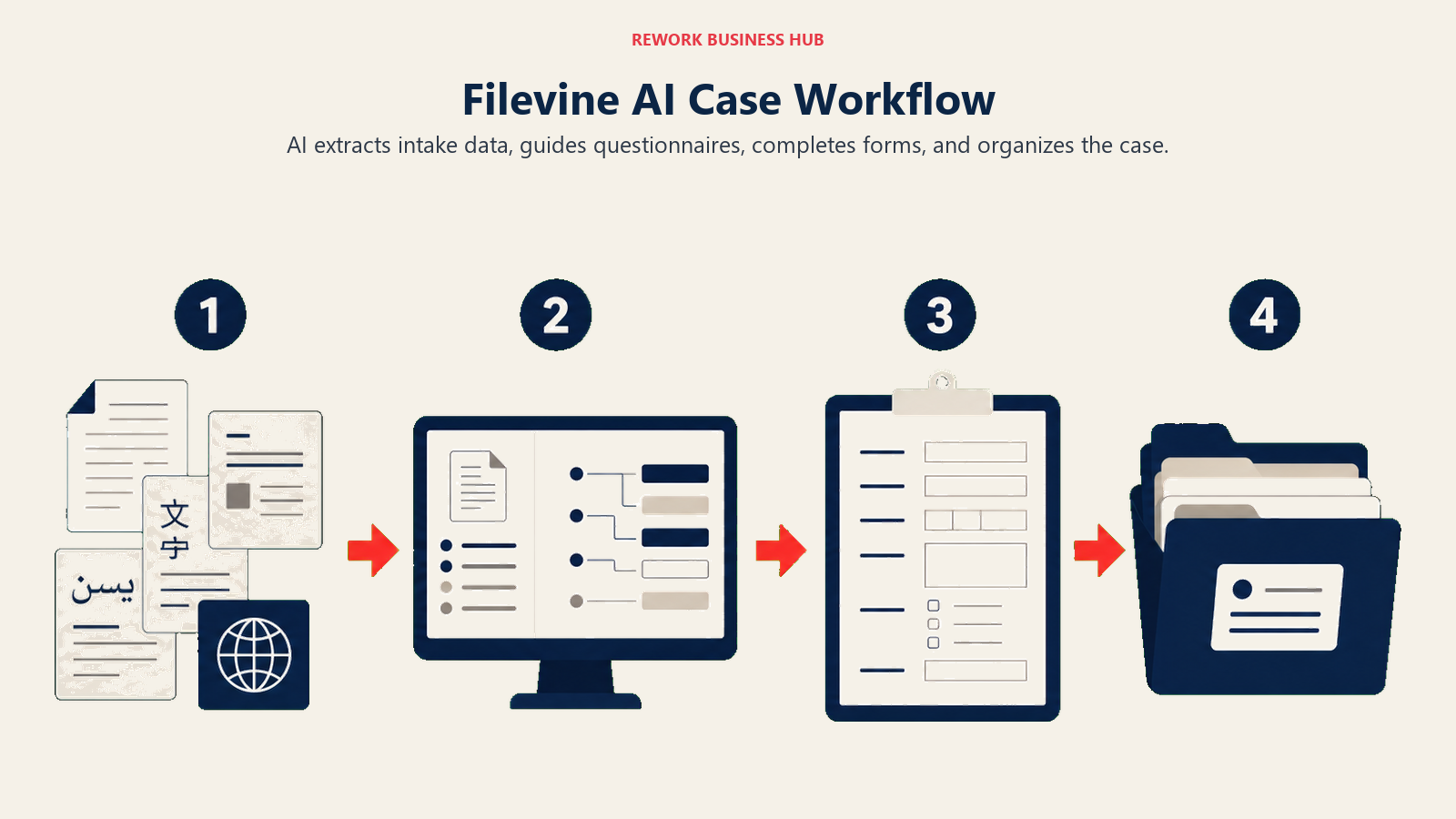
Filevine is a case management platform, and its AI Copilot layer, alongside the specialty ImmigrationAI product, targets a workflow paralegals live in every day: keeping a case file organized and moving. ImmigrationAI in particular automates USCIS form completion through a smart questionnaire, scans and extracts client information from uploaded documents in seconds, and translates client-facing intake into more than 170 languages, a genuinely paralegal-shaped set of features for firms handling volume caseloads.
Best for: Case management paralegals, especially in immigration practice, who need AI-assisted intake extraction and form automation layered on top of case organization.
Key strengths:
- ImmigrationAI auto-completes applicable USCIS forms through a guided questionnaire, cutting manual data entry
- Scans and extracts client information from uploaded documents regardless of source language
- Translation support across 170+ languages helps paralegals serve non-English-speaking clients through intake
Limitations:
- Filevine does not publish standard pricing; every quote is custom based on firm size and product mix
- Broader AI functionality beyond the base metered access may require separate upgrades or per-project billing
- Not a document review or e-discovery tool; it's scoped to case organization and specialty workflows
| What you get | What you don't |
|---|---|
| ImmigrationAI form automation and 170+ language translation | No published standard pricing |
| Client-document extraction built into intake | Advanced AI features may cost extra |
| Strong fit for volume caseload case organization | Not built for document review or e-discovery |
Pricing: Custom-quoted; third-party estimates place entry pricing around $49-$87/user/month, with all-in costs reaching $150+/user/month once additional products and AI add-ons are included, per PricingNow's Filevine breakdown.
12. Gavel: AI-Assisted Client Intake and Document Automation
Gavel automates the front door of a case: client-facing intake questionnaires that automatically populate the documents a paralegal would otherwise build by hand for every new matter. It's a no-code document automation platform, meaning a paralegal or office manager can build and maintain the intake logic without engineering help, and a genuine free tier makes it easy to test before committing budget.
Best for: Intake coordinators and solo or small-firm paralegals who want to automate repetitive client-facing intake and document generation.
Key strengths:
- Client-facing questionnaires auto-populate intake documents, cutting manual data entry for every new matter
- No-code automation builder lets non-technical staff maintain intake logic without engineering support
- Genuine free tier lets you test the product before paying for a plan
Limitations:
- Higher-tier and per-seat pricing requires contacting the vendor directly
- Best suited to firms with repeatable document types; less useful for highly bespoke, one-off drafting
- Setup for complex automations may require Gavel Experts, an added hourly cost
| What you get | What you don't |
|---|---|
| No-code client intake and document automation | Higher tiers require a custom quote |
| Genuine free tier to start | Best fit is repeatable, not bespoke, documents |
| Client-facing questionnaires reduce manual entry | Complex setups may need paid expert help |
Pricing: Free tier available; paid plans start around $83-$99/month, with higher tiers billed annually and per-seat pricing above that, per Gavel's own pricing page.
13. ChatGPT Enterprise: The Low-Cost General-Purpose Fallback
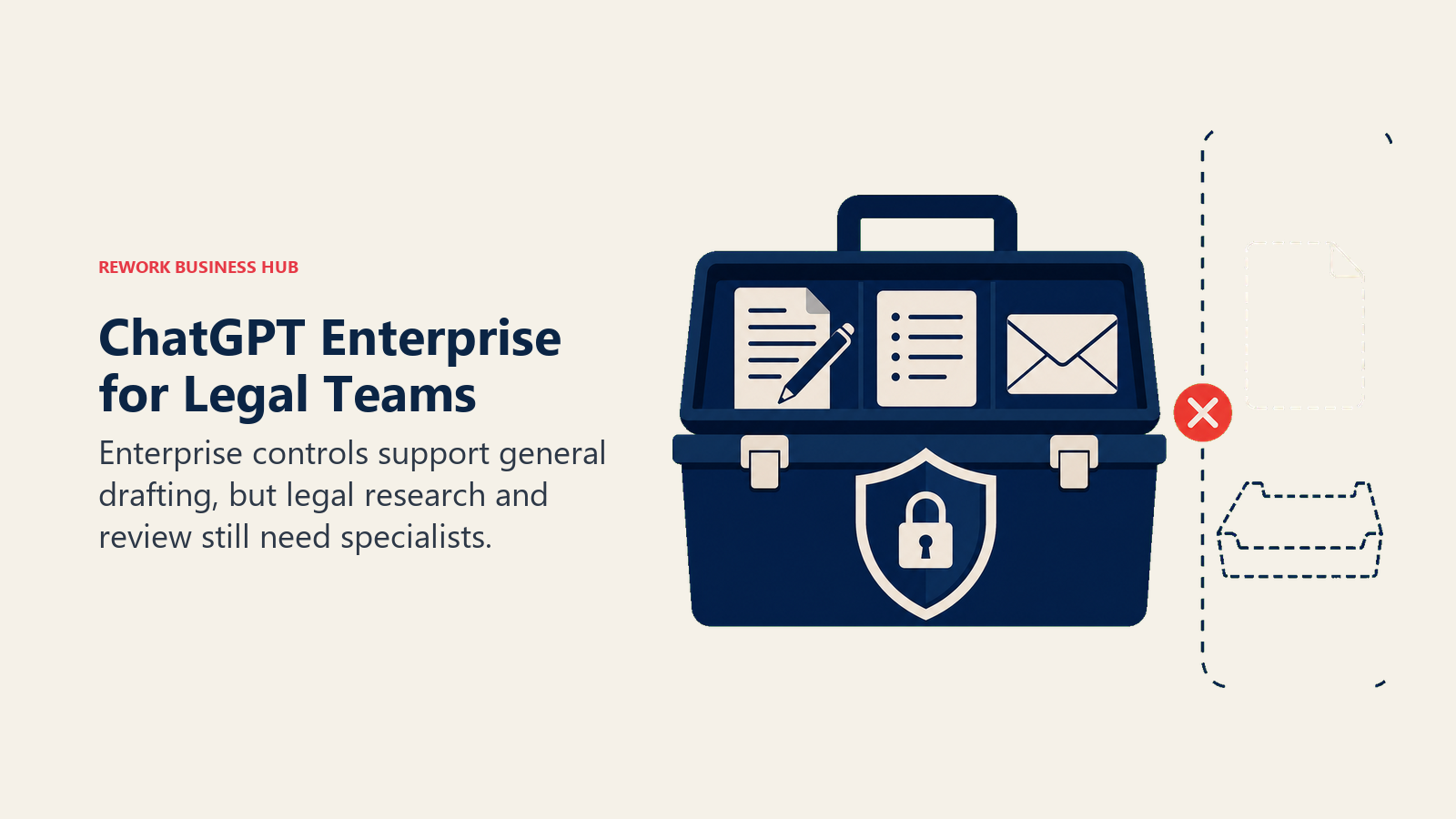
Here's the honest data point that applies to paralegals as much as attorneys: general AI tools like ChatGPT are already the most-used AI in legal offices, even where a purpose-built legal AI platform is also available. ChatGPT Enterprise adds the privacy guarantees, admin controls, and SSO that make general use defensible for client-adjacent work, without the legal-specific research grounding, citation checking, or e-discovery depth of the tools above it on this list.
Best for: General drafting support, internal research, client-friendly correspondence, and administrative writing where a purpose-built legal database isn't required.
Key strengths:
- Lowest cost per seat of any tool on this list, and the tool most staff are already familiar with from personal use
- Enterprise-grade data privacy (no training on your data) and SSO support address the biggest objection to using ChatGPT for firm work
- Newer Go plan lowers the entry point to 10 seats, versus the standard 150-seat Enterprise minimum
Limitations:
- No case-law citation checking, database grounding, or e-discovery capability of any kind
- Requires more careful human verification for anything client-facing or filed with a court
- The 150-seat, annual-commitment floor for standard Enterprise pricing is a real barrier for smaller offices before the Go plan
| What you get | What you don't |
|---|---|
| Lowest per-seat cost on this list | No legal database grounding or citation checking |
| Enterprise privacy and SSO | Every output needs independent verification |
| Go plan available for 10-149 seats | Not scoped to any paralegal-specific workflow |
Pricing: No public list price; negotiated 2026 deals reportedly land between $50 and $60/user/month on annual commitments of 150+ seats, per Inference.net's ChatGPT Enterprise pricing guide. The Go plan serves the 10-149 seat range at a lower entry cost.
How to Choose: Decision Framework
| If your biggest need is... | Pick... | Why |
|---|---|---|
| AI-assisted document review at enterprise scale | Relativity aiR for Review or Everlaw | Both handle large-volume review; Relativity now includes aiR free on RelativityOne, Everlaw includes single-document AI free |
| Affordable e-discovery for a solo or small litigation team | Reveal (Logikcull) | No per-seat fee and pay-as-you-go pricing built for smaller matters |
| One predictable price covering review, AI, and deposition tools | DISCO (Cecilia AI) | All-inclusive per-GB pricing with Cecilia AI included, no separate AI fee |
| Drafting and organizing discovery responses | Briefpoint | Purpose-built for interrogatories, RFPs, RFAs, and document-to-request labeling |
| First-pass contract review inside Word | Spellbook | Inline redlining in the same document, no separate app to learn |
| Deposition prep and case timelines grounded in Westlaw | CoCounsel | Purpose-built litigation paralegal workflows tied to Westlaw's primary sources |
| Research and drafting on the LexisNexis database | Lexis+ AI (with Protégé) | 300+ structured workflows grounded in Lexis's own case-law library |
| Cite-checking and final writing polish before filing | BriefCatch | AI-powered Bluebook correction built directly into Word and Outlook |
| AI drafting grounded in your firm's own Clio data | Clio Duo | Works from your existing matters and documents, not generic knowledge |
| Case organization with specialty intake workflows | Filevine (AI Copilot) | ImmigrationAI and document extraction purpose-built for volume caseloads |
| Automating client intake and document assembly | Gavel | No-code questionnaires that auto-populate intake documents |
| The lowest-cost general AI layer for everyday drafting | ChatGPT Enterprise | Cheapest per-seat option and the tool staff already know how to use |
By Budget
| Budget | Best Fits |
|---|---|
| Free tier to start | Gavel (free tier), ChatGPT free tier (limited, no Enterprise privacy) |
| Under $100/user/month | Clio Duo, Spellbook Starter, Gavel paid tier, ChatGPT Enterprise at scale |
| $100-$300/user/month | CoCounsel, Lexis+ AI, Spellbook Enterprise, Filevine with AI add-ons |
| $300+/month or usage/volume-based | Everlaw, Relativity aiR for Review, DISCO, Reveal, BriefCatch (enterprise) |
| Custom enterprise quote required | Relativity aiR (large deployments), Everlaw (volume-based), Briefpoint, Filevine |
AI Risk for Paralegals: Accuracy, Confidentiality, and Unauthorized Practice of Law
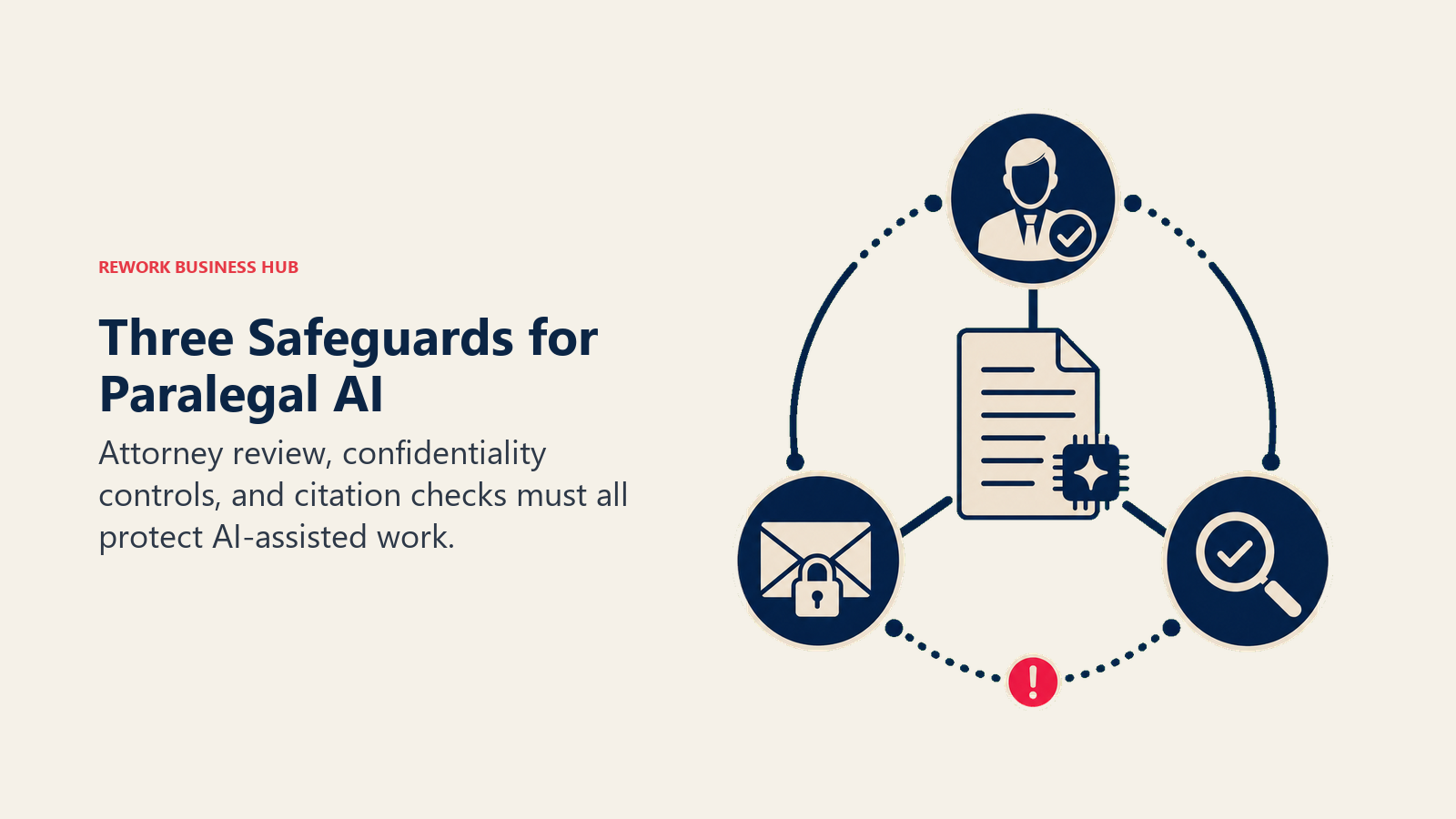
Paralegal work sits under attorney supervision by design, and AI doesn't change that requirement, it just changes what the supervised work looks like. Three things matter more here than in a general AI buying guide. First, unauthorized practice of law: AI-drafted discovery responses, correspondence, or research summaries are work product, not legal advice or a final filing, and a supervising attorney needs to review and approve anything AI-assisted before it goes to a client, opposing counsel, or a court, the same standard that already applies to any paralegal draft. Second, confidentiality: before uploading privileged or client-confidential material to any AI tool, confirm the vendor's data-training and retention terms in writing. Enterprise tools built for legal use (CoCounsel, Everlaw, Relativity, Clio Duo, Lexis+ AI) typically exclude client data from model training by default under a signed agreement; free or consumer-tier AI tools often do not offer the same guarantee, which matters even more for a paralegal handling volumes of client documents daily. Third, accuracy: AI research and drafting tools still produce incorrect or fabricated citations on occasion, which is exactly why a dedicated cite-checking pass, whether through BriefCatch or a database-grounded research tool, remains a required step rather than an optional one.
This article is not legal advice and does not establish paralegal supervision requirements for your jurisdiction. Confirm AI tool use against your firm's ethics guidance, your state's paralegal supervision rules, and each vendor's data-handling terms before adopting any tool for client work.
Frequently Asked Questions about AI Tools for Paralegals
What is the best AI tool for paralegals in 2026?
There's no single best tool for every paralegal role. Everlaw and Relativity aiR for Review lead for document review and e-discovery, Briefpoint and Spellbook cover drafting support, Lexis+ AI and BriefCatch handle research and cite-checking, and Clio Duo or Gavel fit solo and small-firm intake and case organization best.
Can paralegals use AI to draft legal documents without attorney review?
No. AI-drafted discovery responses, correspondence, and summaries are work product that still requires supervising attorney review and approval before they go to a client, opposing counsel, or a court, the same standard that applies to any paralegal draft regardless of how it was produced.
How much does paralegal AI software cost in 2026?
Entry points range from free (Gavel's free tier, Robin AI-style trials) to roughly $39-$99/user/month for tools like Clio Duo and Spellbook, up to $300+/month or usage-based pricing for e-discovery platforms like Everlaw, Relativity, and DISCO. Enterprise platforms rarely publish list prices, so budget for a custom quote at that tier.
What AI tool is best for e-discovery and document review specifically?
Relativity aiR for Review and Everlaw are the strongest fits for enterprise-scale document review, DISCO offers an all-inclusive per-GB alternative, and Reveal (Logikcull) is the budget option for solo paralegals and small litigation teams without an enterprise e-discovery budget.
Is it safe to upload client documents to AI tools?
It depends entirely on the vendor's data-handling terms. Enterprise-grade tools built for legal use, including Everlaw, Relativity, CoCounsel, Clio Duo, and Lexis+ AI, contractually exclude client data from model training by default; free or consumer-tier AI products often do not offer the same guarantee. Confirm data-training and retention terms in writing before uploading privileged or confidential material.
What AI tool helps most with citation checking?
BriefCatch is purpose-built for this, running inside Word and Outlook with AI-powered Bluebook citation correction across more than 12,000 rule sets. Research platforms like Lexis+ AI and Westlaw-grounded tools like CoCounsel also reduce citation risk by grounding drafts in a primary-law database rather than a general model.
Will AI replace paralegals?
The data says exposure, not replacement, is the honest framing: 69% of paralegal billable hours are exposed to AI automation per the 8am 2026 report, and Clio's research separately found 69% of paralegal hourly work could be automated. Industry surveys are split on net headcount effect, with some predicting reduced support-role hiring and others predicting expansion as AI lets firms take on more volume per paralegal.
How current is this pricing, and how often should I re-check it?
E-discovery and legal AI pricing is moving fast: Relativity and Everlaw both restructured AI pricing in 2026, and DISCO moved to a new per-GB model the same year. Confirm directly with the vendor before committing budget, especially for any quote-based enterprise tier.
Related Reading
- Best AI Tools for Lawyers in 2026: 12 Legal AI Platforms Ranked by Use Case
- Best AI Tools for Patent Drafting in 2026: 13 Platforms Ranked by Use Case
- Best AI Tools in 2026: The Top 25 Across Every Category
- Best AI Meeting Assistants in 2026
- Best AI Transcription Tools in 2026
- Otter vs Fireflies vs Fathom: AI Meeting Tools
- Perplexity vs ChatGPT Search vs Gemini: AI Research Tools for Executives
- Law Firm Business Development: Rainmaking, Referrals, and Thought Leadership
- Legal Practice Area Marketing: Positioning and Promoting Specialized Legal Services
- AI Tool Selection Framework: A Strategic Approach to Choosing the Right AI Solutions
- AI Ethics and Data Privacy: Responsible AI Productivity Tool Adoption
- AI Document Processing: Automating Extraction, Classification, and Routing
Methodology
Every tool on this list was evaluated on real paralegal workflow use cases (document review, e-discovery, cite-checking, intake, drafting support, and case organization), not a generic legal AI feature checklist. Adoption and impact statistics cited above come from the 8am 2026 Legal Industry Report, Clio's 2025 Legal Trends Report, Relativity's own product data, and U.S. Bureau of Labor Statistics projections, each linked at first mention.
What to Do Next
Start by naming the actual task you need help with rather than shopping for "AI for paralegals" as one category: document review and e-discovery, discovery drafting, cite-checking, intake, or case organization are five different jobs, and almost no single platform covers all five well. If your firm already runs Clio, Westlaw, or LexisNexis, check whether Clio Duo, CoCounsel, or Lexis+ AI is already available as an add-on before evaluating a new standalone tool. If document review volume is your bottleneck, pilot Relativity aiR for Review or Everlaw on one live matter and measure the actual time saved before expanding. And regardless of which tool you pick, get your firm's data-training and retention terms in writing, and confirm with your supervising attorney what still requires their sign-off before it goes out the door. The paralegals getting real value from AI in 2026 are the ones who matched the tool to the specific task, not the ones who bought the platform with the longest feature list.

Principal Product Marketing Strategist
On this page
- What Changed in 2026
- Key Facts
- Quick Comparison Table
- Paralegal Workflow Coverage Matrix
- Firm Size Fit Matrix
- Sizing and Persona Table
- 1. Everlaw: AI-Powered E-Discovery and Document Review
- 2. Relativity aiR for Review: Enterprise-Scale AI Document Review
- 3. DISCO (Cecilia AI): All-Inclusive Per-GB E-Discovery
- 4. Reveal (Logikcull): Budget E-Discovery for Small Teams
- 5. Briefpoint: AI Discovery Drafting and Document Organization
- 6. Spellbook: AI Contract Review Inside Microsoft Word
- 7. CoCounsel (Thomson Reuters): Broad AI Assistant for Deposition Prep and Review
- 8. Lexis+ AI (with Protégé): Research and Drafting on the LexisNexis Database
- 9. BriefCatch: AI Citation Correction and Legal Writing Polish
- 10. Clio Duo: AI Grounded in Your Firm's Own Matter Data
- 11. Filevine (AI Copilot / ImmigrationAI): Case Organization With Built-In AI Workflows
- 12. Gavel: AI-Assisted Client Intake and Document Automation
- 13. ChatGPT Enterprise: The Low-Cost General-Purpose Fallback
- How to Choose: Decision Framework
- By Budget
- AI Risk for Paralegals: Accuracy, Confidentiality, and Unauthorized Practice of Law
- Related Reading
- Methodology
- What to Do Next