Best AI Tools for Lawyers in 2026: 12 Legal AI Platforms Ranked by Use Case
Turn this article into takeaways for your work.


Each assistant summarizes the article only for you and suggests best practices for your work.
Most lawyers don't need one AI tool that does everything. They need a small stack that covers the work that actually eats a billable week: legal research, contract review and drafting, litigation and e-discovery, and general drafting or client communication. Harvey and CoCounsel lead on broad research-and-drafting depth for larger firms, Spellbook and Robin AI own contract review inside Word, Clio Duo and Paxton AI serve solo and small-firm budgets, and Everlaw and Luminance handle the document-heavy end of litigation and due diligence. This guide ranks 12 legal AI platforms lawyers are actually adopting in 2026, not a generic AI list repurposed for the legal vertical.
Every tool below was evaluated on real practice use (research, drafting, review, and case management). Most enterprise legal AI vendors do not publish list prices, so figures marked "quote-based" or "estimated" reflect reported ranges, not a rate card. Confirm the current number with the vendor before you budget.
What Changed in 2026
- Thomson Reuters retired the standalone Casetext product on March 31, 2025, folding its CoCounsel technology fully into Thomson Reuters' CoCounsel Legal plans, and CoCounsel is now sold exclusively bundled with a Westlaw subscription rather than as a separate product.
- Legora, a Harvey competitor built around collaborative, multiplayer legal workflows, reached a reported $5.6 billion valuation in April 2026 as law firms began running head-to-head pilots between the two platforms.
- Everlaw made its single-document AI Assistant features (Writing Assistant, Deposition Analyzer, Single Document Review) free inside its base subscription in 2026, moving batch-level AI actions to usage-based pricing instead of a flat add-on fee.
- OpenAI introduced a mid-tier ChatGPT Go plan for organizations with 10 to 149 seats, giving small and mid-size firms an enterprise-grade privacy and SSO option below the 150-seat ChatGPT Enterprise floor.
Key Facts
- 79% of legal professionals now use AI tools in their work, up from just 19% in 2023, per Clio's 2025 Legal Trends Report.
- AI adoption still splits sharply by firm size: 87% of large-firm legal professionals use AI versus 71% at solo firms, per the same Clio Legal Trends Report.
- 41% of law firms and 47% of corporate legal departments report their teams are using generative AI in 2026, up from 28% and 23% in 2025, per Thomson Reuters' 2026 AI in Professional Services Report.
- AI has the potential to save legal professionals close to 240 hours a year, worth roughly $19,000 in annual value per professional, per Thomson Reuters' 2026 Future of Professionals Report.
- ChatGPT is the single most-used AI platform in law firms today, with 52% of firms using it, ahead of any purpose-built legal AI tool, per the ABA Legal Technology Survey covered in ABA Journal.
- Just 53% of legal professionals say their firm has a formal AI policy, or aren't sure if one exists, a governance gap that trails the adoption curve, per Clio.
Quick Comparison Table
| Tool | Best For | Standout Capability | Starting Price | Free Tier / Trial? |
|---|---|---|---|---|
| Harvey | Am Law 100 firms wanting a broad AI platform | Enterprise-wide research, drafting, and workflow automation | Custom, roughly $500-$2,000+/user/mo | No; sales-led pilot |
| CoCounsel (Thomson Reuters) | Firms already on Westlaw wanting an AI assistant | Deposition prep, timelines, and document review tied to Westlaw content | Roughly $225-$900/user/mo, quote-based above 10 attorneys | No; self-serve configurator under 10 attorneys |
| Westlaw Precision AI | Legal research and case-law citation checking | AI-assisted search and KeyCite-backed citation validation | From about $257/mo (single jurisdiction, self-serve) | No; paid subscription required |
| Spellbook | Contract drafting and review inside Microsoft Word | Redlines and clause suggestions directly in your existing Word workflow | $99-$199/user/mo (Enterprise higher, quote-based) | 14-day free trial |
| Lexis+ AI (with Protégé) | Firms standardized on LexisNexis research | Conversational legal research with brief analysis and drafting | Roughly $125-$275/user/mo as an add-on | No; demo required |
| Clio Duo | Solo and small firms already using Clio for practice management | AI drafting and research grounded in your own matter data | $59/user/mo add-on on top of a Clio plan ($39-$159/user/mo) | Clio offers a free trial of the base platform |
| Robin AI | In-house teams and firms doing high-volume contract review | Clause comparison and centralized obligation tracking | Free tier (10 msgs/day); Pro and Enterprise quote-based | Yes, free tier available |
| Legora | Firms running collaborative, multi-attorney AI workflows | Real-time multiplayer document review and drafting | Estimated $200-$500+/user/mo, 10-seat minimum | No; demo and quote required |
| Paxton AI | Solo attorneys and small firms wanting one AI assistant | Research, drafting, and document analysis in one flat-fee tool | $499/user/mo or $2,999/user/yr; Enterprise custom | 7-day free trial |
| Everlaw | Litigation teams running e-discovery and document review | AI-assisted deposition analysis and single-document review, now free with subscription | Roughly $2,000-$5,000/mo base plus per-GB hosting | Demo available; no public free tier |
| Luminance | Corporate legal and compliance teams reviewing high document volumes | AI trained specifically for legal-document pattern recognition | Custom, five-to-six-figures annually | No; sales consultation required |
| ChatGPT Enterprise | General drafting, research, and client communication support | General-purpose AI at the lowest cost per seat on this list | Roughly $50-$60/user/mo (150-seat minimum, annual); Go plan for 10-149 seats | Free ChatGPT tier exists but lacks Enterprise privacy/SSO |
Firm Size Fit Matrix
Use this as a first filter before you dig into individual tools. "Strong fit" means the pricing model and feature depth match how firms that size actually buy.
| Tool | Solo (1) | Small Firm (2-20) | Mid-Size (20-100) | Am Law / Enterprise (100+) |
|---|---|---|---|---|
| Harvey | - | - | Possible | Strong fit |
| CoCounsel | Possible | Strong fit | Strong fit | Strong fit |
| Westlaw Precision AI | Strong fit | Strong fit | Strong fit | Possible |
| Spellbook | Possible | Strong fit | Strong fit | Possible |
| Lexis+ AI | Possible | Strong fit | Strong fit | Strong fit |
| Clio Duo | Strong fit | Strong fit | Possible | - |
| Robin AI | Possible | Strong fit | Strong fit | Possible |
| Legora | - | - | Possible | Strong fit |
| Paxton AI | Strong fit | Strong fit | Possible | - |
| Everlaw | - | Possible | Strong fit | Strong fit |
| Luminance | - | Possible | Strong fit | Strong fit |
| ChatGPT Enterprise | - | Possible (via Go plan) | Strong fit | Strong fit |
Sizing and Persona Table
| Tool | Ideal Firm/Team Size | Primary Buyer Persona |
|---|---|---|
| Harvey | 200+ attorneys | Chief Innovation Officer, Managing Partner, Legal Ops |
| CoCounsel | 5-500+ attorneys | Litigation partner, Legal Ops, IT/Knowledge Management |
| Westlaw Precision AI | 1-500+ attorneys | Any attorney doing case-law research |
| Spellbook | 5-100 attorneys | Transactional partner, Corporate counsel |
| Lexis+ AI | 5-500+ attorneys | Litigation and transactional attorneys, Legal Ops |
| Clio Duo | 1-20 attorneys | Solo attorney, Small-firm managing partner |
| Robin AI | 5-200 employees | General Counsel, Commercial legal team lead |
| Legora | 50-1,000+ attorneys | Managing Partner, Innovation/Knowledge Management |
| Paxton AI | 1-15 attorneys | Solo attorney, Small-firm associate |
| Everlaw | 10-500+ litigation staff | Litigation support manager, E-discovery lead |
| Luminance | 20-1,000+ legal/compliance staff | General Counsel, Head of Legal Ops, M&A lead |
| ChatGPT Enterprise | 10-5,000+ employees | Any firm or department; not legal-specific |
1. Harvey: Broadest Enterprise Legal AI Platform
Harvey's bet is that a single AI platform, trained and fine-tuned on legal work product, can support the full range of what a large firm does: research memos, contract analysis, litigation prep, deal due diligence, and workflow automation across practice groups. It's the platform most Am Law 100 firms mention first when they talk about their AI strategy in 2026.
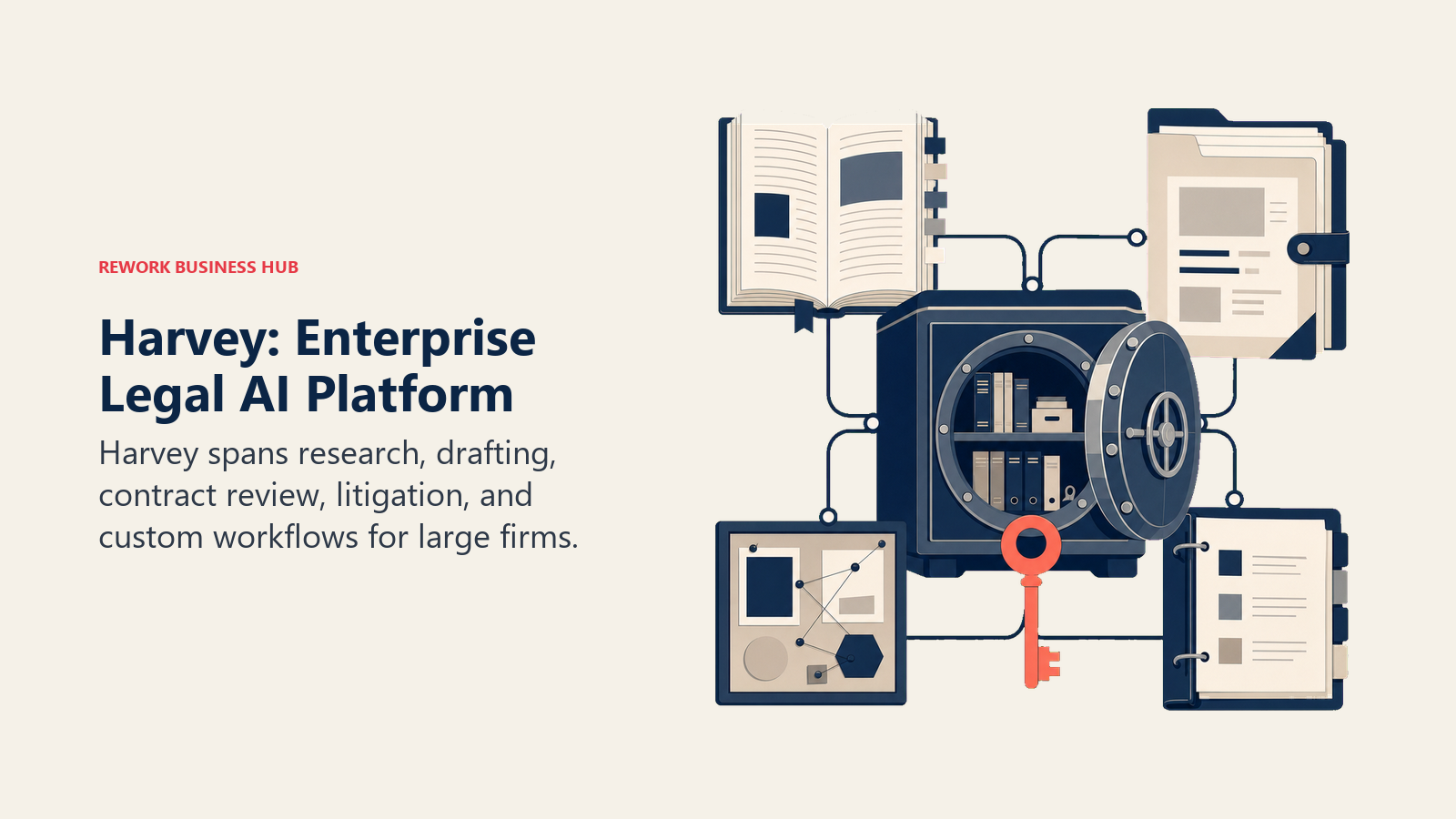
Best for: Large firms (200+ attorneys) wanting one AI platform deployed across multiple practice groups, not a point solution for a single task.
Key strengths:
- Broadest task coverage of any legal AI platform: research, drafting, contract review, and custom workflow "vaults" built around a firm's own precedent
- Deep integrations with document management systems (iManage, NetDocuments) that large firms already run
- Heavy enterprise investment in security, audit logging, and firm-specific fine-tuning
Limitations:
- Harvey does not publish pricing; annual contracts commonly run $50,000 to $300,000+ with 25-50 seat minimums, and reported per-seat costs vary wildly by deal size
- Overkill and cost-prohibitive for solo and small-firm budgets
- Renewal pricing has trended upward, with reported annual uplifts of 10-25% without a negotiated cap
| What you get | What you don't |
|---|---|
| Broadest feature set across research, drafting, and review | No published pricing; every deal is custom-negotiated |
| Deep DMS integration for large firms | Steep cost floor; not viable for solo or small practices |
| Firm-specific fine-tuning on your own precedent | Long sales and implementation cycle |
Pricing: Custom, quote-based. Reported ranges run roughly $100-$200/user/month for large enterprise deployments (200+ seats) up to $500-$2,000+/user/month for mid-market and smaller deployments, per third-party pricing trackers including Bind Legal and Wysor. Confirm directly with Harvey's sales team; these are not published list prices.
Best for: Am Law 100 and large regional firms standardizing AI across multiple practice groups.
2. CoCounsel (Thomson Reuters): AI Assistant Built on Westlaw Content
CoCounsel is Thomson Reuters' AI legal assistant, built from the technology it acquired with Casetext in 2023. Casetext itself was retired as a standalone product on March 31, 2025, and CoCounsel now ships exclusively as an add-on to a Westlaw subscription rather than a separate purchase. It handles deposition preparation, document review, contract analysis, and timeline creation with citations traceable back to Westlaw's underlying case law.
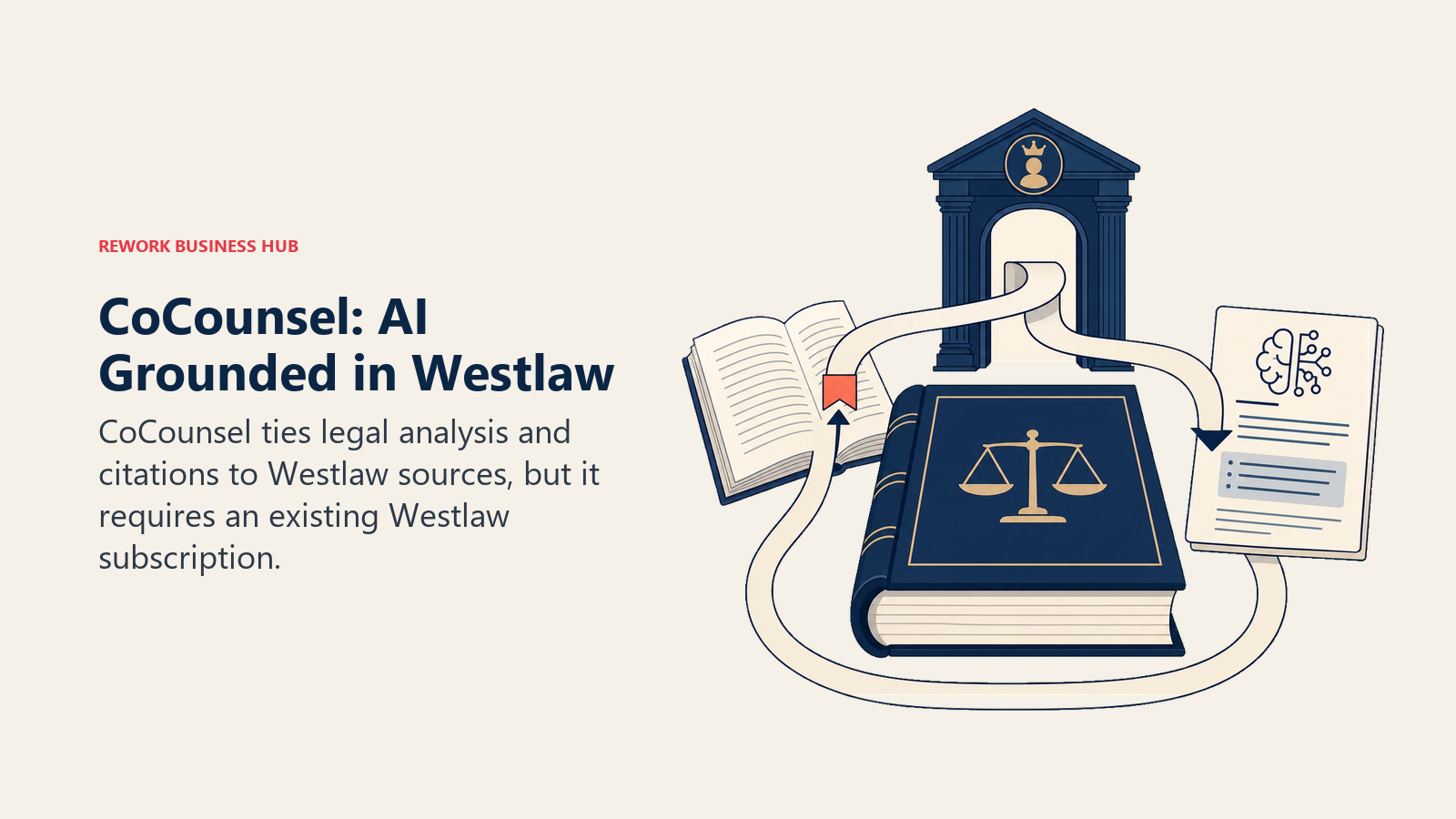
Best for: Firms already subscribing to Westlaw that want an AI assistant grounded in the same primary-law database they already trust.
Key strengths:
- Deposition prep, contract review, and timeline-building tools purpose-built for litigation and transactional workflows
- Citations trace back to Westlaw's primary law sources, reducing the hallucination risk of a general-purpose model
- Self-serve online configurator for firms with 10 or fewer attorneys, which most competitors don't offer
Limitations:
- No longer available as a standalone product; you must carry a Westlaw subscription to get CoCounsel
- Firms above 10 attorneys need a sales-quoted price, which slows procurement
- Total cost stacks Westlaw's base subscription on top of the CoCounsel add-on
Pricing: Roughly $225-$900/user/month depending on tier, contract length, and jurisdiction coverage as of 2026, per Thomson Reuters' own plans page and third-party breakdowns from CostBench. A solo-attorney, all-states-and-federal configuration runs about $639/month on a self-serve annual term.
Best for: Litigation-heavy firms of 5-500+ attorneys already invested in the Westlaw ecosystem.
3. Westlaw Precision AI: AI-Enhanced Legal Research and Citation Checking
Distinct from CoCounsel's assistant-style workflows, Westlaw Precision AI is the AI layer built into Westlaw's core research and citation-checking experience: smarter case-law search, AI-assisted headnotes, and KeyCite validation that flags whether a case is still good law. For attorneys whose primary AI need is faster, more reliable legal research rather than document drafting, this is the narrower, research-first product.
Best for: Any attorney whose main AI use case is legal research and citation verification rather than drafting or contract review.
Key strengths:
- AI-assisted search surfaces more relevant case law faster than keyword-only search
- KeyCite integration flags overruled or negatively treated authority automatically
- Self-serve pricing available for solo and small firms, unlike most enterprise legal AI products
Limitations:
- Research-focused; it's not a drafting or contract-review tool the way CoCounsel or Spellbook are
- Full national coverage (all states plus federal) costs meaningfully more than single-jurisdiction access
- The full CoCounsel bundle, if you want assistant-style features on top, requires a separate quote
Pricing: Self-serve Westlaw Advantage pricing starts around $257/month for single-jurisdiction access and roughly $400/month for all-states-plus-federal coverage with AI research included, per Thomson Reuters' self-serve pricing page. Larger firms need a custom quote.
Best for: Solo attorneys and small firms prioritizing research quality and citation reliability over broader AI drafting features.
4. Spellbook: AI Contract Drafting and Review Inside Word
Spellbook's positioning is simple: it lives inside Microsoft Word, the tool transactional attorneys already use all day, rather than asking them to switch to a new interface. It suggests redlines, flags missing or unusual clauses, and drafts language against your firm's own playbooks, all inline in the document you're already editing.
Best for: Transactional attorneys drafting or reviewing contracts regularly who want AI redlining without leaving Word.
Key strengths:
- Inline redlining and clause suggestions inside the native Word interface, so there's no separate app to learn
- Playbook customization lets a firm encode its own preferred contract language and risk positions
- Meaningfully cheaper entry point than most enterprise legal AI platforms
Limitations:
- Scoped to contract drafting and review; it's not a research or e-discovery tool
- Enterprise tier pricing rose sharply in late 2025, reportedly from roughly $179/user/month toward $350/user/month for some deployments, alongside a new 6-month minimum commitment
- No permanent free tier, only a 14-day trial
Pricing: Starter $99/user/month, Professional $149/user/month, Enterprise $199/user/month and up (minimum 10 seats), billed annually; monthly billing adds roughly 20%, per Bind Legal's Spellbook pricing breakdown and CostBench.
Best for: Corporate and transactional attorneys at firms of 5-100 people drafting 10 or more contracts a month.
5. Lexis+ AI (with Protégé): Conversational Research on the LexisNexis Database
Lexis+ AI is LexisNexis's answer to Westlaw's AI push: a conversational research assistant, built on the Protégé model layer, that can summarize case law, draft briefs, and analyze documents against LexisNexis's own primary-law database. It's the natural pick for firms already standardized on Lexis rather than Westlaw.
Best for: Firms and legal departments already running on LexisNexis for primary research who want AI drafting and analysis layered on top.
Key strengths:
- Conversational research interface reduces the learning curve versus traditional Boolean search
- Brief analysis and drafting assistance grounded in LexisNexis's case-law and secondary-source library
- Bundled and add-on pricing options give some flexibility versus an all-or-nothing enterprise deal
Limitations:
- LexisNexis does not publish standard pricing; every quote is negotiated and can vary widely by firm size and region
- As an add-on, it stacks on top of an existing Lexis+ subscription rather than standing alone
- Annual price increases of 3-7% are standard in LexisNexis contracts unless negotiated at signing
Pricing: Roughly $125-$275/user/month as an add-on to an existing Lexis+ subscription, or $128-$494/user/month for a full bundled Lexis+ with Protégé plan, per third-party estimates from ai:productivity and Spellbook's LexisNexis pricing breakdown. Contact LexisNexis directly for a firm-specific quote.
Best for: Litigation and transactional attorneys at firms of 5-500+ already invested in LexisNexis research tools.
6. Clio Duo: AI Layered on Practice Management Data for Small Firms
Clio Duo is the AI assistant built into Clio, the practice-management platform most solo and small-firm attorneys already use for billing, calendaring, and matter management. Rather than a standalone research or drafting tool, Duo works from your own matter data to summarize files, draft client communications, and answer questions grounded in what's already in your Clio account.
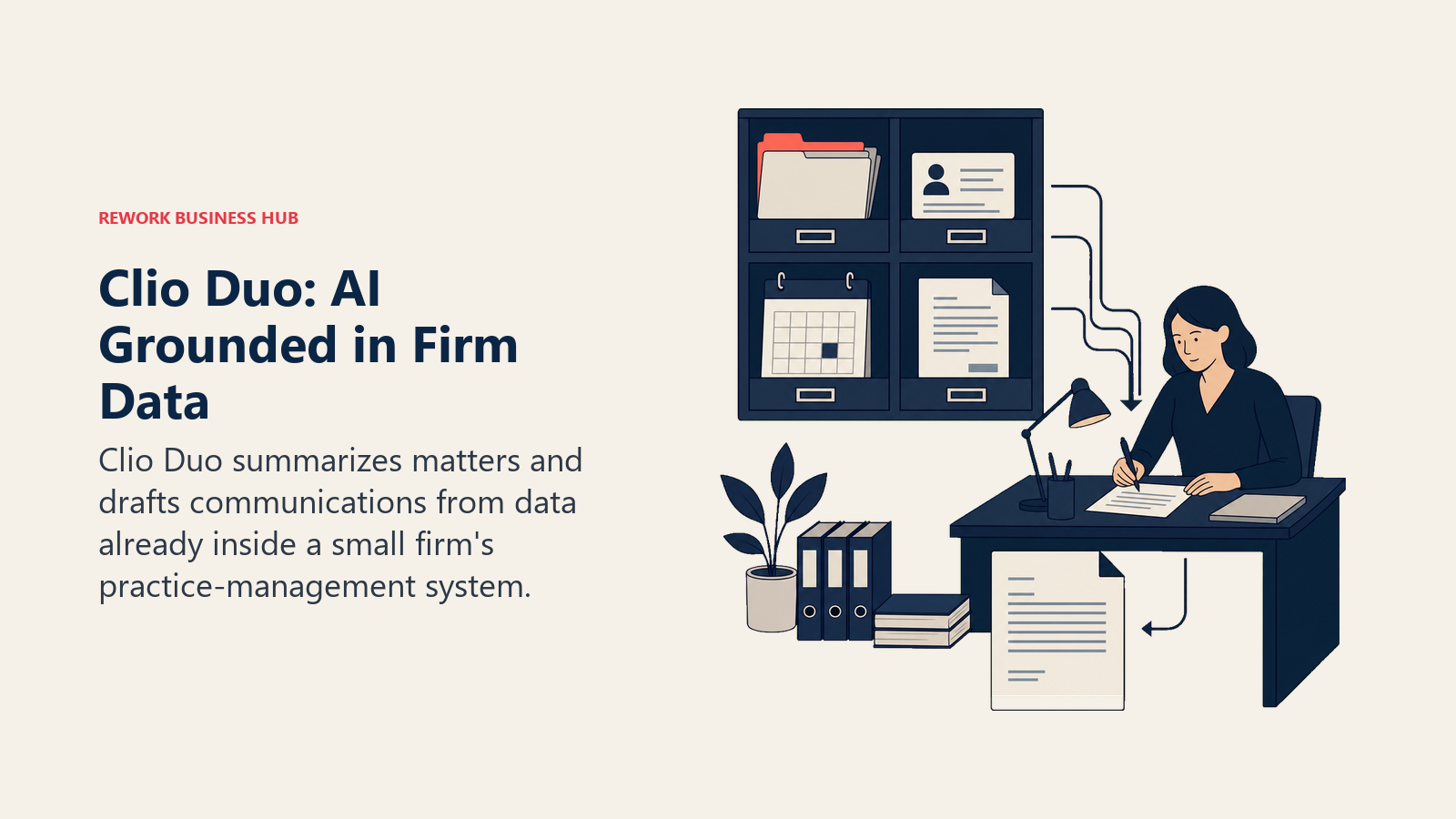
Best for: Solo and small-firm attorneys who already run Clio for practice management and want AI grounded in their own case data, not a new platform.
Key strengths:
- Grounded in your firm's own matters, contacts, and documents rather than generic legal knowledge
- Modest incremental cost since it rides on top of a Clio subscription most small firms already pay for
- No separate procurement process; it's a plan upgrade, not a new vendor relationship
Limitations:
- Only available on Clio's higher-tier plans, so the real cost includes the base subscription, not just the $59/user/month AI add-on
- Not a substitute for a dedicated research tool like Westlaw or Lexis, or a dedicated contract-review tool like Spellbook
- Feature depth is narrower than purpose-built legal AI platforms, by design
Pricing: Clio Duo runs roughly $59/user/month on top of a qualifying Clio plan; base Clio plans range from about $39 to $159/user/month depending on tier, per CostBench's Clio pricing breakdown. Confirm current tier eligibility on Clio's pricing page.
Best for: Solo attorneys and small firms (1-20 people) already standardized on Clio.
7. Robin AI: Contract Review and Obligation Tracking Copilot
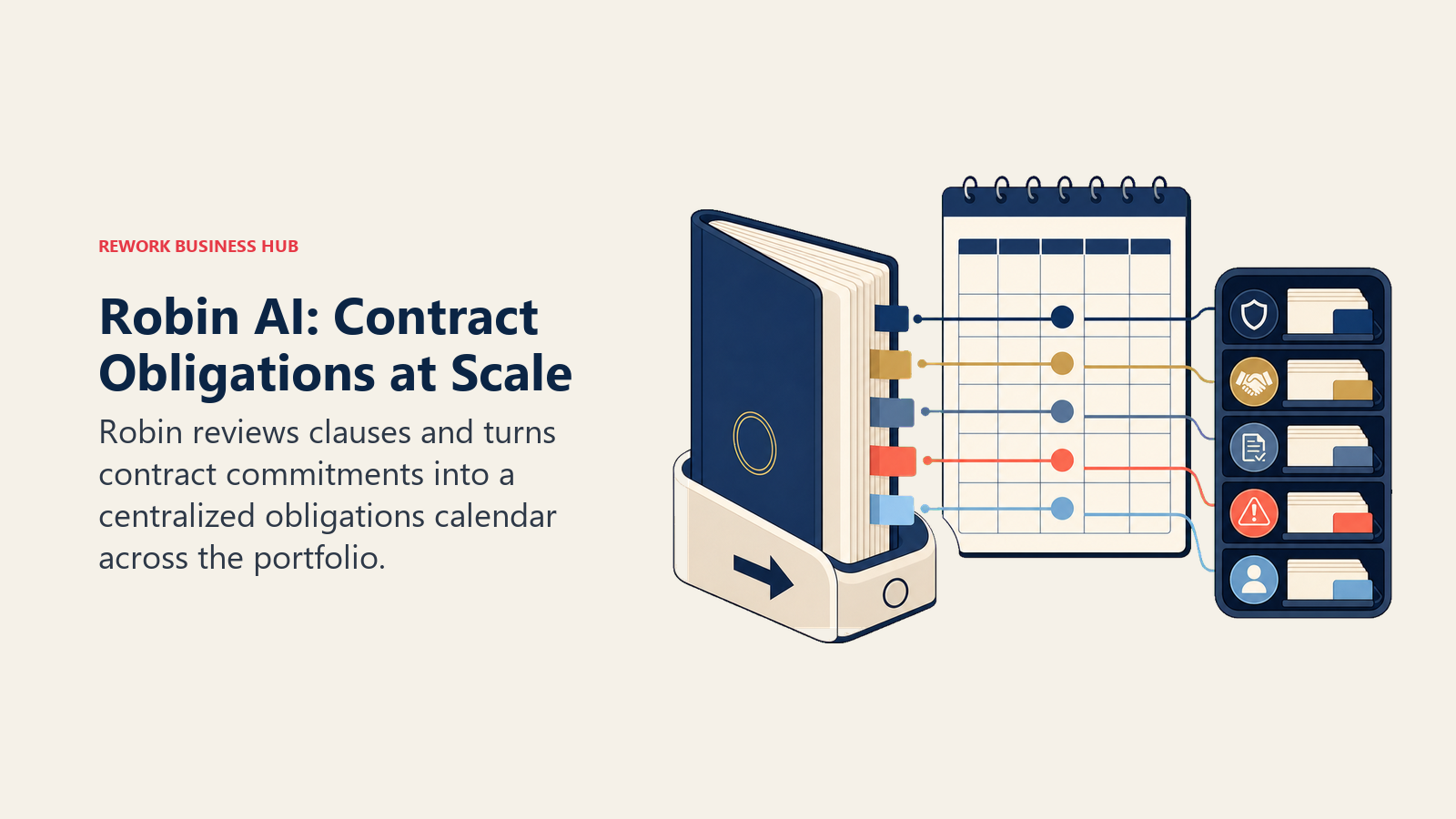
Robin AI focuses on one workflow end to end: reviewing, negotiating, and tracking obligations across a contract portfolio. It's used both by in-house legal teams reviewing vendor paper and by law firms handling high volumes of commercial contracts, with a genuine free tier that most enterprise legal AI competitors don't offer.
Best for: In-house legal teams and firms doing high-volume commercial contract review who want a free entry point before committing budget.
Key strengths:
- A real free tier (10 messages/day for a single user) lets you test the product before buying
- Clause comparison and centralized obligations management help legal teams track commitments across a contract portfolio, not just review individual documents
- Enterprise tier adds SSO, unlimited users, and bespoke playbooks for larger deployments
Limitations:
- The free and Pro tiers cap monthly reports (3 on Pro), which limits scale before you hit Enterprise pricing
- Enterprise pricing is not published; reported deployments range from roughly $5,000/year for small teams to $40,000-$80,000/year at scale
- Narrower scope than Harvey or CoCounsel; it's built for contracts, not litigation or broad research
Pricing: Free tier available; Pro tier for up to 5 users (unlimited messages and uploads, 3 reports/month); Enterprise custom, per G2's Robin AI pricing listing and PR Newswire coverage of Robin AI's funding.
Best for: In-house legal teams and mid-size firms (5-200 people) with a steady volume of commercial contracts to review.
8. Legora: Collaborative, Multiplayer AI Workspace for Law Firms
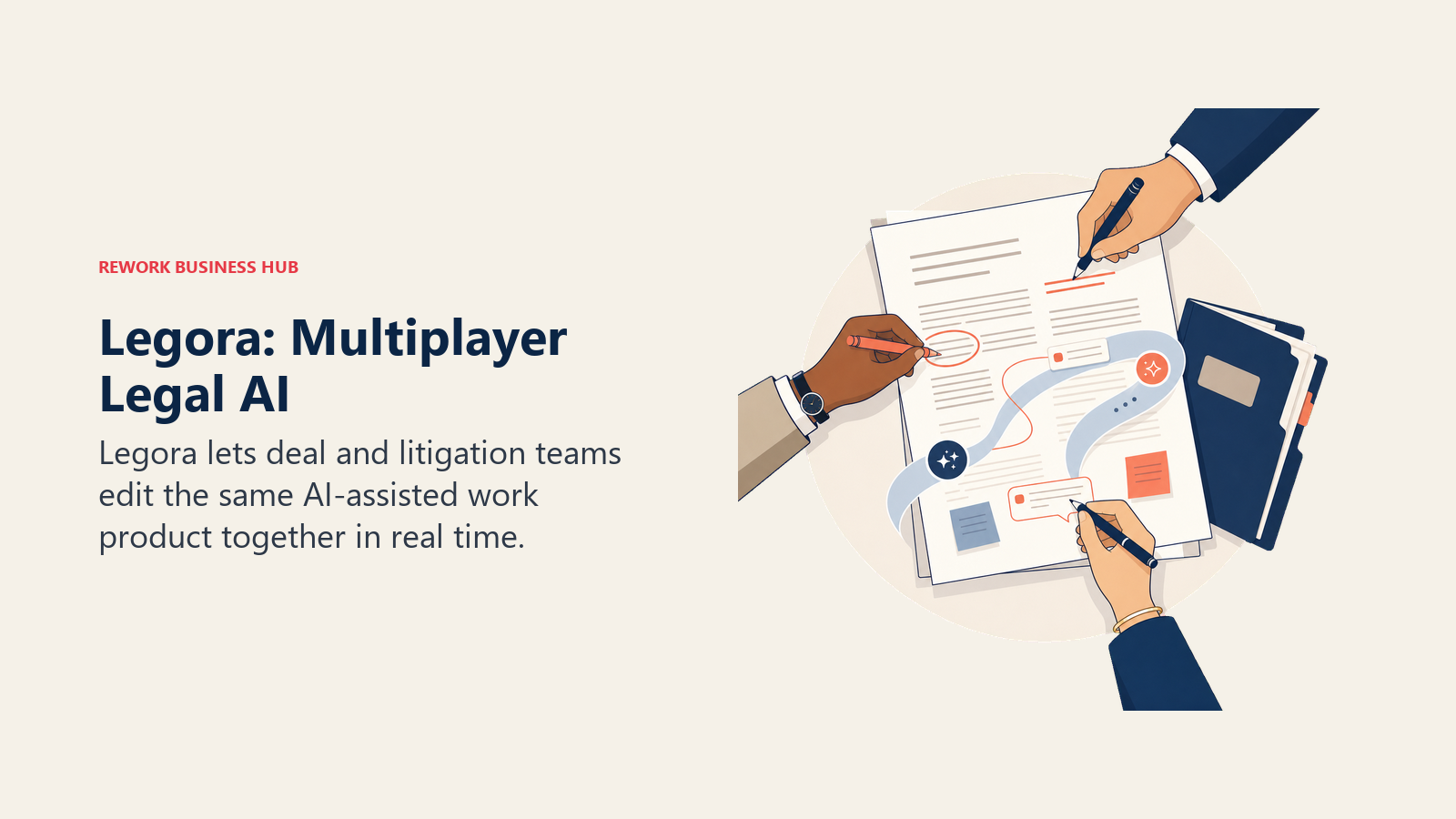
Legora's differentiator is collaboration: instead of one attorney prompting an AI assistant alone, Legora is built as a shared workspace where multiple attorneys on a deal or matter can work inside the same AI-assisted document in real time. That multiplayer framing has made it a fast-growing direct challenger to Harvey, with a reported $5.6 billion valuation as of April 2026.
Best for: Mid-size to large firms running deal teams or litigation groups that need multiple attorneys collaborating on the same AI-assisted work product simultaneously.
Key strengths:
- Real-time multiplayer editing and review, closer to how deal teams and litigation groups actually work together
- Positioned as a direct, well-funded alternative to Harvey, giving buyers real negotiating leverage in a two-horse enterprise market
- Rapid feature velocity given its funding and head-to-head competitive pressure with Harvey
Limitations:
- Legora does not publish pricing; reported minimum annual contract value is around $30,000, with a 10-seat minimum
- Enterprise deployments reportedly range from $250,000 to $400,000/year for a 50-person team before negotiated discounts
- Requires DMS integration work for full enterprise deployment, adding implementation time and cost on top of the license
Pricing: Custom, quote-based. Reported figures place per-seat pricing around $200-$500+/user/month, or roughly $3,000/user/year as a list-price baseline with a 10-seat minimum, per usagepricing.com and TechCrunch's coverage of Legora's 2026 valuation.
Best for: Mid-size and large firms (50-1,000+ attorneys) evaluating Harvey and wanting a collaborative-workflow alternative.
9. Paxton AI: Flat-Fee, All-in-One Assistant for Solo and Small Firms
Paxton positions itself as the one-tool answer for solo attorneys and small firms who can't justify an enterprise legal AI contract: research, drafting, document analysis, and summarization in a single flat-fee subscription, with compliance certifications (SOC 2, ISO 27001, HIPAA) that matter for sensitive practice areas.
Best for: Solo attorneys and small firms who want one AI tool covering research, drafting, and document analysis without a custom enterprise quote.
Key strengths:
- Transparent, published pricing, unusual among legal AI vendors at any tier
- Covers research, drafting, and file analysis in one subscription rather than requiring separate tools
- Compliance certifications (SOC 2, ISO 27001, HIPAA) support use in regulated practice areas like healthcare and insurance defense
Limitations:
- At $499/user/month for an individual license, it's a meaningful spend for a true solo practice compared to Clio Duo or a general assistant
- Enterprise pricing reverts to the industry-standard custom quote
- Narrower brand recognition and case-law depth than Westlaw or Lexis for attorneys whose core need is deep primary-source research
Pricing: Individual $499/user/month or $2,999/user/year (about 50% savings vs. monthly); Enterprise custom, volume-based, per Paxton's own pricing page.
Best for: Solo attorneys and small firms (1-15 people) wanting one AI subscription instead of stitching together research, drafting, and document tools.
10. Everlaw: AI-Powered E-Discovery and Litigation Document Review
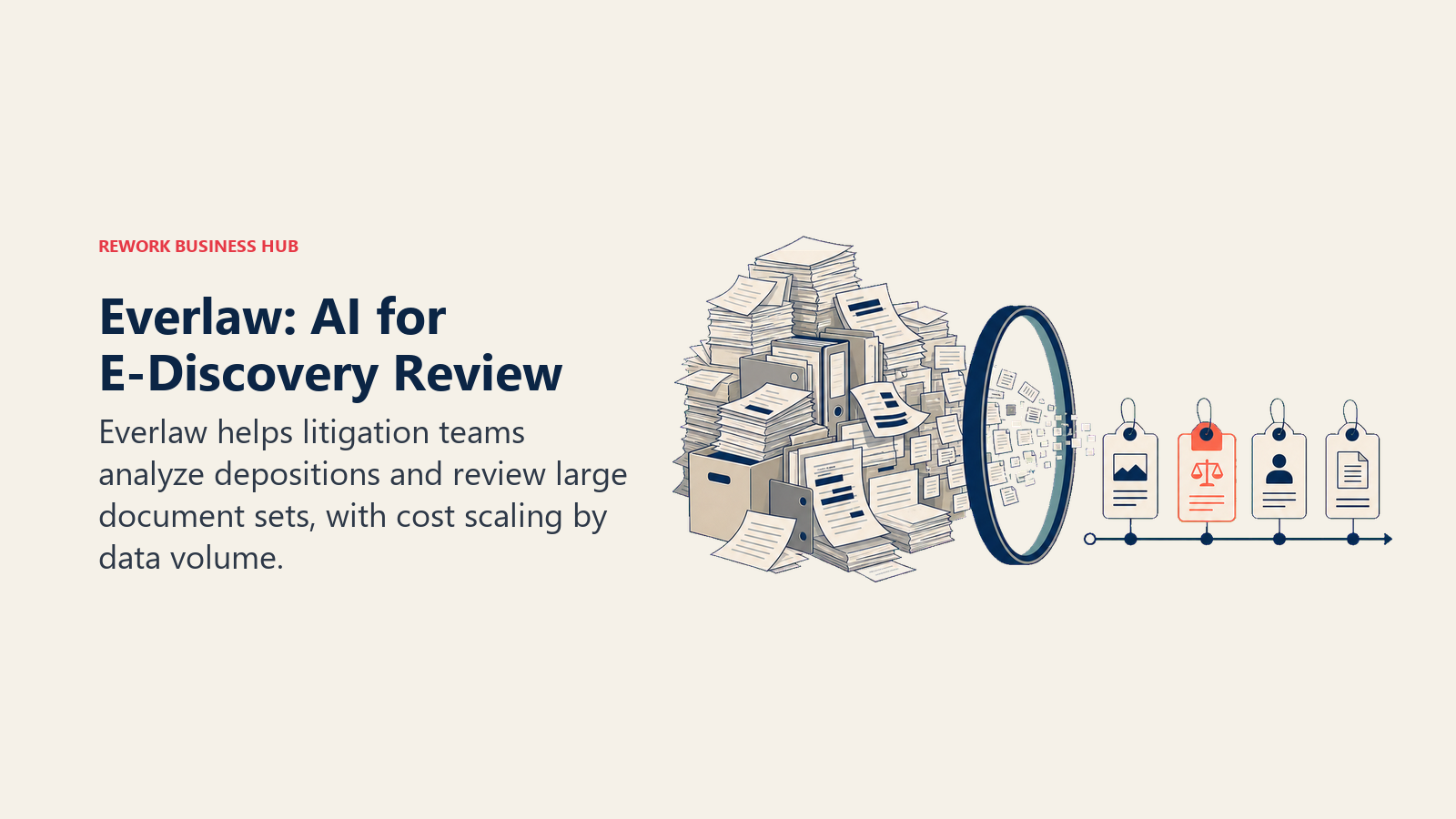
Everlaw is a cloud-native e-discovery platform, and its AI layer, EverlawAI Assistant, is built specifically for litigation document review: deposition analysis, single-document review, and writing assistance across large document sets. In 2026, Everlaw made its single-document AI features free within the base subscription, a notable shift from the per-action pricing common across e-discovery AI.
Best for: Litigation teams and firms managing e-discovery who need AI assistance across large volumes of case documents, not general research or drafting.
Key strengths:
- Single-document AI actions (writing assistant, deposition analyzer, document review) are now included in the base subscription at no extra cost
- Cloud-native platform with no per-user licensing limits, so cost scales with data volume rather than headcount
- Purpose-built for the document-heavy reality of litigation, distinct from general legal AI assistants
Limitations:
- Not a research or contract-drafting tool; it's scoped specifically to e-discovery and litigation document review
- Batch-level AI actions are still usage-based, so heavy AI use on large document sets adds cost on top of the base platform
- Pricing is quote-based and depends on data volume, making budget forecasting harder than a flat per-seat tool
Pricing: Roughly $2,000-$5,000/month base subscription plus $18-$35/GB for hosted data, per AI Vortex's Everlaw pricing analysis. Single-document AI Assistant features are included; confirm current batch-action pricing on Everlaw's own pricing page.
Best for: Litigation support teams and firms of 10-500+ handling e-discovery and document-heavy case review.
11. Luminance: AI Trained Specifically for Legal Document Review
Luminance markets itself as "Legal-Grade AI," trained specifically on legal-document patterns rather than general text, for high-volume contract review, due diligence, and compliance document analysis. It's aimed at corporate legal and compliance teams reviewing large document sets under time pressure, such as M&A due diligence.
Best for: Corporate legal and compliance teams reviewing large volumes of contracts or due-diligence documents under deadline pressure.
Key strengths:
- Trained specifically for legal-document pattern recognition rather than adapted from a general-purpose model
- Scales across legal, compliance, and broader business functions within an enterprise deployment
- Strong fit for time-boxed, document-heavy work like M&A due diligence and compliance audits
Limitations:
- No published pricing; mid-size deployments are estimated in the five-to-six-figure range annually, and implementation can add 20-50% of the first year's license fee
- Evaluation process (demo, proof-of-concept, custom pricing) typically runs several weeks
- Overkill for solo attorneys or small firms without high-volume document review needs
Pricing: Custom, quote-based; mid-size deployments are estimated in the five-to-six-figure range per year, with cost scaling by user count, document volume, and module selection, per Bind Legal's Luminance pricing breakdown.
Best for: Corporate legal departments and mid-size to large firms (20-1,000+ people) with recurring high-volume document review needs.
12. ChatGPT Enterprise: The General-Purpose Tool Lawyers Actually Use Most
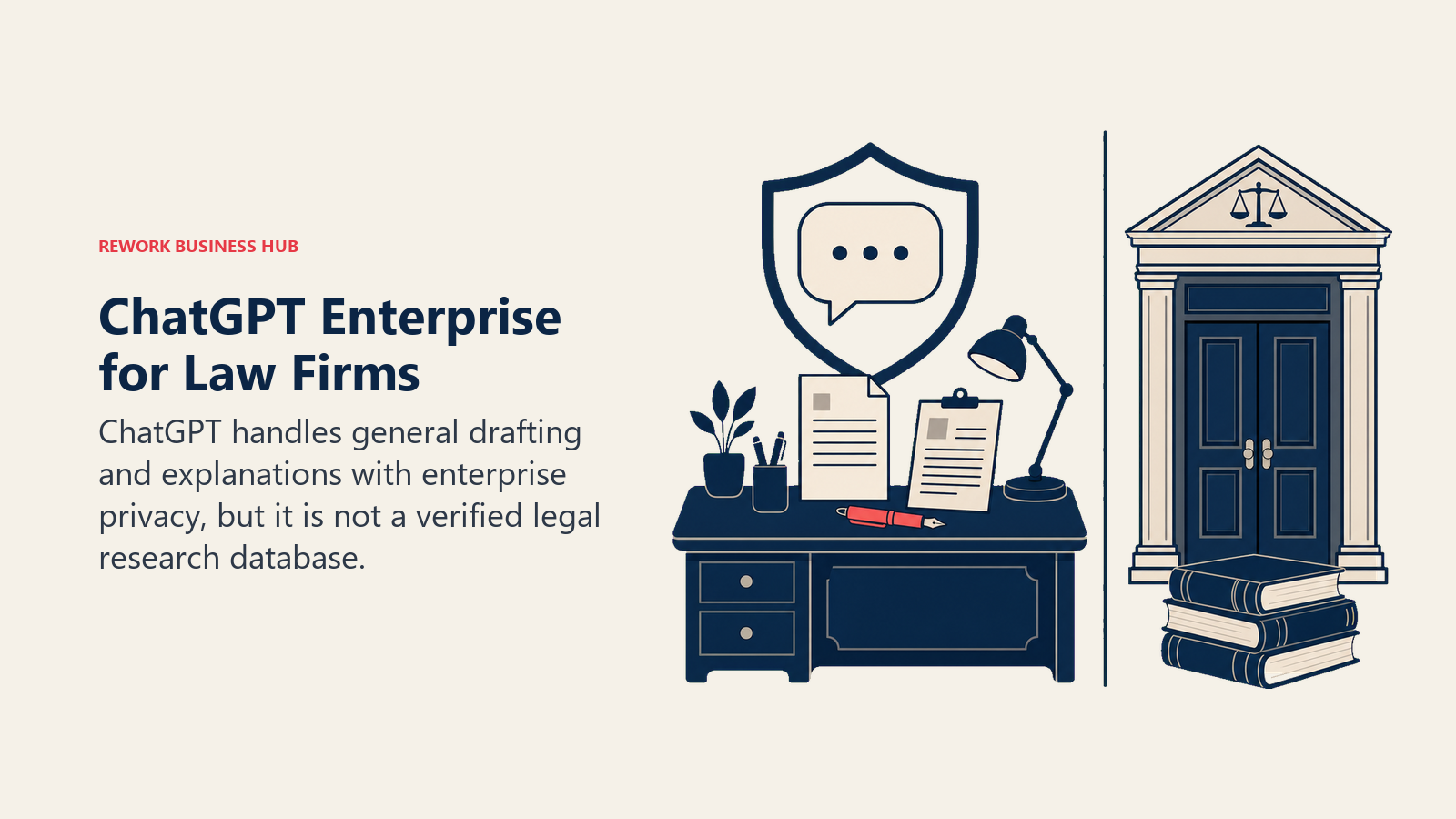
Here's the honest data point: ChatGPT, not a purpose-built legal AI platform, is the single most-used AI tool in law firms today, at 52% adoption according to the ABA's own survey. ChatGPT Enterprise adds the privacy guarantees, admin controls, and SSO that make general use defensible for client-confidential work, without the legal-specific research or drafting depth of the tools above it on this list.
Best for: General drafting, internal research, client-friendly explanations, and administrative writing where a purpose-built legal database isn't required.
Key strengths:
- Lowest cost per seat of any tool on this list, and the tool lawyers are already most familiar with from personal use
- Enterprise-grade data privacy (no training on your data) and SSO support, addressing the biggest objection to using ChatGPT for firm work
- New Go plan lowers the entry point to 10 seats, versus the standard 150-seat Enterprise minimum
Limitations:
- Not a legal research database and has no case-law citation checking, KeyCite-equivalent validation, or jurisdiction-specific legal grounding
- Requires more careful prompting and verification for anything client-facing or filed with a court, since it isn't grounded in a primary-law database
- The 150-seat, annual-commitment floor for standard Enterprise pricing is a real barrier for firms under that size before the Go plan
Pricing: No public list price; negotiated 2026 deals reportedly land between $50 and $60/user/month on annual commitments of 150+ seats, falling toward $40 at very high seat counts, per Inference.net's ChatGPT Enterprise pricing guide. The newer Go plan serves the 10-149 seat range at a lower published starting cost; the free ChatGPT tier lacks Enterprise privacy and SSO guarantees.
Best for: Firms of any size wanting a low-cost, general-purpose AI layer for non-research drafting and communication, typically alongside a purpose-built legal AI tool rather than instead of one.
How to Choose: Decision Framework
| If your biggest need is... | Pick... | Why |
|---|---|---|
| One broad AI platform across research, drafting, and review for a large firm | Harvey or Legora | Both are enterprise-scale platforms built for multi-practice-group deployment; Legora leans collaborative, Harvey leans broadest feature set |
| An AI assistant grounded in the Westlaw content you already trust | CoCounsel | Citations trace back to Westlaw's primary law, reducing hallucination risk versus a general model |
| Faster, more reliable case-law research and citation checking | Westlaw Precision AI | Purpose-built for research and KeyCite validation, not drafting |
| Contract drafting and redlining inside Word | Spellbook | Lives inside the tool transactional attorneys already use all day |
| AI research grounded in LexisNexis instead of Westlaw | Lexis+ AI | Same conversational-research value proposition, built on the Lexis database |
| AI for a solo or small firm already running Clio for practice management | Clio Duo | Grounded in your own matter data; rides on a subscription you likely already pay |
| High-volume contract review with a free tier to start | Robin AI | Genuine free tier and centralized obligations tracking, unusual in this category |
| A flat-fee, all-in-one assistant without enterprise procurement | Paxton AI | Published pricing and one subscription covers research, drafting, and file analysis |
| AI-assisted e-discovery and litigation document review | Everlaw | Purpose-built for case document volume, with core AI actions now included free |
| High-volume M&A due diligence or compliance document review | Luminance | Trained specifically on legal-document patterns for large-scale review |
| The lowest-cost general AI layer for non-research drafting | ChatGPT Enterprise | Cheapest per-seat option and the tool lawyers already use most, per ABA survey data |
By Budget
| Budget | Best Fits |
|---|---|
| Free tier to start | Robin AI (free tier), ChatGPT free tier (limited, no Enterprise privacy) |
| Under $100/user/month | ChatGPT Enterprise (at scale), Spellbook Starter |
| $100-$300/user/month | CoCounsel, Lexis+ AI, Spellbook Enterprise, Clio Duo (plan + add-on) |
| $300-$600/user/month | Legora, Paxton AI, higher CoCounsel/Westlaw tiers |
| Custom enterprise quote required | Harvey, Luminance, Everlaw (volume-based), Legora at scale |
AI Adoption in Legal: Where the Risk Actually Sits
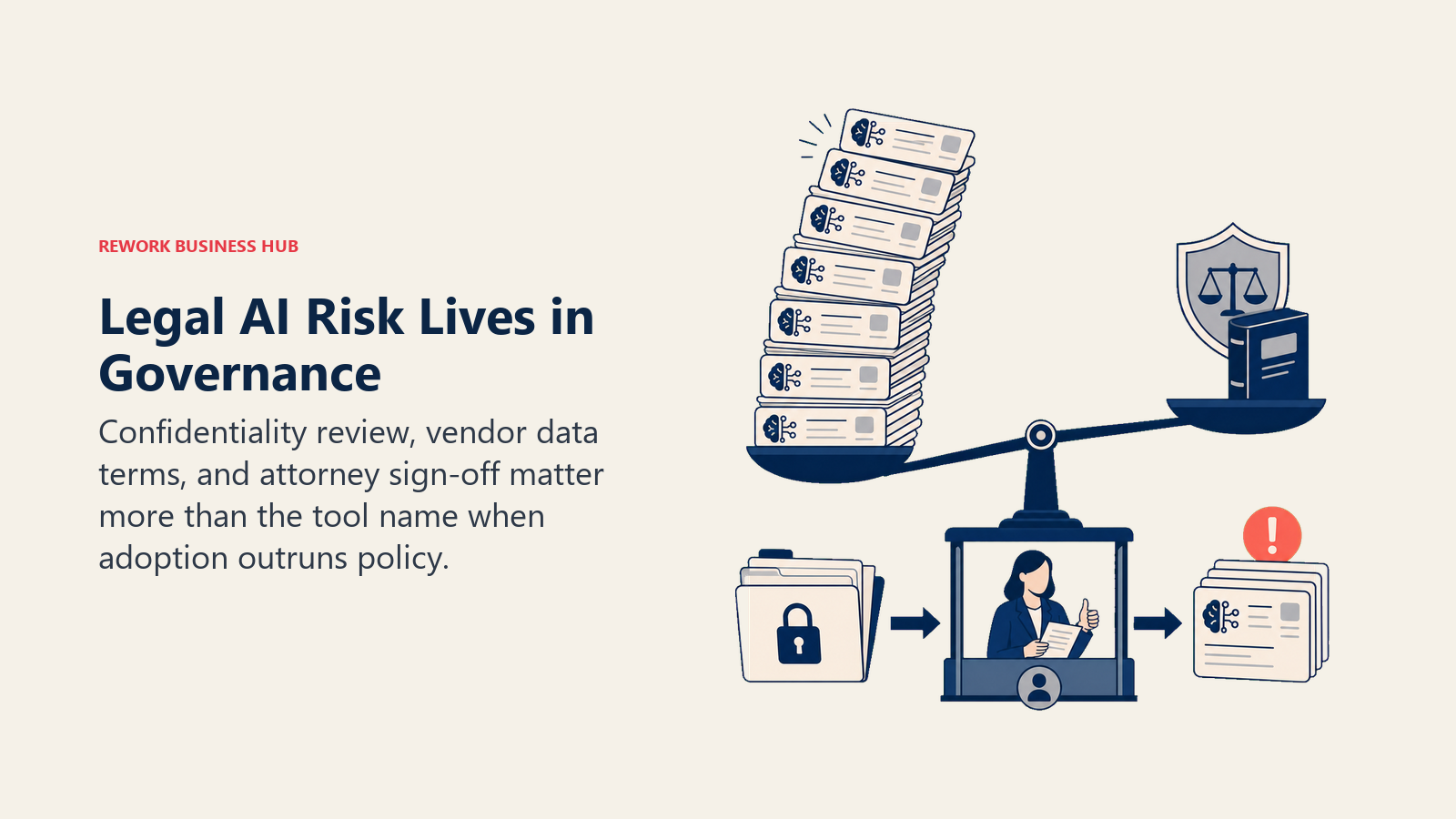
Adoption is outpacing governance in the legal industry, and that gap is worth understanding before you pick a tool, not after. Per Clio's research, 79% of legal professionals already use AI, but only about half of firms have a formal AI policy in place, and Thomson Reuters' 2026 research found that 91% of organizations say they're falling short of the value AI could actually deliver even as usage climbs. In practice, that means the tool selection matters less than the workflow you build around it: confidentiality and privilege review before any document goes into a third-party AI system, a clear policy on what work product still requires attorney sign-off, and a real understanding of which vendors train on your data and which contractually don't. If you're building out a broader legal marketing or growth motion alongside your AI stack, the law firm business development guide and legal practice area marketing playbook cover the client-acquisition side most AI tool lists skip entirely.
For research specifically, it's worth separating "AI that searches the web" from "AI that searches a verified legal database." Our Perplexity vs ChatGPT Search vs Gemini comparison covers general AI research tools, but for anything you'd cite in a filing, a database-grounded tool like Westlaw Precision AI or Lexis+ AI carries far less risk than a general web-search assistant. And if depositions or client meetings are part of your week, Otter vs Fireflies vs Fathom covers the AI meeting-transcription tools many litigation and client-facing attorneys are already layering on top of their legal-specific stack.
Frequently Asked Questions about AI Tools for Lawyers
What is the best AI tool for lawyers in 2026?
There's no single best tool for every practice. Harvey and Legora lead for large firms wanting a broad platform, CoCounsel and Lexis+ AI fit firms standardized on Westlaw or LexisNexis, Spellbook and Robin AI lead for contract review, and Clio Duo or Paxton AI fit solo and small-firm budgets best.
Is ChatGPT good enough for legal work, or do I need a dedicated legal AI tool?
ChatGPT Enterprise is genuinely useful for general drafting, internal research, and client communication, and it's the single most-used AI tool in law firms per the ABA's own survey. But it has no case-law citation checking or primary-law grounding, so anything client-facing or court-filed should still route through a database-grounded tool like Westlaw Precision AI, Lexis+ AI, or CoCounsel.
How much does legal AI software cost in 2026?
Entry points range from free (Robin AI's free tier) to roughly $99-$499/user/month for mid-tier tools like Spellbook and Paxton AI, up to $500-$2,000+/user/month for enterprise platforms like Harvey. Most enterprise legal AI vendors don't publish list prices, so budget for a custom quote at that tier.
What happened to Casetext?
Thomson Reuters acquired Casetext in 2023 and retired it as a standalone product on March 31, 2025. Its underlying technology now lives inside Thomson Reuters' CoCounsel Legal plans, which are sold exclusively bundled with a Westlaw subscription.
Which AI tool is best for contract review specifically?
Spellbook and Robin AI are both purpose-built for contract review, with Spellbook working inline inside Microsoft Word and Robin AI adding centralized obligations tracking across a contract portfolio. Luminance is the stronger pick for very high-volume review, like M&A due diligence.
Is it safe to use AI tools with confidential client information?
It depends entirely on the vendor's data-handling terms. Enterprise-grade tools like Harvey, CoCounsel, Legora, and ChatGPT Enterprise contractually exclude your data from model training by default; free or consumer-tier AI products often do not offer the same guarantee. Confirm data-training and retention terms in writing before uploading privileged or confidential material to any AI tool, and check your firm's or jurisdiction's ethics guidance on AI use.
Do solo attorneys and small firms actually need legal AI tools?
Adoption data says most already have some form of AI in their workflow: 71% of solo attorneys report using AI tools per Clio's research, most often through free or low-cost general tools rather than enterprise legal AI. Clio Duo, Paxton AI, and Westlaw's self-serve Advantage plans are built specifically for that solo and small-firm budget range.
How current is this pricing, and how often should I re-check it?
Legal AI pricing is moving fast: Spellbook raised Enterprise pricing sharply in late 2025, and several vendors on this list don't publish rates at all. Confirm directly with the vendor before committing budget, especially for any quote-based enterprise tier.
Related Reading
- Best AI Tools in 2026: The Top 25 Across Every Category
- Claude vs ChatGPT vs Gemini: Which LLM Fits Your Business in 2026
- Best AI Tools for Business Development in 2026
- Best AI Tools for Content Writers in 2026
- Perplexity vs ChatGPT Search vs Gemini: AI Research Tools for Executives
- Otter vs Fireflies vs Fathom: AI Meeting Tools
- Law Firm Business Development: Rainmaking, Referrals, and Thought Leadership
- Legal Practice Area Marketing: Positioning and Promoting Specialized Legal Services
- AI Tool Selection Framework: A Strategic Approach to Choosing the Right AI Solutions
- AI Ethics and Data Privacy: Responsible AI Productivity Tool Adoption
Methodology
Every tool on this list was evaluated on real practice use cases (legal research, contract drafting and review, litigation and e-discovery, and general drafting), not feature-sheet comparisons alone. Adoption and impact statistics cited above come from the ABA Legal Technology Survey, Clio's 2025 Legal Trends Report, and Thomson Reuters' 2026 Future of Professionals and AI in Professional Services reports, each linked at first mention.
What to Do Next
Start by separating your actual need from the category hype: research, contract review, litigation support, and general drafting are four different jobs, and almost no firm needs all four covered by one platform on day one. If you're solo or small, start with Clio Duo or Paxton AI and add a research tool like Westlaw's self-serve Advantage tier before considering an enterprise platform. If you're mid-size or larger and evaluating Harvey or Legora, run a paid pilot with real matters and real attorneys before signing a multi-year contract, and get the data-training and retention terms in writing regardless of which tool you pick. The firms getting real value from legal AI in 2026 are the ones that matched the tool to the workflow, not the ones that bought the platform with the most features on the sales deck.

Principal Product Marketing Strategist
On this page
- What Changed in 2026
- Key Facts
- Quick Comparison Table
- Firm Size Fit Matrix
- Sizing and Persona Table
- 1. Harvey: Broadest Enterprise Legal AI Platform
- 2. CoCounsel (Thomson Reuters): AI Assistant Built on Westlaw Content
- 3. Westlaw Precision AI: AI-Enhanced Legal Research and Citation Checking
- 4. Spellbook: AI Contract Drafting and Review Inside Word
- 5. Lexis+ AI (with Protégé): Conversational Research on the LexisNexis Database
- 6. Clio Duo: AI Layered on Practice Management Data for Small Firms
- 7. Robin AI: Contract Review and Obligation Tracking Copilot
- 8. Legora: Collaborative, Multiplayer AI Workspace for Law Firms
- 9. Paxton AI: Flat-Fee, All-in-One Assistant for Solo and Small Firms
- 10. Everlaw: AI-Powered E-Discovery and Litigation Document Review
- 11. Luminance: AI Trained Specifically for Legal Document Review
- 12. ChatGPT Enterprise: The General-Purpose Tool Lawyers Actually Use Most
- How to Choose: Decision Framework
- By Budget
- AI Adoption in Legal: Where the Risk Actually Sits
- Related Reading
- Methodology
- What to Do Next