Best Artisan Alternatives in 2026: 12 AI SDR and Outbound Tools Compared
Turn this article into takeaways for your work.


Each assistant summarizes the article only for you and suggests best practices for your work.
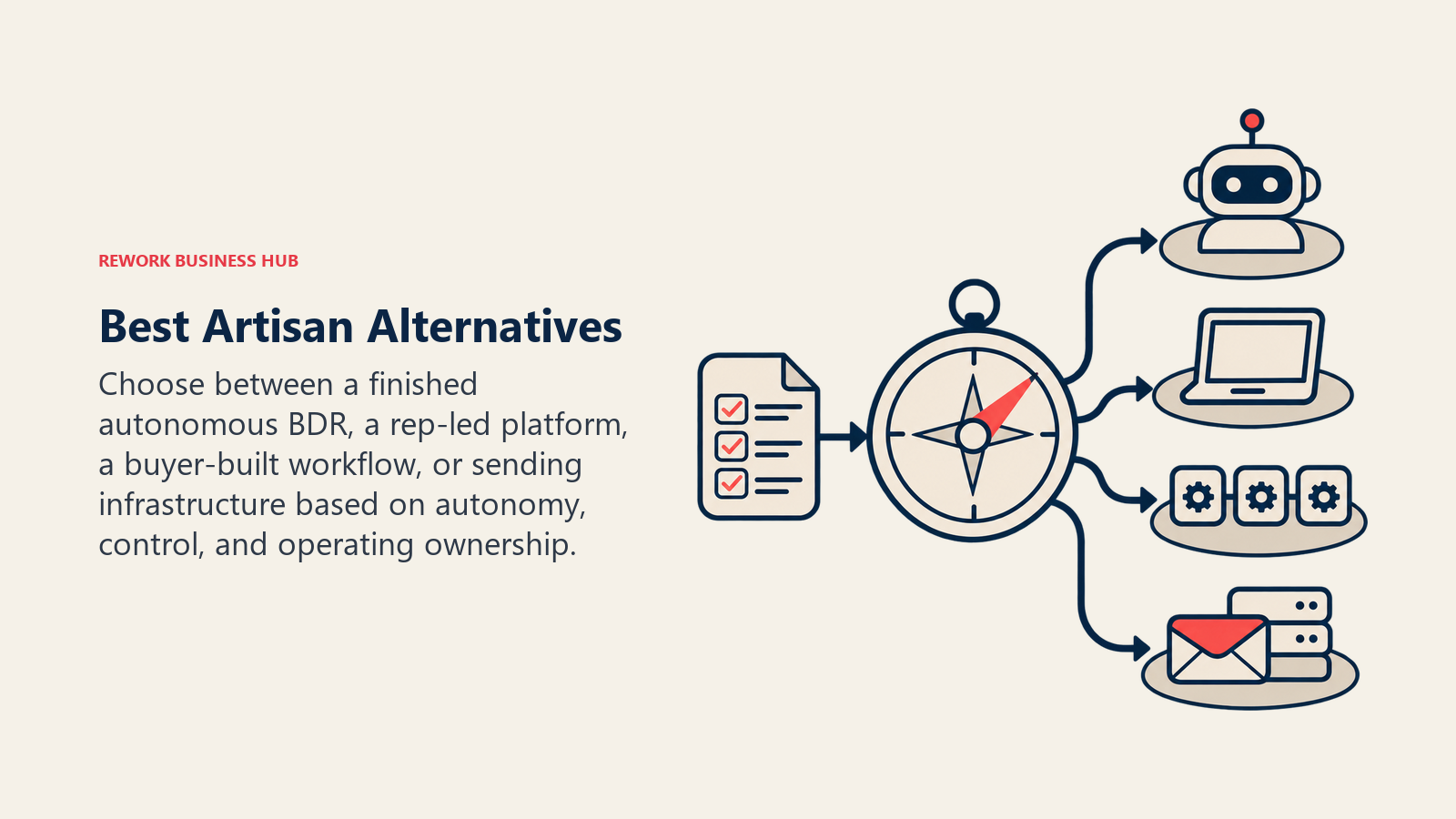
If you're shopping for an Artisan alternative, the short version is this: 11x and AiSDR are the closest like-for-like swaps for a fully autonomous AI BDR, Clay and Apollo suit teams that want to own the workflow, Reply.io and Regie.ai sit in the middle on price, and Instantly and Smartlead are the budget route when deliverability matters more than autonomy. This guide covers 12 options, ordered by how closely each one replaces what Artisan's Ava does, and it's written for the person who has to defend the choice to a CRO.
The comparison criteria are the ones that actually move the decision: how autonomous the agent is, how the vendor meters usage, what you can see on a price page before talking to sales, and who the product is built for. Where a vendor doesn't publish a number, you'll see Pricing on request instead of a guess.
Key Facts
- Enterprises now buy rather than build: Menlo Ventures reports that 76% of AI use cases are purchased rather than built internally, up from 53% of AI solutions in 2024.
- Real agents are rarer than the label suggests: the same Menlo Ventures report finds only 16% of enterprise and 27% of startup deployments qualify as true agents, where an LLM plans, acts, observes feedback and adapts.
- Adoption is moving fast in sales: Salesforce's State of Sales research says nine in 10 sales teams use agents or expect to within two years.
- Autonomous outbound has a hard deliverability ceiling: Google's bulk sender rules require senders above 5,000 messages a day to Gmail to keep Postmaster Tools spam rates below 0.30% and support one-click unsubscribe.
- Artisan itself says it has raised $36M in venture funding, according to its own Ava 2.0 announcement.
What Artisan Actually Sells in 2026
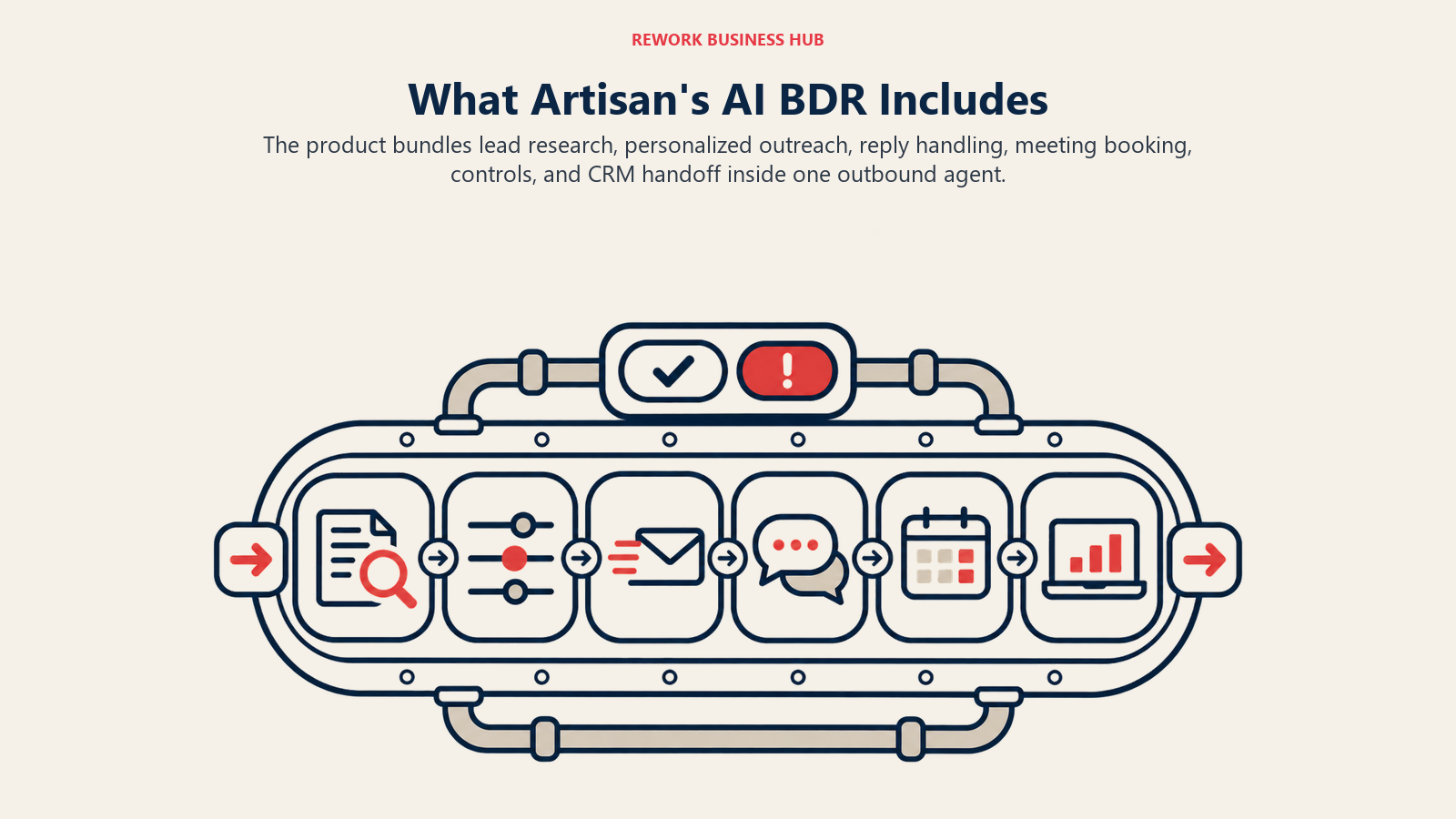
Artisan is best known for Ava, an AI BDR that handles lead research, one-to-one outreach, reply handling and meeting booking. In May 2026 the company launched Ava 2.0, positioned as an autonomous BDR for enterprise revenue teams, and its announcement says existing V1 customers migrate progressively through 2026. It's worth separating the product from the pricing, because the product is clearer than the price.
| Area | What Artisan states |
|---|---|
| Core product | Ava, an autonomous AI BDR: research, outreach, replies, meeting booking |
| Data | 250M+ verified B2B contacts, waterfall enrichment across 22+ data sources |
| Signals | Funding rounds, leadership changes, new hires, investor activity, tech stack changes |
| Channels | Email sequences, plus a built-in dialer with parallel dialing |
| Controls | Approval gates, tone and CTA locks, banned phrases, escalation rules |
| Integrations | Salesforce and HubSpot sync, custom webhooks, Slack |
| Security | SOC 2 Type II, SSO/SAML, audit logs |
| Pricing model | Credit-based; plans sized to lead volume, mailboxes and dialer seats |
Source: artisan.co, Ava 2.0 announcement.
The pricing page lists three plans: Team (about 2,500 leads contacted a month), Scale (about 6,000) and Enterprise (custom). None carries a public dollar figure, and the AI dialer is a per-seat add-on with no listed price. Artisan's announcement describes pricing as custom to your team, your motion and your volume. Treat it as Pricing on request.
Source: artisan.co/pricing.
Why Teams Look Beyond Artisan
Artisan works for the team it's built for. Teams look elsewhere for four reasons, and knowing which one is yours narrows the list quickly:
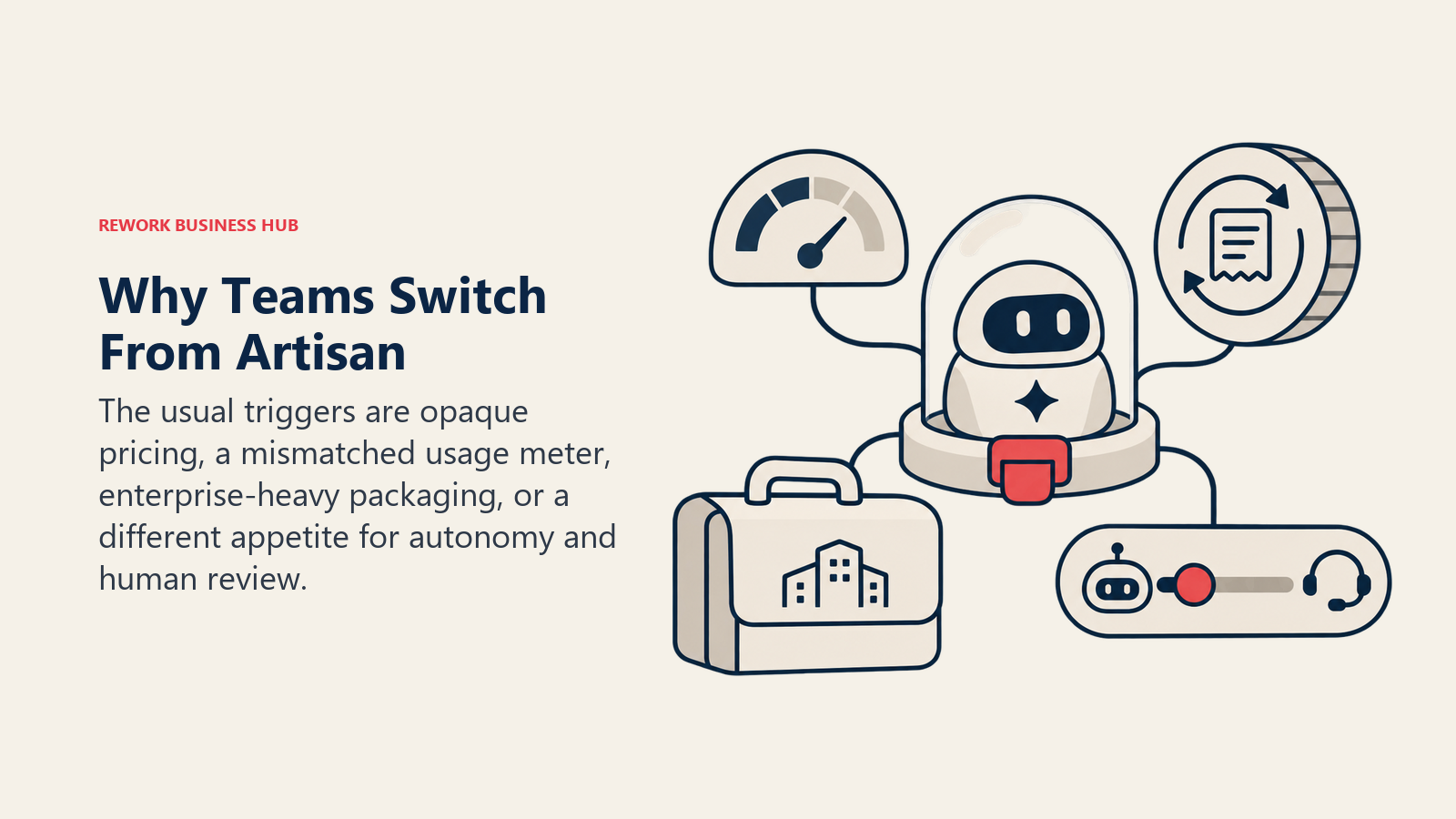
- No price before a sales call. If you need to put a number in a budget doc this week, a quote-gated vendor slows you down. Several alternatives below publish per-seat or per-contact rates.
- A different meter. Artisan sizes plans by leads contacted, mailboxes and dialer seats, on a credit model. Teams that prefer to pay per prospect, per seat, or per mailbox have options that match.
- Enterprise positioning. Ava 2.0 is pitched at enterprise revenue teams. A five-person startup may want something lighter, and a 500-rep org may want to stay inside its sequencing platform.
- Autonomy appetite. Some buyers want the agent to run the whole motion. Others want a rep to review and drive, with AI doing research and drafting. Those are different products, and the market sells both.
If none of those describe you, who should stay on Artisan is further down. And if you want the wider field before narrowing, start with best AI agents for sales, then come back.
Quick Comparison Table
| Tool | Best For | Starting Price | Key Strength | Key Limitation |
|---|---|---|---|---|
| 11x | Fully autonomous outbound and inbound agents | Pricing on request | Voice, chat, email, social, SMS and WhatsApp in one system | No public price to compare against |
| AiSDR | Pay-per-prospect autonomous outbound | $1.50 per person prospected | No monthly fee on the self-serve option | Team plans are quote-based |
| Regie.ai | Prospecting with a CRM and dialer from $41 | Free; Pro $41/mo annual | Published tiers from solo to team | Credits reset monthly, no rollover |
| Clay | Building a custom research and outbound workflow | Free; Launch $167/mo annual | Data providers and agents you wire together | Needs a workflow builder, not a finished rep |
| Apollo | One database plus sequencer for the whole team | Free; Basic $49/seat/mo annual | Large prospect database with a real free tier | Monthly per-seat prices are not shown |
| Amplemarket | Signal-led outbound for small teams | $600/mo annual (Startup) | Duo Copilot on every plan | Startup tier is capped at 2 users |
| Reply.io (Jason AI SDR) | Multichannel sequencing with an AI SDR option | AI SDR from $500 | Email Volume plan from $59 | AI SDR needs an annual commitment |
| Salesforce Agentforce Sales | Salesforce-native revenue teams | From $125/user/mo | Agents work on data already in Salesforce | Needs Sales Cloud Core or above for AI |
| Outreach | Large teams running sequences at scale | Pricing on request | Seat plus credit model with named agents | Quote-only |
| Salesloft | Enterprise engagement and forecasting stacks | Pricing on request | AI agents plus signals across the revenue stack | Quote-only |
| Instantly | Low-cost, high-volume cold email | $47/mo monthly ($37.60 yearly) | Cheapest entry with lead database and AI agent options | Agent features are split across plans |
| Smartlead | Agencies running many client mailboxes | $39/mo monthly ($32 yearly) | Unlimited mailboxes on every plan | AI is lighter than a dedicated AI BDR |
Sizing and Stage Fit
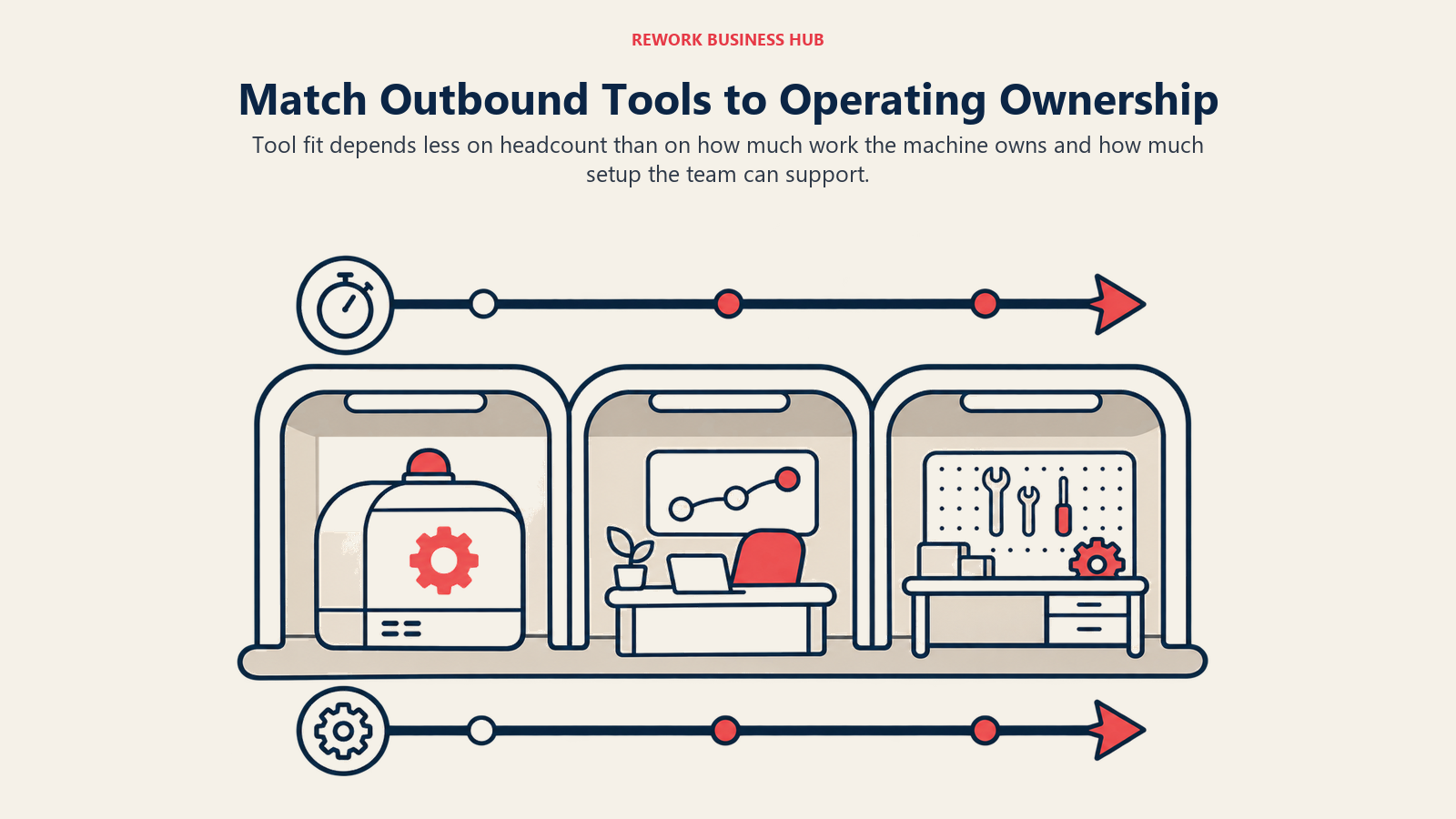
The useful dividing line isn't company size. It's how much of the outbound motion you want a machine to own, and how much setup you can afford.
| Tool | Team Size Sweet Spot | Technical Skill Needed | Autonomy Level | Pricing Model |
|---|---|---|---|---|
| 11x | 50-1,000+ | Low | Highest | Quote |
| AiSDR | 1-100 | Low | High | Per prospect, or team quote |
| Regie.ai | 1-50 | Low | Medium | Per seat, with credits |
| Clay | 5-200 | Medium to high | Low to medium | Actions plus data credits |
| Apollo | 1-500 | Low | Low to medium | Per seat, with credits |
| Amplemarket | 2-100 | Low to medium | Medium | Per plan, with user caps |
| Reply.io | 1-100 | Low | Medium to high (Jason) | Tiered plans plus add-ons |
| Agentforce Sales | 50-10,000+ | Medium | Medium to high | Per user |
| Outreach | 50-5,000+ | Medium | Medium | Seats plus AI credits |
| Salesloft | 100-5,000+ | Medium | Medium | Quote |
| Instantly | 1-200 | Low to medium | Medium | Tiered plans plus credits |
| Smartlead | 1-100 (agencies) | Medium | Low to medium | Tiered plans |
Autonomy ratings are editorial judgments about how much a rep has to touch day to day, not vendor claims.
How the Vendors Meter Usage
Price is rarely the hard part of this category. The unit is. Artisan meters on leads contacted and credits, and each alternative has its own version of the same idea:
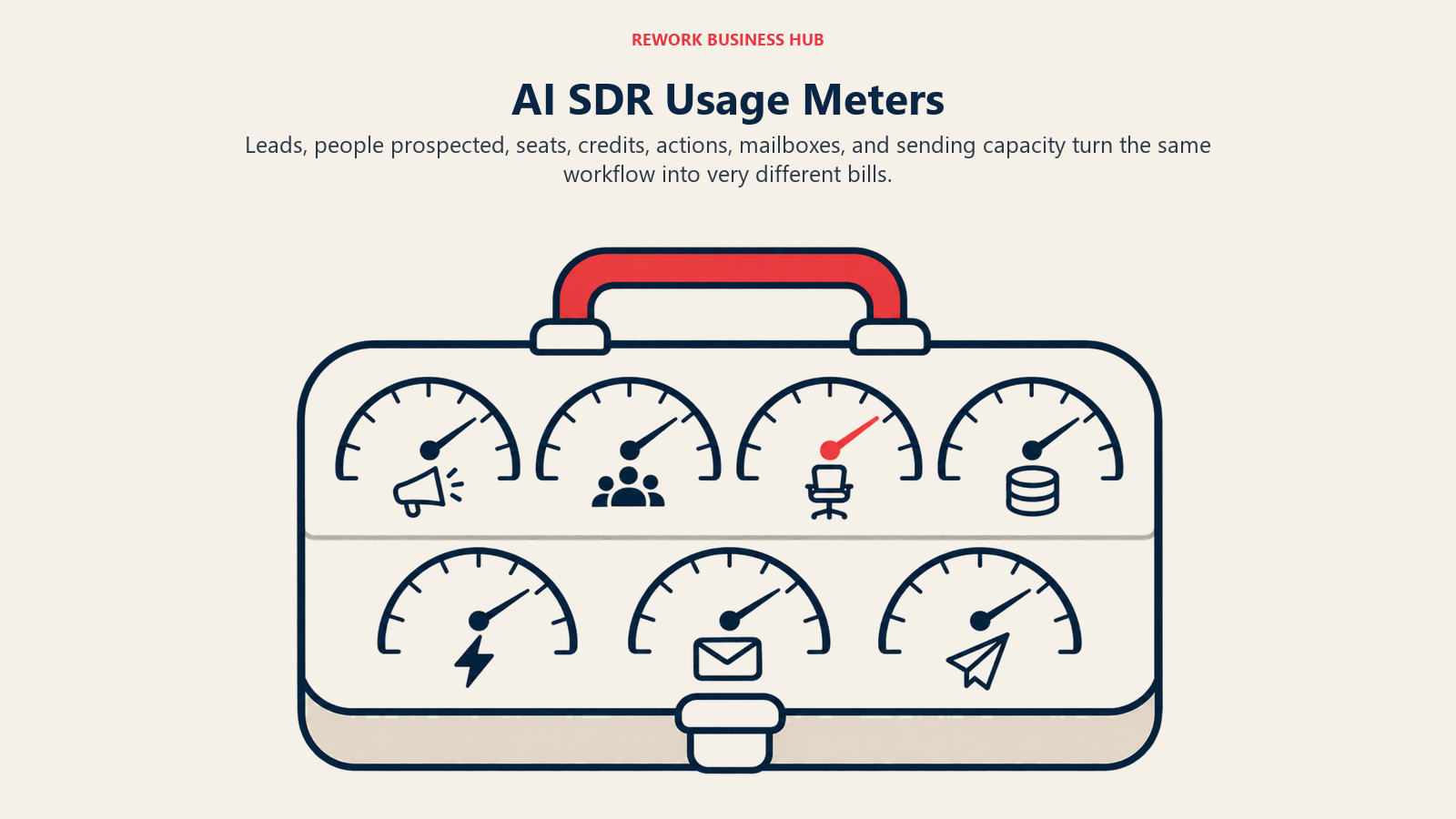
| Vendor | What you actually pay for | Where the surprise tends to hide |
|---|---|---|
| Artisan | Lead volume, mailboxes, dialer seats (credit-based) | Dialer is a per-seat add-on |
| AiSDR | Each person prospected | Mailboxes and managed service are add-ons |
| Regie.ai | Seats plus credits | Credits reset each billing period |
| Clay | Actions and data credits, bought separately | Two meters to forecast |
| Apollo | Seats plus pooled credits | Unused credits don't roll over |
| Amplemarket | Plan with user and credit caps | Extra users sold separately |
| Reply.io | Plan tier plus channel add-ons | LinkedIn and Calls add-ons stack |
| Agentforce Sales | Per-user add-on on top of Sales Cloud | You need the underlying Salesforce license |
| Outreach | Seats plus AI credits | Extra credit packs |
| Instantly | Sending plan plus lead-credit plan | Two plans for full outbound |
| Smartlead | Contacts and sends per plan | Verification credits sold separately |
1. 11x: The Closest Like-for-Like Autonomous Swap
11x is the first name most buyers add to a shortlist next to Artisan, because it sells the same promise: an AI worker that runs the outbound motion without a rep queuing each touch. Alice is its outbound agent, covering lead generation, nurture, reactivation, closed-lost recovery and website visitor retargeting. Julian handles inbound and expansion: speed-to-lead, meeting scheduling and lead qualification. 11x says both work across voice, chat, email, social, SMS and WhatsApp, with a human dialer alongside, and its site lists HubSpot, Salesforce, Pipedrive, LinkedIn, Slack, Gmail, Outlook and Google Calendar among integrations.
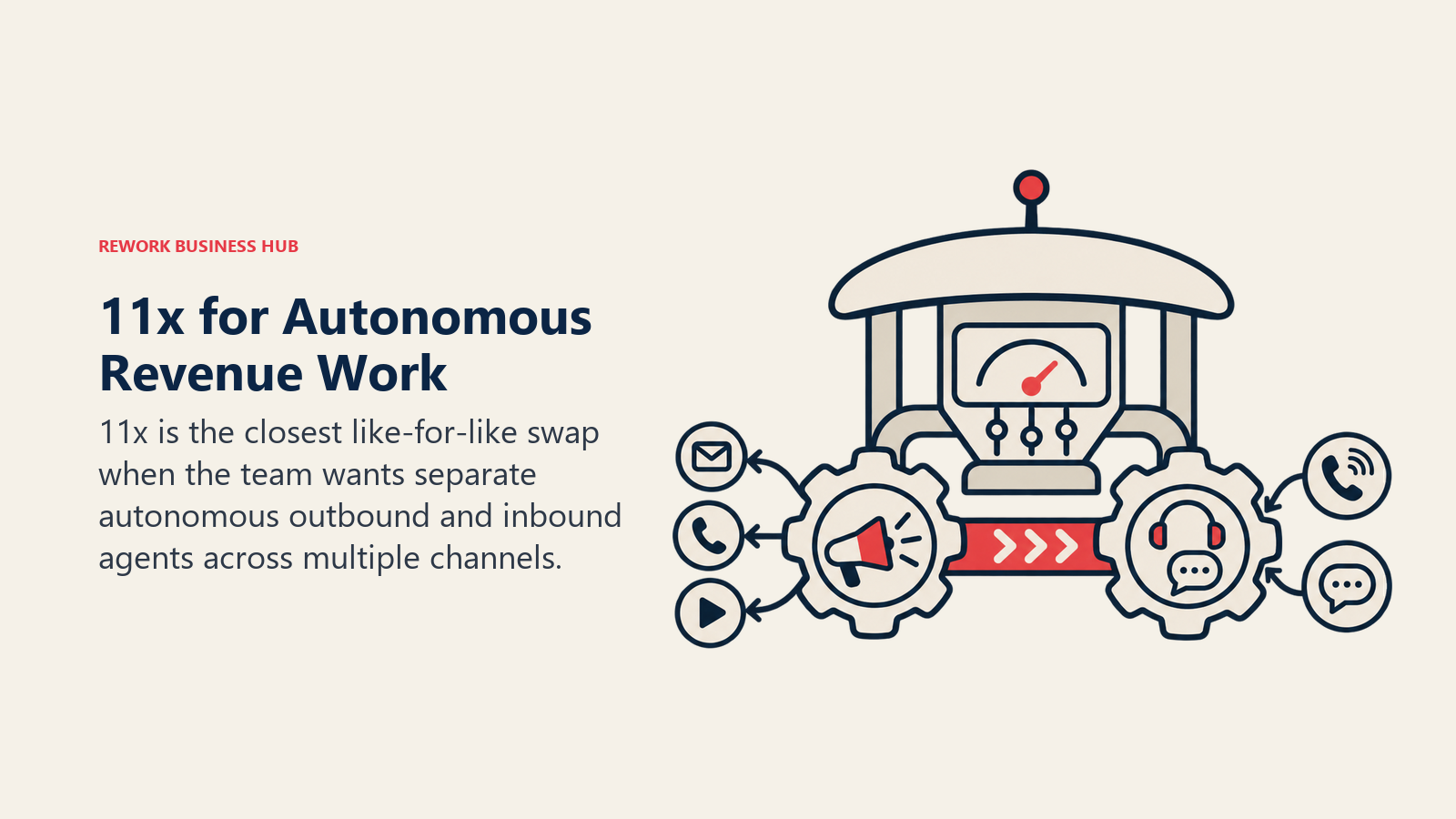
The difference you'll feel is breadth. Artisan's pitch centers on outbound, email and a dialer, while 11x pitches a second agent for inbound calls and chats. If your gap is inbound response time, that matters. For a full head-to-head on this shortlist, see best 11x alternatives.
| What you get | What you don't |
|---|---|
| Separate outbound (Alice) and inbound (Julian) agents | No public price, so budgeting waits on a sales call |
| Voice, WhatsApp and SMS alongside email and social | Customer results on the site are vendor claims |
| Real-time lead database and website visitor tracking | Likely more platform than a small team needs |
Pricing: Pricing on request. Source: 11x.ai.
Best for: Revenue teams that want one vendor to cover outbound and inbound with autonomous agents.
Not ideal for: Early-stage teams that need a published price and a self-serve start.
2. AiSDR: Pay Per Person Instead of Per Plan
AiSDR is the clearest answer to "I want an autonomous SDR but I don't want a platform contract." Its self-serve option charges $1.50 per person prospected with no monthly fee, usage is charged daily, and you can stop anytime. That's an unusual meter for this category, and it makes a pilot cheap to size: 400 prospects is a $600 experiment, not a five-figure commitment.
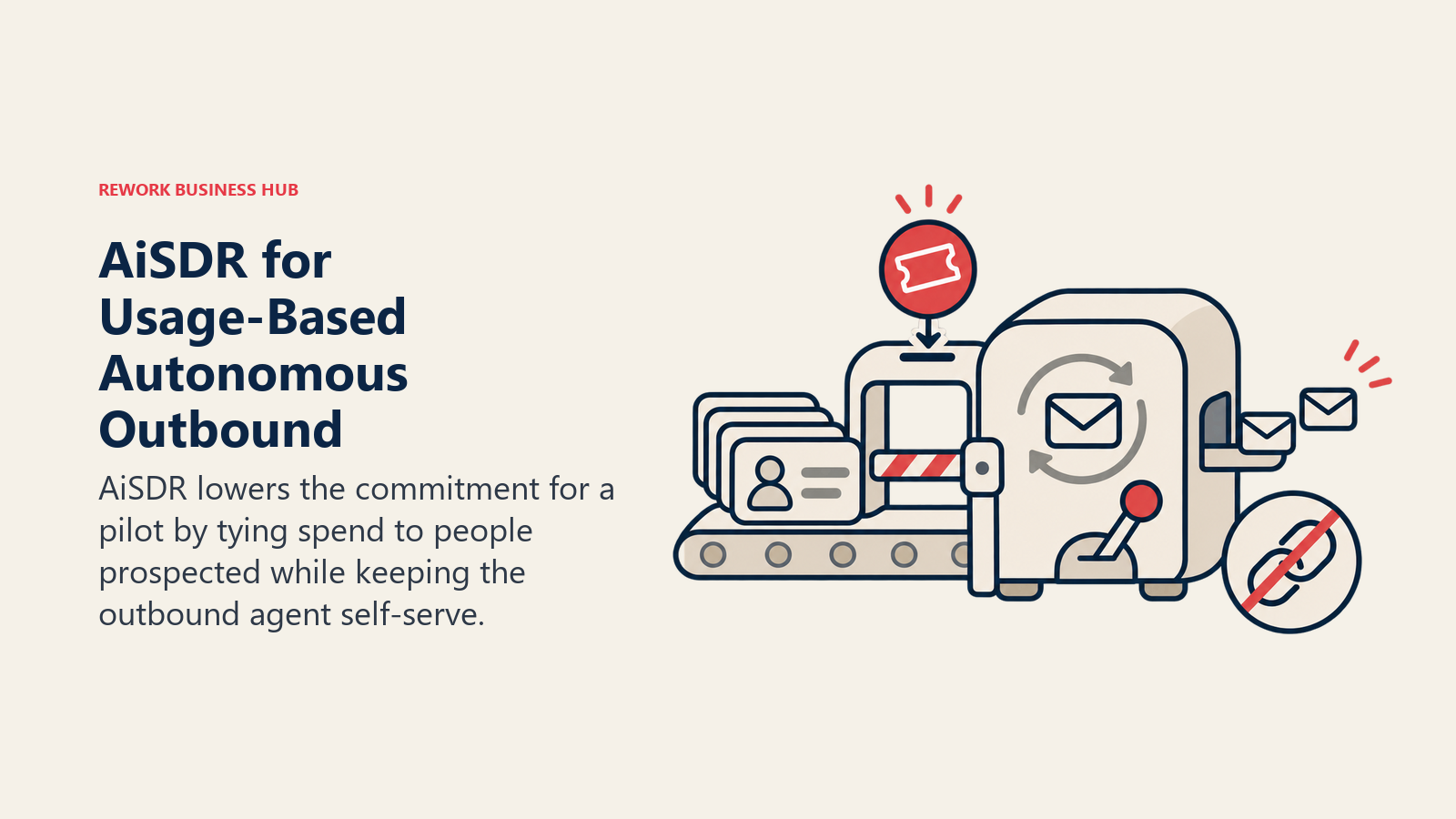
For teams contacting 1,000 or more people a month, AiSDR moves to team plans priced on volume, billed monthly with quarterly contracts, with annual plans getting 20% off the quarterly rate. Exact team prices aren't published. Add-ons are published, though: a warmed-up mailbox is $33, a per-campaign managed service is $149 a campaign, and a fully managed service is $2,500 a month.
| What you get | What you don't |
|---|---|
| Pay-as-you-go, no monthly fee | Team plan prices need a sales call |
| Published add-on prices for mailboxes and managed service | Managed service adds real cost fast |
| Easy way to run a small proof of concept | Confirm CRM sync and dialer coverage with the vendor |
Pricing: Pay as you go at $1.50 per person prospected; team plans on request; warmed-up mailbox $33; per-campaign managed service $149; fully managed service $2,500/month. Source: aisdr.com/pricing.
Best for: Startups and small teams that want to test an AI SDR at a cost they can see in advance.
Not ideal for: Large teams that need a dialer, deep CRM governance and a security review packet in one product.
3. Regie.ai: A Self-Serve Entry Point With a Dialer
Regie.ai's current pricing page is for RegieGO, its prospecting product, and it's far more accessible than the quote-first positioning most of the category uses. The Free plan gives 250 one-time credits per person for up to 10 people, with research, enrichment, drafting and agents, a built-in CRM, and sending from your own Gmail or Outlook. Pro is $41 a month billed annually ($49 billed monthly) for one person, with 5,000 credits a month and a power dialer with local numbers. Team is $125 per seat a month billed annually ($150 monthly), with a two-seat minimum and a shared credit pool.
Credits cover research, drafting, enrichment and dialing, and they reset each billing period on paid plans. When they run out, those actions pause until refresh, unless the owner turns on capped overage billing. The page doesn't clearly define which actions run autonomously beyond describing the included agents, so ask for a demo of what runs unattended.
| What you get | What you don't |
|---|---|
| Real free plan, no card required | Paid credits do not roll over |
| Built-in CRM and power dialer | Autonomy beyond the included agents is not spelled out |
| Annual prices that undercut most of this list | Credits can't be bought separately |
Pricing: Free ($0, 250 one-time credits per person, up to 10 people). Pro $41/month billed annually ($49 monthly). Team $125/seat/month billed annually ($150 monthly), two-seat minimum. Enterprise custom. Source: regie.ai/pricing.
Best for: Solo sellers and small teams that want AI prospecting plus a dialer without a sales cycle.
Not ideal for: Teams that need a fully hands-off agent booking meetings unattended.
4. Clay: Build the Workflow Instead of Buying the Rep
Clay is a different philosophy from Artisan. Artisan sells a finished AI employee. Clay sells the workbench: you combine data providers, enrichment and AI research into your own outbound workflow, then send through the tool of your choice. The reward is control over targeting and personalization. The cost is that someone on your team has to build and maintain it.
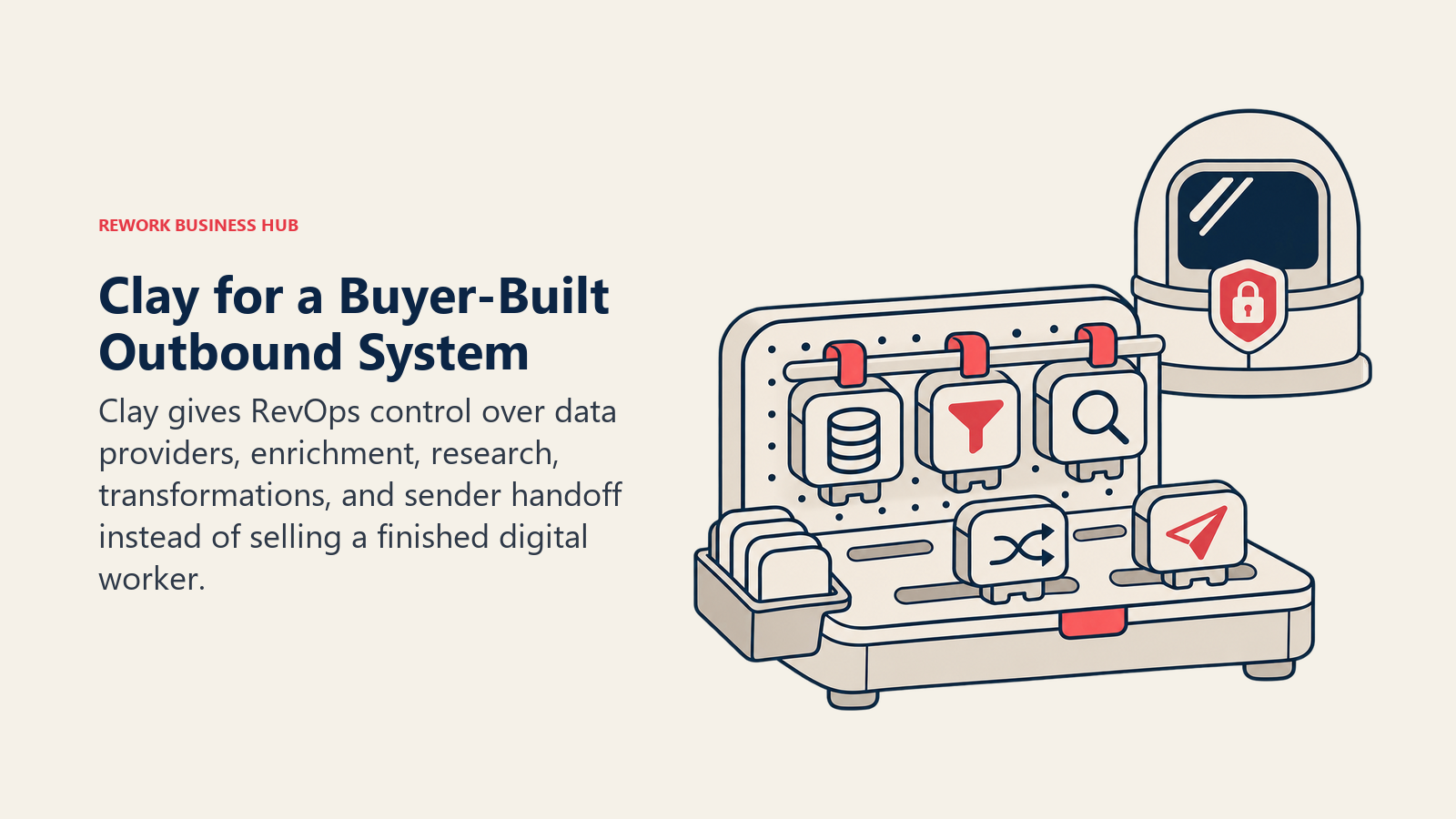
Clay's pricing uses two meters. Actions and data credits are bought separately, in tiers. The headline plans are Free (500 actions and 100 data credits a month), Launch from $167 a month billed annually ($185 monthly) and Growth from $446 a month billed annually ($495 monthly), with Enterprise custom. Higher volumes cost more on both meters, so model your list sizes before you commit. For a closer look at the category's builder tools, best AI agents for lead generation compares Clay against the other sourcing tools.
| What you get | What you don't |
|---|---|
| Many data providers and enrichment in one workbench | Not a finished autonomous rep |
| Free plan with monthly actions and credits | Two credit meters to forecast |
| Full control over targeting and message logic | Needs an owner who enjoys building workflows |
Pricing: Free ($0, 500 actions and 100 data credits per month). Launch from $167/month billed annually ($185 monthly). Growth from $446/month billed annually ($495 monthly). Enterprise custom. Source: clay.com/pricing.
Best for: RevOps-led teams that want to design their own outbound system and feed a sender elsewhere.
Not ideal for: Teams without a workflow owner, or anyone who wants to turn on an agent Monday morning.
5. Apollo: One Database, One Sequencer, a Real Free Tier
Apollo is the pragmatic option. If your team already pays for a prospect database and a sequencer, adding a second AI vendor on top of both can be a lot of overlap. Apollo bundles the database, sequencing and AI features, and publishes plan prices: Free ($0, 900 credits per seat per year, granted monthly), Basic at $49 per seat per month billed annually, Professional at $79 and Organization at $119 (minimum three seats), both also billed annually. The page says annual billing saves 24% but doesn't list monthly per-seat prices, so ask what monthly costs if you need flexibility.
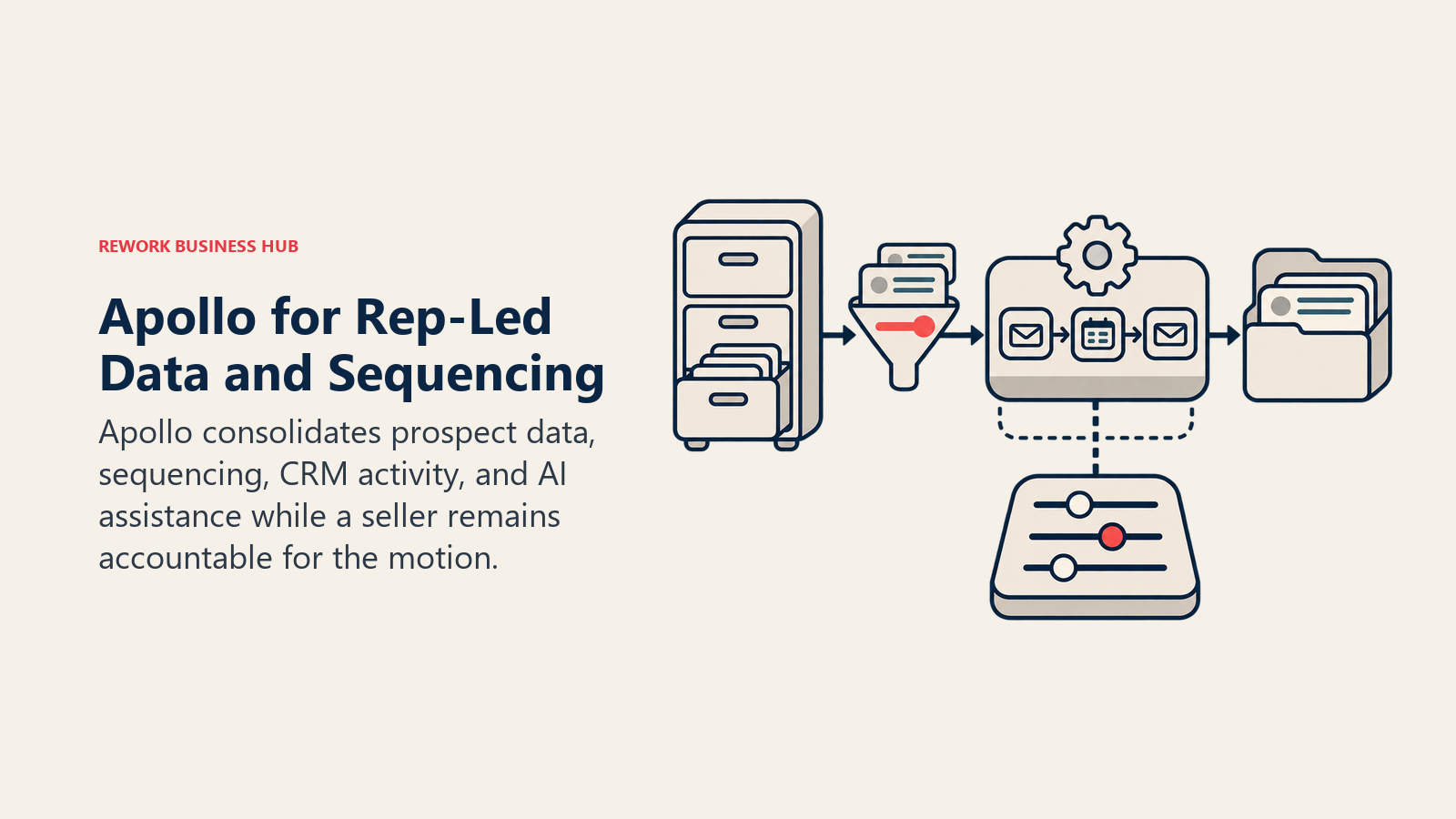
Credits are pooled across the team, granted at the start of each cycle (upfront for paid plans), and unused credits don't roll over. There are also team-level add-ons, such as Advanced Dialer at $119 a month billed annually. For a full list of Apollo's own competitors, see best Apollo alternatives.
| What you get | What you don't |
|---|---|
| Free plan that works for testing | Monthly per-seat prices aren't shown |
| Database, sequencing and AI in one login | Not an autonomous BDR that books meetings without a rep |
| Annual prices that scale cleanly per seat | Credits don't roll over |
Pricing: Free ($0). Basic $49/seat/month billed annually. Professional $79/seat/month billed annually. Organization $119/seat/month billed annually, minimum 3 seats. Source: apollo.io/pricing.
Best for: Teams that want to consolidate data and sequencing and let reps stay in the loop.
Not ideal for: Buyers who specifically need an agent that runs and replies on its own.
6. Amplemarket: Signal-Led Outbound With Duo Copilot
Amplemarket targets teams that want outreach triggered by buying signals instead of a static list. Its Duo features include Copilot, Copywriter, Signals, Voice and Inbox. Duo Copilot is on every plan, Duo Voice starts at Growth, and Duo Inbox is listed on Elite.
Only the entry tier is priced publicly. Startup is $600 a month on an annual term, with two included users, 27,000 contacts, 13,500 email credits and 600 phone credits per user per year, and at least two mailboxes per user. Growth (four users) and Elite (ten users) are custom. Additional users are available but the page lists no price for them, and it doesn't publish limits or pricing for the AI features beyond the plan table. That makes Amplemarket easy to start evaluating and slower to fully cost out.
| What you get | What you don't |
|---|---|
| Free trial on every plan | Only Startup is priced publicly |
| Duo Copilot included from the entry tier | Startup tier is capped at two users |
| Phone and email credits spelled out per plan | Extra-user pricing isn't shown |
Pricing: Startup $600/month on an annual term (2 users). Growth and Elite custom. Source: amplemarket.com/pricing.
Best for: Small to mid-sized sales teams that want signal-led outbound and are fine with a two-seat starting point.
Not ideal for: Solo sellers, or teams that need all prices published before a demo.
7. Reply.io (Jason AI SDR): A Sequencer With an AI SDR Tier
Reply.io is a multichannel sequencing platform that also sells an AI SDR called Jason. The plan ladder is easy to read: Email Volume starts at $59, Multichannel at $99, Agency at $166, and AI SDR (Jason) at $500, which the pricing page says requires an annual commitment. The page gives starting prices only, so confirm whether the figure you're quoted is monthly or annual before you sign.
Add-ons matter here. LinkedIn automation is $69 a month per account, Calls & SMS is $29 a month per user, extra email accounts on Multichannel are $29 per account a month, and AI and live data credits are sold in packages. If you're comparing against Reply.io's own rivals, best Reply.io alternatives goes through them.
| What you get | What you don't |
|---|---|
| Low-cost multichannel entry at $99 | AI SDR tier needs an annual commitment |
| Add-ons for LinkedIn and calling | Add-ons can double the base price |
| Agency plan with unlimited clients | Starting prices only, not a full price grid |
Pricing: Email Volume from $59; Multichannel from $99; Agency from $166; AI SDR (Jason) from $500, annual commitment. Add-ons: LinkedIn $69/month per account; Calls & SMS $29/month per user. Source: reply.io/pricing.
Best for: Teams that want sequencing today and an AI SDR option later without switching vendors.
Not ideal for: Buyers who want an agent-first product with no sequencer UI at all.
8. Salesforce Agentforce Sales: Agents Where the Data Already Lives
For a Salesforce shop, the most defensible alternative to Artisan is often an agent that works on the records you already have. Salesforce lists Agentforce for Sales from $125 per user per month and tells buyers to contact Salesforce for details. The agents named on its pricing page include prospecting, lead nurture, sales emails and account research. The page also notes AI can be added to Sales Cloud Core and above. Sales Cloud editions are listed per user per month: Starter Suite $25, Pro Suite $100, Core $195, Advanced $395 and Max $550, billed annually except Starter, which can be monthly or annual.
The tradeoff is dependency. You need the underlying Salesforce licensing, and agent behavior is shaped by your data quality. The pricing page does not name a separate SDR agent product, so ask Salesforce which agent covers your motion. For the wider enterprise field, see best AI agents for revenue operations.
| What you get | What you don't |
|---|---|
| Agents grounded in live Salesforce records | You must already be on Sales Cloud Core or above for AI |
| Published edition prices on the same page | Agentforce pricing still requires contacting Salesforce |
| One vendor, one security review | Not built for HubSpot-based teams |
Pricing: Agentforce for Sales from $125/user/month (contact Salesforce). Sales Cloud: Starter Suite $25, Pro Suite $100, Core $195, Advanced $395, Max $550 per user per month, billed annually (Starter monthly or annual). Source: salesforce.com/sales/pricing.
Best for: Salesforce-standardized revenue teams that care more about governance than about fastest setup.
Not ideal for: Teams outside Salesforce, or small teams without a Salesforce admin.
9. Outreach: Seats Plus AI Credits for Big Sequencing Teams
Outreach's pricing page now lives at outreach.ai. It publishes no dollar prices: every tier points to "Request pricing". It does publish the structure, which is seat-based access plus consumption-based AI credits, with extra credit packs available. The four Amplify tiers are Essentials (10,000 credits, conversation intelligence and coaching), Core (25,000, pipeline creation and account management), Plus (50,000, AI-driven revenue acceleration) and Pro (100,000, orchestration and forecasting).
Named agents include Omni, Research and Deal agents plus Meeting Prep on Essentials, with Revenue and Personalization agents added at Core. If you already run Outreach, upgrading a tier is a lower-risk move than adopting a new vendor. For competitors to Outreach, see best Outreach alternatives.
| What you get | What you don't |
|---|---|
| Clear tier ladder tied to AI credits | No dollar prices published |
| Named agents for research, deals and personalization | Credits are consumption-based, so spend can vary |
| Fits existing Outreach workflows | Heavier than a startup needs |
Pricing: Pricing on request. Credits per tier: Essentials 10,000; Core 25,000; Plus 50,000; Pro 100,000. Source: outreach.ai/pricing.
Best for: Large sales orgs already on Outreach that want AI credits added to their sequencing platform.
Not ideal for: Small teams that want a published price or a lightweight start.
10. Salesloft: Enterprise Engagement With AI Agents and Signals
Salesloft publishes no pricing; its pricing page offers a path to talk to sales. What it does publish is the product direction: AI Agents that automate work across the revenue lifecycle, an MCP connection for sharing revenue context with agents and systems, context-aware AI for generating actions and predictions, and Signals for unifying data across the stack. Clari-branded products also appear in its product lineup. Check with the vendor how packaging works if you want forecasting and engagement together. For alternatives to Salesloft itself, see best Salesloft alternatives.
| What you get | What you don't |
|---|---|
| Engagement plus signals and AI agents | No published prices or plans |
| MCP connection for sharing context with other agents | Packaging across Salesloft and Clari products needs confirming |
| Enterprise-oriented tooling | Over-built for a team of five |
Pricing: Pricing on request. Source: salesloft.com/pricing.
Best for: Enterprise teams that want engagement, signals and forecasting under one vendor relationship.
Not ideal for: Teams that want to start this week with a card.
11. Instantly: Cheapest Entry for High-Volume Cold Email
Instantly is the budget answer when sending volume and inbox health are the real constraints. Its outreach plans list Growth at $47 a month billed monthly ($37.60 billed yearly), with 5,000 emails and 1,000 contacts, unlimited email accounts and warmup. Light Speed is $358 monthly ($286.30 yearly) for 500,000 emails and 100,000 contacts. Yearly billing is labeled as saving 10%.
AI lives on separate plans. Credits and leads plans start at $47 monthly ($37.60 yearly) and include a database of 450M+ B2B leads, waterfall email enrichment, a Web Researcher Agent, an AI email writer and bring-your-own LLM keys. Bundles combine sending and credits: Starter is $94 monthly ($85 yearly) and includes an AI Sales Agent, and Scale is $194 monthly ($175 yearly) and adds an AI Reply Agent. If you go this route, plan for deliverability work. See best AI agents for cold email and best Instantly alternatives.
| What you get | What you don't |
|---|---|
| Low entry prices with yearly discounts | You may need two plans for sending plus leads |
| AI Sales Agent and AI Reply Agent in bundles | No dialer or enterprise governance |
| Unlimited email accounts and warmup | Email-first, narrower than a multichannel AI BDR |
Pricing: Outreach Growth $47/month billed monthly ($37.60 billed yearly). Light Speed $358/month ($286.30 yearly). Bundles: Starter $94/month ($85 yearly); Scale $194/month ($175 yearly). Source: instantly.ai/pricing.
Best for: Lean teams and agencies that care most about inbox volume and cost.
Not ideal for: Teams that want phone, LinkedIn and meeting booking handled by a single agent.
12. Smartlead: Unlimited Mailboxes for Agencies
Smartlead's strength is infrastructure economics. Every plan includes unlimited mailboxes. Base is $39 a month billed monthly ($32 billed yearly) with 2,000 contacts and 6,000 sends a month. Pro is $94 ($78 yearly) for 30,000 contacts and 90,000 sends. Unlimited Smart is $174 ($144 yearly) with unlimited contacts and 150,000 sends, and Unlimited Prime is $379 ($315 yearly) with 500,000 sends. The FAQ says annual billing saves 17% and there are no long-term contracts.
Add-ons include whitelabeling at $29 a month per client workspace, and verification credits are sold separately. Smartlead's pricing page mentions AI-personalized, A/B-tested copy in its managed services but doesn't describe an autonomous AI BDR, so treat it as sending infrastructure, not an Artisan replacement. See best Smartlead alternatives for its competitors.
| What you get | What you don't |
|---|---|
| Unlimited mailboxes on all plans | Not an autonomous BDR |
| No long-term contracts | Verification credits cost extra |
| Whitelabel option for agencies | You supply the strategy and list |
Pricing: Base $39/month billed monthly ($32 yearly). Pro $94 ($78). Unlimited Smart $174 ($144). Unlimited Prime $379 ($315). Source: smartlead.ai/pricing.
Best for: Agencies and lean teams that need cheap, scalable sending across many inboxes.
Not ideal for: Buyers who want AI to run prospecting end to end.
Who Should Stay on Artisan
Switching costs real time: rebuilt sequences, re-warmed domains and retrained reps. Staying makes sense if:
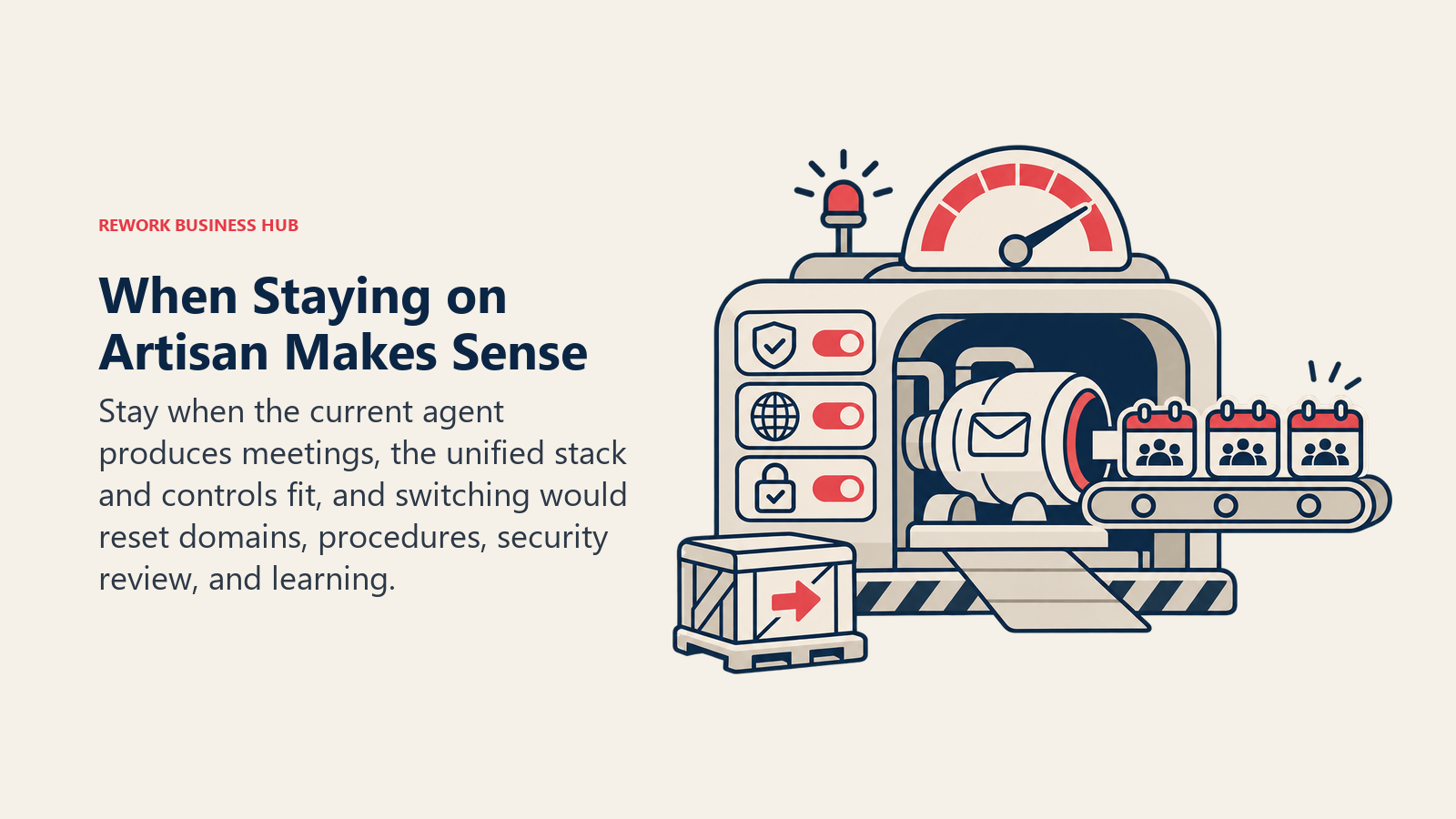
- You're already getting booked meetings from Ava and the question is only price, in which case ask for a written quote at your volume before you assume an alternative is cheaper.
- You want data, sequencing, dialer and agent from a single vendor, which is Artisan's stated pitch.
- You need the approval gates, tone locks and escalation rules Artisan describes, and an alternative can't match them in a demo.
- Your security team has already reviewed Artisan's SOC 2 Type II report and doesn't want to start over.
Moving makes sense if the price wall, the meter or the enterprise positioning is the reason you're here. Run a bounded pilot before you migrate, using the same list, same domains and same ICP on both sides.
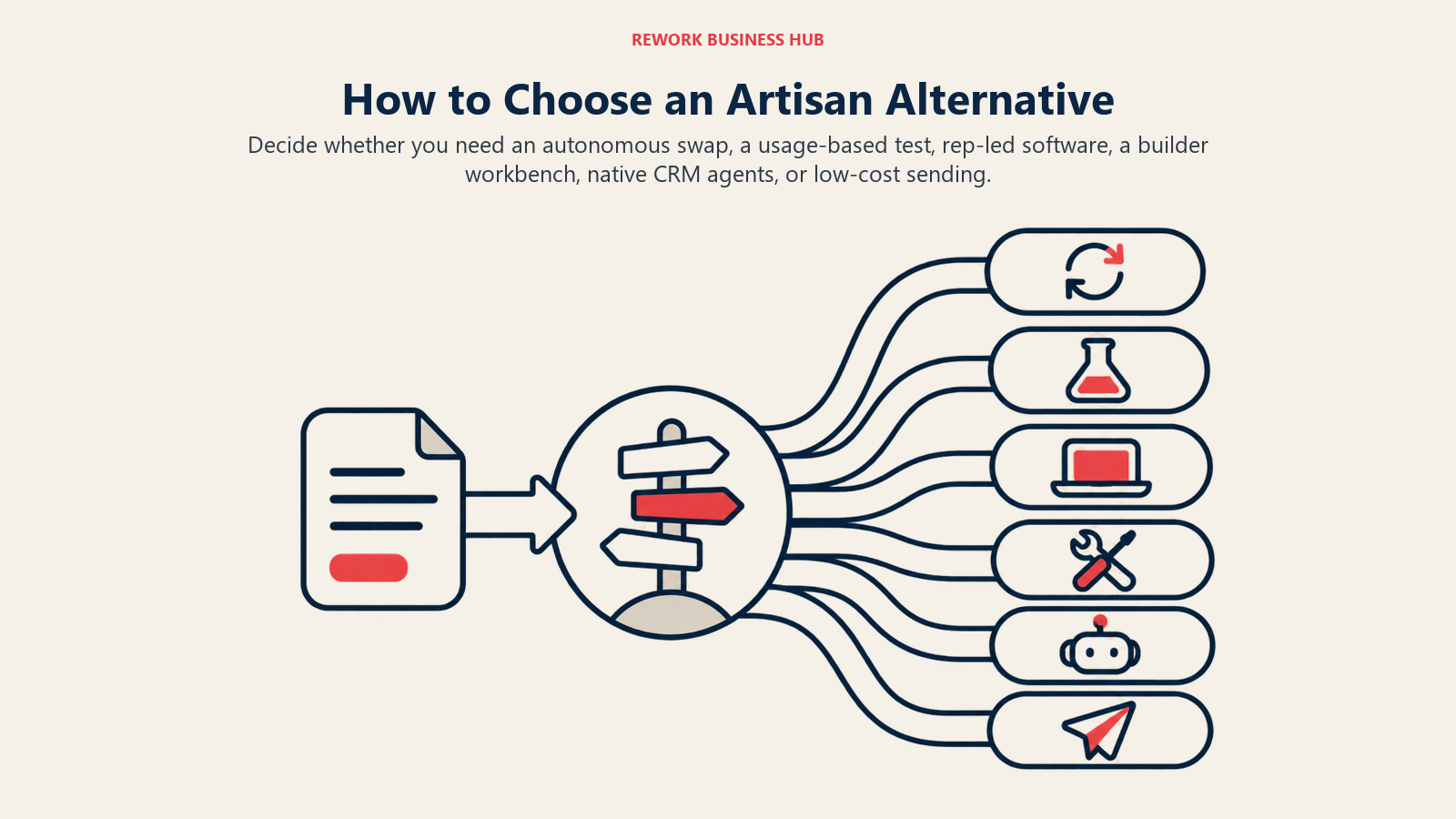
How to Choose: Decision Framework
| If you need... | Pick... | Why |
|---|---|---|
| The closest autonomous swap, plus an inbound agent | 11x | Separate outbound and inbound agents across many channels |
| A cheap, usage-based test | AiSDR | $1.50 per person prospected, no monthly fee |
| A free start with a dialer | Regie.ai | Free plan, then $41 a month on annual billing |
| Full control over targeting logic | Clay | Data providers and AI research in your own workflow |
| One database and sequencer for reps | Apollo | Published seat prices and a free tier |
| Signal-led outreach for a small team | Amplemarket | Duo Copilot on every plan, $600 entry |
| Sequencing now, AI SDR later | Reply.io | Jason AI SDR on the same platform |
| Agents on Salesforce data | Agentforce Sales | From $125 per user per month |
| High-volume cold email at low cost | Instantly or Smartlead | Low entry prices, unlimited email accounts |
For the wider category beyond Artisan, best AI tools for SDRs covers the assistive layer a rep still drives.
What to Do Next
Pick two finalists: one autonomous agent (11x or AiSDR) and one tool that keeps a rep in the loop (Apollo, Reply.io or Regie.ai). Run both for a month on the same ICP, with the same sending limits, and compare booked meetings that turn into real opportunities, not reply counts. Ask Artisan for a written quote at your volume at the same time, so the final decision rests on three real numbers instead of a sticker price and a guess.

Co-Founder, Rework.com
On this page
- Key Facts
- What Artisan Actually Sells in 2026
- Why Teams Look Beyond Artisan
- Quick Comparison Table
- Sizing and Stage Fit
- How the Vendors Meter Usage
- 1. 11x: The Closest Like-for-Like Autonomous Swap
- 2. AiSDR: Pay Per Person Instead of Per Plan
- 3. Regie.ai: A Self-Serve Entry Point With a Dialer
- 4. Clay: Build the Workflow Instead of Buying the Rep
- 5. Apollo: One Database, One Sequencer, a Real Free Tier
- 6. Amplemarket: Signal-Led Outbound With Duo Copilot
- 7. Reply.io (Jason AI SDR): A Sequencer With an AI SDR Tier
- 8. Salesforce Agentforce Sales: Agents Where the Data Already Lives
- 9. Outreach: Seats Plus AI Credits for Big Sequencing Teams
- 10. Salesloft: Enterprise Engagement With AI Agents and Signals
- 11. Instantly: Cheapest Entry for High-Volume Cold Email
- 12. Smartlead: Unlimited Mailboxes for Agencies
- Who Should Stay on Artisan
- How to Choose: Decision Framework
- What to Do Next