Best Outreach Alternatives in 2026: 10 Sales Engagement Platforms for Revenue Teams
Turn this article into takeaways for your work.


Each assistant summarizes the article only for you and suggests best practices for your work.
Outreach built its reputation as the gold standard for enterprise sales engagement. It has sequences, conversation intelligence, deal boards, coaching tools, and forecasting, all in one platform. For a 500-person revenue team with a dedicated RevOps function and Salesforce as the system of record, it earns its place.
But a lot of teams aren't that team. If you're running 20-100 reps, don't have a full-time Salesforce admin, or you're trying to move fast without a six-month implementation, Outreach can feel like renting a stadium to host a dinner party. The seats-based pricing runs $100+ per user per month, the implementation requires specialist knowledge, and the UI has a learning curve that slows onboarding. Revenue teams at the growth stage need speed, not configuration work. This guide covers 10 sales engagement platforms that fit better for different company sizes, stages, and team structures. If you're also evaluating the competing revenue orchestration platform, see our best Salesloft alternatives breakdown.
Quick Comparison Table
| Tool | Best For | Starting Price | Key Strength | Key Limitation |
|---|---|---|---|---|
| Salesloft | Enterprise teams focused on pipeline coaching | ~$125/user/mo | Cadences + deal management + coaching | Similar pricing complexity to Outreach |
| Rework | Mid-market teams wanting CRM + engagement unified | Revenue Engine from $159/mo billed yearly, 5 marketing + 5 sales seats (rework.com/pricing) | Unified CRM, inbox, and sequences in one platform | No conversation intelligence, LinkedIn steps, or dialer |
| Apollo.io | Data-first teams doing outbound at scale | Free tier; paid from $49/user/mo | 275M contact database built in | Not as deep on pipeline management |
| HubSpot Sales Hub | Teams already in HubSpot ecosystem | $90/user/mo (Professional) | CRM-native, excellent reporting | Sequences limited on lower tiers |
| Reply.io | Outbound teams on a budget | $49/user/mo | Multi-channel, AI-assisted sequences | Lighter CRM; better as an add-on |
| Lemlist | Teams prioritizing deliverability and personalization | Email $55/mo flat (annual), unlimited users | Warm-up, liquid syntax personalization | Limited analytics vs. enterprise tools |
| Instantly | High-volume cold email senders | $37/mo flat | Unlimited sending accounts, strong deliverability | Email-only; no phone or LinkedIn |
| Woodpecker | B2B agencies and small teams | $29/slot/mo | Clean UI, agency multi-client support | Narrower feature set than full platforms |
| Mixmax | Gmail-native teams doing light sequencing | $29/user/mo | Lives inside Gmail, easy adoption | Not a standalone CRM; Gmail-only |
| Mailshake | SDR teams running cold outreach | $58/user/mo | Simple setup, dialer included | Less sophisticated analytics |
Stage Fit Matrix
| Tool | Startup (1-20) | Growth (20-100) | Mid-Market (100-500) | Enterprise (500+) |
|---|---|---|---|---|
| Salesloft | Overkill | Works | Strong fit | Best fit |
| Rework | Good fit | Best fit | Strong fit | Emerging |
| Apollo.io | Best fit | Strong fit | Good fit | Works |
| HubSpot Sales Hub | Works | Good fit | Strong fit | Works |
| Reply.io | Best fit | Good fit | Works | Not ideal |
| Lemlist | Best fit | Good fit | Works | Not ideal |
| Instantly | Best fit | Good fit | Works | Not ideal |
| Woodpecker | Best fit | Good fit | Niche only | Not ideal |
| Mixmax | Good fit | Good fit | Niche only | Not ideal |
| Mailshake | Good fit | Good fit | Works | Not ideal |
Sizing and Persona Table
| Tool | Team Size Sweet Spot | Primary Buyer | Secondary Buyer |
|---|---|---|---|
| Salesloft | 50-500+ reps | VP Revenue Ops / CRO | Sales Enablement Lead |
| Rework | 15-200 reps | VP Sales / Sales Ops | CRO / RevOps Director |
| Apollo.io | 3-150 reps | Founder / Sales Manager | Marketing Ops |
| HubSpot Sales Hub | 10-200 reps | VP Marketing / Sales | RevOps |
| Reply.io | 3-50 reps | Sales Manager / Founder | SDR Lead |
| Lemlist | 2-40 reps | Growth Lead / Founder | SDR Manager |
| Instantly | 1-30 senders | Founder / Growth Marketer | SDR Lead |
| Woodpecker | 2-20 seats (or agency) | Agency Owner / SDR Manager | Founder |
| Mixmax | 5-50 reps | Sales Manager | AE Team |
| Mailshake | 5-50 reps | SDR Manager / Founder | Sales Manager |
1. Salesloft: Enterprise Cadences With Pipeline and Coaching Intelligence
Salesloft's methodology is "revenue workflow": the idea that every deal touchpoint, from first outbound email to closed-won renewal, should live in one auditable platform. It acquired Drift and Costello to add buyer intent signals and deal inspection, which means Salesloft now competes with Outreach nearly feature-for-feature at the enterprise tier.
The platform centers on Cadences (their version of sequences), an AI-powered deal board called Deals, and a coaching layer called Conversations that transcribes and scores calls. For VP Revenue Ops building a standardized motion across 100+ reps, Salesloft delivers the governance and coaching infrastructure to enforce process at scale.
The honest comparison to Outreach: they're peers. If you're leaving Outreach for pricing reasons, Salesloft won't solve that. Pricing is comparable, and you'll still need RevOps to manage it. The real reason to switch to Salesloft is if you prefer its product vision (revenue workflow) over Outreach's (sales engagement + forecasting) or if the Drift acquisition gives you live chat and buyer intent you need. See our full best Salesloft alternatives guide if Salesloft itself is also on the shortlist.
| What you get | What you don't |
|---|---|
| Full cadence + deal + coaching platform | Lower pricing than Outreach |
| AI-scored call analysis (Conversations) | Simpler onboarding |
| Buyer intent from Drift integration | Mid-market price point |
| Deep analytics and rep leaderboards | Lightweight CRM option |
| Salesforce and HubSpot native sync | Faster implementation |
Pricing: ~$125/user/month (enterprise tiers vary; contact for exact quotes). See Salesloft's pricing page for current details.
Best for: Enterprise revenue teams (50-500+ reps) that want a Salesforce-native platform with call coaching and deal inspection built in.
2. Rework: Unified CRM and Sales Engagement Built for Mid-Market Teams
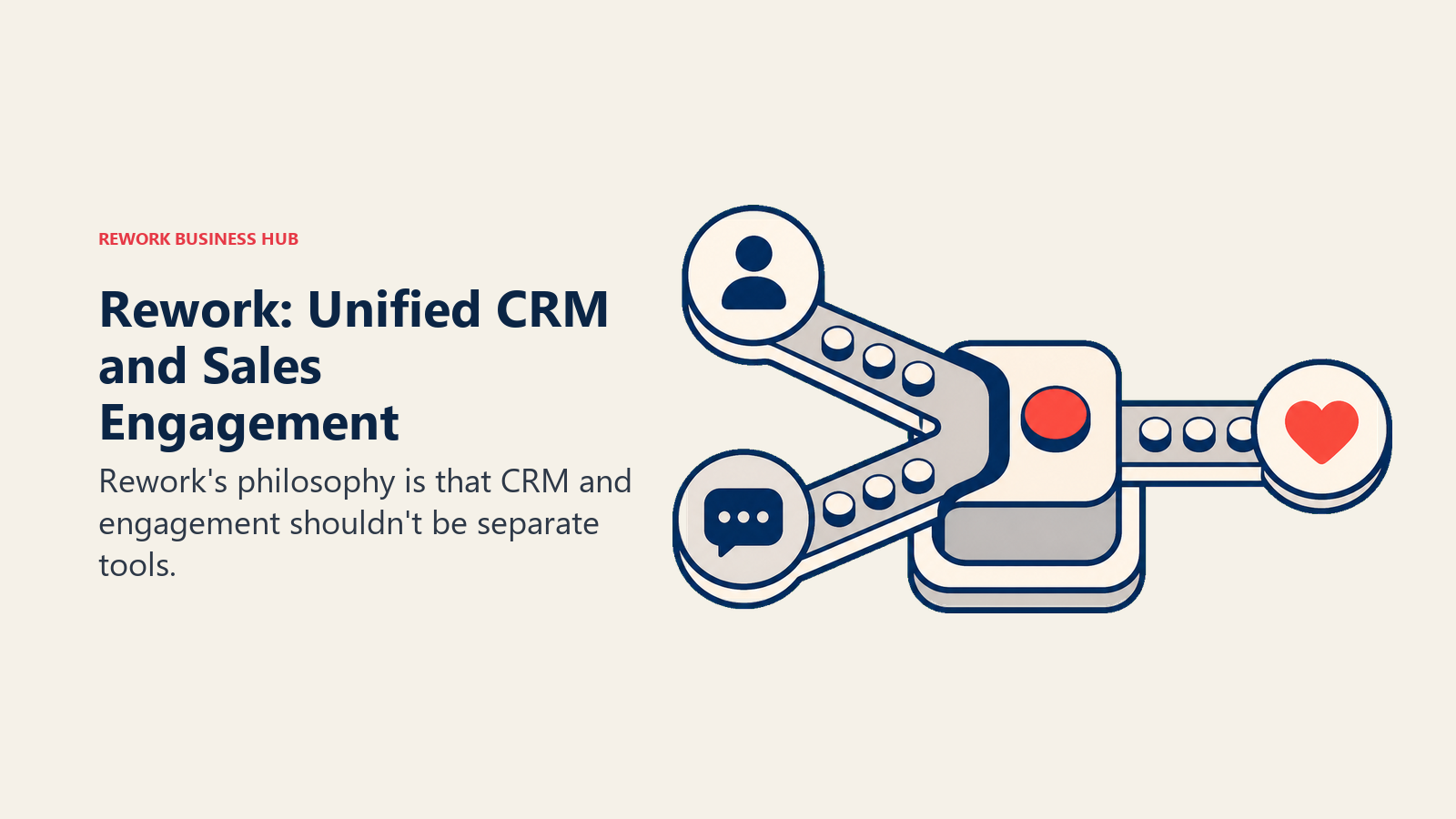
Rework's philosophy is that CRM and engagement shouldn't be separate tools. Most mid-market teams end up stitching together a CRM (Salesforce, HubSpot), a sequence tool (Outreach, Apollo), an inbox (Front, Gmail), and a task manager, then paying RevOps to keep them synced. Rework collapses that stack into a single platform: contact and deal management, sequences that mix email, chat messages, and call tasks, a unified chat inbox for WhatsApp, Messenger, Instagram, and web chat conversations, and workflow automation that spans sales, customer success, and operations.
For teams leaving Outreach, the immediate win is price and implementation simplicity. There's no dedicated Salesforce dependency, no six-month rollout, and no separate admin layer. Reps work from a single workspace instead of switching between tabs. Before you decide, it's worth reading the writing a sales playbook guide. The same adoption patterns that sink expensive SEP deployments apply to mid-market switches too.
Where Rework falls short: it has no conversation intelligence (call recording and coaching analysis), and its sequences have no LinkedIn steps or built-in dialer. If deal coaching at scale, real-time call guidance, or high-volume calling are the primary reasons your team bought Outreach, Rework isn't the full replacement, and Salesloft, the closest like-for-like, ranks above it here for that reason.
| What you get | What you don't |
|---|---|
| CRM + sequences + inbox unified | Enterprise-grade call coaching AI |
| Cross-team workflows (sales + CS + ops) | Deep Salesforce bi-directional sync |
| Sequences across email, chat, and call tasks | LinkedIn steps or a built-in dialer |
| Engine pricing with seats in blocks of 5 | Dedicated implementation team |
| Fast onboarding, no admin dependency | Advanced deal inspection boards |
Pricing: CRM, sequences, and the unified inbox together are the Revenue Engine: $159/month billed yearly or $190 month to month, with 5 marketing and 5 sales seats included; extra seats come in blocks of 5 at $21/month per block on yearly billing. The CRM alone (Sales Engine) is $69/month billed yearly. See rework.com/pricing.
Best for: Revenue teams of 15-200 who want to consolidate their stack and move faster without adding RevOps headcount.
3. Apollo.io: Prospecting Database Meets Sales Engagement
Apollo's approach to the problem is data-first. Its core thesis: most sales engagement tools assume you already have a list. Apollo gives you the list and the tool to work it. The platform combines a 275-million-contact B2B database with email sequencing, a dialer, LinkedIn automation, and basic CRM pipeline management.
For outbound-heavy teams, this collapses two expensive tools (data provider like ZoomInfo + engagement platform like Outreach) into one. Apollo runs at a fraction of the combined cost, which makes it a compelling choice for growth-stage companies that are still building their outbound motion.
Apollo's ICP is teams that lead with prospecting and need to move fast. Where it struggles: pipeline management and deal coaching are thinner than Outreach. It's more SDR tool than full-cycle AE platform. If your AEs need deal rooms, forecast visibility, and coaching, you'll end up layering another tool on top. See the full best Apollo alternatives guide for teams who have outgrown Apollo's data or sequencing layer.
| What you get | What you don't |
|---|---|
| 275M contact database + sequencing | Enterprise deal inspection |
| Built-in enrichment and intent signals | Advanced call coaching AI |
| Dialer + email + LinkedIn in one | Salesforce-depth integration |
| Free tier for small teams | Robust forecasting |
| Fast setup, minimal admin | Governance tools for large teams |
Pricing: Free tier available. Paid plans from $49/user/month. Data plans priced separately on higher tiers.
Best for: Outbound-led teams of 3-100 that want to combine data sourcing and outreach in a single tool without paying for ZoomInfo + Outreach separately.
4. HubSpot Sales Hub: CRM-Native Engagement for Inbound-Led Teams
HubSpot's philosophy is "grow better": the idea that sales, marketing, and service should share a single contact record so every team has the full picture. Sales Hub is the outbound and pipeline layer on top of that unified CRM. Sequences, templates, meeting scheduling, call tracking, and a deal board all connect to the same HubSpot contact.
For teams already using HubSpot Marketing Hub, Sales Hub is the natural extension. There's no sync to maintain, no duplicate contacts, and marketing attribution flows directly into pipeline reporting. For teams that care about the full buyer journey from first ad click to closed deal, this is the most coherent stack.
The limitation is sequencing depth. HubSpot's sequences are functional but offer fewer configuration options than Outreach or Salesloft. On Professional tier ($90/user/mo), you get automated sequences, but the branching logic, A/B testing, and multi-touch attribution are simpler than purpose-built SEPs. Enterprise tier adds more, but you're now at $150+/user/month.
| What you get | What you don't |
|---|---|
| Native CRM + engagement (no sync) | Outreach-depth sequence logic |
| Full marketing attribution in pipeline | Competitive pricing at scale |
| Meeting scheduling, calling, email built in | Advanced call coaching |
| Strong reporting across the funnel | Standalone viability (needs HubSpot CRM) |
| Large partner/integration ecosystem | Simple UI for sales-only use cases |
Pricing: Sales Hub Professional at $90/user/month. Starter at $15/user/month (limited sequences). Enterprise at ~$150/user/month. See HubSpot Sales Hub pricing for current details.
Best for: Teams already in the HubSpot ecosystem that want to add sequences and pipeline management without adding another vendor.
5. Reply.io: Multi-Channel Sequences at Mid-Market Price
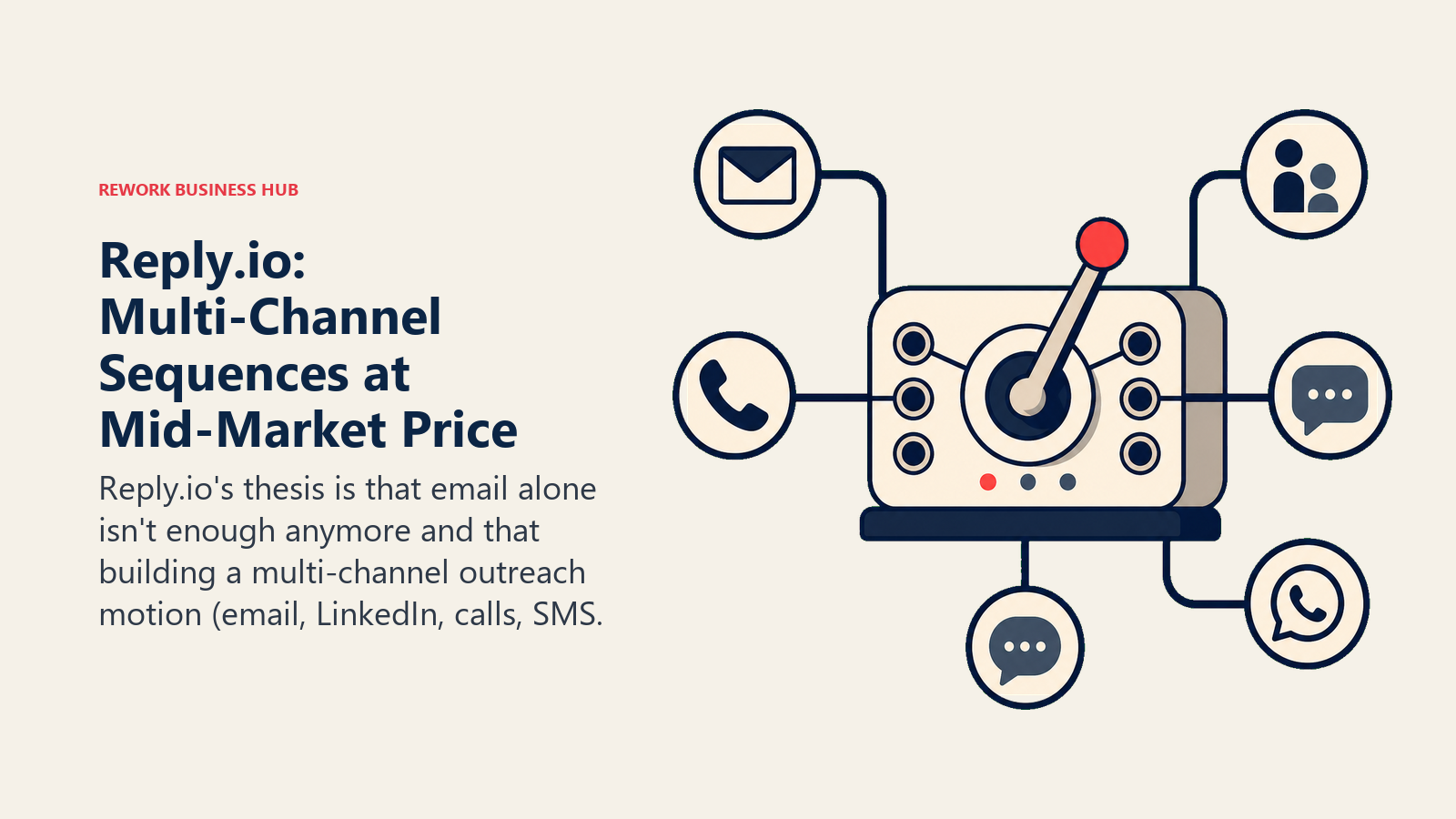
Reply.io's thesis is that email alone isn't enough anymore and that building a multi-channel outreach motion (email, LinkedIn, calls, SMS, WhatsApp) should be accessible without enterprise pricing. The platform includes AI-powered sequence generation, a multi-channel task flow, and a basic contact database, enough for a lean SDR team to run a full outbound motion.
Reply.io introduced Jason AI, its built-in AI assistant that can draft sequences, respond to prospect replies, and suggest follow-up actions based on conversation history. For small teams that can't afford a dedicated copywriter or SDR coach, this fills a real gap.
Where Reply.io works best is as a pure outbound execution layer for teams with their CRM elsewhere. It integrates with Salesforce, HubSpot, and Pipedrive, but the native CRM functionality is lightweight. It's a sequencing tool that happens to have a contact view, not a CRM with sequencing bolted on.
| What you get | What you don't |
|---|---|
| Multi-channel sequences (email + LinkedIn + calls) | Deep CRM pipeline management |
| AI sequence writing (Jason AI) | Advanced forecasting |
| Clean, low-overhead setup | Call coaching intelligence |
| Solid deliverability tools | Enterprise governance controls |
| Competitive mid-market pricing | Large built-in contact database |
Pricing: From $49/user/month. Agency plans available.
Best for: SDR teams of 3-50 running multi-channel outbound who need a capable sequencing platform without full-stack CRM requirements.
6. Lemlist: Personalization-First Outreach With Deliverability Infrastructure
Lemlist built its reputation on email personalization and deliverability. Liquid syntax personalization lets reps insert dynamic variables (not just but custom images, custom landing pages, and personalized video thumbnails) at scale. Lemwarm (their email warmup tool) is bundled in, which matters for teams hitting deliverability issues.
The product vision is "make every cold email feel handwritten." For agencies and founders doing highly targeted outbound to small lists, this produces measurably better reply rates than generic blast tools. The multi-channel layer adds LinkedIn steps and cold calling to the mix.
Lemlist's limitation is analytics depth. Compared to Outreach or Salesloft, reporting on sequence performance, rep activity, and pipeline influence is lighter. It's also less suited to large sales teams where you need manager oversight, rep leaderboards, and compliance tracking. It's more founder tool than VP Sales tool.
| What you get | What you don't |
|---|---|
| Dynamic personalization at scale | Deep analytics and rep reporting |
| Built-in email warmup (Lemwarm) | CRM pipeline management |
| LinkedIn + email + call sequences | Enterprise governance |
| Strong deliverability focus | Manager coaching tools |
| Active community and templates library | Salesforce-depth integration |
Pricing: Email $69/month billed monthly, $55/month billed annually, a flat team price with unlimited users. Multichannel $109/user/month monthly, $87/user/month annually, priced per user. Enterprise is custom at 5 or more users. Bundled plans include Lemwarm. See Lemlist pricing for current tiers.
Best for: Growth-stage founders, agencies, and SDR teams of 2-40 who run small, high-personalization outbound sequences where reply rate matters more than volume.
7. Instantly: High-Volume Cold Email for Outbound-Led Teams
Instantly's philosophy is simple: send more emails without getting blocked. The platform lets you connect unlimited sending accounts, rotate them automatically, and warm them up, making it purpose-built for teams that live on cold email volume. Its pricing model is account-based rather than seat-based, which makes it economical for small teams managing multiple domains.
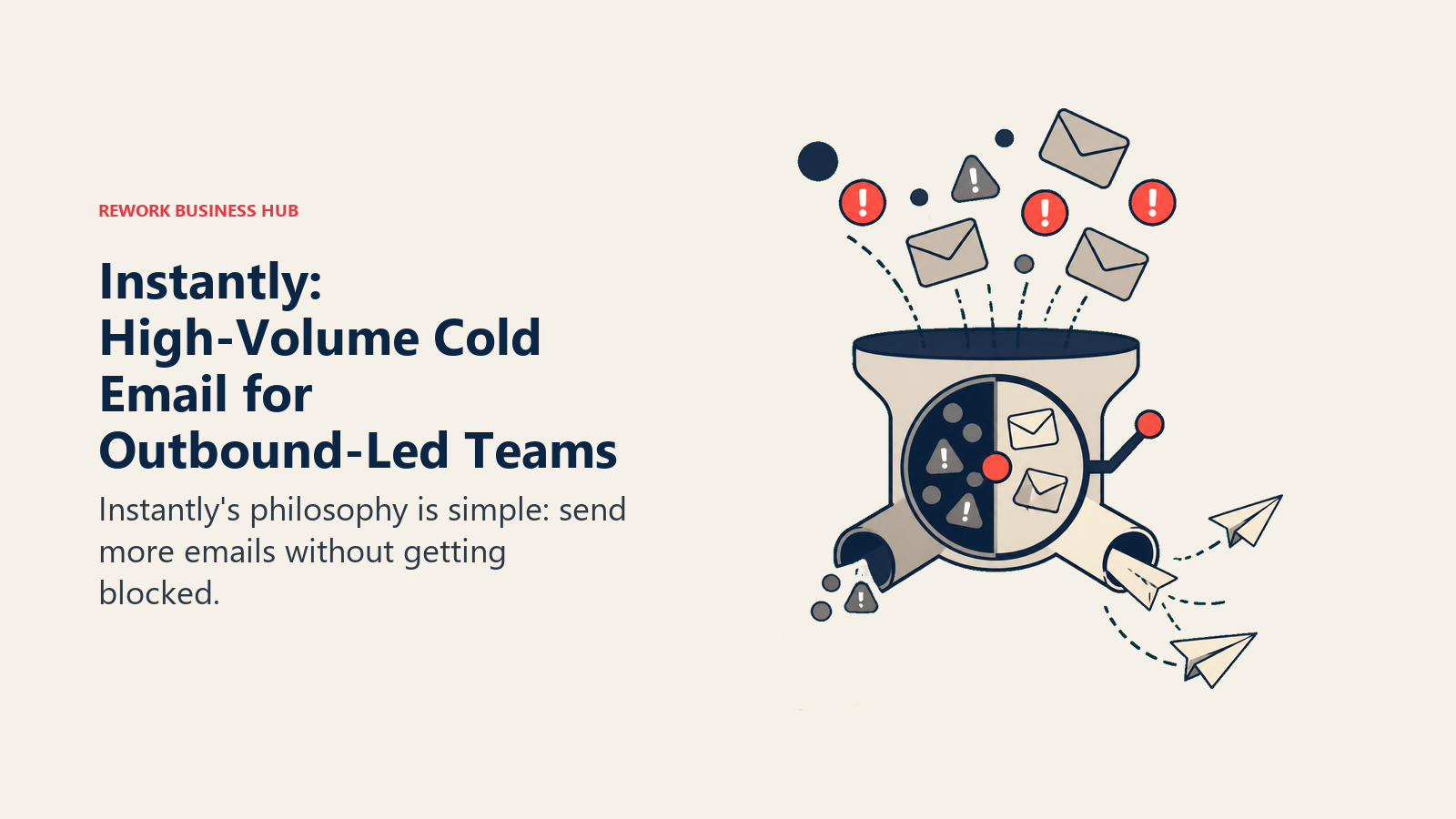
The platform is deliberately lean. You get sequences, A/B testing, inbox rotation, a basic analytics dashboard, and a growing contact database (Instantly's data layer, which launched in 2024). But there's no phone, no LinkedIn, no deal management, and no CRM.
For operators running outbound at scale (agencies, growth marketers, solo founders, small SDR teams), Instantly competes on raw economics. A startup sending 10,000 cold emails per month doesn't need Outreach. They need deliverability infrastructure and a clean sequence builder, both of which Instantly handles well.
| What you get | What you don't |
|---|---|
| Unlimited sending accounts and domains | Multi-channel (phone, LinkedIn) |
| Built-in email warmup | CRM or pipeline management |
| Flat-rate pricing (not per seat) | Manager and coaching tools |
| High-volume optimized deliverability | Advanced personalization |
| Growing contact database (Instantly Data) | Enterprise governance |
Pricing: Sending plans from $37/month flat. Lead database plans priced separately.
Best for: Founders, agencies, and SDR teams of 1-30 who run high-volume cold email and need reliable deliverability infrastructure without paying per seat.
8. Woodpecker: Simple Sequences for B2B Agencies and Small Teams
Woodpecker's product vision is "clean, focused cold email without the bloat." It's a deliberate contrast to the complexity of enterprise platforms: no deal boards, no call coaching, no revenue forecasting. Just automated follow-up sequences, reply detection, bounce protection, and deliverability monitoring in a clean interface.
The platform has always had a strong agency use case. Multi-client workspaces let agencies manage sequences across multiple brands from a single account, with client-specific sending domains and separate reporting. This is something Outreach and Salesloft aren't designed for at all.
Woodpecker added LinkedIn integration and basic condition-based branching in recent releases, which brings it closer to feature parity with Reply.io on the essentials. But it's still most useful for teams that don't need a full SEP. They need reliable automated follow-up that doesn't require three days of setup.
| What you get | What you don't |
|---|---|
| Clean UI, fast to set up | CRM or pipeline tools |
| Multi-client agency workspaces | Call dialer or LinkedIn-heavy workflows |
| Solid deliverability and bounce protection | Advanced analytics |
| Condition-based branching | Manager oversight features |
| Email + LinkedIn steps | Contact database |
Pricing: From $29/slot/month (a "slot" is a connected email account, not a user seat).
Best for: B2B agencies managing outreach for multiple clients, and small teams of 2-20 that want a clean, low-maintenance cold email tool.
9. Mixmax: Gmail-Native Engagement for Account Executive Teams
Mixmax's philosophy is that the best sales tool is one reps already use. Instead of asking reps to log into a separate platform, Mixmax lives inside Gmail as a sidebar and extension. Sequences, scheduling, tracking, templates, and automated follow-ups all run from the inbox reps already work in.
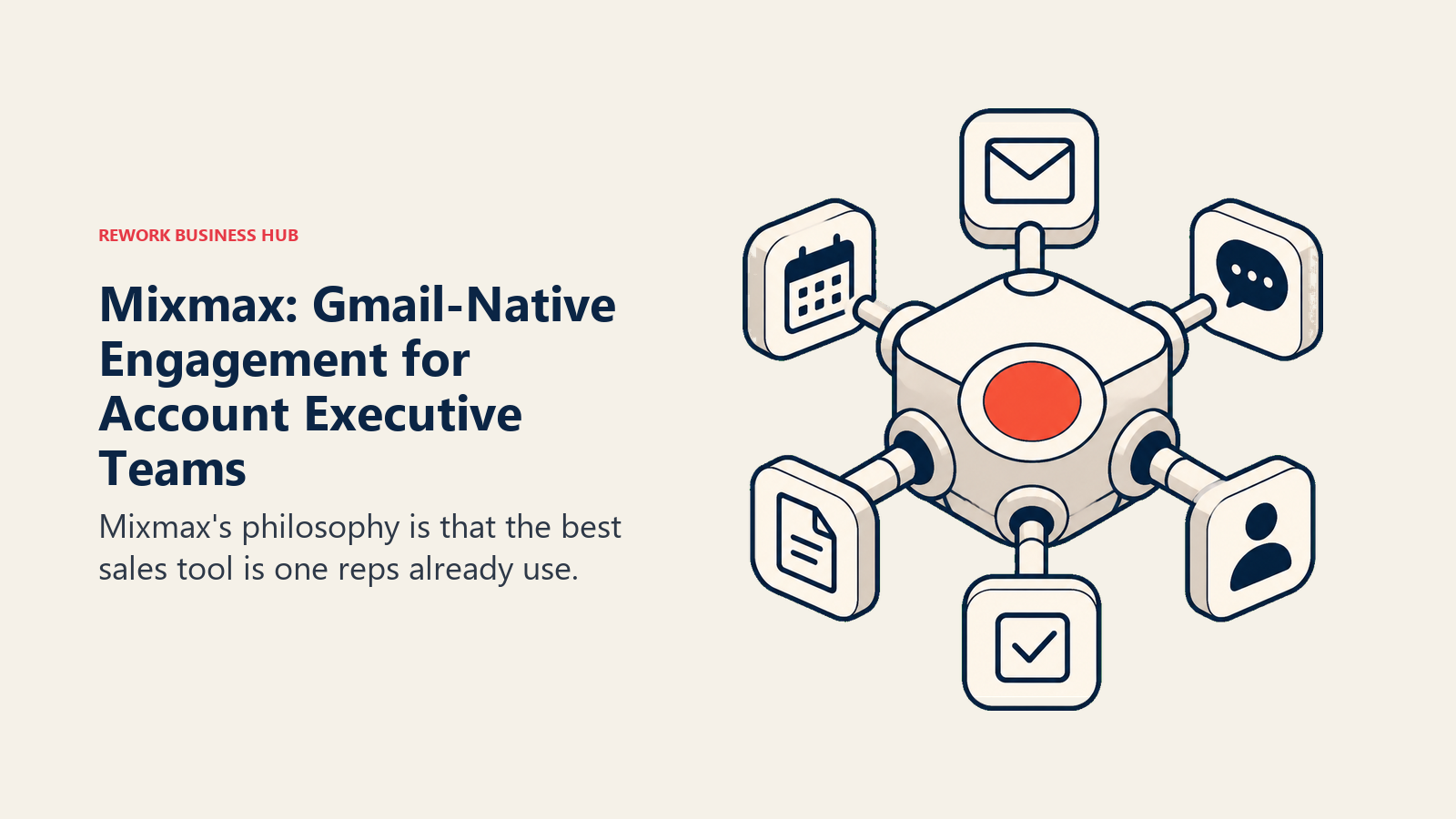
For AE teams doing account expansion, QBR scheduling, and multi-thread relationship management inside Gmail, Mixmax reduces friction significantly. Open and click tracking, meeting poll links, one-click scheduling, and CRM sync (Salesforce, HubSpot) are the day-to-day features reps actually use. Sequences can be triggered from Gmail directly.
The limitation is scope. Mixmax is a Gmail enhancement, not a standalone sales platform. There's no native CRM, no contact database, and no cross-channel automation beyond email and basic Slack notifications. And it doesn't work if your team uses Outlook. For AEs who live in Gmail and need to level up without changing their workflow, it's excellent. For SDRs building high-volume sequences from scratch, it's underpowered.
| What you get | What you don't |
|---|---|
| Sequences and tracking inside Gmail | Standalone CRM |
| Meeting scheduling and polls | Works with Outlook |
| Salesforce and HubSpot sync | Contact database or enrichment |
| Low friction adoption (no new app) | Multi-channel beyond email |
| Affordable per-seat pricing | Advanced manager reporting |
Pricing: From $29/user/month. Higher tiers add Salesforce sync, rules, and team reporting.
Best for: Gmail-based AE teams of 5-50 who want to add sequencing and tracking without changing their inbox workflow or adopting a new platform.
10. Mailshake: SDR Cold Outreach With a Built-In Dialer
Mailshake's approach is "sales outreach made simple." It targets SDR teams and founders who need to run cold email and cold calling without the complexity of a full-stack SEP. The platform includes email sequences, a built-in power dialer (SalesBlink integration or native dialer depending on plan), LinkedIn steps, and basic pipeline management.
The standout for teams coming from expensive platforms: Mailshake is fast to set up. There's no lengthy onboarding, no required admin configuration, and no dependency on a separate CRM (though it integrates with Salesforce, HubSpot, and Pipedrive). A new SDR can be running sequences on day one.
The tradeoff is analytics. Mailshake reports sequence opens, clicks, and replies, but the reporting depth and customization are lighter than Outreach or Salesloft. There are no deal boards, no AI call scoring, and no revenue attribution. For teams that measure SDR activity at a simple level (emails sent, calls made, meetings booked), it covers the basics well.
| What you get | What you don't |
|---|---|
| Email + dialer + LinkedIn in one | Advanced deal pipeline |
| Fast setup, low admin overhead | AI call coaching or scoring |
| Lead catcher for managing replies | Deep analytics and attribution |
| CRM integrations (Salesforce, HubSpot) | Contact enrichment database |
| Straightforward pricing | Manager leaderboards and governance |
Pricing: From $58/user/month (includes dialer). Email-only plans from $29/user/month.
Best for: SDR teams of 5-50 running cold email and calling who need a tool that works immediately without implementation complexity.
Why Teams Leave Outreach
Before choosing an alternative, it's worth being specific about which Outreach problem you're actually solving:

| Pain Point | Root Cause | Best Alternative Path |
|---|---|---|
| $100+/seat pricing | Outreach enterprise pricing model | Rework, Apollo.io, Reply.io |
| Requires Salesforce to work well | Deep Salesforce dependency | Rework, HubSpot Sales Hub |
| 3-6 month implementation | Complex configuration requirements | Rework, Mailshake, Apollo.io |
| Reps won't adopt it | Steep UI learning curve | Mixmax, HubSpot Sales Hub |
| Overkill for current team size | Built for 200+ rep orgs | Lemlist, Reply.io, Instantly |
| Can't do multi-client work | No agency workspaces | Woodpecker |
| Deliverability issues | Not deliverability-focused | Lemlist, Instantly |
Good forecast cadence discipline matters regardless of which platform you pick. Set that up before you configure sequences in any new tool.
Feature Coverage Matrix
| Feature | Salesloft | Rework | Apollo | HubSpot | Reply.io | Lemlist | Instantly | Woodpecker | Mixmax | Mailshake |
|---|---|---|---|---|---|---|---|---|---|---|
| Email Sequences | Yes | Yes | Yes | Yes | Yes | Yes | Yes | Yes | Yes | Yes |
| LinkedIn Automation | Yes | No | Yes | No | Yes | Yes | No | Yes | No | Yes |
| Built-in Dialer | Yes | Call tasks only | Yes | Yes | Yes | No | No | No | No | Yes |
| Native CRM | Partial | Yes | Partial | Yes | No | No | No | No | No | No |
| Contact Database | No | Partial | Yes | No | Partial | No | Yes | No | No | No |
| Call Coaching AI | Yes | No | No | No | No | No | No | No | No | No |
| Email Warmup | No | No | No | No | No | Yes | Yes | Partial | No | No |
| Multi-client / Agency | No | No | No | No | Yes | No | No | Yes | No | No |
| Gmail-native | No | No | No | No | No | No | No | No | Yes | No |
| Salesforce Sync | Yes | Via Zapier or API | Yes | Yes | Yes | Yes | No | Yes | Yes | Yes |
Pricing Comparison
| Tool | Entry Price | Per Seat or Flat | Free Tier | Annual Discount |
|---|---|---|---|---|
| Salesloft | ~$125/user/mo | Per seat | No | Yes |
| Rework | Revenue Engine from $159/mo billed yearly, 10 seats (rework.com/pricing) | Engine, seats in blocks of 5 | No | Yes |
| Apollo.io | Free / $49/user/mo | Per seat | Yes | Yes |
| HubSpot Sales Hub | $15-90/user/mo | Per seat | Yes (limited) | Yes |
| Reply.io | $49/user/mo | Per seat | No | Yes |
| Lemlist | $55/mo flat (annual) | Flat on Email, per seat on Multichannel | No | Yes |
| Instantly | $37/mo | Flat rate | No | Yes |
| Woodpecker | $29/slot/mo | Per sending slot | No | Yes |
| Mixmax | $29/user/mo | Per seat | No | Yes |
| Mailshake | $29-58/user/mo | Per seat | No | Yes |
How to Choose: Decision Framework
| If you need... | Best pick | Why |
|---|---|---|
| Enterprise coaching and deal management | Salesloft | Full revenue workflow platform |
| CRM + engagement without two tools | Rework | Unified platform, no sync overhead |
| Outbound data sourcing + sequencing combined | Apollo.io | 275M database built into the tool |
| Full HubSpot ecosystem integration | HubSpot Sales Hub | No CRM sync, single contact record |
| Multi-channel outbound on a lean budget | Reply.io | Multi-channel without enterprise price |
| High reply rates on small targeted lists | Lemlist | Personalization and deliverability focus |
| High-volume cold email at the lowest cost | Instantly | Flat pricing, unlimited sending accounts |
| Agency with multiple client campaigns | Woodpecker | Built-in multi-client workspaces |
| AEs who won't leave their Gmail inbox | Mixmax | Native Gmail, zero new-app adoption |
| SDR teams needing fast setup + dialer | Mailshake | Simple, all-in-one, day-one usable |
Related Reading
- Best Salesloft Alternatives in 2026: if Outreach and Salesloft are both on your shortlist
- Best Apollo alternatives in 2026: if you're also evaluating the data sourcing layer
- Qualification frameworks for sales teams: set your scoring criteria before you configure sequences in a new platform
- First 90 days as a sales leader: platform decisions made in the first 90 days tend to stick; make sure you're picking for your current team, not the one you had before
Methodology and Scoring Notes
This comparison reflects publicly available pricing and feature information as of April 2026. Pricing tiers and features change regularly. Verify current details directly with each vendor before signing a contract. The tools were evaluated across five dimensions: sequence capability, CRM depth, analytics, pricing, and setup complexity. Outreach was not included as an alternative to itself but serves as the benchmark for feature expectations.
Rework is our own product. It sits at #2, behind Salesloft, because Salesloft is the closest like-for-like replacement for Outreach; Rework earns its place for mid-market teams that want CRM and sequencing in one system. The "What you don't" lines are genuine, and any honest comparison with our own tool has to acknowledge where it falls short.
According to G2's sales engagement category, Outreach leads on features but consistently scores lower on ease of setup than mid-market alternatives, which matches what teams report when they're evaluating whether to switch.
What to Do Next
Pick your top two candidates from the decision framework table and run a two-week pilot with a small segment of your actual pipeline. Send real sequences to real prospects, route replies through the tool's inbox, and track rep time-to-send as a proxy for adoption friction. The platform that closes more meetings in that two-week window while generating fewer "this tool is a pain" complaints from reps is probably the right one.
If you're evaluating Rework as one of those two candidates, you can start a 14-day free trial without a demo call.

Principal CRM Strategist
On this page
- Quick Comparison Table
- Stage Fit Matrix
- Sizing and Persona Table
- 1. Salesloft: Enterprise Cadences With Pipeline and Coaching Intelligence
- 2. Rework: Unified CRM and Sales Engagement Built for Mid-Market Teams
- 3. Apollo.io: Prospecting Database Meets Sales Engagement
- 4. HubSpot Sales Hub: CRM-Native Engagement for Inbound-Led Teams
- 5. Reply.io: Multi-Channel Sequences at Mid-Market Price
- 6. Lemlist: Personalization-First Outreach With Deliverability Infrastructure
- 7. Instantly: High-Volume Cold Email for Outbound-Led Teams
- 8. Woodpecker: Simple Sequences for B2B Agencies and Small Teams
- 9. Mixmax: Gmail-Native Engagement for Account Executive Teams
- 10. Mailshake: SDR Cold Outreach With a Built-In Dialer
- Why Teams Leave Outreach
- Feature Coverage Matrix
- Pricing Comparison
- How to Choose: Decision Framework
- Related Reading
- Methodology and Scoring Notes
- What to Do Next