Best AI Tools for SDRs and Cold Outreach in 2026
Turn this article into takeaways for your work.


Each assistant summarizes the article only for you and suggests best practices for your work.
The best AI tools for SDRs in 2026 split into five jobs: finding and enriching accounts (Clay, Apollo), sending and warming email at scale (Instantly, Smartlead, Lemlist), running the full sequence and coaching motion (Outreach, Salesloft, Regie.ai), sharpening the message itself (Lavender), and, increasingly, doing the prospecting work autonomously (11x). Behind all five sits a routing layer that decides which rep owns each lead; CRM and lead-ops platforms such as Rework cover that, but they are not SDR prospecting tools. No single tool covers all five well, so most SDR stacks in 2026 combine three or four.
This guide reviews 14 tools SDR teams are actually paying for right now, not a hypothetical "best of everything" list. Each entry covers what the tool actually does, real pricing, and where it breaks down. AI sales tooling repriced constantly this year, so treat any price older than a quarter as stale.
What Changed in 2026
- Clay overhauled its pricing in March 2026, replacing the old Starter/Explorer/Pro tiers with a simpler Launch/Growth/Enterprise structure and cutting per-lookup data costs 50-90% after renegotiating with data providers.
- Outreach and Salesloft both restructured packaging this year. Outreach folded its modules into an "Amplify" branding with seat plus AI-credit pricing; Salesloft merged with Clari in December 2025 and is repositioning around a "Predictive Revenue System" story that is reshaping renewal pricing.
- AI SDR agents (11x, and the broader "digital worker" category) moved from novelty to line item. Contracts now commonly run $40,000-$60,000 a year for a single autonomous outbound worker, and buyers are getting more disciplined about proving ROI before renewal.
- Reply rates kept falling. The average cold email reply rate dropped to 3.43% in 2026, which is pushing SDR teams toward tighter segmentation and AI-assisted personalization instead of pure volume.
Key Facts
- The average cold email reply rate sits at 3.43% in 2026, with top-quartile senders hitting 5.5%+ and elite campaigns topping 10.7%, per Instantly's 2026 Cold Email Benchmark Report (vendor benchmark data across its own send volume).
- The AI SDR software market is projected to grow from $4.39 billion in 2025 to $5.81 billion in 2026, a 32.3% jump, and reach $17.58 billion by 2030, per Research and Markets' AI SDR market report.
- Sales organizations that give reps AI-enabled "next best action" guidance are 2.6 times more likely to hit above-average commercial growth, per Gartner's May 2026 sales leader survey.
- By 2027, 95% of sellers' research workflows will start with AI, up from under 20% in 2024, according to the same Gartner release.
- 51% of enterprises now run AI agents in production, and hybrid human-plus-AI sales pods generate 2.3 times more revenue from fewer meetings than fully autonomous AI-only setups, per Laxis' State of AI Sales Agents 2026 report.
- Only about 24% of sellers hit quota in H1 2025 (76% missed it), per the Ebsta and Pavilion 2025 GTM Benchmarks data cited in Gradient Works' 2025 B2B sales performance benchmarks, part of why teams are leaning harder on AI-assisted prospecting to protect pipeline.
Quick Comparison Table
| Tool | Best For | Standout Capability | Starting Price | Free Tier? |
|---|---|---|---|---|
| Apollo.io | All-in-one prospecting database + sequences | 210M+ contact database, built-in dialer | Free; $49/user/mo (Basic, annual) | Yes |
| Clay | Data enrichment + workflow automation feeding your outbound stack | 150+ data provider waterfall in one workflow builder | Free; $185/mo (Launch, annual) | Yes |
| Instantly | High-volume cold email sending + deliverability | Unlimited email accounts and warmup on every plan | $37.60/mo (Growth, annual) | No |
| Smartlead | Agencies and teams running many client inboxes | Unlimited mailbox connections on every plan | $39/mo (Base) | No |
| Lemlist | Multichannel outbound (email + LinkedIn + calling) | AI-based email/phone finder plus unified reply inbox | $55/mo (Email plan, annual) | No |
| Outreach | Enterprise sequence management + forecasting | Kaia AI call guidance, deal and pipeline visibility | ~$100-140/user/mo (quote-based) | No |
| Salesloft | Enterprise cadence + coaching, Clari-merged revenue data | Conversation intelligence tied to forecast accuracy | ~$125-165/user/mo (quote-based) | No |
| Rework | Mid-size teams needing lead routing and follow-up behind their SDR tools | Round-robin/territory/SLA lead distribution + chat inbox | $99/mo billed yearly (Marketing Engine, 5 seats) | No (14-day trial) |
| ZoomInfo Copilot | Signal-based account prioritization at enterprise scale | AI-generated account summaries from ZoomInfo's B2B data | Bundled in ZoomInfo Elite (~$40K+/yr) | No |
| Regie.ai | AI-drafted sequences with human-in-the-loop review | Auto-generates full multi-step sequences from ICP data | $180/user/mo (AI SEP, 10-seat min) | No |
| Lavender | Real-time email coaching before you hit send | Live email score plus rewrite suggestions in your inbox | Free (5 emails/mo); $29/mo (Starter) | Yes |
| Nooks | Parallel dialing + AI call coaching for high-volume calling | AI-run virtual sales floor with live coaching | ~$4,000-5,000/user/yr (quote-only) | No |
| Warmly | Website visitor de-anonymization + intent-triggered outreach | AI chat that engages high-intent visitors automatically | Free (500 visitors/mo); ~$700-900/mo paid | Yes |
| 11x (Alice) | Fully autonomous AI SDR agent for outbound at scale | Runs entire outbound motion (research, email, LinkedIn) without a human rep | ~$5,000/mo (annual contract) | No |
How to Choose: Decision Framework
By Budget
| If your outbound budget is... | Start with | Why |
|---|---|---|
| Under $200/month | Instantly or Smartlead for sending, Lavender free tier for coaching | Cheapest way to get volume and deliverability right |
| $500-2,000/month | Add Clay for enrichment, or Apollo Professional for an all-in-one database | Enrichment and better targeting matter more than more volume once basics work |
| $2,000-5,000/month | Regie.ai for AI-drafted sequences, plus a routing layer such as Rework if inbound and outbound leads are being dropped between reps | Coordination and routing problems start costing more than tool cost at this stage |
| $5,000+/month | Outreach, Salesloft, ZoomInfo Elite, or an AI SDR agent like 11x | Enterprise data depth, forecasting, or fully autonomous outbound capacity |
By Team Size and Motion
| Team Situation | What Matters Most | Best Fits |
|---|---|---|
| Solo founder or 1-2 person BD | Cheap sending, no per-seat minimums | Instantly, Lemlist Email plan, Lavender free tier |
| 3-10 person SDR team | Lead routing, sequence templates, shared inbox | Apollo, Smartlead, plus Rework if routing is the gap |
| Agency running client campaigns | Unlimited mailboxes, multi-workspace management | Smartlead, Instantly |
| 10-50 person SDR org | Data depth, coaching, forecasting tied to CRM | Outreach, Salesloft, ZoomInfo Copilot |
| Enterprise wanting to scale outbound without headcount | Autonomous execution at volume | 11x, Regie.ai Force Multiplier |
Before you shortlist tools, it helps to map what your BDR/SDR tech stack should actually contain by stage. Most teams overbuy sending tools and underbuy the lead routing and lead scoring layer that decides who gets each lead in the first place.
1. Apollo.io: The Default All-in-One Prospecting Database
Apollo remains the most common starting point for SDR teams because it bundles a large contact database, sequencing, and a dialer in one subscription instead of stitching three tools together. The free tier is genuinely usable for testing before you commit budget.
The catch is the credit system. Mobile numbers cost 8 credits each and verified emails cost 1, and active outbound teams that need real coverage regularly report actual spend of $150-400 per user per month once credits and add-ons are factored in, well above the advertised $49-119 headline rate. Compare it against the best Apollo alternatives if the credit math doesn't work for your volume.
| What you get | What you don't |
|---|---|
| 210M+ contact database with unlimited email credits | Mobile and export credits run out fast; real cost is often 2-4x the sticker price |
| Built-in dialer, sequences, and buying-intent signals | Data accuracy on mobile numbers and smaller companies is inconsistent |
| Free tier is a real starting point, not a stripped demo | Organization tier requires a 3-user minimum |
| Broad integrations with CRMs and other sales tools | UI gets cluttered once you're running multiple sequences and lists |
Pricing: Free tier available; Basic $49/user/month; Professional $79/user/month; Organization $119/user/month (3-user minimum), all billed annually.
Best for: Teams that want one subscription covering data, sequencing, and dialing without managing separate vendors.
2. Clay: The Data Enrichment Layer Behind Modern Outbound
Clay isn't a sending tool. It's a workflow builder that pulls from 150+ data providers, runs AI enrichment steps, and pushes clean, personalized records into whatever you send with (Instantly, Smartlead, your CRM). For SDR teams doing AI-assisted prospecting, Clay is usually the tool that makes personalization at scale possible instead of copy-paste research.
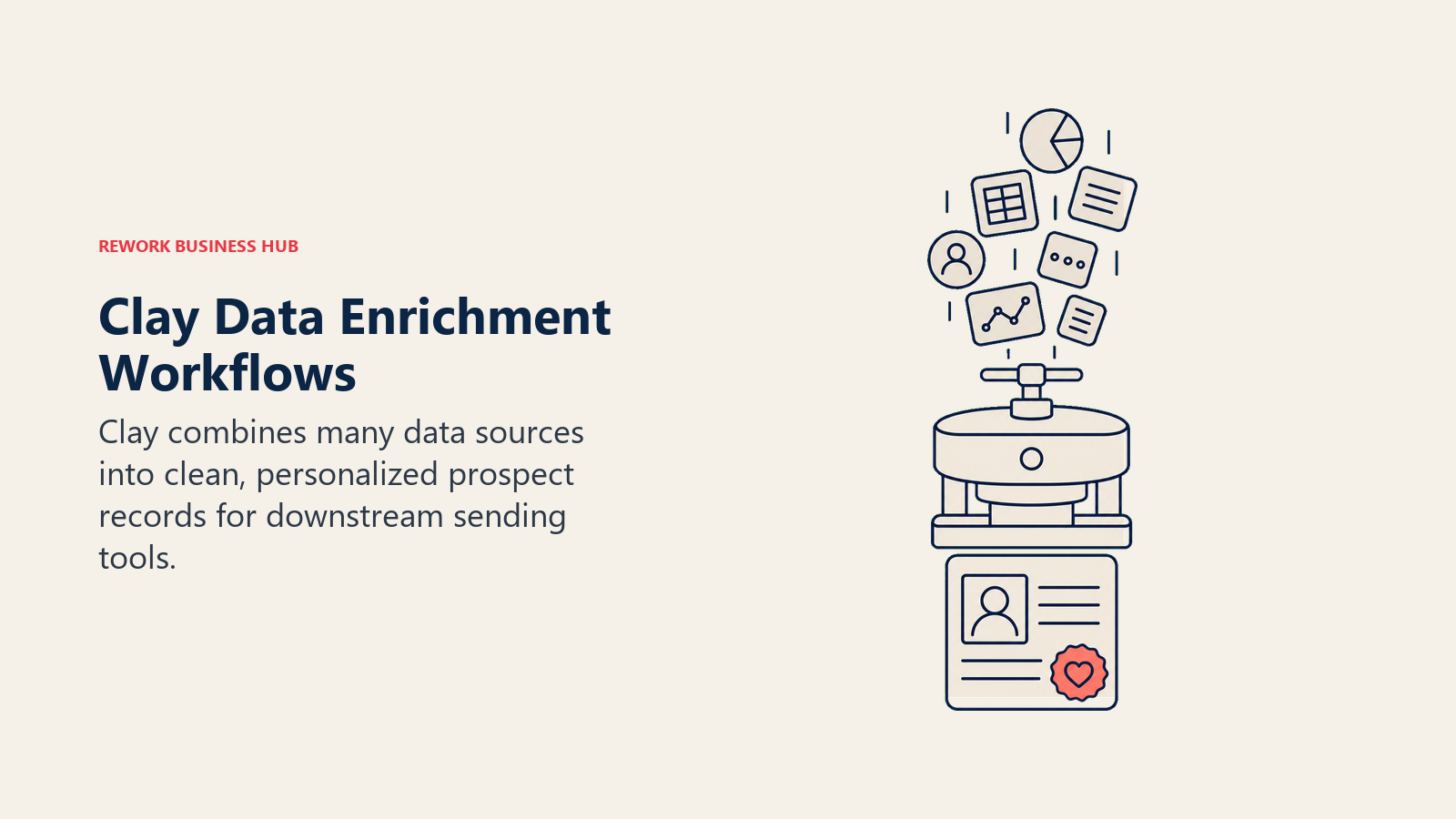
Clay's March 2026 pricing overhaul cut data costs 50-90% by renegotiating provider rates, and the Growth tier finally unlocked native CRM auto-sync that used to require the $800/month Pro plan. The tradeoff is a real learning curve: Clay is closer to a no-code automation tool than a simple app, and teams need someone comfortable building workflows to get value fast.
| What you get | What you don't |
|---|---|
| 150+ data providers in one enrichment waterfall | Not a sending tool; you still need Instantly, Smartlead, or a CRM to send |
| AI-powered enrichment steps (company research, personalization lines) | Steep learning curve; underused without a dedicated owner |
| Data costs dropped 50-90% after the March 2026 pricing overhaul | Credit-based pricing means costs scale with usage in ways that are hard to forecast upfront |
| Free tier for testing (100 data credits, 500 actions/mo) | Native CRM auto-sync requires the Growth tier ($495/mo) |
Pricing: Free tier; Launch $185/month (2,500 data credits, 15,000 actions, annual); Growth $495/month (6,000 data credits, 40,000 actions, annual); Enterprise custom.
Best for: SDR and RevOps teams building custom enrichment and personalization workflows that feed a separate sending tool.
3. Instantly: High-Volume Cold Email Sending and Deliverability
Instantly built its reputation on unlimited email accounts and warmup on every paid plan, which matters a lot once you're running dozens of sending domains to protect deliverability. Its own 2026 benchmark report (the source of this article's reply-rate stats) is also one of the more transparent public datasets in the category.
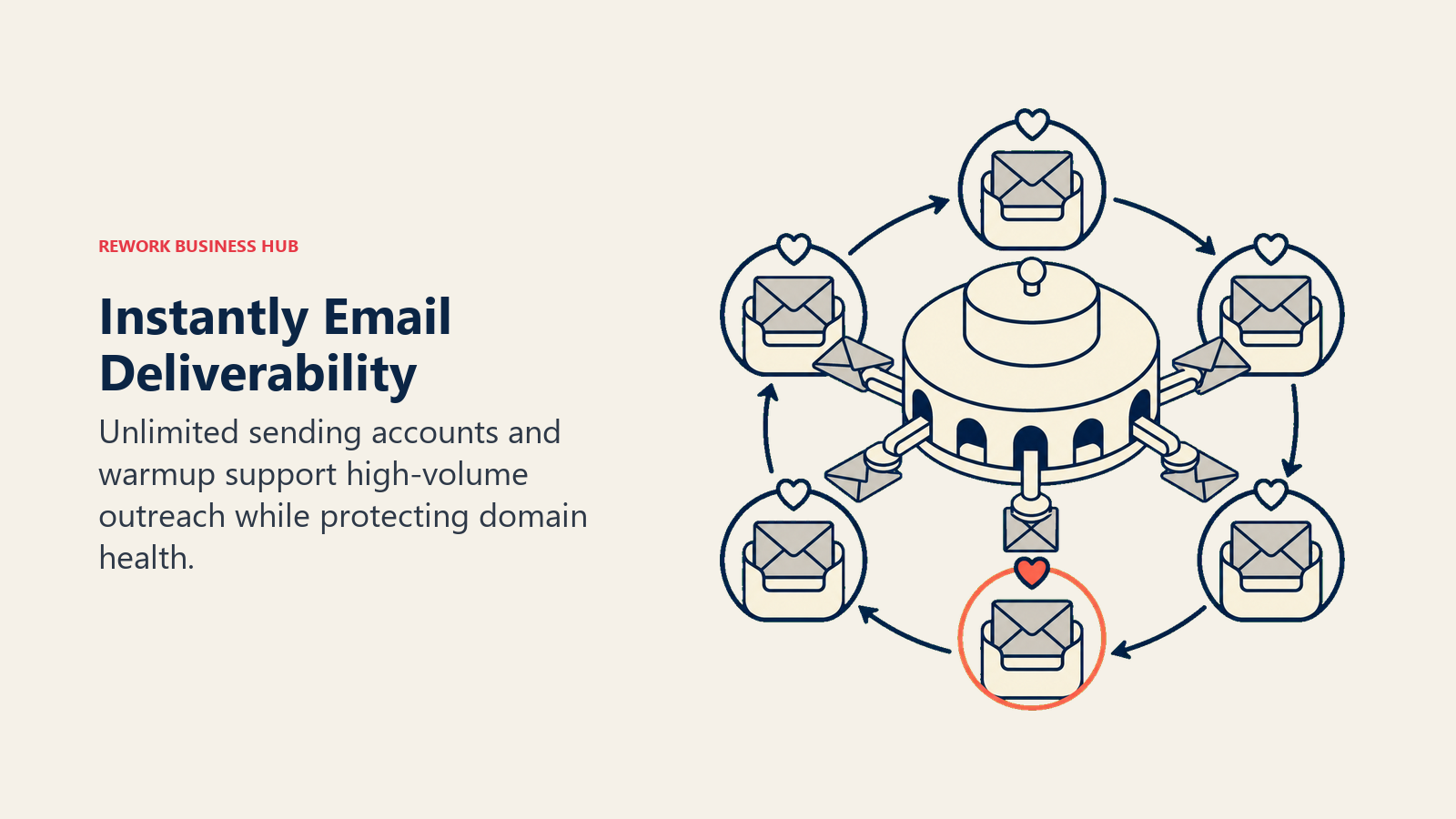
The pricing is volume-based rather than seat-based, so a 20-person team pays the same as a 5-person team within the same sending tier, which is either a feature or a problem depending on your team size. The modular structure (Outreach, Instantly Credits for the lead database, and CRM as separate subscriptions) means the headline $37.60/month price rarely reflects real spend. Pair it with a cold email cadence built for deliverability rather than raw volume, or see the best Instantly alternatives if the credit stacking gets expensive.
| What you get | What you don't |
|---|---|
| Unlimited email accounts and warmup on every plan | No native dialer or calling channel |
| Volume-based pricing (fair for small teams sending a lot) | Real cost hits $150-400/mo once Credits and CRM modules are added |
| Modular add-ons (website visitors, inbox placement testing, DFY accounts) | Modular pricing structure makes total cost hard to estimate upfront |
| Transparent public benchmark data on deliverability and reply rates | CRM module is thin compared to a dedicated CRM |
Pricing: Growth $37.60/month (1,000 contacts, 5,000 emails, annual); Hypergrowth $77.60/month (25,000 contacts, 100,000 emails, annual); Light Speed $286.30/month (100,000+ contacts, 500,000+ emails, annual); Enterprise custom.
Best for: Teams whose primary constraint is email sending volume and deliverability, not lead data or coordination.
4. Smartlead: Built for Agencies Running Many Client Inboxes
Smartlead's core promise is unlimited mailbox connections on every plan, which makes it the default choice for agencies managing cold email for multiple clients out of one account. New 2026 add-ons (SmartProspect for lead sourcing, SmartAgents for AI workflows, SmartDialer for calling) push it toward being a fuller outbound suite rather than just a sender.
Real costs climb well past the advertised $39-379/month range once mailboxes, domains, and email verification are added; budget 3-5x the plan price for a realistic total. The Unlimited Smart tier is specifically positioned for multi-client agency use.
| What you get | What you don't |
|---|---|
| Unlimited email accounts and warmup on every tier | Advertised pricing rarely reflects real-world total cost |
| Unlimited Smart tier built for multi-client agency management | UI and reporting are less polished than Outreach or Salesloft |
| New SmartAgents and SmartDialer add-ons for AI workflows and calling | Add-ons are separately priced, not bundled |
| API access and CRM integration from the Pro tier up | No native large contact database like Apollo or ZoomInfo |
Pricing: Base $39/month (2,000 contacts, 6,000 sends); Pro $94/month; Unlimited Smart $174/month; Unlimited Prime $379/month, all with 17% savings on annual billing.
Best for: Agencies and teams managing cold email across many client or brand inboxes at once.
5. Lemlist: Multichannel Outbound With a Unified Reply Inbox
Lemlist's pitch is combining email, LinkedIn automation, and in-app calling in one workspace instead of three separate tools. The AI-based contact finder and a centralized multichannel inbox mean replies from every channel land in one place rather than scattered across apps.
The Email plan is generous (unlimited users and senders for one workspace price), but the Multichannel plan that adds LinkedIn and calling switches to per-user pricing, which changes the math fast for a growing team. See the best Lemlist alternatives if multichannel isn't a must-have and you just need reliable email sending.
| What you get | What you don't |
|---|---|
| Email, LinkedIn, and calling in one workspace | Multichannel plan switches to per-user pricing, unlike the flat Email plan |
| Unified inbox across every outbound channel | 650M+ lead database access is credit-gated |
| AI-based email and phone finder built in | LinkedIn automation carries account-safety risk if overused |
| Deliverability and warmup tools included on all plans | Enterprise tier requires 5+ seats |
Pricing: Email plan $55/month (unlimited users, 50,000 emails/mo, annual); Multichannel $87/user/month (annual); Enterprise custom (5+ seats).
Best for: Teams that want email, LinkedIn, and calling replies unified in one inbox instead of stitched together.
6. Outreach: Enterprise Sequence Management With AI Call Guidance
Outreach's Kaia AI layer listens on calls and surfaces talk tracks, objection handling, and next steps in real time, and the platform's forecasting and pipeline tools give sales leadership visibility that pure sending tools don't attempt. It's built for larger SDR orgs where a sequence is one part of a much bigger revenue motion.
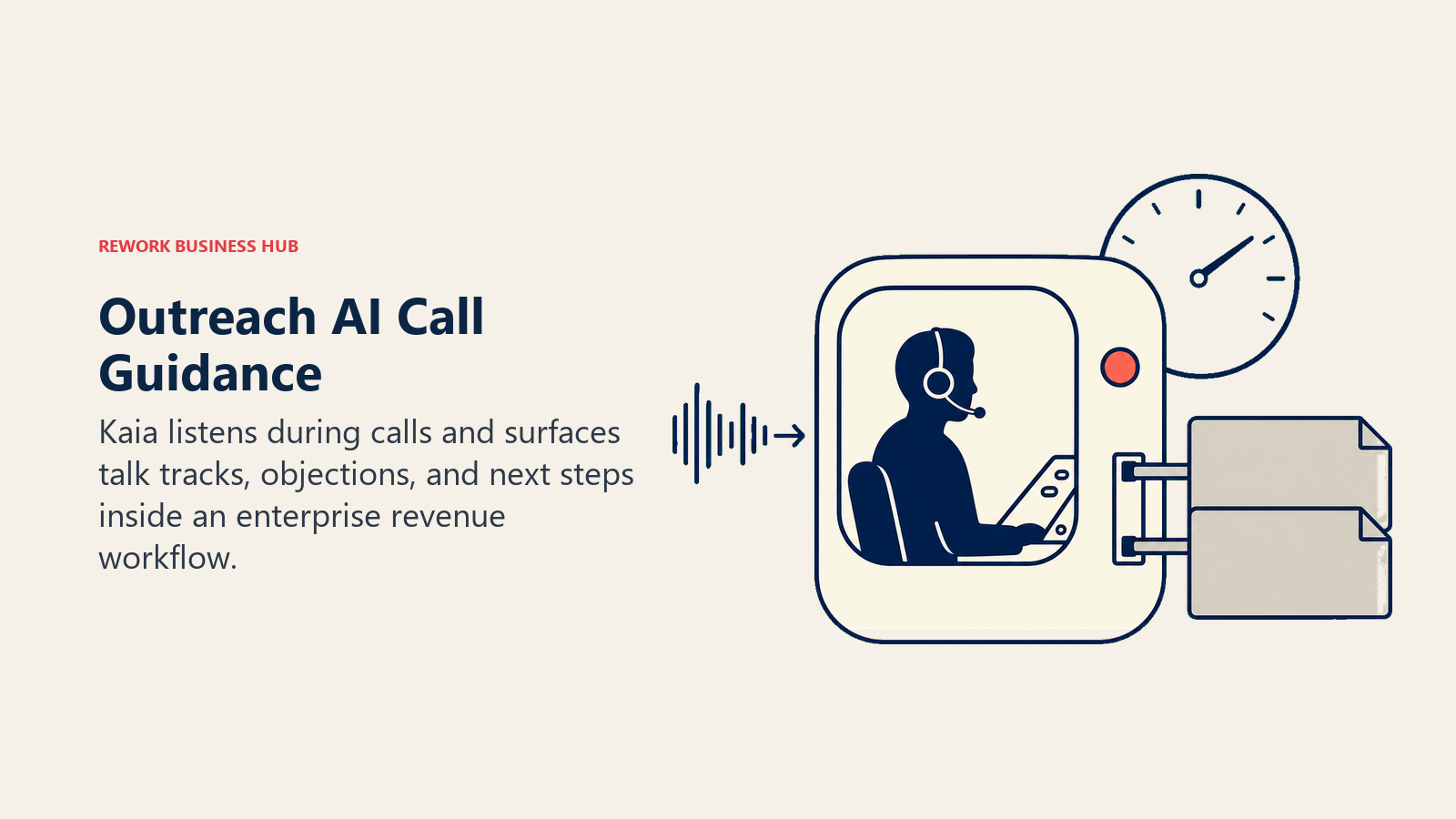
Outreach restructured its packaging in 2026 into an "Amplify" branding that blends seat-based platform access with consumption-based AI credits, and pricing is not published; expect real negotiation. A 50-user Engage deployment commonly lists around $72,000/year and often lands closer to $65,000-85,000 after negotiation. Check the best Outreach alternatives if that's out of reach for your team size.
| What you get | What you don't |
|---|---|
| Kaia AI real-time call guidance and coaching | Pricing is quote-only and requires annual commitment |
| Forecasting, pipeline, and deal management add-ons | Cost climbs fast once Meet, Deal, and Forecast modules stack on |
| Built for coordinating SDR-to-AE handoff at scale | Overkill for a team under 10 reps |
| Deep CRM and calendar integrations | Implementation and admin overhead is real at this tier |
Pricing: Engage runs roughly $100-140/user/month before add-ons; Enterprise/Unlimited tiers with Kaia, forecasting, and deal management run $160+/user/month. Quote-based, billed annually.
Best for: 20+ person SDR and AE orgs that need sequence execution tied to forecasting and pipeline visibility, not just sending.
7. Salesloft: Cadence and Coaching, Now Merged With Clari's Revenue Data
Salesloft's core strength has always been cadence discipline: structured, multi-touch sequences with conversation intelligence layered on top. The December 2025 merger with Clari pushed the combined company toward a "Predictive Revenue System" story, tying Salesloft's execution data to Clari's forecasting engine.
Like Outreach, pricing is quote-based and not published, which is the top complaint in every review of the platform. Real per-seat costs in 2026 run $125-165/month before dialer and Conversations add-ons, which can add another 20-40% to the base. Minimum seat counts (typically 10-15) put it out of reach for small teams. See the best Salesloft alternatives if that floor is too high for where your team is today.
| What you get | What you don't |
|---|---|
| Structured cadence management with conversation intelligence | Pricing is unpublished and requires a sales conversation |
| Now tied to Clari's forecasting after the December 2025 merger | Add-ons (dialer, Conversations) meaningfully increase real cost |
| Strong coaching and rep performance analytics | Minimum seat counts (10-15) exclude small teams |
| Contracts often include 5-8% annual price escalators | Renewal economics are shifting post-merger; budget for change |
Pricing: Roughly $125-165/user/month before add-ons (quote-based, annual contract, typical 10-15 seat minimum).
Best for: Enterprise SDR and AE teams already invested in forecasting discipline who want execution and revenue prediction in one connected system.
8. Rework: Lead Routing, Scoring, and Nurture Sequences Behind Your SDR Tools
Rework isn't an SDR prospecting tool. It has no contact database, no mailbox warmup, and no dialer, so it can't replace Apollo, Clay, or Instantly for finding people and sending cold email at volume. It belongs on this list for a narrower problem that sits behind the SDR tools: which rep owns which lead, whether a warm reply gets missed in someone's personal inbox, and whether inbound and outbound leads route to the same rep fairly.
The fit is native round-robin, territory, and SLA-based lead distribution, so a lead captured from a form, an ad, or a chat gets scored and assigned automatically instead of sitting in a shared spreadsheet. Sequences mix automated email and chat steps with call tasks for a rep, and stop when the lead replies, unsubscribes, or bounces. A chat inbox (WhatsApp, Messenger, Instagram, Telegram, live chat and more) sits on the same lead record, so a rep sees the history before they call. It ranks below Outreach and Salesloft because SDRs judge a tool on prospecting data, sending, and call coaching, and Rework covers none of those.
| What you get | What you don't |
|---|---|
| Lead capture, scoring, routing, and nurture sequences in one system | No contact database or enrichment waterfall like Apollo or Clay |
| Round-robin, territory, and SLA rules out of the box | No mailbox warmup or inbox rotation for high-volume cold email |
| Chat inbox across WhatsApp, Messenger, Instagram, and other messaging apps | No built-in dialer or call coaching (pair with Nooks or a dedicated dialer) |
| Engine pricing with 5 seats included, extra seats in blocks of 5 | No autonomous AI SDR agent; not for a solo rep |
Pricing: lead capture, routing, and sequences sit in the Marketing Engine at $99/month billed yearly ($115 month to month) with 5 marketing seats included; extra seats come in blocks of 5 at $21/month per block on yearly billing. The Revenue Engine, which adds the sales pipeline, is $159/month billed yearly. 14-day free trial, no free plan. See rework.com/pricing.
Best for: 5-200 person sales teams where leads from ads, forms, chat, and outbound replies need routing and follow-up discipline, paired with a dedicated prospecting and sending tool. Not the right fit for a solo BDR or a single AE prospecting alone.
9. ZoomInfo Copilot: Signal-Based Prioritization at Enterprise Data Scale
ZoomInfo Copilot sits on top of ZoomInfo's B2B data graph and auto-generates account summaries, flags buying-group signals (leadership changes, funding rounds, intent spikes), and drafts outreach based on real-time company activity. For SDR teams already paying for ZoomInfo's data, Copilot is the AI layer that turns raw firmographic data into a prioritized call list. See Apollo AI vs. ZoomInfo Copilot for a direct comparison if you're choosing between the two data platforms.
Pricing is entirely custom and bundled into ZoomInfo's broader sales intelligence packages, not sold standalone. Total spend for a mid-size team runs $25,000-35,000/year and climbs past $60,000 once intent data, ABM, Copilot, and Chorus are all layered on, with the Elite tier that unlocks full Copilot capability starting around $40,000-45,000/year.
| What you get | What you don't |
|---|---|
| AI-generated account summaries from ZoomInfo's own data graph | Copilot isn't sold standalone; it requires ZoomInfo's Elite tier |
| Buying-group and signal detection (job changes, funding, intent) | Pricing is entirely custom and opaque without a sales call |
| Deepest B2B data depth of any tool on this list | Total cost easily exceeds $40,000-60,000/year for full capability |
| Draft outreach generation from real-time signals | Overkill for teams under 20 reps or without a dedicated data budget |
Pricing: Not sold standalone. ZoomInfo packages typically start around $15,000/year and reach $40,000-45,000+/year for the Elite tier that includes full Copilot capability.
Best for: Enterprise sales orgs already invested in ZoomInfo's data who want an AI layer that turns signals into a prioritized outreach queue.
10. Regie.ai: AI-Drafted Sequences With a Human in the Loop
Regie.ai generates full multi-step outbound sequences (email plus LinkedIn touches) from your ICP and messaging inputs, then lets reps review and send rather than writing from scratch. The Force Multiplier Rep tier goes further, pairing AI-generated sequences with a parallel dialer and AI voicemail drops.
Pricing is steep and seat-minimum-gated: the AI SEP plan requires 10 seats at $180/user/month ($21,600/year floor), and Force Multiplier requires 5 seats at $499/user/month ($29,940/year floor). The median buyer's real annual spend reportedly runs roughly $51,532 once add-ons are included.
| What you get | What you don't |
|---|---|
| AI-generated multi-step sequences from ICP and messaging inputs | High seat minimums (5-10) exclude very small teams |
| Force Multiplier tier adds parallel dialing and AI voicemail | Real median annual spend (~$51,500) is well above the headline per-seat price |
| Human-in-the-loop review keeps a rep in control of what sends | Mailbox rotation and dialer are separately priced add-ons |
| RegieOne enterprise tier for larger, more complex deployments | Enterprise pricing is fully custom and requires a sales process |
Pricing: AI SEP $180/user/month (10-seat minimum); Force Multiplier Rep $499/user/month (5-seat minimum); RegieOne enterprise custom. Annual contracts.
Best for: Mid-size to enterprise SDR teams that want AI drafting the sequence while a human rep still approves and sends.
11. Lavender: Real-Time Email Coaching Before You Hit Send
Lavender scores each email as you write it (subject line, length, personalization, readability) and suggests specific rewrites, functioning like a coach sitting next to every rep. It's a Chrome extension layered on Gmail or Outlook rather than a full sequencing platform, which keeps it cheap and fast to adopt.
The free tier (5 emails/month) is enough to evaluate the coaching quality before buying. Lavender also sells Ora, a separate autonomous AI agent that writes and sends personalized cold email on its own, priced far higher at $500 per agent per month, a different product for a different buyer than the coaching tool.
| What you get | What you don't |
|---|---|
| Real-time email scoring and rewrite suggestions in your inbox | Not a sequencing or sending tool; pair it with one |
| Cheap entry point ($29-49/mo individual) | Team analytics require the $69/user/mo Teams tier |
| Genuinely improves message quality, not just volume | Coaching quality depends on the rep actually acting on suggestions |
| Separate Ora product for fully autonomous AI email sending | Ora is priced at $500/agent/month, a big jump from the coaching tool |
Pricing: Free (5 emails/month); Starter $29/month; Individual Pro $49/month; Teams $69/user/month, all with roughly 20% annual savings.
Best for: Individual reps and small teams who want to fix message quality before scaling volume with another tool.
12. Nooks: Parallel Dialing and AI-Run Virtual Sales Floor
Nooks runs a parallel dialer (calling multiple numbers at once and connecting reps only to live answers) alongside an AI-run "virtual sales floor" that mimics in-office coaching and peer pressure for remote SDR teams. It pairs naturally with cold call scripts built to book meetings since the whole product is built around calling volume and live coaching, not email.
Pricing is entirely quote-based; Nooks doesn't publish rates anywhere, and typical cost reportedly runs $4,000-5,000 per user per year on annual contracts. That puts it well above most email-first tools on this list, but it's solving a different problem: call volume and coaching, not sequence writing.
| What you get | What you don't |
|---|---|
| Parallel dialing that multiplies live-conversation volume | Pricing is entirely quote-based; no published rates |
| AI-run virtual sales floor for remote team coaching and energy | Real cost ($4,000-5,000/user/year) is high relative to email-first tools |
| Built specifically for high-volume outbound calling teams | Doesn't cover email sequencing or data enrichment at all |
| Live AI coaching during calls, not just post-call review | Requires a demo and custom quote before you see real pricing |
Pricing: Quote-only; reportedly $4,000-5,000/user/year on annual contracts.
Best for: SDR teams whose primary outbound channel is the phone, not email, and who need to multiply live-conversation volume.
13. Warmly: Website Visitor De-Anonymization and Intent-Triggered Outreach
Warmly identifies anonymous website visitors, enriches them with firmographic and behavioral data, and can trigger an AI chat conversation or route a high-intent visitor straight to a rep's queue. For SDR teams whose outbound targets already visit the company site before a cold touch lands, Warmly turns that traffic into a warmer starting point than a cold list.
The free plan (500 visitor de-anonymizations and 10 weekly Bombora intent signals) is a real way to test match rates before committing. Most of the useful functionality (full enrichment, CRM sync, AI chatbot, orchestration workflows) sits behind paid plans starting around $700-900/month on 12-month contracts.
| What you get | What you don't |
|---|---|
| Identifies anonymous website visitors and enriches them automatically | Company-level match rates are strong; individual-level match rates are lower |
| AI chat can engage and qualify high-intent visitors in real time | Most useful features gated behind $700-900/mo paid plans |
| Combines behavioral signals (pages visited, return visits) with firmographics | 12-month contract minimum, no month-to-month option |
| Free tier is enough to validate visitor volume before buying | Not a full outbound sequencing tool on its own |
Pricing: Free (500 visitors/month, 10 weekly intent signals); paid plans start around $700-900/month, 12-month contracts (Data Agent plan minimum roughly $10,800/year).
Best for: Teams with meaningful inbound website traffic who want to convert anonymous visits into warm outbound triggers.
14. 11x (Alice): A Fully Autonomous AI SDR Agent
11x sells "digital workers," not software you configure yourself. Alice is an AI SDR that runs the full outbound motion (research, list building, email, LinkedIn outreach) without a human rep at the wheel; a companion agent, Julian, handles phone conversations. This is the clearest example of the AI SDR agent category: automation that replaces a job function rather than assisting a person doing it.
The cost reflects that ambition. A single digital worker runs roughly $5,000/month on a required 12-month contract, putting first-year spend in the $50,000-60,000 range once implementation fees are included, comparable to a junior SDR's fully loaded cost. There's no free trial; every deal starts with a sales demo. Whether that's worth it depends heavily on how well your ICP and messaging are already dialed in, since an autonomous agent amplifies a good playbook and just as efficiently repeats a bad one.
| What you get | What you don't |
|---|---|
| Fully autonomous outbound execution without a human rep | No published pricing tier; every deal is a custom quote and demo |
| Alice (email/LinkedIn) and Julian (phone) as separate digital workers | Cost (~$50-60K/yr) is comparable to a fully loaded human SDR |
| Scales outbound volume without adding headcount | Amplifies whatever ICP and messaging you feed it, good or bad |
| 12-month contract with a defined, budgetable annual cost | No free trial or self-serve entry point |
Pricing: Not published; roughly $5,000/month per digital worker billed annually, with first-year contracts typically totaling $50,000-60,000 including implementation.
Best for: Teams with a proven, well-documented outbound playbook who want to scale execution volume without adding SDR headcount.
Pricing at a Glance
| Tool | Entry Price | Typical Real Spend | Billing Model |
|---|---|---|---|
| Apollo.io | Free | $49-119/user/mo, often $150-400 with credits | Per-seat + credits |
| Clay | Free | $185-495/mo | Credits (Data + Actions) |
| Instantly | $37.60/mo | $150-400/mo with Credits and CRM modules | Volume-based, modular |
| Smartlead | $39/mo | 3-5x plan price with mailboxes/domains added | Flat tier + add-ons |
| Lemlist | $55/mo | $55-87/user/mo depending on channels | Flat (Email) or per-seat (Multichannel) |
| Outreach | ~$100-140/user/mo | $65,000-85,000/yr for 50 users | Quote-based, seat + AI credits |
| Salesloft | ~$125-165/user/mo | +20-40% with dialer and Conversations | Quote-based, per-seat |
| Rework | $99/mo billed yearly (Marketing Engine, 5 seats) | $1,188-3,456/yr billed yearly for 5-50 seats | Engine plus seat blocks of 5 |
| ZoomInfo Copilot | Bundled, ~$15,000/yr entry | $40,000-60,000+/yr for full Copilot | Custom enterprise package |
| Regie.ai | $180/user/mo (10-seat min) | ~$51,500/yr median | Per-seat with seat minimums |
| Lavender | Free | $29-69/user/mo | Per-seat, freemium |
| Nooks | Quote-only | $4,000-5,000/user/yr | Custom annual contract |
| Warmly | Free | $700-900/mo | Custom, 12-month contract |
| 11x (Alice) | Quote-only | $50,000-60,000/yr per digital worker | Custom annual contract |
Where This Category Is Headed
Two forces are pulling in the same direction: falling reply rates are punishing low-effort volume, and AI is making high-effort personalization cheap enough to run at volume anyway. Expect the data-enrichment layer (Clay's category) and the AI-drafting layer (Regie.ai, Lavender) to keep merging into single workflows rather than staying separate tools. Fully autonomous AI SDR agents like 11x will keep growing (Gartner projects the underlying "AI agent in production" trend from roughly half of enterprises today toward near-universal by 2027-2028) but the 2.3x revenue lift Laxis found for hybrid human-plus-AI pods over AI-only setups suggests most teams will land on augmentation, not full replacement, for the next few years. Pricing will keep compressing on the sending layer (Instantly, Smartlead) while consolidating upward on the "does the coordination work for me" layer, which is where the AI SDR agents, and routing platforms like Rework from the CRM side, are heading.
Frequently Asked Questions about AI Tools for SDRs
What is the best AI tool for SDRs in 2026?
There's no single best tool because SDR work splits into different jobs. Apollo or Clay for finding and enriching accounts, Instantly or Smartlead for sending at volume, Lavender for message quality, and Outreach or Salesloft for coordinating sequences across a team, with a routing layer like Rework when leads are falling between reps. Most SDR stacks combine three or four of these rather than relying on one.
Are there free AI tools for cold outreach?
Yes. Apollo, Clay, Lavender, and Warmly all offer usable free tiers. Apollo's free plan includes unlimited email credits and basic sequencing, Clay's free tier gives 100 data credits and 500 actions a month, and Lavender's free tier covers 5 coached emails a month, enough to test each tool before paying.
Is an AI SDR agent like 11x worth it compared to hiring a human SDR?
It depends on how proven your outbound playbook already is. At $50,000-60,000 a year, an AI SDR agent costs roughly what a fully loaded human SDR costs, but it scales execution volume without the ramp time or turnover risk. Laxis' 2026 research found hybrid human-plus-AI pods generate 2.3 times more revenue than fully autonomous setups, so most teams get better results pairing an AI agent with a human rep rather than replacing the rep entirely.
Do these tools handle data privacy and email deliverability safely?
Reputable vendors on this list (Apollo, Clay, Instantly, Smartlead, Lemlist, Outreach, Salesloft, ZoomInfo) publish SOC 2 compliance and data handling terms; check each vendor's trust or security page before connecting a company email domain. Deliverability tools (warmup, inbox placement testing) reduce spam-flag risk, but sending volume and list quality still matter more than any single tool's settings.
What's the difference between a sales engagement platform and an AI SDR agent?
A sales engagement platform (Outreach, Salesloft, Apollo) gives a human rep tools to plan, send, and track outreach faster. An AI SDR agent (11x, and increasingly features inside Regie.ai) runs the outbound motion with minimal human involvement: researching accounts, writing messages, and sending them without a rep reviewing each one. Most teams still put a human in the loop somewhere in that process.
Does Rework replace a dedicated cold email sending tool?
No. Rework's sequences are built for nurture and follow-up with call tasks for reps, not for the very high cold-email volumes that Instantly or Smartlead handle; it has no mailbox warmup, no contact database, and no enrichment waterfall like Clay. Teams that need both usually pair Rework's lead capture, scoring, and routing with a dedicated sender for volume-heavy campaigns.
Related Reading
For the coordination side of the stack, BDR/SDR tools and tech stack by stage and AI in BDR/SDR prospecting cover how to sequence these tools as your team grows. If email is your primary channel, cold email cadences for 2026 and cold email strategy go deeper on message and timing than this tool-focused guide can. For calling-heavy teams, cold call scripts that book meetings pairs well with a parallel dialer like Nooks. And if you're evaluating full sequencing platforms rather than point tools, the best sales engagement platforms of 2026 roundup covers Outreach, Salesloft, and their alternatives in more depth.
What to Do Next
Pick one tool from each job your team actually has a gap in, not one tool that claims to do everything. If you're under 10 reps and the real problem is leads falling through the cracks between marketing and sales, start with lead routing and scoring before adding another sending tool. If your problem is genuinely reply-rate volume, run a 2-week test on Instantly or Smartlead against your current sender before switching. And if you're evaluating whether an AI SDR agent is worth the five-figure annual commitment, pilot it against a human SDR's output for one quarter with the same target list before renewing.

Principal Product Marketing Strategist
On this page
- What Changed in 2026
- Key Facts
- Quick Comparison Table
- How to Choose: Decision Framework
- By Budget
- By Team Size and Motion
- 1. Apollo.io: The Default All-in-One Prospecting Database
- 2. Clay: The Data Enrichment Layer Behind Modern Outbound
- 3. Instantly: High-Volume Cold Email Sending and Deliverability
- 4. Smartlead: Built for Agencies Running Many Client Inboxes
- 5. Lemlist: Multichannel Outbound With a Unified Reply Inbox
- 6. Outreach: Enterprise Sequence Management With AI Call Guidance
- 7. Salesloft: Cadence and Coaching, Now Merged With Clari's Revenue Data
- 8. Rework: Lead Routing, Scoring, and Nurture Sequences Behind Your SDR Tools
- 9. ZoomInfo Copilot: Signal-Based Prioritization at Enterprise Data Scale
- 10. Regie.ai: AI-Drafted Sequences With a Human in the Loop
- 11. Lavender: Real-Time Email Coaching Before You Hit Send
- 12. Nooks: Parallel Dialing and AI-Run Virtual Sales Floor
- 13. Warmly: Website Visitor De-Anonymization and Intent-Triggered Outreach
- 14. 11x (Alice): A Fully Autonomous AI SDR Agent
- Pricing at a Glance
- Where This Category Is Headed
- Related Reading
- What to Do Next