Best Reply.io Alternatives in 2026: 12 Sales Engagement Tools for Outbound Teams

Turn this article into takeaways for your work.


Each assistant summarizes the article only for you and suggests best practices for your work.
Reply.io is a capable multichannel sales engagement platform that packs email sequencing, LinkedIn automation, calling, and an AI SDR agent ("Jason") into one subscription. For teams that want a single outbound tool without piecing together a stack, that breadth is genuinely useful.
But it's also where most of the complaints start. The Multichannel plan runs $89/user/month (annual) with LinkedIn, calling, and SMS bundled in, and Reply.io restructured its AI SDR offering in 2026: Jason is no longer a per-seat add-on, it's now sold as its own managed tier starting around $500/month on annual billing. Deliverability at scale is uneven compared to dedicated cold-email tools like Instantly or Smartlead. And for founders or RevOps owners who want outbound tied directly into their CRM and pipeline, Reply.io still requires a separate CRM integration. That gap alone sends a lot of teams looking.
If you're an SDR lead, founder, or RevOps owner re-evaluating your outbound stack in 2026, this guide covers 12 alternatives. Each section gives you real pricing, a straight read on who it fits, and honest caveats, so you can match the tool to your actual situation rather than the vendor's marketing copy.
Quick Comparison Table
| Tool | Best For | Starting Price | Key Strength | Key Limitation |
|---|---|---|---|---|
| Rework | Teams wanting outbound inside their CRM | $999/year (up to 5 users) | CRM + sequences + ops in one system | Not for solo users or high-volume cold-email agencies |
| Outreach | Large enterprise SDR orgs | ~$100/user/month (custom) | Deep workflow automation + forecasting | Expensive, long contracts, overkill for SMB |
| Salesloft | Mid-market with complex deal cycles | ~$125/user/month (custom) | Cadence + conversation intelligence | Now bundled with Clari; pricing less predictable |
| Lemlist | Teams wanting email and LinkedIn in one UI | $87/user/month (annual) | Personalization at scale | Recipient caps on lower plans |
| Apollo | Teams that also need prospecting data | $49/user/month (annual) | Sequencing + 275M contact database | Credit system limits scale |
| Mixmax | Gmail-native AE and CS teams | $49/seat/month | Native Gmail UX, meeting booking | Workspace recipient caps; not suited for large SDR teams |
| Instantly | Cold-email agencies and high-volume teams | $30/month (volume-based) | Unlimited mailboxes, warmup included | No native CRM; modular costs add up |
| Smartlead | Agencies running multiple client inboxes | $39/month | Multi-client whitelabeling, inbox rotation | No native CRM or LinkedIn automation |
| Woodpecker | Smaller teams wanting prospect-based billing | $24/month (500 prospects) | Per-prospect pricing, clean UX | Lite on multichannel; better for email-only |
| Mailshake | SMB teams new to sales engagement | $25/month (annual) | Flat monthly pricing, no annual lock-in | Email send caps per plan tier |
| Klenty | Outbound teams with CRM-first workflows | $70/user/month (annual) | CRM-native cadences, built-in dialer | Smaller ecosystem than Outreach or Salesloft |
| HubSpot Sales Hub | Teams already on the HubSpot platform | $20/seat/month (Starter) | Native CRM + sequences in one login | Sequences gated at Professional ($100/seat/month) |
1. Rework: CRM, Sequencing, and Ops in One System
Most sales engagement tools are point solutions. They handle sequencing well but stop there, leaving you to sync contacts back to a separate CRM, reconcile pipeline stages, and stitch together reporting across two or three systems. Rework takes the opposite approach: it combines a full sales CRM, lead management, multichannel outreach sequences, and cross-team workflow management in a single data model.
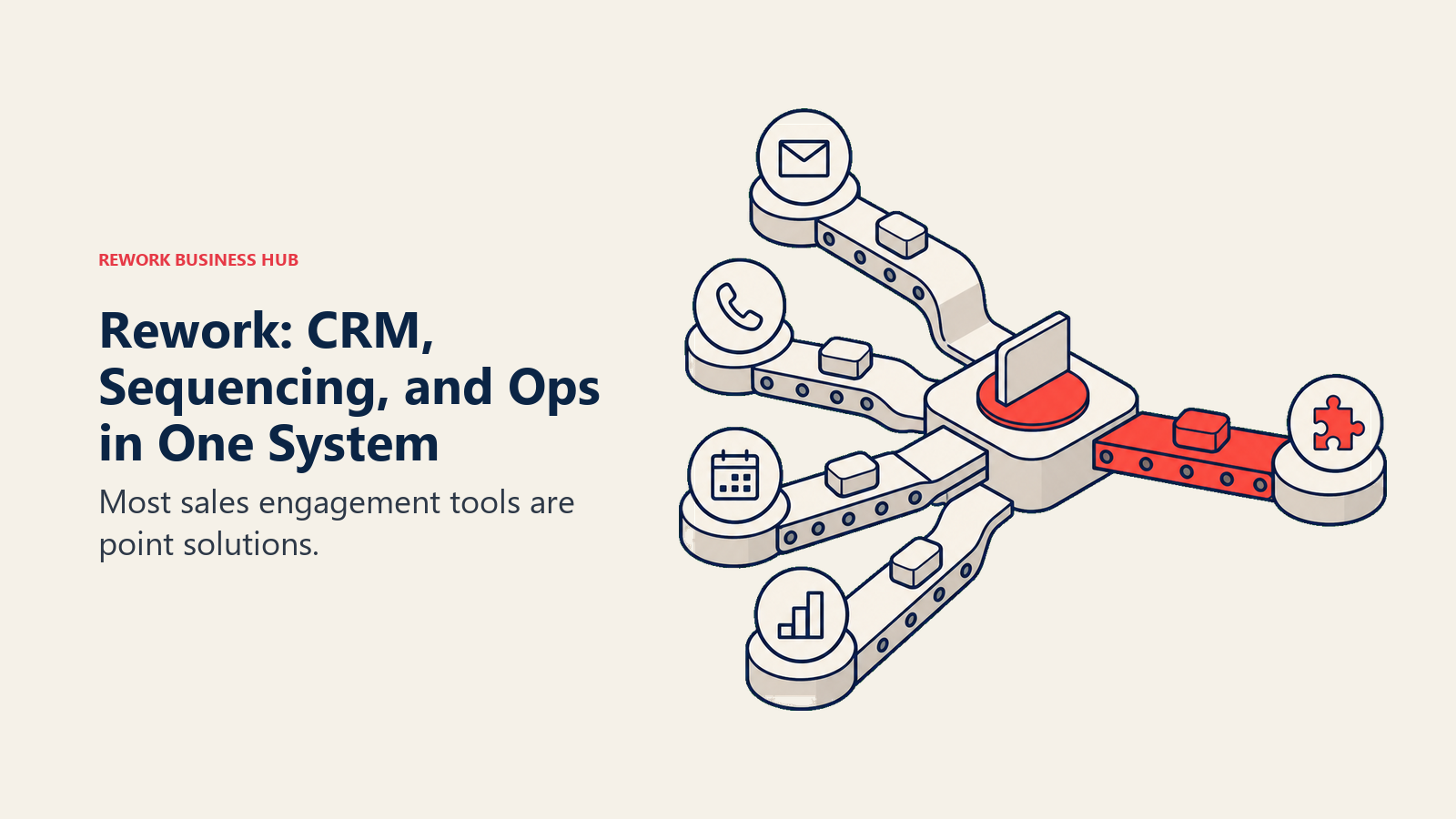
The pitch for a Reply.io refugee is this: instead of running sequences in Reply and then exporting replies into HubSpot or Salesforce to update deal stages, every touch point, reply, and stage change lives in the same place. Your sequences are aware of pipeline context, and your pipeline is aware of outbound activity, without a nightly Zapier sync.
Rework's ICP is a team with 5 to 200 seats that is outgrowing "one rep with a spreadsheet" but does not yet need the complexity or cost of Outreach or Salesloft. It fits sales teams at funded startups, regional distributors, professional services firms, and any org where ops and CRM need to share data with the sales function.
Not ideal for: Solo users (the minimum package covers 5 users), high-volume cold-email agencies, or pure cold-outreach shops where inbox rotation across 50+ sending domains is the primary workflow. If raw cold-email volume at scale is your top priority, Instantly or Smartlead is the more direct fit.
| Pros | Full CRM + pipeline built in; no separate sync required; Work Ops covers cross-team coordination |
| Cons | Not sold per seat, so small 1-2 person teams will overpay; limited inbox-rotation features vs Instantly |
Pricing (Sales Ops):
- Starter: $999/year for up to 5 users
- Standard: $1,999/year for 10 users included, plus $12/user/month for each additional user
Best for: Teams of 5 to 50 that want outbound sequencing wired into CRM and operations from day one. See rework.com/pricing for current details.
2. Outreach: Enterprise-Grade Workflow Automation
Outreach is the platform that Reply.io most directly aspires to replace at the enterprise tier. It covers email, phone, and LinkedIn sequencing alongside deal inspection, revenue forecasting, and conversation intelligence, all within a purpose-built workflow engine that large SDR organizations can configure in detail.
The tradeoff is price and complexity. Outreach doesn't publish pricing, but market data puts the Engage tier around $100 to $120 per user per month, with annual commitments starting around $20,000. Teams of 50 seats land in the $72,000+ per year range before add-ons. Implementation takes weeks, and the platform rewards orgs with a dedicated RevOps owner who can configure sequences, A/B test cadences, and manage governance rules.
For a 5 to 25 person SDR team coming off Reply.io, Outreach is likely over-engineered and over-priced. But if you're at 50+ seats with a structured outbound motion and a RevOps function, the workflow depth and forecasting integration are hard to replicate elsewhere. See the best Outreach alternatives guide if you're evaluating whether Outreach itself is right.
| Pros | Best-in-class workflow automation; revenue intelligence and forecasting built in; enterprise-grade governance |
| Cons | No published pricing; $20K minimum annual commitment; high implementation complexity |
Pricing: Custom. Estimated $100 to $160/user/month; minimum $20,000/year. Contact Outreach for a quote.
Best for: Mid-market and enterprise orgs (50+ seats) with a dedicated RevOps function and structured outbound motion.
3. Salesloft: Cadence-First Platform Now Bundled with Clari
Salesloft pioneered the "cadence" model of sales engagement and remains one of the two dominant enterprise options alongside Outreach. Its cadence builder, email personalization, and conversation intelligence layer are mature and trusted by mid-market teams running complex deal cycles.
The 2025 merger with Clari (revenue forecasting) closed in December and is reshaping the product. The combined company markets a "Predictive Revenue System" that bundles forecasting with engagement. For buyers evaluating in 2026, that means more negotiation complexity and potentially different packaging than what you've seen quoted previously. Pricing is custom, landing in the $125 to $165/user/month range before add-ons, with dialer access running $300 to $400/user/year on top.
For Reply.io users who want richer conversation analytics and better cadence-vs-pipeline analytics, Salesloft is a legitimate upgrade. But if your team doesn't need forecasting integration, you're likely paying for Clari features you won't use. See the best Salesloft alternatives guide for the full picture.
| Pros | Deep cadence analytics; conversation intelligence at call level; strong brand recognition for enterprise buyers |
| Cons | Custom pricing with automatic annual escalators (5 to 8%); Clari merger has muddied packaging |
Pricing: Custom. Typically $125 to $165/user/month. Dialer and Conversations add-ons quoted separately.
Best for: Mid-market teams (25 to 500 seats) running account-based outbound with a focus on cadence performance and pipeline forecasting.
4. Lemlist: Multichannel Personalization Without the Per-Seat Overhead
Lemlist built its name on personalized images and variables in cold outreach, and has since expanded into a full multichannel sequencer covering email, LinkedIn, and calling. The Multichannel Expert plan at $87/user/month (annual) is a direct competitor to Reply.io's equivalent tier, but without the hidden add-on structure Reply.io uses for LinkedIn.
The email and LinkedIn workflow inside Lemlist is cleaner than most alternatives at this price point. The platform handles warmup through its native Lemwarm tool, includes 1,500 enrichment credits per user per month on the Multichannel Expert plan, and lets you set conditions in sequences (if no reply on email step 2, switch to LinkedIn touch 1). That conditional logic is more accessible to non-technical reps than Reply.io's flow builder.
The main caveat is recipient volume. At the Multichannel Expert tier, you're limited to five sending addresses per user, and high-volume agencies will hit caps. For teams of 3 to 30 sending personalized campaigns to well-targeted lists, it fits cleanly. For high-volume cold email shops sending to 10,000+ contacts a week, look at Instantly or Smartlead instead.
Check the best Lemlist alternatives guide if you want to compare it against the field.
| Pros | Native email and LinkedIn in one UI; clean conditional sequencing; Lemwarm included |
| Cons | Sending address caps at lower tiers; LinkedIn automation reliability can vary |
Pricing: Email $55/month (annual), $69/month monthly, flat fee, unlimited users. Multichannel $87/user/month (annual), $109/user/month monthly.
Best for: Teams of 3 to 30 running personalized multichannel outbound without dedicated deliverability infrastructure.
5. Apollo: Prospecting Data Plus Sequencing in One Platform
Apollo's core advantage over Reply.io is the built-in contact database: 275 million contacts with email and phone data, directly connected to its sequencing tool. Where Reply.io requires you to bring your own list, Apollo lets you build a list, qualify it, and push it into a sequence from a single screen.
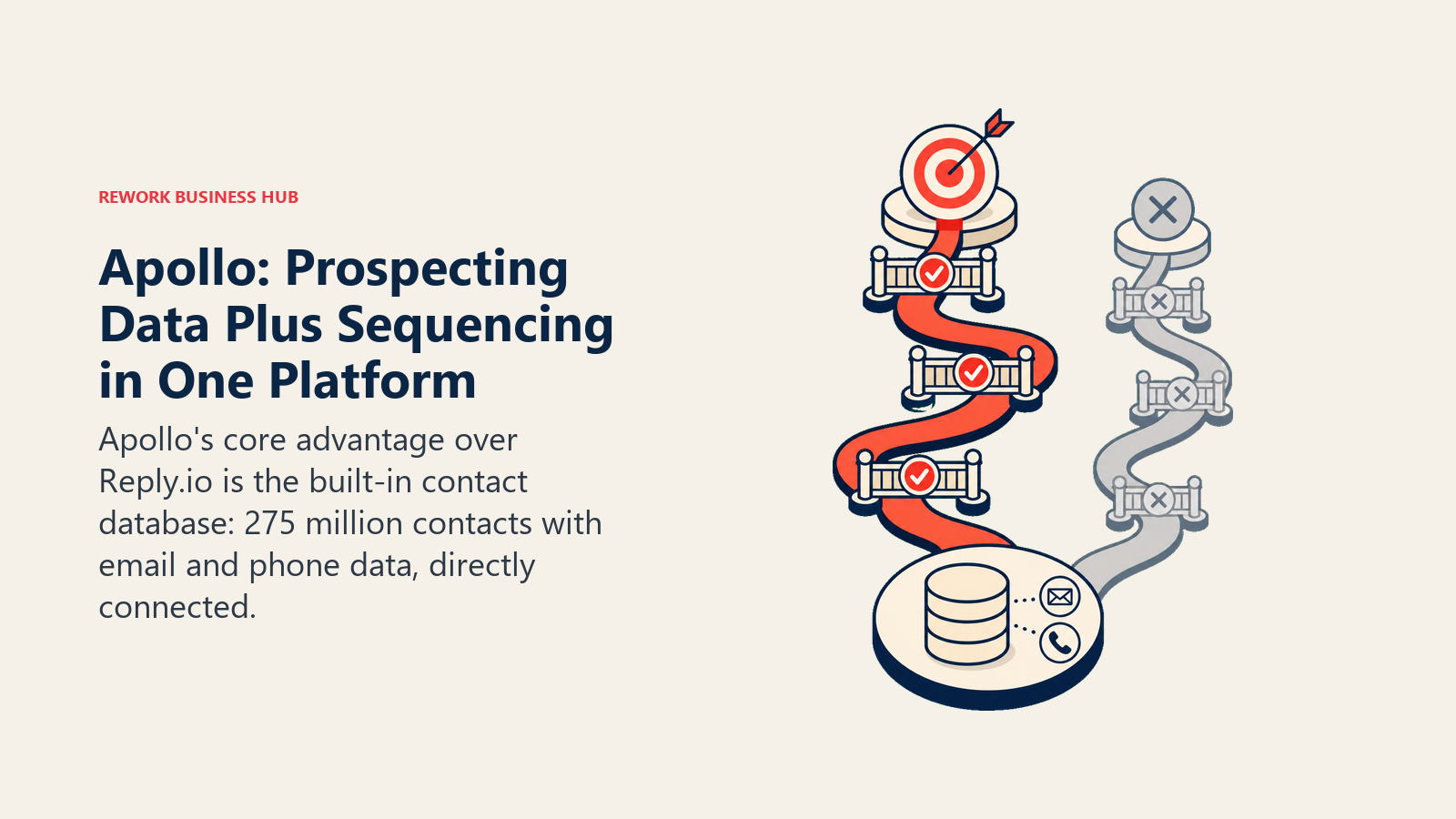
The Basic plan starts at $49/user/month (annual) and removes the two-active-sequence cap of the free tier, while Professional at $79/user/month adds a US dialer and parallel dialing. The credit system is the main friction point: phone number lookups cost 8x more than email credits, credits expire each billing cycle, and overages run $0.20 each. A 10-person SDR team running heavy phone outbound can hit meaningful credit costs on top of the seat fee.
For Reply.io users who are also paying a separate data vendor (ZoomInfo, Lusha, Clearbit), Apollo's combined pricing often comes out cheaper. The tradeoff is that Apollo's engagement and sequencing features are slightly less mature than Reply.io's when it comes to complex multi-touch automation. See the best Apollo alternatives for a side-by-side on data quality and engagement depth.
| Pros | 275M contact database included; prospecting and sequencing in one subscription; free plan available |
| Cons | Credit expiry creates waste; phone credits expensive; CRM sync requires Professional tier |
Pricing: Free (limited credits), Basic $49/user/month (annual), Professional $79/user/month, Organization $119/user/month (3-seat minimum).
Best for: Teams that want to prospect, enrich, and sequence from one tool, especially if they're currently paying a separate data vendor.
6. Mixmax: Gmail-Native Engagement for AEs and CS Teams
Mixmax lives inside Gmail, which is both its greatest strength and its clearest constraint. For account executives and customer success teams who live in their inbox, the native UX (sequences, meeting booking, link tracking, snippets) feels like a natural extension rather than a separate app to context-switch into.
The pricing structure in 2026 is modular around three "Copilots." The Engagement Copilot at $49/seat/month covers sequences and automation. The full Suite bundles all three Copilots at $89/user/month. The key limit to understand: the Engagement Copilot has a workspace-level recipient cap of 1,500 contacts per month, not per user. A 5-person SDR team burns through 60 new contacts per rep per week before hitting the ceiling.
That cap makes Mixmax wrong for dedicated SDR teams doing cold outreach at volume. But for a small AE team or a CS team doing expansion outreach within a warm customer base, the Gmail integration is genuinely better than any non-native alternative. Read the best Mixmax alternatives if you're evaluating whether to stay native or switch to a standalone tool.
| Pros | Native Gmail UX; meeting scheduling built in; no context-switching for AEs |
| Cons | 1,500 recipient cap per workspace (Engagement Copilot); not built for large SDR outbound |
Pricing: Inbox Copilot $34/user/month, Engagement Copilot $49/user/month, Suite (all three) $89/user/month. 14-day free trial.
Best for: AE or CS teams of 1 to 15 doing warm outbound from Gmail. Not for high-volume cold SDR teams.
7. Instantly: High-Volume Cold Email with Inbox Rotation
Instantly is purpose-built for teams whose primary need is delivering cold email at scale without inbox-level deliverability problems. The core differentiator: unlimited connected email accounts on every Outreach plan, with built-in warmup included. Where Reply.io limits you to a handful of sending addresses per seat, Instantly lets you rotate across 50+ inboxes, keeping per-domain send volumes low and deliverability scores high.
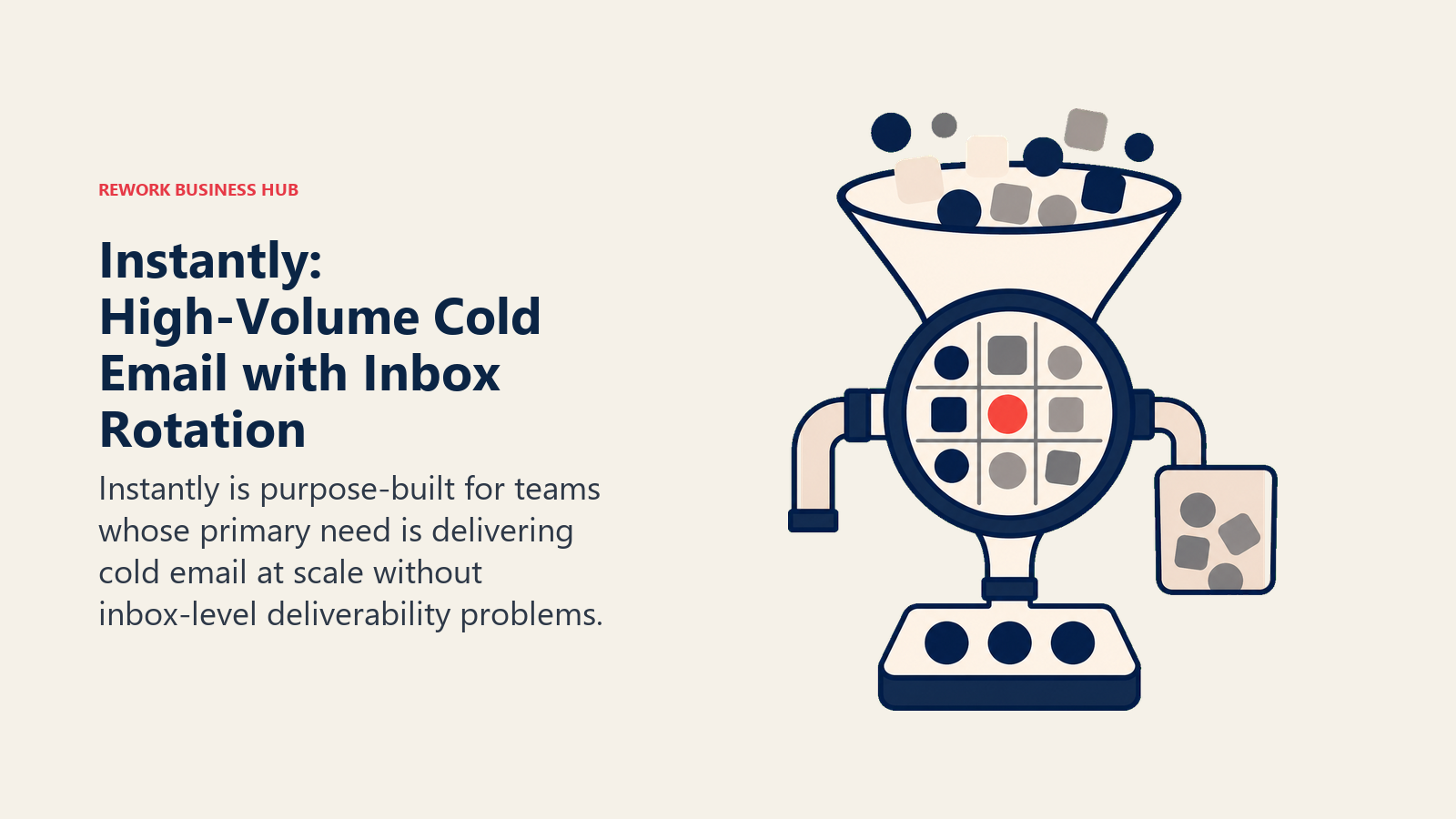
Pricing is volume-based rather than per-seat. The Growth plan covers 5,000 emails per month for $30/month. Hypergrowth (25,000 emails/month) runs $77.60/month. The catch is that Instantly's modular pricing adds up fast once you include the lead database and CRM: combining all three modules at mid-tier runs roughly $220/month. And Instantly is not a full sales engagement platform. There's no LinkedIn automation, no calling, and no native CRM tight enough for a complex deal pipeline.
For Reply.io refugees who are primarily cold-email agencies or outbound shops sending to large lists across multiple clients or domains, Instantly is the cleaner, cheaper solution. For teams that need multichannel sequencing or CRM integration, it's a partial fit at best.
| Pros | Unlimited inbox accounts per plan; native warmup; volume-based pricing scales efficiently for agencies |
| Cons | Modular pricing adds up; no native LinkedIn or calling; CRM is basic |
Pricing: Growth $30/month (5,000 emails), Hypergrowth $77.60/month (25,000 emails), Light Speed $286/month (500,000 emails). Lead database and CRM add-ons priced separately.
Best for: Cold-email agencies and high-volume outbound teams that run across multiple client domains and need maximum deliverability headroom.
8. Smartlead: Agency-First Cold Email with Whitelabeling
Smartlead targets the same deliverability-first buyer as Instantly, but with a stronger focus on agencies running outreach on behalf of multiple clients. The Pro plan ($94/month) includes API access and white-label client portals, making it practical for agencies that need to manage separate campaign dashboards per client without manual access switching.
The infrastructure story is the main draw. Smartlead's inbox rotation, custom tracking domains, and email warmup engine are built for the kind of volume that breaks standard sales engagement tools. Unlimited email accounts come standard. The Unlimited Smart tier ($174/month) removes the active-lead cap and scales to 150,000 emails per month.
Like Instantly, Smartlead is an email-only tool. No LinkedIn automation, no calling, no CRM pipeline. Teams that have those needs will still need to integrate a separate CRM and a separate LinkedIn automation tool. And while the base price looks low, deliverability infrastructure (dedicated domains, verified prospect credits, additional mailboxes at production scale) often doubles the actual operating cost.
| Pros | Best-in-class inbox rotation for agencies; whitelabeling on Pro plan; strong warmup engine |
| Cons | Email only; no LinkedIn or calling; add-on costs compound at production scale |
Pricing: Base $39/month (2,000 active leads), Pro $94/month (30,000 active leads), Unlimited Smart $174/month, Unlimited Prime $379/month. Annual billing saves 17%.
Best for: Cold-email agencies running multi-client campaigns where deliverability infrastructure and client whitelabeling are the top priorities.
9. Woodpecker: Prospect-Based Pricing for Smaller Teams
Woodpecker flips the per-seat pricing model. Instead of charging per user, it charges per contacted prospect per month. The Starter plan covers 500 prospects at $24/month (annual), and unlimited team members are included at every tier. For a 3 to 5 person team that doesn't need to blast massive lists, this can be meaningfully cheaper than per-seat alternatives.
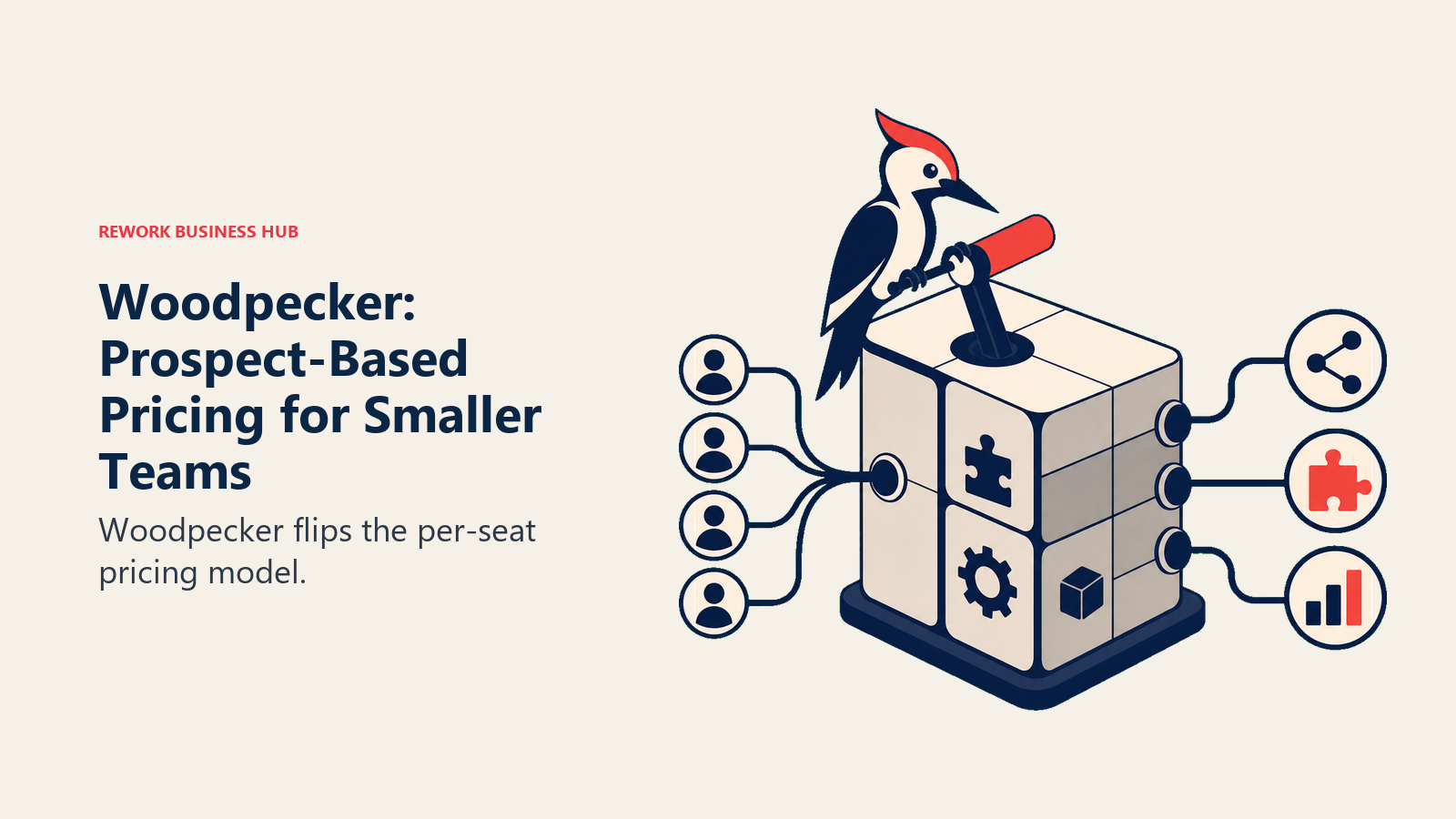
The platform covers cold email sequencing well: clean sequence builder, spam-filter testing, native follow-ups, A/B testing, and deliverability alerts. CRM integrations (Salesforce, HubSpot, Pipedrive) are available. The multichannel features are lighter compared to Lemlist or Reply.io, making Woodpecker a better fit for email-dominant teams rather than true multichannel outbound.
Teams that occasionally run small outbound bursts rather than continuous high-volume campaigns will find Woodpecker more predictable to budget. You pay for what you actually touch rather than for seats that sit idle between campaign cycles.
| Pros | Prospect-based pricing is friendlier for smaller teams; unlimited users included; clean deliverability tooling |
| Cons | Multichannel features are lighter; LinkedIn and calling automation not native |
Pricing: Starter $24/month (500 prospects, annual), Growth from $126/month (10,000 prospects). 7-day free trial, no credit card required.
Best for: Teams of 2 to 10 running targeted, lower-volume email sequences who want predictable costs without per-seat math.
10. Mailshake: Flat Monthly Pricing, No Annual Lock-in
Mailshake positions itself as the approachable entry point for sales engagement: a flat monthly fee with no annual commitment required, a 14-day free trial, and a feature set that a new SDR can learn in an afternoon. The Sales Engagement plan at $99/user/month includes a Power Phone Dialer, social selling automation (LinkedIn and Twitter), and 10 connected email addresses.
The honest comparison to Reply.io: Mailshake is simpler. The sequence builder is less configurable, the AI features are lighter, and the LinkedIn automation is more basic. But for a small team whose primary need is structured email follow-ups with occasional calling, Mailshake removes the friction of credits, complex onboarding, and annual contracts.
The billing structure is a genuine differentiator. Most enterprise engagement tools demand 12-month commitments. Mailshake's month-to-month default means teams testing outbound for the first time can start without a sunk cost, which matters for founders who aren't sure yet if outbound is the right channel.
| Pros | No annual contract required; simple onboarding; Power Dialer included at $99 tier |
| Cons | Email send caps per tier; lighter AI and automation vs Reply.io |
Pricing: Starter $29/month billed monthly, $25/month annual (1,500 emails/month). Email Outreach $49/month billed monthly, $45/month annual. Sales Engagement $99/month billed monthly, $85/month annual. See mailshake.com/pricing.
Best for: SMB teams of 1 to 20 who want a low-commitment entry into structured outbound without annual contracts.
11. Klenty: CRM-Centric Cadences with a Built-in Dialer
Klenty's design philosophy is that sequences should live inside CRM workflows, not alongside them. The platform integrates tightly with Salesforce, HubSpot, Pipedrive, and Zoho, with bi-directional sync that updates contact records, deal stages, and activity logs as prospects move through cadences. For RevOps owners who've been frustrated by Reply.io's CRM sync behaving inconsistently, that native integration depth is the key appeal.
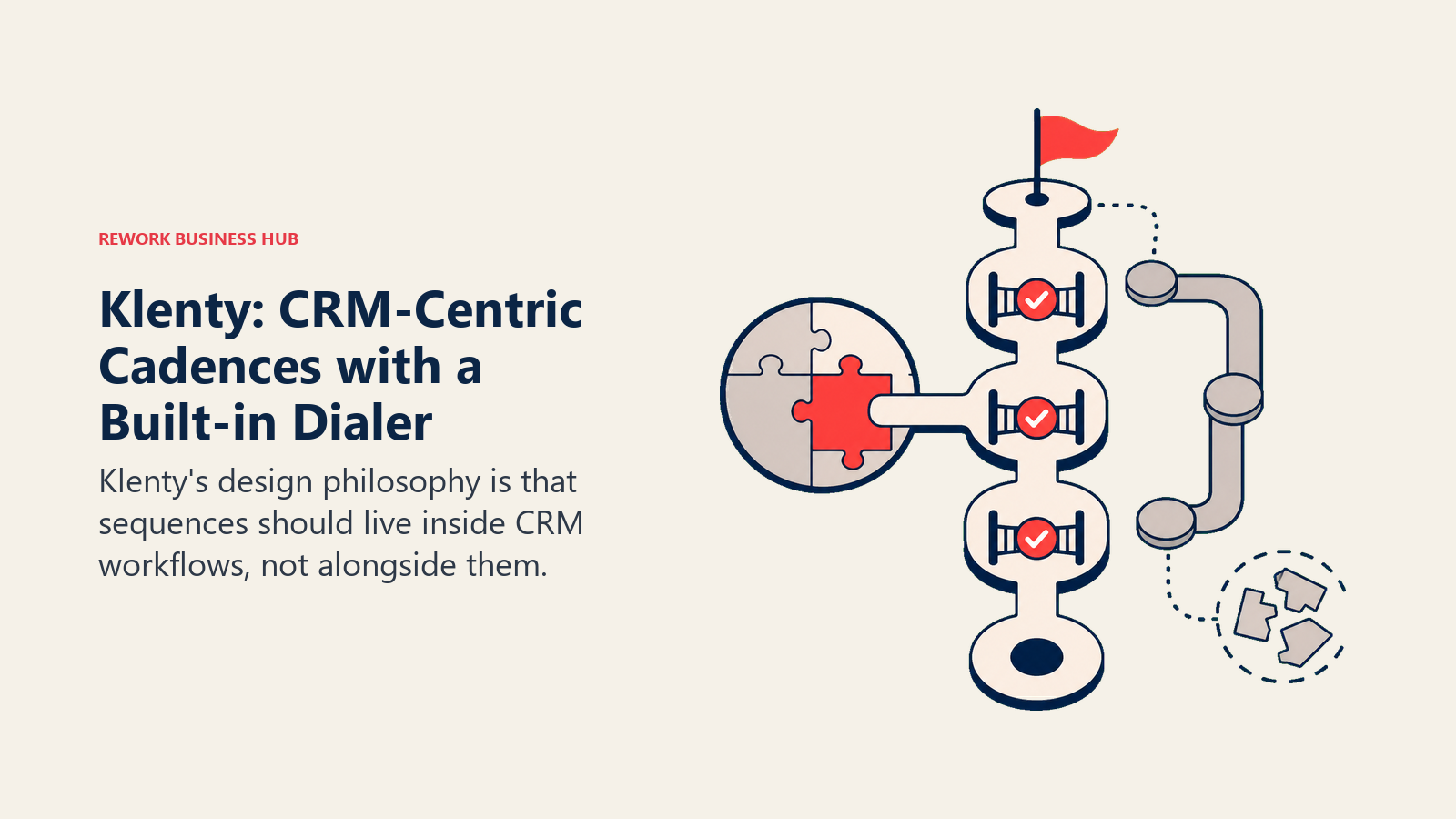
The Growth plan at $70/user/month (annual) adds the full multichannel suite, including calling, LinkedIn automation, and SMS, on top of email. A built-in dialer is included at the Growth tier without an additional add-on fee, which undercuts Reply.io's separate calling charge. The Plus plan at $99/user/month adds AI coaching features and a larger calling-minutes allowance.
The limitation is ecosystem maturity. Klenty doesn't have Outreach's breadth of third-party integrations or the same level of reporting depth. For orgs running complex RevOps analytics across multiple tools, the reporting may feel lightweight. But for a 10 to 50 person team with a defined CRM and a need for cleaner outbound-to-pipeline visibility, Klenty's integration story is more practical than Reply.io's.
| Pros | CRM-native bidirectional sync; dialer included at Growth tier; no separate calling add-on |
| Cons | Smaller integration ecosystem than Outreach or Salesloft; reporting less mature |
Pricing: Startup $50/user/month (annual, email only), Growth $70/user/month (multichannel), Plus $99/user/month (AI coaching + more calling minutes).
Best for: Teams of 10 to 100 with a defined CRM (Salesforce, HubSpot, Pipedrive) that need outbound cadences to sync cleanly with pipeline records.
12. HubSpot Sales Hub: When You're Already in the HubSpot Ecosystem
HubSpot Sales Hub is the least compelling Reply.io replacement on a feature-per-feature basis, but the most compelling if your team already uses HubSpot CRM. Sequences, email tracking, task queues, and calling all live inside the same platform as your contact database, deal pipeline, and marketing attribution. The context-switching problem disappears entirely.
The pricing caveat is important. The Starter plan at $20/seat/month doesn't include sequences. Sequences and automation are gated at Professional, which starts at $100/seat/month plus a $1,500 onboarding fee. For a team of 10, that's $12,000/year before any add-ons, which is in the same ballpark as Klenty or Lemlist but with the built-in CRM value factored in.
If you're not already on HubSpot, building your stack around Sales Hub to get sequences is probably the wrong starting point. If you are, adding Sales Hub Professional is a more sensible path than bolting on a separate sequencer like Reply.io. Read the best HubSpot alternatives guide if you're evaluating the full HubSpot platform, or the best CRM software in 2026 guide for a broader comparison.
| Pros | Native CRM + sequencing; no separate sync; unified contact, deal, and campaign reporting |
| Cons | Sequences gated at Professional ($100/seat/month + $1,500 onboarding fee); overkill if you don't need the full CRM |
Pricing: Starter $20/seat/month (no sequences). Professional $100/seat/month plus $1,500 onboarding (sequences included).
Best for: Teams already on HubSpot CRM that want to add sequencing without adding another vendor to their stack.
Stage Fit Matrix
| Stage | Best Options | Why |
|---|---|---|
| Early startup (1-5 reps, testing outbound) | Mailshake, Apollo (free/Basic), Woodpecker | Low commitment, flat pricing, quick setup |
| Growth stage (5-25 reps, structured outbound) | Rework, Lemlist, Klenty, Apollo Professional | Balance of features and cost; CRM sync matters here |
| Mid-market (25-100 reps, dedicated RevOps) | Rework, Outreach, Salesloft, Klenty | Governance, pipeline visibility, and reporting become critical |
| Enterprise (100+ reps, multi-region) | Outreach, Salesloft | Budget for platform complexity; dedicated implementation required |
| Cold-email agencies (volume focus) | Instantly, Smartlead | Inbox rotation, whitelabeling, volume-based pricing |
| Gmail-native teams (AEs, CS) | Mixmax | No context-switching; meeting booking native |
Sizing and Persona Table
| Team Size | Founder | SDR Lead | RevOps Owner | VP Sales |
|---|---|---|---|---|
| 1-4 reps | Mailshake, Apollo Basic | Woodpecker, Mailshake | (too early for dedicated RevOps tooling) | Mailshake |
| 5-15 reps | Rework, Lemlist | Lemlist, Apollo, Klenty | Rework, Klenty | Rework, Lemlist |
| 15-50 reps | Rework, Outreach | Apollo Pro, Klenty, Lemlist | Rework, Klenty, Outreach | Outreach, Rework |
| 50-200 reps | Outreach, Rework | Outreach, Salesloft | Outreach, Salesloft | Outreach, Salesloft |
| Cold-email agency | Instantly, Smartlead | Instantly, Smartlead | Instantly, Smartlead | Instantly, Smartlead |
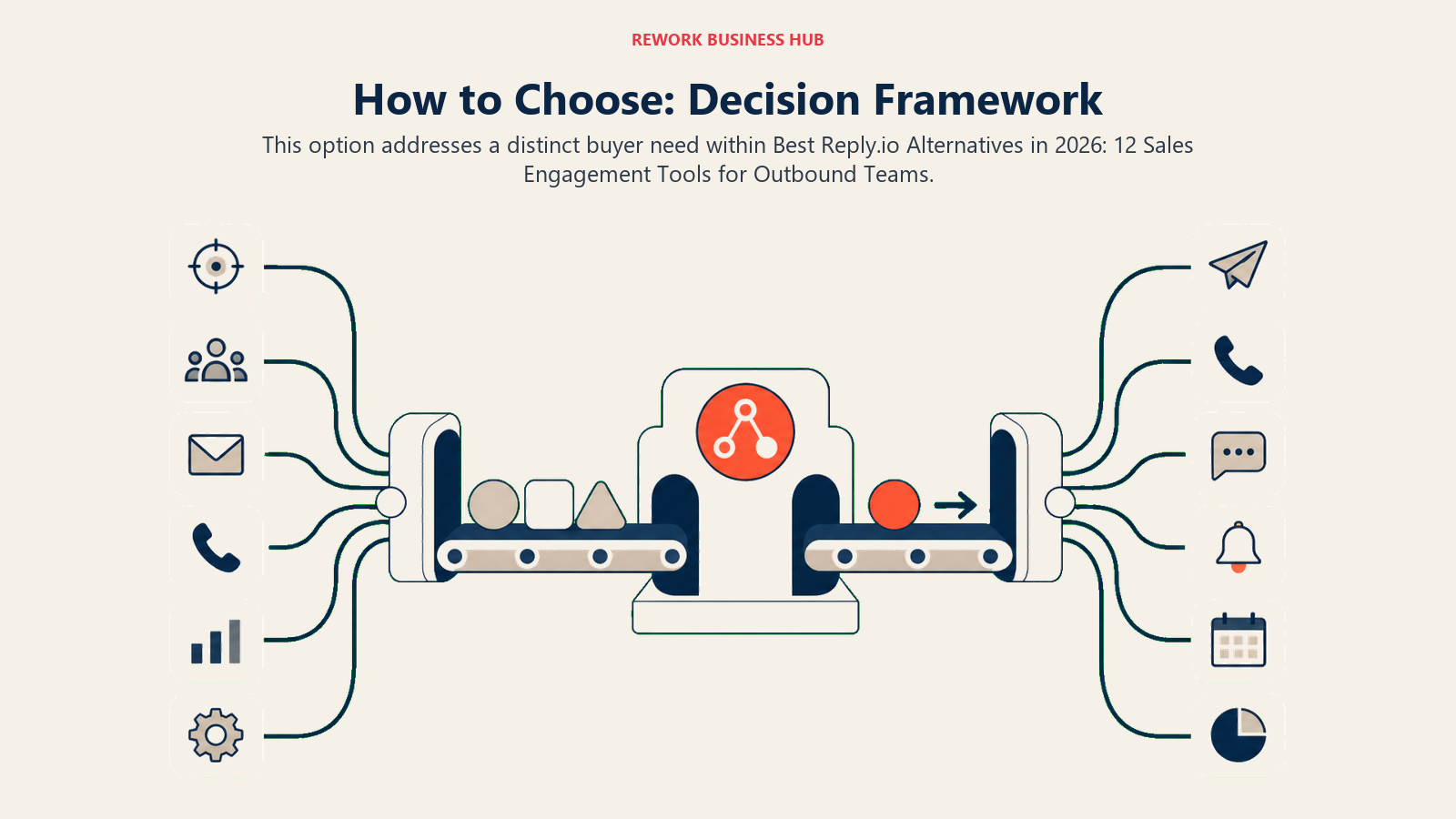
How to Choose: Decision Framework
| If you need... | Pick... | Why |
|---|---|---|
| Outbound tied directly to CRM and deal pipeline (no sync) | Rework | Single system: sequences, CRM, pipeline, ops |
| Massive cold-email volume across many client domains | Instantly or Smartlead | Unlimited inbox rotation; volume pricing |
| A native Gmail experience with meeting scheduling | Mixmax | No context-switching for AEs and CS teams |
| Prospecting data plus sequencing in one subscription | Apollo | 275M contact database; creditable vs buying a separate data vendor |
| The richest outbound automation for a large SDR org | Outreach | Workflow depth and revenue intelligence at enterprise scale |
| Clean multichannel sequencing without enterprise pricing | Lemlist or Klenty | Practical per-seat pricing; both handle email plus LinkedIn |
| Sequences already inside your HubSpot CRM | HubSpot Sales Hub Professional | One login; no sync required |
| Month-to-month flexibility while testing outbound | Mailshake | No annual commitment; quick ramp |
What to Do Next
The fastest way to narrow this list: answer two questions before you look at any demo.
First, does your team need outbound to live inside your CRM, or are you comfortable with a standalone sequencer that syncs back? If you want a single system, Rework or HubSpot Sales Hub Professional are the two options that actually deliver that. If a standalone sequencer with clean CRM sync is fine, Klenty, Lemlist, and Apollo all handle it well.
Second, what's your sending model? If you're running targeted, relationship-led outbound to segmented lists, most tools on this list work. If you're sending high volumes of cold email across many domains (agencies, outbound-as-a-service shops), Instantly and Smartlead are built for that use case in a way the others aren't.
From there, run trials for two weeks with a real campaign. The tool that fits is the one your reps actually use without being reminded, not the one with the most impressive live demo.
For more category context, the best CRM software in 2026 guide covers how sales engagement sits inside a broader CRM evaluation. And if you're comparing Reply.io specifically against Lemlist, Outreach, or Salesloft, the standalone alternatives guides for each give deeper feature-level comparisons.

Principal Product Marketing Strategist
On this page
- Quick Comparison Table
- 1. Rework: CRM, Sequencing, and Ops in One System
- 2. Outreach: Enterprise-Grade Workflow Automation
- 3. Salesloft: Cadence-First Platform Now Bundled with Clari
- 4. Lemlist: Multichannel Personalization Without the Per-Seat Overhead
- 5. Apollo: Prospecting Data Plus Sequencing in One Platform
- 6. Mixmax: Gmail-Native Engagement for AEs and CS Teams
- 7. Instantly: High-Volume Cold Email with Inbox Rotation
- 8. Smartlead: Agency-First Cold Email with Whitelabeling
- 9. Woodpecker: Prospect-Based Pricing for Smaller Teams
- 10. Mailshake: Flat Monthly Pricing, No Annual Lock-in
- 11. Klenty: CRM-Centric Cadences with a Built-in Dialer
- 12. HubSpot Sales Hub: When You're Already in the HubSpot Ecosystem
- Stage Fit Matrix
- Sizing and Persona Table
- How to Choose: Decision Framework
- What to Do Next