Best 11x Alternatives in 2026: 12 AI SDR Options Compared by Price and Fit
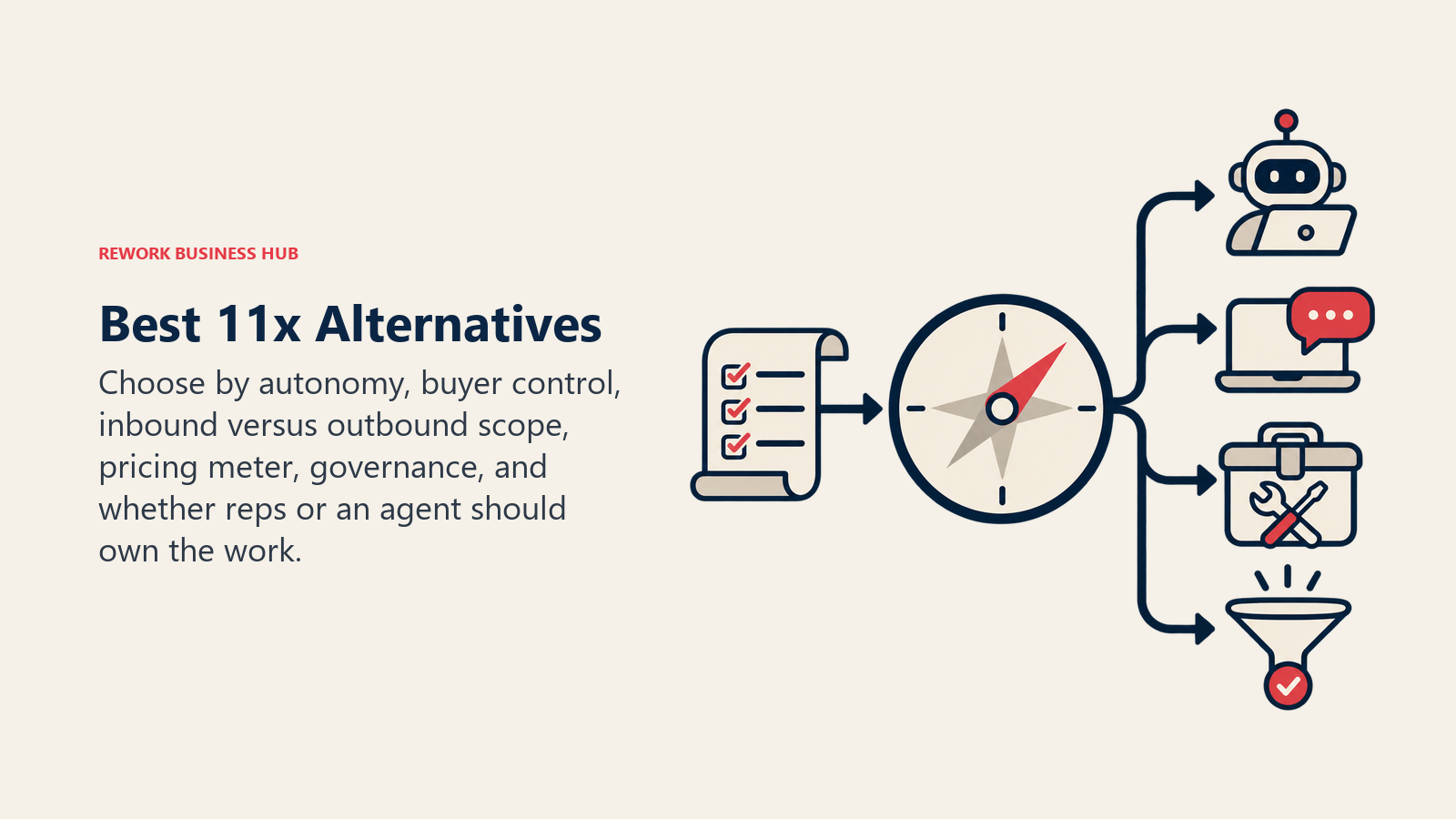
Turn this article into takeaways for your work.


Each assistant summarizes the article only for you and suggests best practices for your work.
If you're shopping for 11x alternatives, you probably already know what 11x is: a vendor that sells "digital workers" instead of software seats. Alice runs outbound. Julian answers inbound calls. There's a demo to book, a price you can't see, and a contract that looks more like hiring than buying a tool. For some teams that's exactly right. For others it's the reason they're reading this page.
The 12 options below cover the real ways teams leave: a cheaper autonomous agent with a visible price, a rep-driven platform that adds AI instead of replacing the rep, a sending engine you control, and an inbound-first agent. They're ordered by how directly each one replaces what Alice does, with the less direct swaps further down. For the wider category, start with best AI agents for sales and AI tools for SDRs.
Key Facts
- 11x doesn't publish pricing. Its site sends visitors to "Book a Demo" or "Try Voice AI," per 11x.ai.
- 11x sells two named workers: Alice for outbound and Julian for inbound, with a voice agent (Nina) shown in its speed-to-lead demo, per 11x.ai.
- 11x lists HubSpot, Salesforce, Pipedrive, LinkedIn, G2, Slack, Gmail, Outlook and Google Calendar as integrations, per 11x.ai.
- AiSDR now lists a self-serve pay-as-you-go rate of $1.50 per person prospected, per aisdr.com/pricing.
- Apollo's paid plans run $49, $79 and $119 per seat per month on annual billing, per apollo.io/pricing.
- Instantly's Growth outreach plan is $47/month billed monthly, or $37.60/month billed annually, per instantly.ai/pricing.
Why Teams Look Beyond 11x
11x has real traction. Its own site lists case studies from Checkr, Leica Biosystems, Questex and others, and a 2026 post says it ranked first in enterprise adoption in Ramp's AI-native GTM report (11x on Ramp's ranking). Those are the company's own claims, so weigh them accordingly. The reasons people move on tend to fall into four buckets:
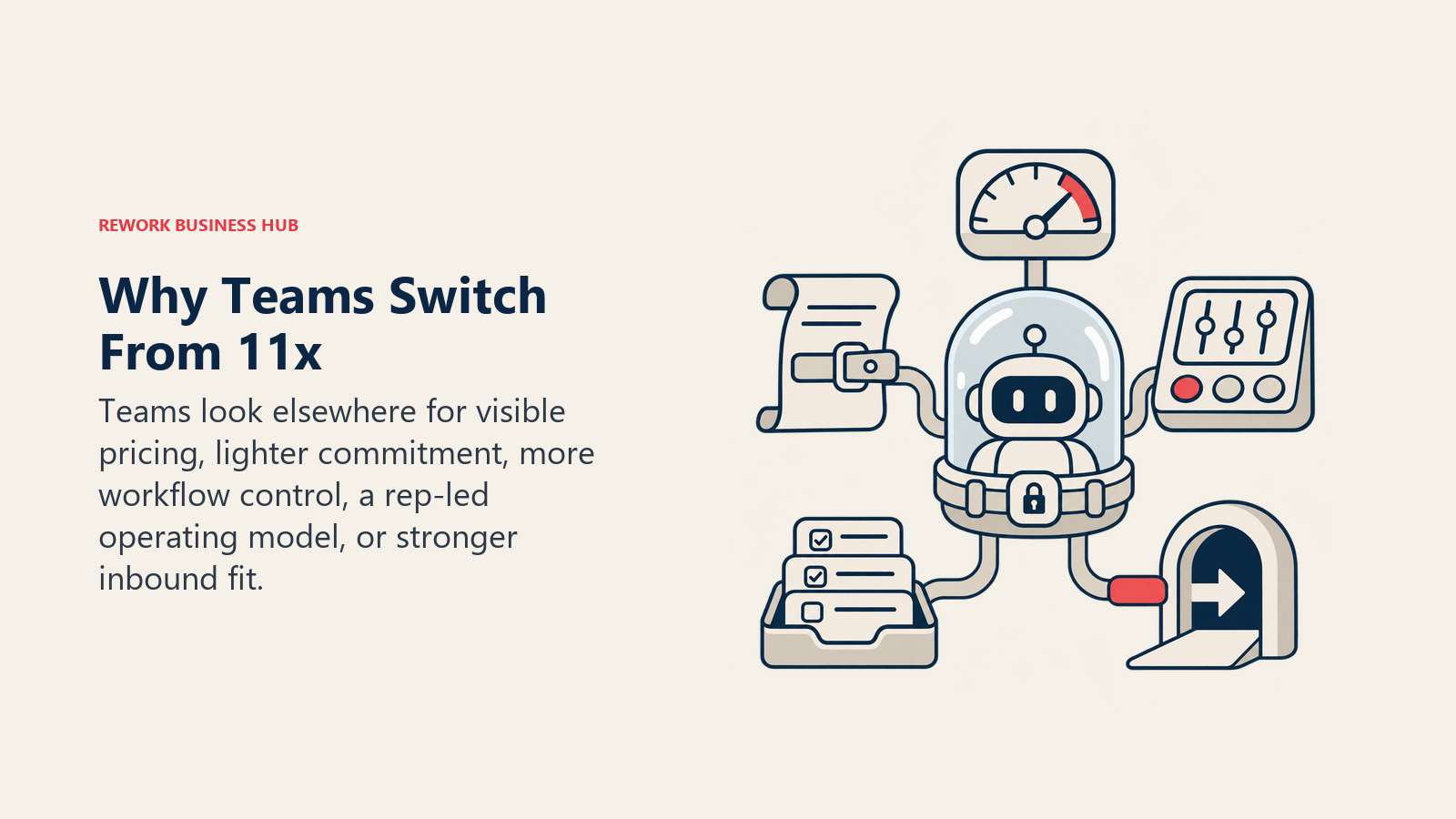
| Trigger | What it looks like in practice | Where to look |
|---|---|---|
| No visible price | You can't model cost until after a demo and a procurement cycle | AiSDR, Regie.ai, Apollo, Instantly |
| Worker-style commitment | You're buying a "digital worker," not a plan you can downgrade next month | Self-serve tiers with monthly billing |
| Need for control | You want to see the list, the copy and the sending infrastructure yourself | Clay, Instantly, Smartlead |
| Reps still own the pipeline | You want AI inside the rep's workflow, not replacing it | Apollo, Outreach, Salesloft, Amplemarket |
A fifth reason is scope. Alice is an outbound agent, and if your real gap is website conversion, an inbound-first agent like Qualified's Piper is a better match than another outbound tool.
What 11x sells today
| Product | Job | Notes |
|---|---|---|
| Alice | Outbound prospecting and sequencing | Linked on the site to outbound plays and an email and social agent |
| Julian | Inbound calls and expansion | Linked to inbound plays and Customer Expansion |
| Nina | Voice agent in the speed-to-lead demo | Shown in the demo, not a separate listed plan |
| Platform features | Deep Research, AI Personalization, Playbooks, Knowledge Base, AI Phone Agent, Smart Replies, Website Visitor Tracking, Deliverability and Mailbox Health | Listed on 11x.ai |
11x AI Inc. lists offices in San Francisco and London. In October 2026 it published a post framing a "new 11x" (A love letter to the pursuit of growth). It doesn't say anything specific about packaging or price. If your last conversation with 11x was a while ago, ask for a current scope and price in writing before comparing.
Quick Comparison Table
| Tool | Best For | Starting Price | Key Strength | Key Limitation |
|---|---|---|---|---|
| Artisan (Ava) | Closest full-cycle autonomous BDR | Pricing on request | Finds leads, writes, handles replies, books meetings | Scoped by volume, mailboxes and dialer seats |
| AiSDR | Visible pricing, pay for who you reach | $1.50 per person prospected | Self-serve start, no sales call | Per-contact cost adds up at volume |
| Regie.ai | Founders and reps wanting one chat workspace | Free; Pro $41/mo annual | Enrichment, email and dialer in one place | Built around a rep driving it |
| Qualified (Piper) | Inbound website conversations | Pricing on request | Video, voice and chat on your own site | Doesn't prospect outbound |
| Reply.io | Multichannel plus an AI SDR tier | AI SDR from $500 | Tiers from email-only to AI SDR | Add-ons stack up |
| Apollo | Data plus sequencing in one seat | Basic $49/seat/mo annual | Big database, low entry cost | Agent behavior is lighter than Alice |
| Clay | Teams that want to build the workflow | Free; Launch $167/mo annual | Deep enrichment and control | You assemble the outbound system |
| Amplemarket | Outbound with signals and a copilot | Startup $600/mo | Intent signals, multichannel | Higher tiers are quote-only |
| Instantly | Cold email at volume, low cost | Growth $47/mo monthly ($37.60 annual) | Unlimited accounts and warmup | Email-first, less autonomy |
| Smartlead | Agencies and high-volume sending | Base $39/mo monthly ($32 annual) | Per-client workspaces | Infrastructure, not an SDR |
| Outreach | Large reps-led teams | Pricing on request | Credit-based agents inside a sales engagement platform | Quote only |
| Salesloft | Teams standardizing on one revenue platform | Pricing on request | AI agents plus Clari-branded products | Quote only |
Sizing and Stage Fit
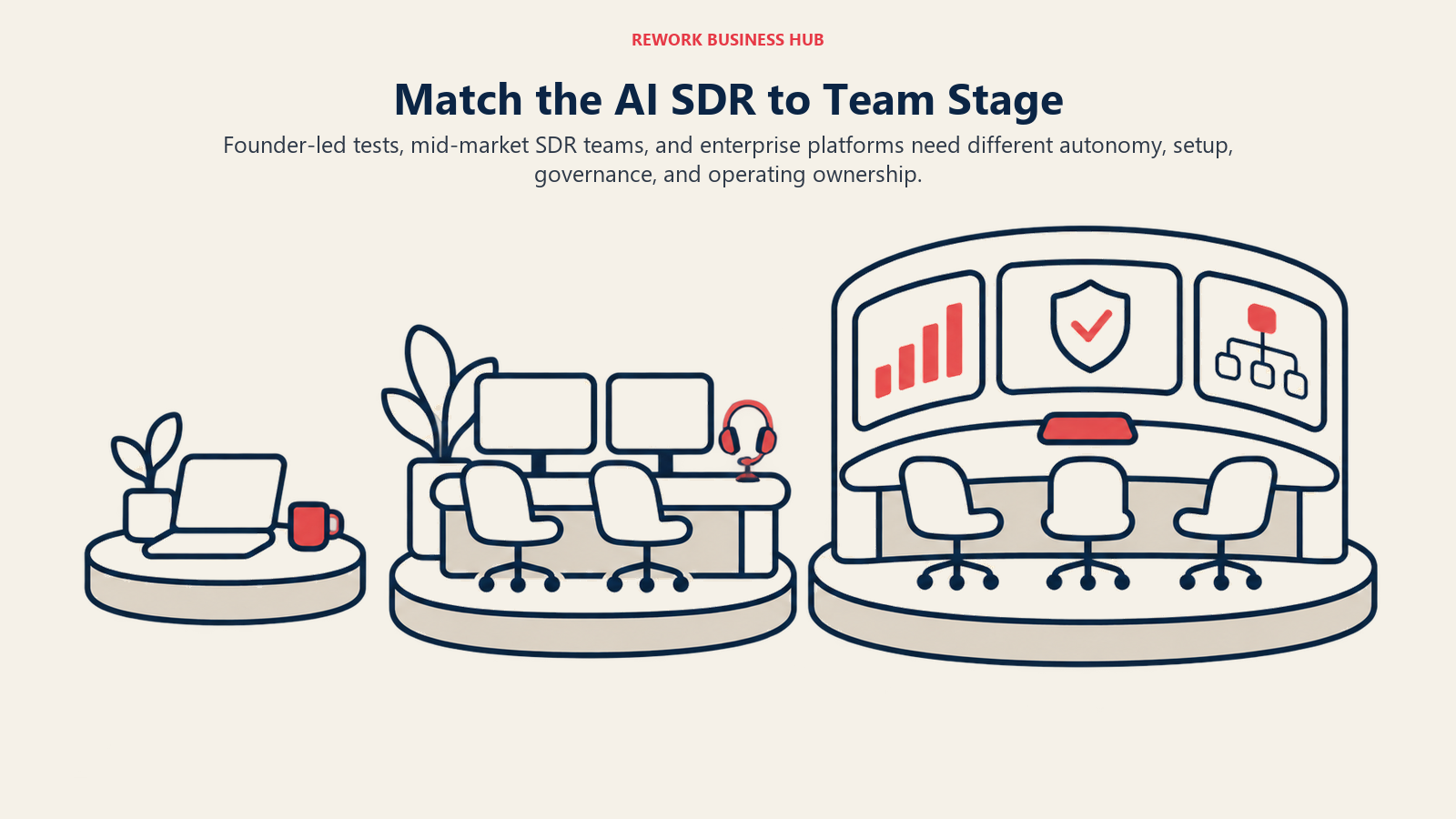
Tool fit changes with the operating stage: a founder-led test, a staffed SDR team, and an enterprise platform estate carry different setup, autonomy, and governance requirements.
| Tool | Team Size Sweet Spot | Technical Skill Needed | Pricing Model |
|---|---|---|---|
| Artisan | 5 to 200 reps | Low | Credits, tiers scoped by lead volume |
| AiSDR | 1 to 50 | Low | Per person prospected, or team volume plans |
| Regie.ai | 1 to 100 | Low | Per seat plus credits |
| Qualified | 20 to 1,000+ | Medium | Quote |
| Reply.io | 3 to 100 | Low to medium | Tiered plans plus add-ons |
| Apollo | 1 to 500 | Low | Per seat plus credits |
| Clay | 3 to 100 | Medium to high | Actions plus data credits |
| Amplemarket | 5 to 100 | Low | Annual term, per plan |
| Instantly | 1 to 100, agencies | Low to medium | Flat plans with email and contact limits |
| Smartlead | Agencies, 1 to 200 | Medium | Flat plans with send limits |
| Outreach | 100 to 5,000 | Medium | Credit-based plans on quote |
| Salesloft | 100 to 5,000 | Medium | Quote |
Autonomous Outbound Agents (Closest to Alice)
1. Artisan: The Other Named AI BDR
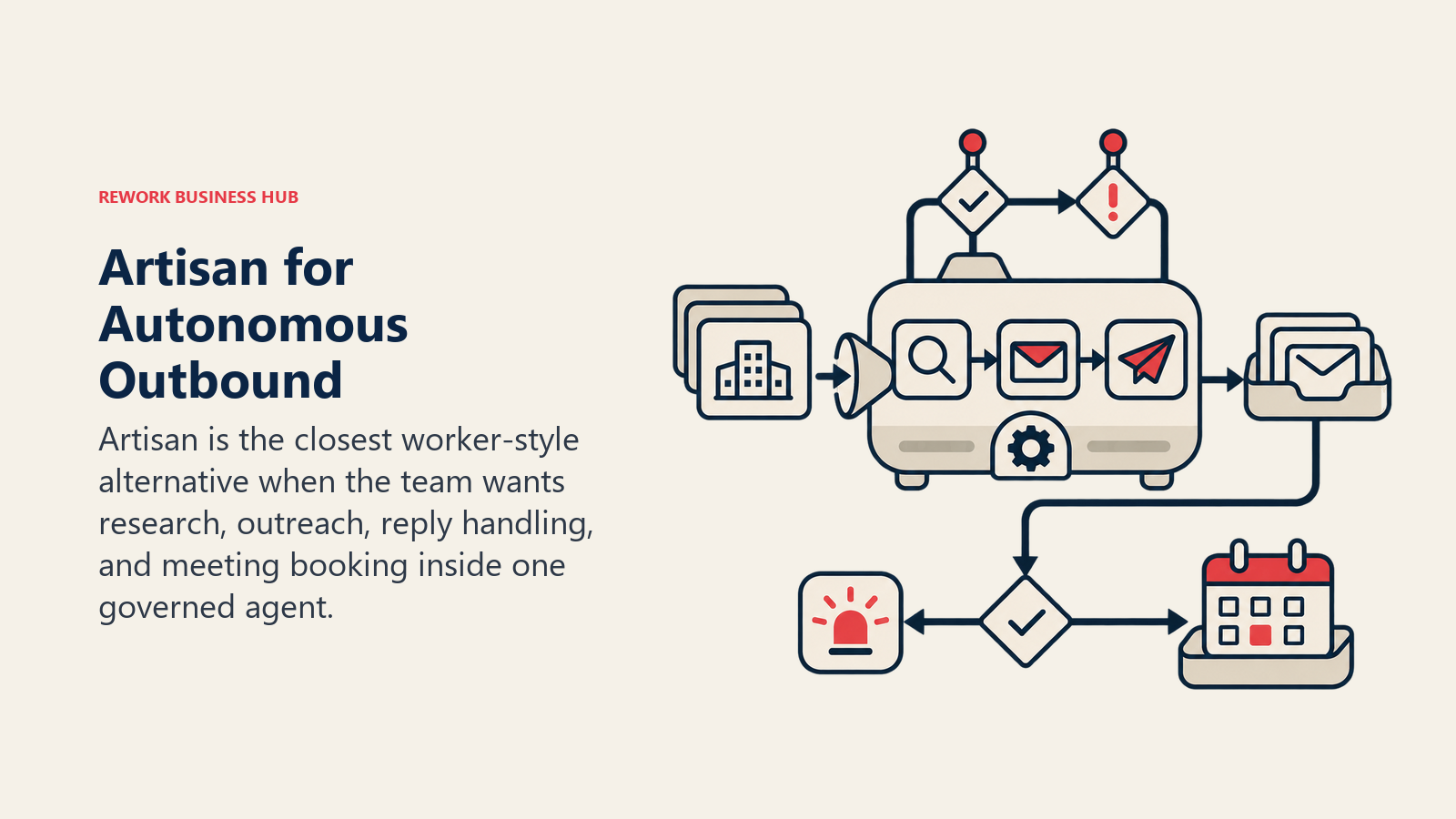
Artisan's Ava is the most direct comparison to Alice. Artisan describes her as an autonomous AI BDR that runs outbound end to end: she finds and enriches B2B leads, writes and sends personalized outreach, handles replies and books meetings, and the company positions the product as one platform that combines data, enrichment, deliverability, sequencing, a dialer and intent signals. Human oversight shows up as approvals, locked tone and call-to-action settings, and escalation rules.
For a head-to-head on this exact pair, see best Artisan alternatives.
| What you get | What you don't |
|---|---|
| One outbound stack instead of five tools | A price you can model without talking to sales |
| Approvals and escalation rules you set | Julian-style inbound phone handling |
| Dialer and sequencing in the same product | Confirmed options to bring your own data source (ask Artisan) |
Pricing: Pricing on request. Artisan's pricing page describes credit-based pricing with tiers scoped by lead volume, mailboxes and dialer seats. Source: artisan.co/pricing.
Not ideal for: Teams who want a published price before a first call.
Best for: Teams that like 11x's autonomous-worker idea but want to compare a second vendor on the same job.
2. AiSDR: Autonomous Outbound You Can Start Without a Call
AiSDR's agent, Ami, plans campaigns, picks audiences and channels, monitors results and suggests changes. Sequences run across email and LinkedIn, with call tasks for your team and optional personalized videos and voice notes. It syncs two ways with HubSpot and logs outreach to Salesforce. AiSDR makes its own claims on its site, including 20,000-plus meetings booked for clients and roughly one to three meetings per 100 leads. Treat those as the vendor's numbers.
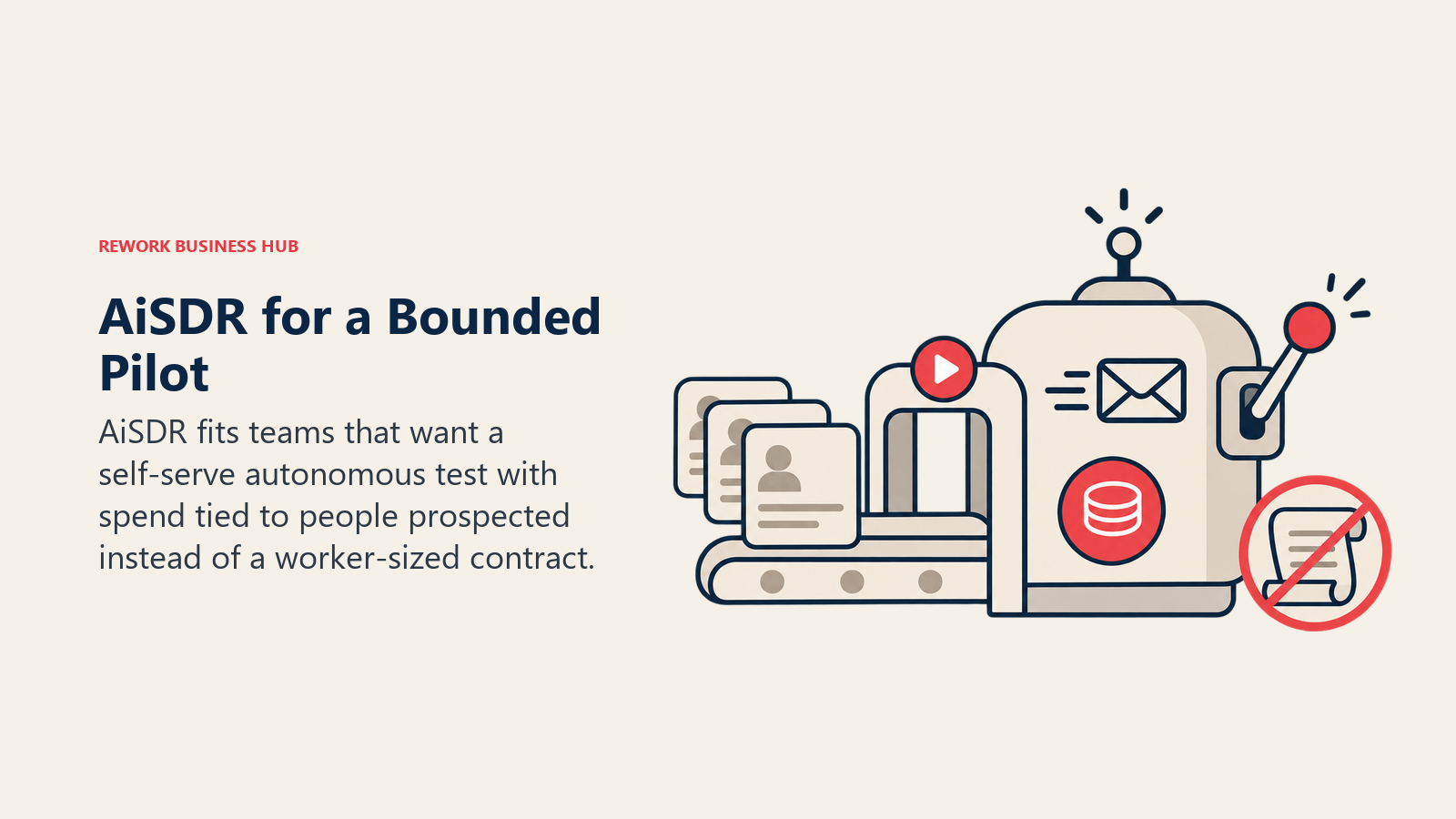
Pricing starts at the pay-as-you-go end: $1.50 per person prospected, charged daily, no monthly fee, with research, lists and writing included. Teams contacting 1,000-plus people a month get volume pricing on request, and monthly, quarterly and annual subscriptions are available.
| What you get | What you don't |
|---|---|
| Self-serve start, stop any time | A flat monthly bill you can predict at volume |
| Email, LinkedIn and call tasks in one sequence | An AI voice agent on calls (confirm with AiSDR) |
| HubSpot two-way sync | Julian-style inbound call handling |
Pricing: Pay as you go at $1.50 per person prospected; Teams plan on request for 1,000-plus contacts a month; managed service add-ons start at $149 per campaign. Source: aisdr.com/pricing.
Not ideal for: Large programs where per-contact costs outrun a flat plan.
Best for: Small teams that want to test autonomous outbound with a real number on the screen.
3. Regie.ai: A Rep-Driven Workspace That Sells Itself as Agentic
Regie.ai now centers on RegieGO, which it calls an agentic sales workspace with built-in enrichment, emailing, dialing and workflows. You give it one prompt and it handles sourcing, ranking, call prep and follow-ups, with plays that sequence email, LinkedIn and phone. It's aimed at prospecting reps and founders, and it connects to HubSpot, Gmail, LinkedIn, a dialer and enrichment tools.
The price structure is credit-based. There's a free tier, a single-user Pro plan, and a Team plan with a two-seat minimum. Credits reset every billing period and don't roll over on paid plans.
| What you get | What you don't |
|---|---|
| Free tier with 250 one-time credits | A fully hands-off agent that runs without you |
| Power dialer with local numbers | Julian-style inbound handling |
| Built-in CRM for small teams | Heavy enterprise governance below Enterprise |
Pricing: Free ($0). Pro $49/month billed monthly or $41/month billed annually, for one person. Team $150/seat/month billed monthly or $125/seat/month billed annually, two seats minimum. Enterprise custom. Source: regie.ai/pricing.
Not ideal for: Teams that want to remove the rep from prospecting entirely.
Best for: Founders and small sales teams that want an AI-assisted workspace rather than a replacement worker.
4. Qualified (Piper): Inbound Where 11x's Julian Lives
Qualified's Piper is an AI SDR for the website. Piper Conversations meets buyers in real time by video, voice or live chat, Piper Email engages inbound leads in the inbox, Piper Meetings schedules meetings, and Piper Offers serves personalized content. It also lists agentic nurture for top-of-funnel leads and agentic product-led growth for free trials.
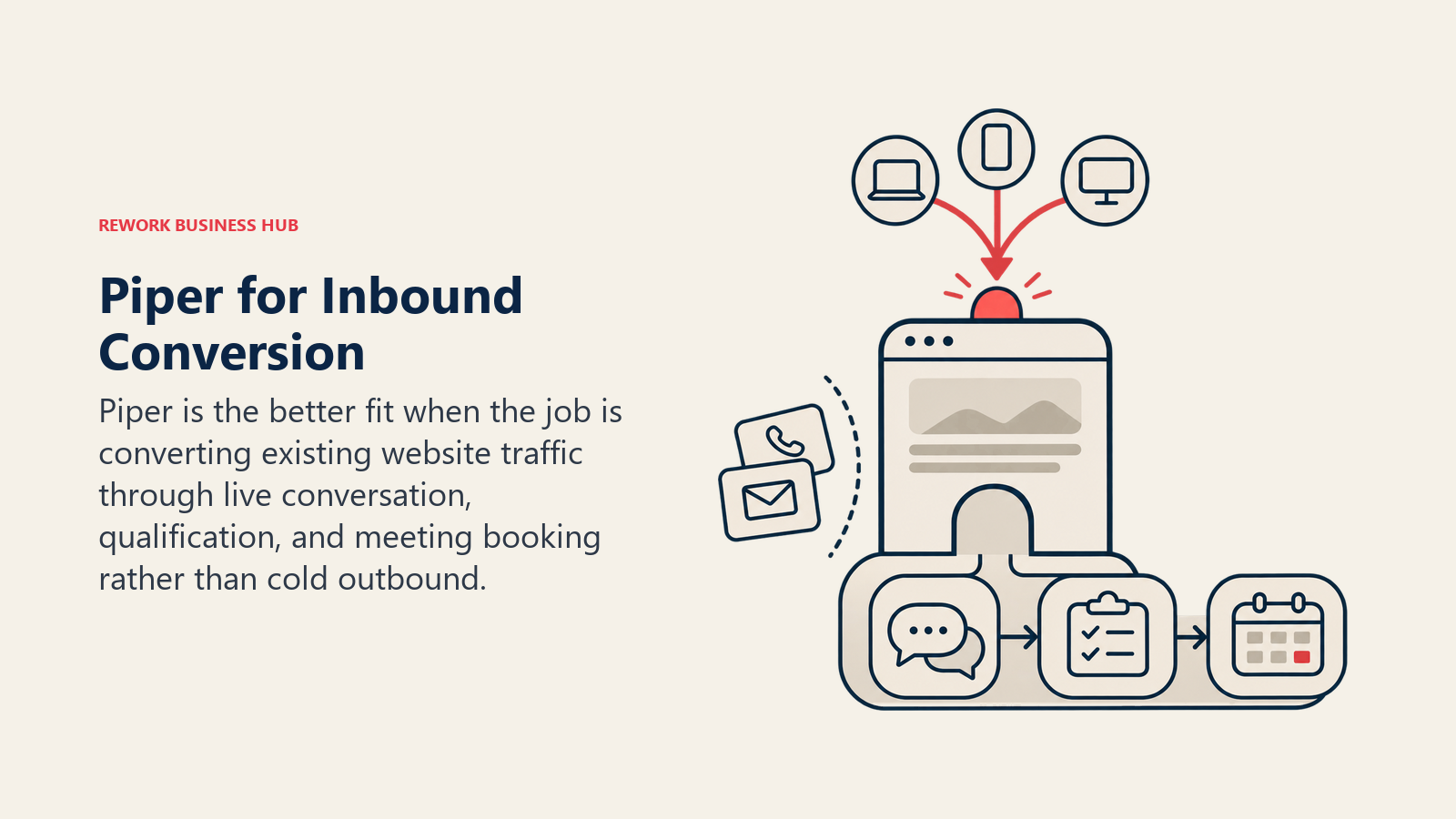
Piper isn't an outbound tool. If your gap is converting the traffic you already have, it's a better swap for Julian-style inbound than Alice-style outbound.
| What you get | What you don't |
|---|---|
| Real-time conversations on your own site | Outbound prospecting from cold lists |
| Meeting scheduling in the same flow | A published price |
| Email and Slack collaboration | A fit for teams with little web traffic |
Pricing: Pricing on request. Source: qualified.com/piper.
Not ideal for: Outbound-led teams with a small website.
Best for: Teams with real inbound traffic who care most about speed to lead.
Sales Engagement Platforms With AI Layered In
5. Reply.io: Tiers From Email-Only to an AI SDR
Reply.io sells a ladder: Email Volume from $59, Multichannel from $99, an AI SDR tier from $500, and an Agency plan from $166. Add-ons include LinkedIn automation at $69 per account, calls and SMS at $29 per account, and extra mailboxes at $29 each per month on Multichannel. There's a 14-day trial. It's the cleanest way to start on email and move up to an AI SDR inside the same account without a platform switch.
| What you get | What you don't |
|---|---|
| A path from basic sequencing to an AI SDR | A single flat price once add-ons pile on |
| Per-account LinkedIn and calls add-ons | Fully autonomous operation out of the box |
| 14-day free trial | Enterprise-grade governance |
Pricing: Email Volume from $59, Multichannel from $99, AI SDR from $500, Agency from $166; confirm the billing term for each plan with Reply.io. Source: reply.io/pricing. For the full picture, read best Reply.io alternatives.
Not ideal for: Teams who want one all-in price with no add-ons.
Best for: Teams that want to grow into an AI SDR without changing tools.
6. Apollo: Data and Sequencing Under One Seat
Apollo is the cheapest serious step for most teams. Basic, Professional and Organization plans add email sequencing, credits, AI features, call recording and CRM integrations on top of the contact database. It doesn't act like Alice, but for many teams a rep with Apollo is the real alternative to buying a worker.
| What you get | What you don't |
|---|---|
| Database and sequencing under one seat | A fully autonomous agent running by itself |
| Low entry cost per seat | Pooled credits that reset every billing cycle |
| CRM integrations and call recording | Julian-style voice handling |
Pricing: Free ($0). Basic $49, Professional $79 and Organization $119 per seat per month on annual billing (Organization needs a minimum of 3 seats); monthly billing costs more per month. Credits reset each cycle and don't roll over. Source: apollo.io/pricing. More detail in best Apollo alternatives.
Not ideal for: Teams who want the AI to do the work without a rep in the seat.
Best for: Teams with reps who need data and sequencing, and want AI added at a low price.
7. Amplemarket: Signals and a Copilot Instead of a Worker
Amplemarket's published plan, Startup, comes with multichannel sequences, AI intent signals and Duo Copilot, plus two users and 27,000 contacts. Higher tiers add Duo Voice and Duo Inbox. The vendor markets its Duo intelligence suite as an AI assistant to the rep, not a replacement.
| What you get | What you don't |
|---|---|
| Intent signals feeding multichannel sequences | A listed price above the entry tier |
| Copilot-style drafting and inbox replies | An autonomous worker model |
| Free trial on every plan | Published pricing past the entry tier |
Pricing: Startup $600/month on an annual term (2 users, 27,000 contacts). Growth (4 users, 140,000 contacts) and Elite (10 users, 400,000 contacts) are custom. Source: amplemarket.com/pricing.
Not ideal for: Founders with a budget under a few hundred dollars a month.
Best for: Outbound teams that want signals and AI help for human reps.
8. Outreach: Credits and Named Agents in an Enterprise Platform
Outreach (now at outreach.ai) packages AI under four Amplify plans: Essentials with 10,000 credits, Core with 25,000, Plus with 50,000 and Pro with 100,000. Named agents include Omni, Research, Deal, Meeting Prep, Revenue and Personalization, available at different tiers. Outreach doesn't publish dollar prices.
| What you get | What you don't |
|---|---|
| Sales engagement, forecasting and agents together | A price without a sales call |
| Credit-based plans from 10,000 to 100,000 | Light entry for small teams |
| Research and personalization agents on higher plans | Julian-style voice handling |
Pricing: Pricing on request. Source: outreach.ai/pricing. See best Outreach alternatives for competing options.
Not ideal for: Small teams that need a published monthly price.
Best for: Large, rep-led organizations that need governance and forecasting alongside outbound.
9. Salesloft: AI Agents Inside a Revenue Platform
Salesloft's site shows Cadence, Conversation Intelligence, Deals and Rhythm next to Clari-branded products like Clari Forecast, under one platform heading, plus an AI Agents page and MCP support for connecting agents and systems. Salesloft doesn't publish pricing or packaging for the AI agents.
| What you get | What you don't |
|---|---|
| Cadence, conversation intelligence and forecasting in one suite | Published tiers or prices |
| Agents plus MCP connectivity | A quick self-serve start |
| Consulting for implementation | A lightweight setup |
Pricing: Pricing on request. Source: salesloft.com/pricing. Compare with best Salesloft alternatives.
Not ideal for: Teams of fewer than 50 reps.
Best for: Enterprises consolidating sales tools into one platform.
Build-Your-Own and Sending Infrastructure
10. Clay: Build the Outbound Workflow Yourself
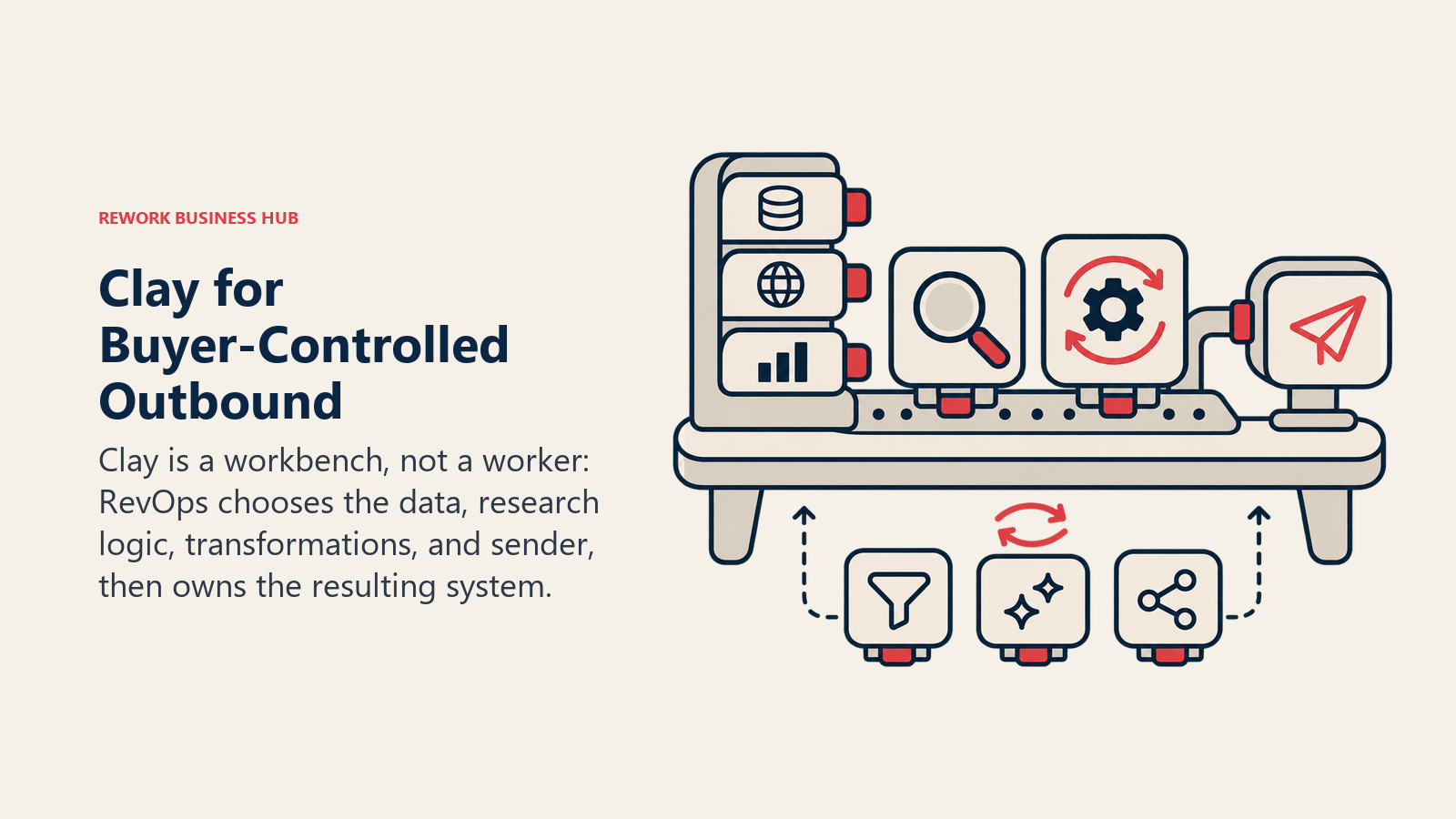
Clay isn't an SDR. It's a workbench for enrichment and outbound logic, where you decide the data providers, the research steps and the copy. Pricing is split into actions and data credits, and that split is why published headline prices differ by tier. Launch tier 1 is 15,000 actions plus 2,500 data credits.
| What you get | What you don't |
|---|---|
| Control over every data and research step | A ready-made agent that books meetings |
| Separate actions and data credits you can model | Low learning curve |
| Free tier to prototype | A cheap entry once data credits grow |
Pricing: Free ($0, 500 actions and 100 data credits per month). Launch from $185/month billed monthly or $167/month billed annually (15,000 actions and 2,500 data credits per month). Growth from $495/month billed monthly or $446/month billed annually. Enterprise custom. Source: clay.com/pricing.
Not ideal for: Teams that want a worker that runs on its own.
Best for: RevOps-minded teams who want to own the system.
11. Instantly: Low-Cost Cold Email With AI Agents Included
Instantly sells sending, warmup and lead tools, with unlimited email accounts on its outreach plans. Its bundles include an AI Sales Agent from the Starter bundle up and an AI Reply Agent from Scale up. It's email-first, so it won't replicate Alice's phone and social coverage. See best Instantly alternatives and best AI agents for cold email.
| What you get | What you don't |
|---|---|
| Unlimited email accounts and warmup on Growth | Phone and social coverage |
| AI Sales Agent and AI Reply Agent in bundles | A fully autonomous worker |
| Low entry price | Deep account research |
Pricing: Growth outreach plan $47/month billed monthly or $37.60/month billed annually (5,000 emails and 1,000 uploaded contacts per month). Starter bundle $94/month billed monthly or $85/month billed annually (5,000 emails, 1,000 uploaded contacts, 1,500 credits). Scale bundle $194 monthly or $175 annually. Source: instantly.ai/pricing.
Not ideal for: Account-based teams that need multichannel sequences.
Best for: High-volume email programs and agencies on a tight budget.
12. Smartlead: Sending Infrastructure for Agencies
Smartlead is the infrastructure play. It's built for high-volume sending with SmartServers and client workspaces, and whitelabeling is an add-on at $29 per month per client workspace, from Pro up. It doesn't sell an autonomous SDR, so it replaces the sending half of your stack, not Alice herself. | What you get | What you don't | |---|---| | High send limits and client workspaces | An autonomous prospecting agent | | Whitelabel option for agencies | Julian-style inbound handling | | Flat monthly plans | Native account research |
Pricing: Base $39/month billed monthly or $32/month billed annually (2,000 contacts, 6,000 sends). Pro $94 monthly or $78 annually (30,000 contacts, 90,000 sends). Unlimited Smart $174 monthly or $144 annually. Unlimited Prime $379 monthly or $315 annually. Source: smartlead.ai/pricing.
Not ideal for: Teams that want AI to write and reply without configuration.
Best for: Agencies and operators who already know what to send.
Three Scenarios, Three Different Answers
Picking from twelve options gets easier when you start from the situation you're in, not the feature list.
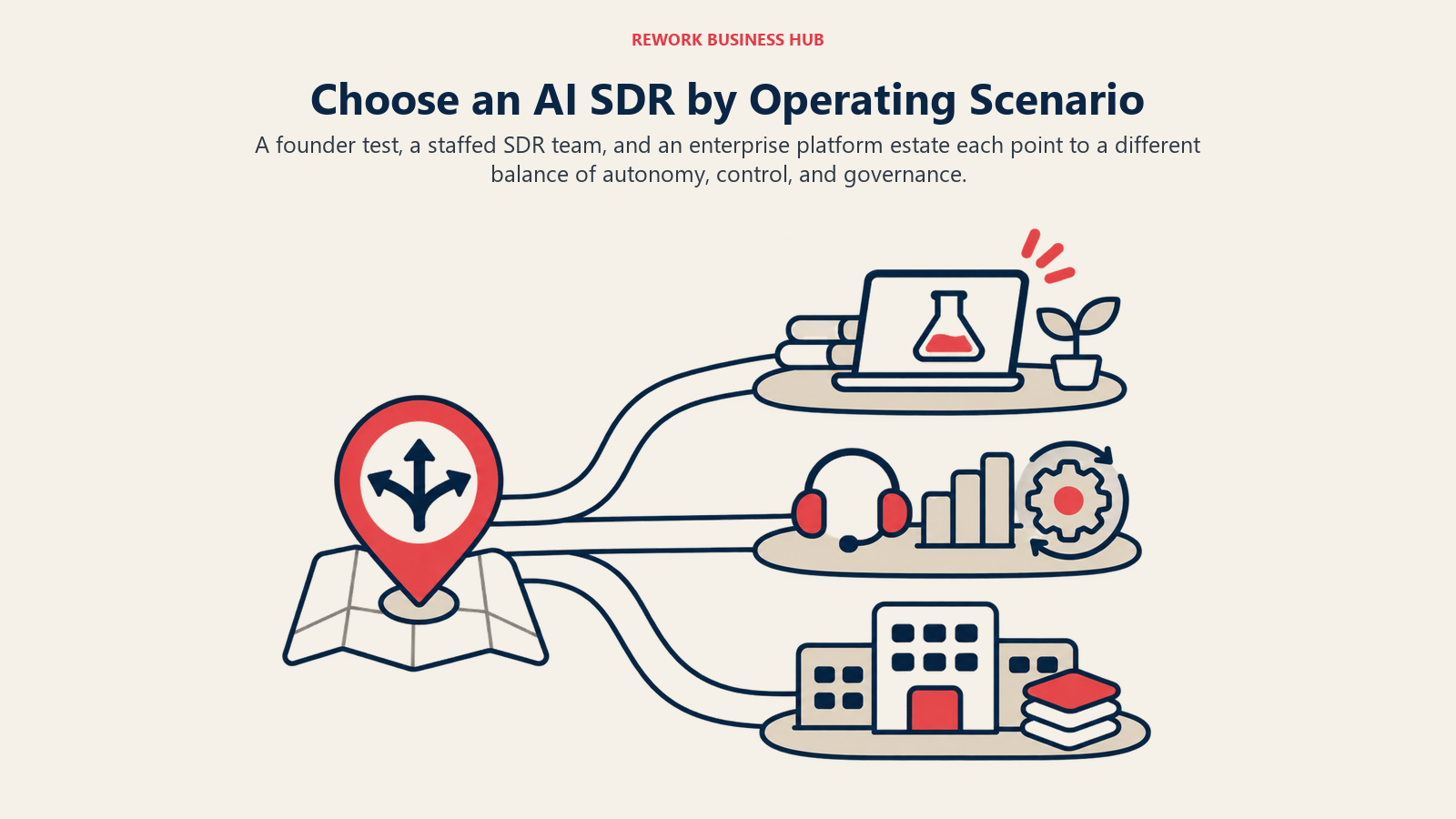
A seed-stage team with one founder doing sales. You don't have a rep to put in front of Apollo or Outreach, and you can't justify a quote-based worker. AiSDR's pay-as-you-go rate or Regie.ai's free tier lets you test the idea with a small list. Spend a month on one segment, keep the copy tight, and read every reply yourself. If meetings come in, you'll know it's worth scaling. If not, you've lost little.
A mid-market team with five SDRs and a RevOps lead. This is the group 11x is built for, and also the one with the most options. Artisan is the like-for-like comparison. Apollo or Amplemarket keep your reps in the seat and add data and signals. Clay suits the RevOps lead if she wants to design the research steps herself. The question to settle internally is whether you're replacing SDR hours or making existing SDRs faster, because the answer points to different tools.
An enterprise sales org on an existing platform. If you already run Outreach or Salesloft, check what agents your contract can add before you buy a standalone worker. Adding an agent inside the platform you already govern avoids a second security review and a second data sync. A standalone agent can still win on outbound results, but the integration work belongs in the business case.
Across all three, treat the first month as an experiment, not a migration. Keep your current approach running on a comparable segment so you have a baseline.
Four Pricing Models You'll Meet
Once 11x's quote-only approach is off the table, the alternatives sort into four pricing shapes, and picking the shape matters more than picking the cheapest sticker.
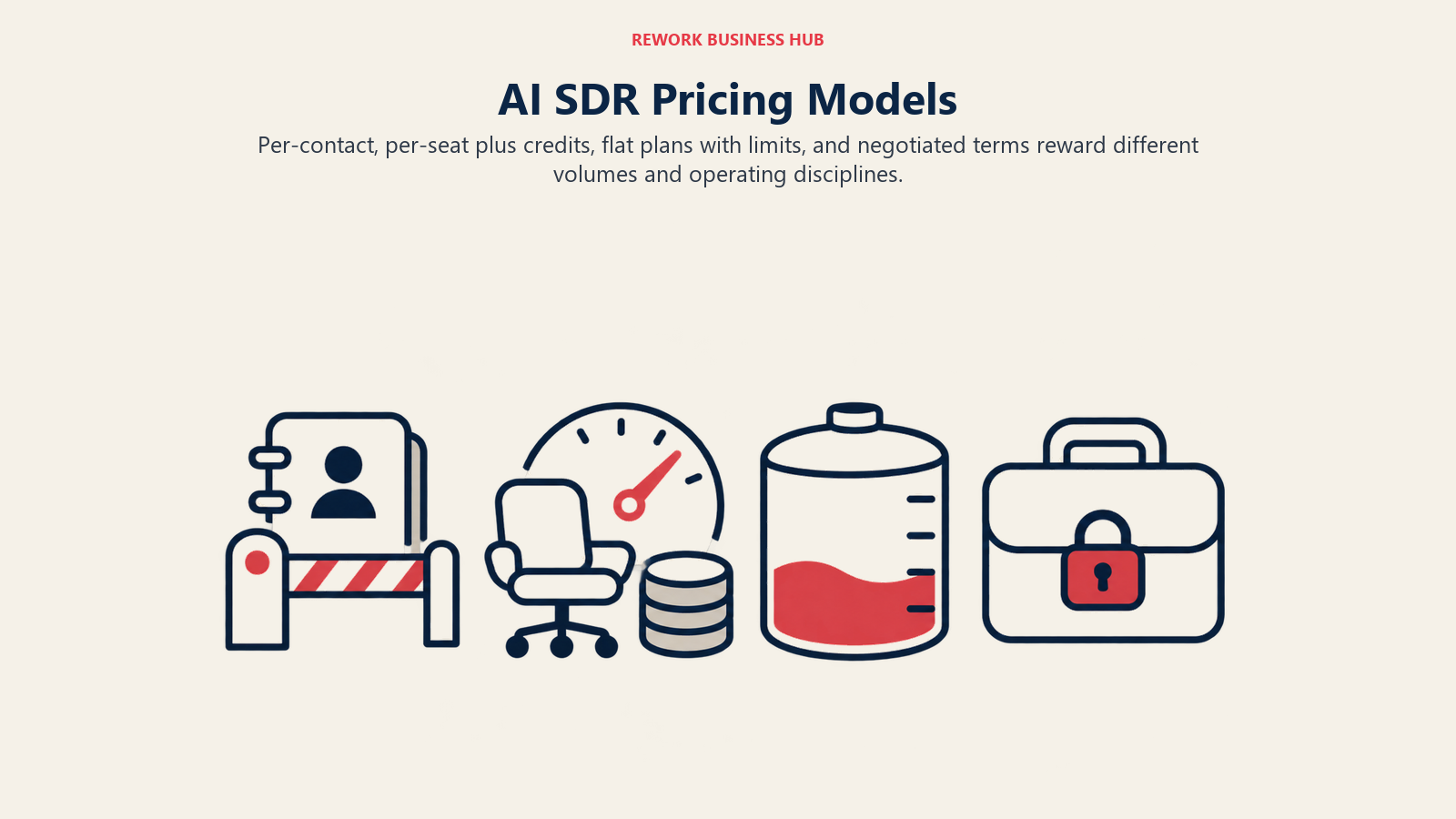
| Model | Examples | What you control | What can surprise you |
|---|---|---|---|
| Per outcome or per contact | AiSDR | Spend moves with how many people you reach | A big list turns a small bill into a large one |
| Per seat plus credits | Apollo, Regie.ai | Headcount sets the base cost | Credits reset each cycle and don't roll over |
| Flat plan with limits | Instantly, Smartlead, Reply.io | A predictable monthly number | Send, contact or mailbox caps force an upgrade |
| Quote and annual term | Outreach, Salesloft, Qualified, Artisan | Negotiated scope | You can't compare until you've sat through the sales process |
A per-contact model rewards a tight ICP. If you can name exactly who you want to reach, paying for each person reached is efficient. A flat plan rewards volume and discipline, and a quote-based deal rewards teams that already know their scope. The honest question isn't which tool is cheapest. It's which meter you can live with at three times today's volume.
What an AI SDR Does Not Replace
Every product on this list helps with the front of the funnel: finding people, writing, sending, replying. None of it removes the need for a clear offer, a clean list and someone who owns the handoff once a prospect says yes. Teams that struggle after switching usually carry the same problems with them. A weak offer written 500 times is still a weak offer. A stale CRM still produces duplicate outreach. A booked meeting with nobody ready to run it still dies.
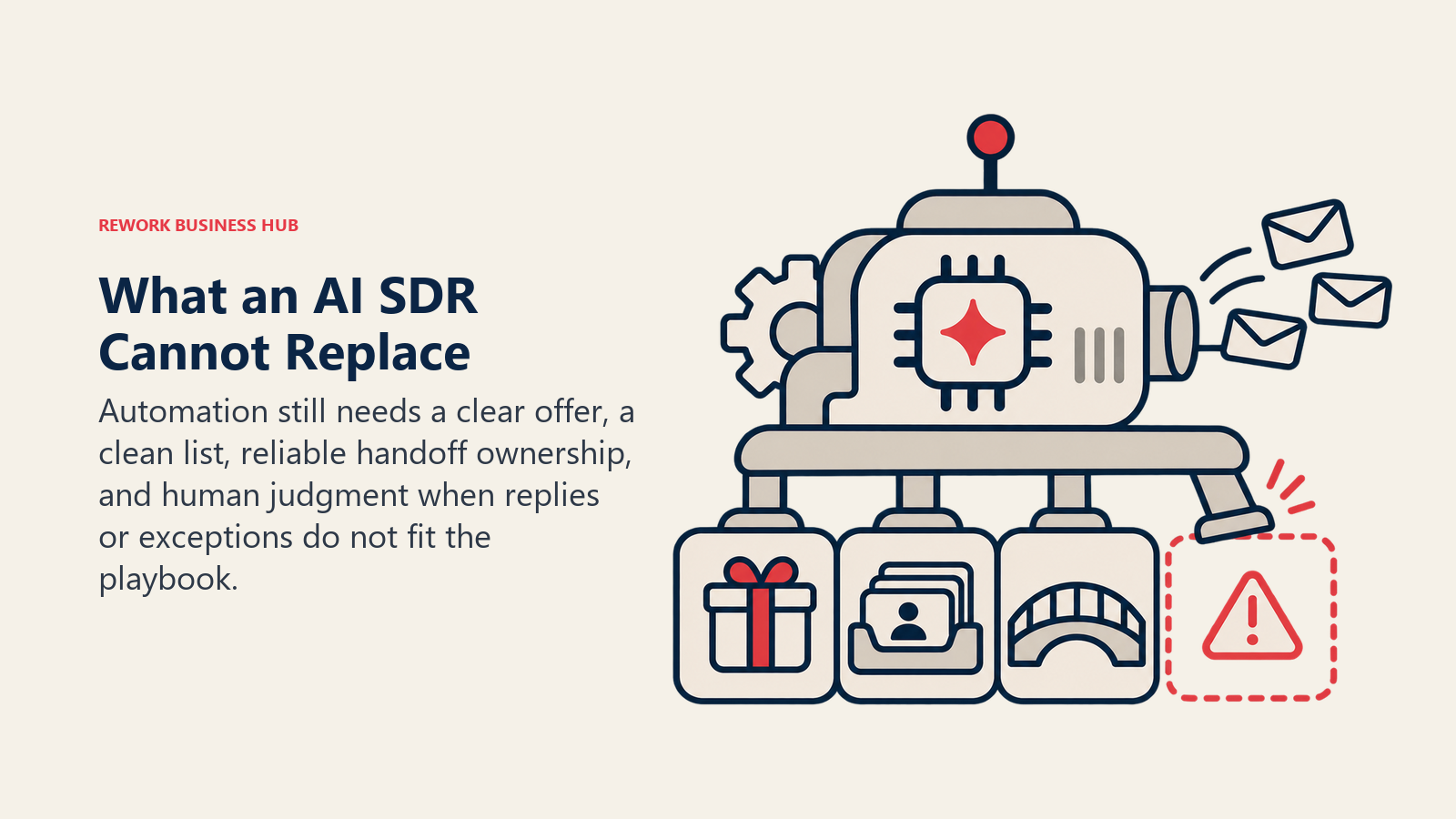
That's also why the alternatives that keep a rep in the loop, like Apollo, Regie.ai and Amplemarket, aren't a lesser choice. They put the person where judgment matters and let AI handle drafting and research. If your 11x results have been good, the fix for a budget problem might be a smaller scope, not a different vendor. If your results have been mixed, the fix is usually in the inputs, and no switch changes that.
Questions to Ask Before You Switch
Before moving any workflow, put these to both your current vendor and the new one:
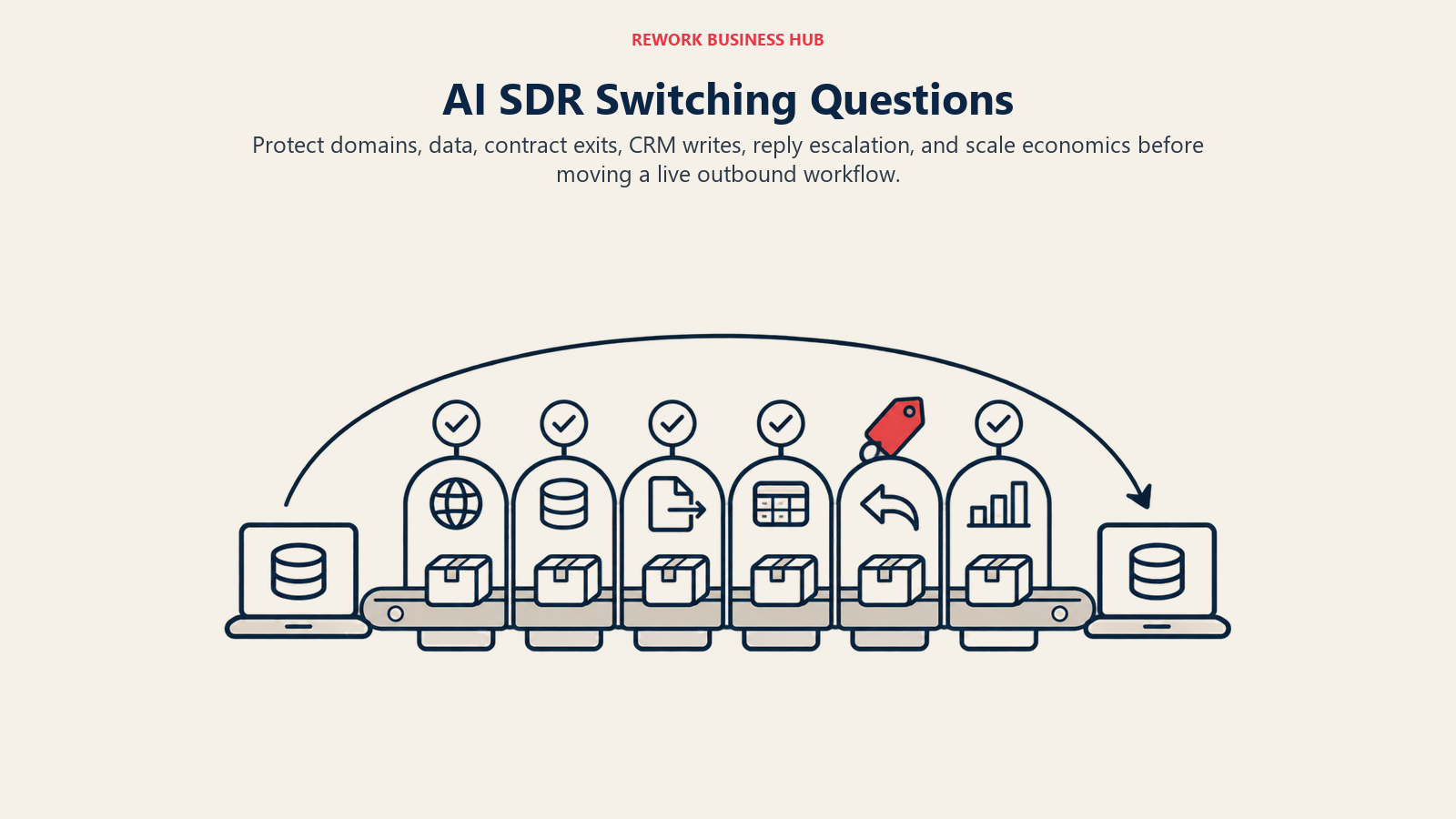
| Question | Why it matters |
|---|---|
| What happens to my domains, mailboxes and sending history? | Warm domains are an asset, and moving them wrong costs weeks |
| Who owns the prospect data and message copy produced so far? | You'll want it for the next system |
| What is the contract term and the exit notice? | A worker-style agreement may auto-renew |
| Which of my CRM fields does the agent write to? | HubSpot and Salesforce syncs differ by vendor |
| How are replies and objections escalated to a human? | The handoff is where deals leak |
| What does the price look like at three times today's volume? | The meter you choose shapes the bill |
Ask each vendor for answers in writing. A vendor that's confident in its product will usually give them.
Who Should Stay on 11x
Switching isn't always the answer. Stay if:
| Situation | Why staying makes sense |
|---|---|
| You use Alice and Julian together | Few alternatives cover outbound and inbound voice from one vendor |
| Your budget already assumes a worker-sized cost | Cheaper tools mean more of your own labor |
| Your reply rates and meetings are holding up | Switching resets learning, domains and list quality |
| Your team doesn't want to run an outbound system | Clay, Instantly and Smartlead all need an operator |
| Voice matters to you | 11x puts a phone agent at the center of its pitch, so confirm any rival's voice capability before you switch |
If none of those fit, test one alternative against your current performance. Read best AI agents for lead generation and best AI agents for revenue operations for the surrounding stack.
How to Choose: Decision Framework
| If you need... | Pick... | Why |
|---|---|---|
| The nearest rival to Alice | Artisan | Same end-to-end autonomous BDR idea |
| A visible price and a self-serve start | AiSDR | $1.50 per person prospected |
| A workspace where reps still lead | Regie.ai or Apollo | Low entry price, AI inside the rep's workflow |
| Conversion of existing web traffic | Qualified (Piper) | Built for the site, not cold outreach |
| A ladder from email to an AI SDR | Reply.io | AI SDR tier in the same account |
| Control of the whole workflow | Clay | You choose the data and the logic |
| Signals plus human reps | Amplemarket | Intent signals and a copilot |
| Cheap high-volume email | Instantly or Smartlead | Flat plans, unlimited accounts or workspaces |
| Enterprise governance | Outreach or Salesloft | Platform-wide agents and forecasting |
What to Do Next
Run a four-week test on one list. Give the incumbent and one alternative the same segment, and compare booked meetings, reply quality and cost per meeting. Include your own labor time for setup and review. That number will tell you more than any feature table.

Co-Founder, Rework.com
On this page
- Key Facts
- Why Teams Look Beyond 11x
- What 11x sells today
- Quick Comparison Table
- Sizing and Stage Fit
- Autonomous Outbound Agents (Closest to Alice)
- 1. Artisan: The Other Named AI BDR
- 2. AiSDR: Autonomous Outbound You Can Start Without a Call
- 3. Regie.ai: A Rep-Driven Workspace That Sells Itself as Agentic
- 4. Qualified (Piper): Inbound Where 11x's Julian Lives
- Sales Engagement Platforms With AI Layered In
- 5. Reply.io: Tiers From Email-Only to an AI SDR
- 6. Apollo: Data and Sequencing Under One Seat
- 7. Amplemarket: Signals and a Copilot Instead of a Worker
- 8. Outreach: Credits and Named Agents in an Enterprise Platform
- 9. Salesloft: AI Agents Inside a Revenue Platform
- Build-Your-Own and Sending Infrastructure
- 10. Clay: Build the Outbound Workflow Yourself
- 11. Instantly: Low-Cost Cold Email With AI Agents Included
- 12. Smartlead: Sending Infrastructure for Agencies
- Three Scenarios, Three Different Answers
- Four Pricing Models You'll Meet
- What an AI SDR Does Not Replace
- Questions to Ask Before You Switch
- Who Should Stay on 11x
- How to Choose: Decision Framework
- What to Do Next