More in
AI at Work News
OpenAI Opened ChatGPT Advertising to Small Businesses at Any Budget
Jun 6, 2026
AI Is Everywhere at Work. Only 1 in 10 Say It Transformed the Job
Jun 6, 2026
Vibe Coding's $10.5B Moment: AI Now Starts Most New Software Builds
Jun 6, 2026
AI Agents Now Have More System Access Than Your Employees. Few Are Secured
Jun 5, 2026
Should You Build Your AI or Buy It? Watch What the Giants Bought.
Jun 5, 2026
Uber Caps Employee AI Spending at $1,500 Per Seat After a Budget Blowout
Jun 5, 2026 · Currently reading
Trump's AI Executive Order Is Deregulatory. Your Compliance Risk Didn't Move
Jun 4, 2026
AI Pushed 220 Unicorns Below $1B. Pre-ChatGPT Companies Face a Reckoning
Jun 4, 2026
Token Prices Fell 67% This Year. Your AI Bill Is Going Up Anyway
Jun 3, 2026
Small Businesses Using AI Report Higher Revenue and Shorter Workdays
Jun 3, 2026
Uber Caps Employee AI Spending at $1,500 Per Seat After a Budget Blowout
Turn this article into takeaways for your work.


Each assistant summarizes the article only for you and suggests best practices for your work.
Uber told its engineers to use artificial intelligence as much as they possibly could. It even turned usage into a competition.
Four months later, the entire year's budget was gone.
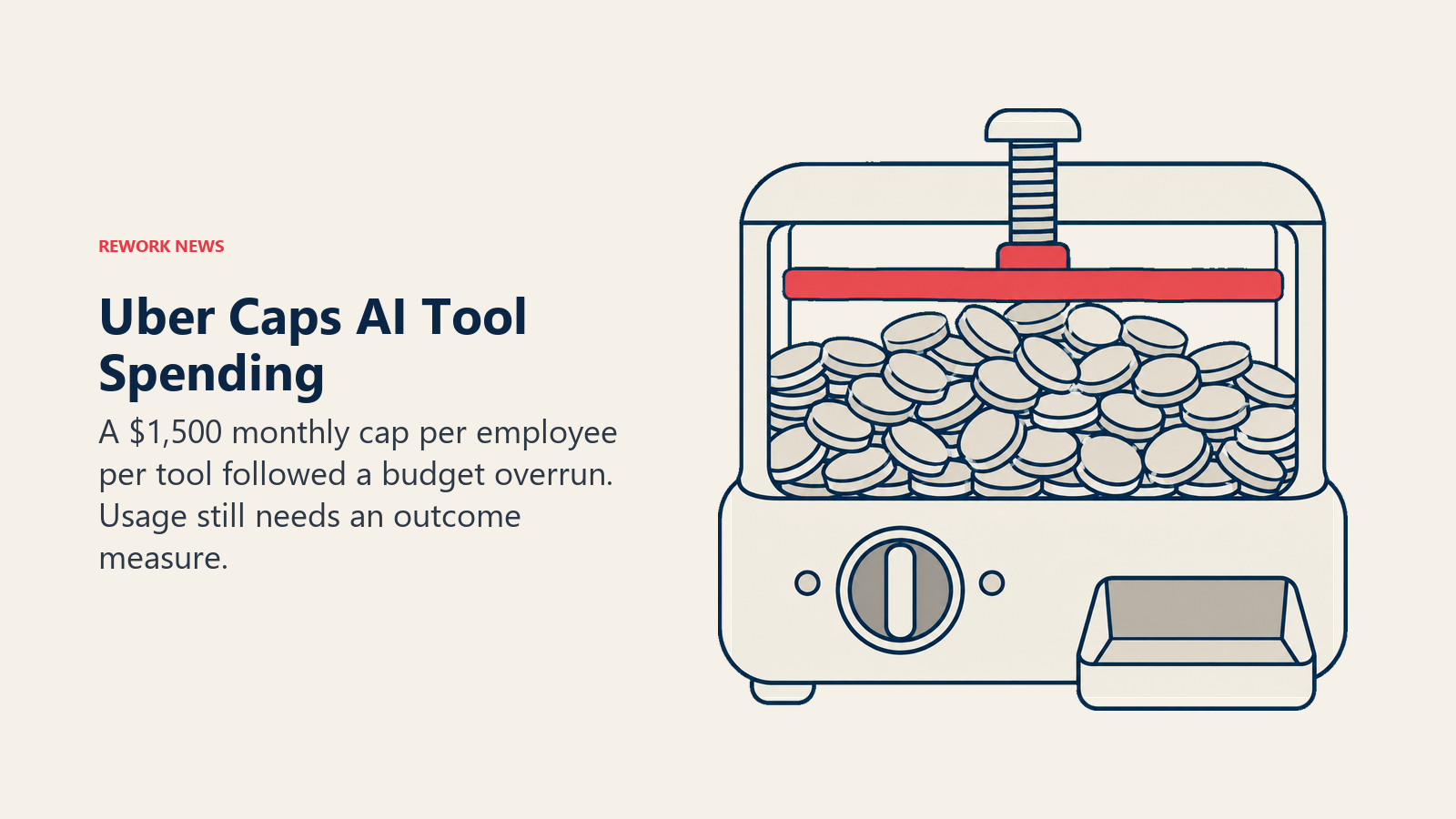
According to TechCrunch, Uber blew through its annual artificial intelligence (AI) budget in roughly a third of the year, then moved quickly to put a ceiling on it. The company had encouraged staff to lean on AI coding tools heavily and ranked teams against each other on how much they used. People did exactly what they were asked. The bill did exactly what you would expect.
What makes this more than a funny internal memo is who said it and what they said. Uber president and chief operating officer (COO) Andrew Macdonald has openly questioned whether the spending is paying off, telling a podcast that it is "very hard to draw a line" between the company's surging AI use and anything new its customers can feel. When the operator running the company cannot connect the spend to the product, every CEO watching should take notes.
How a Leaderboard Burned a Year's Budget
The setup sounds reasonable on paper. Get people comfortable with AI fast, remove the friction, celebrate the heaviest users. Adoption is the hard part of any new technology, so why not gamify it.
Key Facts
- Uber exhausted its entire annual AI budget in roughly four months, a fact revealed internally around April 2026. (TechCrunch, June 2026)
- The company set a new ceiling of $1,500 per employee per month for each agentic coding tool, including Claude Code and Cursor, tracked on an internal dashboard with exceptions by permission. (TechCrunch)
- The overspend followed an internal push to use AI "as much as possible," with teams ranked against each other on usage leaderboards. (TechCrunch)
The problem is what the leaderboard actually rewarded. It rewarded consumption. Not output, not a shipped feature, not a faster release, not a happier customer. Just tokens spent. So the metric went up and to the right, the budget emptied, and nobody could point to the matching pile of value on the other side of the ledger.
The Real Problem Isn't the Bill, It's the Missing ROI
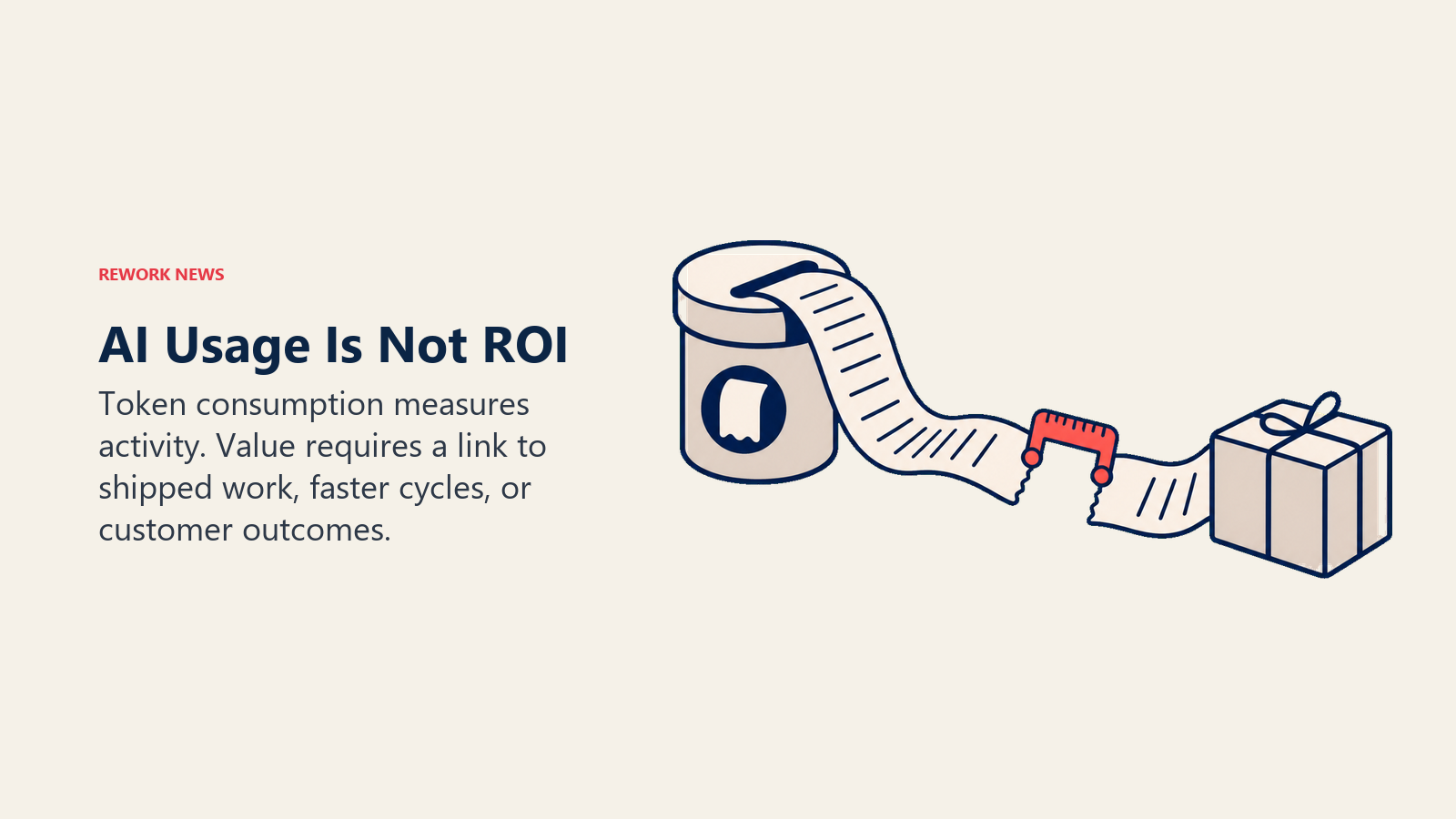
The budget cap is only a symptom; the larger issue is whether AI spend is tied to measurable business value.
It would be easy to file this under "AI is expensive" and move on. That misses the lesson.
The cost of the underlying tools has actually been falling. The trouble is that agentic tools, the ones that plan and act in a loop, chew through far more tokens per task than a simple chatbot prompt, so usage scales fast and the bill scales with it. Uber's own story shows the same gap many companies are now hitting: the spend is real and rising, while the return on investment (ROI) stays stubbornly hard to name. That is the same disconnect behind why enterprise AI bills keep climbing even as token prices fall.
When your COO says the link between AI use and customer value "is not there yet," that is not a complaint about pricing. It is a measurement failure. The company optimized for the thing it could see (usage) instead of the thing it actually wanted (results), because usage is easy to count and results are hard. This is the precise trap that turns AI from an investment into an unmeasured cost that never shows up as ROI. The fix is not a smaller budget. It is a better question.
Why "Use It As Much As Possible" Is the Wrong Instruction
Adoption is a means, not an end. The point of an AI tool is a better outcome at lower cost, not a higher usage number. The moment you make usage the goal, you guarantee three things: spend goes up, the heaviest users look like the best performers regardless of what they produced, and you lose the ability to tell a productive dollar from a wasted one.
A usage leaderboard is an adoption metric wearing a value metric's clothes. It feels like progress because the chart climbs. But a sales team is not judged on how many calls it dials, it is judged on revenue. An AI rollout deserves the same standard. If you cannot tie the tokens to a result, you are not measuring productivity. You are measuring enthusiasm, and enthusiasm is not free.
This is also why the broader pattern of AI investments that fail to produce a clear return keeps repeating. The technology works. The governance around it does not.
The AI Cost-Governance Playbook
You do not need to slow your AI adoption to control it. You need guardrails from day one, not after the budget is gone. Five moves for any CEO funding AI tools this year.
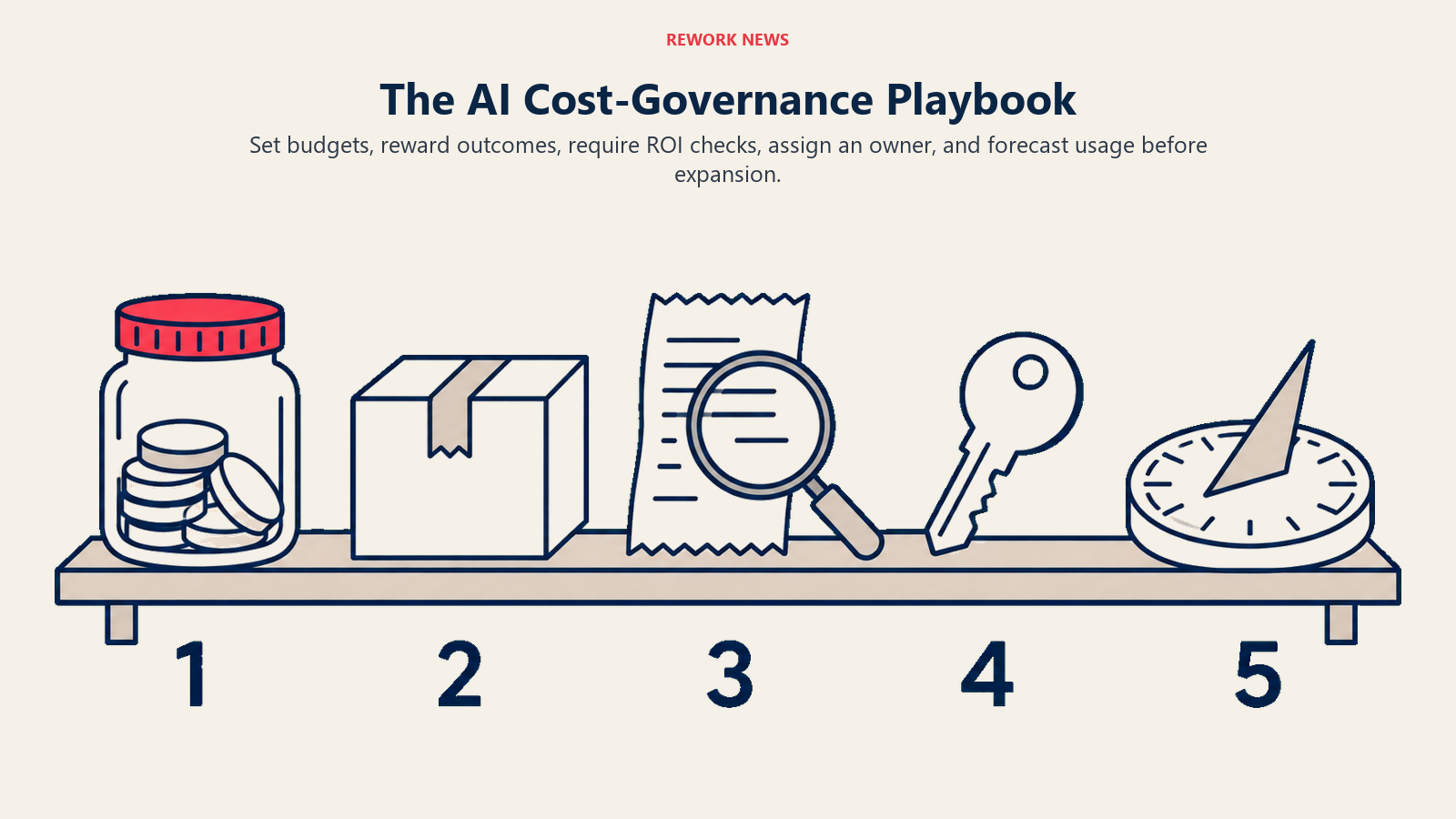
Set per-seat and per-tool budgets before you scale, not after. Uber's cap arrived after the money was spent. Put a ceiling and a dashboard in place at the pilot stage, so spend is visible and bounded while it is still small. This is ordinary cost discipline applied to a new line item, nothing exotic.
Reward outcomes, never raw usage. Kill the consumption leaderboard. If you want to celebrate something, celebrate a shipped feature, a faster cycle time, a deflected support ticket, a closed deal. Tie recognition to results so the incentive points at value instead of volume.
Gate every expansion on a real ROI check. Before you widen access or lift a cap, require a simple answer to one question: what did the last dollar buy. If nobody can name it, you have found your problem before it compounds, which is exactly what a disciplined annual planning cycle is supposed to surface.
Make AI spend a standing budget line with an owner. Treat it like any other material cost. One person owns the number, reports it, and answers for the ratio of spend to outcome. AI cost cannot live in the gap between IT and finance where no one is watching it, which is the same governance gap that lets these surprises happen.
Assume usage will rise, and plan the curve. Agentic tools get used more as people trust them more. That is success, not failure, but only if you forecast it. Model the spend curve the way you would model headcount or cloud, so the growth is a decision you made, not a bill you discover.
Uber is not a cautionary tale because it spent too much on AI. It is a cautionary tale because it spent without a way to know if the spending worked, and it took a blown budget to install the controls. The companies that win the next year of AI will not be the ones that use the most tokens. They will be the ones that can tell you, to the dollar, what those tokens bought. Build that answer before you scale the spend.
Frequently Asked Questions
Why did Uber cap employee AI spending?
Uber exhausted its entire annual AI budget in about four months after encouraging staff to use AI coding tools heavily and ranking teams on usage. It then set a ceiling of $1,500 per employee per month for each agentic coding tool, tracked on an internal dashboard, to bring the spend back under control.
What is the lesson for CEOs from Uber's AI budget overrun?
That the danger is the incentive, not the price. Rewarding raw usage drives spend without proving value. CEOs should set per-seat budgets and dashboards before scaling, reward outcomes rather than consumption, and gate every expansion on a clear ROI check.
Why are AI bills rising even as token prices fall?
Because agentic AI tools plan and act in multi-step loops that consume far more tokens per task than a single chatbot prompt. As trust and adoption grow, usage climbs faster than per-token prices fall, so the total bill rises unless a company actively budgets and meters its AI spend.
