More in
AI at Work News
OpenAI Opened ChatGPT Advertising to Small Businesses at Any Budget
Jun 6, 2026
AI Is Everywhere at Work. Only 1 in 10 Say It Transformed the Job
Jun 6, 2026
Vibe Coding's $10.5B Moment: AI Now Starts Most New Software Builds
Jun 6, 2026
AI Agents Now Have More System Access Than Your Employees. Few Are Secured
Jun 5, 2026
Should You Build Your AI or Buy It? Watch What the Giants Bought.
Jun 5, 2026
Uber Caps Employee AI Spending at $1,500 Per Seat After a Budget Blowout
Jun 5, 2026
Trump's AI Executive Order Is Deregulatory. Your Compliance Risk Didn't Move
Jun 4, 2026 · Currently reading
AI Pushed 220 Unicorns Below $1B. Pre-ChatGPT Companies Face a Reckoning
Jun 4, 2026
Token Prices Fell 67% This Year. Your AI Bill Is Going Up Anyway
Jun 3, 2026
Small Businesses Using AI Report Higher Revenue and Shorter Workdays
Jun 3, 2026
Trump's AI Executive Order Is Deregulatory. Your Compliance Risk Didn't Move
Turn this article into takeaways for your work.


Each assistant summarizes the article only for you and suggests best practices for your work.
The federal government just signaled it wants less red tape around artificial intelligence (AI). Don't mistake that signal for a clean compliance runway.
On June 2, 2026, President Trump signed an executive order (EO) titled "Promoting Advanced Artificial Intelligence Innovation and Security." According to the White House, the order is built around a voluntary framework and explicitly imposes no mandatory licensing, preclearance, or permitting requirements on AI development or distribution. CNBC reported the signing occurred privately, weeks after a planned ceremony with technology company executives had been postponed.
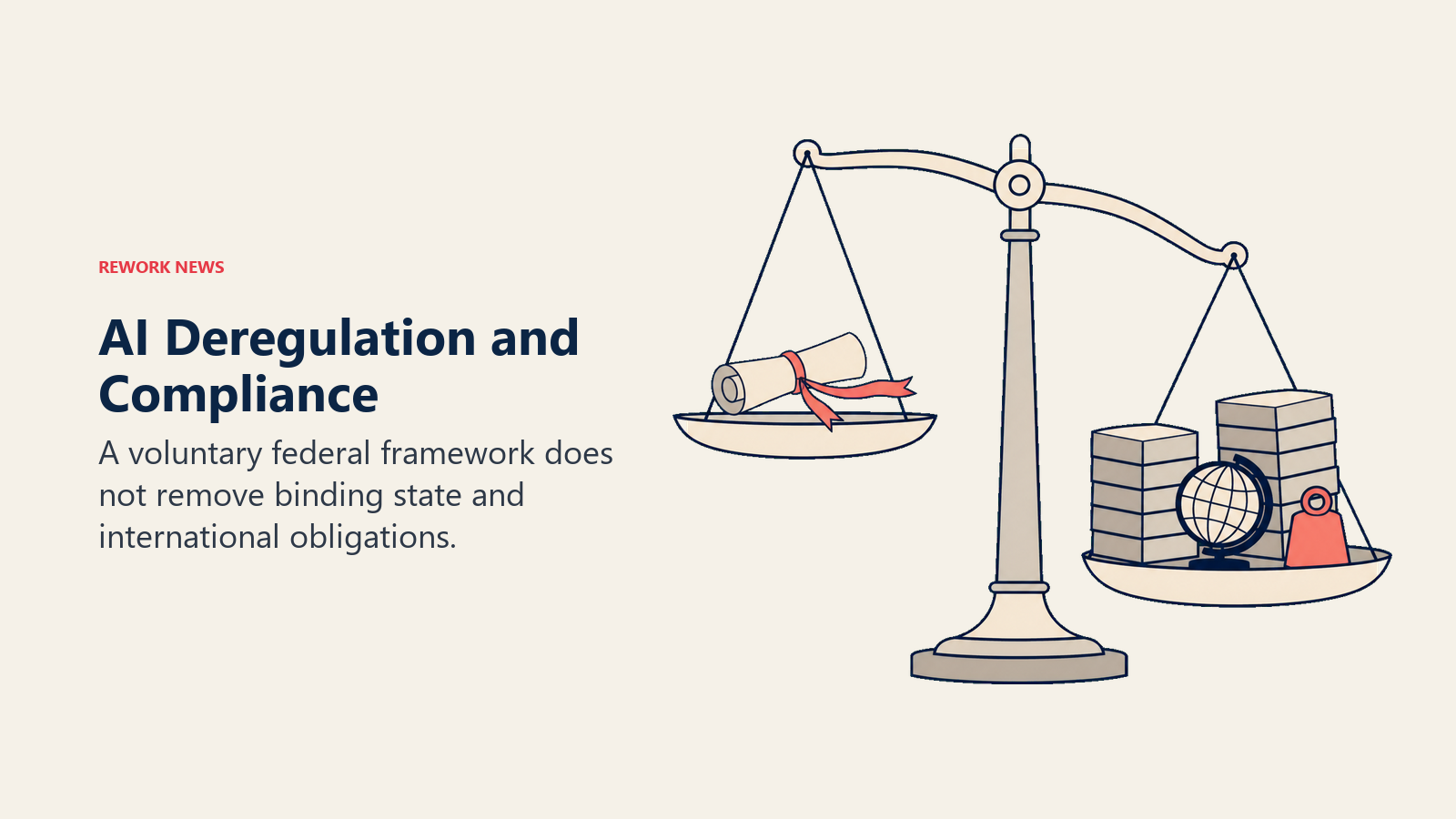
The headline reads as a win for AI builders and a signal that Washington is stepping back. For most companies, that reading is accurate at the federal level. But the legal and regulatory constraints that actually bind your operations today sit on different layers of the compliance stack, and this order didn't touch most of them.
What the Order Actually Does
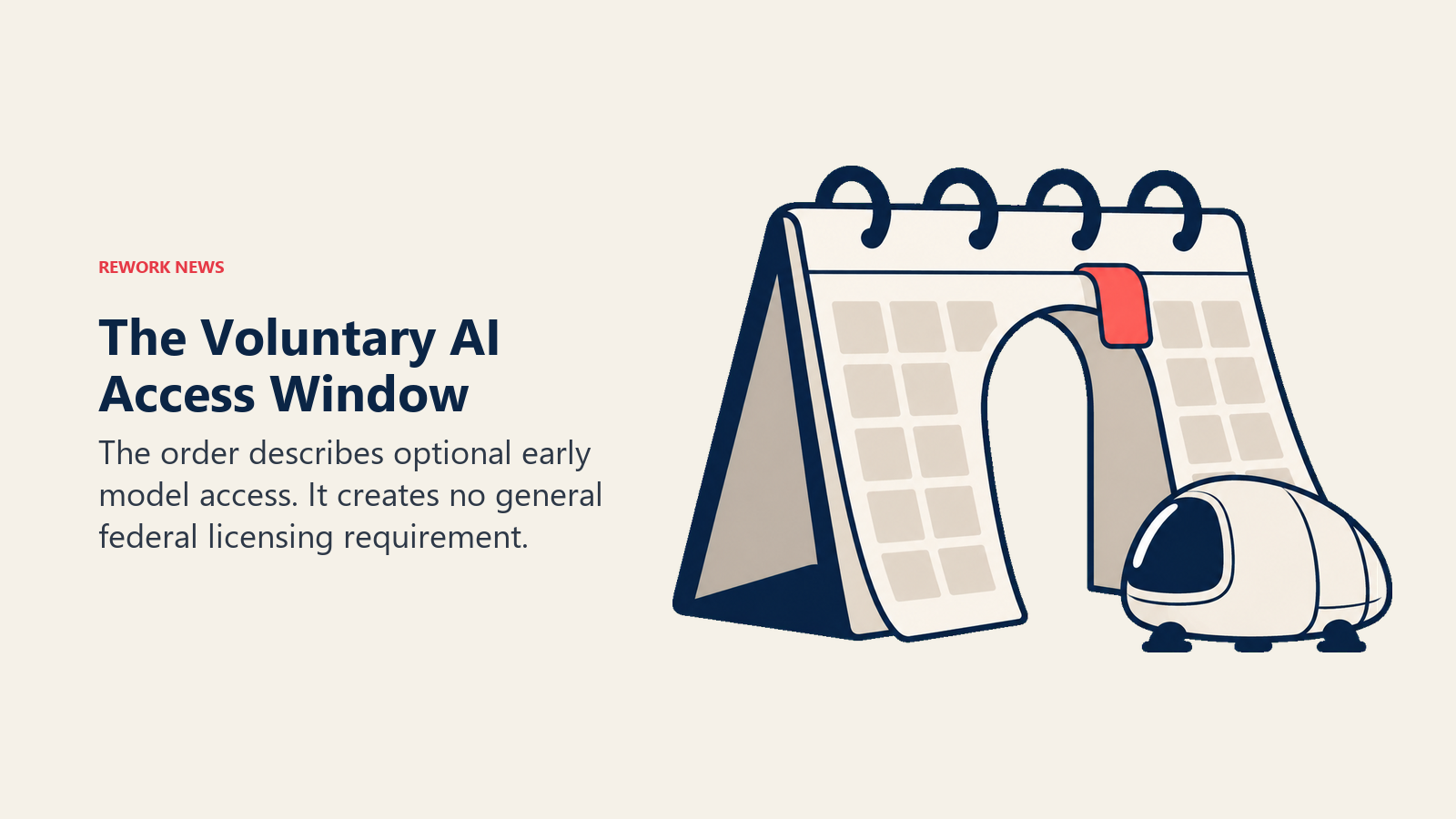
The core mechanism is a 30-day voluntary access window. Developers may give the federal government access to "covered frontier models" for up to 30 days before public release. Intellectual property (IP) protections and confidentiality guarantees apply during this window. Participation is voluntary, not mandatory.
Key Facts
- The order lets developers share "covered frontier models" with the federal government up to 30 days before public release, on a voluntary basis. (The White House, June 2, 2026)
- It imposes no mandatory licensing, preclearance, or permitting requirement and does not preempt state AI laws. (The White House, June 2, 2026)
- Agency deadlines: Cybersecurity and Infrastructure Security Agency (CISA) has 30 days for cyber directives; Office of Personnel Management (OPM) has 60 days to expand cybersecurity hiring. (The White House, June 2, 2026)
The National Security Agency (NSA), working alongside cybersecurity officials, is tasked with building a classified benchmarking process. That process will assess the cyber capabilities of AI models and determine which ones qualify as "covered frontier models" subject to the voluntary access window.
The order also sets short-run agency deadlines. CISA has 30 days to issue cybersecurity directives. Treasury, the NSA, and CISA collectively have 30 days to establish a vulnerability clearinghouse. The OPM has 60 days to expand cybersecurity hiring pathways.
The order's preamble frames the administration as having already cut bureaucratic constraints that were slowing AI adoption. The tone throughout is deregulatory. There's no ambiguity about which direction Washington is pointing.
But an executive order that says "we won't build federal barriers" is not the same as an order that removes the barriers already in place at other jurisdictions. And that's the distinction most business coverage is glossing over.
The Three Layers of AI Compliance (Still Standing)
The compliance map is still layered, even when federal policy shifts toward deregulation.
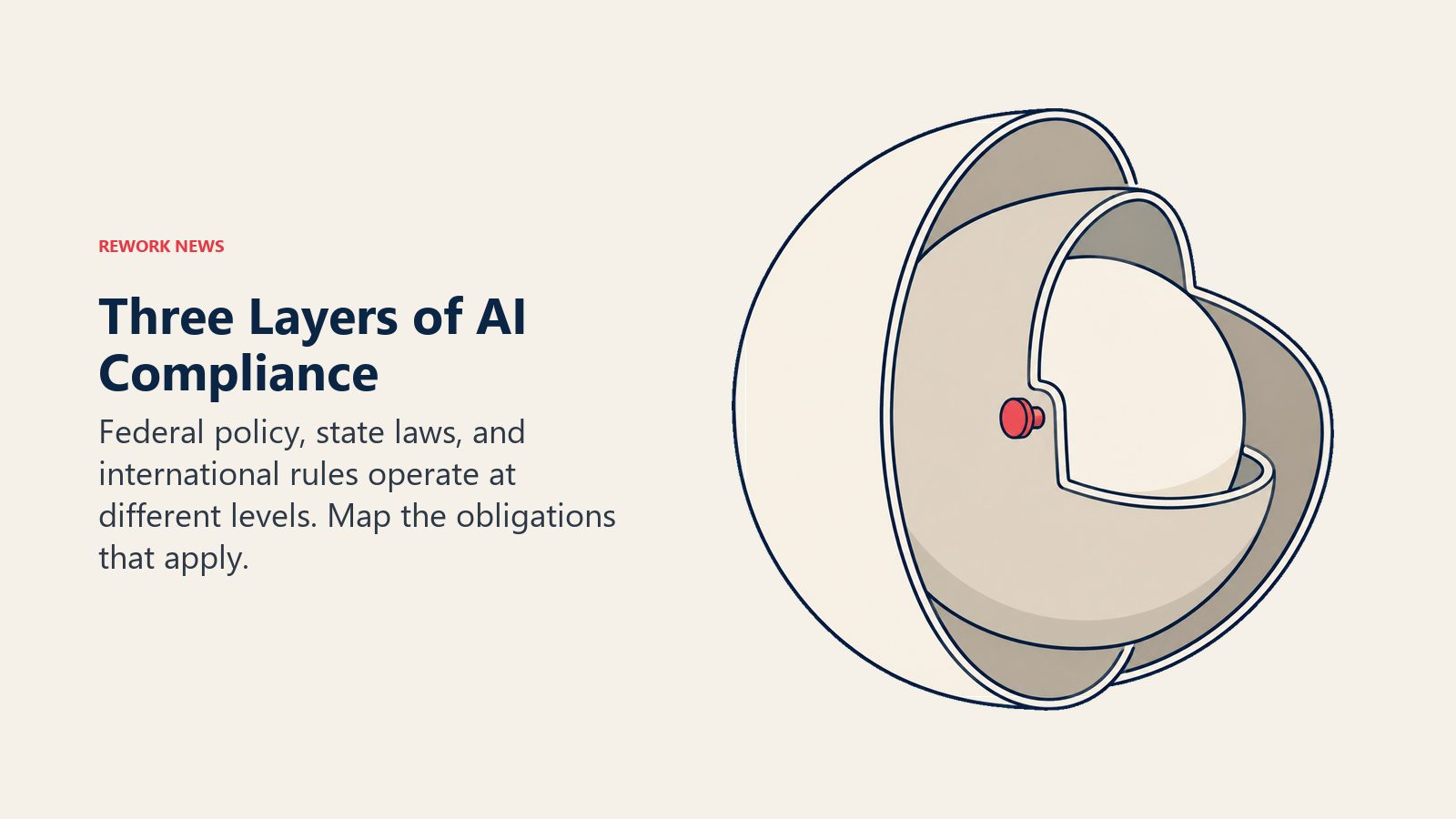
The compliance picture for any U.S. company deploying AI is not a single federal question. It has three distinct layers, and the June 2026 EO only touched the first one.
Layer 1: Federal (voluntary and thin). This is where the new executive order lives. Washington is now explicitly light-touch on AI. No federal mandate to clear models with a regulator. No licensing regime. No preclearance. For most companies, federal AI compliance is currently a matter of sector-specific rules in regulated industries (finance, healthcare, defense) rather than a general AI framework. This order reinforces that posture and pushes it further in a deregulatory direction.
Layer 2: State (growing patchwork, binding). California, Colorado, Texas, New York, and more than a dozen other states have active AI legislation in various stages of passage or enforcement. The June 2026 EO explicitly does NOT preempt state AI laws. If California's AI transparency or bias-audit requirements apply to your operations, they still apply. If Colorado's high-risk AI deployment rules reach your business, they still reach it. Your state compliance map is unchanged by what Washington signed this week.
Layer 3: International (extraterritorial and binding). The EU AI Act reaches any company that offers AI-enabled products or services to users in the European Union, regardless of where that company is headquartered. If you have EU customers, employees in EU member states, or a product available in the EU market, the EU AI Act timeline and obligations apply to you. The U.S. federal government's posture on domestic AI regulation has no effect on EU enforcement. For a closer look at what the EU AI Act requires at the operational level, the EU AI Act strategy guide for CEOs covers the practical compliance obligations by risk tier.
The EO touched Layer 1 and only lightly. Layers 2 and 3 are intact.
The Trap: Reading "Innovation First" as "Compliance Later"
That framing is exactly backward, and it's the mistake this order makes easiest to commit.
When a government signals deregulatory intent, the natural organizational response is to ease up on compliance investment. Governance programs feel like overhead. Legal review feels like friction. If the feds are stepping back, why maintain the same posture?
Here's why. Your governance program isn't primarily a federal compliance program. It's your answer to Layer 2 (a growing patchwork of state law with real enforcement teeth) and Layer 3 (the EU AI Act, which carries fines of up to 3% of global annual turnover for violations). Neither of those frameworks changed on June 2. Neither will change because of what Washington signed.
The EU AI Act and RevOps implementation guide documents the operational steps companies are taking to prepare for EU AI Act enforcement. Those steps don't become optional because U.S. federal policy moved in a friendlier direction.
For context on how governance frameworks compare across regulators, the OpenAI frontier governance framework versus NIST comparison for CTOs is worth reading alongside this analysis. Voluntary industry frameworks and mandatory regulatory frameworks are parallel tracks, not substitutes for each other.
The same principle applies here. A voluntary federal access window for frontier models and a binding EU AI Act compliance obligation are not alternatives. They operate simultaneously.
What Actually Changed at the Margin
The EO is not a non-event. Two things shifted that are worth noting.
First, the NSA's classified benchmarking process will establish which models count as "covered frontier models" under the voluntary access framework. That designation has downstream implications. If your company builds on top of a frontier model from a major AI vendor, and that vendor begins sharing model versions with the government 30 days before public release, you are in a world where the federal government is evaluating the model's cyber capabilities before you receive it.
That's worth a direct conversation with your AI vendor at your next contract or renewal discussion. Ask whether they intend to participate in the voluntary access framework. Ask what IP protections apply. Ask how early-access sharing might affect your release timeline or model version sequencing.
Second, the agency deadlines baked into the EO are real commitments. CISA's 30-day deadline for cybersecurity directives and the 30-day deadline to establish the vulnerability clearinghouse will produce concrete output. The clearinghouse in particular could become a useful resource for organizations trying to understand the cyber risk profile of specific AI deployments. Watch for it.
Both of those are intelligence inputs, not compliance requirements. But they're worth tracking. The agentic AI governance gap analysis covers the broader governance question of how most companies are still catching up with autonomous AI systems, which is the real gap the NSA benchmarking process is designed to address at the federal level.
For the strategic investor view on where AI vendor relationships are heading, the BCG AI Radar 2026 analysis for CEOs provides a broader market context for decisions about frontier model selection and vendor concentration.
What to Do Now
A short action list, not a long compliance program overhaul.
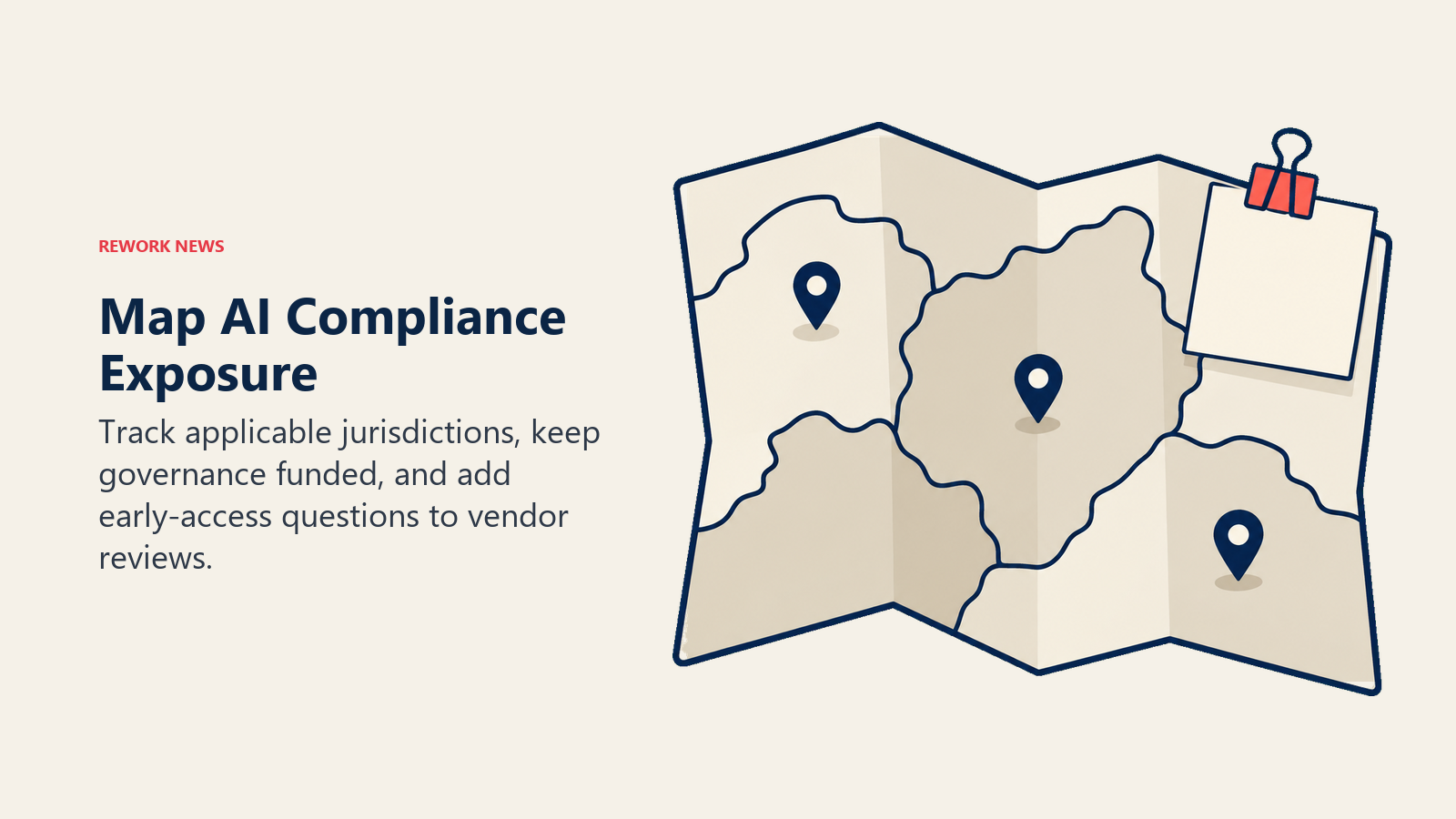
Don't pause your governance investment. The compliance constraints that matter to your business right now are Layer 2 and Layer 3. Those didn't move. Neither should your budget line for addressing them.
Map your real exposure by jurisdiction, not by headline. The question isn't "did the U.S. government ease AI regulation?" (it did, at the federal layer). The question is "which specific laws apply to our specific AI deployments in each jurisdiction where we operate?" That map is your actual compliance document. Update it quarterly.
Add one question to your next frontier-model vendor review. Ask whether they plan to participate in the voluntary early-access framework. Ask what IP and confidentiality protections apply if they do. Ask how participation might affect the timing of model versions your company receives. These aren't alarming questions. They're standard contract hygiene in a new environment.
Keep a state-law tracker current. The number of active state AI bills is growing. California, Colorado, and Texas are the highest-priority jurisdictions for most U.S. enterprises, but the list is longer and lengthening. Assign someone to own this list and update it monthly.
Treat the EU AI Act enforcement timeline as fixed. It is. Don't let the domestic deregulatory signal create a false sense of relief about EU obligations. If your company has any EU footprint, your compliance team should be treating EU AI Act readiness as a hard deadline, not a future problem.
The order is good news for AI builders who were worried about a federal licensing regime. But it's not the compliance story. The compliance story is still the one being written by state attorneys general and EU regulators, and it didn't pause on June 2.
Frequently Asked Questions
Does Trump's AI executive order replace or weaken the EU AI Act?
No. The EU AI Act is European Union law. A U.S. executive order has no authority over EU legislation or EU enforcement timelines. Any company offering AI-enabled products or services to EU users remains subject to the EU AI Act regardless of U.S. federal policy changes. The two frameworks are independent.
Does the executive order preempt state AI laws?
No, and the order says so explicitly. State AI laws, including California's transparency requirements, Colorado's high-risk AI rules, and others, remain fully in effect. The executive order does not override or limit state authority to regulate AI within their jurisdictions. Your state compliance obligations are unchanged.
What should a CEO actually change because of this order?
Very little in the immediate compliance posture. The one new action worth taking is adding a question about the voluntary early-access framework to your next frontier AI vendor review: whether they plan to participate, what IP protections apply, and how participation might affect your model release timing. Beyond that, keep your governance and compliance investment steady. The binding constraints (state law, EU AI Act) didn't change.
