Tumpukan Alatan Penjajaran: Lima Kategori yang Diperlukan Setiap Pasukan Hasil (Vendor adalah Kedua)
Turn this article into takeaways for your work.


Each assistant summarizes the article only for you and suggests best practices for your work.
VP Revenue Ops menandatangani kontrak untuk platform kepintaran hasil. Dua belas bulan kemudian, pemasaran masih tidak boleh mengaksesnya. Rakaman panggilan tersimpan dalam portal vendor yang hanya dua AE telah menanda buku. Gelung maklumat pembeli yang sepatutnya menyuap penyegaran mesej pemasaran tidak pernah terwujud. Enam puluh ribu dolar, dan masalah penjajaran kekal seperti awalnya.
Platform itu bukan isu. Proses tidak ada untuk menggunakannya.
Kebanyakan kegagalan penjajaran adalah kegagalan proses yang mengenakan belanjawan alatan. Pasukan menjangkau perisian apabila mereka belum bersetuju tentang apa itu MQL, apabila CRM mempunyai tiga tahun data kotor, apabila kod sebab penolakan kosong untuk 80% Lead. Masalah-masalah tersebut tidak mempunyai penyelesaian perisian. Ia mempunyai penyelesaian sesi kerja, penyelesaian pemilikan, dan penyelesaian dokumentasi.
Syarikat mid-market purata menggunakan 8-10 alatan jualan dan pemasaran tetapi mencapai integrasi bermakna antara kurang daripada separuh daripadanya (Gartner). Fragmentasi itu bukan masalah vendor. Ia adalah masalah penjujukan: alatan ditambah sebelum proses yang mendasari bersedia mewujudkan kerumitan tanpa mewujudkan penjajaran.
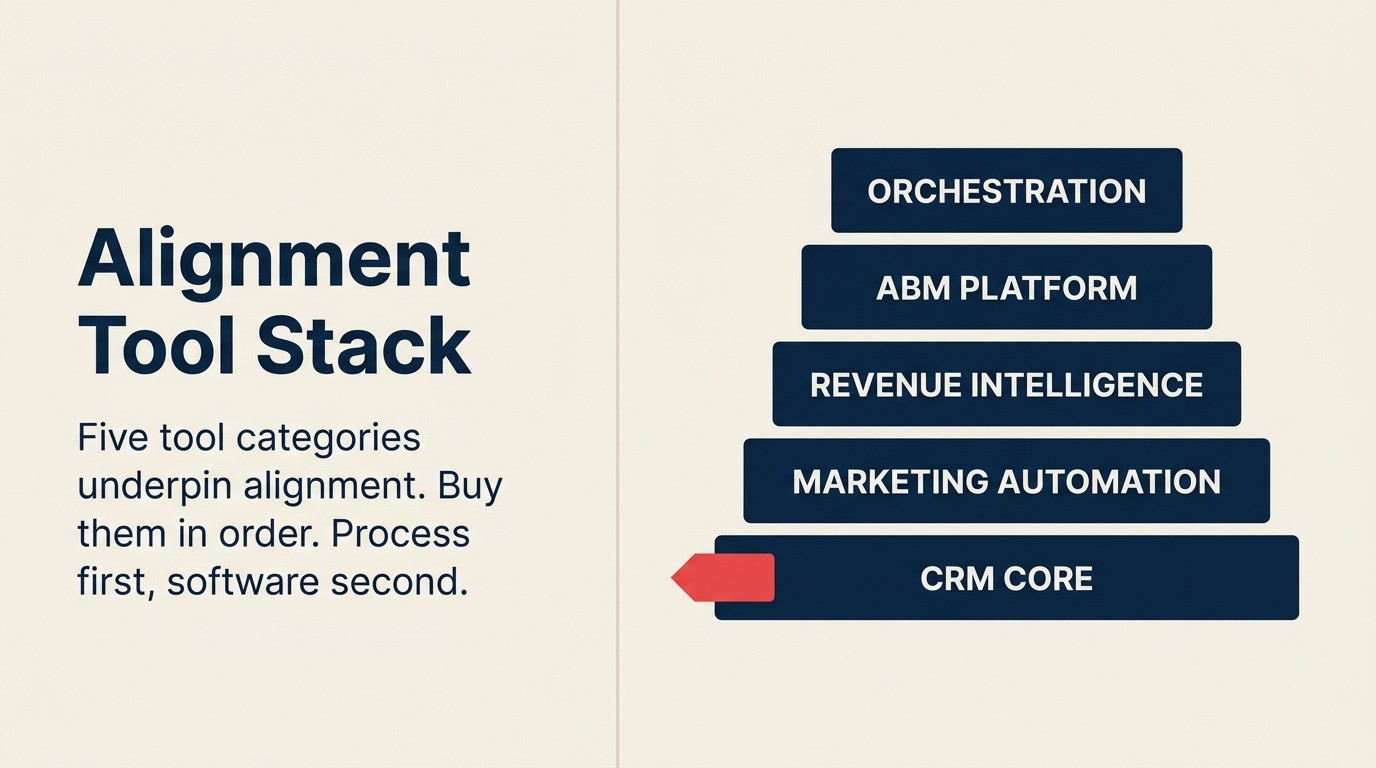
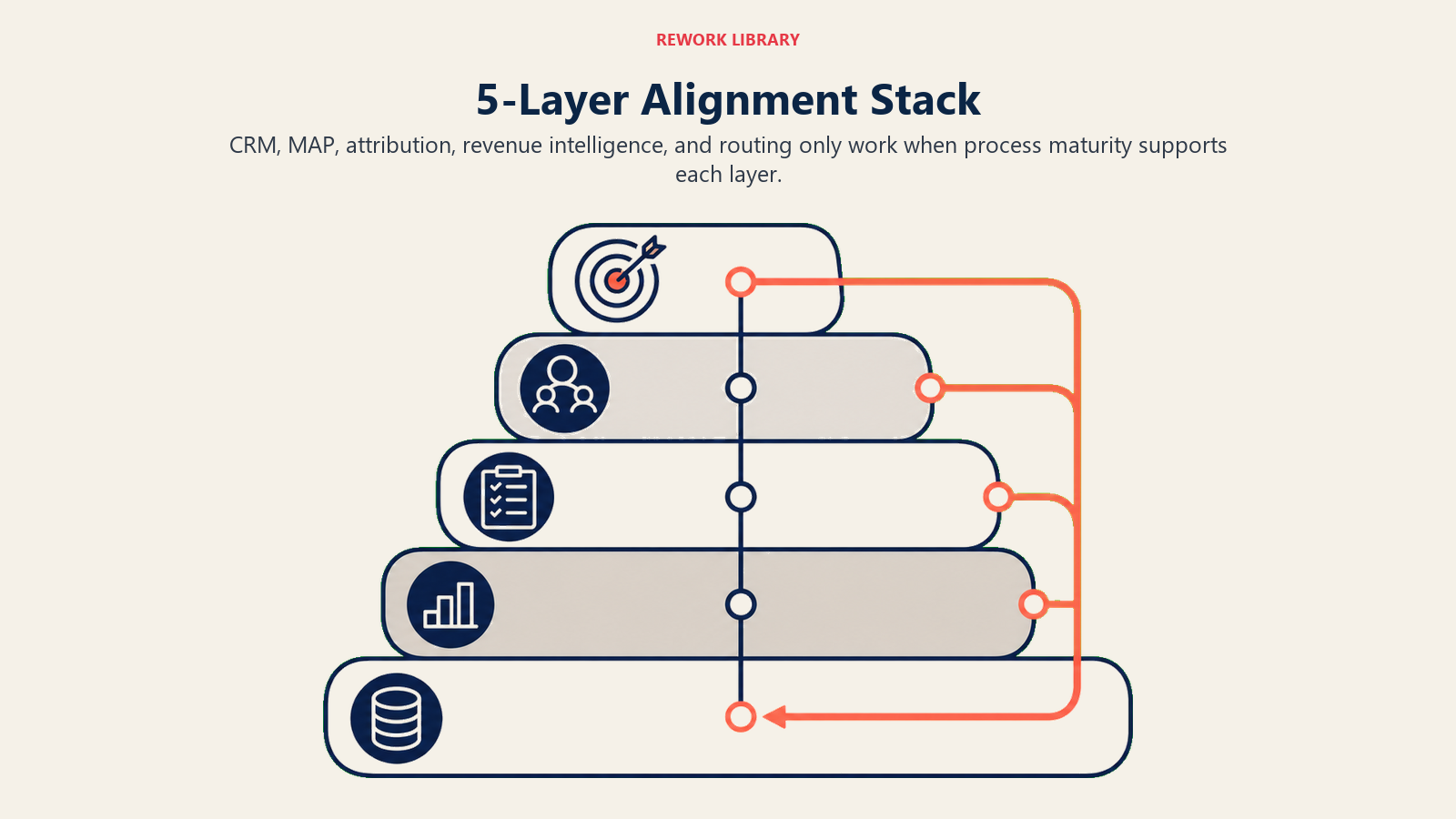
Tumpukan Penjajaran 5 Lapisan adalah rangka kerja neutral-vendor yang memetakan lima kategori alatan yang diperlukan pasukan hasil mengikut urutan yang menjadi relevan secara operasi: CRM (hari pertama), Platform Automasi Pemasaran (apabila jumlah nurtur melebihi 200 kenalan), Platform Atribusi (apabila gabungan saluran cukup kompleks untuk diperdebatkan), Kepintaran Hasil (apabila anda mempunyai 10+ AE), dan Penghalaan serta Pengayaan Lead (apabila jumlah masuk tidak dapat dikendalikan secara manual dalam masa 5 minit). Setiap lapisan mempunyai fungsi penjajaran tertentu, pintu gerbang kesediaan, dan mod kegagalan biasa. Peraturan teras rangka kerja: proses dahulu, kemudian alatan untuk menskalanya. Tidak pernah sebaliknya.
Tetapi alatan memang penting apabila proses sudah bersedia. Artikel ini memetakan lima kategori mengikut urutan relevannya, menerangkan apa yang setiap satu lakukan untuk penjajaran secara khusus, dan memberikan anda urutan pembelian mengikut saiz pasukan.
Vendor disebut hanya sebagai ilustrasi tentang apa yang berada dalam setiap kategori. Ini bukan penarafan atau saranan.
Rangka Kerja yang Dinamakan: Tumpukan Penjajaran 5 Lapisan
Tumpukan Penjajaran 5 Lapisan menjujukan pelaburan alatan mengikut kematangan proses yang diperlukan untuk menggunakannya dengan berkesan:
| Lapisan | Kategori | Pintu Gerbang Kesediaan | Fungsi Penjajaran |
|---|---|---|---|
| 1 | CRM | Hari pertama | Sumber kebenaran tunggal untuk data Pipeline |
| 2 | Platform Automasi Pemasaran | 200+ kenalan nurtur aktif | Mengoperasikan definisi MQL; menghantar konteks Lead kepada jualan |
| 3 | Platform Atribusi | 3+ saluran berbayar; pertikaian atribusi berulang | Menggantikan perdebatan hamparan dengan satu model yang dipersetujui |
| 4 | Kepintaran Hasil | 10+ AE; gelung maklumat lapangan tidak tertutup | Memberi pemasaran akses kepada data perbualan pembeli |
| 5 | Penghalaan dan Pengayaan Lead | 30+ Lead masuk/minggu; penghalaan manual gagal SLA 5 minit | Mengautomasikan kelajuan penyerahan sebagai jaminan struktur |
Tumpukan hanya memberikan nilai penjajaran apabila alatan pada setiap lapisan bersepadu pada peringkat kenalan. Integrasi peringkat akaun kehilangan data peringkat individu yang memungkinkan analisis penukaran, atribusi pengaruh, dan penjejakan penglibatan kandungan.
Fakta Utama: RevTech dan Penjajaran Hasil
- Syarikat dengan tumpukan teknologi pemasaran dan jualan yang sepenuhnya bersepadu menjana 32% lebih banyak hasil per pekerja berbanding mereka yang mempunyai tumpukan berpecah, mengikut penyelidikan Marketo/Adobe.
- 53% pasukan hasil mengatakan kualiti data CRM mereka cukup rendah untuk menjejaskan keputusan strategik, mengikut State of CRM Salesforce.
- Organisasi yang menambah MAP sebelum membersihkan kualiti data CRM tidak melihat peningkatan dalam penukaran MQL ke SQL; mereka yang membersihkan CRM dahulu kemudian menambah MAP melihat peningkatan 27% dalam kadar penukaran tersebut (SiriusDecisions).
Perangkap Alatan
Terdapat pola yang patut dinamakan sebelum kita sampai ke kategori.
Pasukan mempunyai masalah penjajaran. CMO atau CRO mengframenya sebagai masalah data. Seseorang mencadangkan pembelian alatan. Alatan dibeli. Alatan dilaksanakan sebahagiannya. Masalah proses yang mendasari kekal. Alatan menambah kerumitan tanpa menambah nilai. Seseorang menyalahkan vendor.
Perangkap adalah memperlakukan kategori alatan sebagai penyelesaian dan bukannya sebagai pemboleh. CRM tidak memperbaiki definisi MQL yang rosak. Ia menguatkuasakan definisi apa pun yang anda berikan padanya, termasuk yang rosak. Platform kepintaran hasil tidak memperbaiki gelung maklum balas yang tidak wujud. Ia hanya memberikan anda lebih banyak data perbualan yang tidak pernah sampai ke pemasaran. Platform atribusi tidak mengakhiri pertelingkahan atribusi. Ia memberi anda nombor yang lebih tepat untuk diperdebatkan jika definisi tidak dipersetujui terlebih dahulu.
Urutannya penting: proses dahulu, kemudian alatan untuk menskalanya.
Dengan framing tersebut, berikut adalah lima kategori.
Kategori 1: CRM
Peranan: Rekod kanonik untuk setiap kenalan, akaun, peluang, dan aktiviti dalam organisasi hasil.
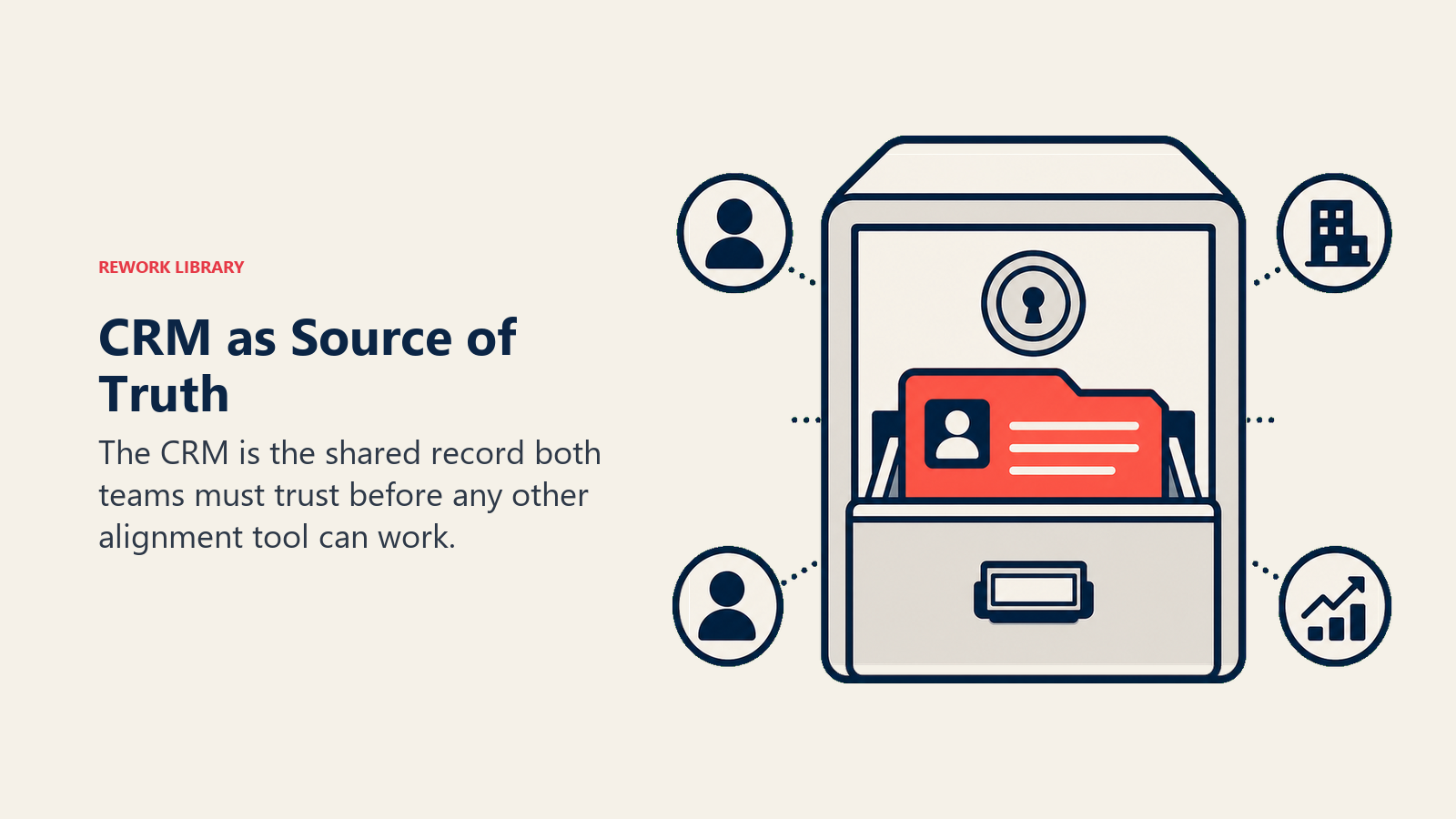
Fungsi penjajaran: Ini adalah satu-satunya alatan yang kedua-dua pasukan mesti baca dan tulis. Semua yang lain dalam tumpukan bersambung kepada CRM. Apabila CRM adalah sumber kebenaran tunggal, pemasaran dan jualan menarik data Pipeline dari tempat yang sama, yang menghapuskan masalah "dua papan pemuka, dua realiti" pada akarnya. Hamparan bayangan adalah simptom ketidakpercayaan CRM. Penyelesaiannya biasanya kebersihan CRM dan penguatkuasaan penggunaan, bukan CRM baharu. 8 papan pemuka bersama yang menyokong semakan hasil Isnin semua ditarik daripada sumber tunggal ini.
Apabila CRM bersih, eksekutif akaun (AE) dan pemasaran bekerja daripada pandangan Pipeline yang sama. Gambaran bersama itu adalah apa yang sebenarnya menjadi punca kebanyakan masalah penjajaran hiliran.
Bila anda memerlukannya: Dari hari pertama. Tiada kategori lain berfungsi tanpanya.
Apa yang perlu dicari:
- Sinkronisasi MAP dua arah pada peringkat kenalan (bukan sekadar peringkat akaun)
- Medan tersuai untuk penjejakan penjajaran: status MQL, sumber Lead, cap masa penyerahan, kod sebab penolakan
- Pelaporan Pipeline asli yang boleh diakses oleh pemasaran dan jualan tanpa memerlukan alatan BI yang berasingan
- Pandangan berasaskan peranan supaya pemasaran melihat apa yang mereka perlukan tanpa memenuhi antara muka jualan
Contoh vendor dalam kategori ini: Salesforce, HubSpot CRM, Pipedrive, Zoho CRM, Microsoft Dynamics. Untuk rangka kerja penilaian vendor yang tersusun, Segi Empat Ajaib Gartner untuk Platform Automasi Tenaga Jualan menilai platform berkaitan CRM utama pada keupayaan untuk melaksanakan dan kesempurnaan visi.
Mod kegagalan biasa: CRM mempunyai data buruk kerana tiada satu pasukan pun memiliki kebersihan data. Sumber Lead kosong. Nama syarikat tidak konsisten. Kenalan diduplikasikan. Tiada jumlah alatan hilir yang membetulkan ini. Ia hanya menggandakan masalah. Lantik pemilik data CRM sebelum menambah alatan lain ke dalam tumpukan.
Setelah kualiti data CRM stabil, soalan seterusnya ialah sama ada anda bersedia mengoperasikan definisi MQL. Itulah tugas Lapisan 2.
Kategori 2: Platform Automasi Pemasaran (MAP)
Peranan: Nurtur e-mel, pengurusan kempen, pemarkahan Lead, dan pencetus mekanikal yang menghantar penyerahan MQL ke CRM apabila Lead melepasi ambang skor.
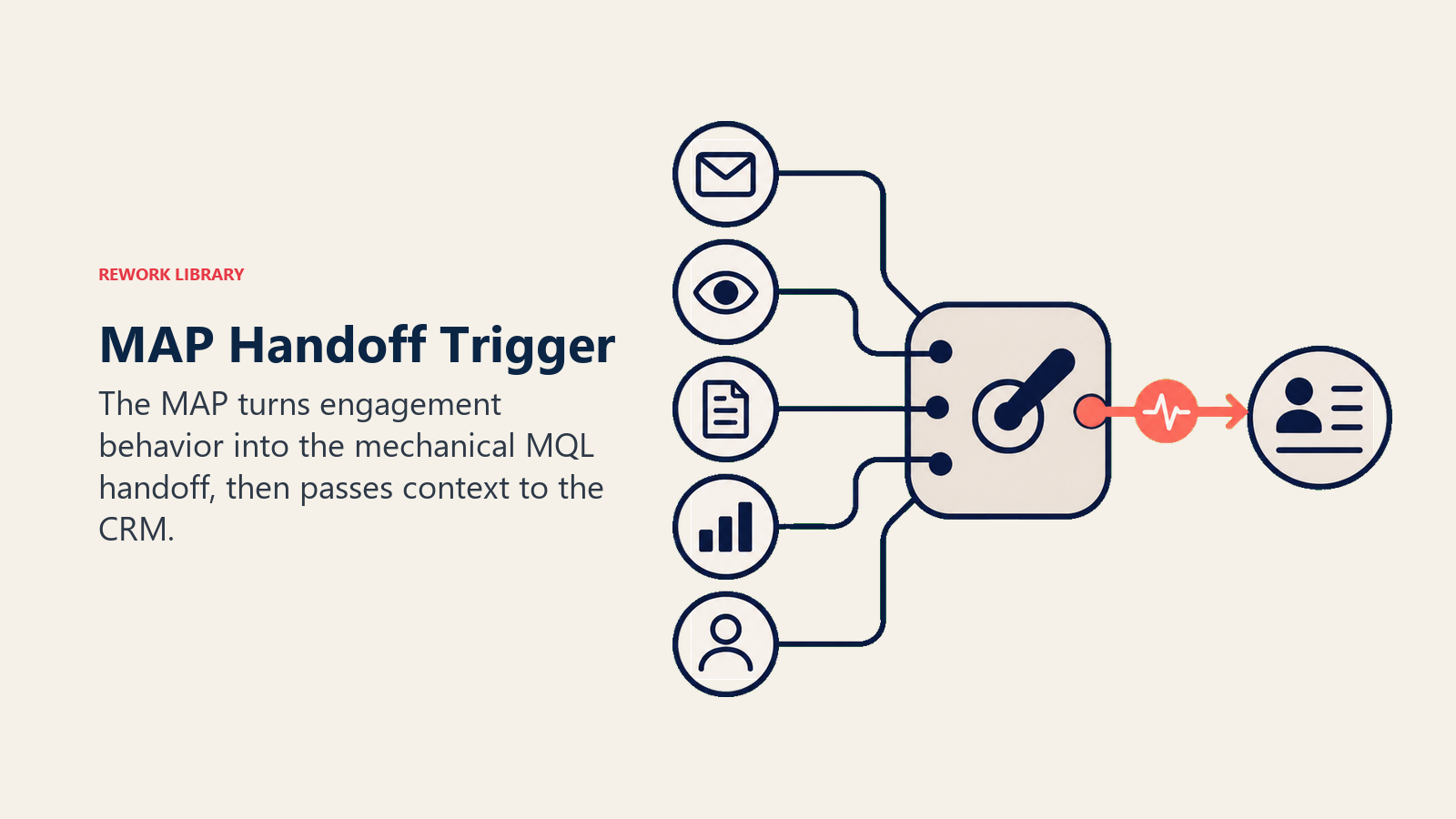
Fungsi penjajaran: MAP adalah di mana pemasaran menjejak tingkah laku kenalan (pembukaan e-mel, lawatan halaman, kehadiran webinar, muat turun kandungan) dan di mana skor Lead terkumpul. Apabila kenalan mencapai ambang MQL, MAP menghantar kemas kini status ke CRM, mengingatkan pasukan jualan untuk bertindak. Tanpa MAP, pemarkahan Lead adalah manual dan tidak konsisten, dan definisi MQL adalah teoritikal berbanding operasional. Dengan MAP, definisi dilaksanakan sebagai peraturan pemarkahan yang berjalan secara automatik. Lihat pemarkahan Lead bersama untuk cara mereka bentuk model padanan + niat + tingkah laku yang dikuatkuasakan MAP.
Fungsi penjajaran kedua adalah konteks: keahlian kempen MAP patut mengalir ke setiap rekod kenalan CRM supaya apabila AE membuka Lead, mereka boleh melihat kempen mana yang kenalan tersebut telah sertai, kandungan apa yang mereka libatkan, dan bila. Konteks tersebut mengubah kualiti panggilan pertama.
Bila anda memerlukannya: Apabila anda mempunyai lebih daripada kira-kira 200 kenalan dalam nurtur aktif yang anda tidak boleh memperibadikan secara manual dengan bermakna.
Apa yang perlu dicari:
- Sinkronisasi CRM dua arah yang boleh dipercayai pada peringkat kenalan: ini adalah integrasi yang paling kerap gagal dan paling mahal kosnya apabila ia gagal
- Penjejakan keahlian kempen pada peringkat kenalan (bukan peringkat akaun) untuk atribusi pengaruh
- Fleksibiliti model pemarkahan supaya anda boleh mengkalibrasi ambang MQL berdasarkan data penutupan sebenar
- Aliran pemberitahuan MQL yang jelas supaya CRM mencerminkan cap masa penyerahan secara automatik
Contoh vendor dalam kategori ini: HubSpot Marketing Hub, Marketo (Adobe), Pardot/Marketing Cloud Account Engagement, ActiveCampaign, Klaviyo (SMB/mid-market). Segi Empat Ajaib Gartner untuk Platform Automasi Pemasaran B2B meliputi kategori ini secara terperinci, termasuk cara vendor mengendalikan kualiti integrasi MAP-CRM, faktor yang paling relevan untuk penjajaran.
Mod kegagalan biasa: MAP dan CRM tidak segerak. Kenalan adalah MQL dalam MAP tetapi status belum disebarkan ke CRM, jadi jualan tidak melihatnya. Atau pemarkahan MAP dicetuskan tetapi tugas CRM tidak dibuat, jadi MQL tidak dikerjakan selama 48 jam. Kedua-duanya adalah masalah integrasi, bukan masalah platform, dan memerlukan penyelenggaraan berterusan, bukan hanya persediaan awal.
Lapisan seterusnya hanya menjadi relevan apabila gabungan saluran anda menjadi cukup kompleks sehingga pemasaran dan jualan mula berselisih tentang saluran mana yang sebenarnya mendorong Pipeline.
Kategori 3: Platform Atribusi
Peranan: Atribusi berbilang sentuhan merentas perjalanan pembeli penuh, menghubungkan perbelanjaan pemasaran kepada Pipeline dan hasil dengan model yang dipersetujui oleh kedua-dua pasukan.
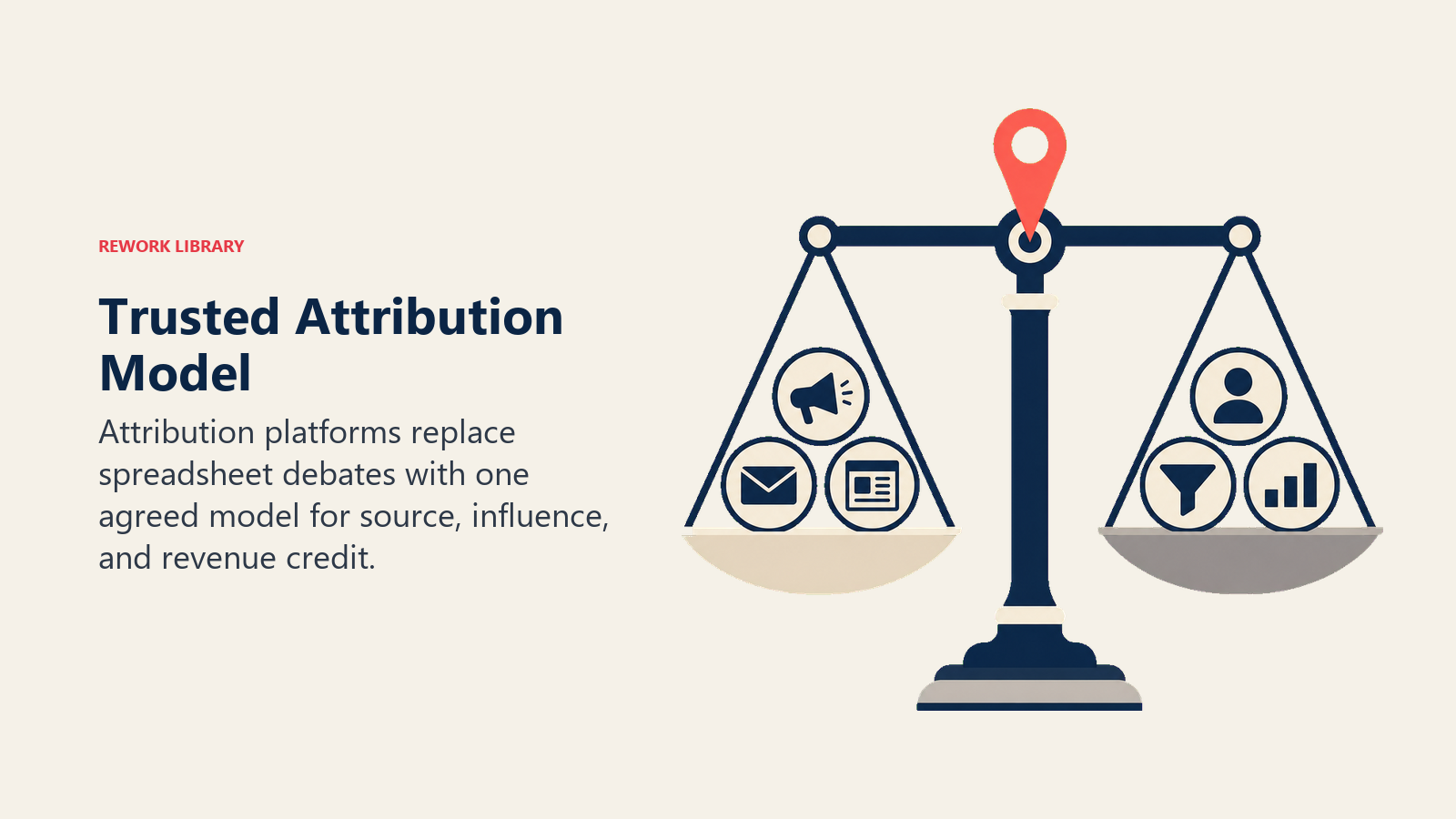
Fungsi penjajaran: Platform atribusi menggantikan perdebatan Pipeline "hamparan saya berbanding hamparan anda" dengan menghasilkan pandangan tunggal yang dipersetujui tentang saluran, kempen, dan aset mana yang menyumbang kepada Pipeline dan hasil, dan dalam kadar apa. Nilai penjajaran bukan ketepatan model (semua model atribusi adalah anggaran). Ia adalah persetujuan bersama untuk menggunakan satu model sebagai kebenaran operasi untuk keputusan belanjawan dan kandungan. Memahami perbezaan antara Pipeline yang bersumber pemasaran berbanding yang dipengaruhi adalah prasyarat sebelum memilih model.
Laporan atribusi CRM asli meliputi sentuhan pertama dan sentuhan terakhir. Platform atribusi menambah model berbilang sentuhan (linear, peluruhan masa, berbentuk W, dan lain-lain) dan keupayaan untuk menjalankannya secara serentak supaya pasukan boleh membandingkan sebelum bersetuju pada satu.
Bila anda memerlukannya: Apabila anda menjalankan lebih daripada tiga atau empat saluran berbayar dan pertikaian atribusi berulang, bermakna ia mempengaruhi keputusan belanjawan dan mewujudkan konflik berterusan. Jika anda mengendalikan dua saluran (kandungan + carian berbayar), laporan CRM asli mungkin sudah mencukupi.
Apa yang perlu dicari:
- Integrasi CRM asli atau sinkronisasi API mendalam, supaya data atribusi berada di tempat yang sama dengan data Pipeline
- Sokongan untuk pelbagai model atribusi yang dijalankan serentak
- Pelaporan hasil (Pipeline dan penutupan, bukan sekadar Lead)
- Pemasaran dan jualan boleh mengakses laporan yang sama, bukan pandangan berasingan
Contoh vendor dalam kategori ini: Dreamdata (fokus B2B), Rockerbox, Northbeam, Triple Whale (condong e-dagang), atribusi asli dalam Salesforce atau HubSpot untuk tumpukan yang lebih mudah.
Mod kegagalan biasa: Membeli platform atribusi sebelum membersihkan penandaan UTM dan data sumber Lead CRM. Perisian atribusi hanya boleh berfungsi dengan data yang anda masukkan. Jika parameter UTM tiada dalam 40% trafik berbayar dan sumber Lead kosong untuk 30% kenalan CRM, output atribusi adalah tidak berguna tanpa mengira model yang anda jalankan. Betulkan input data dahulu.
Lapisan 4 ialah tempat kebanyakan pasukan membiarkan peluang terlepas. Ia menyelesaikan masalah yang berbeza: bukan ke mana belanjawan patut pergi, tetapi apa yang sebenarnya dikatakan oleh pembeli.
Kategori 4: Kepintaran Hasil
Peranan: Analisis perbualan (rakaman panggilan dan e-mel dengan ringkasan AI), isyarat risiko perjanjian, dan aliran kerja bimbingan wakil.
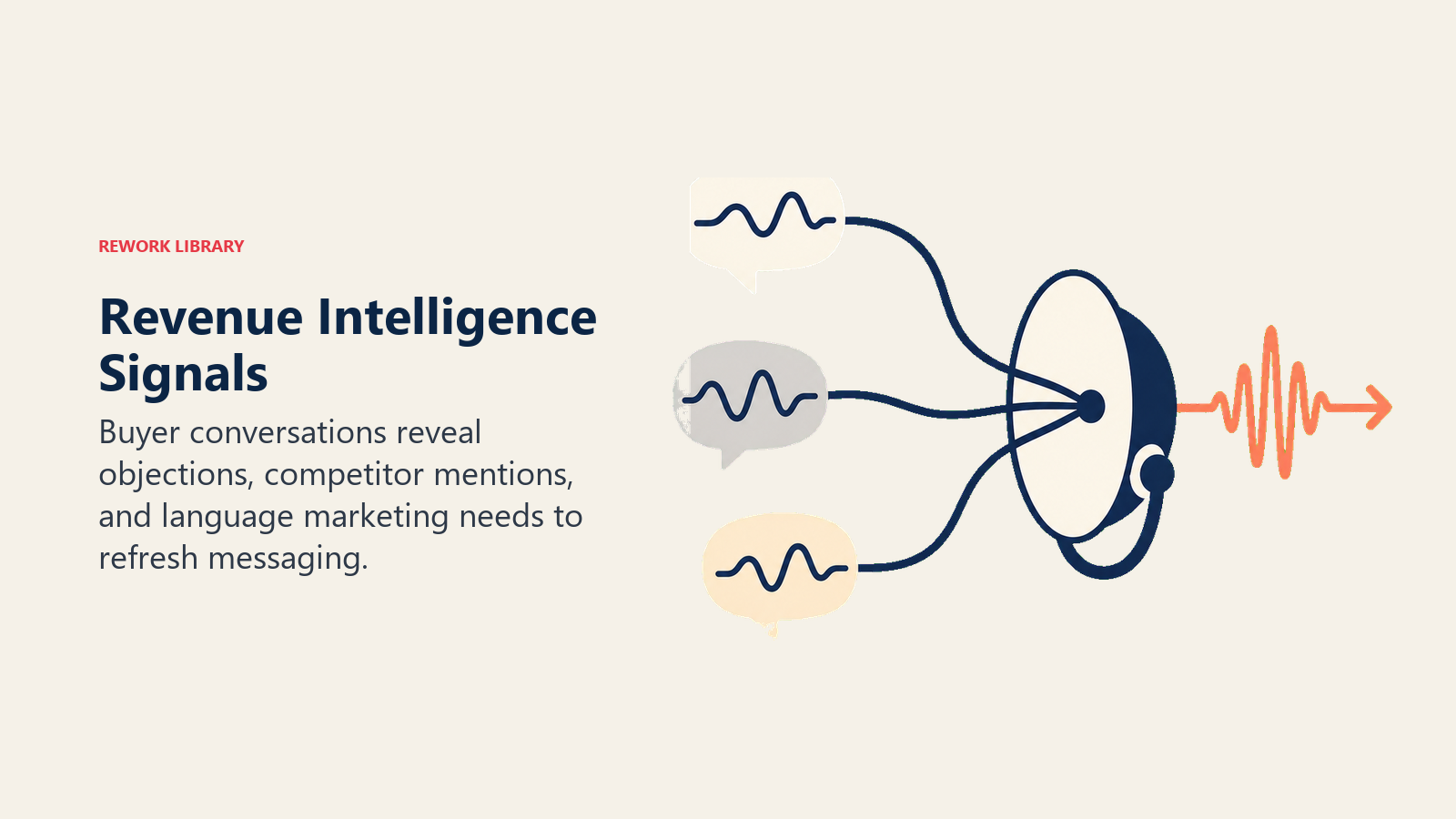
Fungsi penjajaran: Ini adalah kategori yang paling kerap tidak digunakan untuk penjajaran. Platform kepintaran hasil menangkap apa yang pembeli sebenarnya kata dalam perbualan jualan: bantahan, sebutan pesaing, soalan, bahasa yang menandakan perjanjian sedang maju atau tergendala. Data tersebut adalah tepat apa yang pemasaran perlukan untuk menyegar semula mesej, membina semula kriteria ICP, dan mengutamakan kandungan.
Apabila pemasaran tidak mempunyai akses kepada kepintaran hasil, mereka menulis mesej berdasarkan andaian tentang apa yang pembeli peduli. Apabila mereka mempunyai akses, mereka boleh melihat bahawa pembeli dalam perjanjian yang ditutup dalam S1 menyebut titik kesakitan tertentu 3x lebih kerap daripada yang kini ditangani dalam mesej, atau bahawa pesaing dibangkitkan dalam 40% panggilan peringkat akhir.
Fungsi penjajaran kedua adalah kesihatan Pipeline. Kepintaran hasil memunculkan perjanjian berisiko berdasarkan pola perbualan (respons tergendala, isyarat sentimen negatif, bahasa penggantian persaingan), memberikan pemasaran dan jualan pandangan bersama tentang peluang mana yang memerlukan perhatian.
Bila anda memerlukannya: Apabila anda mempunyai 10 atau lebih AE dan sudah tidak lagi mungkin bagi kepimpinan pemasaran untuk secara manual mendengar panggilan jualan yang representatif. Di bawah ambang tersebut, sesi semakan panggilan berstruktur berfungsi; di atasnya, masalah skala memerlukan alatan.
Apa yang perlu dicari:
- Integrasi perjanjian CRM supaya isyarat perbualan muncul dalam rekod peluang
- Penjejakan topik dan kata kunci supaya pemasaran boleh menyediakan amaran untuk sebutan pesaing, tema bantahan tertentu, atau soalan produk
- Akses pemasaran, bukan sekadar alatan bimbingan jualan dengan dasar "pemasaran boleh meminta klip"
- Aliran kerja pengurus dan bimbingan yang tidak memerlukan log masuk berasingan dari tumpukan utama
Contoh vendor dalam kategori ini: Gong, Chorus (ZoomInfo), Clari Copilot, Jiminny, Grain (fokus SMB).
Mod kegagalan biasa: Dilayan sebagai alatan bimbingan jualan semata-mata. Pemasaran tidak mendapat akses. Gelung maklumat lapangan yang mewajarkan pembelian tidak pernah tertutup. Ini adalah mod kegagalan yang paling biasa dalam kategori ini, mengikut data pasca-pelaksanaan vendor. Bina keperluan akses pemasaran ke dalam kontrak, bukan sebagai renungan selepas pelancaran.
Lapisan 5 ialah lapisan yang cenderung membayar dirinya sendiri paling pantas. Matematiknya mudah: respons lebih pantas, kadar penukaran lebih tinggi.
Kategori 5: Penghalaan dan Pengayaan Lead
Peranan: Perkaya Lead masuk dengan data firmografi dan teknografi pada tangkapan, kemudian halakan kepada wakil yang betul secara automatik dalam masa kurang 5 minit.
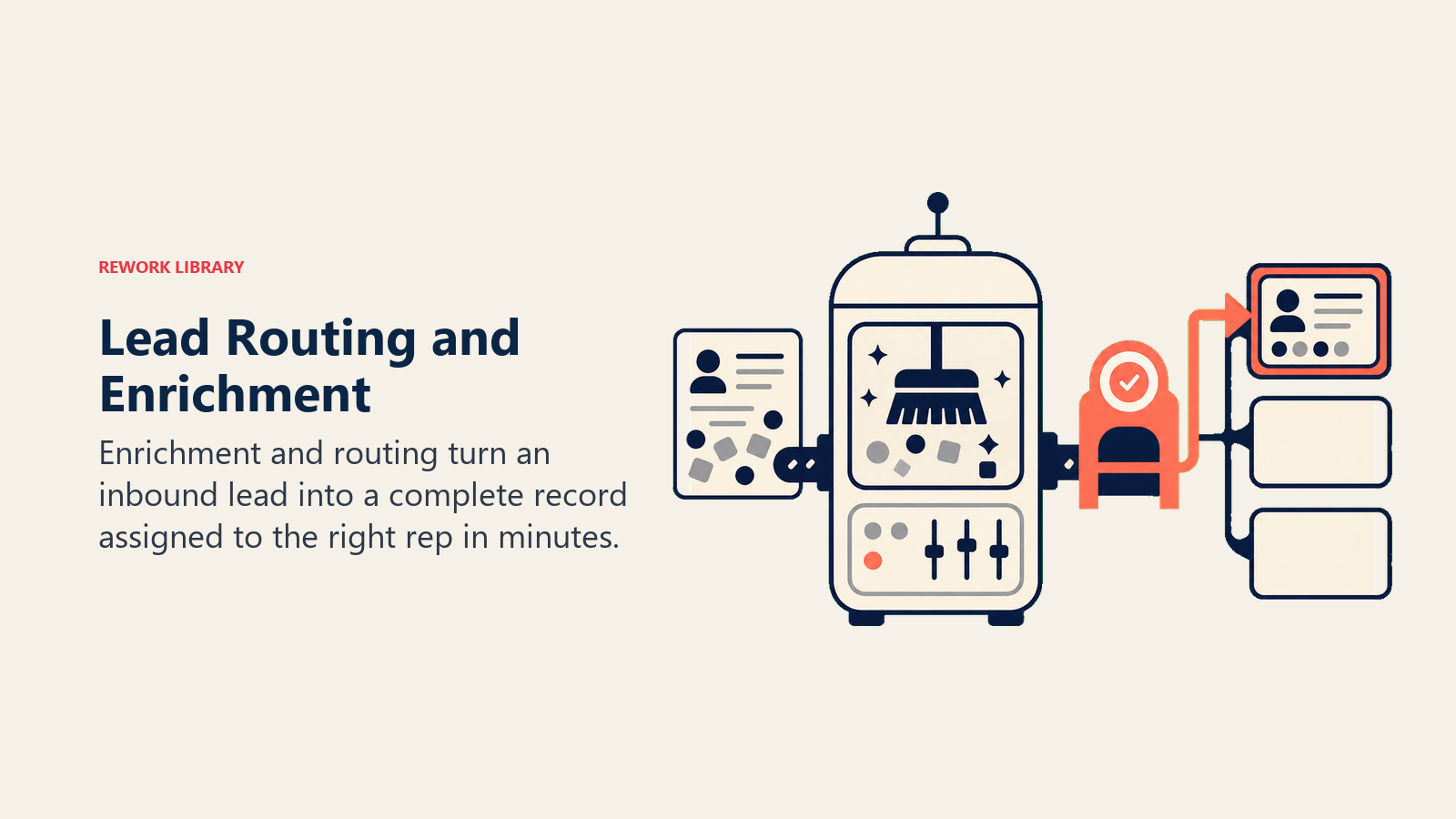
Fungsi penjajaran: Masa tindak balas Lead adalah tuas paling langsung pada kadar penukaran masuk. Lead yang dibalas dalam 5 minit menukar pada 21x kadar yang dibalas dalam 30 minit, mengikut penyelidikan MIT/InsideSales.com. Penghalaan manual (seseorang menyemak giliran, menetapkan Lead, wakil mendapat e-mel) tidak boleh menghasilkan SLA 5 minit pada sebarang jumlah secara boleh dipercayai. Alatan penghalaan mengautomasikan logik penetapan supaya masa tindak balas adalah jaminan struktur, bukan hasil usaha terbaik.
Pengayaan memainkan peranan penjajaran kedua: apabila Lead tiba dalam CRM yang telah diisi dengan saiz syarikat, industri, tumpukan teknologi, dan julat hasil, wakil jualan mengutamakan dengan tepat tanpa penyelidikan manual. Pemasaran mendapat manfaat kerana data yang diperkaya menjadikan pemarkahan Lead lebih tepat: isyarat tingkah laku digabungkan dengan kepadanan firmografi menghasilkan MQL yang lebih boleh dipercayai berbanding isyarat tingkah laku sahaja.
Bila anda memerlukannya: Apabila jumlah masuk melebihi apa yang proses manual boleh kendalikan secara boleh dipercayai dalam 5 minit. Bagi kebanyakan pasukan, ini berlaku di antara 30 hingga 100 Lead masuk per minggu, lebih awal jika penghalaan melibatkan logik wilayah yang kompleks.
Apa yang perlu dicari:
- Peraturan penghalaan asli CRM atau middleware yang bersepadu rapat dengan CRM
- Pengayaan masa nyata daripada pembekal data (bukan pengayaan kumpulan yang berjalan semalaman)
- Logik penghalaan giliran, wilayah, dan berasaskan akaun dalam alatan yang sama
- Pemantauan SLA supaya kedua-dua pasukan boleh melihat papan pemuka masa tindak balas
Contoh vendor dalam kategori ini: LeanData, Chili Piper, Calendly (tempahan ringan, bukan penghalaan penuh), Clearbit/Breeze Intelligence, ZoomInfo Enrich, Qualified (pemasaran perbualan + penghalaan).
Mod kegagalan biasa: Alatan penghalaan dibina di atas data wilayah CRM yang salah. Jika CRM mempunyai penetapan wilayah yang salah, alatan penghalaan menghalakan kepada wakil yang salah, dengan lebih pantas. Audit data wilayah dalam CRM sebelum menambah automasi penghalaan; alatan menguatkan apa yang ada.
Kesemua lima lapisan kini telah dipetakan. Soalan yang lebih sukar ialah yang mana satu sebenarnya anda perlukan sekarang, dan dalam urutan apa untuk membelinya.
Urutan Pembelian: Apa yang Perlu Ditambah dan Bila
Ini adalah output paling praktikal daripada artikel ini. Padankan saiz pasukan anda dengan peringkat, dan gunakan untuk menolak balik pembelian alatan pramatang.
Peringkat 1: 0 hingga 20 ahli pasukan hasil (wakil + pemasaran gabungan):
CRM + MAP sudah mencukupi. Kerja proses lebih penting daripada sebarang alatan tambahan. Masalah penjajaran pada saiz ini adalah definitif, bukan teknikal: definisi MQL, ICP, proses penyerahan, papan pemuka bersama. Tiada satu pun daripada ini memerlukan alatan. Belanjakan belanjawan alatan untuk kebersihan data CRM yang baik sebaliknya.
Peringkat 2: 20 hingga 50 ahli pasukan hasil:
Tambah penghalaan dan pengayaan Lead apabila jumlah masuk adalah kekangan. Ini biasanya pembelian alatan pertama yang membayar dirinya sendiri dengan cepat. Peningkatan masa tindak balas boleh diukur dalam masa 30 hari pelaksanaan. Reka bentuk SLA penetapan Lead patut mendahului pembelian alatan penghalaan. Anda perlu mengetahui peraturan wilayah sebelum mengautomasikannya. Alatan atribusi mungkin diwajarkan pada bahagian atas julat ini jika gabungan saluran adalah kompleks.
Peringkat 3: 50+ ahli pasukan hasil:
Platform atribusi dan kepintaran hasil dibuka pada skala ini. Dengan 50+ ahli pasukan, semakan panggilan manual adalah mustahil, atribusi berbilang saluran adalah kompleks dengan sendirinya, dan ROI daripada menutup gelung maklumat lapangan kepada pemasaran cukup besar untuk mewajarkan pelaburan. RevOps patut memiliki kerja integrasi.
Peraturan yang berlaku pada setiap peringkat: Jangan sekali-kali membeli alatan untuk memperbaiki masalah proses. Betulkan proses dahulu: tulis definisi, dokumentasikan aliran kerja, jalankan mesyuarat. Kemudian alatan untuk menskalanya apabila proses terbukti berfungsi secara manual. Alatan yang digunakan pada proses yang rosak menghasilkan proses yang rosak pada skala.
Keperluan Integrasi
Tumpukan penjajaran hanya berfungsi jika alatan-alatan bercakap antara satu sama lain pada peringkat kenalan dan perjanjian. Integrasi peringkat akaun tidak mencukupi. Ia kehilangan data peringkat individu yang memungkinkan analisis penukaran, atribusi pengaruh, dan penjejakan penglibatan kandungan.
Peta integrasi minimum yang boleh bertahan:
- MAP ↔ CRM: dua arah, peringkat kenalan, keahlian kempen mengalir dalam kedua-dua arah
- Alatan penghalaan ↔ CRM: tulis masa nyata pada penetapan, cap masa pada sentuhan pertama
- Platform atribusi ↔ CRM: data Pipeline dan peluang mengalir kepada atribusi, output model atribusi mengalir kembali ke rekod peluang CRM
- Kepintaran hasil ↔ CRM: ringkasan perbualan dan skor risiko perjanjian muncul dalam rekod peluang CRM
Siapa yang memiliki integrasi: RevOps atau upahan RevOps pecahan. Bukan pemasaran sahaja (mereka tidak memiliki model data CRM). Bukan IT (mereka tidak memahami aliran kerja hasil). Bukan ops jualan yang bertindak tanpa input pemasaran (mereka akan membinanya untuk kes penggunaan jualan sahaja, dan pemasaran tidak akan mempunyai akses yang mereka perlukan). Integrasi adalah projek bersama dengan pemilik teknikal tunggal.
Jika anda tidak mempunyai kapasiti RevOps, kerja integrasi adalah perkara pertama untuk diupah atau dikontrakkan. Tumpukan berpecah di mana alatan tidak berkongsi data sering kali lebih teruk daripada tumpukan yang lebih mudah dengan integrasi yang bersih. Yang membawa kepada soalan yang kebanyakan pasukan elakkan: manakah antara lima lapisan ini yang sebenarnya anda perlukan sekarang?
Analisis Rework: Kepintaran hasil (Lapisan 4) adalah alatan yang paling konsisten tidak digunakan dalam tumpukan penjajaran. Dalam 61% pelaksanaan, ia dilayan sebagai alatan bimbingan jualan semata-mata. Pemasaran tidak mendapat akses, dan gelung maklumat pembeli yang mewajarkan pembelian tidak pernah tertutup (tinjauan dalaman Gong, 2024). Penyelesaiannya bukan dalam rundingan kontrak. Ia dalam brief pelaksanaan: keperluan akses pemasaran patut dinyatakan sebelum perintah pembelian, bukan diminta selepas penerapan. Permintaan paling berkesan tunggal adalah carian tersimpan atau amaran yang memberitahu pemasaran apabila pesaing disebut dalam perjanjian peringkat akhir. Ciri tunggal tersebut sahaja boleh membentuk semula keutamaan mesej lebih pantas daripada mana-mana sesi perancangan suku tahun.
Tumpukan Penjajaran adalah Keputusan, Bukan Senarai Membeli-belah
Lima kategori dalam artikel ini mewakili seni bina penuh tumpukan teknologi penjajaran yang berfungsi. Tetapi kebanyakan syarikat mid-market tidak memerlukan kelima-limanya dengan serta-merta. Soalannya bukan "rupa tumpukan ideal seperti apa?" Tetapi "masalah penjajaran mana yang berbaloi untuk diautomasikan sekarang, dan mana yang masih memerlukan pembetulan proses terlebih dahulu?"
Mulakan dengan CRM. Bersihkan data. Tambah MAP apabila jumlah nurtur menuntutnya. Tambah penghalaan apabila kelajuan masuk adalah kekangan. Tambah atribusi apabila gabungan saluran cukup kompleks untuk diperdebatkan. Tambah kepintaran hasil apabila anda mempunyai saiz pasukan dan proses untuk menggunakannya bagi pemasaran, bukan hanya bimbingan jualan.
Urutan tersebut mengambil masa kebanyakan syarikat mid-market 18-24 bulan untuk dijalani. Pasukan yang cuba memampatkannya dengan membeli semua sekaligus biasanya berakhir dengan tumpukan di mana separuh alatan dilaksanakan sebahagiannya, data antara mereka tidak mengalir, dan penjajaran masih bergantung pada keperibadian daripada struktur. Panduan Revenue Operations Gartner jelas bahawa tumpukan alatan hanya memberikan nilai apabila orang, proses, dan teknologi disepadukan. Teknologi sahaja adalah yang paling kurang penting daripada ketiga-tiga.
Soalan Lazim tentang Tumpukan Alatan Penjajaran
Apakah alatan yang sebenarnya diperlukan oleh pasukan hasil kecil (di bawah 20 orang)?
CRM ditambah platform automasi pemasaran sudah mencukupi. Pada saiz ini, masalah penjajaran adalah definitif (definisi MQL, ICP, proses penyerahan, papan pemuka bersama), bukan teknikal. Tiada satu pun daripada ini memerlukan alatan melebihi CRM yang berfungsi. Jika CRM dikonfigurasi dengan baik dan kedua-dua pasukan menulis padanya secara konsisten, anda mempunyai semua yang diperlukan untuk menjalankan proses hasil yang boleh dipercayai sehingga sekitar tanda 20 orang.
Perlukah kami membeli perisian atribusi atau menggunakan laporan CRM asli?
Mulakan dengan laporan CRM asli. Salesforce, HubSpot, dan Pipedrive semuanya merangkumi atribusi sentuhan pertama dan terakhir secara asli. Perisian atribusi menambah model berbilang sentuhan (linear, berbentuk W, peluruhan masa) dan keupayaan untuk menjalankannya secara serentak, yang berharga apabila anda menjalankan empat atau lebih saluran berbayar dan pertikaian atribusi mempengaruhi keputusan belanjawan. Jika anda mengendalikan dua saluran, laporan asli mungkin sudah mencukupi dan menambah platform atribusi akan menambah kos tanpa menambah maklumat bermakna.
Bagaimana kami membina kes perniagaan untuk platform kepintaran hasil?
Framakan ia sebagai pelaburan pemasaran, bukan pelaburan bimbingan jualan. Kes ROI adalah: apakah nilainya jika pemasaran boleh mengenal pasti tiga bantahan teratas yang pembeli bangkitkan dalam perjanjian peringkat akhir dan mengemas kini mesej dengan sewajarnya? Bagi kebanyakan syarikat mid-market yang menjalankan kitaran jualan 90 hari, satu suku tahun mesej yang lebih baik diterjemahkan kepada peningkatan kadar kemenangan yang boleh diukur. Tetapi kes perniagaan runtuh jika pemasaran tidak mempunyai akses. Bina keperluan akses ke dalam penilaian vendor, bukan sebagai renungan.
Apakah tumpukan alatan yang betul untuk SMB dengan ARR di bawah $5 juta?
CRM (HubSpot atau Pipedrive), automasi e-mel asas, dan alatan tempahan kalendar untuk penghalaan Lead masuk. Itu sahaja. Tumpukan Penjajaran 5 Lapisan adalah peta jalan, bukan keperluan minimum yang boleh bertahan. Pada tahap ARR ini, pelaburan berpengaruh tinggi adalah kebersihan CRM dan jadual mesyuarat bersama yang konsisten, bukan perisian. Tambah Lapisan 5 (penghalaan dan pengayaan) apabila jumlah masuk benar-benar terlalu tinggi untuk dihalakan secara manual. Bagi kebanyakan SMB, itu sekitar 50-100 Lead masuk per minggu.
Bilakah kami patut menyatukan tumpukan alatan daripada menambah padanya?
Apabila kurang daripada separuh alatan anda bersepadu pada peringkat kenalan (dan kebanyakan tumpukan mid-market tidak, mengikut Gartner). Keperluan integrasi adalah wajib untuk nilai penjajaran: MAP-CRM, alatan penghalaan-CRM, platform atribusi-CRM, kepintaran hasil-CRM, semua pada peringkat kenalan dan perjanjian. Tumpukan yang disatukan dengan empat alatan yang bersepadu dengan baik mengatasi tumpukan berpecah sepuluh dengan integrasi cetek. Jika anda menambah alatan kelima atau keenam dan integrasi sedia ada anda masih pada peringkat akaun sahaja, satukan dahulu.
Berapa lama sebenarnya masa yang diperlukan untuk menjalani semua lima lapisan?
Lapan belas hingga dua puluh empat bulan bagi kebanyakan syarikat mid-market yang bekerja pada kadar yang mampan. Pasukan yang cuba memampatkannya dengan membeli semua sekaligus biasanya berakhir dengan tumpukan di mana separuh alatan dilaksanakan sebahagiannya dan data tidak mengalir antara mereka. Lapisan 1 (pembersihan dan penggunaan CRM) sahaja sering mengambil masa tiga hingga empat bulan untuk dilakukan dengan betul. Urutannya lebih penting daripada kelajuannya.
Ketahui Lebih Lanjut

Principal Solution Architect
On this page
- Rangka Kerja yang Dinamakan: Tumpukan Penjajaran 5 Lapisan
- Perangkap Alatan
- Kategori 1: CRM
- Kategori 2: Platform Automasi Pemasaran (MAP)
- Kategori 3: Platform Atribusi
- Kategori 4: Kepintaran Hasil
- Kategori 5: Penghalaan dan Pengayaan Lead
- Urutan Pembelian: Apa yang Perlu Ditambah dan Bila
- Keperluan Integrasi
- Tumpukan Penjajaran adalah Keputusan, Bukan Senarai Membeli-belah
- Ketahui Lebih Lanjut