8 Tanda Amaran Pasukan Pemasaran dan Jualan Anda Tidak Selaras (Dan Apa yang Perlu Dilakukan Dahulu)
Turn this article into takeaways for your work.


Each assistant summarizes the article only for you and suggests best practices for your work.
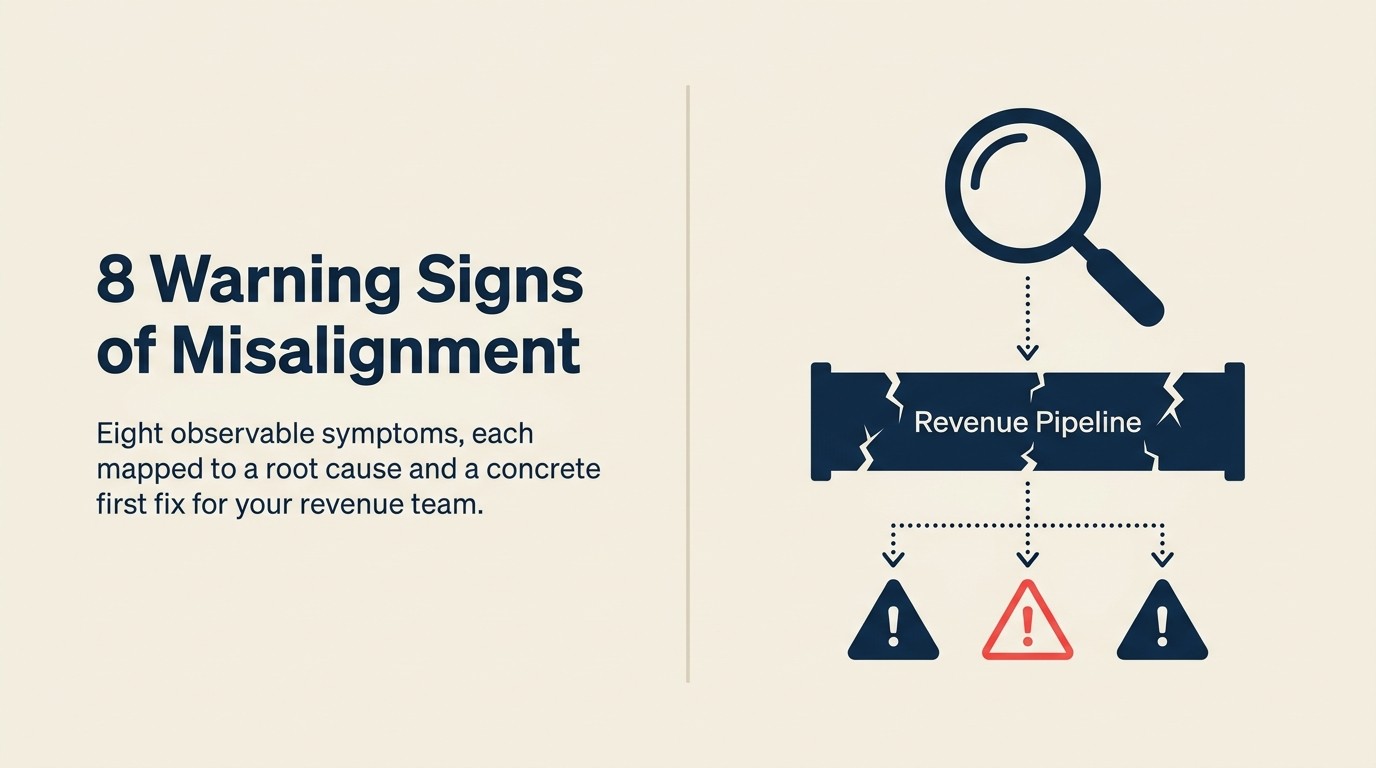
Ketidakselarasan adalah masalah yang bergerak secara senyap. Ia jarang mengumumkan dirinya dalam mesyuarat kepimpinan. Sebaliknya, ia bersembunyi dalam perkara lain: "pasaran sedang lemah sekarang," "wakil jualan kami memerlukan latihan yang lebih baik," "kualiti lead lebih rendah suku ini," "kami mempunyai beberapa urus niaga besar yang terlepas." Penjelasan-penjelasan ini bukan semuanya salah. Tetapi ia sering merupakan simptom masalah yang lebih mendalam yang diburukkan lagi oleh isu ketidakselarasan.
Tanda-tanda amaran adalah spesifik dan boleh diperhatikan. Anda tidak memerlukan perunding untuk menemuinya. Anda perlu tahu apa yang perlu dicari.
Ini bukan kad skor. Ini adalah peta punca akar. Setiap satu daripada lapan tanda amaran di bawah menunjuk kepada punca sistemik yang spesifik, dan langkah pertama yang konkrit. Matlamatnya bukan untuk mengira berapa banyak yang anda ada. Ia adalah untuk mengenal pasti yang mana satu paling merugikan anda dan betulkan itu dahulu.
Cara Menggunakan Senarai Ini
Baca setiap tanda. Tanya sama ada ia aktif dalam organisasi anda. Jika ya, lihat penilaian keterukan dan langkah pertama. Jangan cuba menyelesaikan semua lapan sekaligus. Itulah cara inisiatif keselarasan gagal. Pilih yang mempunyai keterukan tertinggi, jalankan langkah pertama selama 60 hari, kemudian nilai semula.
Kebanyakan pasukan hasil mempunyai dua atau tiga tanda amaran aktif, bukan lapan. Mencari dua atau tiga yang betul adalah tugasnya.
Fakta Utama: Metrik Ketidakselarasan yang Penting
- Syarikat B2B kehilangan anggaran $1 trilion setahun dalam jualan akibat usaha pemasaran dan jualan yang tidak selaras, menurut penyelidikan IDC. Kajian Gartner 2024 mendapati bahawa pemasaran dan jualan bekerjasama dalam hanya 3 daripada 15 aktiviti komersial, dengan 90% eksekutif melaporkan keutamaan mereka bertentangan.
- Syarikat dengan keselarasan yang kukuh mencatat peningkatan purata 8.4% dalam hasil tahunan manakala syarikat lain mencatat penurunan purata 2.3%, menurut MarketingProfs.
- Hanya 44% wakil jualan boleh mengenal pasti lead mana yang "panas" ketika diserahkan dari pemasaran, menurut Salesforce State of Sales.
Petikan: Organisasi B2B kehilangan anggaran $1 trilion setahun dalam hasil akibat usaha pemasaran dan jualan yang tidak selaras, menurut penyelidikan IDC. Angka itu diterjemahkan kepada kira-kira $287,000 sejam dalam ketidakcekapan komersial agregat merentasi industri.
Tanda Amaran 1: Jualan Menolak Peratusan MQL yang Tinggi Tanpa Alasan yang Didokumenkan
Rupa-rupanya: Pemasaran melaporkan jumlah MQL. Jualan melaporkan pipeline yang layak. Jurang antara dua angka tersebut adalah besar, dan apabila anda bertanya kepada jualan apa yang berlaku kepada lead yang hilang, anda mendapat jawapan yang samar: "tidak sesuai," "saiz tidak betul," "tidak membalas."
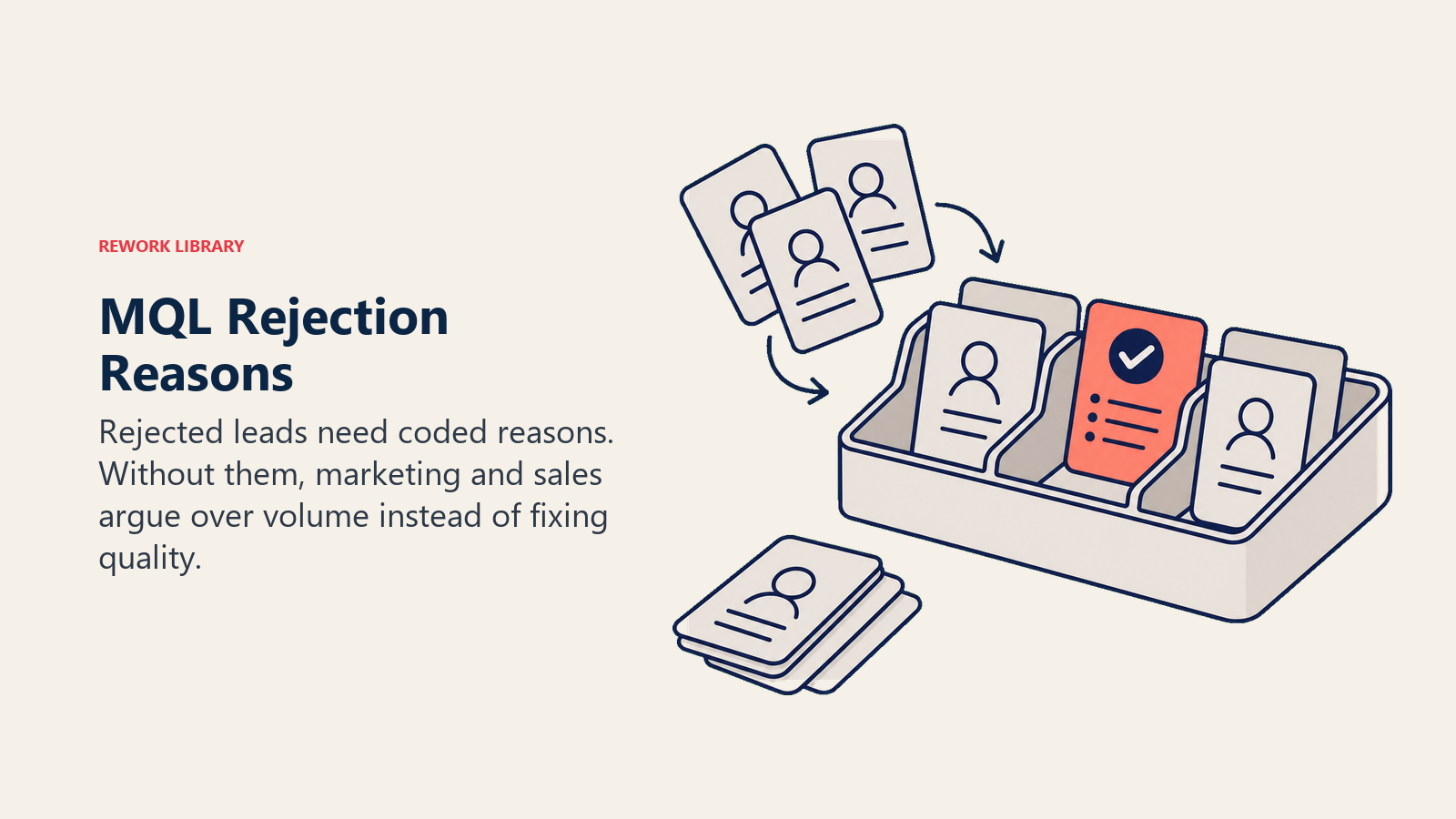 Tiada data penolakan. Tiada analisis corak. Hanya sejumlah besar lead yang tidak ke mana-mana dan perselisihan tentang siapa yang bersalah.
Apa yang ditandakannya: Definisi MQL adalah rosak. Pemasaran dan jualan mempunyai model mental yang berbeza tentang rupa lead yang "layak." Pemasaran menyerahkan lead yang memenuhi kriteria mereka. Jualan menolak lead yang tidak memenuhi kriteria mereka. Dan tiada mekanisme maklum balas wujud untuk menyelaraskan keduanya. Rangka kerja definisi MQL memberikan kedua-dua pasukan standard bersama untuk bergantung.
Keterukan: Tinggi. Ini adalah pendarahan hasil yang aktif. Setiap MQL yang ditolak tanpa alasan mewakili perbelanjaan pemasaran yang tidak menghasilkan pipeline dan peluang yang terlepas untuk belajar definisi sebenar yang patut digunakan.
Langkah pertama: Cipta borang penolakan mandatori dengan lima kategori: saiz syarikat salah, industri salah, persona salah, tiada isyarat bajet, masa tidak tepat. Wajibkan jualan untuk memilih satu sebelum menghantar semula MQL yang ditolak. Dalam 60 hari, anda akan mempunyai data yang cukup untuk melihat alasan penolakan mana yang mendominasi, dan itu memberitahu anda tepat di mana definisi MQL perlu diubah.
Tanda Amaran 2: Pemasaran dan Jualan Mempunyai Jawapan Berbeza Apabila Ditanya "Siapakah Pelanggan Ideal Kami?"
Rupa-rupanya: Tanya ketua pemasaran dan ketua jualan secara berasingan: "Gambarkan pelanggan ideal kami." Jawapan-jawapan itu tidak sepadan. Pemasaran menggambarkan syarikat sebagai 50-200 pekerja dalam teknologi atau SaaS. Jualan menggambarkannya sebagai 200-500 pekerja dalam penjagaan kesihatan dan perkhidmatan profesional. Tiada jawapan yang salah. Kedua-duanya berdasarkan pengalaman sebenar. Tetapi ia berbeza.
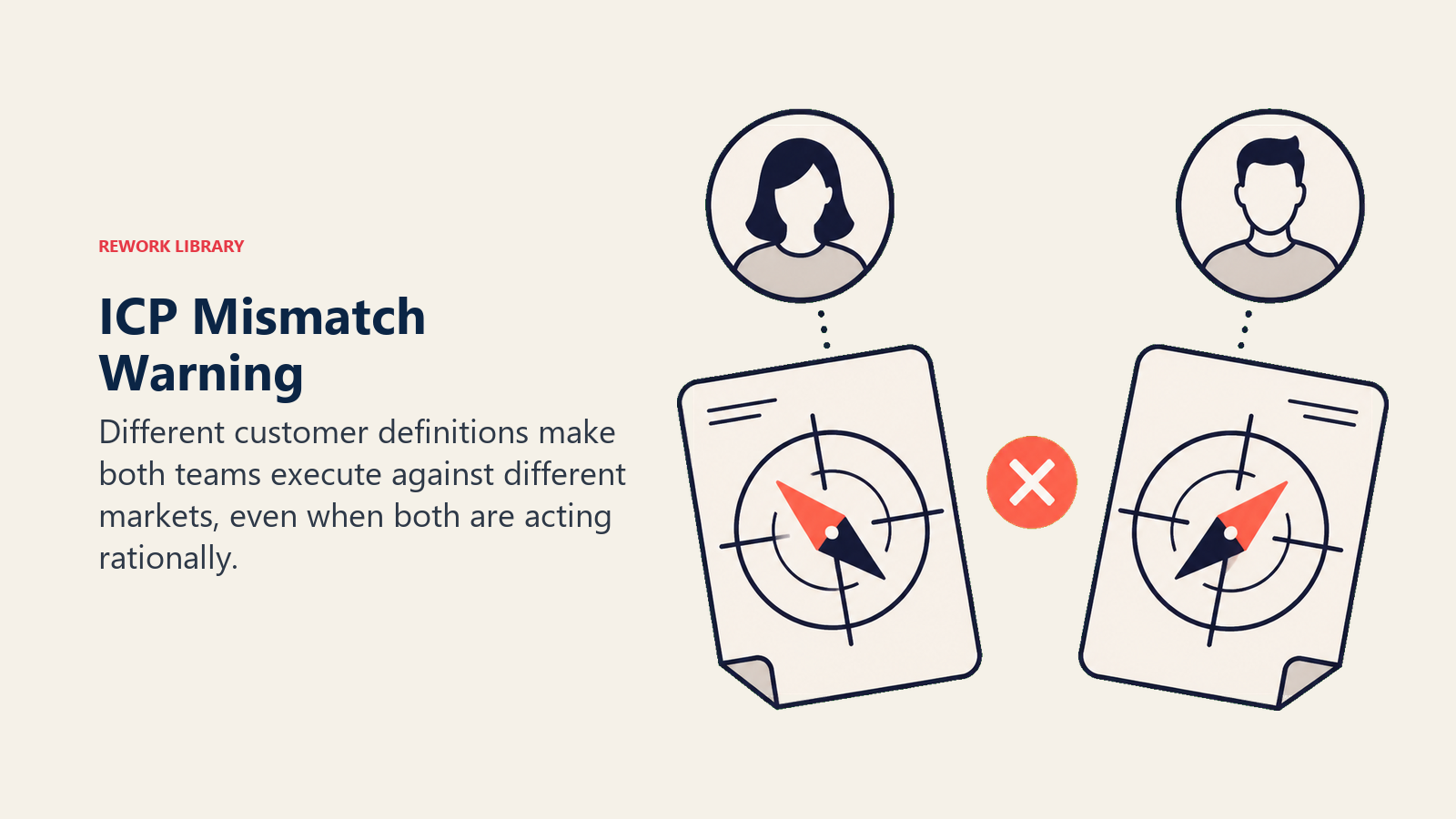 Apa yang ditandakannya: ICP tidak pernah dipersetujui secara rasmi, atau dipersetujui sekali dan telah bergeser. Kedua-dua fungsi melaksanakan berdasarkan model mental mereka sendiri, yang bermakna pemasaran menjana lead yang sepadan dengan gambaran mereka sementara jualan mencari lead yang sepadan dengan gambaran mereka.
Keterukan: Kritikal. Ini adalah ketidakselarasan asas. Segala-galanya lain (kualiti lead, kadar penolakan, maklum balas gelung tertutup) merosot apabila ICP tidak dikongsi.
Langkah pertama: Jadualkan sesi ICP bersama dengan kedua-dua ketua fungsi dan tiga atau empat wakil dari setiap pihak. Bawa 20 urus niaga terakhir yang berjaya ditutup dan 20 pelanggan yang telah churn. Bina ICP dari data tersebut, bukan dari pendapat. Dokumentasikan dalam dokumen bersama yang ditandatangani oleh CMO dan CRO. Letakkan ulasan 90 hari dalam kalendar. Artikel rangka kerja ICP bersama menjelaskan cara menjalankan sesi tersebut.
Tanda Amaran 3: Masa Tindak Balas Lead Purata Melebihi 24 Jam
Rupa-rupanya: Anda menarik data CRM mengenai purata masa-ke-hubungan-pertama untuk MQL. Angkanya ialah 28 jam, atau 36, atau "kami tidak menjejak itu sebenarnya."
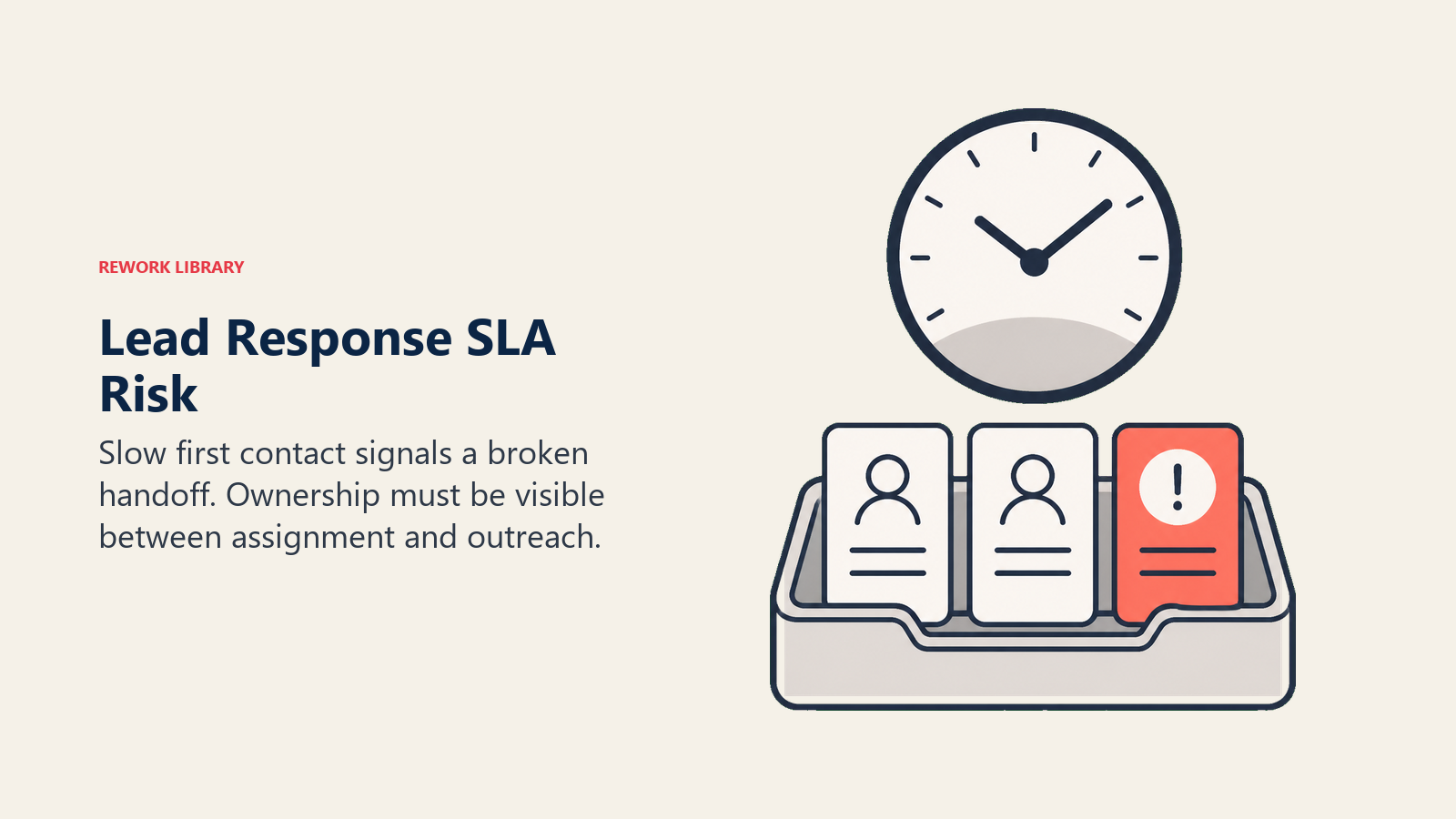 Apa yang ditandakannya: Proses penyerahan tidak berfungsi. Lead diserahkan kepada jualan, tetapi tiada yang memiliki saat antara "lead ditetapkan" dan "lead dihubungi." Tiada SLA. Tiada eskalasi apabila SLA tidak dipenuhi. Tiada keterlihatan bagi pemasaran sama ada lead mereka sebenarnya sedang diusahakan.
Kelajuan-ke-hubungan adalah salah satu pemacu penukaran yang paling terdokumen dengan baik dalam jualan B2B. Analisis Harvard Business Review terhadap 2.24 juta lead mendapati bahawa menghubungi lead dalam masa 5 minit menjadikan anda 21 kali lebih berkemungkinan untuk melayakkannya berbanding menunggu 30 minit. Kemerosotan berterusan dari situ: menjelang 24 jam, tetingkap itu sudah hampir tertutup.
Keterukan: Tinggi. Ini adalah penalti penukaran langsung. Lead sedang tiba. Mereka hanya tidak diusahakan pada masa yang bernilai.
Langkah pertama: Tarik data masa tindak balas lead 90 hari lepas mengikut wakil dan sumber. Kenal pasti halangan khusus: adakah ini jurang proses (tiada yang tahu mereka perlu tindak balas dengan cepat), jurang alat (wakil tidak mendapat pemberitahuan tepat masa), atau jurang keutamaan (wakil mendapat lead tetapi mengusahakan tugas lain dahulu)? Pembetulan bergantung kepada halangan, dan anda tidak boleh tahu pembetulan sehingga anda tahu yang mana satunya.
Tanda Amaran 4: Data Win-Loss Tidak Pernah Sampai kepada Pasukan Pemasaran
Rupa-rupanya: Jualan membuat panggilan win-loss (atau sepatutnya). Corak muncul: segmen tertentu menukar 3 kali lebih baik daripada yang lain, pesaing tertentu menang atas bantahan tertentu, profil pelanggan tertentu churn dalam masa 6 bulan. Maklumat itu kekal dalam jualan. Pemasaran menjalankan kempen atas sasaran yang sama seperti tahun lepas kerana tiada yang memberitahu mereka ada yang berubah.
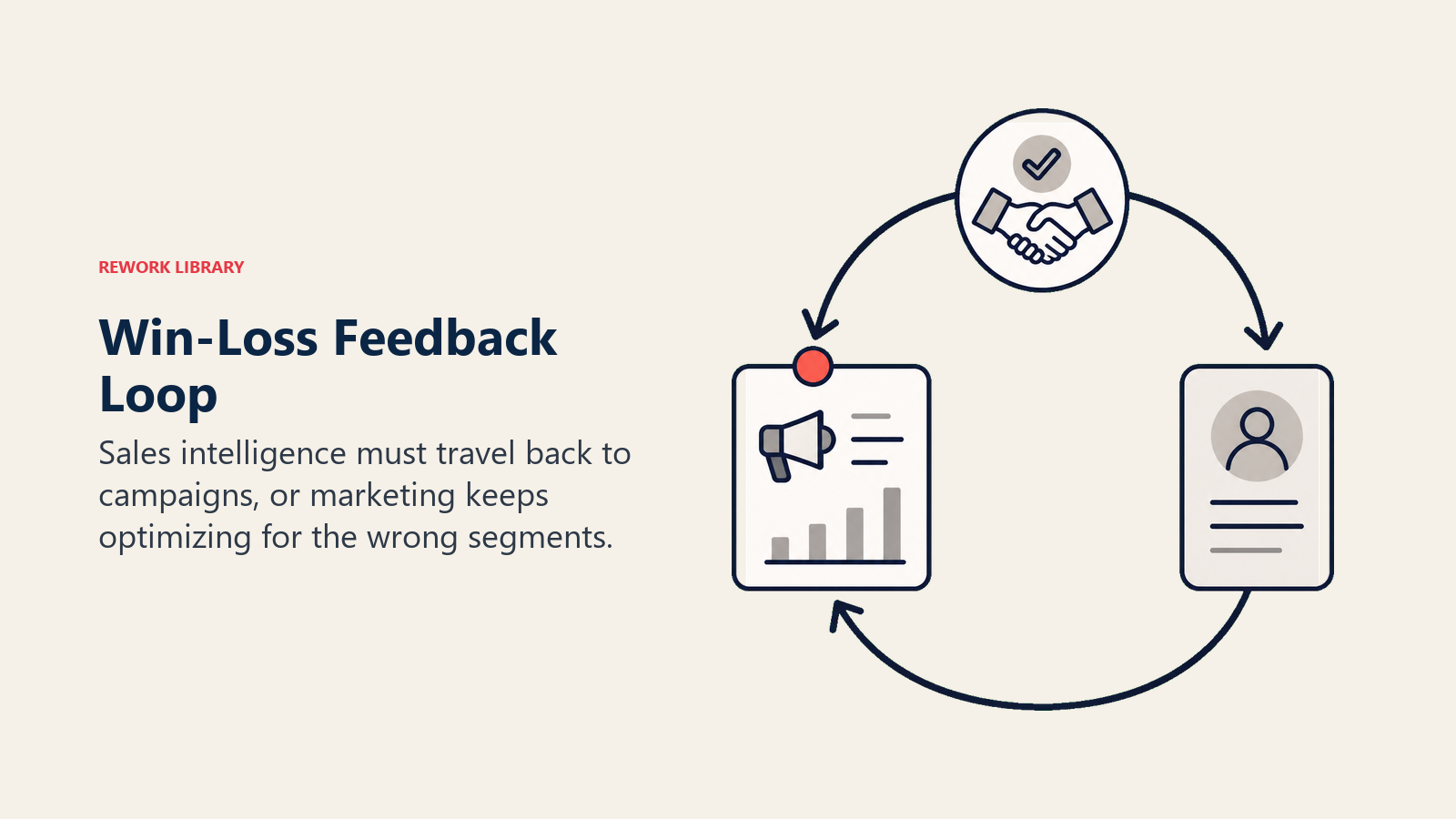 Apa yang ditandakannya: Gelung maklum balas adalah rosak. Pemasaran terbang buta tentang apa yang sebenarnya menukar ke bawah. Pengoptimuman kempen berdasarkan kos-per-lead dan bukannya kos-per-urus niaga-berjaya, yang memberi insentif kepada jumlah berbanding kualiti.
Keterukan: Sederhana-tinggi. Ini tidak menyebabkan kerosakan pipeline segera, tetapi ia menyebabkan inflasi CAC dan peralihan sasaran dari masa ke masa. Setiap suku tanpa maklum balas gelung tertutup adalah suku di mana pemasaran bergeser lebih jauh dari segmen yang sebenarnya menukar.
Langkah pertama: Sediakan taklimat win-loss bulanan selama 45 minit di mana jualan berkongsi dua atau tiga corak khusus dari bulan sebelumnya: siapa yang menukar, siapa yang churn, pesaing mana yang muncul, bantahan mana yang menangguhkan urus niaga. Bawa keputusan sasaran kempen pemasaran ke mesyuarat yang sama. Matlamatnya bukan sistem atribusi formal (itu datang kemudian). Ia untuk memastikan keputusan kempen seterusnya pemasaran dipengaruhi oleh keputusan bulan lepas jualan.
Tanda Amaran 5: Mesyuarat Ulasan Pipeline Mempunyai Pemasaran yang Membentangkan kepada Jualan
Rupa-rupanya: Mesyuarat pipeline mingguan atau dua mingguan mempunyai struktur: pemasaran membentangkan nombor MQL, kemudian beredar. Jualan mengambil alih dari situ untuk membincangkan urus niaga. Atau pemasaran menghantar dek slaid terlebih dahulu dan tidak hadir dalam bilik langsung.
Apa yang ditandakannya: Ulasan hasil berstruktur sebagai taklimat penyerahan, bukan sesi akauntabiliti bersama. Pemasaran melaporkan kepada jualan, bukan bersama mereka. Mesej organisasi tersirat adalah bahawa pemasaran memiliki bahagian atas Funnel dan jualan memiliki segala-galanya ke bawah, yang merupakan tepat struktur yang menghasilkan kitaran tuduhan apabila hasil tidak mencapai sasaran.
Keterukan: Sederhana. Ini adalah tanda amaran awal berbanding pendarahan aktif, tetapi struktur mesyuarat menguatkan struktur masalah.
Langkah pertama: Susun semula mesyuarat untuk memasukkan kedua-dua fungsi dalam papan pemuka yang sama untuk keseluruhan sesi. Pemasaran tidak membentang dan beredar. Mereka kekal untuk perbincangan pipeline, kerana keputusan sasaran dan pesanan mereka mempengaruhi setiap urus niaga dalam pipeline tersebut. Jualan tidak membentangkan kadar penutupan mereka tanpa konteks dari pemasaran tentang sumber mana yang mendorong lead mana. Kedua-dua pasukan bertanggungjawab terhadap hasil yang sama, dan mesyuarat harus mencerminkan itu.
Tanda Amaran 6: Pemasaran Meraikan Jumlah MQL; Jualan Meraikan Kadar Penutupan, dan Tiada Metrik Mempengaruhi Sasaran Pasukan Lain
Rupa-rupanya: Sasaran suku tahunan pemasaran ialah 500 MQL. Mereka mencapainya. Sasaran suku tahunan jualan ialah kadar penutupan 22%. Mereka mencapainya. Hasil adalah kurang dari rancangan. Kedua-dua pasukan meraikan kemenangan individu mereka.
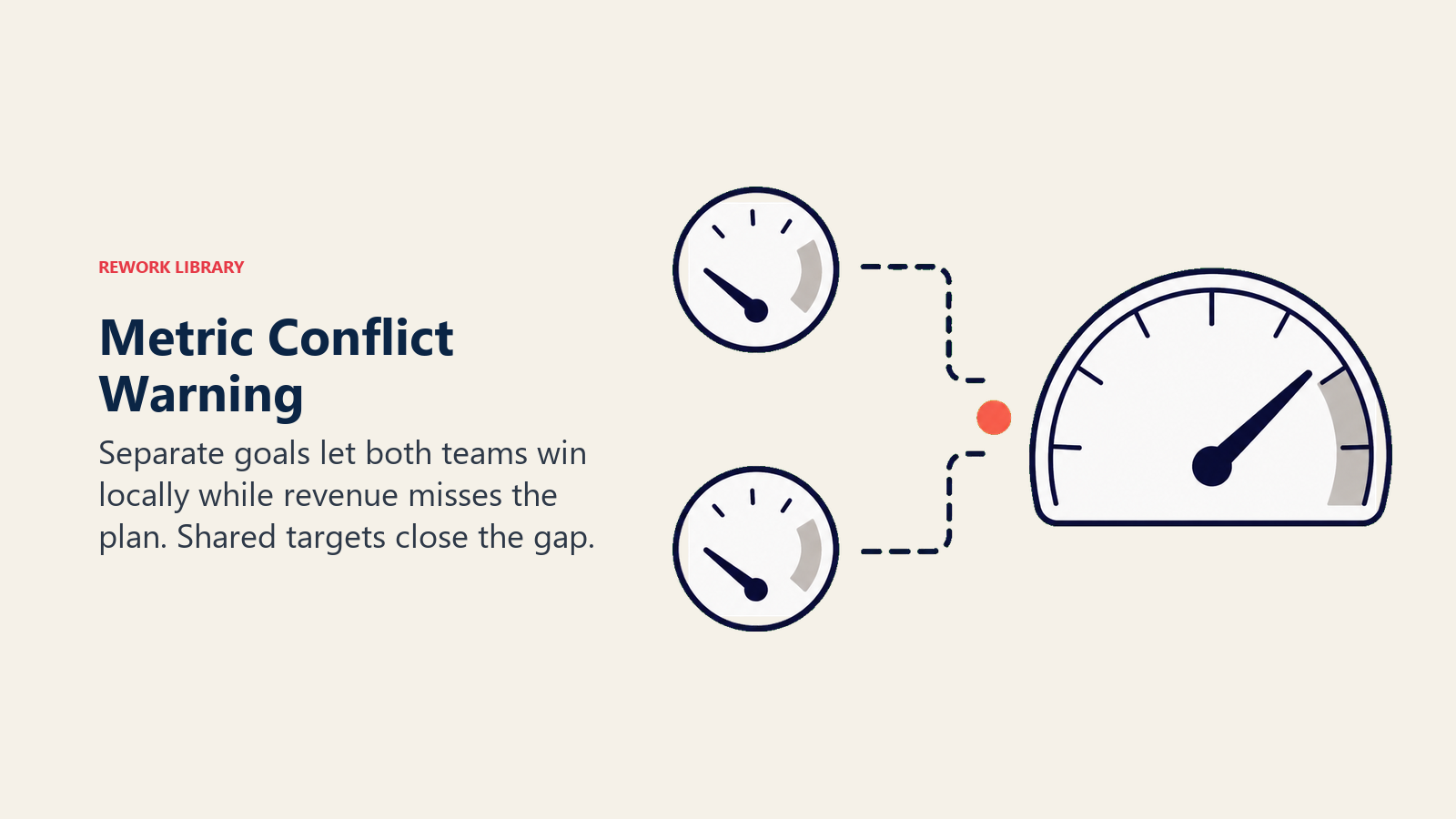 Apa yang ditandakannya: Struktur insentif tidak selaras. Setiap pasukan mengoptimumkan untuk metrik yang mereka kawal, yang memudahkan pencapaian sasaran tanpa menggerakkan garisan hasil. Pemasaran boleh menambah jumlah MQL dengan lead berkualiti lebih rendah. Jualan boleh melindungi kadar penutupan dengan mendiskualifikasi lebih agresif. Tiada tingkah laku yang tidak jujur. Ia adalah tindak balas rasional kepada metrik yang mereka diukur.
Keterukan: Tinggi. Insentif yang tidak selaras adalah masalah struktural. Tiada jumlah komunikasi yang lebih baik dapat menyelesaikan masalah reka bentuk insentif.
Langkah pertama: Perkenalkan metrik hasil bersama ke dalam KPI kedua-dua pasukan. Pemasaran menambah metrik yang dipengaruhi-pipeline atau dipengaruhi-hasil bersama dengan jumlah MQL. Jualan menambah metrik kadar penukaran lead bersama dengan kadar penutupan. Tiada pasukan yang sepenuhnya mengawal nombor yang dikongsi sahaja, yang merupakan tepat tujuannya. Kedua-dua pasukan perlu bekerjasama untuk menggerakkannya.
Tanda Amaran 7: Pustaka Kandungan Mempunyai Banyak Bahan Kesedaran dan Hampir Tiada untuk Pertengahan dan Bawah Funnel
Rupa-rupanya: Blog penuh dengan kandungan pendidikan: "Apa itu X," "Cara berfikir tentang Y," "5 trend dalam Z." Tetapi apabila wakil jualan meminta sesuatu dari pemasaran untuk dihantar kepada prospek yang sedang menilai tiga vendor, atau kepada prospek yang tersekat dalam kebimbangan perolehan, tiada yang berguna.
Apa yang ditandakannya: Pemasaran mengoptimumkan untuk trafik bahagian atas Funnel dan jumlah MQL, metrik yang mereka diukur, berbanding untuk pengaktifan jualan. Kandungan dicipta untuk menjana lead, bukan untuk menutupnya. Jualan terpaksa mencipta lembaran ringkasan, kad pertempuran, dan kajian kes mereka sendiri, sering tanpa jenama atau konsistensi mesej.
Keterukan: Sederhana. Ini adalah ketidakselarasan strategi kandungan berbanding kegagalan proses, tetapi ia mempunyai kesan langsung ke atas tempoh kitaran jualan dan kadar kemenangan.
Langkah pertama: Minta jualan untuk mencadangkan tiga jurang kandungan teratas mengikut peringkat urus niaga: "apa yang paling kerap anda cari dan tidak dapat jumpa?" Mulakan dari situ. Kandungan pertengahan Funnel (panduan perbandingan, sumber pengendalian bantahan, kisah pelanggan mengikut segmen) hampir selalu tidak cukup dikembangkan. Satu kandungan pertengahan Funnel yang baik, dicipta secara kolaboratif, bernilai sepuluh artikel kesedaran lagi untuk pasukan yang cuba menutup urus niaga.
Tanda Amaran 8: Orientasi Wakil Baharu Tidak Termasuk Sesi dengan Pemasaran tentang ICP dan Pesanan
Rupa-rupanya: Wakil jualan baharu menyertai. Mereka mendapat latihan tentang produk, CRM, pelan pampasan, metodologi jualan. Tiada seorang pun dari pemasaran duduk bersama mereka untuk menjelaskan siapa ICP, kempen apa yang sedang berjalan, lead apa yang datang dari sumber mana, atau bagaimana naratif pemasaran berhubung dengan naratif jualan.
Wakil baharu akhirnya mengetahuinya, biasanya dengan bertanya kepada rakan-rakan dan membangunkan model mental mereka sendiri, yang mungkin atau mungkin tidak sepadan dengan apa yang dimaksudkan pemasaran.
Apa yang ditandakannya: Keselarasan yang wujud (jika ada) hidup dalam kepala orang yang membinanya, bukan dalam proses yang didokumenkan. Pekerja baharu tidak mendapat model bersama. Mereka mewarisi tafsiran individu daripadanya.
Keterukan: Sederhana-rendah sebagai tanda tersendiri, tetapi ia berganda. Setiap pekerja baharu yang bermula tanpa sesi ini adalah vektor untuk peralihan definisi. Pada 20+ wakil, ketidakselarasan terkumpul dari orientasi yang tidak didokumenkan adalah ketara.
Langkah pertama: Tambahkan sesi pemasaran mandatori dalam orientasi wakil baharu, minimum 90 minit dengan ketua pemasaran atau ketua permintaan. Liputi: ICP semasa, kempen aktif dan lead apa yang dijana, naratif pesanan dan bagaimana ia berhubung dengan naratif penemuan jualan, dan di mana untuk mencari kandungan mengikut peringkat urus niaga. Kemudian jadualkan semakan 30 hari untuk menjawab soalan yang timbul di lapangan.
Analisis Rework: Berdasarkan penyelidikan HubSpot, Salesforce, dan IDC merentasi organisasi B2B pasaran pertengahan, Tanda Amaran 1, 2, dan 3 bersama (penolakan MQL tanpa alasan, jawapan ICP berbeza, masa tindak balas lead yang lambat) terdapat dalam lebih daripada 70% syarikat yang melaporkan hasil mendatar atau menurun walaupun jumlah lead yang mencukupi. Syarikat yang menangani tiga tanda ini dahulu, secara berurutan dan bukan serentak, melihat penukaran MQL-ke-SQL bertambah baik sebanyak purata 15-25% dalam 90 hari. Rangka kerja kami mencadangkan mengutamakan mengikut kelajuan-kerosakan: tanda-tanda yang merosakkan dengan cepat (1 dan 3) mendarahkan hasil setiap minggu ia berterusan; tanda-tanda yang merosakkan perlahan (2, 4, 8) berganda sepanjang suku. Mulakan dengan yang cepat.
Matriks Keterukan
| Tanda Amaran | Keterukan | Kesan Hasil | Kelajuan Kerosakan |
|---|---|---|---|
| 1. MQL ditolak tanpa alasan | Tinggi | Kehilangan pipeline langsung | Cepat (setiap bulan) |
| 2. Jawapan ICP berbeza | Kritikal | Kegagalan asas | Perlahan (berganda sepanjang suku) |
| 3. Masa tindak balas melebihi 24 jam | Tinggi | Kehilangan penukaran segera | Cepat (setiap lead) |
| 4. Data win-loss tersilo | Sederhana-Tinggi | Inflasi CAC, peralihan sasaran | Perlahan (berganda sepanjang suku) |
| 5. Mesyuarat pipeline gaya pembentangan | Sederhana | Pengukuhan kitaran tuduhan | Perlahan (struktural) |
| 6. Metrik insentif tidak selaras | Tinggi | Pengoptimuman salah struktural | Sederhana (bergantung pada pasukan) |
| 7. Jurang kandungan di pertengahan/bawah Funnel | Sederhana | Hambatan tempoh kitaran | Sederhana (setiap urus niaga) |
| 8. Tiada pemasaran dalam orientasi | Sederhana-Rendah | Peralihan definisi dari masa ke masa | Perlahan (setiap pengambilan) |
Rupa Bil Kesihatan yang Bersih pada 90 Hari
Jika anda menangani tanda-tanda keterukan tertinggi dari senarai ini, inilah yang berubah menjelang 90 hari:

- Kadar penolakan MQL menurun, bukan kerana jualan lebih bertoleransi, tetapi kerana definisi telah dijelaskan
- Data masa tindak balas kelihatan dan mempunyai pemilik
- Pemasaran tahu segmen mana yang sebenarnya menukar
- Mesyuarat pipeline mempunyai kedua-dua fungsi dalam bilik, kedua-duanya bertanggungjawab
- Wakil baharu bermula dengan model bersama berbanding mewarisi tafsiran seseorang
Tiada satu pun daripada ini adalah pencapaian budaya. Ia adalah hasil operasi yang mengikuti dari perjanjian khusus. Artikel kos ketidakselarasan mengkuantifikasi apa yang anda pulihkan apabila sistem ini mula berfungsi.
Mulakan dengan tanda yang paling mahal. Jalankan langkah pertama selama 60 hari. Ukur perubahan. Kemudian beralih kepada yang seterusnya.
Soalan Lazim tentang 8 Tanda Amaran Pasukan Pemasaran dan Jualan Anda Tidak Selaras
Apakah tanda amaran ketidakselarasan pemasaran-jualan yang paling biasa?
Tiga tanda amaran yang paling biasa, hadir dalam majoriti pasukan hasil yang berprestasi rendah, adalah: jualan menolak MQL tanpa alasan yang didokumenkan (kegagalan definisi), pemasaran dan jualan memberikan jawapan berbeza apabila ditanya siapa pelanggan ideal (kegagalan ICP), dan purata masa tindak balas lead melebihi 24 jam (kegagalan penyerahan). Mana-mana satu daripadanya adalah kebocoran hasil yang boleh diukur; ketiga-tiganya bersama menunjukkan ketidakselarasan asas.
Bagaimana anda mendiagnosis ketidakselarasan pemasaran-jualan dengan cepat?
Diagnostik terpantas adalah dengan bertanya kepada CMO dan CRO secara berasingan: "Gambarkan pelanggan ideal anda." Jika jawapan tidak sepadan, anda mempunyai ketidakselarasan asas. Yang kedua terpantas adalah dengan menarik data masa tindak balas lead dari CRM anda untuk 90 hari lepas. Jika puratanya melebihi 4 jam untuk permintaan Demo masuk, Kebocoran 1 adalah aktif. Kedua-dua diagnostik memerlukan kurang dari 30 minit dan mengenal pasti isu keterukan tertinggi.
Apa maksudnya apabila jualan menolak MQL tanpa alasan yang didokumenkan?
Penolakan MQL yang tidak didokumenkan adalah bukti definisi yang rosak. Pemasaran menjana lead yang memenuhi kriterianya; jualan menolak lead yang tidak memenuhi kriterianya; dan kerana tiada mekanisme maklum balas wujud, pemasaran tidak dapat mengemas kini sasarannya. Pembetulannya adalah borang penolakan mandatori dengan lima kategori (saiz syarikat salah, industri salah, persona salah, tiada isyarat bajet, masa tidak tepat) yang memberikan pemasaran isyarat yang diperlukan untuk menutup jurang.
Mengapa masa tindak balas lead penting untuk penukaran?
Analisis Harvard Business Review terhadap 2.24 juta lead masuk mendapati bahawa menghubungi lead dalam masa 5 minit menjadikan syarikat 21 kali lebih berkemungkinan untuk melayakkannya berbanding menunggu 30 minit. Kemerosotan penukaran berterusan sehingga 24 jam, di mana kebanyakan minat masuk telah hilang. Purata masa tindak balas B2B masih di atas 47 jam. Kebanyakan organisasi beroperasi pada sebahagian kecil potensi penukaran lead-layak mereka.
Berapa banyak tanda amaran yang biasanya dimiliki syarikat yang tidak selaras?
Kebanyakan pasukan hasil yang mengalami hasil mendatar atau menurun mempunyai dua hingga tiga tanda amaran aktif, bukan semua lapan. Rangka kerja 8 tanda adalah peta punca akar, bukan kad skor. Matlamatnya adalah untuk mengenal pasti mana dua atau tiga yang paling mahal, betulkan itu secara berurutan, dan nilai semula. Mencuba menyelesaikan semua lapan serentak adalah salah satu sebab paling biasa inisiatif keselarasan terhenti.

Principal Solution Architect
On this page
- Cara Menggunakan Senarai Ini
- Tanda Amaran 1: Jualan Menolak Peratusan MQL yang Tinggi Tanpa Alasan yang Didokumenkan
- Tanda Amaran 2: Pemasaran dan Jualan Mempunyai Jawapan Berbeza Apabila Ditanya "Siapakah Pelanggan Ideal Kami?"
- Tanda Amaran 3: Masa Tindak Balas Lead Purata Melebihi 24 Jam
- Tanda Amaran 4: Data Win-Loss Tidak Pernah Sampai kepada Pasukan Pemasaran
- Tanda Amaran 5: Mesyuarat Ulasan Pipeline Mempunyai Pemasaran yang Membentangkan kepada Jualan
- Tanda Amaran 6: Pemasaran Meraikan Jumlah MQL; Jualan Meraikan Kadar Penutupan, dan Tiada Metrik Mempengaruhi Sasaran Pasukan Lain
- Tanda Amaran 7: Pustaka Kandungan Mempunyai Banyak Bahan Kesedaran dan Hampir Tiada untuk Pertengahan dan Bawah Funnel
- Tanda Amaran 8: Orientasi Wakil Baharu Tidak Termasuk Sesi dengan Pemasaran tentang ICP dan Pesanan
- Matriks Keterukan
- Rupa Bil Kesihatan yang Bersih pada 90 Hari