Panggilan Kualiti Lead Mingguan: Bagaimana Pasukan Hasil Menutup Jurang Maklum Balas
Turn this article into takeaways for your work.


Each assistant summarizes the article only for you and suggests best practices for your work.
Hari Isnin pagi. CRO menarik pipeline. Ketua SDR berkata lead pemasaran adalah sampah. Pengurus demand gen berkata pasukan SDR tidak membuat susulan dengan cukup pantas. VP Jualan mengangguk kepada kedua-duanya dan berkata seseorang perlu menyelesaikan masalah ini.
Tiada yang diselesaikan. Selasa pun sama.
Syarikat dengan sinkronisasi pemasaran-jualan mingguan melihat kitaran jualan 20% lebih pendek berbanding pasukan yang bersinkronisasi setiap bulan atau suku tahun, menurut Laporan Penjajaran Pemasaran-Jualan Aberdeen Group, namun kebanyakan pasukan hanya meningkatkan perbualan kepada mesyuarat formal apabila sesuatu rosak.
Ini adalah salah satu mod kegagalan yang paling biasa dalam penjajaran pemasaran-jualan, dan ia bukan kerana orang tidak peduli. Ia adalah kerana tiada ritual maklum balas. Aduan bersifat lisan. Mereka berlaku dalam Slack, di koridor, dalam post-mortem QBR. Ia tidak pernah bertukar menjadi data, dan ia tidak pernah menghasilkan perubahan tertentu yang mana-mana pasukan boleh jejak.
Panggilan kualiti lead mingguan adalah ritual itu. Ia 30 minit. Ia berstruktur. Dan ia menghasilkan tepat satu output: satu perubahan tunggal yang akan dibuat oleh pasukan sebelum panggilan minggu depan. Analisis HBR tentang penyimpangan pemasaran-jualan menganggarkan bahawa kerosakan antara dua fungsi itu merugikan perniagaan lebih daripada $1 trilion setiap tahun, nombor yang didorong hampir sepenuhnya oleh jurang proses dan bukannya kegagalan prestasi individu. Glosari penjajaran pemasaran-jualan mentakrifkan MQL, SQL, ICP, dan SLA, definisi bersama yang menjadikan mesyuarat ini produktif dan bukannya berputar.
Fakta Utama: Kualiti Lead dan Penjajaran Jualan
- Hanya 27% lead yang diserahkan kepada jualan pernah dihubungi, menurut InsideSales.com, mencadangkan isu kualiti lead adalah sama banyak tentang jurang proses seperti tentang kesesuaian lead sebenar.
- Pasukan yang mengadakan mesyuarat maklum balas pemasaran-jualan bersama yang kerap melaporkan kadar penerimaan MQL 35% lebih tinggi dalam tempoh enam bulan selepas memulakan amalan itu, menurut Laporan Tinjauan Pembeli B2B Demand Gen Report.
- 61% pemasar B2B berkata menjana lead berkualiti tinggi adalah cabaran terbesar mereka, namun kurang daripada 30% mempunyai mekanisme maklum balas berstruktur dengan jualan untuk mengkalibrasi apa yang "kualiti" bermaksud, menurut State of Marketing HubSpot.
- Pasukan jualan menyebut kekurangan lead berkualiti sebagai antara tiga sebab utama untuk terlepas kuota dalam 58% kes, menurut penyelidikan State of Sales Salesforce. Nombor itu turun dengan ketara apabila gelung maklum balas beroperasi.
- Syarikat dengan sinkronisasi pemasaran-jualan mingguan melihat kitaran jualan 20% lebih pendek berbanding pasukan yang bersinkronisasi setiap bulan atau suku tahun, berdasarkan Laporan Penjajaran Pemasaran-Jualan Aberdeen Group.
Apa Sebenarnya Panggilan Kualiti Lead
Mari kita jelaskan apa yang mesyuarat ini bukan. Ia bukan QBR. Ia bukan semakan pipeline. Ia bukan pembacaan pemasaran bulanan. Ia mempunyai satu tujuan: menukar aduan kualiti lead yang bersifat naluri kepada pelarasan yang spesifik, didokumentasikan, dan boleh dilaksanakan.
Peserta adalah kecil secara reka bentuk.
Ketua demand gen: orang yang bertanggungjawab untuk volum dan kualiti MQL, dengan autoriti untuk menyesuaikan penargetan kempen, berat pemarkahan, dan campuran sumber.
Ketua SDR/BDR: orang yang paling dekat dengan pengalaman barisan hadapan bekerja lead-lead itu, dengan pandangan tentang apa yang ditolak dan mengapa.
Wakil AE bergilir: satu AE setiap bulan, bergilir supaya pemasaran mendengar daripada bahagian yang berbeza dalam pasukan jualan. Tugas mereka adalah untuk membawa satu cerita tawaran yang spesifik, bukan aduan, sebuah cerita. "Inilah yang saya lihat minggu lepas" lebih berguna daripada "lead-lead itu secara amnya buruk."
RevOps (pilihan tetapi bernilai tinggi): jika RevOps tersedia, mereka membawa lapisan data: kadar penolakan yang ditarik dari CRM, trend penerimaan, masa-dari-MQL-ke-sentuhan-pertama. Tanpa mereka, demand gen perlu menarik data ini sendiri sehari sebelum panggilan.
Mesyuarat menghasilkan output bertulis setiap minggu. Jika ia tidak menghasilkan output bertulis, pandangan tidak bertahan hingga ke mesyuarat seterusnya.
Rangka Kerja Panggilan Kualiti Lead 30 Minit
Panggilan Kualiti Lead 30 Minit adalah format mesyuarat berstruktur yang direka untuk menukar aduan kualiti lead yang bersifat naluri kepada satu perubahan yang didokumentasikan dan dilaksanakan setiap minggu. Ia berjalan pada agenda empat-blok tetap dengan had masa yang ketat yang menghalang mesyuarat daripada menyimpang kepada menyalahkan.

Rangka kerja ini mempunyai tiga kekangan yang membezakannya daripada sinkronisasi pemasaran-jualan yang generik:
Satu perubahan setiap mesyuarat, bukan senarai. Pasukan yang komit kepada tiga hingga lima perubahan setiap minggu melaksanakan kira-kira satu. Pasukan yang komit kepada satu melaksanakannya. Kekangan memaksa pengutamaan dan menghasilkan kemajuan yang boleh diukur dari minggu ke minggu yang boleh dijejak oleh kedua-dua pasukan.
Output bertulis adalah tidak boleh dirunding. Setiap mesyuarat menghasilkan entri log lima-medan: tarikh, corak penolakan yang diperiksa, hipotesis, perubahan yang dikomitkan, dan status minggu depan. Rekod bertulis adalah yang menukar persetujuan lisan kepada akauntabiliti. Tanpanya, corak yang sama berulang kerana tiada siapa yang dapat mengesahkan apa yang telah dicuba.
Demand gen hadir dengan autoriti untuk mengubah sesuatu. Jika wakil demand gen tidak dapat menyesuaikan berat pemarkahan atau mengubah suai penargetan kempen tanpa kelulusan daripada tiga pemangku kepentingan lain, mesyuarat tidak menghasilkan apa-apa hasil. Rangka kerja memerlukan pembuat keputusan, bukan wakil.
Analisis Rework: Penambahbaikan leverage tunggal tertinggi yang boleh dibuat oleh kebanyakan pasukan hasil kepada proses kualiti lead mereka bukan model pemarkahan yang lebih baik atau alat atribusi baru, ia adalah panggilan 30 minit mingguan dengan output bertulis. Berdasarkan corak merentasi pasukan B2B, yang mengekalkan kadens ini selama 12+ bulan biasanya mencapai kadar penerimaan MQL 80%+ tanpa mengubah ambang pemarkahan lead mereka, kerana perbualan itu sendiri mendedahkan dan memperbaiki penyimpangan definisi yang secara senyap menghakis kualiti lead dari masa ke masa.
Agenda 30 Minit dengan Masa
Jalankan ini setiap minggu. Hari yang sama, masa yang sama. Konsistensi adalah yang mengubahnya daripada sekali-sekali menjadi tabiat.
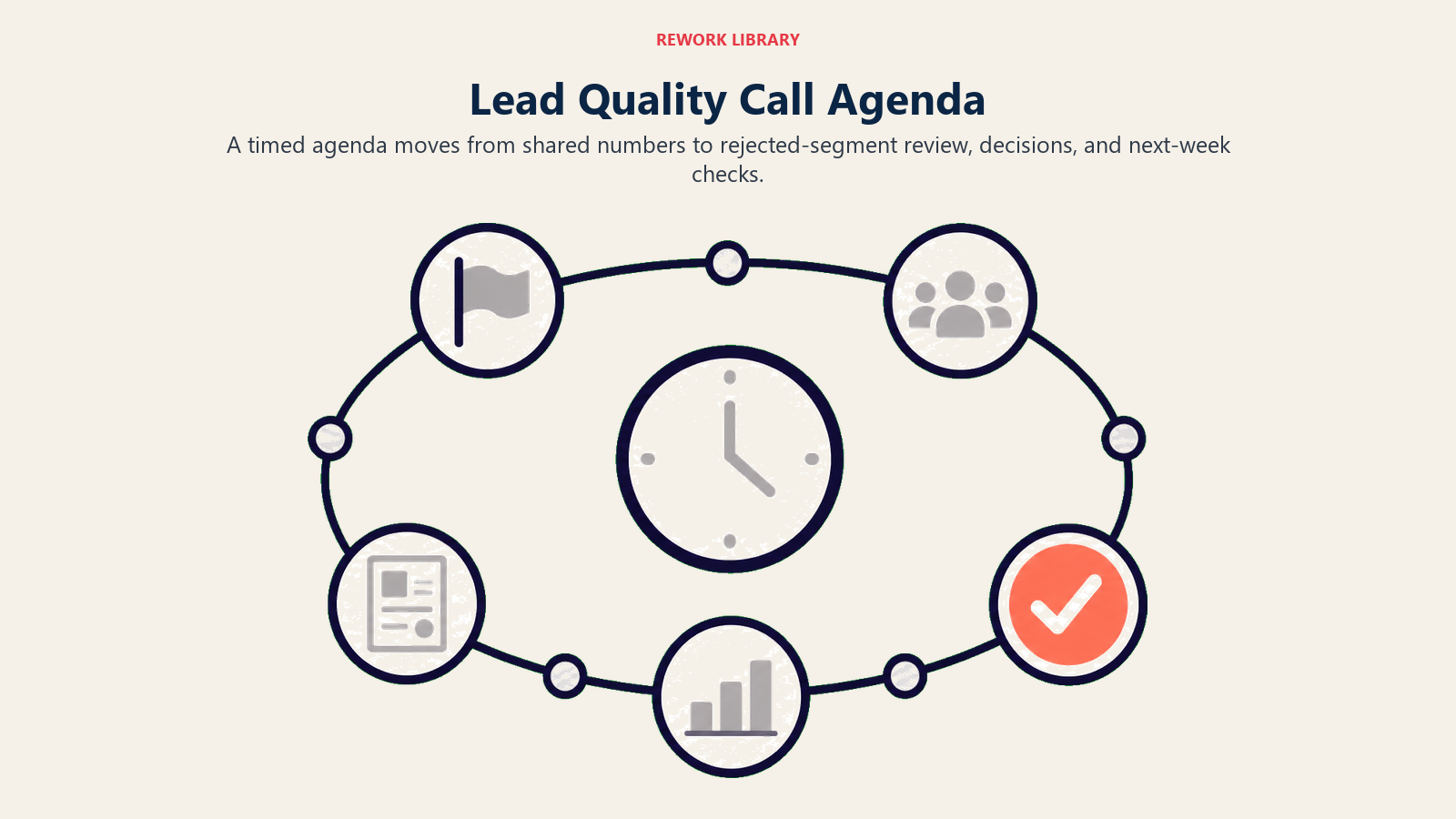
0-5 min: Semakan volum lead dan penerimaan Demand gen atau RevOps membentangkan nombor minggu: berapa banyak MQL yang diserahkan, berapa yang diterima, berapa yang ditolak, dan pecahan sebab penolakan. Belum ada analisis lagi. Hanya nombor-nombor di atas meja. Kedua-dua pasukan melihat data yang sama sebelum perbualan bermula.
5-15 min: Penyelaman mendalam segmen yang ditolak Pilih kategori penolakan terbesar dari minggu lepas. Bukan yang paling mempunyai cas emosi. Yang paling ketara secara berangka. Jika "bukan ICP" adalah 40% penolakan minggu lepas, itulah yang anda periksa.
Jalankan audit atribut: tarik tajuk pekerjaan, saiz syarikat, isyarat niat, dan saluran untuk lead dalam baldi penolakan itu. Tanya bersama-sama: apa coraknya? Adakah ia masalah penargetan segmen (pemasaran menjangkau khalayak yang salah), masalah pemarkahan (model pemarkahan mempromosikan isyarat yang salah), atau masalah definisi (jualan dan pemasaran tidak bersetuju tentang apa yang "ICP" bermaksud)? Rangka kerja definisi MQL memberikan kedua-dua pasukan titik permulaan bersama untuk perbualan itu.
Setiap penolakan perlu meninggalkan bilik dengan hipotesis. Bukan verdict. Sebuah hipotesis. "Kami fikir penolakan berkelompok di sekitar syarikat di bawah 20 pekerja kerana borang kami tidak menapis mengikut saiz syarikat" adalah hipotesis. "Lead-lead itu memang buruk" adalah tidak.
15-20 min: Isyarat positif: apa yang bertukar dan mengapa Blok ini wujud atas dua sebab. Pertama, ia mengimbangi mesyuarat supaya ia tidak menjadi sesi mengadu. Kedua, isyarat positif sama berguna dengan yang negatif. Jika satu saluran atau kempen menjana lead dengan kadar penerimaan melebihi 80%, itu berbaloi difahami dan ditingkatkan.
Tanya ketua SDR: apakah lead terbaik yang anda kerjakan minggu lepas? Apa yang menjadikannya berbeza? Wakil AE boleh menambah jika mereka mempunyai cerita tawaran yang relevan. Demand gen mencatat sumber, kempen, dan isyarat kelayakan. Ini masuk ke dalam log bersama di samping analisis penolakan.
20-25 min: Satu perubahan untuk dilaksanakan minggu ini Inilah blok yang paling penting. Setiap mesyuarat mesti menghasilkan tepat satu perubahan. Bukan tiga. Bukan senarai perkara untuk dipertimbangkan. Satu perubahan yang spesifik dan dilaksanakan-minggu-ini.
Contoh perubahan yang sah:
- Sesuaikan model pemarkahan untuk menambah 10 mata bagi peristiwa "lawatan halaman penetapan harga"
- Kecualikan syarikat di bawah 25 pekerja daripada penargetan kempen LinkedIn
- Tambah "saiz syarikat" sebagai medan wajib pada borang permintaan demo
- Tangguhkan urutan nurture webinar untuk lead dari industri tertentu
Jika pasukan anda tidak dapat bersetuju tentang satu perubahan, lalai kepada penambahbaikan data yang paling mudah: tambah pilihan dropdown sebab penolakan, atau betulkan medan data yang kosong untuk 30% lead.
25-30 min: Kemas kini log dan pemilik minggu depan Seseorang, biasanya RevOps atau pengambil nota bergilir, mengemas kini log bersama dengan perbincangan hari ini: corak penolakan yang diperiksa, hipotesis yang dibentuk, perubahan yang dikomitkan. Lima minit pertama mesyuarat minggu depan akan merujuk log ini.
Tugaskan satu orang untuk mengesahkan perubahan telah dilaksanakan sebelum mesyuarat minggu depan. Langkah akauntabiliti ini adalah yang menghalang "kami memutuskan untuk melakukan X" daripada kekal sebagai teori.
Metrik untuk Dijejak dari Minggu ke Minggu
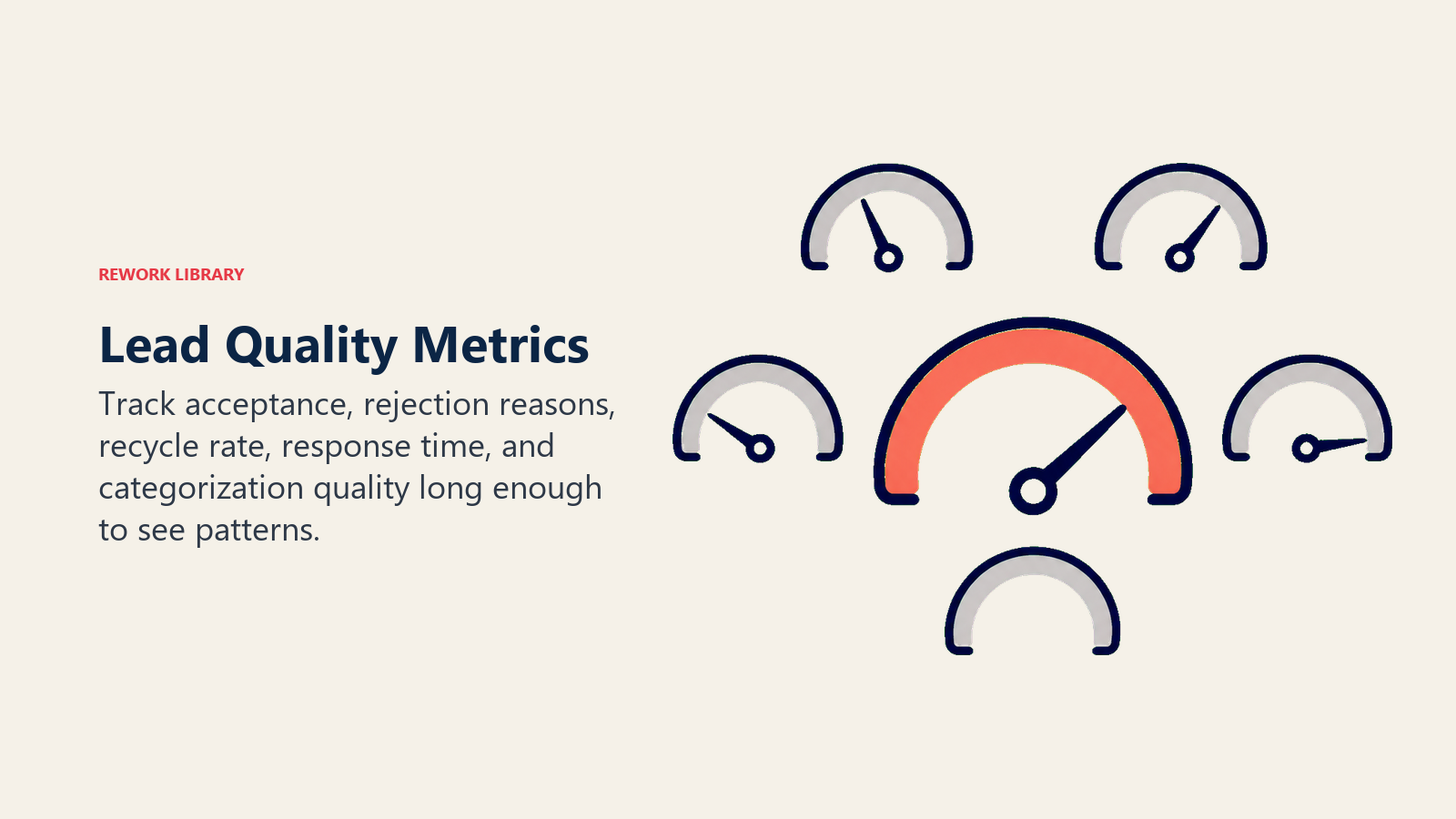
Panggilan hanya berguna jika anda memerhati nombor yang sama cukup lama untuk melihatnya bergerak.
| Metrik | Sasaran | Apa Kesilapan Memberitahu Anda |
|---|---|---|
| Kadar penerimaan MQL | >65% | Penyimpangan kualiti lead atau definisi ICP |
| Sebab penolakan teratas | Jejak 3 teratas | Kepekatan memberi isyarat kegagalan model pemarkahan |
| Trend sebab penolakan | Kategori harus beranjak | Jika sebab yang sama kekal dalam 3 teratas selama 8+ minggu, pembetulan tidak berfungsi |
| Kadar kitar semula | <20% | Kitar semula tinggi = lead yang masuk semula yang sepatutnya tidak |
| Masa-dari-MQL-ke-sentuhan-pertama | <24 jam | Pematuhan SLA pada sisi jualan |
| Kadar pengkategorian penolakan | >90% | Jika wakil tidak mengkategorikan, kualiti data runtuh |
Sasaran kadar penerimaan 65% adalah titik permulaan, bukan siling. Apabila gelung maklum balas matang dan pemarkahan bertambah baik, anda harus menjangka ia akan naik. Analisis MQL vs. QL Gartner menunjukkan bahawa syarikat dengan proses kelayakan lead formal mengalami kadar pertumbuhan hasil 10% lebih tinggi berbanding yang tanpa pendekatan berstruktur. Pasukan yang telah menjalankan proses ini selama 12 bulan sering mencapai penerimaan 80%+, bukan kerana pemasaran menghasilkan lead yang sempurna, tetapi kerana jualan dan pemasaran telah selaras tentang apa yang "layak" bermaksud. Penjajaran itu diformalkan dalam templat perjanjian MQL-SQL anda.
Jika kadar penerimaan turun di bawah 50% dan kekal selama tiga minggu berturut-turut, itu adalah isyarat untuk meningkatkan. Definisi MQL perlu dibuka semula dan dirunding semula, bukan sebagai krisis, tetapi sebagai kalibrasi semula yang semula jadi.
Cara Menjalankan Blok 2 Tanpa Menyalahkan
Penyelaman mendalam segmen yang ditolak adalah tempat di mana mesyuarat menjadi tidak terkawal. Jualan menjadi defensif. Pemasaran menjadi defensif. Perbualan berhenti menjadi tentang lead dan mula menjadi tentang siapa yang gagal.
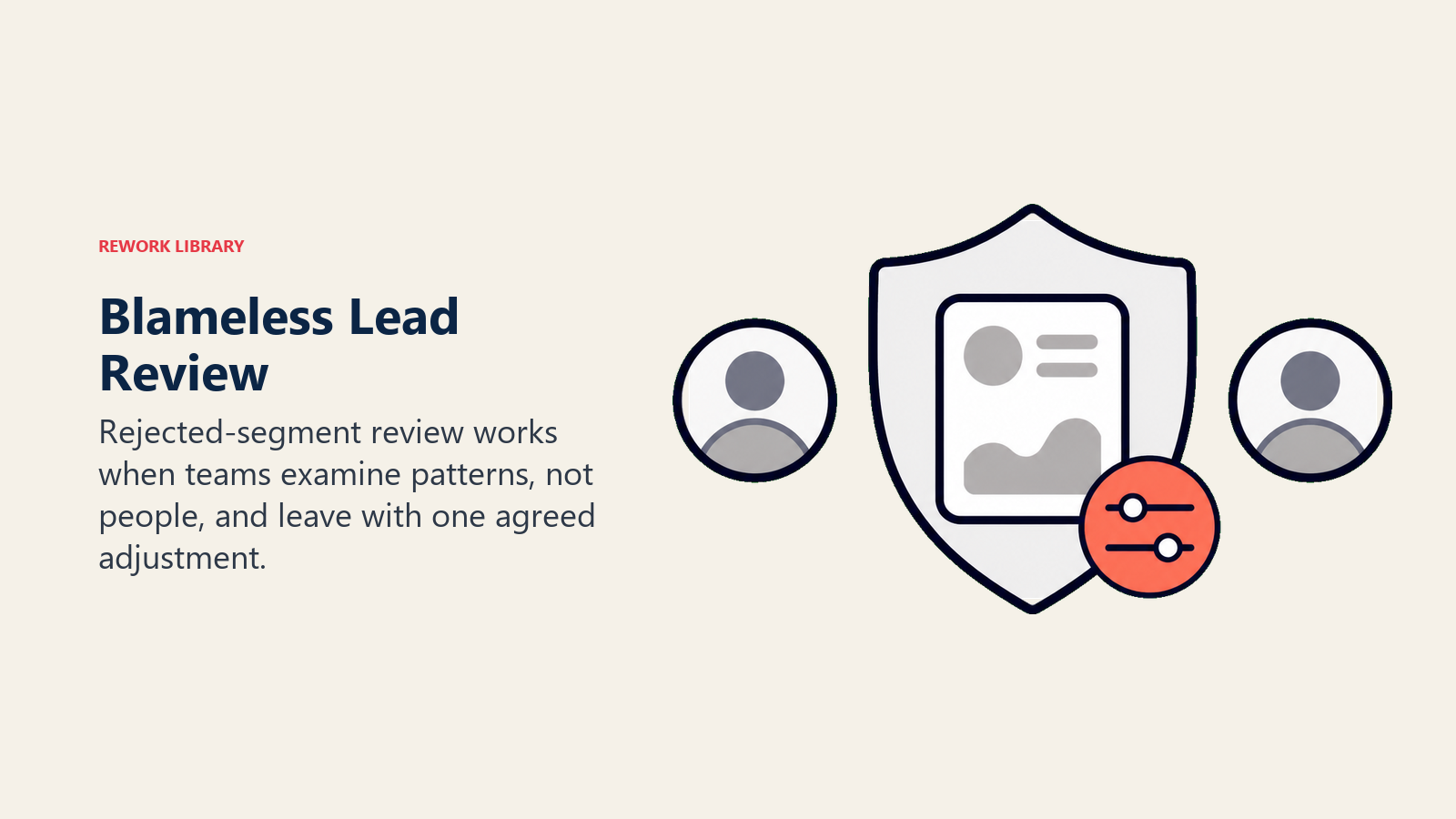
Tiga peraturan mencegah ini.
Fokus pada atribut lead, bukan kelakuan wakil. "Kumpulan lead ini mempunyai 60% kenalan di syarikat di bawah 10 pekerja" adalah pemerhatian atribut. "Pasukan SDR tidak bekerja cukup keras" adalah tuduhan kelakuan. Kekal dalam wilayah atribut. Jika perbualan menyimpang ke arah prestasi wakil, alihkan semula ke data.
Setiap penolakan memerlukan hipotesis, bukan sekadar verdict. "Lead-lead ini buruk" mengakhiri perbualan. "Lead-lead ini kebanyakannya dari syarikat di bawah $5M hasil, yang berada di luar ICP yang kami persetujui dalam S1. Berikut adalah peraturan pemarkahan yang mungkin membiarkan mereka melalui" meneruskannya. Hipotesis mewujudkan laluan kepada penyelesaian. Verdict mewujudkan laluan kepada hujah.
Pemasaran hadir dengan autoriti untuk mengubah sesuatu. Jika ketua demand gen menghadiri mesyuarat ini tetapi tidak dapat menyesuaikan penargetan kempen, mengubah berat pemarkahan, atau mengubah suai medan borang tanpa kelulusan daripada tiga orang lain, mesyuarat tidak menghasilkan apa-apa. Ketua demand gen mesti mempunyai autoriti operasi yang cukup untuk komit kepada satu perubahan sebelum meninggalkan bilik.
Mod Kegagalan Biasa
Panggilan menjadi sesi meluahkan perasaan. Apabila tiada agenda berstruktur dan tiada output bertulis, mesyuarat menyimpang kepada aduan bentuk bebas. Pemasaran berkata jualan mengabaikan lead. Jualan berkata pemasaran menghantar sampah. Semua orang beredar dengan kecewa dan tiada yang bertambah baik. 8 tanda amaran penyimpangan mendokumentasikan bagaimana corak ini bermula, sering lama sebelum sesiapa pun memanggil mesyuarat tentangnya. Penyelesaian: kuatkuasakan agenda empat-blok, lantik penjaga masa, dan jangan beranjak ke blok seterusnya sehingga blok semasa mempunyai nota bertulis.
Pemasaran hadir tetapi tidak dapat mengubah apa-apa. Koordinator demand gen yang perlu mendapat kelulusan untuk setiap perubahan pemarkahan bukan peserta yang betul. Hantarkan orang dengan autoriti, walaupun jika itu adalah komitmen separuh masa daripada pengarah pemasaran. Mesyuarat memerlukan pembuat keputusan, bukan pengambil nota.
Tiada rekod bertulis. Persetujuan lisan untuk "melihat segmen penjagaan kesihatan" hilang antara mesyuarat. Dokumen bersama dengan tarikh, sebab penolakan, hipotesis, dan perubahan yang dikomitkan adalah rekod minimum yang boleh dilaksanakan. Ia tidak perlu rumit. Google Doc dengan jadual sudah mencukupi.
Kadens tergelincir kepada bulanan. Apabila gelung maklum balas berjalan setiap bulan dan bukannya setiap minggu, jeda antara perubahan kempen dan kesannya terhadap kualiti lead menjadi terlalu panjang untuk dikorelasikan. Kempen yang anda tangguhkan bulan lepas mungkin sudah mempengaruhi nombor bulan ini, atau tidak, dan anda tidak dapat membezakannya. Mingguan memastikan kitaran maklum balas cukup ketat untuk berguna.
Giliran AE berhenti berlaku. Selepas beberapa bulan, ada godaan untuk mengalih keluar AE bergilir daripada jemputan kerana "mereka tidak menambah banyak." Yang sebaliknya adalah benar. Giliran AE adalah yang mengelakkan mesyuarat daripada menjadi dinamik pemasaran-vs-SDR. AE membawa cerita tawaran peringkat lapangan yang tidak dimiliki oleh ketua SDR dan yang tidak dapat ditangkap oleh data sahaja.
Log Bertulis: Menjadikan Pandangan Kekal
Log adalah dokumen bersama yang mudah. Entri setiap minggu mempunyai lima medan:
- Tarikh
- Corak penolakan yang diperiksa (cth., "Bukan ICP: kenalan penjagaan kesihatan di syarikat di bawah 20 pekerja")
- Hipotesis ("Model pemarkahan memberikan 15 mata untuk 'industri: penjagaan kesihatan' tetapi tiada penalti untuk saiz syarikat di bawah ambang")
- Perubahan yang dikomitkan ("Alih keluar bonus skor berasaskan industri untuk syarikat di bawah 20 pekerja")
- Status minggu depan ("Disahkan dilaksanakan" atau "Belum selesai: disekat oleh X")
Semak log setiap suku tahun. Corak yang berulang walaupun selepas perubahan adalah isyarat bahawa definisi MQL perlu dirunding semula, bukan disesuaikan lagi. Jika anda telah menyesuaikan pemarkahan segmen penjagaan kesihatan tiga kali dalam enam bulan dan penolakan terus datang dari kohort itu, soalannya bukan pemarkahan. Ia adalah sama ada penjagaan kesihatan ada dalam ICP langsung. Rangka kerja kelayakan lead anda boleh membantu anda menguji tekanan sama ada segmen itu pernah mempunyai laluan untuk tutup.
Log juga berfungsi sebagai jejak audit untuk semakan tahunan perjanjian MQL-SQL. Apabila kedua-dua pasukan duduk untuk merunding semula definisi, log memberikan mereka 12 bulan data tentang apa yang dicuba, apa yang berfungsi, dan apa yang tidak.
Bila Panggilan Ini Menjadi Tidak Perlu
Matlamat panggilan kualiti lead mingguan adalah untuk menjadikan dirinya kurang perlu dari masa ke masa.
Jika kadar penerimaan MQL anda telah melebihi 80% selama 12 minggu berturut-turut, gelung maklum balas yang paling mendesak beroperasi pada tahap yang sihat. Anda boleh beralih kepada dua mingguan. Penyelidikan pertumbuhan B2B McKinsey menunjuk kepada kesimpulan yang sama: pasukan berprestasi tertinggi bukan sekadar menjana lebih banyak lead, mereka terus mengkalibrasi isyarat mana yang meramalkan hasil. Pada 90%+ yang konsisten, bulanan mungkin mencukupi. Pada peringkat itu, kerja yang lebih mendalam beralih kepada kadens semakan pipeline bersama anda, di mana kedua-dua pasukan menilai kualiti sumber bersama dengan halaju tawaran.
Tetapi jangan menghapuskannya sepenuhnya. Pasaran berubah. ICP menyimpang. Pesaing mengalihkan mesej. Kempen baru menjangkau segmen baru. Keadaan yang menghasilkan kualiti lead yang baik tahun lepas tidak akan berterusan secara automatik ke tahun depan tanpa seseorang yang memerhati nombor dan membuat penyesuaian.
Versi matang panggilan ini adalah lebih ringan: 20 minit, bulanan, berfokus pada semakan trend dan bukannya pemadaman kebakaran mingguan. Tetapi panggilan itu sendiri kekal dalam kalendar.
Menghubungkan Panggilan kepada Kesihatan SLA yang Lebih Luas
Panggilan kualiti lead mingguan tidak beroperasi secara terpencil. Ia memberi makan kepada tiga mekanisme penjajaran lain.
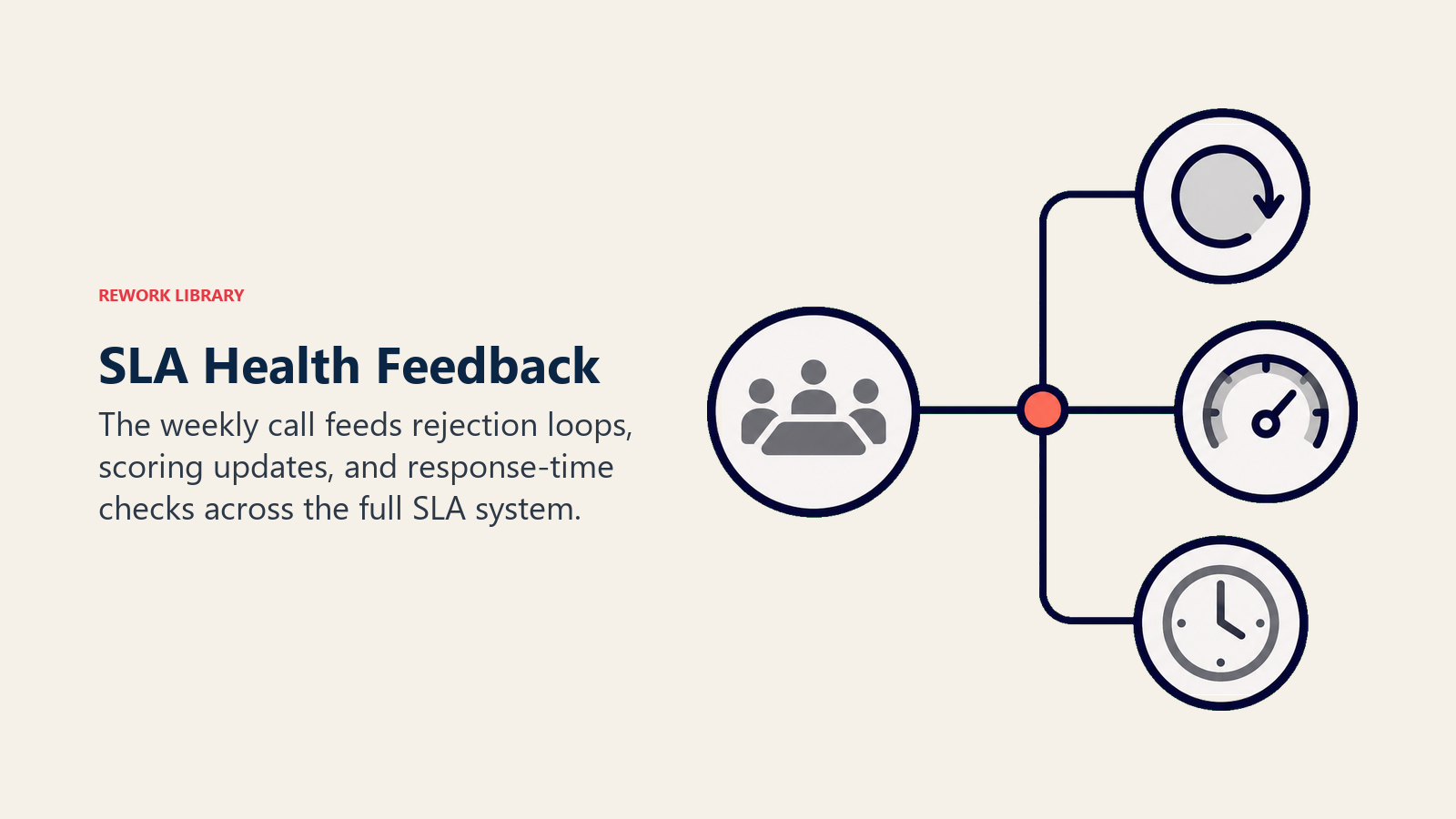
Output daripada audit atribut memberi makan terus kepada gelung maklum balas penolakan MQL, proses sistematik untuk mengkategorikan penolakan dan menghalakan mereka kepada tindakan seterusnya yang betul dalam CRM.
Perubahan yang dikomitkan dalam mesyuarat harus merujuk SLA pemasaran-jualan. Jika segmen terus gagal definisi MQL, SLA perlu mencerminkan itu, bukan sekadar model pemarkahan.
Dan data dari panggilan mingguan (trend kadar penerimaan, taburan sebab penolakan, masa-ke-sentuhan-pertama) harus muncul dalam dashboard pelaporan gelung tertutup yang digunakan oleh kedua-dua pasukan untuk perbualan pipeline.
Sistem-sistem ini saling memperkukuhkan antara satu sama lain. Panggilan mingguan adalah kitaran maklum balas terpantas. Pelaporan gelung tertutup adalah pandangan kitaran lebih panjang. SLA adalah kontrak formal yang kedua-duanya beroperasi dalam.
Soalan Lazim
Apa itu panggilan kualiti lead mingguan?
Panggilan kualiti lead mingguan adalah mesyuarat 30 minit berstruktur antara demand gen, ketua SDR atau BDR, dan seorang AE bergilir. Tujuannya adalah untuk menukar aduan kualiti lead kepada satu perubahan yang didokumentasikan setiap minggu. Ia bukan semakan pipeline atau QBR, ia mempunyai satu output: satu pelarasan spesifik (berat pemarkahan, pengecualian kempen, perubahan medan borang) yang dilaksanakan sebelum mesyuarat seterusnya.
Siapa yang harus hadir dalam panggilan kualiti lead mingguan?
Peserta teras adalah ketua demand gen (dengan autoriti untuk membuat perubahan), ketua SDR atau BDR (paling dekat dengan corak penolakan barisan hadapan), dan satu AE bergilir setiap bulan. RevOps adalah pilihan tetapi bernilai, apabila RevOps hadir, mereka membekalkan data pecahan penolakan supaya tiada pasukan yang menghabiskan masa pra-panggilan untuk menarik nombor. Mesyuarat kekal kecil secara reka bentuk: maksimum empat hingga lima orang. Kumpulan yang lebih besar mengubahnya menjadi mesyuarat jawatankuasa.
Bagaimana jika mesyuarat menjadi bertikai, bagaimana mencegah menyalahkan?
Tiga peraturan memastikannya membina. Pertama, fokus pada atribut lead dan bukannya kelakuan wakil: "kumpulan ini mempunyai 60% kenalan di syarikat di bawah 10 pekerja" adalah pemerhatian atribut, bukan tuduhan. Kedua, setiap penolakan memerlukan hipotesis dan bukannya verdict: "kami fikir model pemarkahan mempromosikan syarikat di bawah ambang saiz" membuka laluan kepada penyelesaian. Ketiga, jangan sekali-kali langkau blok isyarat positif (minit 15-20), mesyuarat yang hanya memeriksa kegagalan mewujudkan dinamik di mana kedua-dua pasukan berasa defensif.
Bilakah kita boleh berhenti mengadakan mesyuarat ini?
Apabila kadar penerimaan MQL anda telah kekal melebihi 80% selama 12 minggu berturut-turut, anda boleh beralih kepada dua mingguan. Pada 90%+ yang konsisten, bulanan sudah mencukupi. Tetapi jangan menghapuskan mesyuarat sepenuhnya, ICP menyimpang, pasaran berubah, kempen baru menjangkau segmen baru. Versi matang adalah lebih ringan: 20 minit, bulanan, berfokus pada semakan trend dan bukannya pemadaman kebakaran. Panggilan itu kekal dalam kalendar walaupun kualiti lead adalah baik.
Bagaimana jika kita tidak mempunyai RevOps untuk menarik data?
Demand gen menarik data sehari sebelum mesyuarat. Set data minimum untuk panggilan yang berfungsi adalah: jumlah MQL yang diserahkan minggu lepas, jumlah penerimaan, jumlah penolakan, dan sebab penolakan teratas. Itu adalah eksport 15 minit dari mana-mana CRM. Mesyuarat tidak memerlukan lapisan BI yang canggih, ia memerlukan nombor semasa yang boleh dilihat oleh kedua-dua pasukan sebelum perbincangan bermula.
Bagaimana kita mengetahui perubahan mingguan berfungsi?
Jejak kadar penerimaan MQL dari minggu ke minggu dalam log bersama. Kadar penerimaan harus menunjukkan trend ke atas dalam tempoh 4-6 minggu selepas setiap perubahan struktur (pelarasan pemarkahan, pengecualian kempen, penambahan medan borang). Jika kadar penerimaan tidak bergerak selepas dua pusingan pelarasan, tingkatkan: definisi MQL perlu dibuka semula dan dirunding semula, bukan disesuaikan lagi. Jika sebab penolakan yang sama kekal dalam tiga teratas selama lapan atau lebih minggu berturut-turut, sistem asas rosak dan memerlukan pembetulan struktur.
Apakah persediaan minimum yang boleh dilaksanakan untuk pasukan yang baru memulakan proses ini?
Tiga perkara: dropdown "sebab penolakan" yang wajib dalam CRM anda (lima hingga tujuh pilihan yang merangkumi kesesuaian, masa, dan masalah data), jemputan kalendar mingguan 30 minit yang tetap dengan empat orang yang sama, dan Google Doc bersama dengan jadual mudah untuk merekod corak setiap minggu, hipotesis, perubahan yang dikomitkan, dan status. Itu sahaja. Tiada dashboard, tiada alat BI, tiada fungsi RevOps formal diperlukan untuk memulakan. Bina dari sana apabila data corak terkumpul.
Ketahui Lebih Lanjut

Principal Solution Architect
On this page
- Apa Sebenarnya Panggilan Kualiti Lead
- Rangka Kerja Panggilan Kualiti Lead 30 Minit
- Agenda 30 Minit dengan Masa
- Metrik untuk Dijejak dari Minggu ke Minggu
- Cara Menjalankan Blok 2 Tanpa Menyalahkan
- Mod Kegagalan Biasa
- Log Bertulis: Menjadikan Pandangan Kekal
- Bila Panggilan Ini Menjadi Tidak Perlu
- Menghubungkan Panggilan kepada Kesihatan SLA yang Lebih Luas
- Soalan Lazim
- Apa itu panggilan kualiti lead mingguan?
- Siapa yang harus hadir dalam panggilan kualiti lead mingguan?
- Bagaimana jika mesyuarat menjadi bertikai, bagaimana mencegah menyalahkan?
- Bilakah kita boleh berhenti mengadakan mesyuarat ini?
- Bagaimana jika kita tidak mempunyai RevOps untuk menarik data?
- Bagaimana kita mengetahui perubahan mingguan berfungsi?
- Apakah persediaan minimum yang boleh dilaksanakan untuk pasukan yang baru memulakan proses ini?
- Ketahui Lebih Lanjut