Kos Ketidakpadanan Pemasaran-Jualan: Seperti Apa Kebocoran Hasil Sebenarnya
Turn this article into takeaways for your work.


Each assistant summarizes the article only for you and suggests best practices for your work.
Ini adalah senario yang berlaku dalam semakan pipeline merentas industri setiap suku. Pemasaran datang dengan bangga: jumlah MQL meningkat 28% berbanding tahun sebelumnya. Jualan datang dengan bangga: kadar tutup berada pada rekod tertinggi 24%. Hasil mendatar. Kedua-dua nombor adalah nyata. Kedua-dua pasukan melakukan kerja mereka. Dan entah bagaimana hasilnya adalah baris hasil yang tidak bergerak.
Tiada siapa yang berbohong. Tetapi sesuatu sedang bocor.
Masalahnya bukan metrik itu. Ia kerana pemasaran mengukur output di bahagian atas Funnel, jualan mengukur output di bahagian bawah, dan terdapat jarak panjang di tengah-tengah di mana nilai secara senyap menguap. Lead yang pemasaran kira sebagai kemenangan bukan lead yang jualan sebenarnya usahakan. Kadar tutup yang jualan banggakan dikira daripada penyebut yang tidak termasuk semua yang mereka tolak tanpa menyentuhnya.
Inilah bentuk ketidakpadanan. Ia tidak kelihatan seperti kegagalan. Ia kelihatan seperti dua pasukan yang berjaya yang tidak dapat memahami mengapa baris hasil tidak bertindak balas kepada kerja mereka.
Enam Kebocoran Hasil
Model kos ini berfungsi kerana ketidakpadanan jarang muncul sebagai satu kegagalan besar; ia membocorkan hasil melalui beberapa jurang operasi kecil.
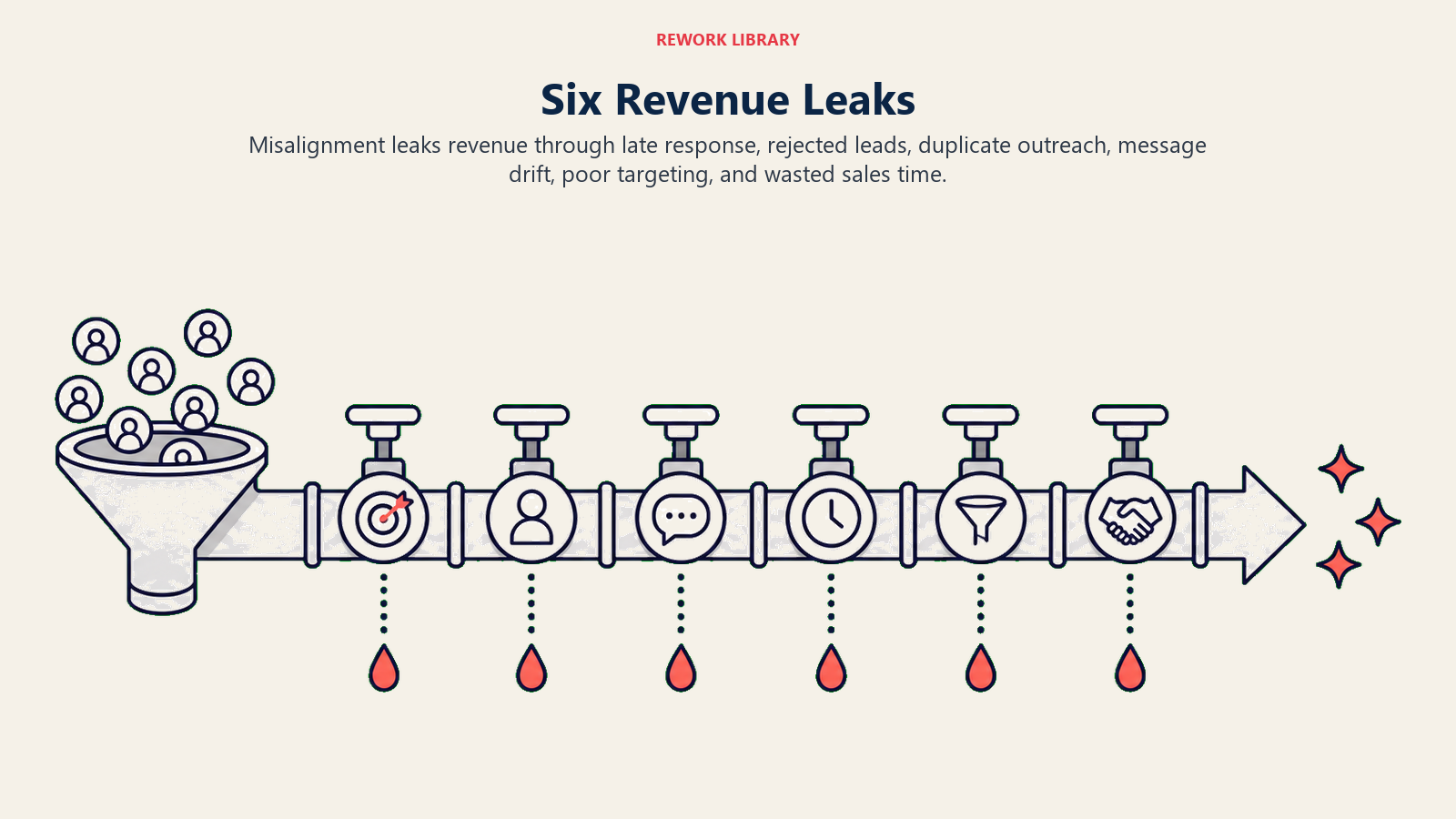
Kerangka Enam Kebocoran
Artikel ini menstrukturkan kos ketidakpadanan di sekitar enam jenis kebocoran hasil yang berbeza. Setiap kebocoran adalah bebas. Organisasi anda mungkin mempunyai satu yang aktif atau kesemua enam. Nilai diagnostik terletak pada mengenal pasti kebocoran khusus mana yang terbesar, kerana itu menentukan pembaikan mana yang perlu dilaksanakan dahulu.
Ketidakpadanan tidak mencipta satu masalah besar. Ia mencipta enam masalah kecil yang berganda. Berikut adalah setiap kebocoran, seperti apa rupanya, dan anggaran kos masing-masing.
Kebocoran 1: Lead yang Diusahakan Lambat atau Tidak Langsung
Ini adalah kebocoran yang paling boleh diukur. Lead yang layak menghantar borang pada Selasa jam 10 pagi. Menjelang Khamis pagi, tiada siapa telah menelefonnya. Prospek itu sudah menempah demo dengan pesaing.
Laju-ke-kenalan adalah pemacu penukaran yang didokumentasikan dengan baik. Perbezaan antara tindak balas 5 minit dan 24 jam bukan penalti penukaran 5%. Ia penalti 21x, menurut analisis Harvard Business Review terhadap 2.24 juta lead. Kebanyakan organisasi yang tidak sejajar mempunyai masa tindak balas purata yang diukur dalam hari, bukan jam, kerana tiada siapa memiliki saat serah terima. Pemasaran menghantar lead. Jualan akhirnya menerimanya. Masa di antaranya adalah masalah tiada siapa dan kerugian semua orang. Literatur masa tindak balas lead tidak berbelah bahagi mengenai perkara ini, dan mempunyai SLA penugasan lead yang formal adalah yang menutup jurang itu.
Kos kebocoran ini: Bagi pasukan yang menjana 500 MQL sebulan dengan saiz tawaran purata $15,000, masa tindak balas purata 48 jam berbanding 2 jam bukan perbezaan kecil. Penyelidikan secara konsisten menunjukkan tindak balas lewat mengurangkan kadar kelayakan sebanyak 7x atau lebih. Matematik itu terpakai langsung kepada jumlah pipeline anda.
Fakta Utama: Hasil yang Hilang kepada Ketidakpadanan
- 79% lead pemasaran tidak pernah menukar kepada peluang jualan, menurut MarketingSherpa (majoriti hilang akibat kerosakan serah terima, bukan kualiti lead).
- Syarikat dengan penjajaran pemasaran-jualan yang lemah mengalami penurunan hasil tahunan purata 4%, berbanding pertumbuhan 20% di syarikat yang sejajar, menurut Aberdeen Group.
- Syarikat B2B purata membazirkan 10% belanjawan pemasaran pada lead yang tidak pernah dihubungi, menurut Laporan Demand Gen.
Kebocoran 2: Lead Baik Ditolak Tanpa Maklum Balas
Jualan menolak lead. Itu boleh diterima. Tidak setiap MQL perlu menjadi panggilan penemuan. Masalahnya ialah apabila penolakan berlaku tanpa dokumentasi dan tanpa maklum balas kembali kepada pemasaran.
Apabila wakil melihat MQL dan terus, pemasaran tidak belajar apa-apa. Segmen, saluran, atau mesej yang sama yang menjana lead yang ditolak akan menjana lebih banyak lead yang ditolak bulan hadapan. Penyasaran pemasaran tidak disesuaikan kerana tiada isyarat. Corak buruk berulang. Ini adalah tepat apa yang mekanik gelung maklum balas penolakan MQL direka untuk mengganggu.
Kos kebocoran ini: Kecekapan belanjawan pemasaran merosot berterusan. Kempen yang kelihatan berjaya dari segi jumlah MQL terus berjalan walaupun kadar penukaran hiliran cenderung ke arah sifar. CAC meningkat bukan kerana kos-per-lead meningkat tetapi kerana kadar penukaran pada lead yang diusahakan semakin memperburuk keseluruhan matematik.
Kebocoran 3: Jangkauan Berganda Menjejaskan Kepercayaan Prospek
Prospek daripada akaun sasaran memuat turun whitepaper. Pemasaran memasukkan mereka dalam urutan nurture. Jualan mendapat mereka sebagai MQL dan memulakan jangkauan sendiri. Prospek menerima e-mel daripada dua orang berbeza di syarikat yang sama dalam tempoh 72 jam, di mana tiada satu pun tahu tentang yang lain.
Ini lebih lazim daripada yang disedar oleh kebanyakan pasukan. Ia menjejaskan kepercayaan dengan pantas. Tanggapan prospek: syarikat ini tidak tahu apa yang pasukannya sendiri lakukan. Dan mereka betul.
Kos kebocoran ini: Di luar impak penukaran langsung, jangkauan berganda merosakkan jenama pada akaun bernilai tertinggi anda. Ini adalah lead yang kedua-dua pasukan paling inginkan, yang layak daripada berbilang isyarat secara serentak. Ketidakpadanan menjadikan tanggapan pertama sebagai tanggapan yang buruk.
Kebocoran 4: Mesej yang Bercanggah pada Titik Serah Terima
Pemasaran telah menjalankan kempen yang meletakkan produk sekitar kecekapan operasi. Jualan telah memimpin dengan pengurangan kos. Prospek yang mengklik iklan berfokus kecekapan, menghadiri webinar berfokus kecekapan, dan mengisi borang pada halaman pendaratan berfokus kecekapan mendapat panggilan penemuan pertama yang dibuka dengan ROI dan tempoh bayar balik.
Prospek tidak keliru kerana mesejnya salah. Mereka keliru kerana ia berubah. Dan prospek yang keliru tidak menandatangani kontrak.
Kos kebocoran ini: Panjang kitaran meningkat kerana jualan perlu menetapkan semula naratif nilai dari awal. Sesetengah tawaran terhenti secara kekal. Pelanggan tidak pernah menjadi sepercaya terhadap cerita syarikat seperti yang mereka akan sekiranya mesej itu konsisten dari titik sentuhan pertama.
Kebocoran 5: Belanjawan Pemasaran Menyasar Segmen yang Salah
Kebocoran ini tidak kelihatan sehingga anda melihat data win-loss, yang kebanyakan pasukan yang tidak sejajar tidak pernah lakukan secara sistematik.
Pemasaran menjana lead daripada segmen A kerana itulah tempat jumlah datang. Jualan tahu bahawa segmen A tutup pada 12% manakala segmen B tutup pada 34%, kerana mereka melihat tawaran sebenar. Tetapi maklumat itu tidak pernah kembali kepada keputusan penyasaran pemasaran. Jadi pemasaran terus melabur dalam segmen A. CAC meningkat. Pasukan jualan bekerja lebih keras pada campuran kualiti lebih rendah. Data wujud dalam jualan, ia tidak mengalir kembali.
Kos kebocoran ini: Kos peluang adalah jurang antara CAC semasa dan apa yang CAC boleh jadi jika pemasaran menyasar segmen yang sebenarnya menukar. Bagi kebanyakan organisasi yang tidak sejajar, jurang ini adalah 30-50% daripada perbelanjaan pemasaran semasa, bukan kerana kempen itu buruk, tetapi kerana ia menyasar penonton yang salah.
Kebocoran 6: Masa Jualan Dihabiskan pada Lead yang Pemasaran Sudah Tahu Buruk
Sesetengah lead dijana dan diserahkan kerana sistem memerlukannya: kerana ada sasaran jumlah, kerana pengisian borang mencetuskan serah terima automatik, kerana tiada siapa berhenti untuk bertanya sama ada kenalan ini sebenarnya dalam ICP.
Wakil jualan tahu dalam 60 saat panggilan penemuan sama ada lead sepatutnya layak. Mereka melakukan panggilan tersebut juga, kerana lead itu ditugaskan. Masa yang mereka habiskan pada penolakan yang jelas adalah masa yang tidak dihabiskan pada peluang sebenar.
Kos kebocoran ini: Kapasiti jualan adalah sumber paling mahal dalam organisasi hasil. Jika 30% lead yang diserahkan kepada jualan adalah tidak sesuai yang jelas, itu adalah 30% masa jualan yang tidak menghasilkan pipeline. Bagi pasukan jualan 10 orang dengan OTE purata $100K, itu adalah $300K dalam kapasiti yang dibakar pada lead yang seharusnya ditapis hulu.
Kitaran Saling Menyalahkan
Kitaran saling menyalahkan menjelaskan mengapa pasukan dapat melihat masalah dengan jelas namun mengulanginya setiap suku.
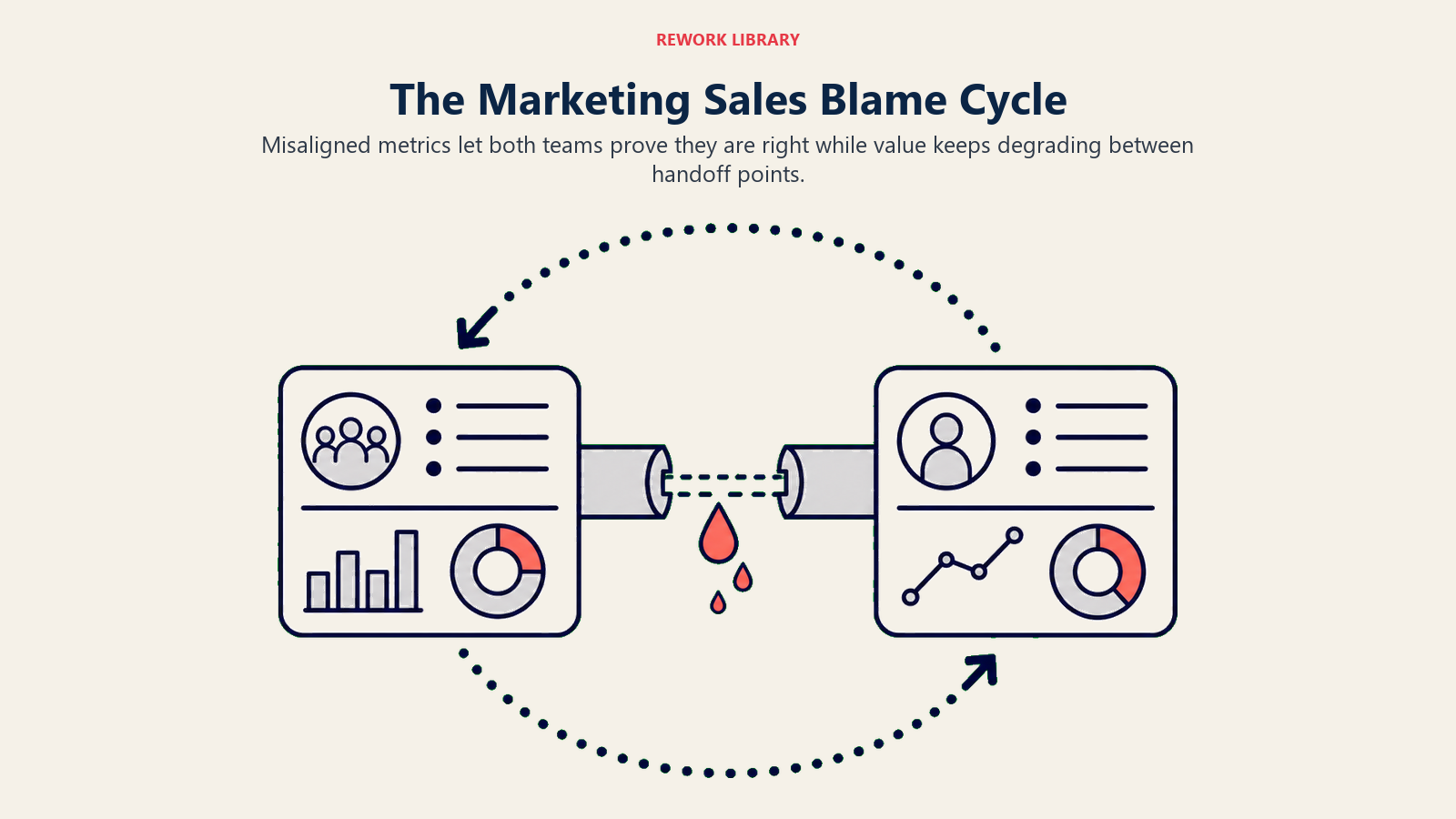
Inilah sebab ketidakpadanan berterusan: kedua-dua pihak mempunyai bukti yang cukup untuk menyalahkan pihak lain.
Pemasaran melihat jumlah MQL dan berkata: kami menghantar. Jualan melihat kadar tutup dan berkata: kami menukar apa yang boleh kami usahakan. Tiada pihak yang salah. Tetapi metrik yang paling langsung dikawal oleh setiap pasukan juga paling mudah mengecualikan sumbangan pasukan lain.
Pemasaran boleh sentiasa berhujah bahawa jualan tidak membuat susulan cukup cepat. Jualan boleh sentiasa berhujah bahawa pemasaran menghantar lead yang tidak layak. Kedua-dua hujah sebahagiannya benar. Tiada satu hujah membawa kepada penyelesaian.
Kitaran berhenti apabila anda berhenti bertanya siapa yang bertanggungjawab dan mula bertanya: di mana sebenarnya nilai lead merosot? Saat khusus mana (tindak balas lewat? definisi yang buruk? tiada maklum balas?) yang menyebabkan kehilangan paling besar? Itu adalah soalan data, bukan soalan menyalahkan. Analisis kadar penukaran mengikut sumber lead memberikan data itu lebih cepat daripada sebarang rundingan dalaman.
Analisis Rework: Berdasarkan penanda aras Aberdeen Group dan data Laporan Demand Gen, kos ketidakpadanan meningkat secara dapat diramalkan dengan saiz syarikat. Pada pasukan hasil 20 orang yang membelanjakan $500K/tahun untuk pemasaran, enam kebocoran biasanya menyumbang 25-35% daripada belanjawan itu dalam pipeline yang dibazirkan, kira-kira $125K-$175K setahun dalam lead yang dijana tetapi tidak pernah ditukar bukan kerana kualiti lead yang rendah. Pada pasukan 100 orang dengan perbelanjaan pemasaran $3J, kadar kebocoran yang sama diterjemahkan kepada $750K-$1J dalam nilai pipeline yang boleh dipulihkan. Kerangka kami mencadangkan Kebocoran 1 (tindak balas lewat atau tiada) dan Kebocoran 5 (penyasaran segmen yang salah) bersama-sama menyumbang lebih 60% nilai yang boleh dipulihkan di kebanyakan organisasi yang tidak sejajar. Membetulkan dua kebocoran tersebut dahulu menghasilkan penambahbaikan CAC terpantas.
Kos Tersembunyi di Luar Pipeline
Kebocoran hasil boleh diukur. Kos tersembunyi lebih sukar untuk dikuantifikasi tetapi boleh dikatakan lebih merosakkan.
Hakisan moral dan kepercayaan wakil: Apabila wakil secara konsisten menerima lead yang tidak boleh mereka usahakan, mereka berhenti mempercayai lead yang mereka terima. Wakil yang telah dibakar oleh tiga MQL yang buruk berturut-turut akan lebih perlahan dan lebih skeptikal dengan yang keempat, walaupun yang keempat sebenarnya baik. Ketidakpercayaan berganda.
Keruntuhan keyakinan kempen pemasaran: Apabila pemasaran tidak tahu kempen mana yang menghasilkan hasil (bukan sekadar lead), keputusan kempen menjadi tekaan. Belanjawan dipotong daripada program yang berjaya dan dilanjutkan kepada program yang tidak berjaya, kerana gelung maklum balas yang akan membezakannya tidak wujud.
Masa naik taraf lebih lama untuk pengambilan baharu: Wakil jualan baharu menyertai organisasi yang tidak sejajar dan mewarisi proses yang rosak. Mereka tidak tahu lead mana yang perlu dipercayai, mesej mana yang sejajar dengan apa yang prospek dengar, atau apa yang "layak" sebenarnya bermaksud. Masa naik taraf mereka lebih lama. Pipeline awal mereka lebih lemah. Dan menjelang mereka mengetahuinya, sebahagian daripada mereka sudah pergi.
Diagnostik: Kenal pasti Kebocoran Anda
Lima soalan yang mendedahkan kebocoran mana yang terbesar dalam organisasi anda:
Apakah masa tindak balas lead purata anda untuk MQL? Jika anda tidak mengetahui nombor tepat, itu sendiri adalah penemuan diagnostik. Jika nombor melebihi 4 jam, Kebocoran 1 aktif.
Berapa peratus MQL ditolak oleh jualan, dan apakah pecahan sebab penolakan? Jika anda tidak boleh memecah penolakan mengikut sebab, Kebocoran 2 dijamin sedang berjalan.
Berapa banyak kenalan dari akaun yang sama menerima jangkauan dari kedua-dua pemasaran dan jualan dalam tempoh 30 hari yang sama? Jika anda tidak pernah mengukur ini, Kebocoran 3 mungkin aktif.
Bilakah anda terakhir mengaudit konsistensi antara mesej pemasaran dan naratif penemuan jualan? Jika jawapannya ialah "tidak pernah" atau "lebih daripada setahun lalu," Kebocoran 4 aktif.
Segmen pelanggan mana yang mempunyai kadar tutup tertinggi, dan adakah peruntukan belanjawan pemasaran anda mencerminkan itu? Jika anda tidak boleh menjawab bahagian pertama, Kebocoran 5 sedang berjalan.
Pembaikan Bermula dengan Bahasa Bersama
Sebelum anda mengubah proses, sebelum anda membeli alat, sebelum anda mengelola semula pasukan: anda memerlukan definisi bersama.
Kebanyakan ketidakpadanan mempunyai akar definisi. Pemasaran dan jualan beroperasi dengan model mental yang berbeza tentang seperti apa "lead yang layak." Sehingga model-model itu ditulis dan dipersetujui, perubahan proses tidak bertahan. SLA baharu rosak kerana wakil tidak pasti apa yang mereka sepatutnya susulan. Gelung maklum balas baharu tidak menghasilkan isyarat berguna kerana kategori penolakan tidak sepadan dengan apa yang sebenarnya berlaku.
Glosari penjajaran pemasaran-jualan merangkumi terma yang kedua-dua pasukan perlu persetujui sebelum apa-apa lagi bergerak. Penyelidikan McKinsey tentang pertumbuhan B2B secara konsisten menunjukkan bahawa pasukan komersial yang sejajar mengatasi yang tidak sejajar merentas setiap metrik hasil. Mulakan di sana.
Semak Realiti PKS
Di pasukan yang lebih kecil, ketidakpadanan tetap berlaku. Ia hanya kelihatan berbeza. Apabila seorang orang menjalankan kedua-dua kempen pemasaran dan panggilan jualan, ketidakpadanan itu dalaman: keputusan penyasaran yang masuk ke dalam kempen tidak dimaklumkan oleh corak kelayakan yang orang yang sama perhatikan semasa panggilan. Ia adalah kegagalan gelung yang sama, hanya di dalam satu otak berbanding antara dua jabatan.
Pembaikannya adalah sama: tulis apa yang menjadikan lead bernilai untuk dihubungi, dan audit sama ada saluran pemerolehan anda menghasilkan lead tersebut. Disiplin ini terpakai pada mana-mana skala.
Apa yang Pasukan Hasil yang Sejajar Laporkan
Apabila penjajaran berjaya, tingkah laku yang kelihatan berubah sebelum metrik hasil benar-benar menyusul.
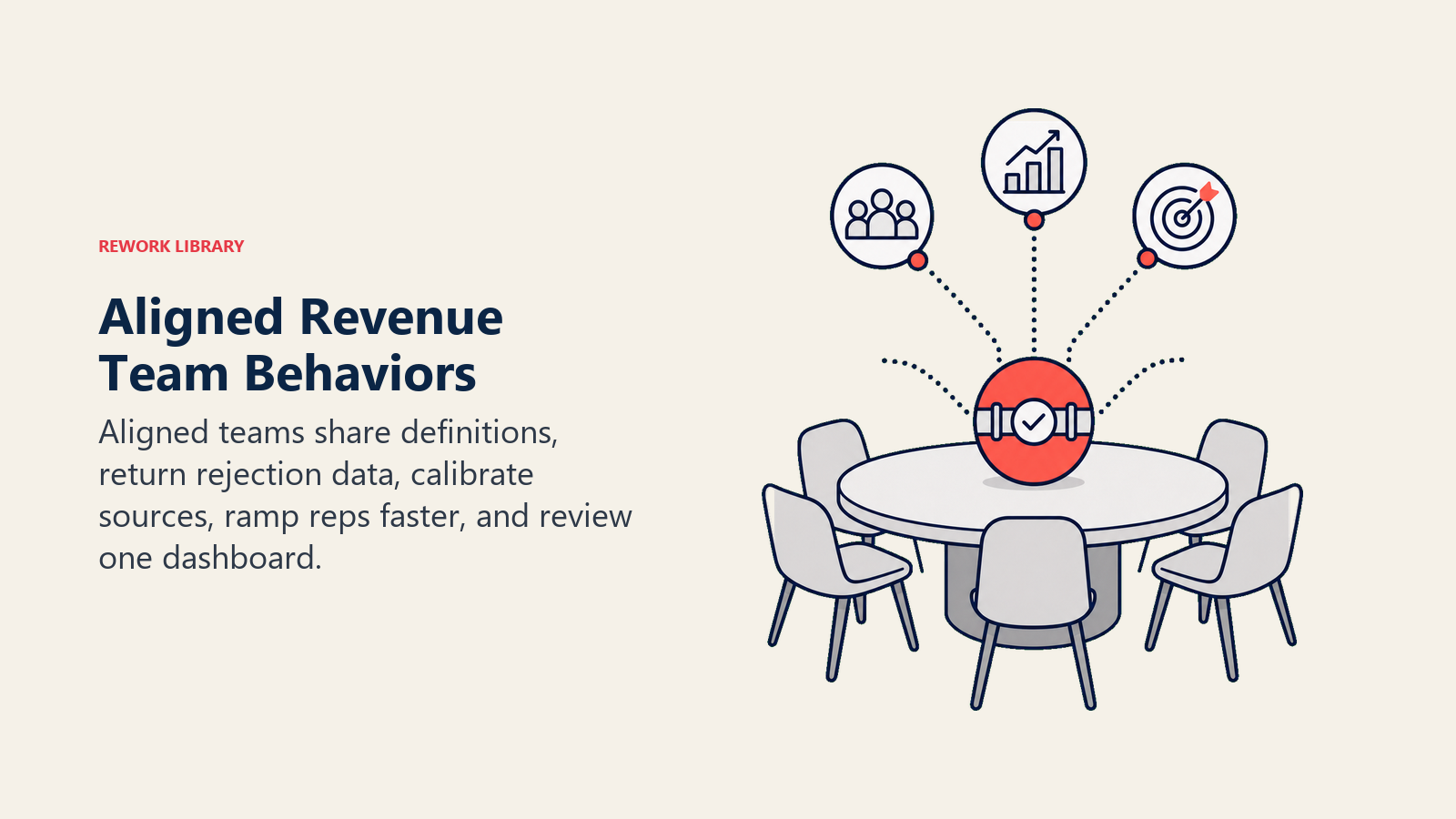
Apabila penjajaran berjaya, perkara-perkara tertentu berhenti berlaku:
- Tiada siapa dalam jualan bertanya "mengapa ini dihantar kepada saya?" kerana definisi itu jelas
- Tiada siapa dalam pemasaran bertanya "apa yang berlaku kepada lead itu?" kerana data penolakan kembali dengan sebab-sebab
- Kadar menang tidak berbeza-beza dengan ketara mengikut sumber lead kerana sumber-sumber itu ditentukur kepada ICP
- Masa naik taraf wakil baharu menurun kerana proses onboarding termasuk model jelas siapa yang mereka jual kepada
- Semakan pipeline berhenti mempunyai subteks menyalahkan kerana kedua-dua pasukan melihat dashboard yang sama dan memiliki hasil yang sama
Artikel 8 tanda amaran ketidakpadanan memberikan diagnostik lebih terperinci tentang gejala mana yang menunjuk kepada kebocoran mana.
Kos ketidakpadanan adalah nyata, boleh diukur, dan dimiliki bersama. Berita baiknya: begitu juga pembaikannya.
Soalan Lazim tentang Kos Ketidakpadanan Pemasaran-Jualan
Apakah yang sebenarnya dikenakan oleh ketidakpadanan pemasaran-jualan?
Penyelidikan IDC menganggarkan bahawa syarikat B2B kehilangan $1 trilion setiap tahun merentas industri akibat usaha jualan dan pemasaran yang tidak sejajar. Di peringkat syarikat, Aberdeen Group mendapati bahawa organisasi yang tidak sejajar mengalami penurunan hasil tahunan purata 4%, manakala organisasi yang sejajar berkembang pada 20%, jurang 24 mata yang berganda selama beberapa tahun.
Kebocoran hasil mana daripada ketidakpadanan yang paling mahal?
Kebocoran yang paling mahal berbeza mengikut organisasi, tetapi masa tindak balas lead yang perlahan (Kebocoran 1) dan belanjawan yang menyasar segmen yang salah (Kebocoran 5) bersama-sama menyumbang kepada majoriti nilai yang boleh dipulihkan di kebanyakan syarikat mid-market. Tindak balas lewat membawa penalti penukaran segera 21x menurut analisis Harvard Business Review terhadap 2.24 juta lead; penyasaran segmen yang salah mengelembungkan CAC sebanyak 30-50% dari masa ke masa menurut Laporan Demand Gen.
Bagaimana anda mengira kos ketidakpadanan di syarikat anda?
Lima soalan diagnostik mendedahkan kebocoran aktif: (1) Apakah masa tindak balas MQL purata anda? (2) Berapa peratus MQL ditolak, dan apakah sebab-sebab yang didokumentasikan? (3) Berapa banyak akaun menerima jangkauan serentak dari kedua-dua pemasaran dan jualan? (4) Bilakah anda terakhir mengaudit konsistensi mesej merentas Funnel? (5) Segmen mana yang mempunyai kadar tutup tertinggi, dan adakah peruntukan belanjawan pemasaran anda mencerminkan itu? Mana-mana nombor yang tidak boleh anda jawab mengenal pasti kebocoran aktif.
Mengapa ketidakpadanan berterusan walaupun apabila kedua-dua pasukan berprestasi baik?
Ketidakpadanan berterusan kerana setiap pasukan mengoptimumkan untuk metrik yang dikawalnya. Pemasaran boleh mencapai sasaran MQL tanpa meningkatkan penukaran jualan. Jualan boleh mengekalkan kadar tutup dengan lebih banyak menolak. Kedua-dua keputusan kad laporan kelihatan sihat sementara baris hasil mendatar. Pembaikannya memerlukan metrik bersama yang tiada pasukan boleh tingkatkan secara bebas, biasanya nombor hasil yang dipengaruhi pipeline bersama.
Berapa lama masa yang diperlukan untuk membetulkan kebocoran hasil utama daripada ketidakpadanan?
Dua kebocoran dengan leverage tertinggi boleh diperbaiki dalam tempoh 60-90 hari. Melaksanakan SLA tindak balas lead dan menambah borang sebab penolakan wajib adalah kedua-duanya perubahan infrastruktur rendah. Pembaikan kitaran lebih panjang, iaitu menyelaraskan semula belanjawan pemasaran kepada segmen yang menukar, memerlukan sekurang-kurangnya satu suku data win-loss tertutup sebelum pelarasan penyasaran boleh dibuat dengan yakin.
Ketahui Lebih Lanjut

Principal Solution Architect
On this page
- Enam Kebocoran Hasil
- Kebocoran 1: Lead yang Diusahakan Lambat atau Tidak Langsung
- Kebocoran 2: Lead Baik Ditolak Tanpa Maklum Balas
- Kebocoran 3: Jangkauan Berganda Menjejaskan Kepercayaan Prospek
- Kebocoran 4: Mesej yang Bercanggah pada Titik Serah Terima
- Kebocoran 5: Belanjawan Pemasaran Menyasar Segmen yang Salah
- Kebocoran 6: Masa Jualan Dihabiskan pada Lead yang Pemasaran Sudah Tahu Buruk
- Kitaran Saling Menyalahkan
- Kos Tersembunyi di Luar Pipeline
- Diagnostik: Kenal pasti Kebocoran Anda
- Pembaikan Bermula dengan Bahasa Bersama
- Semak Realiti PKS
- Apa yang Pasukan Hasil yang Sejajar Laporkan
- Ketahui Lebih Lanjut