Kandungan Sales Enablement berbanding Keperluan Lapangan: Menutup Jurang Antara Apa yang Dicipta Pemasaran dan Apa yang Digunakan Jualan
Turn this article into takeaways for your work.


Each assistant summarizes the article only for you and suggests best practices for your work.
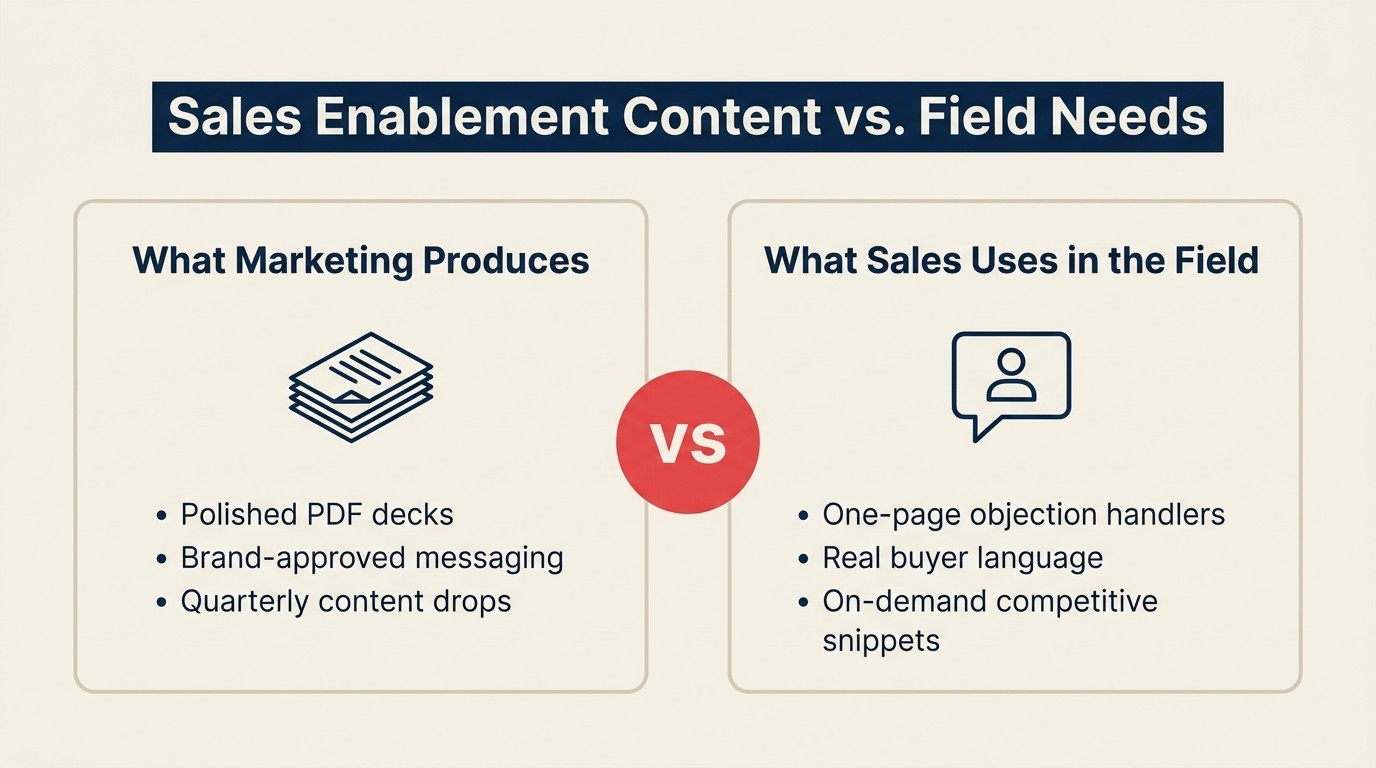
Terdapat perkuburan dalam platform enablement kebanyakan syarikat. Ia penuh dengan dek yang dibina untuk pelancaran produk yang berlaku dua tahun lalu, kad pertempuran untuk pesaing yang telah mengubah harga mereka, dan kajian kes dari pelanggan yang sejak itu telah churn. Pemasaran menghabiskan minggu untuk membuat mereka. Jualan tidak pernah membukanya. Dan kedua-dua pasukan secara senyap menyalahkan antara satu sama lain kerana perjanjian masih hilang.
Pembaziran bukan hanya dalam jam pengeluaran. Setiap kali AE masuk ke dalam perjanjian tanpa kandungan yang betul, mereka berimprovisasi, sering dengan teruk. Mereka menarik sesuatu dari folder desktop rakan sekerja, membina semula dek dari awal, atau menggunakan ingatan kedudukan pesaing yang sudah lapuk 18 bulan. Pemecahan itu memerlukan perjanjian sebenar, dan ia hampir sepenuhnya boleh dicegah.
Tetapi penyelesaiannya bukan platform pengurusan kandungan yang lebih baik. Ia adalah merawat sales enablement sebagai produk editorial bersama, bukan output pemasaran. Hanya 35% kandungan jualan yang dicipta oleh pemasaran pernah digunakan oleh wakil jualan, menurut penyelidikan SiriusDecisions. 65% yang lain duduk tidak disentuh sementara AE membina dek bayangan dari awal. Itu masalah reka bentuk struktural, dan membetulkannya memerlukan kedua-dua pasukan untuk memiliki proses.
Rangka Kerja Gelung Maklum Balas Lapangan
Gelung Maklum Balas Lapangan adalah model operasi yang mengubah enablement dari penyerahan sehala (pemasaran menghasilkan, jualan menerima) membentuk apa yang dihasilkan seterusnya.
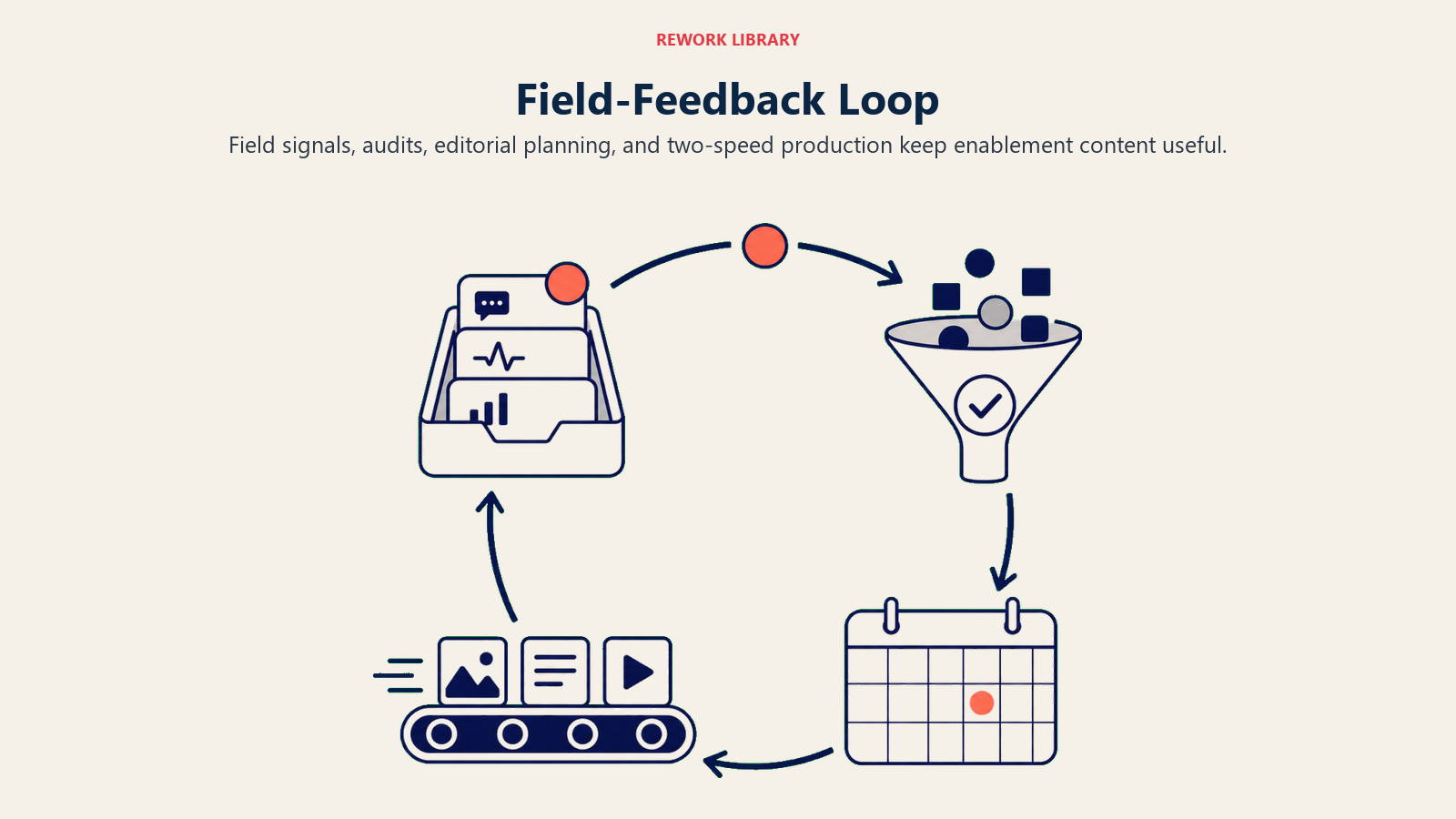
Ia mempunyai empat komponen:
- Isyarat lapangan masuk: Panggilan "kandungan di lapangan" bulanan dan penandaan kandungan menang/kalah mendedahkan apa yang sebenarnya digunakan AE berbanding apa yang dihasilkan pemasaran.
- Penapis audit: Semakan suku tahunan mengalih keluar aset dengan penggunaan hampir sifar, ketidakpadanan peringkat, dan data persaingan yang lapuk. Perpustakaan mengecut kepada apa yang berfungsi.
- Kalendar editorial bersama: Jualan mencalonkan tiga hingga lima bantahan dan jurang persaingan yang merugikan perjanjian mereka; pemasaran memiliki pengeluaran berbanding input tersebut.
- Model pengeluaran dua kelajuan: Kad pertempuran pada SLA 5 hari untuk keperluan lapangan yang sensitif masa; aset tiang pada kitaran 4 minggu untuk sumber yang lebih panjang.
Tanpa isyarat lapangan yang mengalir kembali kepada pemasaran, perpustakaan terkumpul. Dengannya, perpustakaan adalah alatan yang dipercayai AE.
Fakta Utama: Kandungan Sales Enablement dan Penggunaan
- Hanya 35% kandungan jualan yang dicipta oleh pemasaran pernah digunakan oleh wakil jualan, menurut penyelidikan SiriusDecisions mengenai penggunaan kandungan merentasi organisasi B2B.
- Forrester melaporkan bahawa 65% wakil jualan berkata mereka tidak dapat mencari kandungan yang mereka perlukan untuk menyokong perbualan pembelian, bukan kerana ia tidak wujud, tetapi kerana ia tidak boleh ditemui.
- Syarikat dengan gelung maklum balas formal antara jualan dan pemasaran mengenai keberkesanan kandungan melihat kadar penggunaan kandungan 38% lebih tinggi dan kitaran jualan 19% lebih pendek (Aberdeen Group).
Mengapa Jurang Itu Wujud
Jurang antara apa yang dicipta pemasaran dan apa yang digunakan jualan bukan konflik personaliti. Ia adalah masalah struktural dengan empat punca yang berbeza.
Pemasaran mencipta untuk perjalanan pembeli yang ideal, bukan perbualan jualan yang sebenar. Pasukan kandungan bekerja dari rangka kerja pemesejan dan persona ICP, yang merupakan input berharga, tetapi ia menggambarkan pembeli hipotetikal dalam proses membuat keputusan yang terkawal. Perjanjian sebenar melibatkan maklumat yang tidak lengkap, pelbagai pemegang kepentingan dengan agenda yang bercanggah, dan perbualan yang melompat antara peringkat secara berterusan. Kandungan yang dibina untuk perjalanan linear tidak memetakan kepada perjanjian yang tidak linear.
Tiada saluran maklum balas dari lapangan kembali kepada pasukan kandungan. Pemasaran menghasilkan. Jualan menerima. Tiada apa yang bergerak ke arah lain. AE yang mendapati kad pertempuran persaingan adalah salah secara fakta kerana pesaing mengemas kini harga mereka tiga bulan lalu: mereka tahu, tetapi mereka tidak mempunyai tempat untuk meletakkan maklumat itu di mana pemasaran akan bertindak ke atasnya.
Katalog kandungan berkembang, kebolehtemuan runtuh. Penyelesaian kepada "wakil tidak dapat mencari apa yang mereka perlukan" biasanya "tambah lebih banyak kandungan." Lama-kelamaan, perpustakaan enablement terkumpul ratusan aset. Navigasi rosak. Wakil menghabiskan lebih banyak masa mencari daripada menggunakan. Akhirnya mereka berhenti mencari dan mula membina sendiri.
AE mencipta dek bayangan, memecahkan jenama dan mesej. Setiap wakil mempunyai folder aset peribadi yang telah dibina kerana versi rasmi tidak berfungsi. Sesetengah dek bayangan ini adalah cemerlang: diuji di lapangan, terbukti perjanjian, ditulis dalam bahasa pelanggan. Yang lain mempunyai tangkapan skrin produk yang lapuk, harga yang salah, dan pemesejan yang bercanggah dengan kedudukan semasa syarikat. Kedua-dua jenis berada di luar keterlihatan pemasaran.
Empat Mod Kegagalan
Sebelum membina penyelesaian, adalah berguna untuk menentukan dengan tepat mod kegagalan yang anda hadapi.
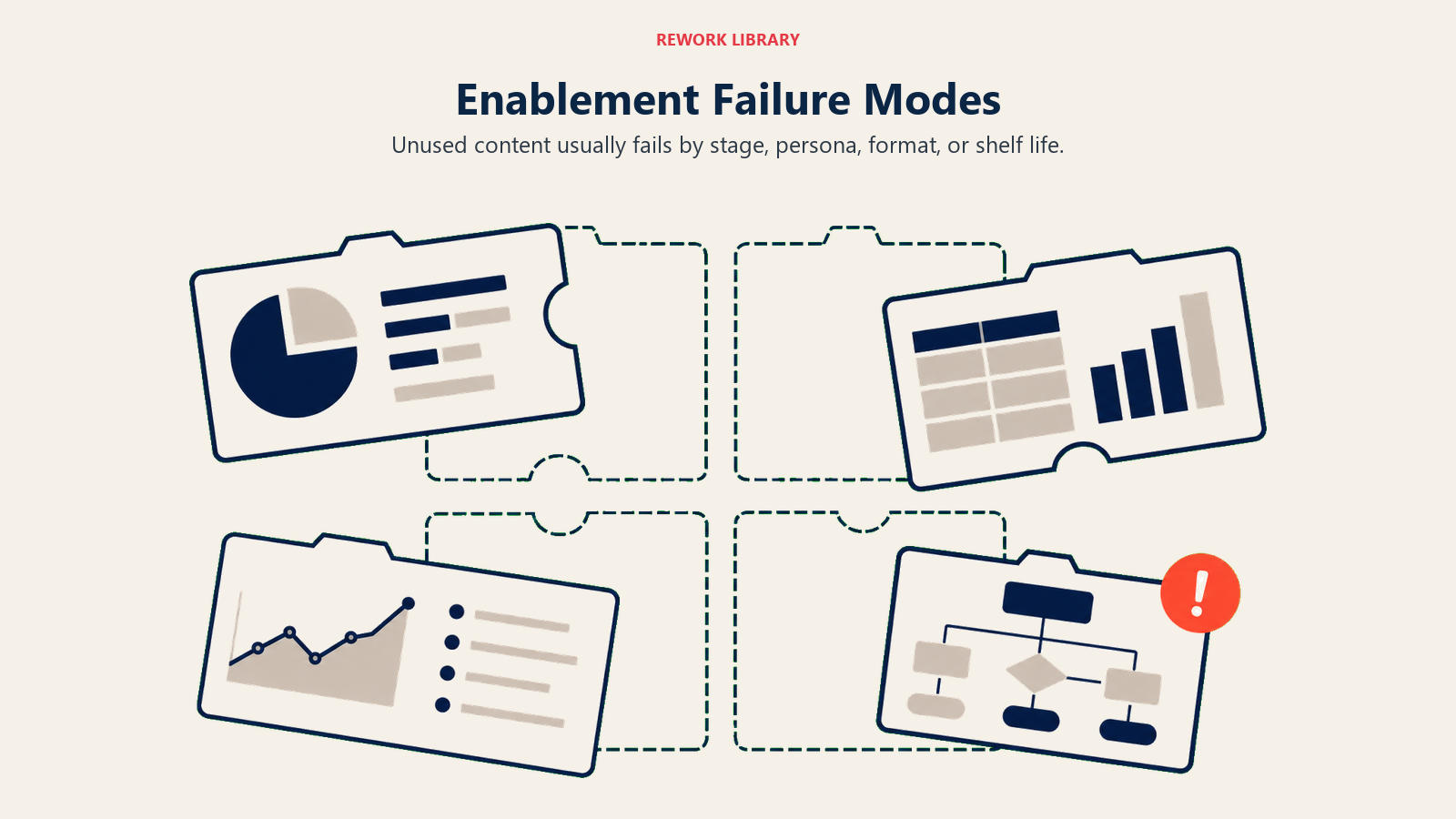
Peringkat yang Salah
Kandungan kesedaran (kepimpinan pemikiran, pendidikan kategori, laporan trend industri) adalah berharga di bahagian atas Funnel. Ia hampir tidak berguna apabila AE cuba mendapatkan mesyuarat kedua dengan pasukan perolehan yang telah memutuskan untuk membeli dari seseorang dalam 30 hari.
Ketidakpadanan ini berlaku apabila kandungan ditanda mengikut topik dan bukannya mengikut peringkat. Whitepaper tentang "masa depan operasi pendapatan" tidak memberitahu wakil sama ada menghantarnya kepada prospek yang tidak pernah mendengar tentang mereka atau kepada pembeli ekonomi yang meminta kes perniagaan.
Persona yang Salah
Pemasaran sering menulis untuk persona pembeli yang membalas kepada pemasaran: biasanya juara pengurusan pertengahan, ketua demand gen, pengamal RevOps. Ini bukan orang yang sama yang mengawal bajet dalam perjanjian. Pembeli ekonomi, CFO, dan VP yang skeptik memerlukan kandungan yang berbeza: lebih pendek, lebih berbingkai kewangan, dengan kurang butiran produk dan lebih banyak bahasa hasil perniagaan.
Kad pertempuran yang ditulis untuk juara tidak berfungsi apabila juara perlu membawa CFO melalui keputusan bina-berbanding-beli. Pembangunan juara adalah kemahiran berkaitan yang membantu wakil membekalkan penyokong dalaman dengan bahan yang betul sebelum pembeli ekonomi terlibat.
Format yang Salah
PDF panjang berfungsi untuk penyelidikan async. Ia sangat buruk untuk perbualan perjanjian langsung. AE dalam panggilan video dengan juara teknikal memerlukan helaian tipu persaingan dua muka surat yang boleh mereka rujuk tanpa berkongsi skrin dek 20 slaid. Pemasaran sering menyerahkan versi panjang penuh kerana itulah yang dihasilkan oleh proses pengeluaran.
Jangka Hayat yang Salah
Kedudukan persaingan berubah lebih pantas daripada kebanyakan perpustakaan enablement dikemas kini. Kad pertempuran berdasarkan ciri pesaing dari 14 bulan lalu mungkin kini tidak tepat. Dan wakil tidak akan tahu ia tidak tepat sehingga mereka membuat tuntutan dalam perjanjian dan prospek membetulkan mereka.
Kandungan yang lapuk mengikis kedua-dua kredibiliti perjanjian dan kepercayaan wakil dalam perpustakaan enablement. Sebaik sahaja wakil mempelajari bahawa bahan rasmi boleh salah, mereka berhenti mempercayai semuanya.
Audit Enablement Bersama
Audit adalah cara anda mengetahui apa yang sebenarnya ada dalam perpustakaan anda, apa yang sebenarnya digunakan, dan apa yang perlu dibunuh berbanding disimpan.
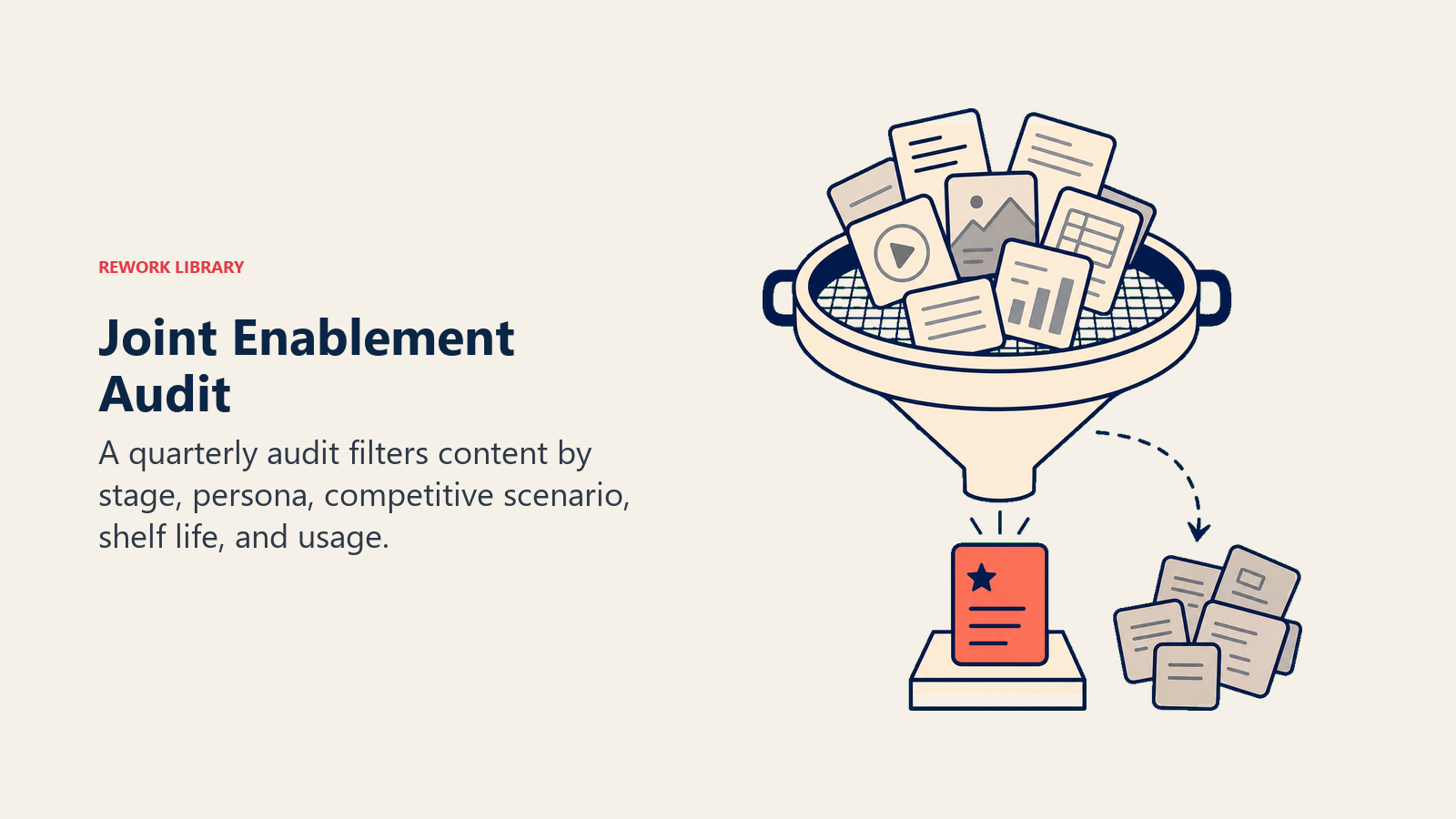
Langkah 1: Inventori berbanding peringkat perjanjian sebenar. Tarik setiap aset kandungan dalam perpustakaan semasa anda. Untuk setiap aset, tugaskan kepada: Kesedaran, Pertimbangan, Keputusan, atau Selepas Jualan. Jika anda tidak dapat dengan yakin meletakkannya dalam satu peringkat, ia mungkin aset ketidakpadanan peringkat, terlalu generik untuk berguna di mana-mana yang spesifik. Model Funnel yang dipersetujui memberikan takrifan peringkat bersama untuk bekerja dari.
Langkah 2: Tanda mengikut persona. Siapa yang sebenarnya membaca ini? Juara, pembeli ekonomi, penilai teknikal, pengguna akhir? Jika aset tidak disasarkan dengan jelas kepada satu persona utama, ia mungkin tidak disasarkan dengan baik kepada mana-mana.
Langkah 3: Tanda mengikut senario persaingan. Adakah aset ini menangani bantahan pesaing tertentu, atau adakah ia generik? Aset generik sering yang paling kurang digunakan. Ia tidak membantu wakil yang perlu membalas kepada "kami sudah menggunakan [pesaing] dan mereka juga melakukan itu."
Langkah 4: Nilai jangka hayat. Bila setiap aset dikemas kini terakhir kali? Gunakan peraturan mudah: apa-apa yang lebih dari 12 bulan tanpa tarikh semakan yang didokumentasikan adalah calon untuk arkib melainkan pengguna aktif menandainya sebagai sentiasa hijau.
Langkah 5: Rujuk silang dengan data penggunaan. Jika platform enablement anda menjejak pembukaan atau perkongsian, tarik data tersebut. Aset dengan penggunaan hampir sifar selama 6+ bulan adalah beban mati. Jangan simpan mereka kerana seseorang bekerja keras untuk menghasilkannya. Arkibkan mereka dan teruskan.
Output audit adalah senarai aset penggunaan tinggi, disasarkan dengan baik, semasa yang jauh lebih pendek, ditambah gambaran yang jelas tentang jurang yang perlu diisi. Senarai jurang itu ialah tempat gelung maklum balas bermula.
Membina Gelung Maklum Balas Lapangan
Audit adalah penyelesaian sekali. Gelung maklum balas adalah cara anda menghalang perkuburan daripada mengisi semula.
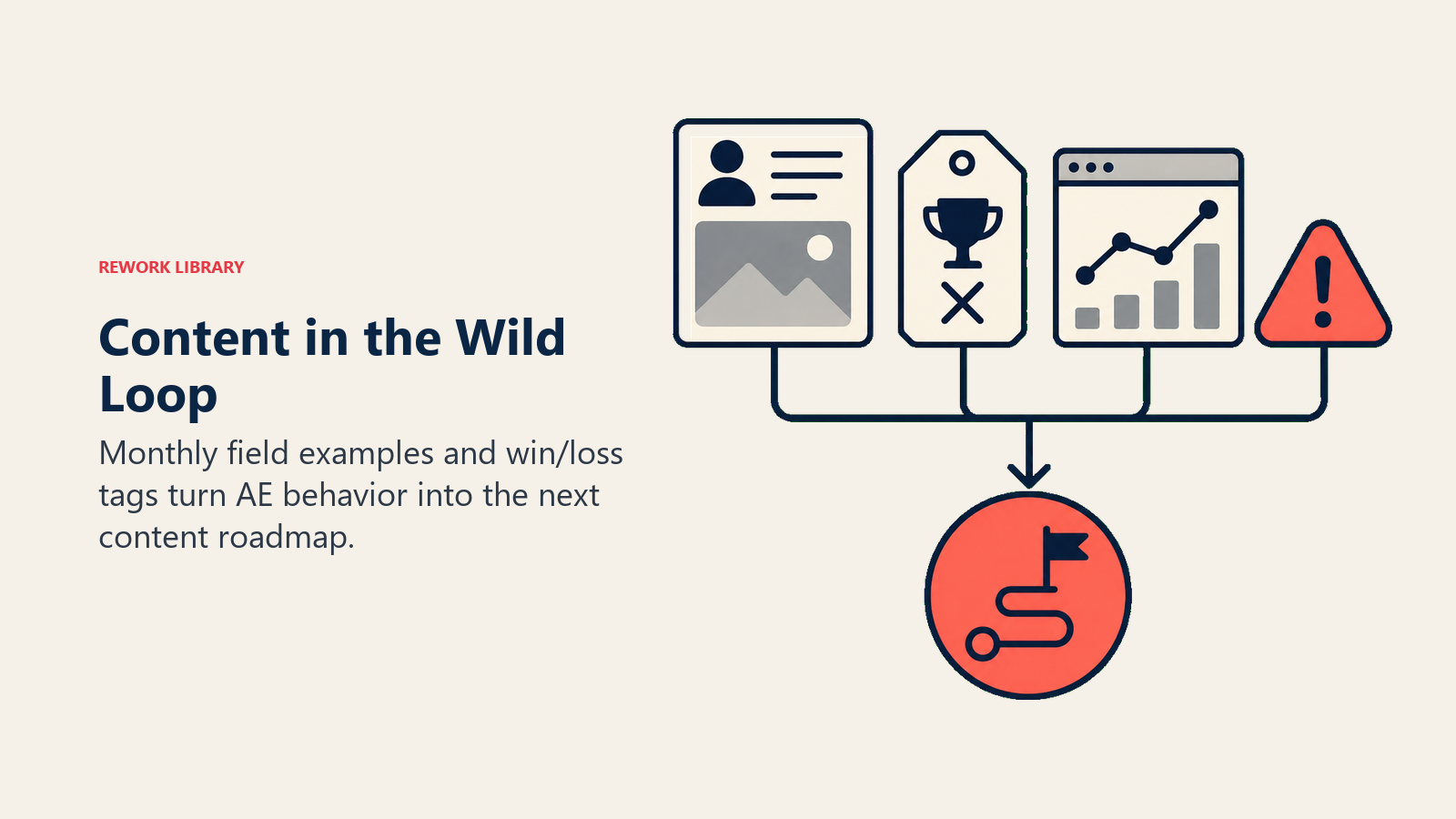
Panggilan "kandungan di lapangan" bulanan. Sekali sebulan, kumpulkan kumpulan silang-fungsi: dua atau tiga AE, satu SDR, satu orang kandungan pemasaran. AE berkongsi apa yang sebenarnya mereka hantar kepada prospek bulan lepas, bukan apa yang sepatutnya mereka gunakan. Ini mendedahkan dek bayangan, bantahan sebenar yang tidak mempunyai liputan kandungan, dan kandungan yang digunakan tetapi tidak ada dalam perpustakaan rasmi.
Penandaan kandungan menang/kalah. Apabila perjanjian ditutup (menang atau kalah), AE menanda aset mana yang muncul dalam kitaran. Ini adalah medan CRM yang ringan, bukan tinjauan yang panjang. Lama-kelamaan, ia membina gambaran yang boleh dipercayai secara statistik tentang kandungan mana yang muncul dalam perjanjian menang berbanding perjanjian kalah. Itu adalah isyarat yang jauh lebih berguna daripada "dek kami mendapat penilaian 4.2." Suapkan penemuan ini ke dalam program suara pelanggan untuk mendedahkan bahasa pembeli yang harus membentuk generasi kandungan seterusnya.
Isyarat penggunaan kandungan yang dipautkan CRM. Alatan seperti Highspot, Seismic, dan Showpad (atau penjejakan dokumen yang lebih mudah dengan setara DocSend) menunjukkan apabila prospek sebenarnya membuka aset dan berapa lama mereka menghabiskannya. Ini lebih boleh dipercayai daripada laporan diri wakil. Jika tumpukan anda merangkumi salah satu daripada ini, jadikan data kelihatan kepada kedua-dua kepimpinan pemasaran dan jualan. Gelombang Platform Enablement Pendapatan Forrester memperincikan bagaimana vendor terkemuka menghubungkan data penglibatan kandungan kepada hasil jualan.
Laluan eskalasi yang didokumentasikan untuk kandungan yang lapuk. Apabila AE mendapati kad pertempuran adalah salah secara fakta, harus ada cara yang jelas dan cepat untuk menandainya. Saluran Slack, borang, e-mel yang ditanda: salurannya tidak penting. Yang penting ialah aset yang ditanda disemak dalam seminggu dan sama ada dikemas kini atau diarkibkan. Jika proses itu perlahan, wakil berhenti menanda kerana tiada apa yang berlaku.
Kalendar Editorial Bersama
Dengan gelung maklum balas yang berjalan, kalendar editorial menjadi produk bersama berbanding jadual pengeluaran pemasaran.
Jualan mencalonkan tema; pemasaran memiliki pengeluaran. Setiap suku tahun, jualan mengenal pasti tiga hingga lima bantahan, senario persaingan, atau cabaran peringkat perjanjian yang paling banyak merugikan mereka. Pemasaran mengambil input tersebut dan membina pelan editorial di sekelilingnya. Pemasaran masih mengawal format, kualiti pengeluaran, dan garis masa, tetapi agenda datang dari lapangan. Panggilan kualiti lead mingguan adalah tempat semula jadi untuk perbualan penetapan agenda ini.
Model pengeluaran dua kelajuan: Kad pertempuran turnaround cepat (SLA 5 hari dari permintaan hingga penyerahan) untuk kandungan persaingan atau pengendalian bantahan yang sensitif masa. Aset tiang (kitaran 4 minggu) untuk kajian kes yang lebih panjang, rangka kerja ROI, dan panduan industri.
SLA kad pertempuran 5 hari hendaklah menjadi lalai untuk apa-apa yang dicetuskan oleh keperluan lapangan. Jika pemasaran tidak dapat menghasilkan respons persaingan 1-2 muka surat dalam lima hari, itu adalah masalah proses yang berbaloi untuk dibetulkan. AE yang menunggu kad itu sedang dalam perjanjian langsung sekarang.
Semakan persaraan suku tahunan. Mana-mana aset yang lebih dari 12 bulan yang tidak ditanda sebagai sentiasa hijau oleh pengguna aktif masuk ke dalam barisan arkib. Mengarkibkan bukan memadam. Ia adalah mengeluarkan dari penemuan aktif untuk menghalang wakil dari mencari dan menggunakan kandungan lapuk secara tidak sengaja.
Pengukuran: Rupa Baik Itu
Volum pengeluaran bukan metrik kejayaan. Satu-satunya metrik yang penting adalah penggunaan lapangan dan kesan perjanjian.
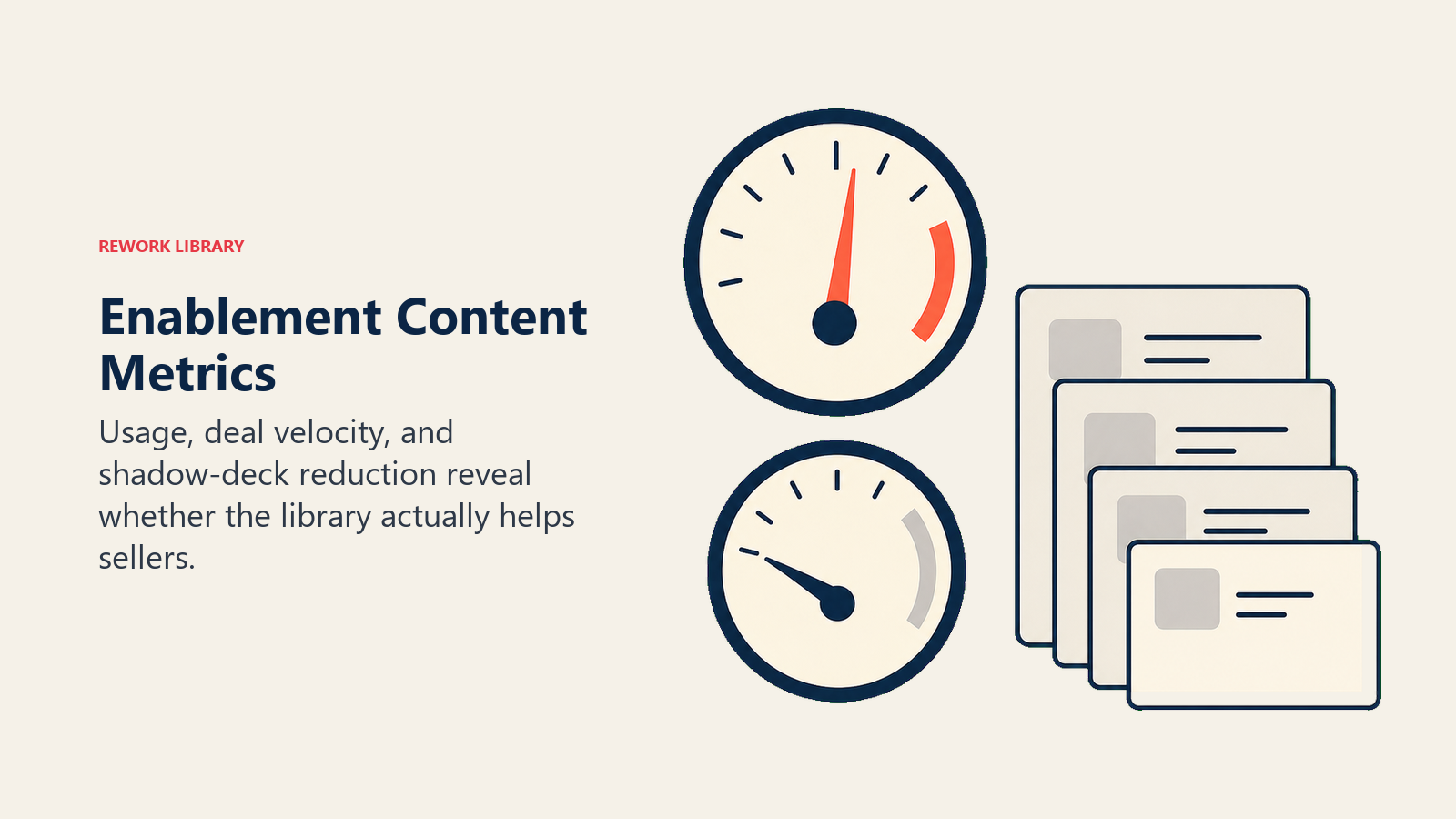
Kadar penggunaan kandungan setiap aset: Sasaran 40%+ wakil yang secara aktif menggunakan aset tertentu dalam 60 hari selepas pelancaran. Jika kajian kes baharu telah ada dalam perpustakaan selama dua bulan dan kurang dari 40% AE menggunakannya, sama ada ia tidak menyelesaikan masalah lapangan sebenar atau ia tidak boleh ditemui. Rujuk silang berbanding pelaporan gelung tertutup untuk melihat sama ada aset penggunaan tinggi sebenarnya berkorelasi dengan hasil perjanjian yang lebih baik.
Korelasi halaju perjanjian dengan penggunaan aset: Ini lebih sukar untuk diukur tetapi berbaloi untuk dijejak. Adakah perjanjian di mana aset tertentu dikongsi bergerak lebih pantas untuk ditutup? Adakah mereka ditutup pada kadar yang lebih tinggi? Lama-kelamaan, data ini memberitahu anda kandungan mana yang sebenarnya mempercepatkan perjanjian berbanding yang hanya memuaskan senarai semak perolehan.
Pengurangan dalam penciptaan dek bayangan: Tanya AE setiap suku tahun berapa kerap mereka membina bahan sendiri berbanding menggunakan yang rasmi. Jika nombor itu tidak merosot, proses editorial bersama tidak berfungsi. Sama ada kandungan tidak relevan, tidak boleh ditemui, atau tidak dipercayai.
Analisis Rework: Berdasarkan corak merentasi pasukan B2B pasaran pertengahan, penunjuk tunggal yang paling ramalan perpustakaan enablement yang sihat bukan bilangan aset. Ia adalah nisbah aset rasmi kepada dek bayangan. Apabila AE membina lebih daripada 30% bahan perjanjian mereka di luar perpustakaan rasmi, gelung maklum balas tidak berjalan. Penyelesaian terpantas bukan peningkatan platform atau audit kandungan. Ia adalah panggilan bulanan 45 minit "kandungan di lapangan" di mana AE berkongsi apa yang sebenarnya mereka hantar kepada prospek bulan lepas. Satu panggilan itu mendedahkan lebih banyak isyarat yang boleh diambil tindakan daripada tiga bulan analitik penggunaan.
Kesilapan Biasa untuk Dielakkan
Melancarkan platform enablement sebelum membetulkan masalah kandungan. Antara muka carian yang lebih baik tidak membetulkan kandungan yang tidak sepadan dengan keperluan lapangan. Ia hanya menjadikan kandungan yang salah lebih mudah ditemui. Pelaburan platform harus mengikuti pelaburan kualiti kandungan, bukan mendahuluinya. Penyelidikan sales enablement Forrester secara konsisten menunjukkan bahawa jurang taksonomi dan kualiti kandungan melemahkan pelaburan platform. Semakan tumpukan alatan penjajaran adalah pelaburan pertama yang lebih baik daripada platform baharu.
Mengukur volum pengeluaran kandungan berbanding penggunaan lapangan. "Kami menghasilkan 47 kepingan kandungan suku ini" bukan metrik yang berguna untuk pasukan pendapatan. Ia adalah metrik yang berguna untuk agensi yang mengebil mengikut penyerahan. Pemasaran yang mengukur volum pengeluaran akan mengoptimumkan untuk volum pengeluaran, tanpa mengira sama ada mana-mana daripadanya digunakan.
Senarai Semak Permulaan Cepat: Tiga Tindakan Minggu Ini
Jalankan ujian 5 aset. Tanya tiga AE: "Apakah lima kepingan kandungan yang sebenarnya anda gunakan dalam perjanjian?" Rujuk silang jawapan mereka berbanding perpustakaan enablement rasmi anda. Jika kurang daripada separuh adalah aset rasmi, anda mempunyai masalah dek bayangan untuk ditangani segera.
Jadualkan panggilan "kandungan di lapangan" pertama. Jemput dua AE, satu SDR, dan ketua kandungan anda. Blok 45 minit. Minta semua orang datang dengan satu contoh sesuatu yang mereka hantar kepada prospek bulan lepas. Perbualan tunggal itu akan mendedahkan lebih banyak wawasan daripada tiga bulan analitik. Struktur panggilan seperti ulasan Pipeline bersama supaya kedua-dua pasukan datang dengan contoh sebenar.
Pilih satu kad pertempuran yang lapuk dan kemas kininya. Jangan audit keseluruhan perpustakaan minggu ini. Cari satu kad pertempuran persaingan yang tidak disemak dalam 12+ bulan dan jalankannya dengan satu AE yang mengerjakan senario persaingan itu secara tetap. Kemas kininya dalam lima hari. Tunjukkan kepada pasukan bahawa proses boleh bergerak dengan cepat.
Kesimpulan
Kandungan enablement adalah produk bersama. Merawatnya sebagai output pemasaran (sesuatu yang dicipta pemasaran dan diserahkan kepada jualan) adalah punca akar struktural perkuburan.
Apabila pemasaran memiliki pengeluaran tetapi jualan memiliki agenda, dan apabila gelung maklum balas berjalan dalam kedua-dua arah, perpustakaan mengecut kepada apa yang sebenarnya berguna. AE berhenti membina dek bayangan kerana bahan rasmi berfungsi. Pemasaran berhenti menghasilkan kandungan yang tidak dibaca oleh sesiapa kerana lapangan memberitahu mereka apa yang sebenarnya diperlukan oleh perjanjian.
Itu bukan masalah alatan. Ia adalah masalah reka bentuk proses, dan kedua-dua pasukan perlu memiliki penyelesaiannya.
Ketahui Lebih Lanjut

Principal Solution Architect
On this page
- Rangka Kerja Gelung Maklum Balas Lapangan
- Mengapa Jurang Itu Wujud
- Empat Mod Kegagalan
- Peringkat yang Salah
- Persona yang Salah
- Format yang Salah
- Jangka Hayat yang Salah
- Audit Enablement Bersama
- Membina Gelung Maklum Balas Lapangan
- Kalendar Editorial Bersama
- Pengukuran: Rupa Baik Itu
- Kesilapan Biasa untuk Dielakkan
- Senarai Semak Permulaan Cepat: Tiga Tindakan Minggu Ini
- Kesimpulan
- Ketahui Lebih Lanjut