Apakah itu Knowledge Graph? Menghubungkan Data untuk AI yang Lebih Cerdas
Turn this article into takeaways for your work.


Each assistant summarizes the article only for you and suggests best practices for your work.
CRM anda tahu bahawa Acme Corp adalah pelanggan. ERP anda tahu Acme mempunyai tiga invois terbuka. Sistem sokongan anda tahu mereka mengemukakan dua tiket minggu lepas. Tetapi tiada satu pun daripada sistem ini tahu bahawa invois-invois tersebut dalam pertikaian, bahawa tiket-tiket itu berkaitan dengan produk yang sama, dan bahawa wakil akaun sedang bercuti. Hubungan antara fakta-fakta adalah sepenting fakta-fakta itu sendiri, dan kebanyakan seni bina data perusahaan kehilangannya sepenuhnya.
Knowledge graph wujud untuk menyelesaikan masalah ini dengan tepat. Ia memberikan sistem AI konteks yang berhubungan yang mengubah titik data terpencil menjadi pemahaman yang koheren.
Apakah itu Knowledge Graph
Knowledge graph adalah struktur data yang mewakili maklumat sebagai rangkaian entiti dan hubungan antara mereka. Setiap entiti adalah nod (seseorang, syarikat, produk, konsep, peristiwa). Setiap hubungan adalah tepi (bekerja-untuk, memiliki, menyebabkan, bersaing-dengan). Tepi dilabelkan, jadi graf boleh menyatakan nuansa yang jadual mudah tidak boleh.
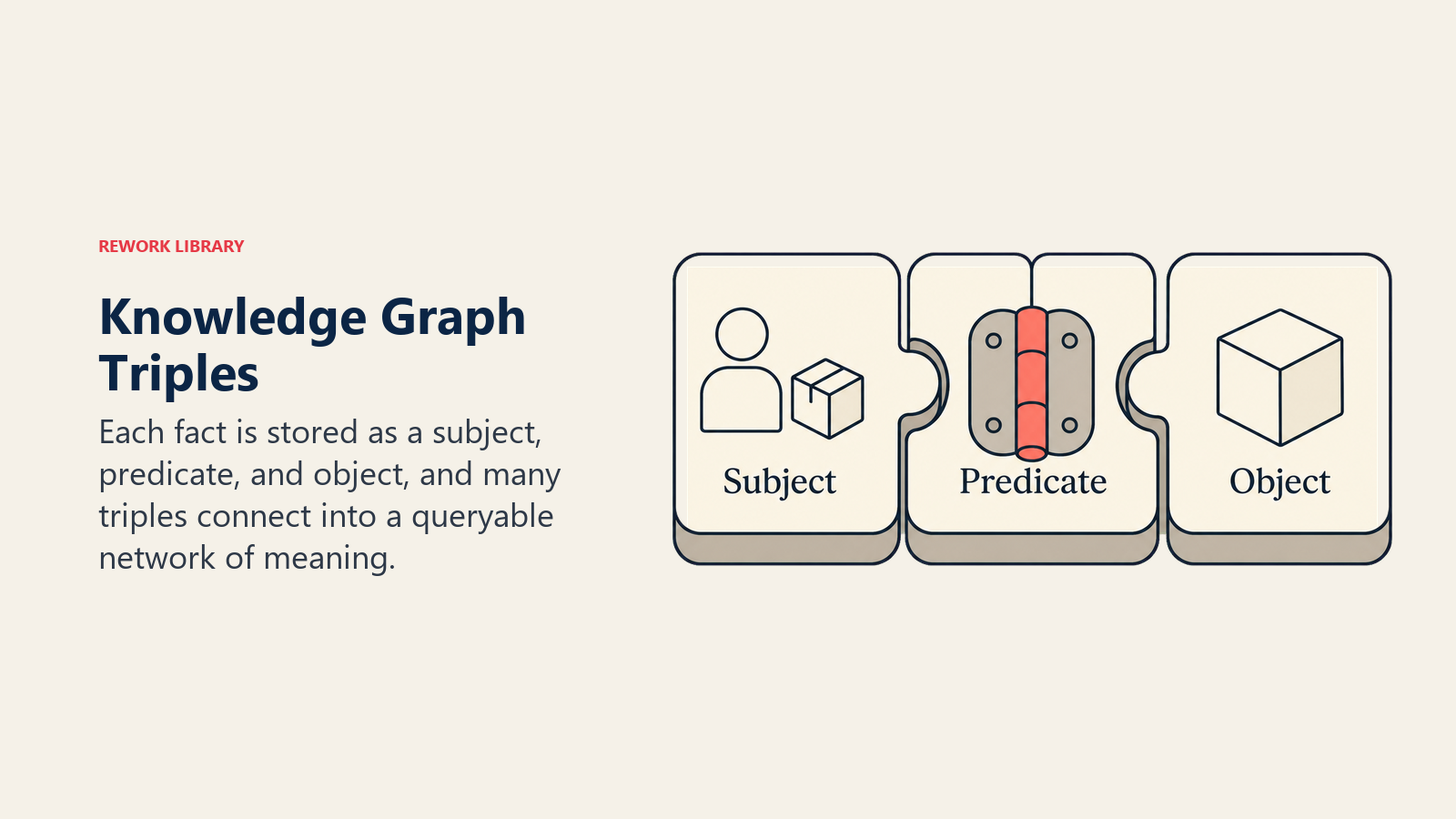
Perwakilan klasik adalah triple: subjek, predikat, objek. "Acme Corp (subjek) ada-pertikaian (predikat) Invois #4821 (objek)" adalah satu triple. Sambungkan ribuan triple ini dan anda mempunyai graf yang boleh dilalui, ditanya, dan difikirkan oleh komputer.
Berbeza dengan pangkalan data relasional yang menyimpan baris dan lajur, knowledge graph menyimpan makna. Berbeza dengan stor dokumen yang menyimpan teks, knowledge graph menjadikan hubungan jelas dan boleh ditanya. Berbeza dengan embeddings mentah yang menangkap persamaan semantik, knowledge graph menangkap hubungan yang tepat dan berlabel.
Untuk pemimpin perniagaan: knowledge graph adalah peta boleh dibaca mesin tentang cara perkara-perkara dalam domain anda saling berkait. Ia adalah substrat yang membolehkan sistem AI menjawab soalan yang memerlukan menghubungkan pelbagai fakta.
Mengapa Penting untuk Aplikasi AI
Jurang antara demo yang mengesankan dan AI perusahaan yang boleh dipercayai sering merupakan masalah pengetahuan. Model bahasa besar sangat baik dalam menghasilkan teks yang lancar dan munasabah, tetapi mereka berhalusinasi kerana mereka tidak mempunyai fakta yang berwibawa dan terkini tentang domain khusus anda.
Retrieval-augmented generation (RAG) menangani ini dengan mendapatkan dokumen yang relevan sebelum menghasilkan respons. Knowledge graph mengambil langkah lebih jauh: daripada mendapatkan dokumen (yang mungkin mengandungi jawapan yang terkubur dalam prosa), ia mendapatkan fakta dan hubungan berstruktur yang disahkan secara langsung.
Perbezaan praktikal adalah ketara:
Sistem RAG yang ditanya "Siapa wakil akaun untuk Acme Corp?" mungkin mengembalikan perenggan dari nota akaun dan berharap model mengekstrak jawapan yang betul. Knowledge graph menjawab pertanyaan secara langsung, kerana "Acme Corp ada-wakil-akaun Sarah Chen" adalah tepi yang jelas dalam graf.
Untuk soalan berbilang lompatan yang kompleks ("Pelanggan mana dalam sektor runcit yang mempunyai tiket sokongan terbuka dan pembaharuan yang perlu diselesaikan dalam Q3?"), knowledge graph boleh melintasi rantai hubungan dengan cekap. Pendekatan pengambilan dokumen mengalami kesukaran kerana jawapannya memerlukan menggabungkan maklumat dari pelbagai sumber.
Aplikasi Perniagaan Sebenar
Knowledge graph bukan eksperimen. Ia memacu beberapa aplikasi AI yang paling penting dalam pengeluaran hari ini.
Customer 360. Hubungkan rekod pelanggan dari CRM, ERP, sokongan dan sistem pemasaran ke dalam graf entiti yang disatukan. Aplikasi AI kemudian boleh menanya konteks hubungan penuh: apa yang mereka beli, apa yang mereka adukan, siapa anak syarikat mereka, apa yang diperkatakan dalam terma kontrak mereka.
Pangkalan pengetahuan produk. Syarikat perisian perusahaan membina knowledge graph ciri-ciri produk mereka, integrasi, peringkat harga dan dokumentasi. Pembantu AI kemudian boleh menjawab soalan teknikal yang tepat dengan melintasi graf daripada meneka dari data latihan.
Pengesanan penipuan. Institusi kewangan membina graf akaun, transaksi, peranti dan corak tingkah laku. Rangkaian penipuan yang tidak kelihatan dalam data peringkat baris menjadi kelihatan sebagai corak rangkaian yang tidak biasa dalam graf.
Kecerdasan rantaian bekalan. Pengeluar membina graf pembekal, komponen, risiko geografi dan alat ganti. Apabila gangguan berlaku, AI boleh melintasi graf untuk mencari pilihan sumber kedua dan menilai kesan hiliran.
Pematuhan kawal selia. Dalam penjagaan kesihatan dan kewangan, knowledge graph mengodifikasikan keperluan kawal selia, pengelasan produk dan kewajipan pelaporan sebagai hubungan berstruktur. Alat pematuhan AI kemudian boleh berfikir melalui graf daripada bergantung pada dokumen polisi tidak berstruktur.
Knowledge Graph dan RAG: Lebih Baik Bersama
Seni bina AI perusahaan yang paling berkesan menggabungkan kedua-dua pendekatan. Carian semantik mencari dokumen yang relevan. Knowledge graph menyediakan fakta berstruktur. Model bahasa mensintesis kedua-duanya menjadi respons.
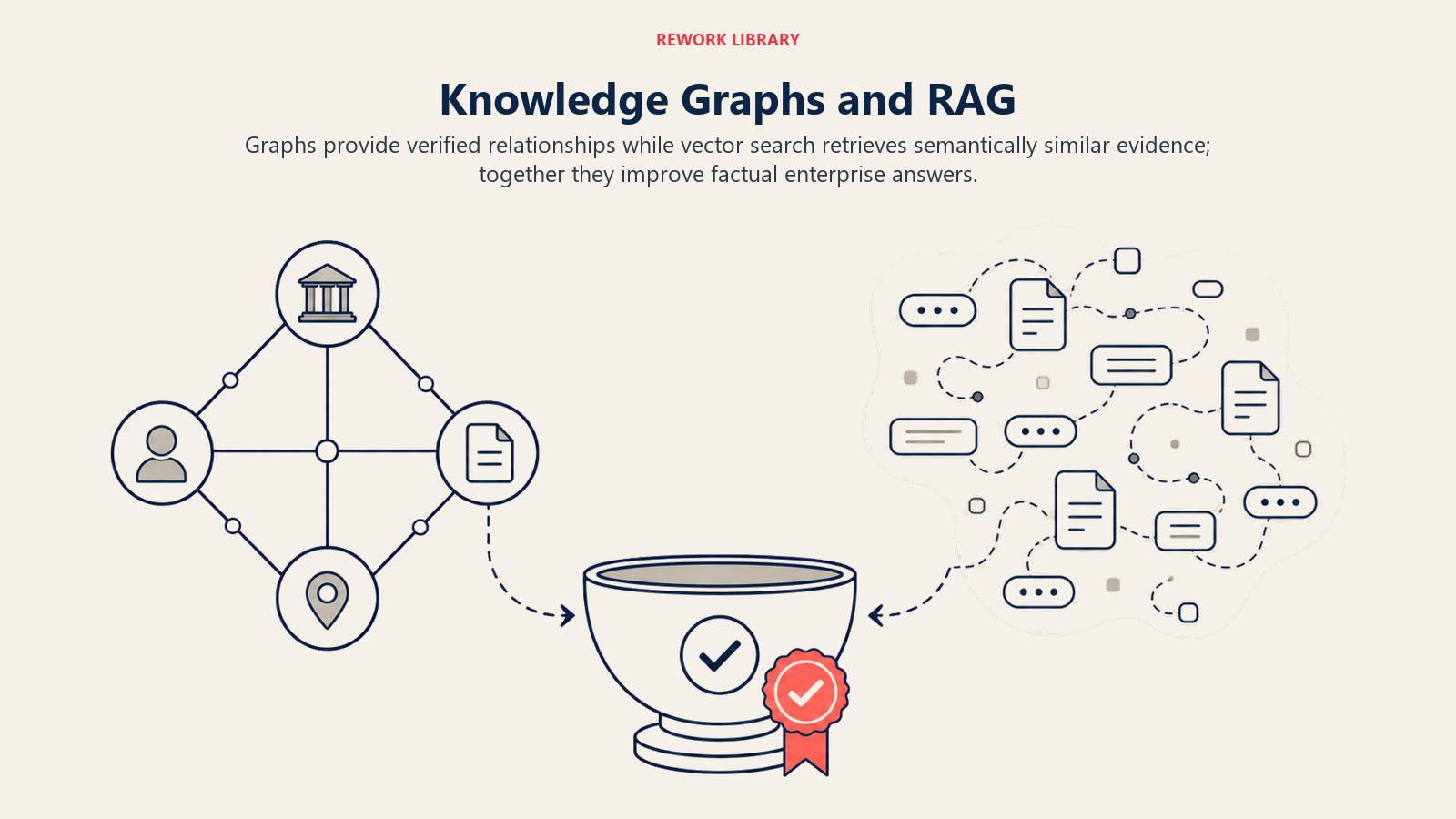
Kombinasi ini sering disebut "GraphRAG" atau RAG hibrid. Graf mengendalikan pertanyaan tepat, faktual dan relasional di mana struktur penting. Pangkalan data vektor mengendalikan pertanyaan kabur dan semantik di mana persamaan penting. Kedua-duanya saling melengkapi kerana mereka gagal secara berbeza: knowledge graph yang kekurangan hubungan tidak boleh menjawab pertanyaan, tetapi ia tidak berhalusinasi. Sistem berasaskan vektor mungkin mengembalikan maklumat salah yang kedengaran munasabah.
Untuk deployment perusahaan di mana ketepatan tidak boleh dinegotiasikan (undang-undang, pematuhan, perubatan, kewangan), pengesahan berstruktur knowledge graph adalah lapisan keselamatan yang bermakna.
Membina vs. Membeli Knowledge Graph
Kebanyakan syarikat pasaran pertengahan tidak membina knowledge graph dari awal. Pilihan yang realistik adalah:
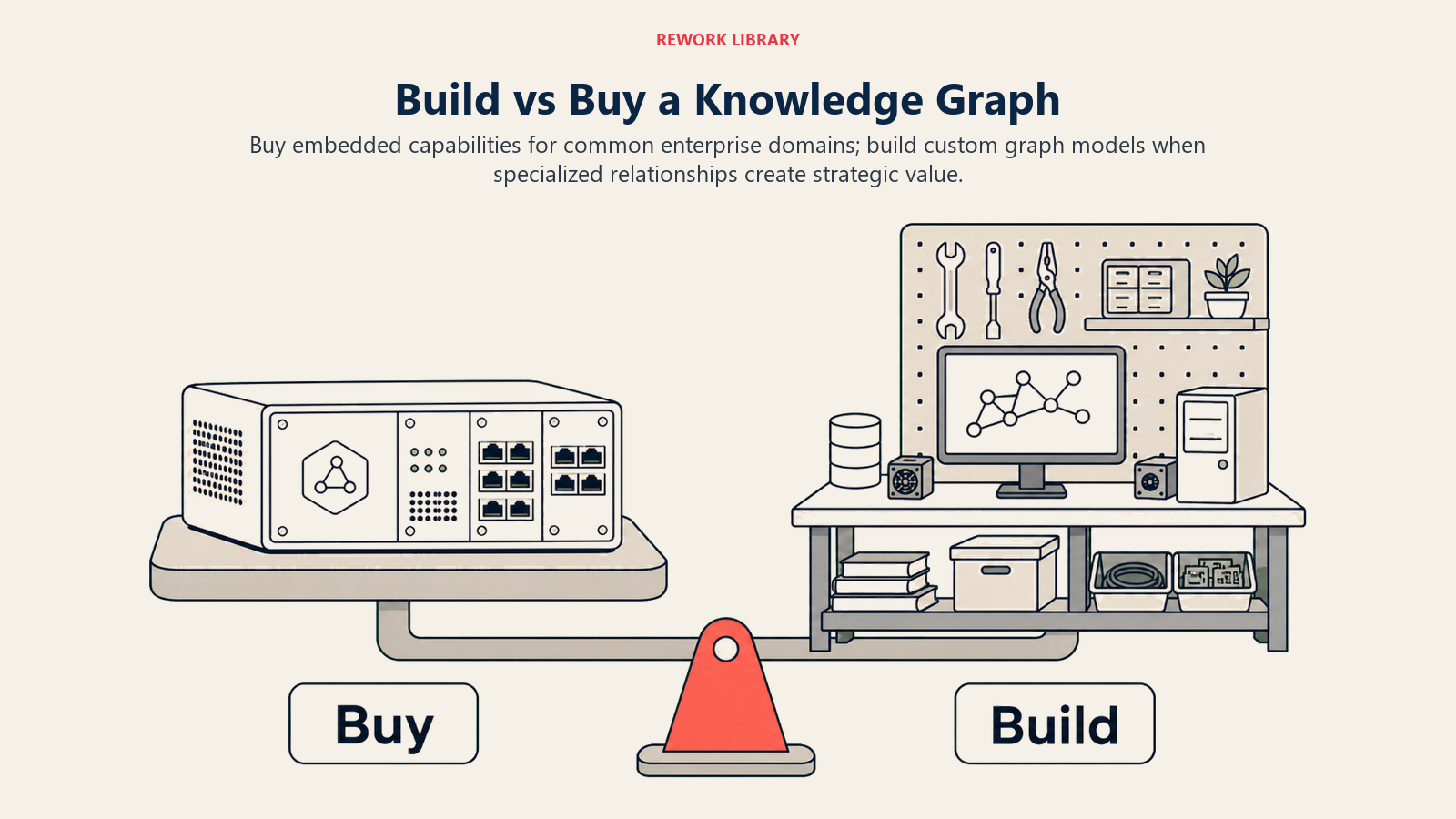
Pembelian tertanam. Banyak platform perusahaan (Salesforce, SAP, ServiceNow, Google Enterprise Search) menyertakan keupayaan knowledge graph. Jika stack anda sudah menyertakan salah satu daripada ini, anda mungkin sudah mempunyai akses kepada ciri-ciri graf yang tidak anda gunakan.
Pangkalan data graf. Neo4j, Amazon Neptune dan Microsoft Azure Cosmos DB (dengan Gremlin API) adalah pangkalan data graf yang dibina khusus. Ia memerlukan kepakaran pemodelan data untuk dibina dengan berkesan tetapi memberikan anda kawalan penuh.
Platform knowledge graph. Vendor seperti Stardog, Ontotext dan Franz Inc. menawarkan platform yang menyertakan pengurusan ontologi, saluran paip pengambilan data dan alat pertanyaan yang bertujuan untuk deployment perusahaan.
Penambahan vendor AI. Beberapa vendor AI (termasuk Microsoft dengan Copilot dan pelbagai startup AI menegak) membina infrastruktur knowledge graph di atas data sedia ada anda sebagai sebahagian daripada produk mereka.
Soalan membina-versus-membeli biasanya bergantung pada seberapa khusus domain anda. Data perusahaan generik (pelanggan, invois, produk) dilayan dengan baik oleh penyelesaian yang tertanam dalam platform. Domain yang sangat khusus (interaksi dadah, sejarah penyelenggaraan peralatan, hubungan kes undang-undang) sering memerlukan pemodelan graf tersuai.
Dimensi Governance
Knowledge graph memperkenalkan keperluan governance yang data rata tidak mempunyai. Setiap hubungan dalam graf adalah penegasan bahawa sesuatu adalah benar. Menguruskan siapa yang boleh mencipta, mengubah dan memadamkan tepi, dan bagaimana perubahan tersebut dijejak dan diaudit, menjadi kritikal apabila graf berkembang.
Ini berkaitan dengan AI governance secara lebih luas: apabila AI anda membuat keputusan berdasarkan hubungan knowledge graph, anda perlu dapat menjelaskan dan mengaudit hubungan tersebut. Tepi yang tidak disahkan atau lapuk boleh menyebabkan ralat AI yang kedengaran yakin dan lebih sukar dikesan berbanding halusinasi yang jelas.
Piawaian kualiti data untuk knowledge graph perlu jelas. Triple yang salah secara faktual sering lebih berbahaya daripada maklumat yang hilang, kerana sistem akan menggunakannya dengan yakin.
Fakta Utama
- Knowledge graph mewakili maklumat sebagai triple entiti-hubungan berlabel, menjadikan hubungan jelas dan boleh ditanya daripada terkubur dalam teks.
- Ia menangani had utama model bahasa besar: kekurangan pengetahuan faktual yang tepat, terkini dan khusus domain.
- Seni bina hibrid yang menggabungkan knowledge graph dengan carian vektor (GraphRAG) adalah amalan terbaik semasa untuk AI perusahaan berketepatan tinggi.
- Aplikasi sebenar termasuk Customer 360, pengesanan penipuan, kecerdasan rantaian bekalan, pangkalan pengetahuan produk dan pematuhan kawal selia.
- Knowledge graph memerlukan governance (siapa yang boleh menegaskan hubungan, cara disahkan) bersama-sama pembinaan teknikal.
Soalan Lazim
Adakah knowledge graph sama dengan pangkalan data?
Tidak. Pangkalan data tradisional (relasional, dokumen, lajur) menyimpan data dalam jadual atau dokumen. Knowledge graph menyimpan data sebagai rangkaian hubungan berlabel. Anda boleh menanya knowledge graph untuk melintasi hubungan ("cari semua pelanggan yang mempunyai invois terbuka dan tiket sokongan dalam minggu yang sama"), yang sukar atau mustahil dalam SQL relasional tanpa cantuman yang kompleks.
Adakah kita memerlukan knowledge graph untuk menggunakan AI?
Tidak. Banyak aplikasi AI yang berharga berfungsi tanpanya. Tetapi jika kes penggunaan anda memerlukan penaakulan berbilang lompatan ke atas fakta domain berstruktur, jawapan tepat yang tidak boleh bertoleransi halusinasi, atau menghubungkan data merentasi pelbagai sistem perusahaan, knowledge graph sering merupakan pilihan seni bina yang betul.
Berapa lama untuk membina knowledge graph perusahaan?
Graf domain yang tertumpu (satu barisan produk, satu segmen pelanggan, satu domain kawal selia) boleh beroperasi dalam 2 hingga 4 bulan dengan perkakas dan akses data yang betul. Knowledge graph perusahaan penuh yang meliputi semua entiti dan hubungan perniagaan adalah program berbilang tahun. Kebanyakan deployment yang berjaya bermula dengan sempit dan berkembang.
Apakah perbezaan antara knowledge graph dan ontologi?
Ontologi mentakrifkan jenis entiti dan hubungan yang dibenarkan dalam graf (skema). Knowledge graph adalah contoh yang diisi bagi skema tersebut dengan data sebenar. Ontologi berkata "pelanggan boleh ada-wakil-akaun orang." Knowledge graph berkata "Acme Corp ada-wakil-akaun Sarah Chen."
