Apakah Call Analytics? Mengubah Perbualan Jualan kepada Business Intelligence
Turn this article into takeaways for your work.


Each assistant summarizes the article only for you and suggests best practices for your work.
Seorang pengurus jualan di sebuah syarikat perisian mendapati bahawa wakil yang menyebut integrasi produk dengan Salesforce dalam panggilan pertama mereka menutup deal 30% lebih cepat berbanding yang tidak menyebutnya. Beliau mendapati perkara ini dalam platform yang secara automatik menganalisis setiap panggilan, menandai topik dan menunjukkan korelasi dengan keputusan. Sebelum call analytics wujud, corak tersebut akan terkubur dalam hamparan data, jika ada yang sempat membuatnya.
Call analytics ialah penggunaan AI pada perbualan suara dan video, mengubah audio tidak berstruktur kepada data berstruktur yang boleh diambil tindakan oleh pengurus, wakil dan organisasi.
Apa yang Dilakukan Call Analytics
Platform call analytics biasanya melakukan beberapa perkara sekaligus:
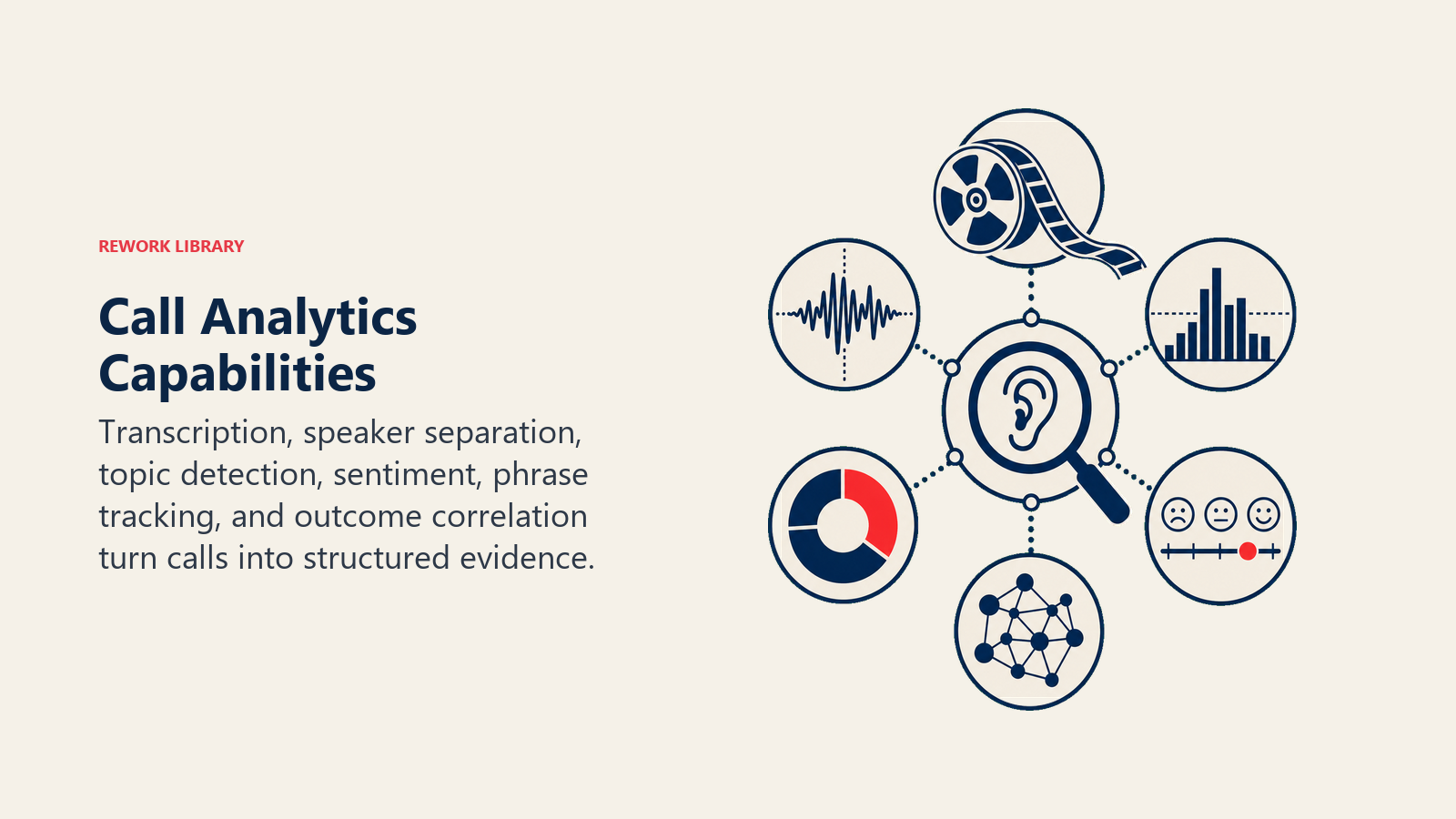
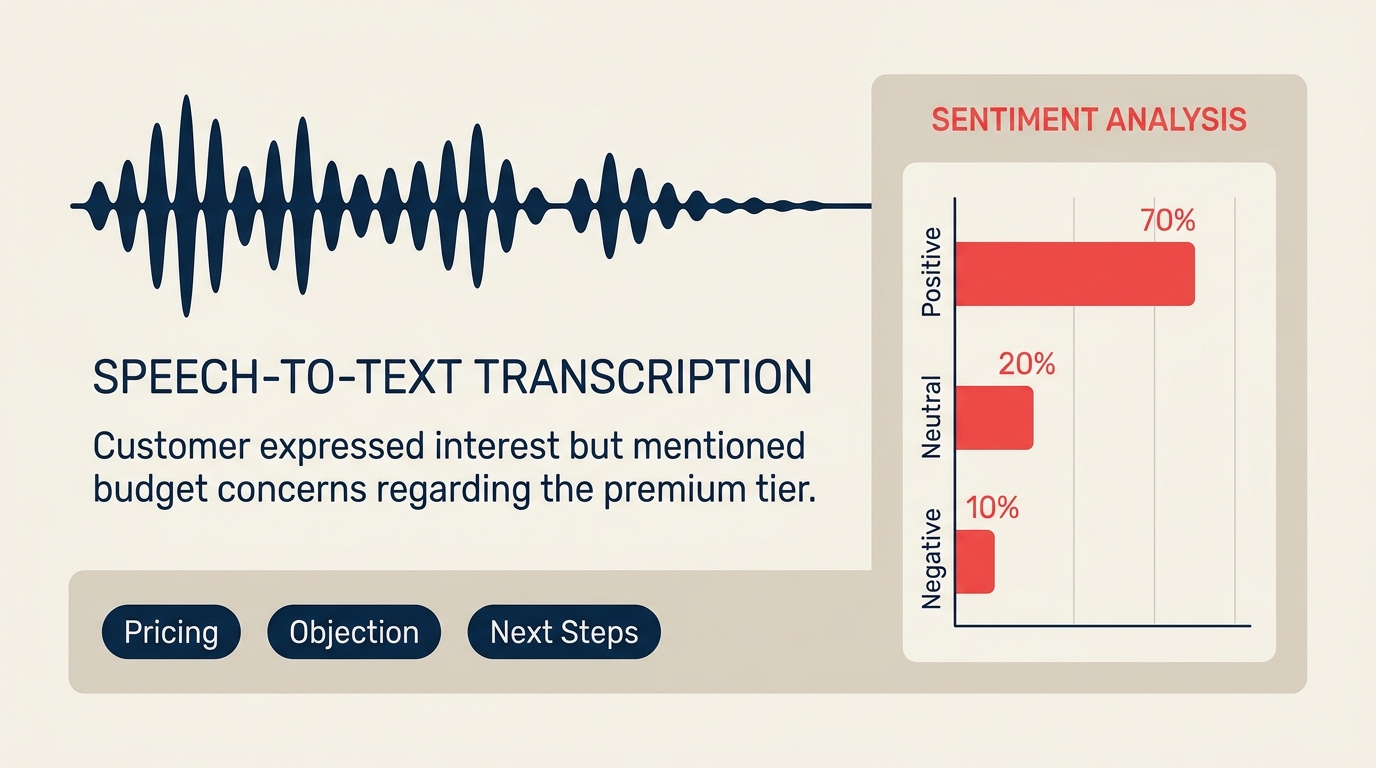
Transkripsi menukar audio kepada teks dalam masa hampir nyata atau selepas panggilan tamat. Transkripsi moden menggunakan model pengecaman pertuturan yang diselaraskan dengan perbendaharaan kata perbualan perniagaan. Transkrip adalah asas kepada semua analisis yang dilakukan selepasnya.
Pengenalan penutur memisahkan siapa yang berkata apa. Mengetahui bahawa pelanggan bertanya tentang harga dan wakil mengelak soalan itu memerlukan pengetahuan tentang suara siapa yang milik peserta yang mana. Diarisasi penutur membahagikan transkrip mengikut penutur supaya analisis hiliran mempunyai atribusi yang betul.
Pengesanan topik mengenal pasti subjek apa yang dibincangkan dalam panggilan dan bila ia dibincangkan. Model AI yang dilatih pada perbualan jualan belajar mengenali kategori seperti "perbincangan harga", "soalan teknikal", "sebutan pesaing", "bantahan", "langkah seterusnya" dan "titik kesakitan pelanggan" daripada bahasa yang digunakan. Panggilan yang ditandai dengan topik-topik ini jauh lebih mudah dicari dan dianalisis berbanding audio mentah.
Analisis sentimen mengesan bagaimana perbualan terasa pada titik yang berbeza. Analisis sentimen yang digunakan pada transkrip panggilan boleh menandai panggilan di mana sentimen pelanggan merosot dengan mendadak, mengenal pasti saat kekeliruan atau kekecewaan dan menyediakan pandangan agregat tentang bagaimana sentimen pelanggan berubah dari masa ke masa, mengikut wakil, lini produk atau peringkat kitaran jualan.
Penjejakan kata kunci dan frasa memberi amaran kepada pengurus apabila perkataan tertentu muncul. Kes penggunaan competitive intelligence menjejaki apabila nama pesaing disebut. Kes penggunaan pematuhan menjejaki sama ada pendedahan yang diperlukan telah dibuat. Kes penggunaan pembinaan kemahiran menjejaki sama ada wakil menggunakan rangka kerja pemesejan yang telah mereka dilatih.
Korelasi keputusan adalah tempat business intelligence berada. Dengan menghubungkan ciri panggilan (topik yang disebutkan, nisbah masa bercakap, arka sentimen, frasa tertentu) dengan keputusan (menang, kalah, tamat langganan, diperbaharui), platform analytics boleh mendedahkan corak tentang bagaimana perbualan berprestasi tinggi kelihatan.
Mengapa AI Mengubah Call Analytics
Sebelum transkripsi dan analisis berkuasa AI, analisis panggilan jualan bermakna pengurus mendengar pilihan panggilan yang dirakam, sering kurang daripada 10% jumlah keseluruhan, dan mencatat pemerhatian secara manual. Ia lambat, tidak berskala dan berat sebelah kepada panggilan yang kebetulan disemak oleh pengurus.
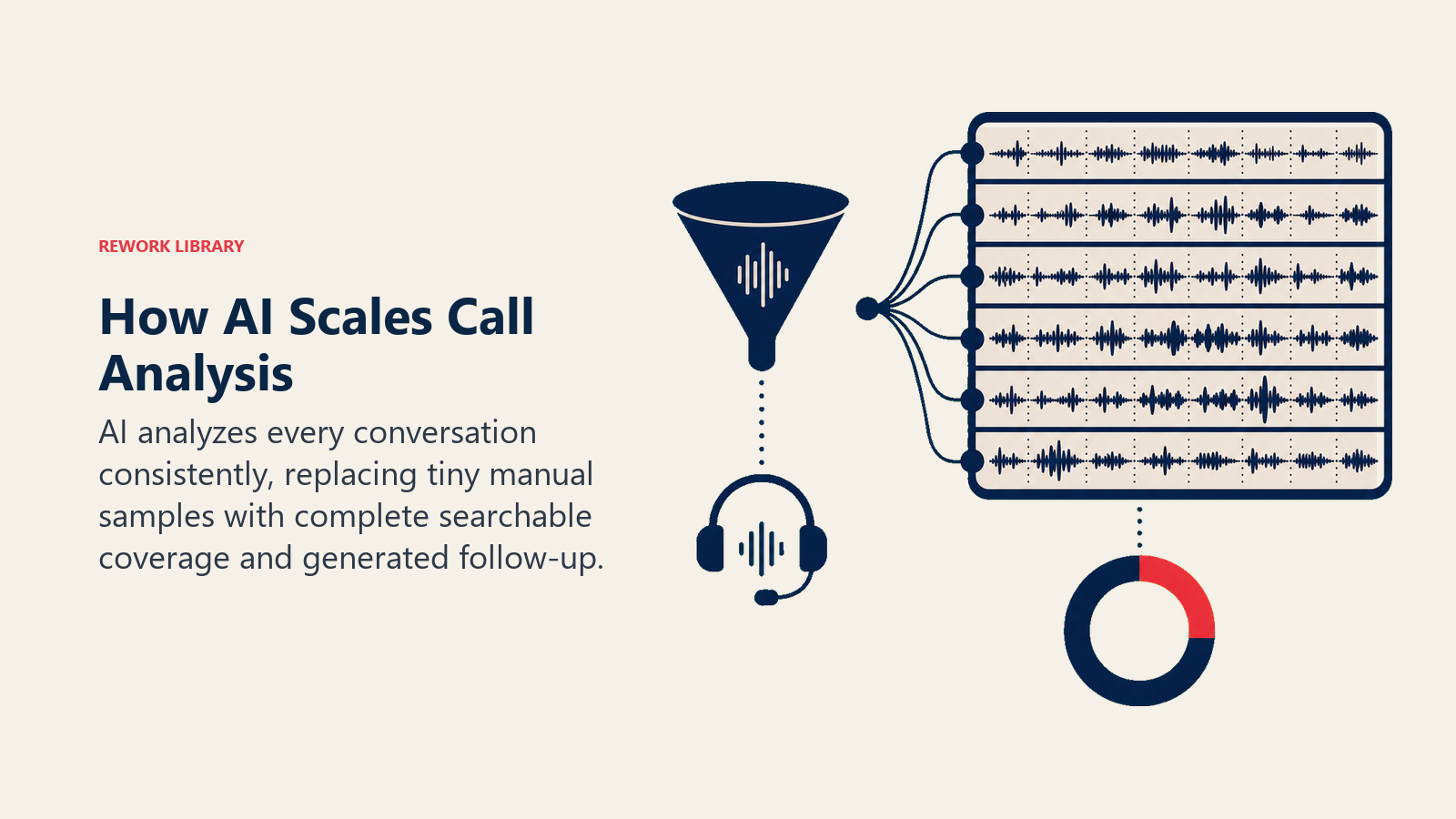
Transkripsi dan analisis AI berskala kepada 100% jumlah panggilan. Setiap perbualan dianalisis. Corak yang tidak kelihatan dalam pensampelan manual kerana ia muncul dalam 5% panggilan menjadi boleh dikesan. Pembinaan kemahiran berdasarkan contoh yang dipilih tangan menjadi pembinaan kemahiran yang dimaklumkan oleh setiap panggilan setiap wakil minggu ini.
Peralihan daripada analisis audio kepada pemprosesan bahasa semula jadi berasaskan teks adalah yang membolehkan ini. Model NLP moden boleh memproses transkrip pada kos yang jauh lebih rendah daripada meminta manusia mendengar audio, dan mereka menggunakan kriteria yang konsisten pada setiap panggilan dan bukannya berbeza mengikut sesiapa yang melakukan semakan.
AI generatif telah menambah lapisan lain: menjana ringkasan panggilan secara automatik, menggubal e-mel susulan berdasarkan apa yang dibincangkan dan mengenal pasti peluang pembinaan kemahiran tertentu dengan contoh yang diambil terus daripada transkrip.
Aplikasi Perniagaan
Pembinaan kemahiran dan enablement jualan. Pengurus boleh menyemak ringkasan yang dijana oleh AI dan tag topik merentas panggilan pasukan mereka dalam masa yang sama untuk mendengar satu rakaman. Pembinaan kemahiran menjadi khusus: "Anda menghabiskan 40% panggilan anda membincangkan harga sebelum melayakkan bajet" dan bukannya "Cuba tutup lebih cepat." Wakil boleh menyemak panggilan mereka sendiri dengan maklum balas yang diberikan AI sebelum semakan pengurus.
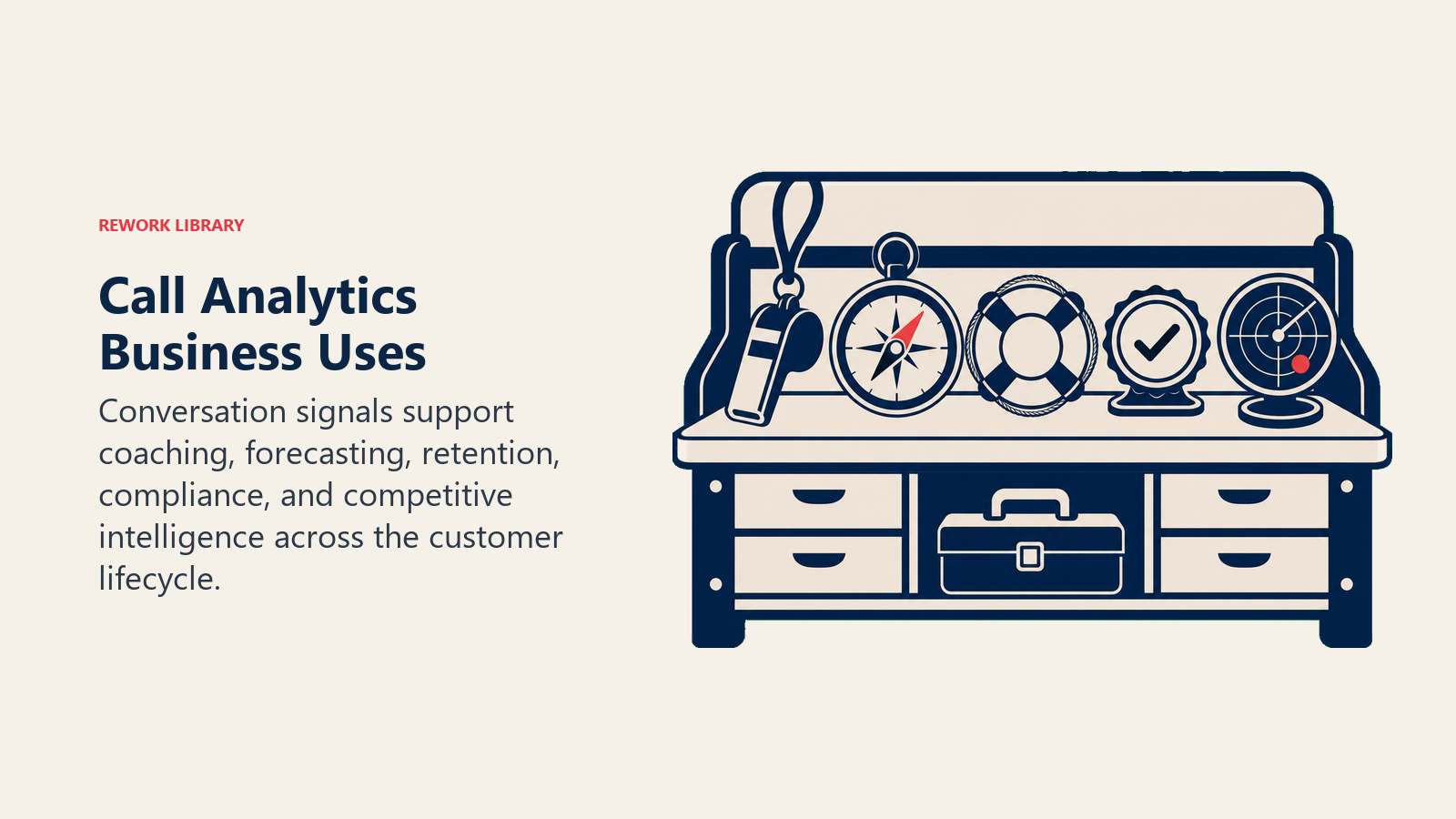
Revenue forecasting. Isyarat perbualan meningkatkan ketepatan ramalan. Apabila pembeli berkata mereka menilai vendor, membincangkan garis masa perolehan atau mengekskalasi kepada eksekutif, ini adalah isyarat ramalan yang lebih kuat berbanding data peringkat yang dimasukkan oleh wakil. Beberapa platform revenue intelligence mengintegrasikan isyarat panggilan terus ke dalam skor kebarangkalian deal.
Customer success dan pengekalan. Panggilan sokongan dan customer success yang dianalisis untuk trend sentimen mendedahkan akaun berisiko sebelum penunjuk churn muncul dalam data penggunaan produk. Pelanggan yang panggilan mereka semakin negatif selama tiga bulan bernilai outreach proaktif sebelum perbualan pembaharuan menjadi sukar.
Pematuhan dan jaminan kualiti. Industri yang dikawal selia menggunakan call analytics untuk mengesahkan bahawa pendedahan yang diperlukan telah dibuat, bahawa wakil tidak membuat tuntutan yang tidak dibenarkan dan bahawa interaksi memenuhi standard yang didokumenkan. Semakan automatik terhadap 100% panggilan adalah lebih murah dan lebih konsisten berbanding semakan kualiti oleh manusia.
Competitive intelligence. Apabila pembeli menyebut pesaing, keupayaan wakil untuk mengendalikan bantahan tersebut menentukan sama ada deal diteruskan. Call analytics yang mengagregat sebutan pesaing merentas semua panggilan memberitahu pasukan produk dan pemasaran pesaing mana yang paling kerap muncul, apa yang dikatakan pelanggan tentang mereka dan di mana jurang produk dalam persepsi pelanggan.
Call Analytics dan AI Voice Agent
Kemunculan ejen suara AI yang menjalankan panggilan keluar, melayakkan petunjuk jualan atau mengendalikan interaksi sokongan mewujudkan konteks baharu untuk call analytics. Apabila AI menjalankan panggilan, analytics beralih daripada menilai prestasi manusia kepada menilai prestasi AI: adakah AI mengendalikan bantahan dengan betul, adakah ia mengikuti aliran perbualan yang direka, di mana perbualan gagal.
Call analytics dan ejen suara AI semakin berkait rapat. Infrastruktur analytics yang dibangunkan untuk menilai panggilan manusia digunakan semula untuk menilai panggilan AI, dan corak yang dikenal pasti dalam call analytics manusia memaklumkan bagaimana ejen suara AI direka bentuk dan dilatih.
Apa yang Perlu Dicari dalam Alatan Call Analytics
Keupayaan teras untuk dinilai:
Ketepatan transkripsi berbeza mengikut platform dan bergantung pada kualiti audio, aksen dan perbendaharaan kata khusus domain. Platform yang membenarkan perbendaharaan kata tersuai dan direka untuk konteks perniagaan umumnya mengatasi transkripsi generik.
Integrasi CRM. Data panggilan menjadi paling berharga apabila ia mengalir ke dalam sistem di mana deal dan akaun berada. Platform yang menolak ringkasan, topik dan item tindakan terus ke dalam rekod CRM menghapuskan silo data.
Carian dan pengambilan semula. Keupayaan untuk mencari semua panggilan untuk topik, frasa atau corak sentimen tertentu adalah yang menjadikan analytics berskala. Platform tanpa carian yang baik bermakna menyemak panggilan satu per satu.
Aliran kerja pembinaan kemahiran. Di luar menganalisis panggilan, cari ciri yang menutup lingkaran: cara untuk pengurus mengulas saat tertentu, untuk wakil menjawab dan untuk cerapan pembinaan kemahiran disambungkan kepada kandungan latihan.
Pematuhan privasi dan persetujuan. Undang-undang rakaman panggilan berbeza mengikut bidang kuasa, dan panggilan jualan B2B yang merentas sempadan negeri atau negara memerlukan perhatian terhadap keperluan pendedahan. Platform yang direka untuk pematuhan menyertakan ciri untuk mengurus persetujuan, pengekalan data dan kawalan akses.
Konsep AI Berkaitan
- Analisis Sentimen - Menganalisis nada emosi dalam transkrip panggilan
- Pemprosesan Bahasa Semula Jadi - Keupayaan asas untuk memahami teks perbualan
- Ejen Suara AI - Sistem automatik yang menjalankan panggilan dan memerlukan analytics sendiri
- Analitik Ramalan - Mengubah isyarat panggilan kepada ramalan churn dan forecast
- AI Perbualan - Bidang yang lebih luas bagi perbualan berkuasa AI
- Business Intelligence - Bagaimana data panggilan menyuap pelaporan organisasi
Sumber Luaran
- Gartner on Conversation Intelligence - Definisi penganalisis industri dan konteks pasaran
- Harvard Business Review on Sales Call Analysis - Penyelidikan tentang tingkah laku perbualan dan keputusan jualan
- TCPA Compliance Overview - Konteks peraturan AS untuk rakaman panggilan dan analytics
Soalan Lazim tentang Call Analytics
Apakah call analytics?
Call analytics ialah penggunaan AI untuk mentranskripsi panggilan pelanggan dan jualan serta mengekstrak cerapan berstruktur daripada transkrip. Ia merangkumi transkripsi, pengenalan penutur, pengesanan topik, analisis sentimen, penjejakan kata kunci dan korelasi keputusan, mengubah audio tidak berstruktur kepada data yang boleh dicari, dianalisis dan diambil tindakan pada skala besar.
Bagaimana call analytics meningkatkan prestasi jualan?
Dengan menganalisis 100% panggilan dan bukannya sampel kecil, call analytics mendedahkan corak yang sebaliknya tidak kelihatan: topik mana yang berkorelasi dengan deal yang ditutup, di mana wakil cenderung kehilangan kawalan perbualan, bagaimana nisbah masa bercakap berbeza antara penyumbang terbaik dan terendah. Pembinaan kemahiran yang dibina atas corak ini adalah khusus, disokong data dan terpakai kepada setiap wakil, bukan hanya yang panggilan mereka kebetulan disemak oleh pengurus.
Apakah perbezaan antara call analytics dan rakaman panggilan?
Rakaman panggilan menangkap dan menyimpan audio. Call analytics menambah analisis berkuasa AI pada rakaman: transkripsi, pengesanan topik, analisis sentimen dan pengenalan corak merentas jumlah panggilan yang besar. Rakaman adalah prasyarat; analytics adalah yang menjana nilai perniagaan daripada rakaman tersebut.
Adakah platform call analytics juga berfungsi untuk panggilan sokongan pelanggan selain panggilan jualan?
Ya. Aplikasi sokongan lebih menumpukan pada corak penyelesaian, pengesanan eskalasi dan trend sentimen pelanggan berbanding isyarat khusus jualan seperti pengendalian bantahan dan sebutan pesaing. Teknologi asasnya adalah sama; lapisan analytics dan aliran kerja pembinaan kemahiran diselaraskan untuk keutamaan pasukan sokongan.
