マルチプロダクトのCross-Sell Ownership:誰がシグナルを見つけ、誰がピッチし、誰がクローズするか
Turn this article into takeaways for your work.


Each assistant summarizes the article only for you and suggests best practices for your work.
CSMが4ヶ月目に気づきました。そのアカウントのあるチームが回避策を使っていました。現在のプランにはインテグレーションが存在しないため、2つのシステム間でデータを手動でコピーしていたのです。CSMは社内でフラグを立てました。「これは分析アドオンのユースケースに見えます。」そのメッセージはSlackチャンネルに1週間放置されました。AEはそれを見ましたが、自信を持ってピッチするための文脈が十分にありませんでした。どのステークホルダーが予算権限を持っているのか?チームはこの課題に対応するプロダクトが存在することすら知っているのか?タイミングは適切か?CSMは他のアカウントへと移っていきました。6ヶ月後、顧客は競合から分析ツールを契約しました。
このシナリオは、あらゆる規模のSaaS企業で繰り返されています。シグナルは存在します。信頼も存在します。プロダクトフィットも存在します。欠けているのは、CSの観察をクローズした拡張商談に変えるための定義されたモーションです。これらの用語と役割がどこでつながるかを平易にまとめた概要として、所有権の具体論に入る前にSales-CSアライメント用語集を参照しておくと役に立ちます。
Cross-Sell ownershipは、AE-CS関係において最も一貫して仕様が不足しているシームです。Renewalには明確な期日と明確なownershipの規範があるのとは異なり、Cross-Sellシグナルはソフトで、タイミングに依存し、異なるスキルセットを持つ2人が連携して実行する必要があります。どちらも明確にownしていなければ、それは落ちこぼれます。Cross-Sellに関するMcKinseyの調査は、コミットメントこそがCross-Sellプログラムの成功と最も相関が高い要因であり、プロダクトの質や顧客関係の強さよりも重要だと指摘しています。
Cross-Sellとは何か(そして何でないか)
この記事は、既存顧客アカウント内でのマルチプロダクト拡張に特化しています。顧客が別のプロダクトライン、独立したモジュール、または通常は別の予算オーナーや新しい社内Championを必要とするアドオンを購入するケースです。
これはUpsell(既存のものに対する追加シート、上位ティア、または使用量拡大)とは異なります。Upsellは拡張ownershipとUpsellモーションの記事でカバーしています。この区別は重要で、ownershipのダイナミクスが異なるからです。Upsellは多くの場合CSが担当します。Cross-Sellはほぼ常にAEの関与が必要です。新しい予算オーナーにリーチする必要があり、CSは通常その関係を持っていません。
もう一つ明確にしておきたい区別:既存アカウントへのCross-Sellは、第2の部門や子会社への新規ロゴ獲得とは異なります。それはグリーンフィールドモーションであり、拡張ではありません。ここで議論しているのは、現在の契約関係内での拡張です。
主要データ:Cross-Sell収益と社内ハンドオフ
- 既存顧客が購入する可能性は新規見込み客より60〜70%高い(Invesp分析)。しかし多くのSaaS企業は、社内ハンドオフプロセスの不備により拡張ポテンシャルの20%未満しか取り込めていません。
- 正式なCross-Sellモーションを持つ企業は、非公式な拡張に頼る企業よりNRRが18ポイント高いです(OpenView PartnersのSaaSベンチマークデータより)。
- CSMの28%のみが拡張シグナルをセールスにエスカレーションする明確なプロセスを持つと回答しており、大多数はアドホックなコミュニケーションに頼っています(GainsightのState of Customer Success調査より)。
3つのOwnershipモデル(それぞれの機能とタイミング)
Cross-Sell ownershipに唯一の正解はありません。正しい答えは、顧客関係の質、新プロダクトの自然なChampionが誰か、そしてどのチームがピッチに最も関連するコンテキストを持っているかによって異なります。3つのモデルがほとんどのシナリオをカバーします。
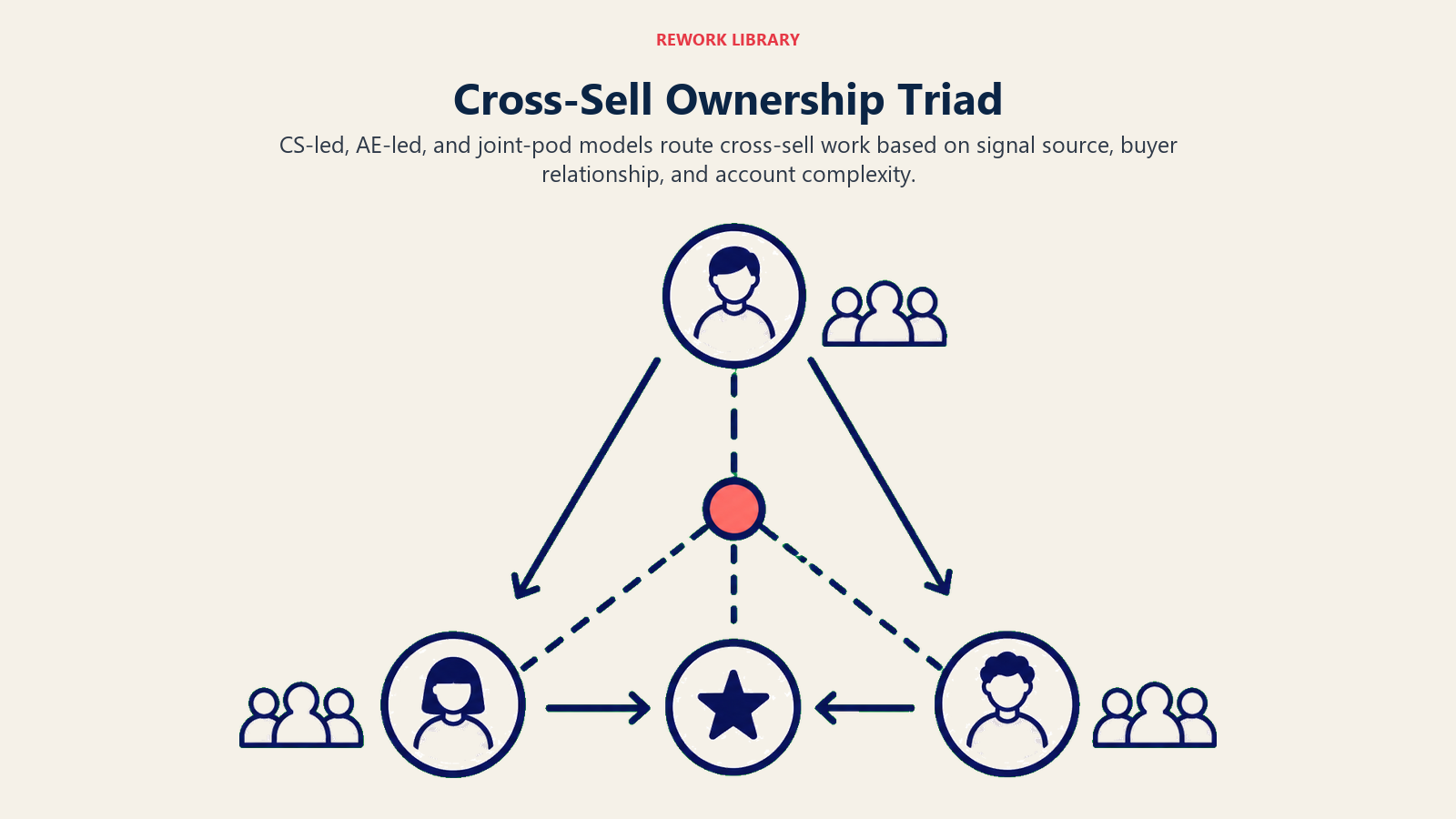
名称付きフレームワーク:Cross-Sell Ownershipトライアド モデルA(CSリードでAEアシスト)、モデルB(AEリードでCSが資格審査)、モデルC(ジョイントPod)は序列ではありません。どのモデルも他より優れているわけではありません。それらは、シグナルがどこから来たか、そしてそれを前に進めるのに関連する関係を誰が持っているかに基づくルーティングの判断です。間違ったモデルを選ぶことが、資格審査済みのCross-Sellシグナルがハンドオフで消える最も一般的な理由です。予算オーナーがAEの関係先である場合にはCSリードのモーションが失敗し、ピッチが届く前に実装準備についてCSに相談がなかった場合にはAEリードのモーションが失敗します。
モデルA:CSリードでAEアシスト
CSがビジネスケースを構築し、社内Championを見つけます。AEは商業的な会話(価格設定、契約構造、署名)にのみ入ってきます。
機能するとき: 新しいユースケースのプロダクトChampionが、CSが強固な関係を持つ人物の場合。Cross-Sellが隣接している:顧客がすでに行っていることの論理的な延長であり、新しいモーションではない場合。アカウントのHealth Scoreが良好で、CSMが同時にリカバリー状況を管理していない場合。
CSが行うこと: シグナルを資格審査し(詳細は後述)、Championと社内ケースを構築し、ChampionをBudget Ownerに繋ぎ、AEに自信を持って商業的な会話をクローズできるだけの文脈を含むブリーフを行います。
AEが行うこと: Championがウォームになった時点で会話に入り、価格設定と契約の詳細を処理し、署名後はCSに戻ります。
リスク: CSはいつハンドオフするかを知る必要があります。CSが権限を超えて会話を続ける場合(価格設定を議論したり、実装タイムラインに関するコミットメントをしたりする)、AEは混乱した状況に入り、顧客は誰と交渉しているのか不確かになります。
モデルB:AEリードでCSが資格審査
AEが最初からモーションを主導します。CSは、アカウントが拡張できる運用成熟度とフィットを持っているかを検証し、会話を通じて技術的にサポートします。
機能するとき: Cross-Sellシグナルがセールス主導のアウトリーチから来た場合:新プロダクトのローンチ、テリトリー拡張戦略、またはRenewal会話中に隣接するユースケースに気づいたAE。新プロダクトのバイヤーがCSが知っているChampionではなく、AEがすでに関係を持つEconomic Buyerである可能性が高い場合。
AEが行うこと: アウトリーチを開始し、DiscoveryとPitchを実行し、CSを連れて実装キャパシティと技術的フィットを検証します。
CSが行うこと: アカウントの準備状況に関するコンテキストを提供します。現在のプロダクトで完全にAdoptionされているか?新しいものを実装する社内キャパシティがあるか?政治的なリスク(チームの再編、予算凍結、競合するイニシアティブ)はないか?CSはまた、商談が動き始めたら運用上の信頼性アンカーとして会話に留まります。
リスク: AEがアカウントの準備ができていない段階でピッチします。顧客はミーティングにはYesと言いますが、実装チームは手一杯です。CSはそれを知っていましたが相談されませんでした。今、顧客が実際には6ヶ月間デプロイできないプロダクトの署名済み契約があります。
モデルC:ジョイントPod
AEとCSMが、各ステージで定義されたハンドオフを持ち、シグナル特定からクローズまでのモーションを共同でownします。
機能するとき: 購買プロセスが複雑なエンタープライズアカウント:複数のステークホルダー、複数の予算オーナー、長い社内承認サイクル。またはAEもCSMも単独では全体像を把握できないほど、双方の複数人に関係が広がっているアカウント。AE-CSMペアのPodモデルは、どちらの側もステージの担当を見失わないよう、これを運用面でどう構造化するかを示しています。
実際の様子: AEとCSMがアカウントについて定期的にジョイントチェックインを行い、拡張Pipelineの共有ビュー、各ステージ移行のための決定ログを持ちます。このモデルはオーバーヘッドが増えるため、商談の複雑さや収益ポテンシャルがそれを正当化するアカウントに限定されます。
リスク: ステージごとの明確なownershipがなければ、ジョイントモデルは混乱に崩壊します。各ステージの担当を明示的に定義してください:シグナル資格審査(CS)、社内Champion育成(CS)、Economic Buyer紹介(AE)、商業交渉(AE)、実装計画(CS)。最初の顧客会話の前に書き留めてください。
シグナルを資格審査するのは誰か
CSはエスカレーションされるよりも多くの拡張シグナルを目にしています。その一部は正当なCross-Sell機会です。一部はプロダクトフィードバックです(「ツールがXをしてくれると良いのだが」)。一部は後でサポートチケットになる初期の不満です。AEを関与させる前に、これらを区別することはCSの責任です。
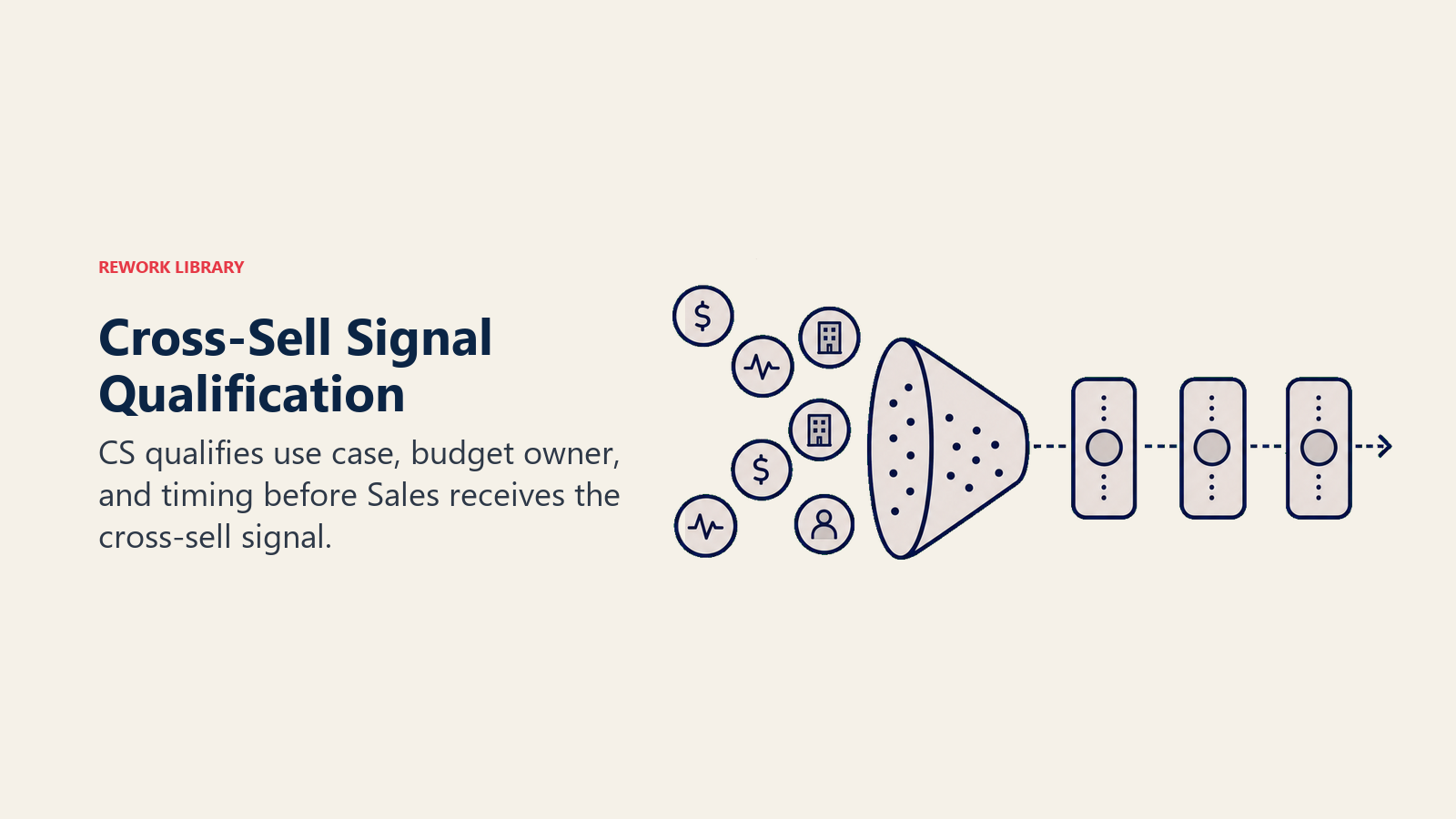
エスカレーション前にCross-Sellシグナルを資格審査するための3つの質問:
1. ユースケースは実際に存在するか? 顧客が手動で行っているか、第2のプロダクトが解決する回避策を使っています。これは具体的であり、理論的ではありません。「分析モジュールに興味があるかもしれない」は資格審査されたシグナルではありません。「opsチームが、現在のプランのレポーティング制限に引っかかっているため、プラットフォームが追跡すべきものをAirtableで追跡している」はそうです。
2. Yesと言えるBudget Ownerが存在するか? 新しいプロダクトが新しい予算ラインを必要とする場合、CSはその予算を管理するのが誰かを知っている(または調べられる)べきです。「誰がこれに対する予算権限を持っているかわからない」という答えなら、シグナルはまだエスカレーションの準備ができていません。CSはAEを連れてくる前に、もう一歩社内調査を行う必要があります。
3. タイミングは適切か? 顧客の現在の実装は、新しいプロダクトを追加してもカオスにならないほど完了しているか?このことを自然に含められる予算サイクルや契約レビューが近づいているか?CSがアカウントの現状について知っていること(ヘッドカウント変更、戦略的イニシアティブ、リーダーシップの移行)で、新しい商業的会話を開くのに悪いタイミングにするものがないか?
3つの答えすべてがYesであれば、シグナルはエスカレーションの準備ができています。どれかの答えが「わからない」なら、CSはAEへのブリーフの前にさらにDiscoveryを行います。
CSからセールスへの社内ハンドオフ
シグナルが資格審査されたら、CSはAEにブリーフします。このブリーフはSlackメッセージではなく、ライブ会話で15〜20分かけて行うべきです。5つの要素:
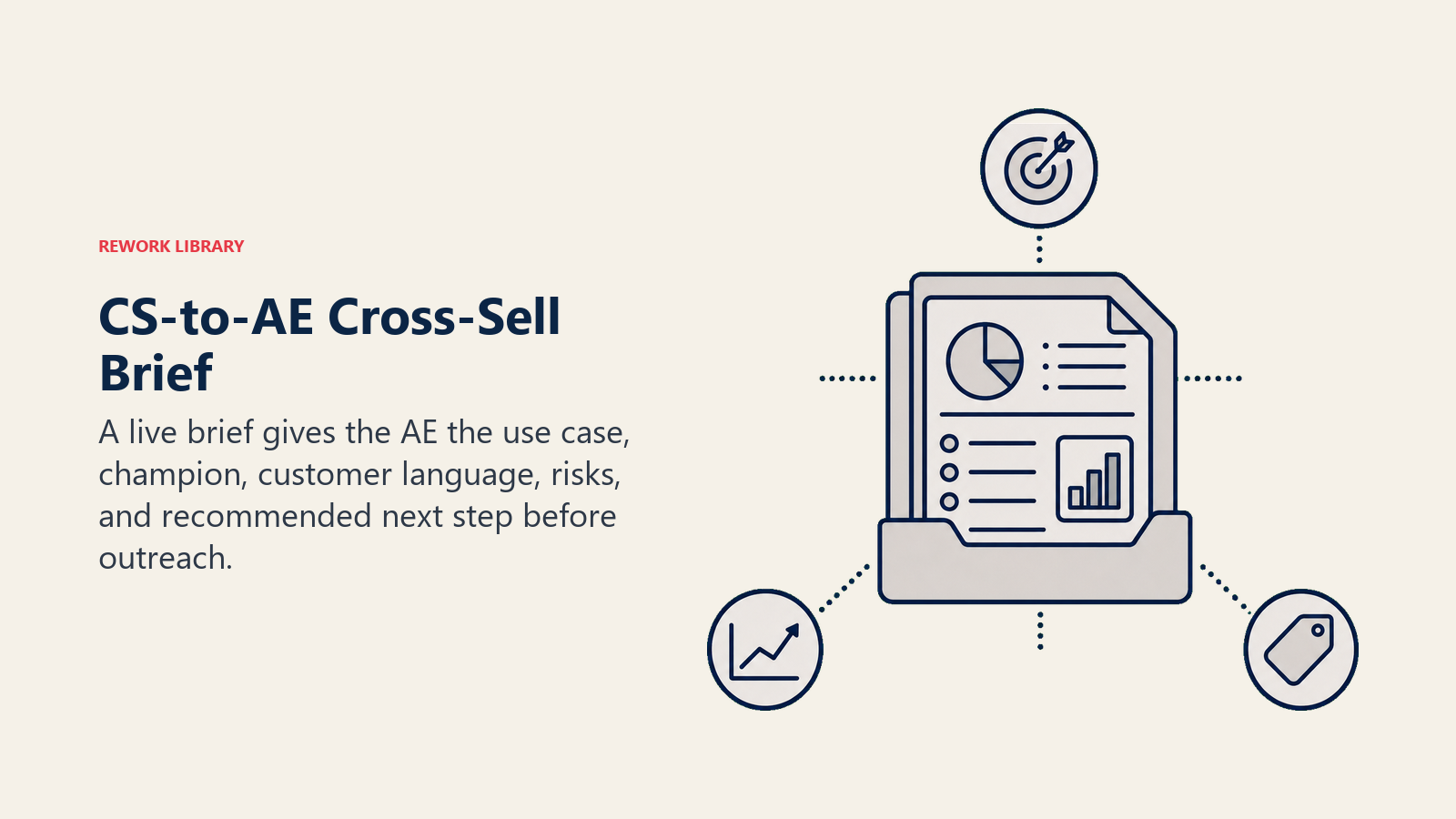
1. 具体的なユースケース。 「分析が必要かもしれない」ではなく、「opsリードが毎週エクスポートしたCSVファイルから手動でレポートを作成しています。現在のプランにはダッシュボードモジュールが含まれていないためです。彼らはこれに週約3時間かけていると話していました。」
2. 社内Champion。 顧客側でこのことから最も恩恵を受け、すでに関心を示している人物は誰か?その人の社内影響力についてあなたが知っていることは何か?Budget Ownerを連れてこられるか、それともCSまたはAEが直接それをする必要があるか?
3. プロダクトが解決する摩擦。 プロダクト用語ではなく、顧客の言葉でフレームします。「ダッシュボードモジュールはリアルタイム可視化を提供します」ではなく、「手動レポートプロセスを排除し、週次レポートをプラットフォーム内で自動的に取得できます。」
4. リスク。 予算サイクルのタイミング。競合する社内イニシアティブ。懐疑的な主要ステークホルダー。拡張会話中にネガティブなコンテキストを生み出す可能性があるCSが管理しているオープンなサポート問題。AEは何を踏まないかを知る必要があります。
5. 推奨される次のステップ。 AEがどのように会話を始めるべきかについてのCSの推薦。「opsリード、彼らのCFO、そしてあなたの間の電話が良いと思います。私が紹介します。Q3の予算計画が始まる前の今後2〜3週間がタイミングとして良いでしょう。」
ブリーフの後、AEには行動するための定義された期間があります。通常5〜7営業日です。AEがその期間内に動けない場合、CSは知る必要があり、シグナルは保留されます。AEのキャパシティが足りないために資格審査済みシグナルが冷めていくのは、一回限りの失敗ではなくプロセスの問題です。両チームがリアルタイムで更新できる共有顧客レコードのアーキテクチャこそが、ブリーフがハンドオフの間で失われるのを防ぎます。
AEが商業的な会話をしている間、CSは何をするか
これが最もよく崩れる部分です。CSはシグナルを資格審査し、ブリーフし、紹介しました。AEは今、商業的な会話をしています。そしてCSは、助けになろうとして、実装の詳細について顧客にフォローアップを送ります。またはCSMが別の電話で価格についての何かを言います。またはCSがAEとEconomic Buyerの会話と並行して、Championと製品について別のトラックを開きます。
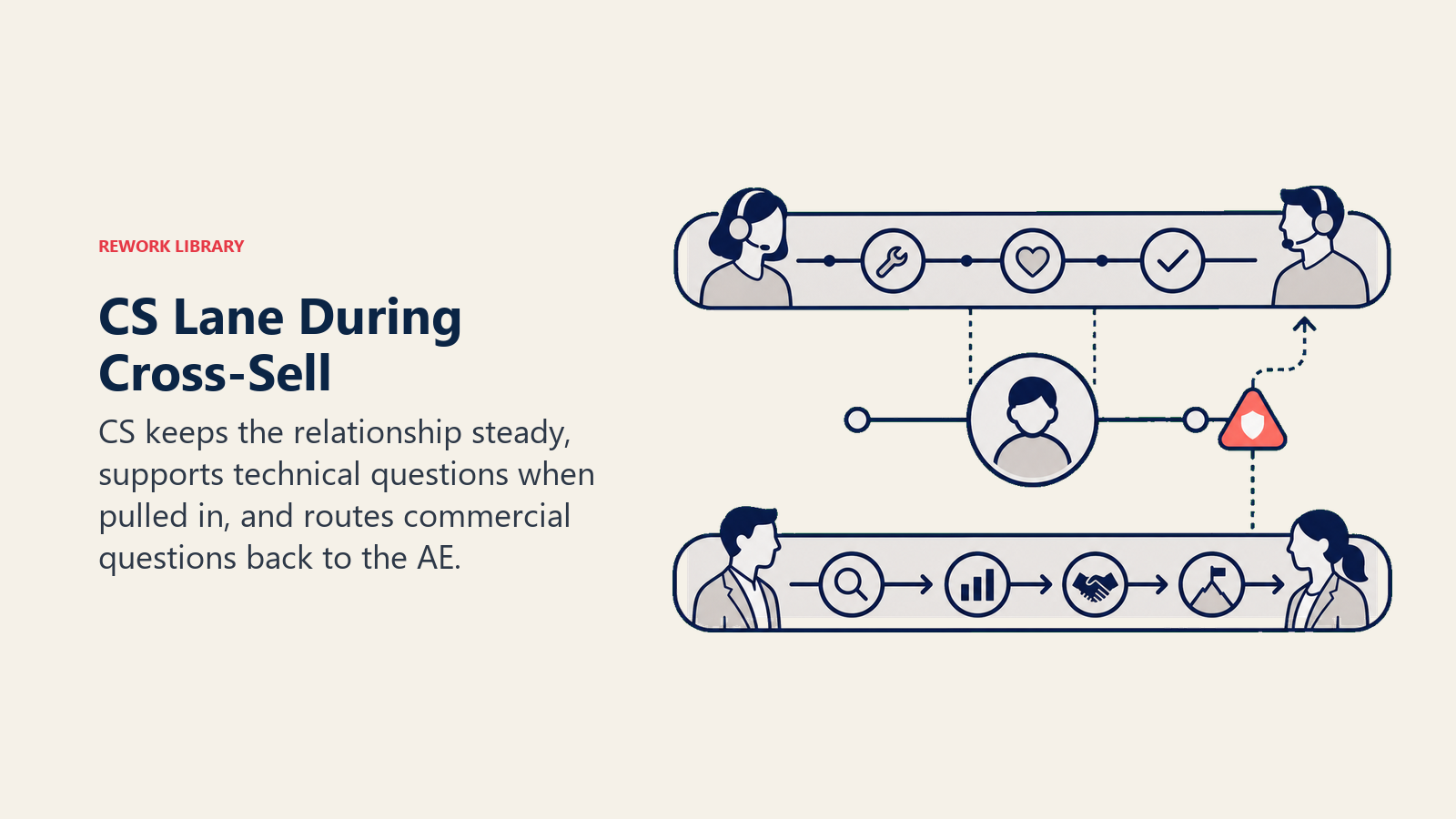
顧客は今、誰に何を話せばいいか混乱しています。わずかに異なる情報を持つ2つの声は、少しコンテキストが少ない1つの声より悪いのです。
AEが商業的な会話をしている間、CSは3つのことをします:レーンにとどまる(Championとの定期的な関係タッチポイントを維持し、新しいプロダクト会話を開かない)、AEが引き込むときに技術的にサポートする(実装キャパシティ、インテグレーション要件、Onboardingタイムライン)、そして顧客が商業的な質問を直接提起してもAEに戻します。
「それは[AE名]への質問です。商業的な側面を話し合うのに適した人物です。繋ぎます。」これがこのフェーズ中にCSが一貫して使う必要があるフレーズです。
引用しやすい要点: 「既存顧客が購入する可能性は、新規見込み客より60〜70%高いです。しかし多くのSaaS企業は、CSとAEの間の社内ハンドオフに定義されたプロセスがないため、拡張ポテンシャルの20%未満しか取り込めていません(Invesp分析)。」
引用しやすい要点: 「AE-CSMのコンペンセーションを拡張成果に連動させた収益チームは、AEのみが拡張クォータを持つチームと比較して、Cross-Sellクローズ率が2.1倍高いです(SiriusDecisionsのNRR研究)。」
Rework Analysis: CS主導のCross-Sellモーション(モデルA)で最もよくある崩壊ポイントは、顧客との会話ではありません。CSからAEへの社内ブリーフです。ブリーフが15分のライブ会話ではなくSlackメッセージで届けられると、AEは、ピッチをセールスコールではなく論理的な次のステップとして成立させる文脈上のニュアンスを持たないまま、商業的な議論に入ることになります。構造化されたブリーフテンプレート(ユースケース、Champion、解決する摩擦、リスク、推奨される次のステップ)は、ブリーフからピッチまでのギャップを数日から数時間に短縮し、最初の会話に対するAEの自信を高めます。
モーションを潰すコンペンセーションの衝突
AEがCross-Sellにコミッションを得てCSが何も得ないなら、CSはシグナルを積極的にフラグする動機がありません。専門的な義務感からそうするかもしれませんが、積極的で一貫したシグナルのエスカレーションには、善意だけでなくインセンティブの整合が必要です。HBRのCross-Sellに関する調査は、最も成功しているCross-Sellプログラムが、信頼、データインテリジェンス、パーソナライズされたタイミングを組み合わせていることを示しており、この3つはAEとCSの双方が連携して動くことを必要とします。
SMB/ミッドマーケット規模での最も一般的な修正:CSはアカウントプール内でクローズされたCross-SellとUpsellに支払われるNRRに連動した拡張クォータを持ちます。AEは標準的なコミッションを得ます。両チームが同じアウトカムに対して支払われるため、両チームがモーションをうまく実行する整合されたインセンティブを持ちます。
これを壊すのは:CSがアウトカムをownしたいために、AEなしで商業的な会話を始めることです。顧客は価格決定権を持たない人物にピッチされています。これは混乱を生み、商談が失敗した場合の信頼ダメージ、そしてCSがいつ直接行くかわからないためCSシグナルを信頼しなくなるAEを生みます。
まずインセンティブを修正します。次にモデルを文書化します。詳細な仕組みはNRRに連動したコンペンセーションの記事でカバーしています。
Cross-Sellが失敗したとき:デブリーフ
Cross-Sellの試みがクローズに失敗した場合、3つの診断が重要です:
プロダクトがアカウントに合っていなかった。 ユースケースは現実でしたが、プロダクトはこの顧客の規模やワークフローでそれを十分に解決しませんでした。これはプロダクトチームへのICP Feedbackであり、CSを通じてルーティングされます。これはセールスやCSの失敗ではありません。プロダクトマーケットのシグナルです。
タイミングが悪かった。 シグナルは現実で、プロダクトフィットは現実でしたが、アカウントの実装キャパシティが限界に達しているとき、または予算凍結の最中にエスカレーションが行われました。修正は早期のシグナルエスカレーションです:CSはタイミングが重要になる何ヶ月も前にユースケースを特定し、商業的な会話が顧客のサイクルの適切なタイミングに行われるようにします。AEからCSMへのライフサイクルハンドオフのフレームワークは、アカウントの開始時からタイミングへの期待値を設定するのに役立ち、拡張の会話が不意打ちとして届くことがなくなります。
AE-CSハンドオフでの崩壊。 AEは自信を持ってピッチするための十分な文脈なしに入りました。CSはWhyを設定せずに紹介しました。顧客は、アカウントジャーニーの論理的な次のステップではなく、セールスコールを受けているように感じました。これはコミュニケーションの修正です。上記のブリーフテンプレートが予防策です。
CRMのアカウントレコードに診断を記録します。1文で。説明責任のためではなく、このアカウントの次のCross-Sellシグナルが前回の試みで何が起きたかを知ることで恩恵を受けるためです。
クイックリファレンス:Cross-Sell Ownershipマトリクス
| シナリオ | 推奨モデル | 誰がリード | AEの参入ポイント |
|---|---|---|---|
| CSがChampionと強い関係を持つ、隣接プロダクト | モデルA:CSリード | CS | 商業的クローズのみ |
| AEがRenewal会話から開始 | モデルB:AEリード | AE | CSのインプットで資格審査 |
| エンタープライズアカウント、複数ステークホルダー | モデルC:ジョイントPod | 共有 | ステージで定義 |
| 新プロダクトローンチ、テリトリー戦略 | モデルB:AEリード | AE | CSが準備状況を検証 |
| Championが特定済み、Budget Ownerが不明 | モデルA、エスカレーション保留 | CS(Discovery段階) | Budget Ownerの特定後 |
| アカウントがアクティブリカバリー / リスク状態 | Cross-Sellを全面保留 | N/A | Healthが回復後 |
最後の行がほとんどのチームが見逃すものです。アカウントがリスクリカバリー中に開かれたCross-Sellモーションは、リカバリーを損なう相反するシグナルを生みます。リスク状態のアカウントが安定するまで拡張会話を一時停止してください。
実装:必要になる前にモーションを構築する
次のCross-Sellシグナルが表れる前に:
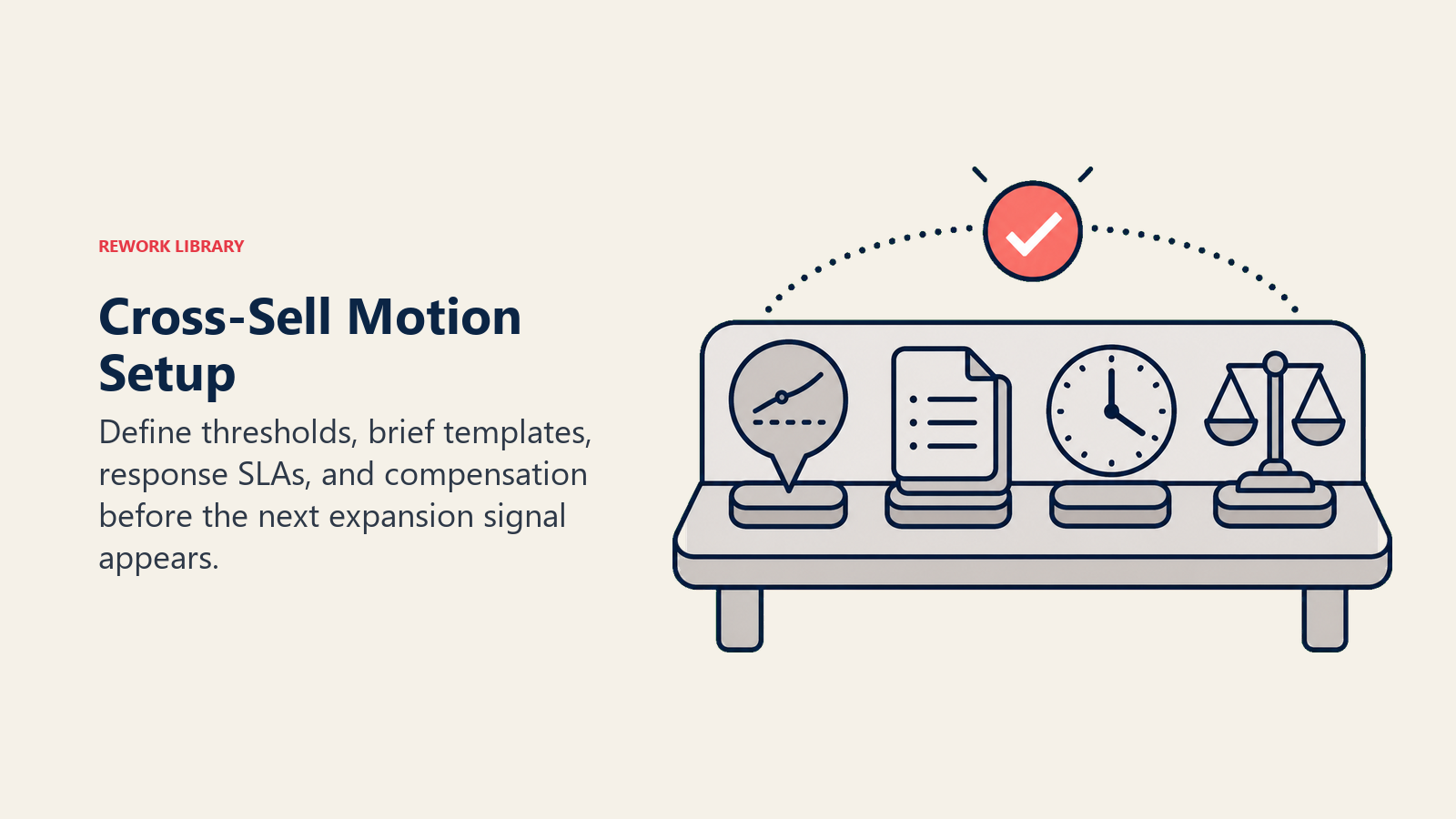
シグナルエスカレーションの閾値を定義する。 あなたのプロダクトセットで資格審査されたシグナルがどのようなものかを書き留めてください。顧客の不満、プロダクトFeedbackのメモ、Cross-Sellシグナルの違いは何か?具体的で明確な基準。「CSMの判断」ではなく、新しいCSMが30日目に適用できる定義された基準。McKinseyのSaaSカスタマーサクセス調査は、リテンションと並んでCross-SellとUpsellを優先するSaaS企業が、はるかに高いNRRを達成していることを示しており、シグナルエスカレーションの閾値は、CSチームが持つ最もレバレッジの高いドキュメントの一つとなっています。
CS→AEブリーフテンプレートを構築する。 5つの要素:ユースケース、Champion、顧客の言葉でのプロダクトフィット、リスク、推奨される次のステップ。共有のNotionドキュメントまたはCRMテンプレートフィールド。ブリーフはCSが2時間ではなく15分で埋められるべきです。
AEのレスポンスSLAを設定する。 ブリーフから最初の顧客アウトリーチまで5〜7営業日。書き留めてください。達成されなかった場合、失敗はエスカレーションされます。無視されません。
最初のモーションを実行する前にコンペンセーションを整合させる。 未解決のインセンティブ問題を抱えたまま最初のCross-Sellを実行しないでください。モーションが稼働する前に、CSリーダーとセールスリーダーがモデルに合意する必要があります。クローズドループレポーティングの解説のフレームワークは、拡張収益を元の獲得ソースに結びつける方法を示しており、これは、双方のリーダーにとってコンペンセーションの主張に説得力を持たせるために必要なデータです。
シグナルはハンドオフが壊れていれば意味がありません。まず社内モーションを修正してください。
よくある質問:マルチプロダクトのCross-Sell Ownership
SaaSアカウントでCross-Sellを担うのはAEかCSMか?
シグナルがどこから来たか、そしてそれを前に進めるのに関連する関係を誰が持っているかによって決まります。Cross-Sell Ownershipトライアドは3つのモデルを提示します。CSがChampionとの関係を持ち、プロダクトが現在の利用に隣接している場合のCSリードでAEアシスト(モデルA)、シグナルがAEから来た場合、またはバイヤーがAEの既存のコンタクトである場合のAEリードでCSが資格審査(モデルB)、そして複雑な複数ステークホルダーの購買プロセスを持つエンタープライズアカウント向けのジョイントPod(モデルC)。普遍的な答えはありません。間違ったモデルを選ぶことが、資格審査済みシグナルが消える最も一般的な理由です。
Cross-SellがAEリードになるのはどんなときで、CSリードになるのはどんなときか?
新プロダクトの自然なバイヤーがAEがすでに関係を持つEconomic Buyerである場合、シグナルがAE主導の会話から来た場合、またはプロダクトがエグゼクティブの承認を必要とする別の予算ラインを伴う場合は、Cross-SellはAEリードになります。プロダクトが現在の利用に隣接しており、CSがよく知るChampionがすでに関心を示しており、予算権限がエグゼクティブ層よりも運用層に近いところにある場合は、Cross-SellはCSリードになります。問うべきは「誰の商談か」ではありません。「誰が扉を開ける関係を持っているか」です。
Cross-Sellにおけるコンペンセーションの衝突にはどう対処するか?
SMBとミッドマーケット規模で最も持続的な修正は、CSがアカウントプール内でクローズされたCross-SellとUpsellに支払われるNRRに連動した拡張クォータを持ち、同じ商談でAEが標準的なコミッションを得ることです。両チームが同じアウトカムに対して報酬を得るため、クレジットを奪い合うのではなく、一緒にモーションを実行するインセンティブが整合します。この構造を持つ収益チームは、SiriusDecisionsによると、AEのみの拡張クォータモデルと比較してCross-Sellクローズ率が2.1倍高くなっています。注意すべきリスクは、CSが拡張クォータを持ちながら、Cross-Sellの会話を止めてAEに引き継ぐための明確なプロセス権限を持たない場合、CSが自らピッチを行い、顧客の混乱を招くことです。
CSからAEへのCross-Sellブリーフとは何で、何を含めるべきか?
CSからAEへのCross-Sellブリーフは、シグナルが資格審査され、AEのアクションの準備ができたときに行う、15〜20分のライブ会話です。5つの要素をカバーします。具体的なユースケース(「分析が必要かもしれない」ではなく、顧客が手動で何をしていて、なぜそうしているのか)、社内Champion(誰か、その影響力、そしてBudget Ownerにリーチできるか)、プロダクトが解決する摩擦を顧客の言葉で、最初の会話の前にAEが知っておくべきリスク(オープンなサポート問題、予算のタイミング、懐疑的なステークホルダー)、そしてCSが推奨する次のステップ。これらの詳細を含むSlackメッセージはブリーフではありません。ピッチを冷たいセールスコールではなく論理的な次のステップとして成立させるニュアンスには、ライブ会話が必要です。
AEがCross-Sellの商業的な会話をしている間、CSは何をすべきか?
CSはレーンにとどまります。Championとの定期的な関係タッチポイントは継続します。CSは並行するプロダクトの会話を開いたり、価格に言及したり、顧客が提起した商業的な質問に答えたりしません。それらは直接AEに戻します。CSが一貫して使うフレーズは次のとおり:「それはまさに[AE名]への良い質問です。商業的な側面を丁寧に話せる適切な人物です。繋ぎます。」わずかに異なる情報を持つ2つの声は、コンテキストが少し少ない1つの声より悪いのです。AEが商業的な会話をしている間のCSの仕事は、関係を安定して保つことであり、独自に商談を前に進めることではありません。
セールスにエスカレーションする前に、Cross-Sellシグナルをどう資格審査するか?
3つの質問が、シグナルがエスカレーションの準備ができているかを決めます。ユースケースは実際に存在するか(顧客が手動で、または第2のプロダクトが具体的に解決する回避策を使って何かをしているか)?Yesと言えるBudget Ownerが存在するか(その予算を誰が管理しているかをCSは知っているか、または調べられるか)?タイミングは適切か(現在の実装は十分に完了しているか、予算サイクルが近づいているか、今が悪いタイミングになる政治的な要因はないか)?どれかの答えが「わからない」なら、CSはエスカレーションの前にさらにDiscoveryを行います。早まったエスカレーションは、AEにCSシグナルを信頼しないよう学習させます。資格審査されないまま冷めていくシグナルの一つひとつが、次のシグナルに対するAEの反応の速さを下げていきます。

Principal Solution Architect