Sales-CSハンドオフの断絶がNRRに与えるコスト:その計算
Turn this article into takeaways for your work.


Each assistant summarizes the article only for you and suggests best practices for your work.
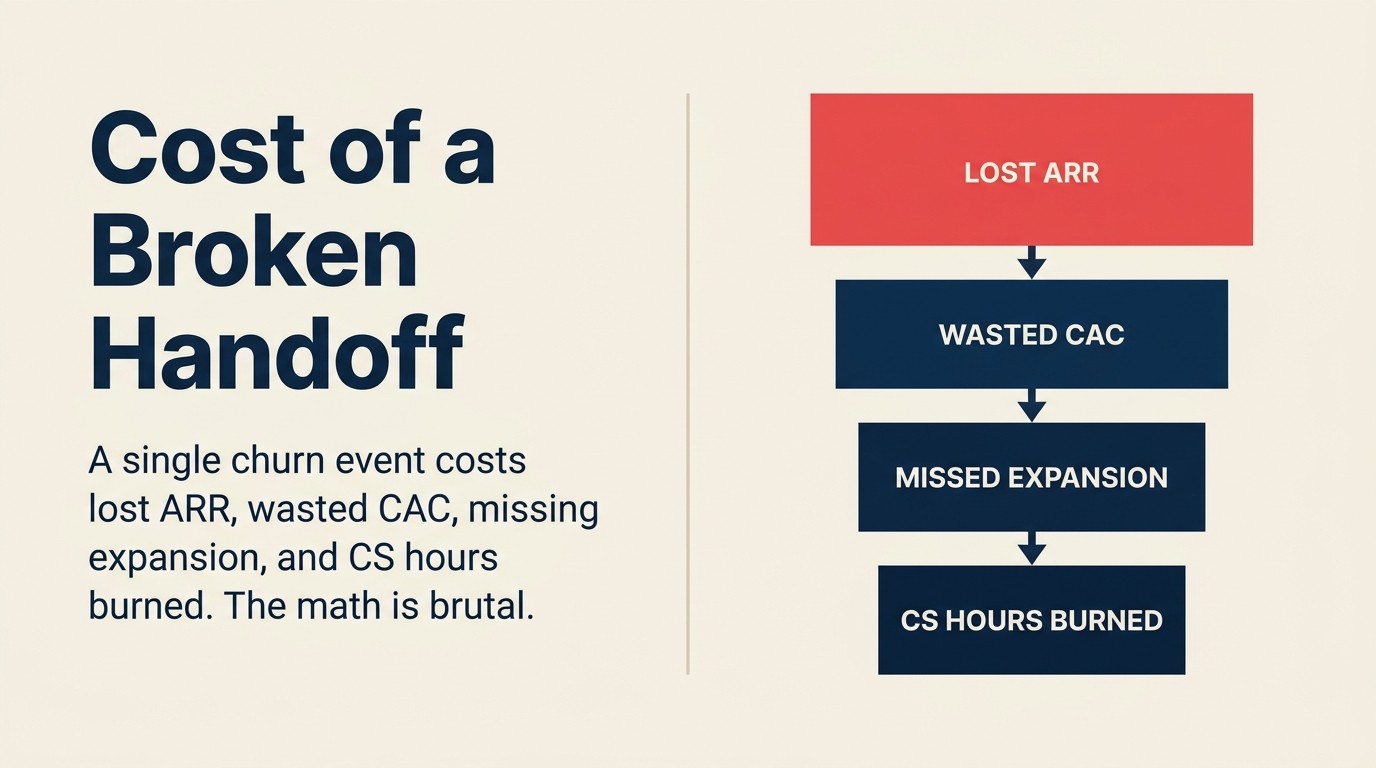
ハンドオフに起因するChurnイベントのコストは、Churnした年間経常収益(ARR)だけではありません。Churnしたものに、償却された顧客獲得コスト(CAC)、逃したExpansion、CSの救済稼働を加えたものであり、通常は目に見える収益額の2〜3倍になります。4つの損失項目それぞれを理解し定量化することが、ハンドオフの断絶をプロセス上の厄介事として扱うか、収益上の優先課題として修正するかの分かれ目です。
案件が火曜日に成約しました。AEは四半期目標を達成しました。コミッションが処理されました。Slackチャンネルで祝福が飛び交いました。
9か月後、アカウントがChurnしました。ARRは48,000ドルでした。Sales担当VPはChurnの数字を見ています。CS担当VPは、4か月前から可視化されていたにもかかわらず適切なエスカレーションが行われなかったリスクキューを見ています。これが誰の問題なのか、誰もよくわかりません。
そのChurnしたアカウントの実際のコストを計算しましょう。それは48,000ドルではありません。
失われたARR 48,000ドルに加え、償却された顧客獲得コスト約19,200ドル(ProfitWellベンチマークによると、平均SaaSのCACは初年度収益の40%)、アカウントが予定通りTime-to-Valueを達成していれば見込まれたExpansion ARR 14,400ドル、さらにエスカレーションや救済の試みに費やされたCS稼働時間120時間(全込みコストで8,400ドル)。合計の経済的影響は約90,000ドル、つまり48,000ドルの勝利に見えた案件がそうなっています。
Sales-CSの連携ズレに関する対話はこの計算から始めなければなりません。なぜなら、この計算なしでは修正がプロセス改善に見えますが、この計算があれば、明確なROIを持つ収益改善施策に見えるからです。マーケティングとセールスの連携ズレにも、上流で同じ論理が働いています。マーケティング-セールスにおける連携ズレのコストの記事は、一つ前の接合点に相当する計算を扱っています。
NRR計算式の解説
NRRは、維持、縮小、Expansionのすべてが成約後に起きることに左右されるため、ハンドオフの質のコストを可視化します。
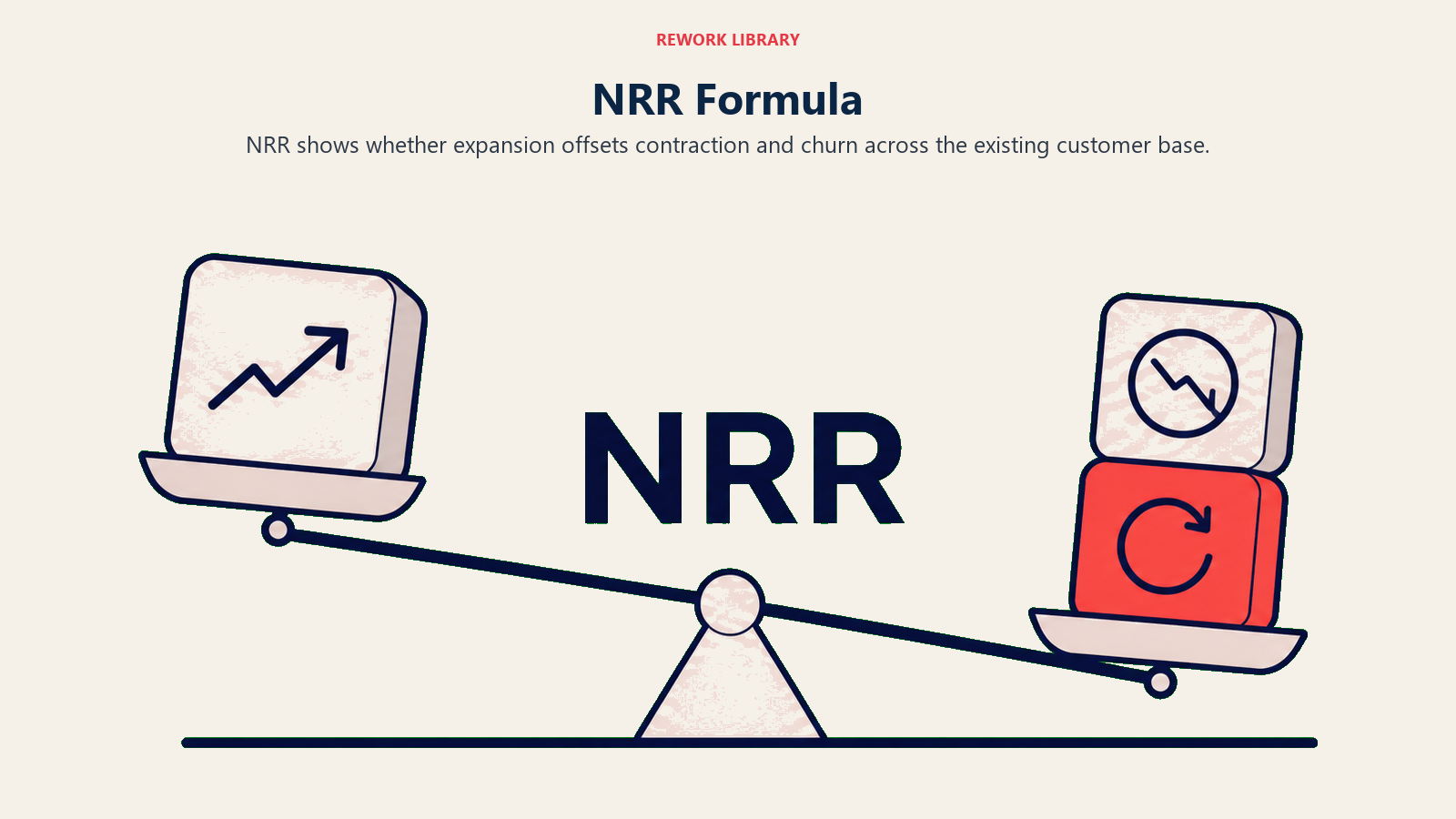
NRR(Net Revenue Retention)は、既存顧客ベースが成長しているか縮小しているかを測定します。計算式:
NRR = (期首ARR + Expansion ARR − 縮小ARR − Churn ARR) / 期首ARR × 100
例:既存顧客からの期首ARRが1,000万ドル。その年、顧客が150万ドル拡大し、40万ドルが縮小(ダウングレードや範囲縮小)し、60万ドルが完全にChurnしました。
NRR = (1,000万ドル + 150万ドル − 40万ドル − 60万ドル) / 1,000万ドル = 105%
105%という数字は、新規契約なしに既存顧客ベースだけで成長していることを意味します。ベストインクラスのSaaS企業(エンタープライズ飽和前のTwilio、Snowflake、Datadogなど)は歴史的に120〜130%のNRRで運営してきました。上場SaaS企業の中央値は約105〜110%です。100%を下回る企業は毎四半期ごとに後退しています。
では、なぜNRRの各ポイントの改善がそれほど重要なのでしょうか?2つの理由があります。
第一に、それは恒久的です。NRRが5ポイント改善しても、1年の収益だけが変わるのではありません。インストール済みベース全体の成長率が変わり、それが毎年複利で積み重なります。第二に、資本効率が高いです。1,000万ドルのARRベースでNRRを95%から100%に改善すると、CACを支出せずに獲得した年間収益50万ドルに相当します。それは顧客獲得コストゼロの50万ドルです。McKinseyのB2Bテック企業の分析によると、NRR上位四分位の企業は、下位四分位の同業他社のほぼ5倍の評価倍率を生み出しています。
逆方向の非対称性も同様に顕著です。ChurnしたARRを補充するためのセールスとマーケティングへの投資は、それを維持するよりも5〜7倍のコストがかかります。Bain & Companyの調査によると、維持率をわずか5%改善するだけで、利益が25〜95%向上する可能性があります。Churnするアカウントは単なる収益損失ではありません。それを補うために不釣り合いな補充支出を必要とする収益損失です。
主要データ:ハンドオフの失敗がNRRに与えるコスト
- Gainsight社のCustomer Successベンチマークによると、Closed-Wonハンドオフ時にコンテキストのギャップを経験したアカウントは、初年度にChurnする可能性が2.3倍高いです。
- SaaS顧客の平均獲得コストは初年度契約価値の40〜50%であり、ChurnはARRを失うだけでなく、すでに支出した獲得投資も無駄にします(ProfitWellの業界ベンチマークより)。
- TSIAによると、ハンドオフプロセスが不十分な組織のCSMは、平均して稼働時間の23%を、営業段階の期待ミスマッチから生じた問題への対応に費やしています。
引用可能: 「NRRの5ポイント改善は、SaaS企業の長期的な企業価値にとって、同等の新規ARR成長率の改善よりも価値が高いのです。NRRの改善は、毎年インストール済みベースに複利で積み重なるからです。」(Bessemer Venture PartnersのSaaSメトリクスフレームワーク)
ハンドオフの断絶が実際に何をもたらすか:4つの損失項目
4つの損失項目のモデルは、財務的なダメージを、ビジネスが診断し修正できる構成要素に分解します。
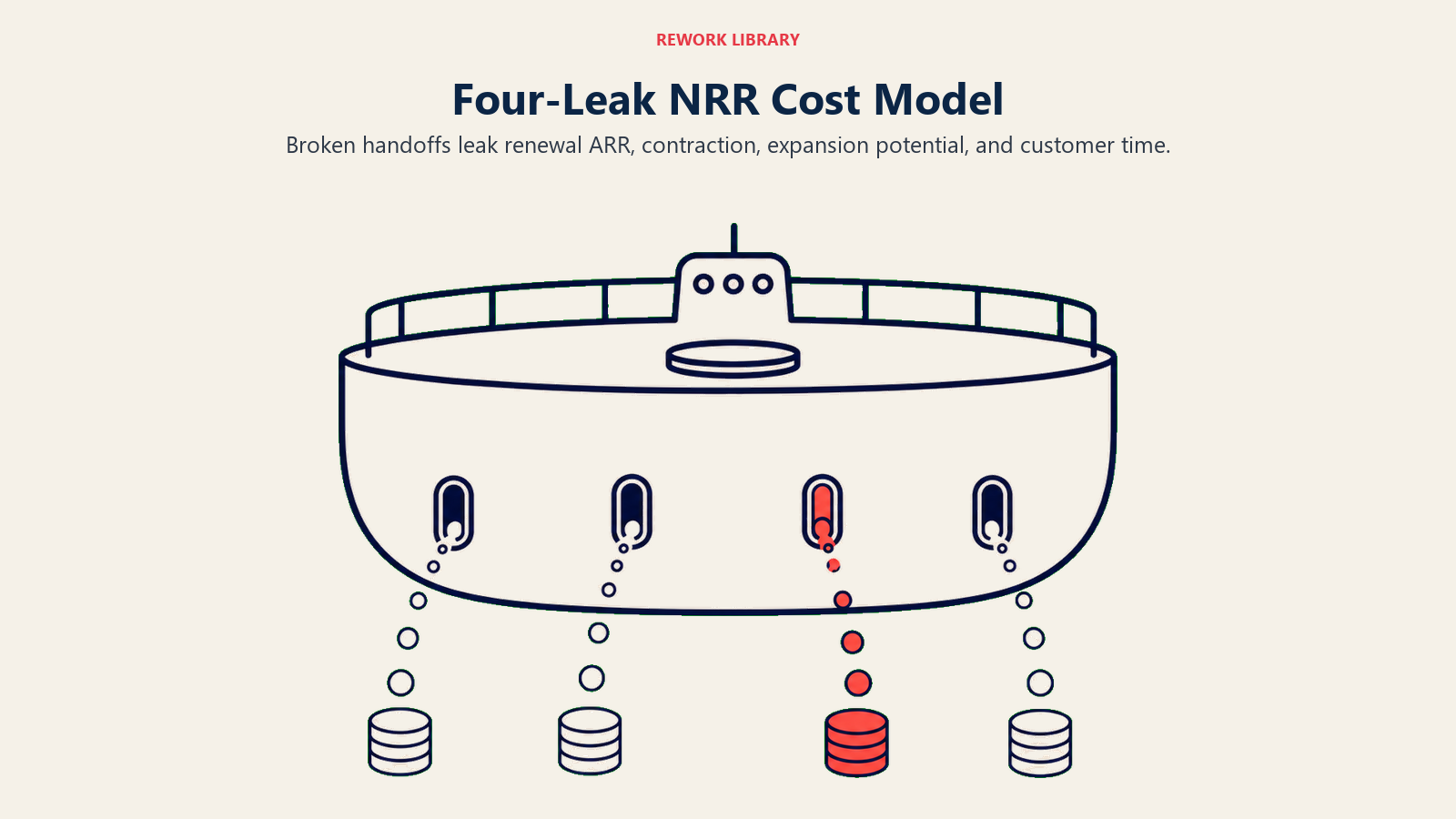
ほとんどのチームはChurnを単一の数字として考えます。しかし、ハンドオフに起因するChurnイベントには実際に4つの異なる収益への影響があり、これを4つのリークNRRコストモデル(The Four-Leak NRR Cost Model)と呼んでいます。それぞれのリークを見てみましょう。
損失項目1:更新時の失われたARR
これは明らかなものです。アカウントが更新しません。帳簿に記載されていたARRが消えます。
しかし、ここでも全体像はより複雑です。連携ズレに起因するChurnの多くは、全か無かではありません。より一般的には、顧客が縮小されたスコープで更新します。フルプラットフォーム契約で入り、最小シート数で更新するか、エンタープライズティアからスターターティアにダウングレードします。ARRは消えず、縮小します。その縮小は、関係が技術的に生き残ったにもかかわらず、NRRの分母を悪化させます。
ACV 2万〜10万ドル範囲の20〜50アカウントを持つミッドマーケットのSaaS企業では、ポートフォリオの3分の1で更新時に15〜20%の縮小(完全更新と比較して)というパターンが積み重なると、解決可能な問題によって5〜7ポイントのNRR損失が生じます。更新オーナーシップモデルが、これらの縮小の会話を、結果を変えられるほど早い段階で誰が捉えるかを決めます。
損失項目2:償却されたCAC
顧客がChurnすると、その獲得に費やしたすべてのドルはゼロのリターンを生み出します。それがChurnの実際の経済学です。将来の収益を失うだけでなく、過去の投資をゼロにします。
ブレンドCACが初年度ACV(ミッドマーケットSaaSの一般的なベンチマーク)の40%の場合、10か月目にChurnした50,000ドルの案件は、獲得に20,000ドルがかかり、さらに失われた収益が50,000ドルで、成約時には純粋な収益に見えた案件で合計70,000ドルのマイナスになります。
これがCFOにハンドオフの質を気にさせる数字です。これはCSだけの問題ではありません。資本配分の問題です。Churnするすべてのアカウントはリターンを生み出さなかった投資であり、それを生み出した獲得支出は、十分にICP適合しているために維持できる顧客に向けられるべきでした。
損失項目3:逃したExpansion ARR
これは見えない損失項目であり、高成長SaaS企業にとって最も高価なものかもしれません。
正常に導入し、予定通りTime-to-Valueを達成し、自分たちの目標を理解しているCSMを持つ顧客は、Expansionポテンシャルを持つ顧客です。シートの成長、モジュールの採用、チーム横断のロールアウト、プラットフォームのアップグレード、既存アカウントへのExpansionはほぼゼロの獲得コストで利用可能な最高ROIの収益モーションの一つです。
導入が不十分だった顧客、つまり最初の2〜8週間に不満を感じ、最初のユースケースを達成できず、未解決のサポート関係を抱えた顧客は拡大しません。かろうじて更新するだけです。ポストセールの顧客ジャーニーは、CSが必要なコンテキストを持っている場合の優れたオンボーディングがどのようなものかを示しています。
通常の状況なら2年目に65,000ドルに拡大するはずだった50,000ドルのACV案件では、ハンドオフの断絶は50,000ドルを失うだけではありません。65,000ドルと40,000ドル(縮小した更新)の差である25,000ドルのマイナスも失います。案件が技術的に維持されたため、ChurnしたARRのレポートには一切表れません。
損失項目4:リスク救済に費やされたCSの稼働時間
CSの時間は高コストです。基本給8万〜10万ドルのエンタープライズCSMは、諸費用込みで1時間あたり50〜65ドルのコストがかかります。通常の25:1のCSMとアカウントの比率では、リスクアカウントの消火に費やされる1時間は、健全なアカウントの成長に使われない1時間です。
TSIAのベンチマークは明確です。ハンドオフプロセスが不十分な組織のCSMは、稼働時間の23%をリスク対応の管理に費やしています。10人のCSチームでは、連携が取れた組織ではほとんど存在しないような作業を行う2.3人分のCSM相当の稼働時間です。
ハンドオフ時点で失敗するよう設定されたアカウントの救済は、高コストで時間がかかり、そして重要なことに、通常は失敗します。TSIAのデータによると、6か月目より前にリスクありとフラグが立ったアカウントの更新率は約40%で、6か月目までリスクフラグがなかったアカウントの85%と対照的です。介入は最初のコンテキストギャップを克服できないことが多いです。
引用可能: 「Closed-Wonハンドオフ時にコンテキストのギャップを経験したアカウントは、初年度にChurnする可能性が2.3倍高いのです。1〜8週目に信頼が損なわれると、介入が最初のコンテキストギャップを克服することはまれです。」(Gainsight Customer Successベンチマーク)
計算に表れる根本原因
根本原因の診断が重要なのは、同じChurnの数字が、期待のギャップ、タイミングの失敗、またはコンテキストの欠落のいずれからも生じ得るからです。
ハンドオフに起因するすべてのChurnが同じ根本原因を持つわけではありません。4つのパターンが最も頻繁に現れます。
営業が能力やタイムラインを過大に約束した。 AEはロードマップで6か月先にある統合、またはスコープされていないプロフェッショナルサービス時間が必要な導入タイムラインを約束しました。CSMはキックオフ時に顧客が統合について尋ねたときにこれを発見します。1週目で信頼が壊れます。具体的な介入策は、ハンドオフドキュメントが完成したとみなされる前の約束レビューチェックポイントです(このコレクションの営業の過大約束を防ぐ記事で扱っています)。
ディール情報がCSMに届かなかった。 AEは顧客の意思決定の動機、内部のステークホルダー関係、法的レビュー中に出てきた懸念事項、そして彼らがほぼ選びかけた競合ソリューションを知っています。その何もCRMやハンドオフブリーフに記録されませんでした。CSMはゼロから始めます。顧客は状況全体を再説明し、左手と右手がつながっているかどうか疑問に思います。
導入中にチャンピオンが変わった。 契約に署名した経済的購入者が新しい役割に移りました。新しいチャンピオンは営業プロセスに参加していませんでした。AEもCSMもチャンピオンの継続性に対する計画を持っていませんでした。4か月目までにアカウントには内部の支持者がいなくなりました。9か月目までに更新は争いになりました。
ICPが間違っていた、アカウントは最初から適合していなかった。 案件はQuota不足の時期に成約しました。企業はICPに近いが、完全に当てはまるわけではありませんでした。CSはより良い導入でプロダクト・マーケットフィットの不一致を修正できません。アカウントはChurnすべくしてChurnし、両チームは異なる時点でそれを知りながら、誰も公式なチャンネルでそれを言える機会がありませんでした。ICPリファインメントループ:CSからSalesへのフィードバックは構造的な解決策です。CSチームが同じ間違いが繰り返される前に営業チームにICPシグナルを送る仕組みです。
Rework分析: 4つのリークNRRコストモデルを、典型的なミッドマーケットSaaSのポートフォリオ(ARR 800万ドル、ブレンドCAC 40%、ハンドオフの失敗による初年度Churn 10%)に適用すると、年間の連携ズレコストの合計は80万〜120万ドルと見積もられ、そのうち標準的なCSダッシュボードのChurnしたARRの行に表れるのは半分未満です。見えない3つのリーク(償却されたCAC、逃したExpansion、消費されたCS稼働)が経済的ダメージの大部分を占めており、ハンドオフの質をCSのプロセス改善ではなく、CFOレベルの収益施策として扱うべき最も強い根拠です。
自社の連携ズレコストモデルを構築する方法
業界ベンチマークを使用する必要はありません。CFOとの対話で外部の統計よりも信頼性が高い、自社のデータからモデルを構築できます。そのアプローチを示します。
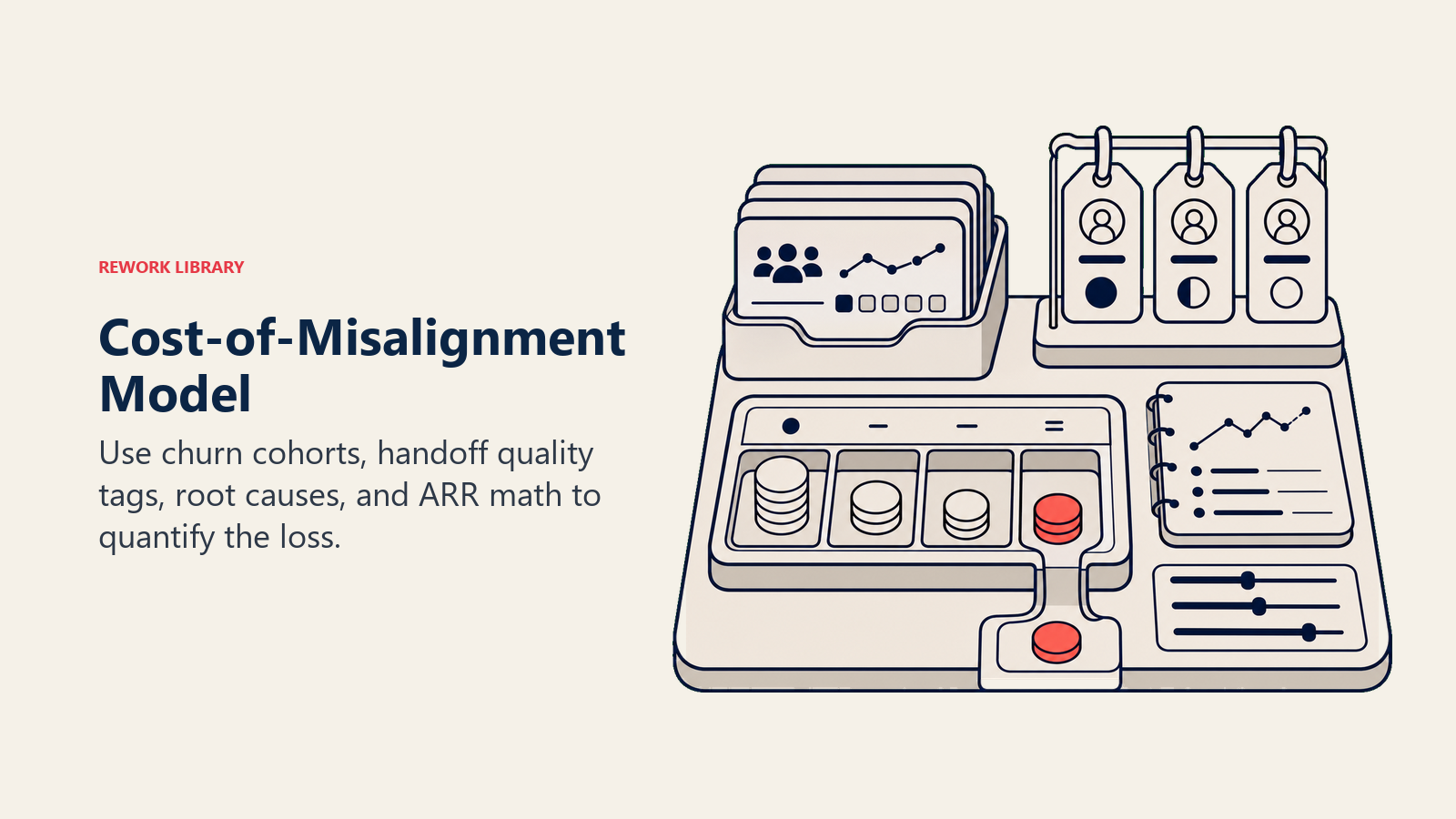
ステップ1:初年度のChurnコホートを抽出する。 過去2会計年度において、成約から12か月以内にChurnしたすべてのアカウントを抽出します。それぞれのARRと成約日を記録します。
ステップ2:ハンドオフの質でタグ付けする。 Churnした各アカウントについて、3つの質問をします。ハンドオフドキュメントは完成していたか?CSMはハンドオフを「十分なコンテキスト」または「ゼロから始めた」と評価したか?アカウントは最初の90日以内に少なくとも1回のエスカレーションまたはリスクフラグが付いたか?各アカウントを「不十分なハンドオフ」の指標がいくつ該当するかで0〜3でスコアリングします。
ステップ3:コホート別にNRRを比較する。 初年度アカウントを「高ハンドオフ品質」と「低ハンドオフ品質」のコホートに分けます。それぞれのNRRを個別に計算します。2つのコホートの差がエビデンスの基盤になります。
ステップ4:4つの損失項目を計算する。 低ハンドオフ品質アカウントについて計算します。Churn ARRの合計(損失項目1)、自社のブレンドレートでの償却CAC合計(損失項目2)、高ハンドオフ品質アカウントが類似ACV規模でどれだけ拡大したかに基づく逃したExpansion ARRの推定値(損失項目3)、自社の全込み時間コストでのCS救済時間の推定値(損失項目4)です。
これら4つの損失項目の合計が年間連携ズレコストです。通常、Churn ARR単独の数字の2〜3倍になります。
CSMに直接尋ねる3つの質問:(1)ハンドオフ時点で把握していれば最初の90日のアプローチが変わっていた情報は何ですか?(2)CRMに記録されていなかった、キックオフ時に発見したコミットメントは何ですか?(3)初年度にChurnしたアカウントのうち、最初から不適合だったと思うものはどれですか?
この3つの質問を体系的にChurnしたアカウントのコホートに適用することで、データ分析よりも速く根本原因パターンが浮かび上がります。しかし、コストを知ることは方程式の半分にすぎません。残りの半分は、連携の取れたハンドオフが実際に何を生み出すかです。
裏側:良いハンドオフが生み出すもの
良いハンドオフはChurnを防ぐだけでなく、より速い定着と、よりスムーズなExpansionの会話のための条件を作り出します。
コストの視点はリーダーシップの連携に必要です。しかし、ケースを構築するためには機会の視点も同様に重要です。
Time-to-Valueが早まることで、Expansionシグナルが早期に現れます。 週16ではなく週6に初期ユースケースを達成した顧客は、月9ではなく月3にExpansionの準備ができます。アカウントごとに年間2四半期分の追加Expansion ARRタイミングが生まれます。50アカウントのポートフォリオ全体では、Expansion ARRのタイミングに意味のある変化が生まれます。
完全なコンテキストブリーフからスタートするCSMは、アカウントの成長に多くの時間を費やします。 連携が取れていない組織でリスク対応に費やされた稼働時間の23%は、ハンドオフが完全でアカウントがICPから成約された場合に大幅に減少します。リスク救済に費やされていたCSMの稼働時間が、QBR、プロアクティブなヘルスレビュー、Expansionの会話に使えるようになります。
AEがチャンピオンとの関係を維持することでExpansionが可能になります。 連携の取れたモデルでは、AEは成約後に消えません。エグゼクティブのエスカレーション、Expansionの会話、更新サポートに対応できます。営業中に築かれた関係資本は寿命が延びます。戦略的アカウントでは、その関係の継続性がアップセルモーションを直接可能にします。AEはすでに顧客の優先事項と内部承認のダイナミクスを知っているからです。AEからCSMへのチャンピオン移行の記事は、ハンドオフをまたいでその資産を守る方法を解説しています。
CFOまたはCROへのケース提示
Sales-CSの連携に関する対話は、しばしば「プロセス改善」の対話として行き詰まります。合理的な人々が頷き、誰も優先順位を上げず、何も変わらない。それを解消するには財務モデルを持ち込むことです。
NRR改善施策として、具体的な目標を持ってフレーミングしてください。「より良いハンドオフが必要だ」ではありません。それはプロセスの対話です。代わりに:「現在、NRRは92%です。ハンドオフプロセスを改善して初年度Churnの上位2つの根本原因を排除することで、NRRを97%に引き上げることができます。現在の800万ドルの既存ARRベースでは、それは新規獲得支出なしの40万ドルの年間経常収益です。」
この対話を支える1ページのモデルには3つの要素があります。不十分なハンドオフタグを持つ初年度コホートの現在のChurn率、構造化されたハンドオフプロセスを実施した組織のベンチマークデータに基づく改善率の見込み、そして現在のARRベースでのその改善のARR影響です。
複雑なモデルではありません。しかし、CROが製品オペレーションリストの他の20項目よりもプロジェクトを優先させるモデルです。
ゼロから始めるチームのための優先順位
診断が完了し、問題が実在することがわかった場合、どこから始めるかが問題です。労力あたりのインパクトという観点での優先順位を示します。
最初:ハンドオフ完了のゲート。 CRMでハンドオフブリーフが完成していない限り、案件を完全にCloseとしてマークできないようにします。オプションではありません。「奨励」でもありません。ゲートです。この1つの変更で、「コンテキストが転送されなかった」という根本原因(最も一般的なもの)が排除されます。
次:AEとCSMの両方が参加する90日チェックイン。 30分、四半期ごと、最低ACV以上のすべてのアカウント。AEは関係のコンテキストを持ち、CSMは使用状況とヘルスデータを持ちます。両方が同じアカウントを見ます。危機になる前に早期警告シグナルが浮かび上がります。
3番目:CSからSalesへの公式なICPフィードバックループ。 Slackのメッセージではなく構造化されたプロセスで、CSチームが適合性の問題で苦戦しているアカウントをフラグ立てします。月次、文書化、Salesサイドのオーナーがループをクローズします。これにより、ICPのドリフトが四半期ごとに複利的に積み重なることを防ぎます。
これら3つを超えて、8つの警告サイン記事では、どの特定の失敗モードが最もコストをかけているかを特定するための診断パスを提供しています。「Sales-CS Alignmentとは何か」の記事では、最初の原則から始める場合の完全なオペレーションモデルを説明しています。
計算は複雑ではありません。1,000万ドルのARRベースでのNRR 5ポイント改善は、獲得支出なしの50万ドルの年間経常収益です。その改善を生み出す投資、つまり構造化されたハンドオフプロセス、90日ケイデンス、ICPフィードバックループは、改善がもたらすものの何分の一かのコストです。
やるべきかどうかではありません。何を待っているかです。
壊れたSales-to-CSハンドオフのコストに関するよくある質問
ハンドオフの断絶は実際にどのくらいのコストがかかりますか?
完全なコストには4つのコンポーネントがあります。更新時の失われたARR(見える数字)、償却されたCAC(通常、初年度ACVの40〜50%)、逃したExpansion ARR(見えない損失)、そしてリスク救済に費やされたCS稼働時間です。組み合わせると、ハンドオフに起因するChurnの合計経済的影響は、通常、ChurnしたARR単独の2〜3倍になります。
NRRとは何か、なぜ重要なのですか?
NRR(Net Revenue Retention)は、既存顧客ベースが成長しているか縮小しているかを測定します。計算式は:(期首ARR + Expansion − 縮小 − Churn) / 期首ARR × 100です。NRR 100%を超える企業は、新規獲得なしに収益ベースを成長させます。100%を下回る企業は、新規契約で縮小を上回らなければなりません。NRRの5ポイント改善は、同等の新規ARR成長率の改善よりも長期的な成長に価値があります。
ハンドオフに起因するChurnの主な原因は何ですか?
4つの根本原因がハンドオフに起因するChurnの大部分を占めます。能力やタイムラインに関する営業の過大約束、ディール情報がCSMに届かないこと、導入中に管理されないチャンピオンの移行、そして最初から適合していない誤ったICPアカウントです。それぞれに特定の介入策があります。最も効果の高い修正は通常、CRMにおけるハンドオフ完了ゲートの義務化です。
自社向けの連携ズレコストモデルはどう構築しますか?
初年度のChurnコホートを抽出し、ハンドオフの質で各アカウントをタグ付けし(3つの指標を使用:ハンドオフドキュメントが完成していたか、CSMがコンテキストを十分と評価したか、アカウントに初期リスクフラグがあったか)、高ハンドオフと低ハンドオフのコホート間のNRRを比較します。低品質コホートの4つの損失項目を計算します。そのギャップが年間連携ズレコストであり、修正のための投資根拠になります。
NRR 120%を超えるトップクラスのSaaS企業は、どのようにそれを実現していますか?
NRR 120%超を維持している企業(歴史的には、成長のピーク期のTwilio、Snowflake、Datadog)には、3つの運営モデルの特徴があります。CSMが一から調べ直す時間をなくす構造化されたClosed-Wonハンドオフ、AEとCSMがトリガー基準と商業的な説明責任を共有する共同所有のExpansionモーション、そして独立した指標ではなく維持と成長の両方で両チームをアラインさせる報酬構造です。NRRの成果はプロダクト機能の優位性ではありません。年々複利で積み重なる、連携の優位性なのです。
関連記事