Voice of Customerをセールスメッセージングへ:CSのフィードバックがAEのコールを鋭くする方法
Turn this article into takeaways for your work.


Each assistant summarizes the article only for you and suggests best practices for your work.
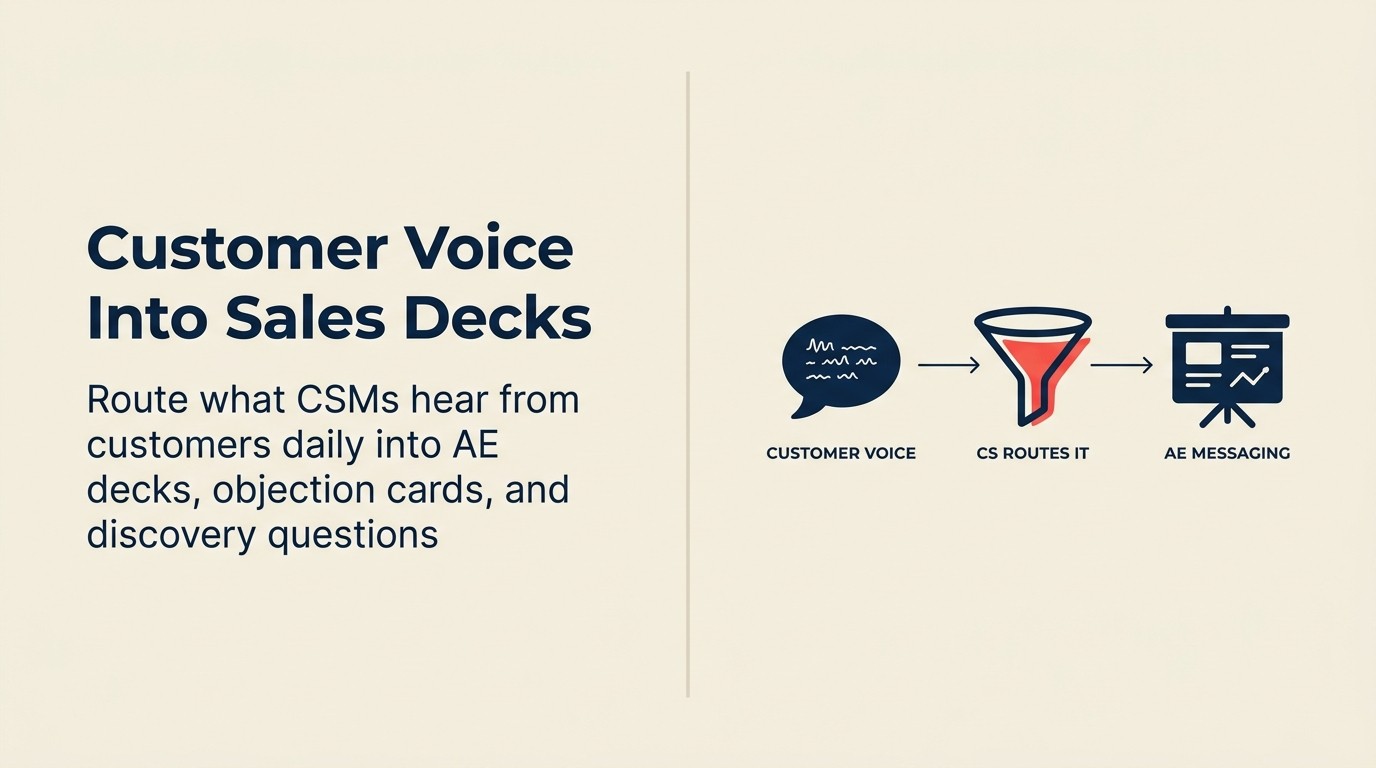
セールスメッセージングは通常、マーケターが執筆し、リーダーが承認します。実際の顧客の言葉に最も近いCSMが、その議論に参加することはほとんどありません。
B2Bメッセージングに関するMcKinseyの調査では、サプライヤーが強調する内容と顧客が実際に重視する内容との間に顕著な乖離があることが明らかになりました。誠実でオープンな対話はバイヤーにとって最も重視される要素でしたが、調査対象の90社のメッセージングには見られませんでした。このギャップは源流から始まっています。メッセージングを書く人々は、毎日実際の顧客の言葉を耳にしている人々と話していないのです。
その結果、AEのピッチデッキは、実際の顧客が購入理由として使ったことのない価値提案で埋め尽くされています。スライドには「クロスファンクショナルなWorkflowを効率化する」と書いてあっても、顧客が言うのは「Opsチームが営業チームのCRM更新を待たなくなったから、失注が減った」です。後者の言葉がディスカバリーコールを開きます。前者は頷かれて無視されます。
このギャップはリサーチの問題ではありません。シグナルはすでに存在しています。QBRのメモ、エスカレーションコールのサマリー、CSMが毎週集めるちょっとした発言の中に埋まっています。問題はルーティングです。そのシグナルをキャプチャされた場所から必要とされる場所へ、Slackスレッドや四半期PDFの中で消えてしまう前に届けることができていないのです。勝敗インタビューから構築される、このシグナルのマーケティング側の見方は上流の半分をカバーします。CS側は下流の半分であり、ほぼ常に未発達です。
Win-Language to Battle-Card Pipelineは、CSMが捉えた顧客の生の言葉、すなわち勝因のフレーズ、異議のパターン、ユースケースの実態、Expansionのトリガーを、隔週のリズムで、更新されたAEのディスカバリー質問、異議対応カード、ペルソナの課題説明へと変換する、構造化されたルーティングシステムです。リサーチプログラムではなく、2人の責任者(CSMチームリードとSales Enablementマネージャー)、4種類のタグ、定義された更新サイクルを備えた、繰り返し可能な運用ループです。
VoCがSales-CSの接点で実際に意味すること
Voice of CustomerはNPSスコアや満足度調査だけではありません。それらの集計シグナルは、次に何を開発すべきかを判断するプロダクトチームには有用です。しかし、ディスカバリーコールに備えているAEにはほとんど役に立ちません。
セールスが必要としているのは別のものです。具体的なフレーズ、異議のパターン、顧客が本音を語った瞬間です。平均値ではなく、一字一句そのままの言葉です。
NPSデータでは決して見えてこない、Sales-CSの接点に存在する3種類のシグナルがあります。
プロダクトがクリックしたときに顧客が語る言葉。 QBRで、顧客がこう言うかもしれません。「私たちにとってすべてを変えたのは、CSMがRenewalを管理しているのと同じ場所でPipelineを見られるようになったことです。」これは次のAEへのディスカバリー質問になります。「Pipelineの可視性が欲しいですか?」ではなく、「現在の環境でSalesとCSの連携が最も難しいのはどこですか?」です。CSMが顧客の言葉を書き留め、誰かがそれを前に届けてはじめてこの質問が生まれます。
購入前に心配していたのに、セールスサイクル中には言わなかったこと。 顧客は購入前の不安を購入後に打ち明けることがよくあります。Onboardingコール、最初のQBR、エスカレーション会話の中で。「正直、自分たちの規模のチームにはうまくいかないかもと思っていた」は、AEが一度も聞いたことのない異議ですが、社内のすべてのAEがおそらく直面している問題です。CSMがそれを集め、Sales Enablementがそれを必要としています。
売られたものと顧客が実際に使っているものとのギャップ。 CSMがセールスピッチの中心だった機能を顧客が使っていないと気づいたとき、それはシグナルです。AEがその機能を過度に強調しているのか、顧客が正しくOnboardingされていないのか。いずれにせよ、セールスメッセージングはそれを知る必要があります。
これと集計NPSデータの違いは具体性です。NPSは顧客が満足しているかを教えてくれます。接点のVoCは、なぜ躊躇したのか、同僚に何を自慢するのか、プロダクトが実際の日常業務にどう現れているのかを教えてくれます。
重要なデータ:VoCとセールスパフォーマンス
- ベンダー言語ではなく顧客の言葉をディスカバリーで使う営業担当者は、初回ミーティング後の次ステップ進行率が47%高い(Gartnerのバイヤーエンゲージメント調査)。
- **B2Bバイヤーの72%**が、最初のセールス会話で自分たちの実際のビジネス課題に触れられなかったと回答(Forrester 2024年バイヤーエクスペリエンスレポート)。
- CSインサイトをセールス資料にルーティングする体系的なプロセスを持つ企業は27%にとどまる(SiriusDecisions B2Bアライメントベンチマーク調査)。大半はインフォーマルな廊下での会話に依存しています。
CSMが生み出す4種類のシグナル
すべてのCSMインテリジェンスがセールスに等しく有用なわけではありません。多くのCSチームが新しいプロセス層を加えることなくタグ付けできる、実用的な分類法を紹介します。
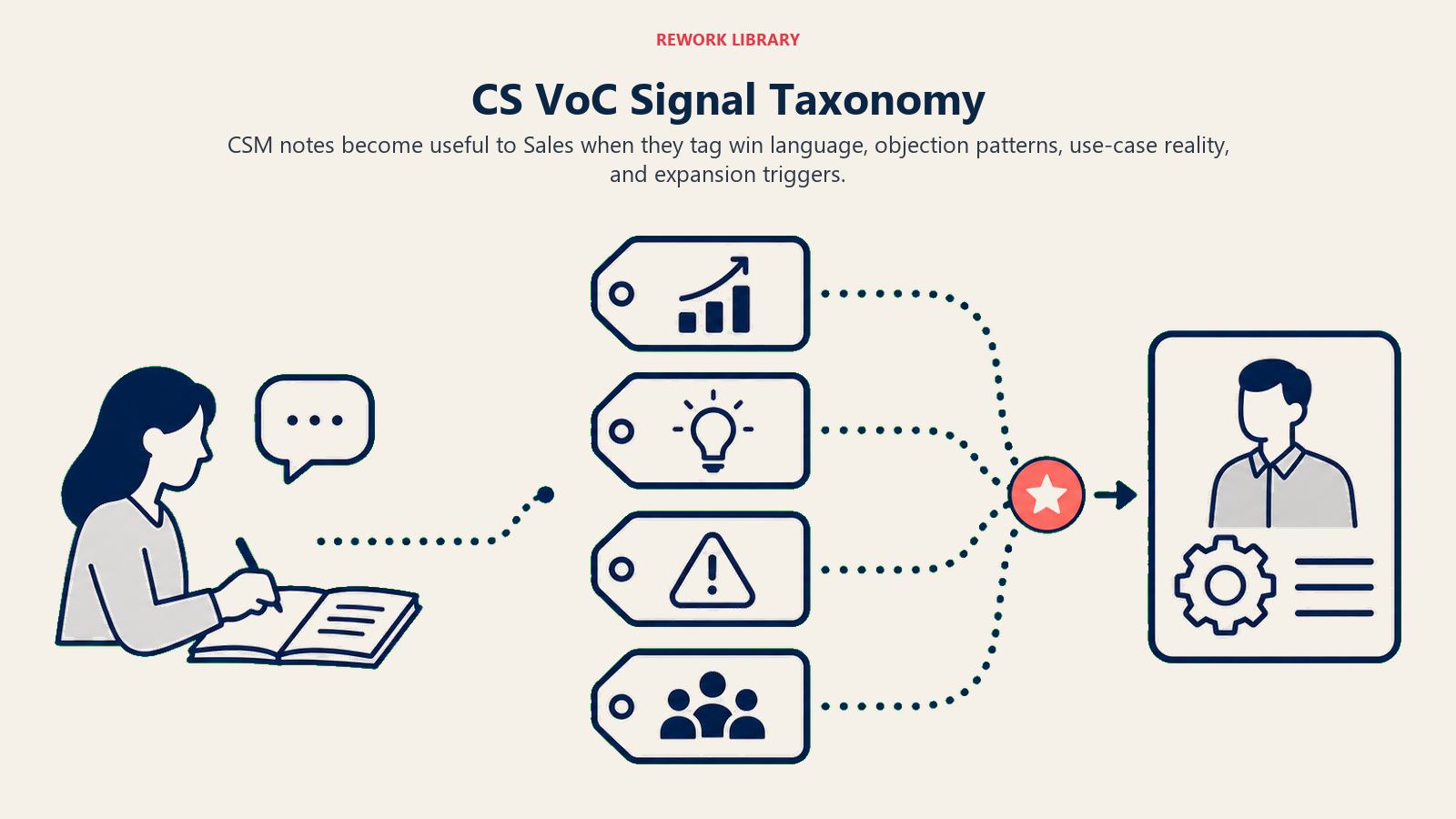
Win Language(勝因の言葉): 顧客が自分の言葉で得た価値を表現する方法。「ハンドオフに3日かかっていたのが、今では20分です。」これはAEがディスカバリーコールで直接使える前後比較の表現であり、顧客自身に課題を数値化させるきっかけになります。Forresterの顧客中心メッセージングに関する調査は、このような成果に根ざした言葉が、プロダクト機能中心のフレーミングよりも明らかに高いバイヤーエンゲージメントを生むことを示しています。
異議パターン: 購入前にも存在していたが完全に解消されなかった、購入後に顧客が提起する疑念。「AEに移行データについて懸念を伝えたら、簡単だと言われました。簡単じゃなかったです。」これは異議対応のギャップです。次のAEはデータ移行に対してより良い回答を持つ必要があります。懸念を軽視するのではなく率直に認めるスクリプトカードも。
ユースケースの実態: 販売時に提示したものではなく、顧客が実際に採用したWorkflow。顧客の80%がデッキで強調している内容とは若干異なる用途でプロダクトを使っている場合、そのギャップはメッセージングの更新を待っています。
Expansion Trigger: 顧客が「もっとやるべき」と言う瞬間。これはCSMがRenewal会話の数ヶ月前に聞くExpansionの意欲の初期シグナルです。同じ四半期に3人の異なるCSMが「サポートチームにも展開することを考えていた」と聞いたなら、それはセールスキャンペーンのアイデアであり、次のPipelineサイクルのすべてのAEへのディスカバリー角度です。これらのシグナルはICP改善ループに直接つながり、営業が、どのユースケースがピッチ上で見栄えがするかだけでなく、顧客全体で実際に定着しているかを理解する助けになります。
win-language、objection-pattern、use-case-reality、expansion-triggerという4タグの分類法を既存のCSプラットフォームノートテンプレートに追加するだけで十分なインフラです。新しいフォームも新しいツールも不要。すでに存在するノートへのタグです。
何をキャプチャすべきかを理解するのは簡単な部分です。それを適切な人に十分な速さで届けることが、多くのチームがつまずくところです。
ルーティングの問題:なぜシグナルが今日流れないのか
シグナルは存在します。なぜセールスに届かないのでしょうか?
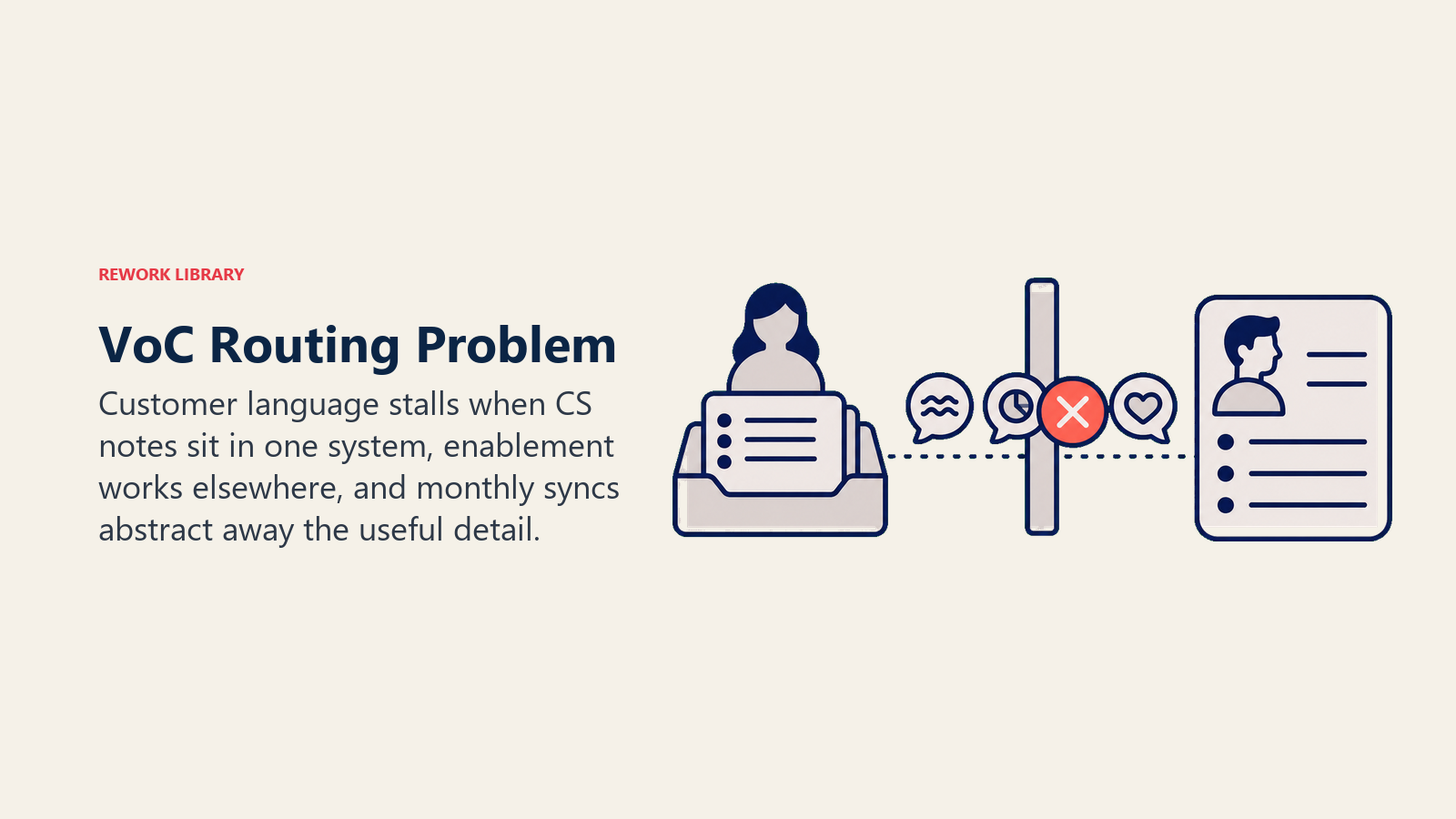
CSMはCSプラットフォームに記録するが、Sales EnablementはCSプラットフォームを使わない。 ノートはあります。しかしSales EnablementマネージャーはGainsightやTotangoやChurnZeroを通常使いません。彼らはCRMとEnablementプラットフォームで生活しています。VoCシグナルは彼らが開かないシステムに眠っています。
1on1では出てくるが、デッキには届かない。 CSMがチームリードに、実装時間についての懸念が顧客から繰り返し出ていると伝えます。チームリードはメモを取ります。隔週のSyncでVP CSに届きます。月次レポートに入ります。調査結果としてフォーマットされるころには、AEはその情報なしに50回以上のコールをこなしています。
マーケティングはメッセージングを持っているが、ライブの顧客言語への直通ルートがない。 セールスデッキを書くプロダクトマーケティングチームは通常、6ヶ月前の調査インタビュー、RevOpsがフィルタリングしたWin/Lossデータ、そして自分たちのポジショニング直観から作業しています。先週火曜日のQBRで顧客がなぜプロダクトを同僚に勧めるかを正確に語った一字一句は手元にありません。セールスイネーブルメント資料の内容と、AEが現場で実際に必要とするものとのギャップは、関連する構造的な問題です。VoCルーティングだけではコンテンツのギャップは解消しませんが、それを解消可能にする原材料になります。
月次のSales-CS Syncは遅すぎて、レベルが高すぎる。 ほとんどの収益チームは、セールスリーダーシップとCSリーダーシップの月次アライメントミーティングを持っています。しかしそのミーティングはPipeline、NRR予測、エスカレーションアカウントをカバーします。Verbatimが共有される場所ではありません。何かが月次アジェンダ項目になるころには、パターンに抽象化されていて、AEに役立てるはずの具体的な言葉は編集で消えています。
シンプルなVoC-to-MessagingループをつくるStep
修正策は、リサーチプログラムではなく、繰り返し可能なルーティング構造です。以下がその内容です。
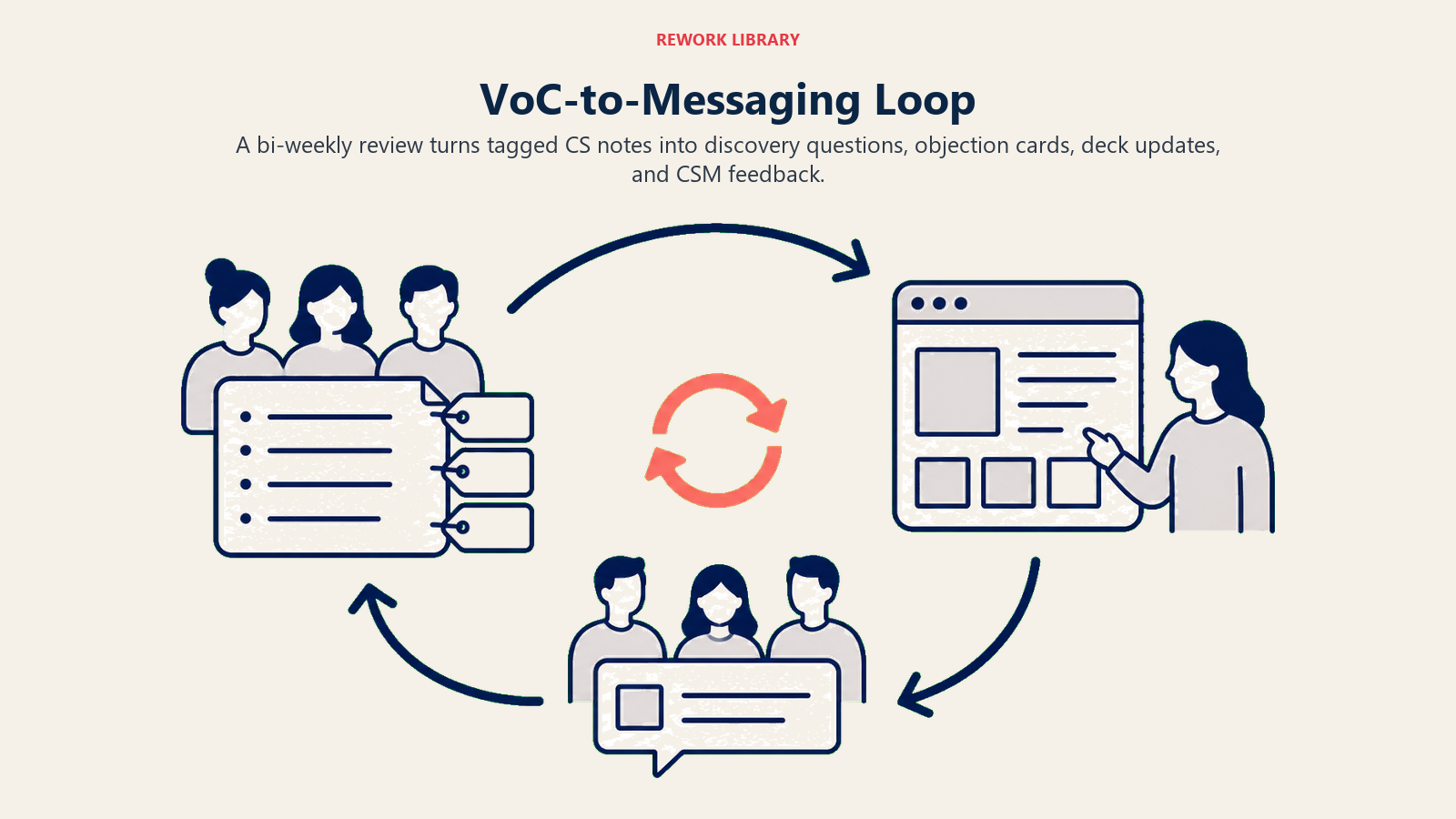
キャプチャする場所: 4タグ分類法(win-language、objection-pattern、use-case-reality、expansion-trigger)を既存のCSプラットフォームノートテンプレートに追加します。CSMは通常のWorkflowの中で関連ノートにタグを付けます。別途フォームも追加ステップも不要。タグのみが追加です。
誰がレビューするか: CSMチームリードとSales Enablementマネージャーによる隔週30分のセッション。この2人だけ。CSMリードは過去2週間のタグ付きノートをCSプラットフォームレポートから引き出します。Enablementマネージャーはメッセージングへの関連性でレビューします。2〜3件のセールス資料更新に値するシグナルを共同で特定します。
隔週ルーティングアジェンダのサンプル:
| 時間 | アクティビティ |
|---|---|
| 0〜5分 | CSMリードが過去2週間のタグ付きノートを共有(CSプラットフォームレポートから) |
| 5〜15分 | Win Languageタグのレビュー:ディスカバリー質問バンクに追加する価値のある新フレーズはあるか? |
| 15〜22分 | 異議パターンタグのレビュー:更新が必要な既存の異議対応カードはあるか? |
| 22〜28分 | ユースケース実態とExpansion Triggerタグのレビュー:デッキ更新やキャンペーンアイデアはあるか? |
| 28〜30分 | Enablementマネージャーがセールスデッキまたはスクリプトに取り込む1〜2件の更新に合意する |
更新されるもの: ディスカバリーデッキのペルソナ課題説明、異議対応スクリプト、ディスカバリー質問バンク、ケーススタディ角度ブリーフ。これらが実際の顧客言語がAEパフォーマンスに最も直接的に影響を与える4つの場所です。
CSMへのフィードバック: これはほとんどのチームが省略するステップで、だからこそループが最終的に死ぬ原因です。CSMのタグ付きノートが更新された異議対応カードや新しいディスカバリー質問につながったとき、CSMはそれを知る必要があります。「AcmeのQBRからあなたが指摘した実装タイムラインへの懸念が、そのトピックの異議対応カードに反映されました」という簡単なSlackメッセージは30秒で、CSMに自分の意見が何かを変えたと伝えます。このフィードバックがなければ、タグ付け行動は6週間以内に消えます。これは受注取引のデブリーフプロセスの背後にある同じクローズドループの原則です:インテリジェンスは、それを生み出す人々が活用されていると知っている場合にのみ積み重なります。
良い状態とはどういうものか:3つの実例
CSMが新しいユースケースクラスターを浮上させた後、AEがディスカバリーデッキを更新。 同じ四半期に3人のCSMが、顧客がサポートとセールスの連携に(セールス内だけでなく)プロダクトを使用しているノートをタグ付けします。CSMチームリードはこれを隔週セッションに持ち込みます。Enablementマネージャーは新しいICP角度(サポート・セールス連携)として認識し、ディスカバリー質問を追加します。「現在の環境で、6ヶ月前にセールスチームがクローズしたディールからのコンテキストが必要なチケットをどう扱いますか?」2週間以内に4人のAEがその質問を使い始め、1四半期以内にそれは質問バンクで最もConversion Rateの高いディスカバリー質問の1つになります。
QBRで3人の異なる顧客が提起した懸念に基づいて異議対応カードを更新。 複数のCSMが、実装がAEの説明より難しかったと言う顧客についてノートをタグ付けします。Enablementマネージャーは実装の異議対応カードを更新します。懸念を最小化するためではなく、正直にリフレームするためです:「実装には3〜4週間のセットアップ時間が必要です。そのタイムラインがどのようなものか、サポートをどこに集中させるかをお伝えします。」新しいカードを使うAEは、実装に関するクローズ後のサプライズエスカレーションが減ります。
異議対応カード更新の前後比較:
| 変更前(旧デッキ) | 変更後(CSM VoC) |
|---|---|
| 「Onboardingチームでの実装は素早く簡単です」 | 「御社規模のチームでは実装に通常3〜4週間かかります。各フェーズの内容とサポート時間の配分についてお伝えします」 |
| 懸念を軽視している | 具体的な情報で直接対応している |
| 顧客はクローズ後に誤解されたと感じる | 顧客はOnboardingに正確な期待値を持って臨む |
CSMが集めたVerbatimのみから構築された新しいExpansionケーススタディ。 CSMからExpansion Triggerのノートが浮上します。顧客がRenewalコールでプラットフォームをマーケティングチームに展開することを考えていると言及しました。CSMはexpansion-triggerとタグ付けします。隔週セッションでEnablementマネージャーがケーススタディ角度の候補としてフラグを立てます。CSMが顧客にフォローアップします。6週間後、1チームで始めて3チームに拡大した企業についてのケーススタディが完成します。そのケーススタディは類似アカウントとのExpansion会話で使われる主要なコンテンツになります。
引用しやすいポイント
「ベンダー言語ではなく顧客の言葉をディスカバリーで使う営業担当者は、初回ミーティング後の次ステップ進行率が47%高い(Gartnerのバイヤーエンゲージメント調査)。」
「B2Bバイヤーの72%が、最初のセールス会話で自分たちの実際のビジネス課題に触れられなかったと回答(Forrester 2024年バイヤーエクスペリエンスレポート)。AEが話す内容と顧客が気にすることのギャップは、メッセージングから始まっています。」
「CSインサイトをセールス資料にルーティングする体系的なプロセスを持つ企業は27%にとどまります(SiriusDecisions B2Bアライメントベンチマーク調査)。大半はインフォーマルな廊下での会話に依存しています。」
Rework分析: Win-Language to Battle-Card Pipelineを隔週で運用する企業は、通常1サイクルあたり2〜3件のセールス資料を更新し、CSプラットフォームのノートにすでに存在していたシグナルから、四半期に12〜18件の意味あるイネーブルメント改善を積み上げます。ボトルネックはデータだったことは一度もありません。そのデータを次のAEのディスカバリーコールの前に適切な人に届けるルーティング構造だったのです。
機能していることを示す指標
VoCルーティングに独自のレポートスタックは必要ありません。3つの指標で効果があるかどうかがわかります。
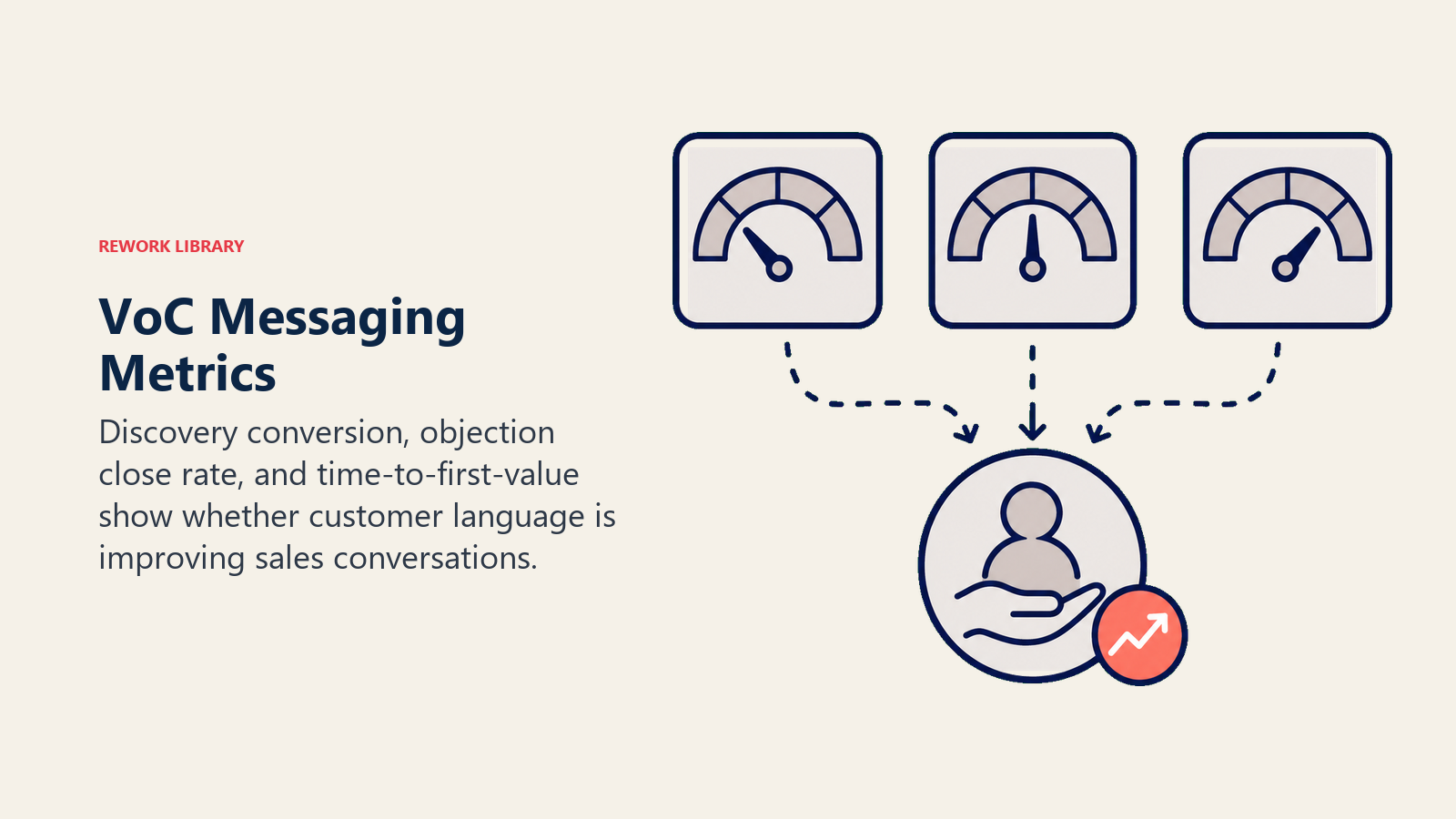
ディスカバリーコールのConversion Rate。 AEはより良い会話を始めているか?ディスカバリーコールが2回目のミーティング設定につながる割合を追跡します。顧客の言葉が刺さっていれば、更新されたディスカバリー質問を導入してから2〜3ヶ月以内にこの数字が動きます。ForresterのB2Bバイヤー調査は、実際の顧客の成果に沿ったメッセージングが初期段階のコンバージョンの主要な推進力であることを裏付けています。
異議クローズ率。 CSMインプットに基づいてスクリプトを更新した特定の異議について、更新されたカードがCRMノートで「異議解消」率を高めているかどうかを追跡します。これにはAEが異議タイプ別に結果を記録する必要があります。ほとんどのCRMがプルダウンフィールドを追加すれば対応できます。
Time-to-First-Value。 新規顧客はプロダクトの内容と実装に必要なことについてより明確な期待値を持って来ているとCSMは報告しているか?これは短期的には定性的なシグナルです。しかし、より速い最初のマイルストーン達成と1〜2ヶ月目のエスカレーション率の低下として現れます。このVoCループをクローズしているチームは通常1四半期以内にOnboarding満足度スコアが改善します。顧客が販売後に期待値を調整しなくて済むからです。
避けるべきアンチパターン
VoCを誰も読まない四半期PDFに変える。 顧客の言葉の価値は劣化します。今四半期に顧客が提起している異議は、Q3ビジネスレビューで共有されるデッキではなく、来月のAEスクリプトに入る必要があります。四半期ごとの統合は戦略的なメッセージング決定に有用です。今週のディスカバリーコールの支援には役立ちません。チームが使っているアライメントツールスタックは、このルーティングがそもそも可能かどうかを左右します。CSと営業が分断されたツールで運用している場合、プロセスの意図に関係なく、シグナルはシステムの境界で消えます。
マーケティングがシグナルをセールスに届ける前にフィルタリングする。 マーケティングはメッセージング戦略において正当な役割を持っています。しかし、VoCがマーケティングを経由してセールスに届くと、Verbatimがポジショニング言語へと浄化されます。AEが必要としているのはポジショニング版ではありません。顧客が使った生のフレーズと、その周辺のコンテキストです。CSMチームリードとSales Enablementマネージャーの直通ルートを維持してください。
成功事例のみを集める。 異議のパターンと摩擦のポイントは、Win Languageと同等、またはそれ以上に価値があります。「価格の仕組みが理解できなかったから、もう少しで買わなかった」と言う顧客はセールスへのギフトです。これは次のAEが必ず直面する異議です。記録して、ルーティングして、カードを更新してください。
Reworkが貢献できること
CRMとCSプラットフォームが共有レコードアーキテクチャを持っていれば、VoCシグナルのタグ付けはプロセス変更プロジェクトではなく設定タスクになります。CSMはCSプラットフォームでノートにタグを付け、そのタグがSales Enablementがタグタイプでフィルタリングできるアカウント共有レコードに浮上します。隔週セッションは手動のノート収集作業ではなく、フィルタリングされたレポートのレビューになります。
CRMとCSプラットフォームが別々のチームは、プロセスは同様に機能しますが、CSMチームリードがタグ付きノートレポートを手動でエクスポートする必要があります。ルーティング構造は同じです。摩擦は高くなります。共有レコードがどのようにこれを可能にするかについては、アライメントスタック:CRM、CSプラットフォーム、Revenue Intelをご覧ください。
Voice of Customerをセールスメッセージングへ反映することに関するよくある質問
VoC-to-セールスメッセージングのループは、CS、営業、マーケティングのどこが担当しますか?
このループには2人の運用上の責任者がいます。CSプラットフォームからタグ付きノートを引き出してレビューするCSMチームリードと、それらのノートを更新されたAE向け資料に変換するSales Enablementマネージャーです。マーケティングはメッセージングの意思決定において戦略的な役割を持ちますが、営業が目にする前に生のVerbatimをフィルタリングすべきではありません。VoCがAEに届く前にマーケティングが加工すると、ディスカバリー質問を効果的にする具体的な顧客の言葉が、誰も通話で使わないポジショニング言語へと浄化されてしまいます。
CSMに余分な作業を発生させずにVoCの収集を運用するにはどうすればよいですか?
既存のCSプラットフォームのノートテンプレートに4つのタグ(win-language、objection-pattern、use-case-reality、expansion-trigger)を追加します。CSMは通常のWorkflowの中で関連ノートにタグを付けます。別途フォームも追加ステップも不要で、追加されるのはタグだけです。その後、CSMチームリードとSales Enablementマネージャーによる隔週30分のセッションで、タグ付けされた内容をレビューし、セールス資料の更新に値する2〜3件のシグナルを特定すれば十分です。
CSからのVoCは、どのくらいの頻度でセールスメッセージングの更新に反映すべきですか?
ほとんどのチームにとって、隔週が適切なリズムです。月次では遅すぎます。今四半期に顧客が提起した異議は、四半期ビジネスレビューのデッキではなく、来月のAEスクリプトに入る必要があります。毎週ではノイズが多くなり、Enablementマネージャーに負担がかかります。隔週なら、パターンを特定するのに十分なシグナルが集まり、かつ現在のPipelineに役立つ速さでフィードバックループを回せます。
CSからのVoCは、どのセールス資料を最も直接的に改善しますか?
4つです。ディスカバリーデッキのペルソナ課題説明、異議対応スクリプト、ディスカバリー質問バンク、ケーススタディ角度ブリーフです。これらは実際の顧客の言葉がAEパフォーマンスに最も直接的に影響する場所です。Win Languageタグはディスカバリー質問とケーススタディの角度に反映されます。異議パターンのタグは異議対応カードに、ユースケース実態のタグはペルソナの課題に、Expansion Triggerのタグはケーススタディブリーフとキャンペーンのアイデアに反映されます。
CS由来のVoCと、Win/Loss調査の違いは何ですか?
Win/Loss調査は上流です。取引がクローズまたはChurnした直後にバイヤーへ構造化インタビューを行い、その決定に至った理由を捉えます。CS由来のVoCは下流で、顧客が数ヶ月間プロダクトを使い続けた後に使い続ける言葉であり、同僚に自慢すること、違っていてほしかったこと、購入後に驚いたことなどが含まれます。どちらも価値があり、カスタマージャーニーの異なる部分をカバーします。CS由来のVoCは、取引のプレッシャーがないときに顧客が語る内容、つまり体験の正直な姿を反映しているため、異議対応とディスカバリー質問の更新にとくに効果的です。
VoCルーティングのループが数ヶ月で途絶えるのを防ぐにはどうすればよいですか?
最も多い失敗パターンは、自分のインプットが活用されているのを見られないために、CSMがタグ付けをやめてしまうことです。対策は明示的なフィードバックです。CSMのタグ付きノートがAEデッキや異議対応カードの変更につながったら、CSMチームリードがそれを本人に伝えます。「AcmeのQBRからあなたが指摘した実装タイムラインへの懸念が、そのトピックの異議対応カードに反映されました」という30秒のSlackメッセージで、その行動を維持するには十分です。このフィードバックシグナルがなければ、タグ付けは6週間以内に消えます。Win-Language to Battle-Card Pipelineには、EnablementからCSMへ戻るクローズドループが必要で、さもなければ崩壊します。
隔週のVoCルーティングセッションは、実際にはどのようなものですか?
CSMチームリードとSales Enablementマネージャーによる、30分の構造化されたレビューです。最初の5分で過去2週間のWin Languageタグをカバーします:ディスカバリー質問バンクに追加する価値のある新フレーズはあるか。次の10分で異議パターンのタグをカバーします:更新が必要な既存の異議対応カードはあるか。最後の10分でユースケース実態とExpansion Triggerのタグをカバーします:デッキ更新やキャンペーンのアイデアはあるか。セッションは、Enablementマネージャーが次のサイクルまでにセールス資料へ取り込む、1〜2件の具体的な更新への合意で終わります。
関連記事