AI Sales Opsの内製vs.購入

Turn this article into takeaways for your work.


Each assistant summarizes the article only for you and suggests best practices for your work.
RevOpsチームは最終的に同じ会話をすることになります。CTOはOpenAI APIが1,000トークンあたり$0.002だと言います。VP of SalesはGongが年間1席あたり$120だと言います。「自分たちでGPTを使って構築できるのに、なぜGongに6桁の金額を払うのか?」
最初に聞いたときは合理的な疑問です。答えはすぐに複雑になります。
AI Sales Opsにおける内製vs.購入の問いは一つではありません。AI Sales Operatorスタックの各パターン、Scoring and Routing、Meeting Intelligence、Generative Research、Workflow Copilot、それぞれに対する4つの別々の問いです。答えはパターンごとに異なります。本当のコスト構造を理解するには、約20分の正直な計算が必要です。
内製の誘惑と本当のコスト
Key Facts: AI Sales Ops 内製vs.購入の経済性
- 現実的な単一パターンのAI Sales Ops内製には、API・インフラコストを含まない状態で初年度に1,000〜2,000のエンジニアリング時間が必要で、典型的な人件費込みで$100,000〜$200,000に相当します。(Rework分析)
- B2B企業の75%が、カスタム構築と比較してプラットフォーム購入の方がAI Sales Ops実装のスピードと総コストが低かったと報告しており、その主因は連携とガバナンスのエンジニアリングの過小評価です。(Forrester、2025年)
- B2B Sales OpsにおけるエンタープライズAIプラットフォームへの支出は2022年の$22億から2030年までに$73億に成長すると予測されており、カスタムAI構築よりプラットフォーム購入への持続的な選好が反映されています。(CPQ.se、2025年)
パターン別の分析に入る前に、「内製」が実際に何を意味するかを価格として理解しておく価値があります。
LLM APIの呼び出しは安価です。本番環境のAI Sales Ops機能はそうではありません。内製に一般的に必要なものは次のとおりです。
データパイプラインエンジニアリング。 CRMデータはLLMにきれいに流れません。商談レコードを正規化し、営業チームがフィールドを再設定した際のスキーマ変更を処理し、AIアウトプットを最新の状態に保つスケジュールで更新するETLパイプラインが必要です。これは2〜4週間のエンジニアリングプロジェクトであり、その後も継続的なメンテナンスが必要です。
CRM連携。 SalesforceまたはHubSpotへの書き戻しは単純ではありません。レート制限、フィールドのバリデーション、エラー処理、同期の競合、Webhookの信頼性はすべて本番グレードのエンジニアリングが必要です。3〜6週間を追加してください。
プロンプトエンジニアリングとガバナンス。 デモで機能するプロンプトは本番環境でずれが生じます。プロンプトのバージョン管理、回帰テスト、製品やICPが進化するにつれてAIアウトプットが依然として正確かを確認する月次タスクを誰かが担当する必要があります。
モデルガバナンス。 スコアリングモデルが$200Kのエンタープライズリードを若手担当者に振り分けるという悪い推奨をした場合、誰がその判断を見直しますか?監査証跡は?ロールバック手順は?これらは後付けの考えではありません。エンジニアリングの範囲です。
コンプライアンス対応。 GDPR第22条は個人に影響を与える自動決定に適用されます。AIルーティングが人間のレビューなしにリードを割り当てる場合、スコープに入る可能性があります。コール録音の同意要件は管轄地域によって異なります。コンプライアンスレイヤーの構築と維持を誰かが担当する必要があります。
単一パターンの内製の現実的な見積もりは初年度に1,000〜2,000のエンジニアリング時間です。ミッドマーケットのエンジニアリングチームの人件費込み$100/時間として、プロンプトを一行も書く前に$100,000〜$200,000になります。50席に分割すると、内製コストだけで初年度1席あたり$2,000〜$4,000になり、APIコストは含まれていません。
これをGongの年間1席あたり$120、または10名チームで年額$1,080(年払い)のReworkのSales Engineと比較してください。50席では内製はほぼ常に高くつきます。500名では時に競争力を持つことがあります。
Pattern 1:Scoring and Routing:ほぼ常に購入が勝る
リードスコアリングには、過去の受注・失注データ、特徴量エンジニアリングの専門知識、継続的なモデル再トレーニングインフラが必要です。MadKudu、6sense、Salesforce Einsteinなどのベンダーは、何千もの企業の数千万件の商談結果でモデルをトレーニングしています。自社の500件の商談データセットでは太刀打ちできません。
数学的な現実として、スコアリングモデルは信頼性の高い確率推定値を生成するために最低でも数千件のラベル付きデータが必要です。SMBとミッドマーケットのほとんどの企業はそれを持っていません。10年以上のCRM履歴を持つ企業でも、一貫性のないラベル付け(担当者がプロセスに従わずに商談ステージを手動で変更する)によってトレーニングデータが汚染されていることが多いです。
スコアリングモデルを購入するということは、自分では再現できないデータ優位性でトレーニングされたモデルを入手することを意味します。MadKuduは、6〜12ヶ月の自社データをベースモデルの上に重ねることでモデルが改善すると主張しています。これはハイブリッドです。彼らのインフラ、自社のシグナル。内製コストの何分の一かで両方の長所を得られます。
ルーティングロジックは少し異なります。テリトリーモデルが本当に複雑な場合(カスタム地域、製品専門化、言語要件、パートナーチャネルルーティング)、スコアリング購入の上にルーティングルールを構築する必要があるかもしれません。ほとんどの企業はそれほど独特なルーティングロジックを持っていません。Salesforce、HubSpot、Reworkの標準ルーティング機能が実際のケースの90%に対応します。
判定:購入。内製はオフザシェルフのルーティングでは表現できないカスタムルーティングルールのみ。
Pattern 2:Meeting Intelligence:購入が勝る(連携の注意事項あり)
Meeting Intelligenceには、音声処理、話者分離(「話者A」と「話者B」の分割)、トランスクリプトのクリーニング、トピック抽出が必要です。これらはカスタムモデル開発、計算インフラ、継続的な品質対応が必要な専門的なML機能です。
話者分離だけでも研究上困難な問題です。利用可能な最良のモデル(Google、AWS、専門ベンダーからのもの)でも、ノイズの多い音声、重なった音声、3人以上の参加者がいるコールでは依然としてエラーが発生します。独自の分離パイプラインを構築するということは、商業ベンダーが何年もかけて削減してきたエラー率を受け入れることになります。
Gong、Chorus(ZoomInfo)、Fireflies、Clari Copilotはすべてトランスクリプトの品質に大きな投資をしてきました。その上のコーチング分析レイヤーにも投資しています。発話時間比率、オブジェクション検出、質問頻度、トピック追跡。これらの分析機能の構築には数年と相当なML投資が必要でした。OpenAI APIの呼び出しと週末プロジェクトでは再現できません。
Meeting Intelligenceにおける本当の問いは内製vs.購入ではありません。どのベンダーがCRMと最もクリーンに連携するかです。GongのSalesforce連携は深く、ドキュメントも充実しています。Firefliesはプラットフォームのカバレッジは広いですがアナリティクスは浅い。Clari CopilotはClariのフォーキャスティングスイートと緊密に連携しています。選択はトランスクリプトの下流で何が必要かによります。
判定:購入。CRMとコーチングWorkflowへの連携の深さが判断変数であり、内製vs.購入ではありません。
Pattern 3:Generative Research:ハイブリッドが実際に有効
これはエンジニアリングリソースを持つミッドマーケットのRevOpsチームにとって、内製が本当の選択肢となる唯一のパターンです。
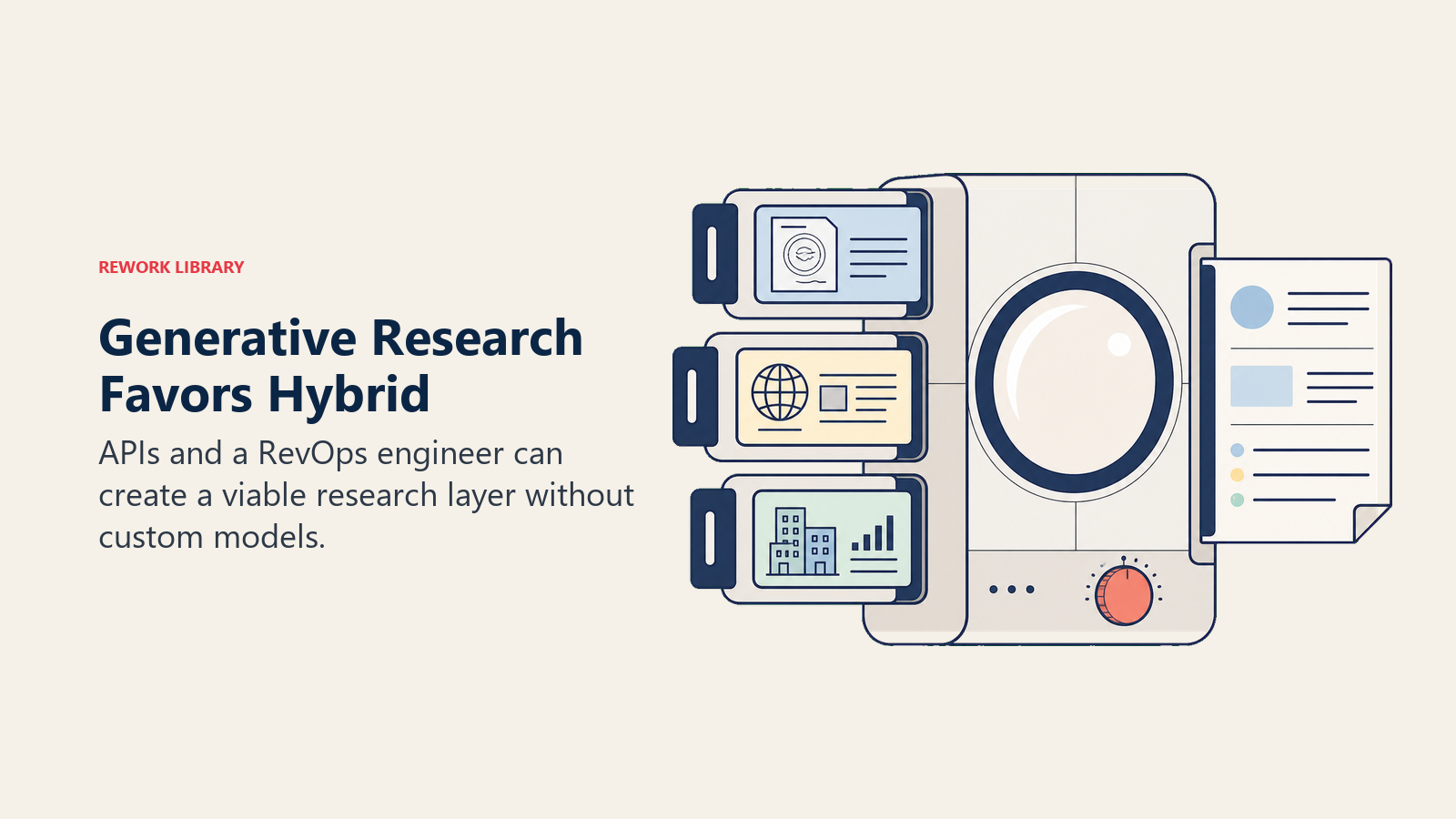
アカウントリサーチブリーフィングは本質的に次のことです。複数のソース(LinkedIn、ZoomInfo、Bombora、会社のウェブサイト、ニュース)からデータを取り込み、LLMを使って合成し、構造化されたブリーフを生成する。ここでのIngestとGenerate機能には、専門的なMLモデルは必要ありません。API連携と優れたプロンプトエンジニアリングが必要です。
1人のRevOpsエンジニアがいるチームは、以下を使って4〜8週間で競争力のあるアカウントリサーチパイプラインを構築できます。
- OpenAIまたはAnthropicのAPIによる合成
- ZoomInfoまたはApolloのAPIによる企業情報とコンタクトデータ
- LinkedIn Sales Navigator APIによる最近の活動情報
- ニュースと会社の更新情報のためのウェブスクレイピングレイヤー
- アウトプットフォーマットのためのテンプレートシステム
スコアリングやMeeting Intelligenceと比較してメンテナンスコストが低いです。再トレーニングするモデルがないからです。インプットが変わった場合(新しいデータソース、新しいブリーフ形式)、MLモデルを再トレーニングするのではなく、プロンプトと連携ロジックを編集します。
Clay.comは、ハイブリッドパスを求めるチームのための主要ツールとして台頭しています。彼らのプラットフォームでは、インフラコードを書かずにデータソースとLLM呼び出しを組み合わせられます。これはノーコード内製に近い形です。Apollo.ioのCopilotとZoomInfoのCopilotは純粋な購入に近い形です。
判定:RevOpsエンジニアがいればハイブリッドが有効。いなければClayまたはApolloを購入。純粋な内製はリサーチWorkflowにオフザシェルフのツールでは対応できない独自の要件がある場合のみ。
Pattern 4:Workflow Copilot:マルチツールは購入、CRMネイティブは内製
Copilot機能(Next Best Actionの提案、Pipelineレビューブリーフ、CRM衛生プロンプト、フォローアップメールの下書き)は、内製コストの経済性が異なる2つのカテゴリーに分かれます。
CRMネイティブのCopilot機能(Salesforce またはHubSpot内で発生するアクション)は、CRM APIとLLMで構築できます。Salesforceエコシステムに深く入っている場合、Salesforce Flow + OpenAI APIを使った単純なNBA提案の構築は正当な3〜4週間のプロジェクトです。データはCRM内に留まり、連携はネイティブで、完全なコントロールが維持されます。
マルチツールのCopilot機能(CRM、カレンダー、メール、Slack、コール録音にまたがるアクション)は、構築コストが急速に上昇します。5つのシステムをまたぐアクションのオーケストレーションには、各連携のAPI信頼性エンジニアリング、システム境界をまたいだエラー処理、あるシステムへの書き込みが成功して次が失敗した場合の慎重な状態管理が必要です。
Outreach、Salesloft、そしてReworkのセールスAIレイヤーは、営業Workflowスタックをまたいでオーケストレートするために特別に構築されています。彼らのマルチツール連携は何年ものエンジニアリング投資を表しています。ゼロから比較可能なオーケストレーションレイヤーを構築するのは6〜12ヶ月のエンジニアリングプロジェクトです。
判定:Salesforce/HubSpotのエンジニアリング経験がある場合、シンプルなCRMネイティブCopilot機能は内製。マルチツールオーケストレーションは購入。
パターン別内製vs.購入の判定
パターン別内製vs.購入の判定は、内製vs.購入をAI Sales Opsパターンごとに4つの別々の問いとして扱う意思決定フレームワークです。Scoring and Routing:購入(ベンダーのトレーニングデータ優位性は大きすぎて再現できない)。Meeting Intelligence:購入(分離とアナリティクスのインフラ投資は深すぎて追いつけない)。Generative Research:ハイブリッド(ClayまたはLLM APIを使った1人のRevOpsエンジニアでの実現可能な内製。いなければApolloまたはZoomInfoを購入)。Workflow Copilot:ハイブリッド(CRMネイティブ機能は内製、マルチツールオーケストレーションは購入)。予算策定前にパターン別判定を適用した企業は、AI Sales Opsスタック全体に単一の内製vs.購入決定を適用するチームより一貫して初年度コストが低くなります。
パターンごとに内製/購入分析を適用したチームは、4パターンすべてを内製またはすべてを購入するアプローチと比較して、初年度AI Sales Ops投資を平均30〜40%節約します。(Forrester、2025年)
意思決定フレームワーク:4つすべてのパターン
以下の詳細を確認する前に、この参照テーブルでセクションの全体像を把握してください。
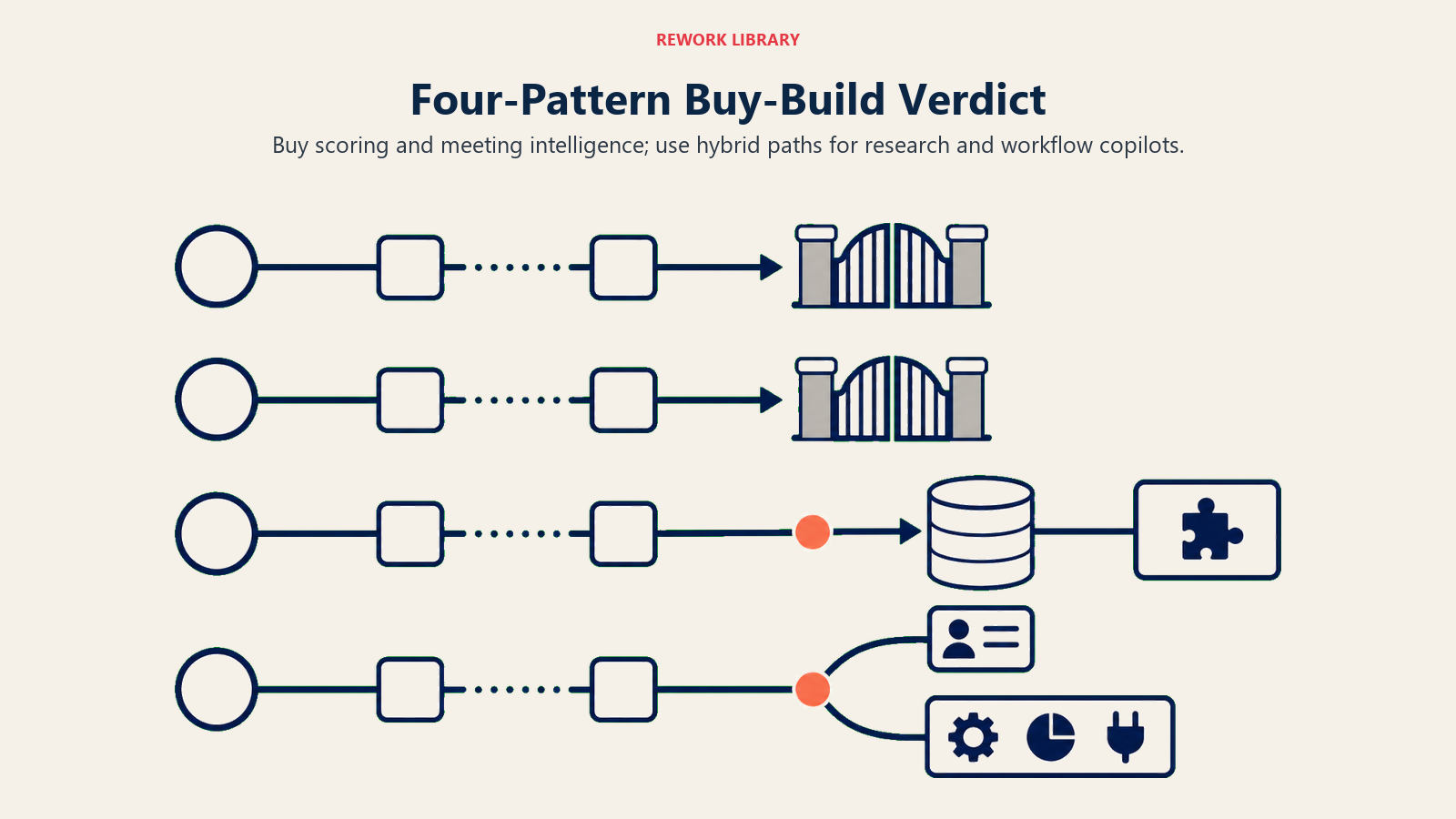
| パターン | 内製/購入 | 条件 | 50席での内製コスト |
|---|---|---|---|
| Scoring + Routing | 購入 | ルーティングロジックが高度にカスタムな場合を除く | ベンダーモデル品質に匹敵するには$150K+ |
| Meeting Intelligence | 購入 | CRM連携の深さでベンダーを選択 | 分離+アナリティクスレイヤーで$200K+ |
| Generative Research | ハイブリッド | RevOpsエンジニアがいれば内製、なければClay/Apolloを購入 | エンジニアありで$50〜80Kが実現可能 |
| Workflow Copilot | ハイブリッド | CRMネイティブは内製、マルチツールは購入 | CRMネイティブは$80K、マルチツールは$200K+ |
プラットフォームvsポイントソリューションのトレードオフ
購入を決定したら、次の問いは「複数のパターンをカバーする1つのプラットフォームか、パターンごとのベストオブブリードツールか?」です。
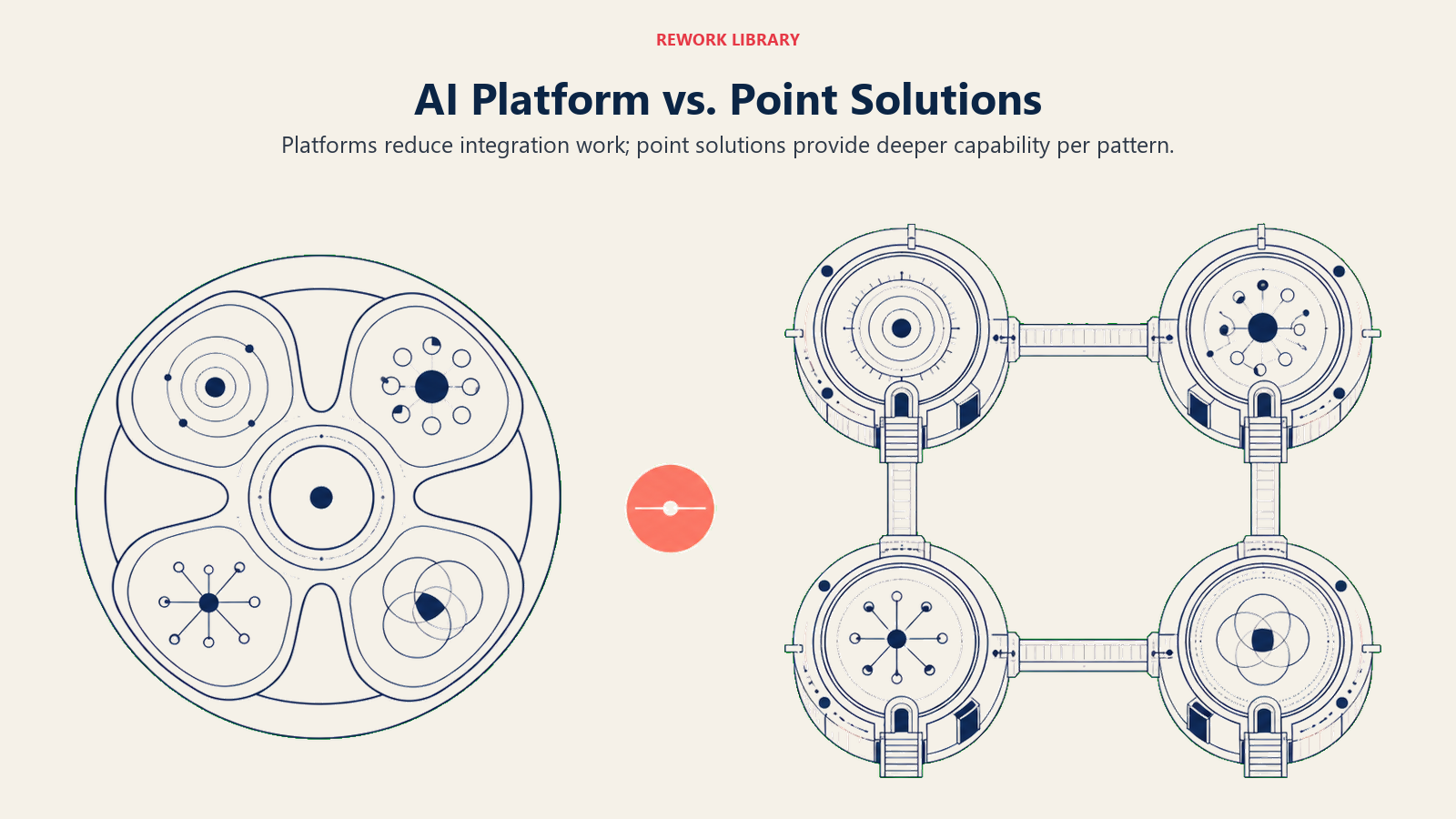
プラットフォームの優位点: 1つのベンダー関係、1つの契約、パターンをまたいだ統合されたデータモデル(スコアリングモデルがトランスクリプトデータを見て、CopilotがフォーキャストデータをSee)、シンプルなITセキュリティレビュー、潜在的に低い総コスト。GartnerのMagic Quadrant for the CRM Customer Engagement Centerは、顧客エンゲージメントライフサイクル全体のAI機能の深さによって主要なプラットフォームベンダーをマッピングしています。
ポイントソリューションの優位点: パターンごとのより深い機能(専用のMeeting IntelligenceベンダーはCRMの内蔵機能より通常優れている)、コンポーネントを入れ替える柔軟性、1つのベンダーのプロダクトロードマップ決定への依存がない。
Gong、Clari、Salesforce Einstein Suiteはマルチパターンプラットフォームとして位置付けています。Rework Sales AIはスコアリング、Meeting Intelligence、Workflow Copilotを単一パッケージでカバーします。MadKudu、Fireflies、Clayはお互いに連携するポイントソリューションです。
連携コストが決定要因です。営業テックスタックを管理する専任のRevOpsエンジニアがいる場合、ポイントソリューションはより多くのコントロールを提供します。RevOps機能が小規模で連携管理が負担になる場合、プラットフォームはパターンごとの能力がわずかに低くても複雑さを軽減します。
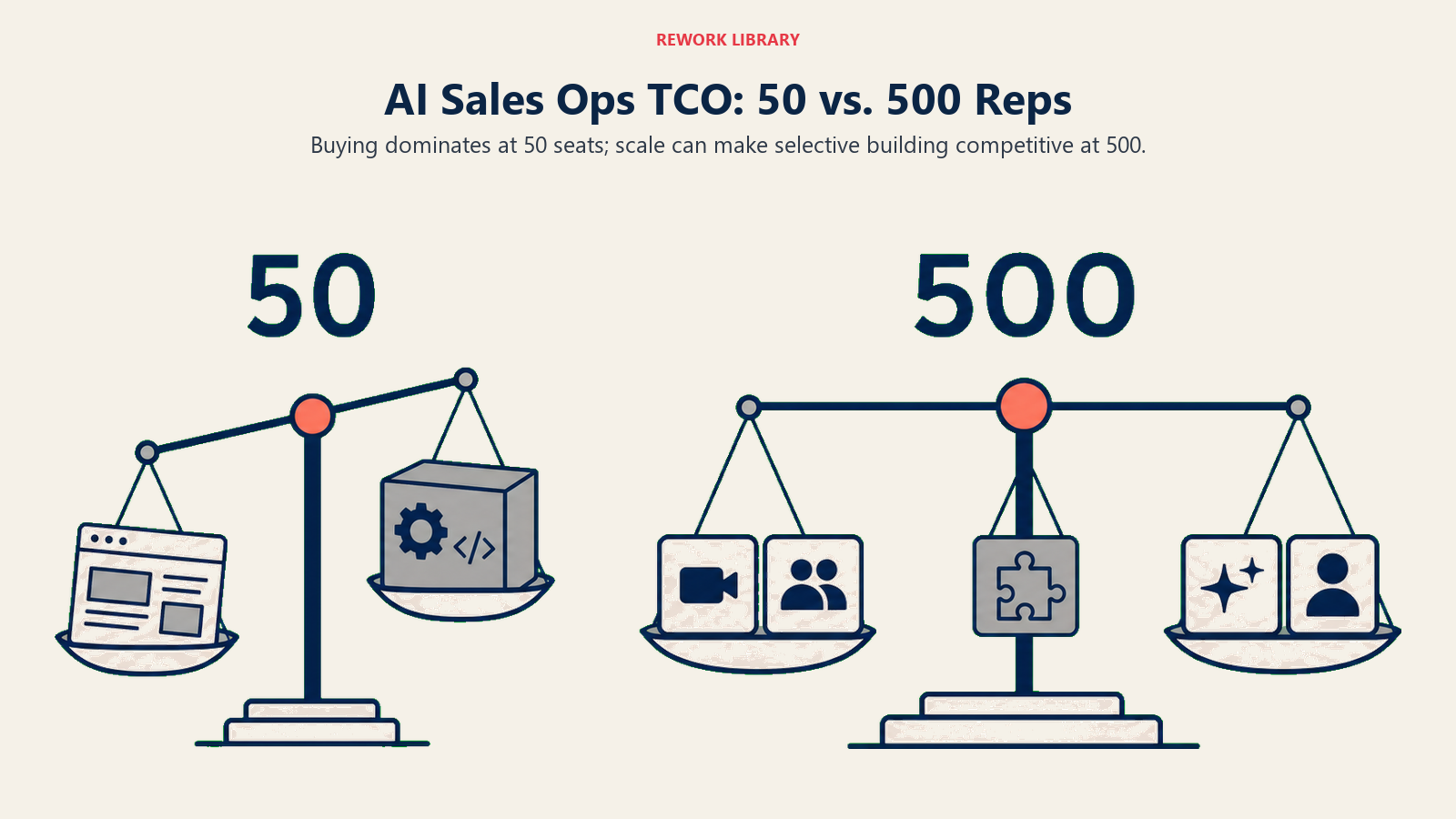
50名の担当者では、4〜5つの別々のAIツールの連携管理オーバーヘッドが大きくなります。3人のRevOpsチームを持つ500名の担当者では、ベストオブブリードアプローチの余裕があり、各パターンがスケールでより重要になるため能力の向上を得られます。
TCO比較:50名vs.500名の担当者
50名の担当者の場合:
| アプローチ | 年間コスト | 注記 |
|---|---|---|
| 4パターンすべてを内製 | 初年度$400〜600K、その後$150〜200K/年 | 2名のエンジニア、APIコスト、インフラを含む |
| プラットフォーム購入(Rework/Clari/Gong) | $60〜150K/年 | ベンダーとティアによって大きく異なる |
| パターンごとのベストオブブリード購入 | $80〜180K/年 | Scoring + MI + Research + Copilotツールの合計 |
| ハイブリッド(3つ購入、1つのリサーチレイヤーを内製) | $60〜130K/年 + 1名のエンジニア |
50名では、ほぼすべてのシナリオで純粋な経済性の面で購入が勝ります。例外は、AI差別化を製品レベルの関心事として捉え、単なる運用効率の取り組みではないと考える強いMLエンジニアリング文化を持つ企業だけです。
500名の担当者の場合:
| アプローチ | 年間コスト | 注記 |
|---|---|---|
| Scoring + Researchを内製(MI + Copilotを購入) | $300〜500K/年 | 3名のエンジニア。Gong + プラットフォームCopilotを購入 |
| スケールでプラットフォームを購入 | $600K〜1.5M/年 | 500席でのエンタープライズティア価格 |
| パターンごとのベストオブブリード購入 | $500K〜900K/年 | 交渉されたエンタープライズ契約 |
500名の担当者では、内製vs.購入の計算が近くなります。500席でのAIプラットフォームのエンタープライズティア価格は多くの場合交渉可能ですが、年間$1Mを超えることがあります。ScoringとResearchレイヤーを構築・維持しながらMeeting IntelligenceとCopilot機能を購入する有能なMLチームは、より低いコストで同等の能力を提供できます。
正直なコメントとして、500名の担当者ではより複雑なデータガバナンス、セキュリティ要件、モデル精度への期待もあり、内製をより困難にします。上記のスケールでの内製コストの高い見積もりは、スタートアップの内製ではなくエンタープライズグレードのエンジニアリングを前提としています。
購入を支持するガバナンスの問い
機能比較やTCOテーブルには出てこない購入を支持する理由が1つあります。監査証跡の要件です。
AIルーティングが個々の担当者のテリトリーや報酬に影響を与える決定を下す場合、文書化された監査証跡が必要です。AIスコアリングがどのリードが対応されどれが対応されないかに影響を与える場合、説明可能性が必要です。GDPR第22条は個人に重大な影響を与える自動決定に潜在的に適用されます。
商業的なAI Sales OpsベンダーはコンプライアンスチームとSOC 2認証、データ処理契約、文書化されたモデルガバナンスプロセスを持っています。自社構築のソリューションはそのすべてをエンジニアリングチームと法務チームに委ねます。AI Sales Opsガバナンスと監査証跡の記事では監査証跡に何が含まれる必要があるかを説明しています。それらすべてを社内で構築することは可能ですが、ほぼ普遍的に過小評価されています。一般的な解説として、パターン別ガバナンス要件は各パターンタイプへのガバナンス義務をマッピングしています。
正直な結論
アクティブなMLチーム、クリーンな過去データ、そして構築したものを維持する時間がない限り、購入してください。LLM API価格の誘惑は本物です。LLM呼び出しを取り巻くインフラのコストが、計算でほぼ常に見落とされる部分です。
内製が本当に競争力を持つ唯一のパターンはGenerative Researchです。特に純粋なエンジニアリング負担を軽減するClayや同様のノーコードオーケストレーションツールがある場合です。内製を試したいのであれば、そこから始めてください。
それ以外はすべて:機能を購入し、解放されたエンジニアリング時間を、製品において本当に重要な競合差別化に費やしてください。何かを購入する前に、まずベンダー環境をマッピングしてください。
AI Sales Opsのベンダーランドスケープ 2026では、どのベンダーがどのパターンをどの価格帯で提供しているかのマップを参照できます。すべてのビジネスAIユースケースをカバーするパターンレベルの内製vs.購入解説については、各AIパターンの内製vs.購入の決定をご覧ください。
Rework分析: RevOpsチームで最もよく見られる内製vs.購入の誤りは、購入すべき時に内製することではありません。まだ必要でないパターンを含む完全なプラットフォームを購入し、その後12〜18ヶ月間は関係ない機能の採用と設定の複雑さに苦しむことです。パターン別判定はそれぞれのパターンについて独立した会話を強制することでこれを防ぎます。リードの優先順位付け(Scoring)に苦しんでいる50名規模のチームは、Meeting IntelligenceとWorkflow Copilotを同時にオンボーディングする必要はありません。現在のボトルネックを解決するものを購入する。運用の成熟度が上がるにつれてパターンを追加する。
よくある質問
AI Sales Opsツールは内製するのと購入するのとどちらが安いですか?
200名未満の担当者のほとんどのチームでは、総コストの面で購入が勝ります。単一パターンのAI Sales Ops内製には初年度に1,000〜2,000のエンジニアリング時間(典型的なコストで$100,000〜$200,000)が必要で、API・インフラ・ガバナンスコストは含まれていません。Gongのような商業ツールは年間1席あたり$120で提供されます。50席では$6,000対同等の内製の$100,000+になります。500席ではその差が縮まり、リサーチとスコアリングレイヤーの選択的な内製が競争力を持てます。
パターン別内製vs.購入の判定とは何ですか?
パターン別内製vs.購入の判定は、内製vs.購入をAI Sales Opsパターンごとの4つの独立した決定として扱います。Scoring and Routing:購入(データ優位性は再現するには大きすぎる)。Meeting Intelligence:購入(分離インフラは構築するには深すぎる)。Generative Research:ハイブリッド(Clayを使った1人のRevOpsエンジニアで実現可能、いなければ購入)。Workflow Copilot:ハイブリッド(CRMネイティブは内製、マルチツールは購入)。判定をパターンごとに適用することで、すべて内製またはすべて購入のアプローチと比較して初年度投資を30〜40%節約できます。
どのAI Sales Opsパターンが最も社内で内製可能ですか?
Generative Research(アカウントリサーチブリーフィング、競合インテリジェンスの合成)が最も内製可能です。カスタムMLモデルは不要で、LLM APIの連携と優れたプロンプトエンジニアリングだけが必要です。1人のRevOpsエンジニアがいるチームは、Clay.comとOpenAIまたはAnthropicのAPIを使って4〜8週間で競争力のあるアカウントリサーチパイプラインを構築できます。Clayは特にハイブリッドモデルを可能にします。彼らのプラットフォームがデータオーケストレーションを処理し、インフラコードを書かずにロジックを設定します。
なぜガバナンス要件がAI Sales Opsツールの購入を支持するのですか?
GDPR第22条は自動リードルーティングとスコアリング決定に潜在的に適用されます。SOC 2準拠、データ処理契約、モデル説明可能性の文書化、監査証跡インフラはすべてコンプライアントなAI Sales Ops展開に必要です。商業ベンダーはコンプライアンスチーム、認証、文書化されたガバナンスプロセスを持っています。自社構築のソリューションはそのすべてをエンジニアリングチームと法務チームに委ねることになり、内製vs.購入分析で一貫して過小評価されます。
大規模チームでは内製vs.購入の計算はどう変わりますか?
500名以上の担当者では、エンタープライズプラットフォーム価格(多くの場合年間$600K〜$1.5M)によりスコアリングとリサーチレイヤーの選択的な内製が競争力を持てます。Meeting IntelligenceとWorkflow Copilotを購入しながら2つのパターンを構築・維持する有能な3人のMLチームは、年間$300〜500Kで同等の能力を提供できます。しかし500名の閾値では、内製をより高価にする複雑なデータガバナンス、セキュリティ要件、エンタープライズ精度への期待も伴います。ほとんどの企業は内製が競争力を持つ閾値に予想より遅く到達します。
AI Sales Opsパターンごとにプラットフォームとベストオブブリードツールのどちらを選ぶべきですか?
プラットフォームの優位点:1つのベンダー関係、パターンをまたいだ統合されたデータモデル、シンプルなセキュリティレビュー、潜在的に低い総コスト。ベストオブブリードの優位点:パターンごとのより深い機能、コンポーネントを入れ替える柔軟性、シングルベンダーへの依存がない。50名で小規模RevOpsの場合、プラットフォームは能力のギャップを上回るだけの連携オーバーヘッドを削減します。500名で専任のRevOpsチームがいる場合、連携管理が持続可能でスケールで各パターンがより重要になるため、ベストオブブリードは通常より良い結果をもたらします。
次に読む記事
- 各AIパターンの内製vs.購入の決定:すべての10のAIパターンにわたる同じ決定を扱う親記事
- AI Sales Opsベンダーランドスケープ 2026:パターンと価格ティア別のベンダーマップ
- AI Sales Ops実装ロードマップ:4つのパターンにわたる内製vs.購入決定のシーケンス
- AI Sales Opsガバナンスと監査証跡:ほとんどのチームで購入を支持するコンプライアンスの意味

Co-Founder, Rework.com
On this page
- 内製の誘惑と本当のコスト
- Pattern 1:Scoring and Routing:ほぼ常に購入が勝る
- Pattern 2:Meeting Intelligence:購入が勝る(連携の注意事項あり)
- Pattern 3:Generative Research:ハイブリッドが実際に有効
- Pattern 4:Workflow Copilot:マルチツールは購入、CRMネイティブは内製
- パターン別内製vs.購入の判定
- 意思決定フレームワーク:4つすべてのパターン
- プラットフォームvsポイントソリューションのトレードオフ
- TCO比較:50名vs.500名の担当者
- 購入を支持するガバナンスの問い
- 正直な結論
- 次に読む記事