Conversation Intelligence ツール選定:2026年版バイヤーズフレームワーク

Turn this article into takeaways for your work.


Each assistant summarizes the article only for you and suggests best practices for your work.
Conversation intelligenceツールはどれもデモで好印象を与えます。クリーンなトランスクリプト、コールサマリー、発話比率の可視化、そしてハイライトされた異議応酬の場面。デモは最良の状態でツールを見せるように設計されており、磨き込まれた模範コールと経験豊富なプレゼンターが揃っています。
違いが現れるのは、導入から90日後です。最初の2週間を過ぎた後も、担当者は実際にプラットフォームを開いているでしょうか。マネージャーはコーチング Dashboard を活用していますか、それとも無視していますか。ツールはCRMにどの程度深く書き戻しをしていますか。コンプライアンスチームが懸念を示し、最初から定着が遅れることはありませんでしたか。
この記事は、Conversation Intelligence(CI)ツールを評価しているRevOpsやSales Operations リーダーを対象としています。ランキング記事ではありません。最適なツールはCRM、チーム規模、営業モーション、そしてコンプライアンス要件によって異なります。ここで紹介するのは、初日以降に重要となる評価軸に基づいた、構造化された意思決定フレームワークです。ForresterのConversation Intelligence for B2B RevenueのWaveは、デモ品質をはるかに超える評価軸でベンダーを分析しています。すべてのCIツールが実装している基盤パターンについては、Meeting Intelligence: From Audio to Action Itemsをご覧ください。
CIツールのカテゴリ
ベンダーを比較する前に、カテゴリ構造を理解しておくと役立ちます。異なるカテゴリのツールは、微妙に異なる問題を解決しているからです。
Key Facts: 2026年のConversation Intelligence導入状況
- Conversation intelligenceを活用する営業チームは、AssemblyAIの調査によると、Win率が10〜18%向上し、オンボーディング期間が25〜30%短縮されると報告しています。
- 76%の組織が、Conversation intelligenceを顧客とのやり取りの半数以上に組み込んでいると回答しており、わずか3年前と比べて少数派のユースケースから大きく変化しています。(AssemblyAI、2025年)
- Conversation intelligenceソフトウェア市場は2026年に325億ドルに達すると予測されており、2033年まで23.5%のCAGRで成長を続けています。(Future Market Insights)
専業CIプラットフォーム。 GongとChorus(現在はZoomInfoの一部)は、Conversation intelligenceの草分け的存在です。営業コール分析に特化して構築されており、コーチングワークフロー、異議応酬のカテゴリ分類、ディール・インテリジェンスの機能が最も充実しています。CRMやビデオ会議ツールへの統合が必要であり、それらにネイティブではありません。
Sales Engagementプラットフォームのアドオン。 Salesloft RhythmとOutreach KaiaはSales Engagementプラットフォームに搭載されたCI機能であり、すでに利用中のサービスに追加できます。CI機能の深さはGongやChorusに及ばないものの、シーケンシング、メールトラッキング、担当者のワークフローとの統合は強固です。Salesloftまたは Outreachをすでに利用中であれば、アドオンの費用対効果はスタンドアロン型よりも有利であることが多いです。
CRMネイティブの選択肢。 Salesforce Einstein Conversation InsightsはSalesforce Sales Cloudに組み込まれています。HubSpot CopilotはHubSpot内でコール分析機能を提供します。追加の統合作業が不要(データはすでに利用中のCRM内に留まる)というメリットがありますが、CI機能の深さとコーチングワークフローの成熟度は専業プラットフォームに劣ります。
小規模チーム向けポイントソリューション。 Fireflies.aiとOtter.ai for Teamsは低価格帯で、トランスクリプト、サマリー、基本的なアクションアイテムの抽出に対応しています。フルのコーチングおよびディール・インテリジェンスワークフローを必要としない20名以下のチームには適したコール記録と基本検索の選択肢です。
10次元評価フレームワーク
最も強力なConversation intelligenceの評価は、重み付けされた運用基準から始め、デモに基準を決めさせるのではなく、デモでその基準を検証します。
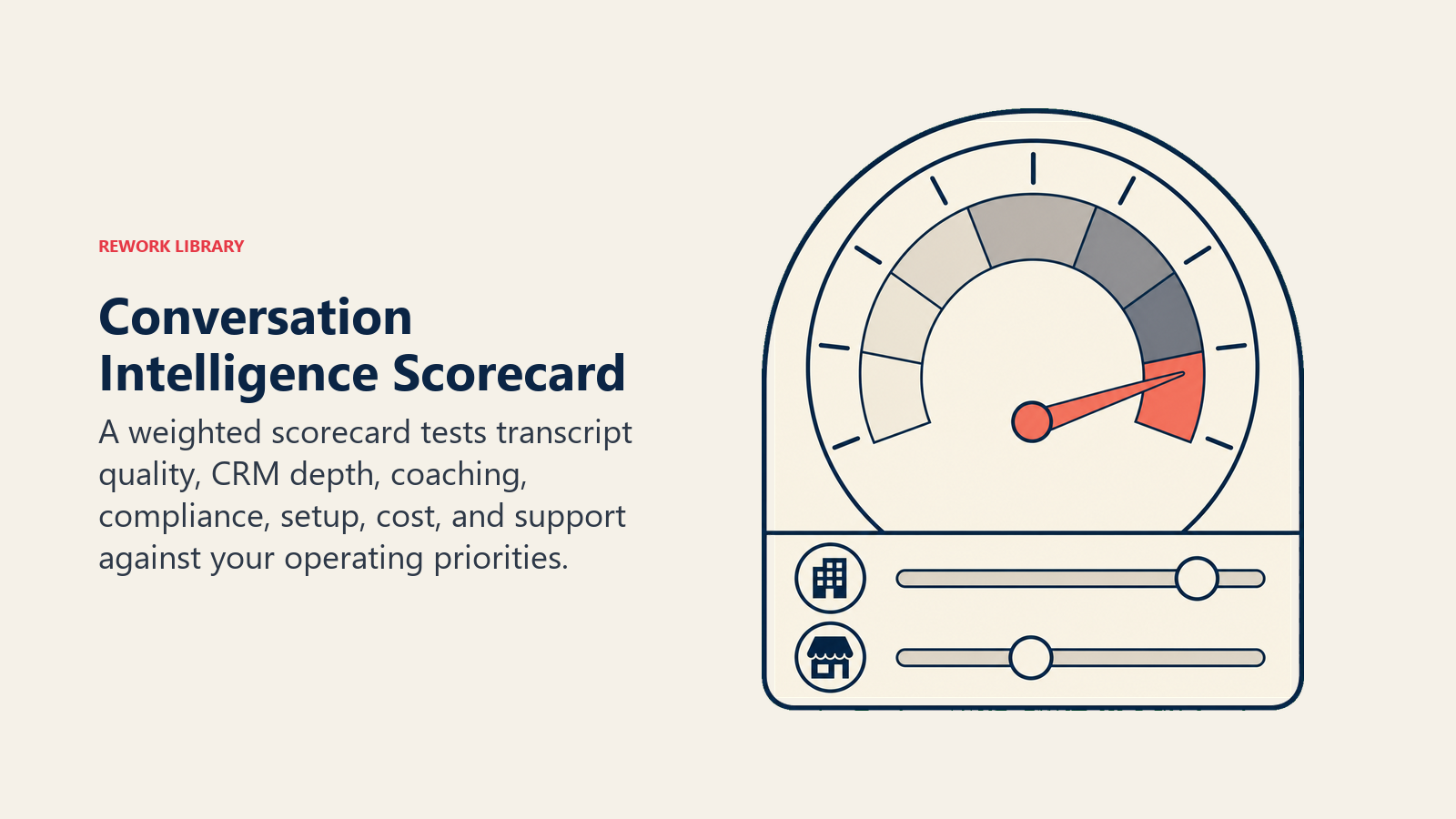
10次元CIスコアカード
10次元CIスコアカードは、機能リストではなく10の運用次元でベンダーを評価するCI購入前評価フレームワークです。企業規模(エンタープライズ vs. SMB/ミッドマーケット)によって重要度が異なることを考慮しているため、同一の機能がある層では最重要事項でも、別の層では不要である場合があります。デモで勝利するベンダーが、導入後のROIを実際に左右する次元では3位や4位になることもあります。
導入6ヶ月後に80%以上の利用率を維持する確率は、購入前に重み付き基準で構造化評価を行ったチームが、デモ品質や推薦のみで選定したチームと比べて大幅に高くなります。
最終決定前に、以下の次元で各ベンダーをスコアリングしてください。チームごとに重み付けは異なるため、特定の状況で特に重要な次元についてのガイダンスも含めています。
| 評価次元 | 評価ポイント | 重み:エンタープライズ | 重み:SMB/ミッドマーケット |
|---|---|---|---|
| トランスクリプト精度 | 実際のコール環境(アクセント、複数話者、背景ノイズ)での単語誤り率 | 中 | 中 |
| 話者識別 | 特にグループコールでの話者識別精度 | 中 | 中 |
| CRM統合の深さ | どのフィールドに書き戻すか、自動化の程度、レビューキュー vs. 自動確定の範囲 | 高 | 高 |
| コーチング Dashboard | スコアカード設定、メソドロジー準拠の追跡、1on1でのコールセグメントレビュー機能 | 高 | 中 |
| 異議応酬のカテゴリ分類 | カスタムトラッカー、スマートカテゴリ分類、コール全体の頻度レポート | 高 | 中 |
| リアルタイムアシスト | 通話中の提案、バトルカードのポップアップ、競合他社名リアルタイムアラート | 中 | 低 |
| コンプライアンス機能 | 二者同意の管理、GDPRデータレジデンシー、データ保持期間の制御、SOC 2 | 高 | 中 |
| セットアップの複雑さ | 初回有効データまでの期間、IT関与の要否、統合依存関係 | 中 | 高 |
| 総コスト(シートあたり) | ライセンス+ストレージ+統合サービス+変更管理 | 高 | 高 |
| サポート品質 | 応答時間、導入サポート、継続的なCSMの担当割り当て | 中 | 高 |
エンタープライズとSMBの両セグメントで最も重要度が高い2つの次元は、CRM統合の深さと総コストです。これらはまた、ベンダーのプレゼンテーションで最も実態が隠れやすい次元でもあります。具体的に確認すべきこと:ツールはどのCRMフィールドに書き戻しを行い、どのフィールドは担当者の手入力が必要なのか?初期セットアップの統合サービス費用はいくらか?GartnerのRevenue Action OrchestrationのMagic Quadrantは、AIによるデータキャプチャとCRMへの書き戻し精度に特に重点を置いてベンダーを評価しています。コールからCRMへのデータフローについては、コールからCRM更新の自動化が詳しく解説しています。
購入前にすべての10次元でベンダーをスコアリングしたB2B営業チームは、デモ品質だけで選定したチームと比べ、6ヶ月後のアクティブ利用率80%以上の維持確率がほぼ2倍になるという購買行動分析結果があります(Momentum.io)。
| CI選定基準 | エンタープライズの優先度 | SMB/ミッドマーケットの優先度 | よくある失敗 |
|---|---|---|---|
| CRM統合の深さ | 高 | 高 | ベンダーの機能リストをPOCテストなしに信じる |
| コーチング Dashboard | 高 | 中 | マネージャーを評価に参加させない |
| コンプライアンス機能 | 高 | 中 | GDPRとデータレジデンシーの確認を省略する |
| シートあたり総コスト | 高 | 高 | ストレージと導入コストを無視する |
| セットアップの複雑さ | 中 | 高 | 変更管理の工数を過小評価する |
| リアルタイムアシスト | 中 | 低 | 通話中機能を過大評価し、通話後データを軽視する |
ベンダー比較
これはB2B SaaSのモーションで動く20〜200名規模の営業チームを想定した、2026年時点での主要ベンダーの正直な評価です。網羅的ではなく、製品も価格も頻繁に変わります。最終決定前に、現在の機能と価格はベンダーに直接確認してください。
Gong
Gongは専業CI市場のリーダーです。強みは機能の深さです。最も高度なコーチングワークフロー機能、異議応酬やトピック分類のための最も柔軟なスマートトラッカー、そしてSalesforceとHubSpotへの最強のCRM書き戻しオプションを備えています。Deal Intelligence(コールデータを重ねた予測)はGongが競合他社に最も大きく差をつける領域です。
Gongの弱点は、コスト(このカテゴリでは最も高いシートあたり価格のひとつ)、契約構造(年間コミットメント、最低シート数)、そしてパワーユーザーでないマネージャーにとって複雑に感じるUIです。CIがRevOpsの主要投資であり、SalesforceまたはHubSpotがCRMのチームには通常Gongが適切です。より軽量な使い方を求める場合やSalesloftをすでに利用している場合は、ROIの計算が変わってきます。
Chorus(ZoomInfo)
ChorusはZoomInfoに2021年に買収され、現在はZoomInfoプラットフォームの一部として販売されています。CI機能のコアは引き続き強力で、特にコーチングワークフロー機能と質問カテゴリトラッキングが優れています。買収によりChorusはZoomInfoの連絡先データエンリッチメントの恩恵を受け、アカウントインテリジェンスの重ね合わせが可能です。
買収後の課題は、ChorusがZoomInfoとバンドルされているため、価格交渉がCI単体ではなくプラットフォーム全体の話になりやすいことです。ZoomInfoをすでに利用中のチームにとってChorusは自然なCI選択肢ですが、CIを単独で評価しているチームにとってはスタンドアロンのChorusの提供内容がわかりにくくなっています。AIを活用した発見の質問コンプライアンスの観点では、Chorusが見逃したメソドロジーのステップをフラグできる点が重要です。
Salesloft Rhythm(CIアドオン)
チームがシーケンス管理とメールトラッキングにSalesloftを利用している場合、Rhythmアドオンによってコールトランスクリプト、サマリー、コーチングメトリクスをSalesloftのワークスペース内で利用できます。利点はワークフローの統合です。Salesloftで業務を完結させている担当者は別プラットフォームにログインする必要がありません。欠点はCIの深さです。Rhythmのコーチングとディール・インテリジェンス機能はGongより一世代遅れています。
CIのユースケースがコール記録と基本的なコーチングに限られるSalesloft利用中のミッドマーケットチームには、プラットフォームの乱立を防ぐ合理的な選択肢です。Conversation intelligenceが単なるドキュメントツールではなく戦略的な機能であるチームには、GongまたはChorusが実質的に優れています。成熟したコーチングワークフローの実際の姿については、Conversation Intelligenceを活用した担当者コーチングをご覧ください。
Outreach Kaia
Salesloft Rhythmと同様のロジックをOutreachエコシステムに適用したものです。Kaiaの際立った機能はリアルタイムアシストです。競合他社の名前が出た際のバトルカードポップアップ、担当者へのライブ提案機能があります。SDRコーチングと通話中のガイダンスがマネージャー側の分析より重要なチームには、Kaiaのリアルタイム機能を重視する価値があります。
Fireflies.ai
Firefliesはポイントソリューション層で最も強力な選択肢です。月額シートあたりおよそ10〜20ドルで、トランスクリプト、サマリー、アクションアイテム抽出、基本的なトピック検索、そしてZapierまたはネイティブコネクタを通じたほとんどのCRMとの連携に対応しています。フルのコーチングワークフロー機能を必要としない20名以下のチームには十分な選択肢です。
制限事項として、異議応酬のカテゴリ分類はGongと比べて浅く、コーチング Dashboardはマネージャー主導の1on1ワークフロー向けに設計されていません。また、CRMへの書き戻しはより制限されています。コンプライアンス機能は米国内チームには十分ですが、GDPR規制が適用される環境ではより慎重な設定が必要です。
Salesforce Einstein Conversation Insights
Salesforceのネイティブオプションです。CRMからデータを取り出すことが政治的・技術的な問題となっている大規模Salesforce導入環境では、Einstein Conversation Insightsがその問題を解消します。すべてのデータがSalesforce内に留まります。セットアップの複雑さは専業プラットフォームとの統合より低く、追加のベンダー関係も発生しません。
コーチングワークフローとディール・インテリジェンスの機能セットはGongやChorusに劣ります。しかし、強力な管理者サポートを持ち、既存のデータレジデンシー管理の枠組みの中で会話データを管理する必要があるSalesforceファーストの組織には適切な選択です。
Rework Sales AI
ReworkのネイティブConversation intelligenceは、Rework CRMと直接統合されています。Reworkでパイプラインを管理しているチームにとって、このリストの他のすべてのCIツールが必要とする統合オーバーヘッドがなくなります。コールトランスクリプトはディールレコードに直接取り込まれ、MEDDICフィールドは同一のレコード構造で更新され、コーチングワークフローは担当者が日常業務に使うインターフェースからアクセスできます。
ReworkがCRMであり、CI データをパイプラインの中に組み込みたいチームに適した選択肢です。SalesforceやHubSpotを利用中でそれらのCRMとの深い統合が必要な場合は適していません。
CRM統合という問題
CRMへの書き戻しを行わないConversation intelligenceツールは、優れたUIを持つレポートツールに過ぎません。コールで何があったかを伝えるだけで、CRMをより賢くしません。これはAIコパイロットを活用したCRMデータ品質管理という課題と直結しています。信頼性の高い書き戻しを行わないCIツールは、別種のデータ品質問題を生み出します。
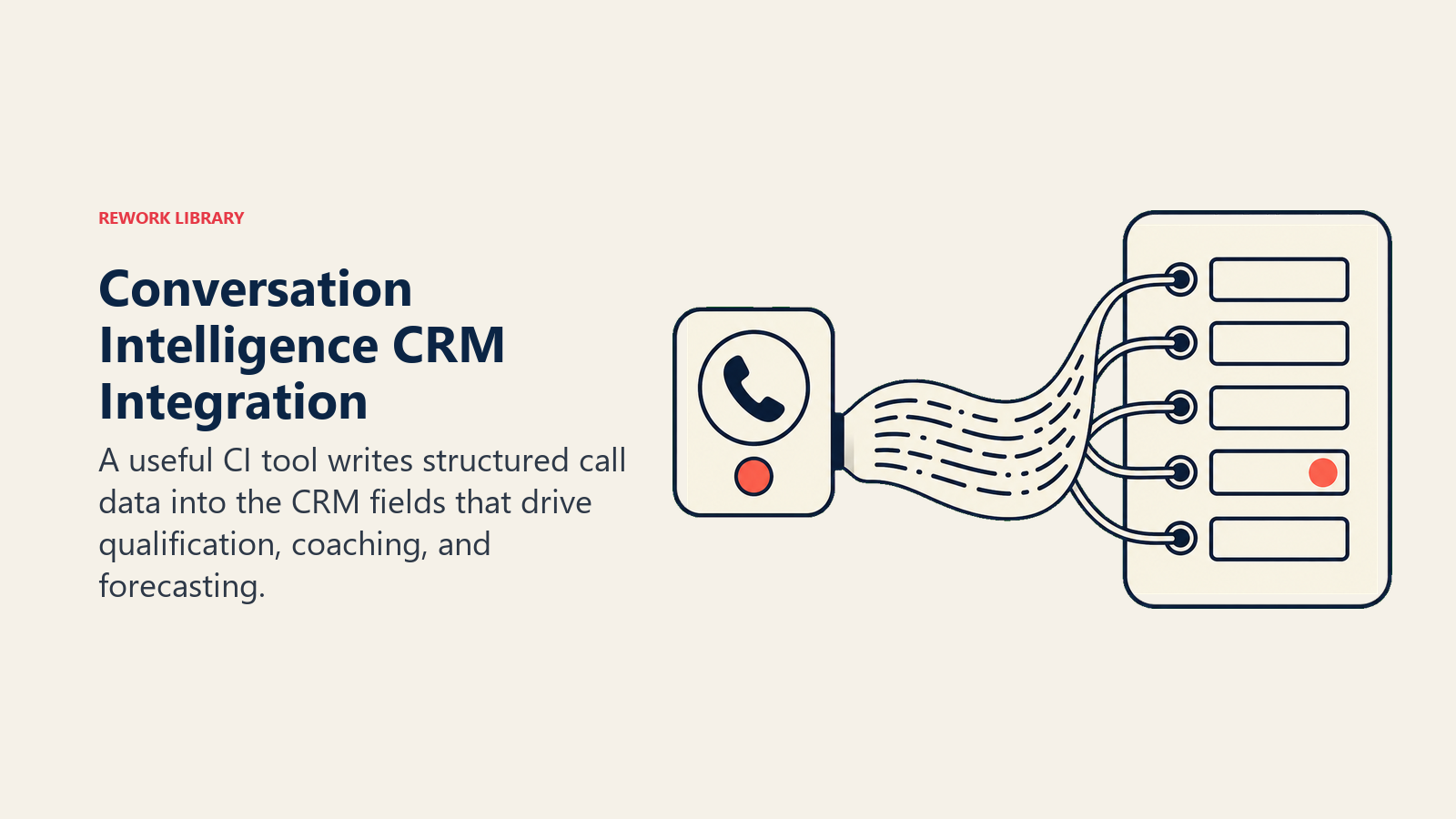
CRM統合を評価する際は、以下の質問をしてください。
- ツールはどのフィールドに書き戻しを行い、どのフィールドは担当者の手入力が必要ですか?
- 書き戻しは自動(信頼度のしきい値に基づく)ですか、それともすべて担当者の確認が必要ですか?
- コール終了からCRM更新までのレイテンシはどのくらいですか?
- 統合設定には管理者のセットアップが必要ですか、それとも自己設定できますか?
- AIが抽出したフィールドをカスタムCRMフィールド(MEDDIC、自社の資格審査スキーマ)にマッピングできますか?
これらの質問への回答は、機能リストよりも統合品質をよく示します。コールサマリーをActivity Notesフィールドに書き込むが、MEDDICフィールドを対応するカスタムのOpportunityフィールドに書き込めないツールは、予測において最も重要なフィールドで依然として手作業が必要な70%のソリューションです。
コンプライアンスの違い
エンタープライズ営業チームや規制業界(金融サービス、医療、政府機関)への販売を行うチームにとって、コンプライアンスの姿勢は後回しにできません。
二者同意。 米国では録音法が州によって異なります。EUではGDPRの同意要件が録音に適用されます。ほとんどのCIツールは開示スクリプトと通話前の同意機能を提供していますが、実装品質は異なります。単一の同意クリックではなく、複数管轄の同意管理に対応しているかどうかを確認してください。
GDPRとデータレジデンシー。 EUを拠点とするチームやEUの見込み客を持つチームには、EUデータレジデンシーオプションについて具体的に確認してください。EU内のデータストレージを提供するCIツールもあれば、すべてのデータを米国インフラを経由させるものもあります。コンプライアンスとエンタープライズのセキュリティレビューの両面で重要な問題です。
SOC 2 Type II。 このリストの主要ベンダーはすべてSOC 2認定を取得しています。Type II(継続的な運用審査)であることを確認し、Type I(ある時点のスナップショット)ではないことを確かめてください。セキュリティレビューの際は、ベンダーのサマリーではなく完全なSOC 2レポートを要求してください。
データ保持期間と削除。 法的義務に合わせた保持ポリシーを設定できますか?サポートチケットなしに個別のコールレコードを削除(GDPRの削除権)できますか?
総所有コスト
ライセンス費用はベンダーの提案書に記載されるものです。以下は記載されないことが多いコストです。
統合サービス。 GongまたはChorusをカスタムフィールドマッピングとMEDDIC設定を含めてSalesforceに接続する場合、ベンダー主導または社内RevOps担当者による20〜40時間の導入作業を見込んでください。CRMネイティブのツール(Einstein)ではこのコストが発生しません。
変更管理。 CIツールの定着は自動ではありません。ほとんどのチームは導入6ヶ月後で40〜60%の担当者しかアクティブユーザーでないと報告しています。80%以上に到達するには意図的な変更管理が必要です。マネージャーのトレーニング、利用率と人事評価の連動、経営層の明確なスポンサーシップが求められます。初回四半期の展開には、RevOpsまたはEnablementの20〜40時間を確保してください。Forresterのrevenue orchestration platforms for B2Bの調査では、変更管理が高定着率と低定着率の展開を分ける主要因として識別されています。AIセールスオペレーション実装ロードマップはCI展開を含む4つのパターン全体の変更管理シーケンスを解説しています。
ストレージコスト。 録音した全コールの音声・映像ストレージは積み上がります。ほとんどのCIツールはシートあたりのベースラインを超えたストレージに追加料金を課します。1日6コールを行う50名チームの場合、ストレージコストが年間の表示シートあたり価格に15〜25%を上乗せする可能性があります。
Rework Analysis: 公開されているCIベンダーの価格と典型的な50名チームの構成に基づくと、Gongのような専業プラットフォームはライセンスだけで年間シートあたり120〜180ドルかかります。SI経由の導入サービス(150〜200ドル/時)で20〜40時間、初年度の変更管理(RevOps担当者30〜50時間)、ストレージ超過分を加えると、初年度の実際のシートあたりコストは200〜270ドルに近づきます。ライセンス費用だけで予算を組んだチームは、初年度コストが予算の40〜60%超過となることが多いです。CRMネイティブオプション(統合コストほぼゼロ、ストレージ超過なし)との完全なTCO比較を行うと、ベンダーのランキングが大きく変わることがあります。
100以上のGongライセンスを購入しながら6ヶ月後のアクティブユーザーが50名未満のケースでは、実際のアクティブユーザーあたりのコストは250ドルを超え、表示価格の2倍以上になります(CI導入レビューの定着率分析より)。この定着率のギャップがCI導入における最大の隠れたコストです。
スタンドアロン vs. プラットフォームアドオン
最も明確な判断基準は、Conversation intelligenceが今年のRevOpsにおける主要投資であればスタンドアロン、既存のプラットフォーム投資への追加であればアドオン、というものです。AIセールスオペレーションのBuy vs. Buildフレームワークは、4つのAI営業パターン全体に同じロジックを適用しています。
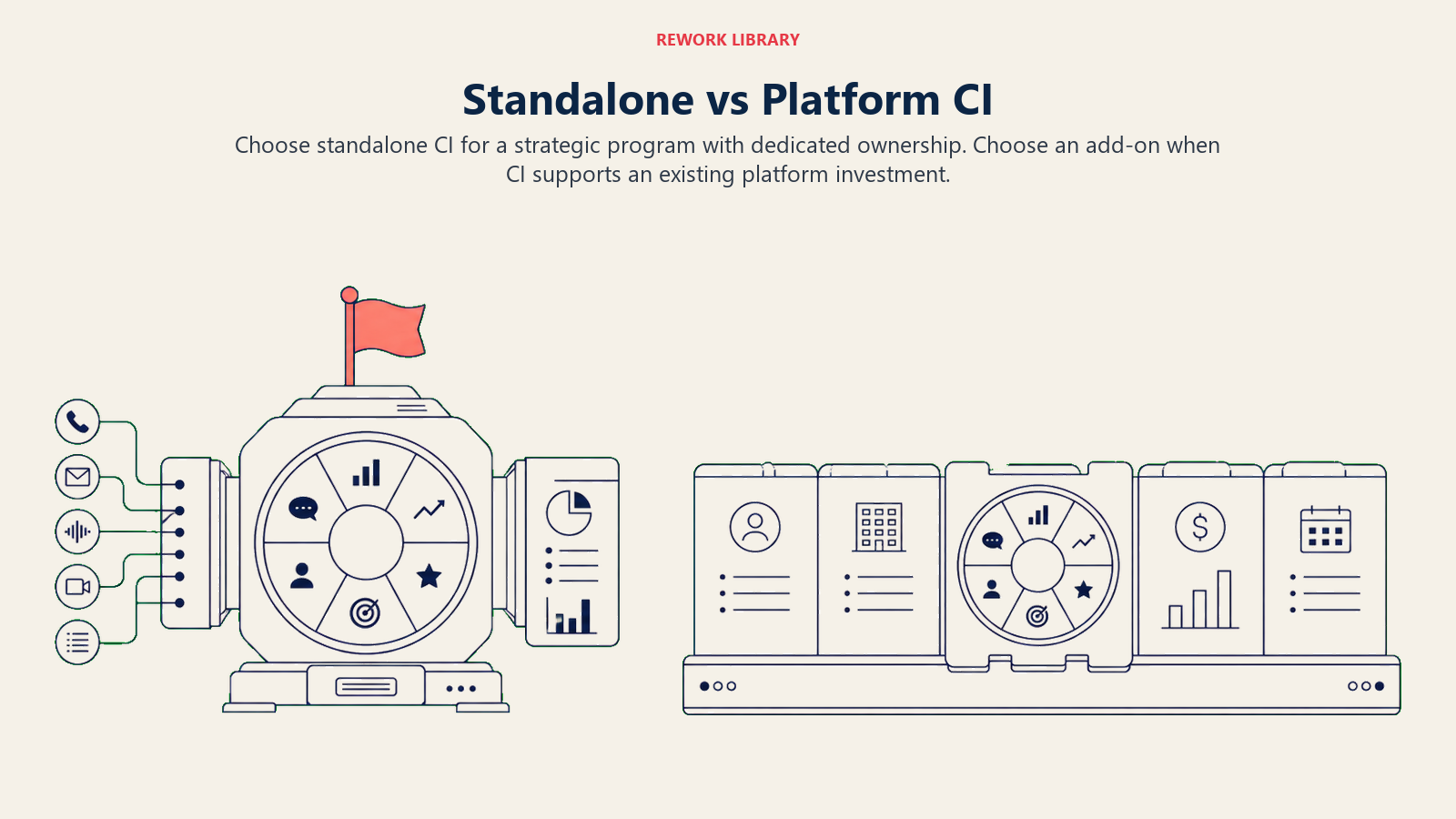
GongをCI主要投資として購入したチームは最大限の価値を引き出す傾向があります。プラットフォームがより多くの人に使われ、コーチングワークフローがより適切に設定され、データ品質が高くなります。ZoomInfoのサブスクリプションにChorusを追加するか、OutreachのサブスクリプションにKaiaを追加するチームは、利用可能な機能の30%程度しか使わず、定着率も控えめになることが多いです。
これはバンドル製品への批判ではありません。組織の優先順位の問題です。CIに専任オーナー、専任トレーニング、四半期レビューのサイクルが割り当てられるほど重要であれば、専業プラットフォームがコスト回収できます。CIが「Sales engagementツールのついで」であれば、追加コストの低いバンドルオプションが合理的です。
専任のCIプログラムオーナーを設定した組織は、設定しない組織と比べ、どのベンダーを選んでいるかに関わらず、6ヶ月後のプラットフォーム定着率が30〜40ポイント高くなっています。(Momentum.io、2025年)
まとめ
デモでのトランスクリプト精度ではなく、CRM統合の深さとコーチングワークフローの適合性に基づいて選定してください。
このカテゴリの主要ベンダーはすべて精度の高いトランスクリプトを生成します。差別化はトランスクリプトの後で起きます。データがどのようにCRMに流れ込むか、コーチが1on1でどう活用するか、異議応酬データがバトルカードにどう反映されるか、そしてディールリスクシグナルが予測にどう表れるか。
Meeting Intelligenceワークフロー全体へのCIツールの位置づけについては、Sales Call Recording and Transcript Analysisをご覧ください。AIセールスオペレーション全般でBuildとBuyをどう判断するかについては、AIセールスオペレーションのBuy vs. Buildフレームワークが上位レベルの意思決定をカバーしています。先延ばしにしているそのCRM統合の問題こそが、実は決定的に重要なのです。
よくある質問
Conversation intelligenceソフトウェアとは何ですか?どのように機能しますか?
Conversation intelligenceソフトウェアは、AIを使って営業コールを録音・トランスクリプション・分析し、コーチングシグナル、異議応酬のパターン、ディールリスク指標を浮き彫りにします。システムは話者を自動的に識別し、トピックをカテゴリ分類し、構造化データをCRMに書き戻します。ほとんどのプラットフォームはビデオ会議(Zoom、Teams、Google Meet)とCRMに接続し、コール終了後数分以内に処理を行います。
Conversation intelligenceツールでROIが見えるまでどのくらいかかりますか?
定着率が70%以上であれば、ほとんどのチームは60〜90日でコーチング行動の変化が測定可能になります。初期のROIは通常、コール準備時間の短縮(担当者がコールを再生する代わりにAIサマリーをレビュー)と早期オンボーディング(新担当者がトップパフォーマーのコールを学習)から生まれます。Conversation intelligenceを活用するチームはCI導入前と比べてオンボーディング期間が25〜30%短縮されると報告しています(AssemblyAI調査)。
B2B営業チームにとってGongとChorusの違いは何ですか?
GongはDeal intelligenceとコーチングワークフローの深さでリードしており、市場シェアはおよそ45%、異議応酬分類のための最も柔軟なスマートトラッカーを持っています。Chorus(現在はZoomInfoの一部)は優れたコーチング機能を持ち、ZoomInfoの連絡先データエンリッチメントから恩恵を受けますが、通常はより広いZoomInfoバンドルの一部として販売されます。CIを単独で評価しているチームにはGongがスタンドアロンの選択肢であり、ZoomInfoをすでに利用中のチームにはChorusが自然なアドオンです。
Conversation intelligenceベンダーに対してどのようなCRM統合の質問をすべきですか?
4つの具体的な質問をしてください。ツールは自動的にどのCRMフィールドに書き戻し、どのフィールドは担当者の確認が必要か。コール終了からCRM更新までのレイテンシはどのくらいか。カスタムフィールド(MEDDIC、自社の資格審査スキーマ)のマッピングは可能か。初期フィールド設定の導入コストはいくらか。「設定によって異なります」という回答で具体的なフィールドリストが出ないベンダーは、導入後に期待を裏切る可能性が高いです。
導入後に実際にConversation intelligenceツールを使い続ける担当者はどのくらいいますか?
意図的な変更管理を行わない場合、業界の基準では導入6ヶ月後のアクティブユーザーは40〜60%とされています。専任のCIプログラムオーナー、1on1ワークフローと連動したマネージャーの利用、経営層のスポンサーシップがある場合、80%以上の定着率を達成できます。変更管理計画なしでライセンスを購入したチームは、1年後にアクティブなシートが30〜40%にとどまることが多いです。
エンタープライズ営業のConversation intelligenceツールにはどのようなコンプライアンス要件がありますか?
エンタープライズ展開には、SOC 2 Type II認定(Type Iではない)、GDPRが適用される見込み客向けのEUデータレジデンシーオプション、米国内録音に対応した複数州の二者同意管理、そして削除権コンプライアンスのための詳細なデータ保持制御が必要です。主要なCIベンダーはすべてSOC 2認定を持っていますが、EUデータレジデンシーとコール単位の削除機能は大きく異なります。ベンダーのサマリーではなく、完全なSOC 2レポートを必ず要求してください。
Fireflies.aiは10〜20名規模の営業チームに適していますか?
フルのコーチングワークフローを必要とせずに、コール記録、AIサマリー、基本的なトピック検索が必要な20名以下のチームには、月額シートあたりおよそ10〜20ドルのFirefliesは十分な選択肢です。CRMへの書き戻しはGongより限られており、コーチング Dashboardはマネージャー主導の1on1向けには設計されていませんが、小規模チームではそれらの機能はほとんど使われません。30名を超えるか異議応酬トレンドの分析が必要になると、専業プラットフォームがより大きな価値を発揮し始めます。
10次元CIスコアカードはベンダー評価プロセスをどのように変えますか?
10次元CIスコアカードは、ベンダー評価をデモパフォーマンスから導入後の運用適合性へとシフトさせます。すべての主要ベンダーが同等のトランスクリプト精度を持つ中で、定着率を左右する次元に重みを置きます。CRM統合の深さ、コーチング Dashboard の使いやすさ、コンプライアンスの姿勢、そして総所有コストです。ベンダーとの会議前に自社のCRMとコンプライアンスの文脈で次元に重みをつけたチームは、最良のデモを見せたベンダーを最良の運用適合性を持つベンダーよりも選んでしまう誤りを避けられます。
次に読む記事
- Meeting Intelligence: From Audio to Action Items: すべてのCIツールが実装している基盤パターンとACEフレームワークの解説
- Sales Call Recording and Transcript Analysis: ベンダーを選ぶ前のMeeting Intelligenceの基礎
- Coaching Reps With Conversation Intelligence: 購入後にCIツールをコーチングワークフローで実際に活用する方法
- Objection Mining: What Buyers Actually Push Back On: ツール導入後にコール分析から最大限の価値を引き出す方法
- AI Sales Ops Vendor Landscape 2026: Conversation intelligenceを超えた全スタック、4つのパターンすべてを解説

Co-Founder, Rework.com