2026年のAI Sales Opsベンダーランドスケープ

Turn this article into takeaways for your work.


Each assistant summarizes the article only for you and suggests best practices for your work.
AI Sales Opsの市場が混乱しているのは、すべてのベンダーがあらゆることができると主張するからです。Gongは「Revenue Intelligence Platform」と言います。Salesforce Einsteinは「CRM全体のAIレイヤー」と言います。Outreachは「AIファーストのセールス実行プラットフォーム」と言います。Clayは「リサーチエンジンを構築する方法」と言います。どれも部分的には正しく、機能ベースで比較しようとすると重複部分が多すぎてほぼ不可能です。
よりクリーンなアプローチがあります。各ベンダーが主にどのACEパターンを担うかで市場を整理することです。AI Sales Operatorスタックの4つのパターンは、Scoring and Routing、Meeting Intelligence、Generative Research、Workflow Copilotです。すべてのAI Sales OpsツールはこれらのPatternの少なくとも1つを得意としています。最良のプラットフォームは3〜4つを担います。より広いパターン分類については、AIパターンベンダーランドスケープMapでこれらのカテゴリーが全10パターンのマップの中でどう位置付けられるかを確認できます。
この記事では20以上のベンダーを主要パターン別にマッピングし、チーム規模別の価格を示し、2027年まで購買判断を変えるプラットフォーム統合トレンドを解説します。
このマップの読み方
Key Facts: 2026年のAI Sales Ops市場
- Revenue Intelligence Platformの市場規模は2024年に$38億に成長し、営業チームが手動フォーキャスティングからAIを活用したPipeline管理に移行するにつれて34.6%のCAGRで拡大しています。(Landbase、2025年)
- セールス・マーケティング向けグローバルAI市場は2025年の$580億から2030年までに$2,400億に成長すると予測されており、エンタープライズAI採用の加速を反映した32.9%のCAGRです。(Grand View Research、2025年)
- B2B営業においてエンタープライズ全体でAI採用を完全に実現した商業リーダーはわずか21%であり、ほとんどの企業がまだ初期のベンダー選定と初期展開段階にあることを意味します。(McKinsey、2025年)
各ベンダーのエントリーには次が含まれます。
- 担当する主要パターン
- 主要なACE機能の組み合わせ(Ingest、Analyze、Predict、Generate、Execute)
- CRM連携の深さ(浅い = API読み取り専用、標準 = 読み書き、深い = ネイティブ双方向 + トリガー)
- 価格帯(公開されている場合。エンタープライズティアは見積もりが必要なことが多い)
価格は3つのティアで記載します。SMB(10席)、ミッドマーケット(50席)、エンタープライズ(200席以上)。ベンダーがリスト価格を公開している場合はその価格を使用します。営業へのお問い合わせが必要な場合は、公開されている顧客の情報とアナリスト調査に基づく見積もりを記載します。
2026年Sales Opsベンダーマップ
2026年Sales Opsベンダーマップは、各ベンダーが主に担当する4つのACEパターン別にAI Sales Operations市場を整理したものです。Scoring and Routing(Analyze + Predict + Execute)、Meeting Intelligence(Ingest + Analyze + Generate + Execute)、Generative Research(Ingest + Analyze + Generate)、Workflow Copilot(Ingest + Generate + Execute)。すべてのAI Sales Opsベンダーは、他のPatternにまたがる機能を持っていても、主に1つのPatternカテゴリーに属します。機能数ではなくPatternカテゴリーでベンダーを評価することで、根本的に異なる問題を解決するツールを比較するという一般的な誤りを防ぎます。2026年のマップは、3つのチーム規模における価格付きで全4パターン20以上のベンダーを記録しています。
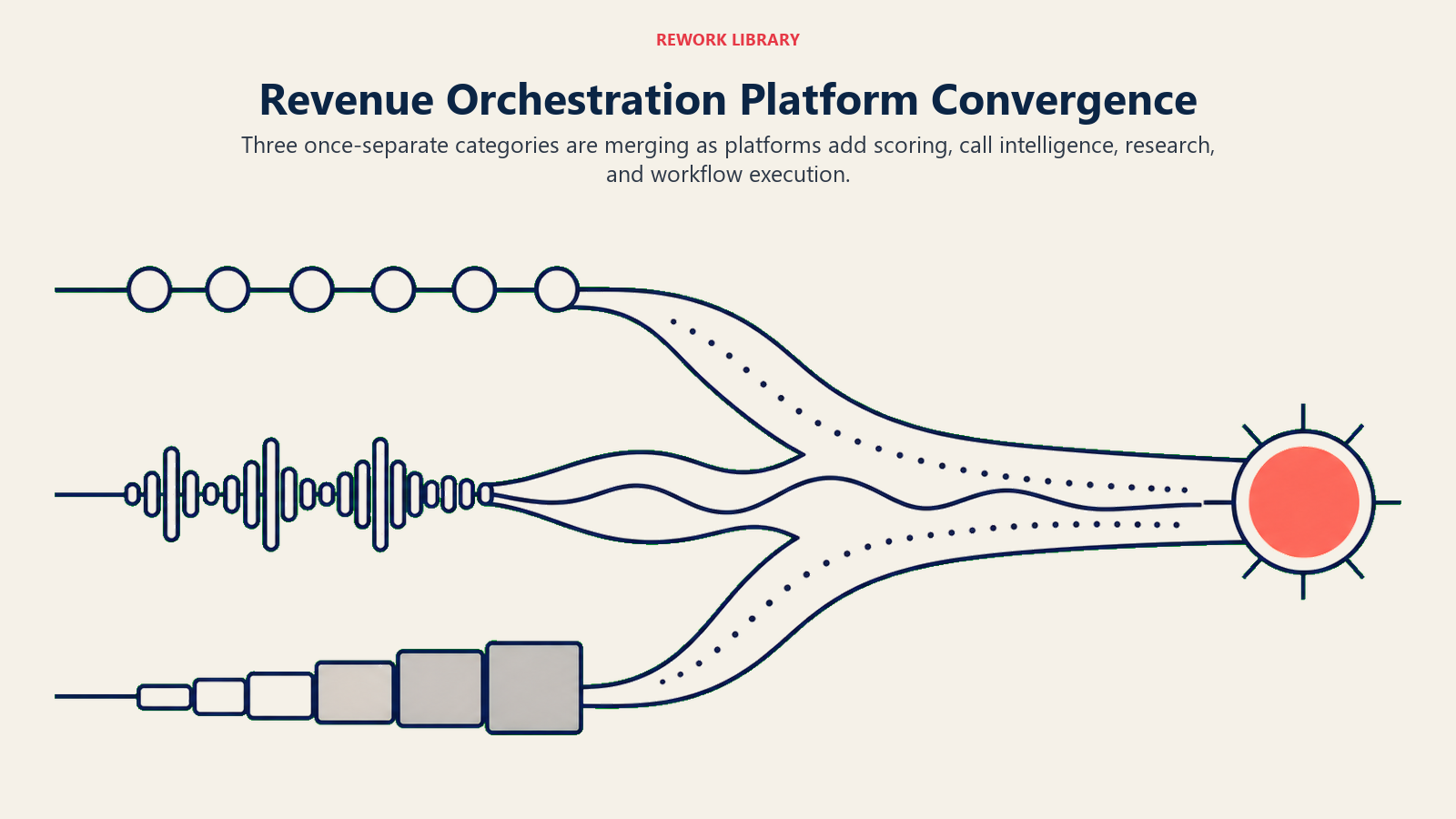
AI Sales Ops市場は2025〜2026年に大きく統合しました。以前は別々だった3つのカテゴリー(セールスエンゲージメント、会話インテリジェンス、Revenue Operations)が統合されたRevenue Orchestration Platformsに融合しており、Forrester Wave Q3 2024がこの融合を定義的な市場変化として特定しています。
Pattern 1:Scoring and Routing
ACE機能:Analyze + Predict + Execute
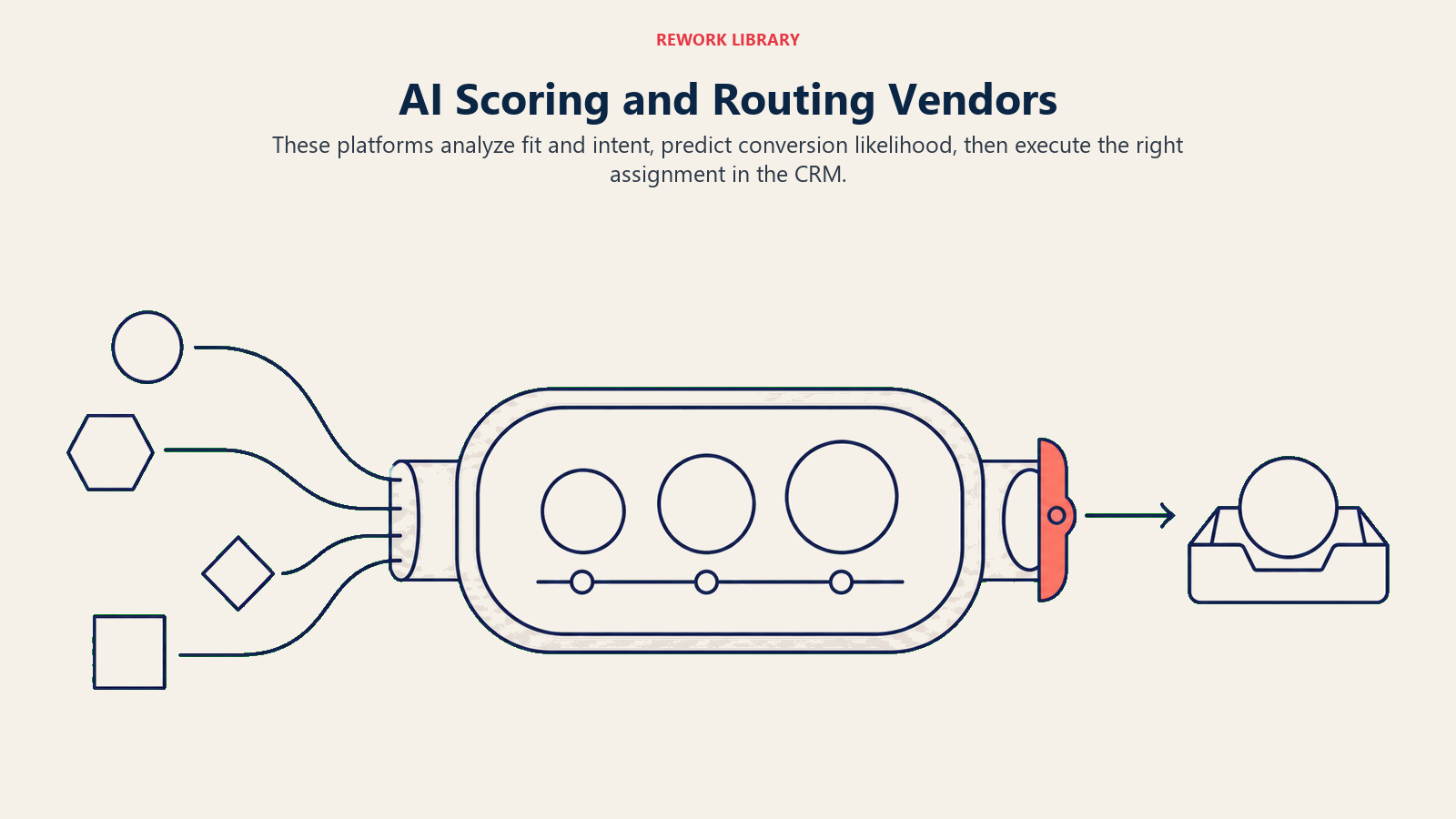
これらのベンダーは、フィットとインテントシグナルに基づいてインバウンドリード・コンタクト・アカウントをスコアリングし、自動的にルーティングまたは優先順位付けします。
| ベンダー | 主な強み | CRM連携 | SMB価格 | ミッドマーケット | エンタープライズ |
|---|---|---|---|---|---|
| Salesforce Einstein Lead Scoring | ネイティブSalesforceスコアリング。追加連携不要 | 深い(ネイティブ) | Sales Cloud Einsteinに含まれる($50/ユーザー/月) | 同様 | 同様;エンタープライズは交渉 |
| HubSpot Predictive Lead Scoring | アクセスしやすい設定;ネイティブHubSpot | 深い(ネイティブ) | Marketing Hub Professionalに含まれる(月額$800ベース) | 同様 | エンタープライズ:月額$3,600ベース |
| MadKudu | B2B行動+企業属性スコアリング;マルチCRM | 標準 | 月額約$1,000 | 月額約$2,500 | カスタム |
| 6sense | アカウントレベルのインテント+購買ステージ予測 | 標準 | カスタムのみ | カスタム | カスタム;広く引用される価格は年間$50K〜150K |
| Demandbase | ABMインテントプラットフォーム | 標準 | SMB非対応 | 年額約$40K | カスタム |
| Rework Sales AI | CRMネイティブのリードスコアリング+ルーティング;Sales Engineに含まれる | 深い(ネイティブ) | Sales Engine:年払いで月額$69から(5シート) | Sales Engine、50シート:年払いで月額$258 | AdvancedまたはEnterpriseエディション;rework.com/pricing参照 |
このカテゴリーに関するメモ:
Salesforce EinsteinとHubSpotは、これらのプラットフォームをすでに使用しているチームのデフォルトの選択肢です。ほとんどのユースケースに十分な機能があり、追加のベンダーオンボーディングが不要です。
MadKuduは、複雑な購買シグナルを持つB2B SaaS企業にとって最良の独立したスコアラーです。ネイティブCRMスコアリングでは通常対応していない方法で、行動データ(製品使用状況、サイトアクティビティ)と企業属性データを組み合わせます。これらのモデルの仕組みについての詳細は、ルールベースを超えたAIリードスコアリングをご覧ください。
6senseとDemandbaseはアカウントレベルのプラットフォームであり、リードレベルではありません。「CRM内のどのリードがクローズしそうか」ではなく、「どの企業が現在検討中か」に答えます。異なるユースケース、異なる購買者です。
ReworkのスコアリングはSales Engineに組み込まれています。スコアリング機能のないCRMをまだ持っていないチームにとって、2つ目のベンダー契約なしに本番環境でのリードスコアリングを実現する最も摩擦の少ない方法です。
Pattern 2:Meeting Intelligence
ACE機能:Ingest + Analyze + Generate + Execute
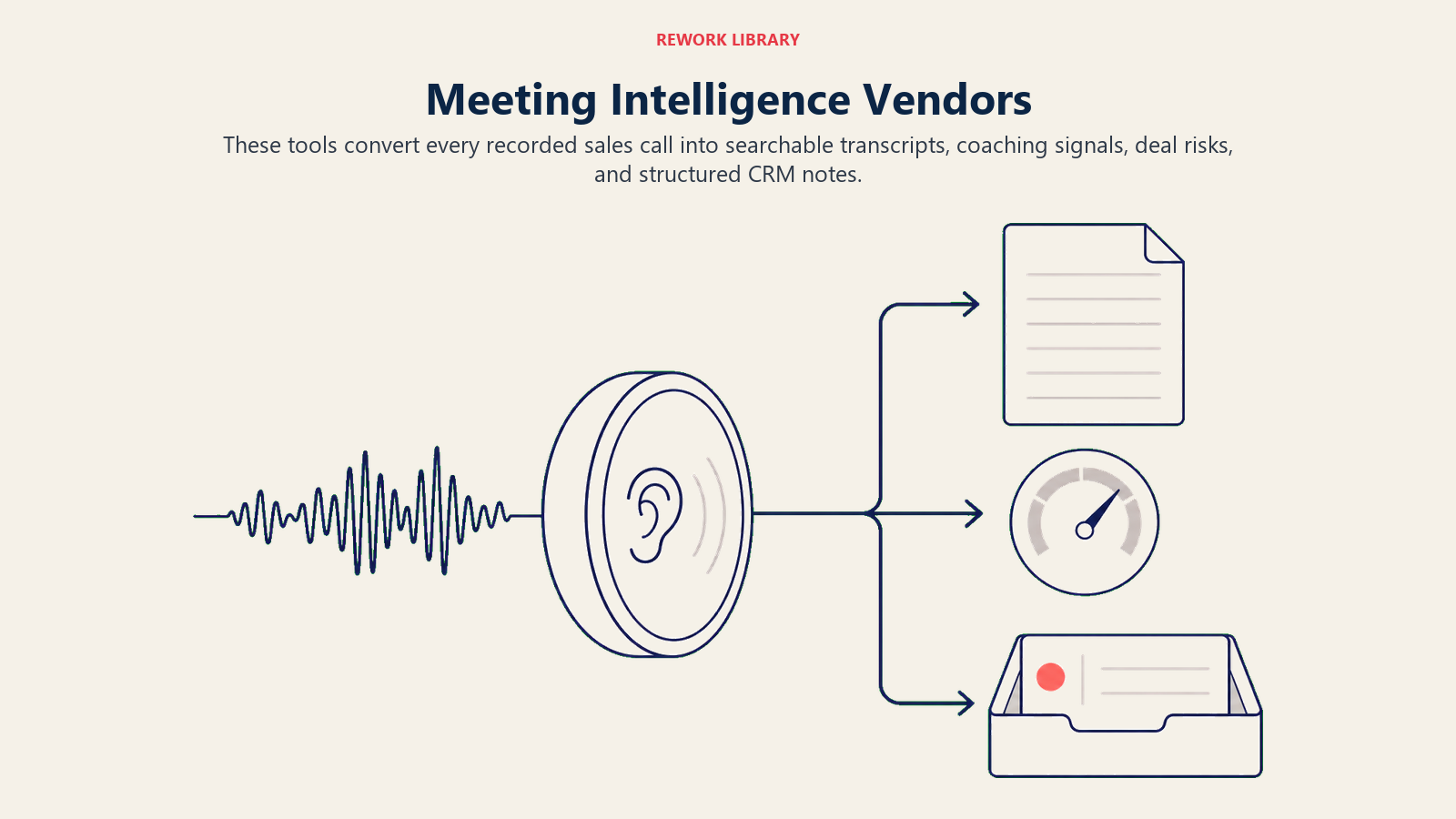
これらのベンダーはコールを録音し、トランスクリプトを生成し、商談シグナルを抽出し、構造化されたメモをCRMに書き戻します。
| ベンダー | 主な強み | CRM連携 | SMB価格 | ミッドマーケット | エンタープライズ |
|---|---|---|---|---|---|
| Gong | コール分析の深さ;コーチング機能 | 深い(Salesforce、HubSpot他) | 約$100/ユーザー/月;最低席数あり | ボリュームで$80〜100/ユーザー/月 | 交渉;200名以上で通常$60〜80/ユーザー/月 |
| Clari Copilot | Clariフォーキャスティングとの緊密な連携 | 深い(Salesforce主) | Clariプラットフォームにバンドル;推定$50〜60/ユーザー/月 | 同様 | カスタム |
| Chorus(ZoomInfo) | ZoomInfoデータとのバンドル;大型エコシステム | 標準〜深い(Salesforce、HubSpot) | スタンドアロン約$70/ユーザー/月 | ZoomInfoとのバンドル割引 | エンタープライズカスタム |
| Fireflies.ai | 価格リーダー;幅広いプラットフォームカバレッジ | 標準(Salesforce、HubSpot、10以上) | Business:$19/ユーザー/月 | 同リスト;ボリューム割引 | エンタープライズ:カスタム |
| ExecVision | コーチング重視;コールライブラリ機能 | 標準 | 約$30〜50/ユーザー/月 | 同様 | カスタム |
| Salesloft Rhythm(Kaia AI) | SalesloftシーケンスプラットフォームにネイティブArch | 深い(Salesloftネイティブ) | Salesloft Advanced/Enterpriseに含まれる | 同様 | カスタム |
このカテゴリーに関するメモ:
Gongは機能のベンチマークです。最も深い分析、最良のコーチングDashboard、最も完全な競合情報追跡が必要な場合、Gongがカテゴリーをリードします。価格はその反映です。これらのベンダーを10次元の評価フレームワークで比較した完全な解説は、会話インテリジェンスツールの選び方をご覧ください。
Firefliesは価格面で大きくリードしています。完全な分析スイートなしで信頼性の高いトランスクリプト作成と基本的なCRMライトバックが必要なチームにとって、$19/ユーザー/月のFirefliesは代替が難しい選択肢です。コーチング機能は薄いですが、積極的な担当者コーチングプログラムを実施していなければ、そのギャップは問題になりません。
ChorusはZoomInfoをすでに利用しており、1つのバンドル契約にまとめたい場合に検討する価値があります。ZoomInfoのプロスペクティングデータとChorusのコールインテリジェンスの連携は、スタンドアロンのMeeting Intelligenceツールでは作れない、最初のコンタクトからClosed Wonまでの一貫したレコードを生み出します。
Clari CopilotはフォーキャスティングにすでにClariを使うことを決めているチームにとって最も意味があります。コールレイヤーとフォーキャスティングレイヤー間のデータ共有は、どちらか単独では生み出せないより豊かなフォーキャストシグナルを生み出します。
Pattern 3:Generative Research
ACE機能:Ingest + Analyze + Generate
これらのベンダーは複数のソースからデータを合成し、アカウントリサーチブリーフ、コンタクトインテリジェンス、パーソナライズされたアウトリーチのインプットを生成します。
| ベンダー | 主な強み | CRM連携 | SMB価格 | ミッドマーケット | エンタープライズ |
|---|---|---|---|---|---|
| Clay.com | 柔軟なデータオーケストレーション;ノーコードリサーチパイプライン | 標準(Salesforce、HubSpot、Airtable) | Explorer:無料;Pro:月額$149;Business:月額$800 | Businessティア | エンタープライズ:カスタム |
| Apollo.io | 最大のB2Bコンタクトデータベース+アウトリーチ;リサーチ用Copilot | 標準 | 無料ティア;Basic:$49/ユーザー/月 | Professional:$79/ユーザー/月 | Organization:カスタム |
| ZoomInfo Copilot | インテントデータ+AI生成アカウントサマリー | 深い(Salesforce、HubSpot) | SMB非対応 | 年額約$20〜30Kベース | カスタム |
| Cognism | EMEAフォーカスのコンタクトデータ+リサーチ | 標準 | 月額約$1,500ベース | 月額約$3〜5K | カスタム |
| Lavender | メールパーソナライズAI;アウトリーチ用の軽量リサーチ | 標準(メール連携) | 無料;Pro:月額$29 | Teams:$49/ユーザー/月 | エンタープライズ:カスタム |
| Perplexity for Teams | 一般的なリサーチ合成;ウェブ最新データ | なし(エクスポートのみ) | Pro:$20/ユーザー/月 | Teams:$20/ユーザー/月 | エンタープライズ:カスタム |
このカテゴリーに関するメモ:
Clayは、インフラコードを書かずにカスタムリサーチWorkflowを構築したいRevOpsチームにとって主要なツールとして台頭しています。「ベンダー」というよりも、独自のGenerative Researchパイプラインを構築するためのプラットフォームです。学習曲線は存在しますが、機能の上限は高いです。
Apolloは、リサーチとアウトリーチを1つのプラットフォームにまとめたいチームにとって最良のオールインワンです。2025〜2026年にデータベースの品質が大幅に向上しました。ミッドマーケットB2Bでは、Apolloが別々のデータプロバイダーとリサーチツールの両方の必要性をなくすことが多いです。
Lavenderは専門特化型です。下書きメールを読み、受信者の最近のLinkedInアクティビティと会社のニュースに基づいてパーソナライズを提案します。アカウントリサーチを置き換えるものではありませんが、完全なリサーチプラットフォームなしにAIアシストメールパーソナライズへの最も安価な経路です。
Perplexity for Teamsは、コール前のアドホックなアカウントリサーチと業界コンテキストへの活用として登場してきたパターンとして言及する価値があります。営業ツールではありませんが、ウェブ最新のリサーチ機能は最近のイベントについてZoomInfoとApolloが見落とすギャップを埋めます。
Pattern 4:Workflow Copilot
ACE機能:Ingest + Generate + Execute
これらのベンダーはCRMWorkflowで担当者とマネージャーをサポートします。Next Best Actionの提案、コミュニケーションの下書き、Pipelineレビュー準備、CRM衛生プロンプトなど。
| ベンダー | 主な強み | CRM連携 | SMB価格 | ミッドマーケット | エンタープライズ |
|---|---|---|---|---|---|
| Outreach | シーケンス管理+AIシーケンス最適化+Kaiaコール AI | 深い(Salesforce主) | 約$100/ユーザー/月 | $80〜100/ユーザー/月 | カスタム |
| Salesloft | キャデンス管理+Rhythm AIコパイロット | 深い(Salesforce、HubSpot) | 約$75〜100/ユーザー/月 | 同様 | カスタム |
| Salesforce Einstein Copilot | ネイティブSalesforce;Sales Cloud連携 | 深い(ネイティブ) | Einstein:$50/ユーザー/月追加 | 同様 | エンタープライズ交渉 |
| HubSpot AI Assistant | ネイティブHubSpot;メール下書き、コンタクトサマリー | 深い(ネイティブ) | 有料ティアに含まれる | 同様 | 同様 |
| Rework Sales AI | CRMネイティブのNBA+下書きアシスト+Pipeline Copilot | 深い(ネイティブ) | Sales Engineに含まれる(年払いで月額$69から、5シート) | Sales Engine、50シート:年払いで月額$258 | AdvancedまたはEnterpriseエディション;rework.com/pricing参照 |
| Microsoft Copilot for Sales | M365ネイティブ;Teams/Outlook連携 | 深い(Dynamics主;Salesforceコネクタ) | $50/ユーザー/月(M365が必要) | 同様 | カスタム |
このカテゴリーに関するメモ:
OutreachとSalesloftは、主にAI Copilot機能を追加したセールスエンゲージメントプラットフォーム(シーケンス実行)です。構造化されたシーケンスを使った大量のアウトバウンドを実施している場合、適切な出発点です。シーケンスを実行していない場合、必要のない機能に費用を払うことになります。
Microsoft Copilot for SalesはDynamics CRMを使ったMicrosoft 365エコシステムにすでに入っている企業にとって正解です。TeamsとOutlookの連携は本当に深いです。Microsoftスタック以外では連携のメリットが薄れます。
Salesforce Einstein Copilotは急速に改善しています。2026年半ば時点では、AIの機能の洗練さよりもネイティブ連携の深さが重要な、複雑なSalesforce実装を運用しているチームに最も適しています。
Reworkのコパイロットは、セールスエンゲージメントプラットフォームをまだ持っておらず、複数のベンダーを組み合わせずにスコアリング・Meeting Intelligence・Workflow Copilotを1つのパッケージで欲しいチームに適しています。シングルプラットフォームアプローチの実装ロードマップは大幅に速く進みます。
マルチパターンプラットフォーム
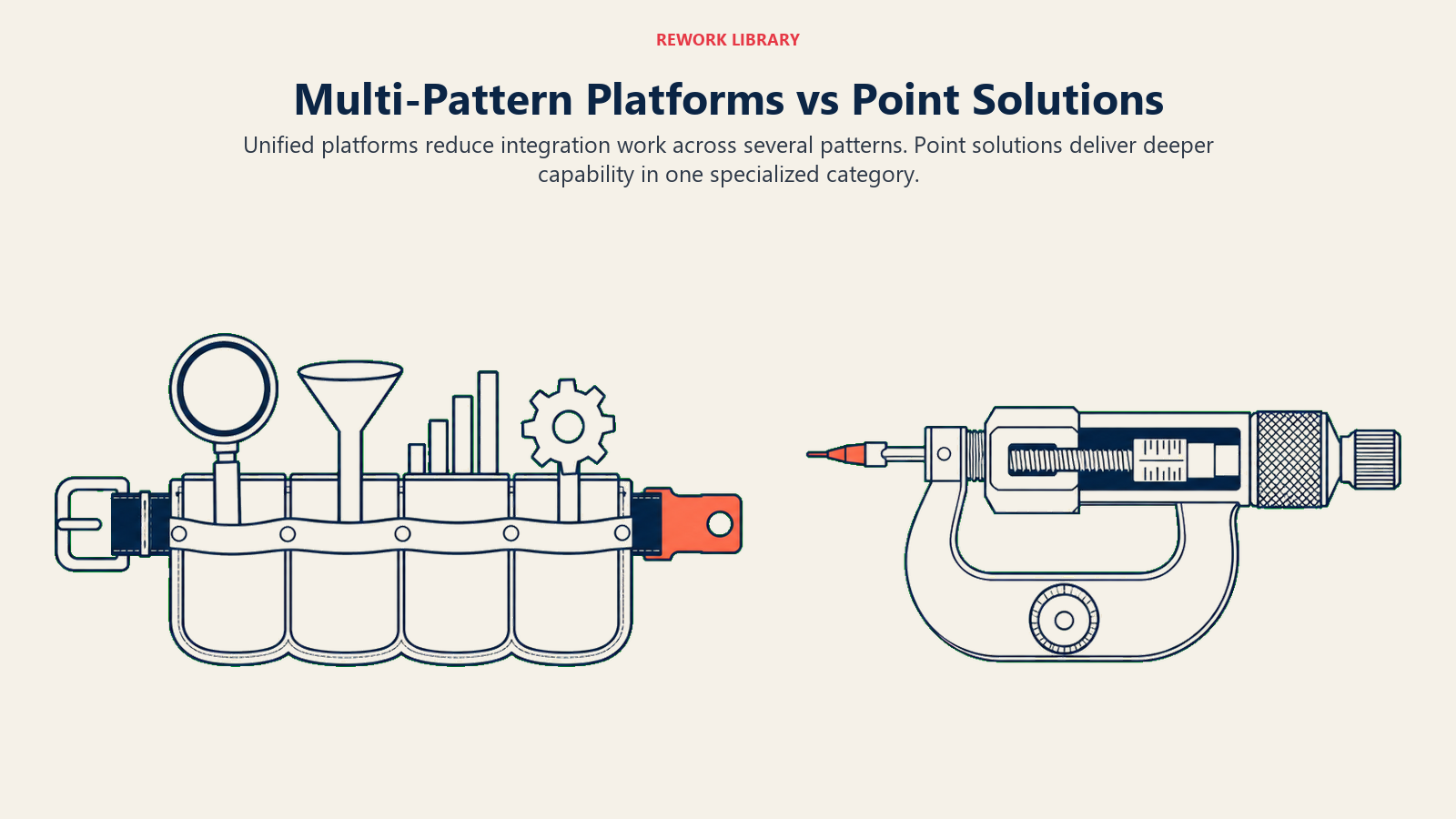
区別する価値のある別のカテゴリーがあります。3〜4つのパターンを信頼性高くカバーし、統合されたAI Sales Operatorソリューションとして位置付けるプラットフォームです。
| プラットフォーム | カバーするパターン | コアの強み | 主要市場 |
|---|---|---|---|
| Gong | Meeting Intelligence(主)+ Generative Research + Workflow Copilot | コール分析と商談インテリジェンス | ミッドマーケット〜エンタープライズ;50〜2,000席規模 |
| Clari | Workflow Copilot(フォーキャスティング)+ Meeting Intelligence + Scoring | フォーキャスト精度とPipeline検査 | ミッドマーケット〜エンタープライズ |
| Salesforce Einstein Suite | 4パターンすべて | ネイティブCRM連携;最広エコシステム | ミッドマーケット〜エンタープライズ;既存Salesforce顧客 |
| HubSpot AI | Scoring + Meeting Intelligence + Workflow Copilot | アクセスしやすい設定;SMB向け価格 | SMB〜ミッドマーケット;HubSpotネイティブチーム |
| Rework Sales AI | Scoring + Meeting Intelligence + Workflow Copilot | シングルパッケージ、低総コスト、高速セットアップ | 5〜100席チーム |
| Outreach + Kaia | Meeting Intelligence + Workflow Copilot + Generative Research(限定) | シーケンスWorkflowを持つアウトバウンド重視チーム | ミッドマーケット |
マルチパターンプラットフォームはパターンごとの深さと引き換えに連携の一貫性を提供します。GongのMeeting Intelligenceは、二次的な機能としてそれを含むどのプラットフォームよりも深いです。しかし、GongのMeetingデータをSalesforce Einsteinのフォーキャスティングとの連携やMadKuduのスコアリングときれいに機能させるには継続的な連携作業が必要です。統合プラットフォームはパターンごとの能力をある程度犠牲にしてその連携負担を避けます。
パターン別評価基準
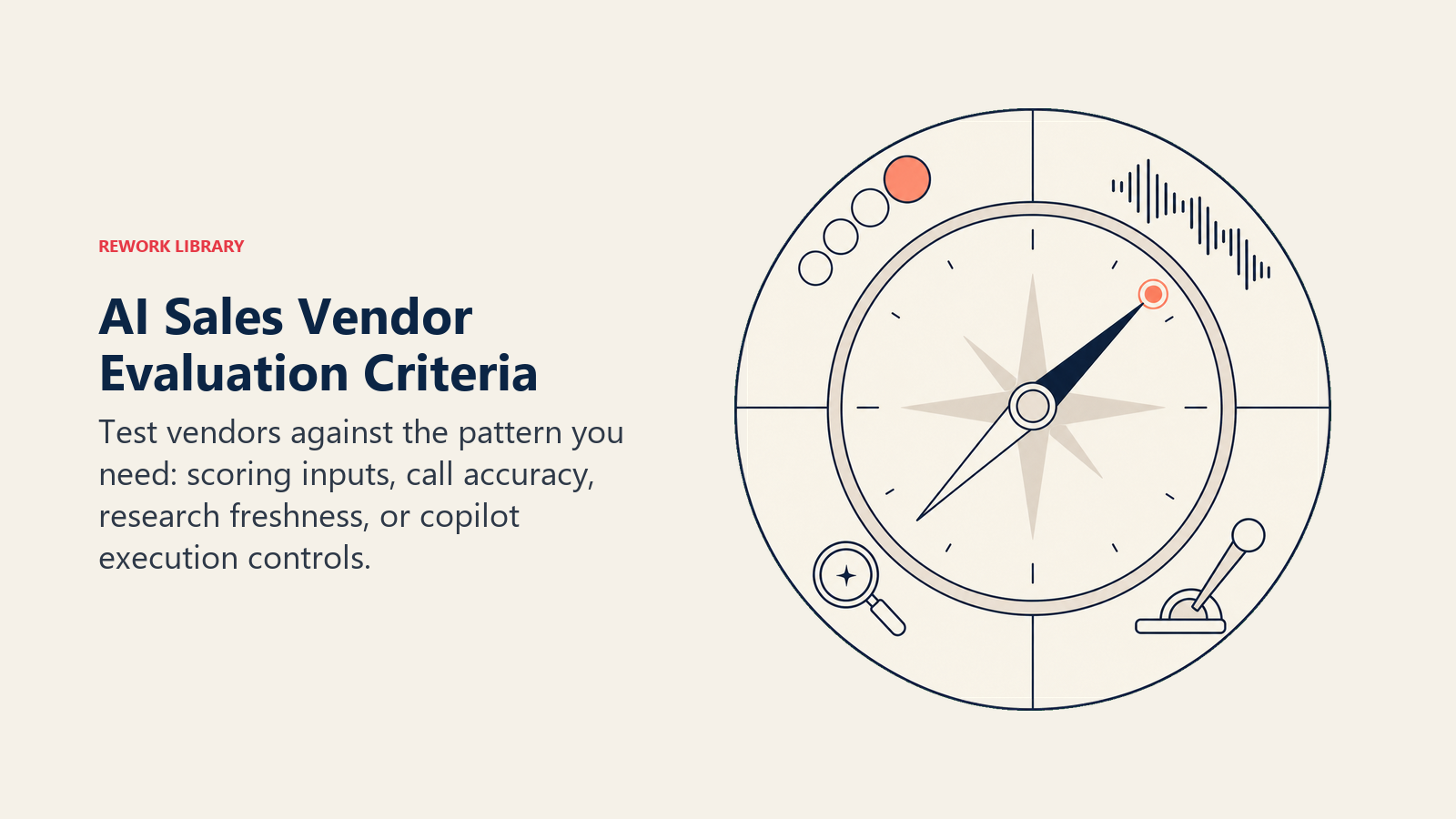
文字起こしの精度、スコアリングの入力、リサーチの鮮度、実行時のコントロールはそれぞれ異なる購買上の問いに答えるため、パターンごとに独自のテストが必要です。
Scoring and Routingの評価:
- モデルが使う特徴量は何か?(行動 vs. 企業属性 vs. インテントシグナル)
- データが増えるにつれてモデルはどう再トレーニングされるか?
- エンジニアリングなしでルーティングルールを設定できるか?(テリトリーの複雑さの閾値)
- 担当者の異議申し立てのためのオーバーライドメカニズムはあるか?
Meeting Intelligenceの評価:
- 典型的なコール品質でのトランスクリプト精度(ベンダーデモコールではなく実際のコールのサンプルでテスト)
- CRMライトバックの設定可能性:どのフィールドに、どの形式で、人間のレビューゲートが必要か自動確定か?
- コーチングWorkflow:マネージャーはコーチングデータにどうアクセスしてアクションするか?
- コール録音のデータ処理契約:必要な場合のEUデータ居住要件は?
Generative Researchの評価:
- データの鮮度:基盤となる企業データベースはいつ最後に更新されたか?
- ソース引用:ブリーフはデータがどこから来たかを引用するか?
- カスタマイズ:リサーチテンプレートを定義できるか、それとも固定されているか?
- エクスポート形式:CRMに直接書き込むか、コピーペーストが必要か?
Workflow Copilotの評価:
- CopilotがExecuteできるアクションは何か、人間の承認のためのGenerateのみは何か?
- Copilotはどこに表示されるか(CRM内、サイドバー拡張、メールクライアント内)?
- AI生成の提案はUIでシステム生成のものとどう区別されるか?
- 時間とともに提案を改善するフィードバックループは何か?
プラットフォーム統合トレンド
2024〜2025年のAI Sales Ops市場はポイントソリューションが主流でした。GongのMeeting Intelligenceがベストインクラス、ClayのリサーチがベストインクラスOutreachのシーケンスがベストインクラス。各カテゴリーにスペシャリストリーダーがいました。
2026年には2つの理由でこれが変わっています。
Forrester Wave for Revenue Orchestration Platforms、Q3 2024はこの統合を定義的な市場変化として特定しました。以前は別々だった3つのカテゴリー(セールスエンゲージメント、会話インテリジェンス、Revenue Operations)が統合されたRevenue Orchestration Platformsに融合しています。WaveはこのForrester Waveでは12のベンダーを29の基準で評価し、マルチパターン機能が主要な差別化要因であることを発見しました。
第一に、スペシャリストベンダーとプラットフォームベンダーの間のAI機能ギャップが縮まっています。2024年のSalesforce Einstein Copilotは粗いベータでした。2026年では、スペシャリストCopilotツールが提供するものの70〜80%に匹敵する本格的なCopilotです。完全ではありませんが、別ツールを実行する連携コストを正当化するのが難しいほど近いです。
第二に、統合が進んでいます。ZoomInfoがChorusを買収しました。SalesloftがKaiaを追加しました。OutreachがKaia for Outreachを追加しました。スタンドアロンのMeeting Intelligenceベンダーがシーケンスプラットフォームに吸収されています。スタンドアロンのスコアリングベンダーがリサーチ機能を構築しています。皆があらゆるものを追加しています。
購買者にとっての意味は明確です。専門的なポイントソリューションは、プラットフォームの重複、機能のコモディティ化、または買収による混乱のリスクが最も高いです。2026年にスタンドアロンのMeeting Intelligenceベンダーと3年間の契約を結ぶということは、彼らの機能が差別化され、独立性が3年間維持されるという賭けをすることになります。
これはカテゴリーリーダー(Gong)にとっては合理的な賭けであり、第2ティアのプレーヤーにとってはリスクが高いです。
生き残るプラットフォームを見つけるポイント
2〜3年のホリゾンでプラットフォームを評価する場合、耐久性のシグナルは次のとおりです。
データのネットワーク効果。 最大の商談コーパスでトレーニングされたベンダーはScoringモデルに構造的な優位性を持ちます。Gongのトレーニングデータには数億件のコールが含まれます。MadKuduのモデルは何百万件ものB2B商談を処理しています。このデータ優位性は再現が難しく、時間とともに成長します。
CRMエコシステムの深さ。 SalesforceとHubSpotとの最も深い連携を持つプラットフォームは、浅いAPI読み取り接続しか持たないものよりも守りやすいポジションにあります。深い連携はCRMWorkflowを再設計せずに簡単にベンダーを切り替えられないことを意味します。
マルチパターンの完全性。 3〜4つのパターンをカバーするプラットフォームは、1つしかカバーしないポイントソリューションよりも入れ替えが難しいです。Gongを購入するということは、ClayとCopilotツールを置き換えるかもしれないリサーチ機能とCopilot機能も得ることになります。これがGongとの関係をより粘着性のあるものにします。
価格の透明性。 価格を公開しているベンダーは評価しやすく、時間とともにより安定した価格を持つ傾向があります。エンタープライズのみの価格モデルは、営業サイクルの深い段階まで何を手に入れるかがわかりにくくなります。
内製vs.購入の意思決定フレームワークでは、プラットフォームvsポイントソリューションの経済性について、さまざまなチーム規模でのTCO比較を含めてより詳しく解説しています。
このランドスケープにおけるReworkについての率直な評価
Rework Sales AIは、スコアリング・Meeting Intelligence・Workflow Copilotを複数のベンダー契約を管理せずに欲しい5〜100席規模のチームへのシングルパッケージソリューションとして位置付けられています。GartnerのリバニューアクションオーケストレーションのためのクリティカルケーパビリティはMagic Quadrantの補完的な調査であり、この記事の4つのパターンに直接マッピングするAIガイデッドセリング、パイプラインアナリティクス、マルチチャネル実行を含む特定の能力次元でベンダーを評価します。
価格レベル(Sales Engineは年払いで月額$69から、5シート込み、追加シートは5シート単位で月額$21)では、SMBと低いミッドマーケットチーム向けの最もアクセスしやすいフルスタックAI Sales Opsオプションです。最新の詳細についてはrework.com/pricingをご覧ください。
トレードオフはパターンごとの深さです。Gongのコール分析はより洗練されています。6senseのアカウントインテリジェンスはより豊かです。MadKuduのスコアリングモデルは複雑なB2Bにとってよりニュアンスがあります。あるパターンがチームにとってミッションクリティカルで、そのパターンでカテゴリーをリードする深さが必要な場合、スペシャリストベンダーが勝ちます。
すべての4つのパターンが「十分に良い」水準にあり、連携オーバーヘッドが最小限で予算が限られている場合、Reworkは20席以下のチームで$5,000/年未満の範囲で最も強力なオプションです。
まとめ
2026年のAI Sales Ops市場は単一のカテゴリーではありません。異なるベンダーリーダー、異なる購買基準、異なる統合ダイナミクスを持つ4つのPatternカテゴリーです。McKinseyのAI 2025年状況レポートは、B2B営業でエンタープライズ全体のAI採用を完全に実現した商業リーダーはわずか21%であり、ほとんどのチームがまだ初期選定と展開段階にあることを示しています。2026年に行うベンダー選択が、2028年までにどの企業がリーディングコホートに入るかを大きく決定します。
評価の視点としてパターンマップを使用してください。チームが最も必要とするパターンから始めてください(ほとんどのチームはMeeting IntelligenceとScoringから始めるべきです。実装ロードマップでその理由を説明しています)。CRMと予算に合うパターンごとの2〜3のベンダーを特定してください。その後、機能数ではなくパターン固有の基準で評価してください。
統合トレンドは、専任のRevOpsエンジニアリングがなければ、2026年における正解がほぼ常にベストオブブリードのポイントソリューションよりもマルチパターンプラットフォームであることを意味します。ほとんどのチームにとって、それはGong、Clari、Salesforce Einstein、HubSpot AI、またはReworkを主要プラットフォームとして選択し、プラットフォームがスペシャリストの能力に本当に追いつけない場合のみポイントソリューションで狭いギャップを埋めることを意味します。
Rework分析: 2026年の最も一般的なベンダー評価の誤りは、異なるPatternカテゴリーのツールを同じスコアカードで比較することです。Gong(Meeting Intelligence主)と6sense(Scoring + Account Intelligence主)は根本的に異なる問題を解決しています。20機能のマトリクスで並べて評価すると、12の機能が両方に適用されないため、不確定な結果が出ます。2026年Sales Opsベンダーマップを使って、まずボトルネックがあるPatternカテゴリーを特定し、その後そのカテゴリー内のベンダーをPattern固有の基準で評価してください。ベンダーを選択する前にPatternの言葉で問題を定義するチームは、一貫して展開が速く採用の結果が優れています。
会話インテリジェンスセグメントだけでも2023年の$16億から2030年までに$84億に成長することが予測されており、CAGRは26%でCRMやセールスエンゲージメントプラットフォームより速いです。(Grand View Research)この成長率は、Meeting Intelligenceが差別化要因ではなくデフォルトの機能になる速さを反映しています。
AI Sales OperatorがどのようにTraditionalなシーケンスプラットフォームとAI機能を追加したものと比較するかについては、AI Sales Operator vs. セールスエンゲージメントプラットフォームをご覧ください。
よくある質問
AI Sales Opsベンダーランドスケープはどのように整理されていますか?
AI Sales Ops市場は4つのACEパターンカテゴリー別に整理されています。Scoring and Routing(どのベンダーがリードをスコアリングしてルーティングするか)、Meeting Intelligence(どのベンダーがコールを録音・トランスクリプト・分析するか)、Generative Research(どのベンダーがアカウントと見込み客のリサーチを合成するか)、Workflow Copilot(どのベンダーが商談アクション・コミュニケーション下書き・Pipeline管理で担当者をサポートするか)。市場の主要なベンダーはすべてこれらのパターンの1つ以上を担います。機能数ではなくPatternカテゴリーでベンダーを評価することで、より明確な比較と優れた選定判断が得られます。
2026年Sales Opsベンダーマップとは何ですか?
2026年Sales Opsベンダーマップは、SMB(10席)、ミッドマーケット(50席)、エンタープライズ(200席以上)ティアにおける価格付きで4つのACEパターンカテゴリー全体にわたる20以上のAI Sales Opsベンダーのパターン別視覚化です。機能マトリクス比較をPatternカテゴリー割り当てに置き換え、購買者が特定のボトルネック領域で競合するベンダーを特定できるようにします。
2026年のAI Sales Ops市場の規模はどれくらいですか?
Revenue Intelligence Platform市場(コアカテゴリー)は2024年に$38億に成長し、34.6%のCAGRで拡大しています。セールスとマーケティング向けのより広いAI市場は2025年の$580億から2030年までに$2,400億に成長すると予測されており、CAGRは32.9%です。会話インテリジェンスは特に2023年の$16億から2030年までに予測$84億に26%のCAGRで成長し、CRMやセールスエンゲージメントカテゴリーより速い成長です。この成長にもかかわらず、B2B営業でエンタープライズ全体のAI採用を完全に実現した商業リーダーはわずか21%です。
AI Sales Opsにおけるプラットフォーム統合トレンドとは何ですか?
以前は別々だった3つのカテゴリー(セールスエンゲージメント、会話インテリジェンス、Revenue Operations)が統合されたRevenue Orchestration Platformsに融合しています。Forrester Wave for Revenue Orchestration Platforms Q3 2024がこの融合を定義的な市場変化として特定し、29の基準で12のベンダーを評価し、マルチパターン機能が主要な差別化要因であることを発見しました。ZoomInfoがChorusを買収し、SalesloftがKaiaを追加し、OutreachがKaia for Outreachを追加しました。購買者にとって、スタンドアロンのMeeting Intelligenceとスタンドアロンのスコアリングベンダーはマルチパターンプラットフォームよりもベンダー継続性のリスクが高いです。
プラットフォームとベストオブブリードツールはいつ選ぶべきですか?
3〜4つのAIパターンをカバーする必要があり、RevOpsが小規模(テックスタックを管理する人が2名未満)な場合はプラットフォームを選択してください。4〜5つの別々のツールの連携管理オーバーヘッドは大きく、全体的な採用が下がります。特定のパターンでカテゴリーをリードする深さが必要(GongのコールAnalytics深さはMeeting Intelligenceを二次的な機能として含むどのプラットフォームも超える)で、連携を管理する専任RevOpsエンジニアリングがある場合はベストオブブリードを選択してください。50席ではプラットフォームがTCOで勝ちます。500席では通常ベストオブブリードが連携投資に見合います。
ベンダーランドスケープにおけるRework Sales AIとは何をするものですか?
Rework Sales AIは5〜100席チームに最適化された単一パッケージで4つのパターンのうち3つ(Scoring、Meeting Intelligence、Workflow Copilot)をカバーします。SMBおよびより低いミッドマーケットチームにとって、その価格ティア(Sales Engineは年払いで月額$69から、5シート込み。10シートは年払いで月額$90)での最も摩擦の少いフルスタックAI Sales Opsオプションです。トレードオフはパターンごとの深さです。Gongのコール分析と6senseのアカウントインテリジェンスはより洗練されています。Reworkはすべての4パターンが「十分に良い」水準にある必要があり、単一のパターンがベストインクラスであることよりも連携オーバーヘッドが最小限であることが重要な場合に適した選択です。
どのベンダーが各AI Sales Opsパターンカテゴリーをリードしていますか?
Scoring and Routing:Salesforce Einstein(既存Salesforceチームに最適)、MadKudu(B2B SaaSの最良の独立スコアラー)、6sense(アカウントレベルのインテントに最適)。Meeting Intelligence:Gong(機能ベンチマーク、最高コスト)、Fireflies(価格リーダー)、Clari Copilot(Clariフォーキャスティングとの組み合わせに最適)。Generative Research:Clay(最も柔軟、最高の学習曲線)、Apollo(リサーチ+アウトリーチのオールインワンに最適)、ZoomInfo Copilot(米国エンタープライズのインテントオーバーレイに最適)。Workflow Copilot:OutreachとSalesloft(アウトバウンド重視チーム)、Salesforce Einstein Copilot(既存Salesforceショップ)、Rework Sales AI(100席以下のフルスタック)。
一般的な誤りを避けるためにAI Sales Opsベンダーをどのように評価すべきですか?
4つの評価ステップが最も一般的な誤りを防ぎます。第一に、現在のボトルネックがどのPatternカテゴリーにあるかを定義する(ミーティングフォローアップが問題なのにスコアリングツールを評価しない)。第二に、Pattern固有の評価基準を使用する(汎用の機能マトリクスではなく)。第三に、ベンダーデモコールではなく実際のコール録音でトランスクリプト精度をテストする。第四に、どのフィールドが自動ライトバックされるか、担当者の手動入力が必要かを確認してCRM連携の深さを検証する。ステップ1をスキップして異なるPatternカテゴリーのツールを同じスコアカードで比較するチームは、不確定な評価プロセスと18ヶ月以内に後悔するベンダー選択を一貫して報告しています。
次に読む記事
- AIパターンベンダーランドスケープMap:この4つのPatternカテゴリーが完全な10パターンベンダーランドスケープの中でどう位置付けられるか
- AI Sales Opsの内製vs.購入:プラットフォームと内製アプローチを選択するための経済性フレームワーク
- 会話インテリジェンスツールの選び方:10次元フレームワークによるPattern 2ベンダーの詳細な評価
- AI Sales Ops実装ロードマップ:4つのパターンにわたるベンダー選定のシーケンス
- AI Sales Opsガバナンスと監査証跡:プラットフォーム選定に影響するベンダーガバナンス要件
