Bahasa Indonesia
Win-Back Strategy: Re-Engaging Lost Customers
Turn this article into takeaways for your work.


Each assistant summarizes the article only for you and suggests best practices for your work.
Churned customer list Anda adalah qualified pipeline dari buyers yang already know produk Anda, understand value proposition Anda, dan have budget authority. Mereka gone through procurement once. Mereka been convinced enough to buy. Mereka just left karena circumstances, needs, atau produk Anda didn't align at that moment.
Tapi circumstances change. Competitors disappoint. Budgets recover. Products improve. Reasons customers left kadang-kadang become reasons mereka come back.
Yet most companies write off churned customers immediately. CRM status changes to "closed lost," customer disappears dari active outreach, dan nobody thinks tentang mereka lagi. Meanwhile, sales team Anda spending thousands to acquire completely cold prospects dengan lower win rates dan longer sales cycles than these warm, educated former customers.
Lost isn't permanent. Trick adalah knowing customers mana yang worth re-engaging, kapan reach out, dan how to make it feel helpful instead of desperate.
Why Win-Back Beats Cold Acquisition
Acquiring new customers costs 5-25 times more than retention. Win-back sits in between: more expensive than keeping someone, far cheaper than starting from scratch.
Math works out stupidly well. Former customers don't need category education. Mereka been through implementation. Mereka know apa success looks like. Sales cycles adalah 40-60% shorter, conversion rates run 2-3x higher, dan CAC adalah fraction of cold acquisition.
Plus mereka qualified by definition. Mereka had budget once. Mereka made it through procurement. Mereka had use case yang fit. Unless business mereka fundamentally changed, qualification itu still holds.
Jika customers left karena product gaps yang Anda since filled, poor service yang Anda since improved, atau pricing yang Anda since adjusted, objections itu gone. Win-back campaigns yang directly address past failures convert like crazy.
Market dynamics shift constantly. Competitor yang mereka chose might have raised prices, been acquired, atau let product mereka slide. Alternative solutions yang mereka tried might have disappointed. Internal priorities mereka might have changed. All of these create windows di mana mereka open to reconsidering.
Relationship advantages remain even after churn. Jika Anda handled offboarding professionally, stayed respectful, dan left on good terms, Anda have equity yang new vendors don't. Anda know apa yang worked, what didn't, apa yang mereka valued, dan how they used product. Anda bisa re-onboard them better than Anda onboarded them first time.
Not All Churned Customers Are Worth Chasing
Some customers left untuk fixable reasons. Others were never fit dan won't be fit second time around.
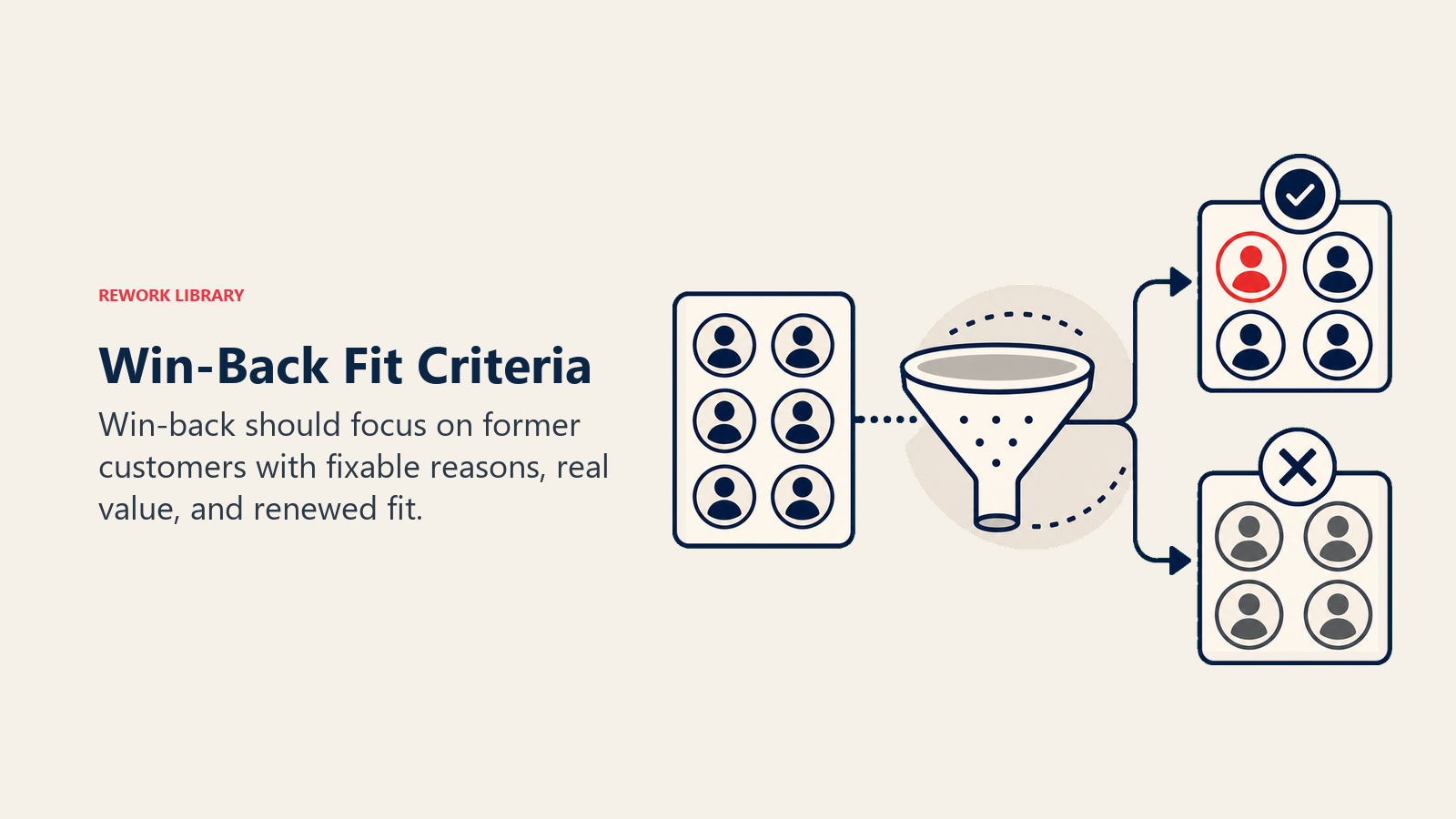
Mulai dengan good-fit churns: people yang left karena product gaps yang Anda since filled, service issues yang Anda resolved, pricing yang Anda bisa now address, adoption challenges yang Anda have new solutions for, atau temporary timing issues dengan budget, bandwidth, atau priorities. Customers ini might return jika Anda demonstrate Anda solved original problem mereka.
Bad-fit churns left karena fundamental misalignment. Wrong use case untuk produk Anda. Company size atau complexity outside sweet spot Anda. Industry needs yang Anda can't serve. Expectations yang Anda can't meet structurally. Chasing these wastes resources. Mereka weren't right first time dan won't be right second time unless produk Anda atau needs mereka fundamentally changed.
Competitive losses tricky. Jika mereka left untuk direct competitor yang serving them well, win-back difficult. Tapi jika competitor disappointed them atau circumstances changed, there's opening.
Some churns aren't even opportunities. Company went out of business. Acquired by company using different tools. Function atau team was eliminated. Moved ke completely different approach seperti in-house build. Customers ini can't come back even jika mereka wanted to.
Best win-back targets usually timing-based churns. Budget constraints yang temporary. "Not right now" exits di mana project got deprioritized. Team changes yang disrupted momentum. Overload yang prevented proper implementation. Ketika timing was issue, future timing might work.
Who Gets Your Win-Back Attention
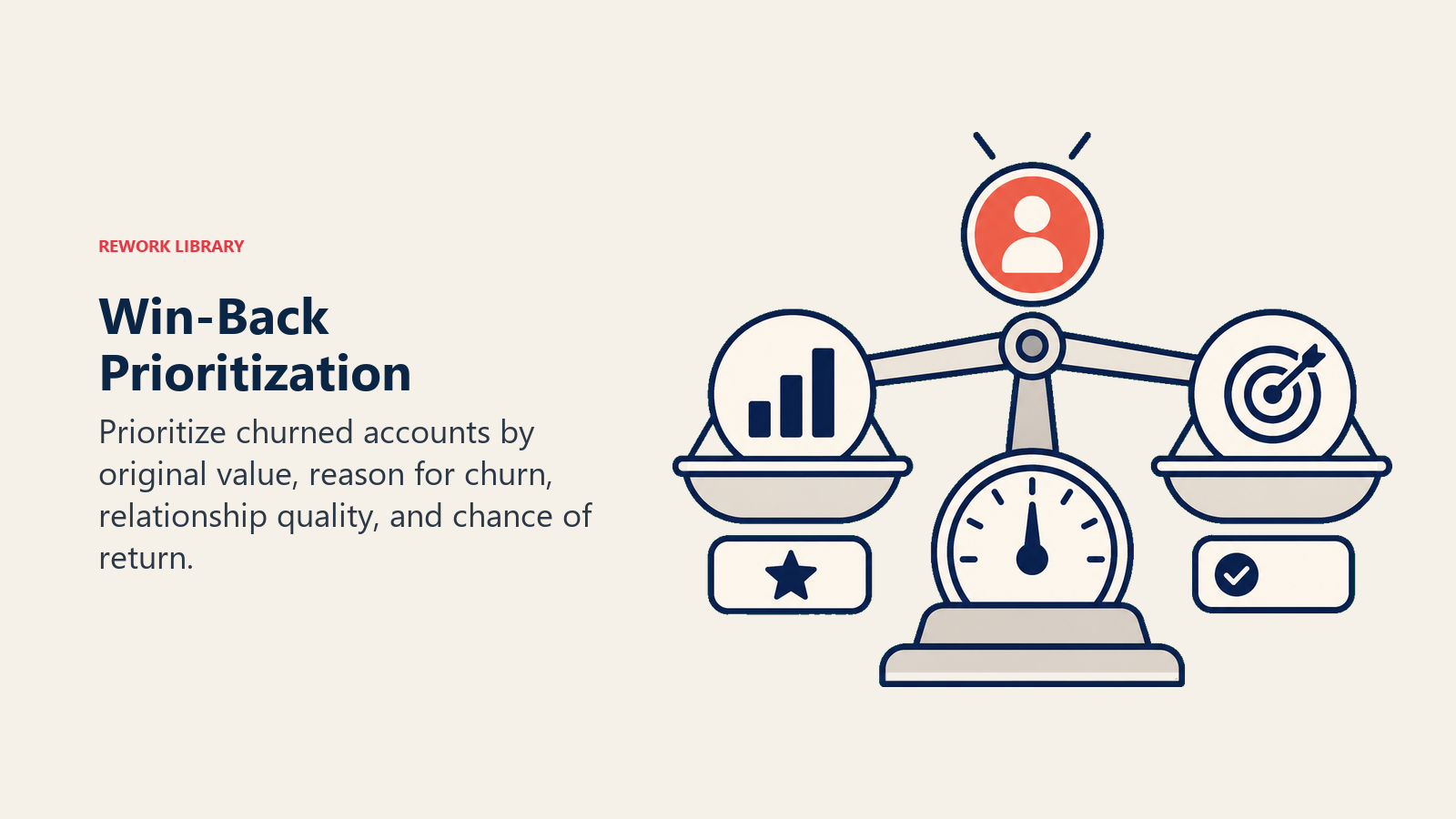
Anda can't chase every churned customer. Mulai dengan segmenting on original value. Former customers yang paid $100K annually warrant more investment than those yang paid $1K.
Saya tier it seperti ini:
- Tier 1 ($50K+ ARR): Personal outreach, customized approach, executive involvement
- Tier 2 ($10K-$50K ARR): Structured campaigns, CSM outreach
- Tier 3 ($1K-$10K ARR): Automated campaigns, scalable touch
- Below threshold: No proactive win-back, tapi saya welcome them jika mereka self-reactivate
Some churned customers only used small slice of apa yang Anda offer. Mereka might return bigger. Company yang left sementara using 10 seats might come back needing 100.
Churn reason matters untuk prioritization. Product gaps now filled? High priority. Service issues now resolved? High priority. Pricing yang adjustable? Medium. Competitive losses depend on apakah new vendor mereka working out. Bad fit? Low. Structural impossibility? Don't bother.
How they left matters too. Customers yang churned gracefully dan maintained positive relationships adalah better candidates than those yang left angry dan burned bridges.
Timing since churn creates sweet spot. Recent churns (under six months) often too soon since mereka just made decision dan committed to alternative. Very old churns (3+ years) might require reacquiring seperti net-new prospects. Sweet spot usually 6-24 months post-churn.
Dan some former customers worth pursuing untuk reasons beyond revenue: marquee logos, reference potential, market influence, partnership opportunities.
Knowing When to Reach Out
Timing everything di win-back. Reaching out ketika nothing has changed feels spammy. Reaching out ketika there's legitimate reason to reconsider feels helpful.
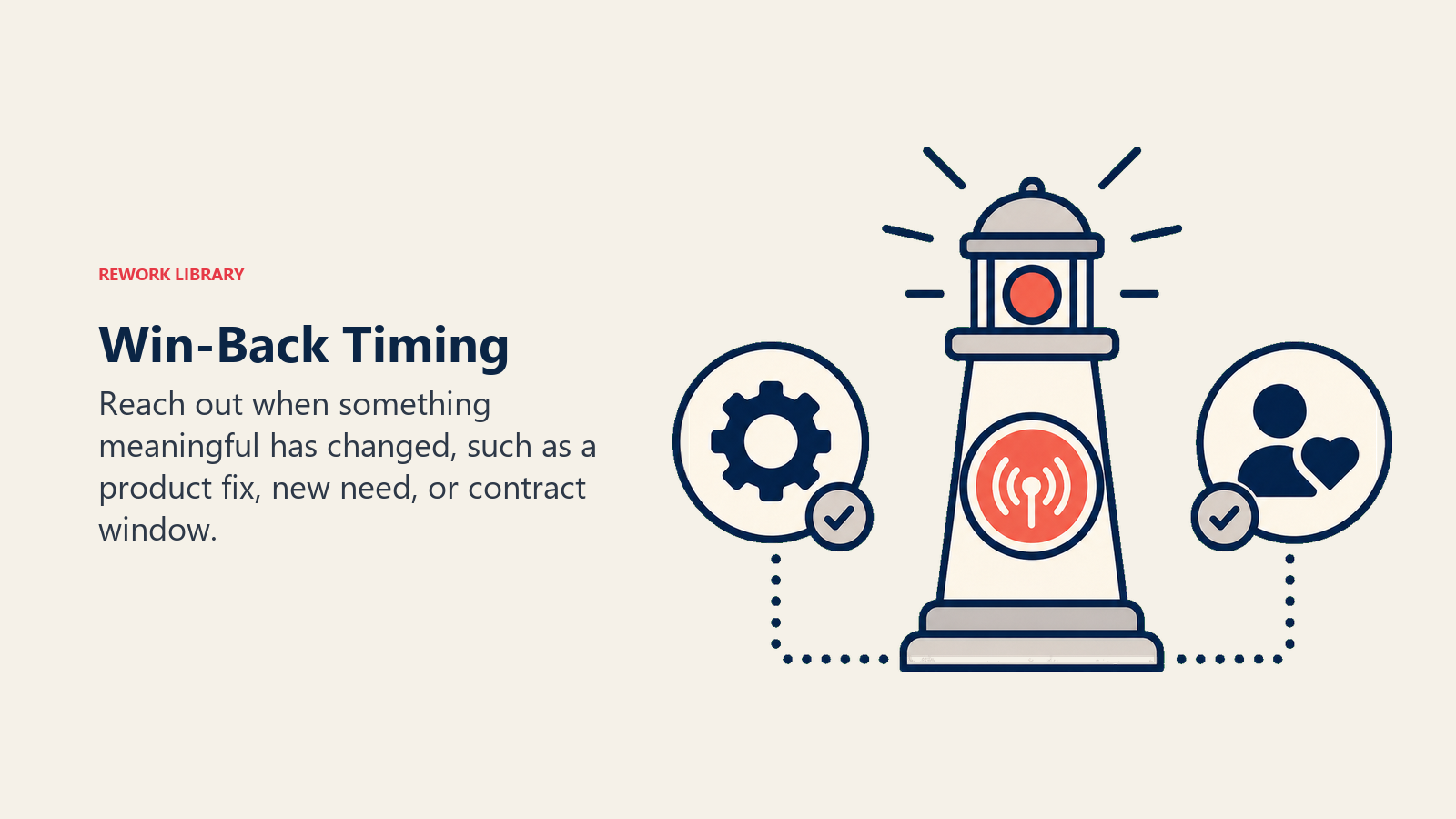
Best trigger adalah ketika Anda ship product improvements yang directly address churn reason mereka. Jika customer left karena Anda didn't have Salesforce integration dan Anda just launched it, that's your moment. Saya monitor product roadmap saya against churn reason database saya. Ketika kami ship something yang solves common churn driver, saya automatically generate list of customers yang left untuk reason itu.
Competitive changes create openings. Ketika competitor Anda raises prices dramatically, gets acquired, changes product strategy mereka, atau experiences major outages atau scandals, customers mereka reconsider. Set up Google Alerts untuk major competitor announcements. Ketika significant changes happen, review customers mana dari churned customers Anda went to that competitor.
Customer business changes signal shifting needs. Funding rounds mean increased budget dan expansion. Executive changes bring new leadership dengan different vendor preferences. Office openings atau expansions indicate growth creating new needs. Acquisitions mean consolidated operations creating opportunities. Product launches suggest new initiatives requiring tools.
Track churned customers on LinkedIn, di news, dan through company databases. Material changes often create re-engagement windows.
Contract renewal periods dengan competitors matter. Jika Anda know mereka signed 1-year contract dengan Competitor X, month 11 adalah ketika mereka reevaluating. Jika Anda lost them to annual deals, set reminders untuk 10-11 months post-churn.
Usage anniversary milestones work. "It's been year since we worked together" adalah natural, non-aggressive reason to check in. "How's solution yang Anda moved to working out?"
Major feature launches give Anda reason to reach out. Jika Anda releasing major new product version, platform expansion, atau game-changing capability, that's your hook. "Thought you'd want to know about this given your previous use case."
Other signals include job postings indicating team growth, technology stack changes (visible di BuiltWith), conference attendance atau speaking, dan social media mentions of challenges di category Anda.
How to Frame the Conversation
Acknowledge past tanpa dwelling on it. "We worked together in 2023, dan Anda decided to move to different solution. I respect that decision."
Don't pretend churn didn't happen. Brief acknowledgment clears air.
Then highlight apa yang changed since mereka left. Maybe Anda launched integration yang mereka mentioned needing. Maybe Anda completely rebuilt onboarding process Anda based on feedback seperti theirs. Maybe Anda adjusted pricing model Anda to better align dengan growing companies.
Subtext clear: reason Anda left might not apply anymore.
Jika Anda know dari exit interviews bahwa mereka left karena specific gaps, call those out explicitly. "I know one of challenges was our lack of multi-currency support. We launched that in Q3, along with localized tax handling dan international payment processing."
Ini shows Anda listened dan acted.
Don't just claim Anda improved. Show evidence. Case studies dari similar customers succeeding dengan new capabilities. Product demos atau videos showing new features. Testimonials dari customers yang had similar concerns. Data showing service improvements seperti response time reductions atau uptime increases.
Anda bisa create urgency tanpa pressure. "We're offering return customers special onboarding package through Q2" gives reason to act now tanpa feeling pushy.
Make it easy to explore by lowering barrier. Happy to give Anda quick 15-minute tour of what's new. Kami bisa set up 30-day trial sehingga Anda bisa evaluate tanpa commitment. Just checking in untuk see jika circumstances have changed, no pressure.
Lead dengan value even jika mereka don't re-engage. Share something useful. Saw your company announcement about expansion? Here's resource yang might help, regardless of tools apa yang Anda use. Thought industry report ini might be valuable given focus Anda on revenue operations.
Value-first contact builds goodwill even jika mereka don't convert immediately.
Win-Back Incentives That Work
Kadang-kadang customers need financial motivation untuk give Anda second chance.
Win-back discounts (15-25% off untuk first year) acknowledge mereka taking risk returning dan compensate untuk switching costs dan implementation effort. Be strategic tentang ini. High-value accounts might warrant aggressive incentives. Lower-value accounts might not need discounts at all jika Anda solved original problem mereka.
Free trial atau pilot periods eliminate risk. "Use it for 90 days free. If it solves your problem, we'll discuss terms. If not, no hard feelings." Ini works especially well ketika mereka left karena mereka weren't sure of fit.
Migration assistance removes friction. Offer to cover implementation costs, provide dedicated onboarding resources, atau assign migration specialists. Switching back adalah work dan making it easier increases conversion.
Dedicated success resources address past service concerns. "If you return, you'll have dedicated CSM dan priority support. We've invested heavily in success team kami since you left."
Custom terms might solve past friction points. Month-to-month instead of annual addresses commitment concerns. Usage-based pricing instead of seat-based addresses value alignment. Graduated pricing yang grows dengan mereka addresses budget constraints.
Early access dan partnership opportunities appeal ke customers yang value being on cutting edge. "We'd love you in beta program kami for [new product]" makes them feel special dan gives them influence.
Untuk strategic accounts, relationship investment beyond product works. Executive sponsorship. Advisory board participation. Co-marketing atau speaking opportunities. Access ke exclusive customer events atau communities.
Running the Outreach
Multi-touch, multi-channel approaches work better than single cold emails.
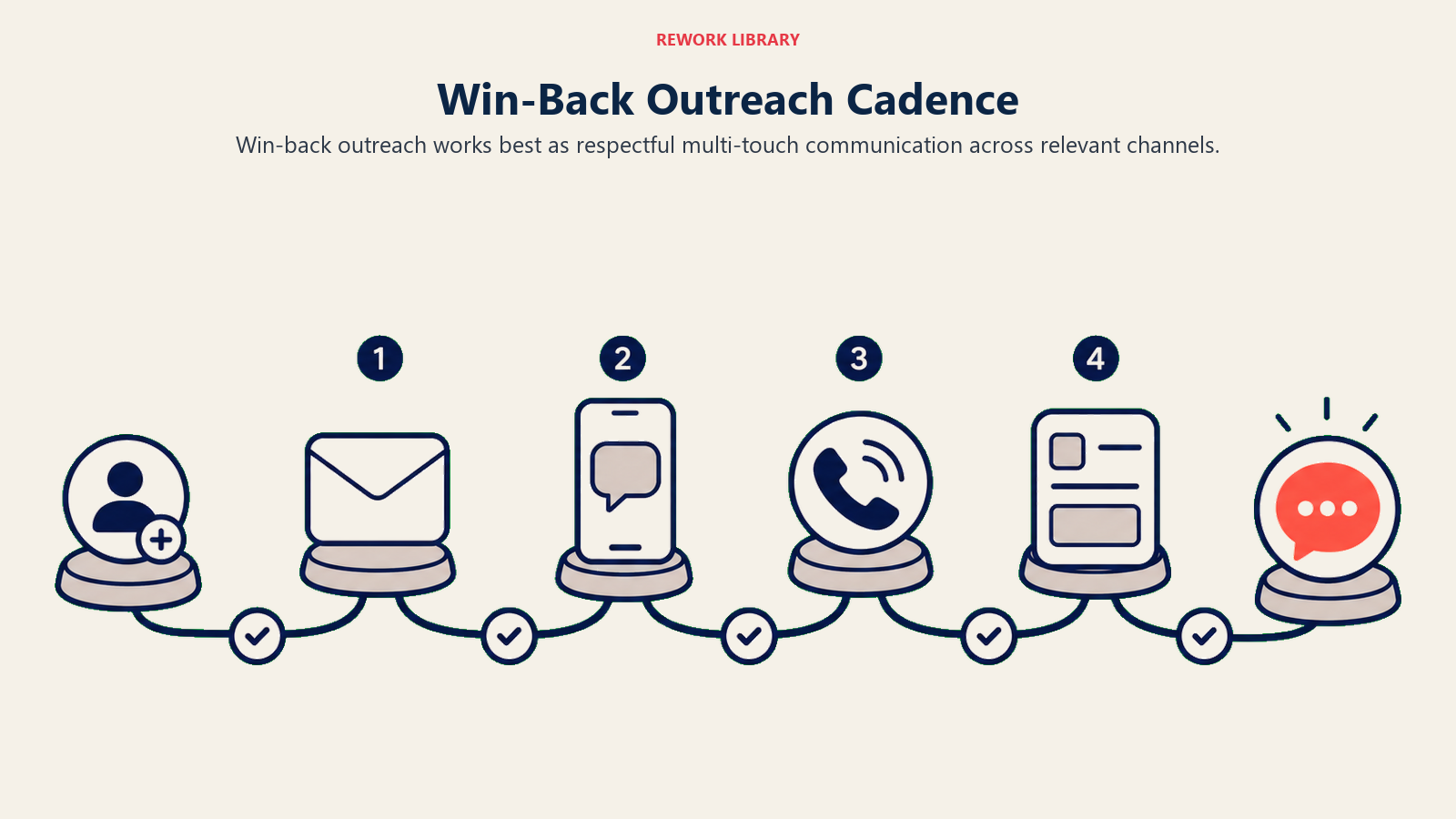
Untuk high-value accounts, saya run sequence over 4-6 weeks:
Touch 1 (Email): Acknowledge past relationship, share major change, invite conversation
Touch 2 (LinkedIn): Personal connection request atau message referencing email
Touch 3 (Phone/Video): Personalized outreach jika no response, offer quick update call
Touch 4 (Email): Share valuable content atau customer story relevant to use case mereka
Touch 5 (Executive involvement): Senior person reaches out ke executive peer mereka
Bukan aggressive daily follow-ups, tapi persistent enough to get attention.
Channel selection depends on value dan relationship. Email primary dan least intrusive. LinkedIn personal dan professional, good untuk reconnecting. Phone works untuk strategic accounts di mana Anda have past relationship. Direct mail untuk high-value accounts stands out physically. Executive outreach means CEO atau VP reaching out ke peer mereka.
Personalization depth should reflect value. $100K former customers deserve fully customized, researched outreach referencing specific situation mereka. $1K customers get templated tapi segment-relevant messages.
Watch timing Anda. Avoid end of quarter ketika mereka busy dengan own closes mereka. Consider industry calendar mereka seperti retail during holidays atau education during summer. Respect renewal cycles mereka dengan current vendors. Look untuk company announcements creating natural hooks.
Three to five touches over 4-8 weeks reasonable. Jika mereka explicitly decline, respect that. Jika mereka ghost Anda, give it rest dan try again dalam 6 months.
Measuring What Matters
Track program effectiveness sehingga Anda bisa optimize over time.
Win-back attempt rate shows percentage apa dari churned customers yang Anda actively try to win back. Ini indicates program coverage.
Response rate shows percentage apa dari win-back outreach gets responses (even jika bukan conversions). Ini indicates message relevance dan quality.
Win-back conversion rate adalah core metric Anda: percentage apa dari win-back attempts result di reactivation.
Untuk context, 5-15% win-back rate typical. Best-in-class programs achieve 20-30% untuk well-segmented, strategically executed campaigns.
Time to win-back tells Anda berapa lama dari churn to reactivation. Ini informs timing strategies. Jika most wins happen 6-12 months post-churn, Anda know optimal window Anda.
Win-back revenue vs cost calculates revenue recovered dari win-backs against cost of running program (CSM time, tools, incentives). Win-back ROI should be strongly positive since costs lower than new acquisition.
Second retention rates show how won-back customers perform di second stint mereka. Jika mereka churn again quickly, Anda not solving original problem. Jika mereka stick around longer than first time, Anda addressed issues.
LTV of won-back customers compared to never-churned customers dan new acquisitions tells Anda jika won-back customers as valuable as first-time customers.
Win-back reason analysis reveals segments mana yang convert best. Product improvements? Competitive dissatisfaction? Timing? Ini informs di mana focus.
Different Churn Types Need Different Plays
Product gap churns (Anda didn't have features yang mereka needed): Trigger ketika Anda ship those features. Message: "We built what you asked for." Show product demos dan beta customer stories. Offer early access atau free trial of new capabilities.
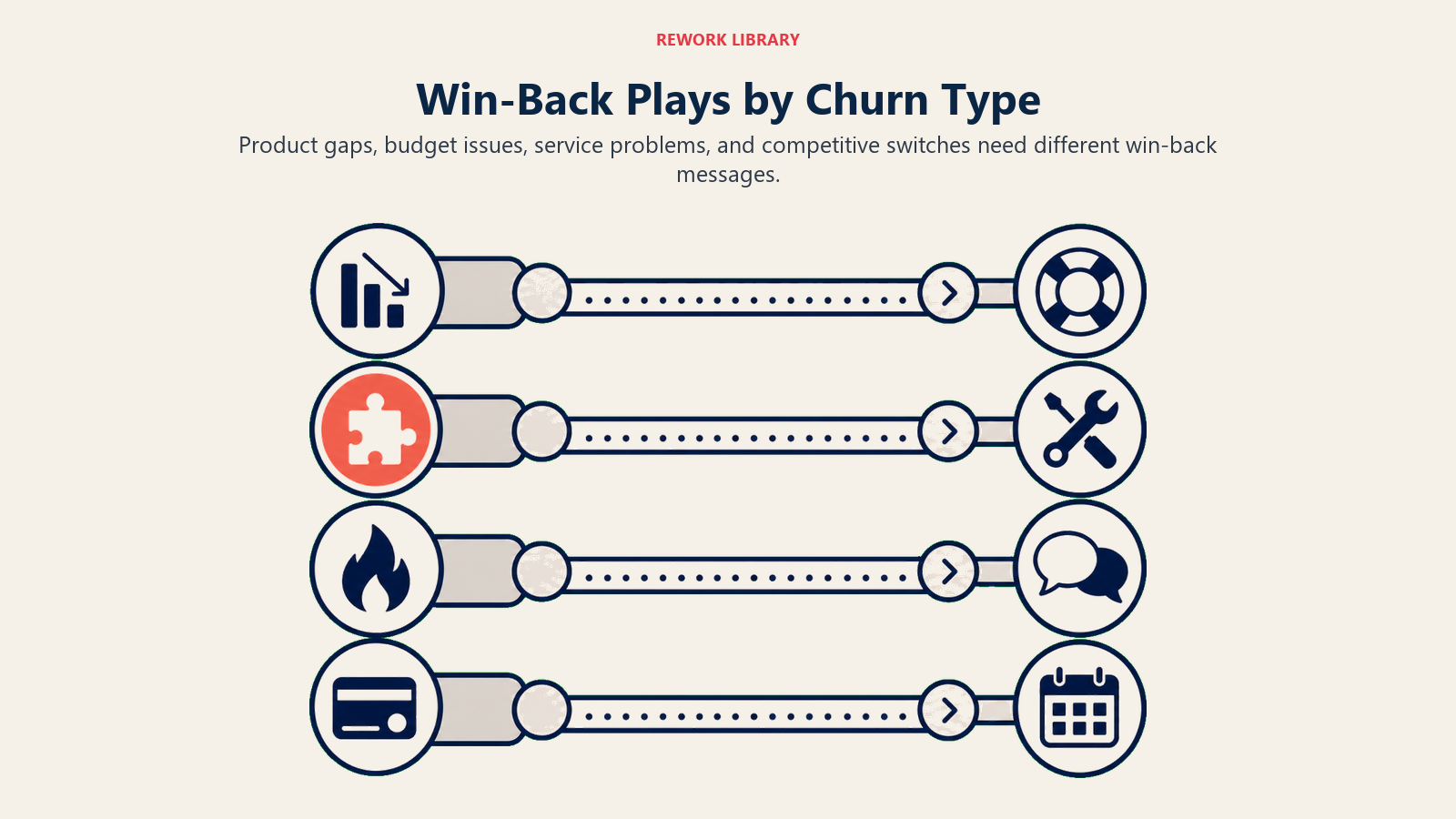
Competitive losses (mereka chose competitor): Trigger on competitor missteps atau contract renewal periods. Message: "How's that working out?" (genuine curiosity, bukan snark). Show competitive differentiation dan customer stories tentang switching back. Offer risk-free trial dan switching incentives.
Service/support churns (poor experience): Trigger on major service improvements atau team investments. Message: "We've transformed customer success organization kami." Show NPS improvements, testimonials, dan team growth numbers. Offer dedicated CSM dan priority support tier.
Budget churns (couldn't afford it): Trigger on funding events atau growth signals mereka. Message: "Saw you raised [round], congratulations." Show ROI case studies dan value realization stories. Offer flexible payment terms atau graduated pricing.
Adoption churns (couldn't get it implemented): Trigger on onboarding improvements atau services launches. Message: "We've reinvented implementation process kami." Show time-to-value metrics dan adoption success stories. Offer white-glove onboarding dan implementation services.
Making This Systematic
Ad hoc win-back doesn't scale. Build systems.
Set up automated segmentation di CRM Anda. Tag churned customers by churn reason, win-back priority (high/medium/low), best win-back trigger, dan earliest appropriate re-engagement date.
Create trigger tracking yang alerts Anda ketika win-back conditions appear. Product features ship yang address churn reasons. Competitor news events. Customer company news dan changes. Time-based triggers at 6 months, 12 months post-churn.
Build campaign templates untuk common scenarios. Pre-written sequences untuk product improvement wins, competitive switcher wins, timing-based wins. Customize template per customer tapi don't start from scratch each time.
Define ownership clearly. Siapa responsible untuk win-back outreach? Original CSM? Dedicated win-back specialist? Sales team? Many companies assign win-back ke original CSM since mereka have relationship dan context. Others create dedicated win-back roles yang focus exclusively on reactivation. Just don't let it fall through cracks.
Run regular review cadences. Monthly: review high-priority win-back opportunities. Quarterly: analyze win-back program performance dan optimize. Annually: strategic review of win-back approach dan investment.
Integrate dengan sales. Won-back customers go through sales pipeline stages. Make sure CRM workflows, forecasting, dan commission structures account untuk win-back deals appropriately.
Respect the Relationship
Win-back requires balancing persistence dengan respect.
Jika someone says "not interested," respect that. Don't keep emailing weekly. Note preference mereka dan check back dalam 6-12 months jika circumstances materially change.
Be honest tentang changes. Don't claim Anda fixed problems jika Anda haven't. Don't oversell improvements. Setting false expectations leads to second churn, yang burns relationship permanently.
Respect choice mereka of competitor. Anda bisa position differentiation Anda dan improvements tanpa talking shit tentang current vendor mereka. Badmouthing makes Anda look desperate dan them look dumb untuk choosing it.
Honor past commitments. Jika Anda promised certain terms atau concessions during exit, honor those jika mereka return. Don't try to renegotiate things yang Anda committed to.
Give credit untuk feedback mereka. "Your feedback about lack of [feature] directly influenced roadmap kami. Thanks for that." Acknowledging impact mereka shows Anda listen.
Make it genuinely tentang fit. Some customers shouldn't return karena mereka still not good fit. Win-back isn't tentang getting every churned customer back. It's tentang re-engaging those di mana circumstances now align.
Jika Anda genuinely don't think Anda right solution untuk mereka still, say so. "Based on what you've shared, I think [different approach] might serve you better." Honesty itu builds trust dan keeps long-term relationship intact.
Siap build systematic win-back programs? Learn how to conduct exit interviews yang identify win-back potential, implement professional cancellation processes yang preserve relationships, understand churn fundamentals to prevent loss in first place, design customer communication strategies yang maintain connection, dan refine onboarding fundamentals to make second time more successful.
Related resources:

Senior Operations & Growth Strategist
On this page
- Why Win-Back Beats Cold Acquisition
- Not All Churned Customers Are Worth Chasing
- Who Gets Your Win-Back Attention
- Knowing When to Reach Out
- How to Frame the Conversation
- Win-Back Incentives That Work
- Running the Outreach
- Measuring What Matters
- Different Churn Types Need Different Plays
- Making This Systematic
- Respect the Relationship