Bahasa Indonesia
First Week Check-Ins: Memastikan Onboarding Dimulai dengan Kuat
Turn this article into takeaways for your work.


Each assistant summarizes the article only for you and suggests best practices for your work.
Sebuah tim customer success menganalisis data churn mereka dan menemukan hal yang mengubah cara mereka menjalankan onboarding: 92% pelanggan yang akhirnya churn menunjukkan tanda-tanda bahaya di minggu pertama, tetapi tanda-tanda itu diabaikan atau terlewat.
Keterlibatan rendah saat kickoff. Login yang tertunda. Pertanyaan yang tidak terjawab. Tenggat yang terlewat. Semuanya terlihat di minggu pertama, dan semuanya memprediksi kegagalan di masa depan.
Sementara itu, pelanggan yang kemudian menjadi power user dan advokat? Mereka menunjukkan sinyal keterlibatan tinggi sejak hari pertama. Mereka login dalam 24 jam. Mereka mengajukan pertanyaan yang matang. Mereka menyelesaikan tugas tepat waktu. Mereka membawa para stakeholder ke dalam pertemuan.
Minggu pertama bukan sekadar persiapan administratif. Ia adalah sinyal peringatan dini bagi seluruh hubungan dengan pelanggan.
Jika Anda membangun onboarding yang secara konsisten menghasilkan keberhasilan, Anda membutuhkan keterlibatan minggu pertama yang sistematis, yang mendeteksi dan menangani masalah sebelum menumpuk.
Minggu Pertama yang Kritis: Mengapa Keterlibatan Sejak Dini Penting
Momentum Memuncak Saat Pembelian
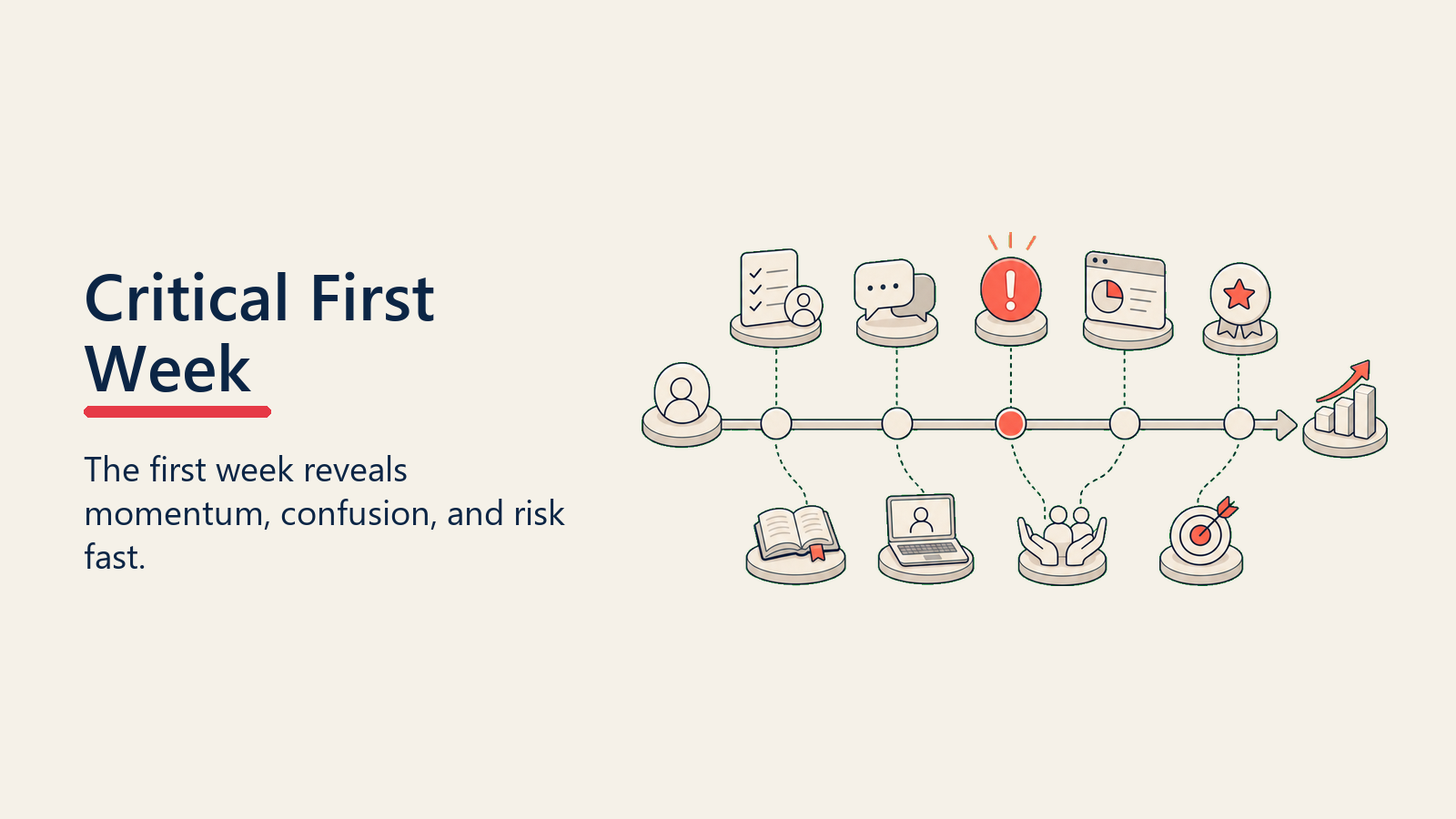
Komitmen, antusiasme, dan perhatian organisasi pelanggan memuncak tepat setelah kontrak ditandatangani. Inilah jendela pengaruh terbesar Anda.
Di minggu pertama, pelanggan sedang antusias. Champion mereka memiliki modal politik. Anggaran sudah disetujui, jadwal terasa mendesak, dan semua orang memberi perhatian.
Di minggu ke-4? Antusiasme sudah memudar. Champion sibuk dengan prioritas lain. Jadwal yang tadinya mendesak berubah menjadi "nanti kalau sempat."
Di minggu ke-12, proyek biasanya sudah macet. Champion mulai defensif soal keterlambatan. Para stakeholder terang-terangan meragukan nilai investasinya.
Energi yang Anda miliki di minggu pertama tidak akan kembali. Manfaatkan sekarang, atau hilang.
Masalah Menumpuk Seiring Waktu
Masalah kecil di minggu pertama bisa menjadi masalah besar di minggu keempat.
Saat pelanggan tidak bisa login karena konfigurasi SSO yang keliru di hari ke-2, ada dua jalur. Jika terdeteksi di hari ke-2, masalah selesai dalam 2 jam dengan dampak minimal. Jika baru terdeteksi di hari ke-10, pelanggan sudah frustrasi, kehilangan satu minggu, dan mulai meragukan kompetensi Anda.
Pola yang sama berlaku untuk langkah berikutnya yang tidak jelas. Jika pelanggan tidak paham apa yang harus mereka lakukan dan Anda mengetahuinya di hari ke-3, Anda bisa memperjelas daftar tindakan dan mengembalikan prosesnya ke jalur. Jika baru ketahuan di hari ke-15? Pelanggan tidak melakukan apa pun selama dua minggu dan jadwal Anda berantakan.
Atau ambil contoh stakeholder yang tidak dilibatkan dalam kickoff. Tangani di hari ke-5 lewat pertemuan lanjutan, dan Anda menyelaraskannya dengan baik. Biarkan sampai hari ke-30, dan stakeholder tersebut menjadi penghambat yang mempertanyakan seluruh proyek.
Deteksi dini membuat perbaikan menjadi mudah. Deteksi terlambat berarti manajemen krisis.
Menetapkan Ekspektasi untuk Hubungan Jangka Panjang
Cara Anda terlibat di minggu pertama menetapkan ekspektasi untuk seluruh hubungan.
Saat Anda sangat responsif di minggu pertama, pelanggan mengharapkan (dan mendapatkan) dukungan intensif. Masalah disampaikan lebih awal karena pelanggan percaya Anda akan merespons. Hubungan dimulai dengan keyakinan dan kepercayaan.
Namun jika Anda lambat atau absen di minggu pertama, pelanggan menganggap itulah standar layanan yang harus diharapkan. Masalah tidak dilaporkan karena mereka tidak mengharapkan bantuan. Hubungan dimulai dengan keraguan dan kekecewaan.
Anda sedang melatih pelanggan tentang cara bekerja sama dengan Anda. Latih mereka dengan baik.
Strategi Keterlibatan Minggu Pertama
Frekuensi Optimal: Menyeimbangkan Perhatian dan Gangguan
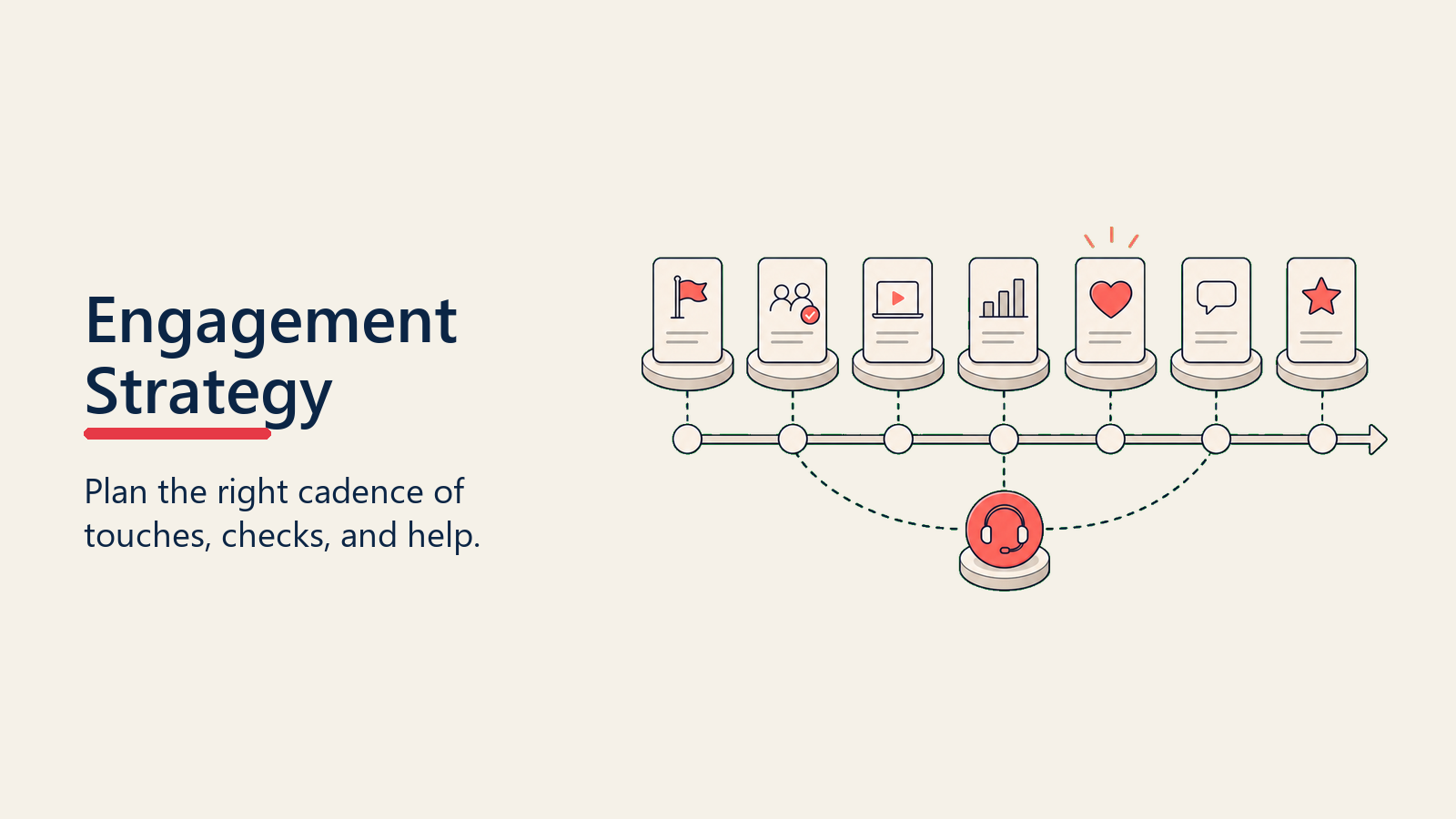
Sebagian besar program onboarding yang berhasil mengikuti pola ini: check-in dalam 24-48 jam setelah kickoff, lalu lagi di pertengahan minggu sekitar hari ke-3 atau ke-4, dan sekali lagi di akhir minggu pertama.
Itu berarti 3 titik kontak dalam 7 hari untuk akun high-touch, 2 untuk mid-touch, dan 1 untuk low-touch.
Frekuensi ini disengaja. Cukup sering untuk mendeteksi masalah lebih awal, tetapi tidak terlalu sering sehingga pelanggan merasa diawasi berlebihan. Frekuensi ini juga selaras dengan ritme kerja yang alami: awal minggu, tengah minggu, dan akhir minggu.
Namun Anda perlu menyesuaikannya dengan apa yang Anda lihat. Jika pelanggan menunjukkan keterlibatan tinggi dan berjalan baik, kurangi frekuensinya sedikit. Jika keterlibatan rendah, tingkatkan frekuensi karena mereka membutuhkan dukungan lebih. Jika ada kendala teknis, lakukan check-in setiap hari sampai teratasi. Jika semuanya berjalan lancar, Anda bisa beralih ke check-in dua mingguan setelah minggu pertama.
Pemilihan Kanal: Kapan Menggunakan Email, Telepon, atau In-App
Email cocok untuk pembaruan status rutin, pertanyaan yang tidak mendesak, dan berbagi dokumentasi. Sifatnya asinkron, terdokumentasi, dan pelanggan bisa membalas sesuai jadwal mereka. Kekurangannya, email bisa diabaikan, kurang personal, dan balasannya sering tertunda.
Telepon atau video call cocok untuk diskusi yang kompleks, membangun hubungan, dan saat email tidak mendapat respons. Anda mendapatkan kedekatan personal, pemecahan masalah secara langsung, dan bisa membaca nada serta tingkat keterlibatan. Namun panggilan membutuhkan penjadwalan dan bisa terasa mengganggu jika berlebihan.
Pesan in-app sangat baik untuk tips singkat, sorotan fitur, dan panduan kontekstual. Pesan muncul saat pelanggan benar-benar menggunakan produk Anda dan tidak mengganggu, tetapi juga mudah diabaikan dan terbatas kedalamannya.
Berikut yang berjalan baik dalam praktik. Untuk check-in pertama di hari ke-1 sampai 2, kirim email. Hambatannya rendah, mengonfirmasi langkah berikutnya, dan membuat proses bergerak. Untuk titik kontak tengah minggu di hari ke-3 sampai 4, putuskan berdasarkan sinyal. Telepon jika ada kekhawatiran, kirim email jika mereka jelas berjalan sesuai rencana. Untuk check-in akhir minggu di hari ke-5 sampai 7, lakukan lewat telepon. Cara ini personal, memperkuat hubungan, dan memungkinkan Anda merencanakan minggu kedua bersama.
Keseimbangan: Penuh Perhatian atau Justru Mengganggu
Anda tahu Anda penuh perhatian (dalam arti yang baik) ketika pelanggan merespons check-in Anda dengan positif, masalah terdeteksi dan terselesaikan dengan cepat, mereka mengatakan hal seperti "terima kasih sudah mengawal ini," dan momentum terjaga.
Anda tahu Anda terlalu mengganggu ketika pelanggan berkata "nanti saya hubungi kalau butuh bantuan," tingkat respons terhadap check-in Anda menurun, nada balasan mereka terdengar kesal atau singkat, atau Anda menambah pekerjaan mereka dengan permintaan yang terus-menerus.
Saat perlu menyesuaikan, bersikaplah langsung. Tanyakan: "Apakah ritme check-in ini sudah cocok untuk Anda, atau Anda lebih suka pembaruan yang lebih jarang?" Perhatikan pola respons, jika mereka berhenti membalas, berarti Anda berlebihan. Coba tawarkan: "Saya akan menghubungi Anda hari Jumat, kecuali Anda membutuhkan saya lebih cepat." Dan pastikan check-in Anda bernilai. Jangan hanya berkata "sekadar menyapa." Katakan "inilah yang saya lihat dan langkah berikutnya."
Check-In Hari ke-1 sampai 2: Memastikan Awal yang Kuat
Hubungi pelanggan dalam 24-48 jam setelah pertemuan kickoff. Tujuan Anda sederhana: memastikan pelanggan memiliki akses dan bisa login, memverifikasi bahwa mereka sudah mulai mengerjakan daftar tindakan dari kickoff, menjawab pertanyaan yang muncul segera, dan menetapkan ekspektasi untuk minggu pertama.
Pertanyaan Kunci yang Perlu Diajukan
Mulailah dengan akses dan dasar-dasar teknis. "Apakah Anda berhasil login? Ada kendala dengan SSO atau kredensial?" Periksa apakah tim bisa mengakses sistem atau ada masalah izin akses. Pastikan mereka sudah menerima email sambutan dan petunjuk penyiapan.
Lalu beralih ke daftar tindakan. "Anda berencana untuk [apa pun yang mereka sanggupi saat kickoff]. Ada pertanyaan saat mulai mengerjakannya?" Tanyakan apakah mereka sudah memiliki semua yang dibutuhkan dari Anda untuk menyelesaikan tugasnya. Periksa apakah jadwal yang dibahas masih realistis atau perlu disesuaikan.
Jangan lupakan para stakeholder. "Sudahkah Anda terhubung dengan tim IT, tim data, atau siapa pun yang perlu dilibatkan?" Tanyakan apakah ada pihak lain yang perlu diberi kabar yang belum dibahas saat kickoff.
Dan selalu tanyakan soal hambatan. "Adakah yang menghambat kemajuan Anda dan bisa kami bantu? Adakah pertanyaan yang muncul setelah pertemuan kickoff?"
Hal yang Perlu Diperhatikan (Red Flag)
Masalah akses adalah red flag yang langsung terlihat. Pelanggan tidak bisa login? Perbaiki sekarang juga. SSO tidak berfungsi? Eskalasikan ke tim teknis Anda. Ada anggota tim yang belum memiliki akses? Berikan akses segera.
Perhatikan sinyal keterlibatan. Hijau berarti mereka sudah login, mulai menjelajah, dan mengajukan pertanyaan yang matang. Kuning berarti mereka sudah login tetapi belum banyak berbuat, atau mengajukan pertanyaan yang terlalu umum. Merah berarti mereka belum login, beralasan sibuk, atau nadanya defensif.
Sinyal komitmen juga penting. Hijau berarti daftar tindakan sudah dimulai atau selesai dan stakeholder terlibat. Kuning berarti tindakan "sedang berjalan" dengan jadwal yang samar. Merah berarti tindakan belum dimulai, pelanggan "belum sempat," atau menolak jadwal yang Anda ajukan.
Amati pola komunikasi. Hijau berarti responsif, terlibat, dan bernada positif. Kuning berarti balasan lambat, jawaban singkat, dan nada netral. Merah berarti tidak ada respons sama sekali, atau nadanya negatif dan frustrasi.
Memberikan Sumber Referensi Cepat
Jangan hanya melakukan check-in. Berikan nilai tambah. Kirim panduan atau video untuk memulai. Sediakan lembar contekan untuk tugas-tugas umum. Bagikan tautan ke pusat bantuan Anda dengan penanda ke bagian yang relevan. Tawarkan artikel atau video tertentu sesuai kasus penggunaan mereka.
Misalnya: "Saya lihat Anda sedang menyiapkan approval workflow. Ini video 3 menit yang menjelaskan persis hal itu: [tautan]. Kabari saya jika Anda menemui kendala."
Cara ini mengubah "sekadar menyapa" menjadi "membantu Anda berhasil."
Check-In Tengah Minggu (Hari ke-3 sampai 4): Validasi Kemajuan
Lakukan check-in lagi di hari ke-3 atau ke-4. Anda memvalidasi kemajuan tugas penyiapan awal, mengidentifikasi kebingungan atau hambatan, memastikan keterlibatan stakeholder, dan menyesuaikan rencana jika perlu.
Penilaian Kemajuan
Tanyakan tentang kemajuan konfigurasi: "Bagaimana penyiapan akunnya? Adakah yang tidak berfungsi sebagaimana mestinya?" Periksa pekerjaan data atau integrasi: "Apakah Anda sudah mendapatkan ekspor data dari sistem lama? Ada masalah kualitas?" Konfirmasikan kehadiran pelatihan: "Apakah tim Anda sudah terkonfirmasi untuk pelatihan pada [tanggal]?"
Dan lihat juga penggunaan awal di analitik produk Anda. Siapa yang sudah login? Apa yang mereka lakukan?
Coba ajukan pertanyaan seperti "Apa yang sudah berhasil Anda capai sejak kita terakhir berbicara?" atau "Apa yang sedang Anda kerjakan hari ini?" atau "Adakah yang memakan waktu lebih lama dari perkiraan atau lebih rumit dari yang Anda kira?"
Penggunaan Awal dan Eksplorasi
Buka data penggunaan produk Anda. Lihat jumlah login dalam 3-4 hari pertama, fitur mana yang sudah dicoba, berapa lama mereka berada di dalam produk, dan pola error atau tindakan yang gagal.
Penggunaan tinggi (beberapa kali login, menjelajahi fitur) berarti pelanggan terlibat, penasaran, dan termotivasi. Penggunaan sedang (1-2 kali login, tindakan dasar) berarti mereka berhati-hati atau sibuk dan perlu didorong. Tidak ada penggunaan sama sekali adalah red flag yang menuntut penjangkauan segera untuk memahami alasannya.
Jika penggunaan tinggi, katakan sesuatu seperti: "Saya lihat Anda sudah menjelajahi [fitur]. Bagus! Apakah Anda punya pertanyaan tentang [fitur terkait]?" Jika penggunaan sedang: "Saya lihat Anda sudah login dan mencoba [fitur]. Bagaimana hasilnya? Mau saya tunjukkan [fitur berikutnya yang logis]?" Jika tidak ada penggunaan: "Saya perhatikan Anda belum sempat login. Apakah ada yang menghambat, atau bisakah kita jadwalkan 15 menit untuk membantu Anda memulai?"
Kendala Teknis dan Titik Kebingungan
Masalah umum di minggu pertama meliputi konfigurasi yang lebih rumit dari perkiraan, izin integrasi yang belum diberikan, kualitas data yang lebih buruk dari dugaan, pengguna yang bingung cara melakukan sesuatu, atau fitur yang tidak bekerja seperti yang mereka harapkan.
Saat menemui hal ini, akui masalahnya: "Ini memang lebih rumit dari seharusnya, biar saya bantu." Selesaikan jika bisa, eskalasikan ke tim teknis jika tidak. Dokumentasikan masalahnya untuk memperbaiki onboarding bagi pelanggan berikutnya. Dan lakukan tindak lanjut untuk memastikan masalahnya tuntas, jangan biarkan berlarut-larut.
Konfirmasi Jadwal
Lakukan pengecekan realitas. "Apakah kita masih sesuai rencana untuk [milestone] pada [tanggal]? Adakah hal yang membuat Anda merasa kita butuh waktu lebih? Apakah kapasitas tim Anda sesuai perkiraan, atau ada kendala beban kerja?"
Jika jadwal bergeser, identifikasi akar penyebabnya. Apa yang menyebabkan keterlambatan? Lalu sesuaikan rencana. Perpanjang jadwal, kurangi cakupan, atau tambah sumber daya. Komunikasikan perubahan kepada semua stakeholder. Dan jangan berpura-pura semuanya baik-baik saja saat kenyataannya tidak. Akui kenyataan dan sesuaikan secara proaktif.
Check-In Akhir Minggu ke-1: Tinjauan Milestone dan Perencanaan Minggu ke-2
Pada akhir minggu ke-1 (hari ke-5 sampai 7), Anda ingin merayakan kemajuan, mengidentifikasi kekhawatiran sebelum akhir pekan, merencanakan prioritas minggu kedua, dan menegaskan bahwa dukungan selalu tersedia.
Pencapaian Milestone Minggu ke-1
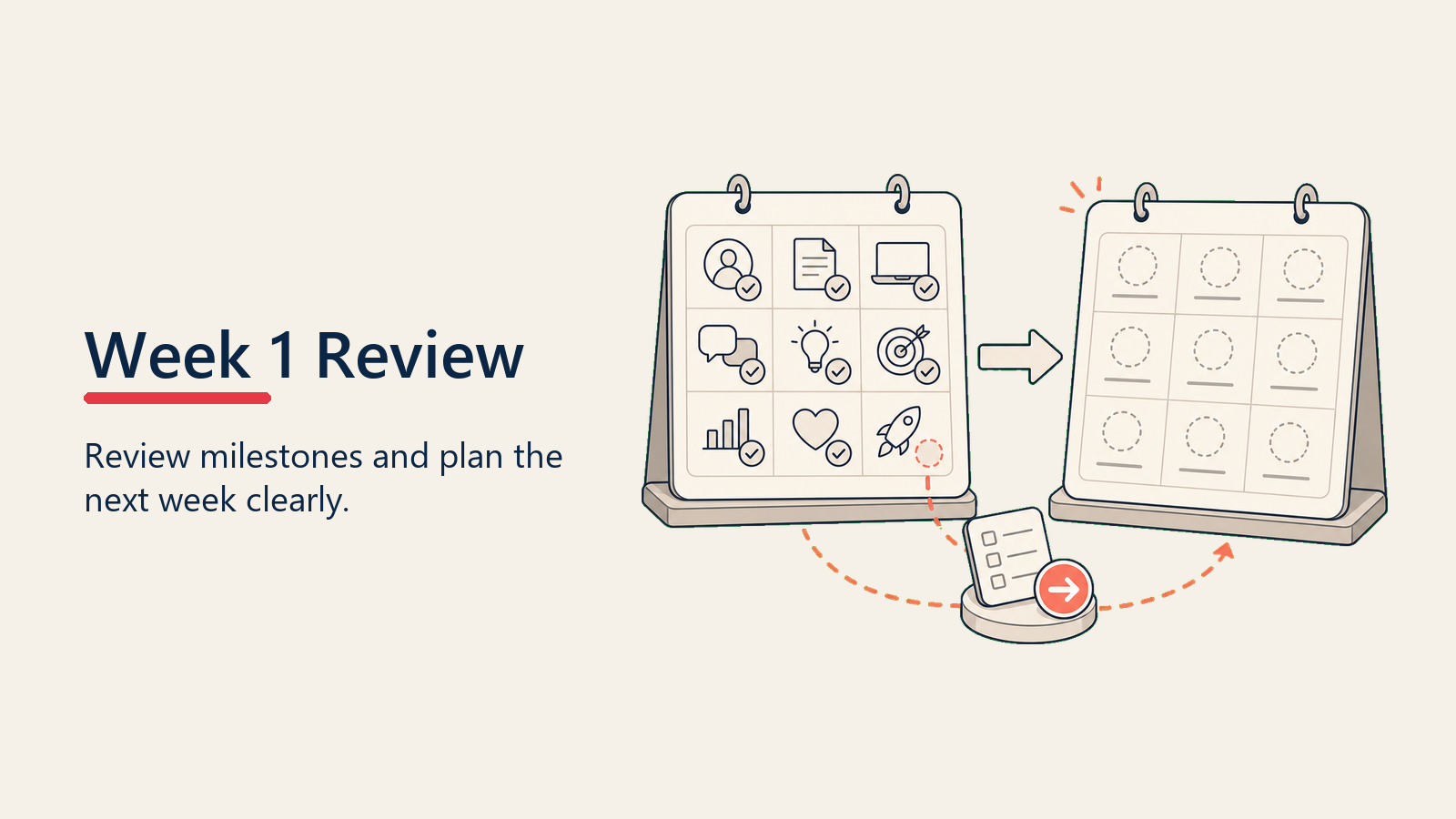
Milestone khas minggu ke-1 meliputi semua pengguna memiliki akses dan bisa login, konfigurasi awal selesai, pelanggan sudah menjelajahi fitur inti, daftar tindakan kickoff selesai atau sedang berjalan, dan rencana minggu ke-2 terkonfirmasi.
Tinjau milestone dengan berkata: "Inilah yang telah kita capai minggu ini: [daftar pencapaian]. Anda telah menyelesaikan [tindakan], yang membuat kita siap untuk minggu depan. Mari kita tinjau rencana minggu ke-2 agar kita tetap selaras."
Jika ada milestone yang terlewat, jangan diabaikan. "Kita merencanakan [milestone] selesai, tetapi kita belum sampai di sana." Cari tahu penyebabnya: "Apa yang menghalangi? Bagaimana kita bisa menyesuaikannya?" Buat rencana pemulihan: "Mari kita selesaikan [milestone] pada hari Selasa, sehingga [milestone berikutnya] bergeser ke hari Jumat." Dapatkan komitmen: "Apakah jadwal itu cocok? Apa yang Anda butuhkan dari saya agar ini terwujud?"
Merayakan Kemajuan Awal
Perayaan itu penting karena membangun kepercayaan diri dan momentum, memperkuat perilaku positif, menciptakan ikatan emosional dengan keberhasilan, dan mendorong keterlibatan yang berkelanjutan.
Rayakan login pertama: "Anda dan tim sudah masuk ke sistem, itu langkah pertama!" Rayakan workflow pertama yang dibuat: "Approval workflow yang Anda buat terlihat bagus." Rayakan integrasi pertama yang terhubung: "Data CRM Anda mengalir, persis seperti rencana." Rayakan keterlibatan tim: "Seluruh tim Anda hadir di pelatihan, itu komitmen yang luar biasa."
Anda bisa mengapresiasinya secara eksplisit dalam check-in: "Ini milestone yang besar, kerja bagus." Kirim email yang menyoroti pencapaian itu dengan tangkapan layar atau data. Bagikan visualisasi kemajuan: "Anda sudah 30% melewati onboarding!" Sertakan executive sponsor dalam salinan email tentang pencapaian itu: "Sebagai informasi, ada kemajuan bagus minggu ini..."
Merencanakan Prioritas Minggu ke-2
Minggu ke-2 biasanya berfokus pada penyelesaian penyiapan teknis (menuntaskan konfigurasi yang tersisa), memulai pelatihan dan enablement, memulai penggunaan produksi (workflow percontohan), serta pengujian dan validasi integrasi.
Bahaslah bersama: "Inilah fokus kita minggu depan: [prioritas]. Anda perlu [tindakan], apakah sudah jelas apa yang harus dilakukan? Kita perlu [menjadwalkan pelatihan, menguji integrasi, meninjau data], kapan waktu yang cocok untuk Anda? Adakah kekhawatiran tentang rencana minggu depan?"
Menegaskan Ketersediaan Dukungan
Kirim pesan ini: "Kami siap membantu. Jika Anda menemui kendala atau memiliki pertanyaan selama akhir pekan atau minggu depan, jangan ragu untuk menghubungi kami. Waktu respons biasanya [X jam] pada jam kerja."
Hal ini mengurangi kecemasan karena merasa buntu, mendorong pelanggan bertanya alih-alih bergulat sendiri, menetapkan ekspektasi tentang ketersediaan dukungan, serta membangun kepercayaan dan keyakinan.
Menyesuaikan dengan Sinyal Pelanggan
Keterlibatan Tinggi: Percepat Jadwal
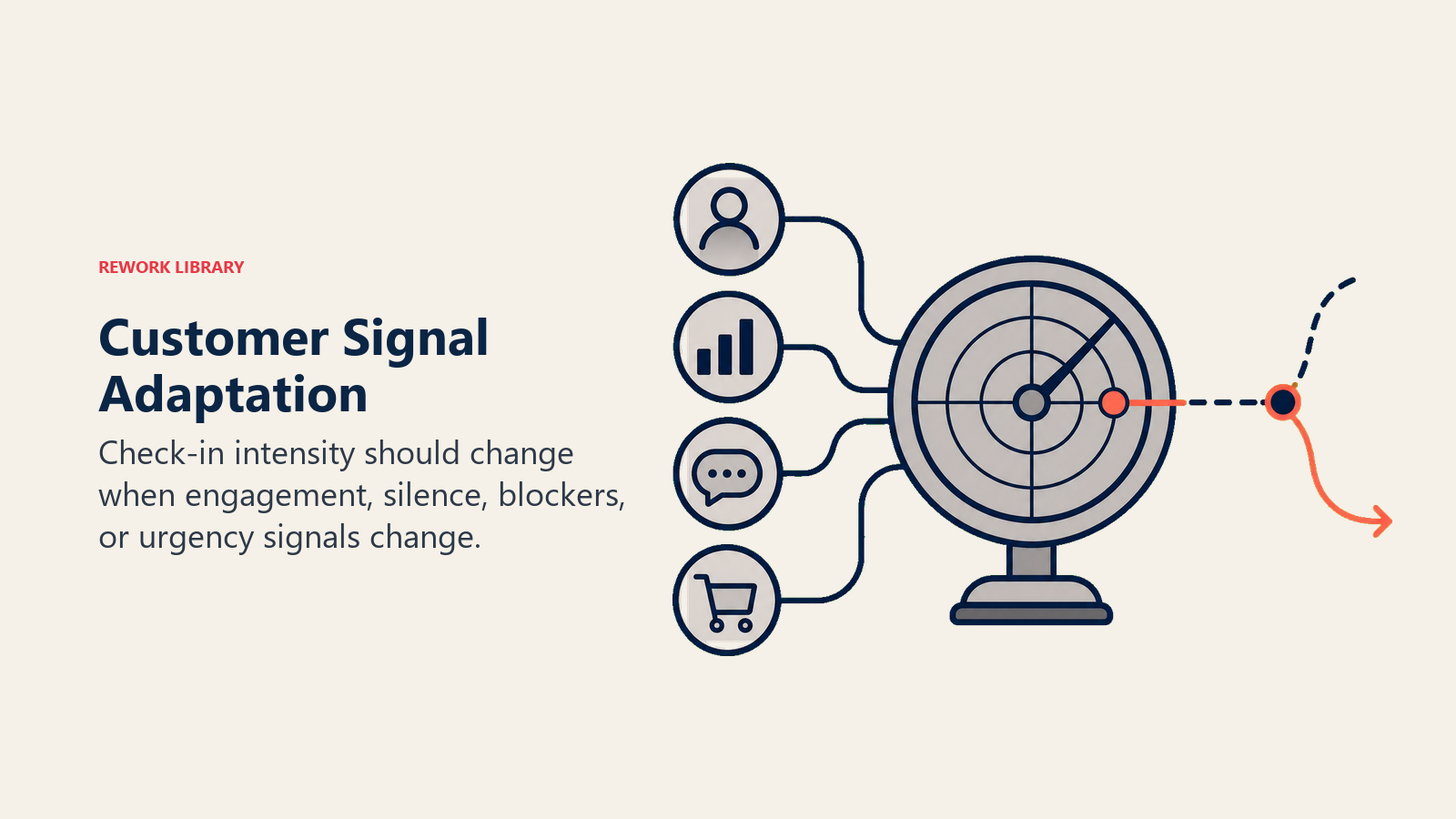
Anda akan melihat keterlibatan tinggi saat pelanggan menyelesaikan tugas lebih cepat dari rencana, mengajukan pertanyaan lanjutan tentang fitur, aktif menggunakan produk, berkomunikasi secara proaktif, dan memiliki stakeholder yang terlibat serta mendukung.
Saat melihat ini, percepat jadwalnya: "Anda lebih cepat dari jadwal, mau memajukan [milestone berikutnya]?" Perkenalkan topik lanjutan lebih awal: "Karena Anda sudah menguasai [dasar-dasarnya], izinkan saya menunjukkan [fitur lanjutan]." Kurangi frekuensi check-in: "Anda luar biasa. Saya akan menghubungi Anda Senin depan kecuali Anda membutuhkan saya lebih cepat." Anda bahkan bisa memperluas cakupan dengan hati-hati: "Mau menambahkan [kasus penggunaan tambahan] ke fase ini?"
Keterlibatan Rendah: Selidiki dan Tangani
Keterlibatan rendah terlihat dari pelanggan yang tidak merespons check-in, penggunaan produk yang minim, tindakan yang tidak diselesaikan, jawaban yang samar atau defensif, dan pertemuan yang berulang kali dijadwalkan ulang.
Lakukan percakapan langsung: "Saya merasa kita belum mendapat traksi. Apa yang sebenarnya terjadi?" Pahami akar penyebabnya. Apakah masalah beban kerja? Champion yang kurang tepat? Dukungan eksekutif yang hilang? Produk yang tidak cocok? Tawarkan bantuan: "Apa yang bisa saya lakukan agar ini lebih mudah atau membantu Anda memprioritaskannya?" Eskalasikan jika perlu: "Perlukah kita melibatkan atasan Anda atau pimpinan kami agar ini berhasil?" Tetapkan ekspektasi: "Agar ini berhasil, kita membutuhkan [X]. Bisakah Anda berkomitmen untuk itu?"
Lakukan eskalasi saat pelanggan tidak responsif selama 5 hari kerja atau lebih, secara eksplisit menyatakan bahwa mereka tidak memprioritaskan ini, berulang kali melewatkan tindakan tanpa penjelasan, atau menunjukkan tanda-tanda penyesalan setelah membeli.
Kebingungan: Tambahkan Pelatihan atau Sumber Daya
Kebingungan terlihat dari pertanyaan tentang konsep dasar yang Anda kira sudah jelas, pelanggan yang mencoba alur kerja atau pendekatan yang salah, frustrasi dengan kompleksitas produk, atau keluhan "ini tidak berfungsi" padahal penyebabnya kesalahan pengguna, bukan bug.
Jangan menyalahkan pelanggan: "Itu titik kebingungan yang umum, biar saya perjelas." Tawarkan pelatihan tambahan: "Mau melakukan screen-share singkat agar saya bisa menunjukkannya?" Sediakan dokumentasi yang lebih baik: "Ini panduan langkah demi langkah untuk hal itu." Sederhanakan pendekatannya: "Ada cara yang lebih mudah, biar saya tunjukkan." Dan catat sebagai bahan perbaikan proses onboarding Anda di masa depan.
Kendala Teknis: Eskalasikan dengan Cepat
Masalah teknis meliputi fitur yang tidak berfungsi sebagaimana mestinya, integrasi yang gagal, masalah performa (pemuatan lambat, timeout), serta kesalahan atau kerusakan data.
Akui segera: "Ini seharusnya tidak terjadi, biar saya minta tim teknis kami menanganinya." Eskalasikan ke tim engineering atau support, jangan mencoba menyelesaikannya sendiri jika di luar kemampuan Anda. Tetapkan ekspektasi: "Kami akan memberikan jawaban dalam [jangka waktu]." Lakukan tindak lanjut secara proaktif, jangan menunggu pelanggan menanyakan perkembangan. Jaga agar mereka tetap terinformasi, bahkan jika masalahnya belum selesai, sampaikan perkembangannya.
Jangan mengabaikan masalah teknis dengan berharap hilang sendiri. Jangan mencari-cari alasan atau menyalahkan pelanggan. Jangan biarkan masalah teknis berlarut tanpa penyelesaian. Dan jangan kurang berkomunikasi, pelanggan akan mengira Anda tidak menanganinya jika tidak mendengar kabar dari Anda.
Template Komunikasi dan Praktik Terbaik
Template Email Check-In Hari ke-1 sampai 2
Subjek: Check-in singkat - bagaimana minggu pertamanya?
Halo [Nama]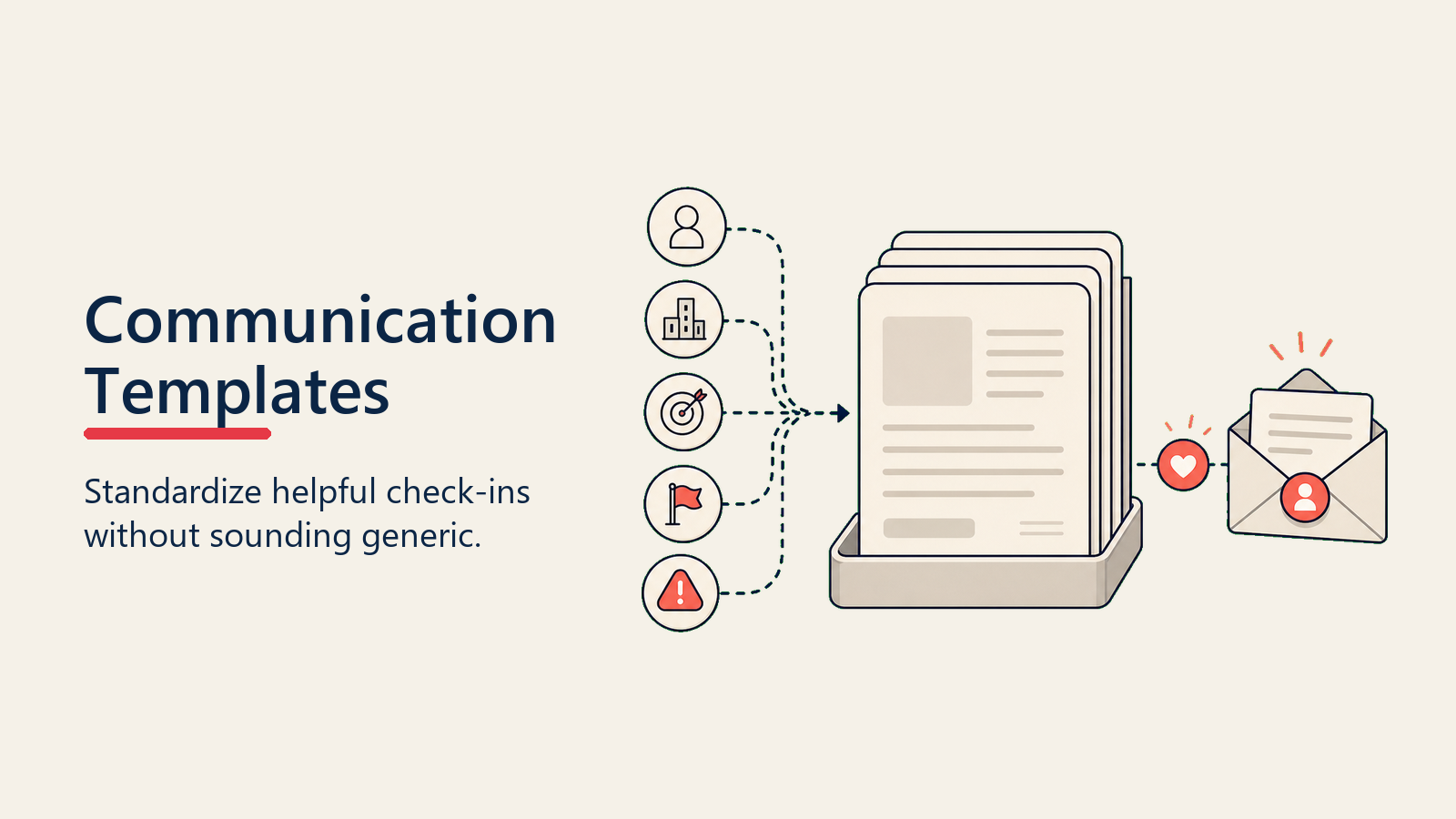
Semoga kickoff kemarin bersama [nama CSM] berjalan lancar! Saya ingin menyapa sebentar untuk memastikan Anda memulai dengan baik.
Beberapa pertanyaan singkat:
- Apakah Anda berhasil login?
- Adakah kendala dengan [tindakan dari kickoff]?
- Adakah pertanyaan yang muncul sejak pertemuan kickoff?
Saya melihat di sistem bahwa [pengamatan positif dari data penggunaan], itu bagus sekali!
Fokus minggu ini: [Ingatkan prioritas minggu ke-1]
Kabari saya jika Anda menemui kendala. Saya siap membantu.
[Nama Anda]
Skrip Check-In Tengah Minggu (Telepon)
"Halo [Nama], saya hanya ingin menanyakan kabar perkembangannya. Ada beberapa hal yang ingin saya bahas:
Kemajuan: Apa yang sudah berhasil Anda capai sejak hari Senin? [Dengarkan, apresiasi]
Hambatan: Adakah yang memakan waktu lebih lama dari perkiraan atau membuat Anda buntu? [Dengarkan, cari solusi]
Penggunaan: Saya lihat Anda sudah menjelajahi [fitur], bagaimana perkembangannya? [Dengarkan, beri arahan]
Langkah berikutnya: Untuk sisa minggu ini, fokuslah pada [prioritas]. Apakah itu sejalan dengan rencana Anda? [Konfirmasi keselarasan]
Adakah hal lain yang Anda butuhkan dari saya?"
Template Email Ringkasan Akhir Minggu
Subjek: Minggu ke-1 selesai - kemajuan yang bagus!
Halo [Nama],
Minggu pertama sudah terlewati! Inilah yang telah kita capai:
Selesai:
- ✓ Seluruh anggota tim memiliki akses dan bisa login
- ✓ Konfigurasi inti selesai
- ✓ [Pencapaian spesifik pelanggan]
- ✓ [Pencapaian spesifik lainnya]
Prioritas minggu depan:
- [Prioritas 1] - Anda mengerjakannya, saya mendukung
- [Prioritas 2] - kita tangani bersama pada sesi hari Selasa
- [Prioritas 3] - saya yang akan mengurusnya dari sisi kami
Milestone: Anda berada di jalur yang tepat untuk [milestone besar berikutnya] pada [tanggal].
Selamat berakhir pekan. Hubungi saya kapan saja jika ada pertanyaan.
[Nama Anda]
Otomatisasi dan Penskalaan Keterlibatan Minggu Pertama
Untuk akun high-touch, semua check-in harus dipersonalisasi dan dilakukan secara manual. CSM memantau penggunaan setiap hari dan melakukan penjangkauan proaktif berdasarkan sinyal.
Untuk akun mid-touch, Anda bisa mengotomatiskan check-in hari ke-1 sampai 2 (email dengan personalisasi), tetapi check-in tengah minggu dan akhir minggu tetap manual dan dipimpin CSM. Otomatiskan pemantauan penggunaan dengan peringatan untuk red flag.
Untuk akun low-touch atau self-serve, otomatiskan semua check-in tetapi tetap personal. Gunakan prompt in-app sebagai panduan. Libatkan CSM hanya saat ada peringatan red flag. Arahkan pertanyaan ke komunitas atau support.
Alat otomatisasi meliputi rangkaian email yang dipicu oleh dimulainya onboarding, pesan in-app berdasarkan perilaku pengguna, peringatan penggunaan yang memicu penjangkauan CSM, serta penugasan tugas dan pengingat otomatis.
Namun jangan otomatiskan penanganan krisis (pelanggan sedang dalam masalah), pemecahan masalah yang kompleks, pembangunan hubungan dengan executive sponsor, serta negosiasi dan percakapan yang sulit.
Kesimpulan
Minggu pertama onboarding bukan beban administratif. Ini adalah peluang berdampak terbesar Anda untuk menetapkan arah, mendeteksi masalah sejak dini, dan membangun fondasi hubungan yang menentukan keberhasilan jangka panjang.
Pelanggan yang menerima keterlibatan minggu pertama yang terstruktur dan penuh perhatian menunjukkan time to value 40-60% lebih cepat, 30-50% lebih sedikit keterlambatan onboarding, tingkat adopsi 25-35% lebih tinggi, dan retensi lebih tinggi 15-20 poin persentase.
Pelanggan yang diabaikan atau hanya disentuh sekilas di minggu pertama kesulitan membangun momentum, membiarkan masalah kecil menumpuk menjadi masalah besar, dan memulai hubungan dengan keraguan, bukan keyakinan.
Strateginya sederhana: lakukan check-in sejak dini dan sering, deteksi sinyal, tangani masalah sebelum menumpuk, rayakan keberhasilan, dan tegaskan bahwa Anda berinvestasi pada keberhasilan mereka.
Tiga check-in di minggu pertama bukan pengawasan berlebihan. Itu cara membuat pelanggan Anda siap menang.
Siap membangun strategi keterlibatan onboarding Anda? Pelajari praktik terbaik kickoff meeting, perencanaan implementasi, dan optimalisasi time to value.
Pelajari lebih lanjut:

On this page
- Minggu Pertama yang Kritis: Mengapa Keterlibatan Sejak Dini Penting
- Momentum Memuncak Saat Pembelian
- Masalah Menumpuk Seiring Waktu
- Menetapkan Ekspektasi untuk Hubungan Jangka Panjang
- Strategi Keterlibatan Minggu Pertama
- Frekuensi Optimal: Menyeimbangkan Perhatian dan Gangguan
- Pemilihan Kanal: Kapan Menggunakan Email, Telepon, atau In-App
- Keseimbangan: Penuh Perhatian atau Justru Mengganggu
- Check-In Hari ke-1 sampai 2: Memastikan Awal yang Kuat
- Pertanyaan Kunci yang Perlu Diajukan
- Hal yang Perlu Diperhatikan (Red Flag)
- Memberikan Sumber Referensi Cepat
- Check-In Tengah Minggu (Hari ke-3 sampai 4): Validasi Kemajuan
- Penilaian Kemajuan
- Penggunaan Awal dan Eksplorasi
- Kendala Teknis dan Titik Kebingungan
- Konfirmasi Jadwal
- Check-In Akhir Minggu ke-1: Tinjauan Milestone dan Perencanaan Minggu ke-2
- Pencapaian Milestone Minggu ke-1
- Merayakan Kemajuan Awal
- Merencanakan Prioritas Minggu ke-2
- Menegaskan Ketersediaan Dukungan
- Menyesuaikan dengan Sinyal Pelanggan
- Keterlibatan Tinggi: Percepat Jadwal
- Keterlibatan Rendah: Selidiki dan Tangani
- Kebingungan: Tambahkan Pelatihan atau Sumber Daya
- Kendala Teknis: Eskalasikan dengan Cepat
- Template Komunikasi dan Praktik Terbaik
- Template Email Check-In Hari ke-1 sampai 2
- Skrip Check-In Tengah Minggu (Telepon)
- Template Email Ringkasan Akhir Minggu
- Otomatisasi dan Penskalaan Keterlibatan Minggu Pertama
- Kesimpulan