Bahasa Indonesia
Webinar dan Event Participation: Engaging Customers dalam Virtual dan Live Events
Turn this article into takeaways for your work.


Each assistant summarizes the article only for you and suggests best practices for your work.
Saya belajar lesson ini dengan cara yang sulit: events di mana customer hanya duduk dan mendengarkan adalah wasted opportunities. Real magic terjadi ketika customer Anda di stage, sharing stories mereka, leading discussions, dan connecting dengan satu sama lain.
Tiga tahun lalu, saya mengorganisir apa yang saya pikir akan menjadi great user conference. Kami punya polished presentations dari executive team kami, impressive product demos, dan bahkan hired keynote speaker. Attendance decent. Feedback was... fine. Tapi enam bulan kemudian, saya tidak bisa point ke single advocate yang kami buat atau customer relationship yang meaningfully deepened.
Tahun berikutnya, kami flipped the script. Customer speakers led 35% dari sessions. Kami ran roundtables di mana practitioners talked tentang real challenges (bukan product features kami). Kami created space untuk organic networking daripada cramming setiap menit dengan presentations. Perbedaannya dramatic—bukan hanya di satisfaction scores, tapi di renewal rates, expansion revenue, dan jumlah customer yang proaktif referred new business.
Berikut apa yang saya pelajari tentang mengubah customers dari passive attendees menjadi active participants.
Event Types and What They're Actually For
Customer Education Webinars
Ini adalah bread and butter Anda—monthly atau quarterly sessions yang mengajar customer cara mendapatkan lebih banyak value dari produk Anda. Tapi inilah yang membuatnya work: mereka tidak bisa hanya feature walkthroughs. Education webinar terbaik menjawab specific questions yang customer Anda sudah bertanya.
Saya menjalankan kami seperti ini: 45 menit content, 15 menit Q&A. Kadang-kadang itu kami teaching. Tapi semakin, kami invite customers yang telah mastered particular workflow untuk co-present. Ketika customer menunjukkan customers lain cara mereka menggunakan produk, adoption rates untuk feature itu typically jump 30-40% di bulan berikutnya.
Format works karena attendees melihat diri mereka di presenter. Ketika customer success team kami menunjukkan cara build dashboard, it's instructional. Ketika Sarah dari mid-sized logistics company menunjukkan exact dashboard yang dia build dan bagaimana dia convinced timnya untuk menggunakannya, itu transformational.
Apa yang customer lakukan di sini:
- Attend dan ask questions di chat
- Share approach mereka sendiri selama Q&A
- Occasionally co-present workflow mereka
- Connect dengan attendees lain yang memiliki similar challenges
Run ini secara konsisten. Monthly ideal jika Anda bisa sustain content pipeline. Quarterly works jika produk Anda evolve lebih slowly.
Co-Hosted Webinars
Ini adalah di mana marketing meets relationship building. Anda partnering dengan customer untuk create sesuatu yang generates leads untuk Anda berdua sementara deepening connection Anda dengan mereka.
Economics work untuk semua orang: mereka mendapat visibility ke audience Anda (yang mungkin include ideal prospects mereka), Anda mendapat credibility melalui endorsement mereka, dan attendees mendapat real-world insights daripada sales pitch.
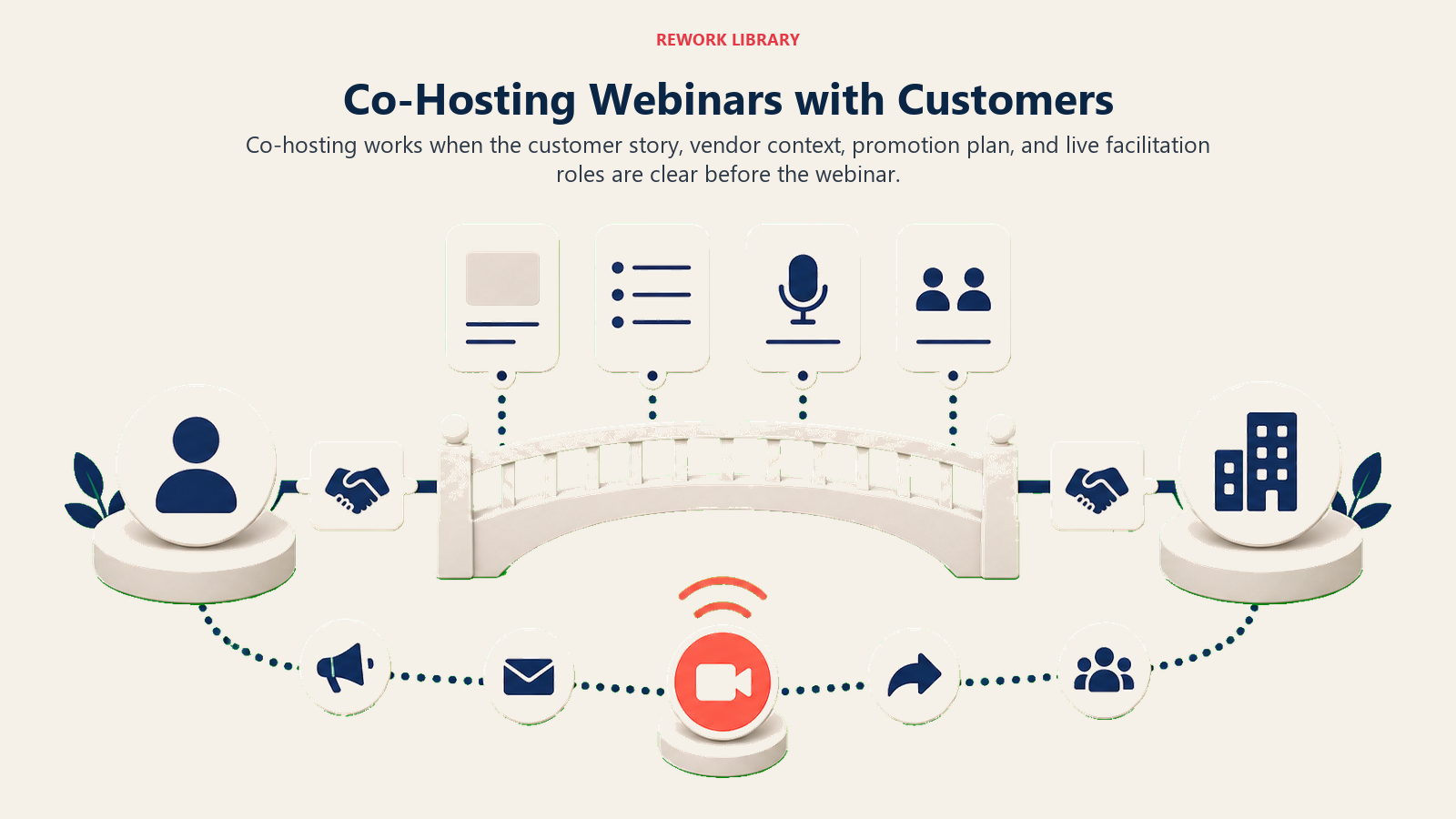
Saya telah belajar ini work best ketika Anda structure mereka sebagai problem-solution stories. Customer owns "problem and context" section—mereka talk tentang apa yang mereka facing, kenapa itu mattered, apa yang mereka tried. Kemudian Anda facilitate "solution" section bersama, dengan mereka describing bagaimana mereka implemented itu dan results apa yang mereka lihat.
Berikan customer 60-70% airtime. Mereka adalah draw. Anda adalah supporting actor.
Common mistakes yang saya lihat:
- Letting your team dominate talking (it becomes sales pitch)
- Choosing customers dengan weak stories karena mereka easy to recruit
- Not helping customer promote it ke network mereka (Anda leaving attendance on the table)
- Doing one-off webinars daripada building ongoing series
Promotion reality check: Jika hanya Anda promote it, expect 50-150 registrants depending on list size Anda. Jika customer actively promote too (email ke network mereka, LinkedIn posts, telling industry peers mereka), Anda bisa double atau triple that. Make promotion easy untuk mereka—provide templates, graphics, bahkan draft social posts.
User Conferences
Annual gathering Anda adalah either massive opportunity atau expensive disappointment. Perbedaannya comes down ke customer involvement.
Ketika saya talk ke CSMs tentang customers mana yang invite untuk speak, saya mendapat response yang sama: "But our customers aren't good presenters" atau "They're too busy." Kadang-kadang itu true. Tapi usually, kami haven't asked right customers atau made it worth their time.
Inilah seperti apa good customer track looks: 20-40% dari sessions Anda adalah customer-led. Bukan hanya success stories (though those matter), tapi implementation lessons, best practices panels, peer roundtables di mana customers discuss challenges, dan tips-and-tricks sessions di mana power users share discoveries mereka.
Planning timeline yang actually works:
- Six months out: Open call untuk customer speakers
- Five months out: Select speakers dan confirm participation
- Four months out: Work dengan mereka pada topics dan content outlines
- Three months out: Content development dan slide creation
- Two months out: Rehearsals (yes, really—it helps them and you)
- One month out: Final tech checks dan preparation
- Event week: Support them through execution
Speaker recruitment reality: Anda akan perlu invite 3-4 customers untuk setiap speaking slot yang Anda ingin fill. Some will decline immediately. Others will commit dan then drop out. Build in redundancy.
Dan honestly? Make speakers feel like VIPs. Separate speaker lounge, exclusive dinner, thank-you gifts di hotel room mereka, professional photos yang mereka bisa use untuk marketing mereka sendiri. Ketika speakers feel valued, mereka menjadi advocates yang akan speak lagi dan refer others.
Industry Events and Trade Conferences
Third-party events ini adalah interesting opportunities jika Anda approach mereka dengan benar. Daripada hanya sponsoring booth, lihat jika Anda bisa get speaking slots—dan then invite customers untuk co-present.
Saya telah melakukan ini dengan major industry conferences. Kami apply untuk speaking slots dengan customer co-presenter already committed. Conference gets practitioner voice (mereka love that), customer gets industry visibility, dan kami get association dengan credibility mereka.
Joint booth staffing works too. Ketika customer hang out di booth Anda bahkan untuk hour, prospects melihatnya completely differently. Itu bukan "vendor trying to sell me something" tapi "this company's customer is here voluntarily talking about their experience."
Apa yang saya offer customers untuk ini:
- Free conference pass (kami cover it)
- Booth duty optional dan limited (one hour)
- Kami handle all logistics dan prep
- Mereka bisa network rest of the time
- Kami promote company dan role mereka (good untuk visibility mereka)
Virtual Summits
Ini lebih besar dari webinars, lebih kecil dari in-person conferences. Usually 2-3 hari, multi-track programming, global accessibility. Saya like mereka karena mereka remove geography sebagai barrier—Anda bisa involve customers yang tidak akan pernah travel ke physical event.
Production burden real though. Anda perlu solid platform technology, session hosts yang bisa keep energy up virtually, dan more aggressive session variety (karena Zoom fatigue is real).
Customer involvement looks like:
- Speaking across different tracks dan topics
- Panel participation (easier commitment than solo presenting)
- Moderating discussions (great untuk customers yang nervous tentang presenting)
- Live Q&A hosting
Beauty dari virtual summits adalah content library yang Anda build. Kami telah gotten 18 bulan marketing content dari annual summit kami. Setiap session menjadi standalone asset, blog post fodder, social media clips, dan sales enablement material.
Roundtables and Peer Forums
Intimate discussions ini adalah favorite format saya untuk building deep relationships. Eight to twelve customers di room (virtual or physical) discussing specific challenge yang mereka semua face. No presentations. No sales pitch. Just facilitated peer conversation.
Saya run ini quarterly untuk different customer segments: VPs of Customer Success di mid-market companies, implementation leaders di enterprise accounts, CFOs evaluating ROI. Homogeneity intentional—ketika semua orang dealing dengan similar contexts dan challenges, conversation gets real fast.
Ground rules matter: Kami use Chatham House Rules (Anda bisa share apa yang discussed tapi bukan siapa yang said it atau who attended). Ini creates space untuk honesty. People will admit struggles, share salary benchmarks, discuss vendor frustrations, dan ask questions yang mereka tidak akan pernah ask di public setting.
Apa yang membuat ini work:
- Small enough bahwa semua orang speaks
- Homogeneous enough bahwa conversation stays relevant
- Facilitated lightly—ask questions, don't lecture
- No recording (people are more honest)
- Follow-up dengan summary themes dan connection facilitation
Saya telah melihat customer relationships transform through forums ini. Ketika Anda create space untuk vulnerable, practical peer discussion, people remember. Mereka lebih likely untuk renew, expand, dan refer karena community value, bukan hanya product value.
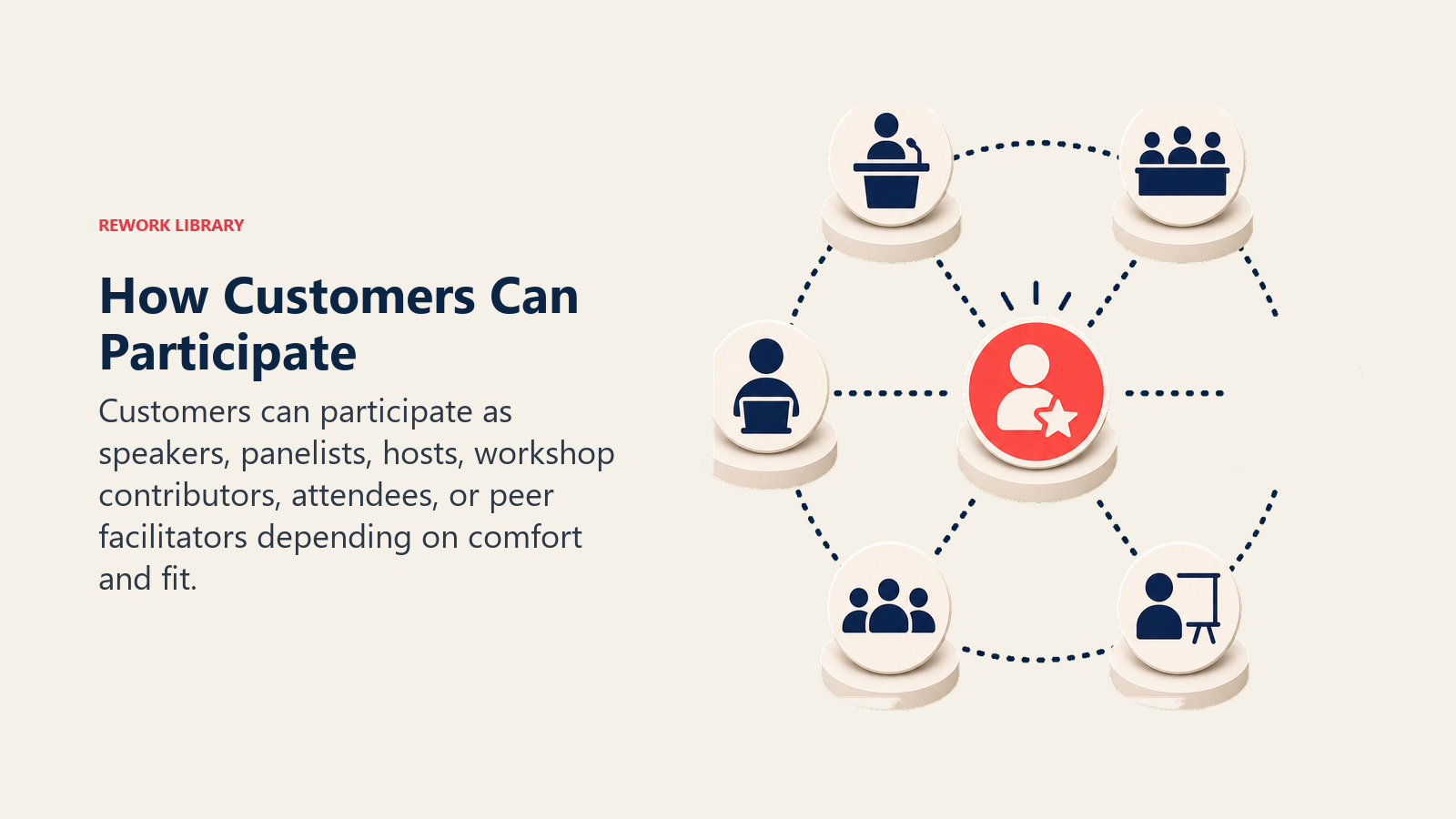
How Customers Can Participate (Beyond Sitting in Seats)
Attendees
Look, most customers will be attendees. That's fine. Tapi bahkan sebagai attendees, there are participation levels. Some people register dan ghost. Others show up, lurk silently, dan leave. Best attendees engage di chat, ask questions selama Q&A, network dengan peers, dan actually implement apa yang mereka learn.
Make attending valuable: relevant content, good production quality, networking opportunities, dan follow-up resources. Jika seseorang takes hour untuk webinar Anda, respect that time.
Panelists
Ini adalah easiest ask untuk first-time customer speakers. Being one voice among three atau four less intimidating daripada solo presenting. Prep lighter—usually 30-minute prep call untuk discuss themes dan potential questions, then 45-minute panel itself.
Kapan use panels:
- Anda ingin diverse perspectives pada one topic
- Anda punya multiple customers dengan related experiences
- Anda recruiting customers yang nervous tentang solo speaking
- Anda ingin cover more ground daripada one story provides
Panel composition: Three atau four customers ideal. Two feels thin. Five gets chaotic dan some people won't get enough airtime. Mix industries, company sizes, atau use cases untuk more interesting discussion.
Speakers
Solo atau duo presentations require more commitment—probably 10-20 jam prep ketika Anda include content development, slide creation, dan rehearsals. Tapi payoff untuk mereka bigger: maximum visibility, clear expertise demonstration, career development (especially jika mereka junior to mid-level), dan marketing assets yang mereka bisa use.
Saya wrote whole guide tentang ini—Customer Speaking Opportunities—karena there's a lot to getting this right. Speaker recruitment, content development, prep, dan appreciation all matter.
Selection criteria untuk speakers: Mereka need strong story (real results, interesting challenges, compelling arc). Mereka need to be decent communicators (doesn't have to be polished, tapi clear dan engaging). Dan honestly, mereka need to be willing untuk put in the work. Some customers say yes dan then ghost selama prep. Don't let that happen—establish clear expectations upfront.
Co-Hosts
Ini adalah partnership-level relationship. Customer Anda adalah equal presenter, bukan guest. Anda developing content together, promoting together, presenting together. Usually ini happens dengan strategic customers di mana already strong relationship dan aligned incentives.
Apa yang co-hosting looks like:
- Joint webinar development over 3-4 minggu
- Equal atau near-equal presentation time
- Both companies promote ke audiences mereka
- Co-branded materials dan landing pages
- Shared lead flow (kadang-kadang)
Saya telah melakukan ini dengan customers yang juga industry influencers atau yang have complementary offerings. One customer ran consulting firm dan co-hosted webinar dengan kami tentang change management untuk software implementations. Dia got leads untuk consulting services. Kami got credibility through expertise dia. Attendees got genuinely useful content daripada product pitch.
Moderators
Some customers adalah great facilitators tapi nervous tentang presenting content. Make them moderators. Mereka guide panel discussions, ask questions, manage time, dan ensure semua orang contributes. Itu leadership role dengan less content pressure.
Good moderator candidates:
- Customers yang naturally curious dan ask good questions
- Those yang know topic area tapi don't have specific case study untuk present
- Executives yang want visibility tanpa time investment dari content development
- Natural facilitators yang like helping others shine
Advisors and Planners
Most strategic customers Anda bisa shape event itself. Form event advisory board yang meets quarterly untuk discuss themes, topics, formats, dan speaker recommendations. Give them early access ke agendas dan ask untuk feedback.
Ini serves multiple purposes: better event design (mereka know apa yang resonates dengan customers), deeper relationship (mereka feel heard dan valued), dan advocate development (ketika customers help create something, mereka invested di success-nya).
Apa yang advisors help dengan:
- Topic selection dan session themes
- Speaker dan panelist recommendations
- Format dan schedule feedback
- Pre-event content review
- Post-event improvement discussion
Honestly, saya wish saya started advisory board earlier. Insights telah invaluable.
Recruiting Customers (The Actual Hard Part)
Getting right customers untuk participate harder daripada it should be. Inilah apa yang saya pelajari.
Who to Ask
Untuk speakers dan panelists: Anda need customers dengan strong results dan compelling stories. Tapi also: decent communicators (mereka don't have to be professionals, just clear dan engaging), enthusiasm tentang produk Anda (lukewarm customers make awkward speakers), dan diverse representation across industries, company sizes, use cases, dan demographics.
Point terakhir trip people up. Easy to default ke same customer types—usually whoever's loudest atau most accessible. Push yourself untuk recruit broadly. Ketika all your speakers dari enterprise tech companies, Anda excluding SMB customers dan industries lain yang won't see themselves represented.
Untuk roundtables: Homogeneity adalah friend Anda di sini. All VPs, atau all practitioners. All mid-market, atau all enterprise. All logistics companies, atau all financial services. Tighter peer group, more honest dan useful conversation.
Untuk advisors: Strategic accounts, product power users, customers dengan relationship depth, dan thought leaders di industries mereka. Anda want people yang actually akan show up dan contribute, bukan just want title.
The Invitation That Actually Works
Generic email blasts don't work untuk recruiting speakers atau panelists. Anda need personal outreach yang shows Anda thought tentang kenapa this specific person untuk this specific opportunity.
Inilah invitation structure yang works:
Subject: Quick question about [Event Name]
Hey Marcus,
Saya telah thinking tentang [Event Name] kami coming up di June dan immediately thought of you untuk customer panel kami tentang scaling implementation teams.
Given bagaimana Anda grew implementation team Anda dari 3 ke 15 people dalam 18 bulan (tanpa wheels falling off), saya think perspective Anda akan really valuable untuk attendees lain trying to scale.
Here's what's involved:
- 45-minute virtual panel dengan 2-3 customer success leaders lain
- Join dari wherever Anda are—no travel
- One 30-minute prep call two weeks before untuk discuss themes
- Main topics: hiring fast tanpa compromising quality, structuring teams as you scale, dan maintaining consistency
- Audience: 150-200 CS leaders facing similar growth challenges
What you get:
- Visibility ke peers di space Anda (good untuk hiring, networking, personal brand Anda)
- Connection dengan panelists lain yang scaled teams
- Full-access pass ke whole event (great speaker lineup year ini)
- Plus honestly just fun—saya think Anda would enjoy conversation
Want to chat week ini about it? No pressure jika timing doesn't work, tapi thought it was worth asking.
Tara
Kenapa ini works: It's personal dan specific (bukan template). Acknowledges actual experience dan expertise mereka. Clear tentang time commitment upfront (no surprises). Articulates apa yang mereka get out of it (bukan just asking favor). Dan makes ask easy—just conversation, bukan hard commitment immediately.
What Different Customers Value
Career-focused professionals care tentang thought leadership positioning, resume building, visibility di industry mereka, dan speaking experience. Junior to mid-level employees especially value this—it's career development yang company mereka tidak funding.
Marketing-oriented customers want co-marketing opportunities, lead generation, brand exposure, dan content yang mereka bisa use untuk promotion mereka sendiri. Jika customer Anda adalah consultant, agency, atau business yang relies pada visibility, ini compelling offer.
Product-engaged users care tentang insider access, roadmap influence, beta features, dan building relationships dengan product team Anda. Power users often fall into category ini—mereka want help shape apa yang Anda build.
Community-oriented people want peer connections, networking dengan others like them, community status, dan ongoing relationships. Mereka tidak trying to get anything transactional—mereka just like being part of something.
Tailor your pitch ke apa yang mereka actually care about. Jika Anda lead dengan "great networking opportunity" ke someone yang heads-down di product work, Anda akan lose them.
Actually Achieving Diversity
Ini requires intentional effort. Left to default, Anda akan end up dengan speakers yang look dan sound similar (probably karena mereka easiest to recruit atau most similar ke team Anda).
Be intentional tentang:
- Industry dan vertical representation (don't let it be all tech companies)
- Company sizes (show bahwa solution Anda works across SMB to enterprise)
- Geographic diversity (especially untuk global products)
- Roles dan levels (mix executives dengan practitioners)
- Gender, race, dan demographic diversity (it matters)
- Use cases dan applications (different ways people use product Anda)
- Customer maturity (new implementations vs. longtime users)
Ketika planning speaker recruitment, literally make spreadsheet dengan dimensions ini dan track apakah Anda hitting diversity goals. It won't happen by accident.
Locking in Commitments
Early interest doesn't mean someone will actually show up. Saya learned ini hard way.
Confirmation process:
- Initial interest conversation
- Send specific date, time, format, dan topic in writing
- Get calendar acceptance
- Written confirmation (email saying "yes, I'm in")
- Two weeks out: reminder dan prep scheduling
- One week out: confirmation mereka still good
- Day before: tech check dan final confirmation
Ini feels like overkill tapi prevents no-shows. People's calendars fill up, priorities shift, dan something yang felt doable six weeks ago might feel impossible now. Reminder sequence gives them graceful exit points rather than ghosting at last minute.
Co-Hosting Webinars With Customers
Co-hosted webinars adalah high-leverage jika Anda do them right. Inilah apa yang saya pelajari dari running dozens of these.
Picking Topics Customers Can Own
Topic harus something customer Anda has genuine expertise on. Generic topics ("How to Drive ROI") don't work karena they're too broad. Specific topics ("How We Reduced Onboarding Time by 60% While Doubling New Hires") work karena they're concrete dan credible.
Strong topic pattern: "How [Customer Name] Achieved [Specific Result] in [Context]"
Examples yang worked:
- "How Morrison Logistics Cut Route Planning Time by 40% in Six Months"
- "From Manual to Automated: Regional Bank's Digital Transformation Journey"
- "Scaling Support from 5 to 50 Agents Without Losing Quality: Zephyr's Story"
Topic selection criteria: Customer has authentic expertise (mereka lived it). Story compelling (real challenges, interesting solutions, measurable results). Relevant ke target audience Anda (mereka have similar challenges). Value clear (attendees will learn something useful). Dan there's natural role division—mereka tell story mereka, Anda facilitate dan provide product context where relevant.
Building Content Together (Not For Them)
Don't make mistake drafting all content yourself dan asking customer untuk approve it. Mereka become cardboard cutout reading your script. Instead, build it collaboratively.
Four-week development process:
Week 1: Alignment Jump on call dan talk through story. Apa challenge? Kenapa itu mattered? Apa yang mereka tried? Apa yang worked dan didn't work? Results apa yang mereka saw? Lessons apa yang mereka learned?
Record this call (dengan permission). Words mereka dari conversation ini often become actual content—it's more authentic daripada anything Anda akan write untuk mereka.
Agree on arc: problem → solution → results → lessons. Define siapa covers what (usually mereka own problem dan results, Anda provide solution context together).
Week 2: Draft Development Mereka draft sections mereka based on your conversation. Anda draft framing, transitions, dan product context. Create slides collaboratively (Google Slides works well untuk ini).
Send them slide template dan clear guidance on slides apa yang mereka own. Don't make them start from scratch—provide structure tapi let them fill in their content.
Week 3: Refinement First full rehearsal. Actually present ke each other seolah-olah real thing. Ini reveals timing issues, awkward transitions, dan content gaps.
Adjust based on apa yang Anda learn. Usually ini means cutting content (kami always try to cram too much), smoothing transitions, dan clarifying key messages mereka.
Week 4: Final Prep Last rehearsal focused on timing dan tech. Practice hand-offs between speakers. Test screen sharing dan slide control. Run through Q&A preparation (questions apa yang might come up, siapa answers what).
Tech check day before actual webinar. Do not skip this.
Setting Customers Up for Success
Most customers haven't presented webinars before (atau haven't in a while). Job Anda adalah make them feel confident dan prepared.
Prep call two weeks out: Walk through full flow. Show them platform. Practice transitions. Discuss timing (dan what happens jika Anda running long). Prepare untuk Q&A (questions apa yang might come up, how Anda'll filter dan pass questions ke mereka). Tech walkthrough (screen sharing, slide control, audio settings).
Record this rehearsal. Kadang-kadang customers want review it untuk see how they sound.
24-hour reminder: Confirm mereka still good to go. Send final slides. Review tech requirements one more time. Share high-level attendee profile (who's registered, companies apa, roles apa—ini helps them tailor delivery mereka). Answer any last-minute questions.
Day of, 15 minutes before: Log on early untuk tech check. Test audio dan video. Make sure screen sharing works. Confirm slide control plan (are they advancing their own slides atau are you?). Do quick emotional check-in—are they nervous? Reassure them it'll be great.
Your Role During the Webinar
Anda co-host, yang means Anda facilitate dan support tapi don't dominate.
Apa yang Anda lakukan:
- Open webinar dan set context (5 menit)
- Introduce customer dan story mereka (2 menit)
- Provide transitions between sections (1 menit each)
- Manage time (gently cue jika running long)
- Filter dan pass Q&A questions
- Handle any technical issues
- Fill gaps jika needed (tapi ini should be rare)
- Close dengan clear calls-to-action (5 menit)
Let them shine: Mereka should be talking 60-70% of the time. Jika Anda find yourself talking more than them, Anda doing it wrong. Job Anda enable story mereka, bukan tell it untuk them.
Q&A handling: Monitor questions coming in. Group similar ones. Pass relevant questions ke customer ("Maria, this question is perfect for you..."). Anda bisa answer product-specific technical questions, tapi most should go ke them—that's why attendees there.
Promotion That Actually Works
Both parties should promote, tapi make it easy untuk customer Anda do their part.
Your promotion: Email your full database (customers dan prospects). Post di LinkedIn dan Twitter dengan tagging. Feature di website dan blog Anda. Consider paid promotion jika budget allows. Have sales team Anda personally invite relevant prospects.
Customer promotion: Provide email template yang mereka bisa customize dan send ke network mereka. Create co-branded social graphics yang mereka bisa post. Draft LinkedIn post untuk mereka (mereka bisa edit, tapi starting dari blank hard). Make it one-click easy—most customers want help promote tapi don't want spend hour writing copy.
Co-branded materials: Landing page dengan both logos. Social graphics featuring both brands. Email signatures promoting webinar. Jika big customer atau timely topic, consider joint press release.
Ketika both parties promote actively, Anda typically get 2-3x registration yang Anda get alone. Plus, audience mereka sees brand Anda associated dengan company yang mereka trust.
Running User Conferences (The Big One)
Annual user conferences adalah significant investments. Inilah cara make them work.
Customer Track Planning
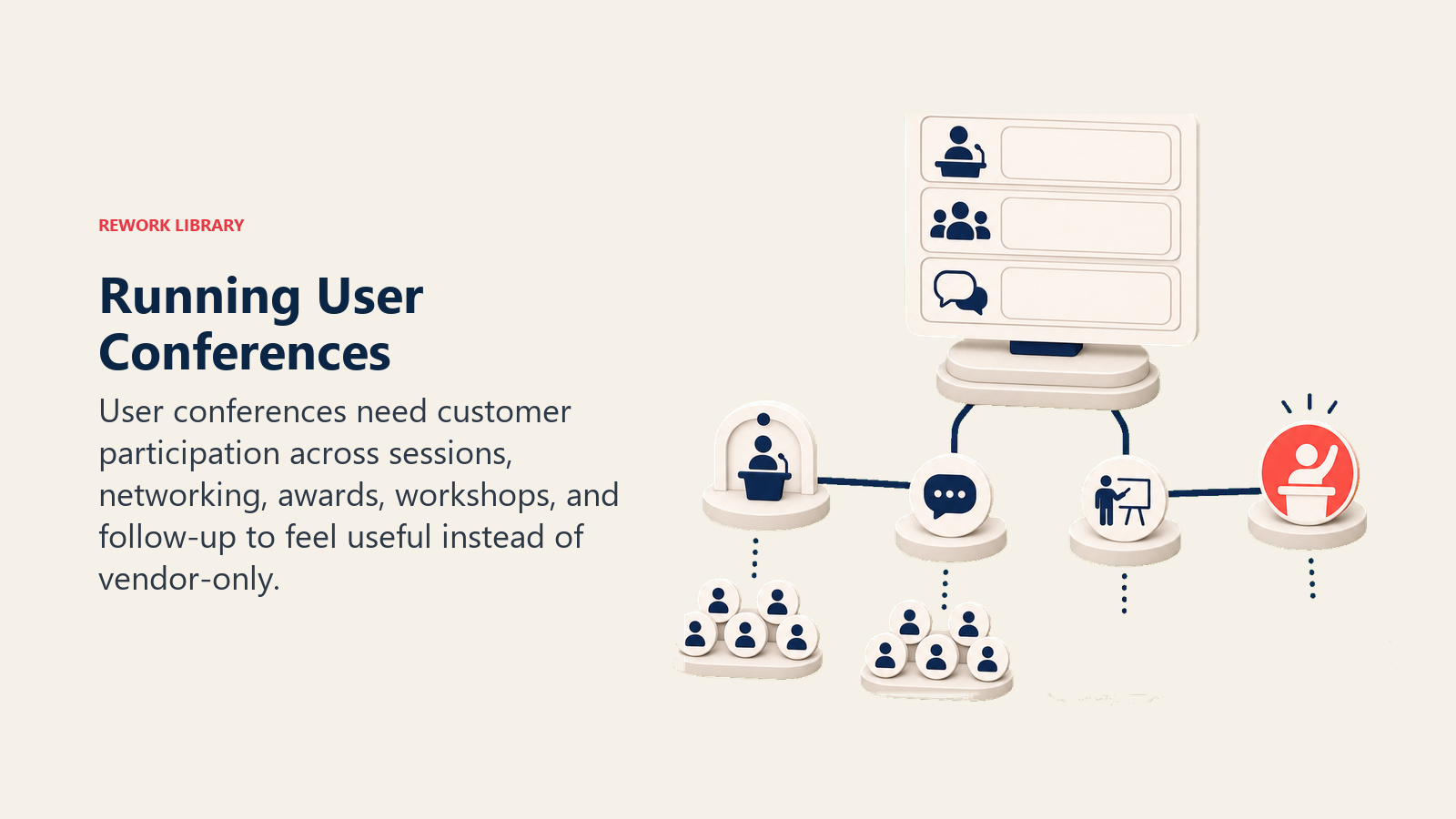
Agenda Anda should be 20-40% customer-led sessions. Mix formats: solo customer presentations, panels dengan multiple customers, peer roundtables, tips-and-tricks sessions, dan maybe one customer keynote jika Anda have right person.
Session type breakdown:
- Customer success stories: 20% dari schedule
- Implementation lessons dan best practices: 15%
- Panel discussions: 10%
- Peer roundtables: 10%
- Tips dan tricks dari power users: 10%
- Customer keynote: 1-2 sessions
Rest bisa team Anda, product updates, training, dan vendor sessions jika Anda have sponsors.
Planning timeline:
- 6 months out: Open call untuk customer speakers
- 5 months out: Select speakers dan confirm
- 4 months out: Topic refinement dan content development start
- 3 months out: Content development dan rehearsals
- 2 months out: Final rehearsals dan tech checks
- 1 month out: Final prep dan logistics
- Event week: Showtime
Six months feels early tapi not. Customers need time untuk get internal approval, block calendars, arrange travel (jika in-person), dan develop content.
Speaker Recruitment at Scale
Recruiting 20-40 customer speakers berbeda dari recruiting 2-3 untuk webinar. Anda need system.
Call for speakers (6 months out): Email all customers dengan clear invitation untuk submit speaking proposals. Create online form (Typeform atau Google Forms work) di mana mereka submit topic ideas, story mereka, dan relevant results.
Make criteria clear: Apa yang makes good story? Topics apa yang Anda looking for? Apa time commitment? Apa yang speakers get?
Set deadline (usually 4-5 months before event) dan stick to it. Anda need time untuk review submissions dan select speakers.
Selection criteria: Story strength dan measurable results. Presentation ability (ask untuk video samples jika possible, atau at least phone screen). Diverse representation across industries, company sizes, roles, dan demographics. Company dan role fit dengan target audience Anda. Availability dan willingness untuk commit.
Anda akan get more submissions than Anda can accept. That's good—it lets Anda be selective dan build waiting list untuk cancellations.
Acceptance process (4 months out): Notify accepted speakers promptly. Get written confirmation of participation mereka. Kick off content development dengan welcome packet explaining next steps. Assign each speaker liaison dari team Anda (usually CSM) yang akan support them through prep.
Untuk speakers yang Anda really want who didn't submit: Reach out personally dengan specific invitation. Kadang-kadang best speakers Anda won't respond ke general call—mereka need personal ask yang shows kenapa Anda want them specifically.
Session Formats That Keep Energy Up
Don't make every session 45-minute solo presentation. Mix it up.
Format variety:
- Solo presentations (25 menit): Deep dive into one customer's story
- Panels (45 menit): 3-4 customers discussing theme
- Roundtables (60 menit): Small group discussions on specific topics
- Workshops (90 menit): Hands-on learning sessions
- Lightning talks (10 menit): Quick hits, 4-5 in one time slot
- Fireside chats (30 menit): Intimate interview format
Different formats appeal ke different learning styles dan different time commitments dari speakers. Some customers happy to do 10-minute lightning talk tapi wouldn't commit ke 45-minute session.
Energy management: Start mornings dengan high-energy formats (panels, fireside chats). Mid-morning good untuk solo presentations. After lunch, do interactive formats (roundtables, workshops) karena attention dips. Late afternoon, go back ke high-energy atau offer shorter sessions.
Creating Real Networking Opportunities
People remember connections mereka make more than sessions mereka attend. Design untuk ini.
Structured networking: Customer-only reception (no vendor staff except hosts). Industry-specific meetups untuk people di similar sectors. Role-based roundtables (all VPs in one, all practitioners in another). Speed networking jika audience Anda open to it. Speaker dinners (make speakers feel special dan facilitate connections among them).
Technology-enabled networking: Event app dengan attendee profiles dan messaging. Matchmaking based on interests, industry, atau challenges. Conversation starter prompts di app. Birds-of-a-feather tables at lunch dengan topic signs.
Organic networking space: Don't schedule every minute. Build in 30-45 minute breaks di mana people bisa just talk. Create comfortable spaces dengan seating, coffee, dan no agenda. Have expo hall time yang actually long enough untuk have conversations, bukan just quick booth drive-bys.
Saya learned bahwa attendees rate networking value almost as highly as content quality. Don't pack schedule so tight bahwa networking becomes afterthought.
VIP Treatment for Speakers
Ketika customers take time untuk speak di event Anda, make them feel valued. Investment ini pays off dalam ongoing advocacy.
VIP elements: Exclusive speaker lounge dengan comfortable seating, good coffee, dan quiet space untuk prep. Welcome gifts di hotel room mereka (jika in-person) atau shipped before event (jika virtual). Speaker-only dinner atau reception dengan executive team Anda. Premium seating di keynotes dan main sessions. Professional photography (mereka bisa use photos ini untuk marketing mereka sendiri). Dedicated staff support (someone yang mereka bisa text dengan questions atau issues). Thank-you gifts after event.
Recognition: Special speaker badges (different color atau design). On-stage recognition selama keynotes ("Let's give round of applause ke customer speakers kami"). Speaker showcase display di high-traffic area. Social media spotlight selama event. Post-event thank you video dari CEO Anda.
Stuff ini matters more than Anda think. Saya have had speakers mention touches ini months later sebagai reasons mereka feel connected ke company kami.
Keeping the Community Alive Post-Event
Event adalah beginning of community, bukan end.
Post-event community building: Create speaker alumni community (Slack atau Teams channel). Run quarterly virtual meetups. Facilitate peer connections between speakers yang hit it off. Share content dan collaborate on ideas. Get input mereka on next year's event planning.
Some of strongest advocates kami came dari speaker communities. Ketika Anda facilitate ongoing connections, customers stay engaged dengan each other dan dengan Anda.
Roundtables and Peer Forums (My Favorite Format)
Saya love roundtables karena mereka create space untuk honest, practical conversation yang doesn't happen anywhere else.
Structure That Works
90-minute roundtable flow:
Introduction (10 menit): Moderator welcome dan ground rules. Quick participant intros (name, company, role, one sentence on interest mereka di topic). Topic framing dan agenda. Chatham House Rules explanation ("Anda bisa share what was discussed tapi bukan who said it atau who attended").
Discussion (60 menit): Open conversation on topic. Moderator facilitates tapi doesn't dominate. Everyone should contribute. Questions dan challenges are welcome. Real talk encouraged—ini point.
Wrap-up (20 menit): Summary of key themes. Action items atau takeaways. Connection facilitation (siapa should talk ke whom after). Feedback on session. Next steps atau future roundtable ideas.
Group size: Eight to twelve participants ideal. Smaller than eight feels too intimate (people less willing to open up). Larger than twelve means bukan everyone gets adequate airtime dan side conversations fragment group.
Picking the Right Participants
Homogeneity enables honesty. Ketika everyone dealing dengan similar challenges dan contexts, conversation gets real.
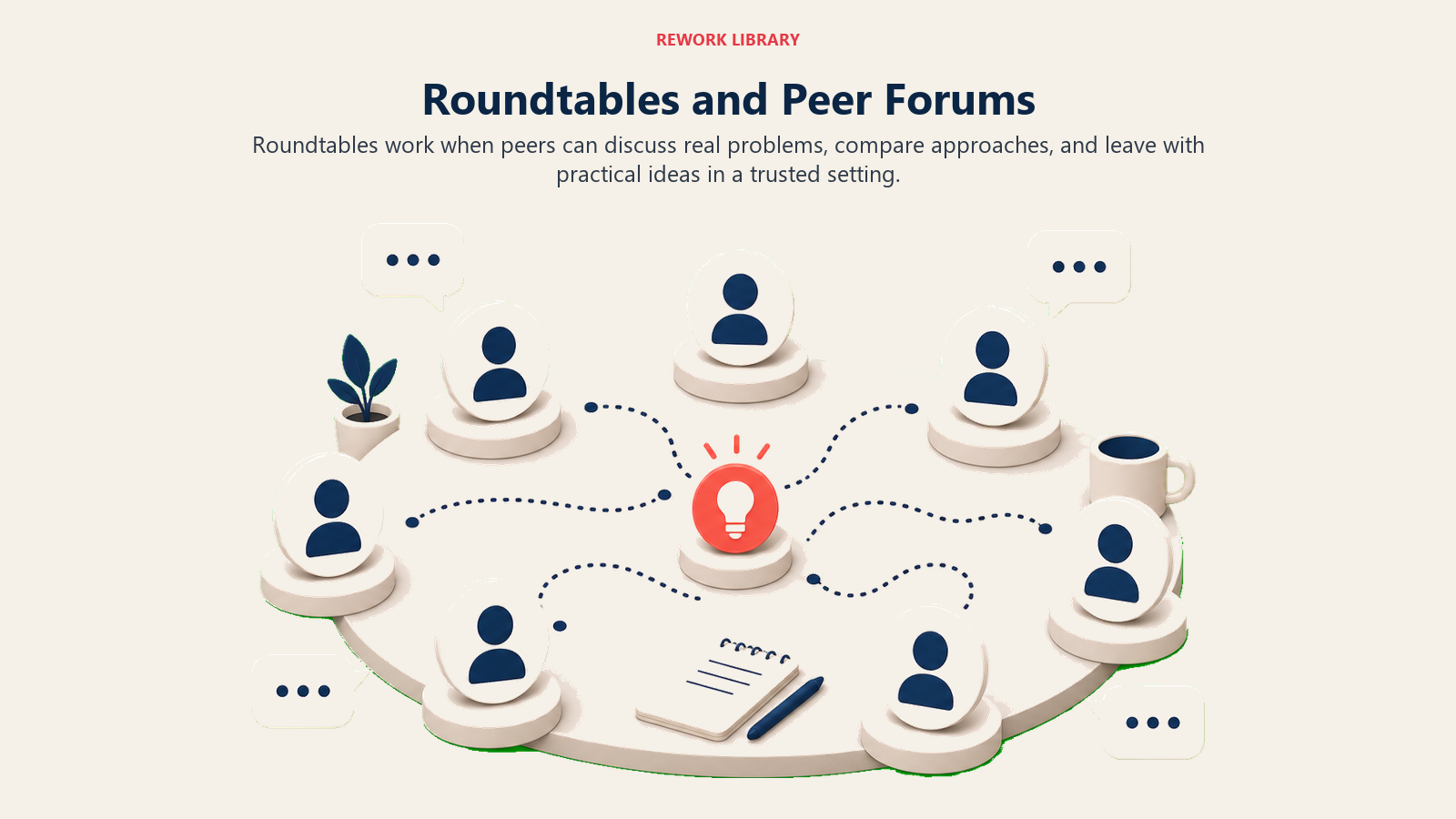
Selection criteria:
- Similar roles (all VPs, atau all managers, atau all practitioners—don't mix levels)
- Similar industries atau challenges (industry-specific works well)
- Comparable company sizes (solo founder dan enterprise exec have different problems)
- No direct competitors (people won't open up jika competitor mereka there)
- Compatible personalities jika Anda know them (one dominator bisa kill roundtable)
Saya run separate roundtables untuk different segments: VPs of Customer Success di mid-market SaaS companies. Implementation managers di healthcare. CFOs di professional services firms.
Kenapa homogeneity matters: Shared context dan language. Comparable challenges. Safe environment untuk admit struggles. Relevant insights dari every participant. True peer feeling.
Mix too much dan conversation stays superficial karena people hedging untuk least-informed person di room.
Topics That Generate Real Discussion
Choose topics people actually care about dan struggle dengan.
Strong roundtable topics:
- "Building CS Teams from 0 to 20: What to Hire When"
- "Navigating Budget Cuts When Revenue Goals Stay the Same"
- "Scaling Support Without Losing Quality or Burning Out Your Team"
- "Measuring Marketing ROI When Attribution Is a Mess"
- "Managing Remote Teams When Culture Feels Like It's Dying"
- "Pricing Discussions: What to Negotiate and What to Hold Firm On"
Topic criteria: Relevant ke all participants. No easy answers (requires real discussion, bukan just sharing best practices). Everyone has perspective untuk share dari experience mereka. Practical dan actionable (bukan theoretical). Not about product Anda (let them talk tentang work mereka, bukan features Anda).
Best topics adalah ones di mana everyone says "Oh thank god, I thought I was the only one struggling with this."
Moderating Well (Harder Than It Looks)
Facilitation makes atau breaks roundtable. Anda not there untuk present atau teach—Anda there untuk enable peer learning.
Effective moderator behaviors: Set stage dengan clear ground rules dan topic framing, then step back. Ask open-ended questions, don't lecture. Ensure equal participation (gently pull back dominators, actively invite quiet folks untuk contribute). Build on apa yang people say ("That's interesting—Maria, have you seen something similar?"). Surface tensions productively ("It sounds like there are different philosophies here—let's dig into that"). Manage time sehingga key themes get adequate airspace. Synthesize themes at end.
Questions yang drive discussion:
- "What's working for you in this area?"
- "What's not working and why?"
- "How have others tackled [specific challenge someone just mentioned]?"
- "What would you do differently if you could start over?"
- "What assumptions did you have that turned out to be wrong?"
Apa yang to avoid: Pitching product Anda (seriously, don't). Dominating conversation (Anda should talk less than 20% of time). Letting one person monopolize (politely redirect: "That's great, Chris. I want to make sure we hear from others too. Alicia, what's your experience with this?"). Letting it devolve into complaint session (acknowledge frustrations tapi redirect toward solutions dan learning). Selling to them (ini community building, bukan lead gen).
Creating Safety for Honesty
People akan only be honest jika mereka feel safe.
Chatham House Rules: "Anda bisa share apa yang discussed, tapi bukan who said it atau who attended."
Explain ini at start dan kenapa it matters. Means someone bisa say "In recent roundtable, VP mentioned they're struggling with X" tapi can't say "Jane from Acme Corp told me X."
Kenapa safety matters: Enables people untuk admit struggles tanpa fearing it'll get back ke boss atau board mereka. Allows vulnerability tentang challenges mereka facing. Lets them share real challenges, bukan sanitized versions. Prevents competitive intelligence concerns (jika competitors were allowed, which they shouldn't be). Builds trust within group.
Reinforce safety: State Chatham House Rules at start. Model appropriate sharing yourself. Don't record (notes fine, tapi no recording). Respect confidentiality after—don't gossip tentang apa yang shared. Jika someone shares something particularly sensitive, acknowledge trust mereka.
Saya have had customers share things di roundtables yang mereka never share di public setting: budget constraints, team conflicts, executive disagreements, fears tentang job security. Vulnerability itu builds community.
Following Up
Roundtable isn't end—it's beginning of ongoing connections.
Post-roundtable follow-up: Send summary email dengan key themes discussed (no attribution ke who said what). Share resources yang came up selama discussion (articles, tools, templates). Facilitate connections between participants yang want continue discussing specific topics. Invite them ke next roundtable. Consider creating private Slack atau Teams channel untuk ongoing conversation.
Quarterly cadence: Jika group works well, invite them back quarterly. Same group, rotating topics. Relationships deepen over time. Community forms. Mereka start reaching out ke each other between roundtables.
Some of strongest customer communities kami started sebagai roundtable groups.
Getting People to Actually Show Up
Anda bisa plan great event, tapi jika nobody comes, it doesn't matter.
Email Sequences That Work
Multi-touch campaign untuk major event:
Announcement (6-8 weeks out): "We're excited to announce [Event Name] on [Date]." Share apa yang makes it valuable (agenda highlights, customer speakers, networking opportunities). Include clear CTA untuk register. Early bird pricing jika Anda charging.
Speaker spotlight (4-6 weeks out): Feature customer speakers dan stories mereka. "Meet Sarah Chen, VP of Customer Success at TechCorp, who'll be sharing how she scaled her team from 5 to 30." Ini builds excitement dan provides social proof. Juga motivates speakers untuk promote (mereka want spotlight mereka seen).
Agenda deep-dive (3-4 weeks out): Share full agenda dengan session descriptions. "Here's what you'll learn at [Event Name]." Help people see value dan plan attendance mereka.
Reminder (2 weeks out): "Registration closes in two weeks." Create urgency. Share logistics info (virtual platform, time zones, apa yang prepare).
Week of: Access instructions dan technical requirements. "Here's how to join tomorrow." Schedule reminders. Last-minute details dan excitement building.
Day of: "Starting in 2 hours!" Link dan access info. Brief agenda. Encouragement untuk show up.
Untuk customers specifically: Don't rely just on marketing emails. Have CSMs personally invite customers selama regular check-in calls. Personal touch itu dramatically increases attendance.
Social Media That Actually Drives Registration
LinkedIn (primary untuk B2B): Event announcement posts. Speaker spotlights dengan tags (speakers often share). Countdown posts di final week. Behind-the-scenes content (speaker rehearsals, team prep). Live coverage selama event. Post-event highlights dan recordings.
Use video when possible—performs better than static images. Tag speakers dan partners untuk extend reach.
Twitter: Quick updates dan reminders. Live-tweeting selama events (people love following along even jika they're not attending). Hashtag campaigns (#UserConf2025). Engaging dengan attendee posts dan questions.
Company blog: Speaker interview series (publish one every week leading up ke event). Topic deep dives yang preview session content. Testimonials dari past attendees. Detailed recap posts after.
Making Customers Your Promoters
Ketika customers help promote, Anda reach new audiences dan build credibility.
Make it easy: Provide email templates yang mereka bisa customize dan send ke networks mereka. Create co-branded graphics sized untuk LinkedIn, Twitter, dan email. Draft social media posts yang mereka bisa edit dan use. Provide talking points jika mereka promoting verbally atau at industry events.
Incentives yang work: Untuk speakers: Promotion of session mereka increases audience mereka (dan thus ROI mereka on speaking). Untuk customers generally: Referral incentives (bring peer, get gift card), +1 passes (mereka bisa bring someone dari team mereka), exclusive access (customer-only sessions atau networking).
CSM role: Customer Success Managers should personally invite customers selama regular check-ins. "I saw you mentioned challenges with X. We have great session on that at upcoming event kami. Can I send you details?" Personal invitations convert 5-10x better than email blasts.
Tracking What Actually Works
Monitor sources dan optimize.
Track di registration system Anda: Registration source (which email, which social post, which referral). Customer vs. prospect segmentation. Drop-off points di registration flow (are people starting tapi not completing?). Demographic data (roles, industries, company sizes). Email engagement rates (open, click, register).
Optimize based on data: A/B test email subject lines. Adjust promotion schedule (jika certain email time works better, use that). Increase emphasis on high-performing channels (jika LinkedIn drives 2x more registrations than Twitter, weight effort Anda accordingly). Retarget people yang opened emails tapi didn't register. Personalize outreach ke different segments (VPs get different messaging than practitioners).
Kami improved webinar attendance rate kami dari 45% ke 68% over two years just by paying attention ke data ini dan optimizing continuously.
Running the Event Well
All planning comes down ke execution.
Technical Setup (Prevent Disasters)
Pre-event: Test platform dengan every speaker. Set up backup communication channels (Slack, phone). Train moderators on platform features. Have technical support team on standby. Set up recording dan test it works. Create runbook untuk common technical issues.
During: Monitor audio dan video quality constantly. Have dedicated tech support channel untuk speakers dan attendees. Respond ke issues quickly. Execute backup plans smoothly jika needed (jika speaker has audio issues, switch ke phone dial-in). Manage screen sharing dan slide transitions. Watch untuk platform issues (bandwidth, platform outages, browser compatibility problems).
Day of, untuk webinars: Log on 15 menit early dengan all speakers. Test audio, video, screen sharing, chat, dan polls. Confirm everyone knows flow dan cues mereka. Have quick "how is everyone feeling?" check-in.
Saya learned to always have backup plan. Jika main speaker Anda has connectivity issues, bisa Anda present slides mereka? Do Anda have pre-recorded content Anda bisa fall back on? Can someone call in via phone?
Coordination and Timing
Untuk single-track webinars: One person manages run-of-show. Mereka handle speaker intros, time cues, transitions, Q&A filtering, dan technical direction. Create detailed runbook dengan timing untuk each segment, speaker cues, dan slides yang go dengan each section.
Untuk multi-track events: Each session needs dedicated runner. Central coordinator oversees all rooms dan handles escalations. Real-time communication between coordinators (Slack works well). Established protocol untuk handling issues.
Timing discipline: Start on time (even jika not everyone there yet). Give speakers time cues (10 menit left, 5 menit left, wrap up). Be ruthless tentang ending on time—going long trains attendees untuk show up late next time.
Engagement During the Event
Keep people actively involved.
Tactics: Live polls dan Q&A (people love seeing poll results in real-time). Active chat moderation—respond ke comments, ask follow-up questions, surface good comments ke speakers. Gamification jika platform Anda supports it (points untuk participating, prizes untuk most active attendees). Networking features (introduce people di chat, facilitate connections, set up breakout rooms). Interactive elements (ask questions, request people share di chat, acknowledgements).
Chat management: Someone needs to own chat. Mereka respond ke participant comments, filter dan elevate questions untuk speakers, facilitate side discussions, surface insights, dan keep energy up. Chat bisa chaotic—active moderation makes it valuable rather than distracting.
Q&A handling: Collect questions throughout (don't wait until end). Filter untuk quality dan relevance. Group similar questions together. Pass ke speakers dengan context ("We have several questions about implementation timelines. Maria, this one from James at Acme Corp might be good for you..."). Follow up on unanswered questions after event.
Capturing Content
Every event adalah content library.
Apa yang capture: High-quality video recording. Audio-only versions (some people prefer podcasts). Full transcripts. Session slides. Screenshots of key moments. Quote graphics dari compelling speaker statements. Poll results dan chat highlights.
Production quality: Untuk major events, consider professional editing. Remove dead air, technical glitches, dan awkward transitions. Add intro/outro graphics dan lower-thirds dengan speaker names dan titles. Create chapter markers untuk easy navigation.
Usage: On-demand library untuk people yang couldn't attend live. Marketing content (promote clips on social). Sales enablement (prospects want see customer stories). Blog posts dan articles. Lead generation (gate access untuk new prospects). Customer success resources (customers reference event content months later).
Kami get 12-18 bulan content dari annual user conference kami. Every session menjadi multiple assets.
Post-Event Follow-Through
Event ends tapi work Anda doesn't.
Getting Recordings Out
Timeline: Raw recording ke registrants: 24-48 jam (people want it fast). Edited professional version: 1-2 minggu. Full transcript: 1-2 minggu. Highlight clips: Ongoing (create ini as Anda identify compelling moments).
Distribution: Email ke registrants dan attendees. Feature di website resource center Anda. Upload ke YouTube atau Vimeo. Post native video di LinkedIn. Add ke sales enablement portal. Share di customer success platforms (Gainsight, ChurnZero, etc.).
Access control decisions: Gate recordings untuk lead generation (require registration untuk view). Provide free access untuk customers. Make some content public, gate others. Time-limited availability atau evergreen access. Approach kami: customers get immediate free access, prospects bisa register untuk view, general public bisa access after 30 hari.
Turning One Event Into Many Assets
Repurpose content aggressively.
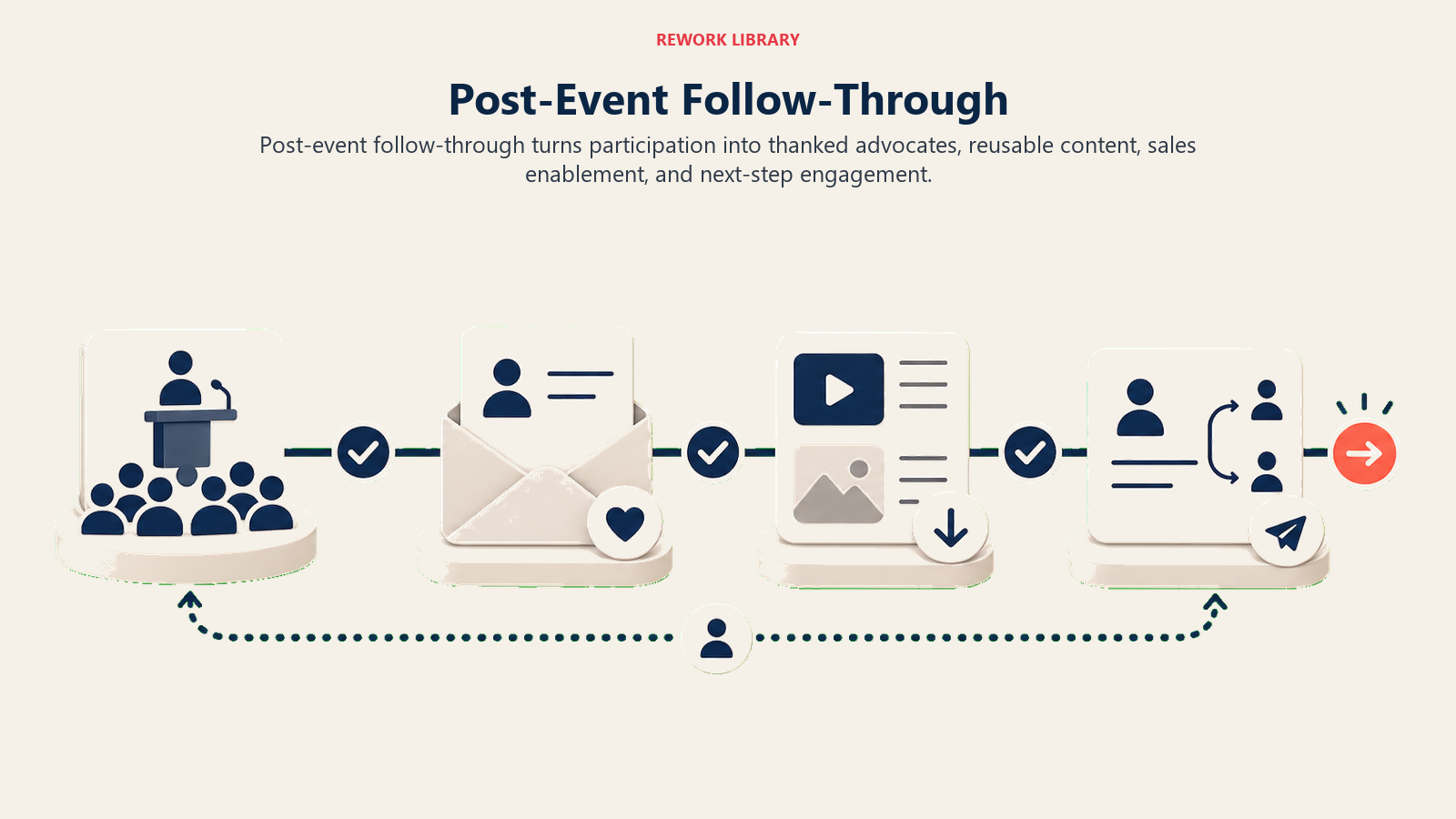
Content opportunities: Blog post untuk each session atau speaker (that's 20-40 blog posts dari major event). Social media quote graphics (pull compelling statements dari sessions). Email nurture sequences (use session content sebagai educational emails). Podcast episodes (audio dari sessions atau speaker interviews). Slide decks uploaded ke SlideShare. Infographics created dari data dan stats shared. Case study material (customer stories become formal case studies).
Get customer approval untuk public use beyond event recording. Quick email: "We'd love to feature your story in blog post dan social media. Can we send you draft for approval?" Most customers say yes, especially jika Anda make them look good.
Following Up With Attendees
Close loop dengan everyone yang participated.
Day 1 post-event: Thank you email dengan recording link, survey link, dan next steps.
Week 1: Send satisfaction survey. "How did we do? What should we improve?" Keep it short (5-7 questions max). Offer incentive untuk completion (entry into gift card drawing).
Week 2: Share resources mentioned selama sessions (templates, articles, tools). "Here are resources our speakers recommended."
Week 3: Related content atau next event invitation. "If you enjoyed [topic], check out this related resource" atau "Save date for our next event on [date]."
Segmented follow-up: Customers: CSM personal outreach ("How was event? Did you get what you needed?"). Hot prospects: Sales follow-up ("I saw you attended our session on X. Want to discuss how that might apply to your situation?"). General attendees: Marketing nurture sequence. No-shows: "Sorry you couldn't make it. Here's recording."
Thanking Speakers
Customer speakers made event Anda work. Show appreciation.
Within 24 hours: Personal thank you email atau call dari event organizer. Share recording mereka dan any materials. Let them know initial feedback jika Anda have it.
Within one week: Send metrics dan impact: "Your session had 180 attendees, 4.8/5 satisfaction rating, dan generated 12 follow-up questions. Here's what people said..." Professional photos dari event (speakers love these). Social media recognition dan highlights. Physical thank you gift (kami send nice bottle of wine, gift basket, atau company swag box).
Ongoing: Create speaker spotlight content (blog post, social media feature, video interview). Invite them ke future events sebagai alumni speakers. Facilitate connections dengan speakers lain. Include them di speaker advisory conversations untuk future events.
Saya wrote detailed guide tentang ini: Customer Speaking Opportunities.
Building Ongoing Community
Event was moment, tapi community ongoing.
Post-event community options: Slack atau Teams channel untuk attendees (opt-in selama registration). Monthly virtual meetups on specific topics. Quarterly roundtables untuk different segments. Email newsletter dengan event content, industry insights, dan community updates. User group chapters by geography atau industry. Annual reunion di next year's event.
Content sharing: Ongoing educational content. Peer introductions dan networking facilitation. Success stories dari community members. Product updates dan early access untuk community. Industry trends dan insights.
Community management: Ini requires ongoing effort. Someone needs to own community engagement: share content regularly, facilitate connections, respond ke questions, moderate discussions, organize activities.
Customers paling engaged kami adalah those di community kami. Mereka renew di higher rates, expand more, dan refer more new business. Community value compounds over time.
Measuring Success (Beyond Attendance)
Track apa yang matters.
Event metrics: Registration rate (berapa banyak people registered vs. berapa banyak yang Anda invited). Attendance rate (registered → actually attended). Kami aim untuk 70%+ attendance rate. Session engagement (attendance across different sessions, time spent). Satisfaction scores (kami aim untuk 4.5/5 atau higher). Net Promoter Score untuk event (kami aim untuk 50+ NPS). Would-attend-again percentage (target 90%+).
Business impact metrics: Pipeline influenced (berapa banyak deal value among attendees). Customer health score changes (do attendees have higher health scores after?). Retention dan expansion rates (do event attendees renew dan expand at higher rates?). Referral activity (do attendees refer new business?). Community engagement (do they stay engaged after event?).
Content metrics: Recording views dan engagement. Asset downloads (templates, guides shared selama event). Social media reach dan engagement. Blog traffic dari event-related content. Lead generation dari gated event content.
Learning and improvement: Apa yang worked well (preserve untuk next time). Apa yang didn't work (fix untuk next time). Speaker feedback (what was experience mereka?). Attendee suggestions (apa yang mereka want next time?). Operational issues (di mana things break down?).
Kami do thorough post-event debrief within two weeks sementara everything fresh. Kami document lessons learned dan create action items untuk next event.
Related Resources

Senior Operations & Growth Strategist
On this page
- Event Types and What They're Actually For
- Customer Education Webinars
- Co-Hosted Webinars
- User Conferences
- Industry Events and Trade Conferences
- Virtual Summits
- Roundtables and Peer Forums
- How Customers Can Participate (Beyond Sitting in Seats)
- Attendees
- Panelists
- Speakers
- Co-Hosts
- Moderators
- Advisors and Planners
- Recruiting Customers (The Actual Hard Part)
- Who to Ask
- The Invitation That Actually Works
- What Different Customers Value
- Actually Achieving Diversity
- Locking in Commitments
- Co-Hosting Webinars With Customers
- Picking Topics Customers Can Own
- Building Content Together (Not For Them)
- Setting Customers Up for Success
- Your Role During the Webinar
- Promotion That Actually Works
- Running User Conferences (The Big One)
- Customer Track Planning
- Speaker Recruitment at Scale
- Session Formats That Keep Energy Up
- Creating Real Networking Opportunities
- VIP Treatment for Speakers
- Keeping the Community Alive Post-Event
- Roundtables and Peer Forums (My Favorite Format)
- Structure That Works
- Picking the Right Participants
- Topics That Generate Real Discussion
- Moderating Well (Harder Than It Looks)
- Creating Safety for Honesty
- Following Up
- Getting People to Actually Show Up
- Email Sequences That Work
- Social Media That Actually Drives Registration
- Making Customers Your Promoters
- Tracking What Actually Works
- Running the Event Well
- Technical Setup (Prevent Disasters)
- Coordination and Timing
- Engagement During the Event
- Capturing Content
- Post-Event Follow-Through
- Getting Recordings Out
- Turning One Event Into Many Assets
- Following Up With Attendees
- Thanking Speakers
- Building Ongoing Community
- Measuring Success (Beyond Attendance)
- Related Resources