Glosario de Marketing-Sales Alignment: Más de 40 Términos Que Todo Equipo de Ingresos Debe Definir de la Misma Manera
Turn this article into takeaways for your work.


Each assistant summarizes the article only for you and suggests best practices for your work.
Así es como empieza la mayoría de las discusiones sobre MQL: un representante de ventas rechaza un lote de leads y dice que no estaban calificados. Marketing contraargumenta, señala el score y dice que absolutamente sí lo estaban. Ambos tienen razón, porque están usando definiciones diferentes de "calificado" y nadie lo escribió.
Ese es todo el problema. Cuando marketing y ventas discuten sobre la calidad de los leads, a menudo están discutiendo sobre semántica. Corrija el lenguaje y corregirá la mayor parte de la fricción.
Este glosario es la referencia canónica para toda la colección de marketing-sales alignment. Cada artículo de la colección enlaza aquí cuando un término necesita definición. Úselo como herramienta de negociación: siente a su CMO y CRO, lea las secciones que más importan a su equipo y marque los términos donde sus definiciones divergen. Esas divergencias son su agenda de alineación.
Los 10 Términos Más Citados en Este Glosario
Estos son los términos con mayor volumen de búsqueda y mayor frecuencia de desacuerdo en cuanto a su definición en los equipos de ingresos B2B. Si su equipo solo tiene tiempo para alinear un subconjunto, empiece aquí.
- MQL: Marketing Qualified Lead. El término más discutido en el go-to-market B2B. La divergencia en la definición aquí es la causa raíz de la mayoría de los conflictos sobre pipeline.
- ICP: Ideal Customer Profile. Definición del objetivo a nivel de empresa. La puerta que determina si cualquier trabajo de persona importa.
- SQL: Sales Qualified Lead. Requiere una conversación de calificación humana. Diferente del MQL de una manera específica y significativa.
- RevOps: Revenue Operations. La función que operacionaliza la alineación entre marketing, ventas y customer success.
- ABM: Account-Based Marketing. Requiere una coordinación más estrecha entre marketing y ventas que el inbound. La mayoría de los fracasos de alineación en ABM provienen de criterios de cuentas objetivo no definidos.
- SAL: Sales Accepted Lead. La métrica de confirmación del handoff. Una tasa baja de SAL es la primera señal de un problema de definición.
- Lead Scoring: La metodología para clasificar prospectos. Los scores solo son confiables cuando ambos equipos ayudaron a establecer los pesos.
- SLA: Service Level Agreement. Compromisos mutuos por escrito entre marketing y ventas sobre velocidad y calidad. A menudo discutidos; rara vez documentados.
- Attribution: Qué touchpoints de marketing reciben crédito por un negocio. La definición de "pipeline generado por marketing" cambia significativamente dependiendo del modelo que se use.
- Closed-Loop Reporting: Los resultados de ventas retroalimentan los modelos de marketing. El mecanismo que permite a marketing optimizar para ingresos, no solo para leads.
Cómo Usar Este Glosario
Esto no es una tarea de lectura. Es un documento de trabajo.
Realice una sesión de 60 minutos con quien sea responsable del pipeline de marketing y quien sea responsable del pipeline de ventas. Vaya sección por sección. Para cada término, responda una pregunta: "¿Lo definimos de la misma manera en este momento?" Si la respuesta es sí, continúe. Si es no, o si nunca lo han escrito, ha encontrado una brecha que vale la pena cerrar.
Cada término aquí tiene una definición y un ejemplo en una línea. El ejemplo existe porque las definiciones abstractas parecen idénticas hasta que se aplican a un lead real.
Datos Clave: El Costo de los Términos Sin Definir
- Solo el 27% de las empresas B2B tienen una definición de MQL documentada formalmente y acordada conjuntamente, según la investigación de referencia de SiriusDecisions sobre el Demand Waterfall.
- Las empresas con terminología de marketing y ventas alineada y etapas del funnel definidas conjuntamente generan un 209% más de ingresos a partir de la inversión en marketing que aquellas sin definiciones compartidas, según MarketingProfs.
- Los equipos de ingresos que realizan revisiones de definición trimestrales reducen su tasa de rechazo de MQL en un 18% en dos trimestres, según la investigación de TOPO (ahora Gartner).
Definiciones de Etapas del Funnel
Las definiciones de etapas del funnel son los términos de mayor apalancamiento porque determinan qué envía marketing y qué acepta ventas.
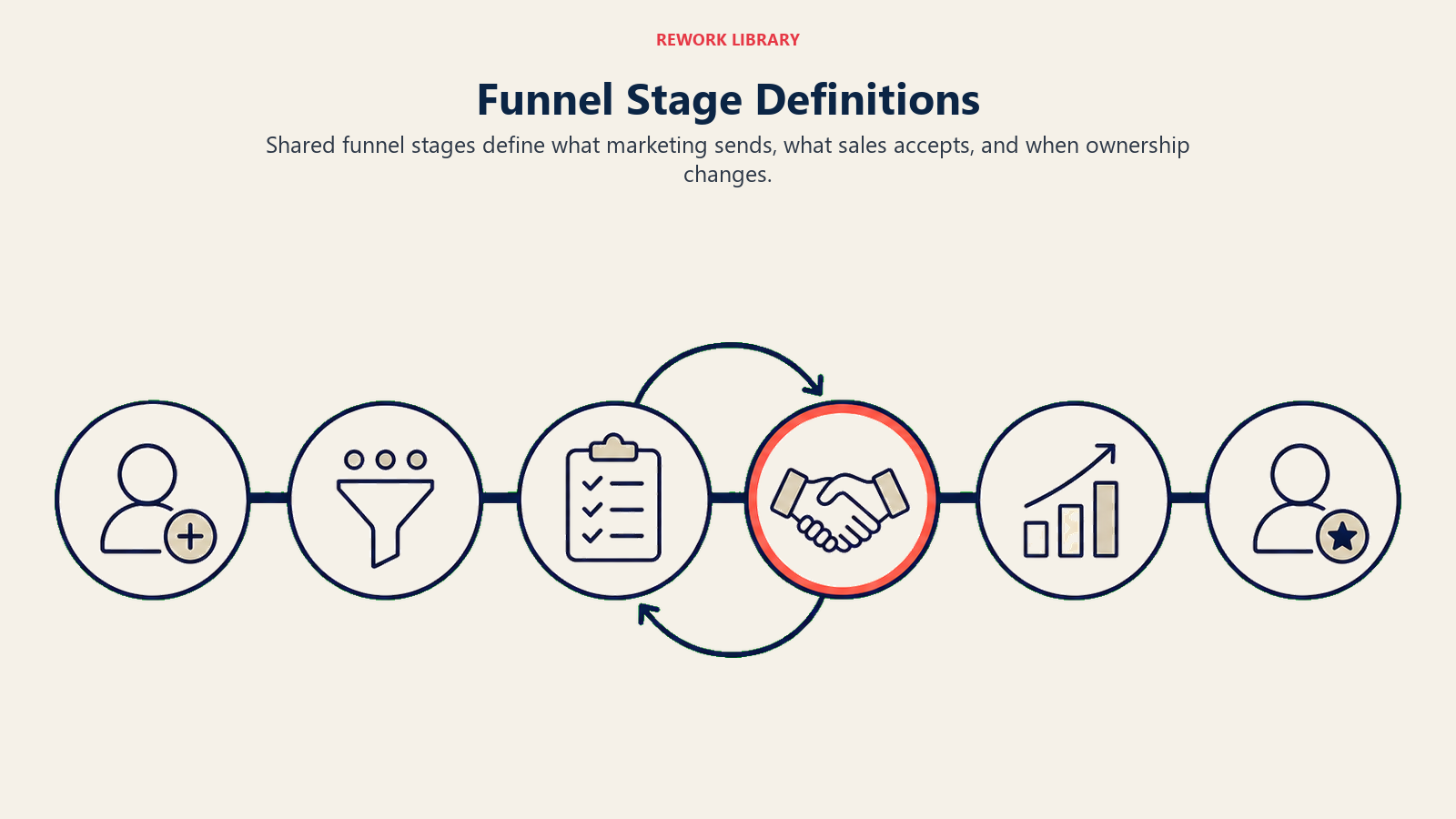 Estos son los términos con mayor probabilidad de causar desalineación. Si su equipo omite todo lo demás en este glosario, no omita esta sección.
Lead (Sin Calificar)
Cualquier persona que ha proporcionado información de contacto o ha sido identificada como un posible comprador. Sin calificación implícita. Un lead sin calificar puede ser un ejecutivo de una cuenta objetivo o un estudiante investigando un proyecto escolar. El funnel aún no los ha clasificado.
Ejemplo: Un formulario enviado desde su página de inicio con una dirección de email corporativo. Sin score, sin verificación firmográfica, sin señal conductual todavía.
IQL: Information Qualified Lead
Un lead que ha interactuado con contenido educativo pero no ha mostrado intención de compra. Están aprendiendo, no comprando. Los IQL pertenecen al nurture de marketing, no a la cola de un representante de ventas.
Ejemplo: Un VP de Ventas que descargó su informe de benchmarks. Leyó todo. Pero no ha visitado precios, no ha interactuado con ningún contenido específico de ventas, y la empresa es la mitad de su tamaño mínimo de negocio.
MQL: Marketing Qualified Lead
Un marketing qualified lead es un lead que marketing considera que cumple los criterios acordados para el seguimiento de ventas. Una definición sólida de MQL tiene tres componentes: ajuste firmográfico (coincide con el ICP), señal conductual (ha interactuado lo suficiente como para sugerir interés) e indicador de timing (algo indica que está en una ventana de compra o vale la pena perseguirlo ahora).
La palabra "considera" es intencional. Marketing emite un juicio basado en las señales disponibles. Ventas lo valida. Si su tasa de rechazo de MQL supera el 25%, su definición necesita ajustarse. Si está por debajo del 10%, puede estar sub-calificando y privando a ventas de volumen.
Ejemplo: Un Director de Sales Operations en una empresa SaaS de 200 personas que visitó su página de precios dos veces, vio un video de demostración del producto y completó un formulario de "contactar a ventas". Los tres criterios de ajuste cumplidos.
SAL: Sales Accepted Lead
Un MQL que un representante de ventas ha revisado y acordado perseguir. SAL es la confirmación del handoff: ventas ha revisado el lead y ha aceptado su responsabilidad. Esta es una métrica crítica. Si la tasa de SAL es baja (digamos, por debajo del 70% de los MQL), marketing está generando ajustes deficientes o pasando leads sin suficiente contexto.
Ejemplo: El representante abre el MQL, mira la empresa, el título del contacto y el historial de interacción, y lo mueve al estado "En proceso". Ese movimiento = SAL.
SQL: Sales Qualified Lead
Un lead con el que ventas ha hablado y confirmado que cumple los criterios de calificación definidos. Los criterios específicos de su equipo (ya sea que use BANT, MEDDIC, CHAMP o un marco personalizado) determinan qué significa SQL. Pero siempre requiere una conversación humana, no solo un score. Consulte definición de SQL y criterios de aceptación para saber cómo documentar y hacer cumplir el estándar.
La tasa de conversión de SAL a SQL le indica si ventas está teniendo buenas primeras conversaciones. ¿Por debajo del 40%? O las conversaciones no están ocurriendo con suficiente rapidez, o los criterios de calificación son demasiado laxos en el lado del MQL.
Ejemplo: Un representante llamó al Director de Sales Ops. Confirmado: evaluación activa en curso, presupuesto de $30K aprobado, decisión para fin de trimestre, el director es el comprador económico. Movido a SQL.
Opportunity (Oportunidad)
Un prospecto calificado que ha sido formalmente ingresado al pipeline de ventas como un negocio con un valor estimado y una fecha de cierre esperada. No todo SQL se convierte en oportunidad. Algunas conversaciones de SQL revelan que el timing no es el correcto o que el presupuesto aún no existe. La creación de oportunidades es donde el pipeline comienza oficialmente.
Ejemplo: El representante creó un registro de negocio: "Acme Corp, Sales Ops Platform," $28,000 ARR, cierra en Q3. Eso es una oportunidad.
Términos de ICP y Persona
ICP: Ideal Customer Profile
Una descripción firmográfica y conductual del tipo de empresa que mejor se adapta a su producto. ICP es a nivel de empresa, no a nivel de persona. Describe la organización, no al individuo. Un ICP completo incluye: industria, rango de tamaño de empresa, geografía, banda de ingresos, stack tecnológico existente, patrones de comportamiento de compra y criterios de exclusión (quién nunca es un buen ajuste independientemente del ajuste superficial).
Tanto marketing como ventas deben usar el mismo ICP. Cuando no lo hacen, marketing apunta a segmentos adyacentes que ventas no puede cerrar, y ventas persigue negocios que marketing nunca calentó.
Ejemplo: "Empresas B2B SaaS, 50–500 empleados, con sede en EE.UU., con un CRM existente, ingresos anuales $5M–$100M, con un equipo de ventas dedicado de al menos 5 representantes."
Consulte el Marco de ICP Compartido para el proceso de construcción conjunta.
Buyer Persona
Una representación basada en roles del individuo que investiga, defiende y entra al funnel. Los buyer personas describen quién consume su contenido e inicia el contacto. Son el personaje de trabajo de marketing, construido a partir de datos de campaña, análisis de contenido y datos demográficos de formularios.
Los buyer personas son precisos en la parte superior del funnel. Comienzan a descomponerse en la parte inferior, donde los deal personas toman el relevo.
Ejemplo: "Alex, VP de Ventas en una empresa SaaS de mid-market, 6–10 años en roles de ventas, investiga a través de LinkedIn y G2, le importa más el tiempo de rampa y la productividad de los representantes."
Deal Persona
La persona (o comité de compra) que tiene autoridad presupuestaria y poder de decisión final. Los deal personas son el personaje de trabajo de ventas, construido a partir del análisis de negocios cerrados-ganados y conversaciones de descubrimiento. El deal persona puede ser la misma persona que el buyer persona (un fundador que toma todas las decisiones) o una persona completamente diferente que nunca tocó su contenido hasta la presentación final.
Ejemplo: "El CFO, que se unió a la evaluación en la Semana 3, solicitó un análisis del costo total de propiedad y necesitaba aprobación de la junta para cualquier contrato superior a $25K."
Consulte Buyer Persona vs. Deal Persona para la distinción práctica.
Champion (Defensor)
Un defensor interno en la empresa del prospecto que quiere que su producto gane y está dispuesto a presionar internamente. Los Champions son a menudo el buyer persona: iniciaron el contacto, ejecutaron la evaluación, quieren la herramienta. No siempre son el comprador económico. Un Champion sin autoridad presupuestaria puede perder negocios que pensaba haber ganado.
Ejemplo: El Director de RevOps defendió su herramienta durante seis semanas, ejecutó el trial, construyó el caso de negocio. Pero cuando fue al VP para la aprobación, el VP lo canceló. Champion, pero no comprador económico.
Economic Buyer (Comprador Económico)
La persona con autoridad presupuestaria final. Puede entrar tarde en el negocio, hacer preguntas difíciles sobre ROI y tener el poder de cancelar un negocio que el Champion pensó que estaba cerrado. Calificar al comprador económico temprano, entender quién es y qué necesita, es una de las actividades de mayor apalancamiento en cualquier proceso de ventas.
Ejemplo: En la mayoría de los negocios de mid-market, esto es el VP, el C-level o el CFO dependiendo del tamaño del negocio. En SMB, a menudo el fundador.
Términos de Scoring
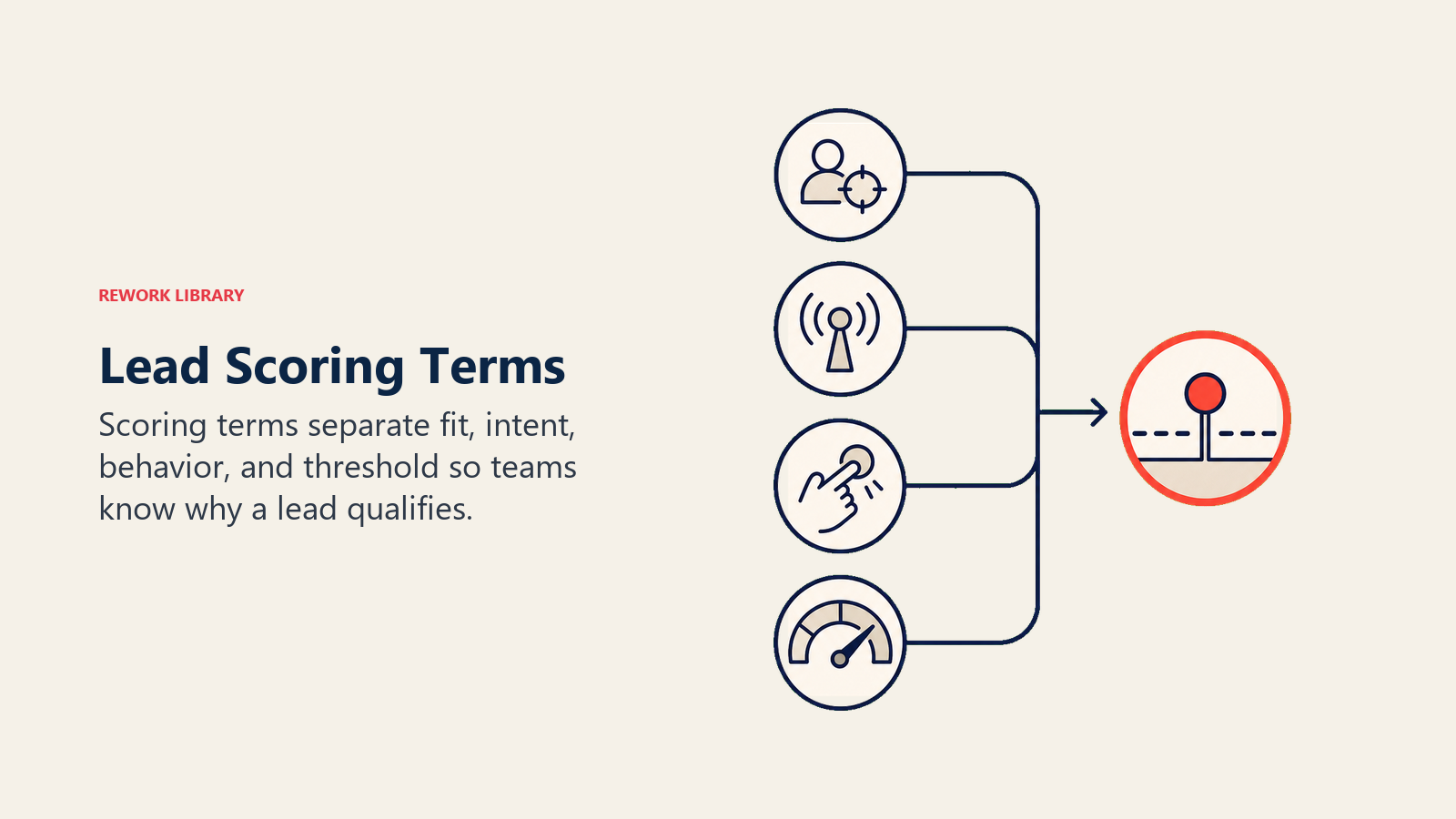
Los términos de scoring necesitan un significado compartido para que los equipos distingan el ajuste, la intención y la señal combinada que activa el handoff.
Lead Score
El lead scoring es una metodología para clasificar prospectos según una escala que representa el valor percibido que cada lead representa para la organización. Es un número compuesto que representa la probabilidad de conversión de un lead, basado tanto en el ajuste (coincidencia firmográfica con el ICP) como en el comportamiento (señales de interacción). Los lead scores no son medidas objetivas. Reflejan cualquier modelo de ponderación que su equipo construyó. Los scores son útiles como herramientas de clasificación, no como veredictos.
Ejemplo: Un lead puntúa 78/100. Score de ajuste: 35/50 (SaaS de mid-market, tamaño correcto, industria correcta). Score de intención: 43/50 (visitas a página de precios, solicitud de demo, dos publicaciones de blog sobre el producto). Umbral de score para MQL: 70.
Fit Score (Score de Ajuste)
El componente firmográfico de un lead score. ¿Qué tan bien coincide la empresa del lead con el ICP? El Fit Score refleja atributos estáticos y observables de la empresa: industria, número de empleados, ingresos, geografía, stack tecnológico. No cambia según el comportamiento.
Ejemplo: Una empresa SaaS de 200 personas en EE.UU. con Salesforce en su stack puntúa 45/50 en ajuste. Una tienda minorista de 10 personas puntúa 8/50.
Intent Score (Score de Intención)
El componente conductual de un lead score. ¿Qué señales sugieren que este lead está considerando activamente una compra? La intención incluye señales de primera parte (actividad en su sitio web, consumo de contenido, formularios completados) y a veces señales de terceros (visitas a sitios de reseñas, comportamiento de búsqueda de categorías de proveedores de datos de intención).
Ejemplo: Un lead que visitó su página de precios tres veces en una semana, vio un video de demo de 12 minutos y comparó su herramienta con un competidor en G2 tiene un alto Intent Score independientemente del ajuste.
Score Decay (Deterioro del Score)
La reducción aplicada al score de un lead con el tiempo cuando la interacción se detiene. Sin Score Decay, un lead que descargó un whitepaper hace dos años y nunca regresó podría seguir puntuando por encima de su umbral de MQL. El Decay mantiene los scores reflejando la intención actual, no la actividad histórica.
Ejemplo: El score conductual de un lead cae 10 puntos por mes de inactividad, restableciendo hacia cero si no han interactuado en 90 días.
Score Threshold (Umbral de Score)
El score mínimo acordado requerido para activar el estado de MQL. Este número debe ser establecido conjuntamente por marketing y ventas. Marketing por sí solo lo establecerá bajo (para alcanzar objetivos de volumen); ventas por sí solo lo establecerá alto (para proteger su tiempo). El umbral correcto maximiza la tasa de SAL mientras mantiene suficiente volumen para alcanzar los objetivos de pipeline. Consulte umbrales de score de MQL a SQL para saber cómo calibrar y validar el número.
Ejemplo: "Score de 70 o superior = MQL. Score de 50-69 = nurture. Por debajo de 50 = frío."
Términos de Handoff
Lead Routing (Enrutamiento de Leads)
El proceso basado en reglas para asignar un MQL a un representante de ventas específico. La lógica de enrutamiento puede usar territorio, distribución por turnos, propiedad de cuentas o asignación ponderada según la capacidad del representante o su experiencia en el segmento. Los errores de enrutamiento (un MQL que llega a la cola del representante equivocado) matan el tiempo de respuesta e introducen fricción innecesaria. Consulte reglas de enrutamiento de leads para saber cómo estructurar estas reglas operacionalmente.
Ejemplo: Los MQL de la Costa Oeste de EE.UU. se enrutan al equipo de AE del territorio Oeste. Los MQL de cuentas de clientes existentes se enrutan al propietario de la cuenta independientemente del territorio.
Lead Rejection (Rechazo de Lead)
El acto formal de un representante de ventas que devuelve un MQL a marketing con una razón documentada. El rechazo es una característica, no un fracaso. Es el ciclo de retroalimentación que permite a marketing mejorar el targeting del ICP. Sin un workflow formal de rechazo, los leads simplemente se enfrían y nadie aprende nada. Consulte rechazo y reciclaje de leads para el workflow completo.
Ejemplo: El representante rechaza un MQL con el código de razón "ICP incorrecto, la empresa tiene 8 empleados, por debajo de nuestro tamaño mínimo." Marketing ve el patrón en 20 rechazos: su targeting en LinkedIn está atrayendo tamaños de empresa por debajo del límite inferior del ICP.
Lead Recycling (Reciclaje de Leads)
El proceso de devolver un lead rechazado o inactivo a una secuencia de nurture de marketing para reinteractuar. Un lead rechazado no es un lead muerto. Es un lead de "no ahora". El reciclaje con un activador claro de reentrada (umbral de reinteracción o ventana de tiempo) previene el desperdicio de leads y da a marketing otra oportunidad.
Ejemplo: Un MQL rechazado (timing incorrecto, no evaluando hasta el año próximo) vuelve a entrar en una secuencia de nurture de 90 días. Si vuelve a interactuar con contenido de precios dentro de esa ventana, vuelve a puntuar y vuelve a entrar en la cola de MQL.
SLA: Service Level Agreement
Compromisos mutuos por escrito entre marketing y ventas que rigen la velocidad y la calidad. Los SLA típicamente cubren: qué tan rápido debe hacer un seguimiento ventas en los MQL (SLA de tiempo de respuesta), cuántas veces debe intentar el contacto antes de reciclar (SLA de intentos de seguimiento), y qué información debe pasar marketing en el handoff (SLA de calidad de datos).
Ejemplo: "Ventas debe hacer el primer intento de contacto dentro de las 4 horas hábiles de la creación del MQL. Tres intentos en 5 días hábiles antes del reciclaje. Marketing debe pasar el tamaño de la empresa, el título del contacto y la campaña de origen en cada MQL."
Handoff Documentation (Documentación del Handoff)
El contexto estructurado que marketing pasa a ventas en el momento del handoff. Una buena Handoff Documentation incluye: qué hizo el lead (resumen de interacción), de dónde vino (fuente y campaña), en qué expresó interés y cualquier contexto de cuenta si la empresa es conocida. Sin esto, ventas comienza cada llamada desde cero. Consulte el proceso de handoff de MQL a SQL para una plantilla paso a paso y el checklist de documentación del handoff para los campos requeridos.
Ejemplo: "Jamie Chen, VP de Ventas en Acme Corp (200 empleados, SaaS, usa Salesforce). Fuente: webinar 'Corrección de Calidad de MQL.' Interacción: vio 45 minutos de la sesión de 60 minutos, hizo dos preguntas. Cuenta: Acme está en nuestra lista de objetivos nombrados; sin historial de contacto previo."
Términos de Attribution y Reporte
First-Touch Attribution
Un modelo que acredita los ingresos del negocio enteramente a la primera interacción de marketing que tuvo el comprador. El First-Touch muestra dónde los compradores entran en su ecosistema. Tiende a dar crédito excesivo a los canales de awareness (búsqueda pagada, SEO de contenido) e ignora todo lo que ocurrió después.
Ejemplo: El comprador lo encontró por primera vez a través de una publicación de blog orgánica hace 8 meses. El First-Touch da el 100% del crédito al contenido orgánico, aunque el negocio se cerró después de una reunión en un evento.
Last-Touch Attribution
Un modelo que acredita los ingresos del negocio enteramente a la última interacción de marketing antes de la conversión. El Last-Touch muestra qué impulsó a los compradores a cruzar la línea. Tiende a dar crédito excesivo a los canales de alta intención (formularios de solicitud de demo, páginas de precios) e ignora la actividad de nurture anterior.
Ejemplo: El último touchpoint antes de la conversión fue un formulario de "solicitar una demo". El Last-Touch da el 100% del crédito al formulario de demo, aunque seis meses de emails de nurture movieron al comprador hasta ese punto.
Multi-Touch Attribution
La marketing attribution identifica qué touchpoints contribuyeron a una conversión y asigna a cada uno un valor de crédito. Un modelo multi-touch distribuye el crédito de ingresos entre múltiples interacciones de marketing a lo largo del recorrido del comprador. El Multi-Touch es más preciso que los modelos de single-touch pero más difícil de implementar y explicar. Variantes comunes: lineal (crédito igual a todos los touchpoints), time-decay (más crédito a los touchpoints recientes), W-shaped (40% primero, 40% último, 20% en el medio) y data-driven (ponderado por ML basado en patrones de conversión reales).
Ejemplo: Un negocio involucró 12 touchpoints en 6 meses. La attribution W-shaped da el 40% a la primera publicación de blog, el 40% a la solicitud de demo y el 20% distribuido entre los 10 touchpoints intermedios.
Marketing-Sourced Pipeline
Negocios donde el primer punto de contacto fue generado por una actividad de marketing. Pipeline que el equipo de marketing inició, rastreó y entregó a ventas. Esta es la métrica que marketing típicamente posee en los reportes de la junta.
Ejemplo: Leads inbound de campañas pagadas, contenido orgánico, eventos y referencias de partners que marketing posee en el CRM.
Marketing-Influenced Pipeline
Todos los negocios abiertos o cerrados donde existió un touchpoint de marketing en algún punto del recorrido del comprador, aunque marketing no hubiera generado el contacto. El Marketing-Influenced Pipeline es casi siempre más grande que el Marketing-Sourced Pipeline y se usa frecuentemente para mostrar la contribución más amplia de marketing a los ingresos.
Ejemplo: Un negocio generado por un email frío de un SDR outbound, pero el comprador había asistido a un webinar de marketing 3 meses antes. No generado por marketing, pero influenciado.
Closed-Loop Reporting
Una práctica de reporte donde los resultados de ventas (ganado, perdido, códigos de razón) retroalimentan los modelos de campaña y scoring de marketing. Sin Closed-Loop Reporting, marketing optimiza para el volumen de MQL sin saber qué cohortes de MQL realmente cerraron. Con él, marketing puede rastrear el gasto en campañas hasta los ingresos. Consulte closed-loop reporting explicado para los pasos de implementación.
Ejemplo: Marketing ve que los MQL del track de contenido "CFO empresarial" cierran a 3x la tasa de los MQL del track de contenido "CRM genérico", y reasigna el presupuesto en consecuencia.
Términos Operativos
RevOps: Revenue Operations
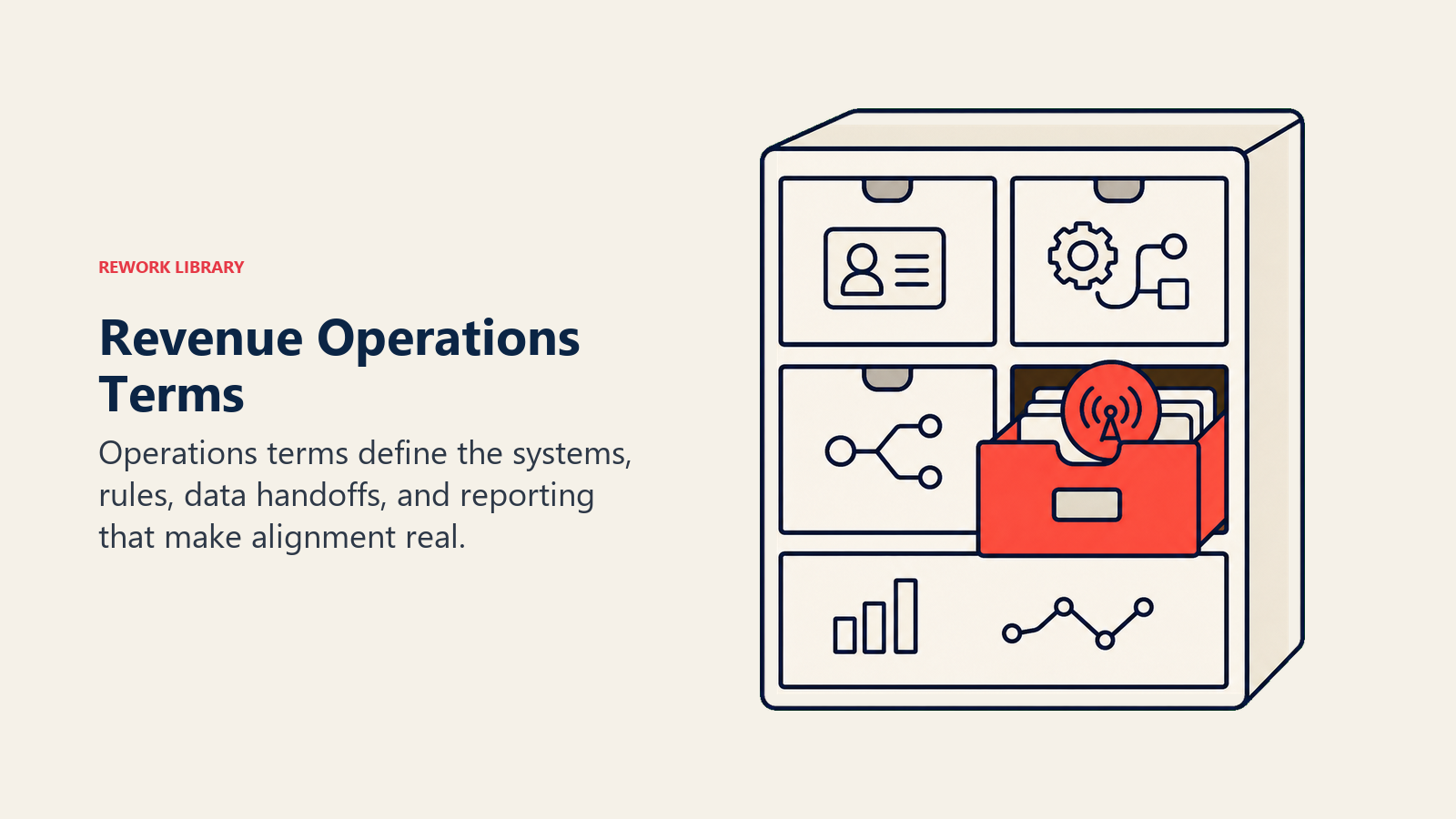 Revenue Operations, o RevOps, es la función que gestiona la infraestructura de ingresos, los datos, las herramientas y los procesos en marketing, ventas y customer success. RevOps posee los sistemas que conectan los tres equipos: configuración del CRM, modelos de attribution, lógica de enrutamiento de leads, reportes de pipeline y aplicación de SLA. En organizaciones maduras, RevOps es el equipo que hace que la alineación sea operacionalmente real en lugar de aspiracionalmente declarada.
Ejemplo: Cuando marketing y ventas acuerdan una nueva definición de MQL, RevOps actualiza el modelo de scoring en el MAP, actualiza las reglas de enrutamiento en el CRM y construye el Dashboard para rastrear el nuevo umbral.
MAP: Marketing Automation Platform
El software que gestiona el nurture de leads de marketing, el scoring y el rastreo de campañas. Los MAP (HubSpot, Marketo, Pardot, ActiveCampaign) alimentan leads calificados al CRM en el handoff. La lógica de scoring, las secuencias de nurture y las reglas de activación de MQL residen aquí. El desalineamiento entre el MAP y el CRM a menudo crea brechas en los datos de leads que rompen el handoff.
Ejemplo: El MAP puntúa un lead en 72, activa el estado de MQL, empuja el registro al CRM con la información de contacto y el historial de interacción. El CRM crea una tarea para el representante asignado.
Smarketing
Un término informal para la integración profunda entre los equipos de marketing y ventas, donde ambos operan como un equipo de ingresos unificado en lugar de dos funciones separadas. Común en empresas en etapa temprana (menos de 50 empleados) donde la misma persona puede poseer ambas, o en empresas que deliberadamente están colapsando los silos. El Smarketing requiere KPIs compartidos, planificación conjunta y una cultura donde ningún equipo culpa al otro por los fallos en el pipeline. Consulte smarketing y alineación de RevOps explicados para cómo funciona esto operacionalmente.
Ejemplo: Una startup SaaS de 30 personas donde el Head of Revenue dirige tanto la función de marketing como el equipo de ventas, realiza una revisión semanal de pipeline y reporta un solo número al CEO: pipeline generado.
Win/Loss Analysis (Análisis de Ganar/Perder)
Una revisión estructurada de los negocios cerrados, tanto ganados como perdidos, para entender por qué ocurrió el resultado. Los datos de Win/Loss son uno de los inputs más valiosos para el refinamiento del ICP, la mejora de mensajes y la revisión de la calidad del handoff. La mayoría de las empresas no lo hacen sistemáticamente. Las que lo hacen encuentran patrones que cambian tanto la estrategia de marketing como el comportamiento de ventas. Consulte retroalimentación de win-loss a marketing para saber cómo ejecutar este proceso y enrutar los hallazgos a los equipos correctos.
Ejemplo: Una revisión de Win/Loss de seis meses revela que el 80% de los negocios perdidos citaron "demasiado complejo para el tamaño de nuestro equipo" como razón. Marketing no estaba filtrando empresas con una función de ops dedicada, por lo que se añade un nuevo criterio de exclusión al ICP.
ABM: Account-Based Marketing
El account-based marketing es una estrategia B2B donde marketing enfoca los recursos en un conjunto definido de cuentas de alto valor, tratando a cada una como un mercado distinto. En lugar de generar un amplio volumen inbound, ABM requiere una estrecha coordinación con ventas porque la lista de cuentas objetivo debe acordarse conjuntamente, los mensajes deben reflejar lo que ventas sabe sobre la cuenta y el handoff ocurre mucho antes en el proceso (a menudo antes de que exista un lead).
Ejemplo: Marketing ejecuta una campaña de LinkedIn segmentada y una secuencia de correo directo a 50 cuentas nombradas. Ventas conoce las 50, ha revisado las cuentas y está preparado para dar seguimiento en cuanto aparezcan señales de interacción.
ABS: Account-Based Sales
La contraparte de ventas para ABM. En lugar de trabajar una cola inbound, los representantes de ABS persiguen proactivamente una lista definida de cuentas objetivo con alcance personalizado. ABS y ABM están diseñados para trabajar juntos: marketing crea cobertura aérea, ventas ejecuta el alcance directo. Pero requieren selección conjunta de cuentas y mensajes compartidos para funcionar.
Sales Enablement
La función o práctica de equipar a los representantes de ventas con contenido, herramientas y capacitación para interactuar eficazmente con los compradores. El Sales Enablement es donde a menudo aparece la brecha entre el buyer persona y el deal persona: marketing crea contenido de enablement basado en el buyer persona (el investigador), pero los representantes necesitan contenido para el deal persona (el comprador económico). Corregir esto requiere que los dos mapas de personas se hablen entre sí.
Ejemplo: Marketing construyó una biblioteca de publicaciones de blog educativas perfectas para el Champion. Ventas necesitaba una plantilla de una página para el caso de negocio para el CFO. Brecha de enablement.
Conversion Rate (de etapa a etapa)
La proporción de leads que pasan de una etapa del funnel a la siguiente. Las tasas de conversión de etapa a etapa son la herramienta diagnóstica principal para la salud del funnel. Una conversión baja de MQL a SAL señala un problema de definición. Una conversión baja de SAL a SQL señala un problema de tiempo de respuesta o calificación. Una conversión baja de SQL a oportunidad señala un problema de descubrimiento.
Ejemplo: 1.000 MQL → 720 SAL (tasa SAL del 72%) → 310 SQL (tasa SQL del 43%) → 180 oportunidades (tasa de oportunidad del 58%). La tasa de SAL a SQL parece baja. ¿El proceso de primera llamada está roto o la definición de SQL es demasiado estricta?
Términos Que Suenan Estándar Pero No Lo Son
Cinco términos que significan cosas diferentes en diferentes empresas. Su equipo debe elegir una definición y escribirla.
"Calificado": ¿Calificado significa "encaja con el ICP" o "mostró interés" o "tuvo una conversación"? Los tres están en uso. Elija uno y úselo consistentemente en las descripciones de trabajo, la capacitación de representantes y los nombres de las etapas del CRM.
"Pipeline": ¿El pipeline incluye SQL, o solo oportunidades? Algunos equipos de ingresos cuentan los SQL como pipeline; otros solo cuentan los negocios con un registro de oportunidad creado. Esto cambia significativamente su cálculo del ratio de cobertura del pipeline.
"Lead": Algunos equipos usan "lead" para todos los que están por encima de un contacto sin calificar. Otros lo usan solo para contactos pre-MQL. En Salesforce, "Lead" es un objeto específico que se convierte en Contacto + Cuenta + Oportunidad en una etapa definida. Asegúrese de que su modelo de objetos CRM y su definición conversacional coincidan.
"Cerrado": ¿"Cerrado" significa solo cerrado-ganado, o cerrado (ganado + perdido)? En los cálculos de la tasa de ganancia, el denominador "cerrado" debe incluir ambos. Pero en algunos Dashboards de reporte, "cerrado" filtra solo los ganados, inflando las tasas de ganancia aparentes.
"Attribution": Cuando alguien dice "marketing generó el 40% del pipeline", ¿están contando el sourcing de first-touch, la influencia de any-touch, o algo más? Sin especificar el modelo, el número no es comparable de un trimestre a otro.
Por Qué las Definiciones Importan: Tres Benchmarks Citables
La calidad del handoff mejora solo cuando ambos equipos usan las mismas palabras para referirse a los mismos umbrales operativos. Por eso las definiciones importan.
 Los equipos de ventas y marketing B2B con definiciones y procesos alineados generan tasas de ganancia de ventas un 38% más altas y tasas de retención de clientes un 36% más altas que sus pares desalineados, según la investigación de MarketingProfs en organizaciones B2B. El mecanismo es específico: cuando ambos equipos usan el mismo lenguaje, los handoffs llevan contexto preciso, los representantes no desperdician llamadas en leads no calificados y marketing no optimiza para métricas que no predicen ingresos.
Las empresas que definen conjuntamente sus criterios de MQL ven una conversión de pipeline a ingresos un 26% mejor que aquellas donde marketing define el MQL unilateralmente, según la investigación de Revenue Operations de Forrester. La coautoría no es un ritual de colaboración. Produce una definición que cada equipo tiene interés en defender en lugar de socavar.
Cuando los equipos de ingresos B2B realizan una sesión de alineación terminológica estructurada, trabajando a través de las definiciones de etapas del funnel, ICP y criterios de scoring, las tasas de rechazo de MQL caen en promedio un 18% en dos trimestres, según TOPO (ahora parte de Gartner). Eso no es una mejora de proceso. Es una corrección de definición.
Análisis de Rework: La Auditoría de Brechas de Definición
Revisamos los cinco términos más comúnmente no definidos o definidos inconsistentemente en los equipos de ingresos B2B de mid-market: MQL, ICP, SQL, "pipeline" (SQL incluidos o no) y "attribution" (qué modelo está en uso). En nuestro análisis de los patrones de fracaso de alineación, estos cinco términos representan la mayoría de las disputas recurrentes entre marketing y ventas. La auditoría toma 60 minutos: reúna al CMO, CRO y al líder de RevOps, vaya término por término y responda una pregunta para cada uno: "¿Tenemos una definición escrita y acordada ahora mismo?" En la mayoría de los equipos de mid-market, tres de los cinco están sin documentar o son específicos del equipo. Esas brechas son la agenda de alineación.
Mantenimiento del Glosario
Un glosario que nadie actualiza es un glosario en el que nadie confía. Asigne un único propietario (típicamente RevOps o quien ejecute la cadencia de marketing-ventas) para revisar estas definiciones trimestralmente.
Desencadene una redefinición cuando: una nueva línea de producto añade un tipo de comprador diferente; un cambio de mercado cambia lo que "listo para comprar" significa; las tasas de rechazo de ventas aumentan por encima del 30%; o un nuevo líder de ventas o marketing se une con definiciones diferentes de su empresa anterior.
Controle la versión del documento. Cuando una definición cambie, registre la fecha y la razón. La pregunta más común en ese momento: ¿qué términos necesitan revisión primero? Consulte las preguntas frecuentes a continuación para ver dónde tropiezan más rápido los equipos.
Más Información

Principal Solution Architect
On this page
- Cómo Usar Este Glosario
- Definiciones de Etapas del Funnel
- Lead (Sin Calificar)
- IQL: Information Qualified Lead
- MQL: Marketing Qualified Lead
- SAL: Sales Accepted Lead
- SQL: Sales Qualified Lead
- Opportunity (Oportunidad)
- Términos de ICP y Persona
- ICP: Ideal Customer Profile
- Buyer Persona
- Deal Persona
- Champion (Defensor)
- Economic Buyer (Comprador Económico)
- Términos de Scoring
- Lead Score
- Fit Score (Score de Ajuste)
- Intent Score (Score de Intención)
- Score Decay (Deterioro del Score)
- Score Threshold (Umbral de Score)
- Términos de Handoff
- Lead Routing (Enrutamiento de Leads)
- Lead Rejection (Rechazo de Lead)
- Lead Recycling (Reciclaje de Leads)
- SLA: Service Level Agreement
- Handoff Documentation (Documentación del Handoff)
- Términos de Attribution y Reporte
- First-Touch Attribution
- Last-Touch Attribution
- Multi-Touch Attribution
- Marketing-Sourced Pipeline
- Marketing-Influenced Pipeline
- Closed-Loop Reporting
- Términos Operativos
- RevOps: Revenue Operations
- MAP: Marketing Automation Platform
- Smarketing
- Win/Loss Analysis (Análisis de Ganar/Perder)
- ABM: Account-Based Marketing
- ABS: Account-Based Sales
- Sales Enablement
- Conversion Rate (de etapa a etapa)
- Términos Que Suenan Estándar Pero No Lo Son
- Por Qué las Definiciones Importan: Tres Benchmarks Citables
- Mantenimiento del Glosario
- Más Información