Smarketing y RevOps Explicados: Dos Modelos para Alinear Marketing y Ventas
Turn this article into takeaways for your work.


Each assistant summarizes the article only for you and suggests best practices for your work.
Mencione "alineación" en una reunión de liderazgo y obtendrá dos grupos respondiendo con dos palabras distintas. Un grupo dice "necesitamos smarketing". El otro dice "necesitamos RevOps". Un tercer grupo asiente sin estar del todo seguro de lo que cualquiera de los dos términos significa en la práctica. Si aún está determinando cuál es el problema, comience con qué significa la alineación marketing-ventas antes de elegir un modelo para resolverlo.
La confusión es comprensible. Ambas palabras son sustitutos de "Marketing y Ventas deben trabajar mejor juntos". Pero no son sinónimos, no son intercambiables, y tratarlos así lleva a errores reales de diseño organizacional. Como contratar un equipo de RevOps antes de haber acordado qué es un lead calificado, o llamar a su reunión semanal de sincronización "reunión de smarketing" cuando nada estructural ha cambiado realmente.
Aquí está lo que cada modelo significa realmente, dónde encaja cada uno y cómo elegir el camino correcto para su etapa.
El Espectro Smarketing-RevOps-Alineación
La forma más útil de entender smarketing y RevOps no es como opciones en competencia sino como etapas secuenciales en un único espectro de alineación. Todo equipo de revenue B2B se encuentra en algún lugar de este espectro, y el modelo correcto depende enteramente de dónde se encuentren, no de qué etiqueta suene más sofisticada.
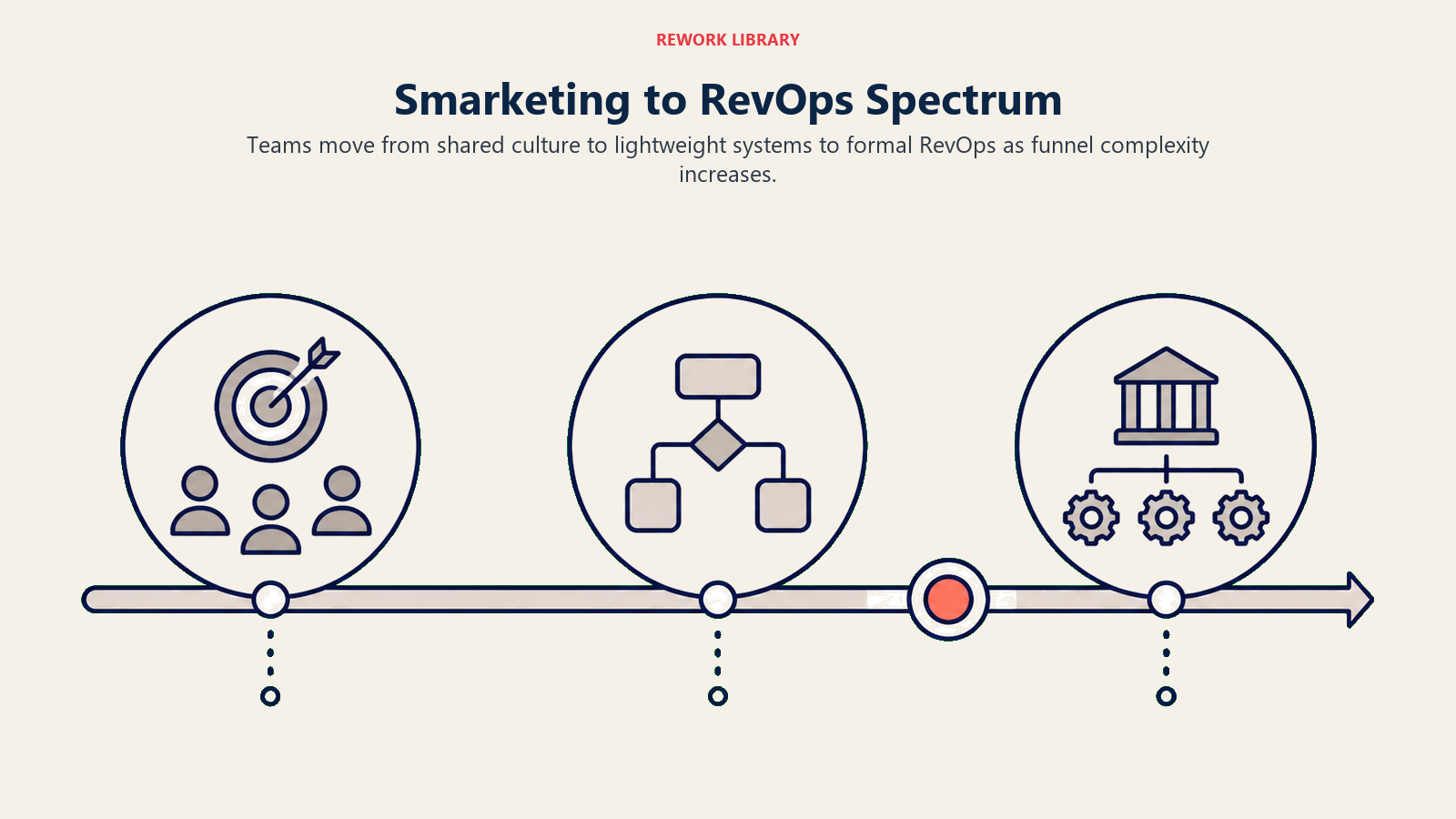 | Etapa | Modelo | Mecanismo Principal | Mejor Para |
|---|---|---|---|
| 1-2 | Mentalidad smarketing | Objetivos compartidos, reuniones, vocabulario | Fundador-led, pre-Serie B, menos de 15 personas |
| 2-3 | Smarketing + operaciones ligeras | Acuerdos documentados + sistemas simples | Equipos de 15-30 personas, post-primer acuerdo de ICP |
| 3-5 | RevOps formal | Infraestructura de datos, gobernanza de procesos | Serie B+, Funnels complejos, CS-como-revenue |
| Etapa | Modelo | Mecanismo Principal | Mejor Para |
|---|---|---|---|
| 1-2 | Mentalidad smarketing | Objetivos compartidos, reuniones, vocabulario | Fundador-led, pre-Serie B, menos de 15 personas |
| 2-3 | Smarketing + operaciones ligeras | Acuerdos documentados + sistemas simples | Equipos de 15-30 personas, post-primer acuerdo de ICP |
| 3-5 | RevOps formal | Infraestructura de datos, gobernanza de procesos | Serie B+, Funnels complejos, CS-como-revenue |
Este espectro (lo que llamamos el Espectro Smarketing-RevOps-Alineación) es el marco de diagnóstico. Antes de contratar un líder de RevOps o lanzar una iniciativa de smarketing, identifique en qué etapa se encuentra realmente su equipo. Luego elija el modelo que se ajuste a la etapa, no el que suene más avanzado.
Datos Clave: Modelos de Alineación en la Práctica
- Las empresas con equipos de Marketing y Ventas alineados logran un 38% más de tasas de cierre y un 36% más de retención de clientes, según MarketingProfs.
- La adopción de RevOps creció del 10% de las empresas de tecnología B2B en 2018 a más del 43% en 2024, según el informe State of RevOps de LeanData.
- Las empresas B2B de alto crecimiento (por encima del 25% interanual) tienen 2,3 veces más probabilidades de tener una función de RevOps dedicada que las empresas que crecen por debajo del 10%, según la investigación de revenue operations de Forrester.
Citable: Las empresas B2B de alto crecimiento que se expanden al 25% o más interanual tienen 2,3 veces más probabilidades de tener una función de RevOps dedicada que las empresas que crecen por debajo del 10%, según la investigación de revenue operations de Forrester.
Smarketing Definido
"Smarketing" es un portmanteau de sales y marketing. Fue popularizado por HubSpot alrededor de 2010 como etiqueta para el modelo de equipo integrado: la idea de que Marketing y Ventas no deben ser silos separados sino operar como un equipo único enfocado en revenue.
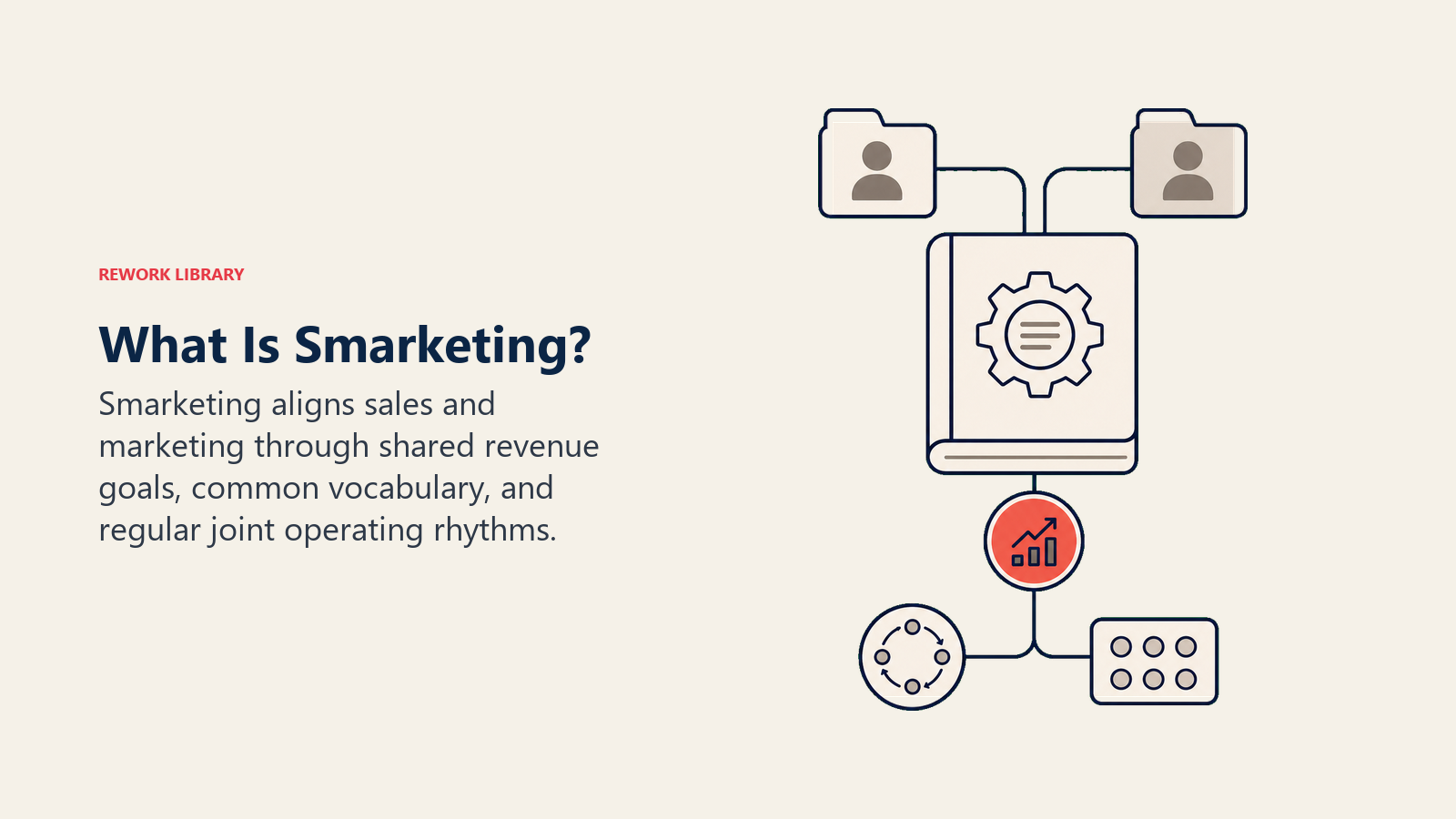 En su núcleo, smarketing es una alineación cultural y operacional entre dos funciones, no una reorganización estructural. No requiere cambiar las líneas de reporte ni crear un nuevo departamento. Requiere tres cosas:
Objetivos compartidos: Ambos equipos tienen KPIs vinculados al mismo resultado (revenue), no métricas separadas que cada uno puede ver bien mientras el resultado general sufre. Marketing no solo tiene MQLs; co-posee Pipeline. Ventas no solo tiene la tasa de cierre; co-posee la tasa de conversión de Marketing.
Reuniones compartidas: Una cadencia regular, semanal o quincenal, donde ambos equipos revisan los mismos números juntos, no en silos separados. El formato importa: no es Marketing presentando a Ventas, ni viceversa. Ambos equipos son responsables ante el mismo Dashboard.
Vocabulario compartido: Un acuerdo escrito sobre lo que significa ICP, lo que significa MQL, lo que significa SQL y qué hace que un lead transite de una etapa a la siguiente. El glosario de alineación marketing-ventas cubre lo que estos términos deben incluir para ser realmente útiles.
Dónde Funciona el Smarketing
El smarketing como modelo es más efectivo en tres contextos:
Equipos fundador-led o pequeños (1-15 miembros del equipo de revenue): Cuando el CMO y el CRO son la misma persona, o cuando hay 3 personas haciendo tanto Marketing como Ventas, una función formal de RevOps es innecesaria. Pero los principios del smarketing (ICP compartido, reuniones compartidas, vocabulario compartido) aplican igual. La documentación y los acuerdos son lo que importa, no el headcount.
Empresas en etapa temprana (pre-Serie B): En esta etapa, el desafío de alineación principal es definitorio. ¿Qué estamos vendiendo, a quién y cómo se ve un buen lead? El smarketing es el marco correcto porque es ligero: algunos acuerdos, una reunión regular, un Dashboard compartido. No requiere headcount de operaciones dedicado.
Empresas donde la confianza entre Marketing y Ventas es sólida: El smarketing depende de la cooperación voluntaria. Tanto el líder de Marketing como el de Ventas deben creer que vale la pena hacerlo y cumplir con sus compromisos. En entornos con dinámicas de equipo saludables, esto funciona bien. En entornos donde hay desconfianza significativa o conflicto político entre funciones, las reuniones de smarketing se convierten en teatro.
Dónde Falla el Smarketing
Las limitaciones del smarketing aparecen de forma predecible a medida que las empresas escalan:
A medida que los equipos crecen más allá de 20-30 personas, los acuerdos informales que impulsaban el smarketing comienzan a degradarse. Los nuevos empleados no internalizan el vocabulario compartido de la misma manera que lo hicieron los fundadores. Las definiciones se desvían. Alguien nuevo en el equipo pregunta "¿qué es un MQL?" y obtiene tres respuestas distintas. Un marco de definición de MQL escrito es lo que hace que ese conocimiento sea duradero más allá del equipo fundador.
A medida que el Funnel se vuelve más complejo (múltiples productos, múltiples segmentos, múltiples canales), los datos necesarios para gestionar bien el equipo de revenue superan lo que la coordinación informal puede manejar. La atribución se convierte en un tema en disputa. El Dashboard compartido en el que todos acordaron ya no captura lo que está sucediendo realmente.
Cuando la especialización lo exige: A cierta escala, las operaciones de marketing, las operaciones de ventas y los sistemas que cada uno gestiona necesitan a alguien que piense a través de ellos, no solo dos jefes de departamento que acuerdan reunirse semanalmente. La complejidad operacional requiere infraestructura dedicada.
RevOps Definido
Revenue Operations (RevOps) es una función operacional, no una mentalidad ni una cadencia de reuniones. Es la capa organizacional responsable de los datos, los procesos y la tecnología a lo largo de todo el Funnel de revenue: Marketing, Ventas y Customer Success.
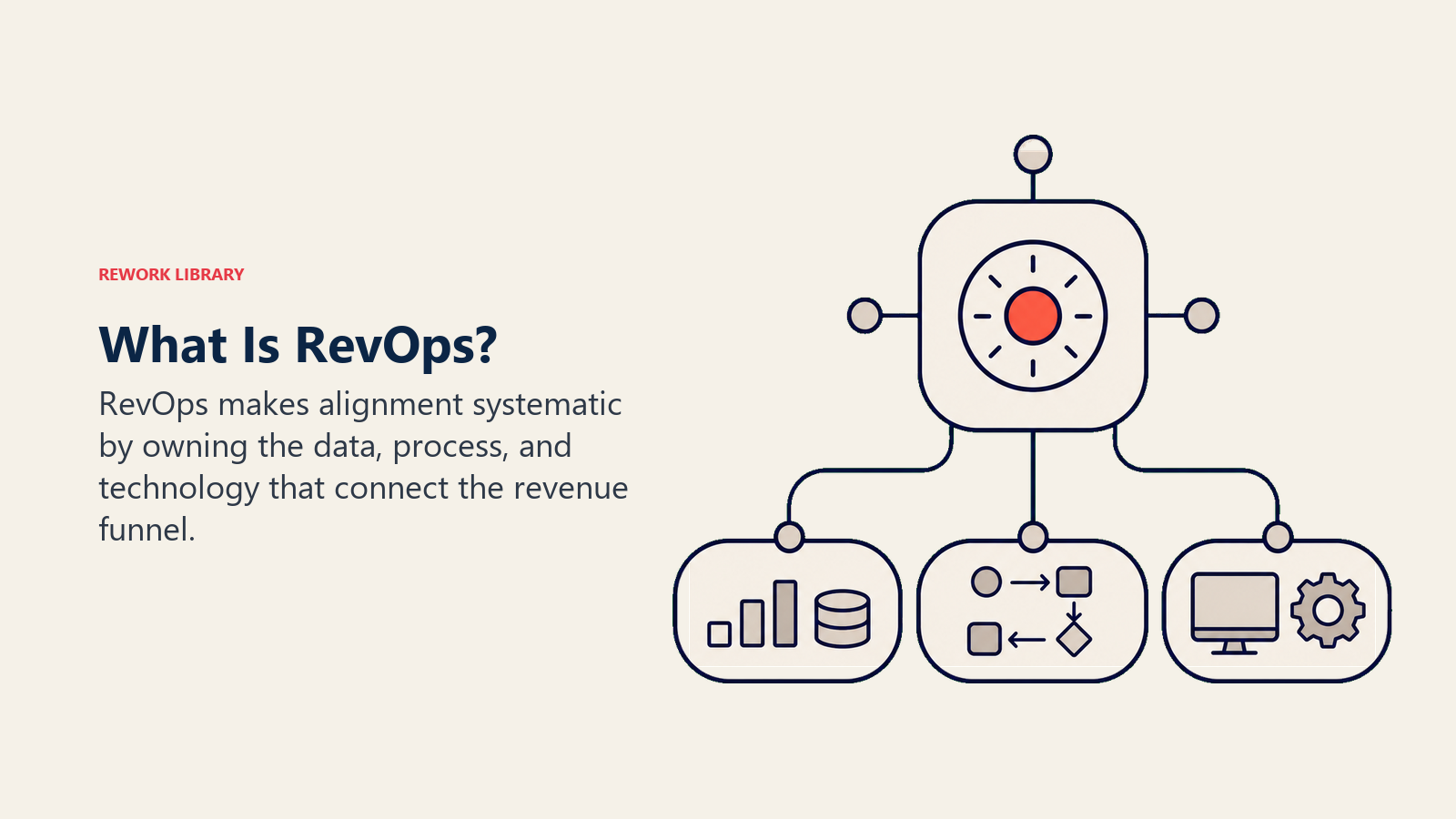 RevOps existe para hacer que la alineación sea sistemática en lugar de dependiente de relaciones individuales y buenas intenciones. Donde el smarketing dice "acordemos trabajar juntos", RevOps dice "construyamos sistemas para que la información correcta llegue a la persona correcta automáticamente." Forrester define revenue operations como "una estrategia de ejecución comercial altamente configurada e iterativa diseñada para maximizar el valor del cliente y el rendimiento de la empresa", un rol cross-funcional distinto de las operaciones de ventas tradicionales. Hacer que la automatización de lead routing funcione correctamente es uno de los primeros lugares donde esa intención operacional se convierte en realidad.
Una función madura de RevOps gestiona:
- Infraestructura de datos: El CRM, la plataforma de automatización de marketing, el modelo de atribución, los Dashboards que tanto Marketing como Ventas consultan. No las herramientas en sí, sino la integridad de los datos que fluyen a través de ellas.
- Diseño de procesos: Los Workflows documentados que gobiernan el lead routing, los criterios de handoff, el cumplimiento del SLA y la escalación. Cuando un proceso falla, RevOps es propietario de la solución.
- Reporting cross-funcional: La única fuente de verdad en la que Marketing, Ventas y CS confían. No tres hojas de cálculo distintas mantenidas por tres equipos diferentes.
- Gobernanza tecnológica: Evaluación de nuevas herramientas, gestión de integraciones, asegurándose de que la stack no prolifere.
RevOps No Es un Cambio de Marca de Sales Ops
Vale la pena decirlo directamente porque la confusión es común. Sales Ops es una función que apoya específicamente al equipo de Ventas, gestionando territorios, previsiones, planes de compensación e higiene del CRM para los representantes de ventas. Reporta al CRO. Su trabajo es hacer que Ventas sea más efectivo.
RevOps es un rol cross-funcional. Se sitúa entre Marketing, Ventas y CS, no dentro de ninguno de ellos. Su trabajo es hacer que todo el proceso de revenue sea más eficiente, incluidas las transiciones entre funciones. Un equipo de RevOps que sirve principalmente a Ventas no ha resuelto el problema cross-funcional; simplemente le ha dado un mejor título.
Dónde Funciona RevOps
RevOps tiene mayor apalancamiento en:
Serie B y más allá: El movimiento de revenue es lo suficientemente complejo, y el equipo es lo suficientemente grande, que la coordinación informal no puede mantener el sistema unido. La atribución es disputada. Los SLAs se están rompiendo de formas que nadie puede rastrear. El CRM es un desorden. Este es el momento para el que RevOps fue diseñado.
Empresas multiproducto: Cuando Ventas vende más de un producto, la atribución a lo largo del customer journey se vuelve genuinamente compleja. RevOps proporciona la infraestructura para rastrear qué está impulsando realmente el revenue, no solo lo que cada equipo cree que lo impulsa.
Organizaciones donde CS se está convirtiendo en un generador de revenue: Cuando Customer Success es responsable de la expansión, la renovación o el Upsell, el movimiento de revenue se extiende más allá de la venta inicial. RevOps coordina entre las tres funciones (Marketing, Ventas, CS), no solo las dos primeras.
Smarketing vs RevOps: No en Competencia, Secuenciales
El encuadre de "¿smarketing o RevOps?" es una elección falsa. Estas no son filosofías en competencia. Son etapas secuenciales del mismo camino.
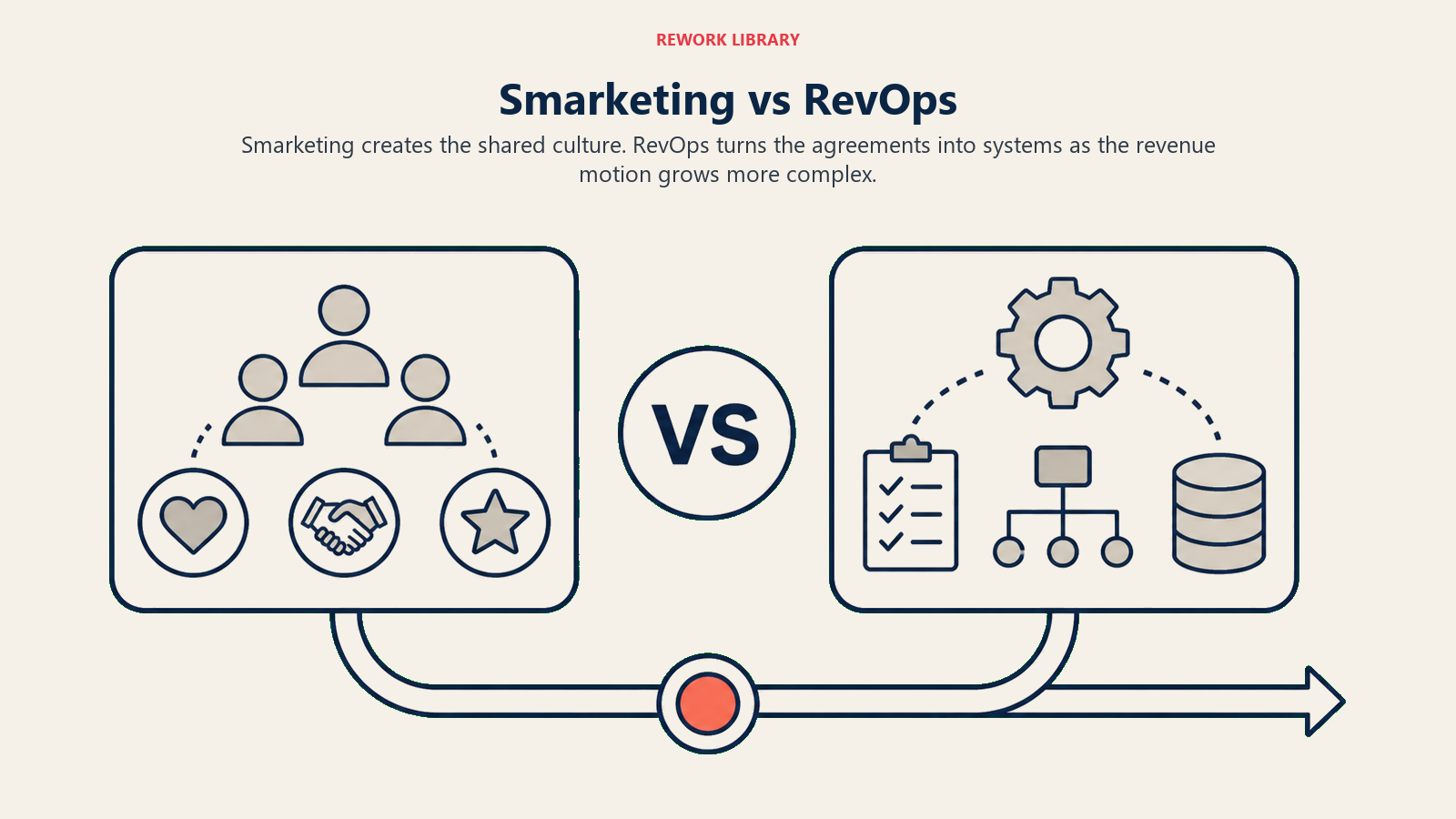 Etapa 1-2 (etapa temprana, equipo pequeño): Mentalidad smarketing + RevOps ligero
- Construir ICP compartido y definiciones de leads
- Acordar un modelo de Funnel simple
- Configurar un Dashboard compartido (aunque sea una hoja de cálculo)
- Ejecutar una sincronización semanal de revenue
- Una persona lleva el sombrero de operaciones. No necesita ser una contratación dedicada
Etapa 3+ (mid-market, escalando): Función formal de RevOps con cultura smarketing debajo
- Contratación dedicada de RevOps (o equipo pequeño)
- Sistemas que hacen cumplir los acuerdos que el smarketing creó informalmente
- Modelo de atribución en el que tanto Marketing como Ventas confían
- La cultura smarketing permanece (las reuniones, el vocabulario compartido, la responsabilidad conjunta) pero ahora está respaldada por infraestructura, no solo por buena voluntad
Las empresas que tienen dificultades son las que se saltan la secuencia. Contratan un equipo de RevOps antes de haber acordado qué es un MQL. El equipo de RevOps construye Dashboards hermosos en los que nadie confía, porque las definiciones subyacentes siguen siendo disputadas. O permanecen en modo smarketing más allá del punto en que los acuerdos informales pueden mantener el sistema unido, y ven cómo la alineación se degrada a medida que crece el equipo. Las 8 señales de advertencia de desalineación son un diagnóstico confiable de en qué etapa se encuentra realmente un equipo, frente a la etapa en que creen estar.
| Smarketing | RevOps | |
|---|---|---|
| Qué es | Alineación cultural y operacional entre Marketing y Ventas | Infraestructura de operaciones cross-funcional entre Marketing, Ventas y CS |
| Mecanismo principal | Objetivos compartidos, reuniones compartidas, vocabulario compartido | Sistemas de datos, diseño de procesos, gobernanza tecnológica |
| Quién lo gestiona | CMO + CRO (conjuntamente) | Líder de RevOps (neutral, no gestionado por ninguna función) |
| Mejor para | Etapa temprana, equipos pequeños, organizaciones fundador-led | Serie B+, Funnels complejos, multiproducto, CS-como-revenue |
| Falla cuando | El equipo supera los 20-30, la complejidad aumenta | Se implementa antes de acordar las definiciones |
| Requiere | Confianza y aceptación de ambas funciones | Autoridad organizacional para gestionar procesos cross-funcionales |
Lo Que Ambos Modelos Requieren en Común
Independientemente del modelo que se ajuste a su etapa, tres cosas son innegociables. Ninguna cantidad de herramientas de RevOps o buena voluntad de smarketing las reemplaza.
ICP compartido: Tanto Marketing como Ventas han acordado, por escrito, qué tipo de empresa y contacto están apuntando. No solo industria y tamaño de empresa, sino también señales de comportamiento y situacionales que indican disposición para comprar. Si esto no está escrito y acordado, ambos modelos fallan. El artículo sobre el marco de ICP compartido cubre cómo construir este acuerdo a partir de datos reales de clientes closed-won y con churn.
Definiciones acordadas: ¿Qué es un MQL? ¿Qué es un SQL? ¿Qué criterios mueven un lead de una etapa a la siguiente? Estas respuestas deben estar documentadas y revisadas al menos trimestralmente. Las definiciones se desvían. La revisión trimestral detecta la desviación antes de que sea costosa.
Feedback closed-loop: Los datos de resultados de Ventas (qué leads convirtieron, cuáles fueron rechazados, por qué) deben retornar a las decisiones de targeting y contenido de Marketing. Sin esto, Marketing está tomando decisiones a ciegas. El loop debe ser estructurado, no ad hoc.
Estos tres fundamentos son el punto de partida para ambos modelos. No puede saltárselos con herramientas de RevOps, y no puede reemplazarlos con cultura de smarketing. ¿Qué sucede, entonces, cuando las empresas lo intentan de todos modos?
Errores Comunes
Error 1: Contratar un equipo de RevOps antes de corregir las definiciones. El equipo construye sistemas sobre datos disputados. Los Dashboards se convierten en artefactos políticos en lugar de herramientas de confianza. La inversión en RevOps produce frustración en lugar de claridad.
Error 2: Llamarlo smarketing para evitar el cambio organizacional. Renombrar el all-hands trimestral "reunión de smarketing" sin cambiar los objetivos, las métricas ni la estructura de responsabilidad no crea alineación. Crea una palabra para la misma disfunción.
Error 3: Tratar RevOps como Sales Ops 2.0. Un equipo de RevOps que sirve principalmente a Ventas no ha resuelto el problema cross-funcional. Marketing no confiará en datos en los que no tiene participación, y CS no coordinará la expansión si la infraestructura de revenue está diseñada solo para el primer deal. Entender qué rastrea realmente un pipeline de ventas (y por qué eso difiere de la visión del Funnel de Marketing) es un buen punto de partida para identificar dónde comienza y termina cada función de operaciones.
Análisis de Rework: Basándonos en datos de LeanData y Forrester sobre los patrones de adopción de RevOps, las empresas que implementan RevOps antes de formalizar sus fundamentos de smarketing (específicamente antes de documentar un ICP compartido y la definición de MQL) tienen tasas de fallo de implementación superiores al 60%. Los Dashboards se construyen, pero ningún equipo confía en los datos. Nuestro marco del Espectro Smarketing-RevOps-Alineación sugiere que la secuencia es más importante que el modelo: un equipo en Etapa 2 que intenta herramientas de Etapa 4 no está acelerando: está construyendo infraestructura sobre terreno inestable. Invierta primero en los fundamentos del smarketing; RevOps los multiplica.
Marco de Decisión: Tres Preguntas
Antes de elegir un modelo, responda estas tres preguntas:
1. ¿Qué tan grande es el equipo de revenue? Menos de 15 personas: modelo smarketing con soporte de operaciones ligero. Más de 30 personas: probablemente necesita infraestructura de RevOps dedicada.
2. ¿Qué tan complejo es el Funnel? Producto único, movimiento único, ICP claro: el smarketing puede manejarlo. Múltiples productos, múltiples segmentos, CS-como-revenue, atribución compleja: RevOps es la infraestructura correcta.
3. ¿Tienen Marketing y Ventas definiciones acordadas ahora mismo? No: comience con las definiciones antes que cualquier otra cosa. Ningún modelo funciona sin ellas. Sí: si el equipo es pequeño, formalice los acuerdos de smarketing. Si el equipo es grande y el proceso es complejo, esas definiciones se convierten en la base de una construcción de RevOps.
El Rol de un Operador Neutral
Un patrón del que ambos modelos se benefician: alguien que no es el CMO y no es el CRO que sea propietario del proceso de alineación.
Cuando la alineación es puramente una negociación entre los dos jefes de función, está sujeta a la política y las prioridades de esas relaciones. Si el CMO es fuerte y el CRO es nuevo, las definiciones de Marketing ganan. Si el CRO controla el número de revenue, Ventas define "calificado" unilateralmente.
Un operador neutral, ya sea un líder de RevOps, un Chief of Staff o un VP de Growth que sea propietario de ambos lados, puede mantener el proceso responsable ante los acuerdos en lugar de ante las preferencias de cualquier jefe de función. Esto importa especialmente durante los desacuerdos: cuando la definición de calificado de Marketing y la experiencia de calificado de Ventas divergen, alguien tiene que ejecutar el arbitraje.
En Qué Alinearse Primero
Antes de elegir una estructura, llegue a un acuerdo sobre:
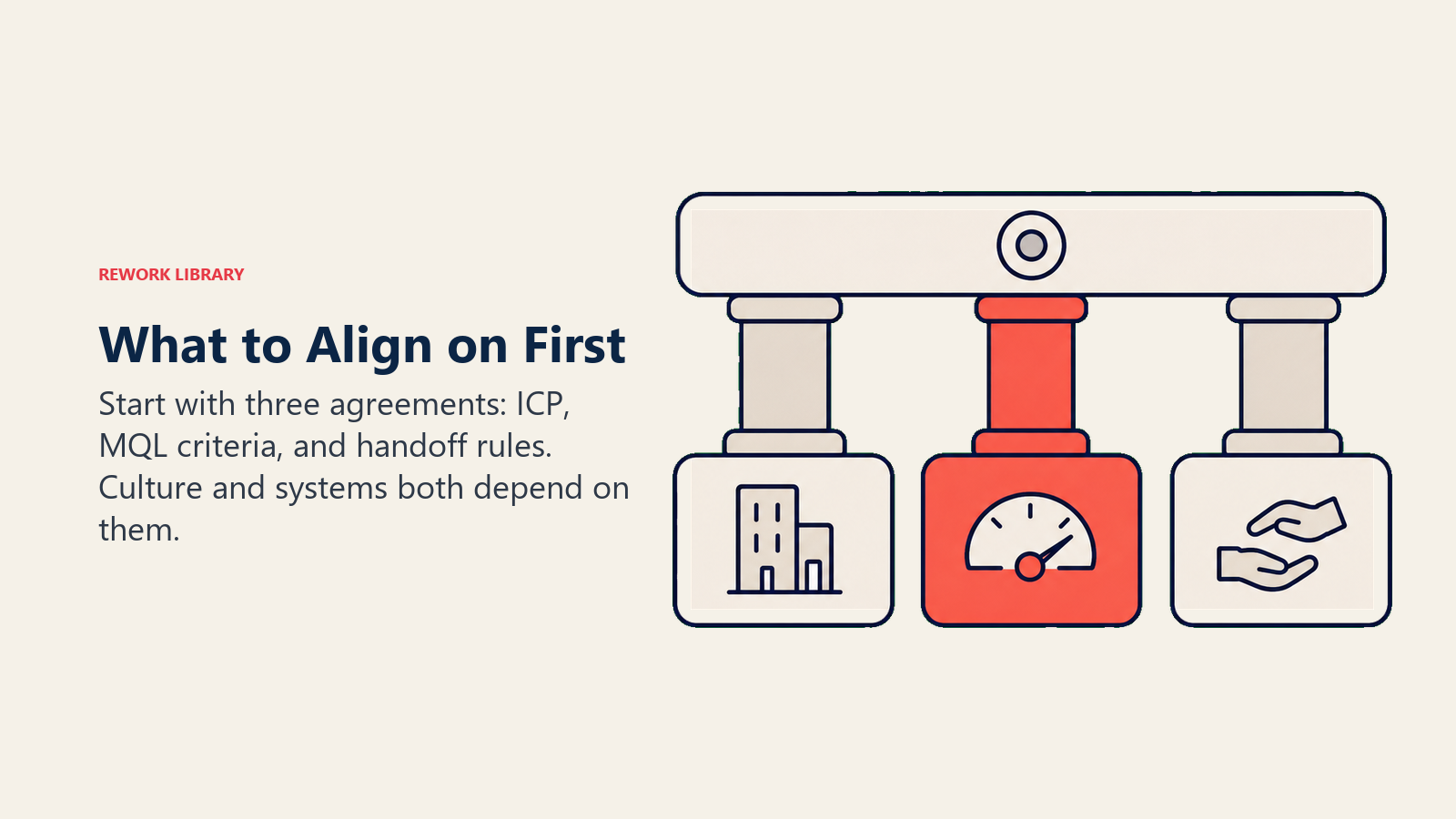
- ¿Cuál es nuestro ICP? (Escrito, específico, ambos equipos lo firmaron)
- ¿Qué es un MQL? (Criterios específicos, no vagos "marketing-qualified")
- ¿Qué pasa en el handoff? (Quién notifica a quién, qué contexto se requiere, cuál es el SLA)
Esos tres acuerdos son la base. El smarketing los formaliza a través de la cultura. RevOps los codifica en sistemas. Pero ambos necesitan que existan antes de que cualquier otra cosa funcione.
El modelo de madurez de alineación mapea cómo evolucionan estos fundamentos a través de cinco etapas, y qué necesita tener en cada etapa antes de pasar a la siguiente.
Preguntas Frecuentes sobre Smarketing y RevOps Explicados
¿Qué es smarketing?
Smarketing es la alineación de Marketing y Ventas en un modelo operativo único enfocado en revenue a través de objetivos compartidos, cadencias de reuniones compartidas y vocabulario compartido. No requiere reestructurar las líneas de reporte ni crear un nuevo departamento. Requiere acuerdos documentados que ambos equipos asumen y frente a los cuales son medidos.
¿Qué es RevOps?
Revenue Operations (RevOps) es una capa organizacional cross-funcional responsable de la infraestructura de datos, el diseño de procesos y la gobernanza tecnológica en Marketing, Ventas y Customer Success. RevOps hace que la alineación sea sistemática en lugar de dependiente de relaciones individuales. Codifica los acuerdos que el smarketing crea informalmente en sistemas duraderos.
¿Cuál es la diferencia entre smarketing y RevOps?
Smarketing es un modelo de alineación cultural y operacional que funciona mediante la cooperación voluntaria entre el CMO y el CRO. RevOps es una función operacional con autoridad organizacional para gestionar procesos cross-funcionales. El smarketing es el modelo correcto para empresas en etapa temprana; RevOps es la infraestructura necesaria cuando el tamaño del equipo, la complejidad del Funnel o el movimiento multiproducto supera lo que la alineación informal puede mantener.
¿Deberíamos implementar primero smarketing o RevOps?
Casi siempre smarketing primero. RevOps construye sistemas sobre definiciones acordadas. Si su ICP y los criterios de MQL aún no están documentados y acordados, los Dashboards de RevOps reflejarán datos disputados en los que ningún equipo confía. Los datos de State of Inbound de HubSpot muestran que el 65% de las empresas con SLAs de alineación formales ven un ROI sólido de sus programas de marketing, pero los SLAs requieren trabajo a nivel de definición del smarketing para ser ejecutables.
¿Cuándo necesita una empresa contratar un líder de RevOps?
La señal es usualmente una de tres: (1) el equipo ha crecido más de 30 personas y la alineación informal se está degradando; (2) la atribución es un tema en disputa entre Marketing y Ventas sin árbitro neutral; o (3) Customer Success se ha convertido en un generador de revenue y el handoff de Ventas a CS no tiene un responsable operacional. Las empresas de alto crecimiento por encima del 25% interanual tienen 2,3 veces más probabilidades de tener RevOps dedicado que los pares de crecimiento más lento, según Forrester.
¿Qué tienen en común smarketing y RevOps?
Ambos modelos requieren los mismos tres elementos innegociables: un ICP documentado acordado por ambas funciones, definiciones acordadas para las etapas de leads (MQL, SQL, SAL) y un proceso estructurado de feedback closed-loop para que los datos de resultados de Ventas retornen a las decisiones de Marketing. Ninguna cantidad de buena voluntad de smarketing o herramientas de RevOps reemplaza estos fundamentos.
Aprenda Más

Principal Solution Architect
On this page
- El Espectro Smarketing-RevOps-Alineación
- Smarketing Definido
- Dónde Funciona el Smarketing
- Dónde Falla el Smarketing
- RevOps Definido
- RevOps No Es un Cambio de Marca de Sales Ops
- Dónde Funciona RevOps
- Smarketing vs RevOps: No en Competencia, Secuenciales
- Lo Que Ambos Modelos Requieren en Común
- Errores Comunes
- Marco de Decisión: Tres Preguntas
- El Rol de un Operador Neutral
- En Qué Alinearse Primero
- Aprenda Más