Reporte de Ciclo Cerrado Explicado: Cómo Marketing Aprende Qué Ocurre Después del Handoff
Turn this article into takeaways for your work.


Each assistant summarizes the article only for you and suggests best practices for your work.
Marketing optimizará para cualquier métrica que pueda medir. Y si el último punto de control visible es el handoff de MQL, eso es exactamente lo que optimizará: el volumen de MQLs, incluso cuando esos MQLs no cierran, no convierten y no valen el tiempo de un rep.
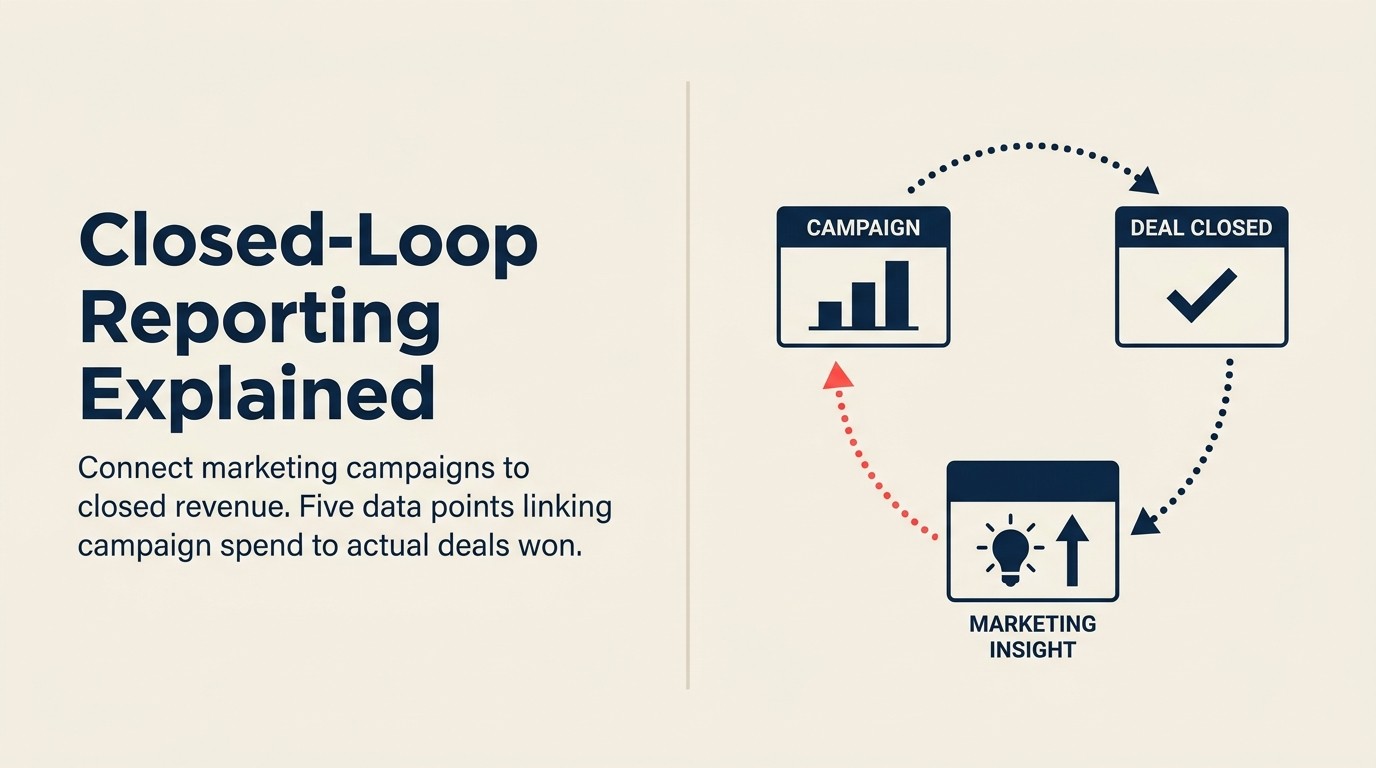
El reporte de ciclo cerrado soluciona esto al retroalimentar los datos de resultados hacia arriba. En lugar de que el flujo de datos termine en el handoff, ventas envía los resultados de vuelta a marketing: aceptado, rechazado, convertido a oportunidad, ganado, perdido. El ciclo se cierra. Marketing finalmente ve qué ocurre después de que los leads salen por la puerta.
La atribución de marketing (la práctica de identificar qué puntos de contacto contribuyen a una conversión) solo produce datos confiables cuando los resultados fluyen de vuelta del CRM al registro de campaña. Esa es la mecánica central que aborda este artículo.
Esto no es una característica de lujo para equipos con stacks de BI maduros. Es el requisito mínimo para que marketing tenga credibilidad ante ventas y ante el liderazgo.
Los equipos de marketing B2B que optimizan para los ingresos en lugar del volumen de MQLs generan un 40% menos de leads pero el 73% más de valor en el Pipeline, según el análisis de Gartner de organizaciones de marketing B2B de alto rendimiento. Esa inversión solo se hace visible cuando los datos de resultados fluyen hacia arriba desde el CRM al registro de campaña: esa es la mecánica central del reporte de ciclo cerrado.
Ciclo Abierto vs. Ciclo Cerrado
La mayoría de los equipos operan en un ciclo abierto sin darse cuenta. Esta es la diferencia.
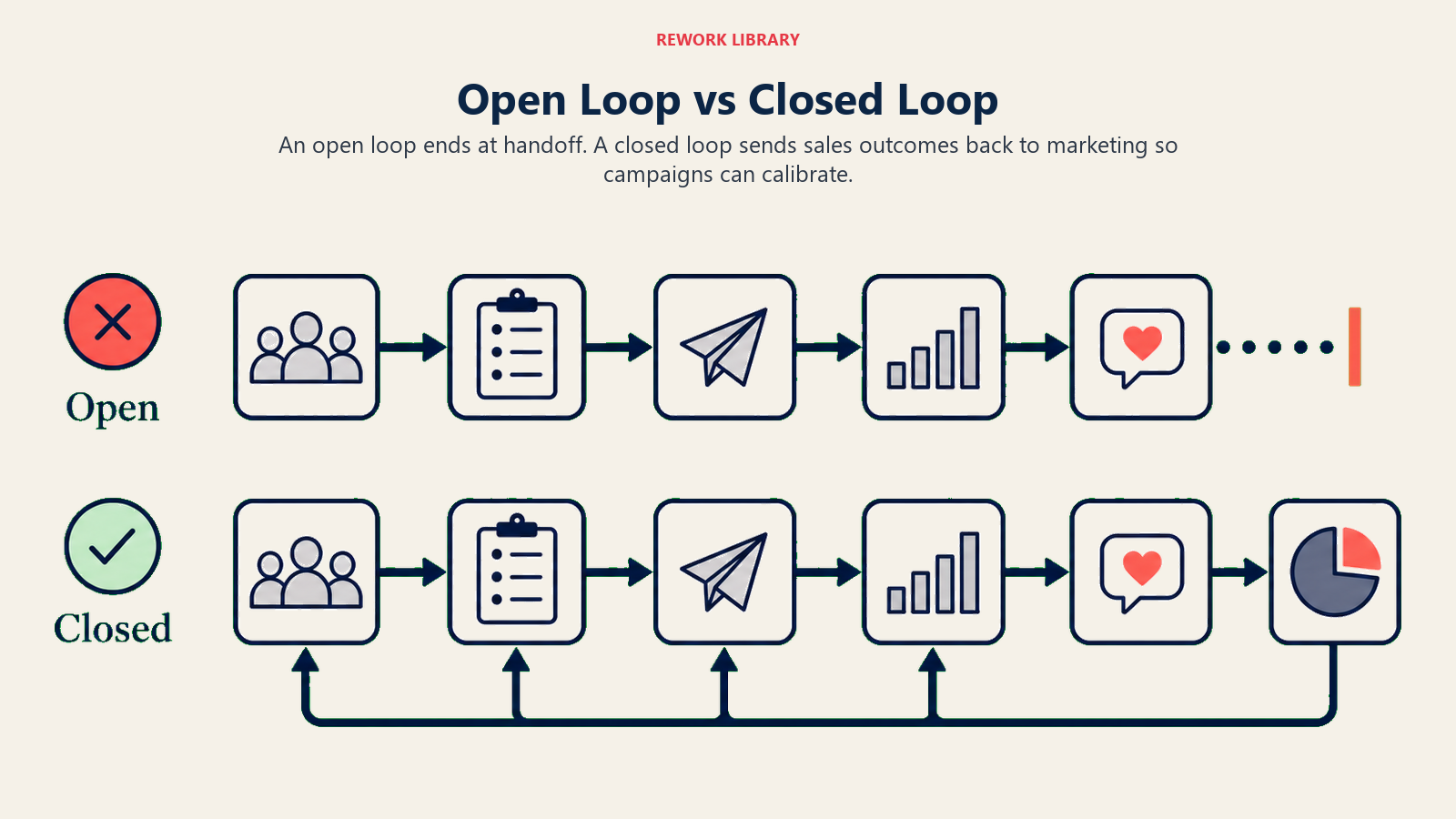
Ciclo abierto: Marketing genera un lead, lo puntúa, lo pasa a ventas cuando cruza el umbral de MQL y luego observa cómo el rastro de datos se enfría. Marketing nunca recibe confirmación de lo que ocurrió. El lead convirtió o no. Marketing no tiene forma de saber qué campañas producen victorias versus cuáles producen contactos reciclados.
Ciclo cerrado: Marketing genera un lead, lo pasa a ventas y luego recibe feedback estructurado en cada etapa posterior: ¿fue aceptado o rechazado el lead? ¿Se convirtió en SQL? ¿Se creó una oportunidad? ¿Cuál fue el valor del deal? ¿Cerró y, si se perdió, por qué?
El "ciclo" es la ruta de información que va desde los resultados de ventas hasta la capa de datos de marketing. Cada vez que un deal se actualiza en el CRM, una porción de esa actualización fluye de vuelta al MAP (marketing automation platform) de marketing y completa el lead o registro de contacto original.
Esto no se trata de control ni de culpa. Se trata de calibración. Y la siguiente pregunta es: ¿por qué tan pocos equipos realmente lo tienen?
Datos clave: Atribución de marketing y alineación de ingresos
- Las empresas con reporte de ciclo cerrado ven una tasa de cierre un 36% mayor en los leads generados por marketing, según el State of Marketing de HubSpot, porque las campañas se optimizan hacia la calidad en lugar del volumen.
- Solo el 21% de los equipos de marketing reporta tener visibilidad completa de los ingresos ganados vinculados a campañas específicas, según la Encuesta de Marketing B2B 2024 de Forrester Research.
- El 58% de los líderes de ventas dice que su mayor frustración con marketing es recibir leads sin saber de dónde vinieron o si leads similares cerraron antes, según investigación de SiriusDecisions.
Por Qué la Mayoría de los Equipos No Tienen Reporte de Ciclo Cerrado
La respuesta honesta es que requiere alineación en tres lugares que la mayoría de los equipos no han logrado: integración técnica, cambio de comportamiento y cultura de responsabilidad.
Brecha técnica: Las marketing automation platforms y los CRMs están a menudo aislados. HubSpot puede conocer la fuente del lead. Salesforce puede conocer el resultado del deal. Pero si nadie ha construido la sincronización entre ellos (o si la sincronización falla y nadie lo nota) el ciclo nunca se cierra. La definición de MQL de Gartner es una línea de base útil para el umbral que su integración debe rastrear. El ID de contacto en HubSpot no coincide con el ID de contacto en Salesforce. La atribución de campaña se sobreescribe cuando se crea una oportunidad. Los datos existen pero viven en dos sistemas que no se comunican.
Brecha de comportamiento: Incluso con una integración perfecta, los datos de ciclo cerrado son tan buenos como lo que ventas registra. Si los reps no actualizan las etapas del deal, no ingresan los motivos de cierre y no marcan los leads como rechazados con un código de motivo, los datos siguen siendo incompletos. Y la atribución incompleta es casi peor que ninguna: le da a marketing una confianza o culpa falsa.
Brecha de responsabilidad: Esta es la incómoda. El reporte de ciclo cerrado significa que marketing se mide en los ingresos, no solo en los leads. Algunos líderes de marketing prefieren operar en un ciclo abierto porque es más seguro. Pueden señalar el volumen de MQLs sin tener que responder por lo que ocurrió después. Implementar el reporte de ciclo cerrado significa aceptar esa responsabilidad. Los equipos que lo hacen de todos modos son los que construyen confianza con ventas y con el CRO. Y el costo de la desalineación es exactamente este: presupuesto gastado en leads que nunca tuvieron posibilidad de cerrar.
Qué Habilita los Datos de Ciclo Cerrado
Cuando funciona, el reporte de ciclo cerrado cambia cómo marketing toma cada decisión.
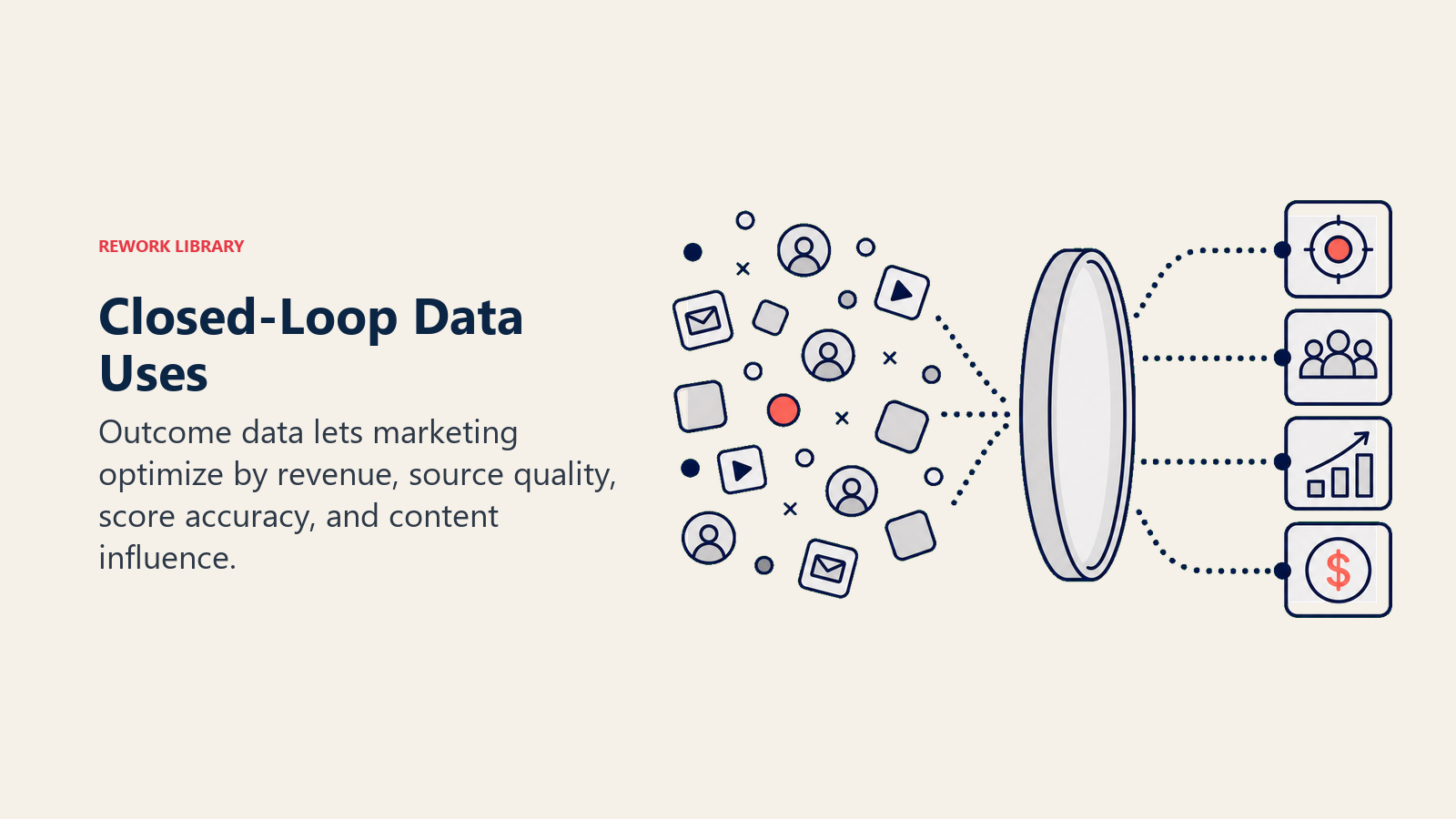
ROI de campaña por ingresos cerrados. En lugar de medir el costo por MQL, puede medir el costo por cliente ganado por campaña. Un webinar que genera 50 MQLs pero cero deals cerrados es menos valioso que un canal de pago que genera 10 MQLs y tres clientes ganados. Sin datos de ciclo cerrado, escalaría el webinar.
Calidad de la fuente por tasa de cierre. No todas las fuentes de MQL convierten a la misma tasa. Los leads de búsqueda orgánica pueden cerrar al 18%. Los leads de redes sociales pagadas pueden cerrar al 6%. Sin el ciclo de feedback, marketing los ve como equivalentes porque ambos cruzaron el umbral de puntuación de MQL. Con él, el presupuesto se desplaza hacia las fuentes que realmente producen ingresos. El tiempo de respuesta al lead también afecta estas tasas de cierre: la calidad de la fuente y la velocidad de contacto se componen mutuamente.
Calibración del modelo de lead score. Su modelo de scoring asigna puntos por comportamientos y atributos. Pero, ¿un lead de 75 puntos realmente convierte a SQL con más frecuencia que uno de 60 puntos? No lo sabrá hasta que pueda hacer coincidir las puntuaciones con los resultados. Los datos de ciclo cerrado le permiten verificar si su modelo de joint lead scoring realmente predice el Pipeline y recalibrarlo cuando no lo hace.
Efectividad del contenido en la etapa del deal. ¿Qué activos aparecen en los deals que cierran? Si los compradores en etapas tardías siguen referenciando una calculadora de ROI específica o una guía de comparación, ese contenido merece más inversión. Sin datos de ciclo cerrado, marketing mide descargas y supone. Con ellos, marketing sabe qué contenido realmente movió un deal. La pregunta es cómo estructurar el flujo de datos para hacer eso posible.
El Framework de Ciclo Cerrado de 4 Pasos
La mayoría de las implementaciones de ciclo cerrado fallan porque intentan sincronizar todo a la vez. El Framework de Ciclo Cerrado de 4 Pasos secuencia el flujo de datos en cuatro etapas discretas, cada una agregando una capa de inteligencia sobre la anterior.
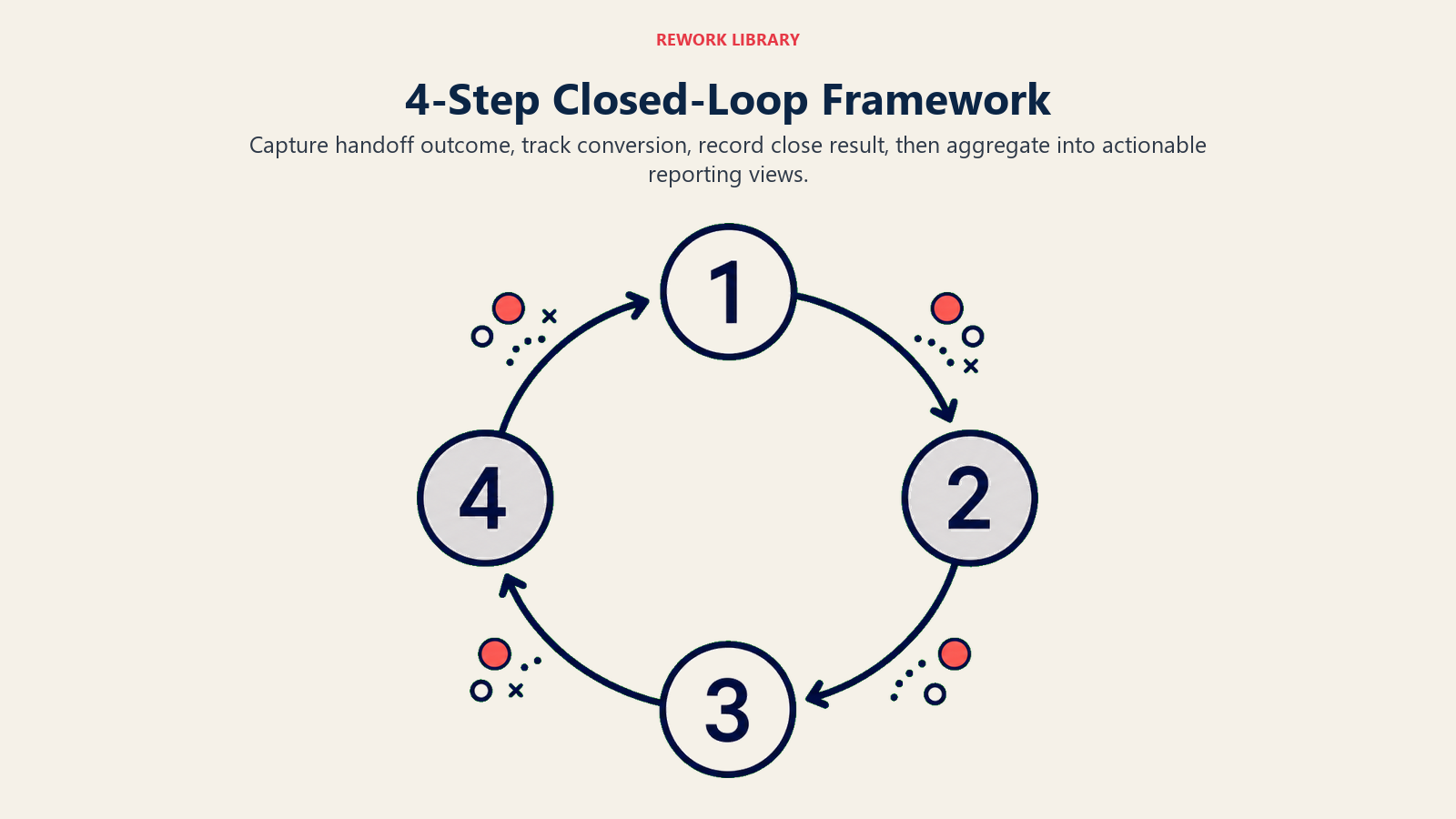
Paso 1: Capturar el resultado del handoff. En el momento en que un rep acepta o rechaza un MQL, un menú desplegable requerido en el CRM captura el resultado y el motivo. Este es el punto de entrada. Sin él, ninguno de los pasos posteriores es posible.
Paso 2: Rastrear la ruta de conversión. Los MQLs aceptados avanzan por el Pipeline de oportunidades. El sistema registra cuándo cambia cada etapa, quién es el dueño del deal y cuál es el valor proyectado. Estas actualizaciones se sincronizan de vuelta al MAP, etiquetando el registro de campaña original con datos del Pipeline.
Paso 3: Registrar el resultado del cierre. Cuando un deal cierra, ganado o perdido, el resultado, el valor del deal, el motivo del cierre y el competidor (si es relevante) se escriben de vuelta al registro de contacto en el MAP. Marketing ahora tiene una cadena completa: campaña → lead → oportunidad → resultado.
Paso 4: Agregar en vistas accionables. RevOps compila los datos de resultados en las tres capas de reporting: salud del handoff semanal, rendimiento de fuente a cierre mensual y Pipeline influenciado por marketing trimestral. Cada capa responde una pregunta diferente e impulsa una decisión diferente.
Análisis de Rework: Los equipos que implementan los cuatro pasos del framework de ciclo cerrado (no solo el paso uno) típicamente ven su tasa de aceptación de MQL mejorar entre 15 y 25 puntos porcentuales en dos trimestres. El efecto compuesto es real: mejores datos de atribución permiten mejor targeting de campañas, lo que produce leads de mejor fit, lo que aumenta las tasas de aceptación, lo que genera más datos de atribución. El ciclo genuinamente se cierra.
Los Cinco Puntos de Datos que Marketing Necesita de Ventas
El reporte de ciclo cerrado no requiere enviar todo. Requiere enviar las cinco cosas correctas.
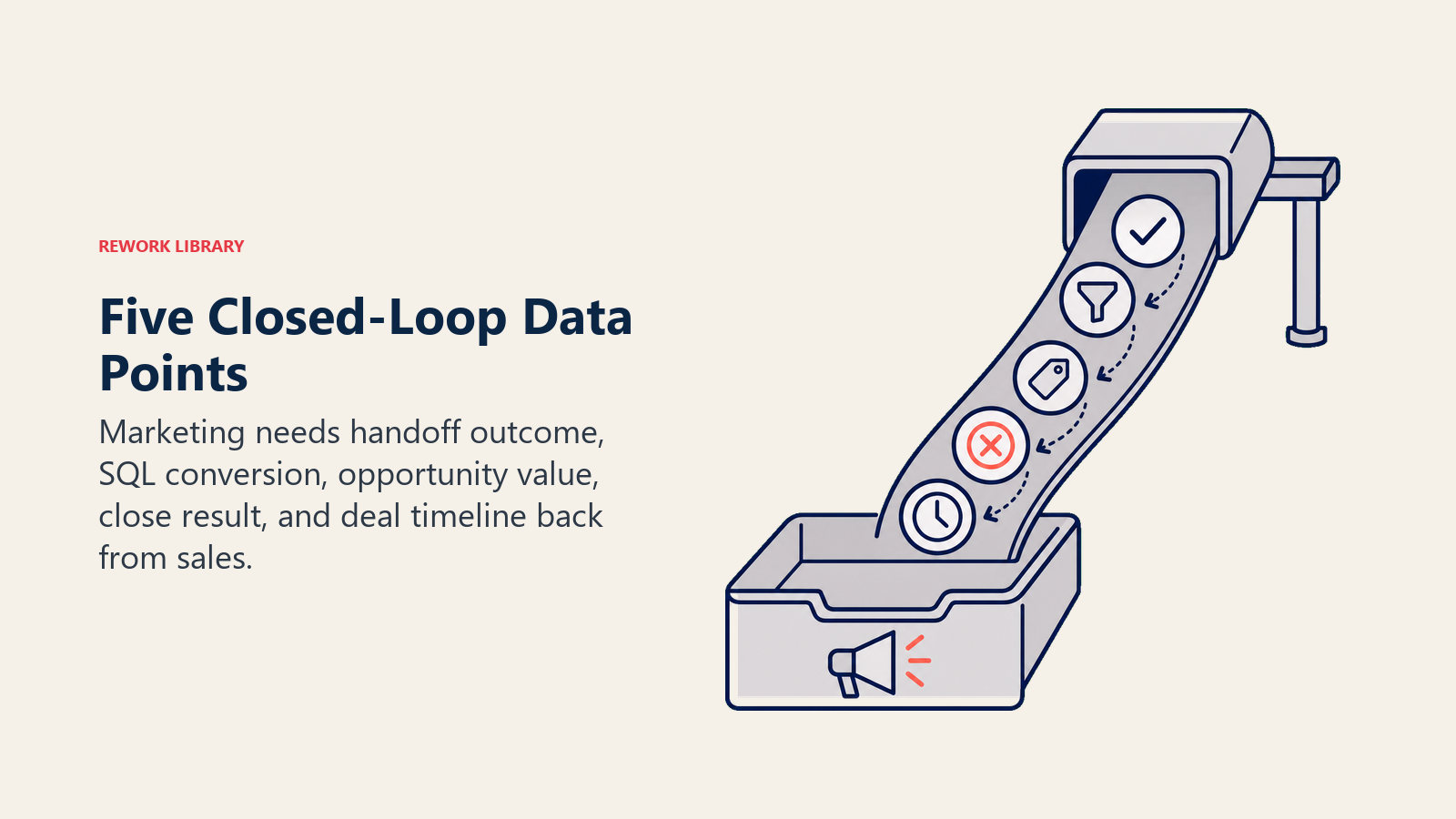
| Punto de dato | Qué le dice a marketing | Dónde vive |
|---|---|---|
| MQL aceptado / rechazado (con código de motivo) | Qué atributos del lead están incorrectos: fit, timing o datos | Registro de lead/contacto del CRM |
| Conversión a SQL (sí/no, fecha) | Qué MQLs realmente valen el tiempo de un rep con cuota | Creación de oportunidad en el CRM |
| Etapa y valor de la oportunidad | Pipeline influenciado, velocidad del deal por fuente | Registro de oportunidad del CRM |
| Resultado del cierre (ganado/perdido, motivo de pérdida, competidor) | Qué fuentes cierran y cuáles pierden ante quién | Cierre de oportunidad en el CRM |
| Cronograma del deal (días de MQL al cierre) | Impacto de marketing en la duración del ciclo por canal | Calculado a partir de marcas de tiempo |
Este es el conjunto de datos mínimo viable de ciclo cerrado. No necesita 30 campos personalizados. Necesita estos cinco, completados de forma consistente, sincronizándose de vuelta a la plataforma de marketing donde se originó el lead.
Si solo puede hacer una cosa este trimestre, comience con los motivos de rechazo de MQL. Son la señal de feedback más rápida sobre la que marketing puede actuar. El ciclo de feedback de rechazo de MQL explica exactamente cómo estructurar esos códigos de motivo para que cada "no" lleve a la acción correctiva adecuada, y casi no requieren integración. Solo agregue un campo desplegable en el registro de lead del CRM que los reps completen cuando rechazan un MQL.
Opciones de Arquitectura Técnica
Cómo cierra el ciclo depende de su stack.
Integración nativa CRM-MAP. Si está en HubSpot de extremo a extremo, o en Salesforce con Pardot/Marketo, esta es su línea de base. La mayoría de las integraciones nativas sincronizan los registros de contacto de forma bidireccional, lo que significa que las actualizaciones del estado del lead en Salesforce vuelven a HubSpot al contacto original. La brecha suele estar en los datos del deal: la etapa de la oportunidad y el motivo del cierre a menudo no se sincronizan sin configuración. Verifique sus configuraciones de integración. Puede que esté al 80% del camino sin saberlo.
Middleware gestionado por RevOps. Los equipos que usan Salesforce + Marketo o Salesforce + HubSpot Marketing Hub a menudo necesitan una tercera capa (típicamente Zapier, Workato, Tray.io o un webhook personalizado) para pasar campos específicos de oportunidades de vuelta a la plataforma de marketing. Esto requiere la propiedad de operaciones y mantenimiento continuo, pero permite un control preciso sobre qué se sincroniza y cuándo. Revenue operations típicamente es dueño de esta capa.
Exportación manual + hoja de cálculo. Este es el peor caso, pero es mejor que nada para equipos sin RevOps o presupuesto para middleware. Una vez al mes, sales ops exporta un reporte de resultados de deals desde el CRM. Marketing lo hace coincidir con los datos de fuente de leads del MAP. Es manual, tiene retraso y no puede soportar feedback en tiempo real. Pero le da a marketing al menos una visión mensual de qué fuentes cierran. No construya alrededor de esto. Úselo para demostrar el valor de una integración adecuada.
Capas de Reporting
Los datos de ciclo cerrado deben impulsar tres cadencias de reporting, cada una respondiendo una pregunta diferente.
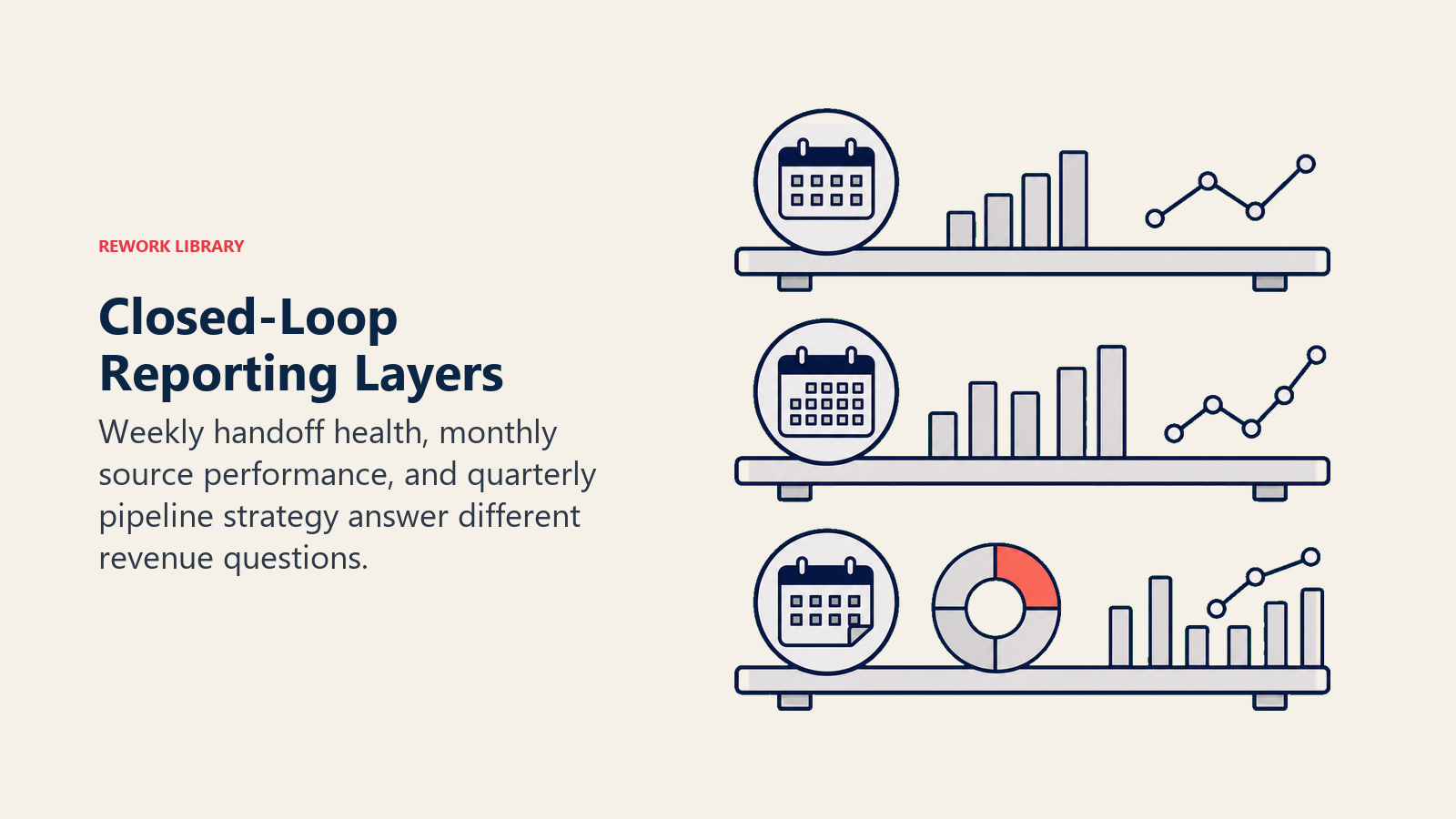
Operacional (semanal): Salud del handoff. ¿Cuántos MQLs se pasaron la semana pasada? ¿Cuál fue la tasa de aceptación? ¿Cuáles fueron los principales motivos de rechazo? ¿Cuántos están esperando el primer toque más allá del SLA de respuesta de cinco minutos? Esta capa detecta problemas tempranamente, antes de que una campaña rota desperdicie cuatro semanas de presupuesto.
De campaña (mensual): Rendimiento de fuente a cierre. Por fuente, por campaña, por segmento: ¿qué leads se convirtieron en SQLs, cuáles en oportunidades, cuáles cerraron? Aquí es donde marketing ajusta el gasto. Si LinkedIn de pago está generando MQLs a $150 pero ninguno convierte a SQL, no importa qué tan buena se vea la tasa de clics. El análisis de tasa de conversión ofrece la visión del lado del Pipeline del mismo Funnel.
Solo el 21% de los equipos de marketing reporta tener visibilidad completa de los ingresos ganados vinculados a campañas específicas, según la Encuesta de Marketing B2B 2024 de Forrester Research. Eso significa que el 79% de las organizaciones de marketing B2B toman decisiones de presupuesto y canal sin saber qué inversiones produjeron realmente clientes.
Estratégico (trimestral): Pipeline influenciado por marketing y CAC. ¿Qué parte del Pipeline de este trimestre tuvo un toque de marketing? ¿Cuál es nuestro CAC por canal medido contra los ingresos cerrados? ¿Cuál es la contribución de marketing al objetivo de ingresos? Esta es la conversación a nivel de CRO que le da a marketing un asiento en la mesa. Pero solo si los datos son confiables. La investigación de McKinsey sobre crecimiento B2B muestra que las empresas que combinan medición avanzada con personalización crecen en cuota de mercado a más del doble de la tasa de las que no lo hacen.
El Modelo de Dashboard Compartido
El reporte de ciclo cerrado requiere una fuente única de verdad. No un dashboard de marketing y un dashboard de ventas que no concuerdan sobre qué leads provenían de qué campaña. Un dashboard, mantenido por RevOps, que ambos equipos usan para las conversaciones sobre el Pipeline. Los 8 dashboards compartidos para equipos de ingresos cubre exactamente qué debe mostrar cada capa.
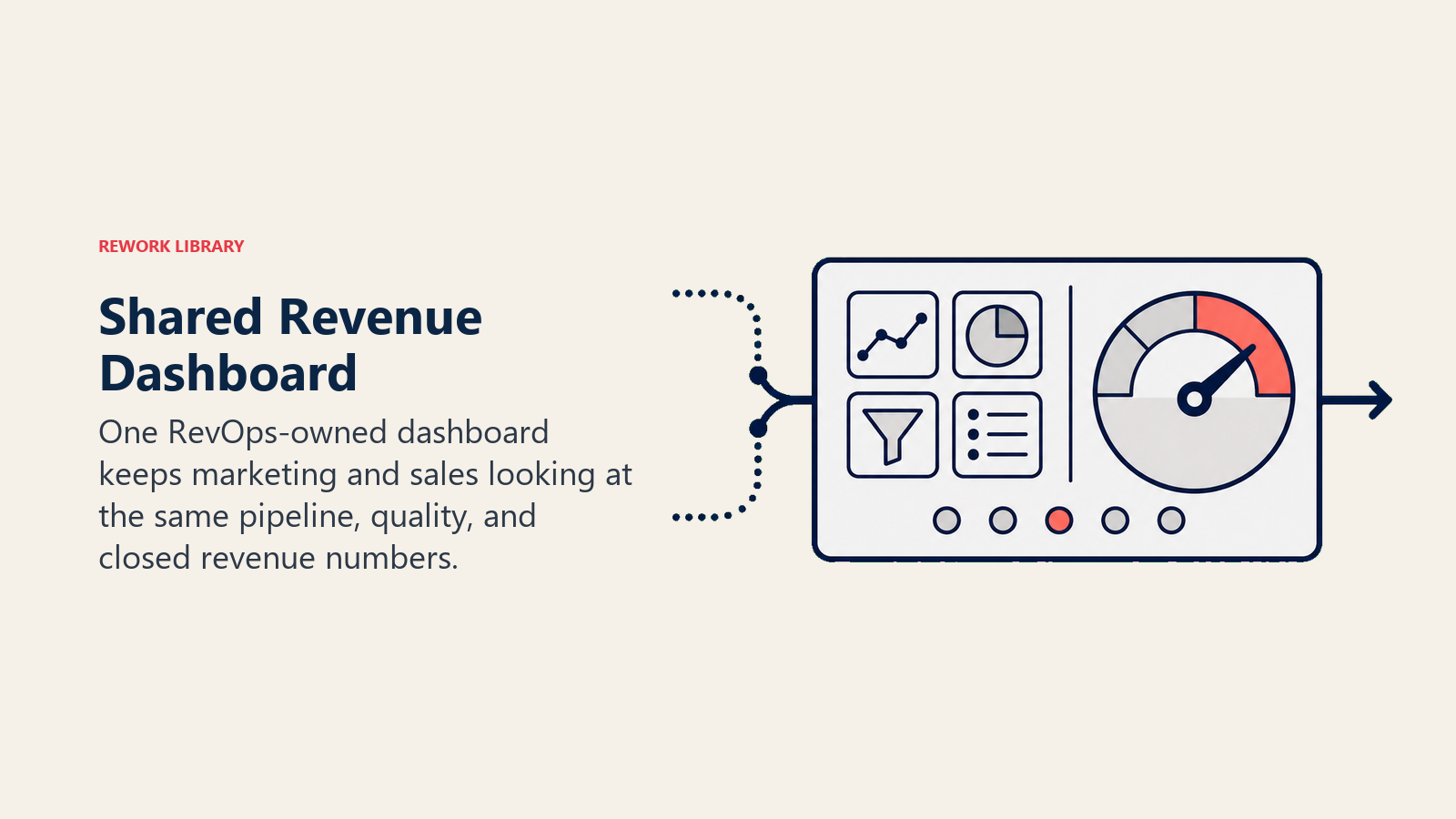
Lo que ese dashboard debe mostrar:
- Volumen de MQLs por fuente y semana (input de contribución de marketing)
- Tasa de aceptación de MQLs por fuente (señal de calidad)
- Tasa de conversión a SQL por fuente de lead (juicio de ventas sobre la calidad de marketing)
- Pipeline abierto por fuentes generadas por marketing vs. otras fuentes (influencia en los ingresos)
- Ingresos ganados con atribución de fuente de lead original (el output del ciclo)
Si marketing y ventas están mirando números diferentes para el mismo período, la confianza colapsa. Cada revisión del Pipeline se convierte en un debate sobre cuya hoja de cálculo tiene razón. El dashboard compartido elimina ese debate. Pero incluso el mejor dashboard es tan confiable como los datos que hay detrás, y ahí es donde la mayoría de los equipos fallan.
Fallas Comunes en el Ciclo Cerrado
Ventas no actualiza el CRM. El reporte de ciclo cerrado es tan bueno como los datos que ventas registra. Si los reps cierran deals en sus cabezas pero no actualizan la etapa, no ingresan motivos de cierre ni marcan los MQLs rechazados con un código de motivo, el ciclo está abierto del lado de ventas. La solución son los campos del CRM que son requeridos, no opcionales, con una escalación de RevOps cuando la higiene de deals cae por debajo del umbral.
La atribución del lead se sobreescribe al crear la oportunidad. Muchas configuraciones del CRM reinician el campo de fuente del lead cuando un contacto se asocia con una oportunidad. Esto rompe la cadena del origen del MQL al resultado ganado. Verifique el mapeo de atribución de su CRM: la fuente del lead original debe persistir a través de la creación y el cierre de la oportunidad, incluso si un campo de "fuente más reciente" se actualiza por separado.
El MAP y el CRM usan diferentes IDs de contacto. Si HubSpot crea el ID de contacto 10052 y Salesforce crea a la misma persona como ID de contacto SF-44810, sincronizar los resultados de vuelta a la campaña de origen es poco confiable. Los sistemas necesitan un identificador único compartido, típicamente la dirección de correo electrónico como clave de coincidencia o un ID del CRM pasado al MAP en el envío del formulario. Este es un problema de configuración de RevOps, y es la misma razón por la que el CRM como fuente única de verdad importa tanto para la atribución.
Empezar Pequeño: El Ciclo Cerrado Mínimo Viable
Si no tiene RevOps y no está en un stack integrado, esto es lo que puede construir en dos semanas.
Paso 1: Agregue un menú desplegable requerido a cada registro de lead del CRM: "Resultado de MQL" con valores de Aceptado, Rechazado (No ICP), Rechazado (Baja Intención), Rechazado (Datos Incorrectos), Convertido a SQL. Hágalo requerido cuando un rep marque el estado del lead como "Rechazado" o "Calificado."
Paso 2: Extraiga un reporte de resultados de leads semanal de su CRM. Exporte: fuente del lead, puntuación del lead al momento del handoff, resultado del MQL y (si convirtió) etapa de la oportunidad. Introdúzcalo en una Google Sheet compartida que tanto marketing como sales ops puedan ver.
Paso 3: En su llamada semanal de calidad de leads, revisen juntos el reporte de resultados. Marketing ve qué fuentes y puntuaciones producen leads aceptados. Ventas confirma el patrón. Juntos hacen un ajuste: peso del scoring, targeting de segmento o copia de campaña.
Eso es todo. No está ejecutando un modelo de atribución empresarial. Pero ha cerrado el ciclo en la señal de feedback más importante: ¿sus MQLs se están aceptando o rechazando, y por qué?
Construya desde ahí. Una vez que haya demostrado que los datos de resultados cambian las decisiones de marketing, el caso para una integración adecuada CRM-MAP se escribe solo.
Preguntas frecuentes sobre el Reporte de Ciclo Cerrado Explicado
¿Qué es el reporte de ciclo cerrado?
El reporte de ciclo cerrado es un sistema que retroalimenta los datos de resultados de ventas (aceptado, rechazado, convertido, ganado, perdido) hacia los registros de campaña originales de marketing. El "ciclo" es la ruta de datos desde el CRM hasta la marketing automation platform, permitiendo que marketing vea qué campañas produjeron ingresos, no solo leads.
¿Por qué importa el reporte de ciclo cerrado?
Sin él, marketing optimiza para cualquier métrica que pueda medir, típicamente el volumen de MQLs. Eso crea un incentivo perverso: generar más leads, independientemente de la calidad. El reporte de ciclo cerrado realinea el objetivo de optimización hacia los ingresos. Las empresas con reporte de ciclo cerrado ven un 36% más de tasa de cierre en los leads generados por marketing porque las campañas se calibran para lo que realmente cierra, no para lo que meramente convierte en la parte superior del Funnel.
¿Cómo configura el reporte de ciclo cerrado sin un equipo de BI?
Comience con tres acciones: agregue un menú desplegable requerido de "resultado de MQL" al registro de lead de su CRM, exporte un reporte de resultados de leads semanal y revíselo en una llamada compartida de marketing y ventas. Eso es un ciclo cerrado funcional sin middleware ni trabajo de ingeniería. El conjunto de datos mínimo viable son cinco campos: resultado del MQL, conversión a SQL, etapa de la oportunidad, resultado del cierre y cronograma del deal. Construya la integración formal después de haber demostrado que los datos cambian las decisiones.
¿Cuáles son las fallas más comunes en el ciclo cerrado?
Tres fallas explican la mayoría de los fallos: ventas no actualiza el CRM de forma consistente (solución: haga que el motivo de rechazo sea un campo requerido), la atribución del lead se sobreescribe cuando se crea una oportunidad (solución: preserve la fuente del lead original hasta el cierre de la oportunidad) y el MAP y el CRM usan diferentes identificadores de contacto (solución: use el correo electrónico como clave de coincidencia o pase el ID del CRM en el envío del formulario). Los tres son problemas de configuración de RevOps, no imposibilidades técnicas.
¿Cuál es la diferencia entre el reporte de ciclo cerrado y la atribución de marketing?
La atribución es el modelo para asignar crédito entre los puntos de contacto: primer toque, último toque, multi-touch lineal. El reporte de ciclo cerrado es la infraestructura de datos que hace que cualquier modelo de atribución sea confiable. Puede construir un modelo de atribución elaborado, pero si los datos de resultados del CRM no fluyen de vuelta a los registros de campaña en el MAP, cada resultado de atribución se basa en información incompleta. El reporte de ciclo cerrado es el prerequisito; el modelado de atribución se construye sobre él.
¿Quién es el dueño del reporte de ciclo cerrado?
RevOps típicamente es el dueño de la infraestructura técnica (la integración CRM-MAP, la calidad de los datos, el mapeo de campos) y la capa de reporting compartida. Marketing es el dueño de la interpretación de los datos a nivel de campaña. Sales ops es el dueño de la higiene del CRM que produce datos de resultados limpios. La llamada semanal de calidad de leads es donde los tres convergen para actuar sobre lo que muestran los datos.
¿Cuánto tiempo tarda en ver resultados del reporte de ciclo cerrado?
Presupueste 60-90 días para ver una señal significativa. Las primeras cuatro semanas producen suficientes datos para identificar si los rechazos se agrupan por fuente o por atributo del lead. Para la semana ocho, típicamente tiene suficiente para hacer un ajuste significativo de campaña o scoring con confianza. El impacto en los ingresos tarda más en medirse, típicamente de 90 a 180 días según la duración de su ciclo de ventas, porque necesita deals cerrados para validar que los cambios en la parte superior del Funnel realmente mejoraron las tasas de cierre, no solo las de aceptación.
Más Información

Principal Solution Architect
On this page
- Ciclo Abierto vs. Ciclo Cerrado
- Por Qué la Mayoría de los Equipos No Tienen Reporte de Ciclo Cerrado
- Qué Habilita los Datos de Ciclo Cerrado
- El Framework de Ciclo Cerrado de 4 Pasos
- Los Cinco Puntos de Datos que Marketing Necesita de Ventas
- Opciones de Arquitectura Técnica
- Capas de Reporting
- El Modelo de Dashboard Compartido
- Fallas Comunes en el Ciclo Cerrado
- Empezar Pequeño: El Ciclo Cerrado Mínimo Viable
- Más Información