Rechazo y reciclaje de Leads: cómo convertir los rechazos de Ventas en inteligencia de Marketing
Turn this article into takeaways for your work.


Each assistant summarizes the article only for you and suggests best practices for your work.
"Los representantes de ventas B2B rechazan el 20-40% de los MQLs que reciben, pero menos de la mitad de esos equipos tienen códigos de motivo de rechazo estandarizados, lo que significa que la mayoría de esa señal se pierde por completo." (Demand Gen Report)
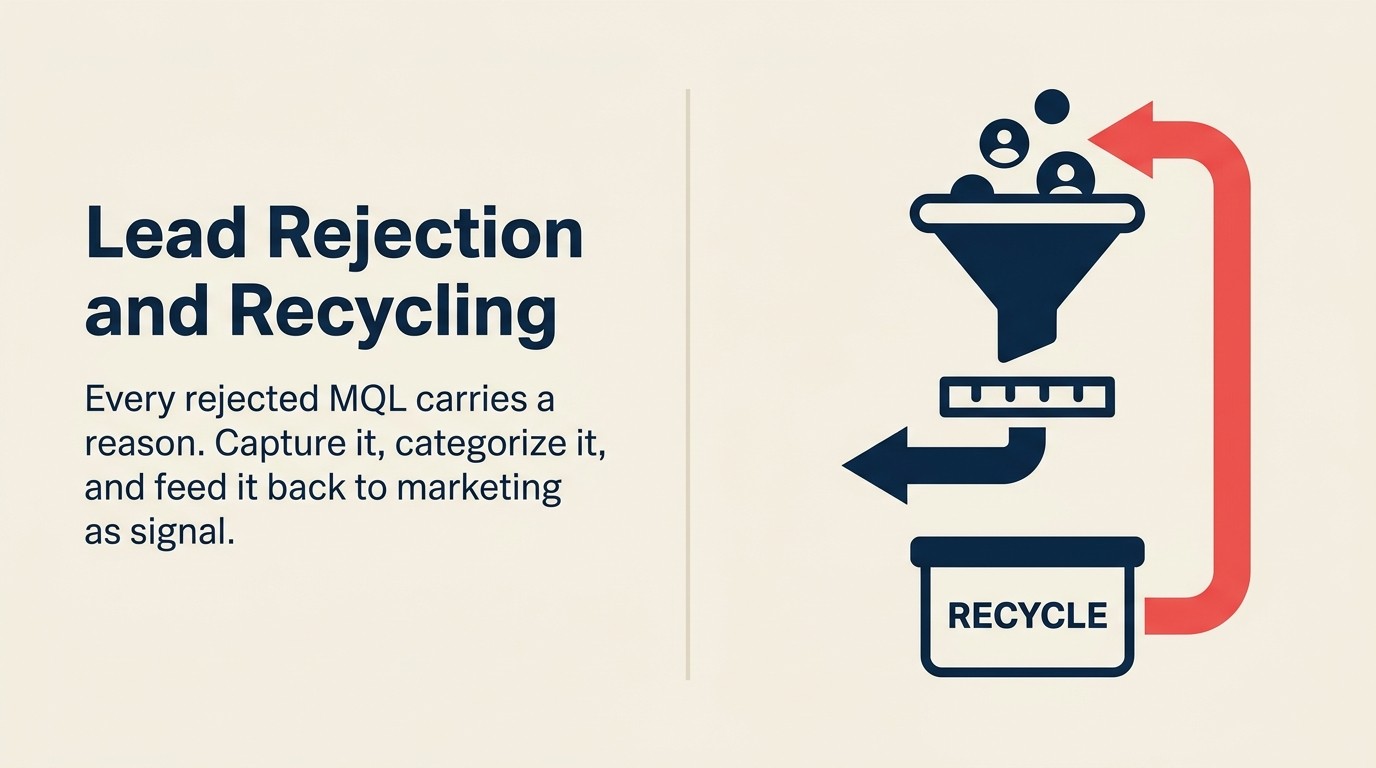
Cada vez que un representante de ventas rechaza un MQL sin dar motivo, Marketing pierde algo que nunca podrá recuperar: el contexto. ¿Era la empresa demasiado pequeña? ¿El contacto era un intermediario? ¿Ya había un competidor que los tenía bloqueados? Sin esa información, Marketing envía el mismo tipo de Lead el mes siguiente y obtiene el mismo resultado: otro rechazo silencioso.
El rechazo sin motivo es la pérdida de información más costosa en el Funnel. La mayoría de los equipos vuela completamente a ciegas.
Pero el problema no es que Ventas rechace Leads. El rechazo es saludable. Es la señal de que la definición de MQL se alejó de la realidad. El problema es lo que pasa después: sin taxonomía, sin triage, sin ciclo de retroalimentación. Solo un Lead que cae en un limbo de estado hasta que se archiva o, peor aún, se recicla directamente de vuelta al representante que ya dijo que no. La investigación de Forrester encuentra consistentemente que la brecha entre la alineación percibida y la real es más amplia exactamente en esta área: qué sucede después del Handoff.
Este artículo le da el marco para corregir eso: un proceso de rechazo estructurado que captura los datos correctos, un Workflow de reciclaje que no crea bucles infinitos y un hábito de análisis agregado que mejora genuinamente los criterios de MQL con el tiempo.
Datos clave: Rechazo de Leads y ciclos de retroalimentación
- Las empresas con un ciclo de retroalimentación y rechazo de Leads formal ven un 36% más de tasas de conversión de MQL a SQL dentro de los dos trimestres posteriores a la implementación, según investigación de benchmark de SiriusDecisions.
- Los representantes de ventas rechazan el 20-40% de los MQLs que reciben en la mayoría de las organizaciones B2B, pero menos de la mitad de esos equipos tienen códigos de motivo de rechazo estandarizados, según Demand Gen Report.
- El 58% de los marketers B2B dicen que su mayor dolor con Ventas es no recibir suficiente retroalimentación sobre la calidad de los Leads (Forrester, 2024).
- Los equipos de Marketing que revisan los datos de rechazo mensualmente calibran sus modelos de puntuación de Leads 2 veces más rápido y ven una reducción del 15-25% en MQLs no calificados dentro de un año, según investigación de alineación de Sirius/Forrester.
- Las organizaciones con procesos de Marketing y Ventas alineados logran un 24% más de crecimiento de ingresos y un 27% más de crecimiento de beneficios durante un período de tres años, según investigación combinada de Marketo y Aberdeen Group.
Por qué suceden los rechazos (y por qué no siempre es culpa de Ventas)
Antes de diseñar el proceso, es necesario entender qué hay realmente detrás de un rechazo. Hay dos categorías muy diferentes, y tratarlas de la misma manera envenena la relación.
Los rechazos válidos provienen de brechas genuinas de calificación:
- Fit de ICP incorrecto: la empresa es demasiado pequeña, está en el sector equivocado o fuera del alcance geográfico
- Sin señal de presupuesto: el contacto nunca ha indicado autoridad de compra ni urgencia
- Contacto incorrecto: quien rellenó el formulario es un pasante o asistente, no un tomador de decisiones
- Mal timing: la empresa está en medio de una evaluación de un competidor o acaba de renovar un contrato
- Problemas de calidad de datos: el teléfono rebota, el dominio de correo es catch-all, la dirección es un código postal residencial
Los rechazos disputados provienen de algo diferente:
- Un representante ya alcanzó la cuota y no quiere más trabajo en el Pipeline
- Marketing infló los puntajes contando actividades de baja intención con demasiado peso
- Un representante simplemente no confía en la fuente de la campaña ("esos Leads de webinar nunca convierten")
La diferencia importa enormemente. Si Marketing trata los rechazos válidos y los rechazos disputados de forma idéntica, enviando ambos de vuelta al nurture, se pierden los problemas reales en ambos lados. Los rechazos válidos son un problema de calidad de datos y calibración del ICP. Los rechazos disputados son un problema de confianza y definición que requiere una conversación, no solo una re-cola.
Construir una taxonomía de rechazos: la Taxonomía de Motivos de Rechazo
La taxonomía lo es todo. Sin códigos de motivo estandarizados, se tiene volumen de rechazos pero no señal. Con los códigos, se tiene un conjunto de datos que indica qué corregir.
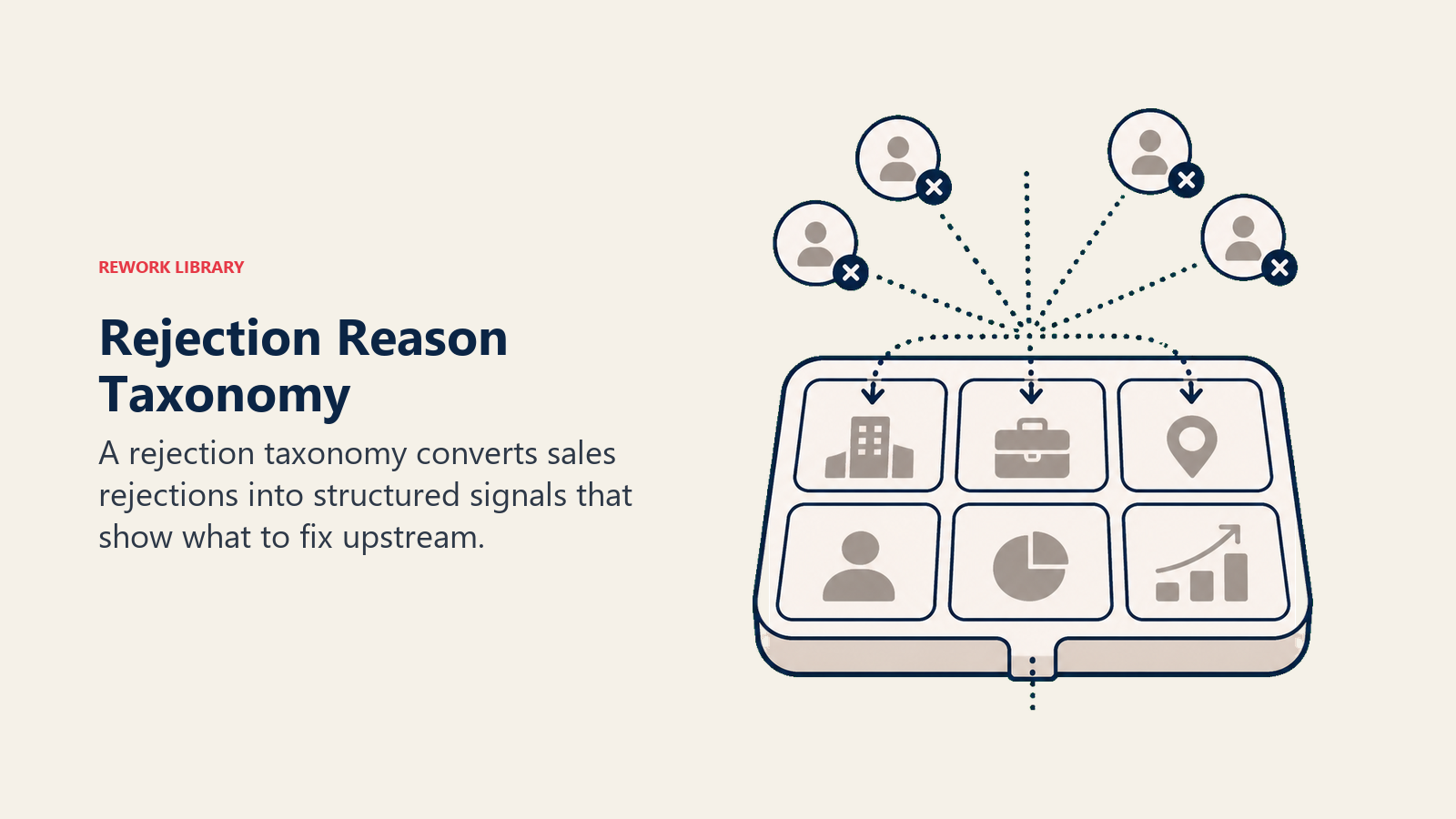
La Taxonomía de Motivos de Rechazo es un sistema de clasificación de seis categorías que transforma los Leads rechazados de esfuerzo perdido en datos de calibración. Cada categoría mapea directamente a una causa raíz, desalineación del ICP, timing, integridad de datos o precisión del contacto, y cada una tiene una disposición de reciclaje distinta. Los equipos que implementan esta taxonomía de forma consistente ven mejorar su tasa de conversión de MQL a SQL porque dejan de re-nutrir Leads que nunca calificarán y comienzan a corregir los problemas de señal upstream que los generaron.
Estos son los seis códigos de motivo de rechazo principales que la mayoría de los equipos B2B de SMB y mid-market necesitan:
| Código de motivo | Descripción | Siguiente acción |
|---|---|---|
| No es fit del ICP | Tamaño de empresa, sector o geografía fuera de los criterios | Archivar, no reciclar |
| Sin señal de presupuesto | El contacto no muestra ninguna indicación de autoridad de compra o urgencia | Nurture de ciclo largo (6-12 meses) |
| Contacto incorrecto | No es tomador de decisiones; intermediario o colaborador individual | Encontrar el contacto correcto; re-enrutar o nutrir |
| Mal timing | Evaluación activa de competidor, congelamiento de presupuesto o renovación reciente | Nurture de ciclo corto (90-180 días) |
| Problema de calidad de datos | Teléfono incorrecto, correo sin respuesta, inconsistencias en el formulario | Enriquecer y re-calificar antes del re-nurture |
| Ya es cliente / oportunidad abierta | Relación existente; no es un Lead nuevo neto | Enrutar al CSM o AE, eliminar del nurture de Marketing |
Algunas notas de implementación. Primero, el código de motivo debe ser un campo obligatorio en el CRM. Sin código, sin rechazo. Si un representante puede marcar un Lead como "rechazado" sin seleccionar un motivo, lo hará. Establecer el campo como obligatorio para que el acto de rechazar fuerce un motivo. Segundo, ofrecer un campo de texto libre opcional para contexto, especialmente para las categorías de "mal timing" y "contacto incorrecto" donde los representantes suelen tener detalles útiles ("presupuesto congelado hasta Q4 por CFO" o "conécteme con su Director de Revenue Ops en cambio"). No requerirlo, pero mostrarlo en la revisión semanal.
Tercero, mantener la lista de códigos corta. Si se dan 15 opciones de motivo a los representantes, elegirán la que se siente menos confrontacional. Seis códigos son suficiente granularidad para ser útiles sin ser una carga cognitiva.
El Workflow de rechazo
El flujo operacional tiene cuatro pasos:
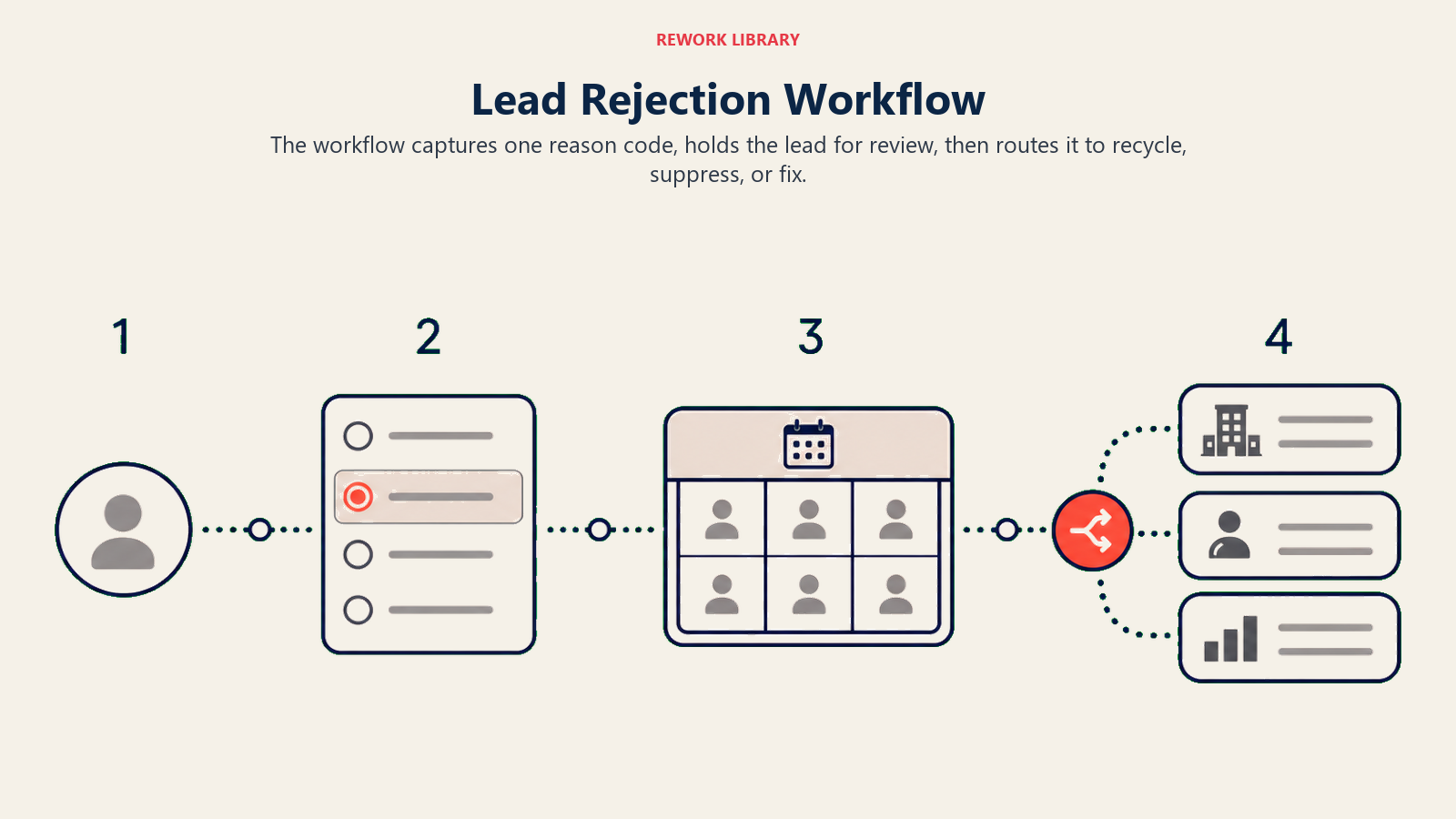
Paso 1: El representante selecciona el código de motivo en el CRM. Esta es la única acción requerida de Ventas al momento del rechazo. El código es la contribución. El representante no necesita escribir un párrafo; necesita hacer clic en un botón de radio.
Paso 2: El estado del Lead cambia a "Rechazado, Pendiente de revisión." Este estado mantiene el Lead visible sin enrutarlo inmediatamente a ningún lado. Es un área de preparación.
Paso 3: Marketing revisa el lote semanalmente, no individualmente. La revisión individual en tiempo real crea ruido y fomenta el intercambio de mensajes sobre cada Lead. Una revisión de lote semanal permite al gerente de demand gen o Marketing Ops observar patrones: 12 rechazos esta semana, 8 de ellos "no es fit del ICP", 6 de esos de la misma campaña. Eso es un problema de campaña, no un problema de Lead. Esto es esencialmente lo que la teoría de gestión de Leads siempre ha prescrito: retroalimentación de ciclo cerrado entre las etapas de adquisición y calificación. La llamada semanal de calidad de Leads es el hogar natural para esta revisión.
Paso 4: Marketing Ops toma la decisión de reciclaje. Basándose en el código de motivo y la revisión del lote, cada Lead rechazado recibe una de cuatro disposiciones.
Marco de decisión de reciclaje
No todos los rechazos vuelven al nurture. El código de motivo determina el camino.
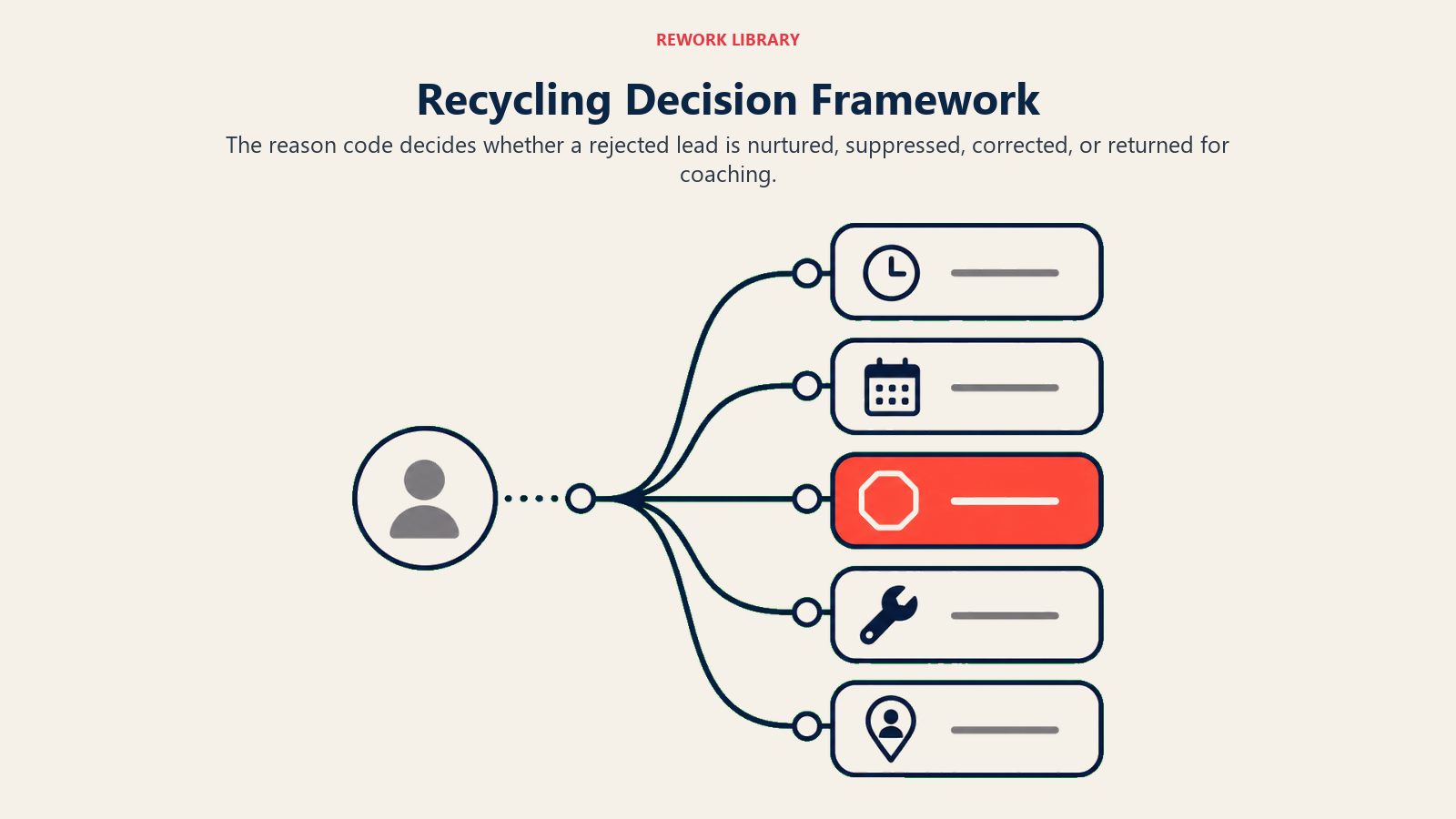
Re-nurture inmediato (ciclo de 30-90 días): Los rechazos por timing y los rechazos por ciclo de presupuesto pertenecen aquí. El contacto es real, el fit del ICP es válido, el timing simplemente es incorrecto. Ponerlos en una secuencia de re-engagement específica activada alrededor del evento de timing (nuevo año fiscal, ventana de renovación de contrato, apertura de presupuesto en Q3). No meterlos en el newsletter genérico de top-of-funnel. Cómo se hace el triage de re-entrada se intersecta directamente con el modelo de etapas del ciclo de vida del Lead.
Re-nurture de ciclo largo (ciclo de 6-12 meses): Rechazos de contacto incorrecto donde la empresa en sí tiene fit pero quien rellenó el formulario no era la persona correcta. Mantener la cuenta cálida con contenido del sector mientras Marketing Ops o un SDR trabaja para identificar el contacto correcto en esa empresa.
Archivar, no reciclar: Rechazos de no-ICP. Si la empresa es demasiado pequeña, está en el sector incorrecto o fuera de la geografía, no hay escenario en el que este Lead califique. Archivarlos detiene el ciclo de desperdiciar capacidad de nurture en contactos que nunca comprarán.
Marcar para revisión del ICP: Si el volumen de rechazos en un nivel específico de tamaño de empresa, vertical del sector o fuente de campaña se dispara (digamos, el 30% de los Leads de una campaña específica son "no es fit del ICP" en dos semanas), eso es una brecha de definición del ICP, no un problema de tasa de rechazo. Sacar esos Leads de la cola de reciclaje estándar y llevarlos a la revisión de alineación mensual como evidencia.
Criterios de re-entrada: ¿cuándo puede re-calificar un Lead reciclado?
El bucle de reciclaje solo funciona si hay una puerta de re-entrada. De lo contrario, se obtienen Leads rebotando entre nurture y Ventas indefinidamente, quemando la buena voluntad del representante y distorsionando las métricas de MQL.
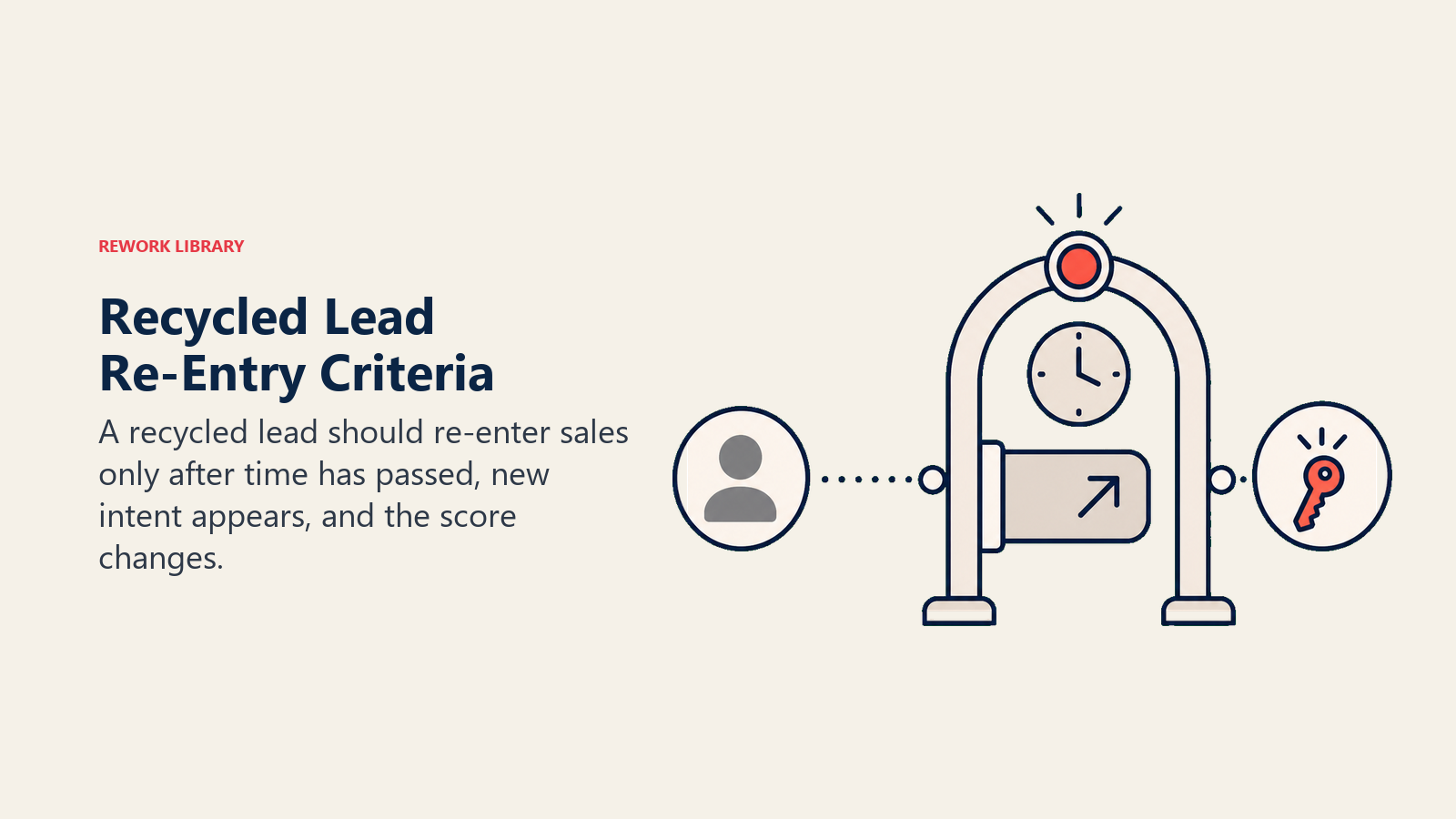
Tres reglas para la re-entrada:
Regla 1: Período de enfriamiento. Un Lead rechazado con cualquier código de motivo no puede volver a entrar en la cola de MQL durante al menos 30 días. Para los rechazos "no es fit del ICP", ese período de enfriamiento debe ser de 90 días como mínimo, ya que el tamaño o el sector de una empresa raramente cambia más rápido que eso.
Regla 2: Se requiere un nuevo activador conductual. Un Lead reciclado no puede re-calificar continuando haciendo lo que ya hacía antes del rechazo. Se requiere una nueva señal conductual: una nueva solicitud de Demo, una visita a la página de precios después de una pausa, asistencia a un evento en vivo o un aumento significativo del puntaje impulsado por un nuevo clúster de compromiso. Si el mismo Lead reciclado se re-califica por actividad antigua, el modelo de puntuación tiene un problema de obsolescencia.
Regla 3: Puerta de revisión humana para recicladores frecuentes. Cualquier Lead que haya sido rechazado y reciclado más de dos veces debe requerir una revisión humana antes de volver a entrar en la cola de MQL. Estos son los Leads que exponen brechas de definición: Marketing sigue enviándolos porque el modelo de puntuación dice que sí, o Ventas sigue rechazándolos porque su experiencia dice que no. Ambas señales importan. Una persona debe resolver el conflicto antes del tercer intento.
Análisis Rework: Basado en datos operacionales de equipos de ingresos B2B, las organizaciones que realizan una revisión mensual del código de motivo de rechazo detectan la deriva del ICP un promedio de 2-3 meses antes que los equipos que se basan en revisiones trimestrales del Pipeline. El patrón es consistente: un aumento de 5 puntos porcentuales en los rechazos "no es fit del ICP" de una fuente de campaña específica es el indicador líder más temprano de la deriva del modelo de puntuación, antes que la tasa de éxito, antes que la velocidad del Pipeline. Los equipos que usan el workspace de gestión de Leads de Rework pueden automatizar este análisis etiquetando los rechazos con códigos de motivo en la disposición y mostrando resúmenes semanales de tasa de rechazo por fuente sin una extracción manual de BI.
Análisis agregado de rechazos: qué hace Marketing con los datos
Los rechazos individuales son interesantes. Los patrones son accionables. Este es el análisis mensual que debe ejecutar Marketing Ops:
Tasa de rechazo por fuente y campaña. Si los Leads de redes sociales pagadas tienen una tasa de rechazo del 40% mientras que los Leads de SEO tienen una tasa del 15%, ese no es un problema de enrutamiento. Es una señal de calidad de campaña. O la segmentación de la audiencia de redes sociales pagadas es demasiado amplia, o el contenido que se promueve atrae al ICP incorrecto. Estos datos son más útiles cuando se revisan junto con las métricas de reporte de ciclo cerrado.
Tasa de rechazo por persona. Si los contactos de nivel VP se rechazan al 20% mientras que los contactos de nivel Director se rechazan al 45%, la definición de persona del ICP puede necesitar una actualización, o el ponderado del puntaje es demasiado agnóstico al cargo.
Señales de calibración del puntaje. Un alto volumen de rechazos "sin señal de presupuesto" de Leads que puntuaron por encima de 80 generalmente significa que la puntuación conductual sobrepondera el consumo de contenido (whitepapers, webinars) en relación con las señales de intención de compra (página de precios, contenido de comparación con competidores). Eso es retroalimentación accionable del modelo.
Brechas de definición del ICP. El código de rechazo "no es fit del ICP" es la señal más honesta que da el equipo de Ventas. Rastrearlo mensualmente por banda de tamaño de empresa, vertical del sector y geografía. Si los rechazos se concentran en un segmento que se pensaba que estaba dentro del ICP, ejecutar un análisis de éxito/fracaso en ese segmento antes de asumir que los Leads son simplemente malos.
Cómo llevar a cabo la conversación sin culpar a nadie
Los rechazos disputados, donde Marketing cree que el Lead estaba calificado y Ventas no está de acuerdo, no deben resolverse de forma asíncrona. Deben llevarse a la llamada semanal de calidad de Leads, que es el foro diseñado para este tipo de desacuerdo.
El facilitador (generalmente RevOps o el VP de Ingresos) debe enmarcar los rechazos disputados como conflictos de datos, no como acusaciones. "Vemos 12 rechazos de esta campaña con 'sin señal de presupuesto', revisemos tres juntos y decidamos si el modelo de puntuación está leyendo correctamente la intención" es una conversación productiva. "Marketing envió malos Leads otra vez" no lo es.
El objetivo no es la adjudicación. Es la calibración. Ambos equipos deben salir con una comprensión compartida de qué causó el desacuerdo y un cambio específico en la definición de MQL, el modelo de puntuación o la segmentación de la campaña.
Métricas para rastrear
Tres números indican si el proceso de rechazo y reciclaje está funcionando:
Tasa de rechazo por fuente. Rastrea la calidad de los Leads por canal. Objetivo: menos del 25% para los canales de alta intención (solicitudes de Demo, navegación directa), menos del 35% para los canales de mid-funnel (registrantes de webinar, descargas de contenido).
Tasa de conversión de reciclado a MQL. De los Leads reciclados que vuelven a entrar en el nurture, ¿qué porcentaje se vuelve a calificar como MQL en 90 días? Si es inferior al 10%, los criterios de reciclaje pueden ser demasiado flexibles. Se está re-nutriendo a personas que genuinamente no van a volver. Si es superior al 35%, el período de enfriamiento puede ser demasiado corto.
Tasa de re-entrada por motivo de rechazo. Rastrear con qué frecuencia los Leads rechazados bajo cada código de motivo eventualmente se re-califican. Las altas tasas de re-entrada para "mal timing" son saludables; ese código se supone que produce Leads reciclados. Las altas tasas de re-entrada para "no es fit del ICP" significa que la definición del ICP o los criterios de puntuación aún no están filtrando ese segmento.
Errores comunes que evitar
Reciclaje general. Poner todos los Leads rechazados de vuelta en una secuencia de nurture genérica independientemente del código de motivo desperdicia la capacidad de Marketing y erosiona la confianza del representante. Cuando un representante rechaza un Lead como "no es fit del ICP" y ve que ese Lead vuelve a aparecer en su cola seis semanas después, deja de completar los códigos de motivo. Todo el sistema se degrada. Una disciplina de gestión de cola de Leads previene este tipo de acumulación de backlog.
Ignorar los datos de rechazo. Recopilar códigos de motivo sin ejecutar el análisis agregado mensual es recopilar datos por cumplimiento, no para mejorar. Si Marketing Ops no es dueño de la revisión mensual de rechazos, no sucederá.
Rechazar sin códigos de motivo. Si el CRM permite a un representante rechazar un Lead sin seleccionar un motivo, lo hará, especialmente cuando estén ocupados o frustrados. Hacer que el código de motivo sea obligatorio. Sin código, el rechazo no pasa. La fricción es intencional.
Confundir volumen y calidad en la revisión. Una tasa de rechazo del 30% es alarmante si está concentrada en una campaña y el motivo es "no es fit del ICP". Es aceptable si está distribuida entre motivos y la tasa de conversión de reciclado a MQL es saludable. Siempre descomponer la tasa antes de reaccionar.
"Los equipos de Marketing que revisan los datos de rechazo mensualmente calibran sus modelos de puntuación de Leads 2 veces más rápido que los equipos que revisan trimestralmente, y ven una reducción del 15-25% en MQLs no calificados dentro de un año." (Investigación de alineación de Sirius/Forrester)
El proceso de rechazo como infraestructura de alineación
El Workflow de rechazo no es solo una corrección operacional. Es cómo Marketing y Ventas construyen el vocabulario compartido que necesitan para que el acuerdo MQL/SQL funcione realmente en la práctica. La investigación de Aberdeen Group sobre organizaciones alineadas muestra un 38% más de tasas de éxito y un 36% de ciclos de ventas más cortos, resultados que se remontan directamente a ciclos de retroalimentación como este.
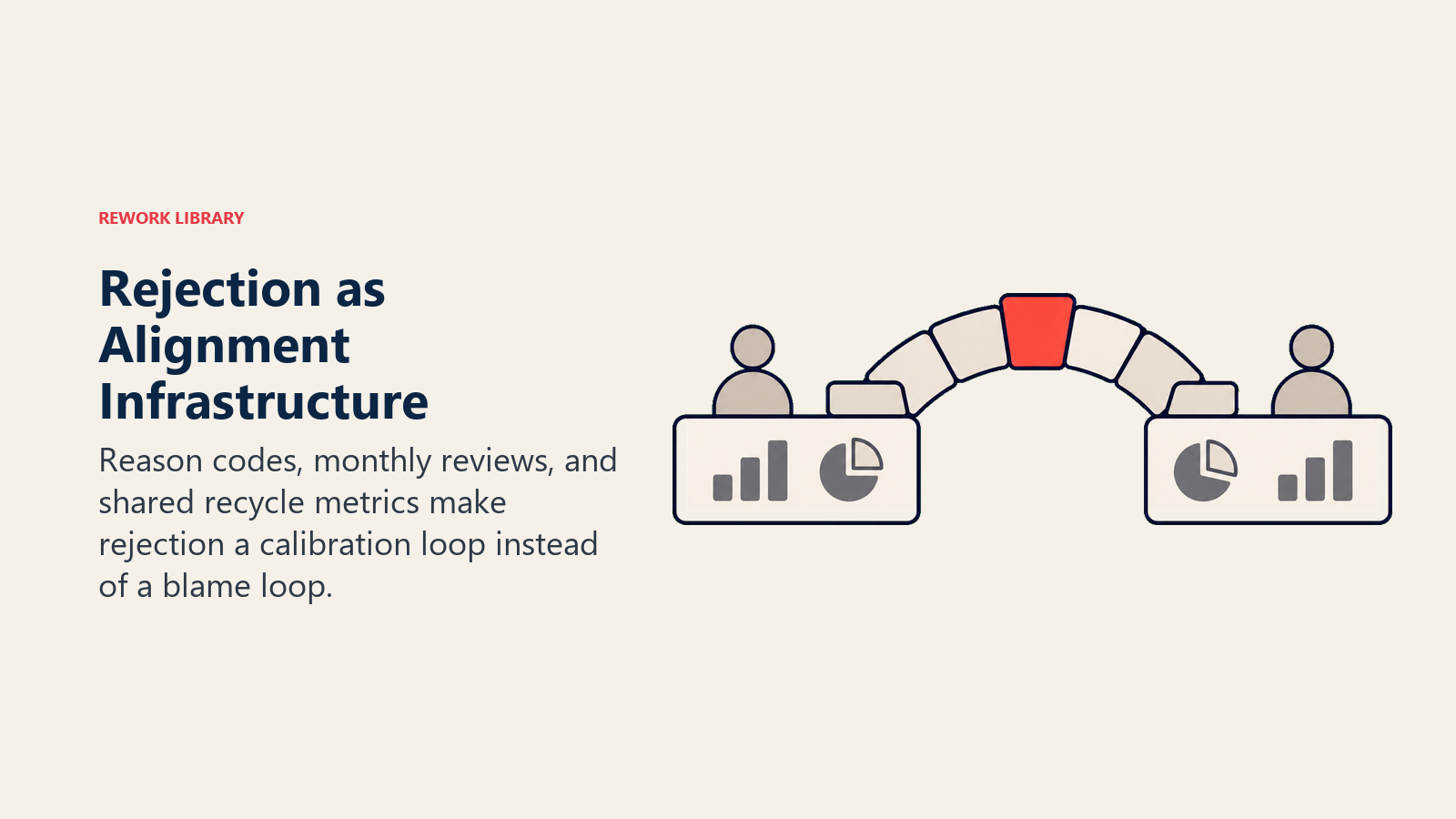
Cuando ambos equipos acuerdan los códigos de motivo, revisan los datos juntos mensualmente y comparten la responsabilidad tanto de la tasa de rechazo como de la conversión de reciclado, el rechazo deja de ser un campo de batalla. Se convierte en el ciclo de retroalimentación más honesto en el sistema de ingresos.
Cada Lead rechazado, correctamente codificado y revisado, mejora los próximos mil Leads. Ese es el valor que el proceso existe para capturar.
Preguntas frecuentes
¿Cuándo debe un representante de ventas rechazar un Lead en lugar de reciclarlo?
Rechazar y archivar cuando la empresa fundamentalmente no coincide con el ICP, sector incorrecto, tamaño incorrecto, geografía incorrecta. Estos no son problemas de timing; son problemas de fit, y reciclar Leads que no son del ICP desperdicia la capacidad de nurture y erosiona la confianza del representante. Reciclar cuando la empresa tiene fit pero el timing o el contacto es incorrecto: un rechazo de "mal timing" de una cuenta del ICP válida es un Lead calificado con futuro, no un descarte.
¿Cuántos códigos de motivo de rechazo debemos usar?
De cinco a siete códigos es el techo práctico. La investigación de SiriusDecisions sobre el cumplimiento de los códigos de rechazo encuentra consistentemente que la precisión en la selección del representante cae drásticamente por encima de siete opciones, los representantes comienzan a elegir el código menos confrontacional en lugar del más preciso. Comenzar con los seis códigos de la Taxonomía de Motivos de Rechazo anterior. Añadir un séptimo solo si el tipo de acuerdo realmente lo requiere (por ejemplo, un código de "conflicto de socio" para equipos de ventas de canal).
¿Cómo se usan los códigos de motivo de rechazo para mejorar la puntuación de Leads?
Mapear cada código de motivo a una hipótesis de puntuación y revisarla mensualmente. Los rechazos "sin señal de presupuesto" de Leads que puntúan por encima de 80 casi siempre significan que el modelo de puntuación sobrepondera el consumo de contenido en relación con las señales de intención de compra. Los rechazos "no es fit del ICP" de una banda específica de tamaño de empresa significan que los criterios del ICP no están reflejados con precisión en los pesos del puntaje de fit. Cada tipo de código apunta a una parte diferente del modelo de puntuación que necesita calibración.
¿Cuál es el período de enfriamiento correcto antes de reciclar un Lead rechazado?
Treinta días es el mínimo para la mayoría de los tipos de rechazo. Para los rechazos "no es fit del ICP", use 90 días, el tamaño y el sector de una empresa raramente cambian más rápido que eso, así que re-enviar antes solo desperdicia el contacto y quema la buena voluntad. Para los rechazos de "mal timing" vinculados a un evento conocido (renovación de contrato, nuevo año fiscal), programar la secuencia de re-nurture para que se active 30 días antes de ese evento en lugar de usar un período de tiempo fijo.
¿Cómo se manejan los Leads que se rechazan y reciclan más de dos veces?
Cualquier Lead rechazado y re-enrutado más de dos veces debe requerir revisión humana por parte de Marketing Ops antes de volver a entrar en la cola de MQL. El reciclaje repetido es un síntoma, no un estado normal. Generalmente significa que el modelo de puntuación está marcando el contacto como de alta intención basándose en señales que no correlacionan con una verdadera disposición a comprar, o que el modelo mental del ICP del representante difiere de los criterios escritos. Una persona debe resolver el conflicto antes del tercer intento, o tanto el Lead como la confianza del representante en el proceso se pierden.
¿Quién es dueño de la revisión semanal de rechazos?
Marketing Ops o un analista de demand gen dedicado es dueño de la revisión por lote. La función de Sales Ops o RevOps puede co-tener la extracción de datos, pero el análisis, mapear los códigos de rechazo de vuelta a fuentes de campaña, personas y modelos de puntuación, es una función de Marketing. El resultado de la revisión debe alimentar la llamada semanal de calidad de Leads, donde Ventas y Marketing miran los mismos datos juntos antes de hacer cualquier cambio en la puntuación o la campaña.
¿Qué métricas indican que el proceso de rechazo y reciclaje está funcionando?
Tres números: tasa de rechazo por fuente (objetivo de menos del 25% para canales de alta intención), tasa de conversión de reciclado a MQL en 90 días (rango saludable: 10-35%) y tasa de re-entrada por código de motivo de rechazo. Si el código "no es fit del ICP" produce una alta tasa de re-entrada, la definición del ICP o la puntuación todavía está dejando pasar perfiles incorrectos. Si el código "mal timing" produce una baja tasa de re-entrada, el timing de la secuencia de re-nurture puede estar desfasado en relación con el ciclo de compra real.
Aprenda más

Principal Solution Architect
On this page
- Por qué suceden los rechazos (y por qué no siempre es culpa de Ventas)
- Construir una taxonomía de rechazos: la Taxonomía de Motivos de Rechazo
- El Workflow de rechazo
- Marco de decisión de reciclaje
- Criterios de re-entrada: ¿cuándo puede re-calificar un Lead reciclado?
- Análisis agregado de rechazos: qué hace Marketing con los datos
- Cómo llevar a cabo la conversación sin culpar a nadie
- Métricas para rastrear
- Errores comunes que evitar
- El proceso de rechazo como infraestructura de alineación
- Preguntas frecuentes
- ¿Cuándo debe un representante de ventas rechazar un Lead en lugar de reciclarlo?
- ¿Cuántos códigos de motivo de rechazo debemos usar?
- ¿Cómo se usan los códigos de motivo de rechazo para mejorar la puntuación de Leads?
- ¿Cuál es el período de enfriamiento correcto antes de reciclar un Lead rechazado?
- ¿Cómo se manejan los Leads que se rechazan y reciclan más de dos veces?
- ¿Quién es dueño de la revisión semanal de rechazos?
- ¿Qué métricas indican que el proceso de rechazo y reciclaje está funcionando?
- Aprenda más