Gemeinsame Kundendatensatz-Architektur: Wie das CRM-Schema in Ihre CS-Plattform erweitert wird
Turn this article into takeaways for your work.


Each assistant summarizes the article only for you and suggests best practices for your work.
Zwei Teams, zwei Plattformen, ein Kunde.
Der AE hat den Deal im CRM abgeschlossen. Der CSM managt das Konto in der CS-Plattform. Diese zwei Datensätze haben fast nie dasselbe Schema. Wenn der CSM also wissen muss, welche Use Cases im Verkaufszyklus zugesagt wurden, liest er ein PDF, das ihm per E-Mail geschickt wurde. Wenn der AE den Health Score vor einem Renewal-Gespräch wissen muss, fragt er auf Slack. Wenn RevOps eine NRR-Analyse erstellen möchte, die Deal-Daten mit Health-Daten verbindet, verbringen sie eine Woche in Tabellen.
Das ist kein Prozessproblem. Es ist ein Architekturproblem. Und Prozesslösungen – ein wöchentliches Sync-Meeting, eine Handoff-Checkliste, ein gemeinsames Notion-Dokument – überleben kein defektes Schema. Forresters Forschung zu Customer-Success-Plattformen zeigt, dass die erfolgreichsten CS-Organisationen Kundendaten aus dem gesamten Tech-Stack über Integrationen vereinheitlichen und dass die Sichtbarkeit von Health Scores vollständig davon abhängt, dass die zugrunde liegende Datenarchitektur solide ist. Die Daten fließen entweder zwischen den Systemen oder nicht. Die Marketing-Sales-Seite dieses Problems (bei der ein einzelnes CRM als Single Source of Truth über das gesamte Go-to-Market hinweg dient) wird in CRM als Single Source of Truth behandelt; dieser Artikel setzt dort an, wo jener aufhört, speziell an der AE-zu-CS-Naht.
Dieser Artikel behandelt speziell die Datendesign-Frage an der AE-zu-CS-Naht: Welche Felder werden vom CRM in die CS-Plattform erweitert, in welche Richtung fließen Daten für jedes, wer besitzt jedes Feld und welcher Synchronisationsmechanismus hält sie ausgerichtet. Er behandelt nicht das Prinzip, eine einzige Quelle der Wahrheit zu haben – das wird im Artikel Single Source of Truth: Customer Record abgedeckt. Das hier ist die Implementierungsschicht.
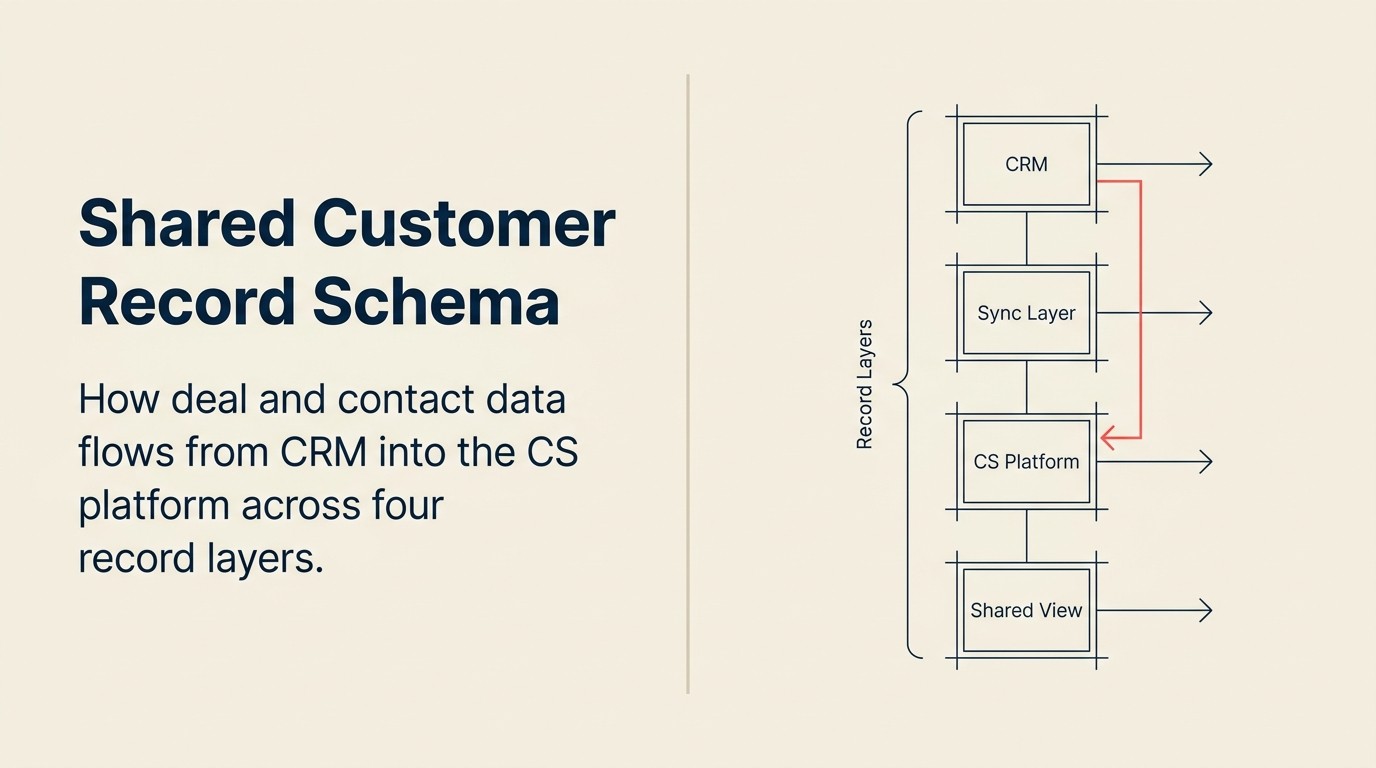
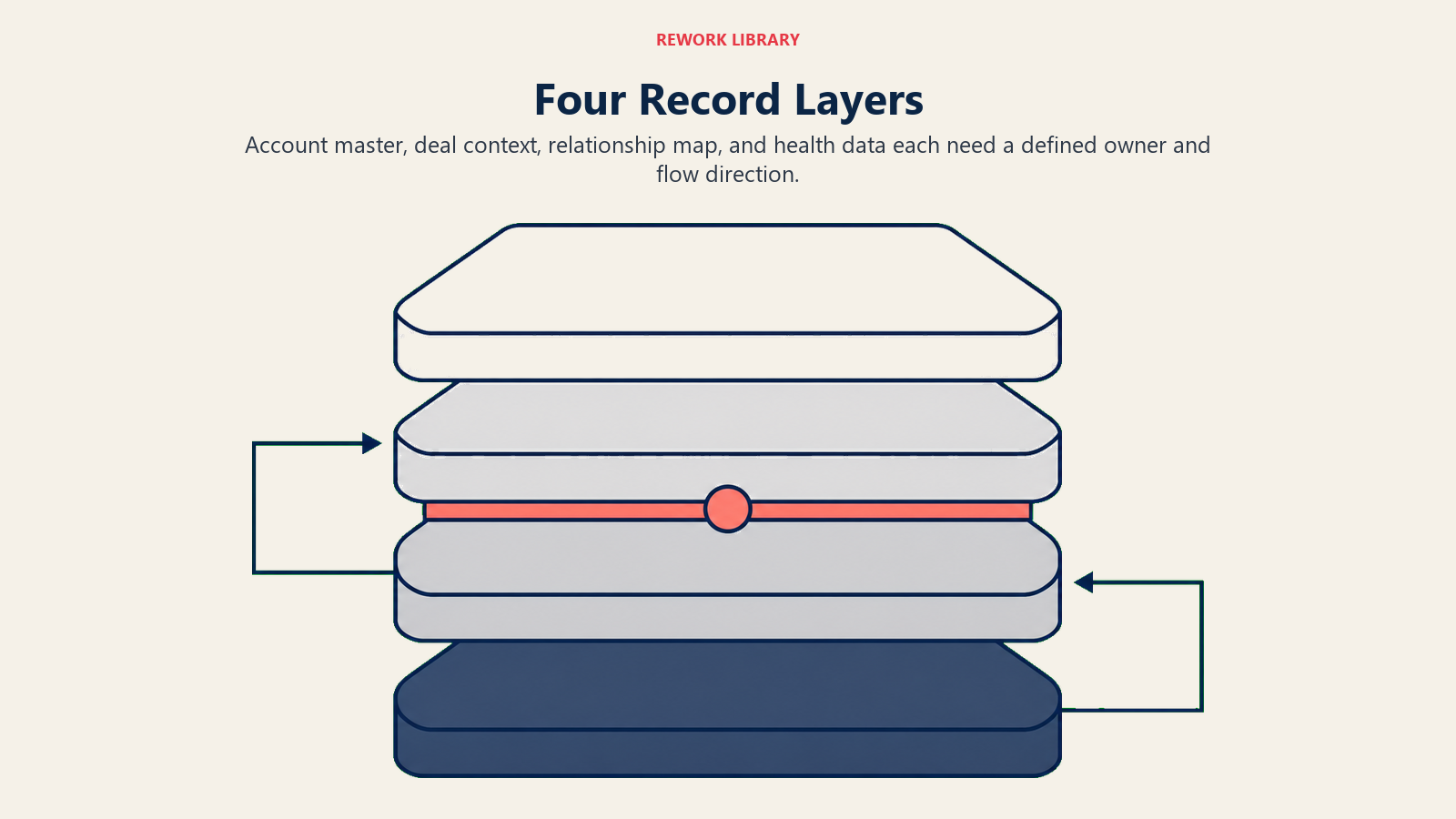
Die 4-Schichten-Architektur des gemeinsamen Kundendatensatzes definiert, wie Kontodaten an der AE-zu-CS-Naht strukturiert, besessen und synchronisiert werden. Schicht 1 (Account-Master) stammt aus dem CRM und ist in CS schreibgeschützt. Schicht 2 (Deal-Kontext) fließt beim Abschluss vom CRM zu CS, einmalig und statisch. Schicht 3 (Beziehungskarte) ist co-owned und bidirektional synchronisiert. Schicht 4 (Health und Engagement) stammt aus CS und ist im CRM für die AE-Sichtbarkeit schreibgeschützt. Jede Schicht hat eine definierte Richtung und einen Eigentümer. Fehlt eine der vier oder ist sie falsch zugeordnet, bricht die Koordination zwischen AE und CSM vorhersehbar zusammen.
Warum das anders ist als „CRM als Single Source of Truth"
Das Single-Source-of-Truth-Konzept legt fest, dass ein autoritativer Datensatz für jeden Datentyp existiert – Kontakte im CRM, Health Scores in der CS-Plattform, mit einer Synchronisation, die beide für beide Teams sichtbar macht. Es ist das Prinzip.
Dieser Artikel behandelt die Implementierung: Was auf Feldebene tatsächlich wahr sein muss, damit dieses Prinzip an der AE-zu-CS-Naht funktioniert.
Die zwei Fragen sind unterschiedlich. Das SoT-Prinzip beantwortet „wem gehört was?" Die Architekturfrage beantwortet „wie kommt es dorthin, und wie muss das Schema aussehen, damit die Synchronisation funktioniert?" Sie können das SoT-Prinzip vollständig befürworten und trotzdem eine defekte Implementierung haben, weil niemand das gemeinsame Schema entworfen hat.
Noch eine Umfangsnotiz: Dieser Artikel behandelt nur die AE-zu-CS-Naht – den Handoff und die laufende Koordination zwischen dem Team, das den Deal abgeschlossen hat, und dem Team, das die Kundenbeziehung managt. Er behandelt nicht die Auswahl von Onboarding-Plattformen, CS-Tooling-Strategie oder Post-Onboarding-Adoptionsmechanismen. Das sind separate Probleme. Die Naht ist spezifisch genug.
Wichtige Fakten: Schema-Diskrepanzen und Umsatzkosten
- 65 % der CSMs sagen, dass sie zum Zeitpunkt des Kunden-Handoffs keinen zuverlässigen Zugang zu Deal-Kontext aus dem Verkaufszyklus haben, laut Gainsights jährlichem CS-Industry-Benchmark-Report. Die Ursache ist fast immer eine Schema-Diskrepanz, kein Prozessversagen.
- Unternehmen mit gut integriertem CRM- und CS-Plattformdaten schließen 25 % mehr Expansionsumsatz, weil AEs vor Renewal-Gesprächen Health-Score-Sichtbarkeit haben, so Forresters Revenue-Operations-Forschung.
- Organisationen mit einem definierten gemeinsamen Feldschema zwischen CRM und CS-Plattform haben NRR, das 9–14 Prozentpunkte höher ist als solche ohne, laut OpenView Partners' SaaS-Benchmarks-Bericht.
Die vier Datensatzschichten an der Naht
Stellen Sie sich den gemeinsamen Kundendatensatz als vier Schichten vor, jede mit unterschiedlicher Ownership und unterschiedlicher Datenflussrichtung.
Schicht 1: Account-Master. Unternehmensprofil, Marktsegment, AE-Eigentümer, CSM-Eigentümer, Tier-Bezeichnung, Vertragswert und Verlängerungsdatum. Diese Schicht ist das Skelett – sie sagt beiden Teams, wer der Kunde ist und wie die kommerzielle Beziehung aussieht.
Lebt in: CRM. Das sind CRM-originäre Daten; es ist der Datensatz der kommerziellen Beziehung. Richtung: Schreibgeschützt in der CS-Plattform. Das CS-Team liest es; nur RevOps und der AE aktualisieren es. Warum es wichtig ist: Wenn die Tier-Bezeichnung im CRM nicht mit dem Tier in der CS-Plattform übereinstimmt, bricht die CSM-Zuweisung-Logik. QBR-Kadenz-Entscheidungen basieren auf Tier. Wenn der Vertragswert in den zwei Systemen unterschiedlich ist, produziert die Renewal-Prognose zwei verschiedene Zahlen.
Schicht 2: Deal-Kontext. Die abgeschlossenen Use Cases, während des Verkaufszyklus gemachte Versprechen, Champion-Karte zum Zeitpunkt des Abschlusses, Rabatttiefe, ICP-Fit-Score und Red Flags, die der AE notiert hat. Das ist die Intelligenz, die CS von Tag eins an braucht, um erfolgreich zu onboarden.
Lebt in: CRM beim Abschluss, fließt dann als statischer Datensatz in die CS-Plattform. Richtung: CRM → CS-Plattform, einseitig, einmalig. Diese Daten werden beim Deal-Abschluss gesetzt und ändern sich nicht. Es ist keine Live-Synchronisation – es ist ein Datensatz dessen, was in dem Moment zugesagt wurde, als der Kunde unterschrieben hat. Warum es wichtig ist: Ohne diese Schicht onboarded der CSM, ohne zu wissen, was verkauft wurde. Der Kunde kommt mit Erwartungen aus dem Verkaufszyklus; der CSM hat keine Sichtbarkeit darauf, was diese Erwartungen sind. Vertrauen erodiert in den ersten zwei Wochen. Eskalationen, die verhindert werden hätten können, finden statt, weil niemand den Deal-Kontext durch den Handoff getragen hat.
Schicht 3: Beziehungskarte. Kontakte beim Konto, ihre Rollen und Titel, Engagement-Verlauf, wer der Champion ist, wer der Executive Sponsor ist und Flags für Champion-Stabilität.
Lebt in: Beiden Systemen, co-owned. Richtung: AE aktualisiert vor Abschluss; CSM besitzt nach Abschluss. Beide haben Schreibzugriff. Synchronisation ist in dieser Schicht bidirektional. Warum es wichtig ist: Kontaktdatensätze in CRM und CS-Plattform divergieren im Laufe der Zeit. Der AE kennt den Champion aus dem Verkaufszyklus. Der CSM trifft während des Onboardings sechs weitere Stakeholder, von denen das CRM noch nie gehört hat. Ein Jahr später geht der AE in ein Renewal-Gespräch und der Champion wurde durch jemanden ersetzt, mit dem er noch nie gesprochen hat – weil die Beziehungskarte im CRM nie aktualisiert wurde. Champion-Wechsel ist die häufigste Ursache für unerwarteten Churn bei Mid-Market-Konten. Der Champion-Übergang vom AE zum CSM ist der strukturierte Handoff, der diese Schicht im kritischen Moment, kurz vor dem Onboarding-Start, aktuell hält.
Schicht 4: Health und Engagement. Produktnutzungsdaten, NPS- und CSAT-Werte, Support-Ticket-Verlauf und der zusammengesetzte Health Score, den CS aus all diesen berechnet.
Lebt in: CS-Plattform. Das sind CS-originäre Daten – es ist der Datensatz, wie der Kunde das Produkt tatsächlich nutzt und erlebt. Richtung: Schreibgeschützt im CRM für AE-Sichtbarkeit. Der AE liest es vor Renewal- und Expansionsgesprächen; nur CS aktualisiert es. Warum es wichtig ist: Ein AE, der den Health Score vor einem Renewal-Gespräch nicht sieht, fliegt blind. Er weiß nicht, ob er in ein Renewal-Gespräch mit einem Champion-Kunden oder einem at-risk-Kunden geht. Er kann seinen Ansatz nicht kalibrieren, kann nicht die richtigen Personen mitbringen und kann sich nicht auf die Einwände vorbereiten, die der Kunde wahrscheinlich vorbringen wird. Health-Daten, die im CRM sichtbar sind, lösen das. Was diese Schichten in der Praxis tatsächlich zum Brechen bringt, läuft auf eine bestimmte Reihe von Schema-Diskrepanzen hinaus, die man beim Namen kennen sollte.
Häufige Schema-Diskrepanzen und ihre Kosten
Die meisten CRM-zu-CS-Plattform-Integrationsversagen sind keine Integrationsversagen – sie sind Schema-Versagen. Die Daten existieren in beiden Systemen, bedeuten aber nicht dasselbe, oder sie leben in Feldern, die nicht zueinander zugeordnet werden können. Die Forschung von Gartner zu Customer-Success-Management-Plattformen nennt durchgängig die bidirektionale CRM-Integration als eines der wichtigsten Bewertungskriterien und Schema-Konsistenz als die häufigste Lücke, durch die Integrationen in der Praxis brechen. Die Entscheidungen zum Alignment-Tool-Stack, die vorgelagert getroffen werden (welches CRM, welche CS-Plattform, welche Integrationsschicht), bestimmen, wie viel individuelle Schema-Arbeit überhaupt nötig ist.
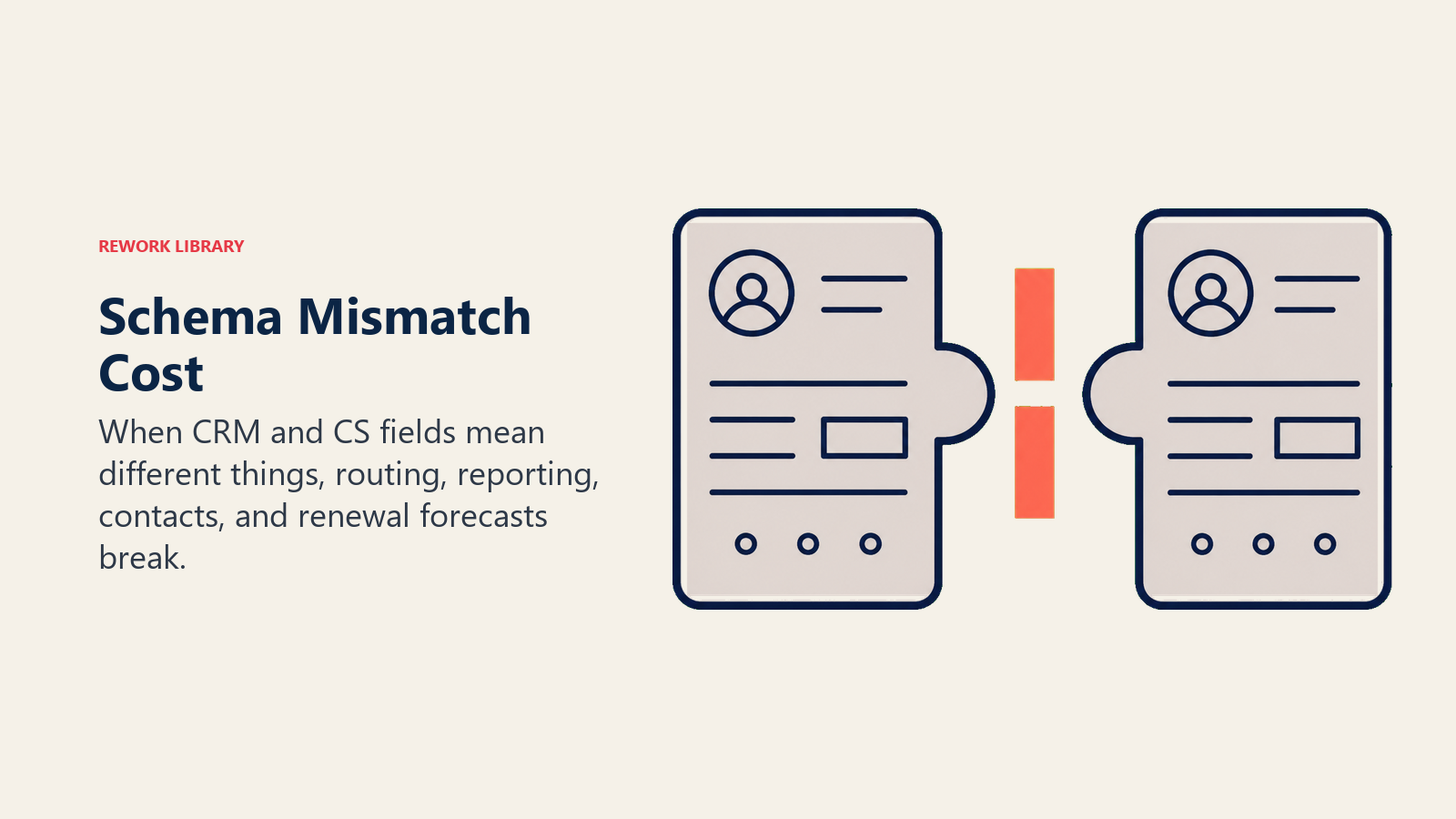
| Diskrepanz | Was es kostet |
|---|---|
| „Account Owner" (AE, im CRM) ≠ „CSM Owner" (CS-Plattform) ohne gemeinsames „Account-Team"-Konzept | Routing-Logik für Benachrichtigungen, Zuweisungen und Eskalationen bricht. Keines der Teams kann automatisch eine Benachrichtigung an die richtige Person senden. |
| „Deal Stage" (CRM) lässt sich nicht der „Onboarding Stage" (CS-Plattform) zuordnen | Keine Sichtbarkeit darauf, wo ein Kunde in der Post-Close-Journey ist. RevOps kann sehen, wann ein Deal abgeschlossen wurde, aber nicht, was in den 90 Tagen danach mit dem Kunden passiert ist. |
| Von einem Team hinzugefügte Custom-Felder, die im anderen System nicht existieren | Beim Abschluss eingegebene Daten (z.B. „Implementierungskomplexität: hoch") erreichen das Team nie, das sie benötigt (CS), weil das empfangende System kein Feld hat, um sie zu halten. |
| Kontaktdatensätze, die separat in CRM und CS-Plattform gepflegt werden | CSM managt eine Beziehung mit einem neuen VP, der sechs Monate nach Abschluss beigetreten ist; das CRM zeigt immer noch den ursprünglichen Champion. AE weiß nicht, dass sich die Kontaktlandschaft geändert hat. |
| „Account Tier" vs. „Customer Segment" vs. „Tier Rating": dasselbe Konzept, drei Feldnamen | Berichte verbinden sich nicht. RevOps erstellt separate Berichte für jedes System. NRR-Analyse wird jedes Quartal zu einem manuellen Abstimmungsprojekt. |
| Renewal ARR, der im CRM und in der CS-Plattform unterschiedlich berechnet wird | Sales und CS kommen mit unterschiedlichen ARR-Zahlen zum Renewal-Prognosemeeting. Das Gespräch wird zu einer Abstimmungsübung statt einer Strategiediskussion. |
Das gemeinsame Schema entwerfen: Sechs Felder, die konsistent sein müssen
Sie müssen nicht jedes Feld zwischen CRM und CS-Plattform teilen. Sie müssen mit dem Minimum Viable Shared Schema beginnen – die Felder, die, wenn sie inkonsistent sind, die Koordination zwischen AE und CSM strukturell schwierig machen.
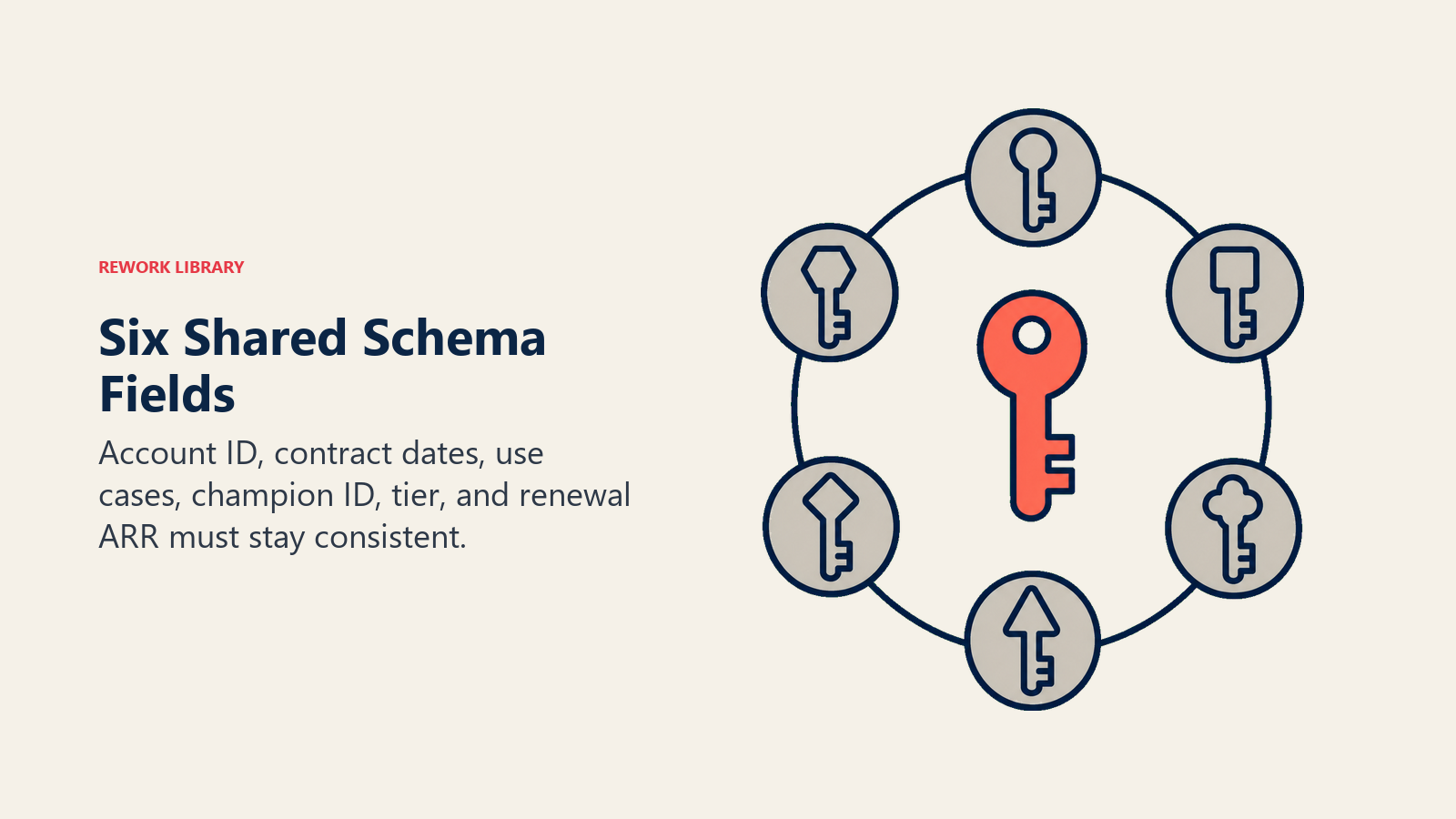
| Feld | Eigentümer | Richtung | Warum es tragend ist |
|---|---|---|---|
| Account-ID | RevOps | Beide Systeme, gleicher Wert | Der Primärschlüssel, der Synchronisation ermöglicht. Ohne eine gemeinsame Account-ID erfordert jede Integration Fuzzy-Matching auf Unternehmensname – was ständig bricht. |
| Vertragsstartdatum/-enddatum | RevOps (stammt im CRM) | CRM → CS-Plattform (schreibgeschützt) | Beide Teams brauchen das für das Renewal-Timing. Wenn die Daten divergieren, wird die Renewal-Planung unmöglich zu koordinieren. |
| Zugesagte Use Cases | AE (beim Abschluss) | CRM → CS-Plattform (schreibgeschützt, beim Abschluss gesetzt) | CSM muss von Tag eins an wissen, was dem Kunden verkauft wurde. Freitext oder strukturierte Liste, beim Abschluss definiert, als statische Referenz fortgeführt. |
| Champion-Kontakt-ID | Co-owned (AE vor Abschluss, CSM nach Abschluss) | Bidirektional | Verknüpft mit dem Kontaktdatensatz in beiden Systemen. Muss dieselbe Kontakt-ID referenzieren, oder man kann Champion-Wechsel nicht systemübergreifend verfolgen. |
| Segment / Tier | RevOps | CRM ist Quelle der Wahrheit; CS-Plattform liest es | Bestimmt CSM-Zuweisung, QBR-Kadenz und Renewal-Prozess. Muss konsistent sein, oder beide Teams agieren mit unterschiedlichen Konto-Prioritätsrahmen. |
| Renewal ARR | RevOps (Quelle der Wahrheit im CRM) | CRM → CS-Plattform (schreibgeschützt) | CS benötigt das für Expansionsprognosen und Renewal-Gespräche. AE braucht es, um zu wissen, was auf dem Spiel steht. Beide brauchen dieselbe Zahl. |
Diese sechs Felder sind das Minimum. Die meisten Teams werden mit der Zeit weitere hinzufügen, wenn sie weitere Lücken identifizieren. Aber mit diesen sechs zu beginnen, mit definierter Ownership und Synchronisationsrichtung für jedes, ist genug, um den Handoff zuverlässig zu machen. Die nächste Frage lautet, wie man sie synchron hält, ohne die Integration jedes Mal neu aufzubauen, wenn sich eine der beiden Plattformen ändert.
Synchronisationsmechanismen: Drei gängige Ansätze und ihre Kompromisse
Sobald das gemeinsame Schema definiert ist, braucht man einen Mechanismus, um es synchron zu halten. Drei Optionen sind im gängigen Einsatz, jede mit echten Kompromissen.
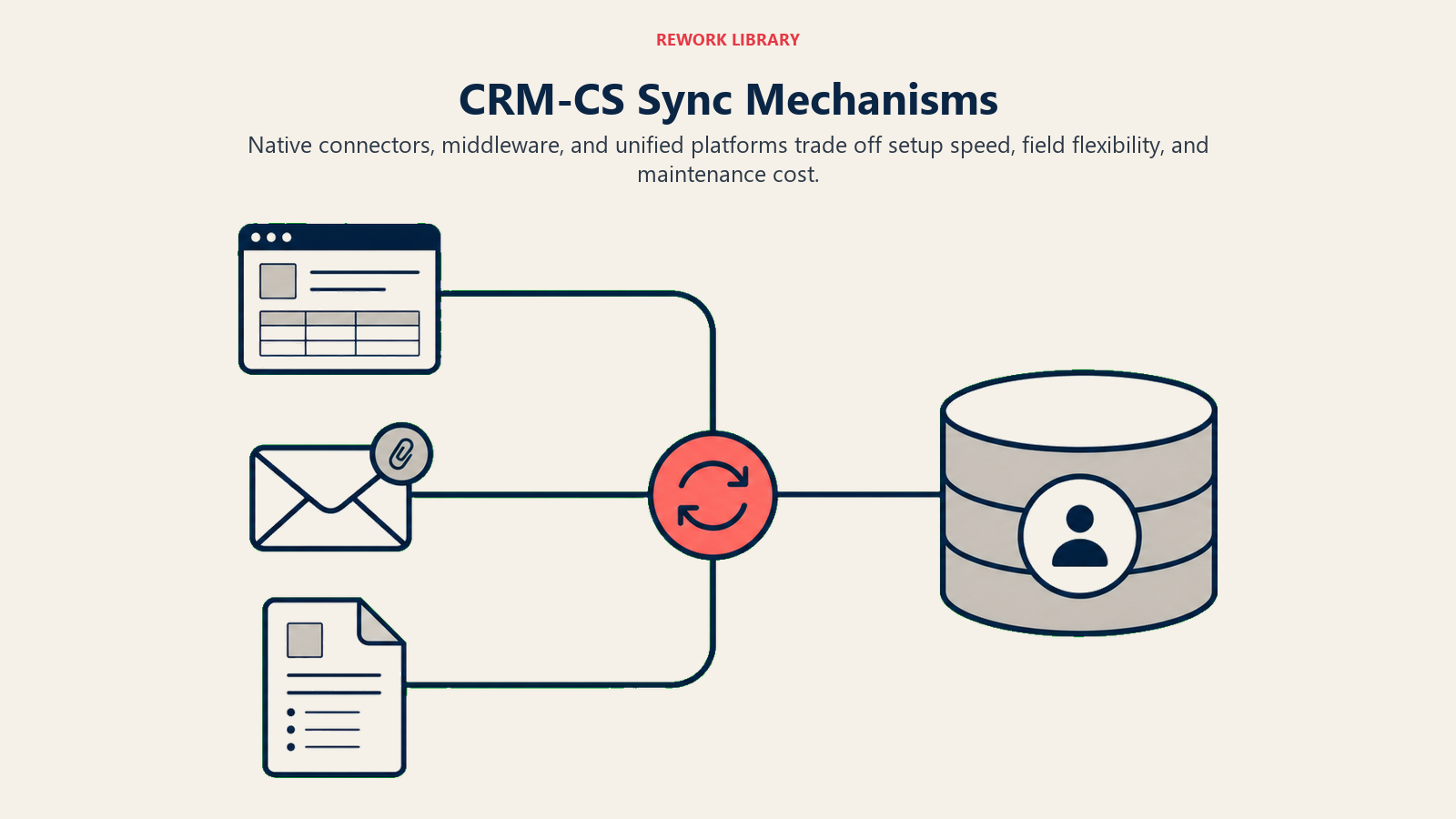
Option 1: Native Integration (CRM und CS-Plattform haben einen eingebauten Connector)
Die meisten wichtigen CRM- und CS-Plattform-Anbieter bieten native Integrationen an. HubSpot verbindet sich mit Gainsight; Salesforce verbindet sich mit Totango, Gainsight und ChurnZero; die meisten haben eine Standard-Feld-Mapping-Einrichtung.
Vorteile: Am einfachsten zu konfigurieren. Vom Anbieter gepflegt. Erfordert typischerweise keine RevOps-Engineering-Arbeit, um in Betrieb zu gehen.
Nachteile: Beschränkt auf die Felder, die der Anbieter in der Integration freigibt. Wenn Sie Custom-Felder haben – und die zugesagten Use Cases und Champion-Stabilitäts-Flags sind fast immer custom – sind sie möglicherweise nicht im nativen Connector verfügbar. Schema-Änderungen in einem der Systeme können die Integration still zum Absturz bringen: Ein Feld wird umbenannt, die Synchronisation hört auf zu funktionieren, und niemand bemerkt es wochenlang, bis ein CSM fragt, warum er keine Health Scores sieht.
Am besten für: Teams, die Standardkonfigurationen mit großen Plattformkombinationen (Salesforce + Gainsight, HubSpot + ChurnZero) betreiben und begrenzte Custom-Feld-Anforderungen haben.
Option 2: iPaaS/Middleware (Zapier, Make, Workato oder ähnliche)
Eine Integrationsplattform sitzt zwischen CRM und CS-Plattform, mit von RevOps konfiguriertem Custom-Feld-Mapping.
Vorteile: Flexibel genug, um Custom-Felder zu synchronisieren. Kann komplexe Logik verarbeiten (z.B. „wenn AE den Deal als Closed Won markiert, Konto-Datensatz in CS mit diesen Feldwerten erstellen"). Kann geändert werden, wenn sich das Schema weiterentwickelt.
Nachteile: Erfordert, dass RevOps die Integration aufbaut und pflegt. Anfangs sind Konfigurationskenntnisse erforderlich. Latenzprobleme bei Echtzeit-Daten – Health-Score-Updates in der CS-Plattform können Minuten oder Stunden dauern, um im CRM zu erscheinen, was bei at-risk-Konto-Benachrichtigungen wichtig ist. Laufende Kosten für die iPaaS-Plattform selbst.
Am besten für: Teams mit komplexen Custom-Feld-Anforderungen, mehreren zu verwaltenden Integrationen oder Plattformen ohne nativen Connector. Erfordert technische RevOps-Kapazität für die Einrichtung.
Option 3: Einheitliche Plattform (CRM und CS im selben System)
Wenn CRM- und CS-Funktionalität in derselben Plattform leben, gibt es keinen Synchronisationsmechanismus – das Schema wird by Design geteilt. Deal-Daten und Customer-Success-Daten sind verschiedene Ansichten desselben Datensatzes. Feldkonsistenz wird erzwungen, nicht gepflegt.
Vorteile: Keine Synchronisationslatenz, kein Schema-Drift, keine Integrationspflege. Das architektonische Ideal für den gemeinsamen Kundendatensatz. AE und CSM arbeiten buchstäblich im selben Konto-Datensatz mit unterschiedlichen Ansichten.
Nachteile: Erfordert, dass beide Teams dieselbe Plattform adoptieren, was ein erhebliches Change-Management- und Migrationsprojekt für Organisationen ist, die bereits in separate CRM- und CS-Tools investiert haben.
Am besten für: Teams, die ihren Stack von Grund auf aufbauen, Teams, die eine signifikante Plattformkonsolidierung vornehmen, oder Teams, bei denen die operative Kosten der Pflege einer Zwei-Plattform-Integration zu einem wiederkehrenden Schmerzpunkt geworden ist.
Für die meisten Teams ist Option 2 heute die richtige Antwort – flexibel genug, um Custom-Felder zu verarbeiten, vertretbare Wartungskosten mit einem kleinen RevOps-Team. Option 3 ist die architektonische Richtung, aber die Migrationsinvestition bedeutet, dass die meisten Mid-Market-Teams auf absehbare Zeit mit zwei Plattformen arbeiten.
Was bricht, wenn Architektur übersprungen wird
Die Konsequenzen eines defekten gemeinsamen Schemas sind vorhersehbar und teuer. Sie spielen sich auf vier Arten aus:
CSM onboarded einen Kunden, ohne den Deal-Kontext zu kennen. Der CSM fragt den Kunden im Kickoff-Gespräch, was er sich von dem Produkt erhofft. Der Kunde sagt „uns wurde gesagt, wir könnten X tun". Der CSM hat noch nie von X als zugesagtem Use Case gehört. Vertrauen erodiert im ersten Meeting. Die Beziehung beginnt von einem Defizit statt einer Vertrauensbasis.
AE kann den Health Score vor der Verlängerung nicht sehen. Das Expansionsgespräch, das ein natürlicher nächster Schritt sein sollte, öffnet sich damit, dass der AE entdeckt, dass das Konto seit 60 Tagen als at-risk gekennzeichnet war – Informationen, die die ganze Zeit in der CS-Plattform waren, für das CRM unsichtbar. Der AE erfährt es entweder vom CSM in einem Last-Minute-Briefing oder geht blind rein. Keines ist eine gute Expansionsbewegung.
RevOps erstellt zwei separate Berichte, weil die Daten sich nicht verbinden. NRR-Analyse erfordert das Verbinden von Deal-ARR (aus CRM) mit Renewal-Ergebnis (aus CS-Plattform) mit Health-Score-Verlauf (aus CS-Plattform). Wenn die Account-ID nicht geteilt wird, macht jeder Analyst, der versucht, diesen Bericht zu erstellen, ein Fuzzy-Match auf Unternehmensname, löst Konflikte manuell auf und produziert Ergebnisse, die beide Teams in Frage stellen. Die quartalsweise NRR-Analyse wird zu einem manuellen Projekt statt eines Berichts, der in dreißig Sekunden läuft.
Kunde erhält widersprüchliche Informationen von AE und CSM. Der AE nennt einen Preis basierend auf seinem CRM-Datensatz. Der CSM nennt einen Renewal-Preis basierend auf dem CS-Plattform-Datensatz. Die zwei Zahlen unterscheiden sich, weil ARR in einem System aktualisiert und nicht mit dem anderen synchronisiert wurde. Der Kunde verliert zu Recht das Vertrauen in die Fähigkeit des Anbieters, intern zu koordinieren.
Quotable Nuggets
Rework-Analyse: Die meisten RevOps-Teams gehen die CRM-zu-CS-Integration als IT-Projekt an: einen Connector auswählen, die Felder zuordnen, den Erfolg erklären. Die 4-Schichten-Architektur des gemeinsamen Kundendatensatzes deutet sie als Problem der Datenverantwortung um. Die Integration selbst ist weniger wichtig als definierte Eigentümer und Synchronisationsrichtungen für jedes tragende Feld. Derselbe iPaaS-Connector mit unklarer Feld-Ownership driftet innerhalb von zwei Quartalen in Schema-Konflikte. Derselbe Connector mit dokumentierter Schicht-Ownership und einer quartalsweisen Review-Kadenz bleibt dauerhaft zuverlässig.
Implementierungssequenz für RevOps
Hier ist eine praktische Sequenz für den Aufbau des gemeinsamen Schemas, ohne alles auf einmal zu tun:
Schritt 1: Aktuellen Feld-Overlap prüfen. Die Feldliste aus CRM und CS-Plattform ziehen. Felder identifizieren, die in beiden Systemen existieren. Für Felder, die in beiden existieren, prüfen, ob die Werte für eine Stichprobe von 20–30 Konten übereinstimmen. Dieses Audit dauert typischerweise zwei bis drei Tage für einen RevOps-Analysten und enthüllt mehr Inkonsistenzen als die meisten Teams erwarten.
Schritt 2: Die sechs geteilten Felder als Minimum Viable Schema definieren. Feldname, Ownership und Synchronisationsrichtung für jedes der oben aufgeführten sechs Felder vereinbaren. Das in einem geteilten Feld-Wörterbuch dokumentieren, auf das beide Teams verweisen können – eine einfache Tabelle genügt.
Schritt 3: Synchronisationsmechanismus wählen. Basierend auf Ihrer Plattformkombination und Custom-Feld-Anforderungen zwischen nativer Integration, iPaaS oder (wenn Sie eine Plattformkonsolidierung evaluieren) einheitlicher Plattform wählen. Die Wahl sollte mit RevOps, CS Ops und Sales Ops im Raum getroffen werden – nicht als Tool-Entscheidung, die IT allein trifft. McKinseys NRR-Forschung ergab, dass Top-Quartil-SaaS-Unternehmen diese Investition früh tätigen, weil sowohl die Sichtbarkeit von Expansion als auch die Vorhersage von Churn davon abhängen, dass Health-Daten in derselben Umgebung zugänglich sind, in der Renewal-Entscheidungen fallen.
Schritt 4: Feld-Ownership zuweisen. Für jedes geteilte Feld definieren, wer Schreibzugriff hat und wer schreibgeschützt ist. Unklare Ownership schafft Datendrift. Wenn zwei Personen dasselbe Feld unabhängig voneinander aktualisieren können, sind sich die zwei Systeme letztendlich nicht einig.
Schritt 5: Einen Schema-Änderungsprozess hinzufügen. Was passiert, wenn eines der Teams ein neues Feld zum gemeinsamen Schema hinzufügen möchte? Ohne einen definierten Prozess werden Felder zu einem System hinzugefügt, ohne eine entsprechende Ergänzung im anderen, und das Schema divergiert still. Ein leichtgewichtiger Prozess – RevOps überprüft die Anfrage, fügt das Feld zu beiden Systemen hinzu und aktualisiert das Feld-Wörterbuch – reicht aus, um das zu verhindern. Die Handoff-Scorecard-Vorlage ist ein konkretes Artefakt, das von der Stabilität dieses Schemas abhängt. Sie bricht, wenn Feldnamen ohne koordinierte Aktualisierung geändert werden.
Anti-Muster
Das gemeinsame Schema aufbauen, nachdem das Tool zwei Jahre live war. Datenmigration ist erheblich schwieriger als upfront Schema-Design. Zwei Jahre unstrukturierte Deal-Kontext-Notizen, inkonsistente Tier-Bezeichnungen und divergierte Kontaktdatensätze räumen sich nicht schnell auf. Das gemeinsame Schema vor dem Launch der CS-Plattform entwerfen, nicht nachdem man mit den Konsequenzen des Nichthabens davon gelebt hat.
Jedes Team seine eigenen Feldnamen für dasselbe Konzept definieren lassen. „Account Tier" im CRM, „Customer Segment" in der CS-Plattform, „Tier Rating" im Health Dashboard. Dasselbe Konzept, drei Namen, null Fähigkeit, sie in einem Bericht zu verbinden. Einen Namen wählen und ihn von Tag eins an in beiden Systemen durchsetzen.
Synchronisation als einmaliges Projekt behandeln. Schemas driften. CRM bekommt in Q2 ein neues Pflichtfeld, das niemand zur CS-Plattform hinzufügt. Die CS-Plattform aktualisiert ihre Health-Score-Berechnung und ändert den Feldnamen. Die native Integration lässt ein Feld still fallen, weil ein Anbieter-Update die API geändert hat. Schema-Pflege braucht einen Eigentümer – typischerweise RevOps – und eine quartalsweise Review-Kadenz. Kein Projekt mit einem Fertigstellungsdatum.
Häufig gestellte Fragen zur Architektur des gemeinsamen Kundendatensatzes
Was ist die 4-Schichten-Architektur des gemeinsamen Kundendatensatzes?
Es ist ein Datendesign-Framework, das definiert, wie Kontoinformationen an der AE-zu-CS-Naht strukturiert, besessen und synchronisiert werden. Schicht 1 (Account-Master) enthält Unternehmensprofil, Segment, Vertragswert und Verlängerungsdatum: stammt aus dem CRM, in der CS-Plattform schreibgeschützt. Schicht 2 (Deal-Kontext) trägt zugesagte Use Cases, im Verkaufszyklus gemachte Versprechen und ICP-Fit-Score: fließt beim Abschluss vom CRM zu CS, einmalig und statisch. Schicht 3 (Beziehungskarte) umfasst Kontakte, Champion-Identität und Engagement-Verlauf: co-owned und bidirektional synchronisiert. Schicht 4 (Health und Engagement) enthält Produktnutzung, NPS, Support-Verlauf und Health Score: stammt aus CS, im CRM für die AE-Sichtbarkeit schreibgeschützt.
Ist das CRM immer das führende System of Record, oder kann die CS-Plattform diese Rolle übernehmen?
Für die meisten Datentypen ist das CRM das führende System. Kommerzielle Daten (Vertragsbedingungen, ARR, Verlängerungsdatum, Account-Tier) stammen aus dem CRM und fließen als schreibgeschützte Referenz in die CS-Plattform. Health- und Engagement-Daten stammen aus der CS-Plattform und fließen als schreibgeschützte Referenz für die Nutzung durch den AE ins CRM. Kein System ist universell das führende; jede Schicht hat ihr eigenes Ursprungssystem, je nachdem, welches Team diese Daten erzeugt und dafür verantwortlich ist. Die 4-Schichten-Architektur macht das explizit, anstatt standardmäßig ein einziges führendes System festzulegen, dem keines der Teams vollständig vertraut.
Welche sechs Felder müssen zwischen CRM und CS-Plattform mindestens konsistent sein?
Account-ID (der Primärschlüssel, der Synchronisation ohne Fuzzy-Matching ermöglicht), Vertragsstart- und -enddatum (beide Teams brauchen das für das Renewal-Timing), zugesagte Use Cases (der CSM muss von Tag eins an wissen, was verkauft wurde), Champion-Kontakt-ID (verknüpft mit dem Kontaktdatensatz in beiden Systemen, bidirektional gepflegt), Segment/Tier (bestimmt CSM-Zuweisung, QBR-Kadenz und Renewal-Prozess) und Renewal ARR (beide Teams brauchen dieselbe Zahl für die Prognose). Diese sechs sind das Minimum Viable Shared Schema. Mit ihnen zu beginnen, mit definierter Ownership und Synchronisationsrichtung für jedes, reicht aus, um Handoffs zuverlässig zu machen.
Worin besteht der Unterschied zwischen der Architektur des gemeinsamen Kundendatensatzes und CRM als Single Source of Truth?
Das Single-Source-of-Truth-Konzept legt fest, dass für jeden Datentyp ein autoritativer Datensatz existiert. Die 4-Schichten-Architektur des gemeinsamen Kundendatensatzes ist die Implementierung dieses Konzepts an der AE-zu-CS-Naht: Sie definiert, welche Felder vom CRM in die CS-Plattform erweitert werden, in welche Richtung die Daten für jedes fließen, wer Schreibzugriff hat und welcher Synchronisationsmechanismus sie ausgerichtet hält. Sie können das SoT-Prinzip vollständig befürworten und trotzdem eine defekte Implementierung haben, weil niemand das gemeinsame Schema entworfen hat. Die Architektur beantwortet die Implementierungsfrage, die das SoT-Prinzip offen lässt.
Welche drei Optionen für Synchronisationsmechanismen gibt es, um CRM und CS-Plattform abgestimmt zu halten?
Native Integration (eingebauter Connector des Anbieters) ist am einfachsten zu konfigurieren, aber auf die freigegebenen Felder beschränkt und anfällig für stille Ausfälle, wenn eines der Systeme aktualisiert wird. iPaaS-Middleware (Zapier, Make, Workato) ist am flexibelsten für Custom-Felder und komplexe Logik, erfordert aber, dass RevOps sie aufbaut und pflegt, und führt Synchronisationslatenz ein. Die einheitliche Plattform (CRM und CS im selben System) ist das architektonische Ideal: gar keine Synchronisation, weil beide Teams im selben Datensatz arbeiten. Sie erfordert jedoch eine erhebliche Plattformmigration. Für die meisten Mid-Market-Teams ist iPaaS die richtige Antwort: genug Flexibilität für Custom-Felder, vertretbare Wartungskosten mit einem kleinen RevOps-Team.
Wie verhindert man Schema-Drift zwischen CRM und CS-Plattform im Zeitverlauf?
Definieren Sie einen Schema-Änderungsprozess und machen Sie RevOps zum Eigentümer dieses Prozesses. Der Prozess muss nicht komplex sein: Jede Anfrage, ein neues Feld zum gemeinsamen Schema hinzuzufügen, geht zur Prüfung an RevOps, RevOps fügt das Feld gleichzeitig zu beiden Systemen hinzu, und das gemeinsame Feld-Wörterbuch wird aktualisiert. Ohne diesen Prozess werden Felder zu einem System hinzugefügt, ohne dass es eine entsprechende Ergänzung im anderen gibt, und das Schema divergiert still, oft innerhalb eines Quartals nach dem Go-live. Quartalsweise Schema-Audits, bei denen RevOps die Feldliste aus beiden Systemen zieht und eine Stichprobe von 20–30 Konten auf Wertekonsistenz prüft, erkennen Drift, bevor er zu einem Datenintegritätsproblem wird.
Mehr erfahren

Principal Solution Architect
On this page
- Warum das anders ist als „CRM als Single Source of Truth"
- Die vier Datensatzschichten an der Naht
- Häufige Schema-Diskrepanzen und ihre Kosten
- Das gemeinsame Schema entwerfen: Sechs Felder, die konsistent sein müssen
- Synchronisationsmechanismen: Drei gängige Ansätze und ihre Kompromisse
- Was bricht, wenn Architektur übersprungen wird
- Quotable Nuggets
- Implementierungssequenz für RevOps
- Anti-Muster
- Mehr erfahren