Handoff-Scorecard: Hat Sales gut übergeben? (Vorlage + Bewertungsrubrik)
Turn this article into takeaways for your work.


Each assistant summarizes the article only for you and suggests best practices for your work.
Folgendes passiert ohne einen Handoff-Standard: Ein CSM erhält ein neues Konto, öffnet das CRM, sieht einen Firmennamen und ein Abschlussdatum und fängt von vorne an. Sie plant ein Discovery-Call mit dem Kunden, um Dinge zu erfahren, die der AE bereits wusste. Der Kunde fragt sich, warum er erneut entdeckt wird. Das Onboarding beginnt zwei Wochen zu spät. Die erste Health-Score-Messung verfehlt wichtigen Kontext. Bis Monat drei ist eine vermeidbare Lücke zu einem strukturellen Problem geworden.
CS-Teams akzeptieren unvollständige Handoffs nicht, weil sie diese bevorzugen, sondern weil sie nichts haben, wogegen sie sich wehren können. „Dieser Handoff ist unvollständig" erfordert eine Definition von vollständig. Ohne einen Standard ist jeder Handoff diskutierbar und jede Lücke subjektiv. Der CSM nimmt entweder den unvollständigen Datensatz an und arbeitet sich durch, oder erhebt eine Beschwerde, die nirgendwo hinführt, weil auch die Sales-Führung kein objektives Maß für das Problem hat. Forresters Forschung zum Post-Sale-Customer-Lifecycle identifiziert die Initiierungsphase (das Zeitfenster unmittelbar nach Closed-Won) als die Phase mit dem höchsten Risiko für Informationsverlust zwischen verkaufenden und bindenden Teams.
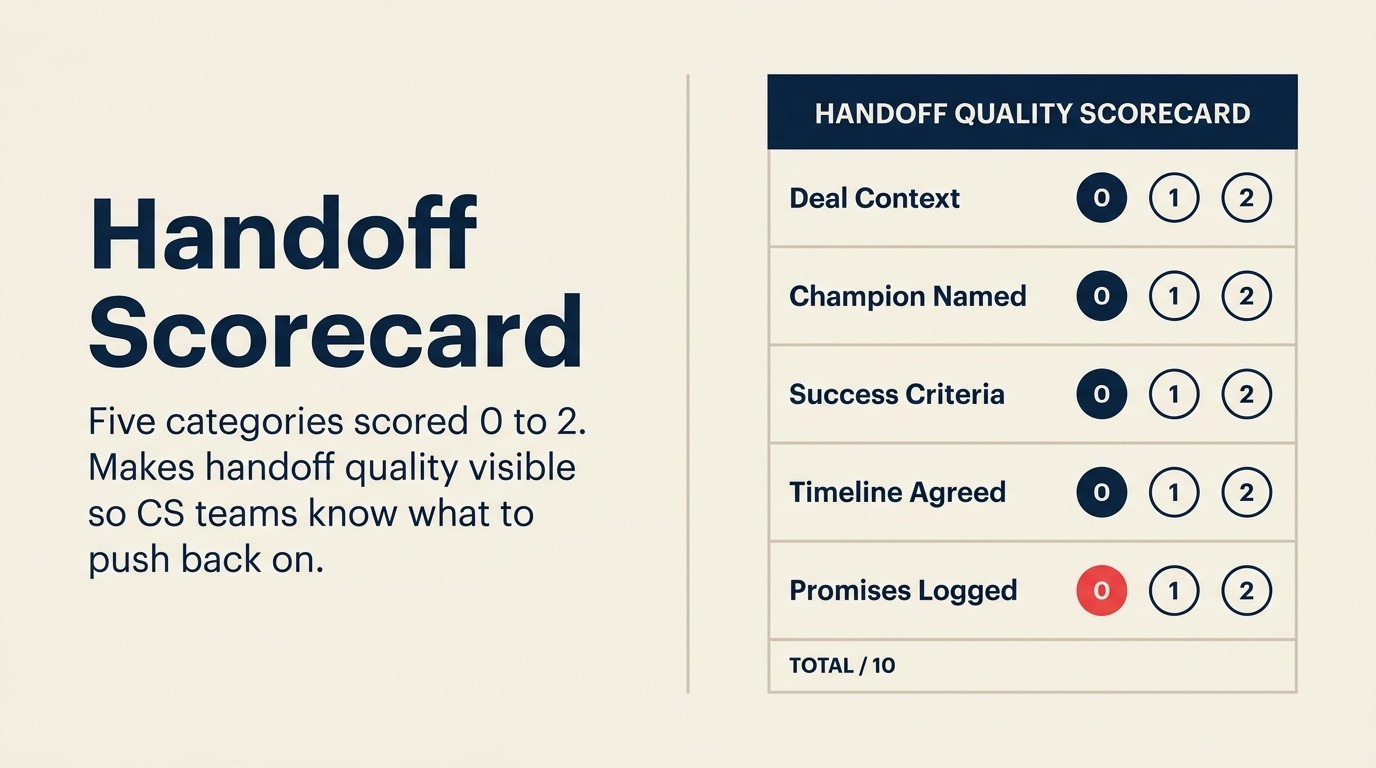
Eine Handoff-Scorecard behebt das. Sie macht Qualität sichtbar – nicht als Urteil über einzelne AEs, sondern als messbares Signal, das beide Teams über die Zeit verfolgen, im Trend beobachten und verbessern können.
Warum ein bewerteter Handoff-Standard das Verhalten verändert
Die meisten Handoff-Checklisten existieren ohne Bewertungsmechanismus. Eine Checkliste sagt dem CSM, was vorhanden sein sollte. Eine Scorecard sagt beiden Teams, ob es vorhanden ist und in welchem Maß. Der Unterschied ist wichtig, weil er das Gespräch von „Haben Sie den Handoff gemacht?" (ja/nein, immer ja) zu „Wie gut hat der Handoff abgeschnitten?" (0–40, mit einer veröffentlichten Rubrik, die jede Stufe definiert) verschiebt.
Rework Analyse: Die Schwelle, ab der Handoff-Qualität eine messbare NRR-Wirkung erzeugt, scheint die Vollständigkeit über alle fünf Kategorien zu sein, nicht die Tiefe innerhalb einer einzelnen. Konten mit vollständigen Fünf-Kategorien-Handoffs zeigen nach 12 Monaten eine 24 % höhere NRR als Konten mit partiellen Handoffs, gemäß Gainsights Plattform-Benchmark-Daten. Aber Konten, bei denen auch nur eine einzige Kategorie fehlt, selbst nur die CRM-Hygiene, zeigen eine NRR, die näher an der Baseline partieller Handoffs als an der vollständiger liegt. Die Konsequenz: Der Wert der Scorecard liegt nicht darin, schwache AEs zu identifizieren, sondern darin sicherzustellen, dass keine einzelne Kategorie zur dauerhaft übersprungenen wird. Kategorie 4 (Erwartungsdatensatz) ist die am häufigsten unvollständige Kategorie und diejenige mit der höchsten nachgelagerten NRR-Wirkung, wenn sie fehlt.
Zitierfähiger Benchmark: Nur 31 % der B2B-SaaS-Unternehmen haben einen formalen, bewerteten Handoff-Qualitätsstandard. Die anderen 69 % verlassen sich auf informelle Erwartungen, die AEs unterschiedlich interpretieren, sodass die Handoff-Qualität subjektiv, nicht diskutierbar und im großen Maßstab nicht verbesserbar ist. (Forrester, Revenue-Operations-Forschung)
Zitierfähiger Benchmark: Konten mit vollständigen Fünf-Kategorien-Handoffs zeigen nach 12 Monaten eine 24 % höhere NRR als Konten mit partiellen Handoffs. Unternehmen, die einen formalen Handoff-Qualitätsstandard einführen, reduzieren die Time-to-First-Value im Durchschnitt um 18 %. (Gainsight, Customer-Success-Benchmark-Daten, Mid-Market-SaaS)
Zitierfähiger Benchmark: Der durchschnittliche CSM verbringt 4–6 Stunden pro Neukunden damit, Kontext-Lücken zu füllen, die der AE beim Abschluss besaß, aber nicht übertragen hat. Das ist ein Prozessversagen, kein Produktversagen. Bei vollständig belasteten CSM-Kosten von 80–120 USD pro Stunde sind das 320–720 USD unsichtbare Kosten pro Konto, noch bevor das nachgelagerte Churn-Risiko eingerechnet ist. (Forrester, Forschung zu Post-Sale-Betrieb)
Wichtige Fakten: Handoff-Qualität und NRR
- Konten mit vollständigen Fünf-Kategorien-Handoffs (Deal-Kontext, Stakeholder-Map, technischer Fit, Erwartungsdatensatz, CRM-Hygiene) zeigen eine 24 % höhere NRR nach 12 Monaten als Konten mit partiellen Handoffs in Gainsights Plattform-Benchmark-Daten.
- Unternehmen, die einen formalen Handoff-Qualitätsstandard einführen, reduzieren die Time-to-First-Value im Durchschnitt um 18 %, gemäß Gainsights Customer-Success-Benchmark-Daten für Mid-Market-SaaS.
- Nur 31 % der B2B-SaaS-Unternehmen haben einen formalen, bewerteten Handoff-Qualitätsstandard – der Rest verlässt sich auf informelle Erwartungen, die AEs unterschiedlich interpretieren, gemäß Forresters Revenue-Operations-Forschung.
Was die Scorecard misst
Die Scorecard bewertet fünf Kategorien, die zusammen einen vollständigen Handoff definieren. Jede Kategorie adressiert eine bestimmte Lücke in dem, was CS braucht, um einen Kunden ohne eigene Recherche zu onboarden.
Deal-Kontext erfasst die qualitative Geschichte des Verkaufs – warum der Kunde gekauft hat, was die Dringlichkeit trieb, was den Deal fast zunichte gemacht hätte. CS kann die CRM-Notizen lesen und diese Information nicht wiederherstellen, wenn der AE sie nicht aufgeschrieben hat. Es ist die Kategorie, die am häufigsten vollständig fehlt.
Stakeholder-Map dokumentiert, wer die Menschen sind – Champion, Executive Sponsor, täglicher Ansprechpartner und jeder, der Einwände hatte. Ohne das beginnt der CSM die Kundenbeziehung, ohne zu wissen, wen er anrufen soll, wenn etwas schiefläuft, oder wer der Champion ist, den er eng halten muss.
Technischer Fit erfasst, was das Produkt braucht, um in der Umgebung dieses Kunden wirklich zu laufen – erforderliche Integrationen, jede benutzerdefinierte Konfiguration, die während des Verkaufs zugesagt wurde, und der Implementierungszeitplan, den der Kunde erwartet. Hier leben Timeline-Overpromises und hier wird CS beim Kickoff überrascht. Wie sich diese Lücken vor dem Handoff abfangen lassen, beschreibt der Pre-Close-Review-Prozess in Preventing Sales Over-Promises.
Erwartungsdatensatz dokumentiert, was versprochen wurde. Erfolgskriterien aus dem Discovery. Nicht-standardmäßige Zusagen. Der vereinbarte Go-Live-Meilenstein. Diese Kategorie ist der primäre Präventionsmechanismus für das Fehlermuster „Sales hat überversprochen, CS liefert zu wenig".
CRM-Hygiene bestätigt die grundlegende Datenqualität des Kontodatensatzes – sind Kontakte vollständig, sind Notizen aktualisiert, ist die Opportunity korrekt eingestuft. Schlechte CRM-Hygiene schafft nachgelagerte Reporting-Probleme und zwingt CS, Daten zu reparieren, bevor das Konto verwaltet werden kann. Hier ist die vollständige Vorlage, bereit zum Kopieren in Ihr CRM oder ein gemeinsames Dokument.
Die Handoff-Scorecard (Sofort einsetzbar)
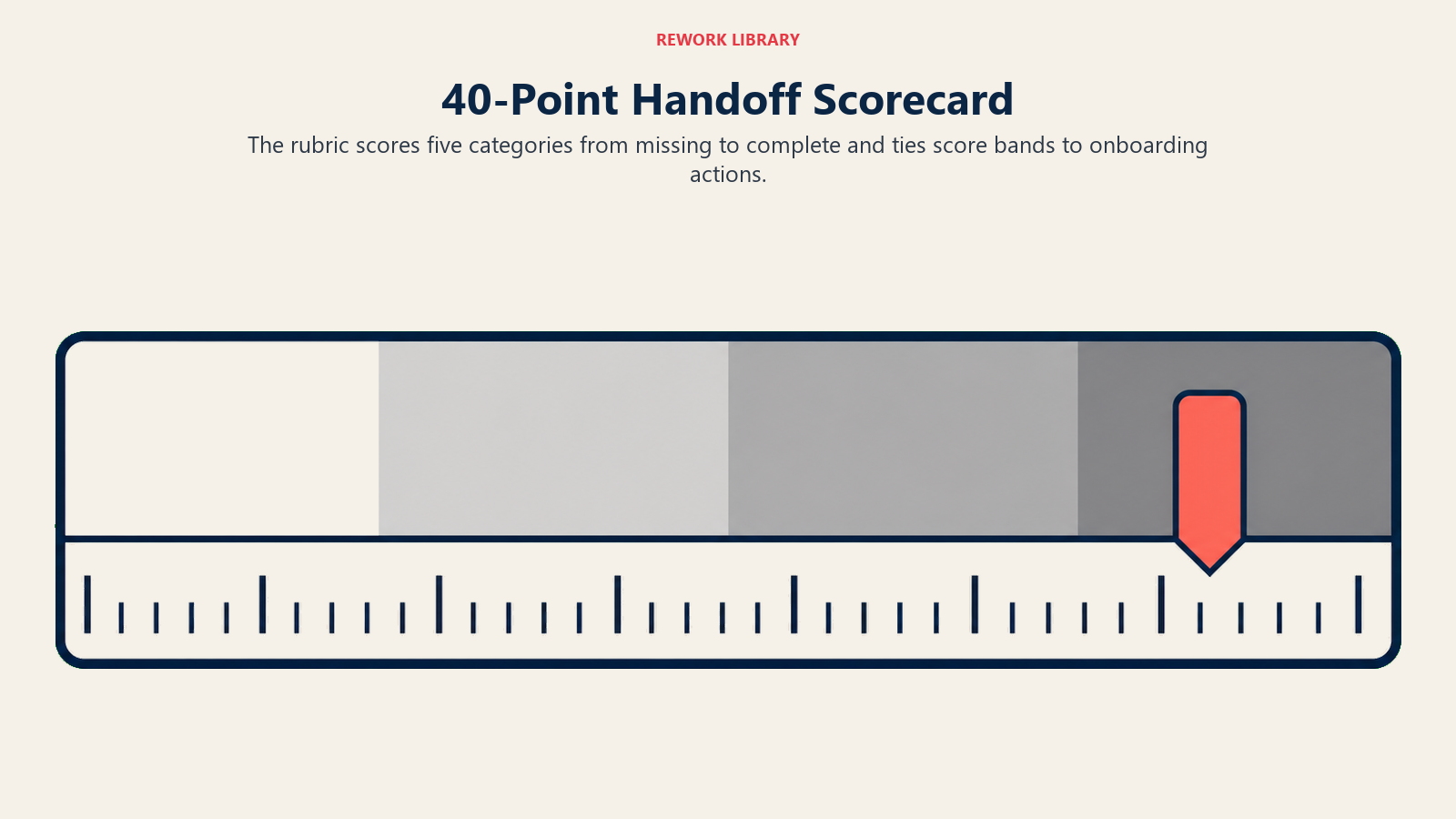
Bewerten Sie jede Zeile: 0 = fehlend, 1 = teilweise, 2 = vollständig
Kategorie 1: Deal-Kontext (Max. 10 Punkte)
| # | Punkt | Bewertung (0 / 1 / 2) | Notizen |
|---|---|---|---|
| 1.1 | Use Case dokumentiert: welches Problem der Kunde löst und warum dieses Produkt gewählt wurde | ||
| 1.2 | Geschäftsproblem angegeben: der spezifische Schmerz oder das Ziel, das Dringlichkeit trieb (nicht nur „sie brauchten ein CRM") | ||
| 1.3 | Warum sie jetzt gekauft haben: Timing-Kontext – Auslöseereignis, Budget-Zyklus, Executive-Push | ||
| 1.4 | Was den Deal fast zunichte gemacht hätte: der Haupteinwand oder das Hindernis, das gelöst werden musste | ||
| 1.5 | Wettbewerber berücksichtigt: welche Alternative aktiv evaluiert wurde und was die Entscheidung ausgelöst hat | ||
| Kategorie 1 Gesamt | /10 |
Bewertungshinweise:
- 2 – Vollständig: Spezifisch, schriftlich, handlungsorientiert. CSM kann das lesen und weiß, was beim Kickoff zu sagen ist.
- 1 – Teilweise: Vorhanden, aber vage. „Kunde wollte besseres Reporting" ergibt 1 beim Geschäftsproblem. „Das Q3-Board-Review des Kunden erforderte Pipeline-Sichtbarkeit, die er mit dem aktuellen Tool nicht erreichen konnte" ergibt 2.
- 0 – Fehlend: Feld leer oder mit Platzhaltertext befüllt („siehe E-Mail").
Kategorie 2: Stakeholder-Map (Max. 8 Punkte)
| # | Punkt | Bewertung (0 / 1 / 2) | Notizen |
|---|---|---|---|
| 2.1 | Champion-Name und Rolle: der interne Fürsprecher, der die Adoption des Kaufs vorangetrieben hat | ||
| 2.2 | Executive Sponsor identifiziert: der leitende Stakeholder, der das Budget genehmigt hat und Verlängerungsautorität hat | ||
| 2.3 | Täglicher Ansprechpartner: die Person, mit der der CSM nach dem Kickoff am häufigsten zusammenarbeiten wird | ||
| 2.4 | Wer Einwände hatte: interne Stakeholder, die Widerstand geleistet haben und warum – nach dem Abschluss immer noch relevant | ||
| Kategorie 2 Gesamt | /8 |
Bewertungshinweise:
- 2 – Vollständig: Name, Titel, Kontaktinformationen und Beziehungskontext alle vorhanden.
- 1 – Teilweise: Name vorhanden, aber keine Kontaktinformationen, oder Rolle ohne Kontext („Es gab einen Skeptiker in der IT" ergibt 1; „Mark Chen, IT-Direktor, besorgt über Datensicherheit, gelöst mit unserer SOC2-Dokumentation" ergibt 2).
- 0 – Fehlend: Kategorie nicht befüllt.
Kategorie 3: Technischer Fit (Max. 8 Punkte)
| # | Punkt | Bewertung (0 / 1 / 2) | Notizen |
|---|---|---|---|
| 3.1 | Integrationsanforderungen aufgelistet: jedes System, das dieser Kunde verbinden möchte, mit Namen und Versionen | ||
| 3.2 | Benutzerdefinierte Konfiguration zugesagt: jedes nicht-standardmäßige Setup, das während des Verkaufs versprochen wurde | ||
| 3.3 | Implementierungszeitplan vereinbart: das spezifische Go-Live-Datum oder der Zeitbereich, den der Kunde erwartet | ||
| 3.4 | IT-Bereitschaft des Kunden vermerkt: bekannte Einschränkungen auf Kundenseite (Überprüfungsprozesse, IT-Engpässe, Datenmigrations-Anforderungen) | ||
| Kategorie 3 Gesamt | /8 |
Bewertungshinweise:
- 2 – Vollständig: Spezifisch und handlungsorientiert. „Salesforce-Integration via REST API, IT-Review des Kunden erforderlich – 3 Wochen Vorlaufzeit; Go-Live-Ziel 30. April" ergibt 2 bei Punkten 3.1 und 3.3.
- 1 – Teilweise: Vorhanden, aber vage. „Sie nutzen Salesforce" ergibt 1 bei den Integrationsanforderungen.
- 0 – Fehlend: Kein technischer Kontext dokumentiert.
Kategorie 4: Erwartungsdatensatz (Max. 8 Punkte)
| # | Punkt | Bewertung (0 / 1 / 2) | Notizen |
|---|---|---|---|
| 4.1 | Erfolgskriterien aus dem Discovery: was der Kunde uns gesagt hat, dass er erreichen muss, um das als Erfolg zu bezeichnen | ||
| 4.2 | Nicht-standardmäßige Versprechen markiert: jede Zusage, die während des Verkaufs gemacht wurde und nicht im Standardprodukt oder Onboarding-Scope enthalten ist | ||
| 4.3 | Vereinbarter Go-Live-Meilenstein: das spezifische erste Ergebnis oder die Go-Live-Definition, die beide Seiten anerkannt haben | ||
| 4.4 | Preis- oder Scope-Ausnahmen vermerkt: Rabatte, Einschlüsse oder Ausnahmen, die das CS-Team einhalten muss | ||
| Kategorie 4 Gesamt | /8 |
Bewertungshinweise:
- 2 – Vollständig: Erfolgskriterien sind spezifisch und messbar; Versprechen sind explizit mit Kontext vermerkt. „Kundenerfolg = erster Pipeline-Report läuft im CRM bis Tag 30, genutzt von 3+ Reps" ergibt 2.
- 1 – Teilweise: Richtungsmäßig korrekt, aber zu unspezifisch. „Sie wollen bessere Pipeline-Sichtbarkeit" ergibt 1.
- 0 – Fehlend: Kein Erwartungsdatensatz. Das ist die fehlende Kategorie mit dem höchsten Risiko.
Kategorie 5: CRM-Hygiene (Max. 6 Punkte)
| # | Punkt | Bewertung (0 / 1 / 2) | Notizen |
|---|---|---|---|
| 5.1 | Kontaktdatensätze vollständig: Champion, Executive Sponsor und täglicher Ansprechpartner haben verifizierte E-Mail und Telefonnummer | ||
| 5.2 | Notizen-Feld nach dem Abschluss aktualisiert: CRM-Notizen enthalten mindestens eine Abschlusszusammenfassung und relevanten Kontext aus der finalen Verhandlung | ||
| 5.3 | Opportunity-Stufe korrekt: als Closed-Won mit Abschlussdatum, ARR und befüllter Vertragslaufzeit markiert | ||
| Kategorie 5 Gesamt | /6 |
Bewertungshinweise:
- 2 – Vollständig: Alle Felder befüllt und korrekt.
- 1 – Teilweise: Opportunity als Closed-Won markiert, aber ARR oder Abschlussdatum fehlt; Kontakt-E-Mail vorhanden, aber Telefonnummer fehlt.
- 0 – Fehlend: Kernfelder leer oder falsch.
Gesamtpunktzahl und Rubrik
| Kategorie | Max. Punkte | Ihre Punktzahl |
|---|---|---|
| Deal-Kontext | 10 | |
| Stakeholder-Map | 8 | |
| Technischer Fit | 8 | |
| Erwartungsdatensatz | 8 | |
| CRM-Hygiene | 6 | |
| Gesamt | 40 |
Rubrik:
| Punktzahl | Bewertung | Empfohlene Maßnahme |
|---|---|---|
| 36–40 | Ausgezeichnet | CS kann selbstständig onboarden. Keine erforderliche AE-Beteiligung über die Kickoff-Teilnahme hinaus. |
| 28–35 | Akzeptabel | 1–2 Lücken identifiziert. CSM schließt Lücken async mit AE vor dem Kickoff. AE nimmt optional am Kickoff teil. |
| 20–27 | Unter Standard | Mehrere Lücken in verschiedenen Kategorien. AE muss am Kickoff-Call teilnehmen und fehlende Felder innerhalb von 24 Stunden nach Kickoff ausfüllen. CS-Manager markieren. |
| Unter 20 | Unvollständig | Kickoff verschieben. Re-Handoff vom AE anfordern. Onboarding nicht gegen einen unvollständigen Datensatz starten. An Sales-Manager eskalieren. |
Wie man die Scorecard einführt, ohne einen Krieg zu starten
Der erste Instinkt jedes Sales-Teams, das von einer Handoff-Scorecard hört, ist, sie als Note zu lesen. „CS wird meine Handoffs bewerten und meinem Manager berichten." Diese Formulierung macht es von Anfang an adversarisch – und bedeutet, dass das erste Gespräch darüber defensiv sein wird.
Formulieren Sie es anders. Die Scorecard ist gemeinsame Verantwortungs-Infrastruktur, kein Performance-Review-Tool. CS möchte bessere Onboarding-Ergebnisse. Sales möchte, dass ihre Konten erfolgreich sind, weil gechuirte Konten ihre NRR-Vergütung und ihre Beziehungen beeinflussen. Die Scorecard benennt, wie „vollständig" aussieht, damit beide Teams dasselbe Ziel haben.
Bei der Einführung gegenüber der Sales-Führung: Beginnen Sie mit den Daten zur NRR-Korrelation, nicht mit Geschichten über schlechte Handoffs. „Konten mit vollständigen Handoffs zeigen nach 12 Monaten 24 % höhere NRR" ist ein Business Case. „CSMs werden mit Arbeit überhäuft" ist eine Beschwerde. Eines bekommt eine Antwort; das andere eine defensive Reaktion. McKinseys Forschung zum NRR-Vorteil in B2B-Tech gibt der Sales-Führung eine Sprache, die sie bereits spricht: Unternehmen im obersten NRR-Quartil erzielen nachhaltig deutlich höhere Bewertungen, und im Handoff wird NRR zuerst gewonnen oder verloren.
Der erste Monat mit Scores: Teilen Sie Kategorien-Durchschnitte, keine individuellen AE-Scores. „Unser durchschnittlicher Erwartungsdatensatz-Score ist 0,8 von 2,0 – diese Kategorie braucht Aufmerksamkeit" ist eine Team-Beobachtung. Einzelne AEs mit niedrigen Scores im ersten Monat zu benennen schafft Defensivität, bevor die Praxis Glaubwürdigkeit hat. Bauen Sie zuerst die Baseline auf, dann verwenden Sie individuelle Daten in 1:1-Performance-Gesprächen nach zwei bis drei Monaten.
Beziehen Sie AEs in die Kalibrierung ein. Bevor die Scorecard eingeführt wird, führen Sie eine Kalibrierungssession mit zwei oder drei AEs und zwei oder drei CSMs durch, die dieselben fünf abgeschlossenen Deals gemeinsam bewerten. Die Kalibrierungssession bringt Meinungsverschiedenheiten darüber auf, was „vollständig" für jede Zeile bedeutet, und diese Meinungsverschiedenheiten sind wertvoller als die Scores – sie sind genau die Definitions-Lücken, die die Scorecard schließen soll.
Scorecard-Daten über die Zeit nutzen
Eine einmalig laufende Scorecard ist ein Formular. Eine monatlich über sechs Monate laufende Scorecard ist ein Trend. Der Trend ist dort, wo die nützlichen Daten liegen.
Monatlicher Score-Trend nach AE. Verfolgen Sie Durchschnittswerte nach AE über rollierende Drei-Monats-Fenster. Ein einzelner schlecht bewerteter Deal könnte eine Anomalie sein. Ein dreimonatiger Rückgang in Kategorie 4 (Erwartungsdatensatz) bei einem bestimmten AE ist ein Coaching-Signal – dieser AE überspringt entweder die Erwartungsdokumentation oder ist konsequent unklar darüber, wozu er sich verpflichtet. Muster wie dieses fließen direkt in den ICP-Refinement-Loop ein. Wenn bestimmte Deal-Typen durchgängig niedrige Erwartungs-Scores erzeugen, muss möglicherweise das ICP selbst geschärft werden.
Was ein Score-Rückgang signalisiert. Ein teamweiter Rückgang in Kategorie 1 (Deal-Kontext) könnte einer Änderung im Deal-Prozess folgen – eine neue Angebotsvorlage, eine CRM-Migration oder eine hochvolumige Phase, in der die Dokumentation deprioritisiert wurde. Ein Rückgang in Kategorie 3 (technischer Fit) könnte einem neuen Integrations-Launch folgen, bei dem Sales eine Fähigkeit verkauft, für die CS noch keinen standardmäßigen Implementierungspfad hat.
Handoff-Qualität in AE-Performance-Gespräche einbinden. Handoff-Qualität gehört neben Pipeline-Metriken und Quota-Erreichung in das AE-Performance-Gespräch. Nicht als Bestrafungsmechanismus – als Mustererkenner. Ein AE mit konsequent hohen Scores zeigt Post-Close-Disziplin, die anerkannt werden sollte. Ein AE mit konsequent niedrigen Scores in Kategorie 4 hat eine Dokumentationsgewohnheit, die CS-Zeit kostet und Churn-Risiko schafft. Die HBR-Forschung von 2024 zu neuen Vergütungsmodellen im Vertrieb argumentiert, dass die Kopplung eines Teils der variablen Vergütung an Post-Sale-Ergebnisse (einschließlich Handoff-Qualität) einer der verlässlichsten Wege ist, dieses Verhalten dauerhaft zu verändern.
Integration mit dem Handoff-Prozess
Wann die Scorecard läuft. Unmittelbar nach dem Kickoff-Call, innerhalb von 48 Stunden. Nicht Wochen später, wenn das Gedächtnis verblasst ist und der CSM bereits die Lücken umgangen hat. Der Kickoff ist der Moment, in dem CS erstmals validiert, ob das Handoff-Paket der Realität entsprach – das ist der richtige Zeitpunkt zum Bewerten.
Wer sie ausfüllt. Der CSM, der das Konto erhalten hat. Nicht der AE. Nicht der CS-Manager. Der CSM, der den Kickoff durchgeführt hat, hat die unmittelbarsten Belege dafür, was angekommen ist und was fehlte.
Wer die Ergebnisse sieht. CS-Manager und Sales-Manager sehen die Ergebnisse. Der AE erhält die Scorecard nicht direkt, zumindest nicht anfangs. Der Kommunikationspfad läuft zuerst Manager-zu-Manager. Wenn Handoff-Qualität ein Standardthema im Sales-CS-Führungsrhythmus wird, können AEs ihre eigenen Score-Trends als Teil des regulären Feedback-Loops erhalten – aber mit direkter AE-Benachrichtigung zu beginnen, bevor der Prozess Glaubwürdigkeit hat, erzeugt Reibung, die die gesamte Initiative zum Scheitern bringt. Für Teams, die das in einen gemeinsamen Kundendatensatz einbauen, lassen sich die Scorecard-Felder sauber auf die sieben Felder abbilden, auf die sich beide Teams einigen müssen.
Häufig übersprungene Punkte
Fünf Felder, die AEs konsequent unterschätzen, und was CSMs bei jedem tun können:
4.2 – Nicht-standardmäßige Versprechen markiert. AEs überspringen das, weil das Dokumentieren nicht-standardmäßiger Zusagen Verantwortlichkeit schafft, die sie lieber vermeiden. Oder sie wissen wirklich nicht, was „nicht-standardmäßig" bedeutet. Lösung: Geben Sie AEs eine Zwei-Satz-Definition im Handoff-Formular („nicht-standardmäßig = alles, was nicht im Standardtier enthalten ist, das der Kunde kauft, einschließlich Timeline-Zusagen, benutzerdefinierter Konfigurationen und Scope-Einschlüsse") und machen Sie dieses Feld im CRM zum Pflichtfeld vor dem Speichern.
1.4 – Was den Deal fast zunichte gemacht hätte. Das fühlt sich nach dem Verweilen im Negativen nach einem Gewinn an. Aber der Haupteinwand ist auch das wahrscheinlichste Wiederauftauchungsrisiko in den ersten 90 Tagen – was den Deal fast zunichte gemacht hat, ist das, was der Kunde beobachten wird, um zu sehen, ob es wieder auftaucht. CSMs brauchen diesen Kontext vor dem Kickoff, nicht nachdem der Kunde es wieder anspricht. Script für den CSM: „Ich habe gesehen, dass das Einwands-Log leer war. Können Sie mir eine schnelle 2-Minuten-Sprachnotiz über das größte Hindernis geben, das Sie überwinden mussten?"
2.4 – Wer Einwände hatte. AEs konzentrieren sich auf den Champion, nicht auf die Skeptiker. Aber Einwanderheber sind echte Stakeholder, die die Implementierung beobachten werden, um zu validieren, dass ihre Bedenken berechtigt waren. CSMs müssen wissen, wer sie sind. Script: „Ich muss wissen, wer bei diesem Deal skeptisch war – nicht um es erneut zu diskutieren, sondern damit ich sicherstellen kann, dass er den Gewinn sieht, über den er sich Sorgen gemacht hat."
3.4 – IT-Bereitschaft des Kunden. Das wird übersprungen, wenn der AE keinen technischen Discovery-Call gemacht hat. Der CSM erfährt von dem 6-wöchigen IT-Überprüfungsprozess an Tag 1 des Onboardings, obwohl es im Handoff hätte stehen sollen. Script: „Haben Sie nach ihrem IT-Prozess für neue Software-Implementierungen gefragt? Gibt es Einschränkungen, die ich kennen sollte?"
1.3 – Warum sie jetzt gekauft haben. Das am häufigsten leere Feld in der Deal-Kontext-Kategorie. AEs kennen das angegebene Geschäftsziel des Kunden, wissen aber oft nicht den spezifischen Timing-Auslöser. Zu wissen, dass der Kunde ein Board-Review in Q3 hatte, bei dem Pipeline-Sichtbarkeit als Lücke genannt wurde, verändert, wie der CSM die ersten 30 Tage rahmt. Script: „Was ist passiert, das diesen Deal in diesem Quartal zum Abschluss gebracht hat und nicht im nächsten?"
Häufig gestellte Fragen zur Handoff-Scorecard
Wie lange dauert das Ausfüllen dieser Scorecard?
Ein CSM, der am Kickoff-Call teilgenommen hat, kann die Scorecard in 10–15 Minuten unmittelbar nach dem Call ausfüllen. Das Bewerten erfordert keine Recherche – es spiegelt wider, was der CSM beim Kickoff erlebt hat und was im Handoff-Paket vorhanden war oder nicht. Der zeitaufwändigste Teil ist das Schreiben von Notizen für Teilbewertungen, der auch der wertvollste Teil ist.
Sollte die Scorecard für jeden Deal oder nur für Deals über einem Schwellenwert laufen?
Führen Sie sie für jeden Deal über Ihrem Onboarding-Schwellenwert aus (typischerweise jeder Deal mit einer dedizierten CSM-Zuweisung). Darunter – transaktionale SMB-Deals, die von einem AM verwaltet werden – ist eine vereinfachte Version, die nur Kategorien 4 und 5 abdeckt, ausreichend. Sie brauchen genug Daten, um Muster zu sehen, was konsistente Anwendung auf eine definierte Deal-Population bedeutet.
Was, wenn der AE einen Score anficht?
AEs werden gelegentlich einer Teilbewertung oder Null-Bewertung für einen Punkt widersprechen, den sie für erledigt halten. Das ist ein Kalibrierungssignal, kein Problem. Bauen Sie eine 20-minütige monatliche Kalibrierungssession auf, bei der ein oder zwei angefochtene Scores gemeinsam überprüft werden. Die Meinungsverschiedenheit offenbart in der Regel eine mehrdeutige Definition in der Rubrik, die es wert ist, präziser zu werden. Behandeln Sie Einsprüche als Produkt-Feedback zur Scorecard selbst.
Wie implementieren wir das in einem CRM?
Bauen Sie jede Kategorie als Satz benutzerdefinierter Felder im Opportunity- oder Kontodatensatz auf. Der CSM füllt sie nach dem Kickoff aus. Die Felder summieren sich zu einem Score über ein einfaches Formel-Feld. Der Score befüllt ein Gesundheitssignal-Feld, das für CS- und Sales-Manager sichtbar ist. Die meisten CRMs unterstützen diese Konfiguration nativ – es ist ein 2–3-stündiger Implementierungsaufwand, kein Projekt.
Wie führen wir die Handoff-Scorecard im Sales-Team ein, ohne Widerstand auszulösen?
Beginnen Sie mit dem Business Case, nicht mit dem Compliance-Framing. „Konten mit vollständigen Handoffs zeigen 24 % höhere NRR" ist ein Sales-Argument. NRR beeinflusst die AE-Vergütung, die Beziehungsqualität und die Glaubwürdigkeit bei Verlängerungen. „CS bewertet Ihre Handoffs" ist ein Management-Argument, das Defensivität erzeugt. Führen Sie die erste Kalibrierungssession mit zwei oder drei bereitwilligen AEs und zwei oder drei CSMs durch, die dieselben fünf jüngsten Deals gemeinsam bewerten. Die Kalibrierung bringt Meinungsverschiedenheiten darüber auf, was „vollständig" bedeutet. Diese Meinungsverschiedenheiten sind das eigentliche Ergebnis der ersten Session, nicht die Scores selbst.
Welcher Handoff-Score gilt als akzeptabel, bevor CS mit dem Onboarding beginnt?
Die Rubrik definiert vier Schwellen: 36–40 (Ausgezeichnet: CS onboardet selbstständig), 28–35 (Akzeptabel: CSM schließt 1–2 Lücken async vor dem Kickoff), 20–27 (Unter Standard: AE nimmt am Kickoff teil und füllt fehlende Felder innerhalb von 24 Stunden aus) und unter 20 (Unvollständig: Kickoff verschieben, Re-Handoff anfordern, an den Sales-Manager eskalieren). Ein Score von 28 oder höher ist das praktische Minimum, um das Onboarding ohne Risiko erheblicher Kontext-Lücken zu beginnen. Teams, die neu mit der Bewertung beginnen, stellen typischerweise fest, dass ihre Baseline im Bereich 22–27 liegt. Die Teilnahme des AE am Kickoff und das Schließen der Lücken in derselben Woche werden damit zur Regel statt zur Ausnahme.
Wie oft sollten Handoff-Scores überprüft werden, und mit wem?
Überprüfen Sie Kategorien-Durchschnitte monatlich mit dem Sales-CS-Führungspaar, in den ersten zwei bis drei Monaten nicht die individuellen AE-Scores. Bauen Sie nach Etablierung der Baseline in Performance-Gesprächen auf individuelle AE-Score-Trends (rollierende Drei-Monats-Durchschnitte) auf. Der monatliche Rhythmus dient auch als Feedback-Loop dafür, ob bestimmte Deal-Typen, Integrationsanforderungen oder Produktbereiche durchgängig niedrige Scores in bestimmten Kategorien erzeugen. Solche Muster deuten auf Schulungslücken oder Prozessänderungen hin, nicht nur auf individuelles Verhalten.
Wie sollte der wöchentliche Rhythmus zur Pflege der Scorecard-Hygiene aussehen?
Die Scorecard ist ein Post-Kickoff-Artefakt, keine wöchentliche Wartungsaufgabe. Der CSM bewertet innerhalb von 48 Stunden nach dem Kickoff-Call. Danach lebt der Score im CRM-Datensatz und speist zwei laufende Aktivitäten: (1) den monatlichen Sales-CS-Führungsreview, in dem Kategorien-Durchschnitte verfolgt werden, und (2) das eigene Performance-Gespräch des AE, in dem rollierende Score-Trends besprochen werden. Zwischen Kickoff und dem Review des nächsten Monats braucht die Scorecard keine aktive Pflege. Sie ist ein Messwert zu einem Zeitpunkt für die Handoff-Qualität, kein dynamisches Gesundheitssignal.
Mehr erfahren

Principal Solution Architect
On this page
- Warum ein bewerteter Handoff-Standard das Verhalten verändert
- Was die Scorecard misst
- Die Handoff-Scorecard (Sofort einsetzbar)
- Kategorie 1: Deal-Kontext (Max. 10 Punkte)
- Kategorie 2: Stakeholder-Map (Max. 8 Punkte)
- Kategorie 3: Technischer Fit (Max. 8 Punkte)
- Kategorie 4: Erwartungsdatensatz (Max. 8 Punkte)
- Kategorie 5: CRM-Hygiene (Max. 6 Punkte)
- Gesamtpunktzahl und Rubrik
- Wie man die Scorecard einführt, ohne einen Krieg zu starten
- Scorecard-Daten über die Zeit nutzen
- Integration mit dem Handoff-Prozess
- Häufig übersprungene Punkte
- Mehr erfahren